Feed engadget Engadget is a web magazine with obsessive daily coverage of everything new in gadgets and consumer electronics

Favorite IconEngadget is a web magazine with obsessive daily coverage of everything new in gadgets and consumer electronics

Link https://www.engadget.com/
Feed https://www.engadget.com/rss.xml
Copyright copyright Yahoo 2026
Updated 2026-04-04 13:33
Samsung's Galaxy Watch 5 hits a new low of $220, plus the rest of the week's best tech deals
It's a bit of a slow week for tech deals, but we've still found a handful of good prices on gadgets and gear we like. For instance, Samsung's Galaxy Watch 5, our preferred smartwatch for Android users, is down to a new low of $220, while Apple's iPad Air is $99 off its MSRP at $500. Sony is running a sale on PS5 and PS4 exclusive games, and a handful of recommended SSDs and microSD cards are down to their best prices to date. Here are the best tech deals from this week that you can still get today.Samsung Galaxy Watch 5The 40mm version of Samsung's Galaxy Watch 5 is on sale for $220, which is only about $10 to $15 less than its typical street price in recent months but still represents an all-time low. We gave the Galaxy Watch 5 a review score of 85 last year, and it's currently the "best for Android users" pick in our guide to the best smartwatches. Its battery life could be better, but we dig its durable, minimalist design, crisp display and capable health tracking. Samsung's One UI interface is easy enough to navigate as well, and the company says it'll support the watch with software updates through 2026.PlayStation 5 first-party game saleSony has kicked off a sale on several of its own PS5 and PS4 games. The discounts are available at multiple retailers, including Amazon, Walmart, GameStop, Best Buy and Sony's PlayStation Direct shop. Among the highlights, the racing sim Gran Turismo 7 is down to $40, which is $5 above its all-time low but still a $30 discount for those looking to try out its new AI opponents or VR support. (The PS4 version is down to $30.) The PS5 remake of The Last of Us is $20 off for those enjoying its TV adaptation, while both the original PS4 remaster and the brutal sequel are available for $10.Beyond that, the lush open-world game Horizon Forbidden West is down to a low of $40 (or $30 for the PS4 copy, which includes a free PS5 upgrade). The friendly action game Ratchet & Clank: Rift Apart, the haunting roguelike Returnal and the remade PS3 classic Demon's Souls are each $30; Marvel's Spider-Man: Miles Morales and the remastered dual pack Uncharted: Legacy of Thieves Collection are down to $20; and both God of War and the idiosyncratic Death Stranding are available for $10. There are more deals apart from those, but either way Sony says this sale will run through March 5.Anker 715 ChargerAnker's 715 Charger is a 65W USB-C charger with a highly compact design that should be suitable for travel. It only has one port, but it has enough power to charge most phones, tablets and even some laptops at their maximum rate. The device is back down to $35 at Amazon, which is a price we've seen a few times before but still comes in $15 below the charger's typical going rate. This deal is also available at Anker's online store, but you'll need to use the code WS7DOOUANO at checkout there.Samsung Evo Select microSD cardSamsung's Evo Select is a U3-, V30-rated microSD card that should be more than fast enough for 4K video on a GoPro or game storage on a Nintendo Switch or Steam Deck. It's also backed by a 10-year limited warranty. The 128GB and 512GB versions of the card are still available for $13.49 and $45, respectively, both of which match the lowest prices we've tracked.Samsung 980 Pro SSDIn other Samsung storage deals, the 1TB version of company's 980 Pro SSD is available for an all-time low of $100. That's about $20 below the drive's average going rate in recent months. If you need more space, the 2TB model is also on sale for a low of $160. Not everyone needs to pay up for a high-performing NVMe 4.0 drive like this, but for higher-performing builds or expanding the storage of a PlayStation 5, it'll work well. If you do buy for a PS5, just make sure you pair the drive with a heatsink first. (You can also buy a version of this SSD with an integrated heatsink for $10 to $20 more, depending on how much capacity you need.) You'll also want to make sure the SSD's firmware is up-to-date: Various users have reported higher-than-usual failure rates with specific Samsung drives, including the 2TB 980 Pro here, but the company looks to have fixed the issue with a recent update.Crucial MX500 SSD (1TB)You wouldn't buy a 2.5-inch SATA SSD like the Crucial MX500 for fast storage performance on a new PC, but if you're looking to upgrade an older computer that came with a slower HDD installed by default, it can still provide a noticeable boost. The MX500 itself is the top SATA pick in our guide to the best SSDs, and right now its 1TB model is on sale for an all-time low of $52. Typically, the drive retails closer to $65. If you need more space, the 2TB model is down to $120, while the 4TB model is available for $240. Those prices are $8 and $2 off the two models' respective all-time lows.Apple iPad AirApple's iPad Air is back down to $500 at Amazon, which is $20 more than its all-time low but still roughly $30 below its typical street price and $100 below Apple's MSRP. You should see the full discount at checkout. We gave this 10.9-inch tablet a review score of 90 last year, and we generally consider it the best iPad for most people. While it lacks the 120Hz refresh rate or top-end M2 chip of the iPad Pro, it still gets you a modern design, more than enough power, the usual 10-ish hours of battery life and support for Apple's best accessories, all at a more affordable price.Bose Portable Smart SpeakerWe highlight the aptly named Bose Portable Smart Speaker in our guide to the best portable Bluetooth speakers, and right now the device is down to $319. That's $20 more than its all-time low but still about $45 below its typical street price and $80 below Bose's MSRP. While there are certainly cheaper options out there, this wireless speaker still gets you a travel-friendly, IPX4-rated design (complete with a built-in carrying handle), impressive bass for its size, AirPlay 2 functionality and support for both Alexa and the Google Assistant. Think of it like a smaller rival to the Sonos Move. Bose rates the speaker's battery life at up to 12 hours, too, though that will be lower if you regularly stream over WiFi.Beats Fit ProBeats rolled out a handful of new finishes for its workout-friendly Fit Pro earphones this week, and a couple of them — the "coral pink" and "volt yellow" colorways — are already on sale for $170. That's $30 off Beats' MSRP. We've seen prior versions of the Fit Pro drop as low as $145, so this deal isn't an all-time low, but if you like the look of these colors specifically, you can save a few bucks all the same. The Fit Pro themselves are the "best for workouts" pick in our best wireless earbuds guide and earned a review score of 87 back in late 2021. While their active noise cancellation can't match what you'd get from Apple's AirPods Pro, they pack many of that pair's conveniences in a sportier design.Follow @EngadgetDeals on Twitter and subscribe to the Engadget Deals newsletter for the latest tech deals and buying advice.


New Beats Fit Pro colors are already $30 off
Don't think you have to pay full price to get the Beats Fit Pro in new colors. Amazon is already selling the true wireless earbuds in Coral Pink and Volt Yellow for $170, or $30 off. The discount doesn't apply to Tidal Blue, alas, but this still means you can get vibrant hues for less than you'd pay for 'safer' options.The new Beats Fit Pro variants are functionally identical to the originals, but that's not a bad thing — they're still our favorite wireless earbuds for workouts. The comfy, stable fit and sweat resistance make them well-suited to the gym. Solid active noise cancellation (ANC) helps you tune out the rest of the world. And importantly, their sound quality is better than you might expect. You'll get Beats' signature bass, but it's balanced and doesn't overpower higher-frequency elements, Toss in six hours of listening per charge with ANC enabled and these are buds you can use throughout the day.You may still want to consider other earbuds, such as the AirPods Pro if you find them on sale. There's no wireless charging on the Beats Fit Pro, and the ANC is stronger on Apple's higher-end models. And while Beats' Android support is robust, you may want to look at options like the Galaxy Buds 2 Pro or Pixel Buds Pro if you want something particularly Android-friendly. If those aren't obstacles, though, you'd be hard-pressed to find a better value.Follow @EngadgetDeals on Twitter and subscribe to the Engadget Deals newsletter for the latest tech deals and buying advice.
'Dead Space' highlights the biggest problem with AAA games
Somehow, Dead Space is one of the freshest games of 2023. The original hit literal store shelves in 2008 and the remake, which landed in January, doesn't change the game's fundamental mechanics. The remake is a downright treat to play; it's terrifying, fast-paced and expertly balanced. Dead Space's core loop is focused, and this only highlights how chaotic many AAA games are today.Built-in limitations of the PlayStation 3 and Xbox 360 era were critical in helping developers narrow their focus and innovate, and this generation spawned a litany of iconic franchises, including Dead Space, Dark Souls, Dishonored, Red Dead Redemption, Portal, Alan Wake and Arkham. Meanwhile, developers in the ninth console generation are grappling with an abundance of technological possibility, founded on the power and fidelity provided by modern gaming hardware. This has resulted in a litany of chaotic blandness from many AAA studios in recent years. In a creative industry unlimited by its tools, the most powerful mechanic is restraint.Dive deeper into this conversation in the below video.
Engadget Podcast: AI all the things!
The AI news just won’t stop! This week, Cherlynn and Devindra discuss the latest on Bing AI – Microsoft is loosening up some recent restrictions, following reports of its bad behavior – as well as the rise of ChatGPT stories on the Kindle store. Spotify is also launching its own AI DJ, starring the digitized voice of one of its current hosts. In other news, we discuss Microsoft’s recent agreements with NVIDIA and Nintendo, which could warm regulators towards approving its Activision Blizzard acquisition.Listen below or subscribe on your podcast app of choice. If you've got suggestions or topics you'd like covered on the show, be sure to email us or drop a note in the comments! And be sure to check out our other podcasts, the Morning After and Engadget News!Subscribe!
ULA targets May 4th for Vulcan Centaur rocket's inaugural flight
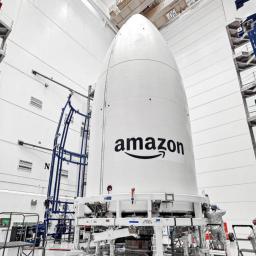
United Launch Alliance has a target date for its Vulcan Centaur rocket's inaugural flight: May 4th, 2023. Company chief Tory Bruno has announced the four-day launch window starting on May 4th in a call with reporters, where he explained the factors that prompted the company to come up with the schedule.According to Parabolic Arc, the primary "pacing item" for the launch is Blue Origin's BE-4 engine, which will power the rocket's first stage. The companies are still working on its qualifications, since they found some inconsistencies among the ones ULA has tested. While the performance variation wasn't huge, the ULA wants to make sure it's not a symptom of a bigger issue.ULA still also has to conduct a series tests for the heavy-lift launch vehicle, including a wet dress rehearsal, wherein it will be fully loaded with propellants and has to complete a practice countdown. Finally, Vulcan Centaur's main payload, Astrobotic Technology's Peregrine lunar lander, needs to head to space within a specific window of time each month to be able to fly its desired trajectory to the moon.Vulcan Centaur was supposed to have its maiden flight in 2022, but Astrobotic asked ULA to delay its launch to give it more time to finish the NASA-funded lunar lander. Bruno said Astrobotic has just finished testing the Peregrine and will soon be making final preparations before shipping it to the rocket's launch location at the Cape Canaveral Space Force Station in Florida.In addition to the lunar lander, the rocket will also carry two prototype satellites for Amazon's Project Kuiper constellation to space. The demo satellites' deployment will give Amazon the opportunity gather real-world data to be able to finalize the design and operation plans for its broadband satellite system.If Vulcan Centaur successfully flies for the first time on May 4th, it will mark the beginning of a new era for ULA. It plans to eventually replace the Delta IV Heavy and Atlas rockets with the Vulcan Centaur once it's done with its remaining launch obligations.
The Morning After: ‘Ant-Man and the Wasp: Quantumania’ and the problem with too much VFX
It’s time for more Marvel Cinematic Universe, more special effects, more families in danger and more sinister baddies, with a bigger role for Kang the Conqueror – the big cross-movie threat, a la Thanos – played by Jonathan Majors. Alas, Ant-Man and the Wasp: Quantumania suffers from too many special effects, sadly.It uses Industrial Light and Magic's (ILM) StageCraft technology (AKA “the Volume”), which came to prominence in Star Wars series The Mandalorian. It’s a series of enormous LED walls that can display real-time footage, synchronized to interactive lighting to make it feel like actors are in these sci-fi landscapes, fighting these threats to humanity. Still, Engadget’s Devindra Hardawar says the tech, the actors and the narrative fail to convince.– Mat SmithThe Morning After isn’t just a newsletter – it’s also a daily podcast. Get our daily audio briefings, Monday through Friday, by subscribing right here.The biggest stories you might have missed
YouTube is testing a '1080p Premium' playback option
Some YouTube viewers have reported seeing a new option for video quality in the website's drop-down menu. In addition to the basic 1080p playback option, they're also seeing another one labeled 1080p Premium with a note beneath it that says it offers "Enhanced bitrate." A spokesperson told The Verge that the website is testing the new video quality, which is currently available to "a small group of YouTube Premium subscribers." They described it as an "enhanced bitrate version of 1080p which provides more information per pixel that results in a higher quality viewing experience." Also, there's supposed to be no change to the quality of the standard 1080p resolution, which some people might not consider the good news YouTube deems it to be.Based on several comments on the Reddit thread discussing the test, viewers find the standard 1080p resolution on the website to be poor in quality. But a higher bitrate, which is used as a measurement for the amount of video data transferred within a certain timeframe, could mean getting better images without having to bump up the resolution. As XDA Developers notes, switching to 4K would give users access to better and sharper-looking videos, but they'd have to stream a much bigger file that could cost them more or eat up more of their data allowance.The enhanced 1080p option is just a test feature at this point, though, and YouTube might not approve it for a wide rollout at all. If it does make its way out of the experimental phase, only viewers paying for YouTube Premium will be able to access it. The subscription service will cost users $12 a month for an individual account or $23 a month for a family plan.
MediaTek is set to unveil its own phone-to-satellite communication system next week
MediaTek is set to demonstrate its new technology that can put two-way satellite communications on smartphones at this year's Mobile World Congress (MWC), which will take place from February 27th to March 2nd. Some of the devices that will show whether the semiconductor's product actually works will come from Motorola. The manufacturer will debut two satellite smartphones, the defy 2 and CAT S75, as well as a Bluetooth accessory that comes equipped with MediaTek's chip at the event.The company's response to Qualcomm's and Apple's satellite technologies is a standalone chipset that can be added to any 4G or 5G phone. It uses the 3GPP Non-Terrestrial Network standard instead of proprietary technologies like Qualcomm's and Apple's do, which means it can be used with any network that complies with the standard. MediaTek teamed up with a company called Bullitt to use the latter's Satellite Connect service and enable the satellite messaging feature on the aforementioned Motorola devices.Another difference is that MediaTek's chips connect to Geosynchronous Equatorial Orbit satellites instead of to satellites in Low Earth Orbit. The chipmaker says its technology enables not just emergency SOS texts like Apple's can, but also full two-way messaging. That means it can actually receive messages sent via satellite connection and not just send them. The iPhone 14, which debuted Apple's satellite tech, can't receive messages without a traditional cellular connection yet. Meanwhile, devices using Qualcomm's Snapdragon Satellite tech will need to be manually refreshed for new messages.The Motorola defy 2 smartphone and defy Bluetooth accessory will be released in the second quarter of the year across North America, Latin America and Canada and will be the first devices to offer MediaTek's satellite capabilities.MediaTek
DOJ accuses Google of deleting chat evidence for its antitrust lawsuit
The Department of Justice (DOJ) is accusing Google of routinely destroying internal messaging chat histories, which the company is required to preserve under federal rules for an antitrust lawsuit. Google is grappling with not just one, but a couple of antitrust lawsuits filed by the DOJ and groups of states. This particular case pertains to the lawsuit the department filed back in 2020 for "unlawfully maintaining monopolies" around search and search-related advertising.In the DOJ's filing, it said company employees typically used their internal chatroom, which was set to delete history every 24 hours, to discuss "substantive and sensitive business." Apparently, the agency expected Google to change its chat history setting in 2019 when the company "reasonably anticipated [the] litigation," but it left the decision to individual employees. Only a few people deemed their chat histories relevant to the case and preserved theirs for the court, and Google continued deleting most people's chats even after the lawsuit was filed.Despite that, Google reportedly told the government that it had already "put a legal hold in place" to suspend auto-deletion on its chat tool. The DOJ alleges that the company's claim was a lie and that it only truly stopped deleting chat histories this week after it was warned that the agency would file a motion for sanctions. It's now asking the court to rule that Google had violated a federal rule and to order a hearing that would determine how the company would be sanctioned. The DOJ also wants the court to order Google to provide more information about its chat practices.Google, however, denies the DOJ's allegations. A spokesperson told The Wall Street Journal: "Our teams have conscientiously worked for years to respond to inquiries and litigation. In fact, we have produced over 4 million documents in this case alone, and millions more to regulators around the world."
'Humanity' was the most interesting game at Sony's State of Play, and you can play a demo today
You're forgiven if you've forgotten about Humanity, the game from Rez creator Tetsuya Mizuguchi's studio Enhance. However, it's finally close to launch — and it's receiving expanded platform support in the process. Enhance and THA have announced during Sony's State of Play event that the strange puzzle and platformer hybrid will arrive in May on PS4, PS5, PlayStation VR and PlayStation VR2. A demo is also available today through the PlayStation Store, although you'll have to act fast when it's only available to play for a "limited time."The premise is clearer. You play a Shiba Inu (yes, really) who places commands to guide human crowds to safety in pillars of light. And that's just the start — you can expect flying people and lightsaber battles with the mysterious "Others," among further oddities. There's a 90-level story mode, but you can also build your own maps to challenge other players.Humanity has been in development for a long time, to put it mildly. The title was unveiled in September 2019, and was slated to come to PS4 and PSVR sometime the following year. It's not clear what prompted the three-year wait (the pandemic certainly didn't help), but it might be worth a look to see what took the developers so long.
Lordstown Motors freezes production to address quality issues
Lordstown Motors' problems aren't over just because it's manufacturing electric pickup trucks. The fledgling brand is pausing production and customer deliveries to help it tackle "performance and quality issues" with some components in its Endurance truck. Accordingly, it's partnering with the National Highway Traffic Safety Administration (NHTSA) on a voluntary recall to fix a connection problem that could cut motor output while driving.The recall will affect 19 vehicles already on the road, some of which were in use at Lordstown. The company isn't offering an estimate as to when production will resume, but claims it's making "significant progress" on component and subsystem issues holding up manufacturing. More details are expected to come when the firm holds its next earnings call on the morning of March 6th.The freeze is tiny compared to issues at rivals like Tesla, which has recalled hundreds of thousands of cars (if frequently for software-only problems). However, Lordstown hasn't made many pickups so far — it only delivered the first trucks from its initial 500-unit wave in November, and said last year that it only expected to sell 3,000 Endurance models through 2023. The halt and recall are proportionately huge.Lordstown also doesn't have much breathing room. GM sold its stake in late 2021, just a few months after Lordstown warned it didn't have enough money to make its signature truck. The startup then raised funds by selling its plant to manufacturing heavyweight Foxconn. It deepened the relationship in November in exchange for two Foxconn-chosen seats on the board of directors. There's pressure on Lordstown to turn things around, and setbacks like this don't help.
Watch Sony's latest State of Play here at 4PM ET
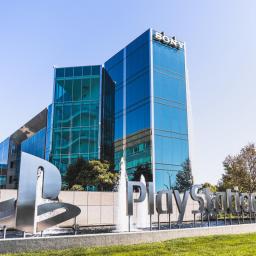
Sony is set to host its first State of Play showcase of 2023 this afternoon, featuring some new announcements and updates on previously revealed games. The stream starts at 4PM and you can watch it on PlayStation's Twitch and YouTube channels. Alternatively, you can check out the State of Play via the embedded video below.We're expecting to hear about five games that are coming to PS VR2 later this year. It seems like an ideal time for Sony to show off what's in the pipeline for the new headset, which it released earlier this week. We'll also get details on some "anticipated" third-party games, as well as an in-depth look at Suicide Squad: Kill the Justice League.Given the heavy focus on the followup to Batman: Arkham Knight, it'd be a little surprising if there were any other big announcements that could upstage that game, but you never know. Thankfully, we won't have to wait long to find out what's up Sony's sleeve.
Spotify is testing exclusive playlists for NFT owners
Spotify might not be done adding trendy technology to its streaming music service. The company has confirmed that it's testing a feature which requires owning an NFT (non-fungible token) to unlock certain playlists. The band Kingship is part of a pilot that also includes organizations like Fluf, Moonbirds and Overlord. The experiment appears to be limited to Android users in certain countries, although TechCrunch notes this isn't surprising when Apple limited NFT uses on iOS in October of last year.A Spotify spokesperson tells Engadget the company "routinely" conducts tests. Some lead to product improvements while others only amount to "important learnings," the representative says. The company isn't commenting on future plans for the NFT pilot. The service is holding its next Stream On event on March 8th, but there's no guarantee the feature will make an appearance.The firm is no stranger to the digital tokens. It tested NFT galleries on artist pages last spring, and was hiring people with related technical experience. A move like this would help Spotify form partnerships where it could spur listening (and sales of partners' NFTs) by putting a tastemaker's music selections behind a paywall.The timing is unfortunate, however. Blockchain businesses like FTX and Coinbase are reeling from either fraud accusations or the continued crypto market downturn. Interest in NFTs has also cooled dramatically in the past year, in part because the assets frequently aren't selling well. Spotify is also cutting costs, and recently said it would lay off six percent of its workforce. The company has less money to invest in experiments, and would be entering a grim market.
Netflix cuts prices in over 30 countries
Despite raising North American prices a year ago, Netflix is getting cheaper in over 30 countries. Although that seems to be a contradiction at first glance, the company appears to be experimenting with the right balance of global revenue and subscriber growth as viewer habits change post-lockdowns.The company has cut prices by as much as half in parts of the Middle East (Yemen, Jordan, Libya and Iran), Sub-Saharan Africa (Kenya), Europe (Croatia, Slovenia and Bulgaria), Latin America (Nicaragua, Ecuador and Venezuela) and Asia (Malaysia, Indonesia, Thailand and the Philippines). Although periodic price increases have become a regular occurrence for Netflix, it also introduced a cheaper ad-supported plan in 12 countries last October.The subscription price cuts come as several other streaming services (including Disney+, Hulu and Sling TV) have raised prices recently. “It definitely goes against the recent trends not just for Netflix, but for the broader streaming industry,” John Hodulik, media and entertainment analyst at UBS Group AG toldThe Wall Street Journal. “Some of these cuts on a percentage basis are substantial,” he said.In Netflix’s January earnings call, co-CEO Greg Peters said the company wants to find areas where it can raise prices, helping to fund new content investments. “We think of ourselves as a non-substitutable good,” said Peters. The regional price increases let Netflix add subscribers to global markets where its share could be higher. The fact that rival services, including Disney+, HBO Max and Paramount+, are expanding globally likely weighed in the decision.Netflix is still rolling out a new monthly fee for people who share their login credentials outside their homes. After trialing the program in Latin America, the company has rolled out paid account sharing in Canada, New Zealand, Portugal and Spain. The new fee costs $8 in Canada and New Zealand, €4 in Portugal and €6 in Spain. It’s expected to come to the US early this year.
European Commission bans staff from using TikTok on work devices
The European Commission, the executive wing of the European Union, has banned TikTok from devices it owns. It also asked its staff to remove the app from personal phones and tablets that are part of its mobile device service — in other words, any devices they use for work.“This measure aims to protect the Commission against cybersecurity threats and actions which may be exploited for cyber-attacks against the corporate environment of the Commission,” the EC said in a statement. “The security developments of other social media platforms will also be kept under constant review.”The EC has approximately 32,000 permanent and contract employees. It asked them to delete TikTok as soon as possible and by March 15th at the latest, according to the BBC. If the workers don't comply in time, they'll lose access to corporate apps, including the EC's email service and Skype for Business."We believe this suspension is misguided and based on fundamental misconceptions," a TikTok spokesperson told Engadget. "We are surprised that the Commission did not contact us directly nor offer any explanation — we have requested a meeting to set the record straight on how we protect the data of the 125 million people across the EU who come to TikTok every month. We're continuing to enhance our approach to data security, including by establishing three data centers in Europe to store user data locally; further reducing employee access to data; and minimizing data flows outside of Europe."TikTok's parent company ByteDance is based in China. Officials in a number of countries have expressed concern over the Chinese government potentially using the app to access user data, as well as other security issues.The US government has banned the app from most of the devices it owns. Officials in manystates have enacted similar bans, while TikTok is prohibited on some college networks. There are also efforts to ban TikTok in the US entirely. In November, the EC said there were multiple ongoing investigations into TikTok's data practices.
Meta is reforming ‘Facebook jail’ in response to the Oversight Board
It’s now going to be harder to land in “Facebook jail.” Meta says it’s reforming its penalty system so that people are less likely to have their accounts restricted for less serious violations of the company’s rules.“Under the new system, we will focus on helping people understand why we have removed their content, which is shown to be more effective at preventing re-offending, rather than so quickly restricting their ability to post,” Meta explains in a blog post. “We will still apply account restrictions to persistent violators, typically beginning at the seventh violation, after we’ve given sufficient warnings and explanations to help the person understand why we removed their content.”Previously, users could land in “Facebook jail,” which could prevent them from posting on the platform for 30 days at a time, for relatively minor infractions. Meta says that it sometimes imposed these types of penalties mistakenly due to “missed context.” For example, someone who jokingly told a friend they would “kidnap” them, or posted a friend’s address in order to invite others to an event, may have been wrongly penalized. These punishments were not just unfair for “well-intentioned” users, but in some cases actually made it more difficult for the company to identify actual bad actors.With the new system, users may still be restricted from certain features, like posting in groups, following a strike, but will still be able to post elsewhere on the service. Longer, thirty-day restrictions will be reserved for a user’s tenth strike, though the company may impose more restrictions for “severe” rule violations. Facebook users will be able to to view their past violations and details about account restrictions in the “Account Status” section of the app.Meta notes that the overhaul comes as a result of feedback from the Oversight Board, which has repeatedly criticized Meta for not providing users with information about why their posts were removed. In a statement following Meta’s new policy, the board said the changes were “a welcome step in the right direction,” but that “room for improvement remains.”The board notes that the latest changes don’t do anything to address “severe strikes,” which can have an outsize impact on activists and journalists, especially when the company makes a mistake. The Oversight Board also said that Meta should provide users the opportunity to add context to their appeals, and that the information should be available to its moderators.
Game designer Shinji Mikami is leaving the Bethesda studio he founded
One of the game industry's better-known figures is moving on from the studio he created. Bethesda has confirmed that Tango Gameworks founder and CEO Shinji Mikami is leaving his company in the "coming months." The designer hasn't provided reasons for his departure, or said where he's going next. We've asked Bethesda and Tango for comment.Mikami has been one of the most influential game developers in his 33-year career. He's best-known for directing and producing early Resident Evil games, but has also played a key role in other Capcom series like Devil May Cry, Dino Crisis and Phoenix Wright: Ace Attorney. He had a brief stint at PlatinumGames, only to found Tango Gameworks in 2010. His studio has enjoyed success with the Evil Within series and Ghostwire: Tokyo. Tango's most recent project is the surprise-release rhythm brawlerHi-Fi Rush.
Elon Musk says California is home to Tesla’s engineering headquarters
Despite moving its corporate headquarters to Texas, Tesla now considers California its global engineering home base. Elon Musk said a Palo Alto engineering hub will be “effectively a headquarters of Tesla.” The CEO added that the company’s plant in Fremont, which it bought in 2010 from a joint venture of General Motors and Toyota Motor Corp., will increase production to over 600,000 vehicles this year.Tesla will use a former Hewlett-Packard building in Palo Alto as its new engineering headquarters. “This is a poetic transition from the company that founded Silicon Valley to Tesla,” Musk said.The move is an about-face from the CEO’s previous comments about the state. Musk didn’t mince words about California’s regulations and taxes when he moved Tesla’s official corporate headquarters to Texas in 2021, complaining about “overregulation, overlitigation, over-taxation.” He tweeted about California pandemic lockdowns the previous year, “Frankly, this is the final straw. Tesla will now move its HQ and future programs to Texas/Nevada immediately. If we even retain Fremont manufacturing activity at all, it will be [dependent] on how Tesla is treated in the future. Tesla is the last carmaker left in CA.”Following news of the Inflation Reduction Act incentives, Tesla will shift its battery-production focus from Germany to the US. Musk appeared with Gavin Newsom at an event on Wednesday, where the California governor poked fun at the move: “Eat your heart out, Germany.” California, which has more electric vehicles than any other state, provided tax bonuses to Tesla on its way to growing into the EV superpower it is today; Texas has minimal regulation and taxes by comparison.
Google's Workspace apps are getting an updated look
Google is bringing some new features to its Workspace apps in the coming weeks, including a fresh lick of paint. The company is updating the look and feel of Drive, Docs, Sheets, Slides and Chat in the coming weeks, drawing from its Material Design 3 language to do so. Google says the updated designs will streamline the user interface and put more emphasis on the most-loved tools in each app.There's another handy update coming to Drive in the next few weeks as part of the Smart Canvas collaboration initiative. Google will introduce a multiselect toolbar that should make it easier to share, download, move and delete more than one file at a time. Google is also adding an option to filter files by type, such as documents, videos, PDFs and .zip files, without having to search for something first. Improved file management in Drive is always welcome.Several new features are on the way to Docs. Starting today, you'll be able to access a stopwatch directly in the app, which could come in useful if you're trying to stay hyper focused for short bursts. In the coming weeks, Docs will gain emoji reactions for comments, which can be used to emphasize or upvote a response. A calendar invite template will be available in the app soon too.As for Sheets, you'll be able to preview a Google Maps link directly in the app starting today. Google says that could come in useful for things like logistics tracking and event planning. Something that could be even more helpful on a day-to-day basis are date shortcuts. By typing @today, @yesterday, @tomorrow and @date, you can add quickly add the relevant date to a sheet without having to look at your calendar. That feature will be generally available as of today, as is the option to add stocks, mutual funds and currencies by using the @-mention function and typing in a company's name, stock ticker or currency.
Google TV's new family page helps you find kid-friendly content
Google TV may now be easier to use when you're sitting down to watch shows with your kids. Google is adding four new pages to the interface that include a Family section, where you'll find suggested content rated PG or lower. While this isn't a completely novel concept (Netflix has a dedicated Kids profile, for example), it should help you find titles that are safe for everyone to watch. The expansion also includes an Español page that, as the name implies, recommends Spanish-language content like movies, shows and live TV.Other changes apply more universally. The Movies and Shows tabs have been turned into pages. You'll also find a few navigation tweaks that include a quick settings button and more convenient locations for profile and search functions.The new pages are currently available in the US. The navigation updates are rolling out worldwide as of today. All the changes will be visible on devices that support Google TV, including Google's own Chromecast hardware as well as TVs from companies like Hisense and Sony.The revamp doesn't come as a surprise. Google is competing with other platforms where child-safe content is either already walled off or dominates, such as Disney+ and Netflix. An update like this may make Google TV more compelling to young families, and creates more consistency with Google's own YouTube Kids.
Magic Eraser is coming to older Pixel phones and Google One starting today
Google is bringing photo features that were once exclusive to recent Pixel phones to more devices. Magic Eraser, a tool that can easily remove unwanted people or objects from an image, debuted in 2021 on the Pixel 6. It also has a feature called camouflage, which you can use to change the color of objects to make them blend in with the rest of the image and help other elements stand out.Starting today, Google is rolling out Magic Eraser to Pixel 5a and earlier models. The same goes for Google One. In the coming weeks, members on all plans will have access to Magic Eraser through Google Photos, even if they're on iOS. Editing features are not available on the Google Photos web app, unfortunately.All Pixel models and Google One subscribers will also gain access to an HDR effect that can be applied to videos to boost the brightness and contrast. The feature was already available for still images. Moreover, those with older Pixel devices and a One membership will gain access to more styles (i.e., designs) in the Google Photos collage editor starting today.It's not a massive shock that Google is bringing Magic Eraser and other Photos features to One and older Pixel devices. It often debuts new tools on its latest flagship devices before introducing them elsewhere.Meanwhile, Google is offering One subscribers in some territories another perk. Those in the US, Canada, European Union and UK can now get free shipping on orders from the print store.
FTX co-founder Sam Bankman-Fried faces four new criminal charges
FTX co-creator Sam Bankman-Fried (aka SBF) is now dealing with four new charges over the collapse of his crypto exchange. A newly unsealed indictment in a New York federal court accuses SBF of fraudulent activity through both FTX and the linked Alameda Research hedge fund. The co-founder also allegedly violated federal campaign finance laws by making secret donations to a congressional super PAC using the names of two executives.The expanded charges now include 12 counts. A source speaking to CNBC claims the additional allegations could lead to an additional 40 years in prison if SBF is convicted.SBF was arrested in the Bahamas on December 12th, and quickly dropped plans to fight extradition to the US. He has already pleaded not guilty to federal charges that include multiple wire fraud counts. He also faces a civil lawsuit from the Securities and Exchange Commission (SEC) as well as action from the Commodity Futures Trading Commission (CFTC). Prosecutors claim Bankman-Fried defrauded investors of nearly $2 billion, but the ex-CEO maintains he never tried to commit fraud and doesn't think he's criminally liable for FTX's downfall. Two executives, Caroline Ellison and Zixiao "Gary Wang," have pleaded guilty to their own fraud charges.FTX isn't alone in falling from grace. Other major crypto brands, such as Binance, Celsius and Terraform Labs, are also grappling with varying degrees of criminal charges (for themselves or ex-leadership), civil suits and bankruptcy. However, FTX and its former CEO remain the most prominent examples of the crypto industry's tumult — the new charges are only likely to cement that position.The further indictments also reflect the federal government's increasing eagerness to crack down on crypto assets and cryptocurrency. House and Senate politicians are hoping to more tightly regulate the industry, while agencies like the SEC, CFTC and Treasury Department are pushing for more charges and clearer rules.
Samsung's Galaxy S23+ is already $140 off
Samsung's latest flagship smartphones haven't even been out for a week, but you can already score a solid discount on one model. The Samsung Galaxy S23+ with 256GB of storage has dropped by $140 to $860. That makes it the same price as the standard Galaxy S23 with the same storage capacity. It's worth noting that the discount only applies to the Phantom Black colorway.At 6.6 inches, the S23+ has a larger screen than the 6.1-inch S23. It has a bigger battery too. The specs are otherwise the same, save for ultrawideband support on the S23+. The phone runs on a Snapdragon 8 Gen 2 for Galaxy with a 3.36GHz octa-core CPU and Adreno 740 GPU. There's 8GB of RAM, WiFi 6e and Bluetooth 5.3. The S23+ lineup runs on Android 13 too.The S23+ doesn't boast the same 200MP camera as the Galaxy S23 Ultra, but it's a worthy phone in its own right. It does have 50MP wide, 12MP ultra-wide and 10MP telephoto cameras. Although it's more of an evolution from the S22 than a revolution, the S23+ is especially worth considering if you've been hanging onto the same phone for a few years or you're looking to make the switch from iOS to Android.Follow @EngadgetDeals on Twitter and subscribe to the Engadget Deals newsletter for the latest tech deals and buying advice.
Snapchat now suggests soundtracks for your videos
You might not hem and haw the next time you're choosing a soundtrack for a Snapchat video. Snap has introduced automatic Sounds features that help you produce clips faster. Sounds Recommendations, for instance, suggests music relevant to the augmented reality Lens you're using. Try a bread Lens and you'll see plenty of toast-related songs alongside the most popular overall tracks.Sounds Sync, meanwhile, creates montage videos in sync to the beat of tunes in the Sounds collection. You'll need between four and 20 photos or videos, but this could help you summarize a vacation or social outing without stressing about suitably-timed songs.Both features are available now for iOS users in the US, and are rolling out worldwide. Android users can also use Sounds Recommendations right away, but they'll have to wait until March to try Sounds Sync.Snap isn't shy about its goals. The easier it is to create videos, the more likely you are to post on Snapchat. This is also as much about helping artists as it is users — Snap music strategy lead Manny Adler claims this is a "unique opportunity" for musicians to reach listeners who'll (hopefully) play full songs after hearing them in someone's video.The introductions come at a good time for Snap. The company's audience is growing after a turbulent 2022, having reached 750 million monthly active Snapchat users despite laying off roughly 1,300 workers last summer. While it's still much smaller than rivals like Instagram, which had two billion monthly active users as of last fall, it's enduring competition that is frequently mimicking features. Small additions like Sounds Recommendations and Sync may help Snap maintain that growth.
Panasonic S5 II review: The full-frame vlogging camera you’ve been waiting for
While popular with vloggers, Panasonic’s mirrorless cameras have been held back from true greatness by the lack of a phase-detect autofocus system. Finally, the company has rectified that problem with the launch of the S5 II. It has a new 24-megapixel sensor with phase-detect pixels that should get rid of the wobble and hunting that have plagued the contrast-detect AF on Panasonic cameras over the years.To make it even better for content creators, Panasonic also brought over its new, more powerful stabilization system from the GH6. And you still get the powerful video features you’d expect on Panasonic cameras, like video up to 6K, monitoring tools and advanced audio features. The S5 II is also attractively priced at $2,000 – that’s $500 less than the Sony A7 IV and Canon EOS R6 II, its main competitors.This is Panasonic’s first hybrid phase-detect autofocus system, so I was very curious to see how it stacks up against those cameras. I also wanted to see if it would let you leave your gimbal at home, as the company suggests in its ads. To find out, I took it around Paris and my hometown of Gien, France.Body and HandlingThe S5 II’s body and control layout is identical to the S5, and that’s generally a good thing. At 740 grams, it is a bit heavier than its main rivals. However, it’s still a reasonably lightweight video camera that’s comfortable enough to shoot for a full day.It has a big comfortable grip, along with lots of manual controls that let you change settings without the need to dip into menus. It has all the controls you’d hope for like a joystick, dedicated AF control and more. The record button is placed on top so it’s easy to find when vlogging, but it would be nice to have a record button on front like the GH6.Should you need to use the menus, Panasonic has nailed that part, with well-organized categories that make important adjustments fairly easy to find. It’s also quite easy to customize things, so as with any camera, I’d recommend doing that for your own workstyle.The 3-inch, 1.8 million dot rear display is the same one as before and is bright and sharp for video work. It of course fully articulates, so you can flip it around for vlogging, hold it high or low and more. The only drawback is that it can get tangled up with any cables, particularly the headphone jack.Luckily, Panasonic boosted the OLED electronic viewfinder (EVF) resolution to 3.68 million dots from 2.34 million dots on the original S5. It's now decently sharp and clear, addressing one of my biggest complaints of the last model.Steve Dent/EngadgetAnother welcome update is two fast UHS-II card slots, rather than one UHS-II and one UHS-I slot on the S5. That allows for faster transfer speeds and more reliable backups, if you like to shoot video to two cards at once. It also now uses a full-sized, rather than a micro HDMI jack as before, making it far more reliable when using an external recorder.There are of course headphone and mic jacks, but the S5 II now offers 4-channel recording via the DMW-XLR1 hotshoe audio adapter, just like the GH6. It also borrows the latter’s audio interface that gives you a central hub for all audio settings. It doesn’t have a dedicated button like the GH6, but you can assign any function button.Finally, the batteries are borrowed from the S5 II, and deliver up to 470 shots on a charge or a solid two hours of 4K recording.VideoPanasonic’s mirrorless cameras are primarily designed for video shooters, so let’s get into that first. The centerpiece of this camera is that new phase-detect autofocus, designed to eliminate the wobble or hunting that happened with past Panasonic models that had contrast-detect only autofocus. So how does it work for content creatorsSteve Dent/EngadgetAs with other recent models, the S5 II’s system includes regular continuous AF modes along with subject tracking, for both humans and animals. However, it’s not as sophisticated as recent rival cameras like the A7 IV and EOS R6II, though, as it can’t track things like cars and airplanes, and doesn’t distinguish between birds and other animals.Luckily, the capabilities it does have are on par with those models. It smoothly tracks subjects and has very little lag if they move toward the camera, for example. Face and eye detection is good, though it struggles a bit if the subject turns, and can’t track their eyes if they’re not reasonably close to the camera. It’s also not quite as sticky as rival models.Still, it generally tracks focus reliably for interviews, vlogging and other situations. More importantly, the pulsing, hunting and wobbling is completely gone, so you can now rely on the S5 II’s autofocus in most situations.There is one caveat that may be important to some users. As YouTuber CameraOfChoice notes, the phase-detect AF works great at all 4K and 6K resolutions, and 1080 25p. However, the camera switches to contrast-detect AF at 10-bit 1080p 60 fps and 120 fps resolutions, along with 3.3K 422/10L 25p. I’ve reached out to Panasonic for more information, but if you use those resolutions frequently, you may need to look at a different model.Steve Dent/EngadgetWith autofocus issues mostly gone, the S5 II is a far more attractive vlogging and video camera thanks to its other powerful features.You can shoot 5.9K video at 30p using the full width of the sensor, or full-width supersampled 4K at up to 30 fps. 60p 4K video is possible as well, but requires an APS-C crop and some loss of sharpness. The S5 II can also handle 4:3 anamorphic video at up to 6K using the full sensor width, or 3:2 “open gate” video that makes it easier to crop or deliver in social media formats.There are few temperature-related time restrictions in any of these modes, thanks to the inclusion of a clever fan that only kicks in when you need it (below). Namely, there are no time restrictions on any video at 4K and below, including 1080p 120, while 6K is limited to 30 minutes. Panasonic is the only manufacturer to test its cameras at up to about 105 degrees Fahrenheit, so most users will likely never experience any problems.As with most Panasonic cameras, you can shoot 10-bit video with V-log to boost dynamic range. And it’s easier than ever to monitor V-Log. You can not only choose a standard Rec.709 output, but display your own custom look-up-table or LUT, too. You can even record those LUTs as your final video output, giving you unlimited “looks” and potentially saving time in post.Steve Dent/EngadgetThe main video drawback is the lowish data rates (200 Mbps and below) and the lack of any ProRes or All-I internal recording modes. There’s also no external RAW capture, though you’ll be able to add that later for a $200 fee. You can, however, capture other ProRes codecs to an Atomos Ninja V/V+ or BlackMagic Video Assist recorder.And that brings up Panasonic’s upcoming S5 IIx, announced at the same time as the S5 II. It’s priced at $2,200 and is mostly identical in terms of features. However, the extra $200 gets you not only RAW external video included but also ProRes capture to an external SSD via the USB-C port. With a small price difference to get such a useful feature, a lot of people might want to wait for this model.Another terrific new capability is the updated in-body stabilization borrowed from the GH6. It’s now much better at smoothing out vertical step motion than the S5, though there’s still some side-to-side sway. It also has a “Boost IS” for handheld video where you don’t need to move, keeping shots locked off like the camera’s on a tripod. Can it replace your gimbal? In some cases, yes, but you'll have to work carefully as it still can't match a gimbal's smoothness.Steve Dent/EngadgetVideo quality is excellent, with extremely sharp 4K 30p and 4K 60p that’s just a touch less so. Colors are accurate and pleasing straight out of the camera, with natural-looking flesh tones. The 10-bit V-log video delivers a very solid 14+ stops of dynamic range, just slightly below Nikon and Sony models. That gave me plenty of room for extra creativity or to correct over- and underexposed shots.The S5 is also good in low light, thanks to Panasonic’s Dual Native ISO system. Don’t expect Sony A7S III-level performance, but the Dual ISO system really keeps noise down at ISOs as high as 12,800 or even 25,600. You’ll of course see noise when you boost shadows at those ISOs, but the grain looks quite natural. Anything below ISO 6400 has very little visible noise. One quirk is that it’s best to use ISO 4000 instead of ISO 3200, as the Dual ISO is set for ISO 640 and ISO 4000.As for rolling shutter, the S5 II is middling in this regard. It’s most noticeable in 6K or supersampled 4K modes, but not bad at all with an APS-C crop. I’d rate it as better than the higher-resolution A7 IV and about the same as Canon’s R6 II.Finally, Panasonic offers a lot of ways to monitor video not seen on rival cameras, including waveforms and vectorscopes. Those features are very useful to video pros, helping them nail exposure and color accuracy. And as mentioned, audio is very easy to work with thanks to a dedicated hub to adjust settings, along with both line and mic inputs.PhotographyMost people likely won’t buy the S5 II for photography, but it’s not bad at all in this department. It can handle bursts at up to 7 fps with the mechanical shutter or 30 fps in electronic mode. The buffer is quite impressive, as it allows for 200 shots in RAW before throttling – a full 6-seconds of uninterrupted 30 fps burst shooting.At those speeds the autofocus largely keeps up, though it’s not quite as fast or accurate as the R6 II and A7 IV AF systems. As with video, the photo autofocus isn’t quite as smart or tenacious with subjects as Sony's A7 IV. Still, it’s much better than the contrast-detect AF of the last model and up there with recent Nikon and Fujifilm AF systems.Despite the fast electronic burst speeds, the S5 II has limited usage as a sports camera. The rolling shutter would impact shots with fast moving subjects, unless you use it in APS-C mode. That’s a feasible option, but it reduces the resolution by half.Given how well it handles video, photos are a piece of cake for the image stabilization system. It locks things down so well that I was able to shoot down to a quarter-second or even less and still get sharp imagesDespite the shift to a sensor with phase-detect pixels, image quality hasn’t suffered, with dynamic range just slightly below Sony and Nikon models. JPEGs offer a good balance between noise reduction and sharpness, while delivering natural colors and pleasing skin tones. If you want more control, the RAW photos dial up the dynamic range so you can claw back highlights or dig into shadows.As with video, it also excels in low light, with very little noise up to ISO 6400, nothing too objectionable at ISO 12800 and usable images at ISO 25600 if you don’t try to lift the shadows too much. Beyond that, the color grain in particular can get too harsh.Wrap-upSteve Dent/EngadgetWith the autofocus finally keeping up with rival cameras, Panasonic’s S5 II is an awesome full-frame vlogging and video camera option. Priced at $2,000, it’s also a very strong value proposition, particularly for video shooters.Its primary competition is the Sony A7 IV and Canon EOS R6 II. Both of those cameras are better for photography, but the S5 II is much better for video and particularly vlogging, thanks to the built-in monitoring tools and superior stabilization. If you want a better match of photography and video tools, Fujifilm’s 40-megapixel $2,000 X-H2 is the best option – if you don’t mind stepping down to an APS-C sensor.In fact, the S5 II’s greatest rival might be the upcoming S5 IIx. I’d argue that many people paying $2,000 wouldn’t hesitate to spend an extra $200 to get some pretty valuable features like ProRes SSD recording. Either way, it’s Panasonic’s best vlogging camera since the original GH5 and should rise to the top of many content creators’ shopping lists.
‘Star Trek: Picard,’ cargo cults and the perils of success
The following contains spoilers for Star Trek: Picard, Season Three, Episode Two: “Disengage.”Star Trek II: The Wrath of Khan is a 1982 movie that arguably saved Star Trek as a going concern. It was a cheap movie, but writer-director Nicholas Meyer made thriftiness a virtue, building a paranoid submarine thriller out of steely glances and jousting phone calls. Despite having no love of Trek, Meyer painted a broad sweep of an older Jim Kirk, his life, death and rebirth with the help of a son he never knew he had. It’s a sumptuous movie, full of smart dialogue and characterisation, with a drum-tight plot and great acting, not just a great Star Trek film, but a great film, period. And sometimes, I feel that its critical and commercial success was so big that it’s been to Star Trek’s overall detriment.Whenever the creative well runs dry, Trek runs back to old comforts, and the Next Generation movies were perpetually looking for its own Khan. First Contact flipped the Moby Dick narrative, making Picard the Ahab against the Borg’s white whale. Insurrection borrowed the setting of Khan’s climatic finale, while Nemesis borrowed its plot beats; a wounded ship only saved by the heroic sacrifice of each series’ Tin Man character. Into Darkness then winkingly inverted those same plot beats, with Kirk nobly “dying” in place of his best friend.Picard’s been telegraphing its intentions from the get-go, dropping every nod to fans about where we’d wind up. The Bennett-era movie callbacks remain en vogue here, and to my memory this is the first use of the Blaster Beam, or a soundalike, in a streaming era soundtrack. Much like all of the other nods, we’re watching a cargo cult being assembled in real time, boldly serving us up something we’ve only seen, oooh, four or five times at this point. So: Wounded hero ship facing off against a more powerful enemy? Check. Inside a nebula that’s disrupting normal starship functions? Check. With our lead suddenly presented with the news he has a son he never knew about? Check check check.This week, Picard and Riker make it to the Helios to find Beverley in her stasis pod, guarded by her son, Jack. He’s a rakish Englishman who has already spoken two whole words in French while negotiating with a corrupt Fenris Ranger. After being rescued by the Titan, Riker starts hinting about the younger Crusher’s parentage, as if being the world’s most English Frenchman is a genetic trait. It isn’t long before Crusher is outed as an intergalactic con man and fugitive, and Shaw has him sent to the brig. He also, after several hours of allowing her to remain on the bridge giving orders to people, dismisses Seven for indulging two people we keep being told are “legends” and “heroes.”There’s plenty of furrowed brows as Picard initially refuses to consider that he might have a son, and at no point does anyone suggest running a paternity test. You might expect it would be easy enough to whip out a tricorder or hypospray, or even the transporter records, and find the truth. But, you know, that would be too efficient, so we’re left with Picard and Jack facing off in the brig. Now, credit where due, Patrick Stewart and Ed Speelers sell the hell out of this scene, the first that feels in any way real so far.All the while, the Titan is menaced by Amanda Plummer’s villain, who we know is evil because she’s smoking on the bridge of her ship, the Shrike, indoors! I wonder if this, too, is another nod to those older films given Plummer’s father faced off against Kirk in The Undiscovered Country. Maybe this is why I’m so out of step with so much of the (positive) critical consensus around this run. I find this raiding of Star Trek’s own text and paratext to be insular and repetitive, with it more interested in placating disaffected fanboys than telling a story with a point of view. If you want strange new worlds, new life forms and new civilizations, you’ll need to watch the show set 142 years earlier.Then there’s Raffi. Last week, she uncovered that some nefarious type had stolen some deep tech from Aperture Science Starfleet. At the end of that episode, a Starfleet recruitment building big enough to fill the donut hole in Apple Park gets Portal-ed into dust, killing (just) 117 people. Now, looking to make amends for her, uh, failure? She’s looking into local crims in order to find out who exactly was responsible for the seemingly-unwarranted attack.Now, this is the plot beat I alluded to in my preview, when Raffi, who is in recovery, is forced to do drugs in order to prove she’s not an undercover agent. The portentous music and Michelle Hurd’s acting sells the notion this isn’t a great idea, but Raffi’s committed to the cause. But while she’s incapacitated, her handler comes in to rescue everyone with some good, old-fashioned Mek’leth carnage. I couldn't help but feel a punch in the air when Worf popped up in all his glory, but the tonal jump doesn't sit well with me.You could be wondering why the Federation Ambassador to the Klingon Empire is doing covert intelligence work. But, by the end of the Next Generation movies, it was clear that Worf would just show up for a visit whenever the plot required. And even I’m not going to harp on about this too much, because it is never a chore to watch Michael Dorn do his work. As EW’s Darren Franich said in his definitive Star Trek essay series, “Michael Dorn knew Worf only got cooler when the show made him look goofy.” As goofy as he is here, he’s still Worf, and you just wish that Paramount had greenlit a Worf show three years ago instead.I had hoped this episode, for its laggy table-laying, may be looking for a way to attack a well worn but fundamentally strong Star Trek trope. That being if it’s right and proper to hand over a potentially-innocent man to frontier justice, and if not, why not? There’s plenty of angles for the argument given the many shades of gray that most people can now comprehend. After all, the Titan is outside Federation space, and so you can’t, or shouldn’t, impose your values on those beyond your worldview. That can be countered by someone saying that natural justice is, or should be a universal virtue. And that these debates must sit side-by-side with the notion that the needs of the many (the 500-plus souls on the USS Titan) outweigh the needs of the few, or the (Jack Crusher) one. You could even have the supposedly “right” argument, the one aping Spock’s famous aphorism, espoused by the character most seen as an asshole, too. But no.Unfortunately, Picard remains bad for all of the same reasons that pretty much every other Khan copy is bad: It has almost nothing to say. In fact, this episode seems to hinge on every person in the narrative suddenly becoming incapable of doing even the basic parts of their jobs. Since when would a security officer not search a prisoner for hidden technology before putting them in the brig? Since when would a ship at Red Alert be taken by surprise when a hostile vessel in front of them starts attacking? And why did nobody have the presence of mind to run a paternity test, which surely at this point in history could be done with the ship’s internal sensors? Not to mention, why didn’t Jack just tell the security guard he’d like to hand himself over rather than knocking him out? Maybe so we could have a few more moments of tension before the Titan chooses to make a break for the nebula and we roll the credits.You may think I’m banging on unnecessarily about The Wrath of Khan but I think it’s justified here. If the production team weren’t looking to invite comparisons to a vastly superior project then they were unwise to take so many of its plot beats as its own. I mean, in Wrath of Khan, Kirk has sixty seconds to find a way to even things up between the wounded Enterprise and the Reliant. And he does so with a little bit of theatrics, some ingenuity, and by showing that he was a little cleverer than anybody gave him credit for being. When this version of Picard is placed in the same situation but given a whole hour to come up with something, what does he do? He marks time on the bridge while the younger actors with plausible-looking stunt performers can do the now obligatory punch fight so that the audience at home doesn’t start getting bored.
YouTube lets creators add multi-language voice tracks to their videos
YouTube viewers from around the world might start finding more videos with audio in their native language. The video-hosting website has launched a new feature that gives creators the capability to add voice tracks to their new and existing content in multiple languages. YouTube has been testing multi-language dubs with a handful of creators over the past year, but it's now expanding the feature's reach and making it accessible to thousands more.The website presents the new feature as a tool creators can use to grow their audiences around the world. Early testers apparently uploaded 3,500 videos in over 40 languages last month, and viewers watched over 2 million hours of dubbed video everyday in January. The creators who tested feature also found that around 15 percent of their watch time came from viewers playing their videos in another language.One of the most notable creators who tested YouTube's multi-language tool was MrBeast, who has over 130 million subscribers worldwide. MrBeast runs multiple channels in 11 different languages, but in an interview, he said that it would be much easier to maintain just one. It's also probably a plus that anybody clicking on a link shared by someone speaking another language will be able to understand it simply by changing the dubbed audio.After switching to their preferred language for the first time, the website will default to it whenever they watch videos with dubs. Viewers will also be able to search for content dubbed in their language, even if the video's primary tongue is different, through translated titles and descriptions. YouTube didn't say how it chose the thousands of creators getting access to the feature today, but we asked the website for an idea how it will roll out multi-language dubs until it's available to everyone.
‘Ant-Man and the Wasp: Quantumania’ broke me
Early on in Ant-Man and the Wasp: Quantumania, our hero Scott Lang (Paul Rudd) and his daughter Cassie (Kathryn Newton) are warped into a quantum-level universe. It’s filled with alien biology and vistas that wouldn't be out of place on distant planets. But while that sounds like the perfect setup for a fun sci-fi romp, I never bought it. And, unfortunately, the actors didn't appear to buy it either. The backgrounds looked like psychedelic screensavers, and, similar to the Star Wars prequels, there was an uncanny disconnect between the live humans and their mostly digital surroundings.I found the aesthetic so viscerally ugly, it made me fear for the future of the Marvel Cinematic Universe, and for anything else made with ILM's StageCraft technology (AKA “the volume”). That realization surprised me, since I've mostly enjoyed how that tech helped make The Mandalorian's unique worlds come alive. The volume is a series of enormous LED walls that can display real time footage. Together with interactive lighting, it makes actors seem like they’re actually walking around artificial environments. Another plus? It also helps the lighting look far more realistic, something that was particularly noticeable on Mando's polished armor.So what the hell happened to Quantumania? Its artificiality seems partially intentional, as it's trying to evoke pulp fantasy and even a bit of Star Wars. But somewhere along the line, director Peyton Reed forgot to ground its fantastical visuals with anything resembling human emotion. When Ant-Man, his daughter, or their tiny-tech compatriots, Hank Pym (Michael Douglass) and Janet Van Dyne (Michelle Pfeiffer), enter the Quantum Realm, there's little room for awe and wonder. Sure, they occasionally quip about something weird: buildings that move! An alien intrigued by body holes! But we quickly move onto a rote sci-fi tale of rebellion against an evil conqueror (in this case it's Kang, played by Jonathan Majors.)Vulture’s Bilge Ebiri, who calls the film “a cry for help,” succinctly describes why Quantumania falls flat: “The action is tired, the universe unconvincing, and nobody on screen looks like they want to be there. They don’t even look like they know where there is.”MarvelClearly, we can't blame”the volume” for all of the film's faults, it's just another tool in a director's kit. In an interview with Collider, Reed said that he wasn't sure if the technology would work out for Quantumania, but eventually he found it to be "great for certain environments, but not necessarily right for other ones." He later added "There are limitations to it [the volume], and we push that system to its limit on this movie... What works so well in Mandalorian is they have a lot of lead time, because they're doing a whole series, to invest and create these environments, and on the schedule we were on, it's not always right for that situation."Several anonymous VFX workers told Vulturethat Quantumania’s hectic production schedule was one reason its computer generated worlds fall so flat. The higher-profile Black Panther sequel, Wakanda Forever, was a higher priority for Marvel (no surprise when that first movie made over $1.3 billion globally) when it came to VFX work. And there were apparently late-stage changes to Quantumania that led to some rushed work – though it’s worth noting that isn’t unusual for a major Marvel film.“Making big pivots late in the game has consequences, and there is a constant scramble from the VFX houses to keep up,” a former VFX worker told Engadget. (They requested anonymity due to confidentiality agreements around their work.] “And near the end, it's almost always a disaster. Lots of miracles. Lots of clever solutions, not based on heightening the art, but just being able to do a week’s worth of work in 24 hours.”While watching Quantumania, I couldn't help but compare it to Avatar: The Way of Water, another big-budget science fiction epic that brings us to another alien, almost completely computer-generated world. That film goes even further than Ant-Man, since almost every scene involves actors playing CG Na’vi characters, one or two humans and elaborate sets. But I never once doubted the reality of The Way of Water.You could tell that director James Cameron has actually been thinking about the world of Pandora for over a decade, so he has a strong vision of how the Na'vi are supposed to interact with their animal companions, or how a soulless corporation may view a pristine planet as a way to make more revenue. With Quantumania, there's no clear sense of why that sub-atomic universe is special, or why Kang may want to rule it. We might as well be watching a lesser Star Wars movie.MarvelPerhaps that's why the volume rubbed me the wrong way this time around. When you have a stronger grasp of character and story, as The Mandalorian (mostly) demonstrated, it can help to make the entire experience feel more epic. But if your narrative is dull and unfocused, the volume can easily heighten its flaws. There's room to do something truly special with the idea of a sub-atomic universe, the sort of thing screenwriter Jeff Loveness frequently did on Rick and Morty.In the end, though, Quantumania feels like an episode of that show stretched out to two hours, and molded to fit the plot machinations of the MCU. Any enjoyment I had while watching it was instantly warped to the quantum realm when it was over.
The creator of PlayStation's iconic logo sound has died
You may not know the name Tohru Okada, but if you've ever owned a PlayStation console, you'll be familiar with one of his most iconic creations: The sound that plays every time the PS logo appears. According to Japanese-language sources (via GameSpot), Okada has passed away on the 14th due to heart failure. He was 73 years old. Okada was reportedly hospitalized early last year due to a compression fracture and was undergoing rehabilitation in hopes of performing at a music festival in April.In addition to the PlayStation logo sound, Okada also composed the music for a series of Crash Bandicoot advertisements that aired in the '90s, as well as for some anime titles like Mobile Suit SD Gundam. For long-time fans of Japanese rock, though, he was more than just a game and anime composer. He was the keyboardist for a rock band called Moonriders, where he played with Keiichi Suzuki, who made music for Nintendo's Mother series that's also known as EarthBound outside Japan.While the PS "bing" sound is short and unobtrusive, Sony has been using it for over 25 years. You can watch the video below to hear what it sounded like for various PS ads and loading screens from the very first PlayStation.
The Morning After: Apple is reportedly closer to adding no-prick glucose monitoring tech to its Watch
Bloomberg sources claim Apple’s quest for no-prick blood glucose monitoring is now at a "proof-of-concept stage" and good enough that it could come to market once it's smaller. The technology, which uses lasers to gauge glucose concentration under the skin, was previously tabletop-sized but has reportedly advanced nearer to an iPhone-sized prototype.It’s been in the works for a long time. In 2010, when Steve Jobs headed up Apple, the company bought blood glucose monitoring startup RareLight. But no-prick monitors are a challenge. In 2018, Alphabet's health subsidiary, Verily, scrapped plans for a smart contact lens that tried to track glucose using tears.– Mat SmithThe Morning After isn’t just a newsletter – it’s also a daily podcast. Get our daily audio briefings, Monday through Friday, by subscribing right here.The biggest stories you might have missed
Apple's Mac Mini M2 and M2 Pro models get their first Amazon discounts
Mac Mini computers with M2 and M2 Pro are the cheapest way to get Apple's latest processors, and now Amazon is sweetening the deal a bit more. The entry-level 256GB Mini M2 is on sale at $580 for a savings of $19 over the regular price, while the 512MB Mini M2 is $770, or $29 off. And if it's the 512 Mini M2 Pro model you're seeking, it can be found at $1,250, netting you a $49 discount. These appear to be Amazon's new normal prices, but they're less than we're seeing at Apple's Store.The Mac Mini is tiny but mighty, with the M2 model easily powerful enough for productivity chores and multitasking. The M2 Pro, meanwhile, is a low-key content creation demon, beating the Mac Studio's M1 Max version and on par with the MacBook Pro 14-inch with M2 Max.On top of that, you get killer connectivity, with two Thunderbolt 4 USB-C connections, HDMI 2.0 (with 4K 240Hz and 8K 60Hz output), two USB-A ports, a headphone jack and gigabit Ethernet (upgradeable to 10 gigabit). The M2 Pro model adds two additional USB-C ports, making it even more useful for creatives with a ton of accessories.The Mac Mini M2 won't replace your gaming machine, but it can handle nearly everything else you throw at it. We wouldn't recommend the overpriced storage or RAM upgrades either, as the M2 is much more efficient with RAM than typical PCs. Still, if you're looking for a cheap but powerful Mac, this is the way to go.Shop Mac Mini M2 and M2 Pro on AmazonFollow @EngadgetDeals on Twitter and subscribe to the Engadget Deals newsletter for the latest tech deals and buying advice.
James Webb telescope captures ancient galaxies that theoretically shouldn't exist
The James Webb Telescope has been giving us clearer views of celestial objects and exposing hidden features since it became operational last year. Now, according to a study conducted by an international team of astrophysicists, it may also completely change our understanding of the cosmos.Upon looking at images taken by the telescope near the Big Dipper, the scientists found six potential galaxies that formed just 500 to 700 million years after the Big Bang. That they could be almost 13 billion years old wasn't what makes them odd, though, it's that they could have as many stars as the Milky Way according to the team's calculations. The scientists explained that they should not exist under current cosmological theory, because there shouldn't have been enough matter at the time for the galaxies to form as many stars as ours has.What the scientists saw in the images is a few fuzzy but very bright dots of light that look red to our instruments, indicating that they're old. Joel Leja, one of the authors of the study, told Space that scientists typically expect to see young and small galaxies that glow blue when peering into the ancient universe, since they appear to us as "objects which have just recently formed out of the primordial cosmic soup." (Don't forget that it takes time for light to reach Earth, so we're essentially looking back in time when we view telescopic images.)NASA, ESA, CSA, I. Labbe (Swinburne University of Technology). Image processing: G. Brammer (Niels Bohr Institute’s Cosmic Dawn Center at the University of Copenhagen)"We looked into the very early universe for the first time and had no idea what we were going to find. It turns out we found something so unexpected it actually creates problems for science. It calls the whole picture of early galaxy formation into question," Leja said. James Webb previously captured images of even older galaxies that formed around 350 million years after the Big Bang. But they're tiny and don't challenge our knowledge of astrophysics.For these six galaxies to appear old and massive means they were forming hundreds of stars a year shortly after the Big Bang. In comparison, the Milky Way only forms around one to two new stars every year. Further, these potential galaxies are about 30 times more compact in size than ours despite having as many stars.The scientists admit that there's a possibility that the fuzzy red dots they saw are something else, such as faint quasars or supermassive black holes. They could also be smaller in reality compared to the projected size the scientists got from their calculations. The team needs more data and to verify their findings through spectroscopy, but they think they could have official confirmation sometime next year.
Samsung is readying its own smartphone-to-satellite communication platform
There was speculation that Samsung could use smartphone-to-satellite technology in its Galaxy S23 much like Apple has for the iPhone 14, but that didn't happen in the end. Now, the company has unveiled a new standardized 5G NTN (non-terrestrial network) modem that will enable two-way communication between smartphones and satellites. The technology will allow users to send and receive calls, text messages and data without the need for a cellular network, and will be integrated into Samsung's future Exynos chips.The aim is to allow people in mountains, deserts or other remote areas to communication with others in critical situations. 5G NTN conforms to 3rd Generation Partnership Project (3GPP Release 17) standards, meaning it works with traditional communication services from chip manufacturers, smartphone makers and telecoms.SamsungHowever, Samsung indicated that the tech could eventually be used to transmit high-definition photos and even video, on top of texts and calls. It simulated the tech using its Exynos Modem 5300 platform "to accurately predict satellite locations and minimize frequency offsets caused by Doppler shift," the company said. That will help pave the way for hybrid terrestrial-NTN networks "in preparation for the arrival of 6G," said Samsung VP Min Goo Kim.At CES 2023, Qualcomm unveiled Snapdragon Satellite, technology that would allow smartphones to send messages when no cellular signal is available. It'll work in smartphones that have both the Snapdragon 8 Gen 2 chipset and X70 modem system, plus some additional radios. Since Samsung's Galaxy S23 has both chips, it was thought the device may offer satellite communication technology to match Apple's iPhone 14.However, Samsung mobile experience VP TM Roh said it wasn't the best moment, as satellite functionality is still fairly limited. "When there is the right timing, infrastructure and the technology is ready, then of course for Samsung Galaxy, for our mobile division, we would also actively consider adopting this feature as well," he told CNET in an interview.
The Roland SH-4d is a groovebox disguised as a synthesizer
A lot of Roland's recent instruments, that aren't just rehashes of classic gear, take an "everything and the kitchen sink" approach. Sampling and drum synthesis? Why not. Presets numbering in the thousands — plural? Of course! A dedicated vocal effect section and phantom power for running a condenser mic? Would be silly not to. The SH-4d follows the same basic formula, it has basically any feature you could want, and few you wonder who would want them, but sticks it in a box focused synthesis and sound design (mostly).Unlike most of Roland's newer fare though, the SH-4d has plenty of hands-on controls. There's a full two octave keyboard, 16-step sequencer buttons, four faders and 32 knobs. It even has motion controls for some reason — You can actually pick up the synth and tilt it to change parameters. I'm not sure what the appeal of that is, but you know what, I'm just glad to see Roland adding controls instead of stripping back more.Under the hood is a robust sound engine with 11 oscillator types, ranging from emulations of classic analog sounds from Juno-106 and SH-101, to metallic FM tones, PCM samples and 31 different wavetables. There's a multi-mode filter, an amp envelope, and LFO and a multi-effects engine with 93 different options, including nine reverb types and five choruses. The 128 x 64 LED screen isn't the sharpest, but it's definitely an improvement on the somewhat archaic seeming displays on the Verselab and TR-6SBased on the demo clips, it seems like the instrument is leaning heavily into Roland's legacy as a cornerstone of techno, house and other electronic dance music. But it's it will likely be versatile enough to work for other genres as well. As long as you're pairing it with other instruments.But the SH-4d doesn't stop at sound design. There's also a five track, 64-step polyphonic sequencer with motion recording and three different playback modes. The first four tracks can control any of the 11 oscillator models, The fifth is a dedicated rhythm track that can play back a selection of 439 different samples and virtual analog waves.The sequencer and rhythm section turn the SH-4d into more of a groovebox than a synth, which has kind of been Roland's specialty over these last few year. But its interface definitely screams synthesizer, which is a welcome change from the menu-divey affairs the company has been pumping out recently.At nearly four pounds and over a foot wide, not to mention almost eight inches deep, the SH-4d isn't super portable, but it can be powered four AA batteries none the less. You can also power it with a standard USB-C charger like you might use for your phone, which is nice. Plus, at least you know it won't eat up too much desk space. The Roland SH-4d will be arriving sometime in March for $650.
Uber puts a ride tracker on the iPhone lock screen
Uber has rolled out an update for its iPhone app that gives you the capability to see at a glance whether it's time to head out the door and meet the ride you ordered. The company has launched support for Live Activities, an iOS 16 feature that puts real time events from compatible apps on top of the lock screen and on the iPhone 14 Dynamic Island when your device is unlocked.Uber's take on Live Activities is a window that includes the live progress of a ride, its latest estimated time of arrival and the trip status, such as whether your driver is already waiting for you and if the ride has been completed. It also shows the vehicle type and the license plate number of the ride you're waiting for. As MacRumors notes, Apple announced that Uber would support Live Activities at WWDC last year, and the feature has been in testing in select regions over the past months. This is a wide release that gives you access to the feature anywhere in the world. A company spokesperson also told the publication that the Uber Eats app will support Live Activities in the coming months.In addition to Live Activities, Uber has updated its app to simplify the homescreen experience, as well. It has a new Services tab where you can find all of the company's services available in your city, as well as a new Activity Hub that tracks past and upcoming rides and Eats orders.
Mercedes-Benz's next-generation car OS is built around paid software bundles
Mercedes-Benz is developing a new in-house operating system to power its next generation of electric vehicles. Announced today at an event the automaker held in California, Mercedes said MB.OS – short for Mercedes-Benz Operating System – will deliver enhancements in safety, automated driving and navigation.The automaker is working with several partners to build its new software stack, including NVIDIA, Luminar and Google. Mercedes will lean on NVIDIA for the company’s software, data and AI expertise. The GPU maker's Orin chipset will also power the first generation of electric cars Mercedes builds based on its upcoming Mercedes Modular Architecture (MMA) platform. The automaker expects the first MMA EV to arrive by mid-decade.Mercedes-BenzAs for Luminar and Google, the former will provide Mercedes with its LiDAR technology, while the latter will work with the company to build a branded navigation experience incorporating features from Google Maps. In the meantime, Mercedes is partnering with Google to bring the company’s “Place Details” data to all cars that sport the latest version of its MBUX infotainment system. You can use the integration to look up a local business, find out when it opens, and see photos of the inside and what other Google users have to say about it. Mercedes plans to open MB.OS to other partners as well, including TikTok, Zoom and even Angry Birds developer Rovio.All MMA EVs will ship with the hardware needed for Level 2 automated driving. Mercedes is also working with NVIDIA and Luminar to offer Drive Pilot, a Level 3 automated driving system. The software will arrive later this year in 2024 EQS and S-Class models. Naturally, MB.OS will also enable Mercedes to deliver over-the-air updates, allowing it to add new features to existing cars.The company isn’t shy about the fact that some upgrades may cost a one-time fee or come as part of a subscription package. In fact, Mercedes has already announced a handful of software bundles it will offer to owners of cars with MB.OS. MB.Connect, for instance, will bring together the company’s navigation, entertainment and communication features in one package. Other bundles, such as MB.Charge, will provide customers with priority access to Mercedes-Benz charging stations. The automaker says it will allow drivers to explore and buy upgrades for their Benz online, through the Mercedes mobile app and directly from the car.“The company is confident that this strategic approach to software and hardware development will be the basis for lifetime revenues as well as additional contributions,” Mercedes said, adding it expects software revenue from bundles like MB.Connect to contribute “a low-to-mid single-digit billion euro figure” to its bottom line by mid-decade.
FCC chair proposes rules to reduce scam robotexts
The chair of the Federal Trade Commission has proposed new rules to tackle the scourge of text message scams. If the agency's commissioners approve the rules at a meeting in March, providers would have to block robotexts that are "highly likely to be illegal," chair Jessica Rosenworcel said in a statement.The FCC has yet to publish the full text of Rosenworcel's proposal. If adopted, it will force providers to block text messages that appear to be from numbers on a do-not-originate list. They include unused, invalid and unallocated numbers, as well as those that government agencies and "other well-known entities" say they don't send texts from. Messages from these numbers "are highly likely to be illegal and no consumer would want to receive them," an FCC statement reads.Moreover, providers would have to block texts from entities that the FCC flags for sending illegal robotexts. The proposed rules state that providers would additionally need to expand National Do Not Call Registry protections to include texts to prevent consumers from receiving unwanted marketing messages.“Missing packages that don’t exist; confirmation of payments that didn’t happen; links to shady websites; and truncated ‘wrong number’ messages from strangers. These scam robotexts are a part of everyday life for too many of us,” Rosenworcel said. “I’m asking my colleagues to join me in adopting the first FCC rules to focus on shutting down scam texts. But we’re not stopping here. Because we are going to keep at it and develop more ways to take on this growing consumer threat.”The robotext proposal follows measures the FCC has taken to stamp out robocalls. Both issues are on the agenda for the FCC's open meeting next month, along with other items like a proposed framework "for increased collaboration between terrestrial mobile network operators and satellite service providers" to bolster phone service in areas where it is lacking. That could could come in useful for life-or-death situations in remote areas. Certain devices, such as the iPhone 14, now offer satellite connectivity for emergency use.
Apple is reportedly closer to bringing no-prick glucose monitoring to the Watch
Apple's long-running quest to bring blood glucose monitoring to the Apple Watch appears to be moving forward. Bloombergsources claim the company's no-prick monitoring is now at a "proof-of-concept stage" and good enough that it could come to market once it's smaller. The technology, which uses lasers to gauge glucose concentration under the skin, was previously tabletop sized but has reportedly advanced to the point where an iPhone-sized wearable prototype is in the works.The system would not only help people with diabetes monitor their conditions, but would ideally alert people who are prediabetic, the insiders say. They could then make changes that prevent Type 2 (adult onset) diabetes.Apple declined to comment. The project has supposedly been in development for a long time. It began in 2010, when an ailing Steve Jobs had his company buy blood glucose monitoring startup RareLight. Apple is said to have kept the effort secret by operating it as a seemingly isolated firm, Avolonte Health, but folded it into a previously unknown Exploratory Design Group (XDG). CEO Tim Cook, Apple Watch hardware lead Eugene Kim and other top leaders have been involved.Any real-world product is likely years away, according to Bloomberg. The industry also doesn't have a great track record of bringing no-prick monitors to market. In 2018, Alphabet's health subsidiary Verily scrapped plans for a smart contact lens that would have tracked glucose using tears. Even major brands with vast resources aren't guaranteed success, in other words, and it's not clear how accurate Apple's solution would be.There are strong incentives to bring this tech to wearables. The Apple Watch is frequently marketed as a health device and can spot signs of atrial fibrillation, low blood oxygen levels and (as of Series 8) ovulation cycles. Non-intrusive glucose monitoring could make it an indispensable tool for those with diabetes — you wouldn't need a dedicated device that invades your skin, such as a continuous glucose sensor that sends info from an electrode-equipped thin needle to an external receiver. That painless approach could give the Apple Watch an edge over competing smartwatches.
Microsoft brings its Bing AI chatbot to mobile apps and Skype
Since it started opening up its generative AI-powered chatbot in Bing earlier this month, Microsoft has granted more than a million people access to a preview of the tool, while millions more are on the waitlist. Until now, the only way to access the chatbot has been through the Edge desktop browser. But Microsoft is already bringing it to more products, services and devices.Starting today, those with access to the chatbot through their Microsoft account can use it on the Edge and Bing mobile apps for Android and iOS. Tapping the Bing button at the bottom of the namesake mobile app will start a chat session. In the Edge mobile app, you can fire up the chatbot from the homepage.On top of that, you can start using the chatbot in Skype. Users can converse with it one-on-one or add it to a group chat. You might use the chatbot to help plan a trip and let everyone else see the suggestions at the same time, or settle a debate by asking it to clarify which movies an actor has appeared in over the last decade. It can translate information between more than 100 languages too.There's also another way to use the chatbot. Microsoft has added voice control on both mobile and desktop. While it's early days for the chatbot, it could finally spell the end for Cortana after years of the voice assistant gradually fading into the background.Microsoft notes that it could (and probably will) bring the chatbot to other apps, such as Teams,. However, it said that it's still fine-tuning the chatbot, which has run into a number of speed bumps after more people got their hands on it.
‘No Man’s Sky’ Fractal update overhauls VR gameplay in time for its PS VR2 release
In 2019, No Man’s Sky reinvented itself for virtual reality. Now, nearly four years later, it’s doing so again. With the release of PlayStation VR2, Hello Games has announced Fractal, a free update for No Man’s Sky that overhauls the game’s virtual reality experience on all platforms.In a blog post published Wednesday, the studio said it redesigned the HUD and user interface in No Man’s Sky to make every interaction within the game feel natural and purpose-built. In practice, that means Hello Games has devised some clever ways for you to interact with your tools while playing No Man’s Sky in VR. For instance, you can access all of your Multi-Tool’s capabilities through a menu embedded into the device. Similarly, you can browse your character’s inventory through a wrist-mounted display they wear on their spacesuit.PlayStation VR2 users can look forward to a handful of platform-specific enhancements. Thanks to the power of the PlayStation 5, the PS VR2 version of the game features enhanced reflections, denser foliage, higher-quality textures and better draw distances, among other technical improvements. The PS VR2 release also takes advantage of the headset’s signature features, including 3D audio technology and intelligent tracking. Best of all, you can seamlessly switch between VR and standard gameplay whenever you feel you need a break from the headset.If you don’t own a VR headset, Hello Games hasn’t forgotten about you. The Fractal update includes new content and features for all No Man's Sky players to experience. To start, there’s the new “Utopia Speeder” spacecraft for players to add their stable. Hello Games says this ship is perfect for flying across the surface of a planet at high speed. Additionally, there’s a new expedition that tasks players with rebuilding a solar system. Taking part will allow you to earn a new drone companion for your character, among other items. On the technical front, Hello Games has redesigned the game’s options menu to add new accessibility features. It has also added support for gyro controls on PlayStation, Nintendo Switch and Steam Deck.All told, Fractal looks like yet another meaningful update for a game that has evolved so much since its rough launch in 2016. You can download version 4.1 of No Man’s Sky today.
Cruise’s robotaxis have driven 1 million miles with nobody behind the wheel
For autonomous vehicle developers, every mile driven serves as proof that their technology works and as an opportunity to gather data for further improvement. Which is why Cruise, which has just announced that it has completed 1 million fully driverless miles, calls the achievement one of its biggest milestones yet. A spokesperson told us that those were miles driven with no safety driver behind the wheel and that most of them were collected in San Francisco.If you'll recall, the GM subsidiary started testing fully driverless rides in the city back in November 2021. It was also the first company to ever receive a driverless deployment permit from the California Public Utilities Commission, allowing it to charge passengers for robotaxi rides by June last year. Based on the disengagement reports it submitted to the California DMV, it only had around 30 cars or so operating at the beginning of 2022. CNN said it was maintaining a fleet of 100 vehicles by September last year and was seeking to add 5,000 more.Mo Elshenawy, Cruise's SVP of engineering, said each one of those miles "has been packed with complex scenarios that have set Cruise up for rapid scale." Since San Francisco streets are often chaotic and packed with people, the company was able to gather tons of useful data it can use to better its technology. "For example," Elshenawy wrote in a blog post, "stop sign blow-throughs are 46x times more frequent in San Francisco than in suburban areas."Cruise has been feeding data from each drive into a continuous learning machine that creates millions of permutations of real-world scenarios on the road. That allows the technology to learn from simulated drives and then apply what it learns in real life. "When you consider our safety record, the gravity of our team’s achievement comes into sharper focus," Elshenawy continued. "To date, riders have taken tens of thousands of rides in Cruise AVs. In the coming years, millions of people will experience this fully driverless future for themselves."Cruise's announcement comes almost a month after San Francisco officials sent a letter to California regulators, asking them to slow Cruise's (and Waymo's) expansion plans. They reportedly wanted a better understanding of autonomous vehicles first and were worried about "the hazards and network impacts caused by planned and unplanned AV stops that obstruct traffic." As The New York Times said in a recent report, stalled Cruise and Waymo vehicles have caused traffic jams in San Francisco several times in the past. Officials believe these companies have to significantly improve their technologies before expanding, or else they "could quickly exhaust emergency response resources and could undermine public confidence in all automated driving technology."
Amazon officially becomes a health care provider after closing purchase of One Medical
Amazon's months-long effort to acquire One Medical is finished — for now, at least. The company has officially completed its $3.9 billion purchase, giving it a primary healthcare provider with in-person and virtual treatment as well as lab tests. The successful buyout isn't leading to any immediate changes in One Medical's services beyond a temporary $55 discount on a one-year membership (now $144), but Amazon said last July that it planned a "reinvention" of healthcare with the takeover.The completion comes just a day after the Federal Trade Commission said it wouldn't contest the buyout. However, the regulator also says it's still investigating the deal to explore potential anti-competitive effects and privacy concerns raised by Amazon's access to health data. An FTC official toldCNN the agency will warn Amazon it's closing the purchase at its own risk, and might still face a government challenge later.Amazon has spent years making deeper forays into healthcare. It bought PillPack in 2018 and used the provider to launch an in-house pharmacy service. The online shopping heavyweight also introduced an app-based health service for employees in 2019 that it later offered to other companies. In 2021, the company introduced a custom Alexa for healthcare. The One Medical move theoretically completes the picture by letting Amazon handle everything from minor doctor's appointments through to prescriptions.Whether or not Amazon could endure an FTC challenge isn't clear. Commission chair Lina Khan is known to be wary of Big Tech, and her stance even prompted Amazon to ask for her recusal from antitrust cases. There's no certainty the FTC might succeed, though, and it recently lost an effort to block Meta's purchase of Within. One Medical is considerably larger than Within, though, and its healthcare focus brings up privacy concerns that aren't always present in tech acquisitions.
Microsoft expands the Xbox Game Pass family plan to six more countries
Microsoft has expanded the Xbox Game Pass family plan to six more countries. Folks in Chile, Hungary, Israel, New Zealand, South Africa and Sweden can now sign up for a membership that allows up to five friends and family members in the same country to access Game Pass Ultimate features via a single subscription. This is the first expansion of the Xbox Game Pass Friends & Family plan, which Microsoft debuted in Colombia and Ireland last summer.There are a few things worth keeping in mind if you're in one of those countries and you're interested in the plan, which offers access to a library of hundreds of PC, console and cloud games and has other benefits. The primary account holder will be able to convert their existing plan based on the monetary value of the time they have left. A full month of an Ultimate subscription equates to 18 days of Xbox Game Pass Friends & Family access, for instance. People who are invited to join a group can't convert their remaining Game Pass time, however. Those with an Xbox All Access payment plan can't join a friends and family group.Pricing varies by country. A good rule of thumb is that, based on the conversion rates, a regular Game Pass Ultimate subscription costs about three-fifths as much as the family plan. Given the US Game Pass Ultimate pricing, the family plan costs the equivalent of $25 per month. Split that cost between five people, and that's just $5 per month per person for Game Pass Ultimate access — around the same price as a single full game purchase each per year.There's no sign of Xbox Game Pass Friends & Family plan coming to North America, the UK or elsewhere more broadly just yet. However, it's clear that Microsoft is interested in getting as many people as possible to sign up for Game Pass in one way or another, so it's likely the plan will expand to more territories down the line.
WhatsApp is reportedly experimenting with private newsletters
You might not have to send messages to a group chat to keep your WhatsApp friends updated. WABetaInfo has discovered that code in a recent WhatApp beta for Android includes references to an unannounced "Newsletter" feature. While its exact workings aren't clear, it's a private space in the Status tab that lets you share content with many followers. Names and other contact details are hidden by default.We've asked WhatsApp parent company Meta for comment. This is the first beta to mention the Newsletter feature, so it may not be ready to test for a while. There's also no guarantee WhatsApp will release newsletters as a finished product.If this does go ahead, it won't be surprising. WhatsApp is as much a source of information as it is a messaging service, with users frequently forwarding messages and receiving news through group discussions. Newsletters would effectively streamline some of that info delivery. Meta has also spent years pivoting toward privacy-oriented services, including communities that can link multiple group chats. The addition could expand WhatsApp's functionality without turning it into a Facebook-style social network.
Notion's AI editor is now available to anyone who wants writing help
Last November, Notion, the popular note-taking app productivity YouTubers swear will change your life, began testing a built-in generative machine learning algorithm dubbed Notion AI. At the time, the company did not share a release date for the feature. But in a surprise announcement made Wednesday, Notion said anyone, including free users, can start using Notion AI.According to Notion, more than 2 million people signed up for the waitlist the company put in place for users to try the alpha version of Notion AI. After 10 weeks of testing, the company found most testers weren’t asking Notion AI to write blog posts and marketing emails from scratch. Instead, they were using it to refine their own writing. Notion AI includes a formatting menu that includes options to prompt the company’s machine-learning algorithm to do things like shorten or extend the length of your text, change the tone and fix any spelling and grammatical errors. “This suggests that most people start by writing their own content, and treat AI as a thought partner and editor,” Notion said. The company also found people frequently used Notion AI’s “improve writing” option, a feature the company likens to a one-click enhancer for words.As a result of what it saw during the alpha, the company decided to “completely redesign” Notion AI to make it more “iterative and conversational.” The new version of the tool will generate follow-up prompts until you’re satisfied with its results. “Notion AI is useful for authoring new content — but it will also summarize long documents, extract key learnings from messy notes, improve your writing style, and much more,” Notion says.While there’s no waitlist involved and Notion says it’s not running a “limited preview,” there is a limit to how much you can use Notion AI before you need to pay. Until April 5th, the company is offering 20 free AI responses to all users. After that, you’ll need to pay $10 per month to continue using Notion AI. You can get a 20 percent discount if you go with an annual plan. For Plus, Business and Enterprise customers, access to Notion AI will cost $10 per member per month.Ten weeks is a surprisingly fast turnaround for a feature Notion CEO Ivan Zhao said in November was very much a work in progress. In that time, generative AI has frequently been in the headlines, often for reasons that don’t inspire confidence in the technology. Late last month, for example, CNET was forced to issue corrections on more than half of the AI-written articles the outlet recently attributed to its CNET Money team. More recently, Microsoft added a limit to how many consecutive questions one could ask of its Bing AI chatbot to prevent the model from producing disturbing responses like the ones it did for New York Times reporter Kevin Roose.
Bose portable speakers are up to 30 percent off right now
Bose's portable Bluetooth speakers have made several of our latest shopping guides, thanks in part to the long battery life and loud, bright sound that carries well outdoors. They're also among the most expensive out there, but several models including the Smart Speaker, Revolve+ and S1 Pro are now on sale at Amazon with savings of up to 30 percent.While Bluetooth speakers are often commodity items, Bose's SoundLink Revolve ($179 or 18 percent off) and Revolve Plus ($229 or 30 percent off) have premium features. Bose has eschewed typical plastic materials for a fancy "single-piece aluminum enclosure" that's resistant to spills, rain and splashes with an IPX4 rating. And by outputting music from 360 degrees, they sound the same to anyone in the vicinity. The only drawback is bass that lacks some oomph.If you want more low end and don't mind spending more, Bose's Portable Smart speaker is also on sale at $319, for a savings of $80 (20 percent). Also a 360-degree speaker, it has a well-rounded low end and bright dynamic sound with plenty of nuance. It's more geared toward home use, offering WiFi, voice and app control, along with support for Google Assistant, Amazon Alexa, Spotify Connect, Amazon Music, Chromecast and more.Finally, if you really need big sound for outdoor parties, the Bose S1 Pro Bluetooth speaker is on sale for $599, or $100 (14 percent) off. It's designed for rugged use and supports not only wireless Bluetooth, but wired inputs from a guitar, DJ setup and more. You also get Auto EQ and other speakers to maximize sound output, whether you're inside or out.Shop Bose portable Bluetooth speakers at AmazonFollow @EngadgetDeals on Twitter and subscribe to the Engadget Deals newsletter for the latest tech deals and buying advice.
Apple is convinced my dog is stalking me
As far as I know, no one is using an Apple AirTag to stalk me. But if that were to change, I’m not even sure I’d notice Apple’s attempts to warn me. The “AirTag Found Moving With You” notification near-constantly sits on my homescreen, and I’ve gotten used to quickly swiping it away.But I’m getting ahead of myself – let me tell you about my dog, Rosie. She’s a sweet tempered, mild mannered rescue. Still, there was one catch when we adopted her: She’s a flight risk.We’ve seen this firsthand when the sound of fireworks or a strong wind causes her to enter a full-blown panic. Rosie shuts down, shakes and, when it’s really bad, tries to run away. We’re working on it, but, in the meantime, we’ve turned to Apple AirTags as an extra reassurance.The $29 quarter-sized AirTag attached to her collar keeps track of her location so that we can quickly find her if she ever got away. It’s mostly for peace of mind — we’ve only had to use it once — but it’s also quickly become an annoying part of my daily routine.The problem is that the AirTag is registered to my partner’s device. That means that Apple doesn’t recognize my iPhone in connection with the AirTag, seeing the unknown tracker as a threat to my safety. It sends a notification that there’s an AirTag following me, which won’t go away until I acknowledge its presence in the Find My app, and there’s no way to tell it “hey, that’s just Rosie!” to disable the recurring notification. Plus, it’ll ping and make sounds to alert me of its presence, causing our already skittish dog confusion.An example of what the unwanted tracking notification looks like and options to proceed.Katie MaloneThese safety features exist for a good reason. They can notify a survivor that they’re being followed, and put them in control to bring it as proof of stalking to law enforcement, if that’s something they feel safe doing, Audace Garnett, technology safety project manager at the National Network to End Domestic Violence, told Engadget. In cases like that, AirTag’s persistence may be a welcome way to manage one’s safety. Competitors like Bluetooth tracker Tile have taken note, implementing a $1 million penalty on people using the product to stalk someone.“​​For us, who are not being stalked or harassed, it may be an annoyance to us,” Garnett said. “But for someone that's in a domestic violence situation, who is under power and control, this may be a life-saving tool for them.”There are a few viable solutions, but none quite worked for me. The notification provides an option to disable the AirTag, which would be helpful to stop an unwanted third-party from knowing your location. That feature renders the AirTag useless, though, so it would no longer be able to track my dog if she did get out.There is a way to pause tracking notifications for that specific AirTag, but it only lasts for 24 hours. Disabling Find My notifications didn’t work, so I tried disabling unwanted tracking notifications. That setting disables all unwanted tracking notifications, not just for this specific AirTag. So, if someone were to slip one in my bag, I wouldn’t get those notifications either. (Either way, the AirTag would still ping and make other noises as a back up safety feature for folks without smartphones.)My partner and I could always open a Family Sharing iCloud, or a joint account that connects our devices. If we did that, I would unlock an option to cancel notifications for Rosie’s AirTag. We currently have separate accounts, though, and aren’t interested in fully merging our clouds. I could also buy any other tracking device to replace it with, like the slew of options available specifically for pets, if I wanted to spend the additional cash to avoid this feature.Or, I could deal with the minor inconvenience knowing that somewhere out there, this feature is helping someone else stay safe. I think I’ll go with that.If you are experiencing domestic violence and similar abuse, you can contact the National Domestic Violence Hotline by phone at 1-800-799-SAFE (7233) or by texting "START" to 88788.
Spotify's new AI 'DJ' will talk you through its recommendations
Generative AI is absolutelyeverywhererightnow, so it’s no surprise to see Spotify putting it to use in its latest feature, simply called “DJ.” It’s a new way to immediately start a personalized selection of music playing that combines Spotify’s well-known personalization tools that you can find in playlists like Discover Weekly as well as the content that populates your home screen with some AI tricks. I got early access to DJ and have been playing with it for the last day to see how Spotify’s latest take on personalized music works, but the feature is available as of today in beta for all premium subscribers in the US and Canada.While Spotify has loads of personalized playlists for users, I’ve found that the app lacks a simple way to tell it to just play some music you like. On Apple Music, for example, I can ask Siri to play music I like and it’ll start a personalized radio station based on music I’ve played alongside some things it thinks I’ll enjoy but haven’t played before. It’s a reliable way to jump right into my collection. In the same vein, Spotify’s DJ pulls together a mix of songs you’re currently listening to, old favorites you might have forgotten, and new tunes that fit in with what it thinks you’ll like.The AI twist to DJ comes in the form of a literal DJ, which speaks to you in an AI voice generated by Sonantic, a startup that Spotify bought last year with a focus on generating realistic speech. In this case, the DJ’s voice model was trained on the voice of a real human, Spotify’s own Head of Cultural Partnerships, Xavier “X” Jernigan. Jernigan hosted “The Get Up,” Spotify’s morning show that combined recorded segments with music tailored to your tastes.The DJ’s voice is generated through AI, and so are the things it says to you. When you first kick off a DJ session, you’ll get a quick overview of what you might expect to hear. For example, the first time I started up DJ, “X” came on and told me that it was a DJ designed for music and that it knew what I liked and for starters it was going to play me some Jenny Lewis. Sure enough, Lewis’s “Do Si Do” kicked things off, along with a few other songs with a similar vibe. At the top of the now playing screen, you’ll see a little info on how the song was picked, like “based on recent listening,” “throwbacks,” “recommended for you” or “from your past.”Once you start a segment, you’ll generally hear a handful of songs that fit into the category, but if you want to change things up you can just tap the DJ button in the lower right corner of the now playing screen. At that point, X the DJ pops back up to give you some info about what’s coming up next. When I just tapped it, X said, “OK, changing it up. Here are our editor’s picks for the best in hard rock this week, starting with Motionless In White.”Spotify says that none of the dialog you hear from X is pre-recorded; it’s all generated on the fly by OpenAI. However, the company wanted to make it clear that it looks at generative AI as a tool for its music editors, not something that it is just trusting to get everything right. Spotify’s VP of personalization Ziad Sultan told Engadget in a product demo that the company put together a “writers room” of script writers, music editors, data curators and engineers, all of whom are working together to make sure that the bits of info that the AI DJ drops are useful, accurate and relevant to the music you’re hearing.Sultan stressed that Spotify’s usage was a lot different than implementations like free-form text, image generation and other such AI use cases. “We’ve built a very specific use case, and we’ve made a few choices about how it’ll be implemented,” he said. “The most important one is the creation of that writer’s room – we’re taking this [AI] tool and putting it into the hands of music experts.”What’ll make Spotify’s DJ work or fail is whether it can pull up music you want to hear. From that perspective, Spotify isn’t doing anything wildly different than it already does: analyzing your listening history and finding stuff it knows you like and things it thinks you’ll enjoy. And as with everything else you do on Spotify, your DJ usage will be analyzed so that it can get better at serving you tunes you want to listen to. At the beginning, anyway, the AI DJ aspects are being used as small augmentations to a personalized music channel – and as long as Spotify can continue to know what songs you love and which ones you’re likely to fall in love with, DJ should be a useful addition.
Amazon Fire TV devices can now stream audio directly to Cochlear hearing implants
Amazon and Cochlear have teamed up on a new feature that streams audio directly from Fire TV devices to hearing implants, using the Audio Streaming for Hearing Aids (ASHA) protocol. It’s the first time a smart TV device can stream sound directly to a hearing implant processor.Cochlear says television was the company’s natural next step after working on streaming audio from smartphones to hearing aids. “TV is a big part of our lives,” said Ryan Lopez, a product management and marketing director at Cochlear. “We get our news and information through television, our entertainment, sports, music. When we started to work with [Amazon], what really came to light was their dedication to accessibility, effective communication, and collaborating on how we can combine these technologies. At Cochlear, we were really proud to be a part of this.”The feature will work with the Cochlear Nucleus 8, Nucleus 7, Nucleus Kanso 2 and Baha 6 Max sound processors. You’ll also need a Fire TV Omni QLED Series, Fire TV Omni Series, Fire TV 4-Series, Fire TV Cube (3rd Gen) or Fire TV Cube (2nd Gen).Amazon“When we talked to audiologists and customers who used hearing aids, and other experts in the field, the majority told us that the first thing you really want if you’ve got hearing loss is to be able to hear clearly the people around you,” said Peter Korn, director of accessibility for Amazon Devices. “The second thing you want is the ability to hear the television, to enjoy entertainment.”
Twitter’s 2FA paywall is a good opportunity to upgrade your security practices
Twitter announced plans to pull a popular method of two-factor authentication for non-paying customers last week. Not only could this make your account more vulnerable to attack, but it may even undermine the platform’s security as a whole and set a dangerous precedent for other sites.Two-factor authentication, or 2FA, adds a layer of security beyond password protection. Weak passwords that are easily guessed by hackers, leaked passwords or phishing attacks that can lure password details out of a user can all lead to unwanted third-party account access.With 2FA, a user has another guard up. Simply entering a password isn’t enough to gain account access, and instead the user gets a notification via text message, or uses an authenticator app or security key to approve access.“Two factor authentication shouldn't be behind a paywall,” Rachel Tobac, CEO of security awareness organization SocialProof Security, told Engadget, “especially not the most introductory level of two factor that we find most everyday users employing.”Starting March 20, non-subscribers to Twitter will no longer be able to use text message authentication to get into their accounts. The feature will be automatically disabled if users don’t set up another form of 2FA. That puts users who don’t act quickly to update their settings at risk.If you don’t want to pay $8 to $11 per month for a Twitter Blue subscription, there are still some options to keep your account secure. Under security and account access settings, Twitter users can change to “authentication app” or “security key” as their two-factor authentication method of choice.Software-based authentication apps like Duo, Authy, Google Authenticator and the 2FA authenticator built into iPhones either send you a notification or, in the case of Twitter, generate a token that will let you complete your login. Instead of just a password, you’ll have to type in the six-digital code you see in the authentication app before it grants access to your Twitter account.Security keys work in a similar way, requiring an extra step to access an account. It’s a hardware-based option that plugs into your computer or connects wirelessly to confirm your identity. Brands include Yubikey, Thetis, and more.Security keys are often considered more secure because a hacker would have to physically acquire the device to get in. 2FA methods that require a code to get in, like via text message or authentication app, are phishable, according to Tobac. In other words, hackers can deceive a user into giving up that code in order to get into the account. But hardware like security keys can’t be remotely accessed in the same way.“Cyber attackers don't stand next to you when they hack you. They're hacking you through the phone, email, text message or social media DM,” Tobac said.Still, putting any 2FA behind a paywall makes it more inaccessible for users, especially if the version put behind the paywall is as widely used as text-based authentication. Fewer people may be inclined to set it up, or they may be ignoring the pop-ups from Twitter to update their accounts so that they can get back to tweeting, Tobac said.Without 2FA, it’s a lot easier for unauthorized actors to get into your account. More compromised accounts makes Twitter a less secure platform with more potential for attacks and impersonation.“When it's easier for us to take over accounts, myths and disinformation increase and bad actors are going to increase on the site because it's easier to gain access to an account with a large following that you can tweet out whatever you like pretending to be them,” Tobac said.Twitter CEO Elon Musk implied that paywalling text-message based 2FA would save the company money. The controversial decision comes after a privacy and security exodus at Twitter last fall. In the midst of layoffs, high-level officials like former chief information security officer Lea Kissner and former head of integrity and safety Yoel Roth left the company.
...341342343344345346347348349350...