 |
by Katharine Murphy Political editor on (#24903)
Forget climate policy intricacies – through this pathetic retreat the government has again revealed its true natureWhat an extraordinary capitulation.
|
| Link | http://feeds.theguardian.com/ |
| Feed | http://feeds.theguardian.com/theguardian/environment/rss |
| Updated | 2026-06-10 07:30 |
 |
by Katharine Murphy Political editor on (#246P5)
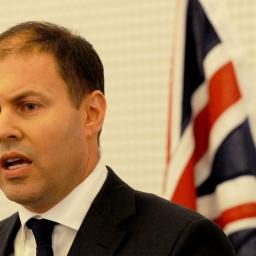
Energy and environment minister downplays Monday’s comments about a possible scheme for the electricity sector after internal pressureThe energy and environment minister, Josh Frydenberg, has folded in the face of internal pressure, declaring the Turnbull government will not pursue emissions trading as part of adjusting its climate policy to meet Australia’s international emissions reduction targets.
|
by Reuters on (#248YH)
Producer shifts focus to supplying end consumers and providing backup power to complement growing renewable outputBritain’s largest coal power producer, Drax, is bidding to buy Opus Energy and four gas stations in a move away from its coal legacy that has been welcomed by investors.
by Letters on (#248K9)
Alice Bell is right that we need to talk about climate change (Opinion, 6 December). However, when we do, people often say there is no point in cutting one’s own emissions (by not flying, for example) because hardly anyone else is; and they say there is no point in the UK doing anything, because other countries aren’t. Sadly, people in other countries are probably using the same arguments and so, in a self-fulfilling way, it could be argued that they are all correct. Certainly there is no evidence that nations or individuals are actually going to make the changes needed to cut greenhouse gas emissions adequately, whatever pledges may have been made at international conferences.Clearly, we need a new approach: to invest in a combination of carbon scrubbing, geoengineering, third-way solutions, forest protection and reforestation. These can be funded by an international financial transactions tax, and they don’t involve lifestyle changes people won’t accept. We need to start now.
by Alison Moodie on (#2489Z)
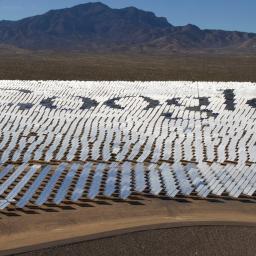
A global campaign to promote 100% renewable energy use in the business world means more Silicon Valley giants are now investing in solar and wind electricityTech giants are jockeying to be the first to hit a 100% renewable energy goal. Google, which has invested in solar and wind energy for a decade, intends to get there by 2017.
 |
by Adam Vaughan on (#247R3)
Internet giant says renewable energy is increasingly lowest cost option and it will not rule out investing in nuclear powerGoogle’s data centres and the offices for its 60,000 staff will be powered entirely by renewable energy from next year, in what the company has called a “landmark momentâ€.
|
by Alice Ross on (#2470J)
Nigeria, Benin, Togo, Ghana and Ivory Coast to block imports from oil companies and traders of diesel with sulphur levels many times European limitFive west African countries have announced measures to end the practice of European oil companies and traders exporting “African quality†diesel – highly polluting fuels that could never be sold in Europe.Swiss commodity traders were accused in a report published in September by Swiss NGO Public Eye of exporting fuels to west Africa with sulphur levels that are sometimes hundreds of times higher than European levels. Continue reading...
 |
by Andrea Thompson for Climate Central, part of the G on (#246ZA)
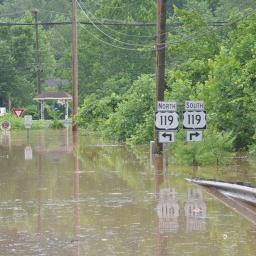
As global temperatures rise, extreme downpours will increase putting huge strains on infrastructure and agriculture, finds climate studyWhen the skies open up and deluge an area, the results can be catastrophic, with roads washed out and homes destroyed by the resulting flash floods. Such extreme downpours are already occurring more often across the US, but a new study finds that as global temperatures rise, storms could dump considerably more rain and skyrocket in frequency.The study, in the journal Nature Climate Change, suggests that storms that now occur about once a season could happen five times a season by the century’s end, a 400% increase. Continue reading...
|
by Rob Davies on (#246FY)
Polluting generators could win multimillion-pound contracts, with some also eligible for generous tax breaksThe owner of Britain’s energy network is gearing up to buy more power from suppliers to ensure the country’s lights stay on, with polluting diesel generators among the providers vying for contracts.The National Grid needs back-up electricity sources that kick in when, for instance, demand is high but the weather is not breezy enough to power wind farms. It secures this back-up power through the annual capacity market auction that begins on Tuesday and will see controversial “diesel farms†taking part. Continue reading...
by Gareth Hutchens on (#246JZ)
Asian Infrastructure Investment Bank releases draft energy strategy prioritising renewable projectsThe Australian government is lobbying for the Asian Infrastructure Investment Bank to put more emphasis on coal and nuclear after concerns renewable energy projects were being prioritised.Draft guidelines were circulated by the bank that suggest it should prioritise investments in renewable energy projects across Asia while the Turnbull government has argued fossil fuels will play a significant role in energy generation in the region for decades to come.. Continue reading...
 |
by Arnel Hecimovic on (#246GY)
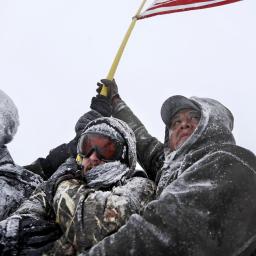
Over the weekend, military veterans joined Native Americans and activists at the camp in North Dakota – now amid heavy snow – where they’ve spent months trying to stop construction of the Dakota Access pipeline. Then, on Sunday, the US Army Corps of Engineers announced it would not allow the pipeline to run under a lake on the Sioux Tribes Standing Rock reservation. It remains to be seen whether the decision will be reversed next year when Donald Trump becomes president. The proposed 1,172-mile-long pipeline would transport oil from the North Dakota Bakken region through South Dakota, Iowa and into Illinois. Continue reading...
|
by John Vidal on (#246F0)
England fells more trees than it plants and government must keep to its targets to evade deforestation, say forestry groupsEvery year Brazil, Congo and other developing countries are lambasted by environmentalists and western politicians for deforestation at a time when trees are needed to counter climate change and prevent flooding.
 |
by Mark Cocker on (#2467M)
Claxton, Norfolk They rose and fell, swaying as if one organism were breathing slowly, and as they approached they never made soundI saw the goose skein as a tentative line in a southern blue sky and, since it was arrowed straight towards me, I rested arms and binoculars on a gate to ease the muscle ache.
|
by Joshua Robertson in Brisbane and Michael Safi in D on (#245X6)
Analysts says $1bn loan proposal shows lack of financier interest and Adani may not meet investment criteria due to position that public funding ‘not critical’Doubts have emerged over the eligibility of Adani’s rail link for public funding as the company pushes ahead with plans for the controversial Carmichael coal project with a promise of 600 jobs at a new operational headquarters in Townsville.The Queensland premier, Annastacia Palaszczuk, said “you can’t get the smile off my face†when commenting on the news of the potential jobs boost in a television interview. Continue reading...
 |
by Jon C Day, Alana Grech and Jon Brodie for the Conv on (#245M3)
The government hopes its latest reports will keep the reef off Unesco’s world heritage in-danger list. But protecting the reef for future generations involves addressing the threat posed by climate changeAt first glance, the progress reports on the Great Barrier Reef released last week by the Australian and Queensland governments might seem impressive.The update on the Reef 2050 Plan suggests that 135 of the plan’s 151 actions are either complete or on track. Continue reading...
|
by Katharine Murphy Political editor on (#245JW)
Prime minister calls climate policy reassessment ‘business as usual’ as infighting breaks out in Coalition ranksMalcolm Turnbull says Tony Abbott is responsible for the review of the Coalition’s Direct Action policy because it was built into the work program when he was prime minister.
by Ben Oquist on (#245HW)
If the proposed Adani mine is not viable without public subsidies then the government are backing the wrong horse
by Paul Brown on (#2450Q)
Vikings who settled in the north of England have handed down more than their names for landscape featuresThirty years ago farmers in the Yorkshire Dales never wore gloves even when the temperature was well below zero and there was snow on the ground. Asked if their hands felt cold one replied: “Aye a little, but only twice a day.“I feel it first thing in the morning when I first go out, but after a few minutes my fingers go numb, like, and then I don’t feel them again until I finish my evening work and go inside the house. Then they sting a bit as they warm up again.†Continue reading...
 |
by Gisela Kaplan on (#244JE)
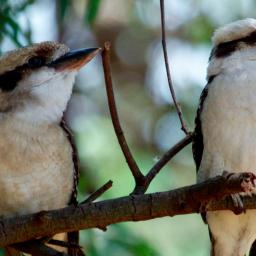
An expert on Australian native species says birds can have empathy, grieve after the death of a partner and form long-term friendshipsIt is generally quite well-known that kookaburras live in family groups: a bonded male and female, plus a retainer of their offspring. Numbers matter in kookaburra society because a neighbouring tribe may have its eye firmly on the expansion of territory – and may invade a smaller group.This means the injury and eventual death of one bird – most crucially of one of the parent birds – can have disastrous effects for the remaining group. They could be evicted from their home, which is likely to lead to their death. Continue reading...
|
 |
by Paul Karp on (#244GC)
Poll commissioned by the Australia Institute finds 41% oppose funding the link between the coalmine and port in north Queensland while 26% support itMore Australians oppose the idea of funding infrastructure for the Carmichael coalmine than support it, although Queenslanders are more evenly split, a new poll has found.The Research Now poll commissioned by the Australia Institute, released on Tuesday, found that 41% opposed funding construction of infrastructure to help the Adani coalmine, compared with 26% who supported it and 33% who were undecided. Continue reading...
|
by Katharine Murphy Political editor on (#244E9)
Emissions intensity scheme is the least costly way of reducing greenhouse gases, Energy Networks Australia and Csiro sayAustralia’s electricity and gas transmission industry is calling on the Turnbull government to implement a form of carbon trading in the national electricity market by 2022 and review the scope for economy-wide carbon pricing by 2027.Energy Networks Australia warns in a new report examining how to achieve zero net carbon emissions by 2050 that policy stability and regulatory certainty are the key to delivering lower power prices and reliable electricity supply. Continue reading...
by Calla Wahlquist on (#244E8)
Academic decries what he describes as yet another bait-and-switch to reduce overall spending on conservation in AustraliaScrapping Australia’s “green army†without restoring Landcare funding to pre-2014 levels would further weaken community conservation efforts, experts have said.The Turnbull government is reportedly set to abolish the derided environmental program – to the dismay of its creator and greatest champion, the former prime minister Tony Abbott. Continue reading...
 |
by Julia Carrie Wong in Cannon Ball, North Dakota on (#244CA)
Though the US denied a permit for the Dakota Access pipeline, many worry that the Trump administration and the pipeline company could reverse the decisionNative American activists at the Standing Rock “water protector†camps vowed to remain in place the morning after the US Army Corps of Engineers denied a key permit for the Dakota Access pipeline, with many expressing concerns that the incoming Trump administration and potential legal action from the pipeline company could reverse their victory.Related: Dakota Access pipeline: US denies key permit, a win for Standing Rock protesters Continue reading...
|
 |
by Guardian Staff on (#243KF)
Sacha Dench, known as the ‘human swan’ completes her three-month-long paramotor journey from Russia to the UK on Monday. Dench made the record breaking 4,500 mile trip to raise awareness for the dwindling Bewick swan population. The journey followed the migratory path the swans undertake each year. The final leg of the trip involved crossing the Channel
|
 |
by Peter Beaumont in Jerusalem on (#243GA)
Red-mouthed rock shell was one of main sources of Tyrian purple and study blames its collapse on rising sea temperaturesThe shellfish that was one of the main sources of Tyrian purple – one of the most storied and valuable trading products in the ancient world – has disappeared from the eastern Mediterranean coast, amid warnings of an ongoing multi-species collapse blamed on global rises in sea temperatures.Described by Aristotle and Pliny among other ancient writers, Tyrian purple or imperial purple was a dye extracted from shellfish along the Levant coast and favoured by emperors and kings in a trade of huge value. Associated with royalty, clothes with purple in them were believed to convey high status. Continue reading...
|
|
by Martin Lukacs on (#2439P)
A historic growing movement for Indigenous rights is a key to protecting land and water and preventing climate chaosAs Indigenous peoples faced off against armed police and tanks near the Standing Rock Sioux reservation in Dakota, theirs wasn’t just a battle over a pipeline. It was a battle over a story that could define the future of America.
|
 |
by Damian Carrington on (#242YK)
Oxford University professor who studied Cecil says strictly regulated hunting could help stop destruction of lion habitatsTrophy hunting could help conserve lions, according to the Oxford University scientist who had studied Cecil the lion for years before the animal was killed by an American dentist.
|
by Guardian Staff on (#242VM)
Google Earth timelapse show how the earth has changed over 32 years. A series of videos highlight the changing faces of urban and natural environments across the globe. Google combined over 5 million satellite images acquired over the past three decades by five different satellites to create the timelapses
by Patrick Barkham on (#242KS)
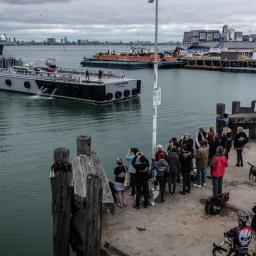
Sacha Dench is first woman to cross the Channel in a motorised paraglider, as part of her journey following migrating birds from Russia to BritainThe conservationist and “human swan†Sacha Dench has become the first woman to cross the English Channel in a motorised paraglider during her epic 4,500-mile journey following migrating birds from the Russian tundra to Britain.
 |
by Agence France-Presse on (#242PC)
Fast new patrol vessel built with Dutch, British and Swedish lottery funds aims to challenge Japan’s defiance of international court ruling on whalingTwo ships have left Australia bound for the freezing Southern Ocean to confront the Japanese whaling fleet in an annual high-seas battle, the environmental activist group Sea Shepherd has said.The organisation’s flagship, Steve Irwin, departed for Antarctic waters on Monday along with a fast new patrol vessel, Ocean Warrior, built with financial support from the Dutch, British and Swedish lotteries. Continue reading...
|
by Dana Nuccitelli on (#242JH)
Climate scientists and real science journalists pushed back, holding the post-truth crowd accountable
 |
by Oliver Milman on (#242J7)
Former vice-president expects backlash from environmentalists against Trump and hopes Barack Obama and Hillary Clinton will join fightThe urgent threat of climate change means there is “no time to despair†over the election of Donald Trump, according to former vice-president Al Gore, who hopes that Barack Obama and Hillary Clinton will join an escalated climate campaign against the president-elect.
|
by Press Association on (#242CZ)
Highest ever rainfall recorded in UK was in December 2015 at Honister Pass in Lake District with 341.4mm falling in 24 hoursAn appraisal of the winter floods of 2015-2016, published on the first anniversary of Storm Desmond, reveals it ranks alongside the devastating flooding of March 1947 as the largest event of at least the last century.
by Press Association on (#242BG)
About 100 people forced out of their homes and Upper Street area of north London borough closedDozens of people have been evacuated from their homes in north London after a water main burst, causing severe flooding.The water was at a depth of two metres in the basements of properties on Charlton Place in Angel, Islington, and about 100 people were evacuated, London fire brigade said. Continue reading...
 |
by Katharine Murphy Political editor on (#241RN)
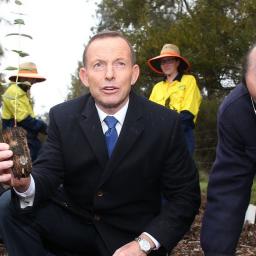
‘It’s a bad principle to axe your own policy for the Greens policy,’ former prime minister complainsTony Abbott has lashed out after reports that the green army will be scrapped in the looming midyear budget update, declaring that he is “dismayed†by the development and accusing Malcolm Turnbull of dancing to the tune of the Greens.
|
by Peter Walker Political correspondent on (#24294)
Mayor’s proposed investment gets near levels seen in cycle-friendly nations such as Netherlands and DenmarkLondon’s mayor, Sadiq Khan, has promised to spend £770m on cycling initiatives over the course of his term, saying he wants to make riding a bike the “safe and obvious†transport choice for all Londoners.Following criticism that Khan has not been as bold as his predecessor, Boris Johnson, in committing to new bike routes, and amid increasing worries about air quality in London, Khan’s office has set out what is described as a hugely ambitious programme to boost cyclist numbers. Continue reading...
by Gareth Hutchens on (#2426Y)
But an analyst warns that it is not clear which part of the sprawling Indian conglomerate would receive the moneyThe conservative backbencher George Christensen has backed the idea of the controversial mining company Adani getting a $1bn loan from the Turnbull government for a rail line in his Queensland electorate.But an analyst has warned the government would have to conduct strict due diligence to ensure the loan was not funnelled through the Cayman Islands tax haven. Continue reading...
by Pat Conroy on (#241V3)
Not only is the government taking short cuts on climate change, it is setting future generations up for a massive cleanup bill
by Carey Davies on (#241V4)
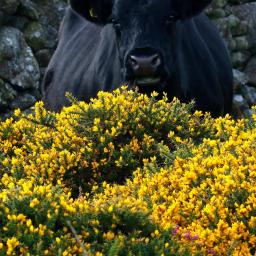
Llanberis, Snowdonia In a clearing, a black-headed beast with horns as magnificent as any fairytale faun, is munching grass next to an old red-painted winding houseThe glug-glug of bubbles on the surface is a sign of divers in the depths. I watch their dark shapes rippling slowly in the emerald water for a while, before taking a slippery slate staircase winding up through the still autumnal oak woodland surrounding the flooded Vivian quarry.In a clearing lit briefly by November sun, a brown-coated, blacked-headed beast with horns as magnificent as any fairytale faun, is munching grass next to an old red-painted winding house. It is a scene of storybook strangeness. The horned head turns slowly, fixing me briefly with a pair of yellow eyes, then returns indifferently to its business. Continue reading...
 |
by Christopher Knaus on (#241SR)
Environmentalists say mandatory labelling on food would limit demand for palm oil products and reduce destructive impact of plantationsEnvironmentalists have warned that Australia’s repeated delays on mandatory palm oil labelling are allowing deforestation and the destruction of orangutan habitats to continue unabated.A proposal requiring palm oils to be specifically listed on food labels has now been under consideration by Australian and New Zealand ministers for more than five years. Continue reading...
|
 |
by Guardian Staff on (#2419J)
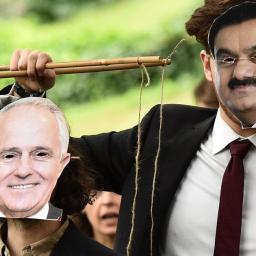
As prime minister Malcolm Turnbull plans to meet the boss of Indian company Adani in Melbourne, anti-fossil fuel campaigners rally against the federal government proposal to lend $1bn to the company to build a rail line from the planned Carmichael coalmine to the sea Continue reading...
|
 |
by RC Spencer on (#240WP)
Originally published in the Manchester Guardian on 9 December 1916Surrey, December 7
|
 |
by Bill McKibben on (#240T5)
The defeat of an energy company by indigenous activists shows what nonviolent unity can accomplish. There are lessons here as we enter a challenging new ageThe news that the US federal government has refused to issue the permit needed to run a pipeline under the Missouri river means many things – including that indigenous activists have won a smashing victory, one that shows what nonviolent unity can accomplish.From the start, this has been an against-the-odds battle. Energy Transfer Partners, the company building the pipeline, is as wired as they come: its line of credit links it to virtually every bank you’ve ever heard of. And operating under a “fast-track†permit process, it had managed to win most of its approvals and lay most of its pipe before opponents managed to mount an effective resistance. Continue reading...
|
 |
by Gareth Hutchens on (#240SP)
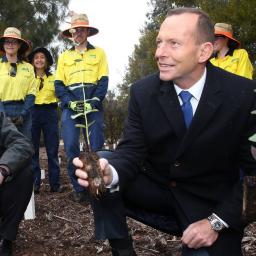
Former prime minister’s policy reportedly to be dumped to increase Landcare funding as part of backpacker tax deal with GreensTony Abbott’s signature “green army†has been earmarked for the axe in the upcoming midyear budget review, according to reports.The move would save $350m, with $100m used to increase funding to Landcare as part of the government’s backpacker tax deal with the Greens. Continue reading...
|
by Letters on (#240BG)
In response to Dr Robin Shipp’s letter about the unfair requirements for charging electric cars (3 December), I’d like to point out one more: that you can’t pay cash for a charge. Whether you pay with a smartphone (that tracks you whenever it is operating), or with a proposed swipecard (that would track you whenever you use it), it does you wrong by tracking your movements. You can fill your car with gasoline anonymously, paying cash; electric cars should offer the same.Related: Business secretary says electric vehicles at heart of industrial strategy Continue reading...
by Michael Slezak and Nick Evershed on (#240BJ)
Exclusive: In less than four years the country has ‘spent’ almost 20% of its greenhouse gas allowance to 2050, analysis shows
by Nick Evershed and Michael Slezak on (#240BH)
Guardian Australia has partnered with NDEVR Environmental to produce a quarterly report calculating progress towards keeping global warming below 2C
by Katharine Murphy Political editor on (#2402X)
Climate policy review will look at possible changes to safeguard mechanism, which could convert to baseline and credit schemeThe Turnbull government has left open the option of reinstating a form of carbon trading in the electricity sector, allowing its looming review of the Direct Action climate policy to consider policy mechanisms to reduce emissions on a “sector-by-sector basisâ€.
 |
by Carol J Clouse on (#2401D)
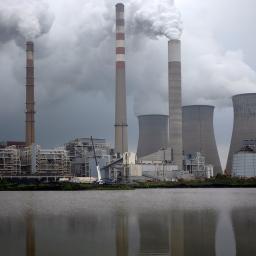
A technology to capture carbon dioxide from fossil fuel power plants has struggled to become affordableDonald Trump has tossed around the term “clean coal†in his murky plan to boost jobs in the fossil fuel industry for months now. Most recently in a video in which the president-elect vowed to “cancel job killing restrictions on the production of shale energy and clean coal, creating many millions of high-paying jobs†during his first 100 days in the office.What Trump meant by “clean coal†is unclear. Coal is a dirty fuel with a declining fortune. With production falling, at least half a dozen coal mining companies have filed for bankruptcy within the past two years. Technical advances in fracking have increased the production of natural gas and driven down prices, making it cheaper than coal and a more attractive source of energy for power generation. How Trump plans to beat that economic reality to promote the production of both coal and natural gas is puzzling. Continue reading...
|
 |
by Associated Press in Mandan, North Dakota on (#23ZVS)
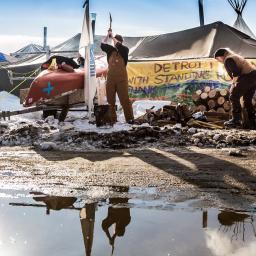
Officials say they will move from north of Backwater Bridge if Dakota Access pipeline protesters stay south and go there only if meeting is plannedNorth Dakota authorities have said they will move away from a key bridge near the main Dakota Access pipeline protest camp by Sunday afternoon if demonstrators agree to certain conditions.Related: Justice department to deploy mediators to Standing Rock to 'maintain the peace' Continue reading...
|