 |
by Letters on (#175FE)
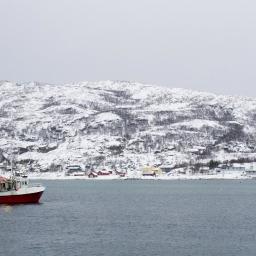
The question that the scientists at the Institute of Marine Research in Norway have to answer is why it would not be in the best interests of the whole area to have marine reserve status as its default position (Targeted marine protection provides best hope for the Arctic, Letters, theguardian.com, 11 March)?This would mean that no fishing could take place (be licensed) unless that proposal to fish could prove that it was not injurious. This is exactly what all other human marine activities have to do, so why should fishing be exempt? Continue reading...
|
| Link | http://feeds.theguardian.com/ |
| Feed | http://feeds.theguardian.com/theguardian/environment/rss |
| Updated | 2026-06-13 23:30 |
 |
by Lauren Zanolli in Isle de Jean Charles, Louisiana on (#175A4)
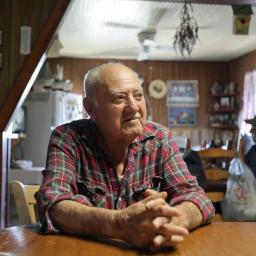
Isle de Jean Charles has lost 98% of its land and most of its population to rising sea levels – but as remaining residents consider relocation, what happens next is a test case to address resettlement needsWenceslaus Billiot, an 88-year-old native of Isle de Jean Charles, Louisiana, remembers growing up on a much different island than the two-mile sliver of his ancestral home that remains today.“When I was a kid I used to do trapping in the back,†he said, gesturing towards the back of the small, one-story house that stands elevated on stilts to escape the floods that roll in from the bayou after nearly every storm. “You could walk for a long time. Now, nothing but water.†Continue reading...
|
 |
by James Dyke on (#1758B)
We treat climate change records as we treat new fashions, phones or films. But we seem unable to understand that we are driving such changesAnd another one bites the dust. The year 2014 was the warmest ever recorded by humans. Then 2015 was warmer still. January 2016 broke the record for the largest monthly temperature anomaly. Then came last month.February didn’t break climate change records – it obliterated them. Regions of the Arctic were were more than 16C warmer than normal – whatever constitutes normal now. But what is really making people stand up and notice is that the surface of the Earth north of the equator was 2C warmer than pre-industrial temperatures. This was meant to be a line that must not be crossed. Continue reading...
|
 |
by Nick Mead in Taipei on (#174V2)
Taiwan’s capital – notorious for elevated highways and swarms of scooters – is in the early stages of a cycle revolution powered by legalised sidewalk cycling and a bike-share scheme where more than half of users are womenA swarm of scooters forms at the head of a queue of traffic waiting for the lights to change. Visors down, engines revving, they jockey for position ahead of the cars, trucks and buses on a specially marked patch of tarmac reserved for cyclists in many parts of the world.The buzz rises to a high-pitched crescendo and, as the lights turn green, they shoot off. A minute later the lights change and the process begins again. Taipei is home to almost one million scooters – as well as 2.7 million people. Like many other large Asian cities, the roads here are seen as no place for cyclists. Continue reading...
|
 |
by Press Association on (#174T8)
Local authorities and retailers including Asda, Sainsbury’s and Tesco sign voluntary Courtauld 2025 agreement to reduce food and drink wasteBritain’s leading supermarkets have pledged to drive down food and drink waste by a fifth within the next decade.Retailers including Asda, Sainsbury’s, Tesco and Morrisons are backing a voluntary agreement, which also targets a 20% reduction in greenhouse gas emissions created by the food and drink industry. Continue reading...
|
by Joshua Robertson on (#174K2)
Environment minister says retrospective proposals prompted by ‘unacceptable prospect’ of public paying to clean up after Yabulu nickel refineryClive Palmer could be forced to shoulder the $100m cost of cleaning up his Queensland Nickel operation under proposed state laws that would expand the chain of corporate responsibility for pollution.The Palaszczuk government has introduced a bill that would let environmental authorities pursue parent companies, executives or ultimate owners for the cost of rehabilitating industrial sites after the operator collapsed. Continue reading...
 |
by Michael Slezak on (#174FX)
Australia’s ambassador to the US defends criticism of his country’s climate stance in an editorial – but how do the points he makes stack up?Australia’s former treasurer Joe Hockey has weighed into the debate about cuts to climate research at CSIRO, by writing a letter to the New York Times.
|
 |
by Melissa Davey on (#174D9)
Victoria’s Environment Protection Authority alleges La Trobe Valley residents were exposed to toxic carbon monoxideVictoria’s Environment Protection Authority has charged four companies with air pollution offences following a comprehensive investigation into the devastating Hazelwood mine fire which occurred in February 2014 and burned for 45 days.Related: Hazelwood mine manager charged with 10 offences over 2014 Morwell fire Continue reading...
|
 |
by Tess Riley on (#174DP)
Harvesting fruit and vegetables is both educational and rewarding. We talk to schools that are digging in and offer ideas to get you startedWhen Chris Collins left school aged 16 in the early 1980s, he wasn’t sure where his life was heading. “I just couldn’t sit still in the classroom,†he says. “All I knew was that I wanted to be outside.â€Today, Collins has come full circle, dedicating much of his time to championing gardening in schools after jobs including rainforest work in west Africa, garden design in Japan and head gardener at Westminster Abbey. He was also Blue Peter’s resident gardener from 2004-13. “It’s vitally important that kids understand where food comes from,†he says. “Learning is about so much more than being at a desk.†Continue reading...
|
by Rachel Aldred on (#174DN)
Having slower traffic where people live is a start. But to really boost cycling we need less traffic – and that means curbing rat runsSpeed limits of 20mph are being seen increasingly on residential streets, and they’re popular: recent Department of Transport research showed 73% of people are in favour. Campaigning from groups like 20’s Plenty for Us and Living Streets has paid off, with support growing significantly.Slower speeds are necessary to reduce injuries. But even if 20mph limits can be properly enforced – a big question – would this be enough? Do they, alone, create pleasant, liveable neighbourhoods, where lots of people will choose to walk or cycle? Do we want to see a steady stream of traffic in residential streets, even travelling at 20mph, or should our goals be more radical? Continue reading...
 |
by Michael Slezak on (#174CE)
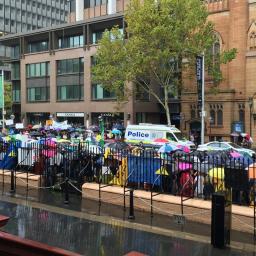
The Law Society of NSW and the NSW Bar Association have strongly condemned an extension of anti-protest laws set to pass the NSW parliamentProposed laws that intend to increase tenfold the fines for coal seam gas and mining protesters in New South Wales have been strongly criticised by the Law Society of NSW and the NSW Bar Association, just as they are expected to be rushed through both houses of parliament.The reaction came as hundreds of protesters gathered outside Parliament House in Sydney to express their opposition to the proposals. Some of their placards read: “You gotta fight for your right to fight for your right.†Continue reading...
|
 |
by Eleanor Ainge Roy in Dunedin on (#174AW)
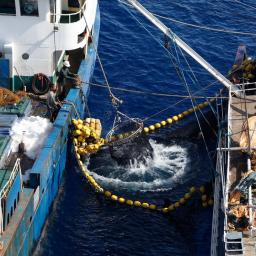
Calls for better policing of the industry as report finds licensed fishing vessels are responsible for majority of the illegal catchIllegal fishing in the Pacific Ocean is costing more than $600m a year and is mainly being carried out by legally licensed fishing vessels, a report has found.The Pacific Islands Forum Fisheries Agency released the 100-page report, which is the first in-depth attempt to investigate, quantify and place a monetary value on the illegal, unreported and unregulated fishing practices (IUU) in the region. Continue reading...
|
 |
by Mark Cocker on (#1747J)
Claxton, Norfolk Such was the persecution of buzzards by pheasant-killing folk that until 1994 I’d never seen one in NorfolkMy guess is that on most days in the last 5,000 years, buzzards have been commonplace over our village. Yet such was the relatively recent persecution of them by pheasant-killing folk that until 1994 I’d never seen one at all in Norfolk. And it was only this century that I found them breeding locally. Now I spot them routinely from the office, and 10 during a walk on the marsh is nothing exceptional. However I prefer to look upon the common buzzard as a rightful returnee rather than a recently arrived stranger.Related: Buzzard trapping plan abandoned as government U-turns again Continue reading...
|
 |
by John Vidal on (#1745H)
One in four deaths avoidable as enviornmental factors contribute to over 100 diseases, with air pollution responsible for 25% of strokes and 19% of cancersNearly one in four deaths are linked to unhealthy environments and are avoidable, a new World Health Organisation study – the first major assessment of environmental risk since 2006 – has shown.It suggests environmental risks now contribute to more than 100 of the world’s most dangerous diseases, injuries, and kills 12.6 million people a year – nearly one in four or 23% of all deaths. Continue reading...
|
 |
by Michael Slezak on (#1740H)
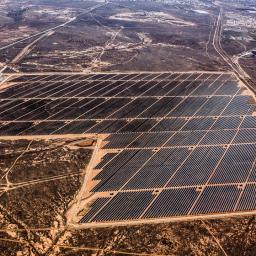
Latest ABS figures show job decline in renewable energy industry, with consumer groups blaming government for the loss of 5,100 full-time jobsMore than a quarter of the jobs in the renewable energy industry have disappeared since 2011, with a continued decline in the latest figures released by the Australian Bureau of Statistics.The clean energy industry, consumer groups and conservationists all blamed federal government actions, like reviewing the renewable energy target and maintaining the policy of axing the Australian Renewable Energy Agency and the Clean Energy Finance Corporation, despite the bills axing them being blocked by the Senate.
|
by Jonathon Porritt on (#173PZ)
He may not want to confront climate-change deniers in his party, but it’s time for the prime minister to seize the low-carbon agenda for the opportunity it isEven for a sympathetic observer from the UK, the politics of climate change in Australia is, to say the least, vexatious. But it’s now entering a more critical phase than ever before. The mismatch between the conclusions of the Paris agreement in December last year and the failure of Australia’s political establishment to understand what’s going on “out there in the rest of the world†is putting Australia’s entire economy at risk.When the prime minister, Malcolm Turnbull, wrested the prime ministership from Tony Abbott in September last year, the international climate community breathed a deep sigh of relief. With the former Canadian prime minister, Stephen Harper, Abbott was seen as the most egregiously pig-headed climate-change denier in western world had ever thrown up. By contrast, Turnbull had done OK on climate change as a previous leader of the Liberal party, so it was assumed he would do a lot better second time round. Continue reading...
by Lenore Taylor Political editor on (#173N1)
Australia’s emissions will almost certainly rise under policies that don’t put limits on increases from industry, experts sayExperts have expressed deep scepticism at a prediction by the environment minister, Greg Hunt, that Australia’s greenhouse gas emissions “peaked†10 years ago.
 |
by Guardian Staff on (#173CX)
The panel on the ABC’s science-themed Q&A episode discusses the consequences of climate science cuts at the CSIRO. Emma Johnston, a marine biologist from the University of New South Wales, says Nasa’s announcement that February was the most anomalously warm month on record showed measurement and modelling needed to be increased, not cut back. She says the science has been settled on whether climate change is occurring, ‘But what is a really active question is how climate change is going to play out’ Continue reading...
|
 |
by Stephen Moss on (#1738E)
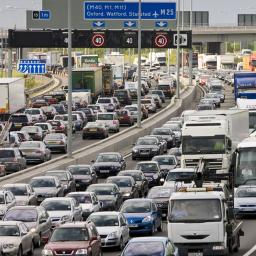
March can be a fickle month: it proverbially “comes in like a lion and goes out like a lambâ€. March winds often feature strongly, as do late winter cold spells, and these are often accompanied by heavy falls of snow.But just once in a while the gods smile on our little island and bring a spell of settled, fine and very warm weather, so that pavement cafes are thronged with T-shirted sunseekers, in scenes more reminiscent of summer. Continue reading...
|
 |
by Adam Vaughan on (#172WW)
Energy minister Andrea Leadsom responds to call from Ed Miliband, saying Paris climate pledge will be legally bindingThe UK will enshrine in law a long-term goal of reducing its carbon emissions to zero, as called for in last year’s historic Paris climate deal.
|
 |
by Michael Slezak on (#172T4)
Academics and general staff commend university for withstanding public criticism over initial divestment and call for further share salesHundreds of academics and other staff at the Australian National University have called on the university to divest completely from fossil fuels, in an open letter addressed to the ANU council.Related: ANU fossil fuel divestment decision ‘stupid’, Tony Abbott says Continue reading...
|
 |
by Alison Moodie on (#172D1)
A new deal between drug companies formed at Davos aims to step up the fight against antibiotic resistance. But is it too little too late?In January, a coalition of 85 biotechnology, pharmaceutical and diagnostics companies, including Johnson & Johnson and Pfizer, came together at the World Economic Forum in Davos to form a landmark agreement to help combat antibiotic resistance. The companies have called on governments to help fund research and aid in developing a “sustainable and predictable†market for new drugs.It’s a promising step, but there’s still a long way to go. Even when new antibiotics are discovered, developing them for use in the marketplace remains a big challenge. According to a May 2015 review on antimicrobial resistance, it’s often more profitable for pharmaceutical companies to pay to develop drugs intended for long term use, like medication to treat diabetes or heart disease, rather than antibiotics, typically used for a few days. Continue reading...
|
 |
by Guardian Staff on (#172D3)
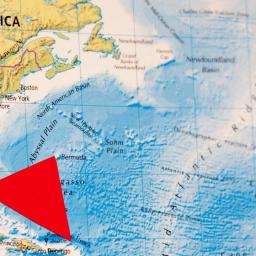
Researchers say methane rising to the surface of the ocean could explain the sudden loss of ships in the western North Atlantic. And anywhere else, for that matterName: The Bermuda TriangleAge: 52 years. Continue reading...
|
 |
by Orrin H Pilkey, Linda Pilkey-Jarvis and Keith C Pi on (#1727H)
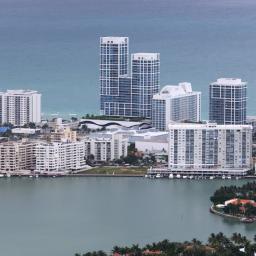
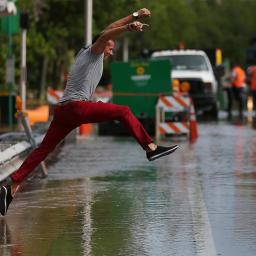
It is preposterous to build in areas that are bound to flood. So why are real estate companies still doing it?Sea-level rise may be the most predictable outcome of climate change. Expanding warmer waters and melting land ice both contribute to flooding – and scientists agree that we are locked into sea-level rise for centuries to come. The question is not if we will retreat from the coast, but when. Still, the rush to develop the coast occurs at a maddening pace.We now know that 13.1 million people are at risk of flooding along the US coast by the end of this century. A new study published in Nature Climate Change further suggests that massive migration will occur unless protective measures are taken. Since sea-level rise will speed up after the end of the century due to increased glacier and ice sheet melting, the flooding we face in this century is just the tip of the iceberg. Continue reading...
|
 |
by Oliver Milman on (#1725B)
Combination of coastal population growth and rising sea levels could drive a shift comparable to the 20th century’s Great MigrationUS coastal areas occupied by more than 13 million people will be at risk of being completely swamped by the sea under a worst-case climate change scenario, new research predicts, potentially leading to a population upheaval comparable to the Great Migration of the 20th century.Population growth in coastal areas over the course of this century, particularly in vulnerable areas of Florida, is likely to collide with the reality of rising seas caused by melting glaciers and thermal expansion as the planet warms. Continue reading...
|
by Frances Ryan, Stephen Bush, Isabel Hardman, Owen J on (#17227)
From childcare to housing and pensions, these are the issues that Generation Y need George Osborne to tackle on Wednesday Continue reading...
 |
by Patrick Barkham on (#1720F)
Architect Bjarke Ingels has managed to make Copenhagen’s waste-to-energy plant good to look at. Why is Britain incapable of making form beautify function?I was mooching through the centre of Copenhagen last week when my architect friend spotted two chimneys sticking from a sensuous steel building going up just across the water. This is Denmark’s new waste-to-energy plant, which in Britain would be called an incinerator.The Danes are annoyingly incapable of designing anything horrible, and this vast factory, which will burn a quarter of all Denmark’s rubbish when it opens next year, is wrapped in a ski slope for the citizens of the capital. The chimneys will periodically emit huge rings of steam (not smoke) to elegantly demonstrate how much carbon dioxide is being released into the atmosphere by the plant – at one ring per tonne. Continue reading...
|
 |
by Associated Press in Bourne, Massachusetts on (#171TR)
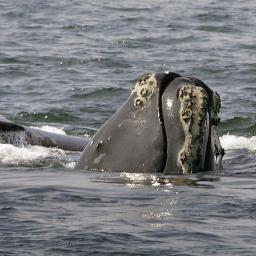
About half of the estimated 500 or so animals have been drawn to Massachusetts bay’s plankton-rich waters over past few springs, experts sayCape Cod is seeing a lot more of some singularly welcome tourists: endangered right whales enticed by the fine dining possibilities of its plankton-rich bay.Experts tracking the creatures, which are some of the rarest on the planet, say nearly half the estimated global population of 500 or so animals has been spotted in Cape Cod Bay over the past few springs. Continue reading...
|
 |
by Steven Morris on (#171M9)
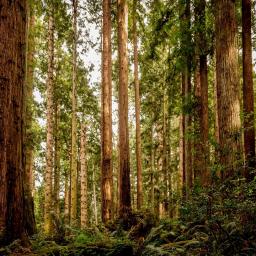
Though there is 5,000 miles between California and Cornwall, south-west England’s warm, damp climate is expected to suit the redwoods perfectlyForty coast redwood trees were planted on Monday at the Eden Project in the south-west of England, the first time a “forest†of these big friendly giants from north America has been introduced to Europe.By the year 2050 they will soar 25m into the Cornish sky. If all goes to plan they will become a new landmark, thrilling and amazing people for many centuries to come. Continue reading...
|
 |
by Dan Collyns in Lima on (#171ER)
Like in Ridley Scott’s The Martian, Nasa is running tests to see if potatoes could survive the climatic extremes of the red planetGrowing potatoes on Mars may sound like a fantasy straight out of sci-fi drama The Martian – in which a marooned astronaut survives on the red planet by tending spuds. But it’s also the focus of an experiment by the US space agency, Nasa, which is teaming up with the Peru-based International Potato Centre (CIP) to see if potatoes could be grown in such harsh conditions.“The Martian is completely possible,†says astrobiologist Julio Valdivia-Silva, the principal scientist working on the experiment in Peru. Continue reading...
|
 |
by Kristine Wong on (#171C2)
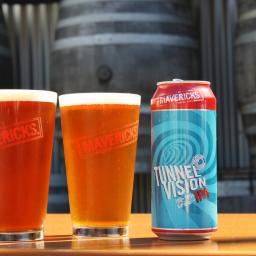
A San Francisco brewery is using Nasa technology to make beer with water from sinks and showers, while other brewers are finding new ways to go greenIn autumn of 2014 – three years into California’s devastating drought– architect Russ Drinker became fixated on brewing beer from recycled greywater (that is, water that’s been treated after use in sinks, showers and washing clothes).
|
 |
by Rowena Mason Political correspondent on (#171AF)
Caroline Lucas says Brexit would threaten UK’s environmental protection and rights at workThe Green party has launched its EU referendum campaign, promising to be “loud and proud†about backing Britain’s membership.Caroline Lucas, the party’s only MP and board member of the Britain Stronger in Europe group, said mobilising hundreds of thousands of Green supporters would be crucial to the remain campaign. Continue reading...
|
 |
by Arthur Neslen in Brussels on (#1714R)
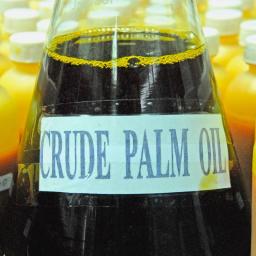
Renewable transport goal has encouraged biofuels including those from palm oil and soybean, which are found to be worse than diesel oil for emissionsEuropean Union renewable energy targets may have increased greenhouse gas emissions because the dirtiest biofuels produce three times the emissions of diesel oil, according to the most complete EU analysis yet carried out.Biodiesel made from palm oil emits more than three times as much and soybean oil around twice as much, when the crops’ effects on land use are considered, the research by the Ecofys consultancy for the European commission found. Continue reading...
|
by Dana Nuccitelli on (#170ZY)
CNN moderators ask climate questions in the Democratic and Republican presidential debates in FloridaLast week, the Democratic and Republican presidential candidates participated in debates in Florida. A bipartisan group of 21 Florida mayors wrote to the debate moderators to argue it would be “unconscionable for these issues of grave concern for the people of Florida [climate change and sea level rise] to not be addressed.†The moderators of both debates listened, and asked the candidates questions about climate change – including by far the most substantive climate question posed to the Republican candidates thus far. Continue reading...
 |
by Rowena Mason, Political correspondent on (#170VS)
Owen Paterson denies he sought to replace east European workers with older Britons on less than minimum wageA Conservative cabinet minister suggested getting pensioners to pick fruit and vegetables below the minimum wage instead of hiring Bulgarians and Romanians at the legal rate, a former Lib Dem coalition colleague has claimed.David Laws, who lost his seat at last year’s general election, revealed the episode in a new book about his days in government, saying the plan was hatched by Owen Paterson, the then environment secretary. The account is disputed by Paterson but Laws alleges that his former Tory colleague came up with the idea after proposing to end a scheme bringing over migrants from Bulgaria and Romania to work in the fields of British farmers. Continue reading...
|
 |
by Andy Stirling on (#170NR)
Two recent programmes on BBC Radio 4 highlight a worrying anti-democratic bias in discussions of science and technology.
|
 |
by Simon Taylor on (#170HT)
Britain is powerless: its reputation would be in tatters if it cancelled this folly. So now it must look in hope to EDFVincent de Rivaz, chief executive of EDF Energy, once boasted that British customers would be cooking their Christmas turkeys in 2017 with electricity from the proposed new Hinkley Point nuclear power station his firm is contracted to build. That was a time of optimism, and a grandiose claim in keeping with the £18bn grandiosity of the project itself; equivalent in cost to Heathrow Terminal 5 and the Olympics combined.De Rivaz was wrong about that deadline and optimism is now in short supply. Business situations are often described as zero-sum, or win-win. Hinkley Point, already the site of a power station in Somerset, is a rare case where the project could be damaging to both customers and investors. It would saddle British taxpayers with highly expensive power, and risk bankrupting a major French company, whose finances are already shaky. The government should cancel the deal. Continue reading...
|
 |
by Guardian Staff on (#170HP)
Dust plumes, plankton blooms and convective clouds were among the images captured by European Space Agency and Nasa satellites last monthAnalysis of data collected by several Landsat satellites suggests that northern Argentina’s Chaco forests face one of the fastest tropical deforestation rates in the world. Continue reading...
|
 |
by Fiona Harvey on (#170G6)
Analysis by Green Alliance finds subsidies for fossil fuel generation more costly than simplified system favouring renewablesBuilding more renewable energy capacity with public money would cost less than the current subsidy regime in the UK, a new analysis has found, despite government claims that subsidies are too expensive.Ministers have justified the slashing of some incentives to install solar panels, and ending support for onshore wind, on the basis that subsidising the construction of green energy was adding too much to energy bills. The government does not subsidise renewable generation directly but allows for incentives to some technologies through additions to consumer bills. Continue reading...
|
by Michael Slezak on (#170D6)
Expert blames global warming, as coral bleaches when water temperatures go above a certain threshold for an extended period of timeDamage to parts of the Great Barrier Reef has worsened, leading authorities to raise the alert to the second-highest level, indicating severe local coral bleaching.Related: Devastating global coral bleaching event could hit Great Barrier Reef next Continue reading...
 |
by Tony Greenbank on (#170CD)
Thirlmere, Lake District Since the storm destroyed the A591, there has been no direct road between north and southI board the 28-seater shuttle bus to Grasmere armed with trekking pole. Kids in the priority seats give the thumbs-up as I say: “Stay put. I’m not really disabled.†Though still recovering from a three-year-old hip revision procedure I can’t officially be so classified as I can still walk unaided. We climb Chestnut Hill above Keswick, every seat taken, everyone agog (folk feel like explorers).Since early December, when storm Desmond destroyed the A591 with landslides and floods, there has been no direct road between north and south. Now Stagecoach is once more running its 555 service to Grasmere, linking with double-deckers to Lancaster, with a new temporary route in place along this key Lakeland artery. Continue reading...
|
 |
by Michael Slezak on (#170V0)
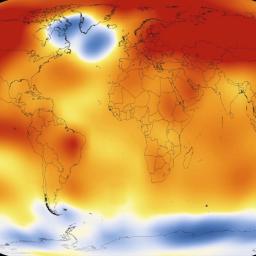
Warnings of climate emergency after surface temperatures 1.35C warmer than average temperature for the monthGlobal temperatures in February smashed previous monthly records by an unprecedented amount, according to Nasa data, sparking warnings of a climate emergency.
|
 |
by Mary Catherine O'Connor on (#16ZSQ)
Chemical giant Dow is testing new software that crunches data to help assign monetary value to the natural world and calculate the environmental impact of its workEveryone agrees that nature has value. It clothes, feeds and shelters us – and provides a spectacular playground. Yet we have never put a value on everything nature offers.Now, environmental and sustainable business consultants want to change that by forcing corporate leaders to take stock of the economic impact of how they manage natural resources. By accounting for this so-called natural capital, the advocates hope to see more businesses adopting practices that are both good for the environment and long term profitability, especially as climate change will further deplete natural resources, causing their values to climb and increase the cost of running business. In a 1997 paper in Nature that first introduced the natural capital concept, the 13 researchers involved pegged the Earth’s worth at $33tn. A 2014 revision raised that figure to $134tn. Continue reading...
|
 |
by Thomas Coward on (#16ZQQ)
Originally published in the Manchester Guardian on 14 March 1916Scattered raindrops, wind-drifted, struck cool upon my face, and the sun failed to pierce the monochrome clouds, yet it was good to be out of doors and a pleasant change after the snow and sleet. Amongst the old leaves, blackened by long submersion, many little bright green specks appeared; the sycamore seedlings had pushed their curled and folded leaves out of the capsules and through the ground. In a wide drainage ditch, stagnant now, a great cushion of broad marsh marigold leaves had spread since last I visited the wood, and in their centre were the round globes, still green, which with a little encouragement will burst into glorious golden king-cups. Compact little bosses of tiny green needles stud the larch twigs, and amongst the willows the first signs of meadow-sweet are appearing, though the little leaves so far have not reached so high as the down-beaten and withered marsh grasses. Already the lengthening bramble trailers, alive with leaf buds and armed with ever-ready hooks for the unwary foot, make passage through the undergrowth difficult, and the untidy rose patches have shed their last withered fragments and are full of promise of spring foliage. The whole wood, indeed the whole countryside in spite of snow and frosts, is steadily and rapidly awakening. Continue reading...
|
 |
by Kate Ravilious on (#16ZKA)
Last Tuesday was International Women’s Day – a time to remember and celebrate the achievements of women. In Earth sciences many women have made significant contributions to the field, right back as far as the 18th century, when the field was in its infancy. But to this day women are still under-represented. This month I’d like to remember a female geologist who changed our understanding of the planet we live on.In the 1940s women were not allowed to work aboard scientific research ships, but this didn’t prevent Marie Tharp, a freshly qualified draftswoman at Columbia University, from following her interest. Continue reading...
|
 |
by Letters on (#16ZC0)
Libya | Education and memory | Maths and cake tins | Hinkley Point | Favourite toys | Double bass playersSo even the US president criticises Cameron over the disastrous war against Libya (Report, 12 March). How relieved he must be that the British media has barely an unkind word to say about the matter.
|
 |
by Adam Vaughan on (#16Z9B)
Environmental lawyers’ group says unlawful Environment Agency permits have dropped important requirementsScores of Britain’s coal-fired power stations, steel plants and iron works will no longer have to maintain a plan to show they will meet air pollution standards under the latest permits issued by the government.ClientEarth, a group of environment lawyers who last year successfully sued the government over air pollution, said the permits deleted a condition that required the plants’ operators to publish air quality management plans and to assess how much they might damage protected nature areas. Continue reading...
|
 |
by Dave Hill on (#16Z2X)
The Conservative candidate’s allegation that his main rival threatens the green belt in the capital is thin and contrived but forms part of a larger strategyConservative green policies usually speak first and foremost to peoples’ worries about their own back yards. Zac Goldsmith’s are no exception. The Tory candidate for London mayor has just published his Living Environment Manifesto, a document with many pledges to preserve all that is leafy against the concreting forces of the city’s blooming growth. Top of his list is protecting the green belt, a land use restriction that took its present shape in London some 60 years ago to prevent urban sprawl. Other candidates, including Goldsmith’s chief rival Labour’s Sadiq Khan, say they will to do the same. But coming from Goldsmith this promise carries its own heavy meaning and significance. It seeks to stir some of the deepest and most visceral fears of the Outer London Tory supporters on whom he is pinning his hopes of victory in May.Throughout his campaign so far Goldsmith has been eager to associate himself with his fellow Tory Boris Johnson, whose two mayoral election wins owed much to the backing of Outer Londoners. But he appears to think that Johnson’s lock on green belt security could have been tighter. In his manifesto, Goldsmith notes that the current London Plan, the master blueprint for the city’s spatial development, states that “the strongest protection†should be given to the 22% of land within Greater London’s boundary that is designated green belt but that in “very special circumstances†building on it might be allowed. “As mayor, I will issue new planning guidance, making it unambiguously clear that protected means protected,†Goldsmith writes. Continue reading...
|
by Shane Hickey on (#16YCR)
Left the iron on at home? Got a phone charger on without a phone plugged in? Yasser Khattak says his affordable, simple-to-use remote smart plug sockets help you save energy and cashSnuggled up in bed, Yasser Khattak wanted to turn off the light without getting up. It was his lightbulb moment.That teenage frustration gave him the idea for a household plug socket and light switch where the on-off button is flicked remotely via a smartphone,so appliances such as TVs and lights can all be switched off at once, saving power. Continue reading...
 |
by Reuters in Johannesburg on (#16YAF)
Hunters association questions government data behind temporary ban on hunting secretive and nocturnal big catsFor the first time in decades, hunters with deep pockets will not be able to shoot all of the “big five†game animals in South Africa after the government banned leopard hunts for the 2016 season. Continue reading...
|