 |
by Joshua Robertson on (#EKP2)
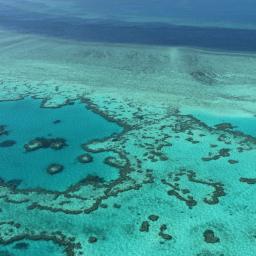
Authorities in Queensland say small patches of oily water seen close to where fisherman earlier reported seeing slick nearly 1km longAustralian authorities remain on alert for a potential oil spill in waters around the Great Barrier Reef despite finding little sign of a reported kilometre-long slick off the north Queensland coast.Maritime safety authorities in Queensland confirmed that small patches of oily water were seen in waters south of Townsville where a fisherman had earlier reported seeing a slick close to 1km long. Continue reading...
|
| Link | http://feeds.theguardian.com/ |
| Feed | http://feeds.theguardian.com/theguardian/environment/rss |
| Updated | 2026-05-15 08:15 |
 |
on (#EKFA)
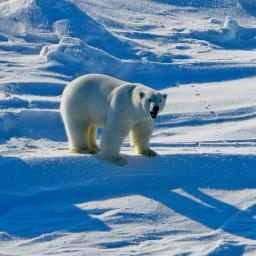
Bears have no special ability to minimise energy loss during increasing periods of fasting brought on by climate change, as some previous research had suggestedA study of an Alaska polar bear population in summer concludes the bear’s biology will not help stave off starvation in the face of global warming.
|
 |
by Guardian Staff on (#EK8E)
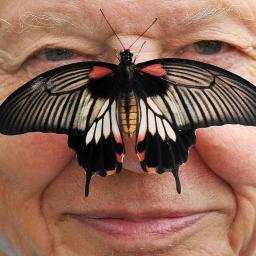
The world’s biggest butterfly count begins on Friday, with a resurgent garden favourite, the small tortoiseshell, likely to top the charts. The population of the butterfly, whose caterpillars feed on nettles, has slumped by 78% since the 1970s but Butterfly Conservation has revealed its spectacular recovery in recent summers: there were six times as many small tortoiseshells recorded in 2014 than in 2012 Continue reading...
|
 |
by Ami Sedghi and Carlo Zapponi on (#EK7E)
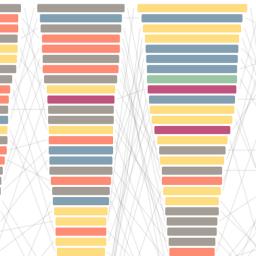
Climate change is what the world’s population perceives as the top global threat, followed by global economic instability and Isis, according to research conducted by the Pew Research Center
|
by Oliver Milman and Greg Jericho on (#EK1B)
It seems nothing – not even global condemnation, changing polls and falling commodity prices – can shake the Australian PM’s belief that coal is goodIf, as the environment movement contends, fossil fuels are the new tobacco, then Australia has cast itself as a sort of swaggering Marlboro man, puffing away contentedly as the rest of the world looks on quizzically.
by Peter Walker on (#EK1C)
Over just a few weeks three separate BBC shows asked if cyclists should be banned or registered. Why is the corporation so anti-cycling?I’ve taken the BBC to task more than once over its coverage of cycling, most notably, the woeful and misleading War on Britain’s Roads documentary. I’m about to do so again.This isn’t BBC bashing. I’ve got no desire to, in my own minuscule way, add to the pummelling currently faced by the corporation. So why pick apart its sometimes lamentable treatment of everyday cycling? There are a few reasons. Continue reading...
 |
by Ami Sedghi on (#EK0N)
Environment damage followed by worldwide economic instability and Isis in list of concerns, according to survey by Pew Research CenterClimate change is what the world’s population perceives as the top global threat, according to research conducted by the Pew Research Center, with countries in Latin America and Africa particularly concerned about the issue.It is followed by global economic instability and the Islamic State militant group. Continue reading...
|
by Patrick Barkham on (#EJX6)
World’s biggest butterfly survey expects to record remarkable recovery of a garden favourite after its mysterious declineThe world’s biggest butterfly count begins on Friday with a resurgent garden favourite likely to top the charts.
 |
by Christine Smith on (#EJV3)
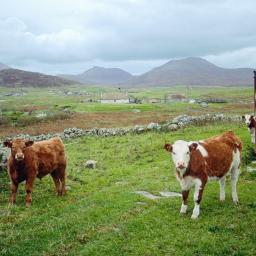
South Uist It’s the noise made by a grazing cow, a pretty Belgian Blue cross that seems to have found a particularly succulent patch, that has brought me to a haltAt last it’s a warm summer’s day, but rather than the sun shining from an expanse of blue we have instead a muggy heat under a totally overcast sky. There is not the faintest suggestion of a breeze, just a slightly oppressive expectant stillness that even the fluttering of green-veined white butterflies between the pale-petalled cuckoo flowers does nothing to dispel.The clouds hanging heavily above the land seem to be holding down all sound, so that even what is usually quiet becomes unnaturally loud in the hush. A fly, invisible somewhere in a forest of horsetails, can be heard coming closer and closer as it makes its way along the ditch beside the track. Continue reading...
|
 |
by George Monbiot on (#EHKW)
Rewilding – the mass restoration of ecosystems – can heal not only the living world, but much that is missing in our own livesWhen the robin was voted the UK’s national bird last month, we chose to celebrate half of a broken relationship. The robin evolved to make use of wild boar, preying on the worms and insects exposed by their grubbing. It is to the boar what the oxpecker is to the Cape buffalo. But boar are mostly absent from the UK, so the robin’s survival depends on finding the next best thing: human gardeners. You and I are just fake pigs.Related: 15 species that should be brought back to rewild Britain Continue reading...
|
by Adam Vaughan on (#EHER)
Green MP Caroline Lucas says decision to backtrack on vow to ban fracking in sites of special scientific interest shows ministers cannot be trusted on issueThe government has made a U-turn on its promise to exclude fracking from Britain’s most important nature sites, arguing that the shale gas industry would be held back if it was excluded from them.Campaigners accused ministers of putting wildlife at risk and reneging on their pledge earlier this year to ban fracking in sites of special scientific interest (SSSIs), which cover about 8% of England and similar proportions of Wales and Scotland. Continue reading...
 |
by Guardian Staff on (#EH4V)
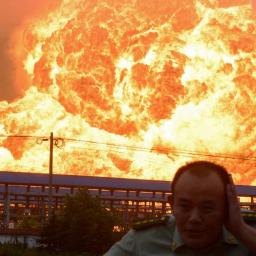
A witness captures the huge explosion at a petrochemical plant in east China's Shandong province on Thursday. Reports say that more than 200 firefighters and 40 fire trucks are battling the fire after tanks containing liquified hydrocarbon leaked and caused the blast. The plant is situated in Rizhao. No casualties are reported thus far Continue reading...
|
by James Meadway on (#EGXD)
Micro-hydro energy schemes offer significant opportunities to regenerate deprived areas, but must overcome start-up costs and declining subsidiesMicro-hydro, the generation of electricity from small streams, has begun to take off in rural Wales. The country’s geography makes small-scale hydropower a viable alternative source of energy and, for struggling rural areas, a source of income and jobs.Wales has long exploited its natural advantages in waterpower, from pre-industrial mills to six large hydropower schemes today. The vast Dinorwig plant alone generates 1,728MW, meeting peak-time electricity demand across the country. A typical micro-hydro installation, by contrast, will produce well under 50kW, although some run as high as 0.5MW. Continue reading...
by Reuters on (#EGV6)
Eight member states including US, Russia, Canada, Norway and Denmark sign accord to protect central Arctic Ocean from commercial fishingThe United States, Russia and other Arctic nations signed an agreement on Thursday to bar their fishing fleets from fast-thawing seas around the north pole.The accord, also signed in Oslo by the ambassadors of Canada, Norway and Denmark, is a response to global warming, which is melting sea ice in the central Arctic Ocean, an area the size of the Mediterranean. The deal had been delayed by more than a year by tensions over Ukraine. Continue reading...
 |
by Sarah Gilbert on (#EGV7)
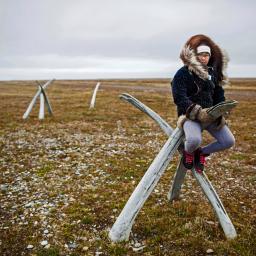
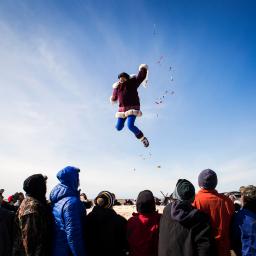
The annual whale hunt in Point Hope, Alaska celebrates food as well as the ancient culture of the Inupiat people
|
 |
by James Murray, for BusinessGreen, part of the Guard on (#EGXE)
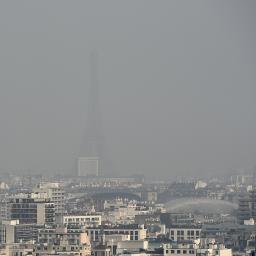
EU’s environment committee backs new round of air quality targets for 2025 and 2030, and tougher rules on emissions testing, reports BusinessGreenGovernments across the EU could soon face a new round of tough new air pollution targets, after MEPs on the European parliament’s environment committee narrowly voted in favour of fresh round of air quality standards.The committee on Wednesday voted 38 in favour and 28 against, backing a new package of measures that would require member states to meet limits on six pollutants by 2030. Continue reading...
|
 |
by Words by Julia O'Malley in Point Hope, Alaska. Pho on (#EGAB)
Alaska had its hottest year on record in 2014, and for villagers in Point Hope who have hunted and foraged their meals for generations, climate change threatens their way of life: ‘It’s about more than just meat’Gallery: Alaska spring whaling festival blends culture with traditional eatsFor the Inupiat villagers who have made their homes on this finger of land in the Chukchi Sea for generations, nothing is more important than the bowhead whale.The calendar revolves around seasons for hunting, fishing and gathering. It’s a lifestyle Alaskans call “subsistenceâ€, which is as much cultural tradition as economic necessity in one of the state’s most northern villages. Continue reading...
|
by Dana Nuccitelli on (#EGMH)
A solar minimum would offset no more than a decade’s worth of human-caused global warming
by Suzanne Goldenberg, Valerie Lapinski, Laurence Mat on (#EGJT)
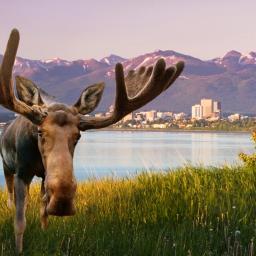
In an exclusive interview with The Guardian's Suzanne Goldenberg, Al Gore speaks about Paris2015, oil drilling in the Arctic, and the forgotten tradition of environmental Republicans. Continue reading...
 |
by Guardian Staff on (#EGCQ)
While cities expand and encroach on the surrounding countryside, nature is being pushed back. These bridges, ladders and byways have been built to enable wildlife to travel safely and freely in an urbanising world
|
 |
by Carren Jao on (#EGD5)
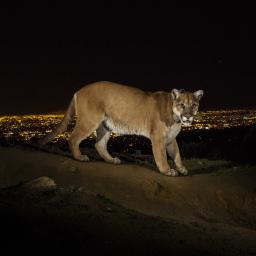
Santa Monica’s mountain lions are hemmed in on all sides by highways, the ocean and open fields – leading to road deaths and in-breeding. A lush overpass spanning 10 freeway lanes would allow them to roam freely and safely
|
 |
by Emma Howard on (#EG51)
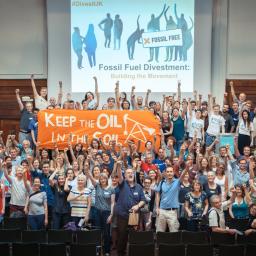
Some of the hundreds of divestment campaigners who gathered in London at the weekend share what the day – and the movement – has taught them“We’re here to take on the most powerful industry in the world!†came the cry from the stage as around 300 fossil fuel divestment campaigners gathered in a London venue strewn with banners of every colour.Organised by 350.org with support from the Guardian, the event last Saturday played host to organisations across the movement including the thinktank Carbon Tracker, responsible investment charity ShareAction and arts organisation BP or not BP. Continue reading...
|
 |
by Patrick Barkham on (#EG4D)
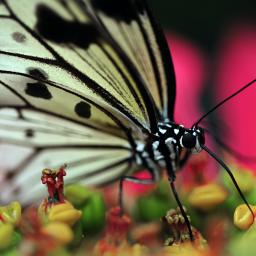
The Greeks gave butterflies and souls the same name: psyche. So what does the ever more parlous state of the creatures say about us?The chronicles of the 14th-century French writer Jean Froissart provide a rare glimpse into a medieval childhood. As a boy, Froissart built dams across streams and made mud pies. He also constructed living kites from butterflies, fastening a fine flaxen thread to their tiny bodies and tying the other end to his hat, the captured insects fluttering around his smiling face like “tethered elvesâ€, as Peter Marren writes in Rainbow Dust.Our long relationship with Lepidoptera, the order of insects (moths and butterflies) with scaly, intricately patterned wings, is often representative of the state of nature and the state of our relationship to it. Butterflies appear on Minoan artefacts, while Pyrenean cave paintings depict eyed hawkmoths. The ancient Greeks gave butterflies and souls the same name: psyche. Continue reading...
|
by Oliver Milman on (#EFRN)
Greg Hunt’s plan to cull two million feral cats and create native animal safe havens receives cautious welcome from environmental groupsThe Australian government has pledged to kill two million feral cats and create new safe havens for native animals in an attempt to improve the fortunes of 20 mammal, 20 bird and 30 plant species that are at risk of extinction.
 |
by Scriberia, Karl Mathiesen, Nabeelah Shabbir, Pasca on (#EFQD)
Shell has spent over $6bn on Arctic drilling without so far producing a drop of oil. It is on the verge of another attempt to extract some of the estimated 400bn barrels equivalent of oil and gas at the top of the world. But drilling in the Arctic is expensive and dangerous. And oil prices have fallen dramatically. Will this and government action thwart Shell's ambitions? Continue reading...
|
by Gabrielle Chan on (#EFKF)
While Barnaby Joyce has been vociferous in his opposition to the Shenhua mine, the Nationals leader, Warren Truss, has not uttered a wordIt has been more than a week since the environment minister, Greg Hunt, agreed to give the tick of approval to the $1.2bn Shenhua open-cut coalmine in the heart of Barnaby Joyce’s New England electorate.
 |
by Guardian Staff on (#EFGE)
As the two teams look on from a safe distance, Burt the crocodile makes the draw for Australia and Kazakhstan for this weekend's Davis Cup quarter final tie at Crocosaurus Cove in Darwin. Nick Kyrgios is expected to be fit for Davis Cup duty despite a slight injury scare at training on Wednesday Continue reading...
|
 |
by Rajeev Syal on (#EFFG)
Department of Energy and Climate Change has already overspent its budget to support renewable energy projects
|
 |
by John Vidal on (#EFFJ)
Powered by the sun, this low cost three-bedroom house is the first in the country to produce and sell more energy than it usesBritain’s first low cost ‘energy positive’ house, which can generate more electricity than its occupants will use, opens on Thursday despite George Osborne axing plans to make housebuilders meet tough low carbon housing targets from next year.
|
by Australian Associated Press on (#EF90)
More than 100 people affected by the 2014 Hazelwood mine fire, which blanketed Morwell in toxic smoke and ash for 45 days, will deliver request to the company’s offices in MelbourneCommunity members affected by the 2014 Hazelwood mine fire are presenting an $18m invoice to the owner of the mine at its Melbourne headquarters on Thursday.More than 100 people were expected to make the two-hour journey from the Latrobe valley on Thursday to GDF Suez offices in Melbourne’s central business district. Continue reading...
 |
by Katharine Murphy Deputy political editor on (#EF5P)
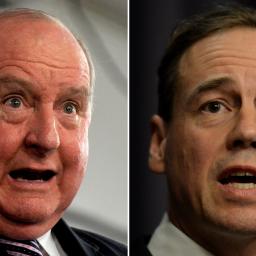
Environment minister promises broadcaster he won’t grant final approval to the NSW mine unless he is satisfied water management obligations will be metThe environment minister, Greg Hunt, says he will go further on due diligence than any portfolio minister in “history†before giving any final tick to the Shenhua coalmine in northern New South Wales.Hunt declared he would make environmental history during an interview with Alan Jones on Sydney radio on Thursday, a conversation the broadcaster characterised on air as “querulous but not acrimoniousâ€. Continue reading...
|
 |
by Damian Carrington on (#EET3)
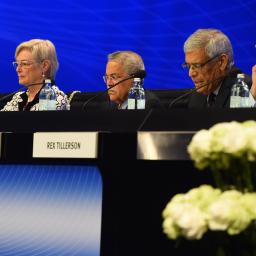
Oxford University study finds boards with fewer women and foreign nationals susceptible to making poor investment choices over risks like climate changeA “worrying†lack of diversity on the boards of major US oil companies increases the risks of “groupthink†and bad investment choices, according to a new report from the University of Oxford.Fossil fuel companies are facing an increase in measures to cut carbon emissions as world leaders move to tackle climate change. A global deal to curb global warming at a crunch UN summit in Paris in December could leave $1tn of oil projects unable to make a return, or stranded, according to analyses. Continue reading...
|
 |
by Oliver Milman on (#EEC4)
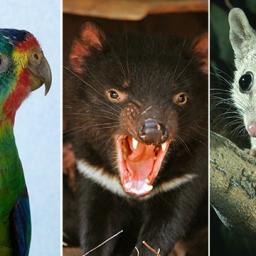
Australia’s politicians and scientists meet to discuss conservation of threatened species in Melbourne on Thursday. The federal environment minister, Greg Hunt, launches a strategy with measurable targets, and experts discuss how to save the most at-risk species. Oliver Milman examines the challenges facing 10 of them Continue reading...
|
 |
by Letters on (#EE4T)
Your paper’s campaigning journalism to tackle the crisis of climate change is much needed. But too many times, as with your article on the bumblebee’s failure to escape warming climates by moving north (10 July), one of the major culprits is omitted from the story. While the article begins with the well-worn causes of “emissions from cars, factories and power plantsâ€, the huge impact of animal agriculture is again missing from the picture.The UN’s 2006 report, Livestock’s Long Shadow, and the World Watch Institute’s 2009 report, and many since, including the fourth report from the Intergovernmental Panel on Climate Change, all recognise animal agriculture’s major role – more than all traffic and communications combined. For your reports on climate change to be meaningful and not derisory, animal agriculture should be one of the key industries you investigate and report on, even in passing. Only then can your campaign against this threat of our times have real purchase.
|
 |
by Terry Macalister on (#EE26)
Commissioner for climate action and energy says restructuring scheme will clean up planet while safeguarding the interests of businessSome of Europe’s heaviest polluters are in line for €160bn (£112bn) of free carbon permits under a planned restructuring of the Emissions Trading Scheme (ETS), a key weapon in the fight against climate change.The European commission is proposing to reduce the number of free allowances and the companies eligible for them in a move condemned as too harsh by the British steel industry but too weak by green campaigners. Continue reading...
|
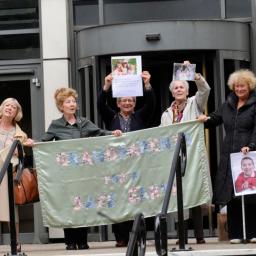 |
by Sheila Wayman for The Irish Times, part of the Cli on (#EDWZ)
Unafraid of the impact a criminal record might have on a career, pensioners are protesting against climate change and calling on banks to move their money out of fossil fuels, reports The Irish TimesThe slight, white-haired figure of grandfather-of-four Phil Kingston doesn’t quite fit the stereotype of an environmental activist but old age, he has found, does have advantages.For a start, it’s clear that police don’t want to arrest grandparents, he says with a smile. In fact he regrets that on one occasion when he was arrested, to be removed from a sit-in at a bank in the UK, he was promptly de-arrested on the street outside. Continue reading...
|
by Michael Halpern on (#EDR9)
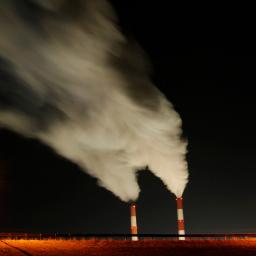
Attempts to block new standards for exposure to silica dust highlight tensions between public health and corporate power in America’s fracking boom.Let me tell you an outrageous yet all-too-common tale of how public health science is politicized to serve powerful interests. There are many poison pills attached to a recent funding bill passed by a U.S. Senate committee, but none taste as bitter to scientists and advocates of worker safety as a provision that would prevent the government from protecting workers from exposure to silica dust.Silica dust is created through construction, mining and other industries that grind down rock, concrete, masonry and sand. Over-exposure to the dust causes an irreversible scarring of the lungs called silicosis. Approximately 2.2 million American workers are exposed to this hazard, and this contributed to the death of 1,437 Americans from silicosis between 2001 and 2010. Continue reading...
 |
by Jill Duggan on (#EDFH)
A report marking 10 years of the ETS finds carbon trading has helped companies to reduce emissions but low carbon prices continue to dog the scheme
|
by John Vidal on (#EDAE)
Elusive cat-sized member of the stoat and weasel family believed to be extinct may have been living in the Shropshire hills for years
 |
by Clare Perry on (#ECYP)
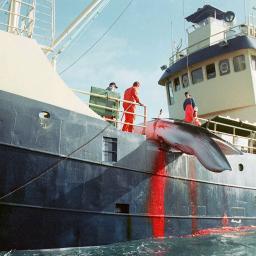
Norway’s fourth largest food retail brand is using its vast store network to promote whale products in the face of consumer boycottsLast year, Norway killed more protected whales than any other country – all for the sake of a marginal and dying industry characterised by cruelty and exploitation of an internationally protected species. Its 2014 catch of 736 minke whales was more than the combined catch of Japan and Iceland – 447 and 261 whales respectively.Commercial whaling was banned almost 30 years ago. Norway, however, has consistently flouted bans on commercial whaling and international trade in whale products through reservations to the international agreements under the International Whaling Commission (IWC) and the Convention on International Trade in Endangered Species. Continue reading...
|
 |
by Arthur Neslen in Brussels and Tom Levitt on (#ECYQ)
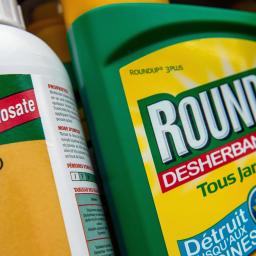
A multi-billion dollar weedkiller used in British farms, parks and gardens has been linked to cancer by the WHO, but its European license could still be reapprovedA best-selling herbicide that the World Health Organisation suspects causes cancer could get a new lease of life in Europe after being deemed safe by a key assessment based largely on classified industry reports.A decision on whether to extend the license for glyphosate’s use in Europe is pending, but earlier this year, it was deemed “probably carcinogenic to humans†in a preliminary report from the WHO’s International Agency for Research on Cancer (IARC). The full report is due for release imminently. Continue reading...
|
 |
by Philip Oldfield on (#ECYS)
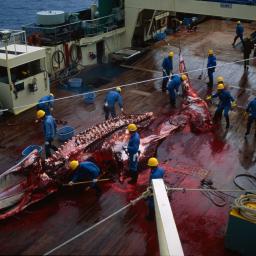
Current whale population estimate could be wrong as Japanese fleets misreported number and size of sperm whales killed in 1960s, study findsJapanese whaling fleets have been accused of systematically falsifying data on the number and size of sperm whales they killed in the late 1960s, calling into question our understanding of current whale populations.
|
 |
by Suzanne Goldenberg in Washington on (#ECT9)
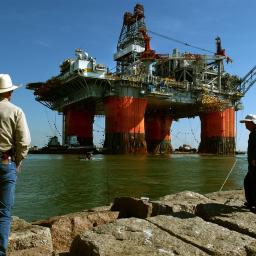
Under pressure from shareholders, company promised eight years ago to stop funding climate denial – but financial and tax records tell a different storyExxonMobil gave more than $2.3m to members of Congress and a corporate lobbying group that deny climate change and block efforts to fight climate change – eight years after pledging to stop its funding of climate denial, the Guardian has learned.Climate denial – from Republicans in Congress and lobby groups operating at the state level – is seen as a major obstacle to US and global efforts to fight climate change, closing off the possibility of federal and state regulations cutting greenhouse gas emissions and the ability to plan for a future of sea-level rise and extreme weather. Continue reading...
|
 |
by AFP on (#ECS1)
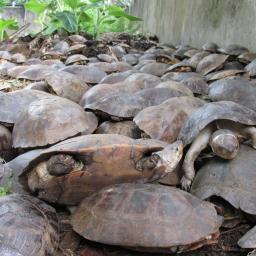
3,831 Palawan forest turtles, as well as Asian leaf turtles and southeast Asian box turtles, are rescued from a terrible conditions in remote warehouseThousands of critically endangered turtles have been saved from possible extinction after being rescued from terrible conditions in the Philippines, conservationists said Wednesday.
|
 |
by Associated Press on (#ECRG)
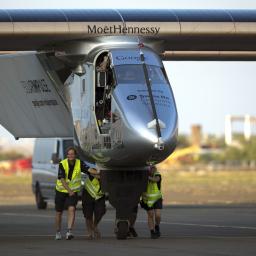
Plane grounded in Hawaii until spring 2016 after on-board batteries overheat on first day of record-breaking trip from Japan to Pacific island chainA team attempting to fly a solar-powered plane around the world has been forced to suspend its journey in Hawaii after the plane suffered battery damage during its record-breaking flight to the islands.The Solar Impulse team said it would continue the bid to circumvent the globe, but irreversible damage caused by overheating batteries would ground the flight until at least April. Continue reading...
|
 |
by Tim Radford, for Climate News Network, part of the on (#ECPB)
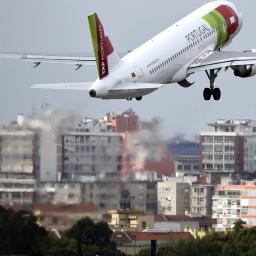
Scientists say wind patterns altered by climate variability is resulting in longer flight times, extra fuel consumption and an increase in CO2 emissions, reports Climate News NetworkGlobal warming may already be taking its toll of air miles. As jet planes burn fuel and release carbon dioxide, the atmosphere warms and causes head winds to build up. Tail winds do too, but round trip journey times are nevertheless creeping up − and so are fuel costs.A team of US scientists say the cumulative effect of the longer flight times that they think may have resulted from climate variation would have added millions of dollars to airlines’ costs, and perhaps a billion gallons of extra fuel. Continue reading...
|
by Adam Vaughan on (#ECGB)
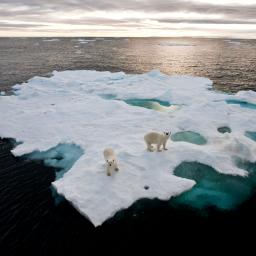
Counting impact of toxic gas NO2 for the first time suggests more than twice as many people as previously thought die prematurely from pollution in UK capitalNearly 9,500 people die early each year in London due to long-term exposure to air pollution, more than twice as many as previously thought, according to new research.The premature deaths are due to two key pollutants, fine particulates known as PM2.5s and the toxic gas nitrogen dioxide (NO2), according to a study carried out by researchers at King’s College London.
 |
by Melissa Davey on (#EC16)
US thinktank finds those in western countries, including Australia, rank Islamic State as the world’s greatest threat, in contrast to Africa and Latin AmericaAustralians perceive Islamic State (Isis) as being the greatest threat to global security ahead of climate change and economic instability, according to a survey from a major independent thinktank in the US.Between March and May, the Pew Research Center surveyed 45,435 people aged 18 and above from 40 countries, including 1,004 Australians. Continue reading...
|
 |
by Guardian Staff on (#EBZ4)
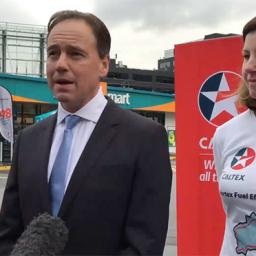
Environment minister attacks what he calls Labor's carbon tax 'double whammy' while hosting a press conference promoting Caltex's 'Vortex fuel efficiency challenge'. Hunt says the ALP's leaked carbon working paper is an attempt to either kill off Labor's plans for a tax, or Shorten himself, and that the paper shows plans for a 'massive tax' on gas, electricity and 'potentially' fuel Continue reading...
|
 |
by Fiona Harvey Environment correspondent on (#EBY3)
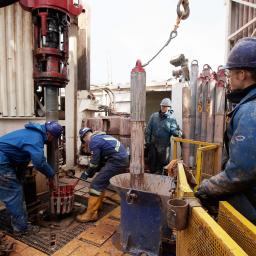
Report says exploring for shale gas in the UK could be made safe, provided it is tightly regulated and monitoredIt is too soon to say whether shale gas fracking would be a “good thing†for the UK, the chief of the task force on shale gas has said. Lord Smith of Finsbury, better known as former Labour MP Chris Smith, said the industry had not been transparent enough and that it would take time to reassure the public about the technology.But Smith said that fracking would be acceptable if certain conditions were met, including a tightening of regulations and monitoring set out in a report from the taskforce on Wednesday. The report found that fracking was safe, for human health and the environment, but only if properly regulated. Continue reading...
|