 |
by Jostein Eikeland in Martigny on (#DP71)
We humans are not facing a shortage of energy. We are facing a technical challenge in capturing it and delivering it to consumers, says Jostein EikelandIf we were able to capture and use the energy from just two minutes of sunlight falling on the earth, it would be enough to fuel our cars, light and heat our buildings, and provide for all of our other electricity needs for an entire year. Simply put, we humans are not facing a shortage of energy. We are facing a technical challenge in capturing it and delivering it to consumers; and one of the most efficient ways to meet that challenge is to invest in better ways to store it.Many of the world’s problems today can be traced to energy use, from conflicts over oil supplies and concerns about greenhouse-gas emissions to lost productivity and output stemming from shortages and blackouts. In many of the poorest parts of the world, the lack of energy stifles economic development. Globally, more than 1.3 billion people have no access to electricity; and some 2.6 billion have no access to modern cooking facilities. More than 95% of these people are in sub-Saharan Africa or developing Asia, and 84% live in rural areas. Continue reading...
|
| Link | http://feeds.theguardian.com/ |
| Feed | http://feeds.theguardian.com/theguardian/environment/rss |
| Updated | 2026-06-10 00:30 |
 |
 |
by Marina Aizen for Clarin, part of the Climate Publi on (#DNPP)
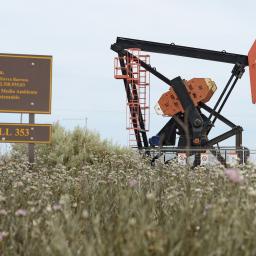
National pledge to reduce carbon emissions remains a mystery as government focuses energy development on Vaca Muerta shale reserves, reports ClarinIt’s been 11,000 years since temperatures were this high on Earth, thanks to our burning of oil and gas, releasing carbon emissions, trapping the heat in the atmosphere and warming up the planet.
|
 |
by Peter Walker on (#DNEM)
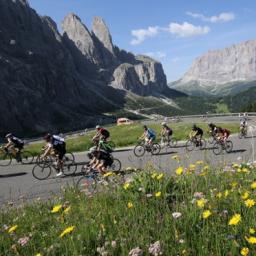
The famous event in Italy’s beautiful South Tyrol is 86 stunning miles long – but with 4,000 metres of climbing. Could Peter Walker take it in the 30C-plus heat?At about six miles, the Passo Giau isn’t the longest climb I’ve ever cycled up, or the steepest, with an average gradient of just under 10%. But it is possibly the most relentless, especially during a freakish hot spell, bringing 30C-plus temperatures even at the 2,200-metre peak.I’m about three-quarters of the way through the 86 miles of the Maratona dles Dolomites, an annual race across Italy’s almost absurdly beautiful South Tyrol region, and I’m really feeling the heat. Three times I have to stop my bike on a hairpin bend – there’s 29 in all, helpfully numbered with signs – to douse myself in water. All around me other riders are doing the same. We glance wordlessly at each other, all thinking the same thing: can we go on? Continue reading...
|
 |
by Scriberia, Karl Mathieson, Nabeelah Shabbir, Pasca on (#DN3D)
What causes more global warming: every vehicle on the planet or the meat and dairy produce we eat? Raising livestock – cows farts and all – is responsible for 14.5% of total emissions. Beef is 14 times more climate warming than chicken. The good news is you don't need to stop eating meat and dairy all together to make a big difference – you can help save the planet by simply cutting down
|
 |
by Tim Flannery on (#DMY1)
People turn to Google for answers to some of the world’s most pressing issues. Our writers answer some of the most common queriesRelated: Trees of the Amazon rainforest - in picturesRainforests cover 6% of Earth’s land surface, yet they are home to 50% or more of all land-based species, perhaps half of which remain to be discovered and named by scientists. Relatively few people have experienced pristine, undisturbed rainforest at first hand, but many of those who have are awed by the soaring cathedral of life they find themselves in. The subdued light, the constant temperature and humidity, and often the quiet, add to the awe. The capacity for rainforests to moderate the climate embody the Gaia hypothesis – the concept that the Earth self-regulates to create the conditions to support life. Continue reading...
|
 |
by Paul Evans on (#DMSQ)
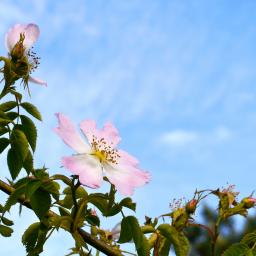
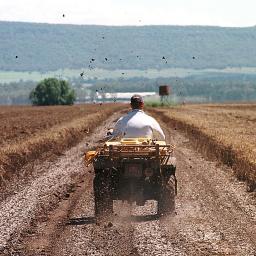
Wenlock Edge Thoughts of Keats follow from a promiscuous rose – but it’s a different, madder bird that attends it, not the poet’s nightingale
|
 |
by Oliver Milman on (#DMRJ)
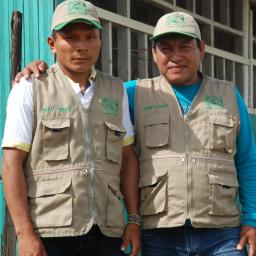
Australian environment minister says strict conditions will prevent Chinese-owned mine from affecting farmland or water supplies but farmers are outragedA contentious $1.2bn mining project on the New South Wales Liverpool Plains region has been approved by the federal environment minister, Greg Hunt, despite it being opposed by his cabinet colleague Barnaby Joyce as “anathemaâ€.
|
 |
by David Hill on (#DMDE)
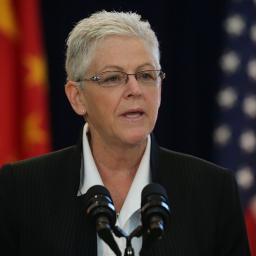
Initiating “controlled contact†with indigenous peoples in the Amazon would violate their rights and threaten their livesUsually the indigenous peoples living in the remotest Amazon only draw international media attention if certain kinds of photos or film footage emerge, as in mid-2014, or they raid a village or, tragically, kill someone, as happened on 1 May. Many media reports misinform as much as inform: factual errors, no context and all kinds of sensationalism. “Lost tribe!†“First contact!â€This time it’s a series of articles in the US journal Science - and in particular the editorial by two US anthropologists - that has sparked interest. The gist of the editorial is that governments, above all Brazil’s and Peru’s, should u-turn on their “leave them alone strategies†and initiate “controlled contact†with “isolated indigenous societies across lowland South America†- sometimes erroneously called “uncontacted†- who have “limited to no contact with the outside world.†They must do this, argue Kim Hill, from Arizona State University, and Robert Walker, from the University of Missouri, “only after conceiving a well-organized plan†requiring a “qualified team of cultural translators and health care professionals that is committed to staying on site for more than a year.†Continue reading...
|
 |
by Suzanne Goldenberg US environment correspondent on (#DK7B)
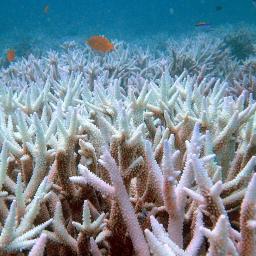
Head of Environmental Protection Agency says carbon pollution rules that are main pillar of plan will also go ahead despite recent supreme court rulingBarack Obama’s main weapon in fighting climate change will survive even if Republicans win the White House in 2016, a key member of his administration said on Tuesday.
|
 |
by Karl Mathiesen on (#DK46)
Noaa predicts third-ever global bleaching event could cause a 6% global reduction in coral reefs in less than two years. More than a third of coral reefs affected may be destroyed foreverA massive coral bleaching event currently ravaging coral reefs across the globe could destroy thousands of square kilometres of coral cover forever, US government scientists have said.
|
 |
by Petrus Riski for Mongabay, part of the Guardian En on (#DJZF)
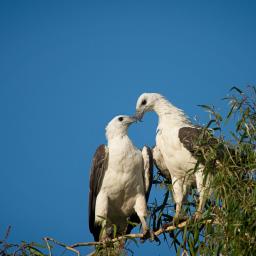
Changeable hawk-eagle, white-bellied sea eagle and spotted kestrel among 16 birds siezed by police in the port city of Surabaya, reports MongabayPolice in Indonesia’s second city of Surabaya, a hotbed of wildlife trafficking, seized 16 eagles of various types from a trafficker who was using Facebook to connect with potential customers.A tip alerted the authorities to the trafficker. They used the internet to confirm his activities before moving to arrest him at his house in Surabaya’s Bubutan area. Continue reading...
|
 |
by Aamir Saeed in Islamabad for RTCC, part of the Gua on (#DJRX)
Influential politician says country needs strategy to invest in green energy and prepare for extreme weather, in an exclusive interview with RTCCPakistan’s commitment to tackling climate change is a “joke†lacking proper funding and support from government officials, says cricketer-turned-politician Imran Khan.In an exclusive interview with RTCC, Khan praised the creation of a national climate change ministry, but questioned the level of support allocated to it by prime minister Nawaz Sharif’s administration. Continue reading...
|
 |
by Christian Schwägerl for Yale Environment 360, par on (#DJN6)
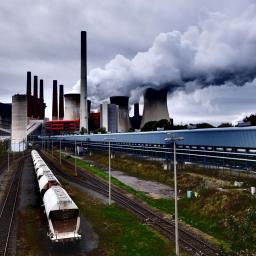
Even as Europe’s biggest economy aspires to be a renewable energy leader, it is exploiting its vast reserves of dirty brown coal, reports Yale Environment 360The hole in the landscape that opens up in front of the group of visitors is so vast and deep that some of them simply stare, mouths agape. “This mine will be active until 2026 or 2027,†says Barbara Wittig, a guide with a local operator of excursions into one of Germany’s largest open-pit lignite mines.Down below at the bottom of the mine, workers are busy running gigantic machines to remove the topsoil and dig deep into a layer of brown coal, or lignite. These rich seams of fossil fuel have provided the Lausitz region, 60 miles southeast of Berlin, with jobs and incomes for more than a century. “We certainly hope that mining will continue after 2027 and we keep producing reliable electricity in our beautiful power plants,†Wittig says, pointing toward large cooling towers on the horizon, which send steam into the atmosphere. Continue reading...
|
 |
by Kim Willsher in Paris on (#DHZQ)
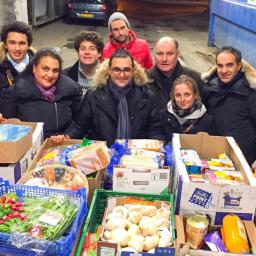
Arash Derambarsh, who persuaded the French government to pass law barring large shops from destroying food, hopes EU will follow suitA French councillor’s campaign to stamp out food waste by forcing supermarkets to give unwanted items to charity will reach the European level on Wednesday.Arash Derambarsh, who has already persuaded the French government to pass a law barring shops from destroying food as it approaches its sell-by date, hopes the European parliament will now include an amendment in a new “circular economy†directive, encouraging individual member states to follow suit.
|
by Adam Vaughan on (#DJ6S)
Bromley and Sutton only two boroughs to meet limit set for nitrogen dioxide gas linked to respiratory health problems, data showsAll but two of London’s boroughs are exceeding EU limits for a toxic gas linked to respiratory problems, ministers have admitted.
 |
by Elias Ntungwe Ngalame in Yaounde on (#DJ2F)
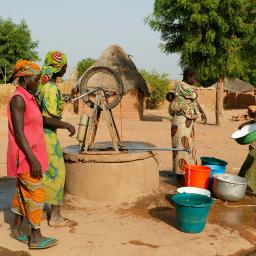
A solar-powered water project in Cameroon’s arid north has enabled villagers to fight poverty by starting small businessesWhen the government of Cameroon started a solar-powered water distribution system in the north of the country, the objective was to improve access to potable water and to ease irrigation for farmers in an area beset by drought, water-related illnesses and an influx of refugees fleeing Boko Haram attacks.Related: Access to clean water and sanitation around the world – mapped Continue reading...
|
 |
by Arthur Neslen Brussels on (#DHZN)
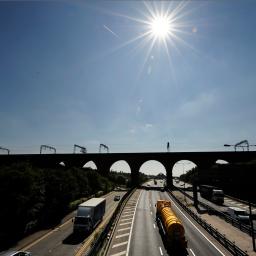
Ministers from the Netherlands, Sweden, Ireland and Finland say new CO2 goals would reduce motoring costs and aid transition to zero-emission vehiclesThe EU should set challenging new fuel efficiency targets for new cars in 2025 to reduce motoring costs for consumers and tackle climate change, according to four member countries.Environment and transport ministers from the Netherlands, Ireland, Sweden and Finland have written to the European commission saying the new goal should be set next year. Continue reading...
|
 |
by Suzanne Goldenberg in Washington on (#DHZ0)
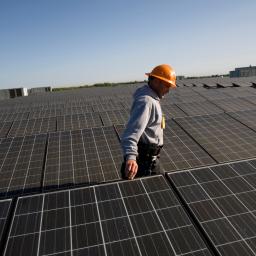
The White House wants to cut bills and fight climate change by installing 300 megawatts of solar power in subsidised housing by 2020The White House said it would move to put more solar panels on rooftops in poor, inner-city neighbourhoods to cut electricity bills and fight climate change.The plan, to be unveiled on Tuesday in Baltimore, follows dozens of new initiatives rolled out by the White House since the start of the year to signal Barack Obama’s commitment to act on climate change – even in the face of Republican opposition. Continue reading...
|
 |
by Laetitia van Eeckhout on (#DHME)
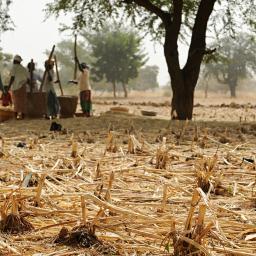
Extreme climate events of drought, erratic rainfall and violent winds are destroying crops and worsening living standardsOne afternoon towards the end of May a violent wind howled through Bogandé, the main town in Gnagna province, in eastern Burkina Faso. Raising a storm of dust and sand, it plunged the streets into semi-darkness, driving roaming goats crazy. In villages across Gnagna people connect these extreme climate events with deteriorating living standards. They explain how these increasingly frequent “red†winds wreak havoc, burying their crops in sand, destroying their homes, and spreading disease among their flocks.In late May, on the great Gnagna plain, the earth is dry, with deep cracks. An occasional tree – usually red acacia (Vachellia seyal) – stands out as a patch of green. In the villages, most of the wells have dried up. It is the toughest part of the year, when reserves from the previous harvest run low and the next one is not yet ripe. And still there is no rain. Continue reading...
|
by Australian Associated Press on (#DHJG)
The whale, believed to be an endangered Antarctic minke, has been trapped in a reef lagoon off Cairns for three weeksMarine experts are trying to save a whale which has been stranded in a reef lagoon off Cairns for at least three weeks.Wildlife officers have gone to Elford reef in a bid to coax the whale, believed to be between six and eight metres long, to safety. Continue reading...
by Clive Hamilton on (#DHEB)
Labor wants to neutralise refugee policy as an issue before the next election. Is accepting tow-backs the only hope for a return to sanity on climate change?Must child refugees remain incarcerated and brutalised if Australia is to return to a sensible climate policy?
 |
by Fiona Harvey on (#DHCE)
New Climate Economy report says local action is among measures that could make up shortfall in emissions cuts from pledges ahead of Paris summitA landmark climate change conference in Paris this December has triggered commitments on carbon emissions curbs from most of the world’s major polluters – but those pledges will still not be enough to bring about the reductions scientists say are necessary.A new report published on Tuesday shows that the remainder of the needed reductions in carbon can be found if actions are taken at a local level, deforestation is halted, and other greenhouse gases are tackled. Continue reading...
|
by Oliver Milman on (#DHAE)
The NSW planning minister says a proposed amendment would give social and environmental issues equal standing with the economic in decision makingResidents in the New South Wales town of Bulga, which was previously earmarked for relocation due to the expansion of a nearby mine, have seized upon changes to the state’s planning laws as potentially crucial in their battle to prevent the project’s extension.
by Associated Press on (#DH8M)
Coral reefs are essential to ocean health, but dangerous coral bleaching is occurring more often and more widely due to warmer water, scientists reportAbnormally warm ocean temperatures are creating conditions that threaten to kill coral in the equatorial Pacific, north Pacific and western Atlantic oceans, the National Oceanic and Atmospheric Administration said on Monday.Coral bleaching occurs when coral is stressed by changes in its environment, causing it to release algae living in its tissue. The coral then turns pale or white and becomes more susceptible to disease. In severe cases, it can die, permanently changing the habitat for fish and shellfish. Continue reading...
 |
by Mark Cocker on (#DH7M)
Claxton, Norfolk It has the genuinely unscripted vigour and adventure of a semi-natural habitat. And who knows what will arrive next?“The garden looks wonderfully crazy†were our daughter’s first words when she came home last week. If it is as she says, then it’s the most patiently acquired craziness you can imagine. It started nine years ago when I left one edge of our lawn unmown. In short order it acquired new residents among the hitherto rigidly controlled monoculture.A patch of marjoram moved in and, in turn, provided accommodation for a gorgeous moth called the small purple and gold, as well as a colony of field grasshoppers. Under the new laissez-faire regime, ragwort and sneezewort began to bloom. Continue reading...
|
by Emma Froggatt on (#DH0H)
Australia’s unique flora, fauna and culture have shaped national identity. A new exhibition at the State Library of New South Wales showcases some of the country’s icons in illustrations and photographs from the late 1880s until today
 |
by Agence France-Presse on (#DGX9)
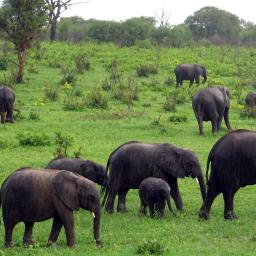
Animal rights groups have described the export as “extremely cruel†and condemned the separation of the baby elephants from their mothersZimbabwe has shipped 24 elephant calves to China, in a move that has angered animal rights groups who described the export as “extremely cruelâ€.
|
by Associated Press on (#DGWP)
The 32-year-old soldier suffered lacerations to his hand and arm in the incident at Surf City, the eighth such attack in the past three weeksA US marine was bitten by a shark off the North Carolina coast last weekend, the eighth such attack in the past three weeks, medical personnel from Camp Lejeune said on Monday.Related: Sharks haunt North Carolina's Fourth of July but experts say attacks are rare Continue reading...
 |
by Damian Carrington on (#DGNG)
Carbon Tracker report reveals keeping to emissions targets would render obsolete more than $280bn worth of global liquefied natural gas projectsMore than $280bn (£180bn) of liquefied natural gas (LNG) projects being planned over the next decade risk becoming “stranded†if global action is taken to limit climate change to 2C, according to a report by the thinktank Carbon Tracker.LNG projects allow gas to be compressed into tankers and sold around the world, making it key to hopes in the US, Canada and Australia of fully exploiting their gas reserves. Continue reading...
|
 |
by Paul Brown on (#DGAV)
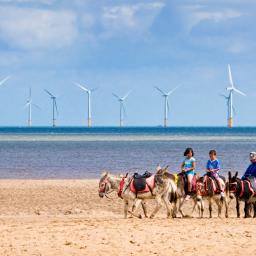
It is said that the UK has the greatest wind energy potential in Europe. Our weather could give us more sites producing more energy per wind turbine at less cost than any other country in Europe. The country also has Europe’s most vocal minority of opponents of wind farms who campaign with such vehemence that it is hard to think of a more divisive issue.Offshore wind farms, which also have huge potential, do not attract such campaigners, and so Britain has become a world leader in the deployment of this technology, despite the fact that it is far more expensive. This has produced the curious result of Amber Rudd, the secretary of state for energy and climate change, pulling the plug on cheaper on-shore wind in favour of offshore, claiming in the House of Commons it is to save consumers money. Continue reading...
|
 |
by Letters on (#DG3M)
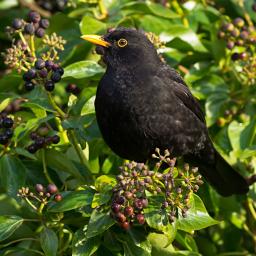
I used to wonder why “our†blackbird (Letters, 6 July) invariably began his morning recital with a succession of ascending arpeggiated major triads – until I remembered that this was the way I usually started my trombone warm-up exercises of an early evening before a gig.
|
 |
by Press Association on (#DFDP)
Met Office research reveals likelihood of blazing hot summers rises to 90% by end of century, with wet summers and very cold winters set to be rare
|
by Martin Lukacs on (#DFBW)
More than 10,000 people demonstrate for “jobs, justice and climate action†in CanadaDemonstrators from a huge diversity of organizations marched boisterously through downtown Toronto on Sunday calling for a paradigm-shift in how climate change is addressed.Not a typical protest of environmentalists, it attracted labour unions, First Nations, anti-poverty and faith groups, health workers and immigration rights activists who all underlined the need to change an economic system so it “works for people and the planet.â€
 |
by Adam Vaughan on (#DF7T)
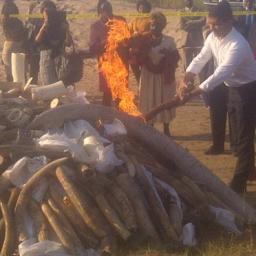
Burning of 124kg of rhino and 1,160kg of ivory takes place as Zimbabwe confirms it has exported around 20 elephants to ChinaMozambique burned the world’s largest ever seizure of rhino horn on Monday in what ministers and officials said was a demonstration of their commitment to tackle poaching.
|
 |
by Agence France-Presse in Vienna on (#DF6A)
Country takes row over subsidies to European court of justice amid concerns UK project could distort energy marketAustria has filed a legal challenge at the European court of justice against EU-granted state subsidies for a new nuclear power plant in Britain, government officials have said.“Subsidies are there to support modern technologies that lie in the general interest of all EU member states. This is not the case with nuclear power,†the Austrian chancellor, Werner Faymann, said. Continue reading...
|
by Adam Corner on (#DEZ4)
Be consistent, talk about risk rather than uncertainty, use visuals, tell human stories and give the top-line message before the caveatsUncertainty is an unavoidable feature of the climate change debate – just like any other complex scientific and societal issue. But sceptics have used (and in some cases abused) the presence of uncertainty in climate projections to argue that the science is not sufficiently settled to warrant policies to cut carbon.In response, scientists – who naturally tend towards nuance, caution and tentativeness in their communicative style – have often felt compelled to foreground the uncertainties and caveats in their work instead of focusing on the many aspects of climate science on which there is strong consensus. Continue reading...
by Dan Kitwood/Getty Images on (#DEZ5)
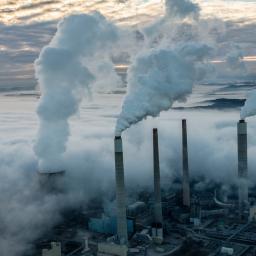
RSPB and Forestry Commission staff along with conservationists head out to GPS tag pairs of golden eagle chicks in remote nest sites near Loch Ness in Scotland. Experts will monitor their movements for six months as part of a major survey of the species. Golden eagle numbers are rising but the birds continue to be at risk from poorly sited windfarms and illegal killing Continue reading...
 |
by Emma Howard on (#DEWQ)
Want to divest your pension from fossil fuels? Follow these steps including seven arguments you’ll have to deal with – and how to knock them down“We can’t divest from fossil fuels unless you tell us,†Meryam Omi of Legal and General Investment Management, the UK’s largest pension asset manager, told the Guardian recently.Her words came as we teamed up with the responsible investment charity ShareAction to encourage Guardian readers active on fossil fuel divestment to do just that – to write to their pension fund asking if their money could be moved out of coal, oil and gas companies. Continue reading...
|
 |
by The Guardian on (#DEK3)
Join Guardian Sustainable Business and SC Johnson for an exclusive event discussing the challenges keeping green chemistry niche – and the opportunities to grow the market – on 2 September in New York CityGreen chemistry has been touted as the way forward for consumer product companies for years, and in the last decade the field has exploded with new ideas, catalyzed by collaborations between companies and researchers. But despite its years of progress, green chemistry is still its own branch of chemistry – still the exception rather than the norm. Continue reading...
|
 |
by Agence France-Presse in Akagera on (#DEHM)
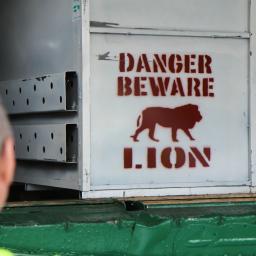
Seven big cats transported from South Africa to Akagera national park, with park officials now working to reintroduce rhinosGroggy on their paws after waking from tranquillisers, lions have returned to Rwanda for the first time since the endangered animal was wiped out following the country’s 1994 genocide.Seven lions (two males and five females) were transported in a 30-hour journey from South Africa – first by air, then the final stretch by road – to Rwanda’s eastern Akagera national park. Continue reading...
|
 |
by Guardian Staff on (#DEHP)
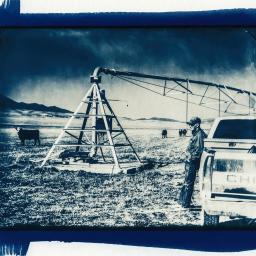
Leading environmental photographers and artists exhibit their works on the effects of anthropogenic climate change at the Verve Gallery in Santa Fe, New Mexico, from 3 July to 5 September
|
 |
by Arthur Neslen Brussels on (#DEH7)
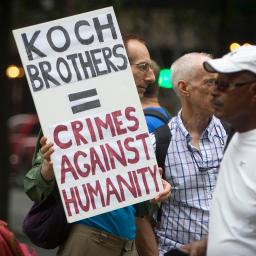
Notorious US opponents of climate action have been lobbying Europe on energy and environment issues, according to EU transparency registerA notorious funder of climate sceptics in the US has spent at least €550,000 (£390,908) lobbying the EU on environmental protections and energy issues over the past three years.An obscure entry on the EU’s voluntary transparency register shows that up to €750,000 (£533,049) may have been spent by Koch Industries, the largest private energy company in the US, on trying to influence EU policy. Continue reading...
|
by Terry Slavin on (#DEG3)
More than 6,000 cities have signed up to go further than EU climate targets. Copenhagen, Bristol and Växjö are leading the wayWhen heads of state go to Paris at the end of the year to negotiate a deal to tackle climate change, global city mayors will also be there, arguing that since cities are responsible for 70% of CO2 emissions, the battle should be waged, street by street, at a city level.
 |
by Arjun Amar in Cape Town on (#DECG)
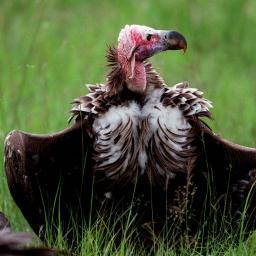
Wind farms are one of the solutions to Africa’s energy crisis, but they have the potential to jeopardise threatened bird species such as eagles and vulturesMany people see wind energy as one of the key solutions to meeting Africa’s growing energy demand and mitigating climate change. As a result, wind farms are already under construction or are being planned in many countries across sub-Saharan Africa. But wind farms can pose real threats to bird species, and they have the potential to jeopardise threatened bird populations.So far, the biggest impact of inappropriately sited wind turbines has been on populations of large birds of prey, in particular eagles and vultures. In some extreme cases turbines have led to the death of hundreds of the birds as they collide with the turning blades. Continue reading...
|
 |
by Fiona Harvey in Brussels on (#DE96)
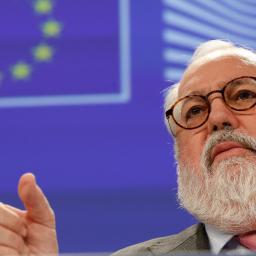
Exclusive: Miguel Cañete urges world leaders to force their ministers to agree a dealThere is “no plan B†if the Paris climate conference ends in failure, Europe’s climate chief has warned, urging world leaders to intervene to force their ministers to agree a landmark deal this December.
|
by Oliver Milman on (#DE7H)
The direct action fund is expected to reduce greenhouse gas emissions by just 11% by 2025, far less than the expected target the government is soon to unveilThe Coalition’s emissions reduction fund is likely to cut Australia’s greenhouse gases by about 11% by 2025, far less than the expected target the government is soon to unveil, according to a new analysis.
 |
by Emma Howard on (#DDXM)
Europe’s largest conservation organisation to use solar, biomass and hydro power to supply half its energy needs for its estates, historic houses and palaces
|
 |
by Oliver Balch in Johannesburg on (#DDX4)
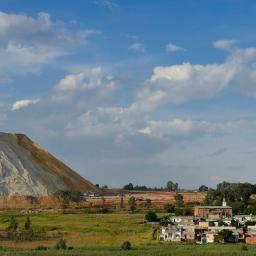
Much of the waste from 600 abandoned mines around South Africa’s largest city is piled high next to residential communities – most of which are poor and blackJohannesburg’s mine dumps look strangely beautiful from a distance. Lustrously yellow in the sun, blazing red at dusk, their huge molehill shapes provide the city with its distinctive skyline.
|
 |
by Jazz Twemlow on (#DDWK)
It’s just as well the octogenarian naturalist spent his birthday at the White House, not Parliament House, or the ABC might be copping fresh criticismThe phrase “TV event of the week†seems to have pointlessly malleable applicability. Assemble a good-looking dessert or sing a song slightly better (or worse) than most people could, and TV executives feel entitled to out-hyperbole the internet. Heaven forbid someone in the middle of a karaoke session should knock out a decent crème brûlée: it would probably be met with more excitement than the sodding moon landing.Related: Barack Obama turns tables in David Attenborough climate change interview Continue reading...
|