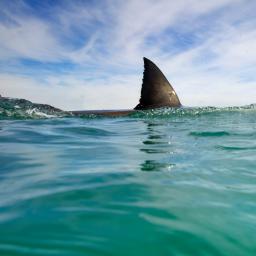
Olivia Johnson watched in horror as her father Damian, of Hobart, was attacked by a shark off Triabunna, near Maria Island, early on SaturdayThe family of a man killed by a shark as he dived for scallops with his daughter off Tasmania’s east coast have said they are opposed to any shark cull.Olivia Johnson watched in horror as her father Damian, of Hobart, was attacked by a shark in waters off Triabunna, near Maria Island, early on Saturday. Continue reading...
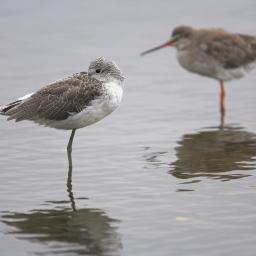
Originally published in the Manchester Guardian on 27 July 1915At first, as we approached the mere, no birds were visible under the bank, for the turf, worn into tiny inlets and bays by winter storms, rose, a line of miniature cliffs, above the narrow sandy beach where the broken mussel shells shone like silver. Suddenly a nervous redshank flew out with a loud cry of alarm, immediately followed by a larger and darker bird and the clear, ringing “choo, choo†of the greenshank. As the two flew together, calling repeatedly, we noted the striking differences between these closely related birds. Apart from call and size, the general appearance differed; the greenshank’s darker wings showed no white border, so noticeable a pattern caused by the redshank’s white secondaries, and when they settled the pose was distinctive, the larger bird’s body being held almost at right angles to the long green legs. Certainly migration has begun when a greenshank appears on a Cheshire inland water.Ragwort, thistle, sorrel, dock, and goosefoot do their best, and do it very well, to convert waste places into interesting and even beautiful botanic gardens, and a fine weed with long graceful spikes of yellowish-green flowers has joined them in the Northwich salt area; dyer’s rocket, a wild mignonette, is now exceedingly fine on some of the most uninviting tips of chemical waste. When the Cheshire Flora was published this plant was hardly known away from the coast, but evidently the soil and conditions of the salt country approach those of the marshes and sandhills of the shoreline. Continue reading...
In contrast to the wet and windy start to the summer in the northern half of Britain, the south-east of England is looking rather parched right now, even after the weekend’s rain. The south-east has been on the margin of a brutal heatwave which has taken grip in central and southern Europe, with temperatures reaching over 40C in many places. What is particularly shocking about this heat is its persistence, because it began early, in June. For now the extreme heat has returned to its more normal habitat, confining itself to north Africa and southern parts of the Mediterranean but over the past weeks long standing temperature records have been tumbling across Europe.Germany’s all-time highest temperature record was broken on 5 July with 40.3C in Bavaria, and in the Netherlands, Maastricht set a new national record for July of 38.2C. Spain set new record temperatures for both May and June, and this month Geneva recorded the highest ever temperature in Switzerland north of the Alps, with 39.7C. Continue reading...
Gloomy second-quarter figures from the oil company will be made worse by an extra $10bn provision from the Deepwater Horizon accidentBP is expected to report that its profits are down by more than half despite a recent increase in oil prices.The gloomy second-quarter figures to be revealed on Tuesday will be made worse by an extra $10bn (£6.5bn) provision that the company will take to pay for the latest legal settlement resulting from the Deepwater Horizon accident.
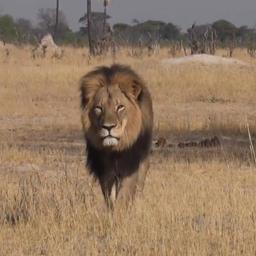
European allegedly paid €50,000 for chance to kill tourist attraction, who was found headless after being shot with a bow and arrow and tracked for 40 hoursAuthorities in Zimbabwe are trying track down a Spaniard who allegedly paid park guides €50,000 (£35,000) for the chance to kill Cecil, one of Africa’s most famous lions, who was the star attraction at the Hwange national park. The creature was found skinned and headless on the outskirts of the park.The 13-year-old lion was wearing a GPS collar as part of a research project that Oxford University has been running since 1999, making it possible to trace its last movements when it was tricked into leaving the park and shot with a bow and arrow. The hunters then tracked the dying animal for 40 hours before they killed it with a rifle. Continue reading...
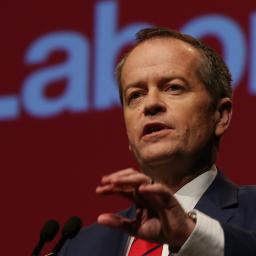
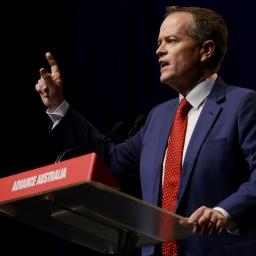
Tony Abbott’s confidence may have been premature. From climate change to boat turnbacks, for the first time in a long time, Shorten looks like a leader who believes in somethingA few months ago Tony Abbott was sure he had Bill Shorten’s measure.The Labor leader’s confidence was ebbing by the day and huge challenges loomed – his appearance “in the dock†at the royal commission into trade union corruption, the ugly reminders in the ABC’s Killing Season and his party’s national conference which was already shaping as a treacherous Labor family outing. Continue reading...
People have been warned to stay out of the water after the Hobart man was attacked while diving for scallops with his daughterPolice patrols are continuing off Tasmania’s east coast after a man was killed by a shark as his daughter watched.Related: Man killed by shark while diving with daughter off Tasmania’s Maria Island Continue reading...
Being stone-cold sober might be good for your health, but oh for the days of downing a glass of good wine...A new study involving 9,000 people published in BMJ Open states that people over 50 who are otherwise solvent, active, successful and healthy are more at risk from excessive drinking than their less-well-off peers. The author, Professor Jose Iparraguirre, Age UK’s chief economist, says that harmful regular drinking is a hidden, middle-class, middle-aged phenomenon and drinkers may not realise it’s putting their health at risk.Meanwhile, another study shows that, despite the government’s hardline legislation, the use of ecstasy and LSD has risen sharply in the past two years among young people aged 16 to 24, up 84% and 175% respectively; and that overall young people are the most likely age group to take drugs. Continue reading...
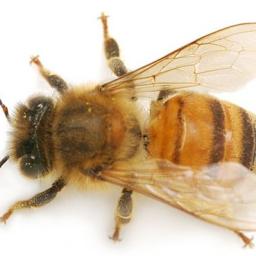
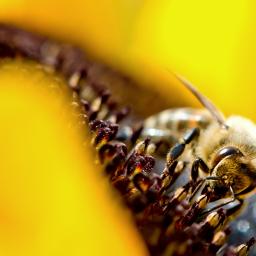
Controversial conservative group says bee deaths have been overhyped and blame poor land management: ‘We’re not in a battle against nature’Related: Who is winning the PR battle over neonicotinoids?Barack Obama may be pushing America into an abyss of gay-loving, Iran-hugging, welfare-splurging socialist ruin, but conservatives can console themselves with at least one piece of good news: the “beepocalypse†is over.
They’ve divebombed pensioners. They’ve eaten tortoises. Now a seagull has been found dead in Bridport. Tragic accident or mob-style warning? Our gumshoe found a tale of starling-swallowers, salmonella – and a second victim“They sent you all this way to ask about a seagull?†The taxi driver looked at me in the mirror. In his eyes, I saw confusion, maybe a little fear. I smiled wearily. Not now, I thought. Not him, too. No more talk of seagulls. It had been a long couple of days. I was so nearly out of Saigon I could hear the rotor blades thumping above.By Saigon, of course, I mean Bridport, west Dorset, a seaside market town of charity shops, estate agents and bad local art galleries. By rotor blades, I mean seagulls. For the past 36 hours I had thought about little else. If you gaze at the seagull long enough, I learned, it gazes back at you. You wonder whether it has a demonic quality. A seagull will do strange things to a man. Continue reading...
by Peng Yining for China Daily, part of the Climate P on (#FCX0)
With an ageing society and more people living by the coast, China faces a challenge coping with climate change, reports China DailyA recent study led by Georgina Mace, ecosystem professor at University College London, indicated that governments across the world have failed to grasp the risk that population booms in coastal cities pose as climate change continues to cause rises in sea levels and extreme weather events. Mace is director of the UCL Centre for Biodiversity and Environment Research. Continue reading...
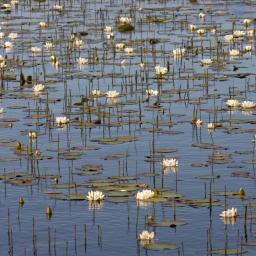
Loch Bran, Highlands the brilliant emerald dragonfly, despite its name, is elusive and difficult to seeThis small loch is only about 10 hectares, irregularly shaped and shallow. Lying two kilometres east of Loch Ness, it is nationally important for its dragonflies and damselflies. Slavonian grebes often nest there and, unusually, there are large colonies of both frogs and toads in the extensive shallow water. Brown trout rise to the fly and occasional “plops†on the open water give away their presence. The loch is also unusual in supporting the fairly rare fish, the arctic char. Butterflies include the northerly Scotch argus and the localised speckled wood, which has had a poor season so far this year.However, despite all these attractions, what stole the show on my visit last week were the white water-lilies (Nymphaea alba). Known in Gaelic as duilleag-bhaite bhan (white drowned leaf), they fringed the undulating margins of the shallower western parts of the loch. As I stared down at the shimmering white blossoms, I recalled John Clare’s lines “Again spread out their leaves of glossy green; / And some, yet young, of a rich copper gleam†(Water-lilies, 1820). The floating flowers are up to 20 cm across with 20-25 large white or pink-tinged petals contrasting with the mass of bright yellow stamens. Continue reading...
The state’s first solar-powered fast-charging station is to be built in Townsville, and the government is offering small businesses a plan to help reduce costsQueensland wants to build a string of charging stations for electric cars stretching more than 1,600km along the Bruce Highway.
Police are expected to hold a media conference on Saturday and are advising boat owners and divers to stay out of the waterA man has been killed by a shark off the coast of Tasmania while reportedly diving for scallops with his daughter.
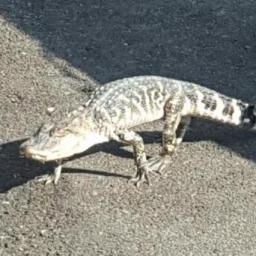
Police found the 3ft-long alligator in the Inwood neighborhood of upper Manhattan on Thursday and took it to an animal care center, where it later diedA stray alligator found wandering Manhattan streets has died, according to a statement from animal control officials of New York City.
Producers say this year’s harvests are worst they have seen, as consumer demand begins to outstrip supplySalads have rarely been so expensively dressed after a combination of drought and disease pushed the price of olive oil up 10% so far this year, amid warnings from suppliers that harvests are the worst they have seen.The Italian government has declared a “state of calamity†in the provinces of Lecce and Brindisi on the heel of the country, where olive groves are being attacked by a bacterial disease nicknamed “olive ebola†. Up to 1m centuries-old olive trees could be felled in one of the most picturesque tourist spots of Italy in an attempt to contain the problem. Continue reading...
by Tom Arup for The Age, part of the Climate Publishe on (#FBBT)
It might be one of the world’s smallest countries but the Marshall Islands has set an ambitious target to cut its greenhouse gas emissions - and it wants Australia to do the same, reports The AgeIt might be one of the world’s smallest countries but the Marshall Islands has set an ambitious target to cut its greenhouse gas emissions – and it wants Australia to do the same.
Investments in fossil fuel companies face serious risk from global warming, research by the Economist Intelligence Unit showsPrivate investors stand to lose $4.2tn (£2.7tn) on the value of their holdings from the impact of climate change by 2100 even if global warming is held at plus 2C, a report from the Economist Intelligence Unit (EIU) has warned.If firm action is not taken at the forthcoming climate change talks in Paris and the Earth’s temperature warms by a further 5C then investors are facing losses of almost $7tn at today’s prices, new research shows. Continue reading...
Pledge ahead of Obama visit and UN climate summit in Paris is welcomed by campaigners as evidence countries can develop without fossil fuelsKenya has pledged to cut its carbon emissions 30% below business-as-usual levels by 2030, ahead of a landmark UN climate summit in Paris later this year.The East African country is a very small carbon emitter in global rankings, on a par with Singapore and Mongolia, but the move was hailed by campaigners as evidence that developing countries could develop without fossil fuels. Continue reading...
The week’s top environment news stories and green events. If you are not already receiving this roundup, sign up here to get the briefing delivered to your inbox Continue reading...
Onshore wind, solar, green homes ... we round up the measures that have gone under the knife in what some are calling the worst period for UK environmental policy in 30 yearsAmber Rudd has been accused of “grotesque hypocrisy†today for claiming the government is leading on climate change while overseeing a string of attacks on green policies. Some environmentalists say it’s the worst period for environmental policy in three decades.We’ve rounded up the green measures that have been axed or find themselves in the firing line, to show the breadth and scale of the changes. Continue reading...
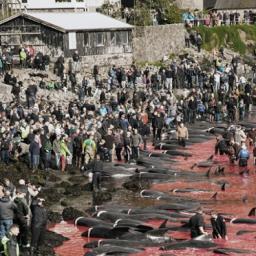
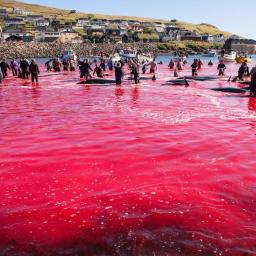
Seven Sea Shepherd protesters arrested for allegedly interfering in the annual hunt that they say has killed about 250 pilot whales in a dayFaroese villagers have slaughtered about 250 pilot whales in the past 24 hours according to Sea Shepherd activists monitoring the traditional summer hunts in the north Atlantic islands.The whale pods, which migrate past the islands in July and August, were herded by flotillas of small boats on to two beaches where villagers waded into the water to kill them with lances. Continue reading...
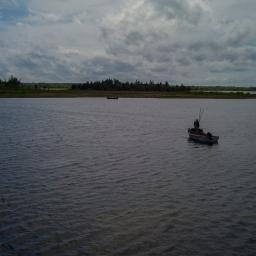
Photographer Cj Gunther documents the Hardy family from Canada, who have farmed oysters in East Bideford, Prince Edward Island, for four generations. Leslie Hardy, who bought the family business from one of his brothers when it was passed down from their father, works with his other brothers, four sons, a daughter and many of his 36 grandchildren Continue reading...
The UK government has embarked on a disastrous environmental agenda, that has little to do with evidence and everything to do with ideologyThe last few months mark the worst period for environmental policy that I have seen in my 30 years’ work in this field. The attacks on renewable energy, the scrapping of zero carbon homes and the resumed use of pesticides that are known to kill birds and beneficial insects are among the policy reversals that confirm we are into a new and troubling period.The basis for the lurch backwards has been predicated on managing public money and the cost of living, when if fact neither are backed by evidence. Take the fact that more than 40% of the Department of Energy and Climate Change’s (Decc) budget is spent on nuclear waste management, and yet this technology, which will take years to make a material difference to our energy security, remains favoured by policy while renewable technologies that could deliver more quickly and cleanly are being undermined. Continue reading...
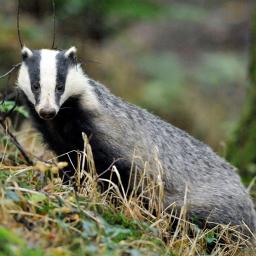
After controversial pilots in Gloucestershire and Somerset, farmers call for culls in three more ‘TB hotspot’ areas in south-west EnglandThe controversial badger cull in England could be rolled out to three new regions within weeks, with Natural England currently considering new applications from farmers.The culls, intended to curb tuberculosis in cattle, have been piloted for the last two years in Gloucestershire and Somerset. The pilots have repeatedly missed their targets for badgers shot, been judged inhumane and have been dismissed by scientists as a failure. Continue reading...
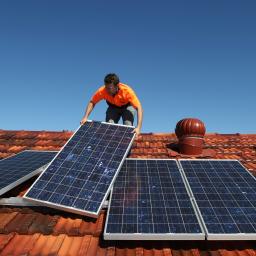
Big energy utilities are attacking solar energy and limiting choice for ordinary Americans. Conservatives and progressives should unite to fight backI am a lifelong conservative and, also, a strong advocate for solar energy. As I travel the country advocating for solar using a free-market message, I am seeing an awakening among conservatives in this area. There are many areas that conservatives and progressives strongly disagree on, but both are united in a desire to pass on a legacy of true energy independence to future generations of Americans. The right to solar energy is an American issue – not a partisan one.America was founded on the principles of liberty and freedom, but unfortunately in many states there are regulatory barriers erected by the government that prohibits the freedom of choice for utility customers – especially when it comes to switching to solar. Continue reading...
A Cornwall resident is left with a head wound after a seagull attack in Helston. Sue Atkinson, 66, tells ITV News West Country that the bird swooped down on her unprovoked. The county, in south-west England, appears to be the hotspot for attacks this summer, with some residents calling for a cull of the gulls Continue reading...
At the Pickaway County Fair in Circleville, Ohio, we quizzed cattle on their knowledge of the environment, methane gas and cow patties – Âand interviewed their owners to find out how much their animals fart. Are cows really destroying the planet? And what do they think about it? Find out in this video Continue reading...
This footage released by Sea Shepherd conservation campaigners shows a mass slaughter of pilot whales in the Faroe islands. The annual series of whale hunts in the self-governing islands, situated between Iceland and Norway, are strongly defended by the local government, while Sea Shepherd labels the them an 'unnecessary obscenity'
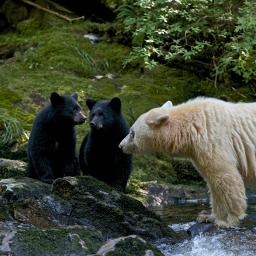
Fighting hippos, flamingoes in the Great Rift Valley and a snow leopard in Himalayas feature in this week’s pick of images from the natural world Continue reading...
It’s been hard to miss the hyperventilating news coverage about Labor’s new emissions ‘aspiration’, but neither major party has a plan for climate changeIt was hard to miss the screaming headlines as I arrived home from an overseas holiday Thursday. Bill Shorten had apparently committed a gory and unfathomable act of political harakiri with a “loony … lurch to the left†climate policy that had guaranteed Tony Abbott victory at the next election. The Labor leader was a “zombie†with a “death wish†(I thought zombies were already dead, but anyway...) and was advocating a “massive†carbon tax, or perhaps two or three massive carbon taxes all at the same time, in a bloody-minded multitaxing attempt to bankrupt hard-working Aussie families in the interests of appeasing inner-city families (who apparently also eat a lot of goats cheese).Related: Bill Shorten recommits to emissions trading, opposing 'Abbott’s society of flat-earthers' Continue reading...
A solar power project in a remote community in Zimbabwe is encouraging women to give birth in hospitals, and reducing their workloadFor a woman in parts of rural Zimbabwe the cost of two candles can be the difference between health and hunger, even life and death.Because many health clinics are far from the grid and lack electricity and therefore light, expectant mothers are told to bring their own candles when they feel that labour is approaching. But as primary care needs worker Merjury Shoko explains: “Two candles cost a dollar, which is the same as paying to go to the grinding mill to grind maize for your child’s dinner. That is a real dilemma for some women. Do I go to the clinic now, or do I feed my children? It’s obvious they prefer to go to the mill.†As a result many women leave it until the last minute to walk to the clinic, and many do not make it in time and give birth by the roadside, often at night. Continue reading...
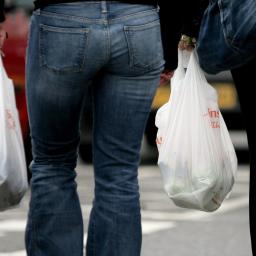
Average household has 40 plastic bags at home, but number of single use bags taken at supermarkets keeps rising ahead of 5p bag charge in EnglandThe number of single-use plastic bags handed out by UK supermarkets has increased for the fifth year running to 8.5bn, figures show.
Australian opposition leader Bill Shorten says he wants to deliver an emissions trading scheme and ensure that half of Labor MPs will be women by 2025, during his opening address to Labor's 47th national conference in Melbourne. Shorten also pledges to seek support for same-sex marriage and an Australian republic Continue reading...
Jeff the bear-like filmmaker is sane, respectful and sensible – sadly he’s no Grizzly Man at all, which makes his nature film a little bit dullUsually it’s obvious what to review; there’s something new or interesting or maybe a big show coming to an end. But on Thursday, not so much. The third and final part of Channel 4’s Married At First Sight wasn’t available (I see things in advance, in order to meet old-school print deadlines). My guess is that it might even have worked out for Jason and Kate, who clearly couldn’t wait to get their paws on each other at the end of the last show, but Emma and James less so, and I’m not hopeful for them.Also unavailable: Channel 4’s intriguing Dogs on the Dole. I just hope George Osborne was watching so he can target the scrounge hounds first, before children and the elderly. And I’ve had it with BBC2’s Coast – they’ve been around so many times now, I know every headland and cove, I’m starting to recognise individual rocks. I’m dizzy, seasick, longing for a bit of Inland. Continue reading...
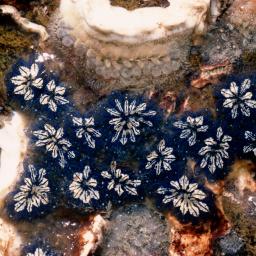
St Ouen’s Bay, Jersey The mount overlooks weedy pools. Further out, the pools are shallower and packed with boulders, asking to be peered underLow tide and a broad expanse of beige barnacle-encrusted rocks surrounds the mount that demarcates the northern limit of the sandy bay dominating the west coast of Jersey.The mount is topped with a large, rounded, second world war German defensive turret; it overlooks weedy pools, under a cloudy sky. Here, in a deep lagoon, its vertical sides carpeted with a thick, mossy pile of algae and bryozoans, shanny (blennies) rest on top of slate-grey cobbles, surveying their watery domain with large eyes and glum mouths; one of these mottled denizens is huge, more than 15cm long. Glassy matchstick-sized fry swim near the surface, a pair of dark eyes followed by a thin, snaking, iridescent green line. Continue reading...
South Australian university says it has asked for information about the $4m in funding on offer, but no firm decision has been madeThe federal government has held talks with Flinders University over the possibility of establishing a research centre headed by controversial academic Bjørn Lomborg.
Rubbish? Garbage? Litter? Landfill or recycled, tip out your music collections to find throwaway treasures that may refer to objects, talk, situations or feelings
Republican presidential candidate also tells the annual meeting of powerful lobbying network Alec that Isis is a greater security threat than climate changeScott Walker has vowed to unravel Barack Obama’s legacy, starting with the Iran nuclear deal, should he become president.
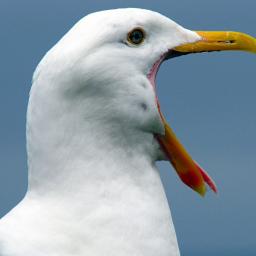
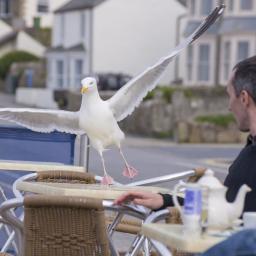
Even the prime minister has been drawn into the debate over how to deal with the antisocial birds that are terrorising Cornwall and beyondThey have attacked pensioners, children, dogs, even a tortoise. They have stolen countless chips, Cornish pasties and doughnuts from unwary holidaymakers. The tabloids (and broadsheets) have branded them killers, and even the prime minister has been drawn into the debate over what is to be done. It truly has been the year of the gull.The latest attacks in Cornwall, south-west England – which appears to be the hotspot for attacks this summer – have left a 66-year-old woman needing hospital treatment and a four-year-old boy traumatised after his finger was savaged. Continue reading...
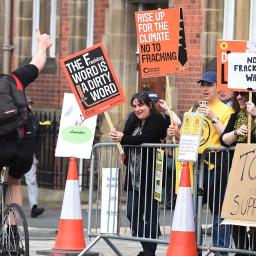
You quote the chief of the task force on shale gas, Lord Smith of Finsbury, as saying, “If someone demonstrated that developing this industry (fracking) in the UK would mean a substantial raising of greenhouse gas emissions, that would be a showstopper†(‘Too soon to decide’ whether fracking is good for UK, 15 July). In fact, many scientific papers have demonstrated the “substantial raising of greenhouse gas emissions†from fracking. A team at Cornell University has shown that, even at the lowest value of methane escape achieved in practice during fracking in the US, the greenhouse gas emissions of shale gas are higher than coal-burning. If, by some miracle, zero methane leaks were achieved in the UK, the carbon footprint of electricity generation from fracked natural gas would still be about 45 times higher than generation by biomethane from the anaerobic digestion of farm and food waste.Far better for the planet if the subsidies currently offered to landowners to accept fracking on their land were instead used to encourage farmers to send their animal and crop waste for anaerobic digestion. Additionally, the electricity and heat will probably be cheaper for the consumer, given the extraction costs and uncertain yield of fracking.
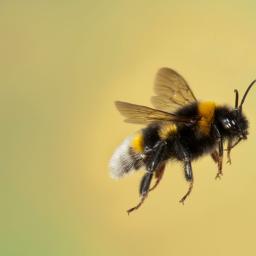
It is a disgrace that the government delayed the announcement of its decision on granting the National Farmers’ Union permission to use neonicotinoid seed treatments until after parliament had gone into recess. No surprise, given it had already suppressed publication of the agenda and minutes of the expert committee on pesticides meeting on 20 May. This is a government that also ignores the advice of its chief scientific adviser. On 14 May he called a recent Swedish field trial on rapeseed treated with neonicotinoids – which showed a decline in both the number of wild bees and bumblebee colonies – “an important contribution to the evidence base†on their impacts. Lib Dems believe this derogation for farmers by our government undermines the welcome 2013 EU ban on these bee-harming chemicals.
Actor’s foundation auctions prizes including private concerts with Elton John and arctic expeditions with Prince Albert II of Monaco to reach sumLeonardo DiCaprio’s foundation on Wednesday raised more than $40m to help preserve and save the environment.The amount was raised through the auction of luxury items and unique experiences, at the second annual gala hosted by actor’s eponymous foundation in St Tropez. Continue reading...