 |
by Rebecca Kanthor on (#61N5H)
Crystal Kwok is the director of "Blurring the Color Line," a new documentary about her family’s experience in Augusta, Georgia, and the relationships between Chinese Americans and Black people during the Jim Crow era.
|
The World: Latest Stories
| Link | https://www.pri.org/programs/the-world |
| Feed | http://www.pri.org/feed/index.1.rss |
| Updated | 2026-10-27 18:18 |
 |
by Joyce Hackel on (#61K5B)
Russian schools are revamping their curriculum and encouraging students to join a new patriotic youth movement in an attempt to steer them away from Western influence. To discuss how propaganda works, The World’s host Marco Werman speaks with Nina Khrushcheva, professor of international affairs at The New School in New York and great-granddaughter of former Soviet Premier Nikita Khrushchev.
|
 |
by Michael Fox on (#61K5C)
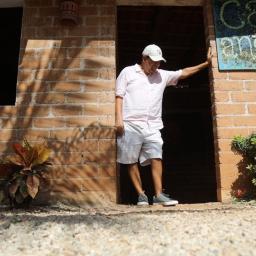
A brown seaweed called sargassum is washing up on Cancun beaches, threatening the region’s efforts to recover its tourism. Local resident Omar Vazquez Sanchez got the idea to transform the seaweed into “sargablocks,” what he calls a small solution to a big problem.
|
 |
by Chhavi Sachdev on (#61K5D)
Since its February release, the song “Pasoori,” which translates to “difficulty” or “conflict” in Punjabi, has racked up more than 250 million views on YouTube and on Instagram.
|
 |
by Gisele Regatao, Vera Haller on (#61K5E)
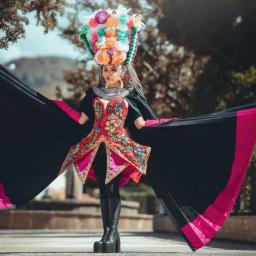
About to release her second album, Renata Flores is using rap and the Inca language to challenge discrimination.
|
 |
by Tibisay Zea on (#61HSJ)
If approved, it would be the first time that a country legalizes a drug as addictive and harmful as coca.
|
 |
by Shirin Jaafari on (#61FCY)
President Joe Biden arrived in Saudi Arabia on Friday for the first time since he took office. He met with King Salman and Crown Prince Mohammed bin Salman. Biden said in the past that he would make the kingdom “the pariah that it is.” But as gas prices have skyrocketed, he has changed his rhetoric. Now, experts question what the US will get out of this controversial visit.
|
 |
by Ashley Westerman on (#61FB5)
Due to depleted money reserves and uncertainty on when Russia's war in Ukraine may end, zoo staffers at Zoo XII Months say they’re in worse shape than ever before. The animals remain distressed and, with virtually no visitors, the privately owned zoo isn’t making money.
|
 |
by Omar Duwaji on (#61E4R)
During President Joe Biden's trip to the Middle East, he's signed a joint declaration with Israel to counter Iran's nuclear program. The World's host Marco Werman speaks with Sina Azodi, a nonresident fellow with the Atlantic Council in Washington, about what the move means.
|
 |
by Ridwan Karim Dini-Osman on (#61E4S)
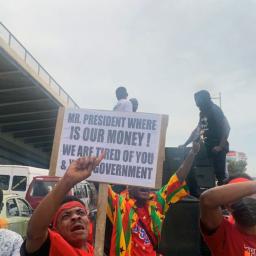
In a huge reversal for Ghanaian President Akufo-Addo, the government is seeking a loan from the International Monetary Fund to tackle Ghana’s economic woes.
|
 |
by The World staff on (#61CS4)
The top agenda item for Biden is regional security. Scheduled meetings with Israeli officials focus on strengthening the regional relationships that Israel has forged with some of its Muslim neighbors.
|
 |
by Ashley Westerman on (#61CS5)
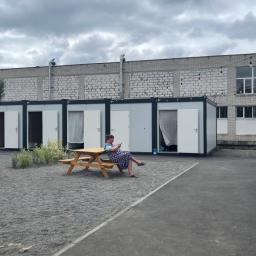
Hundreds of thousands of displaced people have ended up in the western Ukrainian city of Lviv, near the Polish border, where prefabricated homes have become a fast and affordable way for the city to house refugees.
|
 |
by Dina Temple-Raston, Sean Powers on (#61CS6)
Dina Temple-Raston of the Click Here podcast spoke with Jorge Mora, Costa Rica’s former director of the Ministry of Science, Innovation, Technology and Telecommunications (MICITT) and Mario Robles, the CEO and founder of White Jaguars, a Costa Rican cybersecurity company that helped the San José government respond to the ransomware attack on the country.
|
 |
by Kendal Blust on (#61CS7)
Green sea turtles are an endangered species and among the largest of their kind in the world. They’re also the only herbivorous sea turtles. Now, some conservation groups are trying to protect them.
|
 |
by Durrie Bouscaren on (#61BEA)
Lebanon’s old-growth cedar forests have been decimated by centuries of logging. Now, rising temperatures from climate change are set to take the rest.
|
 |
by Vera Haller, Gisele Regatao on (#61BEB)
After years of getting high prices for their fruit, Peruvian growers and exporters have seen the prices fall dramatically this season.
|
 |
on (#61BEC)
The newly released images from the James Webb Space Telescope show dancing galaxies and the death of a shooting star.
|
 |
by Joshua Coe, The World staff on (#61A0C)
The sliding value of the euro could have a big impact on the US trade deficit, according to economist Eswar Prasad, a trade policy professor who spoke to The World's Marco Werman from Spain.
|
 |
by Shirin Jaafari on (#617DC)
Turkish President Recep Tayyip Erdoğan says he plans to establish an 18-mile “safe zone” in northern Syria to counter a US-backed Kurdish group. Erdoğan considers the People’s Protection Units, or the YPG, a threat to the security of his country.
|
 |
by Adam Wernick on (#617DD)
Thwaites Glacier is considered the world's most important one — not just due to its size, but because of the massive amounts of ice that will melt due to global warming.
|
 |
by Joyce Hackel on (#617DE)
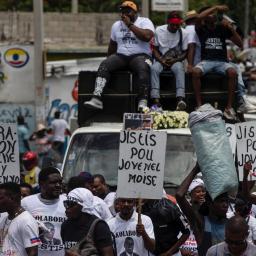
A year since the assassination of President Jovenel Moïse, Haiti has descended into further violence, and efforts to hold people accountable have proven to be fruitless. Widlore Merancourt, editor with news outlet AyiboPost in Port-au-Prince, discussed with The World's host Marco Werman what the anniversary means for Haitians.
|
 |
by Alan Ruiz Terol on (#6168Q)
Beach towns like Calella turned their hotels, shut down by the pandemic, into safe havens for thousands of Ukrainians fleeing the war. But with tourists back, refugees are struggling to find more reliable forms of accommodation.
|
 |
by Gerry Hadden on (#616BN)
In southwest France, just about everyone seems to know someone who’s been jabbed by a syringe while out partying at a dance club.
|
 |
by Joshua Coe on (#6168R)
Zeyi Yang, a China reporter with MIT Technology Review, looked at some of the data and spoke from New York with The World's host Marco Werman about the situation.
|
 |
by Levi Bridges on (#6166F)
Displaced people have spent decades living in old sanatoriums and hotels scattered throughout Georgia. Now, the government plans to restore the dilapidated buildings to boost tourism.
|
 |
by Omar Duwaji, The World staff on (#614ZT)
This week, coup leader Abdel Fattah al-Burhan said he would support a full transition back to civilian rule in Sudan. But the offer was promptly rejected by the political opposition. “We do not trust, nor do we believe the military,” Sudanese activist Daliah Abdel-Moneim told The World’s Marco Werman.
|
 |
by Durrie Bouscaren on (#614WW)
As people faced with electricity blackouts install solar panels on their rooftops, they say they're seeing some relief — but it comes alongside frustration with the government's inability to power the country.
|
 |
'It’s controversial because it's important,' Malaysian Chinese pop artist says of his censored music
by Rebecca Kanthor on (#614WX)
Namewee is a singer-songwriter and filmmaker who is known for speaking his mind and composing songs that go viral on YouTube. He tells The World's Rebecca Kanthor why promoting his music is important.
|
 |
Going public with Brittney Griner's wrongful detention in Russia could be risky, hostage expert says
by Chris Harland-Dunaway on (#613QP)
Hugh Dugan, a former State Department special envoy for hostage situations, has handled negotiations for Americans detained or kidnapped abroad. He joined The World's host Marco Werman to talk about WNBA basketball star Brittney Griner's detention and how negotiations for her release might unfold.
|
 |
by Daniel Ofman, The World staff on (#613P6)
Massive protests broke out after Uzbekistan's President Shavkat Mirziyoyev proposed constitutional changes that would have prevented the Karakalpakstan region from holding a referendum on secession. He has since backed away from the proposal, but imposed a monthlong curfew.
|
 |
by Ridwan Karim Dini-Osman on (#613MD)
Some Rwandans worry that refugees will find it hard to make a new life in Rwanda where unemployment rates are five times higher than in the United Kingdom.
|
 |
by Carolyn Beeler on (#613P7)
The German public has been reluctant to become involved in Ukraine's war. But the government in Berlin plans to deliver on a promise that Chancellor Olaf Scholz made in February to supply military assistance, citing a “turning point” for Europe.
|
 |
by Shirin Jaafari on (#6103F)
Critics of the move say that the houseboats are an important part of Cairo’s cultural heritage that should be preserved.
|
 |
by Tibisay Zea on (#60ZYH)
Rapper Maykel Castillo “El Osorbo” and visual artist Luis Manuel Otero Alcántara were sentenced to prison by a Cuban court last week for his involvement with an opposition movement on the island.
|
 |
by Joshua Coe, Sushmita Pathak, The World staff on (#60YT4)
“Religious polarization has been rising in India under [Narendra] Modi, who is seen as a Hindu nationalist leader,” journalist Sushmita Pathak told The World’s Marco Werman.
|
 |
by Dina Temple-Raston on (#60XG1)
Western countries have put extensive financial sanctions on Russia since the beginning of the war in Ukraine. Some Russians at home and abroad have turned to cryptocurrency to keep themselves afloat.
|
 |
by Jason Margolis on (#60Y88)
The COVID-19 pandemic created a shortfall in foreign workers when their visas weren't approved to return to the US. A decline in the number of Americans willing to take service sector jobs doubled the impact for small business owners.
|
 |
by Gerry Hadden on (#60W5Q)
Across Europe, walk-outs by crew members of various airlines have led to dozens of canceled or delayed flights.
|
 |
by Joshua Coe on (#60W0N)
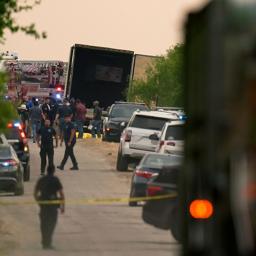
Guadalupe Correa-Cabrera, a public policy professor at George Mason University in Virginia, spoke with The World's host Carol Hills about the networks behind the illegal smuggling operations.
|
 |
by Wilkine Brutus on (#60W0P)
Language learning app Duolingo will offer a new Haitian Creole course for English speakers. It’s an opportunity to explore how Haitian Creole can sound and feel: sweet and romantic — but also rebellious.
|
 |
by Durrie Bouscaren on (#60TQC)
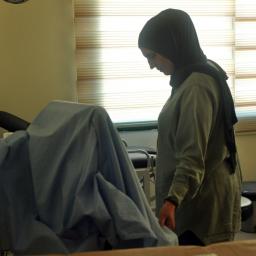
In Lebanon, a pregnancy can only be terminated if three doctors agree that a woman's life is at risk. But this doesn't stop abortions from happening.
|
 |
by Adam Wernick on (#60TNG)
Trillions of dollars of financial assets are at risk of losses related to the climate. The Biden administration is moving to require public companies to disclose their climate risk to investors.
|
 |
by Rebecca Kanthor on (#60TNF)
These trendy videos often feature African children who are prompted to parrot Chinese greetings and to act in inappropriate ways — for entertainment.
|
 |
by Omar Duwaji on (#60R4H)
The World's Carol Hills spoke with Natasha Hall, a senior fellow with the Center for Strategic and International Studies, about Syria's drug trade and the country's descent into a narco state status.
|
 |
by Ashley Westerman on (#60PTZ)
Nearly half of the country’s small businesses closed when the war began. Now, many Ukrainians are returning home, and businesses are reopening. But they’re faced with serious financial challenges, among other concerns.
|
 |
by Omar Duwaji on (#60PRQ)
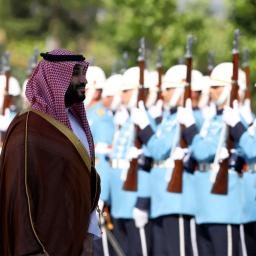
Saudi Arabia's Crown Prince Mohammed bin Salman met with Turkish President Recep Tayyip Erdoğan for talks in Ankara. The visit comes as Turkey seeks to repair ties with its regional rivals. Steven A. Cook at the Council on Foreign Relations in Washington spoke with The World's host Carol Hills about the significance of the visit.
|
 |
by Ridwan Karim Dini-Osman on (#60NGQ)
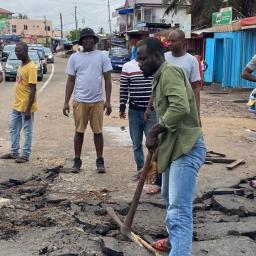
Accra has been hit with heavy rain and flash flooding in May and June, leaving many experts worried about the city’s capacity for climate resilience if trends continue.
|
 |
by Gerry Hadden on (#60NE9)
Last week, Algeria severed trade and diplomatic ties with Spain, and has now threatened to cut off coveted gas sales — which have been protected under a two-decade-old friendship treaty.
|
 |
by Rebecca Kanthor on (#60NEA)
For more than 30 years, the Chinese government had restricted most people to having only one child. Illegal and forced abortions were common, and it led to a massive drop in the country’s birth rate. A new policy that started last year allows couples to have up to three children now, but many people aren't interested.
|
 |
by Michael Fox on (#60M07)
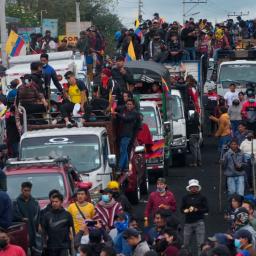
Indigenous leaders have 10 demands including reducing gas prices, halting new mining and gas projects, providing funds for health care and education, and economic relief for millions of families in debt.
|