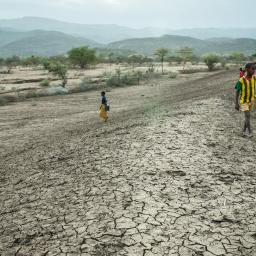
A Republican-led panel promoted a misleading tabloid story alleging earth may not be warming, relying on data that leaves out important points of contextClimate scientists have denounced the House committee on science, space and technology after the Republican-held panel promoted a misleading story expressing skepticism that the earth is dangerously warming.On Thursday afternoon, the committee tweeted a Breitbart article alleging: “Global Temperatures Plunge. Icy Silence from Climate Alarmistsâ€. The story linked to a British tabloid, the Daily Mail, which claimed that global land temperatures were plummeting, and that humans were not responsible for years of steadily increasing heat. Continue reading...
Leys Castle, Inverness The carcass would not last long with so many scavengers around and I expected that night a fox would carry it off to eat at leisureDriving down the hill the other day, I spotted a casualty on the road ahead, and knew by its size that it was a brown hare. Of all the creatures I find dead or injured on the roads, the brown hares are the ones that upset me the most, not least because when they are hurt their hare scream is penetrating and eerie.This one was a crumpled heap of light and dark brown fur. Its elongated hind legs were broken, but the long, broad ears stuck out almost defiantly. The carcass would not last long with so many scavengers around and I expected that night a fox would carry it off to eat at leisure. Continue reading...
European Space Agency says proposals for permanent lunar outpost have generated international interestFuturistic plans for a moon village proposed by the European Space Agency are winning support around the world.Related: Is a moon village the next step for space exploration? ESA's chief thinks so Continue reading...
In 1970 US authorities said drugs like LSD had no medical use, but two tests may just have proven that wrongWhen Aldous Huxley was dying in 1963, he asked his wife to inject him with LSD, and he passed away, she wrote afterwards, without any of the pain and distress that cancer can cause in the final hours.“All five people in the room said that this was the most serene, the most beautiful death,†Laura Huxley, a psychotherapist, wrote to other members of his family.
by Hannah Devlin Science correspondent on (#23SAG)
Social changes unleashed by new technologies could undermine core human values unless we engage with science, warns authorImagine a two-tiered society with elite citizens, genetically engineered to be smarter, healthier and to live longer, and an underclass of biologically run-of-the-mill humans. It sounds like the plot of a dystopian novel, but the world could be sleepwalking towards this scenario, according to one of Britain’s most celebrated writers.Kazuo Ishiguro argues that the social changes unleashed by gene editing technologies, such as Crispr, could undermine core human values. Continue reading...
Why do we get a kick out of looking at animals? We’re asserting our dominion over nature – but also trying to understand and preserve itWe humans love to look at other species. The BBC series Planet Earth II is a huge hit. As well as the authority of David Attenborough’s voice, this is because it offers a series of incredible HD glimpses of the secret lives of animals. The latest sequence that had my family glued to the screen featured a pride of lions chasing a giraffe. Astounding.Or is it? Is watching nature documentaries an enlightened attempt to comprehend our fellow creatures, or just another example of human beings imposing a gaze of power and knowledge on animals – classifying, controlling and ultimately skinning and stuffing them in the name of science? Continue reading...
A pair of mummified knees are most likely those of the famously beautiful spouse of Pharoah Ramses II, who died around 1250BC, say scientistsA pair of mummified knees found in a tomb in Egypt’s Valley of the Queens are most likely those of Queen Nefertari, the royal spouse of Pharaoh Ramses II, say archaeologists.Thought to have died around 1250 BC, Nefertari was the favourite consort of Ramses the Great, and was famed at the time for her beauty. Continue reading...
Jeremy Hunt has proposed a ban on sexting for under-18s. But there’s only one realistic option when it comes to curbing teen sex drives: don’t even try.Jeremy Hunt has proposed a ban on sexting for under 18s. As any reasonable person might have predicted, this has been met with a great deal of criticism. Most of the arguments appear to be based on the technical practicalities, given how Hunt never truly explained how tech companies are supposed to filter specific types of messages on countless platforms and devices based on date of birth. However, an even bigger hurdle would be the sex drive of teenagers themselves.One time when I was in school, we’d heard that someone had abandoned a pornographic magazine in a nearby field (for any teenagers reading this, this was a common phenomenon in the era when porn had to be printed). So, obviously, we set off to find it. Took a few hours but it was eventually spotted in a ditch. It ended with us just staring at it for a while, focussed on cheaply-printed images of naked breasts, spattered with mud, rainwater and animal effluent (I hope nobody developed any weird fetishes as a result of this, but you never know). Continue reading...
It’s a controversial idea, but a new paper this week describes for first time how scientists can test the controversial idea that the speed of light is not a constant. If the theory is proven, it would overturn Einstein’s century-old claim that the speed of light is a constant. It could change the way we view the cosmos, but until it’s proven (or not) we can content ourselves with what we do know - and for some of that we have the Saturn-orbiting Cassini spacecraft to thank. After nearly two decades, more than 300,000 incredible images and the discovery of no fewer than seven moons, Cassini is about to begin its swansong, which will end when the craft finally dives into Saturn itself on 15 September. If the noble end of this plucky little orbiter brings you down, why not cheer up with a little festive “neural karaoke� An AI project from the University of Toronto can take any digital photo and transform it into a computer-generated singalong - and we have their Christmas effort for you to enjoy. Other cheering news is that a single dose of psilocybin, the active ingredient of magic mushrooms, can lift anxiety and depression experienced by people with advanced cancer for six months or even longer, according to two new studies. An even happier note sounded this week for women who are in danger of passing on devastating and often fatal mitochondiral disorders to their children - UK doctors are poised to seek permission this month to create Britain’s first baby from the DNA of three people if the government’s fertility regulator approves the treatment. Continue reading...
More than 60 spectacular specimens of monkeys, apes, lemurs, lorises and bushbabies will go on show at the National Museum of Scotland from 9 December. The taxidermy was specially commissioned for the exhibition and is the first to show primates behaving as if they were in the wild Continue reading...
The outgoing GlaxoSmithKline CEO discusses progress on access to medicines and the revolt against the establishmentWhen Andrew Witty became CEO of one of the biggest pharmaceutical firms in the world, GlaxoSmithKline, his industry was so unpopular that campaigners threw red paint at company stands during conferences to represent the blood of those who died because they could not afford medicines.Ten years on, as Witty, now Sir Andrew, prepares to retire from GSK, Big Pharma is increasingly being seen as part of the solution to global health issues and not the problem. Few would deny that a great deal of the credit goes to Witty. Continue reading...
Researchers 3D print model snout and fit it to machine programmed for dog-like quick sniffs instead of long breaths, discovering it is 16 times more sensitiveStruck by the legendary sniffing skills of man’s best friend, scientists in the United States fitted a dog-inspired plastic nose to an explosives detector and reported that it worked 16 times better.
The spacecraft was heading to the International Space Station when it disintegrated 190km up in the atmosphere over Siberia on Thursday due to an unspecified malfunction, the Russian space agency said. Most of the ship’s debris burnt up as it entered the atmosphere but some fell on uninhabited areas, the agency said Continue reading...
‘Pharma bro’ who hiked the price of Daraprim by 5,000% goes on defensive after year 11 students make same life-saving drug in their school laboratoryOne of the students who made the life-saving medicine Daraprim in a school laboratory has accused Martin Shkreli of being “an attention-seeking businessman†who forgets there are “people’s lives and livelihoods at stake†in the row over predatory drug pricing.Former hedge fund manager Shkreli last year bought Turing Pharmaceuticals and almost immediately increased the price of the drug – which has been off-patent since the 1970s – from US$13.50 to US$750 a tablet. Continue reading...
FDA could make drug legal by 2021 if phase three tests involving controlled dosage and talk therapy are shown to alleviate post-traumatic stress disorderThe US Food and Drug Administration (FDA) has given the green light to phase three trials of MDMA to treat post-traumatic stress disorder, the final phase of validation required to turn the party drug into a legal medicine.Related: ‘My therapist gave me a pill’: can MDMA help cure trauma? Continue reading...
Intrepid trio were trying to find the cause of a thick fog that had descended on Victorian London. But then disaster struckEnglish meteorology may seem rather tame, but it can be hazardous, as shown by a balloon expedition by the Meteorological Council in December 1881.The expedition, in a balloon called Saladin, was to examine the conditions that had produced “a very peculiar fogâ€, thick enough to delay the trains in London. Continue reading...
Progress MS-04 cargo craft was en route to resupply International Space Station when it broke up in atmosphere and fell to EarthAn unmanned Russian cargo spaceship has broken up in the atmosphere and crashed over Siberia en route to the International Space Station, according to Russia’s space agency.
We can’t go on ignoring inequality, because we have the means to destroy our world but not to escape itAs a theoretical physicist based in Cambridge, I have lived my life in an extraordinarily privileged bubble. Cambridge is an unusual town, centred around one of the world’s great universities. Within that town, the scientific community that I became part of in my 20s is even more rarefied.And within that scientific community, the small group of international theoretical physicists with whom I have spent my working life might sometimes be tempted to regard themselves as the pinnacle. In addition to this, with the celebrity that has come with my books, and the isolation imposed by my illness, I feel as though my ivory tower is getting taller. Continue reading...
From an Arctic expedition to working in a studio in the school of biology and environmental science at University College Dublin, artist Siobhan McDonald collaborates with researchers to broach subjects at the edges of current scientific knowledge
The second man to walk on the moon is in a New Zealand hospital after being flown out of the south pole on an emergency medical evacuation flightBuzz Aldrin, the second man to walk on the moon, is “recovering well†in New Zealand following his evacuation from the south pole on Thursday after he fell ill during a tourist visit.Related: Buzz Aldrin walked on the moon – then claimed $33.31 in travel expenses Continue reading...
America’s science community is getting organised as never before to hold the new administration and Congress to accountMore than 2300 scientists—including 22 Nobel laureates—this week issued an open letter, outlining how they want the Trump administration and 115th Congress to make use of scientific evidence and expert advice. It remains open for signatures here.The letter calls on the president-elect to appoint cabinet members with a track record of supporting science and promoting diversity; to protect the integrity and independence of government researchers; and to provide sufficient funding for scientific research and data collection. Continue reading...
A study debunked the idea that puffing yourself up physically to increase confidence works. Let’s stop prizing masculinity in power and leadershipGiven the election night coup of a certain blustering, overly confident egomaniac, it might seem like channeling a very masculine idea of success is a good way to get ahead. After all, Donald Trump lurked menacingly over Hillary Clinton on the debate stage, blustered and bragged, and he triumphed. It seems a smart strategy to emulate aggressive masculine behavior if planning a power grab.But writing in the journal Hormones and Behavior, two researchers undermined previous findings that standing in a “power pose†– that is “broad posture, hands on hips, shoulders high and pushed backâ€, or what I would describe as “in the manner of a blustering, bigoted kleptocrat†– has no measurable effect on feelings of emotional or physical strength. Continue reading...
Immediate reduction in depression and anxiety for up to eight months seen in patients with advanced cancer given a single dose of psilocybinA single dose of psilocybin, the active ingredient of magic mushrooms, can lift the anxiety and depression experienced by people with advanced cancer for six months or even longer, two new studies show.Researchers involved in the two trials in the United States say the results are remarkable. The volunteers had “profoundly meaningful and spiritual experiences†which made most of them rethink life and death, ended their despair and brought about lasting improvement in the quality of their lives. Continue reading...
Artist Siobhan McDonald explains how seismology, climate change and a doomed Arctic expedition have shaped her latest exhibition, CrystallineWe live in an era in which humans have become the dominant force of change on the planet. First proclaimed at the turn of the millennium by the climate scientist Paul Crutzen, the Anthropocene asserts that since the Industrial Revolution, humans have altered the environment so extensively as to create a new geological epoch. Continue reading...
Sydney Grammar students create HIV and malaria drug Daraprim in their school laboratory, putting results onlineA group of Australian high school students have managed to recreate a life-saving drug that rose from US$13.50 to US$750 a tablet overnight after an unscrupulous price-hike by former hedge fund manager Martin Shkreli.The Sydney Grammar students reproduced the drug, Daraprim, used to treat a rare but deadly parasitic infection, in their high school laboratory with support from the University of Sydney and global members of the Open Source Malaria consortium. Continue reading...
Snowflake graphic | Safe spaces | Nurses without degrees | French cake history | Tennis and risk of death | Fivers, ponies and monkeysWhen is a snowflake not a snowflake? Answer: when it has fourfold symmetry, like the graphic used with your article (Poor little snowflake, G2, 29 October). How could you make such a mistake? If you are determined to include a snowflake graphic, please get it right. Your snowflakes appear to be made of cubic ice, a metastable polymorph not seen in blizzards or snowballs. An interesting idea but sadly a fantasy. Regular bog-standard ice comprises a hexagonal array of water molecules, so snowflakes likewise have sixfold symmetry. You silly snowflakes!
by Hannah Devlin Science correspondent on (#23H64)
Public health official warns children’s risk of drug-resistant infections 12 times higher in months following course of antibioticsChildren are at substantially increased risk of contracting drug-resistant infections in the months after taking a course of antibiotics, a leading public health official has warned.Paul Cosford, medical director at Public Health England, told MPs on Wednesday that children are 12 times more likely to contract drug-resistant infections in the three months after being prescribed antibiotics, suggesting that their unnecessary use poses a direct risk to individual patients as well as a broader threat to society as a whole. Continue reading...
Specialists poised to offer mitochondrial replacement therapy if government’s fertility regulator approves the treatmentDoctors will seek permission this month to create Britain’s first baby from the DNA of three people if the government’s fertility regulator approves the treatment for carefully chosen patients.Specialists in Newcastle are ready to offer mitochondrial replacement therapy (MRT) to women who are in danger of passing on devastating and often fatal genetic disorders to their children. The conditions affect about one in 10,000 births.
Wellcome Collection shows transgenic goat and rat bred to prefer alcohol in exhibition exploring humans’ perceptions of animalsWhat links an African clawed frog once used as a human pregnancy test, a transgenic goat bred to produce super-strong silk and a rat whose preference for booze may have helped Finnish alcoholics?All three have gone on display at a new exhibition at London’s Wellcome Collection alongside art works which include roadkill taxidermy and a film that tells the true story of a man who kept a pet tiger in his New York apartment. Continue reading...
It sounds like the stuff of Bond films, but 10 years ago the tragic case of ‘Edwin Carter’ presented doctors and police with exactly this scenarioOn the afternoon of 3 November 2006 Edwin Carter arrived at Barnet Hospital, London, in an ambulance. He was vomiting, had bloody diarrhoea, and was in a lot of pain. He had been like this for two days. His own doctor said it looked like typhoid, but it wasn’t typhoid. Staff at the hospital diagnosed gastroenteritis and started a course of antibiotics.The man’s condition improved slightly, but there were puzzling discrepancies in his lab results. Someone suffering from a bacterial infection would be expected to have a high white blood cell count, as the body produces more of these cells to fight off the infection. In this case the white blood cell count was very low and decreasing. Perhaps this was a reaction to the antibiotics. Perhaps not.
Recent political events have revealed tensions between expertise and democracy. Institutions must tap into the know-how of the many, not the fewWe lack public institutions - a participatory bureaucracy and open parliamentary processes - that know how to tap into the collective intelligence of our communities, and draw power from the participation of the many, rather than the few.It is the absence of these open institutions, and the resulting failure to take account of the views, voices and know-how of the many disaffected people who voted – and those who did not – during the EU referendum and the US presidential election, which create a vacuum that charismatic demagogues end up filling. Continue reading...
On Monday we asked readers to pick a side in one of philosophy’s most contentious conundrums. Here are the results.The votes are in. They have been counted. It was close. Very close.But before we get there, the question again: Continue reading...
Every day millions of internet users ask Google life’s most difficult questions, big and small. Our writers answer some of the commonest queriesOn a Sunday afternoon, a relative calls. She is at a party and wonders if I can help a friend of a friend.“Her brother is having cancer treatment and wanted to talk to you.†Continue reading...
Palaeontologists have uncovered clues to one of the great mysteries of whale evolution: the filter-feeding baleenWhen I was in primary school, one of my favourite books was Ted Hughes’ How the Whale Became. For children who persistently ask “why†about everything, Hughes provided tall tales to explain animal origins, using the bizarre logic that children’s fiction thrives upon. For example: the hare grew long ears to hear the answer to its marriage proposal to the moon. Well, naturally. These stories fuelled my imagination about animal origins, albeit in an absurdist Lamarckian fashion.We now know, thanks to Darwin, Russel Wallace, and the many great scientists since, that living things don’t evolve traits in order to accomplish a goal. Traits that improve survival are passed along to an animals’ offspring. The hare didn’t grow his ears to listen for whispers from a high place, but an ancestor with bigger ears thanks to a random mutation, would have heard danger approaching before the other proto-hares. And so it survived to produce bigger-lugged babies. Continue reading...
Carbon dating shows skeletons are from mid-14th century, while DNA tests of teeth find presence of plague bacteriumA mass burial pit of victims of the Black Death dating back to the 14th century has been discovered near Immingham in Lincolnshire.Archaeologists from the University of Sheffield were searching the site of Thornton Abbey, once one of the country’s biggest medieval abbeys, for evidence of a post-medieval building when they came across the grave containing 48 skeletons, 27 of them children. Continue reading...
Gynaecologists advise that cognitive behavioural therapy could help women manage the symptoms of PMSWomen experiencing premenstrual syndrome should routinely be offered cognitive behavioural therapy to help them manage the symptoms, gynaecologists have said.Around 40% of women experience symptoms of PMS with around 5%-8% having severe symptoms. Physical symptoms can include swollen breasts and bloating, and the psychological symptoms are wide-ranging, including depression, irritability, suicidal thoughts and loss of confidence. The condition can be debilitating, disrupting school, social and work life. Continue reading...
Research indicates regular badminton and tennis are sports most protective to health, while football and running are bottom of the tableIf you want to stave off death for as long as possible, you might want to reach for a tennis racquet.Scientists attempting to tease apart the benefits of different sports have found that regularly taking part in sports such as badminton or tennis reduces your risk of death at any given age by almost 50%, with swimming and aerobics also proving protective. Continue reading...
After just over 19 years ago, the Cassini orbiter will use the last of its fuel in a set of intrepid orbits before diving into Saturn and burning upAfter nearly two decades, more than 300,000 incredible images and the discovery of no fewer than seven moons, the Cassini spacecraft orbiting Saturn is set to begin its gutsy swansong.Launched just over 19 years ago, the Cassini orbiter – complete with its lander Huygens – spent seven years journeying to Saturn in order to explore the planet, its rings and its moons. Continue reading...
by Hannah Devlin Science correspondent on (#23CB2)
During sleep the brain reorganises the way negative memories are stored, making them harder to reverse, evidence indicatesNever go to bed angry, the old saying goes, or bad feeling will harden into resentment. Now scientists have found evidence to support the idea that negative emotional memories are harder to reverse after a night’s sleep.The study, published in the journal Nature Communications, suggests that during sleep, the brain reorganises the way negative memories are stored, making these associations harder to suppress in the future. Continue reading...
Why restrict badges to happily pregnant women when the world is only too full of people who urgently do need cheering up?Turns out there is very little point wearing a baby-on-board badge if you commute in rush hour. Squeezing through the doors is challenge enough, getting close enough to the seats to be spotted a pipe dream.Still, I’ve kept mine pinned on, partly in case I’m up early enough to travel off-peak, and partly as a discreet way to alert acquaintances I’m not just even greedier than usual. Continue reading...
With the festive season upon us, many of us will get through a lot of booze. But why do we consume it when it has undeniably negative effects?If someone offered you a glass of mild poison, you’d decline. If they said “drink this, it’ll make it harder to walk, speak and remember things, and you’ll feel awful tomorrowâ€, you’d be even less keen. If they expected payment for it, you might even get annoyed at their audacity. You certainly wouldn’t be grateful for it, then buy yourself and them several more doses over the course of an evening. Nonetheless, this happens all the time.Alcohol does all the things described above and more. Nonetheless, many people don’t let that put them off. With the festive season kicking off, alcohol consumption goes up. The parties (work and otherwise), time-off, social visits, the breakfast champagne, and so on. All these “festive tipples†add up to an increase in our intake of something that, if the dose is high enough, counts as a toxin. Continue reading...
Thousands of patients not being offered procedure that can dramatically reduce disability after a stroke, research suggestsThousands of stroke patients in the UK may be missing out on a treatment that involves physically unplugging blood vessels in the brain, research suggests.Scientists estimate that about 9,000 patients with blood clots in the brain – a tenth of the total – could benefit from mechanical thrombectomy (MT) each year. Currently, fewer than 600 patients a year undergo the procedure. Continue reading...
by Presented by Nicola Davis and produced by Max Sand on (#23AV0)
With advances in medicine, science, and technology allowing humans to live longer than ever, can we finally crack the code of ageing and stop it altogether?Subscribe & Review on iTunes, Soundcloud, Audioboom, Mixcloud & AcastOn 4th August 1997, Jeanne Louise Calment died in a French nursing home. Born 122 years and 164 days earlier, Jeanne currently holds the record for the greatest fully authenticated age to which any human has ever lived. And with the ever-growing average life expectancy for humans showing no sign of slowing down, how close are we to cracking the code of longevity? Continue reading...
The speed of light in a vacuum has been considered one of the fundamental constants of nature since Einstein’s theory of general relativity was published a century ago. But João Magueijo, of Imperial College London, and Niayesh Afshordi, of the University of Waterloo in Canada, propose that light tore along at infinite speed at the birth of the universe. Now the pair have described for the first time how scientists can test their controversial idea Continue reading...
New paper describes for first time how scientists can test controversial idea that speed of light is not a constantThe newborn universe may have glowed with light beams moving much faster than they do today, according to a theory that overturns Einstein’s century-old claim that the speed of light is a constant.
Gigantic item found by a metal detectorist is among recent finds in England and Wales reported to archaeological authoritiesA gigantic gold torc, so big one expert thinks it may have been worn to protect a pregnant woman, has been found by a metal detectorist in a ploughed field in Cambridgeshire. It was made from 730 grams of almost pure gold more than 3,000 years ago, and is regarded as the best found in England in more than a century.The workmanship closely resembles one from nearby Grunty Fen, found in 1844 by a man cutting peat, now in the collection of the archaeology museum of Cambridge University. However, like many torcs that were apparently buried for ritual reasons, that one had been coiled up. Continue reading...
The term ‘snowflake’ has been thrown around with abandon in the wake of Brexit and the US election, usually to express generic disdain for young people. How can we neutralise its power – and is it a bad metaphor anyway?Between the immediate aftermath of Brexit and the US presidential election, one insult began to seem inescapable, mostly lobbed from the right to the left: “snowflake.†Independent MEP Janice Atkinson, who was expelled from Ukip over allegations of expenses fraud, wrote a piece for the Huffington Post decrying the “wet, teary and quite frankly ludicrous outpouring of grief emails†she had received post-referendum as “snowflake nonsenseâ€. The far-right news site Breitbart, whose executive chairman Stephen Bannon is now Donald Trump’s chief strategist, threw it around with abandon, using it as a scattershot insult against journalists, celebrities and millennials who objected to Trump’s inflammatory rhetoric; its UK site used it last week to criticise a proposed “class liberation officer†at an Oxford college who would provide more support for working-class students.On an episode of his long-running podcast in August, Bret Easton Ellis discussed the criticism of a lascivious LA Weekly story about the pop star Sky Ferreira with a furious riposte to what he calls “little snowflake justice warriorsâ€: “Oh, little snowflakes, when did you all become grandmothers and society matrons, clutching your pearls in horror at someone who has an opinion about something, a way of expressing themselves that’s not the mirror image of yours, you snivelling little weak-ass narcissists?†Continue reading...
A new medical device that give a patient’s own blood back to them could, its makers say, save lives and money, and is already being used around the world. So why isn’t the NHS buying any of them?The idea of being able to recover a patient’s own blood and put it back into their body is not new. But until now it has been expensive and largely unworkable. Autotransfusion, as it is known, has typically used large, complex, centrifugal devices that require skilled operators, take a lot of time and are very expensive. The cumbersome machines used in many hospitals return just the red blood cells, eliminating the platelets needed for clotting and the white cells required to fight infection. That can lead to complications.But a new machine, devised by Strathclyde University’s biomedical engineering department, may change all that. Hemosep, as it is known, is designed for use during major surgery. It removes blood from the surgical site, takes out the plasma and returns the vital blood cells to the patient, all through a single lightweight device. Continue reading...