Feed science-the-guardian

Link http://feeds.theguardian.com/
Feed http://feeds.theguardian.com/theguardian/science/rss
Updated 2026-03-24 01:00
Why the Soviet space workhorse Soyuz is still going strong – 50 years on
It has ferried Britons, tortoises and cosmonauts into orbit, seeing off its more complex US rivalsThe capsule claimed the life of the first astronaut to fly in it and was later involved in one of the worst accidents in spaceflight history. Yet Soyuz – which was first blasted into space 50 years ago – has since become the most successful craft to carry humans into Earth orbit. It is the workhorse spaceship on which manned missions beyond the atmosphere are now completely reliant.Soyuz took the first earthlings – a cage of tortoises – to the moon in 1968, carried Britain’s only two astronauts, Helen Sharman and Tim Peake, into space, has been used for well over 100 manned space missions and has since become the only craft capable of ferrying astronauts to the International Space Station. For an ageing piece of cold war technology, the spaceship has earned itself a remarkable reputation and has seen off far more complex, expensive craft such as the space shuttle, which was retired by Nasa five years ago. Continue reading...
Favourite reads of 2016 - as chosen by scientists
Writers from the Guardian’s science blog network pick out the books from across the cultural spectrum that delighted them most this yearA couple of weekends ago, the Guardian published its seasonal selection of the best books of the year as chosen by a roster of novelists, poets, playwrights, and the occasional historian. In response, the scientist and writer Matthew Cobb expressed his frustration on Twitter:Two cultures anyone? 40 writers choose 110 books of the year, only 2 could conceivably be described as science books https://t.co/smPPodDmQu Continue reading...
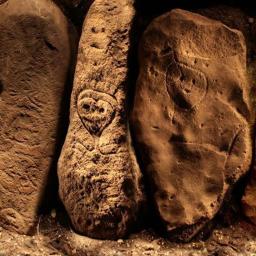
Mostly dead: what archaeology reveals about death and resurrection
UK courts recently allowed a teenager’s body to be cryogenically frozen, but the desire to preserve our dead for resurrection is nothing newWhen a judge’s decision to allow a 14 year old to have her body preserved through cryonics after her death hit the headlines, it prompted numerous opinion pieces on the rights of the dying and the dead and discussions about promises of life after death. But while the technology might be changing, these debates are age-old, as humans have long attempted to ensure their place in the afterlife, or avoid it all together.
Lab notes: the dinosaur with the waggly tail
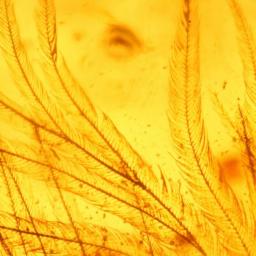
How much is that amber in the window? The one with the waggly dinosaur tail? That’s how I imagine the conversation went at the Chinese market where a piece of amber containing a section of feathery dinosaur tail was found. The fragment has given researchers some fascinating insights into the evolution of feathers. Not a bad day’s shopping. So take your time on your next trip to a market in case of treasure - after all, given that astronomers have found that Earth’s day lengthens by two milliseconds a century, you’ve got more time to play with. You could probably have a quick coffee too, or nip into the Science Museum to check out their new Zaha Hadid-designed maths gallery. Something that might also give a bit of extra leisure time to (and make life considerably more pleasant for) millions of diabetics worldwide is a new cell-based treatment that could end the need for insulin injections. Let’s all celebrate by going to see some charming, flickering seasonal lights. With any luck there will be a strobe effect, which a new study has indicated stimulates the brain’s immune cells to clean up toxic proteins seen in Alzheimer’s disease. Continue reading...
Over 200 years of deadly London air: smogs, fogs, and pea soupers | Vanessa Heggie
60 years after the Clean Air Act, Londoners still suffer from air pollution. What can we can learn from two centuries of campaigns against city smog?
Alan Finkel warns investment has stalled over climate policy uncertainty
Australia’s chief scientist vows to ‘thoroughly analyse all options’ for energy market despite row over emissions tradingAustralia’s chief scientist, Alan Finkel, has tried to stay out of the fresh political row over emissions trading but says his review of the energy market will continue to analyse all the options to ensure future security of power supply and compliance with climate obligations.
The focus on maths and science doesn’t add up. The arts must be in the equation | Kester Brewin
Throwing resources at science, technology, engineering and maths in England hasn’t worked. We need to reaffirm the importance of a more rounded educationAs a long-time maths teacher, the latest assessments by the Trends in International Mathematics and Science Study and Programme for International Student Assessment make for tough reading. They indicate that there is little evidence of real gains having been made in maths and science in England over the past four years.Related: UK schools fail to climb international league table Continue reading...
John Glenn, former astronaut and US senator – video obituary
Former astronaut and US senator John Glenn has died aged 95 in Ohio on Thursday. Glenn was the third US astronaut in space and the first of them to get into orbit. He then spent 24 years as a Democratic senator from Ohio and briefly made a run for president in 1984
John Glenn – a life in pictures
The first American to orbit the Earth, US former astronaut and senator John Glenn has died aged 95
Virgin Galactic tests new spaceplane
Replacement craft’s high-altitude glide test was first free flight since 2014 fatal accidentVirgin Galactic’s new VSS Unity spaceplane has flown free for the first time this week. It was released from its carrier aircraft at 10:40am EST. After a 10-minute glide, it landed back on its runway in Mojave.This is Virgin Galactic’s first free flight test since the fatal accident in October 2014 that destroyed the company’s initial spaceplane, and claimed the life of one pilot and injured another. Continue reading...
John Glenn obituary
Glenn was the first US astronaut to orbit the Earth, and later became one of his country’s most effective senators
John Glenn, first US astronaut to orbit Earth, dies aged 95
Glenn served 24 years as a US senator from Ohio and later became the oldest person to be sent into space
More foreign holidays will mean more skin cancer, scientists predict
A 78% increase in non-melanoma skin cancer may see the cost to the NHS of treating the disease rise to £465m a year by 2025The number of Britons developing the two most common forms of skin cancer will increase as a direct result of people getting tans on foreign holidays and in salons, experts are warning.Related: Scientists closer to understanding why red hair genes increase skin cancer risk Continue reading...
New diabetes treatment could eliminate need for insulin injections
Tested in mice, therapy involves a capsule of genetically engineered cells implanted under the skin that release insulin as requiredA cell-based diabetes treatment has been developed by scientists who say it could eliminate the need for those with the condition to inject insulin.The therapy involves a capsule of genetically engineered cells implanted under the skin that automatically release insulin as required. Diabetic mice that were treated with the cells were found to have normal blood sugar levels for several weeks. Continue reading...
Dinosaur tail trapped in amber offers insights into feather evolution
Fragment complete with fossilised bones and traces of muscles, ligaments and mummified-looking skin dates from around 99 million years agoA length of fluffy plumage discovered within a piece of amber has been identified as part of a dinosaur tail, offering new insights into the evolution of feathers.Around 3.7cm long, with chestnut-coloured feathers on the top and pale feathers underneath, the tail was found complete with fossilised bones as well as traces of muscles, ligaments and mummified-looking skin.
Royal Society funds small museums to tell stories of local science "heroes" | Rebekah Higgitt
From dinosaur hunters to new dimension discoverers, the Local Heroes scheme will fund projects to celebrate and explore science across the UKThe Royal Society today announced the 15 successful projects that its Local Heroes scheme will fund. These grants go to small museums across the UK, from Orkney to Plymouth, to explore the lives and legacies of scientists with close connections to their communities.I was fortunate to be on the judging panel and to see the richness, variety and imagination offered by all the applicants. The funding is only up to £3000, which is not much for museums that are often already suffering cuts from local authority budgets, but the imaginative projects have great potential to intrigue, inform and inspire. Continue reading...
Satellite Eye on Earth: November 2016 – in pictures
Ancient water channels in Morocco, declining Arctic sea ice and the US-Mexico border were among the images captured by European Space Agency and Nasa satellites last monthA bank of clouds covers East Java to the west, with a bright sun overhead casting shadows from the clouds along the ocean surface. Sunglint, an optical effect caused by the reflection of sunlight off the water surface directly back at the satellite sensor, exposes the waves created by the movement of currents in the ocean water. Internal waves are generated when the interface between layers is disturbed, such as when tidal flow passes over rough ocean floors, ridges, or other obstacles. The Lombok Strait, a relatively narrow passageway between Bali (west) and Lombok (east), allows flow of water from the Pacific Ocean into the Indian Ocean. The bottom of the strait is complex and rough, consisting of two main channels, one shallow and one deep. Because of the variation in water movement due to the complexity of the channels and ocean interface, the tides in the strait have a complex rhythm but tend to combine about every 14 days to create an exceptionally strong tidal flow. It is the combination of rough topography, strong tidal currents, and stratified water from the ocean exchange that makes the Lombok Strait famous for the generation of intensive internal waves. Continue reading...
Can’t we judge people on their merits, instead of their genes? | Catherine Shoard
The obsession with pedigree as an explanation for success and failure is just a present day form of narcissismAre the novelist Anthony Powell and the actor Danny Dyer related? The biology has yet to be checked, but the evidence is compelling. Spiritually, at least, these two are blood brothers, intimately linked. Both are entertainers, both are fans of the pithy putdown (Powell: “His mastery of the hard-luck story was of a kind never achieved by persons not wholly concentrated on themselves”; Dyer: “Mate, you look like an earthworm who’s whacked a hoodie on”). And both are raging snobs. For Powell, lineage was of paramount importance, Burke’s Peerage his favourite book. Between writing, he devoted his studies to his own ancestry. The pedigree of others determined his attitude to them, from aristo pals to the postman. For all, he endeavoured to trace their descent back as far – and as posh – as possible.Related: Who Do You Think You Are? review – arise, King Danny Dyer Continue reading...
Orangutan stuns zookeepers by becoming pregnant while on the pill
Adelaide zoo is hoping to support 34-year-old orangutan Karta through her pregnancy as she has lost six infants in the pastA Sumatran orangutan at Adelaide zoo has fallen pregnant, despite being on contraceptives.Karta the 34-year-old orangutan is due early in 2017. Jodie Ellen, a senior primate keeper, announced the “exciting but nerve-wracking” news on the zoo’s Facebook page. “It wasn’t a planned pregnancy,” she said. “Mother Nature actually intervened.” Continue reading...
Strobe lighting provides a flicker of hope in the fight against Alzheimer’s
Exposure to flashing lights stimulates brain’s immune cells to clean up toxic proteins causing the disease, study finds
Cross Section: Neil deGrasse Tyson – Science Weekly podcast
What first attracted one of the world’s foremost astrophysicists to the night sky? Are we alone in the universe? And how can scientific thinking benefit us all?Subscribe & Review on iTunes, Soundcloud, Audioboom, Mixcloud & AcastVisiting the Hayden Planetarium as a young boy, Dr Neil DeGrasse Tyson immediately fell in love with the world of astronomy. Fast forward a couple of decades, and Neil continues to inspire people from all generations. Through his role as the director at the very planetarium that first sparked his interest, and as an author, presenter, and communicator, Neil’s enthusiasm for the subject he loves is truly unrivalled. Continue reading...
Archaeology sheds light on Mongolia’s uncertain nomadic future
As a herding lifestyle practiced for millennia is threatened by contemporary climate change, archaeology offers a long-term perspectiveAround the world, traditional subsistence practices provide a resilient source of ecological knowledge that improves humanity’s ability to respond to environmental crises. In Central Asia, a herding lifestyle practiced for millennia is increasingly threatened by the speed and magnitude of climate change.
Heads in the Cloud: Are Westworld’s Robots Poorly Designed?
The park engineers in HBO’s Westworld should probably be fired for some of the bad choices they madeHBO’s new Westworld series has spawned countless gigabytes of online discussion and speculation as its intricate plot has unfolded. The design of the robots, and of the intelligence that guides them, has attracted less comment. That’s a shame; when you dive into the construction of the park there are some very odd choices that are worth pulling apart.(Warning: spoilers ahead.) Continue reading...
Science Museum's maths gallery soars with stunning Zaha Hadid design
New gallery tells stories of how maths underpins the worldIn 1818, the Foreign Secretary Lord Castlereagh sent a letter to all British consuls across the world, asking them to obtain examples of their local standard weights. At that time the UK had no universal conversion table between the many different systems of weights and measures used by foreign cities.It took two years for all 71 sets of weights to arrive in London, where they were put in two cabinets installed in the Royal Mint. When the measurements were compared with each other, the Mint discovered that almost every previous conversion table was wrong – and that for the previous century these errors had been costing UK traders dosh. Continue reading...
Turkey: your delicious Christmas dinner dinosaur
The evolutionary history of birds as dinosaurs is quite apparent, even in a turkey on your dining tableThe fact that birds are the direct descendants of dinosaurs is now and overwhelmingly supported theory in palaeontology, though most will not know much beyond the recent plethora of discoveries of feathered dinosaurs. While these are obviously a wonderful example, the ancestry of birds is more than skin (or feather) deep and since mostly palaeontologists work from bones it may not be a surprise to learn that you can see plenty of dinosaurian traits in your Christmas dinner.A typical roasting turkey is already missing the head, probably the neck and the feet, all of which contain some key traits to identify them as dinosaurs. Still, as you carve your way through your dinosaurian dinner there are plenty of features remaining that can point you to the evolutionary history of the main course. Although birds have the best part of 140 million years of adaptation to flight behind them (and then quite a lot of change wrought by domestic breeders) there are multiple features that can easily be traced between them and their predecessors. Let’s start with one that should be familiar to everyone – the wishbone. Continue reading...
British Antarctic research station to be moved due to deep crack in the ice
Dormant chasm has opened up and risks cutting the station off from the rest of the ice shelfBritain is preparing to move its research station in the Antarctic 23km further inland because it is under threat from a growing crack in the ice.
Pregnant women in UK told to watch for heart disease symptoms
Condition is leading cause of death in UK in months before and weeks after childbirth, says audit led by medical royal collegesPregnant women are being told to look out for the symptoms of heart disease, which is now the leading cause of death in the months before and weeks after childbirth.Two in every 100,000 women who gave birth between 2009 and 2014 died as a result of heart disease in the UK – nearly a quarter of all maternal deaths in the period, according to an audit led by the medical royal colleges. Continue reading...
Earth's day lengthens by two milliseconds a century, astronomers find
The gradual slowing of the planet’s rotation is causing our day to lengthen, a comparison of nearly 3,000 years of celestial records has revealedThere may never be enough hours in the day to get everything done, but at least the forces of nature are conspiring to help out.Astronomers who compiled nearly 3,000 years of celestial records have found that with every passing century, the day on Earth lengthens by two milliseconds as the planet’s rotation gradually winds down.
Meteor brightens night sky in Siberia – video
Videos shared by Russians on social media show a meteor turning dark night into day in parts of Siberia on Tuesday. The large fireball was seen across several areas of Khakassia in the south of the country. Local authorities say no damage was caused
It's impossible for robots to steal your job - no matter what the Daily Mail says | Dean Burnett
The Daily Mail has reported that robots could ‘steal’ 15 million UK jobs. But It’s practically impossible to ‘steal’ a job, so why is the notion so persistent?Stealing. Most dictionaries define “steal” as some variation of “taking another person’s property without permission or legal right, and with no intention to return it”. You can steal a wide range of things from someone, and you can even do it metaphorically (“stolen my heart”, anyone?). But how do you steal someone’s job?A job isn’t property in the strictest sense. It’s not a possession, a thing we can own. If anything, it’s more of an agreement. “I’ll do this service for you, and you’ll give money to me in return”. Is it possible to steal an agreement? Continue reading...
Zoology news: November’s animal antics from around the globe – in pictures
A collection of zoological wonders from November 2016, featuring mobbing hyenas, speeding bats and crab power Continue reading...
Galactic gold rush: the tech companies aiming to make space mining a reality
Asteroids and the moon contain vast quantities of natural resources, including water, that could be worth billions and fuel a new phase of space explorationMany tech entrepreneurs will promise you the moon. Naveen Jain is hoping to deliver it.
Mission not yet accomplished on the Higher Education and Research Bill
As the far-reaching Higher Education and Research Bill reaches the House of Lords, further amendments are needed to ensure it succeeds in its aimsPower – where is it located? How is it won and lost? On the face of it, Prime Minister Theresa May is the most powerful person in the UK. But she is struggling to “take back control” on behalf of the country because of the lack of unity on Brexit amongst her ministers. And now the shock result of the Richmond by-election is inducing panic among senior Conservatives, worried that they will not be able to convert a double-digit lead in the polls into a thumping parliamentary majority at the next general election.Former Chancellor George Osborne recently provided some candid insights into the power-plays that rumble through Whitehall as the government machine wrestles with the process of policy-making. When things go wrong, he said, “it’s almost always, I tell you now, cock-up not conspiracy.” Continue reading...
More terrifying than Trump? The booming conspiracy culture of climate science denial | Graham Readfearn
Conspiracy websites and hyperpartisan media outlets are building huge online audiences who want to hear climate change is a hoaxBack in December 2015, Donald Trump gave a 30-minute live interview to the website Infowars.com and its combustible leader, Alex Jones.“Your reputation is amazing and I will not let you down,” said Trump, who, at the time, was leading in most polls for the Republican presidential nomination. Continue reading...
Why is a banned pesticide that harms bees actually being used more? | Patrick Barkham
Scientists fear that neonicotinoid manufacturers are copying tobacco industry tactics in a bid to end the moratorium on this devastating chemicalHalfway through a video of a speech by the biologist Professor Dave Goulson there is an abrupt loss of sound. Goulson, who has devoted his working life to highlighting the catastrophic decline of bees, is giving a talk to hundreds gathered at the National Honey Show in 2015. Strangely, his words are silenced for 20 seconds of the video uploaded by the show to YouTube, precisely when he discusses the impact on bees of the most widely used insecticides in the world – neonicotinoids.Related: Leading insecticide cuts bee sperm by almost 40%, study shows Continue reading...
Did you solve it? Are you smarter than a Singaporean ten-year-old?
The results of today’s primary maths challengeEarlier today I set you ten questions from this year’s International Singapore Maths Competition. Here are the questions and the answers. On the whole you did very well - smarter than a 10-year-old Singaporean! (With the caveat that they didn’t have multiple choice answers to choose from, and they are only ten). The only questions where your most popular answer the wrong one were 6 and 8. (C in Q6, and B in Q8). Thanks for taking part - now look through your workings...For Year 5 pupils: Continue reading...
A brief history of Tim: Peake's space capsule to go on display at Science Museum
Soyuz TMA-M used by British astronaut on journey to and from International Space Station will be shown at London museumThe spacecraft used by Tim Peake on his journey to and from the International Space Station is to go on display at London’s Science Museum.The Soyuz TMA-M that launched the British astronaut into orbit in December 2015 and returned him to Earth in June will be put on show for the public from early next year. Continue reading...
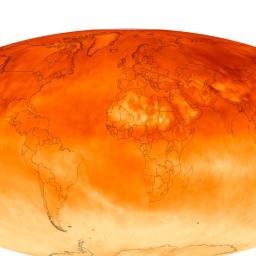
Google's satellite timelapses show the inconvenient truth about our planet
Google’s new Timelapse project allows you to see how anywhere in the world has changed in the last 32 years; from evaporating lakes to exploding cities, it’s a document of recklessnessThe image of the Earth from space is so seared into human consciousness that it is hard to conceive what it was like to live without the picture of our planet as a blue sphere that we all now carry in our minds.The first photographs of the Earth’s surface seen from 100 miles were taken in 1947. By 1968, the famous Earthrise image photographed by the crew of Apollo 8 framed our planet as a beautiful oasis in black space. Today, stunning and intensely informative pictures of the Earth’s surface are being taken from space constantly: so comprehensively, for so long, that Google has now created timelapses that show three decades of change. Continue reading...
Ramesses II, victor of Kadesh: a kindred spirit of Trump?
Much like the president-elect, Ramesses II knew that bombast can sometimes outweigh truth. His tale of triumph at the Battle of Kadesh is a perfect exampleIn 1274BCE, near the Levantine town of Kadesh, a miracle occurred: Ramesses II of Egypt, isolated from his forces due to faulty intelligence, single-handedly destroyed a Hittite army. Out of the 2,500 chariots attacking him, not one survived. The pharaoh subsequently threw countless enemies into the river Orontes, only sparing the Hittite king after he begged for mercy. It was a mighty victory – and a mighty mix of fact and fiction.This version of events is found in two texts commissioned by Ramesses: the so-called Official Record and the Poem of Pentaur (named after the scribe of Papyrus Sallier III). After the Kadesh campaign, the pharaoh used these texts to portray himself as the archetypal glorious commander: feared by the enemy and protected by the gods. These works appeared primarily on royal architecture, such as the monumental temples at Abu Simbel, Karnak, Luxor and Abydos. Carved in stone, the inscriptions were designed for eternity, and the detailed reliefs accompanying them meant that even the illiterate majority could understand. Meanwhile, the Poem was also circulated on papyrus, allowing the story to travel rather than being confined to immobile monuments. Thus, Ramesses did everything to spread the word to everyone – from humble peasants gazing at temple walls to nobles enjoying court poetry. Continue reading...
Somerset skeletons are oldest evidence of monks found in UK
Carbon dating of remains unearthed in Beckery chapel near Glastonbury indicate monastic life dating back to fifth or early sixth centuriesSkeletons excavated at a site near Glastonbury are the oldest examples of monks ever found in the UK, carbon dating has proved.The remains, unearthed at the medieval Beckery chapel in Somerset, said to have been visited by legendary figures such as King Arthur and St Bridget, indicate a monastic cemetery dating back to the fifth or early sixth centuries AD, before Somerset was conquered by the Saxon kings of Wessex in the seventh century.
'Magic Table' game helps dementia patients relax and reminisce
A new interactive light game for people with mid- to late-stage dementia is being trialled in UK care homesDoris, 90, is prodding at a colourful image of a beach ball projected on to the table in front of her. She sends it wheeling off towards Don, who sweeps at it, bouncing it back. William taps at the image while Cathy watches intently, occasionally reaching out a hand. Doris giggles, Don grins, Cathy smiles gently. William is concentrating hard.This is significant. All four are “difficult” or “withdrawn” residents with dementia at Care UK’s Oak House care home in Slough, Berkshire. They are playing with a Tovertafel (Magic Table), a series of interactive light games specifically designed for people with mid- to late-stage dementia, which has newly arrived in the UK. Continue reading...
Robin McKie’s best science books of 2016
The pick of this year’s science books put our health – and other obsessions – under the microscopeSeventy years ago, doctors began an experiment that would revolutionise our understanding of human development. For a week, in March 1946, they recorded the births of almost every baby born in the UK. Thousands were then tracked through later life, creating the world’s longest-running birth cohort study. Thanks to that study, and to four follow-ups, many inescapable truths have been learned: the grim impact on infants of poor health service provision, smoking during pregnancy and air pollution. We also know now that reading regularly to children has clear educational benefits; that babies are safe sleeping on their backs; and that breast-fed children tend to have better health. The influence on social services and daily lives has been immeasurable.Have we all gone nuts, asks Garfield. To judge by this hugely enjoyable romp, the answer is ‘almost but not quite’ Continue reading...
Can insomnia be cured by online therapy?
Up to half of us have problems sleeping – and some experts say online treatment may soon become the norm. But which tool should you use?Can’t get to sleep? Try online therapy. While a glowing screen is a counter-intuitive cure for insomnia, there is evidence that online cognitive behavourial therapy (CBT) can restore normal sleep patterns. In a study published in this month’s Jama Psychiatry, an online CBT programme cured 57% of those who used it, compared with 27% who had standard education about insomnia.Insomnia affects up to half of all people – with up to 20% having a serious problem with getting off to sleep (or falling asleep again if they wake up). Chronic insomnia can last for years – making people feel sleepy during the day and anxious at night. Standard advice includes promoting “sleep hygiene”: a cool, dark bedroom; going to bed and getting up at the same time every day; and not napping. After that, it’s face-to-face cognitive behavioural therapy – but there aren’t enough therapists to go round. This may be why people are still prescribed sleeping tablets that make them feel pleasantly dissociated and are very addictive. Continue reading...
The misery of weird phobias: ‘In the office, there are buttons everywhere’
Having a fear of buttons may sound hilarious, but in reality it can be debilitating. Patients need to be taken more seriously, by both the media and doctors, say experts
Can you solve it? Are you smarter than a Singaporean 10-year-old?
Take the test based on Singapore’s innovative primary maths syllabusHi guzzlers,On Tuesday we will again learn how much better Asian children are at maths, science and reading than we are with announcement of the OECD’s Pisa rankings, which compare the abilities of 15-year-olds from around the world. Continue reading...
Breakthrough prize awards $25m to researchers at 'Oscars of science'
Researchers in life sciences, fundamental physics and mathematics share awards from prize founders Yuri Milner, Mark Zuckerberg and Sergey BrinIt is not often that a scientist walks the red carpet at a Silicon Valley party and has Morgan Freeman award them millions of dollars while Alicia Keys performs on stage and other A-listers rub shoulders with Nasa astronauts.
First edition of Isaac Newton's Principia set to fetch $1m at auction
Rare European copy of key mathematics text is going under hammer at Christie’s in New York with record guide priceA first edition of Sir Isaac Newton’s Principia Mathematica could become the most expensive print sold of the revolutionary text when it goes under the hammer with a guide price of at least $1m (£790,000) this month.The extremely rare continental copy being sold by auction house Christie’s in New York is one of a handful of texts thought to have been destined for Europe and has minor differences from those distributed in England by Newton and the book’s editor, Edmond Halley. Continue reading...
A leap forward or a step too far? The new debate over embryo research
British scientists are limited to research on embryos under 14 days old – until recently no one was able keep an embryo alive that long. But now an ethical struggle loomsLater this week some of the world’s leading scientists will gather at University College London to debate a simple but highly controversial notion: that it is time to scrap the 14-day limit on embryo research.Thanks to recent scientific breakthroughs, researchers have reached a point where they can begin to think of experimenting on embryos up to 28 days in age. The benefits for medical science would be considerable. Continue reading...
Will Trump goto Mars? Nasa’s nervous wait
The president-elect’s priorities for the US space agency are of crucial importance for Earth as well as for future space explorationIn Nasa language it’s called a pivot. It’s a policy change, a U-turn or a departure from a goal set by the previous US president. Until the election of Donald Trump, space insiders and even Nasa itself had a pretty good idea what, under a Hillary Clinton presidency, that pivot was going to be. It wasn’t going to be popular but it was necessary.People had been whispering it for more than a year. Even as the Nasa PR machine talked endlessly about “the journey to Mars”, those in the know understood that it was little more than a pipe dream. Following the election, a “transition team” would be sent to take stock at Nasa, and the agency’s goals would gradually pivot away from Mars and to the moon. Continue reading...
How to hide a 'fifth force' – and how to find one
Several big problems with physics at the moment involve gravity. But because Einstein’s theory works so well, it’s very difficult to change it. Some recent ideas show a possible way forwardEinstein’s General Relativity provides an elegant description of how space, time and matter affect one another. It makes precise predictions of gravitational effects, which have been verified by many measurements.But if we use the theory to try to understand the motion of galaxies, we get the wrong answer, unless we invent a new form of so-called ‘dark’ matter. This is not a small correction – there needs to be much more of the Dark Matter than normal matter, and what is more, it doesn’t seem to be made up of quarks and electrons like all other matter. In fact it doesn’t seem to be made up of any of the particles in the Standard Model of particle physics.
...438439440441442443444445446447...