Thumbnail 1675350
thumbnail
Large (256x256)

Articles

The iPhone Air's top wireless charging speed is 20W
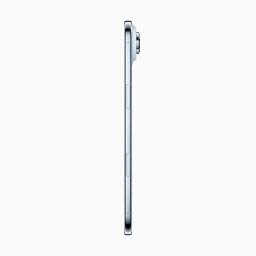
The announcement of the iPhone Air surprised exactly nobody during today's Apple "Awe dropping" event. As we finally get officiall details about this lightweight smartphone model, one of the biggest questions is about the battery. Thin devices mean thinner batteries, so we've been curious to see how the iPhone Air will stack up. One thing we now know is that it's less beefy than standard smartphones when it comes to wireless charging. According to the tech specs provided by Apple on its website, the iPhone Air charges at 20W on both MagSafe and Qi2 wireless charging, whereas the other iPhones announced today charge a little faster at 25W. Apple also shared fast-charging capabilities for the iPhone Air: "Up to 50 percent charge in 30 minutes with 20W adapter or higher (available separately) paired with USBC charging cable, or 30W adapter or higher paired with MagSafe Charger (both available separately)." The spec sheet also says that the iPhone Air on its own offers up to 27 hours of video playback or up to 22 hours of streaming video. When coupled with a dedicated iPhone Air MagSafe battery pack, those figures jump to up to 40 hours and up to 35 hours, respectively. This article originally appeared on Engadget at https://www.engadget.com/mobile/smartphones/the-iphone-airs-top-wireless-charging-speed-is-20w-201804255.html?src=rss
The Morning After: Hands-on with the iPhone Air, iPhone 17 Pro, AirPods Pro 3 and more
As the Pumpkin Spice approaches, it's time for a bunch of new iPhones. Welcome to a special edition of the Engadget newsletter, breaking down everything Apple announced in the last 24 hours. What's notable this year is, of course, the iPhone Air. Launching alongside the base iPhone 17 and iPhone 17 Pro and Pro Max, it's an intriguing new flavor of iOS.The iPhone Air: It's a brave choice to label the new superslim phone with the same suffix as the game-changing MacBook Air. Barring the slimmer profile and accompanying compromises, it's not as surprising as it could have been. Early rumors suggested it might have arrived without a single port, with wireless charging and WiFi alone.Instead, the iPhone Air (no 17) is an engineering marvel. With a body thickness of just 5.6mm and made of spacecraft-grade titanium, it also has Ceramic Shield 2 on both sides, which helps make it more durable than any previous iPhone.EngadgetIt features the same A19 Pro chip as the iPhone 17 Pro, along with Apple's N1 chip for wireless connectivity and the new C1X modem, which is reportedly twice as fast as the C1 introduced with the iPhone 16e.Compromises had to happen, though. Apple kept the iPhone Air thin in part by going for a single 48-megapixel camera, but it did try to make it as versatile as possible. It has a large two-micrometer quad-pixel sensor that excels in low light, along with an optical quality 2x telephoto. Apple says it's the equivalent of four lenses in their pocket," but well, why doesn't the base iPhone 17 have it? It also seems a bit weak compared to the S25 Edge (Samsung's super-thin smartphone) and its 200MP main camera.Worried that a thin battery means precarious battery life? Apple claims the iPhone Air will get all-day" battery life thanks in part to hardware designed to cram more battery into smaller designs and software like Adaptive Power Mode. To assuage those concerns, Apple made a new super-slim MagSafe battery pack to boost how long it lasts.There's also an intangible appeal to the first' of a new Apple product. I remember upgrading a year into my iPhone 7 contract to get the first iPhone without a home button. The iPhone X is a good comparison to make, perhaps. Both the iPhone X and iPhone Air have the same price: $999.- Mat SmithGet Engadget's newsletter delivered direct to your inbox. Subscribe right here!Our first impressions and hands-ons at the Apple iPhone 17 event
1