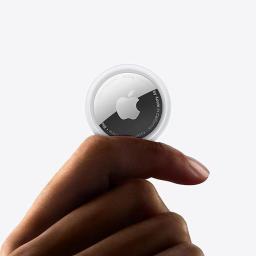
So it's come to this: Apple is reportedly working on a wearable AI pin. According to The Information, it is going to be a small device with "multiple cameras, a speaker, microphones and wireless charging." It sounds like the perfect gadget to pair with the long-awaited AI-powered Siri update, which will also reportedly work as a chatbot. But while many Apple rumors conjure up an air of excitement, the notion of an Apple AI pin sounds downright baffling. Worse, it just seems desperate.Apple, the company known for taking its time to jump into new categories with more thoughtful solutions than its competitors, is reportedly chasing the specter of OpenAI's unreleased AI pin. Never mind that OpenAI has never actually produced any hardware, and that it arguably stumbled into its position as a leading AI player. And never mind that Humane's AI pin was a notorious failure that barely worked, and seemed pointless from the start.Sure, Apple doesn't want more AI eggs on its face, after the delay of its Siri revamp and the underwhelming (and error-prone) debut of Apple Intelligence. Beyond OpenAI, there's also competition from Meta's Ray-Ban smart glasses, which lean heavily on the company's AI. There's also the looming threat of whatever AI hardware Meta is cooking up next, following the layoffs from its virtual reality division. And while Google doesn't have much to show from its Android XR platform, which aims to bring its Gemini AI to your face, Samsung's Galaxy XR is a start. We've also recently seen compelling demos of Google's AR glasses prototypes and Xreal's Project Aura glasses.If Apple's AI pin serves as a conduit to Siri, is it really that much more convenient than using an iPhone, AirPods or even an Apple Watch to do the same? The company has reportedly nixed plans to put cameras in the Apple Watch, and Bloomberg suggests it's opting instead to focus on delivering its own smart glasses this year. But it's not hard to imagine that faster hardware could let the Apple Watch handle more Siri and AI-related tasks on its own. It's already a fairly self-sufficient device, allowing you to ask basic Siri queries, run apps and listen to music without an iPhone - the cellular models are even more capable since they can take calls and send messages.Rumors also point to infrared cameras coming to the next AirPods and AirPod Pros. Instead of taking photos, they could enable hand gestures and environmental awareness, which might be useful for Apple Intelligence down the line. The addition of heart rate tracking in the AirPods Pro 3 shows that there are still new features Apple can bring to its buds, beyond listening to music.At best, an Apple AI pin could just be a simple way for someone to access Siri if they don't want to wear an Apple Watch, plug in AirPods or have their iPhone within shouting distance. But at least those devices do other things beyond talking to Siri. The same is true for Meta's Ray-Bans and future smart glasses. Even without accessing AI, they'll still let you listen to music, take calls and, well, be glasses for those who need prescription frames.Given the vocal pushback against Meta's Ray-Ban smart glasses, which are also being banned on cruises, clubs and other venues, I'm also not convinced many people would be eager to prominently display a surveillance device throughout the day. Wired's Julian Chokkattu was questioned about wearing a camera while he was testing the Humane AI Pin, and I've also had to explain to curious people why I was wearing Xreal's smart glasses, which feature a prominent camera accessory.Sure, we're already living in a panopticon of smartphone cameras, but it's also obvious when someone is using their phone to capture photos and video. An AI pin just dangling off of your clothes is a constant threat, an unblinking eye. Even if Apple implements some sort of capture notification, someone will always try to circumvent it.While The Information notes Apple's AI pin may never actually see the light of day, I wouldn't be surprised if it does. This is the company that partnered with OpenAI just to make Siri appear slightly smarter with the debut of Apple Intelligence. And instead of building its own home-brewed AI models, it's banking on Google's Gemini to power Siri's big AI upgrade, as well as its future foundation models. When it comes to AI, Apple will do almost anything to avoid being seen as a straggler (and to avoid even more stock declines).It's genuinely strange that Apple, the company that let Samsung and Google get a multi-year head start on foldable smartphones and hasn't yet jumped into the world of smart rings, could fast-track an AI pin for 2027. It's yet another example of how the AI hype cycle has warped priorities throughout the tech industry. But at least Apple's fortunes don't depend on standalone AI hardware as much as OpenAI.