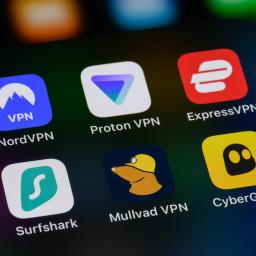
by Sam Chapman from Engadget is a web magazine with obsessive daily coverage of everything new in gadgets and consumer electronics on (#727PK)
The best VPNs can make your online life more private with software that's convenient and cheap - sometimes even free. While keeping your IP address invisible, you can use your VPN to explore streaming content from all over the world or (virtually) sneak into a sports event that's not available in your area.However, while VPNs are widely available, there's a strange dearth of information on what they actually do behind the scenes. You may know that a VPN masks your device with a proxy server to make it look like you're somewhere else, and maybe even that encryption is involved. But finding any more details can mean running a gauntlet of misinformation.That's a shame, because the inner workings of a VPN aren't all that difficult to understand. You may not be able to build one yourself without a degree in computer science, but with a little work, you can understand exactly what it's doing on your computer. That's information you can use to select the right VPN for you, and make the most of it once you've got it.What is a VPN?To make sure nobody gets left behind, I'll start from the beginning. A VPN (virtual private network) is a method of securely accessing a network, either a closed network (like you might have at the office) or the internet as a whole. Initially, organizations set up VPNs so remote workers can work with secure files. While this still happens, the last 15 years have seen VPNs increasingly marketed to individuals, with Proton VPN, ExpressVPN and others seeing massive user growth.Broadly, a VPN consists of two parts: the server, which forwards requests to your chosen destination, and the client, a piece of software that lets you interact with the server. You can find a longer explanation here, but I'll use the two sections below to tell you what you need to know right now.One more note before that - there are multiple kinds of VPNs, including the remote-access VPNs and site-to-site VPNs commonly used by workplaces. However, for this article, I'll be talking mainly about the commercial VPN services sold to individuals for general security needs. Instead of a specific network, these VPNs are designed to handle all of a user's traffic to any point on the internet.What happens when you use a VPN?First, you use the client to connect to a server - either the fastest one available or a particular location you need. Once you've connected, every request you send to the internet goes through the VPN server first. This communication between your device and the web is encrypted so it can't be traced back to you.The VPN server decrypts your requests and sends them on. The destination then communicates with the VPN server, which relays the information back to you - after re-encrypting it so nobody follows it home.Since the VPN does everything on your behalf, it's your "mask" online. Your internet service provider (ISP) and third parties can see what's being done, but - so long as you're not otherwise logged in or identifying yourself - nobody knows that it's you doing it. It's like having a friend order pizza for you so the pizzeria doesn't hear you calling for the third time this week (not that I speak from experience).What's the point of using a VPN?Why add an extra step to the already complex process of getting online? The two biggest reasons are maintaining anonymity and changing your virtual location. I've already explained how a VPN keeps you anonymous. Among other things, this prevents your ISP from selling your browsing history to advertisers and protects activists who face government repercussions for what they do online.Changing your virtual location is part of masking, but it can also be used to see the internet as it's visible in other countries. Streaming services are frequently limited to certain places, and almost all of them change the available content based on their licenses in each nation. You can also use a VPN in a country with a nationwide firewall, like China, to see forbidden outside information sources.How does a VPN work? The full technical explanationMost online explanations stop after defining a VPN as an anonymous agent between you and the internet - but I wrote this article to go a little bit deeper. To understand what a VPN is doing on a technical level, we'll need to cover how the internet works, how the VPN knows where to send encrypted information and just what "encryption" actually is.How the internet transmits dataWhen you're not using a VPN, internet traffic goes directly from your modem to your ISP, then on to your chosen destination. The key technologies here are IP, which stands for Internet Protocol, and TCP, which stands for Transmission Control Protocol. They're usually combined as TCP/IP.You may have heard that every online device has an IP address that identifies it to every other device. TCP/IP governs not just those names but how data moves between them. Here's how it works, step-by-step.