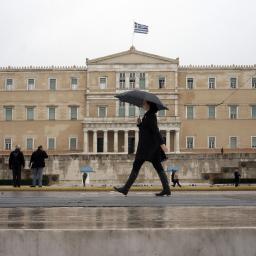
Extension of emergency lending facility to Greek finance sector lifts euro and gives PM Alexis Tsipras stronger hand before leaders’ summitThe European Central Bank has thrown Greece a lifeline to prevent Athens running out of money before crunch talks with European leaders.The extension of emergency funding to the Greek finance sector by the eurozone’s central bankers lifted the euro and gave Greece’s prime minister, Alexis Tsipras, a stronger hand before meetings with senior officials at the leaders summit in Brussels.Related: David Cameron urges end to Greek debt standoff -- live updates Continue reading...
by Larry Elliott Elliott, economics editor on (#2ZQP)
Alexis Tsipra’s Syriza government continues to aspire to a lesser debt burden and a ditching of policies forced on Athens for the bailoutIt’s easy to see why Angela Merkel and François Hollande were so keen to get an agreement with Vladimir Putin over Ukraine. The eurozone is not really in good enough shape to cope with the aftershocks of one crisis let alone two.So, Germany and France wanted at least a temporary respite from the problems on Europe’s eastern borders before turning to the more pressing issue of Greece. Continue reading...
by Phillip Inman, economics correspondent on (#307T)
Year-on-year rises in income tax threshold, which cost the Treasury billions in lost revenue, unable to protect households from the economic downturnBritish household spending power fell in the first three years of the coalition government despite millions of people being taken out of the lowest income tax band, according to a report by the Office for National Statistics.
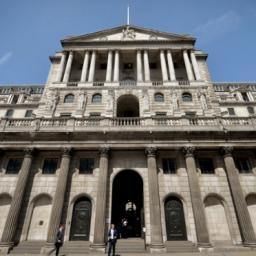
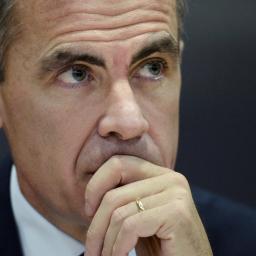
Bank of England governor says strong growth should avert threat of deflationary spiral, but public should prepare for interest rate rise earlier than expectedBritain is sliding towards its first bout of negative inflation in more than half a century, the Bank of England has said, but strong economic growth should stave off the threat of a deflationary spiral.The slump in oil prices and falling food prices is likely to push inflation to zero in the second and third quarters of 2015, probably dipping into negative territory for one or two months this spring, the Bank said in its February inflation report.Related: Will below-zero inflation lead the Bank to start tightening policy? Continue reading...
Thousands of people in Athens gather on Wednesday for a rally in support of Greece's new government as the finance minister, Yanis Varoufakis, attends bailout talks in Brussels. After seven hours of negotiations, eurozone finance ministers failed to make any progress or sign a joint statement Continue reading...
Deal, under which Kiev will have to cut spending, restructure banks and fight corruption, comes as leaders meeting in Minsk agree ceasefire for east of countryThe International Monetary Fund has announced a $17.5bn (£11.5bn) loan to war-stricken Ukraine, extending the lifeline keeping the country from bankruptcy.
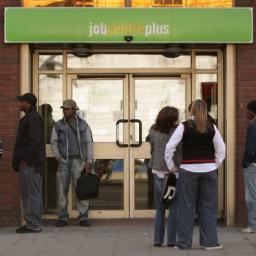
Those in work are finding their pay and conditions squeezed because employers know they can be replacedDuring the recession, John McArthur put himself forward to work for LAMH Recycle Ltd in Motherwell, a social enterprise that reconditions computers. An electronics specialist, McArthur, now 59, had previously worked on factory floors, then retrained, moved into product development, and even started his own company. But like many in Lanarkshire, he found that a rich CV counted for little when facing a slump. Frustrated by unemployment, he seized on the chance “to sit at the end of line†at LAMH, “doing the final quality check, signing things off as good to go. It was minimum-wage work,†he tells me, “but I was more than happy to do it. I had experience to share.â€John was prepared for the fact that this placement, which was backed by a Labour government programme, would not last forever: it ended in 2011. Nothing, however, could prepare him for what happened next. Last summer, under a new coalition make-work scheme, he was informed that there was, once again, a post for him at LAMH. But the new “offer†came with a twist: this time John would be working without a wage. There would be no reward for 30 hours graft, only the threat of subsistence-level benefits being withdrawn if it wasn’t done.Related: Unemployment causes 45,000 suicides a year worldwide, finds studyThe creep of zero-hour working continues, and there are still twice as many unwilling part-timers as before the slump Continue reading...
Even the most stability obsessed countries have made unexpected economic moves, but barriers to growth remain largely unaddressed – and central banks cannot tackle them alone
The country is heading towards a social and economic crisis marked by desperately high levels of inequality. But it’s not too late to create a fairer society in which most people flourishWe live in a country whose banking system seven years ago was only saved by a £1tn intervention, and that remains crippled by the legacy of private debt and stunning losses. Months ago, the secession of Scotland, which threatened to break up the foundations of the state, was narrowly avoided; it remains an ongoing threat. Our share of world markets continues to shrink, and our trade deficit has climbed to unthinkable levels. Wages have fallen, in real terms, by the greatest degree in more than a century. Inequality of income and wealth have risen to desperately high levels that may soon metastasise into a serious economic and social cancer.Yet what is most extraordinary about the present moment is that all this now seems unexceptional; our political and economic order is so thoroughly broken that many no longer find that fact worthy of notice.Smart societies are impossible to create without fairness, justice and enfranchisementAt best, companies are organisations of genius, solving problems, innovating and delivering great goods and servicesThe task is to move the financial system away from its fixation with property lending and onto supporting innovation Continue reading...
Surpluses effectively ‘privatise the deficit’ by making the public rack up debt. Is this worse than public debt? It depends if you’re a bankerJoe Hockey, the treasurer, now concedes he may not be able to deliver his promised budget surplus any time in the foreseeable future. This news is good for private savings because, when the government runs a surplus, the non-government sector must run a deficit.This is a simple reality of macro-economic accounting. There are only so many Australian dollars. If the government taxes more than it spends (a surplus), it is taking more dollars out of the private sector than it is putting in. Assuming exports equal imports those dollars can come from only one place – private domestic savings. Everyone’s surplus is somebody else’s deficit.
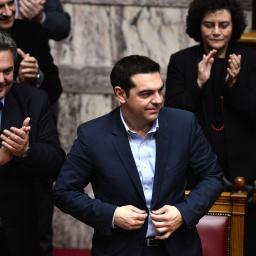
Greek prime minister singles out German chancellor Angela Merkel and her finance minister Wolfgang Schäuble for criticism as he vows to get to workAfter three days of heated debate, Greece’s new government received a vote of confidence late on Tuesday as the country steeled itself for crucial negotiations with the creditors keeping it afloat.Alexis Tsipras, the firebrand catapulted to power on the back of fierce opposition to the austerity endured by the nation in recent years, easily won the motion with 162 votes. Some 137 MPs rejected the call. Nikolaos Michaloliakos, the leader of the neo-Nazi Golden Dawn abstained citing illness. Continue reading...
Rolling coverage of the Greek debt crisis, as markets welcome signs that Athens will compromise at Wednesday night’s eurogroup meeting, after tonight’s confidence vote