 |
by Graeme Wearden on (#466C)
Rolling economic and financial news, as a new survey finds that investors are more concerned about Greece leaving the eurozone
|
| Link | http://feeds.theguardian.com/ |
| Feed | http://feeds.theguardian.com/theguardian/business/economics/rss |
| Updated | 2026-09-20 17:01 |
by Damian Carrington on (#46F0)
Global action on climate change could cause insurers’ investments in fossil fuels to take a huge hit, says bank’s prudential regulation authorityInsurance companies could suffer a “huge hit†if their investments in fossil fuel companies are rendered worthless by action on climate change, the Bank of England warned on Tuesday.“One live risk right now is of insurers investing in assets that could be left ‘stranded’ by policy changes which limit the use of fossil fuels,†said Paul Fisher, deputy head of the bank’s prudential regulation authority (PRA) that supervises banks and insurers and is tasked with avoiding systemic risks to the economy.
 |
by Phillip Inman, economics correspondent on (#46E9)
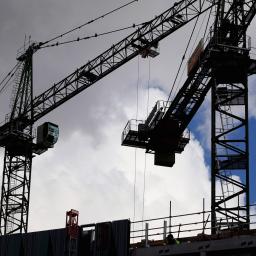
A resurgence in confidence and orders gives construction sector a lift after a drop to a 17-month low in DecemberBuilding firms performed strongly in February, ending the slowdown that hit the construction sector at the end of last year. However, economists say growth in the sector is likely to cool later this year.The latest survey by financial data provider Markit found that a resurgence in confidence and orders gave the building industry a lift after a drop to a 17-month low in December. Continue reading...
|
 |
by Angela Monaghan on (#469F)
Jesse Norman commissions report into review by Anthony Grabiner QC, claiming it set very low tests for an inquiry into the scandalThe Bank of England has come under attack for failing to properly investigate its role in the rigging of foreign exchange markets.In a report commissioned by Jesse Norman, the Conservative MP and a member of the Treasury select committee, a leading British barrister said the Bank set very low tests for its inquiry into the scandal.I have commissioned an opinion from Charles Bear QC pro bono into the @bankofengland Grabiner Inquiry. Strong stuff. http://t.co/QbAk86bj3W Continue reading...
|
 |
by Katie Allen on (#45FF)
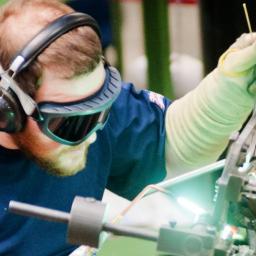
Improvement in proportion of working women boosts UK’s ranking in PwC index, but Nordic countries still leadThe UK has moved up a “women in work†league table after the economic recovery helped cut female unemployment, but it still lags well behind Nordic countries when it comes to overall empowerment of women in the workplace.The UK is at its highest position since 2000 on the Women in Work Index from consultants PwC. It ranks 14th out of 27 developed economies, up four places on a year ago.The reality for many flexible workers is that they have to work harder for promotion and don’t progress as quickly. The decision to go part-time is often made for short-term reasons, but unfortunately for women it often seems to have a wider, long-term negative impact.The Shared Parental Leave policy, which comes into force in April, is a step in the right direction but the UK’s cultural perception of gender equality needs to catch up with such changes in policy. Some of the reasons the Nordic countries top the index is down to the recognition that all individuals should be able to balance their career and family life, and to support themselves.Southern European countries such as Greece and Italy at the bottom of the index are still struggling to improve their performance since the fallout from the economic crisis. Continue reading...
|
 |
by Phillip Inman, economics correspondent on (#457B)
Lauded Mittelstand companies make up 16.3% of economic activity in Germany, whereas comparable businesses in Britain account for 17.2% domesticallyBritain’s engine room of medium-sized manufacturing and service companies are more than a match for the German Mittelstand that is lauded by politicians and business leaders as the template for economic growth, according to a study by HSBC.The UK’s “Brittelstand†of middle-market companies with a turnover of more the $50m (£33m) but less than $500m (£325m) make up 17.2% of economic activity, compared with 16.3% in Germany and 13.2% in the US, the study found. Continue reading...
|
 |
by Phillip Inman economics correspondent on (#454Z)
Prices across region fall 0.3% compared with 0.6% in January, while jobless total slips from 11.3% to 11.2%
|
 |
by Graeme Wearden (until 2pm) and Nick Fletcher on (#43GY)
Rolling coverage of the latest events across the world economy, the financial markets, the eurozone, Greece’s bailout, and business
|
 |
by Costas Lapavitsas on (#44JE)
We are deluded to think we can achieve real change within the common currency. Syriza should be radicalThe agreement signed between Greece and the EU after three weeks of lively negotiations is a compromise reached under economic duress. Its only merit for Greece is that it has kept the Syriza government alive and able to fight another day. That day is not far off. Greece will have to negotiate a long-term financing agreement in June, and has substantial debt repayments to make in July and August. In the coming four months the government will have to get its act together to negotiate those hurdles and implement its radical programme. The European left has a stake in Greek success, if it is to beat back the forces of austerity that are currently strangling the continent.In February the Greek negotiating team fell into a trap of two parts. The first was the reliance of Greek banks on the European Central Bank for liquidity, without which they would stop functioning. Mario Draghi, president of the European Central Bank, ratcheted up the pressure by tightening the terms of liquidity provision. Worried by developments, depositors withdrew funds; towards the end of negotiations Greek banks were losing a billion euros of liquidity a day.Related: Greece secures eurozone bailout extension for four months Continue reading...
|
 |
by Veronica Horwell on (#44C5)
From All My Sons to The Crucible and beyond, the great playwright captured America’s financial, as well as existential, desperationArthur Miller called The American Clock, which premiered in 1980, a vaudeville. But it was really his view of the crash of 1929 and the Great Depression: even more than an economic crash, it was a national emotional collapse, “like all the winds had stopped, gone dead†– the moment Americans realised that those in charge had not known what they were doing for some time, or if they did, had corruptly misused that knowledge.The play flopped, likely because Miller tinkered with it until the characters drained away, except his young self reworked as a detached narrator. The way he remembered the events of the Depression is as what we’d call an “elite debacle†– a historical mega-catastrophe caused by hubris, over self-confidence resulting from diminished contact with reality. “They believed,†the narrator says of the bubble hucksters of the 1920s, “in the most important thing of all, that nothing is real.â€Related: A View from the Bridge five-star review – Ivo van Hove reinvents Arthur Miller“They believed in the most important thing of all, that nothing is real.â€Related: Theatre archive: Roy Hattersley meets Arthur Miller – a view from the barricades Continue reading...
|
 |
by Ian Traynor in Brussels on (#3QYH)
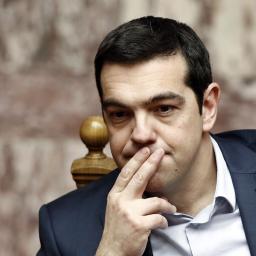
Proposed reforms win conditional approval in Brussels for extension of rescue package that new Greek government has repeatedly pledged to scrapGreece’s new leftwing government faces months of fraught negotiations with its creditors over how to ease its unsustainable debt levels and austerity programmes after securing - but only conditionally - a eurozone lifeline on Tuesday that wins it time until the end of June.Alexis Tsipras, the Greek prime minister and leader of the Syriza movement, had to bow to German-led pressure to stick to the broad terms of its €240bn (£176bn) bailout in order to obtain a four-month extension to the rescue he repeatedly pledged to scrap. Continue reading...
|
 |
by Reuters in Mumbai on (#43W1)
Central bank and inflation ministry agree historic move to rein in volatile price rises by setting consumer inflation targetsIndia’s government and central bank have agreed to commit to inflation targeting, in the biggest change to monetary policy since the economy was opened up more than two decades ago, making a priority of subduing volatile prices.
|
by Katie Allen on (#43VJ)
Manufacturing PMI reflects new year bounce for economy but raises questions over government vow to move away from consumer-driven growthBritish manufacturers enjoyed a pickup in business last month but they relied on domestic demand as exports fell against the backdrop of a troubled eurozone and stronger pound.A closely watched survey showed factories continued to enjoy a bounceback after a slow finish to 2014. But details showed little progress in the government’s push to rebalance the economy away from over-reliance on domestic consumer demand.Scratching beneath the surface and we see a lopsided upturn, with the prime driver being a strong upsurge in new orders and production at consumer goods producers while a near-stalling of demand for plant and machinery points to ongoing weak business investment.Separately, the appreciation of sterling is holding back the progress of UK exporters. It seems that, despite years of talk about a rebalancing of growth, we are still seeing only limited headway in moving away from consumer-driven expansions and towards a greater contribution from exports.Services should presumably do even better since the consumer is facing a windfall from lower petrol and food prices which is likely to be spent. It’s a bit like winning a lottery scratch card rather than a euro millions payout but the point is it’s a positive and should help push the pace of quarterly GDP [growth] upwards over the course of the year. Continue reading...
 |
by Project Syndicate and Nouriel Roubini on (#43QB)
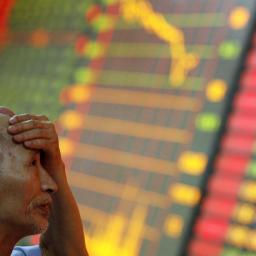
One still might think that it makes sense to hold cash directly, rather than holding an asset with a negative return. But holding cash can be risky, as Greek savers have learnedMonetary policy has become increasingly unconventional in the last six years, with central banks implementing zero-interest-rate policies, quantitative easing, credit easing, forward guidance, and unlimited exchange-rate intervention. But now we have come to the most unconventional policy tool of them all: negative nominal interest rates.Such rates currently prevail in the eurozone, Switzerland, Denmark, and Sweden. And it is not just short-term policy rates that are now negative in nominal terms: about $3tn of assets in Europe and Japan, at maturities as long as 10 years (in the case of Swiss government bonds), now have negative interest rates.Related: Q&A: what are negative interest rates? Continue reading...
|
 |
by Helena Smith in Athens on (#42K8)
Mariano Rajoy hits back over accusation that Spain and Portugal deliberately tried to bring Greece’s Syriza administration into ‘unconditional surrender’
|
by Phillip Inman, economics correspondent on (#424P)
Government ministers are happy to perpetuate monetary policy committee mythology over interest rates as it takes the heat off themLike John Major’s early 1990s government, the Bank of England gives “the impression of being in office, but not in powerâ€. Former chancellor Norman Lamont’s analysis could just as easily be applied to Threadneedle Street today.Six years on from the financial crisis, governor Mark Carney and his colleagues are keen to give the impression that they can control events. Sadly, their big bazooka, the threat of an interest rate rise, is as powerful as a pop-gun. Continue reading...
 |
by Heather Stewart on (#41RF)
We risk losing a lot more than our patience as tweets and cat videos put an end to long-termismDelayed gratification: it’s an important life skill we try to teach our children when they want that tooth-rotting treat right now. With good reason: the famous “marshmallow experiment†at Stanford University showed kids that chose to wait a few minutes and get two sweets, instead of gobbling up one immediately, were brighter and more successful more than a decade later.Yet in grown-up, economic life, patience has gone way out of fashion. Continue reading...
|
 |
by Helen Lewis on (#418H)
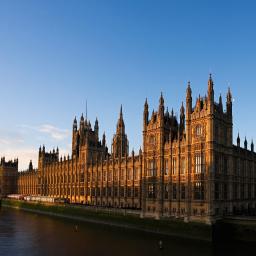
The general election campaign starts officially on 30 March, but the early skirmishes have already begun. Here, from the pink bus to new media and gaffes to opinion polls, is your indispensable guide to the words, thoughts and, not least, promises that will shape the political conversation over the next two months Continue reading...
|
 |
by Helena Smith in Athens on (#4125)
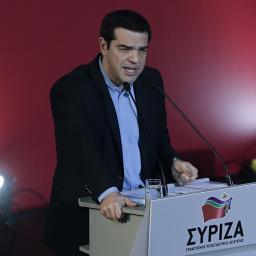
Approval ratings for radical left party soar despite U-turns forced in debt talks and collapse of tax collection, but the people still expect the government to deliverAlexis Tsipras’ left-led government may be the bane of Europe’s political establishment, but in Greece support is soaring as Athens’ new political class negotiates the country’s economic plight.One month and three days after the tough-talking firebrand assumed power, Greeks of all political persuasions appear to like what they see. A Metron Analysis poll published on Saturday showed popularity ratings for the prime minister’s radical left Syriza party at an all-time high: from the almost 36% it won in snap polls on 25 January, support for Syriza has jumped to 47.6%, a record for a movement that only three years ago was on margins of Greek politics. Continue reading...
|
by Heather Stewart on (#40PR)
The Walmart effect and the example of certain London local councils has led to pay rises for many. But poverty wages elsewhere could be hard to shiftFfyona Dawber has given her four least well-paid staff a pay rise. She’s the managing director of Synergy Vision, a small medical communications company in north-west London. In return, Brent Council will now cut £500 off her rates bill.This is one of the ways in which local politicians are using every weapon at their disposal to try to tackle inequality, and as the jobs market picks up – and even David Cameron urges firms to pay their staff more – there is hope that a rising tide may start to lift the lowest-paid workers above the poverty line.“If there’s one thing Labour ought to be about, it’s dignity of work, and that’s what the living wage helps achieve.â€â€œWe hope we’ll get to a place where people will start to ask about pay and take it into account when they’re shopping.†Continue reading...
 |
by Reuters in New Delhi on (#3ZRP)
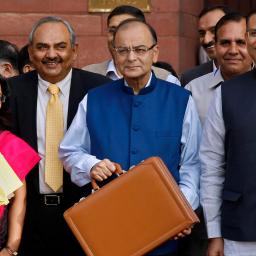
‘India is about to take off,’ finance minister says, as he announces plans to slow pace of cutting deficit and to boost investment
|
 |
by Julia Kollewe and Graeme Wearden on (#3XSX)
The Bundestag has voted to extend Greece’s aid programme by four months by a big majority, after hearing that Greece must meets its commitments
|
 |
by James Wallman on (#3YSG)
Surely we’ve had enough of materialism? There has to be more to life, so let’s try experientialism instead
|
 |
by Associated Press in Washington on (#3YNP)
|
by Jill Treanor on (#3Y9F)
Both banks were bailed out at enormous cost to the taxpayer. Now one has turned things around while the other is still suffering. Jill Treanor explains whyThe contrast between bailed-out Lloyds Banking Group and Royal Bank of Scotland was thrown into sharp focus as the former paid out its first dividend since the banking crisis (and handed its boss an £11.5m pay deal) while the latter reported its seventh consecutive year of losses (and its boss waived his bonus).Why the difference? Because they started in different places. After their bailouts in 2008 and 2009, the taxpayer had a 43% stake in Lloyds and owned 81% of RBS. The government’s controlling stake in RBS made it an easier target for politicians at the outset. Continue reading...
 |
by Antonio Negri and Raúl Sánchez Cedillo on (#3Y7G)
Greece is bravely laying a path towards a democratic Europe, one that is not dominated by the interests of capitalism or Nato“A spectre is haunting Europe†read a recent headline in the Italian newspaper Il Manifesto, announcing the round of meetings between the Greek prime minister, Alexis Tsipras, and his European counterparts. Just think of what would happen if Podemos wins in Spain: the spectre would turn into a monster, propelled by one of Europe’s largest economies. In a few weeks, campaigning will begin in Spain and no doubt the European governments will redouble their efforts to frighten Spanish citizens away from Podemos. But what can Podemos tell us about Europe?Since Syriza’s victory in Greece, Podemos’s position on Europe has been supportive of Syriza while prudently reserving its judgment. After all, Tsipras’s strategy could fail in the brief interval that remains until the Spanish elections. But prudency is not the same as ambiguity. Nothing would be more dangerous than an ambiguous position at this point, given the negotiations under way between Greece and Europe on the viability of the policies implemented by the troika until now. There are now two Europes and it is imperative to align with one or the other. Podemos supporters know that victory is only possible by joining a front already opened by Syriza, one that must expand throughout the EU. The politics of debt and sovereignty, and the Atlantic question are all issues that can only be tackled at a European level. Continue reading...
|
 |
by Phillip Inman, economics correspondent on (#3X9K)
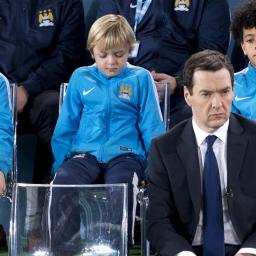
Treasury committee stops short of saying chancellor misled parliament by claiming he won the bill reduction when the surcharge was halved by the UK’s automatic rebateMPs have criticised George Osborne for exaggerating claims that he halved a £1.7bn surcharge imposed by Brussels last year when Britain’s rebate automatically cut the figure to £850m.A committee of MPs has stopped short of accusing the chancellor of misleading parliament, but said he should have known how the rebate applied before he boasted on TV and to MPs about his success at the negotiating table.The terms of the UK’s rebate calculation are set out in EU law. It should, therefore, have been clear it would apply.He has been caught out again and his credibility is further undermined. Continue reading...
|
 |
by Graeme Wearden on (#3VFP)
Royal Bank of Scotland reveals that its private banking arm is being probed by German authorities, on top of existing US investigation
|
 |
by Ian Traynor in Brussels on (#3WM2)
Angela Merkel is likely to win the Bundestag vote to back the four-month bailout extension – but with grudging acceptance
|
 |
by Phillip Inman, economics correspondent on (#3W23)
Strong consumer spending is all very well, but it masks the long-term problem of declining business investmentWhen coffee shops are among Britain’s retail stars, it’s not surprising that economists argue the merits of the cappuccino economy versus the flat white alternative.The latest GDP update shows that froth still dominates (the flat white reference being a nod to a tech/digital economy that has yet to gain ascendancy).Related: UK business investment falls at fastest rate since financial crisis Continue reading...
|
 |
by Angela Monaghan on (#3W05)
Drop of 1.4% in last quarter driven by energy companies reining in North Sea spending amid falling oil priceInvestment spending by UK businesses fell at the fastest rate in almost six years at the end of 2014 as energy companies responded to falling global oil prices.Business investment dropped by 1.4% in the fourth quarter, according to the Office for National Statistics. The decrease was mainly driven by oil and gas companies reining in North Sea spending.Related: The UK's economy cannot run on coffee for ever Continue reading...
|
by Heather Stewart on (#3VXE)
Scale of capital flight suggests newly elected Syriza government had to strike deal with eurozone partners over bailout to prevent full-blown bank runAnxious savers withdrew €12bn (£8.8bn) from Greece’s banks in January, underlining the desperate challenge facing Athens’ anti-austerity ministers during last week’s debt talks.Figures for February are not yet available from the European Central Bank, but the exodus is likely to have continued after the Syriza-led coalition came to power, and battled to secure a four-month extension on its €172bn bailout loan.Related: Greek bailout: Germany warns Athens must stick to pledges - live updates Continue reading...
 |
by Martin Williams on (#3V1W)
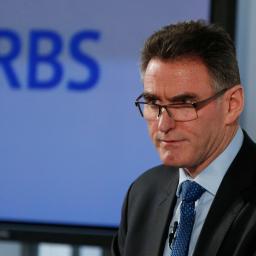
Ross McEwan still expected to earn £2.7m despite declining the ‘role-based’ payment which has become a common means of sidestepping bonus capsThe chief executive of Royal Bank of Scotland (RBS) has said he will hand back £1m of his annual pay package.Ross McEwan told the bank’s board he did not want to receive the “role-based†shares incentive, which tops up his regular salary. He is still expected to be paid £2.7m despite turning down the award. Continue reading...
|
 |
by Graeme Wearden on (#3SAC)
Stuart Gulliver has apologised following the revelations that its Swiss operation helped wealthy clients dodge tax. MPs have also questioned HM Revenue and Customs.
|
 |
by Robert Skidelsky on (#3TDZ)
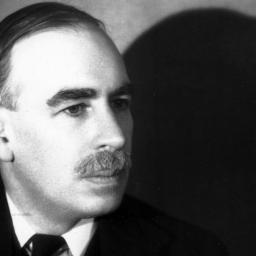
Benign disinflation means rising real incomes for lenders, pensioners, and workers - but ‘bad deflation’ means an increase in the real burden of debtIn 1923, John Maynard Keynes addressed a fundamental economic question that remains valid today. “[I]nflation is unjust and deflation is inexpedient,†he wrote. “Of the two perhaps deflation is … the worse; because it is worse…to provoke unemployment than to disappoint the rentier. But it is not necessary that we should weigh one evil against the other.â€The logic of the argument seems irrefutable. Because many contracts are “sticky†(that is, not easily revised) in monetary terms, inflation and deflation would both inflict damage on the economy. Rising prices reduce the value of savings and pensions, while falling prices reduce profit expectations, encourage hoarding, and increase the real burden of debt. Continue reading...
|
 |
by Ami Sedghi on (#3SWB)
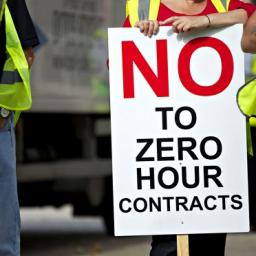
The number of people employed on zero-hours contracts reached 697,000 in the fourth quarter of 2014. See the characteristics of people employed on zero-hours contracts in four chartsNew estimates show that the number of people employed on zero-hours contracts reached 697,000 in the fourth quarter of 2014, up from 586,000 during the same period a year earlier.The figures, published by the Office for National Statistics (ONS), are an estimate of people who are employed on zero hours contracts in their main employment, and come from the Labour Force Survey. By the end of 2014, the total number of people employed on zero hours contracts represented 2.3% of total in employment - up on the previous year when the figure stood at 1.9%. In its release, the ONS note that it is “not possible to say how much of this increase is due to greater recognition of the term ‘zero-hours contracts’ rather than new contracts.†Continue reading...
|
 |
by Jill Treanor on (#3SMH)
New Economics Foundation says 79% taxpayer stake in bailed-out bank should be used to create 130 locally run banks, boosting GDP by £38bnRoyal Bank of Scotland could be broken up into 130 locally run banks and operated along the principle of the John Lewis Partnership rather than be privatised by the next government, according to a report published on Wednesday.In an attempt to reopen the debate about the future of the bank as it prepares to publish its 2014 results on Thursday, the New Economics Foundation argues that carving out local banks would bolster GDP and be more beneficial than using the proceeds of any sale of the stake to cut the national debt. Continue reading...
|
by Heather Stewart on (#3SKB)
The idea that zero-hours contracts somehow benefit staff is undermined by the fact so many people on them wish they weren’tZero-hours contracts are the ultimate expression of Britain’s “flexible†labour market. Deregulate the workforce, free up firms to hire and fire, and they will be less burdened by fixed costs, leaner and more competitive – and create more jobs. So went the post-Thatcherite consensus.
 |
by Jill Treanor on (#3QVR)
Shares in Britain’s top companies pass high set at height of dotcom boom as Athens secures lifeline and belief grows about UK recovery gaining momentumLondon’s stock market has hit a record high, breaking through the levels set at the height of the dotcom boom on relief that debt-laden Greece had secured a lifeline from its creditors and increasing belief that the UK’s economic recovery is gaining momentum.After months of testing the previous record 6950 point mark – which was reached on the final trading day in December 1999 – the FTSE-100 index of the biggest companies on the London stock market hit 6959 on Tuesday. It closed at 6949, well above the previous closing record of 6930 – the level at which the benchmark index ended the 20th century.Related: FTSE 100 hits record high - timeline Continue reading...
|
 |
by Phillip Inman on (#3RDR)
Poll for CBI finds that most consumers believe firms abuse their trust and sacrifice loyalty for a quick returnConsumers believe businesses put profits before staff wellbeing and customer service, according to a poll for the CBI.The business lobby group said the word profit was used “like a dirty word†by a majority of consumers, who believe businesses abuse their trust and sacrifice loyalty for a quick return. It said the results should persuade companies to be more transparent about how they generated profits. Continue reading...
|
 |
by Graeme Wearden on (#3PTK)
London’s blue chip index hits record high after eurozone ministers give their approval to Athens’ new economic reform plans.
|
 |
by Guardian Staff on (#3QZG)
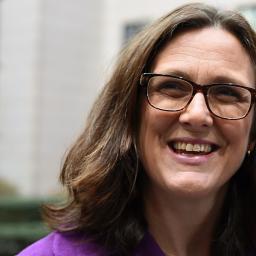
European trade commissioner Cecilia Malmström says that limiting the scope of the investor-state dispute settlement system in the Transatlantic Trade and Investment Partnership will be difficult (US firms will not use secret corporate courts to muscle in on NHS contracts, says EU trade chief, 20 February). She is apparently tinkering with it to try to exclude publicly funded health services, but there are clearly doubts about the effectiveness of this tinkering. Why cannot she see that the simple answer is to remove this secretive ISDS court system from the treaty? Both the US and the EU have robust, transparent legal systems with courts at various levels such as state, national, federal and EU, with proper avenues for appeal. If companies think they have a case against governments, let them use these courts.Who can predict what actions a government may need to take in the future that might impinge of the profits of investors? Continue reading...
|
by Andrew Graham on (#3QG9)
For the sake not just of Greece but the whole eurozone, Germany must overcome its historic horror of inflation and embrace fiscal expansionIn the movie All the President’s Men, the advice of Deep Throat, the reporters’ source, was “follow the money†– a great idea for tracking corruption, but hopeless as a guide to global macroeconomics. In the Greek crisis everyone is focusing on the money, but it is trade that matters. Until Greece can generate an export surplus it cannot pay its debts, and it cannot run an export surplus until others run deficits. But this is precisely what German policy is preventing the Greeks (and all the other deficit countries) from achieving. The OECD estimates that the German current account surplus in 2015 will be more than 7% of GDP.Every international macroeconomist knows that this surplus can only be corrected by a mixture of expenditure expansion, via fiscal policy, and expenditure switching, via a change in the real exchange rate. Germany will countenance neither. It will not inflate to reduce competitiveness; and even with an internal budget surplus of some 8% of GDP it will not loosen fiscal policy. What has been far too little under discussion is “why not?â€.Related: Eurozone ministers approve Greek bailout extension - live updatesMerkel remarked: 'It doesn’t sound so good in German'. Why not? Because the German word for 'debt' also means 'guilt' Continue reading...
by Rolf Nieuwenkamp on (#3QC7)
Failing? On the contrary, argues Rolf Nieuwenkamp, chair of the OECD working party on responsible business conduct, we’re getting better at holding businesses to account
 |
by Adéa Guillot on (#3Q7Y)
Anti-austerity programme of new prime minister Alexis Tsipras depends on collecting billions in unpaid revenuesThe new government of Greece, led by Alexis Tsipras, has promised to tackle tax evasion. It hopes this strategy will yield €3bn ($3.4bn) in the coming months in order to cover part of the cost of its €12bn Thessaloniki anti-austerity programme. This would entail various measures – a gradual increase in the minimum wage to reach €750, an extra month’s income for pensioners receiving less than €700 a month, and various welfare benefits – to help the most vulnerable members of the community.“If this government thinks it can change the system in a few weeks it is underestimating how complicated it is to collect tax in Greece,†says Haris Theoharis, narrowly elected to parliament for the centrist To Potami party. Between January 2013 and June 2014 he was secretary general for public revenue, a job imposed on the then conservative New Democracy government by the country’s creditors, increasingly irritated by slow progress against fraud and tax dodging. Continue reading...
|
 |
by Katie Allen on (#3Q85)
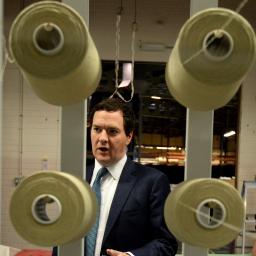
Leading economic thinktank says UK’s failure to raise output per worker since the downturn has held back wages and well-beingBritain must fix its productivity problem to secure future economic growth and improve living standards, a leading thinktank has warned as it highlights a failure to grow output per UK worker since the downturn.The Organisation for Economic Co-operation and Development (OECD) has also downgraded its outlook for the UK this year but still sees it enjoying one of the fastest growth rates among advanced economies. Growth in 2015 is now projected to be 2.6%, matching last year’s pace but down from a forecast for 2.7% made in November. The 2016 forecast remains at 2.5% GDP growth.Weak labour productivity since 2007 has been holding back real wages and well-being. The sustainability of economic expansion and further progress in living standards rest on boosting productivity growth, which is a key challenge for the coming years,†says the OECD report, to be launched at a news conference with chancellor George Osborne on Tuesday morning.Income and wealth are below the G7 average and real earnings have been exceptionally weak as they have continued to reflect poor productivity,†its report into the UK says.Developing a knowledge-based economy, strengthening infrastructure investment and improving the financing of the economy are all critical in this regard,†the thinktank adds.Weak export performance and productivity could be driven by infrastructure weaknesses and difficult access to bank finance, especially for small and medium-sized enterprises (SMEs), holding back the emergence of new firms and high-skilled jobs.â€In addition, house prices have increased rapidly and may create risks to financial stability in the case of a downward adjustment.â€The chancellor will likely welcome the OECD’s comments on his austerity programme. The Paris-based thinktank notes the budget deficit has been “significantly reduced since the peak of 2009, but at a slower pace recently notably as growth has been insufficiently tax-rich.â€
|
by Angela Monaghan on (#3Q3T)
Rate-setter Kristin Forbes says rise in borrowing costs is inevitable if signs of asset bubbles emerge or household debt rises sharplyThe Bank of England is prepared to raise interest rates “in the near future†if inflation picks up, one of its senior policymakers has warned.Kristin Forbes, a member of the Bank’s rate-setting monetary policy committee (MPC), said a rise in borrowing costs would also be necessary should signs of asset bubbles emerge or household debt reaches unhealthy levels. Continue reading...
by Phillip Inman, economics correspondent on (#3Q2F)
A combination of extra production and hoarding will keep lower petrol prices at the pumps for a little while longerAfter a mini rally, oil prices are falling again. From $62 a barrel 10 days ago, Brent crude has slipped to $58.43 on Tuesday.It may not seem like much of a cut after the collapse in world oil prices that sent Brent tumbling from $115 to $45 a barrel between last June and January, but it is still significant. Continue reading...
by Reuters on (#3PMQ)
Managing director of the International Monetary Fund says too many countries still restrict the right of women to contribute to their economiesNations should remove laws that prevent women from working in order to increase the female labour supply and boost their economies, IMF Managing Director Christine Lagarde has said.“In too many countries, too many legal restrictions conspire against women to be economically active,†Lagarde wrote in a blog. “In a world in search of growth, women will help find it, if they face a level playing field instead of an insidious conspiracy.†Continue reading...
 |
by Ian Traynor in Brussels and Helena Smith in Athens on (#3N96)
Six-page blueprint aimed at appeasing eurozone creditors expected to be endorsed by finance ministersGreece’s new leftwing government has moved to head off insolvency and a run on the banks by submitting a menu of structural economic reforms to Brussels aimed at appeasing its eurozone creditors and securing a four-month bailout lifeline.
|