 |
by Steve Dent on (#6GEVS)
In May 2022, just months before Elon Musk acquired Twitter (now X), the Federal Trade Commission (FTC) hit the platform with a $150 million fine and consent decree that imposed stipulations for safeguarding users' personal data. The ruling was imposed after the FTC found that Twitter had violated a previous consent decree by inappropriately sharing user phone numbers and email addresses with advertisers.After acquiring Twitter, Elon Musk went to court in an attempt to overturn that consent decree, arguing that the FTC had increased scrutiny on X and pressured a third-party assessor to find fault with its security practices. In a post on X at the time, Musk called the FTC's actions "a shameful case of weaponization of a government agency for political purposes and suppression of the truth."However, a federal judge just rejected that motion, ruling that his court lacked the authority to block the FTC's court order, while also blocking Musk's request to avoid a deposition that's part of a separate investigation, The Washington Post reported. In other words, X must still adhere to the strict privacy reporting standards imposed by the FTC last year.The judge listed other issues with X's argument, noting that the FTC had good reason to increase scrutiny on X after Musk took over. "The government says this increase in investigative activity should not be surprising because Musk directed at least five rounds of terminations, layoffs or other reductions in X Corp.'s workforce, which affected the security, governance, risk and compliance team," he wrote in the ruling.He added that the third-party assessor said he faced steady delays due to executive turnover at X. Finally, the judge ruled that Musk can't avoid being deposed by the FTC, as "the government argues that the major changes to the company appear to have been initiated by Musk himself."Musk's FTC problems started shortly after his acquisition of X, when key executives on Twitter's privacy and security teams departed. Still, Musk seemed willing to comply with the rules, telling employees at the time that "Twitter will do whatever it takes to adhere to both the letter and spirit of the FTC consent decree."Back in March, though, the FTC stepped up its probe into Musk's actions in an effort to get more information about the company's handling of layoffs, X Premium subscriptions, the "Twitter Files" and other issues.Meanwhile, the platform can't seem to stay out of the news, as IBM recently said it would pull advertising on X after discovering its ads were being placed next to pro-Nazi content. Musk himself faced criticism after he appeared to endorse an antisemitic post on the platform.This article originally appeared on Engadget at https://www.engadget.com/judge-rejects-attempt-by-x-to-nullify-ftc-privacy-settlement-111536396.html?src=rss
|
 Engadget - Technology News & Expert Reviews
| Link | https://www.engadget.com/ |
| Feed | https://www.engadget.com/rss.xml |
| Updated | 2026-09-20 15:18 |
 |
by Mariella Moon on (#6GESH)
YouTube videos that feature breastfeeding content can now earn money on the platform, so long as they meet a certain set of criteria. The website has updated its policy to allow monetization of breastfeeding videos that show the mother's areola, as well as those wherein the person in the video is demonstrating how to use a breast pump with nipples visible. Those videos, however, must include contextual reference to breastfeeding and must include a child in the scene. Otherwise, they still won't be able to earn money from ads.Breastfeeding videos with exposed nipples previously couldn't earn money on the website. A spokesperson told TechCrunch that YouTube reconsidered after getting feedback on how helpful they are for those navigating that particular stage of parenthood.In addition, YouTube has also changed its guidelines when it comes to what it calls "non-sexually graphic dancing." Creators can now earn money for videos with dance moves such as twerking and grinding, unless those videos were made to deliberately focus on the dancers' "extreme minimal clothing" or on their breasts, butt and genitalia. They also won't be earning any money if they use moves that mimic sexual acts, such as grabbing a partner's genitalia while dancing. Showing "fleeting minimal clothing" is fine, though, as well as "fleeting caresses of sexual body parts" and doing moves that mimic or simulate sexual acts in a professional setting, such as a dance studio. TechCrunch says the website is now reviewing existing content that could be eligible for monetization under the new rules and will switch on their ads if they'd actually adhered to its advertiser-friendly content guidelines.This article originally appeared on Engadget at https://www.engadget.com/youtube-will-now-let-breastfeeding-and-twerking-videos-be-monetized-084535300.html?src=rss
|
 |
by Lawrence Bonk on (#6GEPF)
Qualcomm just unveiled the latest mobile chipset to join its armada, the Snapdragon 7 Gen 3. Obviously, this is a refresh of the mid-range Snapdragon 7 Gen 2 and brings some new features to the table. We've long known that Qualcomm chips were about to get on-device AI integration, and the Snapdragon 7 Gen 3 is no exception.Nearly every aspect of this chip seems to have been designed with artificial intelligence in mind, with Qualcomm saying that the components deliver across-the-board advancements to ignite on-device AI." This should significantly speed up generative AI applications, with advertised benchmarks of just one second to create Stable Diffusion images from a text prompt.Of course, a mobile CPU is more than just AI, despite what marketing wants you to believe, and the 7 Gen 3 seems powerful for a mid-range chipset. It boasts 2.63GHz peak CPU speeds, a 50 percent bump in GPU performance compared to the previous gen and incredible power efficiency" that should ease the strain placed on your phone's battery. Qualcomm also boasts that the Snapdragon 7 Gen 3 will help unlock extraordinary camera capabilities" and allow for increased 5G integration.Mobile chipsets are only as good as the phones they power, so Qualcomm has announced partnerships with OEMs like Honor and Vive. The company says there will be an announcement later this month to officially unveil the first smartphone that uses the Snapdragon 7 Gen 3. Maybe it'll show up in the just-announced Honor Magic 6, which also boasts a built-in LLM.This article originally appeared on Engadget at https://www.engadget.com/qualcomm-announces-snapdragon-7-gen-3-mobile-chipset-with-ai-acceleration-063019422.html?src=rss
|
 |
by Mariella Moon on (#6GEPG)
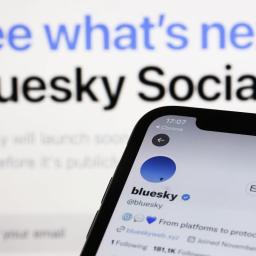
Bluesky has just crossed 2 million users a year after the service's first ever post was created. While that's nowhere near the numbers Threads has already reached, it's still a big accomplishment for the X rival that only opened the app to users in February and still requires an invite for access. Bluesky hit 1 million users merely a couple of months ago, in September, which could mean that the platform has been sending out more invites recently. In its post announcing the milestone, the Bluesky team has also revealed that it's launching a public web interface around the end of November.The interface will allow anybody, even those without an account, to view posts on the platform. Its launch could make more potential users aware about the service's existence, and Bluesky believes making its posts more accessible "will be especially useful for real-time commentary and breaking news." In the long run, it could make the service one of people's go-to social networks for news in the same way X users rely on the website to read about current events.And for those waiting for Bluesky to become a more open platform like Mastodon, the team says federation is "timelined for early next year if development continues as planned." To become a federated or a decentralized and distributed social network, the team is currently developing the AT Protocol, which will give users the power to migrate both their identities and their content from one personal data server to another. "This is one of the core features of Bluesky that makes it 'billionaire-proof,' - you'll always have the freedom to choose (and to exit) instead of being held to the whims of private companies or black box algorithms," the announcement post reads.This article originally appeared on Engadget at https://www.engadget.com/bluesky-hits-2-million-users-and-will-soon-release-a-public-web-interface-062757340.html?src=rss
|
 |
by Karissa Bell on (#6GEJ0)
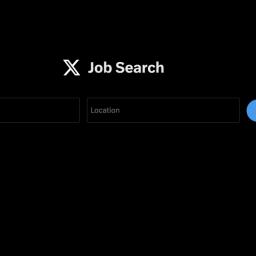
The LinkedIn-like job search tool that X has been experimenting with is now live. A beta version of the feature launched in August to verified users, but the web version of the tool is now open to everyone on X, with iOS and Android availability expected soon," according to the company.The job search feature appears to already be populated with open positions at numerous tech companies, including those run by Elon Musk. There are currently roles listed for SpaceX, Tesla and Neuralink, as well as X and Musk's newest venture, x.ai.While Musk previously promised we will make sure that the X competitor to LinkedIn is cool," it appears to be very basic for now. Users can browse job listings and descriptions, but are directed to third-party sites to complete an application, even for roles at X. Elsewhere, the company has been testing job cards" so that individual postings are more easily shareable throughout the platform.But there have been signs the company has more ambitious plans for career-oriented features on its everything app." The company recently updated its privacy policy to note that it may collect data related to users' employment history for job applications and recommendations." This may hint at some kind of recruiting feature for X or other, more advanced job finding features down the line.This article originally appeared on Engadget at https://www.engadget.com/xs-job-search-tool-is-now-live-on-the-web-010200007.html?src=rss
|
 |
by Karissa Bell on (#6GEFR)
IBM is pulling back from X after its ads were placed alongside pro-Nazi content on the platform. The company says it has suspended all ads from the network after nonprofit watchdog group Media Matters reported that it found ads for IBM and several other tech giants next to pro-Nazi memes and other posts promoting Hitler.IBM has zero tolerance for hate speech and discrimination and we have immediately suspended all advertising on X while we investigate this entirely unacceptable situation," the company said in a statement. Comcast, whose ads were also highlighted by Media Matters, told the Financial Timesit was looking into the situation.An executive at X told Engadget that the posts identified by Media Matters will no longer be monetizable" and will appear with sensitive media" labels that require users to click through a warning in order to view the content. They added that while we understand it's not an ideal placement for any ad," the post had only racked up about 8,000 impressions."It's not clear how many campaigns are affected by IBM's decision to suspend ads. But another high profile company pulling back from the platform, even temporarily, is another blow to the company's already battered advertising business.In a post on X, CEO Linda Yaccarino said that discrimination by everyone should STOP across the board," though she didn't reference IBM or Media Matters' report directly. X has also been extremely clear about our efforts to combat antisemitism and discrimination," she wrote. There's no place for it anywhere in the world - it's ugly and wrong."This article originally appeared on Engadget at https://www.engadget.com/ibm-suspends-advertising-on-x-after-its-ads-were-placed-next-to-pro-nazi-content-234332820.html?src=rss
|
 |
by Cheyenne MacDonald on (#6GEE5)
Epic has introduced a new tool for documenting toxic behavior in Fortnite. Players will now have access to voice reporting, which will continuously record voice chats in 5-minute segments for players to submit as evidence to moderators when reporting bullying and other forms of harassment. For anyone under the age of 18, this feature will automatically be turned on.Fortnite players who are over 18 will have a bit more say over how voice reporting is applied. In the game's main settings, they'll have the option to set it as Always On," which would apply to every channel they're in, or Off When Possible," which would disable it in Party Channels with friends as long as everyone's preferences match.In what's likely an effort to quell privacy concerns, Epic says audio clips won't be kept for long and they'll only be stored locally on the user's device unless submitted as evidence. And, in those cases, you'll have to move fast. As each new recording comes in, the previous will be deleted. This means only the immediate last five minutes of audio is reportable," Epic said.Epic GamesUnder normal circumstances, audio clips will be auto-deleted either after 14 days or once action has been taken, the company added. If the accused player appeals the decision within that time, it may be extended for another 14 days. However, Epic says it will hold onto an audio clip as long as necessary if legally required to do so.The move follows similar action taken by companies like Activision, Microsoft, Sony and others in the recent past as they attempt to clamp down on harmful online behavior. Earlier this year, Xbox introduced a system for submitting 60-second audio clips alongside reports of abuse in voice chats.This article originally appeared on Engadget at https://www.engadget.com/fortnite-players-can-now-submit-audio-clips-as-evidence-when-reporting-in-game-abuse-220905599.html?src=rss
|
 |
by Will Shanklin on (#6GEBF)
A hacking group deployed a surprising tactic after infiltrating a financial software company's network. They reported the breach to the US Securities and Exchange Commission (SEC).DataBreaches.net initially reported on the incident, which was conducted by ALPHV / BlackCat, a group known for breaching entities as diverse as MGM Resorts and Reddit. The hackers reportedly infiltrated the servers of fintech company MeridianLink on November 7, stealing company data without encrypting it. However, when the business neglected to negotiate directly, the hackers increased the pressure by filing a report with the SEC.They did so citing a new rule the SEC passed this summer, which requires companies falling victim to material cybersecurity incidents" to report them to the agency within four business days.However, the four-day requirement may not have taken effect yet. At least one official form claims the rule kicked in 90 days after the date of publication in the Federal Register (they appear to have been published on August 4, making that alleged effective date November 2) or December 18. But the Federal Register document says, With respect to compliance with the incident disclosure requirements in Item 1.05 of Form 8-K and in Form 6-K [the part referring to the four-day requirement], all registrants other than smaller reporting companies must begin complying on December 18, 2023." Adding to the confusion, Reuters reported in October that the rule takes effect on December 15.Engadget reached out to the SEC to clarify whether the rule is active yet. We'll update this article if we hear back.MeridianLink told BleepingComputer that it quickly worked to contain the threat. Based on our investigation to date, we have identified no evidence of unauthorized access to our production platforms, and the incident has caused minimal business interruption," the company wrote. The company says it's still trying to determine if any consumer personal information was breached, promising to notify affected parties if it was.Whether the SEC has any teeth (or desire) to do anything about MeridianLink's failure to report the incident in four business days, the rule could, ironically, serve as a new tool for cyber attackers. Rather than contacting customers or making calls to tighten the grip and pressure companies to comply with their demands, perhaps they can now simply rat them out to Uncle Sam.This article originally appeared on Engadget at https://www.engadget.com/hackers-use-a-new-sec-rule-to-snitch-on-the-company-they-infiltrated-201242292.html?src=rss
|
 |
by Lawrence Bonk on (#6GEBG)
Lucid's Gravity all-electric SUV has been on our radar for a while now, since originally being introduced back in 2022. Now we have more details, including pricing, availability and those all-important range metrics. First, the bad news. This thing likely won't ship until 2025, as production doesn't officially ramp up until late 2024, as reported by Sustainable Mobility Solutions (SAE).We already knew some details surrounding the EV, including the roomy three-row interior, but now we have range data. Lucid CEO Peter Rawlinson promises a range of at least 440 miles, so it looks like it could inch further than that once the Gravity hits the assembly line. The company has stated in the past that this EV would boast a greater electric range than any SUV on the market today."So let's look at some metrics. According to Kelly Blue Book, the Gravity will easily exceed this promise, as the current top-range EV SUV is the Fisker Ocean, with a max driving range of 350 miles per charge. As a matter of fact, if Lucid's forthcoming SUV truly gets 440 miles per charge, that'll place it near the top of the list for any electric vehicle, SUV or not. The only competition will be another Lucid automobile, as the Air Grand Touring sedan gets 516 miles per charge, according to MotorTrend.Like the Air line, the Gravity is built on a 900-volt electrical architecture that supports DC fast-charging. The company says the forthcoming EV can go from 0 to 60 in 3.5 seconds, via its dual-motor setup, and boasts a payload capacity of 1,500 pounds with the ability to tow a further 6,000 pounds.Beyond metrics, Lucid also lifted the veil on the interior of the SUV. The Gravity will boast a 34-inch OLED main display and an optional lower display, with multi-tasking available between the two. In other words, you can throw navigation on one screen and the media player on the other. These displays won't get in the way of the dash cluster and will even offer gaming applications in the future, according to Derek Jenkins, senior vice president of design and brand at Lucid.The steering wheel includes two touch controllers inspired by the Apple TV remote, as minute thumb movements select items from the infotainment screen and adjust dashboard display elements. Of course, this is a three-row vehicle, so there's plenty of room for friends and family, if you're into that kind of thing. It seats up to seven people.As previously mentioned, the price should be around $80,000, though things could change before these cars hit showrooms in 2025.This article originally appeared on Engadget at https://www.engadget.com/lucids-gravity-electric-suv-will-have-a-max-range-of-440-miles-193859560.html?src=rss
|
 |
by Lawrence Bonk on (#6GEBH)
The Amazon Echo Show 5 smart display is on sale for $40 as part of an early Black Friday deal. This matches a record low price for the device and represents a savings of more than 50 percent, as the typical MSRP for the display is $90. The sale applies to various colorways, including white, charcoal and blue.This discount is only for the device itself, so you'll have to pay extra for accessories like a stand. The Echo Show 5 finds a lot of use as a smart home controller, so Amazon also sells bundles that ship with smart light bulbs, the Blink Mini security camera and an Alexa Emergency Assist subscription.The Echo Show 5 easily made our list of the best smart displays in 2023 for a number of reasons. The diminutive 5.5-inch screen makes it easy to place just about anywhere in the home and allows it to double as a highly useful alarm clock. The ambient light sensor automatically adjusts the screen's brightness so you can get some sleep and there's a handy tap-to-snooze function. There's even a sunrise alarm feature that slowly brightens the screen.The smart home controls are handy if you have plenty of installed gadgets throughout the home. The Echo Show 5 is also a decent option for video calling, thanks to the integrated camera system. If the idea of an always-on smart display with a camera makes you feel a bit icky, it ships with a physical cover.For those who balk at the relatively small 5.5-inch display size, Amazon is also selling the much larger Echo Show 10 for $160 as part of the same Black Friday deal. This represents a savings of $90.Your Black Friday Shopping Guide: See all of Yahoo's Black Friday coverage, here. Follow Engadget for Black Friday tech deals. Learn about Black Friday trends on In The Know. Hear from Autoblog's experts on the best Black Friday deals for your car, garage, and home, and find Black Friday sales to shop on AOL, handpicked just for you.This article originally appeared on Engadget at https://www.engadget.com/amazons-echo-show-5-falls-to-a-record-low-of-40-in-a-black-friday-deal-183059264.html?src=rss
|
 |
by Pranav Dixit,Pranav Dixit on (#6GEBJ)
Next year, Amazon will let you add a whole ass car to your shopping cart. The company announced today that it will launch vehicle sales in the US next year. The first cars available to purchase will be from Hyundai, as part of an Amazon partnership with the company, but more brands will presumably be added.
|
 |
by Steve Dent on (#6GEBK)
Kia's concept EVs often get more than the usual amount of attention because it tends to incorporate a lot of the ideas in the final production models - with the EV9 electric SUV being a good example of that. With that in mind, the company just unveiled the Concept EV3 and Concept EV4 representing its "Opposites Unite" design philosophy, with an emphasis on interior vibes, geometric shapes and sustainable materials.The smallish crossover Concept EV3 looks more production-ready, and Kia says it "offers the technology, practicality and design of [our] flagship SUV, the EV9." That may be true, but the EV3 carries a bold, futuristic design as well. Like the EV9 concept, it has distinct geometric patterns including octagonal wheel wells that flare out considerably from the body, and echoes those shapes in the side skirts and taillights.KiaThe windshield is pushed forward to open up interior space, while the glass roofline slopes front to back and appears to float thanks to the disconnected C pillar. "The unexpected treatment of volumes and graphics simultaneously interlock with each other, creating a logical yet emotional design," the company added in some top-tier concept car PR fluff.KiaThe interior is more fanciful, with a nearly button-free layout designed to emphasize the voluminous interior and create a "transformative cabin ambience," Kia said. It features a horizontal screen mounted on top that functions as both gauge cluster and infotainment system, along with an oval steering wheel and real mirrors. The wide center console "table" converts to four modes, including "focus, social, refreshing and storage." Meanwhile, the fiber weave materials and bioplastics make the cabin inviting and modern.KiaThe Concept EV4 is a clean-sheet design with an emphasis on sportiness that also uses some strong geometric shapes. To that end, it has a low nose and long-tail silhouette with a wide stance, along with a "technical roof spoiler" - two small extensions on either side of the roof. Again, we're seeing bulgy fenders, lots of bold lines and creases, a sloping glass roof and geometric lighting front and back.KiaThe interior is broadly the same as the Concept EV3, but an "HVAC user interface incorporates a control panel that can be neatly stored in the center console when not in use," according to Kia. It incorporates handwoven fabrics in the vehicle's storage area and dashboard to create a 3D effect, and features natural dies and recycled cotton in the interior.KiaKia didn't get into the power, battery or other powertrain features of either car, and painted both as test cases to see what people think. "That's why we came to Los Angeles and America's savviest EV consumers, to gauge reaction to two potential opportunities within the Kia lineup," said Kia America's COO Steven Center. It looks like Kia has nailed these designs once again, so don't be surprised to see them appear in some form as real production vehicles.This article originally appeared on Engadget at https://www.engadget.com/kias-latest-ev-concepts-go-big-on-geometrics-and-cabin-vibes-190529735.html?src=rss
|
 |
by Malak Saleh on (#6GE8C)
In a landmark decision, the UK's Medicines and Healthcare products Agency (MHRA) approved the use of a gene-editing therapy called Casgevy for patients with sickle cell disease and beta thalassemia - both of which are hereditary disorders related to genetic mutations of the red blood cells. The treatment, manufactured by Vertex, is the first-ever approved therapy that utilizes CRISPR-based gene editing technology to treat eligible patients.The UK approval of the novel therapy is informed by two previous global clinical trials that indicated the treatment's efficacy. 97 percent of patients using Casgevy were relieved of severe pain associated with the blood disorders for at least 12 months after treatment during the trials. The results suggest that the gene editing treatment could replace the current standard for care. Stem cell therapy and bone marrow transplants are currently the only pathways to cure sickle cell disease and beta thalassemia, however, they involve a lot of risks.Both sickle cell disease and beta thalassemia are blood disorders characterized by defective red blood cells that can't carry oxygen, and require patients to get monthly blood transfusions that can be costly and time-consuming. Casgevy works by specifically targeting the genes in the bone marrow stem cells that produce faulty blood cells. For the treatment to work, a patient's stem cells need to be extracted from their bone marrow, edited in a lab and then re-infused into the patient.
|
 |
by Cherlynn Low on (#6GE8D)
The green bubble-blue bubble divide may be getting smaller soon. 9to5Mac is reporting that Apple has confirmed it will support the RCS messaging standard that it's long eschewed. That's not to say that messages from Android devices will no longer appear green on Apple's Messages app. It does mean that texts from iPhones to non-iOS devices will support the newer Rich Communication Services protocol, meaning they will not have to go through the aging SMS (and MMS) system. In the statement provided, Apple said "We believe RCS Universal Profile will offer a better interoperability experience when compared to SMS or MMS."That support will "work alongside iMessage, which will continue to be the best and most secure messaging experience for Apple users." With new features like voice memo transcriptions and check-in that aren't available on RCS, iMessage could still outshine default text messaging apps on Android. It also means there might not be change to any of the colors of the conversation bubbles.Google has long taken potshots at Apple for not supporting RCS, saying the texting experience between iPhones and non-iPhones is so outdated it might as well be using a pager. With RCS support, messages between Android and iOS devices will be more secure (than over SMS), while media can be shared at higher quality.A GSMA spokesperson told Engadget earlier this year that the RCS Universal Profile (UP) "provides the industry with an open, consistent and global messaging service across networks and devices. It simplifies interoperability and enables OEMs and OS providers to achieve scale and give consumers a richer and more consistent messaging experience regardless of device or network."It's not yet clear exactly when Apple plans to enable support for RCS UP, though the statement said "later next year." Today's announcement just happens to fall on the date that's the deadline for companies to file challenges at the European Union's General Court. Apple is reportedly looking to challenge the EU's decision to put all of the App Store on a digital antitrust list under its Digital Markets Act.In September, Apple launched the iPhone 15 series, which are the company's first phones to come with USB-C charging ports in place of Lightning. This week, we also saw news about the release of the Qi 2 wireless charging standard with the new iPhones among the first available devices compatible with the updated protocols.Whether it was brought on by EU regulations or other motivations, it's clear Apple is opening up parts of its walled garden to play nice with other devices. And maybe, just maybe, you won't have to "buy your mom an iPhone."This article originally appeared on Engadget at https://www.engadget.com/apple-will-start-supporting-rcs-in-2024-182232923.html?src=rss
|
 |
by Lawrence Bonk on (#6GE8E)
If you've been wanting to splurge on a classic-ish synthesizer this holiday season, now just might be your time to shine. Reverb's offering a massive discount on 2021's Korg ARP 2600 M recreation. This deal brings the price down to $1,150 instead of $2,000, a savings of $850 or 42 percent. It's worth noting that this sale is for brand-new models and not refurbished synthesizers, further sweetening the deal.Korg's ARP 2600 M reissue was 39 years in the making, as it recreates a synthesizer that stopped production all the way back in 1981, which is before E.T. even came out. This is a relatively faithful remake, though it's much smaller and lighter than the original, which accounts for the M" (mini) moniker.You still get those three iconic oscillators and a dual-mode, self-oscillating low-pass filter that lets you peruse different sounds drawing from ARP's storied history. There's even a true spring reverb tank included and a pair of built-in speakers, which are great for hashing out ideas but shouldn't be used for microphone recordings. For laying down tracks, use one of the TS style jacks, as this model lacks XLR audio outs.It's worth re-emphasizing how much the miniaturized and lightweight form factor streamlines the music-making process, despite the lack of a dedicated keyboard. This thing is half the size of the original and weighs just 13 pounds, making it easy to gig with or to move between studios. As a reference, the original ARP 2600 weighed nearly three times that. Also, snagging an original 1970s model can set you back as much as $13,000.This is part of Reverb's Dream Deals event that offers steep discounts on a wide range of products, from Focusrite audio interfaces to Fender guitars, and beyond. All of these deals end when the instruments and gadgets sell out.Your Black Friday Shopping Guide: See all of Yahoo's Black Friday coverage, here. Follow Engadget for Black Friday tech deals. Learn about Black Friday trends on In The Know. Hear from Autoblog's experts on the best Black Friday deals for your car, garage, and home, and find Black Friday sales to shop on AOL, handpicked just for you.This article originally appeared on Engadget at https://www.engadget.com/korgs-iconic-arp-2600-m-synthesizer-on-sale-for-1150-via-reverb-180839298.html?src=rss
|
 |
by Devindra Hardawar on (#6GE8F)
Microsoft's AI ambitions are moving a bit backwards: Today, the company has confirmed that it's bringing Copilot AI to Windows 10. At first, it'll be available to Windows Insider users in an upcoming Release Preview update, where Copilot will appear on the right side of the Task Bar. Once selected, you'll see the familiar Copilot interface, which you can use to ask the AI questions, manage Windows features or interact with documents. Microsoft says the Copilot window won't overlap with desktop content or block open windows.If this all sounds familiar, it's because Windows Central reported that Windows 10 would be getting Copilot earlier this month. The move isn't exactly surprising. While Windows 11 is Microsoft's latest OS, it only accounts for 26 percent of Windows installations, according to GlobalStats. Windows 10, meanwhile, still holds 69 percent of the Windows market.In 2020, Microsoft announced that Windows 10 reached 1 billion devices, and it still appears to be above that figure. Windows Central's reporting suggests that Windows 11 is on 400 million devices, in comparison. Just one look at those numbers and it makes sense why Microsoft is bringing its latest tech into an aging OS (its "end of service" date is still October 14, 2025). If the company was able to declare it brought Copilot's AI to 1.4 billion devices in 2023, this year of over-accelerated AI hype will have been worth it.Windows 10's Copilot will be previewed in North America, as well as parts of Asia and South America over the next few months. For Windows Insiders who want to get in line for the update, Microsoft suggests installing today's November preview update. Additionally, they'll need to enable the "Get the latest updates as soon as they're available" feature in Windows Update.This article originally appeared on Engadget at https://www.engadget.com/microsofts-copilot-ai-is-officially-coming-to-windows-10-180020032.html?src=rss
|
 |
by Lawrence Bonk on (#6GE8G)
Amazon is selling the diminutive Echo Dot smart speaker for just $23 as part of an early Black Friday deal. That's a record low price for the gadget and represents a savings of more than 50 percent, as it typically costs $50. This deal is for the latest and greatest Echo Dot, and not a model from several generations ago.The sale applies to various colorways, like gray, blue and black. The Echo Dot may be small in stature, but there's a reason it made our list of the best smart speakers in 2023. This thing is actually pretty useful. The sound quality won't blow you away when compared to its larger siblings, but the speaker gets plenty loud. It also features a temperature sensor and built-in Eero capabilities.The globe-shape is pleasing, the colors are on point and set-up is simple, thanks to the affiliated Echo app. We liked this smart speaker at $50, so we certainly like it at $23. If you've been wanting to experiment with Alexa but were waiting for a good deal, this is it. If you buy this speaker, make sure to ask Alexa to sing the song about cats. Trust me.Amazon's sale extends beyond the company's tiniest smart speaker. You can also nab the standard full-sized Echo speaker for $55, which represents a savings of $45. Additionally, the Echo Dot with Clock is on sale for $35 instead of $60. As the name suggests, this is the above Echo Dot, but with an LED clock. If you don't want to spring for this version, you can always just ask Alexa to tell you the time.Your Black Friday Shopping Guide: See all of Yahoo's Black Friday coverage, here. Follow Engadget for Black Friday tech deals. Learn about Black Friday trends on In The Know. Hear from Autoblog's experts on the best Black Friday deals for your car, garage, and home, and find Black Friday sales to shop on AOL, handpicked just for you.This article originally appeared on Engadget at https://www.engadget.com/the-echo-dot-drops-to-a-record-low-of-23-in-an-amazon-black-friday-deal-174541440.html?src=rss
|
 |
by Lawrence Bonk on (#6GE8H)
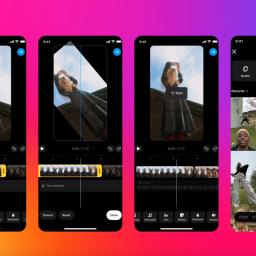
Instagram is rolling out an app update that is surprisingly robust, bringing a whole bunch of new features to content creators. First and foremost, there's finally some new camera filters, which should shake things up for a while. These filters range from subtle color edits" to more expressive and stylized options.There are some other minor Camera Roll improvements to make it easier to find what you need as you edit. These include updated previews, a refined search function and even the ability to zoom.As for video editing, there's a new undo/redo tool that lets you, surprise, undo actions and redo them with the press of a button. Instagram also says it's testing the ability to scale, crop and rotate individual clips as part of the editing process. The audio tools are also getting some love, as you can pull audio clips from a dedicated media hub to accompany a Reel. Followers can remix this content as they see it. If this sounds a lot like TikTok, well, that's because it is.To that end, there are 10 new English text-to-speech voices to choose from, though they are only available in select countries for now. Additionally, there are six new text fonts and styles available to caption up your Reels or Stories, in addition to bolded outlines that should really make your copy pop. Hopefully.InstagramIf you really want to make something weird, Instagram now allows you to pull any part of a photo or video and turn it into a custom sticker. This also works the other way around, so users can pull eligible content from a favorite creator and turn it into a sticker. This particular tool was aided in development by Meta's custom Segment Anything AI.Finally, there are some updated tools for creators to keep track of their slow and steady rise to viral fame. The Retention Chart will offer a moment-by-moment insight into how many people are watching your content, though it's not rolling out for a couple of months. The rest of these tools are available today.This article originally appeared on Engadget at https://www.engadget.com/instagram-update-adds-new-camera-filters-and-video-editing-tools-for-content-creators-171537564.html?src=rss
|
 |
by Malak Saleh on (#6GE4Q)
In a trial run by Verve Therapeutics, a Cambridge-based biotech company, researchers discovered that a single infusion of a gene-editing treatment called VERVE-101 was able to reduce cholesterol levels in patients. This treatment was tested in individuals with hereditary conditions that made them susceptible to developing clogged arteries and heart attacks. Scientists were able to use CRISPR editing techniques to tweak liver gene cells. The researchers turned off" a cholesterol-raising gene called PCSK9, which is found in the liver, in order to lower LDL-C - sometimes called "bad" cholesterol -which causes plaque to build up in arteries in the first place.PCSK9 was lowered by as much as 84 percent in the cohorts that received higher infusion rates of the treatment. At those higher treatment doses, Verve scientists said that the reduction of those LDL-C-related proteins lasted 2.5 years in previous studies on primates.Verve Therapeutics From a clinical standpoint, this gene editing therapy has the potential to disrupt the current standard treatment for high cholesterol. The current go-to's include prescription statins and PCSK9 inhibitors, but they require strict adherence and can have bad side effects like muscle pain and memory loss.CRISPR, while seemingly miraculous, is a long way from replacing daily medications though. According to Nature, two of the 10 participants in the study suffered from a cardiovascular event" that coincided with the infusion. Verve says one was not related to the treatment at all and the second was potentially related to treatment due to proximity to dosing." The use of a gene-editing technology will always carry some risk because the edits could occur elsewhere in the genome.Before a single infusion therapy for high cholesterol can reach consumers, the FDA mandates that the treatment will need to be studied for up to 15 years. Verve recently received FDA clearance for an Investigational New Drug Application for VERVE-101, meaning that the company can begin to conduct trials in the US. The current trials in New Zealand and the United Kingdom will look for willing clinical trial participants to expand the study.This article originally appeared on Engadget at https://www.engadget.com/researchers-developed-a-gene-editing-technology-that-reduces-bad-cholesterol-170040293.html?src=rss
|
 |
by Kris Holt on (#6GE4R)
Tablets are always going to be popular items during Black Friday sales. They make for great gifts, and it's as good a time as any to pick one up for yourself if you've been on the fence. Google's Pixel Tablet is a solid choice, especially if you lean more toward Android than iOS (or iPadOS).The 128GB version of the 11-inch Pixel Tablet has dropped back down to its all-time-low price of $399 at Amazon ahead of Black Friday. That's $100 off the regular price. If you opt for the porcelain variant with 128GB of storage, you can get a case (which is normally $80) at no extra cost. Either way, the tablet comes with a charging dock. Meanwhile, the 256GB model is also $100 off at $499 - there's no SD card slot to expand the storage, unfortunately.We gave the Pixel Tablet a score of 85 in our review in June. Being able to plop the tablet onto the dock (which has a built-in speaker) is a big selling point as that effectively turns the tablet into a smart display. In this mode, you can use the tablet to stream music and video, control and monitor smart home devices, display your favorite photos and more. Thanks to Google Assistant, you'll be able to do much of this hands free. That said, the dock perhaps doesn't position the tablet at the most flattering angle for video calls. The case that you can get for free with the 128GB model handily has a kickstand.The performance is fairly snappy thanks to the Tensor G2 chipset, while the 2,560 x 1,600 LCD display is decent enough (although being limited to a 60Hz refresh rate is a drag). You should get a full day of use out of the tablet before you need to recharge the 5,000mAh battery. Google is also promising OS updates through at least June 2026 and security updates for two years beyond that at minimum.On the downside, the lack of a headphone jack is galling. During our review period, we ran into a few software hiccups while the tablet was in Hub Mode as well. Overall, the Pixel Tablet isn't quite as compelling as the Samsung Galaxy Tab S9 series when it comes to our pick for the best Android tablet. However, it's still a strong choice for a more budget-friendly Android tablet. It's significantly less expensive than Samsung's models, especially during this sale.Your Black Friday Shopping Guide: See all of Yahoo's Black Friday coverage, here. Follow Engadget for Black Friday tech deals. Learn about Black Friday trends on In The Know. Hear from Autoblog's experts on the best Black Friday deals for your car, garage, and home, and find Black Friday sales to shop on AOL, handpicked just for you.This article originally appeared on Engadget at https://www.engadget.com/googles-pixel-tablet-is-100-off-in-early-black-friday-sale-164321754.html?src=rss
|
 |
by Lawrence Bonk on (#6GE4S)
Microsoft is offering a steep, and relatively rare, discount on the Surface Pro 9 hybrid tablet as part of a larger Black Friday sales event. The savings fluctuate depending on which model you purchase, but you could save $800 on the absolute top-of-the-line model with 32GB of RAM and a 1TB SSD, bringing the price down to $1,800 from $2,600. This is a record-low deal for this particular SKU.The discounted models offer 8GB to 32GB of RAM and 256GB to 1TB of solid-state storage. You have your choice between the 12th Gen Intel i5, the 12th Gen Intel i7, Microsoft's proprietary Arm-based SQ2 chip or even the latest SQ3 chip. With this in mind, discounts range from $50 all the way to the aforementioned $800. Unfortunately, these deals don't ship with a keyboard or a stylus.There has been some confusion between the Arm-based models and the Intel models. Simply put, the Intel models are for power users and the Arm-based models are more for general use. Yes, even though the SQ chips are newer, the Intel chips are faster. In our review of last year's Surface Pro 9 SQ3, we called it a compromised machine compared to its Intel-based siblings.With that said, the Surface line is well-regarded for a number of reasons. The 13-inch screen is gorgeous, the form factor is on-point and Microsoft makes it easy to source replacement parts, unlike certain rivals.These deals are also available on Amazon, if that's your preferred retail experience. You can grab an Intel i7 version with 16GB of RAM and 256GB of solid-state storage for $1,100, a savings of $500. You can also grab the aforementioned flagship tablet for $1,800, the same price as ordering directly from Microsoft. The company's wider Black Friday deal also offers discounts on the Laptop 5 and Laptop Studio 2, among others.Your Black Friday Shopping Guide: See all of Yahoo's Black Friday coverage, here. Follow Engadget for Black Friday tech deals. Learn about Black Friday trends on In The Know. Hear from Autoblog's experts on the best Black Friday deals for your car, garage, and home, and find Black Friday sales to shop on AOL, handpicked just for you.This article originally appeared on Engadget at https://www.engadget.com/microsoft-black-friday-deals-discount-the-surface-pro-9-by-up-to-800-161628594.html?src=rss
|
 |
by Katie Malone on (#6GE4V)
Google's Threat Analysis Group revealed on Thursday that it discovered and worked to help patch an email server flaw used to steal data from governments in Greece, Moldova, Tunisia, Vietnam and Pakistan. The exploit, known as CVE-2023-37580, targeted email server Zimbra Collaboration to pilfer email data, user credentials and authentication tokens from organizations.It started in Greece at the end of June. Attackers that discovered the vulnerability and sent emails to a government organization containing the exploit. If someone clicked the link while logged into their Zimbra account, it automatically stole email data and set up auto-forwarding to take control of the address.While Zimbra published a hotfix on open source platform Github on July 5, most of the activity deploying the exploit happened afterward. That means targets didn't get around to updating the software with the fix until it was too late. It's a good reminder to update the devices you've been ignoring now, and ASAP as more updates become available. "These campaigns also highlight how attackers monitor open-source repositories to opportunistically exploit vulnerabilities where the fix is in the repository, but not yet released to users," the Google Threat Analysis Group wrote in a blog post.Around mid-July, it became clear that threat group Winter Vivern got ahold of the exploit. Winter Vivern targeted government organizations in Moldova and Tunisia. Then, a third unknown actor used the exploit to phish for credentials from members of the Vietnam government. That data got published to an official government domain, likely run by the attackers. The final campaign Google's Threat Analysis Group detailed targeted a government organization in Pakistan to steal Zimbra authentication tokens, a secure piece of information used to access locked or protected information.Zimbra users were also the target of a mass-phishing campaign earlier this year. Starting in April, an unknown threat actor sends an email with a phishing link in an HTML file, according to ESET researchers. Before that, in 2022, threat actors used a different Zimbra exploit to steal emails from European government and media organizations.As of 2022, Zimbra said it had more than 200,000 customers, including over 1,000 government organizations. "The popularity of Zimbra Collaboration among organizations expected to have lower IT budgets ensures that it stays an attractive target for adversaries," ESET researchers said about why attackers target Zimbra.This article originally appeared on Engadget at https://www.engadget.com/an-email-vulnerability-let-hackers-steal-data-from-governments-around-the-world-160005510.html?src=rss
|
 |
by Jeff Dunn on (#6GDXW)
We consider Google's Pixel 8 and Pixel 8 Pro the best Android phones for most people, and right now both handsets are on sale for the lowest prices we've tracked. As part of an early Black Friday sale, the 6.7-inch Pixel 8 Pro has dropped to $799 at various retailers, while the 6.2-inch Pixel 8 is on sale for $549. That's $200 off the usual going rate of the Pixel 8 Pro and a $150 discount for the Pixel 8. These prices are for unlocked models with 128GB of storage; if you need more space, the 256GB Pixel 8 is available for $609, which is another $150 discount. The 256GB and 512GB versions of the Pixel 8 Pro, meanwhile, are both $200 off at $859 and $979, respectively. The deals apply to each color finish of the two devices.We gave the Pixel 8 and Pixel 8 Pro scores of 90 and 93, respectively, in our review last month. Both phones offer a vivid OLED display with a smooth 120Hz refresh rate, solid battery life, speedy performance via Google's Tensor G3 chip, a typically clean take on Android and superb photo quality. The cameras are particularly aided by a handful of AI editing tools: An "Audio Magic Eraser" feature does a convincing job of eliminating ambient noise from video clips, for example, while "Best Take" stitches together the best results from a series of group photos, so someone who blinked or sneezed during one shot won't do so in the final product. (Philosophical questions over the intrusiveness of AI aside, this actually does work.)Perhaps the biggest feature, though, is Google's promise to provide OS and security updates for a full seven years. Yes, you'll almost certainly want to buy a new phone before 2030, but this extended support means there should be less pressure to upgrade down the line.If money is no object, the Pixel 8 Pro is the better of the two: Its camera system comes with a sharper ultrawide lens and a dedicated 5x telephoto lens, it supports more advanced controls in the camera app, its display is slightly brighter and sharper and its battery lasts a bit longer. Its matte-glass back feels a little nicer in the hand, and the screen supports a wider variable refresh rate range (1-120Hz instead of 60-120Hz). Still, the standard Pixel 8 gets you most of the way there for less cash, and its smaller frame is easier to hold with one hand. Our biggest problem with both phones is that they're priced $100 higher than their Pixel 7 counterparts, but these deals help lessen the blow.If you want a more affordable Android phone, the Pixel 7a is also on sale for $374, which is a $125 discount and an all-time low. That 6.1-inch phone is a step down from the Pixel 8 in most aspects, but it's still our top recommendation for Android fans who can't spend more than $500 on a new handset. In other Pixel deals, the Pixel Buds Pro are down to $120 - that's within a dollar of the lowest price we've seen for the "best for Android" pick in our wireless earbuds buying guide.Your Black Friday Shopping Guide: See all of Yahoo's Black Friday coverage, here. Follow Engadget for Black Friday tech deals. Learn about Black Friday trends on In The Know. Hear from Autoblog's experts on the best Black Friday deals for your car, garage, and home, and find Black Friday sales to shop on AOL, handpicked just for you.This article originally appeared on Engadget at https://www.engadget.com/the-pixel-8-and-pixel-8-pro-are-up-to-200-off-in-a-google-black-friday-deal-140005289.html?src=rss
|
 |
by Sarah Fielding on (#6GDXX)
Early Black Friday sales have been steadily rolling in, but few have been as practical heading into the long winter months as Google's Nest Thermostat. The smart thermostat is typically $130 but is currently just $90 - a 31 percent discount and only $10 more than its all-time low.Google's Nest Thermostat came on the scene in 2020 as a cheaper but solid alternative to its Nest Learning Thermostat (retailing at $240). Both devices have the same goal: to save energy and money. The standard Nest Thermostat is Energy Star-certified and turns the temperature down when you leave to avoid any waste. If you're heading home sooner than expected (or staying out later, for that matter), you can adjust the heat schedule right on the app from your phone, tablet or laptop.While it can be a big help with keeping those heating bills in check, Google's Nest Thermostat should work just as well with your air conditioning system come summer. Plus, it also provides tips for both through the Savings Finder on ways to adjust your heating or cooling schedule to save even more money.The thermostat isn't the only Nest product offering a solid deal ahead of Black Friday. The Google Nest Wireless Doorbell is down to $120 from $180 - one of a trio of Nest products currently at their all-time low price. Rounding out the sale is the Google Nest Indoor Wired Security Camera for $70 from $97 and the two-pack Google Nest Wi-Fi Pro with Wi-Fi 6E available for $200, down from $300.Your Black Friday Shopping Guide: See all of Yahoo's Black Friday coverage, here. Follow Engadget for Black Friday tech deals. Learn about Black Friday trends on In The Know. Hear from Autoblog's experts on the best Black Friday deals for your car, garage, and home, and find Black Friday sales to shop on AOL, handpicked just for you.This article originally appeared on Engadget at https://www.engadget.com/googles-nest-thermostat-drops-to-90-in-a-black-friday-deal-133052800.html?src=rss
|
 |
by Sarah Fielding on (#6GDXY)
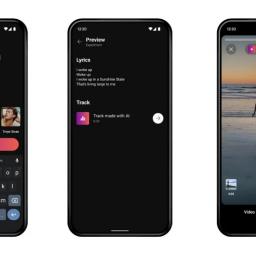
YouTube on Thursday unveiled some new experimental AI services, including a feature called Dream Track in YouTube Shorts. It creates up to 30-second soundtracks using AI-generation versions of artists' voices. Though musicians have mostly pushed back on AI (and their voices being used for training models without permission or compensation), YouTube got nine big names from the music industry to participate, including John Legend, Troye Sivan, CharliXCX and T-Pain. The company hoped to announce the feature at its Made on YouTube event in September, but it's been tied up in negotiations with recording companies over rights and payments.Users can access Dream Track by typing an idea into the creation prompt and choosing from one of the participating artists. It uses Google DeepMind's Lyria - a new, powerful music generation model designed specifically for creating high-quality vocals and instrumentals while giving the user more control over the final product. Any content Lyria produces will also have a SynthID watermark, denoting it as such.Charlie Puth and T-Pain created sample Dream Tracks, which YouTube has shared as inspiration. However, many of the artists involved expressed their apprehension about AI but hoped that collaborative work could create positive, non-exploitative opportunities. "When I was first approached by YouTube I was cautious and still am, AI is going to transform the world and the music industry in ways we do not yet fully understand," singer CharliXCX said. "This experiment will offer a small insight into the creative opportunities that could be possible and I'm interested to see what comes out of it."Music AI Tools are also coming to YouTube, in collaboration with its Music AI Incubator. These tools can create guitar riffs from a hummed melody or turn a pop track into a reggaeton anthem. Producer and songwriter, Louis Bell, created a sample video to showcase it.YouTube is walking a fine line as it navigates the careful balance of introducing AI tools and protecting against misuse. The video platform recently announced new policies for labeling videos made using AI and letting public figures, such as musicians, report deepfakes.Dream Track is currently only available to a select group of creators and artists, whereas participants of the Music AI Incubator should be able to test the tools out later this year.This article originally appeared on Engadget at https://www.engadget.com/youtubes-first-ai-generated-music-tools-can-clone-artist-voices-and-turn-hums-into-melodies-132025817.html?src=rss
|
 |
by Mariella Moon on (#6GDXZ)
The Federal Communications Commission (FCC) is keeping a close eye on internet providers to make sure they provide Americans with equal access to broadband services regardless of customers' "income level, race, ethnicity, color, religion or national origin." Two years after the Bipartisan Infrastructure Law became official, the FCC has adopted a final set of relevant rules to enforce.The Commission will have the power to investigate possible instances of "digital discrimination" under the new rules and could penalize providers for violating them. It could, for instance, look into a company's pricing, network upgrades and maintenance procedures to decide whether a provider is keeping an affluent area well maintained while failing to provide the same level of service to a low-income area.As The Wall Street Journal explains, it could even hold companies like AT&T and Comcast liable even if they weren't intentionally discriminatory, as long as their actions "differentially impact consumers' access to broadband." If the FCC does receive complaints against a particular provider, though, it will take into account any technical and economic challenges it may be facing that prevents it from providing equal access to its services.According to The Journal, the FCC approved the new rules in a 3-2 vote. Their critics - mainly internet providers and Republican members of the Congress - argued that the decision could affect investments and that the commission is taking things too far by penalizing unintentional discrimination. But FCC Chairwoman Jessica Rosenworcel found the rules to be reasonable, especially since the agency will "accept genuine reasons of technical and economic feasibility as valid reasons."In addition to adopting a set of rules for digital discrimination, the FCC has also updated its protections against SIM swapping and port-out scams. It will now require wireless providers to notify customers immediately when a SIM change or a port-out is requested for their account and phone number. Further, providers are required to take additional steps to protect their subscribers from the schemes. Finally, the FCC has voted to begin a formal inquiry to look into the impact of artificial intelligence on robocalls. It could, after all, be used to block unwanted voice and text messages, but it could also be used to more easily defraud people through calls and texts.This article originally appeared on Engadget at https://www.engadget.com/the-fcc-will-crack-down-on-isps-to-improve-connectivity-in-poorer-areas-125041256.html?src=rss
|
 |
by Daniel Cooper on (#6GDV1)
November 24 might be a few days away yet, but that hasn't stopped swathes of the industry from posting their deals early. Engadget's crack team of coupon-heads has pored over countless listings to find you some absolutely jaw-dropping bargains. That includes hefty bits of cash knocked off the price of a new Mac Mini M2, iPad, Meta Quest and Apple Watch. Even better, you can pick up a pair of Sony XM5s, long regarded as the best in their class, for just $328. Well, you can. Your humble narrator is in the UK, so is ineligible to grab any of these utterly sweet early deals.- Dan CooperYou can get these reports delivered daily direct to your inbox. Subscribe right here!The biggest stories you might have missedWhatsApp chats backed up to Google Drive will soon take up storage spaceAmazon's dinky Astro robot is now available as a security guardYouTube rolls out high bitrate 1080p to all Premium subscribersGoogle's updated Titan security key can store up to 250 passkeysThe best VR accessoriesThe best gifts for teachersApple's iPad Air M1 drops to a record-low $500 in an Amazon Black Friday dealNetflix's stop-motion Pokemon show arrives on December 28Lawmakers question Apple over cancellation of Jon Stewart's showOfficials want to know if the rumors are true.The Problem with Jon Stewart was, in theory, the ideal vehicle for the combative former Daily Show host. A well-heeled venture where Stewart could go deep on tough political topics, backed by a megacorporation too rich to be cowed by advertiser pressure. Except, so the rumors go, Apple pulled the plug on the series to prevent episodes critical of AI and China. Now, a bipartisan group from the House of Representatives is querying what happened and why.Continue Reading.$1,900 Tesla Cyberquad is on sale again, less likely to maim childrenRadio Flyer has updated the model to meet (checks notes) basic safety standards.Radio Flyer / TeslaRadio Flyer has announced its kids' version of the Tesla Cyberquad is back on sale, now with less risk to its rider. It launched back in 2021, only for the Consumer Product Safety Commission to recall it for not meeting safety standards. Now, it's back for $1,900, plus the cost of a helmet and some knee and elbow pads (not included).Continue Reading.The Analogue Pocket will soon come in 8 Game Boy Pocket/Advance colorsThey look beautiful.AnalogueThe Game Boy-aping Analogue Pocket will soon be available in eight gorgeous new colors to give us all some retro-gaming feels. Given they're limited editions, and Analogue units sell out pretty quick, you'd better have your fingers ready when pre-orders open on November 17.Continue Reading. Master & Dynamic MW09 review: Premium materials, impeccable clarityGorgeous, expensive and... not as good as its cheaper rivals.Photo by Billy Steele / EngadgetMaster & Dynamic hasn't quite become a dominant, class-topping force in the world of true wireless earbuds. Its latest entry, the MW09, has been put through its paces by audio guru Billy Steele. Sadly, while it's an improvement on previous offerings, it's still not good enough to whip better, more affordable products into shape.Continue Reading.Researchers printed a robotic hand with bones, ligaments and tendons for the first timeYes, it does remind us of Westworld.ETH Zurich / Thomas BuchnerA significant development in 3D printing technology may have far-reaching implications for the future of medical prostheses and soft robots. Researchers printed a hand with tendons, ligaments and bones, making them simultaneously rather than separately. The technique offers more durability and flexibility, making it the ideal basis for complex prostheses.Continue Reading.This article originally appeared on Engadget at https://www.engadget.com/the-morning-after-the-best-early-black-friday-deals-for-2023-121527436.html?src=rss
|
 |
by Will Shanklin on (#6GDV2)
Google is scaling up Search Generative Experience (SGE) for holiday shopping. The company announced Thursday that its AI-powered search bot can now spit out gift ideas, photorealistic images of product types and virtual try-ons of men's tops.Google SGE launched in May, offering AI-driven answers and suggestions to complement the search engine's standard web results. The company has since added follow-up queries, better translations and interactive definitions in more complex subjects. The tool requires Chrome on desktop or the Google mobile app on smartphones.GoogleThe search giant says 20 percent of apparel searches are five words or longer, suggesting people often look for something particular when seeking info about fashion products. Now, Google SGE can generate photorealistic images" of the item you're picturing. You can then tweak the image with follow-up prompts before SGE uses the generated output as a foundation to search for actual products it thinks come the closest.Let's say you want a new winter coat - a colorful, patterned puffer jacket - and you haven't found quite what you're looking for," wrote Julie Black, Google's Director of Shopping Product, in an announcement blog post. With generative AI in Search, just look for that style and tap the Generate images' button to see photorealistic, generated images that match your vision. From there, you can refine the images in real time - so if you'd prefer a colorful metallic jacket instead of patterned, just enter that refinement in the text box. Then you'll see a new set of photorealistic images. Once you've found one you like, just scroll down to see similar shoppable products."GoogleGoogle also wants SGE to help you formulate the perfect gift. If you search for great gifts for home cooks" on a compatible device / browser combo, it can produce ideas organized into subcategories like specialty tools, artisanal ingredients, culinary subscriptions and cooking classes. Google says you can refine the query to be ultra-specific, using examples like gifts for home cooks who love pasta or gift ideas for a seven-year-old who wants to be an inventor.Google SGE added virtual clothing try-ons for women's tops in June, which the company says have led to significantly more high-quality interactions from shoppers." Virtual try-ons for men's tops arrive today. If you search for women's or men's tops from a supported brand, you'll see 40 virtual models representing different shapes, sizes, heights and skin tones. You can choose one that looks the closest to you or the person you're shopping for to get an AI-powered view of how the product may look on them. Supported labels at launch include Abercrombie & Fitch, Banana Republic, JCrew and Under Armour.If you haven't already enrolled, you'll need to activate SGE for your account before trying it. Visit the Search Labs page or activate SGE in the Google app by tapping the beaker icon on the upper left.This article originally appeared on Engadget at https://www.engadget.com/googles-ai-powered-search-tool-can-help-tackle-your-holiday-shopping-120028149.html?src=rss
|
 |
by Sarah Fielding on (#6GDV3)
Countless aspects of generative AI have caused rampant debate, including its access to copyrighted material. Now, the vice president of audio at Stability AI, Ed Newton-Rex, has resigned due to his belief that training generative AI models using copyrighted content doesn't qualify as "fair use," he wrote in an op-ed on Music Business Worldwide. He joins the likes of artists such as Bad Bunny, who recently spoke out against a viral TikTok song that used AI to mimic his voice.Meanwhile, AI companies have steadfastly supported fair use (training models with copyrighted material without asking permission or providing compensation), and Newton-Rex's decision marks a unique change from the norm. In his public resignation letter, Newton-Rex explains that he believes Stability AI has a more "nuanced view" than some of its competitors. However, he had an issue with the company's recent submission to the United States Copyright Office, which argued that AI development should fall under fair use."I disagree because one of the factors affecting whether the act of copying is fair use, according to Congress, is 'the effect of the use upon the potential market for or value of the copyrighted work,'" Newton-Rex stated. "Today's generative AI models can clearly be used to create works that compete with the copyrighted works they are trained on. So I don't see how using copyrighted works to train generative AI models of this nature can be considered fair use."Newton-Rex is a published classical composer and founded Jukedeck, which created music using AI, in 2012. He became the product director of TikTok's in-house AI lab after the company purchased Jukedeck in 2019 and subsequently worked at Voicey (acquired by Snap) before joining Stability AI in November 2022.Ironically, there's also been an (as yet unsuccessful) push to protect AI-produced work. In August, a judge upheld the US Copyright Office's decision that AI-generated art can't be copyrighted, stating, "Human authorship is a bedrock requirement of copyright."This article originally appeared on Engadget at https://www.engadget.com/ai-music-pioneer-quits-after-disagreement-over-fair-use-of-copyrighted-works-114546092.html?src=rss
|
 |
by Mariella Moon on (#6GDV4)
Even though Facebook has been moving away from providing its users with easy access to news over the past year, it apparently still remains a go-to source for current affairs in the US. According to Pew Research, three out of ten adults in the country still regularly get their news from Facebook, which has outpaced all the other social media websites in the center's study. YouTube comes next in the list, with 26 percent of US adults getting news from the video hosting website, while Instagram takes third place with 16 percent. While apparently not as popular as the first three when it comes to news, TikTok (14 percent), X (12 percent) and Reddit (8 percent) also serve as news sources for the US populace.When it was reported a year ago that Meta will no longer be paying publishers to run their content on Facebook's News Tab, a spokesperson said "[m]ost people do not come to Facebook for news, and as a business it doesn't make sense to over-invest in areas that don't align with user preferences." But according to the study, 43 percent of users still get their news regularly from the platform. That is, however, admittedly smaller than the 54 percent of users who used to go to the social network to keep themselves updated and read about the latest events back in 2020. Meanwhile, 43 percent of TikTok users say they're getting news from the app now, compared to 22 percent three years ago. Out of all the social networks in the study, though, X (formerly known as Twitter) has the highest percentage of users (53 percent) who go to the website for news.Based on the study's responders, men mostly rely on Reddit to keep them abreast of current events, followed by Twitter and YouTube. Meanwhile, women consume news from Nextdoor the most, followed by Facebook and Instagram. In addition, most of the people who get their news from social media are Democrats or lean Democratic, though "there is no significant partisan difference among news consumers on Facebook, X or Nextdoor." Bottom line is, a lot of people still look to social media websites to read about the latest happenings and new information as they come out. These companies will have to continue keeping a close eye on the spread of misinformation on their platforms, even if they do decide not to focus on news anymore.This article originally appeared on Engadget at https://www.engadget.com/three-in-ten-us-adults-still-get-their-news-from-facebook-110526907.html?src=rss
|
 |
by Lawrence Bonk on (#6GDRV)
Unity just announced that its Muse AI platform is officially available as an early access build for general use. Originally unveiled back in July, Muse is a package of AI-powered tools intended to streamline the game development process, particularly for those who lack the time or patience for intensive coding. It costs $30 per month.Unity Muse is described as an ever-expanding suite of AI-powered features" made for developers of all skill levels. The platform lets you source usable code by interacting with a chatbot. This bot will also answer any questions you may have about what to do next, as it has complete access to the platform's resource library. These types of bots are becoming a key tool in the game designer's arsenal.There's also a tool designed specifically to streamline the creation of 2D sprites, which is perfect for all of you budding Metroidvania designers out there. It'll automatically generate sprites that match predetermined parameters and will give you several variations, allowing you to pick the best match.Muse offers a similar process to generate textures appropriate for use in both 2D and 3D projects. The sprite and texture tools have been trained entirely on data and images that Unity owns or has licensed. This ensures the platform won't accidentally run afoul of any copyright law. Unity says Muse results will never contain any people, logos or recognizable artistic styles."The company says that the sprite and texture tools are just the beginning. In the coming months, Muse will boast AI mechanisms for animating characters and for setting NPC behaviors, among other tasks. You won't need to code to do any of it, which is becoming something of a trend in the industry. Muse subscribers also get access to a rapid-prototyping and collaboration platform called Sketch.The availability of Muse wasn't the only announcement at today's Unity Unite conference. The company also provided more details on Sentis, a forthcoming AI-powered neural engine that goes well beyond sprites and textures, as it can solve complicated coding problems and even create new in-game features from scratch. Sentis is currently in open beta and will launch to the public sometime next year.The company also announced a set of cloud-connected tools to further assist with collaborations and it offered up some availability details on the long-awaited Unity 6. It's coming next year.This article originally appeared on Engadget at https://www.engadget.com/unity-launches-a-suite-of-ai-tools-intended-to-simplify-game-creation-100039970.html?src=rss
|
 |
by Steve Dent on (#6GDRW)
Tags are a key way to seek out content on social media, but so far they've been missing on Meta's fledgling Threads platform. That's changing soon, however, as the feature is now in testing on Threads in Australia "with more countries coming soon," Mark Zuckerberg wrote in a new thread.You create a tag in the usual way by placing a hash before a word, which then displays in blue text without the hash - much as mentions work in Facebook. To seek out topics, type a hash plus a keyword into the search field to see a list of relevant posts, as one does on Instagram. So far, it's limited to a single tag per post, likely to discourage hashtag spamming - though that may change, as Meta said the feature is still a work in progress.Despite still not being in Europe, Threads has shown consistent growth and now counts nearly 100 million monthly active users, Zuckerberg wrote last month. The app recently gained a few key features like the ability to delete your threads profile without killing your Instagram account and avoid automatically sharing Threads posts with Facebook and Instagram. It also added pinned posts, and Instagram boss Adam Mosseri hinted that DMs may (or may not) be done via Instagram's inbox.This article originally appeared on Engadget at https://www.engadget.com/threads-introduces-tags-to-help-users-categorize-posts-092650879.html?src=rss
|
 |
by Mariella Moon on (#6GDQ7)
Workers at Sega of America are accusing the video game company of "bad faith bargaining with workers" for its plan to lay off dozens of temporary workers. The publisher known for franchises that include Sonic the Hedgehog and Yakuza is now facing an unfair labor practice complaint filed by the Communications Workers of America (CWA). In April, 200 people in various departments across the company overwhelmingly voted in favor of unionization and formed the Allied Employees Guild Improving Sega (AEGIS-CWA) under the CWA. Now, Sega allegedly intends to lay off 80 of those unionized workers.In its complaint, the CWA explained that it's been in bargaining with Sega since September. On November 6, Sega apparently presented the organization with a proposal to phase out of all its temporary employees by taking their work offshore to the company's offices in Europe and Japan by February 2024. Those temporary employees make up 40 percent of the union's bargaining unit and mostly work in quality assurance and localization, which the group describes as "critical to Sega's success."The afternoon after their meeting, the CWA said Sega presented its proposal to the affected employees through captive audience meetings. "We believe this is a clear case of bad faith bargaining," the CWA wrote in its complaint, since Sega dealt directly with the union members and "violated status quo" by telling them they're losing their jobs."Sega will not be allowed to get away with this unlawful behavior," Elise Willacker, Senior QA Tester Temp, said in a statement. "We call on the company to make all temporary employees permanent and return to the bargaining table in good faith. There is no other just alternative." As Kotaku notes, the organization's complaint is now in the hands of the National Labor Relations Board, but it may take a while to resolve and may not prevent the layoffs from taking place.This article originally appeared on Engadget at https://www.engadget.com/sega-faces-unfair-labor-practice-complaint-for-planned-mass-layoff-of-union-members-073046095.html?src=rss
|
 |
by Mariella Moon on (#6GDNV)
In September, Google opened its AI-powered search experience to teens in the US, giving them access to richer results with additional information and links. Now, the company has also given teens in most countries around the world access to its Bard AI chatbot, as long as their language is set to English and they meet the minimum age needed to be able to manage their own Google account. Take note that the minimum age requirement differs across countries, but it's anywhere from 13 to 16 years old.Google says teens can ask Bard for writing tips, such as how to write a class president speech, for suggestions on what universities to apply to, as well as for help on coming up with science fair project ideas. In other words, questions kids their age are likely to Google. The company is also adding a math learning experience, so teen users can type in a math question or upload a photo of it, and the chatbot can show them its step-by-step solution.Similar to when it opened Search Generative Experience (SGE) to minors, Google says it put "appropriate safeguards" in place. The company trained Bard to recognize inappropriate content for younger users, so that it wouldn't return any illegal or age-gated responses.In addition, Bard will automatically run its double-check response feature when a teen user asks their first fact-based question, because they might not be aware of a common phenomenon called "hallucination" in LLMs. When a generative AI chatbot is hallucinating, it means it's giving nonsensical and inaccurate responses. Google says it will soon run double-check, which means returning Google results for a question, for all new Bard users in the future. For teens, it will keep recommending the use of double-check even after their first question "to help them develop information literacy and critical thinking skills."Finally, Google has designed an onboarding process especially for younger teens, including showing them the video embedded below.This article originally appeared on Engadget at https://www.engadget.com/google-is-giving-teens-around-the-world-access-to-its-bard-ai-chatbot-061452172.html?src=rss
|
 |
by Mariella Moon on (#6GDMF)
SpaceX aims to send Starship to space for its second test flight on November 17, now that the Federal Aviation Administration (FAA) has given it the clearance to do so. The company completed its next-generation spacecraft's first fully integrated launch in April, but it wasn't able to meet all its objectives, including having its upper stage fly across our planet before re-entering the atmosphere and splashing down in the ocean near Hawaii. SpaceX had to intentionally blow up the vehicle in the sky after an onboard fire had prevented its two stages from separating.
|
 |
by Richard Lai on (#6GDKF)
Good news for hardcore Neon Genesis Evangelion fans who spent $700 (or more) on ASUS' special edition motherboard! The PC maker announced that it will be offering a free fix for the embarrassing typo - "EVANGENLION" instead of "EVANGELION" - on the ROG Maximus Z790 Hero EVA-02 Edition. This will come in the form of a replacement part printed with the correct spelling, so users can directly swap out the original decorative piece. To show that the company understands "the significance of this matter," it's also extending the warranty by one year, even though "the misprint is purely aesthetic and does not affect any functionality or performance."Meanwhile, the offending typo has already disappeared from ASUS' website, but you can still spot the extra "n" in the original product shots on Amazon and Micro Center.This article originally appeared on Engadget at https://www.engadget.com/asus-offers-free-fix-for-evangelion-typo-on-motherboard-020129844.html?src=rss
|
 |
by Lawrence Bonk on (#6GDKG)
Hyundai just announced that its forthcoming Ioniq 5 N electric vehicle will go on sale next March via approved retailers, in addition to officially unveiling the car to US-based consumers at AutoMobility LA. The Ioniq 5 N was first teased back in July, so it's nice to have a definitive release date, despite the lack of pricing information.The Hyundai Ioniq 5 N is the company's first N-branded EV, which is basically a sub-brand dedicated to high-performance vehicles. To that end, this upgraded version of the standard Ioniq 5 EV can go from zero to 60 MPH in just over three seconds, with a top speed of 161 MPH. As a reference point, that older Ioniq 5 maxes out at 115 MPH. The dual motors of the Ioniq 5 N create 641 Horsepower (478 kW) with the proprietary N Grin Boost engaged.This is an electric vehicle, so the battery requires some attention. The Ioniq 5 N's newly-designed 84 kWH battery features a thermal regulation system to reduce heat-induced power degradation. To that end, you'll go from 10 percent to 80 percent of juice in just 18 minutes, when connected to a DCFC 350 kW charger.This vehicle is also outfitted with plenty of high-performance features, many of them with the company's preferred N" nomenclature. There's the specially-tuned N R-MDPS (Rack-Mounted Motor-Driven Power Steering) system, the N Pedal system for responsive handling, the N Drift Optimizer for maintaining the perfect drift angle and the N Brake Regen system to help conserve that all-important juice, among others.HyundaiThere's also a greater emphasis on driver feedback, to allow for more precise control during difficult driving conditions. This is aided by the integrated 10-speaker sound system. All aspects of the vehicle, from the steering wheel to the pedals, feature N-branded elements. Finally, there's a newly-designed control center complete with a sliding armrest, knee pads, shin support, USB-C ports, a wireless charger and, the techiest feature of all, cupholders.As previously mentioned, the Ioniq 5 N goes on sale next March, with pricing to come at a later date. The standard Ioniq 5 starts at $39,700, so it'll be more than that, likely much more than that.This article originally appeared on Engadget at https://www.engadget.com/hyundais-high-performance-ioniq-5-n-ev-goes-on-sale-in-acmarch-020047724.html?src=rss
|
 |
by Malak Saleh on (#6GDDJ)
Synex Medical, a Toronto-based biotech research firm backed by Sam Altman (the CEO of OpenAI), has developed a tool that can measure your blood glucose levels without a finger prick. It uses a combination of low-field magnets and low-frequency radio waves to directly measure blood sugar levels non-invasively when a user inserts a finger into the device.The tool uses magnetic resonance spectroscopy (MRS), which is similar to an MRI. Jamie Near, an Associate Professor at the University of Toronto who specializes in the research of MRS technology told Engadget that, [an] MRI uses magnetic fields to make images of the distribution of hydrogen protons in water that is abundant in our body tissues. In MRS, the same basic principles are used to detect other chemicals that contain hydrogen." When a user's fingertip is placed inside the magnetic field, the frequency of a specific molecule, in this case glucose, is measured in parts per million. While the focus was on glucose for this project, MRS could be used to measure metabolites, according to the Synex, including lactate, ketones and amino acids.Synex MedicalMatthew Rosen, a Harvard physicist whose research spans from fundamental physics to bioimaging in the field of MRI, told Engadget that he thinks the device is clever" and a great idea." Magnetic resonance technology is a common technique used for chemical analysis of compounds, however, traditional resonance technologies operate at high magnetic fields and they're very expensive.Synex found a way to get clear readings from low magnetic fields. They've overcome the challenges really by developing a method that has high sensitivity and high specificity," Rosen says. Honestly, I have been doing magnetic resonance for thirty years. I never thought people could do glucose with a benchtop machine... you could do it with a big machine no problem."Professor Andre Simpson, a researcher and center director at the University of Toronto also told Engadget that he thinks Synex's device is the real deal." MRI machines can fit an entire human body and have been used to target molecule concentrations in the brain through localized spectroscopy," he explained. Synex has shrunk this technology to measure concentrations in a finger. I have reviewed their white paper and seen the instrument work." Simpson said Synex's ability to retrofit MRS technology into a small box is an engineering feat.
|
 |
by Cheyenne MacDonald on (#6GDDK)
Amazon has begun notifying Comixology users that they'll no longer be able to read comics on the app come December 4. Comixology is merging with the Kindle app, and users' libraries will soon only be accessible via the latter. The move caps off the ruination of Comixology that began nearly two years ago, when Amazon started chipping away at the platform's native features and general usability in order to force a fit with its own ecosystem.The Comixology app will officially be dead as of December 4, according to Amazon. From that point on, all of the comics, manga and graphic novels a user has purchased or borrowed on Comixology will live exclusively in the Kindle app. While Amazon says things like reading progress will be synced, you'll have to redownload everything in the Kindle app if you want to pick up where you left off, even on the same device. There are filters to see Comics & Manga" or Books" only, for anyone not thrilled about having it all jumbled together.The writing was on the wall for Comixology for some time, and while the termination of the app may not entirely come as a surprise for longtime users, it's surely a bummer. Amazon has owned Comixology since 2014, but only in recent years has it really started to impose its influence on the product in a noticeable way.
|
 |
by Pranav Dixit on (#6GDDM)
A set of features rolling out to Google Photos today will make it much easier to declutter your photo library, the company announced in a blog post. Google Photos will now automatically identify similar photos that you took in rapid succession - helpful for those times when you clicked 50 shots of that gorgeous sunset to get the one perfect frame you will never look at again - and group them in a single stack" to clean up your library.The service will select a top pick that best represents the moment, but you can manually choose an image you want too. If you prefer to have multiple sunsets littering your library, you can turn off stacking.GooglePhotos will also automatically organize your pictures, separating IDs, receipts, and tickets into different albums, a feature that seems like it should have been there ages ago given how good Google Photos is at recognizing what's in your images. You can also add an event to your calendar directly from a screenshot or a photo of a ticket, which seems really useful.Unsurprisingly, Google says that all these features are powered by AI, something that the company has lately been cramming into all its products in general. Google Photos, however, has always been powered by AI. For years, the service sucked up all your photos and stored them in exchange for training its machine learning algorithms on them to be able to recognize their contents. That's why you can search Google Photos for pictures of dogs or the beach, for instance, so easily (Google stopped providing free storage for Photos a couple of years ago).Earlier this year, Google added another AI-powered feature to Photos that creates personalized scrapbook montages. Google's algorithms sort your photos into relevant categories and create titles that you can modify if you want. Google also lets people use AI to easily make edits, such as removing unwanted people or objects from photos.This article originally appeared on Engadget at https://www.engadget.com/google-photos-has-new-ai-powered-features-to-clean-up-your-library-204512642.html?src=rss
|
 |
by Stephanie Barnes on (#6GDB3)
It's been a long time coming, but the Switch version of Outer Wilds now has an official release date of December 7, developers Annapurna Interactive and Mobius Digital announced during the Nintendo Indie World Showcase on Tuesday. Pre-orders for the digital version are now open, with a physical edition expected in early 2024.Outer Wilds is already available on PC, Xbox One, Xbox Series S, PlayStation 4 and PlayStation 5 but there have clearly been some delays with the Nintendo Switch version, which was initially expected in 2021. For whatever reason, this seems to be a common issue with Nintendo Switch ports: We've reported on several other third-party publishers who have experienced setbacks in bringing their games to the Switch.For the uninitiated, the popular game launches players into space for a little exploration, but things take an unexpected turn. Players soon realize they're stuck in a time loop. They'll have just 22 minutes to figure out what's happening before the sun goes supernova and forces them to start over again and again and again. Players must use the knowledge gained from each loop to bypass earlier obstacles and make it to the end.Nintendo Switch users can purchase just Outer Wilds for $25 or Outer Wilds: Archaeologist Edition, featuring Outer Wilds and the Echoes of the Eye expansion for $38. Both editions are available for pre-order and currently 20 percent off until December 12.This article originally appeared on Engadget at https://www.engadget.com/outer-wilds-is-actually-finally-coming-to-switch-in-december-195942023.html?src=rss
|
 |
by Malak Saleh on (#6GDB4)
A group of lawmakers from a House of Representatives committee wants Apple, like many Jon Stewart enthusiasts, to explain why its streaming arm abruptly canceled the talk show The Problem With Jon Stewart. The current affairs TV series hosted by Jon Stewart briefly made its debut on Apple TV+ in 2021 but its time on air ended when the show received the ax for a third season, reportedly due to disagreements" over show topics.According to Reuters, Lawmakers want to know if the show's coverage and criticism of China has anything to do with the show's cancellation. The government officials have asked Apple to speak on the issue by Dec 15, 2023.In a letter to the tech giant, the House members wrote that while Apple has the right to determine what content it deems appropriate for its platform, the coercive tactics of a foreign power should not be directly or indirectly influencing these determinations." This effort is bipartisan, with members from both Republican and Democratic parties affiliated with the House of Representatives' Select Committee on Competition with the Chinese Communist Party.
|
 |
by Lawrence Bonk on (#6GDB5)
When the Wireless Power Consortium (WPC) unveiled its Qi2 charging standard earlier this year, we noted that it was built using Apple's MagSafe technology. So it only makes sense that the iPhone 15 line will be among the first smartphones to adopt the new wireless charging method. It's honestly quite rare to see Apple jumping on-board with a new technology so quickly, though the company has allowed for Qi wireless charging in the past.In other words, new wireless iPhone 15 chargers are coming soon, this holiday season as a matter of fact. The WPC says companies like Belkin, Mophie, Anker and Aircharge have all pre-announced Qi2 products that should integrate with Apple's latest and greatest. All told, over 100 devices are currently undergoing testing with an eye toward a near-future release. This includes Anker's recently-announced MagGo lineup of chargers.So what's the big deal with Qi2? The WPC advertises faster charging, higher efficiency and greater convenience. It's replacing the original Qi charging standard, which is over 13 years old now so, yeah, it's time for a refresh. The Qi2 platform offers support for 15-watt charging and boasts foreign object detection, in addition to enhanced safety features to prevent device damage or battery life shortening.Perhaps the greatest draw for Qi2, however, is with regard to interoperability. This is a new standard that should be adopted industry-wide, so you'll be able to, in theory, use one Qi2 charger with a broad range of devices, no matter where you live in the world. The protocol even allows for the charging of unusually-shaped accessories that typically struggle with a flat charging pad.All Qi2 devices will feature an obvious logo for branding purposes, so you know you aren't about to use a knockoff charger. As a final aside, it's pronounced chee two" if you find yourself at a dinner party or something. Just a heads up.This article originally appeared on Engadget at https://www.engadget.com/the-iphone-15-series-will-work-with-the-upcoming-qi2-wireless-charging-standard-190807866.html?src=rss
|
 |
by Will Shanklin on (#6GDB6)
Cameo has added a pair of timeless superstars to its stable of celebrities (a term used loosely in some cases) available for personalized video greetings. Cookie Monster and Elmo, who may or may not have fallen on hard times, will shamelessly plug their services on the six-year-old platform, offering to count to your kid's age or rattle off words that start with the same letter as your child's name - for $25 a pop. Perhaps that relatively low price for the Sesame Street icons is because humans don't appear to record their voices: Cameo describes the characters as powered by artificial intelligence."Cookie Monster and Elmo join a Cameo crew that also includes Kenny G ($350 per message), Danica McKellar ($150) and Billy Dee Williams ($300), among many others. Other animated characters on the platform include Thomas the Tank Engine, Grumpy Bear (from Care Bears) and JJ from CoComelon.Hiya, it me, Cookie Monster," the perpetually hungry, AI-fueled blue Muppet says in a sample Cameo on the service's website. Me so excited to meet you and maybe share a cookie or two. Me love to sing Happy Birthday,' say goodnight before bedtime or just say hi. Me can't wait."Cameo / Sesame WorkshopDisclosures on the websites for the Sesame Street characters notify customers that AI powers them. Elmo is a virtual character powered by artificial intelligence," the description reads. They will take the details you give them and craft a custom video just for you!" Engadget reached out to Cameo to clarify which parts of the message are AI-generated; we'll update this article if we hear back.Whether parents will find it worth paying for personalized" greetings conjured by artificial intelligence remains to be seen. Still, at least the algorithmically created furry monster messages only cost around 12 percent of the price of Michael Rapaport.This article originally appeared on Engadget at https://www.engadget.com/ai-powered-elmo-and-cookie-monster-are-shilling-25-video-messages-on-cameo-185614571.html?src=rss
|
 |
by Kris Holt on (#6GDB7)
It has been a year since Apple enabled emergency SOS via satellite on all iPhone 14 units in the US. The feature lets users text emergency services for help when they don't have cell service. The company is offering two years of free access upon activating an iPhone 14 or iPhone 15.Apple has not said how much it will charge for the feature when the free access period ends. However, users won't have to worry about that for a couple more years. Apple says existing iPhone 14 users (i.e. those who activated their phone before Wednesday in a country where the service is available) will get free access for an extra year."Emergency SOS via satellite has helped save lives around the world. From a man who was rescued after his car plummeted over a 400-foot cliff in Los Angeles to lost hikers found in the Apennine Mountains in Italy, we continue to hear stories of our customers being able to connect with emergency responders when they otherwise wouldn't have been able to," Kaiann Drance, Apple's vice president of worldwide iPhone product marketing, said. "We are so happy iPhone 14 and iPhone 15 users can take advantage of this groundbreaking service for two more years for free."Apple is extending the free access period for many users not long after it emerged that Qualcomm's bid to offer a similar feature on Android devices has sputtered out. Iridium, its partner on the Snapdragon Satellite project, said smartphone makers have opted not to include the tech in their devices. Qualcomm noted that OEMs are looking for "standards-based solutions." The costs involved in the initiative may have put them off too.This article originally appeared on Engadget at https://www.engadget.com/apple-extends-free-emergency-sos-satellite-access-for-existing-iphone-14-owners-183256442.html?src=rss
|
 |
by Lawrence Bonk on (#6GD8D)
Chinese automobile manufacturer HiPhi, otherwise called Human Horizons, just unveiled the HiPhi A, an all-electric hypercar that's drenched in power. The company claims it can reach a top speed of 186 MPH and can accelerate to 60 MPH in around two seconds. The maximum power output is 1,305 PS, thanks to the company's in-house-developed high-performance powertrain with a front single-motor drive and rear dual-motor drives.The A" in HiPhi A stands for Apollo and refers to the company's technology partnership with the EV maker of the same name. Apollo's behind several innovative hypercars, including the Intensa Emozione and Project Evo models. As such, the HiPhi A is more than just raw power and all-electric bona-fides. It boasts adaptive dampers, rear-wheel steering and a proprietary torque vectoring system that the company says improves both handling and braking.There's also plenty of premium features to suit consumers with deep pockets. These include a 23-speaker Meridian audio system, nappa leather trim and a robust driver-assist platform that features 34 sensors including lidar. As is the case with most modern high-end vehicles, there's also an entertainment/infotainment screen to stave off boredom during those long road trips. This screen is attached to an eight-direction, infinitely adjustable, high-speed motion robotic arm."This is an electric vehicle, so the battery is worth discussing. The 800-volt electrical system was developed in-house and features a battery that discharges up to 1,500 kw at its peak. Those numbers look good on paper, but HiPhi has yet to provide a range estimate, despite saying that the casing is fireproof.The HiPhi A will take center stage at Friday's Guangzhou Auto Show, which will be the first time people will be able to see it in person. The company promises more information, like pricing and availability, in the coming months. It's worth noting that the brand doesn't currently operate in the US, but has recently expanded to Europe.Electric supercars are extremely expensive, so you had better start hitting up your rich relatives now. For instance, the Lotus Evija cost over $2 million when it launched back in 2020.HiPhi's release shouldn't be quite so bad, as the company's all-electric HiPhi Z all-electric sedan cost around $90,000 when it launched. This isn't a hypercar, of course, but does include many of the same features, such as that nappa leather interior and floating entertainment screen.This article originally appeared on Engadget at https://www.engadget.com/chinas-hiphi-debuts-electric-hatchback-with-a-top-speed-of-186-mph-181037798.html?src=rss
|
 |
by Nathan Ingraham on (#6GD8E)
Google has been trying to make it easier for people to secure their accounts for years now. The company is one of several that are pushing a transition to passkeys from passwords, and they have also sold physical keys for unlocking accounts that support FIDO standards. Today, Google has updated its lineup of Titan security keys with some features that'll make them work better with passkeys as well as passwords.As before, Google is offering two Titan keys, one with USB-C and another with USB-A. Both keys still support NFC so they can be used to unlock accounts on compatible smartphones as well as through the physical port. The new key supports FIDO2 specifications for password-free sign-ins and can store up to 250 passkeys.Google is using this as an opportunity to push people towards using passkeys to protect their Google account - as part of the set-up process, you'll be encouraged to create a passkey and store it on the Titan key rather than continue using your password. At that point, you'll also set up a PIN that can be used in conjunction with the security key to unlock your Google account. But the Titan key can work with any supported account, not just Google. And, of course, you can use it as a two-factor authentication device alongside traditional passwords, as well.These new Titan keys are on sale today on the Google Store and cost the same as the ones they're replacing. The USB-A model is $30, while the USB-C key costs $35.This article originally appeared on Engadget at https://www.engadget.com/googles-updated-titan-security-key-can-store-up-to-250-passkeys-180035899.html?src=rss
|
 |
by Will Shanklin on (#6GD8F)
The kids' version of the Tesla Cyberquad is back on sale. Made by Radio Flyer (the 106-year-old company known for its Americana-steeped red wagons), the children's ride with Cybertruck stylings initially launched in 2021. However, it was recalled for not meeting Consumer Product Safety Commission (CPSC) standards. Radio Flyer says the new version of the $1,900 children's vehicle now meets all CPSC requirements and will begin shipping later this month.We're thrilled to announce the official relaunch of the Cyberquad for Kids by Radio Flyer, a product we have been working to enhance for the last two years," Robert Pasin, Radio Flyer's CEO (described as Chief Wagon Officer"), wrote in a press release.The updated Cyberquad for Kids is Model 915, replacing the recalled Model 914 that quickly sold out nearly two years ago. The CPSC claimed model 914 violated ATV federal safety standards for youths and had an inadequate mechanical suspension and maximum tire pressure, among other issues. When the older model was pulled, the government agency said Tesla had sold around 5,000 units.According to Radio Flyer, Model 915's safety updates include the replacement of the rear spring with a steel tube with rubber-coated metal inserts that secures the rear frame to the main frame," an updated age range of nine to 12 years old, a tire inflation warning label and another revised warning stating it isn't an ATV or intended for off-road use.Radio Flyer / TeslaThe vehicle still includes a 500-watt motor with a max speed of 10 mph. It has an estimated 15 miles of range and an LED headlight and taillight mimicking the Cybertruck. The ride-on toy includes a steel frame, high-pressure rubber air tires and a 36V Radio Flyer battery, which the wagon-maker says provides the best performance with a lower impact on the environment, as well as the longest run time and fastest recharge time compared to other products on the market."Tesla, whose involvement Radio Flyer has described as limited primarily to the sales and the vehicle's appearance, offers the updated Cyberquad for Kids exclusively on its website - along with Model S for Kids and My First Model Y. The Cyberquad ride-on toy is available now for $1,900. The EV maker says orders will begin shipping in late November.This article originally appeared on Engadget at https://www.engadget.com/1900-tesla-cyberquad-is-on-sale-again-less-likely-to-maim-children-174552173.html?src=rss
|
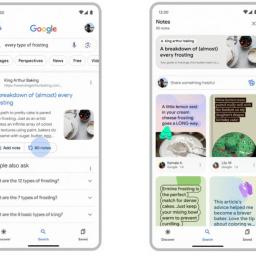 |
by Cheyenne MacDonald on (#6GD8G)
Google is experimenting with a feature that would allow people to add their own notes to search results for anyone to see. In theory, this would make results more helpful, providing a bit of human perspective - like feedback on recipe links or tips relating to travel queries - so people can better find the information that's relevant to them. Notes are available now as an opt-in feature in Google's Search Labs.Search Labs is where Google tests new features that may or may not eventually make it to its flagship search engine. For those who are enrolled and have opted in for the Notes experiment, a Notes button will appear in Search and Discover, and tapping that will pull up all the insights other people have shared about a given article. You can also add your own, and dress it up with stickers, photos and, down the line (for US users only), AI-generated images.GoogleWhile community-sourced notes sound a bit like a recipe for disaster in an age of rampant misinformation and trolling, especially with the inclusion of AI imagery, Google says it will use a combination of algorithmic protections and human moderation to make sure notes are as safe, helpful and relevant as possible, and to protect against harmful or abusive content." The company is also looking into ways to let site owners add notes to their own pages.It's still just a test, and users will have the opportunity to submit feedback based on their experiences with Notes. The experimental feature has started rolling out for Search Labs on Android and iOS in the US and India.This article originally appeared on Engadget at https://www.engadget.com/google-is-testing-community-sourced-notes-for-search-results-173022736.html?src=rss
|
 |
by Kris Holt on (#6GD8H)
Meta has called for legislation that would require app stores to get parental approval before their teens download any app. That would effectively put more onus on parents, as well as Google and Apple, to protect younger users from apps that have the potential to cause harm."Parents should approve their teen's app downloads, and we support federal legislation that requires app stores to get parents' approval whenever their teens under 16 download apps," Antigone Davis, Meta's global head of safety, wrote. The company is proposing a plan that would see app stores notifying parents when their teen wants to download an app, in a similar way to how they are alerted when a kid wants to make an in-app purchase. The parent would then approve or deny the request.Meta says its approach would let parents verify their teen's age when they set up a phone, rather than requiring everyone to verify their age multiple times across various apps. The company suggests legislation is needed to make sure all apps that teens use are held to the same standard.It notes that states are enacting "a patchwork of different laws," some requiring teens to get parental approval for different apps and others mandating age verification. However, "teens move interchangeably between many websites and apps, and social media laws that hold different platforms to different standards in different states will mean teens are inconsistently protected," Davis wrote.Under current proposals, Meta argues that parents would need to navigate different signup methods and provide "potentially sensitive identification information" for themselves and their teens "to apps with inconsistent security and privacy practices." Indeed, experts say that such age verification practices threaten the privacy of all users.Utah is enacting legislation that will require social media apps to obtain parental content before a teen can use them. That state and Arkansas both passed social media age verification laws. Following a lawsuit from tech companies, a federal judge struck down the Arkansas legislation a day before it was set to take effect in September. The Utah laws are scheduled to come into force in March.In its call for federal legislation, this could be seen as a case of Meta trying to pass the buck to parents and app stores. A judge this week rejected attempts by Meta, YouTube parent Google and TikTok owner ByteDance to dismiss lawsuits blaming them for teens' social media addiction. In October, 41 states and the District of Columbia sued Meta for allegedly releasing "harmful features on Instagram and Facebook that addict children and teens to their mental and physical detriment," among other things.This article originally appeared on Engadget at https://www.engadget.com/meta-calls-for-legislation-to-require-parental-approval-for-teens-app-downloads-171016744.html?src=rss
|