 |
by Kris Holt on (#6GBB6)
Volvo has unveiled its first fully electric minivan, which is geared toward comfort. So much so, the brand describes the EM90 as a "living room on the move." While it might be comfy enough to travel in while wearing PJs, Volvo is pitching the EV as an option for those who want a space where they can get work done too.The EM90 is infused with sound isolation and road noise cancellation tech, while Volvo claims that dual chamber air suspension and silent tires will offer the driver and passengers a smooth ride. If that works as promised, you'll be able to get the most out of an audio system that has 21 Bowers & Wilkins speakers.Along with a 15.4-inch infotainment screen for the driver, there's a roof-mounted 15.6-inch HD display to which you can cast shows and movies from your phone. Attach a compatible camera, and the screen can be used for video calls. 5G connectivity will come in handy for business-minded users too.Many of the EM90's functions can be controlled with your voice, including the audio and interior lighting. With a voice command or by flicking a switch, the car's screens, seats, windows, air conditioner and lighting can be adjusted for theater or meeting room use - or even a bedroom setup for the rear seats, Volvo says.If the EM90 looks familiar, that's because it's based on the 009 from Zeekr, Volvo's sibling brand, as Electrekpoints out. It has a 200 kW electric motor that can take it from 0 to 100 kmph (62.1 mph) in 8.3 seconds. The EV has a 116 kWh battery (with bi-directional charging support) that Volvo claims can charge from 10 to 80 percent in under 30 minutes.On top of all of that, the EM90 has an impressive range, at least on paper. Volvo says it has a range of up to 738 km (459 miles) based on China's CLTC testing cycle. The vehicle will only be available in China at first and it starts at around $114,000. It's unclear if or when the EV will arrive elsewhere.This article originally appeared on Engadget at https://www.engadget.com/volvos-em90-living-room-on-the-move-minivan-has-up-to-450-miles-of-ev-range-164051908.html?src=rss
|
 Engadget - Technology News & Expert Reviews
| Link | https://www.engadget.com/ |
| Feed | https://www.engadget.com/rss.xml |
| Updated | 2026-09-20 15:18 |
 |
by Lawrence Bonk on (#6GB7P)
The hype surrounding emerging technologies like generative AI creates a wild west, of sorts, for bad actors seeking to capitalize on consumer confusion. To that end, Google is suing some scammers who allegedly tricked people into downloading an unpublished" version of its Bard AI software. Instead of a helpful chatbot, this Bard was reportedly stuffed with malware.The lawsuit was filed today in California and it alleges that individuals based in Vietnam have been setting up social media pages and running ads encouraging users to download a version of Bard, but this version doesn't deliver helpful answers on how to cook risotto or whatever. This Bard, once downloaded by some rube, worms its way into the system and steals passwords and social media credentials. The lawsuit notes that these scammers have specifically used Facebook as their preferred distribution method.Google's official blog post on the matter notes that it sent over 300 takedown requests before opting for the lawsuit. The suit doesn't seek financial compensation, but rather an order to stop the alleged fraudsters from setting up similar domains, particularly with US-based domain registrars. The company says that this outcome will serve as a deterrent and provide a clear mechanism for preventing similar scams in the future."The lawsuit goes on to highlight how emerging technologies are ripe for this kind of anti-consumer weaponization. In this case, the alleged scammers said that Bard is a paid service that required a download. In reality, it's a free web service.This article originally appeared on Engadget at https://www.engadget.com/google-sues-scammers-that-allegedly-released-a-malware-filled-bard-knockoff-162222150.html?src=rss
|
 |
by Katie Malone on (#6GB7Q)
Michigan-based healthcare nonprofit McLaren Health Care notified more than 2 million people about a data breach exposing personal information on Thursday, according to a data breach notification report. Unauthorized access to McLaren systems began on July 28 and lasted through August, but the individual impact varies from person to person.According to a notice on the McLaren website, the company learned of the breach on August 31. An investigation into the impacted files concluded on October 10, and if you'll take a look at today's date, it took an additional month for the company to let the public know about the incident."Potentially affected current and former patients of McLaren are encouraged to remain vigilant against incidents of identity theft by reviewing account statements and explanations of benefits for unusual activity and to report any suspicious activity promptly to your insurance company, health care provider, or financial institution," the nonprofit said in a statement.While McLaren hasn't released any details about the attack, such as who is behind it or possible motivations, the ALPHV/BlackCat ransomware group claimed responsibility for the attack, according to Bleeping Computer. Ransomware groups are known to do this for publicity, but the actor behind an attack usually can't be confirmed until a third-party security researcher independently verifies it.McLaren encompasses 13 hospitals and employs 490 physicians across Michigan and Indiana, with an annual revenue of $6.6 billion. Its offering identity protection services to affected people that enroll by February 9. There's currently no evidence that data leaked in the breach has been misused, according to McLaren.This article originally appeared on Engadget at https://www.engadget.com/data-breach-of-michigan-healthcare-giant-exposes-millions-of-records-153450209.html?src=rss
|
 |
by Kris Holt on (#6GB4W)
It's widely believed that Nintendo will unveil the Switch's successor in 2024, but you can still expect a steady stream of games to hit the current console for the foreseeable future. To that end, the company has announced its latest Indie World showcase, which will start at noon ET on November 14. You can watch it below.The stream will feature around 20 minutes of announcements and updates related to indie games on the Switch. Typically when an Indie World or Nintendo Direct takes place, a few games that are featured hit the Switch eShop on the same day. So, you'll likely have something unexpected and new to play on Tuesday (that is, if you don't already have an obscene backlog of games to dive into).As for what games Nintendo will show off, that remains a mystery for now. I know we mention this every single time there's a Nintendo showcase, but there's always the possibility that Hollow Knight: Silksong makes an appearance and we finally learn its release date. Fans can but hope.This article originally appeared on Engadget at https://www.engadget.com/nintendos-next-indie-world-showcase-takes-place-on-november-14-143518226.html?src=rss
|
 |
by Engadget Team on (#6GB4X)
In its 119-year history, the NYC subway system's straphangers went from tickets, to tokens, to mastering the swipe. In 1997 the MetroCard debuted, and 1999 saw the introduction of the MetroCard vending machine. Together they became a beloved, iconic part of New York's visual identity. They were also the first public-facing project by Antenna Design, whose founders Masamichi Udagawa and Sigi Moeslinger have since left their distinct, thoughtful design all over New York City with projects like LinkNYC.It's now 2023, and the MetroCard is being phased out in favor of the MTA's next-generation fare system, OMNY. Having made its debut in late 2019, OMNY trades magnetic swipes for the tap-and-go infrastructure now common across public transportation systems worldwide.As the city prepares to say goodbye to a vending machine that has served millions, we wanted to know: How did something designed in the 1990s withstand the test of time - and New York? Watch the video below for the full story.This article originally appeared on Engadget at https://www.engadget.com/how-the-mtas-metrocard-vending-machine-became-a-new-york-design-icon-143051318.html?src=rss
|
 |
by Steve Dent on (#6GB4Y)
NVIDIA has launched its next-generation of AI supercomputer chips that will likely play a large role in future breakthroughs in deep learning and large language models (LLMs) like OpenAI's GPT-4, the company announced. The technology represents a significant leap over the last generation and is poised to be used in data centers and supercomputers - working on tasks like weather and climate prediction, drug discovery, quantum computing and more.The key product is the HGX H200 GPU based on NVIDIA's "Hopper" architecture, a replacement for the popular H100 GPU. It's the company's first chip to use HBM3e memory that's faster and has more capacity, thus making it better suited for large language models. "With HBM3e, the NVIDIA H200 delivers 141GB of memory at 4.8 terabytes per second, nearly double the capacity and 2.4x more bandwidth compared with its predecessor, the NVIDIA A100," the company wrote.In terms of benefits for AI, NVIDIA says the HGX H200 doubles inference speed on Llama 2, a 70 billion-parameter LLM, compared to the H100. It'll be available in 4- and 8-way configurations that are compatible with both the software and hardware in H100 systems. It'll work in every type of data center, (on-premises, cloud, hybrid-cloud and edge), and be deployed by Amazon Web Services, Google Cloud, Microsoft Azure and Oracle Cloud Infrastructure, among others. It's set to arrive in Q2 2024.NVIDIANVIDIA's other key product is the GH200 Grace Hopper "superchip" that marries the HGX H200 GPU and Arm-based NVIDIA Grace CPU using the company's NVLink-C2C interlink. It's designed for supercomputers to allow "scientists and researchers to tackle the world's most challenging problems by accelerating complex AI and HPC applications running terabytes of data," NVIDIA wrote.The GH200 will be used in "40+ AI supercomputers across global research centers, system makers and cloud providers," the company said, including from Dell, Eviden, Hewlett Packard Enterprise (HPE), Lenovo, QCT and Supermicro. Notable among those is HPE's Cray EX2500 supercomputers that will use quad GH200s, scaling up to tens of thousands of Grace Hopper Superchip nodes.NVIDIAPerhaps the biggest Grace Hopper supercomputer will be JUPITER, located at the Julich facility in Germany, which will become the "world's most powerful AI system" when it's installed in 2024. It uses a liquid-cooled architecture, "with a booster module comprising close to 24,000 NVIDIA GH200 Superchips interconnected with the NVIDIA Quantum-2 InfiniBand networking platform," according to NVIDIA.NVIDIA says JUPITER will help aid scientific breakthroughs in a number of areas, including climate and weather prediction, generating high-resolution climate and weather simulations with interactive visualization. It'll also be employed for drug discovery, quantum computing and industrial engineering. Many of these areas use custom NVIDIA software solutions that ease development but also make supercomputing groups reliant on NVIDIA hardware.The new technologies will be key for NVIDIA, which now makes most of its revenue from the AI and data center segments. Last quarter the company saw a record $10.32 billion in revenue in that area alone (out of $13.51 billion total revenue), up 171 percent from a year ago. It no doubt hopes the new GPU and superchip will help continue that trend. Just last week, NVIDIA broke its own AI training benchmark record using older H100 technology, so its new tech should help it extend that lead over rivals in a sector it already dominates.This article originally appeared on Engadget at https://www.engadget.com/nvidia-announces-its-next-generation-of-ai-supercomputer-chips-140004095.html?src=rss
|
 |
by Jeff Dunn,Valentina Palladino,Amy Skorheim on (#6G59M)
With each passing year, the phrase "Black Friday" becomes more of a misnomer. What was once a day of post-Thanksgiving special offers has become a month of sales promotions from retailers across the web. It's happening again in 2023: Target, Best Buy and Walmart are already advertising their early Black Friday deals, while Amazon is price matching many of those discounts and has its own "Holiday Deals" landing page. Many other shops and manufacturers have (or will soon have) early deals as well.
|
 |
by Sarah Fielding on (#6GB2E)
If you've had your eye on one of Apple's versatile M2-powered Mac Minis, Amazon has you covered. Right now, the 256GB Apple Mac Mini M2 is back down to $500 from $600 - its all-time low price. The first $50 is taken off immediately, while a coupon removes the rest at checkout. If you need even more storage, you can also check out the 512GB Mac Mini M2, currently at $690 from $799, thanks to a 13 percent discount and a $9 coupon thrown in at the end.Apple's 2023 Mac Mini M2 is a long way from 2005's Mini. We gave the Mac Mini M2 an 86 in our review thanks to its eight CPU cores, ten graphic cores and 8GB of RAM. It's also wild with ports, including a headphone jack, gigabit Ethernet, two USB-A, two Thunderbolt 4 USB-C and an HDMI 2.0. Though, it doesn't have any front-facing ports, which can be a bit frustrating.We also like the Mac Mini 2 for its sleek design and slightly raised bottom, allowing for optimal airflow. Overall, it's just a really well performing device, that can boost your Mac's performance without taking up too much room on your desk. Plus, it stays quiet while doing all this hard work. The only difference between the two models is storage, so if you're happy with 256GB, save yourself $190 (or put it towards Black Friday deals).Your Black Friday Shopping Guide: See all of Yahoo's Black Friday coverage, here. Follow Engadget for Black Friday tech deals. Learn about Black Friday trends on In The Know. Hear from Autoblog's experts on the best Black Friday deals for your car, garage, and home, and find Black Friday sales to shop on AOL, handpicked just for you.This article originally appeared on Engadget at https://www.engadget.com/apples-m2-mac-mini-is-up-to-109-off-ahead-of-black-friday-125447987.html?src=rss
|
 |
by Daniel Cooper on (#6GB2F)
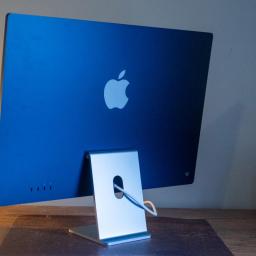
Unlike many of my peers, I prefer desktops to laptops, so I'm always excited when a new iMac rolls off the production line. I've had my eye on one for a while, especially now it's packing an M3 chip with all the power that promises. Sadly for me and other desktop lovers, while Nathan Ingraham's got plenty of compliments for the new iMac, it's not all great.On one hand, he praises the power of the M3, the elegant and clutter-free design and the ease of portability. But that's paired with the feeling the base model has been hobbled to force users into spending more than they expected. Apple's always stingy with RAM, but that feeling of being nickel-and-dimed extends to paying more for TouchID, gigabit ethernet and more USB ports.It's indicative of the iMac's price and how it's positioned that Nathan's conclusion is to buy a Mac Mini and external display instead. You might lose the clutter-free environment on your desk, but you'll get significantly more computer for the same amount of cash.- Dan CooperYou can get these reports delivered daily direct to your inbox. Subscribe right here!The biggest stories you might have missedTerminator is back with a new anime series coming to NetflixSpaceX workers face above-average injury rates as Musk prioritizes Mars over safety, report findsNetflix is bringing Hades, Braid and Death's Door to mobile devicesSAG-AFTRA deal includes a $40 million streaming bonus and AI protectionsDbrand's artisan keycaps are here to curse you out and stab youNVIDIA may soon announce new AI chips for China to get around US export restrictionsAn Elon Musk biopic will be directed by Darren AronofskyNASA can't talk to its Mars robots for two weeks because the sun is in the wayTypical.NASANASA's Mars robots have been told to get on with it and don't make a mess while the parents are away. That's because Earth and Mars are now on opposite sides of the sun, which blocks missives between the two celestial bodies. Instead, from now until November 25, the various craft on the planet will gather data alone and otherwise hunker down. And no throwing any wild parties, ya hear?Continue Reading.Apple's iPad refresh next year could bring OLED iPad Pros and a 12.9-inch iPad AirThe lineup will get more confusing, not less.Analyst Ming-Chi Kuo, whose track record is solid enough to warrant attention, says Apple will launch a 12.9-inch iPad Air in 2024. It's part of a big refresh of the tablet lineup bringing new iPad Airs and a new OLED-equipped iPad Pro. Click through to read what Apple may have in store, which appears to be an even more cluttered lineup than it has right now.Continue Reading.What happened to Washington's wildlife after the largest dam removal in US historyNature found a way.In 1910, Washington State dammed the Elwha River, stopping 40 miles of river reaching the open ocean. It caused massive disruption to the local ecosystem, blocking native salmon from making their annual spawning trek and causing countless second-order effects. A successful years-long battle to take down the dam offered researchers the chance to see what happens when we leave nature to recover. And, oh boy, did it recover.Continue Reading.Tesla fine print says it may sue Cybertruck resellers for $50K if they flip it too soonThat's if you can even find a willing buyer.If you buy a Cybertruck, you won't be able to move it on to a third party for a year after your purchase. That's down to a freshly added clause in the purchase agreement, with Tesla saying you can't sell the vehicle unless you get the automaker's prior permission. Failure to do so might see the car company suing you for $50,000 - which might discourage resellers.Continue Reading.This article originally appeared on Engadget at https://www.engadget.com/the-morning-after-is-the-m3-imac-worth-it-121522249.html?src=rss
|
 |
by Sarah Fielding on (#6GB2G)
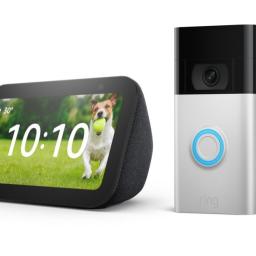
Black Friday is fast approaching, and with it are more and more opportunities to get great devices for a steal. Take the Ring Video Doorbell and Echo Show 5 bundle, which is currently down to $65 from $190 - a 65 percent sale. The Prime Member exclusive is available with the second-generation video doorbell in either Satin Nickel or Venetian Bronze.Amazon's Echo Show 5 allows you to easily see any motion Ring's video doorbell detects without always having your phone handy. The second-gen video doorbell isn't Ring's latest iteration (this one is from 2020), but it has all the essentials, such as 1080p HD video. It can also run on battery power alone or use a Ring solar charger and lets you block certain areas in its field of vision from being recorded. The latter could be handy if the doorbell faces a neighbor's place or something else that would invade another person's privacy.Meanwhile, the third-gen Echo Show 5 only came on the scene in May and is 20 percent faster than its predecessor. Looks-wise, it's quite similar, but sound-wise, it offers double the bass with an updated speaker system. You can also use Alexa to see, listen to or talk with anyone at your front door. Additional features include a 2MP camera, music streaming and transforming into a digital frame for showcasing your favorite photos. It's $90 to purchase on its own, more than the pair currently costs together.Your Black Friday Shopping Guide: See all of Yahoo's Black Friday coverage, here. Follow Engadget for Black Friday tech deals. Learn about Black Friday trends on In The Know. Hear from Autoblog's experts on the best Black Friday deals for your car, garage, and home, and find Black Friday sales to shop on AOL, handpicked just for you.This article originally appeared on Engadget at https://www.engadget.com/echo-show-5-and-ring-doorbell-bundle-falls-to-65-in-early-black-friday-sale-114550813.html?src=rss
|
 |
by Sarah Fielding on (#6GB0A)
Black Friday is almost here, and the closer we get, the more great sales are starting to pop up. The latest deal worth listening in for comes on our favorite wireless headphones of the year, Sony's WH-1000XM5 ANC headphones. In fact, an 18 percent discount brings this fantastic device back down to $328 from $400 - its all-time low price. The deal is available in all three colors: Black, white, and silver.Sony released the WH-1000XM5 back in May 2022, and it has reigned supreme ever since. At the time, we gave it a whopping 95 in our review, thanks to features like 30 hours of battery life with ANC on and a total design makeover that adds extra comfort. The 0.55-pound device now connects the headband to the ear cups in just one place (rather than the M4's two), adding to its sleeker look.The M5 headphones also have eight ANC mics - compared to four on its predecessor - and produce crisp, high-quality sound. Plus, they offer physical and touch control buttons, letting you easily make calls and change the noise mode or song.Your Black Friday Shopping Guide: See all of Yahoo's Black Friday coverage, here. Follow Engadget for Black Friday tech deals. Learn about Black Friday trends on In The Know. Hear from Autoblog's experts on the best Black Friday deals for your car, garage, and home, and find Black Friday sales to shop on AOL, handpicked just for you.This article originally appeared on Engadget at https://www.engadget.com/sonys-wh-1000xm5-anc-headphones-fall-back-to-328-in-early-black-friday-deal-100508200.html?src=rss
|
 |
by Cheyenne MacDonald on (#6GAQ8)
NASA's Mars exploration robots will be on their own for the next two weeks while the space agency waits out a natural phenomenon that will prevent normal communications. Mars and Earth have reached positions in their orbits that put them on opposite sides of the sun, in an alignment known as solar conjunction. During this time, NASA says it's risky to try and send commands to its instruments on Mars because interference from the sun could have a detrimental effect.To prevent any issues, NASA is taking a planned break from giving orders until the planets move into more suitable positions. The pause started on Saturday and will go on until November 25. A Mars solar conjunction occurs every two years, and while the rovers will be able to send basic health updates home throughout most of the period, they'll go completely silent for the two days when the sun blocks Mars entirely.That means the Perseverance and Curiosity rovers, the Ingenuity helicopter, the Mars Reconnaissance Orbiter, and the Odyssey and MAVEN orbiters will be left to their own devices for a little while. Their onboard instruments will continue to gather data for their respective missions, but won't send this information back to Earth until the blackout ends.This article originally appeared on Engadget at https://www.engadget.com/nasa-cant-talk-to-its-mars-robots-for-two-weeks-because-the-sun-is-in-the-way-213022922.html?src=rss
|
 |
by Cheyenne MacDonald on (#6GANJ)
Apple will introduce a new 12.9-inch iPad Air alongside the long-rumored OLED iPad Pro to kick off upgrades for its entire iPad lineup in 2024, according to analyst Ming-Chi Kuo. Updated versions of the iPad Air are expected to arrive in the beginning of the year, with the new iPad Pro models to follow by the second quarter.Kuo predicts Apple will release a 10.9-inch iPad Air and, for the first time, a 12.9-inch model. While it'll come in the Pro size, it isn't likely to sport the Pro's mini-LED display. But, Kuo says it will get the oxide backplane, which will make for better performance over the smaller model. As for the new iPad Pro, Kuo says there are two upcoming M3 models that will drop the mini-LED display for OLED and use the iPhone 15 Pro's LTPO backplane.The rest of the iPad lineup is due for upgrades as well, with both the 11th generation iPad and new iPad mini anticipated to arrive in the second half of 2024. It's been over a year since Apple last released a new iPad.This article originally appeared on Engadget at https://www.engadget.com/apples-ipad-refresh-next-year-could-bring-oled-ipad-pros-and-a-129-inch-ipad-air-193729591.html?src=rss
|
 |
by Cheyenne MacDonald on (#6GAHV)
A new Cybertruck Only" clause in Tesla's purchase agreement stipulates that buyers cannot sell their new vehicle within the first year unless they have explicit permission from the automaker, or they may be sued. The company just updated its Motor Vehicle Order Agreement ahead of the first Cybertruck deliveries, which it said last month are on track for November 30.Under the terms, which have been making the rounds on social media this weekend, Tesla states that it may seek injunctive relief to prevent the transfer of title of the Vehicle" if buyers breach its resale provision, or it may demand liquidated damages from you in the amount of $50,000 or the value received as consideration for the sale or transfer, whichever is greater." The terms also warn that offending resellers could be barred from buying vehicles from Tesla in the future.Tesla says it may grant exceptions to some people wishing to sell their Cybertruck within the first year, but they must get written consent. If the company does agree, it will either buy the car back at a reduced price - deducting $0.25 per mile driven, plus wear and tear, and the cost of any necessary repairs - or allow the owner to resell the truck to a third-party buyer. Tesla's Cybertruck is only being released to a small number of select customers at first and won't enter mass production until 2024, so naturally, the company is trying to get ahead of resellers looking to cash in on the vehicle's rarity.This article originally appeared on Engadget at https://www.engadget.com/tesla-fine-print-says-it-may-sue-cybertruck-resellers-for-50k-if-they-flip-it-too-soon-173137300.html?src=rss
|
 |
by Cheyenne MacDonald on (#6GAG6)
Netflix is giving the Terminator franchise the anime treatment in a new series that's set to hit the streaming platform soon." The company dropped the first teaser for Terminator: The Anime Seriesthis weekend during its Geeked Week event. Details so far are scant, but we do know it'll be produced by Production IG, the Japanese animation studio behind the original Ghost in the Shell movie and spinoff TV series.Terminator: The Anime Series will take us back to August 1997, when the Skynet AI has first become self-aware and turned against humans. It will feature a cast of new characters, according to Variety.
|
 |
by Andrew Tarantola on (#6GAG7)
The man made flood that miraculously saved our heroes at the end of O Brother Where Art Thou were an actual occurrence in the 19th and 20th century - and a fairly common one at that - as river valleys across the American West were dammed up and drowned out at the altar of economic progress and electrification. Such was the case with Washington State's Elwha river in the 1910s. Its dam provided the economic impetus to develop the Olympic Peninsula but also blocked off nearly 40 miles of river from the open ocean, preventing native salmon species from making their annual spawning trek. However, after decades of legal wrangling by the Lower Elwha Klallam Tribe, the biggest dams on the river today are the kind made by beavers.In this week's Hitting the Books selection, Eat, Poop, Die: How Animals Make Our World, University of Vermont conservation biologist Joe Roman recounts how quickly nature can recover when a 108-foot tall migration barrier is removed from the local ecosystem. This excerpt discusses the naturalists and biologists who strive to understand how nutrients flow through the Pacific Northwest's food web, and the myriad ways it's impacted by migratory salmon. The book as a whole takes a fascinating look at how the most basic of biological functions (yup, poopin!) of even just a few species can potentially impact life in every corner of the planet.Hatchette BooksExcerpted from by Eat, Poop, Die: How Animals Make Our World by Joe Roman. Published by Hachette Book Group. Copyright (C) 2023 by Joe Roman. All rights reserved.When construction began in 1910, the Elwha Dam was designed to attract economic development to the Olympic Peninsula in Washington, supplying the growing community of Port Angeles with electric power. It was one of the first high-head dams in the region, with water moving more than a hundred yards from the reservoir to the river below. Before the dam was built, the river hosted ten anadromous fish runs. All five species of Pacific salmon - pink, chum, sockeye, Chinook, and coho - were found in the river, along with bull trout and steelhead. In a good year, hundreds of thousands of salmon ascended the Elwha to spawn. But the contractors never finished the promised fish ladders. As a result, the Elwha cut off most of the watershed from the ocean and 90 percent of migratory salmon habitat.Thousands of dams block the rivers of the world, decimating fish populations and clogging nutrient arteries from sea to mountain spring. Some have fish ladders. Others ship fish across concrete walls. Many act as permanent barriers to migration for thousands of species.By the 1980s, there was growing concern about the effect of the Elwha on native salmon. Populations had declined by 95 per cent, devastating local wildlife and Indigenous communities. River salmon are essential to the culture and economy of the Lower Elwha Klallam Tribe. In 1986, the tribe filed a motion through the Federal Energy Regulatory Commission to stop the relicensing of the Elwha Dam and the Glines Canyon Dam, an upstream impoundment that was even taller than the Elwha. By blocking salmon migration, the dams violated the 1855 Treaty of Point No Point, in which the Klallam ceded a vast amount of the Olympic Peninsula on the stipulation that they and all their descendants would have the right of taking fish at usual and accustomed grounds." The tribe partnered with environmental groups, including the Sierra Club and the Seattle Audubon Society, to pressure local and federal officials to remove the dams. In 1992, Congress passed the Elwha River Ecosystem and Fisheries Restoration Act, which authorized the dismantling of the Elwha and Glines Canyon Dams.The demolition of the Elwha Dam was the largest dam-removal project in history; it cost $350 million and took about three years. Beginning in September 2011, coffer dams shunted water to one side as the Elwha Dam was decommissioned and destroyed. The Glines Canyon was more challenging. According to Pess, a glorified jackhammer on a floating barge" was required to dismantle the two-hundred-foot impoundment. The barge didn't work when the water got low, so new equipment was helicoptered in. By 2014, most of the dam had come down, but rockfall still blocked fish passage. It took another year of moving rocks and concrete before the fish had full access to the river.The response of the fish was quick, satisfying, and sometimes surprising. Elwha River bull trout, landlocked for more than a century, started swimming back to the ocean. The Chinook salmon in the watershed increased from an average of about two thousand to four thousand. Many of the Chinook were descendants of hatchery fish, Pess told me over dinner at Nerka. If ninety percent of your population prior to dam removal is from a hatchery, you can't just assume that a totally natural population will show up right away." Steelhead trout, which had been down to a few hundred, now numbered more than two thousand.Within a few years, a larger mix of wild and local hatchery fish had moved back to the Elwha watershed. And the surrounding wildlife responded too. The American dipper, a river bird, fed on salmon eggs and insects infused with the new marine-derived nutrients. Their survival rates went up, and the females who had access to fish became healthier than those without. They started having multiple broods and didn't have to travel so far for their food, a return, perhaps, to how life was before the dam. A study in nearby British Columbia showed that songbird abundance and diversity increased with the number of salmon. They weren't eating the fish - in fact, they weren't even present during salmon migration. But they were benefiting from the increase in insects and other invertebrates.Just as exciting, the removal of the dams rekindled migratory patterns that had gone dormant. Pacific lamprey started traveling up the river to breed. Bull trout that had spent generations in the reservoir above the dam began migrating out to sea. Rainbow trout swam up and down the river for the first time in decades. Over the years, the river started to look almost natural as the sediments that had built up behind the dams washed downstream.The success on the Elwha could be the start of something big, encouraging the removal of other aging dams. There are plans to remove the Enloe Dam, a fifty-four-foot concrete wall in northern Washington, which would open up two hundred miles of river habitat for steelhead and Chinook salmon. Critically endangered killer whales, downstream off the coast of the Pacific Northwest, would benefit from this boost in salmon, and as there are only seventy individuals remaining, they need every fish they can get.The spring Chinook salmon run on the Klamath River in Northern California is down 98 percent since eight dams were constructed in the twentieth century. Coho salmon have also been in steep decline. In the next few years, four dams are scheduled to come down with the goal of restoring salmon migration. Farther north, the Snake River dams could be breached to save the endangered salmon of Washington State. If that happens, historic numbers of salmon could come back - along with the many species that depended on the energy and nutrients they carry upstream.Other dams are going up in the West - dams of sticks and stones and mud. Beaver dams help salmon by creating new slow-water habitats, critical for juvenile salmon. In Washington, beaver ponds cool the streams, making them more productive for salmon. In Alaska, the ponds are warmer, and the salmon use them to help metabolize what they eat. Unlike the enormous concrete impoundments, designed for stability, beaver dams are dynamic, heterogeneous landscapes that salmon can easily travel through. Beavers eat, they build dams, they poop, they move on. We humans might want things to be stable, but Earth and its creatures are dynamic.This article originally appeared on Engadget at https://www.engadget.com/hitting-the-books-eat-poop-die-joe-roman-hatchette-books-153032502.html?src=rss
|
 |
by Cheyenne MacDonald on (#6GA70)
A Reuters investigation into unsafe working conditions at SpaceX has uncovered more than 600 injuries going back to 2014 that have not been publicly reported until now. Current and former employees cited in the report blame CEO Elon Musk's aggressive deadlines and hatred of bureaucracy, alleging his goal of getting humans to Mars as fast as possible" has led the company to cut corners and eschew proper protocols.Injury rates at some SpaceX facilities are much higher than the industry average of .8 injuries or illnesses per 100 workers, Reuters found. At its Brownsville, Texas location, the 2022 injury rate was 4.8 per 100 workers. At the Hawthorne, California manufacturing facility, it was 1.8. In McGregor, Texas, where the company conducts rocket tests, the injury rate was 2.7.Employees have suffered broken bones, lacerations, crushed fingers, burns, electric shocks and serious head wounds - including one that blinded Brownsville worker Florentino Rios in 2021 and another that left employee Francisco Cabada in a coma since January 2022. At SpaceX's McGregor site, one worker, Lonnie LeBlanc, was killed in 2014 when wind knocked him off the trailer of an improperly loaded truck. Yet over the years, SpaceX has only paid meager fines as a result of its safety lapses. After LeBlanc's death, the company settled with OSHA for $7,000, according to Reuters.Reuters spoke to over two dozen current or former employees, as well as others with knowledge of SpaceX safety practices." One SpaceX ex-manager told Reuters that workers take care of their safety themselves," and others said employees were even told not to wear bright-colored safety gear because Musk does not like it. SpaceX has also repeatedly failed to submit injury data to regulators for much of its history, according to Reuters.This article originally appeared on Engadget at https://www.engadget.com/spacex-workers-face-above-average-injury-rates-as-musk-prioritizes-mars-over-safety-report-finds-224235095.html?src=rss
|
 |
by Kris Holt on (#6GA61)
Netflix now has more than 80 games that subscribers can dive into at no extra cost on iOS and Android (and TVs and desktops, in some cases). As part of its Geeked Week event, the company has revealed some more titles that are on the way to the service, including some indie classics.Hades, one of the very best games of 2020, will soon be available to Netflix subscribers on iOS, but not Android for the time being. It's a rogue-lite dungeon crawler that places a heavy emphasis on replayability.You'll play as Zagreus, the prince of the Underworld. Whenever he dies (which will probably be often to begin with), he'll go back to the beginning. It's different every time you play, but you'll carry knowledge - and some weapons and abilities - from one run into the next. The Hugo award-winning Hades has a rich cast of characters too. It's a real treat, and you might find yourself sinking hundreds of hours into this one.Classic time-manipulation platformer Braid is on the way to iOS and Android for Netflix users. The long-delayed Braid, Anniversary Editionfeatures upgraded audio, hand-repainted visuals, fresh animations "and a whole new world of puzzles to solve." In a neat touch, there will also be over 15 hours of commentary that delves into game design, programming and other aspects of development. Braid creator Jonathan Blow revealed that the new edition of Braid is coming to Netflix Games, Windows, PlayStation and Xbox on April 30Death's Door was one of the standout indies of 2021, and the Zelda-esque adventure title will soon be a mobile exclusive for Netflix subscribers. You control a crow that's tasked with collecting souls for the Reaping Commission Headquarters, a bureaucratic entity in the afterlife.Slick action platformer Katana Zerois on the way to Netflix Games too, along with a string of titles based on the company's shows and movies. Shadow and Bone: Enter the Fold, which is set between the first two seasons of the show, is available now. Top-down heist game Chicken Run: Eggstractionand co-op action RPG The Dragon Prince: Xadia will arrive in 2024.A game based on one of Netflix's biggest hits is coming soon too. In Money Heist, you'll get to take part in a version of the heist from the franchise's original series. Netflix says the game will arrive alongside spinoff series Berlin.This article originally appeared on Engadget at https://www.engadget.com/netflix-is-bringing-hades-braid-and-deaths-door-to-mobile-devices-214008933.html?src=rss
|
 |
by Cheyenne MacDonald on (#6GA62)
SAG-AFTRA has released more information about its tentative deal with Hollywood studio executives ahead of ratification votes starting on Tuesday. The actors' union announced the agreement on November 8, bringing to an end a nearly four-month-long strike.Under the deal, actors would get three wage increases between the time of ratification and July 2025: a 7 percent bump right away, followed by a 4 percent increase in July 2024 and 3.5% in July 2025. For background actors, there will be a wage increase of 11 percent as of November 12, followed by 4 percent and 3.5% increases in July 2024 and July 2025, respectively.It also secures a bonus for some members whose work has landed on streaming platforms, albeit it much smaller than the union demands initially called for. According to Variety, there will be a bonus fund amounting to $40 million a year for the deal's three-year term to be paid out to actors on top of their normal streaming residuals. But to be eligible, the show or movie in question must meet certain criteria of success," which will only work out to be a thimble worth of shows on these platforms," said SAG-AFTRA President Fran Drescher in a press conference on Friday.Regarding studios' use of artificial intelligence, the deal would require informed consent and compensation for the creation and use of digital replicas of our members, living and deceased, whether created on set or licensed for use." It also establishes higher contributions toward SAG-AFTRA workers' health and retirement benefits, and aims to put an end to longstanding practices in hair and makeup that actors of color have called out as racist, like inappropriate wiggings and paintdowns." The deal would also require the use of intimacy coordinators for sex scenes and those involving nudity, or if an actor otherwise requests it.The SAG-AFTRA National Board approved the deal with 86 percent of votes in its favor, and now members will get their chance to weigh in. The voting period for ratification will open on Tuesday, November 14 and run until December 5.This article originally appeared on Engadget at https://www.engadget.com/sag-aftra-deal-includes-a-40-million-streaming-bonus-and-ai-protections-204526458.html?src=rss
|
 |
by Cheyenne MacDonald on (#6GA1G)
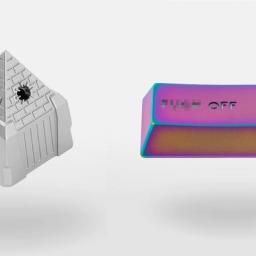
Gadget accessory maker Dbrand has released a pair of novelty mechanical keyboard keycaps, and they're just as absurd as fans might expect. The company has been teasing its artisan keycaps for months, and their launch today coincides with Dbrand's 12th anniversary.One of the aluminum keycaps, a replacement for the Escape key, is a pyramid designed to stab you when you press it - because, according to Dbrand's tongue-in-cheek announcement, there is no escape." The second is for the Enter key, and has a message for whoever is looking at it: F off." They'll both be available in black, silver, and a colorful neochrome.
|
 |
by Mariella Moon on (#6G9ZN)
The live-action adaptation of the classic shonen manga and anime YuYu Hakusho is hitting Netflix on December 14, and the streaming service has given fans some idea of what they can expect in a short teaser video. Live-action adaptations of anime shows are a hit or miss. Some, like Netflix's Death Note, were generally panned and poorly received, while others like the Rurouni Kenshin movies starring Takeru Satoh and Netflix's One Piece had managed to win over existing fans and new audiences alike.As a long-time fan of Yoshihiro Togashi's YuYu Hakusho, I have witnessed fellow fans dread its arrival after the streaming service published the first posters for the series. Certain actors were a miscast, they said, and even the actors in YuYu Hakusho's stage production had better costumes and styling. The teaser, however, actually looked pretty good, and fans seem to be hopeful that the show will end up becoming of the better anime adaptations out there.When Netflix announced the series' streaming date, it hinted that it will not be an exact copy of the manga and the anime. "The series breathes new life into the story, and fans old and new can expect to encounter their favorite characters in ways that have never been seen before," it said. The teaser's too short to reveal most of the changes the show has made, but eagle-eyed viewers might find some in the video below.This article originally appeared on Engadget at https://www.engadget.com/netflix-teases-the-live-action-yuyu-hakusho-series-before-it-arrives-in-december-140055463.html?src=rss
|
 |
by Mariella Moon on (#6G9X1)
Netflix has given The Witcher fans their first look at a new animated film that's set to hit the streaming service in late 2024. The Witcher: Sirens of the Deep is based on A Little Sacrifice, a short story written by the universe's creator Andrzej Sapkowski. It will have Geralt of Rivia investigating a series of attacks in a seaside village in the midst of rising conflict between its human inhabitants and merpeople from the ocean. Netflix says the film is set between episodes 5 and 6 of the live-action series' first season, and it does show: The Geralt in the film resembles original Witcher actor Henry Cavill more than the Geralt in the games.The live action's stars Anya Chalotra and Joey Batey will also be reprising their roles as Yennefer of Vengerberg and Jaskier in the animated film. But Geralt will be voiced by Doug Cockle, who's known for voicing the White Wolf in the Witcher games. The movie is directed by Kang Hei Chul, who served as a storyboard artist for The Witcher: Nightmare of the Wolf, which featured the story of Vesemir before he became Geralt's mentor. It was also animated by Studio MIR, the same South Korean studio that worked on Nightmare of the Wolf.The film may be the last time those who were particularly fond of Cavill as Geralt can see, well, a version of him play the role. He left the live-action show after its third season and is set to be replaced by Liam Hemsworth.This article originally appeared on Engadget at https://www.engadget.com/netflixs-the-witcher-sirens-of-the-deep-animated-film-will-feature-geralts-original-voice-actor-120020251.html?src=rss
|
 |
by Mariella Moon on (#6G9VX)
NVIDIA really, really doesn't want to lose access to China's massive AI chip market. The company is developing three new AI chips especially for China that don't run afoul of the latest export restrictions in the US, according to The Wall Street Journal and Reuters. Last year, the US government notified the chipmaker that it would restrict the export of computer chips meant for supercomputers and artificial intelligence applications to Russia and China due to concerns that the components could be used for military purposes. That rule prevented NVIDIA from selling certain A100 and H100 chips in the country, so it designed the A800 and H800 chips specifically for the Chinese market.However, the US government recently issued an updated set of restrictions that puts a limit on how much computing power a chip can have when it's meant for export to the aforementioned countries. The A800 and the H800 are no longer eligible for export under the new rules, along with NVIDIA's other products, which include its top-of-the-line RTX 4090 consumer GPU. Some reports even suggest that the company could end up canceling over $5 billion worth of advanced chip orders in China.The new chips meant for the Chinese market are called the HGX H20, the L20 and the L2, based on the specs sent to distributors. While the H20 is supposed to be the most powerful model out of the three, all of them don't go beyond the computing power threshold set by the US government's new export rules. That means customers using them for AI applications may need more chips than they would if they had access to higher-spec models.Chinese companies, including Baidu, Huawei, Xiaomi and Oppo, have already started designing their own semiconductor to prepare for a possible future wherein they could longer be able to import chips from the US and other countries. Old NVIDIA customers may prefer sticking to the company's components, however, due to its reputation and its software, which The Journal says is some of the most robust for AI development. NVIDIA, according to the source, may announce the new chips as soon as November 16 and start selling them before the year ends.This article originally appeared on Engadget at https://www.engadget.com/nvidia-may-soon-announce-new-ai-chips-for-china-to-get-around-us-export-restrictions-100509873.html?src=rss
|
 |
by Mariella Moon on (#6G9RM)
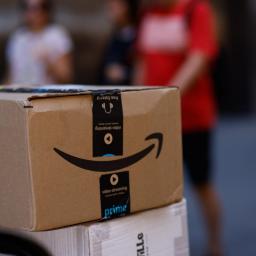
Amazon gives Apple's product pages the special treatment and keeps them relatively clear of unrelated ads, signifying an arrangement between the companies, according to Insider. When the Federal Trade Commission filed an antitrust lawsuit against the e-commerce retailer in September, it accused Amazon of "deliberately increasing junk ads that worsen search quality." However, Insider found that the pages for Apple products, such as "iPhone" and "iPad," show a clean page layout with no ads or recommendation. Meanwhile, products from rival brands, including Samsung Galaxy and Microsoft Surface, show multiple banner ads and several sponsored recommendations from other brands.We tried it out ourselves and did find that Apple's product pages do look cleaner. Microsoft Surface Pro's, however, showed a carousel of sponsored listings "4 stars and above," along with products related to the specific item and multiple banner ads. Insider says Apple asked Amazon to keep its product pages free of ad clutter back in 2018, based on an email shared by the House Judiciary Committee. "We understand that Apple does not want to drive sales to competing brands in search or detail pages," Jeff Wilke, who was then Amazon's retail CEO, reportedly wrote.Apple has admitted to the publication that it has some sort of an agreement with Amazon that prevents other companies from buying ads for "specific Apple-related brand queries" on the latter's marketplace. They can still buy ads for key phrases with an Apple name, say "iPad keyboard case," but not for "iPad" itself. "Apple's goal for the Agreements was to create the best possible customer experience, and others are free to do the same," Apple's representative said in a statement. They added that the deal was also meant to address the company's issues with counterfeit products on the platform, because it used to send Amazon "hundreds of thousands of take-down notices" before then.While it's not clear whether money exchanged hands between the two companies, the email shared by the House talked about a potential financial deal. Amazon reportedly turned down Apple's request at first, but Wilke wrote in the email: "We cannot alter our organic search algorithm to return only Apple products in the search results when an Apple team is searched... Apple would need to purchase these placements or compensate Amazon for the lost ad revenue."This article originally appeared on Engadget at https://www.engadget.com/amazon-reportedly-blocks-junk-ads-on-apple-product-pages-045018125.html?src=rss
|
 |
by Aaron Souppouris on (#6G9PZ)
Netflix's new prestige sci-fi show is delayed until March 22, 2024. 3 Body Problem was originally scheduled to debut in 2023, before being pushed back to January 2024, and now March. Just as the initial delay was accompanied by a teaser trailer, so too is this one:3 Body Problem is being adapted by David Benioff and D.B. Weiss (who created HBO's Game of Thrones) alongside screenwriter Alexander Woo. The new trailer gives us our first look at the series' key video game," Three-Body, which involves a nebulous and extremely shiny VR headset. According to John Bradley's character Jack Rooney, the headset has "no screen... no headphone jack... not even a charging port." Donning the headset transports Rooney to a hyper-realistic world, before he's swiftly ejected and the trailer ends.The show's source material is The Three-Body Problem, the first novel in Liu Cixin's Remembrance of Earth's Past series. Originally released in the mid '00s in China, it gained international recognition and a Hugo award when Tor Books published an English-language translation in 2014. Netflix's ill-grammared take on the book was announced in 2020, and stars Benedict Wong, Eiza Gonzalez and several Game of Thrones alums including Jonathan Pryce and the aforementioned Bradley.This article originally appeared on Engadget at https://www.engadget.com/netflixs-new-3-body-problem-trailer-reveals-a-delay-to-march-2024-004430208.html?src=rss
|
 |
by Kris Holt on (#6G9JY)
Back in January, Qualcomm announced Snapdragon Satellite, a project that aimed to let Android users send texts via satellite when they don't have cell service. It would have been the company's answer to Apple's emergency SOS feature that debuted in the iPhone 14 lineup. However, the initiative hasn't worked out as Qualcomm hoped.Qualcomm is ending its Snapdragon Satellite partnership with satellite phone maker Iridium. Although the pair "successfully developed and demonstrated the technology" smartphone makers "have not included the technology in their devices," Iridium said in a statement.Smartphone makers have indicated a preference towards standards-based solutions" for satellite connectivity, Qualcomm told CNBC. In other words, they're looking for a more open approach that doesn't necessarily position Qualcomm as a go-between. As The Vergenotes, the cost of satellite texting may have dissuaded some manufacturers too. Apple is footing the bill for emergency SOS for the time being.Now that its agreements with Qualcomm are coming to an end, Iridium says it will be able to work directly with smartphone makers, mobile OS developers and other chipmakers. Apple, meanwhile, has expanded its emergency SOS feature by adding crash detection integration in iPhone 15.Elsewhere, Starlink is set to roll out its satellite SMS service next year. It plans to eventually offer satellite-powered voice and data functions directly to phones, meaning users won't necessarily need to have a Starlink terminal nearby.This article originally appeared on Engadget at https://www.engadget.com/qualcomms-satellite-texting-plan-is-dead-because-phone-makers-arent-interested-204331091.html?src=rss
|
 |
by Kris Holt on (#6G9G3)
That Netflix subscription you're suddenly paying another couple of bucks for every month will soon give you a bit more value for money. The Super Mario Bros. Movie - the second highest-grossing film of the year so far after Barbie - is coming to Netflix on December 3.It's been a Peacock streaming exclusive since early August. Peacock has 28 million paid subscribers, while Netflix has around 74 million paying members in the US, so many more folks will be able to be able to legally watch the movie at home without renting or buying it.
|
 |
by Lawrence Bonk on (#6G9D8)
The Call of Duty devs are always trying to stay one step ahead of cheaters to protect the experience for all of us regular non-jerky players. Their latest move to prevent cheating may just be the funniest one yet. The devs have announced an appropriately-named feature called Splat. When a cheater deploys, the system occasionally disables their parachute, sending them careening to the ground until they, well, go splat.This was designed to call as much attention to the cheater as possible, with devs saying it'll be immediately obvious" who's trying to game the system, as someone quickly descending from the sky is hard to miss. In the past, they've handled these cheaters privately, keeping them in the game to collect data or simply making them disappear, among other methods detailed below. The devs say this new tool is simply more fun."The system doesn't even have to flag the player as a cheater before they deploy. If caught once they reach the ground, the software will speed up the next jump to create the same effect. For instance, a simple bunny hop will turn into a 10,000-foot drop to take them out instantly." Like all anti-cheating measures, Splat won't randomly turn on for normal players and it won't activate by a report from another player. The machine learning algorithms have to spot verified shady behavior for it to kick in.The programmers say this is just the beginning, as they've developed many new tricks" that will be discussed at some point in the future. To that end, Splat is just the latest anti-cheating measure. In the past, cheaters were kept from seeing opponents or the system would clone real players to confuse them. When all else failed, the game would just take their guns away. It remains to be seen if the just-released Call of Duty: Modern Warfare III will get access to this new Splat system.This article originally appeared on Engadget at https://www.engadget.com/call-of-duty-warzone-will-now-snip-the-parachutes-of-cheaters-so-they-splat-181509485.html?src=rss
|
 |
by Kris Holt on (#6G9D9)
You've heard of Netflix and chill, but how about Netflix and Max? Verizon may soon offer a discounted bundle of the streaming services' ad-supported tiers for $10 per month. That's $7 less than it would cost you to subscribe to them separately. Given that the Max plan costs $10 per month, you'd effectively be getting Netflix access for free.The bundle may be announced in the coming weeks. According to The Wall Street Journal, Netflix and Max owner Warner Bros. Discovery (WBD) will share revenue with Verizon. It seems that Verizon will offer the bundle to its myPlan customers. Netflix is already available through some Verizon bundles, but this would be the first time the ad-supported tier would be on offer through one of them.It's no secret that most major streaming services are getting more expensive, especially on the ad-free plans. It's also easy for folks to cancel a subscription and switch to another platform for a while. Discounted bundles could help streaming services convince customers to stick around for longer. That's key for a number of reasons. For one thing, the more users they have on ad-supported tiers, the easier it will be for them to get advertisers on board.Netflix has said that its ad supported-plan, which debuted a year ago, is off to a slower start than expected. It has 15 million monthly active users on that tier, which is accounting for an increasingly large percentage of new signups. WBD hasn't disclosed how many people subscribe to Max's ad-supported tier, but CEO David Zaslav said this week its streaming service is "losing billions of dollars."This article originally appeared on Engadget at https://www.engadget.com/verizon-may-soon-offer-a-10-bundle-of-netflix-and-max-ad-supported-plans-174029656.html?src=rss
|
 |
by Lawrence Bonk on (#6G9A2)
We all knew it was just a matter of time before one of the world's richest and most controversial men would get the biopic treatment and now it's happening. Elon Musk is getting his very own movie, helmed by acclaimed director Darron Aronofsky and produced by A24, as originally reported by the Variety.The film's going to be based on Walter Isaacson's authorized biography, which has received its share of unfavorable reviews, with outlets like the Los Angeles Times suggesting the author mostly accepts Musk's confident prognostications as gospel" and The Guardian calling it an insight-free doorstop." Not all reviews were that dire, of course, but many point to Isaacson's book as being a clear example of the perils of access journalism.Isaacson also wrote a biography on Steve Jobs, which was adapted into the 2015 film starring Michael Fassbender and directed by Danny Boyle. This movie ended up being an incredibly loose adaptation of Isaacson's book, so we'll see what Aronofsky does with the material. If anyone can put their personal stamp on things, it's the director behind Mother!, The Whale, Requiem for a Dream and Black Swan.This film's still in early development, so there's no writer attached yet and there have been no casting announcements. In a recent Reddit thread, commenters' top-voted casting picks for Musk were Nicolas Cage, Rami Malek, Jesse Eisenberg and Robert Downey Jr, as collated by Variety.This article originally appeared on Engadget at https://www.engadget.com/an-elon-musk-biopic-will-be-directed-by-darren-aronofsky-162714444.html?src=rss
|
 |
by Kris Holt on (#6G9A3)
Black Friday is coming right up, but you don't need to wait until then to pick up a flagship foldable smartphone for a good price. Samsung's Galaxy Z Flip 5 has dropped back down to $800. That's a drop of $200 (20 percent) for a model with 256GB of internal storage. It matches the best price we've seen for the foldable to date.This is a solid deal for a device that's only been around for a few months. We gave the Galaxy Z Flip 5 a score of 88 in our review and we reckon it's the best flip-style foldable that's widely available in North America and Europe.The file folder-shaped external screen is one of the Galaxy Z Flip 5's most striking features and helps it stand out from the pack. The 3.4-inch Flex Window has a 60Hz refresh rate and 720 x 748 resolution. Its larger size compared with previous models makes it a little easier to view information at a glance. You can use it to access widgets such as Timer, Stopwatch and Samsung Health, and there's built-in support for apps including Google Maps and WhatsApp. You can even watch YouTube and Netflix on this screen without having to tinker with the settings too much.One of the other major selling points of the Galaxy Z Flip 5 is the new Flex Hinge. That enables the device to have no gap between the two halves of the 6.7-inch internal display, unlike previous models. The performance is solid too, thanks to the Qualcomm Snapdragon 8 Gen 2 for Galaxy chipset.On the downside, the battery life is still fairly short compared with other Android devices. In addition, you'll probably have to spend quite some time adjusting settings to get the most out of the foldable. Overall though, if you're in the market for a foldable for yourself or a loved one, this is a strong option at a great price.Your Black Friday Shopping Guide: See all of Yahoo's Black Friday coverage, here. Follow Engadget for Black Friday tech deals. Learn about Black Friday trends on In The Know. Hear from Autoblog's experts on the best Black Friday deals for your car, garage, and home, and find Black Friday sales to shop on AOL, handpicked just for you.This article originally appeared on Engadget at https://www.engadget.com/samsungs-galaxy-z-flip-5-drops-back-down-to-800-in-early-black-friday-deal-152818805.html?src=rss
|
by Terrence O'Brien on (#6G9A4)
I am, primarily, a guitarist. Dabbling in keys and synths has always felt a bit unnatural from a physical standpoint. A keyboard doesn't respond the way a fretted instrument does. This isn't surprising, nor is it a bad thing. It's just not what I'm used to. The better part of a decade into my journey with synthesizers, I still find myself wiggling my fingers as if it's going to create vibrato, or trying to bend" one note while keeping the other rooted to create shifting harmonies.I've tried my share of MPE (MIDI Polyphonic Expression) controllers, which can capture some of that nuance. But the Roli Seaboard Rise 2 is the first I've played that manages to deliver all of that expressiveness without also being an unmitigated headache in some way. It's probably my new favorite MIDI controller. But, I still have a hard time recommending it to most people.The immediately obvious issue is the price. $1,399 is a lot of money for a MIDI controller. There are some MIDI controllers that come close, but they generally have more generous software bundles; more extensive controls (including faders, knobs and pads); transport controls for your DAW; built-in arpeggiators or sequencers; and screens for viewing parameters and browsing presets.Of course, what those controllers usually lack is MPE functionality. And it's not like the Seaboard Rise 2 isn't a premium device. It's constructed almost entirely from metal, save for the silicone keybed and the small selection of controls to its left. It feels extremely durable, and I'm pretty sure I'd have to go out of my way to do any significant damage to it. Despite that, it's also surprisingly thin and light. At roughly 33 inches, it's slightly longer than your average 49-key controller, but it's less than an inch thick and only a hair over 12 pounds. And that's despite having a battery that can last eight hours when connected over Bluetooth. For comparison, Arturia's batteryless Keylab 49 MKII is nearly 3 inches thick and tips the scales at 14 pounds.Terrence O'Brien / EngadgetI'd stop shy of calling it portable, but it's certainly luggable. I've moved it around my home studio quite a bit and it seems easy enough to drag to a gig, especially if you pick up the $100 soft case.You're not buying the Seaboard Rise 2 for the portability, though. You're here for the continuous Keywave2" surface. And let me tell you, once you get over how strange it feels it's pretty incredible.It's important to note that I've never played the original Seaboard Rise. But I have used many other MPE controllers, including Roli's Blocks lineup. They've all had some sort of significant shortcoming, and the Roli Blocks were borderline unusable. Almost everything I've tried has felt either like a novelty or a prototype, rather than a consumer-ready product. (The two exceptions to this being the latest Ableton Push and the Expressive E Osmose, though they're very different devices with drawbacks of their own.) So, while I'm fascinated with MPE and think there's a lot of potential in the technology, I came into this review with pretty low expectations.Terrence O'Brien / EngadgetBut, the Seaboard Rise 2 feels like the first time a company has gotten almost everything right in a standalone MPE MIDI controller. The subtle Precision Frets" make feeling your way around the keyboard much easier. I am not a skilled pianist or keyboard player who's doing lightning-quick scale runs based entirely on muscle memory. Still, I welcomed their addition. They made it a lot more obvious when I should stop a slide and helped me make sure my strikes were centered on the keys so I didn't end up sounding out of tune.The squishy silicone keybed also provides excellent feedback. Most other MPE devices I've used have very little travel, if any at all. You might as well be trying to play on a coffee table. Not the Seaboard. The keys" (if you can really call them that) jut up, giving you a sense for where to put your fingers. The surface gently resists and bunches up under your finger when you're performing slides, delivering much needed tactile feedback. There's a lot of depth to the surface, too; this isn't just a thin silicone skin laid over the top of some sensors. It's not quite as satisfying as feeling a key bottom out beneath your fingers, but it's actually easier to coax nuance out of the velocity and aftertouch than on more traditional controllers.That ability to get subtle shifts in timbre, tone and pitch are what make MPE, and the Seaboard in particular, special. With the right combination of hardware or software, each note played can have its own unique expression. A basic example of this being controlling the filter cutoff of a synth patch with the slide parameter on the Seaboard. That means as you move your finger from the bottom of the control surface to the top, the filter opens up to create a brighter sound. But in this case you can raise the cutoff on the higher notes only to emphasize the melody, while keeping the lower register muted and droning.Terrence O'Brien / EngadgetGiving each note its own unique velocity, cutoff, et cetera can add incredible depth to even the most simplistic performance. In a more advanced example of how this might work, imagine a software instrument based on orchestral strings. On something like the Seaboard Rise 2, quickly tapping the keys and immediately pulling off could be used to play pizzicato for stabbing chords. But lightly pressing into the silicone surface would produce a slower attack, allowing you to play languid melodies over the top of sharp harmonies. Sliding your finger up to the top could add gentle vibrato to emphasize particular notes, and dragging it left or right would produce realistic glides that are normally only possible on an unfretted, stringed instrument, not a keyboard.I highlight that example because the Seaboard seems especially suited to scoring work. While it's fine for playing your typical lead and bass patches, it separates itself from the pack once you start exploring sounds that are slower and have more evolution. The slight dissonance I could introduce by moving one finger just slightly off the center of a key created this spooky atmosphere that I kept getting lost in. Maybe it was just the season I was doing most of my testing during, but all I kept thinking about was how much I wanted to score a horror movie.Terrence O'Brien / EngadgetClearly Roli knows this is a strength, because a lot of the presets in its Equator 2 softsynth seem geared toward soundtrack work. Normally, the plugin costs $249, but thankfully it's included for free with the Seaboard Rise 2. It easily does the best job of showcasing the controller's various powers. The unfortunate thing is, only a little over a third of the presets are MPE-compatible. And while it's certainly a powerful instrument, Equator 2 has a number of quirks that keep it from feeling fully polished.Perhaps the biggest of those issues is that, when you first install it, many of the factory presets are completely broken and nonfunctional. That's because there are two additional libraries you need to install. But these are in a drop-down list, and there is zero indication that anything else is needed until you actually open the app and it repeatedly tells you that files are missing. I uninstalled and reinstalled Equator and all its preset packs, hoping that would fix the issue. It was only after some Googling that I discovered there were more required downloads hiding right inside the Roli Connect app.The Roli Dashboard at least feels a little less slapdash, and it's arguably a more essential part of the experience. This is where you'll do all the necessary configuring, like choosing whether the Seaboard is in MPE mode or standard MIDI, selecting what MIDI CCs the XY pad controls and setting the sensitivity levels of things like glide and slide. You'll basically always want to have the Dashboard open because, the unfortunate truth is, MPE is still kind of messy. Non-MPE-compatible instruments and plugins might not work right if you don't switch the Rise to single channel mode. I've found getting MPE-enabled plugins to work properly in Ableton Live 11 a little tricky.Even when you do get an MPE-enabled instrument (hardware or software) paired up with a controller like the Seaboard Rise, you'll probably need to do some finetuning to get them completely in sync. For example, you'll have to make sure the pitch bend range in both the Dashboard and whatever you're controlling match up. If the Seaboard is set for a 48-note range, but, let's say, Pigments is set for only two, slides will never land where you expect them and even narrowly missing the deadcenter of a key will result in chords that are painfully out of tune.When everything works, though, it's pretty special. The Seaboard Rise 2 is easier to play and more versatile than any other MPE MIDI controller I've tried. It's probably the most successful showcase of what is possible with the technology.Sure, it's expensive, can be finicky to configure, and there are limited options for instruments that take advantage of its full expressive capabilities. But MPE-capable softsynths are likely only going to grow in popularity over the next few years. Most people should probably hold out and see what the consensus from reviewers is on the more affordable Seaboard Block M. But if you just want the best MPE MIDI controller you can currently buy and don't mind shelling out for a premium device, the Roli Seaboard Rise 2 is it.This article originally appeared on Engadget at https://www.engadget.com/roli-seaboard-rise-2-review-i-wish-i-had-a-horror-movie-to-score-150028305.html?src=rss
 |
by Mat Smith on (#6G94D)
Wearable startup Humane has officially unveiled its first device, the Ai Pin. For months, the company has drip fed information, only offering a glimpse of the device, wielded by Naomi Campbell, of all people, at Paris Fashion Week in October.The Ai Pin is a pocket-worn wearable AI assistant that can reportedly perform the tasks our current phones and voice assistants do, but without a screen, instead operating primarily through voice commands and, occasionally, a virtual screen projected onto the user's hand. It works independently of other devices, connected to its own phone network through T-Mobile, but on Humane's own MVNO because that's even more complicated.The device will cost $700, and another $24 per month for unlimited talk, text and data, and will ship in early 2024.HumaneWe're still waiting for deeper hands-on impressions and demonstrations of the technology. I'm skeptical, and not just because it's been just over ten years since Google Glass tried to be a thing.Have a great weekend, and make sure you check out our new TMA series on YouTube, where I try to make more work for our wonderful video team, every Saturday.- Mat SmithYou can get these reports delivered daily direct to your inbox. Subscribe right here!The stories you might have missedThe best cooking giftsMeta may return to China with the release of a new, budget VR headsetAmazon reportedly plans to dump Android for a homemade Fire OS replacementSennheiser Ambeo Soundbar Mini review: excellent and expensive
|
 |
by Mariella Moon on (#6G94E)
Arcane finally has a streaming date for its second season, two years after Netflix renewed the League of Legends-based series. The bad news? It'll arrive on the streaming platform in November... 2024. Fans will have to wait one more year before they can see the next installment of the story that centers around sisters and rivals, Vi and Jinx. Riot's former CEO Nicolo Laurent did say in an interview earlier this year that season two won't be ready until 2024. He explained that the company didn't expect the show to be so successful, so the developer, along with French animation studio Fortiche, started on the second season later than they should have.Last year, the show became the first streaming series to win an animated Emmy award, beating out more established rivals, such as Rick and Morty and What If...? Arcane was universally praised by critics for its storyline and animation, and it was also well-received among viewers, even those who don't play LoL. Arcane creators Christian Linke and Alex Yee said that the series was always going to be about Vi and Jinx even though the game has more than 150 champions. Their background as sisters who grew into bitter rivals with opposing stance, fighting for opposite sides, after all, make for an intriguing plot. "The fact that Jinx and Vi's relationship is a bit of a mystery from the outset allows us to sort of satisfy both [fans of the game and new audiences]," Linke told Engadget.Netflix has released a very short teaser for the show's second season, but it'll likely publish longer trailers over the next few months as we get closer to its release date. Actors Hailee Steinfeld and Ella Purnell are expected to reprise their roles as Vi and Jinx, respectively, along with Katie Leung as Caitlyn Kiramman.
|
 |
by Sarah Fielding on (#6G92D)
Five years in the making, Netflix's Avatar: The Last Airbender live-action remake is one step closer to gracing our screens. Netflix has released a new minute-and-a-half teaser that gives us a first look at the cast and key scenes. Plus, drum roll, please, we also finally have a release date: February 22, 2024.At an event in June, all Netflix made public was a quick 37-second teaser showing the four nations' (Water Tribes, Earth Kingdom, Fire Nation and Air Nomads) symbols and that the show would come out in 2024. At the time, cast members discussed memorable parts of filming Avatar: The Last Airbender, such as haircut day, but now we get to see their transformation firsthand. The cast includes Gordon Cormier as Aang, Kiawentiio as Katara, Daniel Dae Kim as Fire Lord Ozai and Ian Ousley as Sokka.Despite a deeper look into the upcoming series, questions remain about how it will compare to the original. Back in 2020, co-creators of the original Avatar: The Last Airbender, Michael DiMartino and Bryan Konietzko, left the project. "I realized I couldn't control the creative direction of the series, but I could control how I responded," DiMartino said at the time. "So, I chose to leave the project. It was the hardest professional decision I've ever had to make, and certainly not one that I took lightly, but it was necessary for my happiness and creative integrity." He added that the show had "potential" but wouldn't align with his vision for it.This article originally appeared on Engadget at https://www.engadget.com/netflixs-live-action-avatar-the-last-airbender-series-gets-its-first-trailer-104024809.html?src=rss
|
 |
by Steve Dent on (#6G92E)
Microsoft's Xbox leadership is starting to take shape following the company's blockbuster Activision Blizzard acquisition. The new head of Xbox Game Studios is Alan Hartman, former boss of Forza Motorsport developer Turn 10, according to a LinkedIn post seen by Game Developer. "Thrilled to be representing such an elite set of game creators in my new role leading Xbox Game Studios!" he wrote.Hartman has led Turn 10 since 2005, with recent stints as corporate VP of Forza and Fable. He oversaw the release of Forza series games and the ForzaTech engine, which is used in both Forza Horizon and the upcoming Fable reboot.Hartman succeeds Matt Booty, who was promoted to president of gaming content and studios. Other execs recently changing positions include Sarah Bond, who became Xbox's first black president in its 22 year history. She reports directly to Microsoft Gaming president Phil Spencer. More shakeups could be coming with Microsoft's $69 billion Activision Blizzard acquisition, as properties like Call of Duty, World of Warcraft, Overwatch and others now fall under the company's purview. Bobby Kotick remains as CEO of Activision Blizzard, but will step down at the end of 2023.This article originally appeared on Engadget at https://www.engadget.com/turn-10s-alan-hartman-is-the-new-head-of-xbox-game-studios-095546957.html?src=rss
|
 |
by Steve Dent on (#6G911)
Meta hasn't been in China since Facebook was blocked way back in 2009, but that may be about to change. The company is reportedly planning to release an all-new, lower-priced version of its virtual reality headset in the nation via an exclusive deal with video game giant Tencent, The Wall Street Journal has reported. Sales are tentatively set to begin in late 2024, but some details must still be finalized.The new headset would be more powerful than the Quest 2, but use lower-quality optics than the Quest 3, according to the report. The more budget-oriented headset may also be sold in other regions. Meta would reportedly take a larger share of headset sales, while Tencent pull in more of the content and service revenue, "like software subscriptions and game sales."The deal would open up a huge market for Meta's VR division, which has been hemorrhaging money and could certainly use the boost. However, it's not clear whether Tencent would require government approval to sell the devices. Gaming is a popular VR activity, but China's strict rules have already had a significant impact on Tencent, the world's largest video game company.China may not be a panacea for Meta's weak VR division, either. TikTok owner ByteDance is China's virtual reality leader with its Pico headset, but is struggling with sales in China just as Meta is elsewhere. And Tencent itself was reportedly on the brink of disbanding its own VR division, but supposedly built it back up once the Meta deal seemed inevitable. Headset sales across the globe fell nearly 45 percent this quarter compared to the same period last year.If the deal goes through, Meta would regain a foothold in China after 14 years with no direct presence there. The company has a 50 percent worldwide share of the VR market, with Sony's PlayStation VR2 and Pico's VR headset in second and third place. Apple is about to enter the market with its $3,500 Vision Pro headset, but isn't likely to have a serious presence until it releases a cheaper version down the road.This article originally appeared on Engadget at https://www.engadget.com/meta-may-return-to-china-with-the-release-of-a-new-budget-vr-headset-090522700.html?src=rss
|
 |
by Mariella Moon on (#6G912)
Microsoft temporarily prohibited its employees from using ChatGPT "due to security and data concerns," according to CNBC. The company announced the rule in an internal website and even blocked corporate devices from being able to access the AI chatbot. While several tech companies had prohibited - or had at least discouraged - the internal use of ChatGPT in the past, Microsoft doing the same thing was certainly curious, seeing as it's OpenAI's biggest and most prominent investor.In January, Microsoft pledged to invest $10 billion in ChatGPT's developer over the next few years after pouring $3 billion into the company in the past. The AI-powered tools it rolled out for its products, such as Bing's chatbot, also use OpenAI's large language model. But Microsoft reportedly said in its note that "[w]hile it is true that [the company] has invested in OpenAI, and that ChatGPT has built-in safeguards to prevent improper use, the website is nevertheless a third-party external service." It advised its employees to "exercise caution," adding that it goes for other external services, including AI image generator Midjourney.ChatGPT's Microsoft ban was unexpected, but it was also swift. CNBC says that after it published its story, Microsoft quickly restored access to the chatbot. It also reportedly removed the language in its advisory, saying that it was blocking the chat app and and design software Canva. A company spokesperson told the news organization that the ban was a mistake despite the advisory explicitly mentioning ChatGPT and that Microsoft restored access to it as soon as it realized its error. "We were testing endpoint control systems for LLMs and inadvertently turned them on for all employees," a spokesperson said. They added: "As we have said previously, we encourage employees and customers to use services like Bing Chat Enterprise and ChatGPT Enterprise that come with greater levels of privacy and security protections."This article originally appeared on Engadget at https://www.engadget.com/microsoft-briefly-blocked-employees-from-using-chatgpt-over-security-concerns-080403177.html?src=rss
|
 |
by Mariella Moon on (#6G8ZK)
The state agencies of Maine had fallen victim to cybercriminals who exploited a vulnerability in the MOVEit file transfer tool, making them the latest addition to the growing list of entities affected by the massive hack involving the software. In a notice the government has published about the cybersecurity incident, it said the event impacted approximately 1.3 million individuals, which basically make up the state's whole population. The state first caught wind of the software vulnerability in MOVEit on May 31 this year and found that cybercriminals were able to access and download files from its various agencies on May 28 and 29.While the nature of stolen data varies per person based on their interaction with a particular agency, the notice says that the bad actors had stolen names, Social Security numbers, birthdates, driver's license and state identification numbers, as well as taxpayer identification numbers. In some cases, they were also able to get away with people's medical and health insurance information. Over 50 percent of the stolen data came from the Maine Department of Health and Human Services, followed by the Maine Department of Education.The state government had blocked internet access to and from the MOVEit server as soon as it became aware of the incident. However, since the cybercriminals were already able to steal residents' information, it's also offering two years of complimentary credit monitoring and identity theft protection services to people whose SSNs and taxpayer numbers were compromised. As TechCrunch notes, the Clop ransomware gang that's believed to be behind previously reported incidents, has yet to release data stolen from Maine's agencies.Clop took credit for an earlier New York City Department of Education hack, wherein the information of approximately 45,000 students was stolen. Cybercriminals exploiting the vulnerability haven't only been targeting the government, though, but also companies around the world. Sony is one of them. There's also Maximus Health Services, Inc, a US government contractor, whose breach has been the biggest MOVEit-related incident, so far.The Securities and Exchange Commission is already investigating MOVEit creator Progress Software, though it only just sent the company a subpoena in October and is still in the "fact-finding inquiry" phase of its probe.This article originally appeared on Engadget at https://www.engadget.com/basically-all-of-maine-had-data-stolen-by-a-ransomware-gang-061407794.html?src=rss
|
 |
by Pranav Dixit on (#6G8QM)
Apple will pay $25 million in backpay and civil penalties to settle allegations that it favored visa holders and discriminated against US citizens and permanent residents during its hiring process, the Department of Justice said in a statement on Thursday. This is the largest amount that the DOJ has collected under the anti-discrimination provision of the Immigration and Nationality Act.At the heart of the issue is a federal program administered by the Department of Labor and the Department of Homeland Security called the Permanent Labor Certification Program (PERM). PERM allows US employers to file for foreign workers on visas to become permanent US residents. As part of the PERM process, employers are required to prominently advertise open positions so that anyone can apply to them regardless of citizenship status.The DOJ said that Apple violated these rules by not advertising PERM positions on their recruiting website, and also made it harder for people to apply by requiring mailed-in paper applications, something that it did not do for regular, non-PERM positions. As a result, a DOJ investigation found that Apple received few or no applications for these positions from US citizens or permanent residents who do not require work visas.As part of the settlement, Apple will pay $6.75 million in civil penalties and set up a $18.25 million fund to pay back eligible discrimination victims, the DOJ's statement said.Apple disagreed with the DOJ's characterization. Apple proudly employs more than 90,000 people in the United States and continues to invest nationwide, creating millions of jobs," a company spokesperson told CNBC. When we realized we had unintentionally not been following the DOJ standard, we agreed to a settlement addressing their concerns. We have implemented a robust remediation plan to comply with the requirements of various government agencies as we continue to hire American workers and grow in the US"This article originally appeared on Engadget at https://www.engadget.com/apple-reaches-25m-settlement-with-the-doj-for-discriminating-against-us-residents-during-hiring-225857162.html?src=rss
|
 |
by Will Shanklin on (#6G8QN)
Tumblr, a flailing social media site from a bygone era, may be run by a skeleton crew from now on. An alleged internal memo from parent company Automattic has made the rounds on social platforms (including Threads), stating it has not gotten the expected results from our effort." The decision appears to mark a sharp U-turn from a separate leak this summer, claiming Automattic was building a TikTok-like algorithmic feed into the aging site.Although this doesn't quite appear to be the end of the road for Tumblr, the note doesn't sound promising for the platform's future. It says the majority of the 139 people" will switch to other Automattic projects, leaving a barebones gang of Trust & Safety and support workers to oversee Tumblr's smoldering embers. Given how many brutal layoffs we've seen this year, handling the transition in a way that avoids job losses could be a silver lining.Automattic, the company behind the blogging tool WordPress, acquired Tumblr in 2019 from Verizon, which landed the platform through its purchase of Yahoo! (Engadget's parent company) in 2017. It likely didn't help that its ownership turned into a game of musical chairs, and none of them seemed to find the right formula to get the microblogging network back on its feet. (Its controversial ban on adult content likely had something to do with that.)We are at the point where after 600+ person-years of effort put into Tumblr since the acquisition in 2019, we have not gotten the expected results from our effort, which was to have its revenue and usage above its previous peaks," the alleged memo reads. After throwing in cliches about climbing mountains and being better to try and fail than not to try at all, the note claims the team's next step is to reflect and decide where else we should concentrate our energy together."Engadget reached out to Automattic for comment and confirmation but didn't immediately receive a response. We'll update this article if we hear back.In addition to WordPress, Automattic's other brands include the journaling app Day One, the e-commerce plugin WooCommerce, Gravatar and the note-taking app SimpleNote.This article originally appeared on Engadget at https://www.engadget.com/tumblrs-staff-is-reportedly-reduced-to-a-skeleton-crew-215853169.html?src=rss
|
 |
by Malak Saleh on (#6G8QP)
OpenAI is rolling out a new partnership program to collect datasets from third parties that it intends to use to train its AI models. The initiative, OpenAI Data Partnerships, will seek large-scale private and public information that it says is not already easily accessible online to the public." The company says the data it will collect doesn't necessarily have to be quantitative or in text formats - the program will also accept images, audio or video.Notably, the company says it's on the lookout for data on any topic" and in any language" so long as it expresses human intention," which it likens to long-form essays or transcribed conversations. Human-centric data collected by OpenAI is expected to help the company improve tools like its automatic speech recognition technology which is used to transcribe spoken words. This initiative also lines up with ChatGPT's recent expansion to support voice queries to engage with users in a conversational manner. Exposing its AI models to more information that teaches it how to hold up human-like conversations will only further improve this feature and other tools that will follow in function.
|
 |
by Kris Holt on (#6G8QQ)
One of the major benefits of certain artificial intelligence models is that they can speed up menial or time-consuming tasks -- and not just to whip up terrible "art" based on a brief text input. University of Leeds researchers have unveiled a neural network that they claim can map an outline of a large iceberg in just 0.01 seconds.Scientists are able to track the locations of large icebergs manually. After all, one that was included in this study was the size of Singapore when it broke off from Antarctica a decade ago. But it's not feasible to manually track changes in icebergs' area and thickness - or how much water and nutrients they're releasing into seas."Giant icebergs are important components of the Antarctic environment," Anne Braakmann-Folgmann, lead author of a paper on the neural network, told the European Space Agency. "They impact ocean physics, chemistry, biology and, of course, maritime operations. Therefore, it is crucial to locate icebergs and monitor their extent, to quantify how much meltwater they release into the ocean."Until now, manual mapping has proven to be more accurate than automated approaches, but it can take a human analyst several minutes to outline a single iceberg. That can rapidly become a time- and labor-intensive process when multiple icebergs are concerned.The researchers trained an algorithm called U-net using imagery captured by the ESA's Copernicus Sentinel-1 Earth-monitoring satellites. The algorithm was tested on seven icebergs. The smallest had an area roughly the same as Bern, Switzerland and the largest had approximately the same area as Hong Kong.With 99 percent accuracy, the new model is said to surpass previous attempts at automation, which often struggled to tell the difference between icebergs and sea ice and other features. It's also 10,000 times faster than humans at mapping icebergs."Being able to map iceberg extent automatically with enhanced speed and accuracy will enable us to observe changes in iceberg area for several giant icebergs more easily and paves the way for an operational application," Dr. Braakmann-Folgmann said.This article originally appeared on Engadget at https://www.engadget.com/a-neural-network-can-map-large-icebergs-10000-times-faster-than-humans-212855550.html?src=rss
|
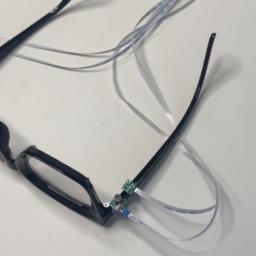 |
by Cheyenne MacDonald on (#6G8MX)
Researchers at Cornell University have developed a wearable with batlike sonar that could improve upper-body tracking in virtual reality and other applications. The Cornell team fitted a generic pair of eyeglasses with a tiny sonar system, demonstrating how acoustic signals can be used instead of cameras to capture the body's movement.Not only would sonar be more efficient in terms of battery consumption, the team told the Cornell Chronicle, but it would also do away with the privacy risks that come with headsets' externally facing cameras. The system, dubbed PoseSonic, uses two pairs of microphones and speakers to send and receive acoustic signals, according to a recently published paper. With help from their deep learning model, it can then estimate 3D poses at nine different points - the shoulders, elbows, wrists, hips and nose - as these signals bounce off the upper body.The team tested it both in the lab and semi-in-the-wild," and found it wasn't negatively affected by environmental noise in any significant way. With this technique, we use less instrumentation on the body, which is more practical, and battery performance is significantly better for everyday use," senior author Cheng Zhang told the Cornell Chronicle.In addition to its potential use in augmented and virtual reality, the researchers say sonar could make for better health tracking by capturing more detailed information on the body's movements. They've only got the upper-body covered at the moment, though - VR legs continue to elude us.This article originally appeared on Engadget at https://www.engadget.com/these-sonar-equipped-glasses-could-pave-the-way-for-better-vr-body-tracking-201958516.html?src=rss
|
 |
by Will Shanklin on (#6G8MY)
Amazon reportedly plans to remove the Android core from future Fire TVs, smart displays and other devices. Writing for Lowpass, veteran journalist Janko Roettgers cites multiple sources with knowledge of these plans" along with job listings and other materials supporting Amazon's alleged move to a new Linux-based operating system. The OS supposedly uses the internal codename Vega" and runs on devices like Fire TV Sticks, TVs, and other connected devices.Roettgers says Amazon has been working on the idea for years, with the company supposedly floating the idea to chipmakers as far back as 2017. Hundreds of people" in Amazon's Device OS group have reportedly worked on the software, including Zibi Braniecki, a former Mozilla engineer who joined Amazon in 2022. Earlier this year, he allegedly posted on LinkedIn (a comment that appears to have since been deleted) that he was working on a next generation Operating System for Smart Home, Automotive, and other Amazon Devices product lines."The report doesn't list a release timeline but mentions that most of the OS development is already done." Amazon is now apparently focusing on readying an SDK and planning perks to convince developers to invest their time and money.The alleged move would allow Amazon to cut ties with Google's Android Open Source Project, which lies at the heart of the current Fire OS. That dependence has led to Amazon's software falling several generations behind the most recent Android versions. For example, the current-gen Fire TV software is based on Android 9, Google's big software update from five years ago. Switching to Vega could also let Amazon cut underlying bloat from its OS; Android contains code enabling it to work on many different devices stretching far beyond the relatively minimal needs of Amazon's smart-home gear.Lowpass claims the Linux-based Vega would use React Native for app development. The Meta-created framework uses a single codebase for iOS and Android, and Amazon likely hopes that will help with cross-platform development. The report doesn't specifically address whether the OS will eventually run on Fire tablets, which become much more versatile when users sideload the Google Play Store to run a wider variety of Android apps.Roettgers's report says Amazon plans to eventually make a clean break with Android on all new devices. The company allegedly designed Vega to run on systems as diverse as car infotainment systems and other future hardware products."This article originally appeared on Engadget at https://www.engadget.com/amazon-reportedly-plans-to-dump-android-for-a-homemade-fire-os-replacement-200144781.html?src=rss
|
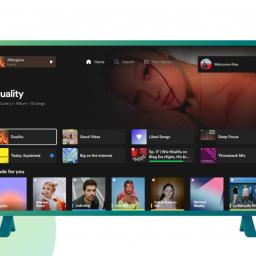 |
by Malak Saleh on (#6G8HW)
The Spotify TV app has been revamped to make the big-screen app experience resemble the popular mobile version of the digital music and podcast streaming service. The home page will have a Now Playing View" and feature shortcuts to recently played content. The TV app will also recommend new songs and podcasts based on your listening history on the main screen, similar to what you might get on the mobile app.The TV app home page doesn't just look different. You can now more easily switch between different Spotify accounts. The most recently active profile will always appear in the top right corner of a screen. Say you share a TV in the living room and you want to stop listening to your mom's playlist - now you can select the profile image of a paired account when you want to switch.In the past, if you listened to music on your TV through the app, you could only see the next song that was lined up. But now you can use the Playback Queue" tool to select what you want to play next. Also, you can now turn on dark mode on your TV, meaning you can stream a curated playlist during your next house party and minimize the visuals and screen brightness.The new Spotify TV app updates are available to free and premium subscribers using the app on supported Smart TVs, gaming consoles and media streaming devices. The effort to revitalize the user experience on the big screen isn't a huge shocker. Spotify rolled out similar updates for its Desktop app earlier this year in an effort to make streaming more enjoyable when you're not using your phone.This article originally appeared on Engadget at https://www.engadget.com/spotify-for-tvs-gets-a-new-look-and-features-to-match-the-mobile-app-195050535.html?src=rss
|
by Billy Steele on (#6G8HX)
The Sonos Beam has been our top pick for compact soundbars for a while now. It offers a lot in a small package and the second-gen version also supports more immersive Dolby Atmos audio. The Beam doesn't have any upfiring drivers though, so the impact of that spatial sound is limited. That's not an issue with the Ambeo Soundbar Mini ($799.95), Sennheiser's smallest soundbar yet to feature its impressive Ambeo 3D audio technology. It cranks out more sonic oomph with dual upfiring woofers on top of all of its virtualization tricks, in a unit roughly the same size as the Beam. The bigger sound comes at a significantly higher price, though.The designWhile the overall shape of the Ambeo Soundbar Mini is similar to the Sonos Beam, there are differences in the details. Most notably, Sennheiser has opted for illuminated (dimmable) Ambeo branding on the front right corner. The top panel of the mini also slopes back to front and the sides are wrapped in a fabric all the way around. Up top, there are controls for volume, playback, Bluetooth, input selection and muting the microphone. There's also a white light that gets longer from left to right as you increase the volume.The Ambeo Mini is about an inch and a half wider than the Beam at around 27.25 inches, but the height and depth are nearly identical. Not that you'll be moving the speaker around much, but the Mini is also almost a pound heavier than its primary competition. Still, this is a compact unit that's perfectly sized for smaller living rooms and spaces where you don't have the real estate for a bigger soundbar.Inside, there are four 1.6-inch full-range drivers. Two of them are front facing while two more are at the ends, angled slightly outward. A pair of four-inch woofers are positioned near the middle of the soundbar, but they face upward. Sennheiser has also included six class D amplifiers capable of 250 watts of power. Four far-field microphones handle the room calibration and you'll need to make sure they're unmuted before that process can be completed.Sound qualitySennheiserIt's impressive what Sennheiser has managed to get out of a small speaker. When listening to music, there's great bass that provides plenty of low-end thump to the driving drum beats of TesseracT's prog metal and the hip-hop musings of Kaytramine. Even if a soundbar has woofers, most of the living room speakers can't muster enough bass for them to be useful as a music setup without an additional sub. That's not the case here. Still, you'll want to consider an Ambeo Sub if you're planning to use it in a medium-to-large room as the bass tends to get lost in bigger spaces. The Mini also supports Sony's 360 Reality Audio and MPEG-H if you're into them, but the Ambeo does a great job upscaling stereo content.The Ambeo Soundbar Mini's key feature is Sennheiser's 3D audio tech. It has been a staple of the company's soundbars since the first Ambeo model in 2019. Both of the larger, pricier Sennheiser soundbars have more drivers, including two upfiring units in addition to the two upwards facing woofers inside the Ambeo Soundbar Plus. The Mini does a solid job with Dolby Atmos and DTS:X content, but the effect isn't as enveloping since it's more reliant on virtualization. I particularly enjoyed the immersive, directional audio in quidditch matches during my annual fall viewing of the Harry Potter series.This soundbar still gives you a 7.1.4 setup after the room calibration places virtual speakers around. That's the same channel layout as the Plus, though that bigger unit has seven total drivers and two woofers for a fuller sound and more immersive experience.Software and featuresLike a lot of smaller soundbars these days, the Ambeo Mini connects to your TV via HDMI eARC. It supports HDMI 2.1, which is the latest spec that allows higher resolution (up to 10K) and higher frame rates (up to 120fps) thanks to increased bandwidth. Most new TVs have at least one HDMI 2.1 port and both PS5 and Xbox Series X support it.All of the settings for the Ambeo Soundbar Mini are accessible in Sennheiser's Smart Control app. This includes the initial setup and room calibration, the latter of which takes about three minutes to complete. First, you have the ability to change the sources between HDMI, Bluetooth or Spotify Connect. There's a volume slider here too and just below reside the Ambeo 3D audio on/off buttons. The company offers a few sound presets next, with Adaptive, Music, Movie, News, Neutral and Sports as the choices. During my tests, I found Adaptive best suited for most viewing and listening, so I kept it locked there. Lastly, the app's main interface provides access to Night Mode and Voice Enhancement features should you need those.Photo by Billy Steele/EngadgetThere's a more detailed settings menu, but I'll only point out one item. Under both Audio and System is where you'll need to go to add an Ambeo Subwoofer to the Mini (the same stuff is available from both places). Once you do, you'll have the ability to adjust the additional speaker's volume and enable a tool called Phase 180. This balances out the low-end from the sub when it's positioned close to the soundbar. Sennheiser says otherwise the bass can have a hollow character and this helps correct that. You'll also need to recalibrate the system once you add a sub, which you can do from this menu.The Mini runs Sennheiser's Ambeo OS, which allows a whole host of connectivity options. You'll primarily connect via Wi-Fi, but as I've already mentioned Bluetooth is here as well. Wi-Fi gives you the choice of Apple AirPlay 2, Spotify Connect and Tidal Connect, in addition to Alexa built-in and Google Chromecast. The wireless connectivity allows you to easily use the Mini as part of a multiroom setup too. I was able to select it and a HomePod from the connections menu in Apple Music with no additional setup required. The company promises a future-proof experience" thanks to regular" Ambeo OS updates as well.The competitionPhoto by Billy Steele/EngadgetAs you've probably guessed, the Ambeo Mini's primary competition is the Sonos Beam. The second-generation version of which debuted in 2021, most notably delivering Dolby Atmos and a new cover. While the speaker sounds great and does an admirable job with Atmos, it doesn't have any upfiring drivers, so the effect of the immersive audio is limited. However, Sonos still achieves a level of immersiveness through some virtualization tricks with extra height and surround channels. Plus, it's $300 cheaper than the Mini, even after Sonos raised the price to $499. You'll probably want a sub for the Beam too, which is another $429 or $799 depending on which model you choose (there is a Beam and Sub Mini bundle that saves you $45).If you're sold on the Ambeo tech no matter the cost, the Plus and Max soundbars are worth a look. Sennheiser has dropped the prices since their debuts as the Plus is now $1,119.95 and the Max is $1,999.95. Like the Mini, neither of those come with an Ambeo Sub which is an additional $599.95 and the only one these soundbars are compatible with. There's no denying these Ambeo models can muster some amazing audio, but you'll pay a premium for the tech.Wrap-upWith its smallest soundbar yet, Sennheiser continues to show how good its 3D audio tech is. The Ambeo Soundbar Mini offers impressive sound in a small package, including great low-end thump without a dedicated wireless sub. It does an admirable job with Dolby Atmos content, though the Mini does its best work in smaller rooms. There's no denying this is a very good home entertainment speaker for the size, but the company makes you pay dearly for its fancy technology.This article originally appeared on Engadget at https://www.engadget.com/sennheiser-ambeo-soundbar-mini-review-excellent-and-expensive-183045244.html?src=rss
 |
by Will Shanklin on (#6G8HY)
Reverb has refurbished Native Instruments Maschine MK3 units on sale now for half off the sticker price in an early Black Friday sale. The device's interface is friendly to beginner and advanced beatmakers, providing music-making software and hardware in one package. Typically costing $599 new, Reverb's great quality" refurbs of the standalone groovebox cost $299 and come with a 90-day warranty.NI describes the Maschine line as whatever you want it to be - a standalone groovebox, a compact drum machine, a versatile synthesiser, or a fully fledged production system." It can create entire songs on the device or pair it with a desktop DAW like Logic Pro or Ableton for finer tuning after laying down a foundation on the all-in-one controller.The standalone system includes a sampler, arranger, mixer and pro-quality" FX like a filter, EQ, delay, reverb and compressor. Its built-in sounds include thousands of drum kits, synth presets and loops, and it supports up to 12 expansions. On the device's face are 16 ultra-sensitive" drum pads, two color displays, touch-sensitive knobs, a smart strip, and more.The Maschine MK3 is compatible with Mac (10.13 or higher) and Windows (7 and up) using a bundled USB 2.0 cable.Reverb says its refurbished models are cleaned and tested as fully operational, and they include a 90-day warranty in case you run into any problems. The online retailer also accepts returns within seven days of delivery - but only if it's lost, damaged, or doesn't match its description." (So don't expect Reverb to accept a buyer's remorse return if the Maschine MK3 works as advertised but doesn't quite do it for you.)Your Black Friday Shopping Guide: See all of Yahoo's Black Friday coverage, here. Follow Engadget for Black Friday tech deals. Learn about Black Friday trends on In The Know. Hear from Autoblog's experts on the best Black Friday deals for your car, garage, and home, and find Black Friday sales to shop on AOL, handpicked just for you.This article originally appeared on Engadget at https://www.engadget.com/take-half-off-a-refurbished-native-instruments-maschine-mk3-for-black-friday-182541536.html?src=rss
|
 |
by Andrew Tarantola on (#6G8EK)
Wearable startup Humane AI has been dripping details about its upcoming device, the AI Pin, for months now. We firs saw it at a TED Talk in May and, more recently, got a glimpse of its promised capabilities at Paris Fashion Week, ahead of Thursday's official unveiling. However many questions regarding how the wearable AI will actually do what it says it will remain to be answered.Here's what we do know: Humane is a much-hyped startup founded by former Apple employees. Its first product is the Humane AI Pin, a pocket-worn wearable AI assistant that can reportedly perform the tasks that many modern cellphones and digital assistants do, but in a radically different form factor. It has no screen, instead reportedly operating primarily through voice commands and occasionally through a virtual screen projected onto the user's hand. It costs $700 plus another $24 because Humane insisted on launching its own MVNO (mobile virtual network operator) on top of T-Mobile's network. That $24/month "Humane Subscription" includes a dedicated cell phone number for the Pin with unlimited talk, text and data, rather than allow the device to tether to your existing phone.Humane AIThe device itself will be available in three colors - Eclipse, Equinox, and Lunar - when orders begin shipping in early 2024. The magnetic clip that affixes the device to your clothing doubles as the battery storage and includes a pair of backup batteries for users to keep with them. The AI Pin also sports an ultra-wide RGB camera, depth and motion sensors, all of which allow "the device to see the world as you see it," per the company's release.The AI Pin will reportedly run on a Snapdragon processor with a dedicated Qualcomm AI Engine supporting its custom Cosmos OS. Its "entirely new AI software framework, the Ai Bus," reportedly removes the need to actually download content to the device itself. Instead, it "quickly understands what you need, connecting you to the right AI experience or service instantly." Collaborations with both Microsoft and OpenAI will reportedly give the AI Pin, "access to some of the world's most powerful AI models and platforms."There is still much we don't know about the AI Pin, however, like how long each battery module lasts and how sensitive the system's anti-tamper system is that will lock down a "compromised" device. Live demonstrations of the technology have been rare to date and hands-on opportunities nearly nonexistent. Humane is hosting a debut event Thursday afternoon where, presumably, functional iterations of the AI Pin will be on display.This article originally appeared on Engadget at https://www.engadget.com/humanes-ai-pin-costs-699-and-ships-in-early-2024-which-is-about-all-we-know-for-certain-181048809.html?src=rss
|
by Jessica Conditt on (#6G8EM)
The first thing to know about the Steam Deck OLED is that it's not the Steam Deck 2. The Steam Deck OLED is a mid-cycle refresh from Valve, similar to the Switch OLED upgrade, but there's a lot more going on internally here. Its screen is better, its battery life is better, its thumbsticks are better, the haptics are better, and its chip and thermals are better. One thing that hasn't changed is its form factor - this is still one of the biggest babies on the handheld block.The new Steam Deck's main upgrade is its OLED screen, which replaces the original LCD and, crucially, has native support for HDR and faster frame rates. The OLED also has smaller bezels, making the display larger at 7.4 inches, compared with the original 7-inch screen.OLED screenThe HDR OLED display looks fantastic. It features a wider P3 color gamut, pure blacks and a peak brightness of 1,000 nits, compared with the original max of 400 nits. In action, this means the screen's bezels meld with the black of any game, creating a more polished frame for retro aspect ratios and providing room for higher-contrast colors. The screen on the new model doesn't support variable refresh rates (VRR), but it now tops out at 90Hz, while the original could only hit 60Hz. The updated display is smooth, crisp and bright, like a perfect lemon tart. (Even then, I do not recommend licking the screen.)Battery lifeOne of the downsides of the first Steam Deck was its short battery life, which maxed out at eight hours, and that was only under ideal conditions. Valve says the new Steam Deck battery will last 30 to 50 percent longer, depending on how you're playing, and it charges faster - the company claims it will go from 20 percent to 80 percent in 45 minutes.Custom AMD APUThe Steam Deck OLED has a die-shrunk version of the custom AMD APU found in the original Steam Deck - same CPU and GPU, just more efficient. This is the process Sony takes advantage of to build the PS4 Slim and PS5 Slim, but instead of collapsing the Steam Deck around smaller hardware, Valve chose to add a bigger battery and larger fan to its existing chassis. For developers, this means the device has the same performance targets as the original and there's no need to create games specifically for the new hardware. In the end, the device weighs about 30 grams less than the original model, or the equivalent of five quarters.EngadgetIn useWhich leads us to the bad news for my tiny hand gang. The Steam Deck OLED is the same monstrous size as the original: 11.7 inches long, 4.5 inches tall and nearly 2 inches thick. The thumbsticks on the new model are actually 1mm taller than the first version. This was one of my main complaints about the Steam Deck when I first reviewed it: I have smaller-than-average hands, and the Steam Deck looks and feels absolutely ridiculous when I'm holding it. It's just massive, no matter how long my manicure gets. However, the OLED model feels more balanced than the original. It's less top-heavy, and it does technically weigh less. These small adjustments have made a noticeable difference during my playtime, and the device feels slightly more manageable as a handheld - or maybe I'm just too distracted by all of its bright, pretty colors to care about the cramping in my palms.The thumbsticks on the new handheld have an improved texture that shouldn't turn gray after a few months' use, and they feel perfectly serviceable so far. In my hands-on time so far, I've found that the OLED touchscreen responds immediately to input, and the haptic feedback on the built-in trackpads feels even more precise, populating in reactive pin-pricks under the textured plastic.I spent a few cozy nights on my couch swapping between the LCD and OLED Steam Decks, and honestly, after I'm done with this review, I'll probably retire my original model. The Steam Deck OLED is sharper and more responsive; indie games, AAA games and plain old Steam menus look so much better on the new hardware.EngadgetHades is my most-played game on the original Steam Deck, so I used that to test out Valve's battery life claims. Though it doesn't support HDR, a game like Hades pops on the OLED, and its animations look more fluid than on the LCD version. The OLED lasted four hours and 23 minutes before dying. With the same settings (800p with a 60 fps cap and similar brightness) the original model died after two hours and 42 minutes. That's a 62 percent improvement, surpassing Valve's own estimates, though batteries degrade and I've had my LCD Steam Deck since the device's launch in early 2022. In a stress test that involved playing Elden Ring with everything maxed out, the OLED battery lasted two hours and 20 minutes, about 40 percent longer than the original.Playing the Steam Decks back-to-back highlighted another significant quality-of-life improvement: heat management. My palms have gotten toasty playing the OLED model, but they haven't broken a sweat like they often do with the original. The new fan may be larger, but it's not any louder, and it clearly works a treat.The Steam Deck OLED has a new Wi-Fi 6E module and improved antennas that should enable faster downloads for anyone with a compatible router. I don't have a 6E router or multi-gigabit Wi-Fi, but with a regular Wi-Fi 6 router, the top download speed I saw on the new Steam Deck was 562mbps, which was about 10 percent faster than the old Steam Deck, and 10 percent slower than the speeds I get on my MacBook Pro. The device uses Bluetooth 5.3 and adds a dedicated antenna, which should improve functionality when using Wi-Fi and Bluetooth at the same time.EngadgetEven with improvements to the battery, thermals and weight distribution, the Steam Deck OLED is still more of a Wii U than a Vita. It's a beast of a handheld, and it makes the most sense as a portable console to use around the house, rather than a truly travel-ready device. The new model even comes with an extra-long, 2.5m charging cable, designed specifically with couch-based players in mind. I didn't test out the docking station with the new Steam Deck, but Valve recently released a SteamOS update that lets players take advantage of HDR and VRR on external displays, which only drives home the Wii U-ness of it all.As far as software, you know the drill by now. Valve has rolled out labels for Steam games signifying how well they'll work on the handheld, with four levels: unknown, unsupported, playable and verified. Playable games generally come with a small caveat, like having to deploy the on-screen keyboard, while verified games have been fully optimized for portable play. Currently, more than 10,000 titles on Steam fall under the playable or verified labels, with more added every day.When will the Steam Deck OLED be available?The Steam Deck OLED will go on sale on November 16th at 1pm ET, and Valve has units ready to ship that same day. The company has lowered the price of its LCD lineup and will sell through its backstock of 64GB and 512GB models until they're all gone. It'll continue selling the 256GB LCD model at a reduced price of $400, while the 512GB OLED model will cost $550 and the 1TB OLED model will cost $650. There's also a limited edition 1TB OLED version priced at $680 that comes with a special carrying case, a translucent gray body and orange accents.ValveWrap-upAccording to the developers I spoke with at Valve, this is the definitive version of the Steam Deck. The HDR OLED model is what they would have released the first time around, if the technology had existed before 2022. The handheld market has evolved quickly - in just over a year, the Steam Deck proved there's widespread demand for handheld PCs, and its success helped drive chip makers and display manufacturers to build hardware specifically for high-fidelity mobile play. This is great news for Valve and the Steam Deck, and also the other handhelds coming out of companies like Ayaneo, ASUS, Ayn, Logitech, Retroid and Razer. Hell, maybe even Playdate will get an HDR OLED display one day. (Just kidding; Playdate is literally perfect).So, no, the HDR OLED refresh isn't the Steam Deck 2, but it is a welcome improvement on an already good device. The Steam Deck OLED is the facetuned, photoshopped, spit-shined version of Valve's handheld, and it features tangible, clever improvements. The updated display is the highlight of the device, while things like faster charging, improved antennas and smoother haptics are welcome bonuses. More importantly, this is Valve renewing its commitment to portable PC gaming, and that's a relief to see. The Steam Deck is the granddaddy of handheld PCs and Valve has the resources to continue innovating in this space. For now, the OLED model is a half-step toward the Steam Deck 2, which may be the final version of the device - unless Valve finally learns how to count to three.This article originally appeared on Engadget at https://www.engadget.com/steam-deck-oled-review-its-just-better-180038030.html?src=rss