 |
by Jessica Conditt,Aaron Souppouris on (#6G8EN)
Surprise! Valve has announced a new Steam Deck and - double surprise - we've already reviewed it. It might not look like a big change from the outside, but the Steam Deck OLED is a thorough mid-cycle refresh of a machine that's not even two years old. At the same time, Valve is also adjusting the configuration of its entry-level model, making it a far more compelling option. Apologies to anyone who literally bought a Steam Deck yesterday.At an event held for press prior to the device's launch, Greg Coomer, a product designer at Valve, called the new model "the definitive version of the Steam Deck." He explained that the device contains many things the company wanted to include at the LCD model's launch but wasn't able to, along with some additions based on community feedback.As its name suggests, the most noticeable upgrade to the Steam Deck OLED is the display. The original Steam Deck had a 7-inch 800p LCD running at 60Hz. The new model squeezes a 7.4-inch OLED screen into the same space, significantly shrinking the bezels around the display. The new panel runs at the same resolution, but with a refresh rate of up to 90Hz. It's also HDR, covering 110 percent of the P3 color space with a peak brightness of 1,000 nits - the old model maxed out at around 400 nits. Like all OLED screens, it has pure blacks and near-instantaneous response times. As before, anti-glare etched glass is available, but only on the premium model.The Steam Deck OLED has a die-shrunk version of the same custom APU found in the original Steam Deck. The new APU is produced on a 6nm process, rather than the older 7nm process. Manufacturers typically use die-shrinks to either improve performance or efficiency, and Valve has chosen the latter. The max frequency of both the GPU and CPU are identical between the LCD and OLED models, so for developers tuning their games for Steam Decks, they only have a single performance target.In concert with the more-efficient processor, there's also a 25 percent larger battery with a 50Whr capacity, compared to the original's 40Whr. According to Valve, these changes combined result in a 30-50 percent increase in longevity between the two generations - the official battery life claim is "three to 12 hours." In our review, we measured a playtime increase of 62 percent when playing Hades on the OLED model versus our 18-month-old original. (Batteries degrade over time, which explains why our gains were more pronounced.)The new internals make the Steam Deck OLED marginally lighter, and also cooler to the touch when playing games, aided by a slightly larger fan. Other improvements include support for both Wi-Fi 6E and Bluetooth 5.3, together with a new antenna array that will give a better experience when using both at the same time. There's also a reworked power supply (it has a logo now!) with a longer 2.5m cable that will charge the OLED model from 20 to 80 percent in as little as 45 minutes." The thumbsticks have also been made 1mm taller, and the touch pads' haptics are slightly sharper.ValveThe Steam Deck OLED starts at $549, and will replace all but the entry-level model in the range. The immediate reality is a bit of a mess and a little complicated, but this, Valve says, will be the Steam Deck line-up moving forward:
|
 Engadget - Technology News & Expert Reviews
| Link | https://www.engadget.com/ |
| Feed | https://www.engadget.com/rss.xml |
| Updated | 2026-09-20 15:18 |
 |
by Kris Holt on (#6G8EP)
Sony's PS5 Slim is starting to become available in the US. A standard model that comes with a copy of Marvel's Spider-Man 2 at no extra cost has hit Dell and Walmart, but the $500 bundle is going in and out of stock. It seems likely that the PS5 Slim (which isn't actually the official name for the latest models) will surely become available at other retailers soon.Listings for Call of Duty: Modern Warfare IIIbundles have appeared at Walmart too, though those cost $609 and come with your choice of accessory. Sony initially suggested that the PS5 Slim would only be available in the US at the outset, but standard models that come with Modern Warfare III as a freebie have popped up in Canada for $650 CAD.When Sony revealed the leaner PlayStation 5 models last month, it indicated they would be available some time in November. However, the company didn't say exactly when they'd hit its own storefront (where the systems are not yet available at the time of writing) and third-party retail shelves.The latest PS5 units have 30 percent less volume than the original chonksters. Depending on which model you go with, it'll be 18 percent or 24 percent lighter than its predecessor too. While the latest versions have a similar curved look as the original PS5 units, there's one key way to tell them apart at first glance. The new systems have a black band that separates the cover panels on the top and bottom.At $450, the new PS5 digital edition is $50 more expensive than the previous version. If you pick up the latest model and decide later that you want to use physical game discs or watch DVDs or Blu-rays on your PS5, you'll be able to connect an $80 disc drive that seems to easily clip onto the console. Sony says that when the original PS5 consoles are sold out, they'll be discontinued. So if you want a less expensive digital edition, you may not have a ton of time left to snag it.If want to position the PS5 Slim in a vertical orientation you'll need to buy a $30 stand. Otherwise, you'll be stuck with inelegant-looking plastic clips that stabilize the console in its horizontal alignment.This article originally appeared on Engadget at https://www.engadget.com/you-can-now-buy-a-ps5-slim-in-the-us-and-canada-if-youre-lucky-172529067.html?src=rss
|
by James Trew on (#6G8EQ)
Last spring, Teenage Engineering announced a curious, tiny mixer. At $1,200 the TX-6 appeared to pair a serious price tag with almost comically small controls. It divided music making forums with naysayers deeming it evidence that the company was squandering its reputation as a maker of spendy-but-delightful products. Importantly, the TX-6 was the first in a new line of Field" products. It was soon joined by the OP-1 Field synthesizer, but until recently that was it, and a mixer with a synth didn't feel like much of a system".With the arrival of the TP-7 recorder and the CM-15 microphone, the Field family is complete - although the company hasn't ruled out adding more products further down the line. And like some sort of heavily designed musical Infinity Stones, all four products feel far more exciting and powerful together than they do individually. Or, forced metaphors aside, it's easier to see where the company was going with all this now that the family is complete.That's if the $5,900 entry fee for the full set doesn't make you balk. But let's ignore the economics for now, as that's an accepted part of the Teenage Engineering experience at this point. What we have here is a compact, creativity-inducing system that's like no other and this off-beat, playful approach to product design is something I wish we saw more of (and ideally in a more accessible way).We've already covered the TX-6 mixer and the OP-1 Field synthesizer and how they interact with each other. But as the two new arrivals bring their own set of skills to the Field system, most of which is laid out below. I say most, as every time I tinker with them, it occurs to me to try something new. Similarly, revisiting the online guide seems to have an uncanny ability to throw up things you missed last time, further unlocking ideas or features.CM-15Teenage Engineering's first studio microphone is nothing if not beautiful. The Field aesthetic of small, rectangular CNC aluminum makes the most sense here out of all the products. The CM15 could really just be another fancy microphone. The CM15 is also the one where the price is most inconspicuous, given high-end microphones tend to start around the $1,200 that you'll need to spend to add this to your collection.The CM15 is a large diaphragm condenser microphone which is the type preferred in studios and tends to be a lot more sensitive than something like the podcaster's favorite Shure SM7b. This microphone doesn't have elaborate features like internal storage or any type of sound modification tools, but it's not without some interesting details. For one, the CM15 has three output options - mini XLR, USB and 3.5mm - which makes it compatible with a wide range of devices. Specifically, as the CM15 has its own battery, it plays nice with more USB devices than rival condensers that may require more juice than your phone can deliver.A switch around the back offers three levels of gain adjustment (neutral and +/- 18dB) which is handy given the variety of things you can plug this into. The gain is analog and in testing sounds pretty clean, with only a marginal effect on the noise floor. I found being able to quickly adjust the gain directly on the mic for different situations made this mic feel like a really good all-rounder, both at home or on the go.With regard to the Field range, and the intercompatibility thereof, there's less here than other devices in the family. When you plug the CM15 into the TP-7 recorder over USB it recognizes it as the CM15 and presents you a cute mini icon of it. When the mic is detected you'll also have the option to add an additional 12dB of digital gain - something that's not an option when plugging in a phone, for example. The CM15 is also the only mic I tried that worked with the USB port of the TX-6 mixer. This allows you to add effects and, of course, mix it with other instruments, but also this frees up an analog input if needed (though the mic will share channel six with anything else on that input).Teenage Engineering states the CM15 can also be used as an audio interface, but when tested this didn't work for Windows, MacOS or iOS. Though it will work as a USB mic for all those operating systems.As for sound, the CM15 is a very close" sounding condenser microphone. By that, I mean it never seemed to pick up a lot of the room which can often be the case with condensers, especially those with larger diaphragms. This is due to the supercardioid polar pattern but the result is perfect for mobile applications where you may find yourself in different environments and the CM15 will deliver fairly consistent sound. For my voice, I might appreciate the option to bump the mid-high frequencies a touch, but for most everything else, including foley and instruments, the CM15 sounds bright and clear.TP-7I'll say it straight up front, the $1,499 TP-7 is my favorite of the four Field devices. The OP-1 Field is the flagship, but for pure portability to functionality balance, the TP-7 wins. Described as a Field recorder" the TP-7 takes the idea of a portable cassette recorder and brings it up to date for the 21st century. There's a built-in microphone, 128GB of storage and three stereo inputs (that can also be outputs). It can record multitrack podcasts, has tactile scrubbing controls and a thumb rocker and can even become a tiny turntable complete with scratching and physical pitch control.First and foremost though, the TP-7 is a capable recorder. Press and hold the side button, even when the device is off, and it'll spring to life and start recording via the internal mic. This feature is more about recording short notes and ideas which you can then have transcribed via a companion app. The app connects over Bluetooth or USB, works offline and will even identify different speakers. It's not as fully featured as a paid service like Trint or Otter but it's really cool extra functionality. I even tried loading an old interview I had on my PC onto the TP-7 and the app happily transcribed that, too. The only restriction seemingly being that you have a TP-7 (you can't load an audio up from your phone within the app, for example).Beyond memo recording is more general recording of the TP-7's various inputs. As with the TX-6 mixer, your main inputs are 3.5mm ports which isn't ideal but most things with a line signal can be wrangled into 3.5mm easily enough. You can also record audio into and out of your phone via USB-C (including the iPhone 15) or directly from the CM15 digitally and over 3.5mm analog at the same time, if you wanted.The three 3.5mm ports can be configured for line-level or headset/TRRS input or flipped into outputs. Line level will cover most instruments and active electronics with audio output, while headset mode is for anything with a lower output signal such as, well, headsets, but also some other unpowered microphones like lavaliers. I even had some success recording an SM7b via an XLR to TRRS adapter. You can add up to 45dB of gain to the 3.5mm inputs, and with about 35dB the output from Shure's gain-hungry mic was quiet, but clean and usable. Other XLR dynamic mics were much louder and usable.With three microphones connected this way, the TP-7 will spit out a multitrack WAV file with each one recorded on its own channel making this a capable podcast recording tool or mini studio recorder that you can mix properly after the fact.Connect a phone to the TP-7 over USB-C and you can record any sound directly, so you could grab the audio from a video and transcribe it with the app, or load up a beat and then sing or rhyme over it for an on the go demo whenever inspiration strikes. When playing back on the TP-7 the main front disk rotates and you can speed it up, slow it down or even do some rudimentary scratching. This could be used for effect when feeding the output into the TX-6 mixer for recording onto another device.Multitrack also works for playback. So if you have a WAV file that has drums, vocals, synth and bass as different tracks, you can play it on the TP-7 into the TX-6 over USB and you can mix and add effects to each part of the track separately. In this way, you can use the pair as an effective performance tool, creating an intro with just the beat, adding in the bassline and so on.Taking this concept even further, with two TP-7s and the TX-6 mixer you effectively have a pair of tiny turntables, with actual turning platters, that can be pitched up or down in real time into the mixer. It's a classic analog DJ setup but the size of a paperback. I tried it, and mixing this way is really hard as using the jog wheel to alter pitch is a bit heavy handed. You can adjust the pitch more gently by holding the side button and then using the jog wheel, but if, like me, you haven't mixed this way in 20 years, it takes a little getting used to. It's also a little OTT to be fair.What's much more reasonable, is using the TP-7 as a general audio player. You can load files onto it, and then play them back either on the internal speaker or (preferably) via headphones. You can use the side rocker or the main wheel to control the playback, too. Currently you can only play .wav and .flac file extensions, which is fine, but the lack of mp3 feels like an obvious omission (Teenage Engineering confirmed support is incoming).The flexibility of the TP-7 doesn't stop out in the field. Connect it to your PC and it'll become an audio interface, too. Or at least, that's the idea. Right now on Windows I only had it working briefly and not in full. On macOS it was marginally better, but not usable. Bear in mind the TX-6 also offers this functionality, and after months that still doesn't work with Windows at all and is still not flawless on macOS. It's a shame, as at this price point you'd hope it works at launch and across both systems.There's really a lot more you can do with the TP-7, especially in combination with the TX-6. There's Bluetooth MIDI functionality, for one. The two really make a great team, but the above cover much of the main functionality. Everything else starts to get a little bit niche. Fun, but niche. I'm also certain that functionality will continue to grow as Teenage Engineering is generally pretty good about adding features, often based on user feedback.Putting it all togetherAfter spending days plugging different things into the TP-7 and the TX-6 and trying out various scenarios and ideas, it sometimes felt like that was often half the fun. Wondering what will happen if you do X and connect to Y. Like musical lego. Much of this will be true for many combinations of audio gear, but the Field line does lend itself particularly well to this playful experimentation.That said, there are some bugs that you might not expect at this price point. The most obvious one I encountered was the audio interface functionality. At launch I would expect Windows and macOS support and for both to be fairly seamless. Other curiosities were less important but still confusing. Sometimes the CM15 wouldn't be recognized over USB until a restart, or simply using the analog/3.5mm output would sporadically give crunchy audio when recording into one thing, but clear audio on the TP-7. This could well be down to cables, adapters and so on, but when the same scenario works just fine on a product a third of the price it's harder to justify.Take the Tula mic, for example. It's actually a device that's already quite popular with Teenage Engineering fans. It has a more classic design, but offers similar functionality to both the TP-7 and the CM15 combined. The mic on it maybe isn't as good as Teenage Engineering's, and the recorder functionality doesn't have the fancy rocker and jog wheel controls, but it's a good mic and a good recorder all in one and it only costs $259 - less than a tenth of the TP-7 and CM15 together.But as I said up top, this is less about the price. Teenage Engineering fans are aware of the expense that comes with the products. Many consider it worth it just for that extra dash of playfulness that you don't find elsewhere. (Other fans are, to be clear, still not really okay with the pricing.) That's perhaps a conundrum that good old market forces can decide. If, after all these years, the company is still chugging along, it suggests there are plenty of people that consider it a premium worth paying.What is less contested is that Teenage Engineering does something unique enough to earn it enough fans for there to even be an argument. Or an article like this one. The Field system, in my opinion, exemplifies what the company does best. Interesting tools that have a practical core and a less practical fun side. Individually all four field items will solve a basic problem, like most products do. Together they become a little bit more than the sum of their parts. If you believe creativity lives in that space between functionality and possibility then the Field range creates enough room here for the right kind of creator that the priceThis article originally appeared on Engadget at https://www.engadget.com/teenage-engineering-tp7-cm15-field-series-review-170052292.html?src=rss
 |
by Lawrence Bonk on (#6G8B4)
What the Golf just got a free update inspired by the beloved multiplayer whodunnit Among Us. The update features 35 new levels that may or may not be chock full with saboteurs and imposters. It's available today on PC via Steam and was already available on Nintendo Switch and Apple Arcade.What the Golf regularly offers free updates like this, with some Thanksgiving-themed levels dropping next week. Most devs would go for a Halloween-themed update, but Triband chose Thanksgiving, which is indicative of the kind of chaos that populates the game itself.We've long sung the praises of this game, as it offers a fresh take on golf that, well, isn't really golf at all. Many of the levels offer completely different rules to keep you on your toes and, often, you aren't even hitting a ball toward a hole. Instead, the game has you trying to hit a big house or even a horse. Other levels have you playing soccer or battling enemy combatants. In short, you never know what the game is going to throw at you next, including cute little multicolored imposters.The Among Us-flavored update is available now, but it doesn't seem to be hitting PS4 or PS5 just yet, which is a bummer. Developer Triband recently released a baseball-themed spinoff, of a sort, for VR called What the Bat.This article originally appeared on Engadget at https://www.engadget.com/what-the-golf-just-got-a-free-among-us-inspired-update-on-steam-163029801.html?src=rss
|
 |
by Kris Holt on (#6G8B5)
Black Friday is just a couple of weeks away, but you don't need to bide your time to check out some significant discounts on an array of devices. If you're an Amazon Prime member, you can snag a bundle of Blink cameras for $140, which is 61 percent off the regular price of $360. It includes two Outdoor 4 cameras, one Wired Floodlight Camera, one Mini Pan-Tilt Camera and one Sync Module 2.It's a deal worth considering if you're looking to set up a home security system without breaking the bank. The discount is available for three days.The bundle will effectively give you a full indoor and outdoor camera system. You'll also get three mounting kits, four AA batteries, two USB cables and two power adapters. You could always add more Blink devices to your set up if you feel the need to. It's worth bearing in mind that Blink devices only work with Alexa, so they may not be suitable if you're, for instance, already heavily invested in Google's smart home ecosystem.In our guide to the best smart home devices, we highlighted the new Blink Outdoor 4 as our favorite wireless security camera. It can be placed indoors and it'll run for up to two years before you need to replace the AA batteries. The Blink Outdoor 4 has support for night vision, motion detection and two-way audio (via the Blink app and devices like Echo Show). It's weather resistant too.The bundle comes with a 30-day trial of the Blink Subscription Plan, which you'll need if you prefer to store clips in the cloud. Alternatively, you can save clips locally on the included Blink Sync Module 2 or a USB flash drive (which you'll need to buy separately).You'll receive an alert when the cameras detect movement. If you have the Blink Subscription Plan, you'll also be alerted when the Outdoor 4 and Wired Floodlight Camera detect a person using their computer vision features.Meanwhile, the Outdoor 4 and Wired Floodlight Camera both support customizable privacy zones. This feature enables you to select areas that the cameras don't record at all. You might want to use this to avoid viewing your neighbor's door or yard. Alternatively, if you use the Outdoor 4 indoors, you may wish to block out the area between your bathroom and bedroom for post-shower privacy.Your Black Friday Shopping Guide: See all of Yahoo's Black Friday coverage, here. Follow Engadget for Black Friday tech deals. Learn about Black Friday trends on In The Know. Hear from Autoblog's experts on the best Black Friday deals for your car, garage, and home, and find Black Friday sales to shop on AOL, handpicked just for you.This article originally appeared on Engadget at https://www.engadget.com/a-blink-outdoor-4-bundle-is-61-percent-off-for-amazon-prime-members-in-an-early-black-friday-deal-161520398.html?src=rss
|
 |
by Sarah Fielding on (#6G88N)
Amazon is expanding its grocery services to the masses - well, at least to everyone who has an account with them. Now, non-Prime Members can also get Amazon Fresh groceries delivered or utilize free pickup at all locations.This expanded access will soon include Amazon-owned Whole Foods Market, with every customer able to choose two-hour delivery from either retailer. The online retailer is also making a play to compete with food delivery on the likes of Uber Eats or GrubHub as Amazon will also now drop off groceries from local shops, even pet food stores.Of course, Prime Members will still get additional benefits, including free shipping on Amazon Fresh orders over $100. Amazon raised the free delivery threshold to $150 earlier in the year before dropping it to $100 in October. Prime Members also get discounts on items at Amazon Fresh and Whole Foods Market.Amazon's grocery service has struggled between an unclear strategy and poor sales. Time will tell if expanding its delivery availability will be of any help. The retailer also announced that it has revamped three Los Angeles-based stores to include new products and - the American Dream - a Krispy Kreme donut shop.This article originally appeared on Engadget at https://www.engadget.com/amazon-makes-fresh-grocery-deliveries-and-pickups-available-to-everyone-132018745.html?src=rss
|
 |
by Mariella Moon on (#6G865)
Omegle, a chat service that pairs users with a random person so they can talk via text or video, is shutting down. Leif K-Brooks, who launched the service when he was 18 years old, announced its closure and talked about its humble beginnings, as well as how it grew organically because "meeting new people [is] a basic human need." While he didn't delve into the specific reasons for Omegle's shutdown, he admitted that "some people misused [the service], including to commit unspeakably heinous crimes."Critics have raised concerns about the website's safety over the past years, with some even calling it a "magnet for pedophiles." In 2021, an American woman sued the website for pairing her with a person who coerced her into sending explicit images for three years, starting when she was just 11 years old. Her legal team said that the way the platform works allows it to become a "hunting ground for predators." Last year, two men in the US were sentenced to federal prison for exploiting children they met on apps, including Omegle, forcing them to perform sexual acts and to send them explicit photos and videos. A BBC investigation also revealed a rise in cases of users exposing themselves on Omegle chat. These users included minors, because while the website is technically meant for use by people 18 and older, it has no age verification in place.In his farewell note, K-Brooks said he worked with law enforcement agencies, as well as "the National Center for Missing and Exploited Children, to help put evildoers in prison where they belong." His website, he said proactively collected evidence against these people and tipped authorities to put them in jail. However, he said the fight against crime is "a never-ending battle" and that the "world has become more ornery" in recent years. He also said that there's been "a constant barrage of attacks on communication services... based on the behavior of a malicious subset of users."In the end, he found the "existing stress and expense of operating Omegle, and fighting its misuse" to no longer be sustainable, both financially and psychologically. "Frankly, I don't want to have a heart attack in my 30s," he added.This article originally appeared on Engadget at https://www.engadget.com/omegle-shuts-down-after-14-years-of-random-chats-125007355.html?src=rss
|
 |
by Mat Smith on (#6G866)
Developed by Samsung Research, Gauss (named after mathematician Carl Friedrich Gauss) powers several on-device AI technologies across Samsung products. It will have a few different facets but will do a lot of the same stuff we've seen from other generative AI (GAI) models.Gauss Language will handle tasks like translations and summarizing documents, while Gauss Code is a coding assistant. There's also Samsung Gauss Image for all your image-generating needs. The latter can create images based on prompts and handle edits like style changes and additions. It will be able to upscale low-resolution images too.Gauss, the human, in the 1800s, formed the normal distribution theory, a major component of what grew into machine learning and AI. Generating a picture of a cat writing at a desk is what he would have wanted, I'm sure.It's easy to be cynical about Samsung's efforts here, as the company tends to forge its own path for innovation's sake. It made its own voice assistant, Bixby. It hovered around its devices for a few years as a flagship feature, with the company even dedicating hardware buttons on some of its Galaxy S phones to launch the voice assistant. (There were only four buttons on the Galaxy S9, Samsung, and one was for Bixby?!)But there's some reasoning: Running generative AI features on-device could give Samsung an advantage over ChatGPT, which, for now, requires cloud connectivity. Qualcomm's new Snapdragon 8 Gen 3 chipset supports on-device GAI operations and will likely be part of next year's Galaxy S24 phones.Samsung is already teasing Galaxy AI in its incoming translation feature, pictured here.- Mat SmithYou can get these reports delivered daily direct to your inbox. Subscribe right here!The biggest stories you might have missedHumane's Ai Pin wearable will reportedly cost $699Google wants to help you create new smart home automation tricks with AI-generated scriptsNVIDIA's Eos supercomputer just broke its own AI training benchmark recordGoogle and major mobile carriers want Europe to regulate Apple's iMessage platformA PS5 early Black Friday deal brings PlayStation DualSense controllers down to $50 eachAmazon Prime now comes with discounted access to One Medical health servicesAmazon acquired One Medical last year for $3.9 billion.Amazon Prime subscribers can now access a deeply discounted One Medical membership for primary care services. Prime members can sign up for just $99 a year (typically $199) or $9 per month. Prime members who sign up can add up to five other people for $6 each. It offers all the basic health services, from annual physicals and maintenance for chronic conditions to same-day sick visits. One Medical also offers round-the-clock virtual care, or telehealth visits, and drop-in lab services. The membership doesn't cover the cost of visits, though.Continue reading.The Overwatch League appears to be overBlizzard is evolving competitive Overwatch in a new direction.'The Overwatch League (OWL) appears to be no more after six seasons. A Blizzard spokesperson told Engadget We are transitioning from the Overwatch League and evolving competitive Overwatch in a new direction." That's not to say the publisher is pulling out of Overwatch esports altogether. The future of the professional Overwatch scene is unclear, but reports suggest that a return to a more open format could be next.The writing has been on the wall for OWL for some time. The first two seasons of OWL matches happened almost exclusively in a California studio. Weeks after Blizzard started on its grand plan to run matches in each team's city every week, but COVID-19 lockdowns forced it to shift to an online-only format.Continue reading.HP Spectre Fold reviewCutting edge at all costs.EngadgetSometimes, a company creates a truly cutting-edge device, even if its books take a hit. The latest example: HP's Spectre Fold. HP's take on a flexible-screen laptop is thinner, lighter and more polished than before. The Spectre Fold represents a true leap forward for next-gen hybrid design to the point where you might even want to buy one - until you see that $5,000 price tag. Engadget's Sam Rutherford breaks it down.Continue reading.This article originally appeared on Engadget at https://www.engadget.com/the-morning-after-samsung-made-its-own-generative-ai-model-121535086.html?src=rss
|
 |
by Sarah Fielding on (#6G83R)
The first step towards potentially an entire new type of listening experience is upon us. Creative has announced the release of the Aurvana Ace series, earbuds powered by Micro-electromechanical systems (MEMS) from the company xMEMS. The Aurvana Ace and Aurvana Ace 2 are considered to be the first proper TWS MEMS earbuds available for general consumers. News of their impending arrival first came back in August.MEMS have been used in cellphones for years but haven't been capable of integration into earbuds until recently. The technology uses piezos and silicon, compared to typical speakers' coils and magnets. The claim is that MEMS can produce a sound with higher fidelity and durability while reducing power consumption. For instance, Creative's Aurvana Ace series has a frequency ranging from 5Hz to 40KHz.According to Creative, the MEMS-based drivers are small flaps placed on silicon chips. "What makes this technology stand out is how it replicates sound when these flaps swiftly respond to short electrical signals," the company explains. "In doing so, these drivers are able to generate sound waves that closely mimic the way users naturally hear sounds in the world around them."The Creative Aurvana Ace will retail for $130 and the Creative Aurvana Ace 2 will go for $150. Along with MEMS, both earbuds also have hybrid ANC, six built-in microphones and up to 24 hours of playtime. Each set is also IPX5 certified, meaning you can sweat all you want while wearing them. They are available for pre-order starting November 10, though an official release date has yet to be announced.This article originally appeared on Engadget at https://www.engadget.com/creative-unveils-first-true-wireless-headphones-with-mems-drivers-110525999.html?src=rss
|
 |
by Mariella Moon on (#6G83S)
Sony has had a blockbuster quarter when it comes to PlayStation 5 sales. The company has sold 4.9 million PS5 units in its second financial quarter ending on September 30, bringing the total number of consoles sold to 46.6 million. It didn't quite reach last year's holiday figures, but it still moved 1.6 million units more than the same period in 2022. To note, Sony couldn't keep up with the demand for the console for quite some time due to the supply chain issues that plagued the tech industry, but it was finally able to ramp up production last year after the shortages had eased up. By July 2023, it announced that it had already sold more than 40 million PS5 consoles since the model came out in November 2020.To be able to reach its sales target of shipping 25 million PS5 units for this financial year, however, Sony will have to sell 16.8 million more units. That's a massive figure, considering it only sold 19.1 million PS5 consoles for the whole financial year of 2022. But according to Reuters, Sony President Hiroki Totoki is confident that the goal is something the company "can attain very easily." The company is likely expecting a boost in sales when its smaller PS5 models come out this month, just in time for people's holiday shopping sprees.In addition to its hardware sales, Sony has also reported that it sold 67.6 million games in the second quarter, though only 4.7 million are first-party titles. It will most likely post much higher first-party sales in the next quarter, though, seeing as Marvel's Spider-Man 2 sold 5 million units within its first 11 days, eclipsing the performance of its prequel that sold 9 million copies in 80 days.This article originally appeared on Engadget at https://www.engadget.com/sony-has-now-sold-over-466-million-ps5-consoles-102604943.html?src=rss
|
 |
by Mariella Moon on (#6G804)
Snap is going through a reorganization and has laid off "nearly 20 product managers," according to The Information. The job cuts follow a string of departures and position shuffling over the past few months. A company spokesperson told the publication that the layoffs were meant to speed up the company's decision-making process, presumably because they'd be cutting out people between lower-level employees and higher-level managers. They're also meant to reduce costs for the company, which could then use the resources for "core priorities."In its recently announced third quarter earnings report, the company said that its revenue rose by 5 percent to $1.19 billion after two quarters of decline. However, its ad business has yet to recover, and it warned its investors that advertisers are hitting pause on their social media campaigns due to the current situation in the Middle East. According to Campaign, brands have slowed down their advertising activities on various social networks because of the influx of misinformation regarding the Israel-Hamas war.This round of layoffs isn't directly linked to any product, though, and no features or offerings are being discontinued as a result. It's also much smaller in scale than the company's layoffs last year, which saw 1,300 employees lose their jobs. That time, Snap also canceled most of its original shows and put its games and mini-apps into maintenance mode.This article originally appeared on Engadget at https://www.engadget.com/snap-lays-off-20-product-managers-to-speed-up-decision-making-071010069.html?src=rss
|
|
by Richard Lai on (#6G7YS)
We've already seen Google's "Live Translate" working its magic on phones calls, but to date, this feature is still exclusive to Pixel devices. If you happen to be a Samsung fan, though, chances are you may get to use a similar feature - without having to install third-party apps - early next year.According to the Korean giant, its next phone - our money's on the "Galaxy S24" family - will come with "Galaxy AI," which is "powered by both on-device AI developed at Samsung and cloud-based AI" from providers. Part of this package will include "AI Live Translate Call," which will show real-time translations in the form of a chat log during phone calls - as is the case in the demo screenshot showcasing a dialog between a New York-based English speaker and a Seoul-based Korean speaker. As a bonus, the tool throws up an "add event" button whenever there's a mention of a time and a date, to let you instantly mark the calendar for your foreign acquaintance.There's not much else here about Galaxy AI, except that "it will change how we think about our phones forever," said Wonjoon Choi, EVP and Head of R&D, Mobile eXperience Business. There's no word on whether Galaxy AI will also include Samsung's Gauss generative AI capability, but given the exec's wording and the recent similar offerings from Google, we wouldn't be surprised if we're getting the whole shebang in the Galaxy S24 lineup next year.This article originally appeared on Engadget at https://www.engadget.com/samsung-teases-its-own-ai-based-real-time-phone-call-translation-053818106.html?src=rss
|
 |
by Mariella Moon on (#6G7XQ)
The Screen Actors Guild-American Federation of Television and Radio Artists (SAG-AFTRA) has officially ended its strike, which lasted for nearly four months, after reaching a tentative agreement with Hollywood studios. In its announcement, it said it was able to secure a contract "valued at over 1 billion dollars" and that it was able to negotiate "above-pattern" compensation increases, as well as "unprecedented provisions for consent and compensation that will protect members from the threat of AI."
|
 |
by Pranav Dixit on (#6G7V1)
The Ai Pin from Humane, a much-hyped startup founded by former Apple employees, will cost $699. That'a according to The Verge, which obtained documents about the device ahead of its official launch on November 9.In addition, the Pin will reportedly have a monthly $24 subscription fee for access to T-Mobile's cellular network and large language models from OpenAI and Microsoft to power its smarts.The Ai Pin is a device that's about the size of a large business card that clips on to your clothing magnetically and acts as a personalized assistant controlled via voice and touch. Notably, it doesn't have a screen. Instead, it projects a barebones user interface onto the palm of your hand.We expect to have more details about the Pin and confirmation of The Verge's leak tomorrow once the device is officially released.This article originally appeared on Engadget at https://www.engadget.com/humanes-ai-pin-will-reportedly-cost-699-235018028.html?src=rss
|
 |
by Terrence O'Brien on (#6G7RS)
There's a moment, a little over a minute into the announce video, where Chroma Console finally starts to make sense. Up until that point it seems like a really excellent, but rather straightforward multi-effect pedal. And if you're familiar with Hologram Electronics at all, you know the company doesn't really do "straightforward."It starts small. After introducing you to the four different effect modules - Character, Movement, Diffusion and Texture - a hand cranks a knob while someone plays the drums and this doubled phasing tape effect comes out of the speakers. Interesting. Then some text on the screen lets you know that, hey, you can rearrange the effect modules. So if you want everything to feed into the fuzz mode of Character, you can do that.Then at the 1:37 mark of the video, we're introduced to Gestures. It's basically the same sort of motion controls and automation that you'll find on many modern synths, except this is a guitar pedal. Instead of having to be glued to an expression pedal or implement some complicated MIDI setup, you can just press a button and turn some knobs. This allows you to crank the distortion of only part of a riff, or have pitch shifted sparkles erupt at regular intervals. This sort of simplified automation is all but unheard of on a guitar pedal.The four modules themselves are pretty versatile, though. Each of them has five different modes, for a total of 20 effects. Character is where you'll find overdrive, fuzz, compression and swell effects to shape your tone. Movement, unsurprisingly, is where modulation like doubling, vibrato, phaser and tremolo live. Diffusion is for time based effects, like delay and echo, including some with that trademark Hologram glitchy weirdness. And Texture is like a dash of finishing salt on your tone, here are filters, compressors and tap emulators.There's also a master Drift effect which introduces hints of randomness and instability. Plus Capture, which does dual (but very similar) roles as an infinite sustainer or a looper with up to 30 seconds of record time.Hologram Electronics made sure to outfit Chroma Console with all manner of useful features beyond the effects, too. It's got stereo ins and outs, MIDI over 5-pin DIN and USB-C, expression pedal input and 80 user presets. The two foot switches are also assignable, so you can turn off only specific effects without getting down on your knees.The whole thing seems like a unique take on what appears at first glance to be a pretty simple multi-effect pedal. Chroma Console is available now direct from Hologram Electronics for $399, though quantities are limited.This article originally appeared on Engadget at https://www.engadget.com/chroma-console-is-hologram-electronics-unique-take-on-a-multi-effect-pedal-221501285.html?src=rss
|
 |
by Billy Steele on (#6G7RT)
You'll soon be able to use the one-app streaming experience Disney is creating between Disney+ and Hulu. On today's earnings call, CEO Bob Iger announced that the beta version of the Hulu on Disney+ combined app will be available in December for bundle subscribers. The full launch is expected in early spring, though Iger cautioned the company may not see the full benefits of the one-stop shop until 2025. The beta version will allow parents to setup profiles and content controls to ensure viewing remains age appropriate. Disney says a key reason for the beta is to give parents time to do this setup since the library of Hulu content significantly adds to the streaming options.Disney announced in May that it planned to bring Hulu content into Disney+ before the end of 2023. The company has been clear that both apps will still be available as standalone options. What's more, Disney said it would purchase Comcast's remaining stake in Hulu last week, so the entertainment giant will be the sole owner of that service when the deal closes sometime next year. A combined app should be useful to bundle subscribers who are paying for both services in return for a discount on the monthly rate.Disney added almost seven million Disney+ core subscribers is the fourth quarter of its 2023 fiscal year. The company says that streaming service now counts 112 million total customers. It increased the ad-free price in October and announced a crackdown on password sharing would begin in 2024. Given the higher margins, thanks in part to higher subscription fees across both Disney+ and ESPN+, Disney says it's still on track for its streaming business to be profitable by this time next year.This article originally appeared on Engadget at https://www.engadget.com/the-merged-disney-and-hulu-app-launches-in-beta-next-month-220306792.html?src=rss
|
 |
by Will Shanklin on (#6G7RV)
YouTube is adding a new For You section to creator channels. The TikTok-like feature will be personalized to each visitor, recommending content from a channel based on each viewer's watch history. The company's support account on X posted (via The Verge) about the upcoming feature, which launches on November 20.Creators can prepare for the For You section by confirming their options before its release date. You can toggle the feature's availability and change its settings in YouTube Studio by selecting Customization > Layout and then checking each of the prompts under the For You section. It allows you to toggle whether full-length videos, shorts and livestreams are available for the feature.
|
 |
by Kris Holt on (#6G7NS)
The Overwatch League (OWL) appears to be no more after six seasons. A Blizzard spokesperson told Engadget that "We are transitioning from the Overwatch League and evolving competitive Overwatch in a new direction." That's not to say the publisher is pulling out of Overwatch esports altogether. "We are grateful to everyone who made OWL possible and remain focused on building our vision of a revitalized esports program," the statement read. "We are excited to share details with you all in the near future."In July, Activision Blizzard laid off around 50 esports staff and revealed that, after the 2023 season, OWL team owners would hold a vote to determine whether they'd continue with the league. Activision Blizzard said that if teams opted out, it would pay each of them a termination fee of $6 million. Blizzard has not said whether the vote has taken place and, if so, what the results were.However, earlier on Wednesday, the owner of OWL team Toronto Defiant confirmed it was leaving the league. OverActive Media said it had ended its team participation agreement, and that it would receive a $6 million termination payment from Activision Blizzard. The company plans to stay involved in Overwatch esports."As we transition into the next phase of Overwatch esports, we look forward to the opportunities that lie ahead," Adam Adamou, cofounder and CEO of OverActive Media, said in a statement. "We are eager to share more about our vision for Toronto Defiant and our plans to return to Overwatch esports. We expect more information to come on this front soon."
|
 |
by Cheyenne MacDonald on (#6G7NT)
The European Space Agency (ESA) has released the first images from its Euclid space telescope - a spacecraft peering 10 billion years into the past to create the largest 3D map of the universe yet. From the distinctive Horsehead Nebula (pictured above) to a hidden" spiral galaxy that looks much like the Milky Way, Euclid is giving us the clearest look yet at both known and previously unseen objects speckling enormous swathes of the sky.Euclid is investigating the dark" universe, searching for signs of how dark energy and dark matter have influenced the evolution of the cosmos. It'll observe one-third of the sky over the next six years, studying billions of galaxies with its 4-foot-wide telescope, visible-wavelength camera and near-infrared camera/spectrometer. Euclid launched in July 2023, and while its official science mission doesn't start until early 2024, it's already blowing scientists away with its early observations.ESAEuclid's observation of the Perseus Cluster (above), which sits 240 million light-years away, is the most detailed ever, showing not just the 1,000 galaxies in the cluster itself, but roughly 100,000 others that lay farther away, according to ESA. The space telescope also caught a look at a Milky-Way-like spiral galaxy dubbed IC 342 (below), or the Hidden Galaxy," nicknamed as such because it lies behind our own and is normally hard to see clearly.ESAEuclid is able to observe huge portions of the sky, and it's the only telescope in operation able to image certain objects like globular clusters in their entirety in just one shot, according to ESA. Globular clusters like NGC 6397, pictured below, contain hundreds of thousands of gravity-bound stars. Euclid's observation of the cluster is unmatched in its level of detail, ESA says.The spacecraft is able to see objects that have been too faint for others to observe. Its detailed observation of the well-known Horsehead Nebula, a stellar nursery in the Orion constellation, for example, could reveal young stars and planets that have previously gone undetected.ESAESAEuclid also observed the dwarf galaxy, NGC 6822 (pictured above), which sits just 1.6 million light years away. This small, ancient galaxy could hold clues on how galaxies like our own came to be. It's only the beginning for Euclid, but it's already helping to unlock more information on the objects in our surrounding universe, both near and far.We have never seen astronomical images like this before, containing so much detail," said Rene Laureijs, ESA's Euclid Project Scientist, of the first batch of images. They are even more beautiful and sharp than we could have hoped for, showing us many previously unseen features in well-known areas of the nearby universe."This article originally appeared on Engadget at https://www.engadget.com/esa-releases-stunning-first-images-from-euclid-its-dark-universe-detective-203948971.html?src=rss
|
 |
by Will Shanklin on (#6G7NV)
Microsoft allegedly plans to bring Copilot, its generative-AI-powered personal assistant, to late adopters. Windows Central's Zac Bowden reports the Copilot button and sidebar from Windows 11 will soon" arrive in Windows 10. The AI assistant for Windows 11 launched in beta in August and officially in September.Bowden says the Windows 10 Copilot will include plugins that work across both operating systems. I understand the experience and capabilities of Copilot across Windows 10 and Windows 11 will be roughly the same, including plugin compatibility across both versions of the OS," the editor reported.The move would add significant numbers to Copilot's user base, as Windows 10 still runs on around one billion monthly active devices. Meanwhile, Windows 11, launched over two years ago, has around 400 million monthly active devices. Bowden suspects the move will also help Microsoft nudge developers into making Copilot plugins: Microsoft will also have an easier time selling developers on the idea that they should build plugins for Copilot when they can say Copilot is available on 1.4 billion devices, compared to just 400 million on Windows 11."Engadget contacted Microsoft for comment but didn't immediately receive a response. We'll update this article if we hear back.Bowden's report also mentions that Microsoft is revisiting its strategy of moving on quickly from Windows 10. The company reportedly plans to add select new features and services" previously exclusive to Windows 11 to the older OS. Windows 10 support is set to expire in October 2025, but Bowden's sources say the company is having ongoing internal discussions about possibly extending that.This article originally appeared on Engadget at https://www.engadget.com/microsoft-reportedly-plans-to-bring-its-ai-powered-copilot-to-windows-10-202010100.html?src=rss
|
 |
by Lawrence Bonk on (#6G7NW)
The Apple Watch Series 9 is only a few months old, but it's already on sale. You can grab the smartwatch for $349 from Amazon or from Walmart as part of an early Black Friday deal. The standard price is $399, so that's a savings of $50 or 13 percent. The discount only applies to the 41mm model but includes multiple band and color options. The larger 45mm model is also on sale, but for $379.We admired the watch in our review, calling out many positive aspects. The newly-launched double tap feature is actually useful, the health and fitness tracking is as good as ever and the voice control options are on-point, thanks to having Siri on-board the actual watch. Previously, the watch interacted with your phone to call up Siri responses, so everything works much quicker now.This opens up plenty of new use case scenarios for the watch. You can ask it all about various health metrics, fitness goals and even how long you slept. You can raise the watch to your mouth to activate the digital assistant or say Hey Siri" as usual. We had a bit of trouble with the former, but a software update should patch that right up.We dinged the battery life a bit, as the Series 9 peters out after around 12 to 18 hours of use, depending on what you're doing with the watch. This is not a huge issue, but does impact the sleep-tracking features because when else are you supposed to charge it if it doesn't last an entire day and night? Beyond that, the $400 price tag is a bit difficult to swallow, but this sale certainly puts a bandage on that issue.Your Black Friday Shopping Guide: See all of Yahoo's Black Friday coverage, here. Follow Engadget for Black Friday tech deals. Learn about Black Friday trends on In The Know. Hear from Autoblog's experts on the best Black Friday deals for your car, garage, and home, and find Black Friday sales to shop on AOL, handpicked just for you.This article originally appeared on Engadget at https://www.engadget.com/the-apple-watch-series-9-drops-to-349-in-an-amazon-black-friday-deal-200224064.html?src=rss
|
 |
by Pranav Dixit on (#6G7NX)
Cruise, General Motors' driverless car subsidiary, will soon lay off employees. According to Forbes, the company's CEO Kyle Vogt told staff of the decision in an all-hands meeting earlier this week. Cruise hasn't yet decided who or how many people will lose their jobs, Vogt said, but promised to provide more details in the next three weeks. The company will also conduct internal listening sessions", and explore building websites detailing collisions Cruise cars are involved in, Forbes said.The news comes on the heels of multiple crises facing the company since October after a Cruise robotaxi dragged a San Francisco pedestrian thrown into its path more than 20 feet before braking to a halt. That incident caused California's DMV to revoke Cruise's operating permit in the state. In a statement, the DMV said that Cruise's vehicles are not safe for the public's operation", and said that Cruise had misrepresented" information relating to the safety of its autonomous vehicles.Weeks after the incident, Cruise, which operated in San Francisco, Austin, Houston, Dallas, Miami, and Phoenix, fully paused its driverless operations. This week, General Motors recalled Cruise's entire fleet of 950 robotaxis.Other reports, based on Cruise's internal safety documents, showed that the car's algorithms had trouble identifying children, something that Cruise employees knew about.On Wednesday, Cruise published a blog post responding to the recent events. The company said that it was looking to hire a Chief Safety Officer who would report directly to Vogt. Cruise will also hire a third-party law firm to review its response to the October incident. The firm, Quinn Emmanuel, is known for its work for Tesla and Elon Musk, CNBC noted.This article originally appeared on Engadget at https://www.engadget.com/cruise-is-reportedly-planning-to-lay-off-employees-after-weeks-of-crises-195546324.html?src=rss
|
 |
by Lawrence Bonk on (#6G7NY)
Lego just unveiled another set based on the Marvel Cinematic Universe, and boy is it a doozy. The massive 5,200-piece Avengers Tower set measures nearly three feet tall and ships with 31 minifigures, including Marvel Studios head honcho Kevin Feige. It also includes several dioramas that let you create many of the important scenes that took place in Avengers Tower, from the Chitauri battle of the original film to the party scene from Age of Ultron and beyond.The set releases on November 24 and will cost an eye-watering $500. Still, this is the 17th-largest collection the company has ever made and the one with the most minifigures. Beyond Feige, other figures include Captain America, Thor, Loki, some Ultron drones and just about every other major character that appeared in Avengers Tower throughout the films. There's even an appropriately-scaled Hulk.In addition to the tower itself, which actually opens to allow for interior sequences, the set ships with a Quinjet and a Chitauri invasion ship. You also get plenty of accessories to help pose the minifigures in a variety of action-packed scenarios. About the only thing missing is the shawarma shop down the street.As previously mentioned, this isn't Lego's first MCU-adjacent set. The company has released a giant Hulkbuster suit from Age of Ultron, a battle scene based on Black Panther: Wakanda Forever and Iron Man's armory, among others. It has also shipped some sets based on other Marvel properties, like a Miles Morales figure and a Daily Bugle collection. Beyond superheroes, Lego launched a nifty Pac-Man arcade console set this year and one based on the Xbox 360.This article originally appeared on Engadget at https://www.engadget.com/legos-5200-piece-avengers-tower-set-ships-with-31-minifigures-including-kevin-feige-193359347.html?src=rss
|
 |
by Kris Holt on (#6G7JV)
Winter is almost upon us and Airbnb has announced a new feature that could help folks avoid fumbling for keys while wearing a bunch of layers. Starting in the US and Canada later this year, Airbnb hosts who are in the invite-only Early Access program will be able to link compatible smart locks to their Airbnb account and generate a unique code for each reservation. Guests will then be able to input the code in the Airbnb app to open the lock. At the outset, Airbnb will support some models from Schlage, August and Yale.That could make some Airbnb pain points much easier to deal with. Hosts won't have to worry about bad actors sharing entry codes with other people after they check out, and guests should find it more straightforward to find and enter their code. They also won't have to download a separate app if they're staying at a place that uses a compatible smart lock.Airbnb is making a string of other changes as part of its winter update. You'll be able to access a collection of the 2 million most-loved homes on the platform. These Guest Favorites all have an average rating of above 4.9 with high marks for things like value, the check in process, cleanliness, listing accuracy, host communication and location. Hosts of Guest Favorites will all have strong track records of reliability and almost two-thirds of the listings are from Superhosts.You'll soon start seeing a badge denoting a listing as a Guest Favorite on the listing page and in search results. There'll also be an option to filter results by Guest Favorites.Elsewhere, you'll be able to sort reviews by recency or rating, while a new chart should make the distribution of reviews on the five-star scale easier to grok. When you leave a review, you'll be able to include more details that may be useful for context, such as where you're from, how long you stayed and whether you traveled with family, another group or pets. Airbnb is starting to roll out the reviews and Guest Favorites updates this week.Since last year, Airbnb has been making its pricing more transparent. To that end, service fees will now be included in the prices that hosts set. According to Airbnb, that will give hosts a better idea of how much guests are paying overall. It should be easier for hosts to compare their prices to similar listings through the calendar too.Hosts will have access to other new listing tools, such as an Ai-powered photo tour. Airbnb says its AI engine can recognize photos and assign them to up to 19 rooms to help guests better understand the layouts of properties. Hosts will be able to edit the photo tour whenever they like and pinpoint amenities in each room.This article originally appeared on Engadget at https://www.engadget.com/airbnb-will-soon-let-you-open-smart-locks-in-its-app-192753343.html?src=rss
|
 |
by Stephanie Barnes on (#6G7JW)
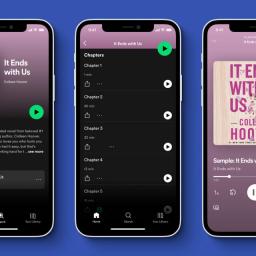
In addition to music and podcasts, Spotify has recently been working to cement its presence in the audiobook space. Today, the company announced Premium users in the US will be able to stream 15 hours of free audiobook content monthly as a part of their subscription. This offering was previously only available to Premium users in the UK and Australia.The company says there's no need for users to do anything. Audiobooks that are available to stream will be marked as Included in Premium" and users can hit play right away. Spotify notes that 15 hours is roughly two average audiobooks per month. If you end up hitting the limit, you can purchase a 10-hour top-up.The company says its Spotify Premium audiobook catalog now has something for everyone. Users with a Premium subscription can access over 70 percent of today's bestsellers, including Britney Spears' The Woman in Me and Jesmyn Ward's Let Us Descend. There are also many classic pieces of literature, like Emily Bronte's Wuthering Heights. Spotify believes its listeners will "love exploring the depths of our 200,000-strong catalog, unearthing genres from 'cozy mystery' to 'historical romance.'"Books that aren't eligible for free streaming will need to be purchased outright. Those books will have a lock on the play button, which means you'll need to purchase the title. To make a purchase, you'll follow a link to your browser. Once that's completed, you'll be taken back to the app to listen to your new book. All your purchased titles will show up in your library and be available for offline listening. Spotify also gives you the option to control playback speed so you can listen at your own pace.It makes sense that Spotify has included audiobooks in its app, but there are a few things that may deter users from tapping in. Yes, having a single place to listen to your music, podcasts and books is convenient but unlike with music and podcasts, you have a streaming limit here. Additionally, only a limited number of books are free to stream with your $11 subscription. While Audible also charges a subscription fee, users get one book to own every month, which may make it the more appealing and affordable option for some.This article originally appeared on Engadget at https://www.engadget.com/spotify-subscribers-in-the-us-now-get-15-hours-of-audiobooks-every-month-192000398.html?src=rss
|
 |
by Lawrence Bonk on (#6G7JX)
Cruise, the autonomous vehicle company owned by General Motors, has issued a recall for 950 of its robotaxis following a collision with a pedestrian in San Francisco last month, as originally reported by NBC. This move comes after California revoked the company's driverless permits, requiring a human on-board at all times.The collision that started all of this occurred on October 2 when a pedestrian was thrown into the path of a Cruise robotaxi after being hit by a human driver. The robotaxi tried to brake aggressively and pull over to the side of the road, but ended up dragging the pedestrian 20 feet before finally stopping.This triggered a federal probe and several independent investigations into the company, which dredged up some unsavory data. For instance, reports indicate that Cruise's algorithm had real trouble identifying children. The data also suggests that Cruise knew about this incredibly dangerous blind spot but still kept its vehicles on the streets.Internal safety documents acquired by The Intercept state that Cruise AVs may not exercise additional care around children," and that the robotaxis may need the ability to distinguish children from adults so we can display additional caution around." The company responded by touting its safety features, writing in a statement that it has the lowest risk tolerance for contact with children."All of that's moot now, as Cruise's robotaxis are being recalled. GM and Cruise have not issued statements as to when and if the cars would return to the streets. GM did announce, however, that it has already lost $1.9 billion on the venture through September of this year, as reported by CNBC.Rival companies like Google-owned Waymo are still operating driverless vehicles in California and beyond. As a matter of fact, the company just doubled the service area for its robotaxis in San Francisco and Phoenix.This article originally appeared on Engadget at https://www.engadget.com/gm-recalls-nearly-1000-cruise-robotaxis-after-pedestrian-collision-183049933.html?src=rss
|
 |
by Will Shanklin on (#6G7JY)
A group of Google employees has published an open letter on Medium calling out an alleged double standard in the company related to freedom of expression surrounding the Israel-Palestine war. The essay condemns hate, abuse and retaliation" within the company against Muslim, Arab and Palestinian workers. The employees who penned the letter, which doesn't include specific names out of fear of retaliation, demand that CEO Sundar Pichai, Google Cloud CEO Thomas Kurian and other senior leaders publicly condemn the ongoing genocide in the strongest possible terms." In addition, they urge the company to cancel Project Nimbus, a $1.2 billion deal to supply AI and other advanced tech to the Israeli military.We are Muslim, Palestinian, and Arab Google employees joined by anti-Zionist Jewish colleagues," the letter opens. We cannot remain silent in the face of the hate, abuse, and retaliation that we are being subjected to in the workplace in this moment."The letter cites specific examples of emotionally charged and inappropriate workplace behavior. These include unnamed Googlers accusing Palestinians of supporting terrorism, committing slander against the Prophet Muhammad," and publicly calling Palestinians animals" on official Google work platforms. The group describes leadership as standing idly by" in the latter two cases, and it says Google managers have called employees sick" and a lost cause" for expressing empathy toward Gaza residents.The employees say Google managers have publicly asked Arab and Muslim people in the company if they support Hamas as a response to their concern for Palestinian families. There are even coordinated efforts to stalk the public lives of workers sympathetic to Palestine and to report them both to Google and law enforcement for supporting terrorism,'" the letter reads.Google CEO Sundar PichaiASSOCIATED PRESSOther examples cited include heartfelt appeals" to donate to a charity for Gaza citizens being met with multiple comments dehumanizing Gazans as being animals,' disregarding their plight and calling upon Googlers to boycott relief work for civilians due to the fact that Palestinian schools and hospitals were being used for terrorism.'" The letter also accuses Google managers of using their rank to question, report, and attempt to get fired Muslim, Arab, and Palestinian Googlers who express sympathy with the plight of the besieged Palestinian people." It describes one manager endorsing surveillance of Google employees on social media," and then openly harassing them on Google work platforms.You have to be very, very, very careful, because any sort of criticism toward the Israeli state can be easily taken as antisemitism," Sarmad Gilani, a Google software engineer who took part in the letter, said in an interview with The New York Times. It feels like I have to condemn Hamas 10 times before saying one tiny, tiny thing criticizing Israel."In an emailed statement to Engadget, Google spokesperson Courtenay Mencini wrote, As we've shared, this is a highly sensitive time and topic in every company and workplace, and we have many employees who are personally affected. The overwhelming majority of those employees are not engaged in internal discussions or debate, and many have said they've appreciated our fast response and our focus on the safety of our employees." The company said the situation involves a small number of Googlers whose views don't represent the entire workforce. It encourages employees to voice concerns to HR, and it adds that it has taken action within the last month when conduct violates company policy.The tensions inflamed in the last month by the Israel-Palestine war have resurfaced resentments about Google's involvement in Project Nimbus. In 2021, Google and Amazon workers penned a similar open letter calling on their companies to pull out of the deal, which they said would enable surveillance of and unlawful data collection on Palestinians. Today's letter echoes that sentiment. We demand that Google stop providing material support to this genocide by canceling its Project Nimbus contract and immediately cease doing business with the Israeli apartheid government and military," it reads.In response to the Project Nimbus concerns, Google spokesperson Mencini wrote to Engadget, This is part of a longstanding campaign by a group of organizations and people who largely don't work at Google. We have been very clear that the Nimbus contract is for workloads running on our commercial platform by Israeli government ministries such as finance, healthcare, transportation, and education. Our work is not directed at highly sensitive or classified military workloads relevant to weapons or intelligence services."Update, November 8, 2023, 2:03 PM ET: This story has been updated to add a response from Google.This article originally appeared on Engadget at https://www.engadget.com/google-workers-publish-letter-criticizing-companys-israel-palestine-double-standard-181516404.html?src=rss
|
 |
by Andrew Tarantola on (#6G7JZ)
Google's Search Generative Experience (SGE), which currently provides generative AI summaries at the top of the search results page for select users, is about to be much more available. Just six months after its debut at I/O 2023, the company announced Wednesday that SGE is expanding to Search Labs users in 120 countries and territories, gaining support for four additional languages and receiving a handful of helpful new features.Unlike its frenetic rollout of the Bard chatbot in March, Google has taken a slightly more measured tone in distributing its AI search assistant. The company began with English language searches in the US in May, expanded to English-language users in India and Japan in August and on to teen users in September. As of Wednesday, users from Brazil to Bhutan can give the feature a try. In addition to English, SGE now supports Spanish, Portuguese, Korean and Indonesian (in addition to the existing English, Hindi and Japanese) so you'll be able to search and converse with the assistant in natural language, whichever form it might take. These features arrive on Chrome desktop Wednesday with the Search Labs for Android app versions slowly rolling out over the coming week.Among SGE's new features is an improved follow-up function where users can ask additional questions of the assistant directly on the search results page. Like a mini-Bard window tucked into the generated summary, the new feature enables users to drill down on a subject without leaving the results page or even needing to type their queries out. Google will reportedly restrict ads to specific, denoted, areas of the page so as to avoid confusion between them and the generated content. Users can expect follow-ups to start showing up in the coming weeks. They're only for English language users in the US to start but will likely expand as Google continues to iterate the technology.SGE will start helping with clarifying ambiguous translation terms as well. For example, if you're trying to translate "Is there a tie?" into Spanish, both the output, the gender and speaker's intention are going to change if you're talking about a tie, as in a draw between two competitors (e.g. "un empate") and for the tie you wear around your neck ("una corbata"). This new feature will automatically recognize such words and highlight them for you to click on, which pops up a window asking you to pick between the two versions. This is going to be super helpful with languages that, say, think of cars as boys but bicycles as girls, and you need to specify the version you're intending. Luckily, Spanish is one of those languages and this capability is coming first to US users for English-to-Spanish translations.Finally, Google plans to expand its interactive definitions normally found in the generated summaries for educational topics like science, history or economics to coding and health related searches as well. This update should arrive within the next month, again, first for English language users in the US before spreading to more territories in the coming months.This article originally appeared on Engadget at https://www.engadget.com/googles-ai-empowered-search-feature-goes-global-with-expansion-to-120-countries-180028084.html?src=rss
|
 |
by Kris Holt on (#6G7F8)
If you happen to open up a gift containing an iPhone 15 Pro, a iPad or even an M3-powered MacBook Pro this holiday season, you'll be able to play one of this year's biggest games on your new device pretty swiftly. Capcom has announced that the Resident Evil 4 remake will hit iPhone 15 Pro and iPhone 15 Pro Max, as well as iPads and Macs powered by an M1 or later chipset, on December 20. The Separate Ways expansion will be available on the same day.The remake of the 2005 survival horror classic will have Universal Purchase support, so you'll only need to buy it once to play it across iPhone, iPad and Mac. There's cross-progression too, so when you don't feel like sitting in front of your iMac anymore, you can move to your couch and continue where you left off on your iPhone or iPad.You can try a chunk of the game for free before you decide to take the plunge and buy it. That'll give you a chance to see how well Resident Evil 4 runs on your device and figure out whether the touch controls on iPhone and iPad work for you, though there's controller support as well. You'll be able to play using a keyboard and mouse on Mac, if you prefer.Apple has been focusing a bit more on bringing high-profile games to its devices as of late. Resident Evil Village is also available on iPhone 15 Pro, iPhone 15 Pro Max and Apple Silicon-powered iPads, while it emerged this week that 2022 hit Stray is coming to Mac in December. Assassin's Creed Mirageand Death Stranding are among the other games slated to hit Apple devices in the coming months.This article originally appeared on Engadget at https://www.engadget.com/the-resident-evil-4-remake-will-hit-iphone-15-pro-ipad-and-mac-on-december-20-172920550.html?src=rss
|
 |
by Lawrence Bonk on (#6G7F9)
Apple's 9th-gen entry-level iPad is on sale as part of an early Black Friday Amazon deal. You can snag the tablet for $249, instead of the usual price of $329. That's a savings of $80 and constitutes a discount of nearly 25 percent. This is the best price we've seen all year for Apple's tablet.This is the standard 10.2-inch iPad design that's been around since, well, forever. Despite lacking some of the more advanced features of the iPad Pro and some of the portability of the iPad Air, this model still offers plenty of bang for your buck. There's a reason, after all, that it made our list of best tablets in 2023, even with stiff competition.This model ships with 64GB of storage, an A13 Bionic chip and a decent battery that lasts a full day of use before requiring a trip to the outlet. The speakers are a bit janky but, wait for it, the 9th-gen iPad actually has a bona-fide headphone jack. The cameras are nothing spectacular, but tablets have never been on the cutting edge of image capturing tech, due to their increased size when compared to smartphones.The A13 Bionic chip is capable but lacks some of the oomph of Apple's newer chipsets, like the M1 and above. Even with the relatively ancient chipset, this iPad boasts more than enough speed for casual tasks. It also integrates with first-party accessories like Apple's Smart Keyboard and the first-gen stylus. At $249, this is a great deal for those looking for a simple tablet to watch movies on and peruse the web.Your Black Friday Shopping Guide: See all of Yahoo's Black Friday coverage, here. Follow Engadget for Black Friday tech deals. Learn about Black Friday trends on In The Know. Hear from Autoblog's experts on the best Black Friday deals for your car, garage, and home, and find Black Friday sales to shop on AOL, handpicked just for you.This article originally appeared on Engadget at https://www.engadget.com/apples-102-inch-ipad-drops-to-249-in-an-early-black-friday-deal-171501499.html?src=rss
|
 |
by Andrew Tarantola on (#6G7FA)
Depending on the hardware you're using, training a large language model of any significant size can take weeks, months, even years to complete. That's no way to do business - nobody has the electricity and time to be waiting that long. On Wednesday, NVIDIA unveiled the newest iteration of its Eos supercomputer, one powered by more than 10,000 H100 Tensor Core GPUs and capable of training a 175 billion-parameter GPT-3 model on 1 billion tokens in under four minutes. That's three times faster than the previous benchmark on the MLPerf AI industry standard, which NVIDIA set just six months ago.Eos represents an enormous amount of compute. It leverages 10,752 GPUs strung together using NVIDIA's Infiniband networking (moving a petabyte of data a second) and 860 terabytes of high bandwidth memory (36PB/sec aggregate bandwidth and 1.1PB sec interconnected) to deliver 40 exaflops of AI processing power. The entire cloud architecture is comprised of 1344 nodes - individual servers that companies can rent access to for around $37,000 a month to expand their AI capabilities without building out their own infrastructure.In all, NVIDIA set six records in nine benchmark tests: the 3.9 minute notch for GPT-3, a 2.5 minute mark to to train a Stable Diffusion model using 1,024 Hopper GPUs, a minute even to train DLRM, 55.2 seconds for RetinaNet, 46 seconds for 3D U-Net and the BERT-Large model required just 7.2 seconds to train.NVIDIA was quick to note that the 175 billion parameter version of GPT-3 used in the benchmarking is not the full-sized iteration of the model (neither was the Stable Diffusion model). The larger GPT-3 offers around 3.7 trillion parameters and is just flat out too big and unwieldy for use as a benchmarking test. For example, it'd take 18 months to train it on the older A100 system with 512 GPUs - though, Eos needs just eight days.So instead, NVIDIA and MLCommons, which administers the MLPerf standard, leverage a more compact version that uses 1 billion tokens (the smallest denominator unit of data that generative AI systems understand). This test uses a GPT-3 version with the same number of potential switches to flip (s the full-size (those 175 billion parameters), just a much more manageable data set to use in it (a billion tokens vs 3.7 trillion).The impressive improvement in performance, granted, came from the fact that this recent round of tests employed 10,752 H100 GPUs compared to the 3,584 Hopper GPUs the company used in June's benchmarking trials. However NVIDIA explains that despite tripling the number of GPUs, it managed to maintain 2.8x scaling in performance - an 93 percent efficiency rate - through the generous use of software optimization."Scaling is a wonderful thing," Salvator said."But with scaling, you're talking about more infrastructure, which can also mean things like more cost. An efficiently scaled increase means users are "making the best use of your of your infrastructure so that you can basically just get your work done as fast [as possible] and get the most value out of the investment that your organization has made."The chipmaker was not alone in its development efforts. Microsoft's Azure team submitted a similar 10,752 H100 GPU system for this round of benchmarking, and achieved results within two percent of NVIDIA's."[The Azure team have] been able to achieve a performance that's on par with the Eos supercomputer," Dave Salvator Director of Accelerated Computing Products at NVIDIA, told reporters during a Tuesday prebrief. What's more "they are using Infiniband, but this is a commercially available instance. This isn't some pristine laboratory system that will never have actual customers seeing the benefit of it. This is the actual instance that Azure makes available to its customers."NVIDIA plans to apply these expanded compute abilities to a variety of tasks, including the company's ongoing work in foundational model development, AI-assisted GPU design, neural rendering, multimodal generative AI and autonomous driving systems."Any good benchmark looking to maintain its market relevance has to continually update the workloads it's going to throw at the hardware to best reflect the market it's looking to serve," Salvator said, noting that MLCommons has recently added an additional benchmark for testing model performance on Stable Diffusion tasks. "This is another exciting area of generative AI where we're seeing all sorts of things being created" - from programming code to discovering protein chains.These benchmarks are important because, as Salvator points out, the current state of generative AI marketing can a bit of a "Wild West." The lack of stringent oversight and regulation means, "we sometimes see with certain AI performance claims where you're not quite sure about all the parameters that went into generating those particular claims." MLPerf provides the professional assurance that the benchmark numbers companies generate using its tests "were reviewed, vetted, in some cases even challenged or questioned by other members of the consortium," Salvator said. "It's that sort of peer reviewing process that really brings credibility to these results."NVIDIA has been steadily focusing on its AI capabilities and applications in recent months. "We are at the iPhone moment for AI," CEO Jensen Huang said during his GTC keynote in March. At that time the company announced its DGX cloud system which portions out slivers of the supercomputer's processing power - specifically by either eight H100 or A100 chips running 60GB of VRAM (640 of memory in total). The company expanded its supercomputing portfolio with the release of DGX GH200 at Computex in May.This article originally appeared on Engadget at https://www.engadget.com/nvidias-eos-supercomputer-just-broke-its-own-ai-training-benchmark-record-170042546.html?src=rss
|
 |
by Amy Skorheim on (#6G7FB)
Walmart has already kicked of its Black Friday sale. That's good news for anyone who wants to spend the day after Thanksgiving doing something other than shopping. The early Black Friday deals went live online today - Walmart+ members get a few hours of early access before everyone else - and will hit physical stores this Friday.
|
 |
by Devindra Hardawar on (#6G7FC)
We Met in Virtual Reality, a documentary shot entirely inside VRChat (now available to stream on Max), was one of the highlight's of last year's Sundance Film Festival. It deftly showed how people can form genuine friendships and romantic connections inside of virtual worlds - something Mark Zuckerberg could only dream of with his failed metaverse concept. Now the director of that film, Joe Hunting, is making an even bigger bet on virtual reality: He's launching Painted Clouds, a production studio devoted to making films and series set within VR.What's most striking about We Met in Virtual Reality, aside from the Furries and scantily-clad anime avatars, is that it looks like a traditional documentary. Hunting used VRCLens, a tool developed by the developer Hirabiki, to perform cinematic techniques like pulling focus, deliberate camera movements and executing aerial drone shots. Hunting says he aims to "build upon VRCLens to give it more scope and make it even more accessible to new filmmakers," as well as using it for his own productions.Additionally, Hunting is launching "Painted Clouds Park," a world in VRChat that can be used for production settings and events. It's there that he also plans to run workshops and media events to teach people about the possibilities of virtual reality filmmaking.His next project, which is set to begin pre-production next year, will be a dramedy focused on a group of online friends exploring an ongoing mystery. Notably, Hunting says it will also be shot with original avatars and production environments, not just cookie-cutter VRChat worlds. His aim is to make it look like a typical animated film - the only difference is that it'll be shot inside of VR. It's practically an evolution of the machinima concept, which involved shooting footage inside of game engines, using existing assets."Being present in a headset and being in the scene yourself, holding the camera and capturing the output, I find creates a much more immersive filmmaking experience for me, and a much more playful and joyful one, too," Hunting said. "I can look up and everyone is their characters. They're not wearing mo-cap [suits] to represent the characters. They just are embodying them. Obviously, that experience doesn't translate completely on screen as an audience member. But in terms of directing and the kind of relationship I can build with my actors and the team around me, I find that so fun."Throughout all of his work, including We Met in Virtual Reality and earlier shorts, Hunting has been focused on capturing virtual worlds for playback on traditional 2D screens. But looking forward, he says he's interested in exploring 360-degree immersive VR projects as well. It could end up being part of behind-the-scenes footage for his next VR film, as a part of an experimental project in the future. In addition to his dramedy project, Hunting is also working on a short VR documentary, as well as a music video.This article originally appeared on Engadget at https://www.engadget.com/the-director-of-sundance-darling-we-met-in-virtual-reality-launches-a-vr-studio-164532412.html?src=rss
|
 |
by Kris Holt on (#6G7FD)
Samsung has joined the generative AI rat race by announcing its own model. Developed by Samsung Research, Gauss (named after mathematician Carl Friedrich Gauss) will power several on-device AI technologies and could make its public debut in the next few months.Samsung Gauss Language can handle tasks like translations and summarizing documents. The tech will be able to write emails for you too, Samsung says. Samsung Gauss Code is a coding assistant, while Samsung Gauss Image is a generative image model. The latter can whip up images based on prompts and handle edits like style changes and additions. It can upscale low-resolution images too.Samsung employees are currently using Gauss in-house to bolster productivity, but the company plans to make it available to the public in the near future." According to The Korea Times, Samsung is likely to include it in Galaxy S24 devices, which should debut early next year.Running generative AI features on-device could help give Samsung a leg up over the likes of ChatGPT, which requires cloud connectivity. Qualcomm recently announced the Snapdragon 8 Gen 3 chipset, which supports on-device GAI operations and is likely to be used in Galaxy S24 phones. Google's Tensor 3, which is used in the Pixel 8 and Pixel 8 Pro, handles certain GAI tasks on-device too.Meanwhile, Samsung says it is working on various activities that ensure safe AI usage." Its AI Red Team is bearing in mind the principles of AI ethics" as it focuses on potential privacy and security issues including data collection and the GAI model's output. The company also flagged AI model development and service deployment as possible pitfalls.Still, this is another instance of Samsung attempting to forge its own path, despite alternatives being available. Bixby never really took off, and despite its users by and large wanting Google Assistant instead, Samsung insisted on making its voice assistant as prevalent as possible on its devices. The list goes on, with things like the Chromium-based Samsung Internet Browser when Chrome is right there.In fairness, Samsung wants to make its devices distinct from other Android phones and tablets and give them a unique selling point. Its generative AI tech will largely run in the background too, so its not like users will see heavy Samsung branding when they ask Gauss to generate an image. But shareholders who might be feeling skittish about recent financial results may have questions about why Samsung has been investing in its own GAI tech instead of using one of the many other available options.This article originally appeared on Engadget at https://www.engadget.com/samsungs-gauss-is-the-generative-ai-that-nobody-asked-for-163009407.html?src=rss
|
 |
by Cheyenne MacDonald on (#6G7FE)
Amazon Prime subscribers now have access to a deeply discounted One Medical membership for primary care services. The company announced today that Prime members can sign up for just $99 a year, or $9 per month. A One Medical membership typically costs $199 annually. In addition to the individual plan, Prime members who sign up for One Medical can add up to five other people for $6 each.Amazon announced its acquisition of One Medical in 2022 and finalized the $3.9 billion deal in February, when it began offering a temporary discount for One Medical memberships at $144 per year. It's now slashed that even further. One Medical has doctor's offices in major cities across the US, all of which will be available to Prime members who sign up. It offers all the basic health services, from annual physicals and maintenance for chronic conditions to same-day sick visits. One Medical also offers round-the-clock virtual care, or telehealth visits, and drop-in lab services. The membership doesn't cover the cost of visits though; patients will still have to bill through their insurance or pay out of pocket.Amazon has been pushing heavily into healthcare in recent years, with prescription services and even its own video- and text-based virtual clinic now among the perks of a Prime subscription. The company made its Amazon Clinic available to all states in the US over the summer, and began offering generic prescriptions for $5 a month with its RxPass at the beginning of the year. Amazon has also started offering drone deliveries for prescriptions in College Station, Texas.This article originally appeared on Engadget at https://www.engadget.com/amazon-prime-now-comes-with-discounted-access-to-one-medical-health-services-161500277.html?src=rss
|
 |
by Lawrence Bonk on (#6G7BR)
OpenAI's extremely popular ChatGPT service was down and non-functional for its 100 million weekly active users. The service went down just before 9AM ET. OpenAI has acknowledged the outage and said that it's also impacting the company's API services. However, the service was restored at around 10:50 AM ET.Instead of a working platform, ChatGPT users were greeted with a warning message that says it's at capacity right now." OpenAI wrote in an error report that it had identified an issue resulting in high error rates across the API and ChatGPT, and we are working on remediation." All told, the outage lasted around two hours.The services were also impacted for a few hours last night, but this was just a partial outage that didn't impact all users. OpenAI's chatbot platform has had very few, if any, operational issues until last night. The service has grown at a steady clip, reaching that aforementioned 100 million weekly user milestone without any hiccups. Also, there are over 2 million developers on the API side of things.OpenAI has been making announcements left and right, teasing customizable AI bots that anyone can create and even considering making its own chips to power the service.Update, November 8 2023, 10:55 AM ET: This story has been updated with information regarding ChatGPT's return to operational status.This article originally appeared on Engadget at https://www.engadget.com/chatgpt-is-down-after-a-major-openai-outage-154223315.html?src=rss
|
by Sam Rutherford on (#6G7BS)
It's rare, but now and then a company will go out on a limb and create a truly cutting-edge device, even if its books take a hit. That's exactly what HP has done with the Spectre Fold. Despite having the same processor as last year's ASUS Zenbook 17 OLED, HP's take on a flexible-screen laptop is thinner, lighter and more polished than anything that's come before it. The Spectre Fold represents a true leap when it comes to next-gen hybrid design to the point where you might even want to buy one. The issue is that at $5,000, this thing will blow up pretty much anyone's budget.DisplayThe centerpiece of the Spectre Fold is its 17-inch 2,560 x 1,920 OLED panel from LG, which features plenty of brightness (400 nits for SDR content or up to 500 nits with HDR) and an impressive color gamut (99.5 percent of DCI-P3). More importantly, it's got thin bezels and only the faintest hint of a crease. This means in laptop mode, the Spectre Fold looks almost like any other small ultraportable, with what is effectively a 12.5-inch screen. But at a moment's notice, you can pull its keyboard down to create what HP calls Expanded mode (which gives you the equivalent of one and a half screens) or prop the system up on its kickstand to use its full 17-inch panel. So depending on your needs, you get the perfect-sized display for your content or working space. And as a kid who grew up watching Transformers, there's something magical about a portable all-in-one that you can pack up and easily toss in a bag. (I still haven't decided if the Spectre Fold is more like Perceptor or closer to a bot like Reflector though.)DesignHowever, where HP really flexes its skills is with the Spectre Fold's design. Unlike the Zenbook 17 Fold which had a clunky design and flaky peripherals, it feels like HP has accounted for every detail. There's a kickstand that folds flush against the body of the system, so it disappears when not in use. And its keyboard fits neatly inside the system when closed, while hidden magnetic charging coils keep both the keyboard and HP's included stylus topped up so they're always ready to go. The whole kit weighs just 3.58 pounds and measures 0.84 inches thick (when closed), which is significantly thinner and lighter than ASUS' flexible Zenbook (4.04 pounds, 1.25 inches).Also, unlike the ASUS, there was virtually no setup involved. The keyboard automatically paired itself during the Spectre Fold's initial boot and its Bluetooth connection was rock solid. And while the Spectre's two USB-C ports with Thunderbolt 4 might seem awkwardly placed at first, having them on opposite sides of the device means there's always at least one within reach regardless of what mode the system is in. To ensure the Spectre Fold is never short on connectivity, there's an included dongle that adds two more USB-A ports and an HDMI jack. The result is a device that feels surprisingly polished, especially when you consider that this class of laptop has only existed for just a few years.Photo by Sam Rutherford/EngadgetThe one awkward thing about the Spectre Fold is that, while it has a sharp 5-MP webcam with support for Windows Hello, the orientation of the camera itself can be an issue depending on what mode the laptop is in. When set up as an all-in-one, the webcam is in portrait mode instead of landscape. And when you combine that with a sensor that's located on the left bezel of its display, it can be difficult to frame yourself properly while keeping the laptop centered.PerformanceThe Spectre Fold's processor is the one part of its spec sheet that doesn't feel quite as sophisticated. There's only a single configuration that features an Intel Core i7-1250U chip along with 16GB of RAM and a 1TB SSD. This isn't very impressive for a system this pricey, though HP says it chose that chip to ensure it would fit inside the Spectre Fold's super thin chassis (just 0.33 inches unfolded). Regardless, for general productivity, this thing is speedy enough. Just don't expect to do any sort of serious gaming or video editing.Battery LifeTypically on gadgets like this that are basically glorified concept devices, battery life is an afterthought. But the Spectre Fold defies those expectations with longevity that's on par with more-traditional ultraportables. On PCMark10's Open Office rundown test, it lasted 10 hours and 29 minutes, which is just 10 minutes shorter than the ASUS Zenbook S13's time of 10:39. Though that was in laptop mode. With its 17-inch panel fully unfolded, battery life dropped by two hours to 8:31.Wrap-upA lot of people remain skeptical about gadgets with flexible displays (for good reason, I might add), but the $5,000 Spectre Fold is the best example yet of what this tech can offer. It's a sleek machine that fits in tight spaces but also expands when you have more room to work. And when you need to pack up and go, it tucks away neatly in a bag. It gives you all the benefits of carrying around a portable monitor but with practically none of the drawbacks, while also addressing nearly every shortcoming from previous bendy attempts by Lenovo and ASUS.Photo by Sam Rutherford/EngadgetHowever, putting a concrete score on something like this feels like it would be missing the point. Sure, it's insanely expensive, but HP's goal wasn't to make something with mass appeal. The mission was to take the most advanced components and design principles available today to showcase the true potential of next-gen hybrid devices. And to that end, I think this device is a success. With the Spectre Fold, HP has made the first flexible-screen laptop you might want to buy. But now comes the hard part: making one that people can actually afford.This article originally appeared on Engadget at https://www.engadget.com/hp-spectre-fold-review-cutting-edge-at-all-costs-specs-price-153025668.html?src=rss
 |
by Pranav Dixit on (#6G78C)
A new feature in WhatsApp will let you hide your IP address from whoever you call using the app. Knowing someone's IP address can reveal a lot of personal information such as their location and internet service provider, so having the option to hide it is a major privacy win. This new feature provides an additional layer of privacy and security geared towards our most privacy-conscious users," WhatsApp wrote in a blog post.WhatsApp currently relays calls either through its own servers or by establishing a direct connection called peer-to-peer with whoever you are calling depending on network conditions. Peer-to-peer calls often provide better voice quality, but require both devices to know each other's IP addresses.Once you turn the new feature, known simply as "Protect IP address in calls" on, however, WhatsApp will always relay your calls through its own servers rather than establishing a peer-to-peer connection, even if it means a slight hit to sound quality. All calls will continue to remain end-to-end encrypted, even if they go through WhatsApp's servers, the company said.WhatsApp has been adding more privacy features over the last few months. In June, the company added a feature that let people automatically silence unknown callers. It also introduced a Privacy Checkup" section to allow users to tune up a host of privacy settings from a single place in the app, and earlier this year, added a feature that lets people lock certain chats with a fingerprint or facial recognition.This article originally appeared on Engadget at https://www.engadget.com/whatsapp-will-let-you-hide-your-ip-address-from-whoever-you-call-140045546.html?src=rss
|
 |
by Sarah Fielding on (#6G78E)
Providing read receipts has long been a choice across almost every messaging platform. Now, one of the biggest holdouts, Instagram, is finally testing a feature that lets users hide when they've "seen" a message. Meta CEO Mark Zuckerberg and Instagram head Adam Mosseri both announced the update on their Instagram Broadcast channels.Mosseri also shared an image of how the feature will work. The option will live under the Privacy and Safety tab, accessible by clicking on the person's name from inside the chat. From there, a section will appear called "Who can see your activity." Just switch the toggle below and all views moving forward should then become private. However, any messages sent in vanish mode will still have read receipts.MetaWhether you open a message with a video and can't listen right away or just don't want to respond in the moment, there are lots of reasons why hiding your read receipts can be beneficial. However, they didn't say when the option will roll out to everyone or even how exactly they're testing it. Also unclear is if you'll have to turn it off for each person or if there will eventually be an overarching option.Meta-owned WhatsApp has allowed users to hide their read receipts since 2014, but Messenger, like Instagram, still automatically shows when a message is viewed. Maybe one day all Meta platforms will allow for checking messages discreetly, but until then, we'll watch how the Instagram test goes.This article originally appeared on Engadget at https://www.engadget.com/instagram-finally-begins-testing-an-option-to-turn-off-read-receipts-131557528.html?src=rss
|
 |
by Mariella Moon on (#6G78F)
Google is rolling out new features and improvements for Home and Nest, one of which could make it much easier for users to create complex home automations even if they don't know how to code. The company's experimental "help me script" feature leverages the power of generative AI to create home automation scripts from the natural language prompts users type in. They can, for instance, write "when the TV turns on after sunset, dim the living room lights and close the blinds" to instantly generate a script they can use."Help me script" lives inside Google Home for the web, and it appears as a panel inside the script editor when users click on "+ Add new." All they have to do is write a prompt, press enter and then copy-paste the script results into the script editor. They'll then have to validate the script to verify that it has no errors and that it's working as intended before saving it to activate the automation. Based on the other potential home automation prompts that Google listed, including "use lights and TVs to make my house look occupied when I arm the security system" and "send me a notification when the doorbell rings but nobody is home," it could be a valuable security tool. It's just a test feature at this point, though, and is only available in Public Preview on Google Home for the web for a limited time only.In addition to the generative AI-powered script generator, Google has also announced that expanded controls for compatible smart home devices across different brands are coming to Home's Public Preview soon. The home panel, a Pixel-exclusive that gives users quick access to their smart home controls on their lock screen, is also making its way to other Android 14 devices.This article originally appeared on Engadget at https://www.engadget.com/google-wants-to-help-you-create-new-smart-home-automations-with-ai-generated-scripts-124008376.html?src=rss
|
 |
by Mat Smith on (#6G75F)
SAG-AFTRA, the union representing Hollywood performers, has reportedly responded to studios' last, best and final" offer to end the strike, rejecting clauses letting studios re-use AI-created likenesses of high-demand and deceased performers without consent from their estate or families. They can't have that loophole to exploit performers," a union-side source told The Hollywood Reporter. We could not allow that language to stand."Reportedly, the Alliance of Motion Picture and Television Producers (AMPTP) would secure AI scans" for Schedule F performers - union members earning more than $32,000 per TV episode or $60,000 per film. Studios would pay once to scan the likenesses of these performers without paying for their use or re-use - essentially giving them eternal rights to their face after paying once upfront. It appeared to offer limitless use of dead performers' AI-created likenesses without proper permission.After this part of the dispute became public, the union reportedly reached a common understanding" with AMPTP on thorny issues" like AI consent after an actor dies.- Mat SmithYou can get these reports delivered daily direct to your inbox. Subscribe right here!The biggest stories you might have missedRockstar may announce Grand Theft Auto VI this weekThe best retro gaming gifts for the holidaysStranger Things is coming back to Dead by DaylightWaze will now warn you if a road has a history of crashesThe best budget laptopsMaster & Dynamic debuts MW09 earbuds with upgraded sound, ANC and battery lifeStray is coming to macOS on December 5Things go from bad to worse for Cruise's robotaxisThe company reportedly kept operating its robotaxis despite issues recognizing children.GM's autonomous vehicle Cruise division is already going through a rough patch, with the California Department of Motor Vehicles (DMV) recently suspending its driverless permits over safety issues. Now, several new reports highlight other issues, including problems with its autonomous vehicles' (AVs) sensors' recognizing children and the frequency with which human operators must remotely take control. The cars apparently also struggle to identify large holes too. Now, it appears Cruise has halted production of its Origin autonomous vehicle after the California DMV pulled its license. A GM spokesperson confirmed to Engadget that the company is finishing production on a small number of pre-commercial vehicles and after that, plan[s] to temporarily pause production."Continue reading.Zelda, Mario and Pikmin give Nintendo a boost as console sales dwindleSelling almost 20 million copies of The Legend of Zelda: Tears of the Kingdom.EngadgetAs the Nintendo Switch nears the end of its time, digital game sales are helping the company continue to perform well. From March to September 2023, Nintendo reported selling 19.5 million copies of The Legend of Zelda: Tears of the Kingdom, which was released in May. It also sold 2.61 million units of Pikmin 4 after it came out in July, and Mario Kart 8 Deluxe gained 3.22 million more sales. The racing game has now sold 57 million copies. Nintendo is expected to release its new flagship console sometime next year.Continue reading.The Sony A9 III is the fastest full-frame camera everIt's been a while since Sony updated its epic A9 series.SonySony's latest pro-oriented mirrorless camera was four years in the making. The Alpha A9 III is the first full-frame camera on the market with a global stacked sensor, a sort of holy grail in the photographic world. It allows for some wild specs, like 120 fps shooting speeds with no blackout, up to a 1/80,000th of a second shutter speed and zero rolling shutter. The global shutter also allows for shutter speeds of 1/80,000th of a second (1/16,000th during continuous shooting), ten times faster than most cameras. Ten times! The Alpha A9 III goes on pre-order tomorrow for $6,000, with a vertical grip available for $400 - but won't arrive until spring.Continue reading.WatchOS 10.1.1 fixes Apple Watch battery-life bugThe patch just rolled out alongside a bug-fix update for iOS 17.If your Apple Watch hasn't been holding its charge like it used to, it's time to update to the latest version of watchOS. Earlier this month, several Apple Watch users noticed their batteries draining faster than usual after they installed watchOS 10.1. Apple acknowledged the battery drain issue and promised to release a fix - which happened today with the latest version of watchOS, 10.1.1.Continue reading.This article originally appeared on Engadget at https://www.engadget.com/the-morning-after-hollywood-studios-wanted-to-use-ai-generated-likenesses-of-dead-actors-without-permission-121531437.html?src=rss
|
 |
by Mariella Moon on (#6G75G)
The PlayStation Store at Amazon is selling various colors of the Playstation DualSense Wireless Controller for only $50 as part of its early Black Friday deals. You can get the controller for your PS5, which also works for PCs, right now for up to 33 percent off their usual prices. Yes, the models on sale include the colors that typically go for $75 - Cosmic Red, Starlight Blue, Nova Pink, Galactic Purple, Gray Camouflage, Volcanic Red and Cobalt Blue - in addition to the basic $70 white and the Midnight Black controllers.The DualSense controller has adaptive L2 and R2 triggers with varying levels of force and tension that change as you interact with your game's environment. It also comes with haptic feedback meant to add a layer of immersion to your gaming sessions. DualSense has a built-in microphone array, so you can chat with friends without a headset, though you can always plug one in through the controller's 3.5mm jack. And if you quickly want switch voice capture on or off, you can simply click the controller's dedicated mute button.In case you've still yet to buy a PS5, or if you're looking to gift one these holidays, you can get one bundled with Marvel's Spider-Man 2 at a discount, as well. The bundle is selling for $500, down $60 from its regular price. We enjoyed Spider-Man 2 when we reviewed it and found it even better than the first installment. It was action-packed from the beginning, with a gameplay that allows you to quickly swap between Peter Parker and Miles Morales for two different types of Spidey-experiences. We also praised Insomniac for expanding and streamlining the game's combat mechanics. The game is exclusive to the PS5, and you'll get a full game voucher to download it from the PlayStation Network when you purchase this bundle.Follow @EngadgetDeals on Twitter and subscribe to the Engadget Deals newsletter for the latest tech deals and buying advice.This article originally appeared on Engadget at https://www.engadget.com/playstation-dualsense-controllers-fall-to-50-in-early-black-friday-sale-115513371.html?src=rss
|
 |
by Sarah Fielding on (#6G75H)
The long fight to make Apple's iMessage compatible with all devices has raged with little to show for it. But Google (de facto leader of the charge) and other mobile operators are now leveraging the European Union's Digital Market Act (DMA), according to the Financial Times. The law, which goes into effect in 2024, requires that "gatekeepers" not favor their own systems or limit third parties from interoperating within them. Gatekeepers are any company that meets specific financial and usage qualifications, including Google's parent company Alphabet, Apple, Samsung and others.The European Commission is investigating whether iMessage's current functioning violates the DMA. Apple argues that its "small scale relative to other messaging services" and the lack of required use (or cost to do so) makes it irrelevant to the law. However, a letter from executives at companies such as Google, Vodafone and Orange argues that it should qualify as "enriched" messaging is only available to Apple users.Apple's iMessage not so subtly rewards you for communicating with other Apple devices (and for being an Apple user). Chats on iMessage stay blue until you add an Android user into the mix, and, suddenly, everything is green. On the tech side, Android users also get lower-quality photos and videos when they're sent through iMessage. Plus, iMessages can be sent over Wi-Fi, reducing the need for data when traveling or if you're simply running low on gigabytes for the month.In a statement aimed at keeping iMessage's benefits exclusive to Apple users, the company said, "Consumers today have access to a wide variety of messaging apps, and often use many at once, which reflects how easy it is to switch between them. iMessage is designed and marketed for personal consumer communications, and we look forward to explaining to the commission why iMessage is outside the scope of the DMA."If the fight against Apple is successful, changes to iMessage would be the latest shift forced by the European Commission. Apple's new iPhone 15 dropped the lightning charger following a law mandating all new mobile devices sold in the EU have a USB-C port by the end of 2024.This article originally appeared on Engadget at https://www.engadget.com/google-and-eu-mobile-carriers-push-european-commission-to-force-apple-to-open-imessage-110558675.html?src=rss
|
 |
by Mariella Moon on (#6G73F)
Meta will require advertisers to disclose whether the ads they submit for its websites have been digitally altered, including through the use of AI tools, if they're political or social in nature. Ads that have been digitally altered will be marked as such on Meta's platforms, in the same way some advertisements come with a "Paid for" disclaimer. The company will start implementing the rule in the new year, just as the campaign period for what's expected to be a brutal and divisive 2024 US presidential elections heats up.In a blog post, Meta explained that advertisers have to disclose in the advertising flow if they submit a social issue, electoral or political ad with photorealistic images or videos - or one with realistic sounding audio - that was altered to make a real person say or do something they didn't actually say or do. They're also required to tell Meta whether they're submitting an ad with a realistic-looking person that doesn't exist, a realistic-looking event that didn't happen or an altered footage of a real event that truly occurred. If they submit a fake image, video or audio recording of an event that allegedly took place - say, something they created with the help of AI image generators - they have to notify Meta, as well. Advertisers don't need to disclose if they'd only size adjusted, cropped, color corrected and sharpened their ads.Meta, which already expects some advertisers to run afoul of the new rule, warned that it will reject ads if it determines that they failed to or deliberately didn't disclose that they'd digitally altered their submissions. Further, it said that repeated strikes against the rule "may result in penalties." It has yet to elaborate on the authorization process advertisers have to go through and the safeguards in place to prevent them from gaming the system, but it promised to share more details in the future.Politicians and supporters from both sides of the aisle have already raised concerns about the possibility of AI being used to propel election misinformation to new heights this campaign season. There's already an altered video of President Joe Biden that was edited to make him appear as if he was inappropriately touching his granddaughter circulating on Facebook. Meta's Oversight Board opened a case after users appealed to have the video removed, and it's expected to release a decision in the near future.This article originally appeared on Engadget at https://www.engadget.com/meta-will-mark-political-and-social-ads-altered-by-ai-starting-next-year-110033484.html?src=rss
|
 |
by Steve Dent on (#6G71R)
Google is rolling out a new feature that allow advertisers to create AI generated content using the same technology as the Bard chatbot, confirming a report from earlier this year. The feature is now available in beta on Google's Performance Max advertising product, allowing US advertisers to create and scale text and image assets for campaigns using AI, the company announced in a blog post.Performance Max is already an AI-powered product that works across multiple Google products including Youtube, search, display and others. It optimizes ads by analyzing performance data, and the new feature supplements that by using AI to assist in asset creation as well. As Google puts it, the features will allow advertisers to quickly create high-quality, personalized assets on various Google platforms."Asset variety is a key ingredient for a successful Performance Max campaign," wrote Google's Pallavi Naresh. "You've told us that creating and scaling assets can be one of the hardest parts of building and optimizing a cross-channel campaign. Now, you'll be able to generate new text and image assets for your campaign in just a few clicks."GoogleMuch like Bard or ChatGPT, users feed prompts to the AI, and it creates unique images and text for each business. Marketers can review and edit any assets created by the system prior to publication. It can be used to create versions of the same ad, or build new ads from scratch. All AI-generated imagery contains a visible watermark and is tagged as such. "We also have guardrails in place to prevent our systems from engaging with inappropriate or sensitive prompts or suggesting policy-violating creatives," Naresh wrote.The feature should help marketers create advertising materials more quickly, while of course helping Google post those ads and make money more quickly. In that sense, it's pretty much a perfect AI use case for Google, which makes the vast majority of its revenue from advertising. The new system is currently in beta and only available in the US, but is expected to roll out more widely by the end of 2023.This article originally appeared on Engadget at https://www.engadget.com/google-is-rolling-out-tools-that-let-advertisers-create-ai-generated-content-080255864.html?src=rss
|
 |
by Steve Dent on (#6G70J)
Many Pixel owners have been left with a bad taste in their mouths after it took Google over a month to fix a serious bug, Ars Technica has reported. It first appeared with the launch of Android 14 back on October 8th, locking some users with multiple accounts out of their device's local storage. It affects multiple devices ranging from the Pixel 4 to the Pixel 8, and for many users, it was akin to being locked out of their phone by ransomware.Some folks were unable to unlock their devices, while others were able to boot up but had no access to lock storage. However, the bug rendered some phones completely unusable, as they would continuously bootloop and never reach the home screen. Reports of the issue appeared shortly after Android 14 launched, but Google kept rolling out the buggy release and only acknowledged the flaw some 20 days after it appeared.The November update patch is now rolling out, but the initial November 2 release notes weren't very positive. Google said users locked out of their storage may only get some data back, and those experiencing a bootloop may lose everything. Today's update, however, states that users who were unable to access media storage should get all their data back once they install the November patch.Those stuck in a reboot may not be as lucky, though. Those folks will be able to at least get up and running again after submitting a form. However Google said that "data recovery solutions are still being investigated for devices that are repeatedly rebooting," adding that "we'll share additional updates soon."The sordid episode shows how Google failed to properly implement its own much-touted failsafe systems, as Ars Technica noted. It kept rolling out Android 14 with the flaw despite multiple reports, and the vaunted dual partition system didn't work because it didn't accurately detect a boot failure. Finally, it took Google ages to elevate the issue to a higher priority, leaving many users stuck with bricked phones for weeks. "Little did I realize that 'seven years of updates' was not a feature, but a threat," said one disgusted user on Google's issue tracker.This article originally appeared on Engadget at https://www.engadget.com/google-has-fixed-a-bug-in-android-14-that-locked-pixel-users-out-of-their-devices-061040556.html?src=rss
|
 |
by Mariella Moon on (#6G6Z7)
We may get official details about Grand Theft Auto VI very, very soon, if Bloomberg's report turns out to be true. Rockstar Games plans to announce the next entry in the GTA franchise as early as this week, according to the news organization. Plus, Rockstar is reportedly publishing a trailer for the game next month as part of its 25th anniversary celebration. It's one of the most anticipated games for the current crop of consoles, especially since the fifth main installment in the series - the second-best selling video game of all time, as Bloomberg notes - came out way back in 2013.While Rockstar has yet to launch the title, some fans may have already gotten a glimpse of early-days gameplay footage due to a leak that a hacker uploaded online in 2022. It contained 90 seconds of gameplay from a GTA VI test build, showing one of the two playable protagonists, a female character named Lucia, robbing a store. Another clip showed the other playable character riding the "Vice City Metro," indicating that its story takes place in Rockstar's fictionalized version of Miami. The developer later confirmed the contents of the leak and said that the game's creation would continue "as planned."Rockstar will likely reveal GTA VI's release period when it announces the game, but its parent company Take-Two previously hinted that it's coming out sometime in 2024.This article originally appeared on Engadget at https://www.engadget.com/rockstar-may-announce-grand-theft-auto-vi-this-week-045219455.html?src=rss
|
 |
by Nathan Ingraham on (#6G6S8)
It's been rumored for years, but Nintendo still managed to surprise us with a late-day announcement: a live-action film based on The Legend of Zelda is in the works, directed by Wes Ball. Ball's most recent films are the Maze Runner series, the latest of which was released in 2018. Nintendo's Shigeru Miyamoto is producing the film along with Avi Arad, who has produced or executive produced loads of Marvel movies over the last decade-plus.Surprisingly, the film is being co-financed by Nintendo and none other than Sony Pictures Entertainment. You know, part of the same company that owns PlayStation. Nintendo was quick to point out that it is financing more than 50 percent of the film, but that Sony Pictures Entertainment will be the the theatrical distributor.Aside from that, there's no other detail besides this tweet from Miyamoto:
|
 |
by Stephanie Barnes,Nathan Ingraham on (#6G6S9)
If your Apple Watch hasn't been holding its charge like it used to, it's time to update to the latest version of watchOS. Earlier this month, several Apple Watch users noticed their batteries draining faster than usual after they installed watchOS 10.1. Of course, users took to social media to voice their observations and to make sure it wasn't an isolated happening. Later, Apple acknowledged the battery drain issue and promised to release a fix -- which happened today with the latest version of watchOS. 10.1.1. Specifically, Apple says that the update "address an issue that could cause the battery to drain more quickly for some users."Apple has come a long way with its software updates over the years. These days, most of Apple's updates are fairly stable but that doesn't mean they're immune to getting hit by the occasional bug that can significantly affect users. The Apple Watch is a wearable device that has become enmeshed in the routines of many. To keep up with the needs of users, good battery life on a smartwatch is essential.So, this fix could not have come soon enough as the battery drain problem has been affecting quite a few users. One user said "watchOS 10.1 is killing the battery on my Apple Watch," causing it to drop from 100 to 50 percent in less than an hour. Additionally, the issue has affected Apple Watches across the board, including older ones like the SE and the latest models like the Apple Watch Ultra 2.Apple's watchOS 10.1.1 also includes unspecified bug fixes, as usual. As usual, this update comes alongside a corresponding iOS one, 17.1.1. This update addresses Apple Pay and NFC features that stop working on iPhone 15 models after wirelessly charging in certain vehicles. It also has a all-important fix for the snowing graphic on the weather widget on the Lock Screen.This article originally appeared on Engadget at https://www.engadget.com/apple-watch-battery-life-bug-is-fixed-with-watchos-1011-215917460.html?src=rss
|
 |
by Kris Holt on (#6G6PB)
It's been quite some time coming, but Annapurna Interactive has revealed when Mac gamers can get their paws on one of the most adorable titles of the last few years. Stray is coming to macOS on December 5 via the Mac App Store and Steam. You'll need a fairly recent system, though. Stray will be compatible with Macs that have an Apple Silicon chipset, so if you have an Intel-based machine you're out of luck (unless you check it out on a cloud service or another platform).Stray debuted on PC and PlayStation in July 2022 and it arrived on Xbox this August. It's one of Engadget's favorite games of last year, and it's neat that more people will soon get to check out this absorbing cyberpunk adventure on Mac before it's adapted into a movie.Apple has been making a slightly bigger push into gaming, and some notable publishers are bringing their titles to Mac (and even iPhone). Resident Evil Village arrived on iPhone 15 Pro and some iPad models last week, while Assassin's Creed Mirage, Death Strandingand the Resident Evil 4 remake are all coming to the Apple ecosystem in the coming months.This article originally appeared on Engadget at https://www.engadget.com/stray-is-coming-to-macos-on-december-5-204920804.html?src=rss
|