 |
by Kris Holt on (#6EYX0)
Build a Rocket Boy has unveiled a new trailer for Everywhere, an ambitious sandbox title that will enable players to build their own experiences and explore others. If that sounds a bit like Fortniteon the surface, just wait until you see the art style. It looks very much like Epic's game, right down to the stylized character models.The clip provides the first look at gameplay. It's clear Everywhere has much more to offer than shooting and driving around pretty landscapes - the trailer shows a skeeball game and one character dodging obstacles in a gauntlet. It puts a heavy onus on the building aspect too, via the narration and some of the creative tools it shows off.Build a Rocket Boy, which is led by former GTA producer Leslie Benzies, says the trailer shows off some of the "scale and variety" of what Everywhere has to offer. It says the project seamlessly blends gameplay, adventure, creativity and discovery in an all-new multi-world gaming experience that redefines how players connect with one another and the digital world around them," according to VGC.The studio announced Everywhere at Gamescom 2022 and it said at the time that the game would arrive sometime this year. There's no release date as yet, but Build a Rocket Boy plans to host a closed alpha test soon. You can create an account and claim your username now to have a shot at taking part in the first PC test.This article originally appeared on Engadget at https://www.engadget.com/everywhere-gameplay-trailer-shows-off-an-ambitious-sandbox-with-a-fortnite-aesthetic-140222957.html?src=rss
|
 Engadget - Technology News & Expert Reviews
| Link | https://www.engadget.com/ |
| Feed | https://www.engadget.com/rss.xml |
| Updated | 2026-09-22 00:17 |
by Billy Steele on (#6EYX1)
Most earbud and headphone makers are starting to skip the annual update cycle. Sure, many of them release a new model regularly, but in terms of overhauling a previous product, the timelines are typically more extended. Bose has made an exception, choosing to reveal the QuietComfort Ultra Earbuds ($299) alongside its new QuietComfort Ultra Headphones a year after their predecessor. The new earbuds bring a familiar design and the same outstanding active noise cancellation (ANC), but the company is also promising a big boost in sound quality with its new Immersive Audio tech. For the same price as the set they replace, the QC Ultra Earbuds deliver spatial audio without the requirement, or the headache, of having to stream specialized content.DesignBose made minimal changes to the design, retaining basically the same formula from the QuietComfort Earbuds II . One key difference is the touch panel on the outside, which is now silver instead of matching the earbuds (which were black, gray or white). It's still plastic, but it's just a different hue. Second, the company changed the stability bands" or fit wings so they're easier to properly install. That's a welcome update since getting those securely in place was an issue on the QC Earbuds II.With an almost entirely identical design from model to model, Bose didn't reduce the size of the earbuds. This means they're still quite large at a time when a lot of the competition continues to get smaller. However, the trade-off is the outer touch panel is larger than on tinier models from other companies. This translates to more reliable controls on the QC Ultra Earbuds and allows Bose to throw in a dedicated swipe gesture for volume adjustment, which is rare in this category.Software and featuresPhoto by Billy Steele/EngadgetAll of the QuietComfort Ultra Earbuds' features are accessible from the Bose Music app. Here, the company gives you battery percentages for each bud and a volume control at the top of the main screen. Below, you can access controls to toggle listening modes (ANC, transparency and Immersive Audio), the EQ, detailed settings, earbud seal test and options to reconfigure the shortcut gesture.Under Immersive Audio, the app lets you switch between off, Still and Motion modes. They're pretty self-explanatory, but I will point out that the Motion setting keeps the sound in front of you when you're moving so music, movies and other content doesn't stay in a fixed place or seem like it's coming from behind or your pocket when you leave your desk. And since Bose lets you reconfigure the long press action on the earbuds, you can choose to have one side cycle through Immersive Audio modes while the other is set to shuffle through ANC (Quiet), transparency (Aware) and Immersive.Sound qualityBose's new Immersive Audio is a big leap for sound quality on the company's earbuds. The QuietComfort Earbuds II and the QuietComfort Ultra Earbuds both sound good right out of the box. But with this Ultra model and its spatial audio tech, Bose finally has the sonic chops to compete with comparable products from Sony and Sennheiser. And the best part is that you don't need specially created content or a specific streaming service to unlock it. Immersive Audio works with everything, no matter where you're playing it from.Like most implementations of spatial audio, Bose's version takes the stock tuning and makes it louder. There's more presence to the sound, and noticeably more volume, but there's also more clarity and detail. The company says it achieves this with virtualization tech that seeks to eliminate the sensation that sound from earbuds is inside your head. Instead, it makes it seem like you're sitting in the acoustic sweet spot" with speakers placed in front of you. The result is not only the feeling that you're not wearing the earbuds at all, but also extremely natural-sounding audio that's immersive without having to be dimensional to have an impact.I noticed the biggest difference between the stock tuning and Immersive Audio on acoustic-driven albums like Zach Bryan's self-titled release, Gregory Alan Isakov's Appaloosa Bones and Noah Kahan's Stick Season. All three are able to harness the effect of Bose's spatial sound to the point that sometimes it seems like Zach Bryan is sitting right in front of you picking his guitar. When it's just strings and a voice, you can really hear what Bose has achieved, but it doesn't just work for folksy country or singer/songwriter ballads. You can clearly hear the influence of Immersive Audio throughout a range of genres, including metal, hip-hop and electronic tunes. At first you notice it's louder, but after the initial jolt, the amplified details like texture in distorted guitars and synths, as well as reverb on the drums and layered instruments, become more apparent.Noise cancellation performancePhoto by Billy Steele/EngadgetThe QuietComfort Earbuds II have been our top pick for pure ANC performance in our best wireless earbuds guide since their debut. Bose has a long history of stellar noise cancellation and it's still at the top of the heap. With the QuietComfort Ultra Earbuds, the company remains the best at blocking distractions, and these buds are especially good at reducing airplane noise to near silence during a flight. This new model struggles with voices, but that's a pitfall of many earbuds and headphones. Still, when you encounter any kind of constant clamor, the QC Ultra Earbuds are likely your best choice if ANC effectiveness is top of mind.Call qualityBose says it made improvements with dynamic microphone mixing and adaptive filters. According to the company, the QuietComfort Ultra Earbuds can also prioritize which earbud is getting the least wind interference while picking from a number of noise filters to keep you sounding clear - all in real time. During my tests, voice quality wasn't exactly pristine, but the earbuds did a great job of blocking background sounds to reduce distractions. Is it the best? No. Will it get the job done with minimal fuss? Absolutely.Battery lifeThe new Immersive Audio tech will impact battery life, and Bose is upfront about that. The company says that with that spatial sound enabled, you can expect two hours less of playing time per charge. So instead of six hours with ANC, you'll get around four, but that's with noise cancellation and Immersive Audio turned on. During my tests, the QC Ultra Earbuds outperformed those estimates as the Bose Music app was still showing 30 percent left after four hours. What's more, there are three additional charges in the case for a total of 16 to 24 hours of use.The QuietComfort Earbuds II didn't have wireless charging and the new model doesn't either - at least not out of the box. If you want to top them up without a cable, you'll have to buy a silicone cover for the charging case, which will cost an additional $50. Sure, it's better than not offering wireless charging at all, but it would've been nice if the company had just built it into the product without requiring another component and an extra purchase.The competitionPhoto by Billy Steele/EngadgetBose's main competition for full-featured, noise-canceling earbuds is Sony, which debuted its WF-1000XM5 model in July, improving upon what was already a stellar formula. Simply put, no other company packs in as many features as Sony, and it manages to keep top-notch sound quality and ANC performance while doing so. The M5 is more expensive than previous models at $300, but that's on par with the QC Ultra Earbuds. Sony also didn't improve battery life from the M4, which is eight hours, and some of those handy features still need fine tuning.For the Apple faithful, the second-gen AirPods Pro are also worth considering. Apple's earbuds are loaded with features that make them the perfect companion for the iPhone and its other devices. The company has consistently put out the most natural-sounding transparency mode and new tricks enabled by the H2 chip, like Adaptive Audio, have made the year-old model even better. Great sound quality and solid ANC performance are also part of the appeal.Wrap-upThe QuietComfort Earbuds II were already the best true wireless model Bose had ever built, mostly due to their superior active noise cancellation. Add spatial audio that doesn't require you to jump through any extra hoops to use and the QC Ultra Earbuds are immediately a worthwhile upgrade. Sure, there's still work to be done on things like transparency mode, call quality and built-in wireless charging. But perhaps for the first time, Bose has a set of earbuds that can compete with the best sonically and not just purely on its noise-blocking merits.This article originally appeared on Engadget at https://www.engadget.com/bose-quietcomfort-ultra-earbuds-review-spatial-audio-makes-all-the-difference-140057701.html?src=rss
 |
by Devindra Hardawar on (#6EYS9)
It's been an AI-heavy year for Microsoft, following the explosive launch of Bing's ChatGPT-powered AI chat. Today, Microsoft has even more AI news to drop alongside its annual refresh of Surface PCs. While the hype may be low, we're expecting to see the a lot of new hardware today. Judging from the most recent batch of rumors, we'll be hearing about the Surface Laptop Studio 2, Surface Laptop Go 3 and Surface Go 4 today. It's also a great time for Microsoft to update the Surface Pro with Intel's latest chips (and perhaps deliver a better 5G option than the Arm-powered Surface Pro 9).Microsoft's Surface event kicks off at 10AM Eastern today, and we're here in attendance, ready to bring you every announcement as it happens, so follow along with our live coverage below! Unfortunately, there's no livestream, but the company says there will be a recording of the event available later today.This article originally appeared on Engadget at https://www.engadget.com/microsoft-surface-2023-liveblog-live-updates-130031998.html?src=rss
|
 |
by Sarah Fielding on (#6EYSA)
The United States government is once again providing free COVID-19 tests following a summer that saw cases spike and the cost of at-home tests fall on individuals. Starting Monday, September 25, every household can request four free COVID-19 tests through the Department of Health and Human Services' (HHS) site COVID.gov. The tests are intended for use through the end of 2023, with the HHS noting that previously distributed tests have extended expiration dates displayed here.A previous program to supply free COVID-19 tests stopped in May following the end of the public health emergency. In that time, the government claims to have been restoring its stockpile. However, $600 million is now going towards the manufacturing of COVID-19 tests and subsequent purchase of 200 million for at-home use. HHS Secretary Xavier Becerra announced the free tests and further investment while getting his COVID-19 booster at an event in Washington, DC. "These critical investments will strengthen our nation's production levels of domestic at-home COVID-19 rapid tests and help mitigate the spread of the virus," Becerra said in a statement.COVID-19 cases across the US started to increase in early July after months of decline. In the week of September 3 to 9, the Centers for Disease Control and Prevention (CDC) reported hospital admissions increased by 7.7 percent to 20,538, and deaths due to COVID-19 increased by 4.5 percent to 2.3 percent.Two-plus months after the spike began, the HHS has acted and addressed the common sentiment of being "done" with the virus - despite its continued existence. "We know, if past is prologue, it'll circulate to a higher degree and spread, and cases will go up in the fall and winter seasons," Dawn O'Connell, the assistant secretary for preparedness and response at HHS, said in a statement. "Anticipating that that would be true again, or something similar, we want to make sure the American people have these tools." The new COVID-19 boosters are also rolling out across the country, with the CDC recommending everyone six months or older get the latest shot.This article originally appeared on Engadget at https://www.engadget.com/us-brings-back-free-at-home-covid-19-tests-as-cases-continue-to-spike-122441678.html?src=rss
|
 |
by Mariella Moon on (#6EYSB)
When Octopath Traveler 2 launched earlier this year, Microsoft's consoles were noticeably missing from the list of supported platforms. Now, at this year's Tokyo Game Show, Square Enix has revealed that the game is making its way to Xbox One, Series X and Series S sometime in early 2024. Xbox's Sarah Bond introduced Square Enix VP Yu Miyake during the event and also revealed that the platform has more than doubled its number of Japanese games over the past five years.The high definition 2D pixel-based game that's reminiscent of a different era in gaming came out in February for the Switch, the PlayStation 4, the PlayStation 5 and Steam. It built on the strengths of its predecessor, with its new battle dynamics and game mechanism, but we still found its eight storylines too disconnected to make us feel a meaningful connection between the characters. Still, we thought it was a pretty game with better cinematic cutscenes than the first entry of the series and a polished soundtrack.Square Enix and Xbox don't have an exact date for the game's release just yet. But it doesn't come as a surprise that Xbox is getting it much later than other consoles, seeing as the first Octopath Traveler didn't become available for the Xbox One until three years after it launched.This article originally appeared on Engadget at https://www.engadget.com/octopath-traveler-2-arrives-on-xbox-in-early-2024-121817577.html?src=rss
|
 |
by Mariella Moon on (#6EYSC)
Glen Schofield, the co-creator of survival horror game Dead Space, has is leaving Striking Distance Studios. He will be replaced by current Chief Development Officer Steve Papoutsis as CEO. Schofield conceptualized Dead Space when he was with EA, before leaving the company and founding a couple of game studios. One of them is Striking Distance, where he created The Callisto Protocol, which people have been calling the spiritual successor to Dead Space since it was still in development. Like the older game, Callisto is also in the survival horror genre, except it was generally panned by critics.Engadget's Jessica Conditt was optimistic after playing an hour-long preview of the title, which turned out to be best portion of the game that suffered from glitches and unwieldy mechanics as a whole. Meanwhile, the Dead Space remake EA released shortly after Callisto's launch won over critics and old fans alike.Striking Distance Studios' parent company Krafton, which had poured over $160 million into the game's development, was originally hoping to sell 5 million copies of Callisto this year. However, it lowered its expectations to 2 million units after seeing how it performed in its first few weeks. The company likely won't be able to recoup its losses and has laid off employees over the past months.Krafton told Bloomberg, though, that Schofield's departure is voluntary and that he intends to "pursue new opportunities." Striking Distance's chief operating officer and chief financial officer are also leaving the company voluntarily, the company said. It's unclear where Schofield is headed next: His LinkedIn still lists the studio as his current place of employment. "Creating Striking Distance Studios has been an incredible journey and I'm so proud of what we've achieved with The Callisto Protocol, a game close to my heart," he said in a statement. "While pursuing a new adventure is exciting, leaving SDS is bittersweet, but I know the studio is in excellent hands."This article originally appeared on Engadget at https://www.engadget.com/dead-space-co-creator-leaves-callisto-protocol-studio-after-it-flopped-115021265.html?src=rss
|
 |
by Mat Smith on (#6EYQ1)
Amid a barrage of Amazon-branded tablets and Alexa-powered tech, Dave Limp, SVP of Amazon Devices and Services, announced the company's digital assistant will soon tap into a purpose-built large language model (LLM) for almost every new Echo device.Amazon set out to design the LLM based on five foundational capabilities. One of these is ensuring interactions are conversational," and the company claimed it studied what it takes to make a great conversation. It's not just words; it's body language, it's understanding who you're addressing, it's eye contact and gestures." Still waiting on Amazon to add eyes and hand gestures to its Echo devices. Has anyone seen Astro recently?Based on the demos at Amazon's showcase, however, it's got some work to do. When Limp asked Alexa to compose a quick message to invite friends over for BBQ, the assistant requested his friends' attendance for BBQ chicken and sides" - which is how we invite humans over for dinner, right? Alexa also outright ignored the Amazon SVP's requests at points during the presentation, but I'll put those issues down to the fraught nature of voice assistant demos in a live setting. We've pulled all of Amazon's announcements together right here.- Mat SmithThe biggest stories you might have missedFinal Fantasy 7 Rebirth hands-on: Broader horizons and deeper combatAmazon's new Echo Frames promises longer battery life and better audioAll the hilarious corporate BS you might have missed in the Xbox leaksApple's new FineWoven iPhone 15 MagSafe cases are already discountedApple Watch Series 9 reviewFreedom from touching your screen.EngadgetWith the Apple Watch Series 9, Apple is introducing a new method of interaction: Double Tap. It's also rolling out on-device Siri processing, which will let you ask the assistant for your health data and to log your daily stats. When both hands, or at least your watch hand, are occupied, Double Tap will obviously not be helpful. You'll need to have at least your thumb and index finger available to pinch. But when Engadget's Cherlynn Low is cleaning her apartment, holding a side plank, raising a single dumbbell or reading a book, it makes her life easier. Also, it's worth noting that the Apple Watch Series 9 and Ultra 2 are the company's first carbon-neutral products. Read on for our full verdict.Continue reading.MGM says its hotels and casinos are back up and runningBut the full damage of the attack remains unclear.All MGM Resorts hotels and casinos are back up and running as normal, nine days after a cyberattack shut down systems across the company. The ALPHV ransomware group took credit for the attack shortly after systems went offline. The group claimed it used social engineering tactics, using a bit of LinkedIn knowledge and a short phone call to access crucial systems across casinos. Worryingly, the attacks both started through identity management vendor Okta - and at least three other Okta clients have been hit by cyberattacks, according to a Reuters report.Continue reading.Amazon debuts Eye Gaze accessibility features on the Fire Max 11 tabletIt's also bringing on-screen translations to Alexa calls on its smart displays.AmazonAmazon announced two new accessibility features coming to its devices later this year. First is Eye Gaze on Alexa, which will let those with mobility or speech disabilities use their gaze to perform preset actions on the Fire Max 11 tablet. This is the first time Amazon has worked on gaze-based navigation of its devices, and it will use the camera on the Max 11 to keep track of where a user is looking. The preset actions include smart home controls, media playback and making calls. Eye Gaze will be available on the Max 11 later this year at no additional cost, although the company did not otherwise elaborate on how Eye Gaze actually works.Amazon is also adding a new Call Translation feature that will transcribe Alexa calls on Echo Show devices. It can convert them into over 10 languages, including English, French, Spanish and Portuguese. The feature will also launch later this year.Continue reading.This article originally appeared on Engadget at https://www.engadget.com/the-morning-after-amazon-turns-alexa-into-a-more-conversational-chatbot-for-your-home-111539413.html?src=rss
|
 |
by Steve Dent on (#6EYQ2)
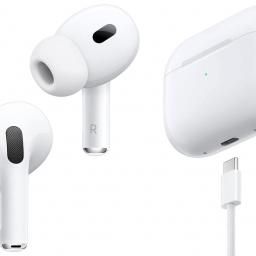
With the big switch to USB-C on the iPhone 15, Apple also made the same change to its latest AirPods Pro wireless ANC headphones, with a USB-C charging case. They only just came out over a week ago, but you can already grab them on sale for $200 at Amazon - a very solid 20 percent discount.The switch to a USB-C charging case for the AirPods Pro was telegraphed well in advance thanks to various leaks, and we even saw a homemade version from the same guy who adapted an older iPhone to USB-C. The update should (eventually) eliminate a lot of cable clutter, and you can even charge the earbuds directly from an iPhone 15.Along with the new port, Apple also upgraded both the case and earbuds weatherproofing, boosting the rating from IPX4 to IP54 with dust protection. The new model carries the same H2 chip as the Vision Pro headset, so it will support low-latency lossless audio in that device when it launches next year. That did create some controversy, though, as the previous AirPods Pro with a Lightning charging case won't work with Vision Pro.Otherwise, they're much the same as the previous 2nd-generation version. Compared to the first-gen AirPods Pro, they offer better audio quality and active noise cancellation (ANC) performance. They have the most natural-sounding transparency mode of any we've tested, meaning you can hear yourself so well you don't need to shout, and at times, it sounds like you aren't even wearing them. Conveniences like hands-free access to Siri, seamless switching between iCloud-connected devices and the added volume control also come in handy.If you already have the 2nd-gen AirPods Pro it's probably not worth getting these. But if you're in the market for a new pair, $50 off is a stellar deal for such a new product - but the sale probably won't last long.Follow @EngadgetDeals on Twitter and subscribe to the Engadget Deals newsletter for the latest tech deals and buying advice.This article originally appeared on Engadget at https://www.engadget.com/apples-new-airpods-pro-with-usb-c-charging-case-are-already-50-off-104504086.html?src=rss
|
 |
by Mariella Moon on (#6EYME)
Uber Eats will finally catch up with its peers and start accepting food stamps as payments for grocery deliveries. Starting next year, users will be able to pay for fresh groceries using their Supplemental Nutrition Assistance Program (SNAP) benefits from right within the app. The service is also working with Managed Medicaid and Medicare Advantage plans so that people with flexible spending account (FSA) and Flex cards can use them to pay for eligible items, such as fruits and other healthy foods. It also sounds like Uber is adding more "relevant waiver payment" methods nearer launch.By accepting these forms of payment, Uber Eats is making fresh produce and other quality food items more accessible. It could especially benefit seniors and other people who have mobility issues, as well as those who live outside town centers and don't have ready access to transportation. Uber Eats is just the latest restaurant and grocery delivery service accepting SNAP payments, though. Instacart has been accepting food stamps since 2020, starting with a partnership with the grocery chain Aldi. In June, DoorDash announced that it was also accepting SNAP payments in partnership with 4,000 groceries and convenience stores across the US.Uber EatsBefore these new payment methods become available, Uber Eats will launch a new AI-powered assistant later this year. Users will be able to chat with the assistant to discover new cuisine, find deals on restaurants and groceries, as well as to quickly reorder meals.This article originally appeared on Engadget at https://www.engadget.com/uber-eats-will-begin-accepting-food-stamps-for-grocery-deliveries-in-2024-095521987.html?src=rss
|
 |
by Steve Dent on (#6EYMF)
With its latest Instax camera, Fujifilm has separated the camera from the printer. The Instax Pal is a tiny palm-sized 4.9-megapixel (MP) camera that takes digital photos, then lets you print them to the bundled Instax Mini Link 2 printer with a variety of effects via the new Instax Pal app. Designed for users 13 and up, the idea is to "capture life's spontaneous moments for photo printing," the company says.The camera is automatic, but aperture and shutter settings cover a wide range of shooting conditions, from interior to exterior. It's equipped with a wide angle lens and flash, and lets you shoot in a variety of ways. You can capture images by pushing the large shutter button on the back, or trigger it remotely using the Pal app. It supports interval shooting to capture scenes with 3, 6, 11 or 21 continuous images at three-second intervals.FujifilmThere's a detachable ring for use as a finger strap, simple viewfinder (lol) or a camera stand for remote shooting. Other features include a speaker for audio prompts, a USB-C port for charging, a microSD card slot (the internal memory can hold 50 images) and even a screw mount for a tripod.Via Bluetooth, the Instax Pal app gives you a view through the camera's lens for composing images and triggering the shutter. Images are then automatically copied to the app. You can adjust the exposure by +/- 2 EV and choose two between two quality settings, Rich mode (vivid, with more detail) and Natural mode. When you're ready to print, there's a bundle of effects that includes sepia, cool, vivid and soft, along with controls for brightness, contrast, rotate, crop, text, stickers, emojis and more.FujifilmPrinting from the app is possible, but unfortunately requires a second Fujifilm app for the printer. It lets you print Instax Mini pictures (2.13 x 3.4 inches) in about 15 seconds, with a 1.5-minute development time. Quality is about the same as you'd get with an Instax Mini camera like the SQ40, since the process is the same - the only difference is that the Pal's camera is separated from the printer. The advantage to the second app is that you can also print photos from your smartphone's camera reel.Photos can also be sent to friends via the Pal app, or posted to social media - all fitting for a camera marketed to teens. The only challenge is that it isn't cheap. The Instax Pal bundle arrives in late October (along with the app) for $200, while the new Soft Lavender Instax film designed for the bundle is $15.75 for a 10 pack (regular Instax film is about $13 for a ten pack). If you only need physical photos, other Instax Mini models are far cheaper at less than $100 - but the Pal does support both physical and digital photos, while giving you a smartphone printer to boot.This article originally appeared on Engadget at https://www.engadget.com/fujifilms-instax-pal-is-a-tiny-digital-camera-that-lets-you-print-later-091509085.html?src=rss
|
 |
by Mariella Moon on (#6EYJ7)
OpenAI is gearing up to roll out the third version of DALL-E, its text-to-image AI system, which reportedly improves its predecessor's capabilities and can generate results within the ChatGPT app. The company demonstrated how the new iteration integrates with ChatGPT to The Verge, and it showed the publication how users can ask the chatbot to write a lengthy and detailed prompt the image AI can use.OpenAI told Axios that DALL-E 3 is "significantly better" at being able to grasp a user's intention, especially if the prompt is long and detailed. If a user can't articulate what they want in a way that can maximize the image generator's abilities, then ChatGPT can help them write a comprehensive prompt for it. In the demo to The Verge, DALL-E produced four results for a prompt asking for a ramen restaurant logo in the mountains within ChatGPT.DALL-E 3 was also designed to be better at creating elements its predecessors and other AI generators are having trouble with, such as depictions of hands and texts in images. And it's supposed to have better security measures - the company said it trained the new DALL-E ignore certain words in prompts that could lead to explicit or hateful images.In addition, OpenAI has implemented measures that could prevent future potential lawsuits. The current version of DALL-E can generate images in the style of living artists, but the next version was designed to decline requests asking it to mimic their work. Artists will also be able to submit work they own through a form on the website and ask for it to be removed.OpenAI plans to release DALL-E 3 next month to ChatGPT Plus and enterprise customers. The new image generator will then make its way to OpenAI's research labs and API customers sometime this fall, but the company has yet to announce its general public availability.This article originally appeared on Engadget at https://www.engadget.com/the-next-dall-e-will-be-able-to-generate-results-within-chatgpt-063833672.html?src=rss
|
 |
by Mat Smith on (#6EYCM)
How many times am I going to buy this game? I'm still waiting on the answer to that, but I recently played two demos for Final Fantasy 7 Rebirth, the (poorly named) second chapter of what's set to be a three-part remake of the 1997 RPG.Across two separate demos, I played roughly an hour of the game, due to launch in February 2024. The first demo was a flashback tale of hero Cloud and villain Sephiroth's journey into a problematic reactor found in Tifa and Cloud's hometown of Nibel. This chapter featured in the original 1997 game, soon after the party left Midgar, but the twist is that you can play, control and fight as the silver-haired antagonist, Sephiroth, in battles. And at this point in time, Sephiroth and Cloud are totally cool with each other.This flashback, with an unnaturally chipper Cloud, reintroduces the battle system of Final Fantasy 7 Remake, which offered battles that combined real-time attacks and defense with more specialized techniques, magical spells and all things Final Fantasy. The result was a satisfying hybrid, even if fans of turn-based RPGs weren't into it.This is a sequel, so of course there are new facets and tricks. This time, there's a new focus on characters teaming up to attack together, something teased during the Remake DLC chapter, which centered on Yuffie and Sonan.Square EnixThese synergy skills are now available to Cloud and the rest of the core party. You might get two options depending on who the controlled character is fighting alongside. In the case of Sephiroth and Cloud, you get a chargeable sword attack, augmented by... whatever magic Sephiroth seems to control, or a ranged attack. Unlike the standard abilities and spells, these synergy skills may not hit hard, but they're instantly reusable. They're also initiated while pressing square or triangle buttons while guarding, helping to decide which one to use, while keeping your character a little safer.I saw examples of synergy skills that would launch Tifa, your close-range heavy-hitter, into the air, so she could close in on flying enemies, while Aerith, the magical glass cannon, could call an ally to offer her some defense from attacks. Honestly, it was these strategic skills that I'm most intrigued by. Others are more typical attacking collaborations, like Yuffie's fiery ninjitsu spells attached to Barret's gun barrage.Sidenote: One of my issues with FF7 Remake was the arbitrary behavior of aerial attacks - is this the solution? A simple, repeatable skill? I hope so.Then, there are new synergy abilities (not to be confused with synergy skills). These are more like ultimate attacks' for your paired-up heroes. Similar to the solo limit break attacks, which are still here, a gauge builds up as you use the synergy skills, regular attacks and defend. These are the showstoppers: In the case of Cloud and Sephiroth, it's a combination sword attack that really shines against the bigger beasts.I was intrigued to see how the development team would deal with transferring established characters across. I wouldn't be surprised if some narrative MacGuffin wiped out something, but that doesn't seem to be the case, so far.Many moves and special attacks (if not all - I didn't check the entire moveset inventory) already earned in the first part of the trilogy are ready to use in the demo. However, there's no word on whether equipment or materia (the spell-slinging orbs you equip on weapons) will transfer across. I noted some new materia, including one that levels up' paired materia to offer up even more powerful spells.You'll need them, as there are bigger beasts and fights. The first part of this remake project was a pretty game, especially the polished-up Intergrade version that landed on PS5 and other platforms. Can you see the improvements with this new game, now built for 2023's consoles and PCs? Already, yes, a little.Square Enix advised we play the demos in graphics mode, so that's higher-res textures but at the sacrifice of smoother frame rates. Rebirth seemed to offer healthier frame rates during this demo than Remake, which is a good sign. (But I'm still likely to play most of Rebirth in the frame-rate priority mode)The second demo was more indicative of stronger game hardware, taking the game into an open-world area around the military city of Junon - an area more expansive than what we saw in FF7R.Characters can now sprint and vault over low-level hazards and hills. It makes the world feel less on-rails than its predecessor, even in the more constrictive reactor demo. There's more to explore, even if traversal seems a bit crunchy, compared to games like Horizon series or Assassin's Creed - not that I'm expecting protagonist Cloud with that giant sword to parkour with the best of them.Sprinting only gets you so far, however, and the second demo started off with the party mounting the trusty Final Fantasy steed of choice, a giant bird species known as chocobos.As I explored the area, I also unlocked several quick-travel points to speed things up further. Time was limited, but I could face off against a few challenging enemies, which came with additional battle challenges. These were good for deepening my understanding of the new battle system, saving up specific attacks to unleash at the right moment.Battles still feature the dynamics of building up stagger gauges or pressuring an enemy with elemental attacks, well-timed dodges, or hitting weak points. Each character is unique enough to come into their own against different monsters and threats. Gunner Barret and the aforementioned Aerith are both long-range attackers, while brawler Tifa and cat-wolf Red XIII are more agile, but focused on short-range. During the demo, I got to switch between different (but predetermined) party groupings, which usually ensured a balanced team.As I guided Cloud and the rest of the gang around the cliffs and grassland, I'd collect items that can be combined in a new crafting menu, to create healing items on the fly. These crafted potions, however, often feature extra benefits, whether that's magic point recovery or status healing. Like those new synergy attacks, Square Enix is teasing a game that feels very much like it's deepening the gameplay of Final Fantasy VII Remake. The bigger question is: how are the team going to twist the story further, when Remake teased alternate timelines and something a little different to the story of the PS1 original?We'll have to wait until February 2024 to see.This article originally appeared on Engadget at https://www.engadget.com/final-fantasy-7-rebirth-hands-on-broader-horizons-and-deeper-combat-030012766.html?src=rss
|
 |
by Jessica Conditt on (#6EY6H)
It's the day after the largest document leak in Xbox's history, and now that the important news is on the record, we can all take a step back and process the ridiculousness of the whole situation. One facet that made the debacle so delicious was the insight into Xbox's corporate communications, from executive emails simmering with ill-concealed annoyance to internal slide decks filled with imaginary quotes from fictional, diehard Xbox fans.Here we've collected a handful of email messages and slides from the Xbox leak that made us giggle, raise our eyebrows, or enact some strange combination of the two:The emailsWild rumors can lead to actual product discussionsFive months before the launch of the Xbox Series X/S, division chief Phil Spencer was pleased to discover that, due to a series of logistical hurdles, Yakuza: Like a Dragon would be a next-gen Xbox exclusive. He was so pleased, in fact, that he wrote in an email to other executives, "They are really doing a nice job support us, great to see. I love the rumors that we'd launch our Xbox in Japan with a Sega logo on it." Just 16 minutes later, Spencer followed up with a pitch to actually roll out a limited-edition Sega-branded console in Japan, writing:
|
 |
by Will Shanklin on (#6EY3K)
Amazon's fall hardware event was chock full of updates. Perhaps unsurprisingly, given the generative AI boom from the last year, the company began transforming Alexa into a much more versatile and conversational personal chatbot. But it also had plenty of new hardware to introduce, with new models of the Echo Show, security cameras, Echo Frames, a 10-gigabit router and more. Here's everything Amazon unveiled on Wednesday.Alexa with generative AIAmazonAs generative AI has exploded in popularity during the last year, task-focused personal assistants like Siri, Google Assistant and Alexa now seem even more dated than they did before. Amazon began to rectify that on Wednesday with a new Alexa chat feature that responds to a much wider variety of requests by using generative AI. When saying, Alexa, let's chat," the assistant switches to a chatbot mode built on a large language model (LLM).Alexa's new AI chat mode makes the assistant more conversational and expressive, and you won't need to keep repeating Alexa" each time you speak. If you enroll in the company's Visual ID, you can start a conversation just by facing the screen on an Echo device with a camera. Alexa can now adjust its tone and emotion" based on context. The company says it also works around your pauses and hesitations for a more free-flowing conversation. However, Amazon's live presentation had a couple of hitches where the assistant forced presenter Dave Limp to repeat himself.Amazon says Alexa will move further in this direction with an upcoming speech-to-speech update. And we're working on a new model-which we refer to as speech-to-speech," said Amazon senior VP Rohit Prasad. Instead of first converting a customer's audio request into text using speech recognition, and then using an LLM to generate a text response or an action, and then text-to-speech to produce audio back-this new model will unify these tasks, creating a much richer conversational experience."Echo Show 8AmazonAmazon launched a new Echo Show 8 on Wednesday, boasting upgrades to its display, camera and microphones. Proximity sensing is a marquee feature on the new model, as it can adjust its UI depending on how close you are to it. For example, a demo showing the weather app used a larger font as the person stood farther away, but it shrunk the font and added finer details as they moved closer.The device includes spatial audio capabilities for a wider and more immersive sound experience," as Limp described. The Echo Show 8 also has a centered camera, which should make video calls feel more natural for your partner, and upgraded audio that minimizes background noise. It also has a faster processor and a built-in smart home hub.The new Echo Show 8 costs $150 and is available for pre-order now ahead of an expected October ship date.Echo FramesAmazonAmazon updated its Echo Frames smart glasses for the first time in over two years. The wearable device has a longer battery life: up to six hours of continuous media playback. Perhaps even more importantly, the new models are 15 percent slimmer than the previous generation, making them look more like regular glasses and less like a bulky tech product strapped to your face.The new Echo Frames also have a redesigned audio experience," including more balanced sound, better audio clarity and less distortion. Their onboard speech processing is also improved, which could lead to more reliable responses in different environments. They'll ship in seven new styles, including both glasses and sunglasses variants. (There's also a more expensive version through a partnership with Carrera called Carrera Smart Glasses.")The Echo Frames cost $270, while the Carrera Smart Glasses variant will cost $390. They're available for pre-order.Eero Max 7AmazonAmazon describes its new Eero Max 7 as a combined router, range extender and repeater. The device offers 10-gigabit Ethernet connections, with advertised download speeds of a 4K movie in 10 seconds or a 50 GB game in less than a minute.The device supports the 2.4GHz, 5GHz and 6 GHz radio bands with speeds up to 4.3 Gbps for wireless connections and 9.4 Gbps for wired connections. It includes four Ethernet ports and covers 2,500 square feet of wireless coverage, and you can link them together to create a mesh network to cover even more ground.The Eero Max 7 costs $600 and will be available soon." It, too, is available for pre-order today.Echo HubAmazonThe newly revealed Echo Hub is a new device for managing various smart home gadgets around your house. It has an 8-inch display and is meant to be mounted on a wall, although Amazon says it will also offer a stand accessory. Today, smart home panels are expensive, they require professional installers, and they don't age well. We set out to change that," said Amazon smart home chief Charlie French.Although it includes Alexa controls and can behave like standard Echo speakers, it also supports the major smart home protocols, including Matter and Thread - supporting over 140,000 smart home devices. The device supports Wi-Fi by default but can connect to compatible ethernet routers with an optional USB-C cable. The Echo Hub's infrared sensors can even tell when someone is nearby and shift into a default clock mode when nobody is around.The device lets you arm your security system with a quick tap, and it will display multiple live camera feeds simultaneously. It can control select smart home devices locally, leading to faster response times. Now, when a customer taps to turn on a light from their Echo Hub, it can turn on in as little as 300 milliseconds-it feels like flipping a light switch," the company said on Wednesday.As with many Amazon devices, the Echo Hub's killer feature may be its price. It will be available later this year for $180, and you can pre-order it today.Ring and Blink security camerasAmazonThe Ring Stick Up Cam Pro is a $180 indoor / outdoor camera with intelligent tracking features. The device adds 3D motion detection (already found in the Ring Video Doorbell 2, Floodlight Cam Pro and Spotlight Cam Pro) to provide what Amazon describes as more refined and accurate motion alerts. It employs radar technology to track people's paths across the camera's field of view. It can monitor where people in its frame are going and the route they took to get there. You can pre-order it today.Meanwhile, Amazon's other security camera unit, Blink, got several new accessories. First, the $50 Sync Module Pro extends the range of the Blink Outdoor 4, saying it will reach the furthest corner of your property." There's also a new $160 wireless floodlight mount for the Blink Outdoor 4 that will blanket your yard in light with its motion-triggered LEDs. Finally, Amazon is launching a battery extender for the Outdoor 4 that can supposedly stretch its battery life to up to four years." The three accessories are available for pre-order and are slated to ship beginning on October 17.Fire TV updatesAmazonAmazon launched the new Fire TV Soundbar, a Bluetooth-enabled audio device compatible with all Fire TV streaming products and TVs," according to Amazon VP Daniel Rausch. The soundbar is available starting today for $120.The Fire TV 4K Max received an incremental update on Wednesday, bumping its processing power by 0.2GHz and its Wi-Fi from 6 to 6E. The device supports HDR, HDR10+, Dolby Atmos and Dolby Vision. It's available for pre-order for $60 and is scheduled to ship on September 27. Amazon also updated the standard 4K Fire TV Stick with more processing power, 4K support and Wi-Fi 6.The company also rolled out a new Fire TV Ambient Experience for the device, making it easy to view info like your family calendar, reminders and local forecast. In addition, it's adding hundreds of new images" to its free gallery-quality" art selection for TVs in standby mode.Fire TV devices will add a new search experience that uses Amazon's LLMs to make on-device search more natural and conversational. They're also adding a unified Continue Watching row that aggregates favorite content (from providers like Prime Video, Disney+, Max, Peacock and more) in one spot. Amazon says it focuses on recency, making it easier to resume the last thing you checked out - regardless of the service.Accessibility featuresAmazonAmazon's Echo devices are receiving some new accessibility features later this year. Eye Gaze on Alexa is a new feature for the Fire Max 11 tablet that lets people with mobility or speech disabilities perform preset actions using only their line of sight. You can play music and shows, control smart home devices or call loved ones without using your hands or voice. The feature will arrive later this year.Call Translation is a new feature for the Echo Show that will transcribe calls with onscreen captions. It can translate speech into over 10 languages, including English, French, Spanish and Portuguese. The feature will arrive later this year on Echo Show devices (and in the Alexa app) for users in the US, Canada, Mexico, the UK, Germany, France, Italy and Spain.Map ViewAmazonTo make homes full of smart home devices simpler to manage, Amazon introduced Map View. The feature lets you view and control your home devices using a digital floor plan.Map View will let you create an indoor map of your home using your phone. (It will initially launch on LiDar-enabled iOS devices.) The idea is for the feature to serve as an alternative to the (often messy) Alexa app's devices list, displaying them room-by-room. It lets you quickly glance at your setup, control devices and even view live camera feeds by glancing at the floor-plan layout.The opt-in feature will launch in the US later this year.Kids' stuffAmazonAmazon is extending Alexa's new generative AI powers to kids' devices. However, as you may expect, it should be a heavily guardrailed version of the feature that supposedly protects children from unsavory material. The company says it gracefully redirects kids back to the conversation at hand and away from inappropriate or sensitive content."The company also showcased the Echo Pop Kids, a new smart speaker for children. It ships in two variants: Avengers and Disney Princess. You can pre-order the $50 speaker now. It ships in October and includes six months of the Amazon Kids+ subscription service.Alexa Emergency AssistAmazonA feature that could benefit seniors or people with disabilities, Alexa Emergency Assist lets you contact first responders by saying, Alexa, call for help." The feature will connect you with a dedicated, professionally trained agent" available 24/7.When you set up Alexa Emergency Assist, it will save your home address, medications, allergies and device info to save you from having to pass that on to the person on the line.Alexa Emergency Assist will launch in the US and is coming soon." It will cost $6 per month or $59 annually when it arrives.This article originally appeared on Engadget at https://www.engadget.com/everything-amazon-announced-at-its-2023-devices-and-services-event-194621706.html?src=rss
|
 |
by Malak Saleh on (#6EY3M)
1Password, the popular password manager, is finally rolling out support for passkeys, the company announced in a blog post on Wednesday. The login technology, which does not require links or two-factor authentication codes, has been available to 1Password users in beta form since June.To use passkeys on a desktop device, you'll need to download the 1Password extension, which works with Chrome and Safari, as well as some less popular browsers like LinuEdge and Brave. Firefox is still not supported, unfortunately, though the company said in its blog post that it's coming soon."When it comes to mobile compatibility, 1Password users can enable passkeys on an iPhone or iPad so long as the device is running iOS 17 or iPadOS 17. Google is still working on making passkey available on Android 14 and via APIs, 1Password explained in its blog post, although it's unclear how soon Google will be ready to roll this out.
|
 |
by Kris Holt on (#6EY3N)
Electronic Arts is "all-in on Battlefield" as it tries to bolster the first-person shooter series. To that end, it has shifted Need for Speed developer Criterion Games over from its sports division to the EA Entertainment unit. Most of Criterion's team will be working with DICE, Ripple Effect and Ridgeline on Battlefield games, while "a core group" will continue with Need for Speed.Criterion already has experience with Battlefield after working on vehicles for those games over the years. As such, the studio is a logical fit to help out with the franchise. "Criterion's experience with Battlefield, our technology and building engaging experiences will have an immediate positive impact as we continue to work on Battlefield 2042, and as we continue pre-production on a connected Battlefield Universe," Vince Zampella - who leads the Apex Legends, Star Wars Jedi, Battlefield and Need for Speed teams - wrote in a memo.Battlefield 2042 wasn't exactly received well. It had a buggy launch and it took DICE several months to fix some of the core issues before the game's first season started. Soon after it released Battlefield 2042, EA added Battlefield to the portfolio of franchises that Zampella (a FPS veteran who previously worked on Titanfall and Medal of Honor) oversees.EA is arguably in need of another majorly successful franchise it can rely on in the long run alongside EA FC, Madden, Apex Legends and The Sims. Battlefield is one of its best bets for that, given the series' mostly strong track record. Competing with the likes of Call of Duty will remain a tall order. However, it seems like EA has a clearer plan for how to do that and it's beefing up the ranks of developers to help it get there.This article originally appeared on Engadget at https://www.engadget.com/need-for-speed-developer-criterion-games-will-mostly-focus-on-battlefield-going-forward-184327390.html?src=rss
|
 |
by Billy Steele on (#6EY3P)
Amazon's smart glasses have yet to impress us, but the company made big changes for its third-gen Echo Frames that could go along way in changing our minds. First, the company has upgraded the design, slimming down the area around your temples that houses all of the components. Amazon has also changed the look, continuing to make the glasses and sunglasses options look more like something you'd actually want to wear. What's more, it's working with the more fashion-minded Carrera Eyewear on smart glasses with a refined touch - in addition to its own versions.First, there's the improved sound quality. Amazon claims the new Echo Frames have three times more bass than the previous model. Additionally, the company says that the audio is more accurately directed to your ear. While the audio is better than previous models, the bass is still lacking, so I'm not sure these will replace a set of earbuds or headphones for music. I can see a compelling use case for podcasts or calls, and Echo Frames are still a solid way to interact with Alexa without reaching for your phone.The battery life has also expanded to six hours, so you can nearly get through a full work day now without needed to charge the wearable device. Lastly, the reconfigured speakers that target your ears don't spill as much sound out in the open as before. In Amazon's demo space, I couldn't hear the audio from the person next to me until they turned it way up. People nearby will still hear it at times, but it shouldn't be as much of a distraction for them as before.New speech-processing tech improves Alexa's ability to hear your voice in noisy or windy conditions, according to Amazon. The company says it's ten times better than the previous version, and in the company's raucous demo area I found that to be true. My fellow reporters and I had no trouble summoning the assistant in the confines of the loud space as it consistently heard and executed our cues. And calling on Alexa is hands-free, so you don't even have to press a button on the Echo Frames to prime the mics.Photo by Billy Steele/EngadgetOne issue I did encounter has to do with fit. I have a huge head, and during my demo I had trouble keeping the Echo Frames in place. They kept wanting to slide down my nose even with minimal movement. Of course, I could only try what was available in the demo area, so maybe Amazon plans to offer options for people with wider faces. For the regular frames and the sunglasses I wore today, fit was a problem for both.The third-gen Echo Frames start at $270 while the Carrera models cost $390. Both prescription and blue light lens options are available. Right now, though, Amazon hasn't said when the new versions will be available.Follow all of the news live from Amazon's 2023 Devices event right here.This article originally appeared on Engadget at https://www.engadget.com/amazon-echo-frames-hands-on-first-impressions-181908530.html?src=rss
|
 |
by Katie Malone on (#6EXZR)
All MGM Resorts hotels and casinos are back up and running as normal, nine days after a cyberattack shut down systems across the company, the company said in an X post on Wednesday. MGM Rewards accounts will be updated "at a later date," and some promotional offers could still be unavailable. This is the biggest system wide restoration the company has experienced since websites went offline, slot machines went down and some transactions became cash only on September 11.The ALPHV ransomware group took credit for the attack shortly after systems went offline. The group claimed it used social engineering tactics, or gaining trust from employees to get information, to access systems. Once a group gains access, they usually demand a sum of money in exchange for access or information.After the MGM attack went public, reports started surfacing that competitor Caesars Entertainment, which also owns casinos across the Las Vegas strip, recently suffered a similar attack. But unlike MGM, Caesars reportedly paid "tens of millions of dollars" to the hackers that threatened to release company data to avoid damage. Another ransomware group, Scattered Spider, took credit for that attack. Scattered Spider also took credit for the MGM attack, but responsibility is notoriously difficult to verify without security researchers because hackers are motivated to claim as much damage as they can.The attacks both started through identity management vendor Okta. MGM and Caesars both use the service, and the company confirmed hackers were able to use its tech as an access vector. The full extent of the damage remains unclear. At least three other Okta clients have been hit by cyberattacks, David Bradbury, chief security officer of the company, told Reuters."There has been no compromise or breach of Okta systems and the Okta service remains fully operational and secure. We are available to assist MGM in any way we can," an Okta spokesperson told Engadget. "We have seen social engineering attacks involving a threat actor calling an organization's help desk, impersonating an employee, and persuading the help desk to reset MFA for a highly privileged account. The Okta blogs provide preventative measures along with our threat intelligence and we encourage our customers to review the posts and take appropriate action."MGM did not respond to a request for comment on any data leak implications possibly stemming from the attack or whether backend systems such as employee accounts are back up and running.This article originally appeared on Engadget at https://www.engadget.com/mgm-says-its-hotels-and-casinos-are-back-up-and-running-175208962.html?src=rss
|
 |
by Billy Steele on (#6EXZS)
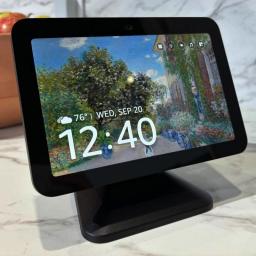
One of the biggest announcements at today's AI-filled Amazon event is the all-new Echo Show 8. The company has refreshed the design with edge-to-edge glass up front and softer curves for a more refined look overall. While the aesthetics have changed for the better, most of the interesting stuff is on the inside. That includes updated internals to enable faster responses from Alexa and Adaptive Content based on your proximity to the device.Amazon has also outfitted the new Echo Show 8 with spatial audio and room calibration, specifically citing improvements to clarity and bass. In Amazon's busy demo area, I wasn't able to experience this first hand, but even a marginal upgrade over previous Amazon smart displays would be a welcome change. I also wasn't able to test the quicker Alexa experience due to the noise in the room, but the company says a new processor handles those requests on-device. This should lead to 40 percent faster responses to Alexa commands and queries.There's also an upgraded 13-megapixel camera up front and microphones that are better equipped to cut down background noise. Up top, meanwhile, volume controls and the ability to disable both the camera and the microphone are dedicated buttons along the edge of the device.The main feature I was able to try today is the Adaptive Content. Arguably one of the biggest changes to the Echo Show 8, this feature changes what's on the display based on how far you are away from it. So when you're sitting across the room, the device will show you time and weather info, or even a short news headline, that's large enough to be read from a distance. Move closer and content becomes more detailed and personalized, surfacing a playlist or additional news articles.While this was tough to accurately test in a crowded space, I still got an overall sense for how it works and how the UI changes. Indeed, the proximity tweaks will make the device more useful and informative without you touching it, and showing you stuff you'll actually want to see. Plus, the Echo Show 8 can pull up shortcuts to your most-used widgets for faster access.Amazon says the Adaptive Content feature will be available on second- and third-gen Echo Show 8 next month. It's coming to other Echo Show devices later this year. The third-gen model costs $150 and starting shipping next month.Follow all of the news live from Amazon's 2023 Devices event right here.This article originally appeared on Engadget at https://www.engadget.com/echo-show-8-3rd-gen-hands-on-174000825.html?src=rss
|
 |
by Sam Rutherford on (#6EXZT)
With Amazon pushing further and further into smart home integration, the company just unveiled at its fall event the Echo Hub, a new device designed to manage all the various gadgets in your house.Instead of being a traditional tablet or a smart display like the new Echo Show 8, the $180 Echo Hub is centered around an 8-inch display meant to be mounted on a wall. That said, for people like renters who may not want to permanently install the device, Amazon will also make a stand accessory. Just like an Alexa-powered smart speaker, users can control connected devices using their voice while also being able to view live feeds from security cameras and toggle settings and select specific devices via a customizable dashboard. The Echo Hub was also designed to support Amazon's upcoming Map View UI, which will be added to the device sometime in early 2024.The Echo Hub includes support for all the major smart home protocols including Matter and Thread. And while by default it relies on Wi-Fi, there will be an optional USB-C adapter that allows it to connect to power-over-ethernet routers like those from Eero. The device also features infrared sensors that can detect when someone is nearby, enabling its display to become a clock when it's not being used.Compared to other hubs which often go for $400 or more, Amazon is touting the Echo Hub's $180 price as a significant advantage while still offering comparability with more than 140,000 smart home devices. And by connecting to other gadgets locally instead of over the internet, Amazon says its hub will react faster to commands with responses in as little as 300 milliseconds.The Echo Hub is expected to go on sale sometime later this year.Follow all of the news live from Amazon's 2023 Devices event right here.This article originally appeared on Engadget at https://www.engadget.com/amazons-180-echo-hub-is-a-smart-home-control-panel-for-your-wall-163231567.html?src=rss
|
 |
by Kris Holt on (#6EXZV)
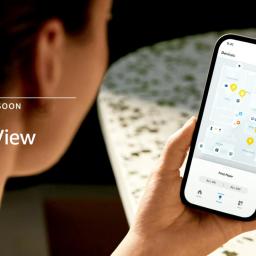
During its annual fall event on Wednesday, Amazon showed off a new way for people to control all of their compatible smart home devices. It's called Map View and it will first be available on select phones in the US later this year, namely LiDAR-equipped iOS devices.You'll be able to create a digital floor plan of your home using your phone and Map View will display all the devices you add to it. Rather than using Alexa or another app to manage a device, you can see its location in your home and tap on it to (for instance) switch on a light, bump up the volume of an Echo speaker or change the temperature. You'll be able to view live camera feeds through Map View too.It looks like a fairly straightforward and intuitive user interface. For one thing, you won't have to remember the names of all of your devices, just where they are in your home.Amazon says it's an opt-in experience; you can decide which rooms to add to the floor plan and which devices to include. You can delete your floor plan at any time as well.You'll be able to set up Map View in the Alexa app on iPhone 12 Pro and Pro Max, 13 Pro and Pro Max, 14 Pro and Pro Max, 15 Pro and Pro Max and all iPad Pro models.On a related note, keen readers may remember that Amazon is attempting to buy iRobot (and has been for over a year). Several Roomba devices are capable of mapping out your home to help with cleaning them. It's not difficult to imagine how that might integrate into Map View.Follow all of the news live from Amazon's 2023 Devices event right here.Update September 20, 12:52PM ET:Added more details about compatible iOS devices.This article originally appeared on Engadget at https://www.engadget.com/amazons-map-view-puts-your-smart-home-devices-on-a-digital-floor-plan-163058372.html?src=rss
|
 |
by Avery Menegus on (#6EXV9)
During its annual fall event on Wednesday, Amazon unveiled a slate of devices and software updates to the Fire TV line. Brand new to the lineage is the Fire TV Soundbar. The soundbar is Bluetooth enabled and "simple to set up and compatible with all Fire TV streaming products and TVs," according to Daniel Rausch, Amazon's VP of Alexa and Fire TV, who was presenting on stage at the event. The soundbar is available starting today for $120.Rausch also announced a minor refresh of the ubiquitous Fire TV line of streaming sticks. The new 4K Max, which is now nearly two years old, received a 0.2GHz bump in processing power and an upgrade from WiFi 6 to WiFi 6E. There's some other niceties as well, including support for HDR, HDR10+, Dolby Atmos and Dolby Vision. The new Fire TV 4K Max is up for pre-order now for $60, and will begin shipping to customers on September 27th. The standard model of 4K Fire TV Stick also gets a bump in processing power, 4K support and WiFi 6. Pre-orders for that also start today (though Amazon has not yet confirmed a ship date), and it'll run a slightly cheaper $50. Purchases of new Fire sticks and TVs will now also come with six free months of the MGM+ streaming service.Given the focus on AI and large language models (LLM) throughout Amazon's hardware presentation, it was a foregone conclusion some aspect of those buzzy product categories would be finagled into the Fire lineup. Forthcoming improvements to the Alexa voice search feature will draw from Amazon's LLM (as well as data on IMDB, which Amazon bought in 1998) to supposedly understand nuanced questions about what to watch, and supply relevant recommendations. These recommendations will also, according to Rausch's demo of the feature, be personalized to individual user profiles. The new voice search functionality will arrive via an over-the-air update later this year.Follow all of the news live from Amazon's 2023 Devices event right here.This article originally appeared on Engadget at https://www.engadget.com/amazon-debuts-a-120-bluetooth-enabled-fire-tv-soundbar-161905007.html?src=rss
|
 |
by Katie Malone on (#6EXVA)
Amazon announced Eero Max 7, the WiFi device that combines a router, a range extender and a repeater, at its annual fall event on Wednesday. The device promises 10 gigabit Ethernet connections, with speeds that let users download a 4K movie in just 10 seconds or a 50 gigabyte video game in less than a minute, according to Amazon. It costs $600 and will be available soon through Amazon and some internet service providers. During the event, Mimi Swain, vice president of Ring, suggested the device will be ideal for large homes, businesses and "high-demand networks."Eero devices can be connected to each other to create a mesh network, or a WiFi setup that spreads the system across multiple points for better range and performance. Amazon calls the Eero Max 7 its fastest yet. Eero Max 7 supports the 2.4GHz, 5GHz and 6 GHz radio bands with speeds up to 4.3 Gbps for wireless connections and 9.4 Gbps for wired connections. It has four Ethernet ports, and one device can support 2,500 square feet of wireless coverage, according to the company.Amazon acquired Eero in 2019 as a part of its connected devices strategy. Most notably, Amazon connected Eero to its Echo Dot speakers so that the speakers can double as Eero WiFi extenders. During Wednesday's event, Amazon also announced that its Echo Hub will have a USB-C connector for Ethernet connections with devices like Eero.Follow all of the news live from Amazon's 2023 Devices event right here.This article originally appeared on Engadget at https://www.engadget.com/amazons-eero-max-7-will-have-10-gigabit-ethernet-speeds-160927525.html?src=rss
|
 |
by Karissa Bell on (#6EXVB)
Amazon's smart glasses are getting their first significant update in more than two years, the company announced during its annual fall event on Wednesday. The latest version of the Echo Frames will ship with a longer battery life and redesigned audio experience, along with several new colors and styles.The new Echo Frames can squeeze up to six hours of media playback on one charge. They also come in seven new styles for both glasses and sunglasses, including two new looks from eyewear maker Carrera (the Carrera styles will be sold as Carrera Smart Glasses.") In addition to the new frames, people can opt for sunglasses, prescription lenses or blue-light lenses. All versions are IPX4 water resistant and scratch resistant.The frames should also be noticeably less bulky than the previous generation of smart glasses. Amazon moved much of the internal wiring from the front of the glasses to the temples, resulting in a set of frames that's 15 percent slimmer. That improvement could help the Echo Frames look and feel a bit more like typical glasses than a tech-infused wearable.AmazonThe Alexa-enabled glasses will also come with better audio than their predecessors. Amazon says the new frames have more balanced sound, better audio clarity, and less distortion," thank to a new speaker driver and "open-ear audio architecture." The glasses also come with better onboard speech processing so the glasses can more reliably detect the wake word in varied conditions, like wind and noisy rooms.The new frames come with other software upgrades as well. The new Echo Frames support pairing of up to two devices, so wearers can more easily switch between multiple audio sources, like a phone and a laptop. There's also a new notification-filtering ability called VIP Filter, that prioritizes only the most "important" alerts. Echo Frames owners will also have the ability to more easily find a lost pair of glasses, thanks to Alexa by asking the assistant to find my smart glasses."The new Echo Frames start at $270, the Carrera Smart Glasses will cost $390. The company didn't say when they would go on sale, but those interested in getting their hands on a pair can sign up for notifications about pre-orders.Follow all of the news live from Amazon's 2023 Devices event right here.This article originally appeared on Engadget at https://www.engadget.com/amazons-new-echo-frames-come-with-longer-battery-life-and-better-audio-160704822.html?src=rss
|
 |
by Lawrence Bonk on (#6EXVC)
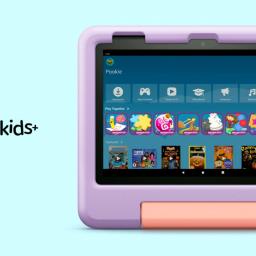
Amazon has used today's hardware event to go all-in on Alexa's new LLM-infused capabilities, touting how easy it'll soon be to have a natural sounding conversation with the bot. This also extends to kids, as the company just announced Explore With Alexa. This is a pared-down and kid-friendly version of the updated chatbot that specializes in topics like animals and nature. It'll even play trivia games with your tykes and disperse daily fun facts.Of course, this is for kids, so the tech has been developed with guard rails to protect them from the more sinister parts of the Internet. Amazon says Explore With Alexa will launch at some point before the holidays and will eventually extend beyond the pre-approved topics of animal and nature.To accompany this new Alexa technology, there are some forthcoming kid-friendly devices. The Echo Pop Kids is a smart speaker designed for the younger members of your family. It ships in two SKUs that fall along typically accepted notions of gender. There's an Avengers one and a Disney princess one. The Avengers one specializes in conversational tidbits about Earth's mightiest heroes and the Disney princess model specializes in Mulan, Cinderella and the like. The Echo Pop Kids releases next month for $50 and includes six free months of Amazon's Kids+ subscription service. Preorders start today.AmazonThere's also a pair of forthcoming tablets. The new Fire Kids tablet is aimed at younger children and the Fire Kids Pro is being marketed to older kids. These are 10-inch tablets that are 25-percent faster than the previous generation, with 1080p FHD screens, 3GB of RAM and access to specialized kid-centric apps. Each tablet costs $190 and ships with a year of Amazon's Kids+ subscription service. You also get a two-year warranty out of the box that covers the kind of accidental mishaps that parents deal with every single day. Preorders start today and shipments begin next month.Both tablets boast access to the company's new Play Together feature that gives kids access to online multiplayer titles, like checkers, and an app called Music Maker. This experience lets children become composers, blending instruments and other sound effects together, to create a unique composition with the help of AI, all through touch."Follow all of the news live from Amazon's 2023 Devices event right here.This article originally appeared on Engadget at https://www.engadget.com/kids-will-soon-be-able-to-have-natural-conversations-with-alexa-160507718.html?src=rss
|
 |
by Daniel Cooper on (#6EXVD)
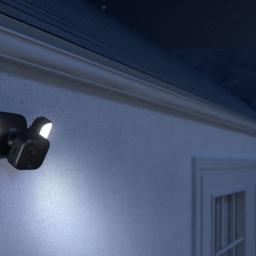
Bird's Eye View" is the romantic name Ring gives to its use of radar to track a person's path across a camera's field of vision. It's available on the Video Doorbell 2, Floodlight Cam Pro and Spotlight Cam Pro, and now it's coming to the new Stick Up Cam Pro, the company announced during its annual fall event on Wednesday. Like its peers, the new unit will be able to monitor where your visitors are going, and the route they took to get there. Plus, you'll be able to set more discrete motion alerts, sparing you the pain of having an alert whenever a shadow is cast across your camera.The new Stick Up Cam Pro is, like its less-powerful sibling, weather-resistant, small and sleek, so you can put it in any location you may need. It offers HDR video, color night vision and a pair of microphones for clearer audio, as well as two-way talk and a built-in siren. And users will have the usual choice of how to power the device; Solar, Battery or wired in, giving you another layer of flexibility. Plus, it'll work seamlessly with the rest of Ring's suite of products to give you a home security system tailored to your specific needs.At the same time, Ring also wants to talk about Ring Routines, which will let you activate and deactivate Alexa routines that integrate with your cameras. These will, naturally, develop over time, letting you set routines like activating your home's lights when someone rings the bell at night.Ring Stick Up Cam Pro is available to pre-order now, for $180 for battery and plug-in, while the solar version will set you back $210. They begin shipping on October 18.Follow all of the news live from Amazon's 2023 Devices event right here.This article originally appeared on Engadget at https://www.engadget.com/rings-new-stick-up-cam-pro-comes-with-built-in-radar-detection-160314899.html?src=rss
|
 |
by Daniel Cooper on (#6EXVE)
It's been less than a month since Blink, Amazon's other security camera company, released the Outdoor 4. Now, as part of Amazon's annual fall showcase, we're getting a trio of accessories to help the camera travel further and do more when it gets there.First on the list is the Sync Module Pro, which lets you place your Outdoor 4 further from your home's wireless network. The company says you can install a camera in the furthest corner of your property" without worrying about range, but hasn't yet shared real-world measurements. Maybe those figures haven't been finalized yet, since the hardware isn't expected to be available until the start of 2024, when it'll cost you $50.There's a new floodlight mount for the Outdoor 4 that, much like its predecessor, will enable you to temporarily banish the darkness with some motion-activated LEDs. Blink says it'll last for two years on a charge, based on default settings" which you'll probably want to change. That's available for pre-order now, priced at $160, with shipping due to start on October 17.BlinkAnd to round off the trio, there's a new battery pack that, Blink says, will double the Outdoor 4's life on a single charge. With more power, you can also be a bit less frugal about the notifications you can set up, letting you talk more, record more and generally have a better experience overall. The price for such freedom is $30, and will also begin shipping on October 17.Follow all of the news live from Amazon's 2023 Devices event right here.This article originally appeared on Engadget at https://www.engadget.com/blinks-new-outdoor-4-camera-accessories-include-battery-and-range-extenders-160101967.html?src=rss
|
 |
by Will Shanklin on (#6EXVF)
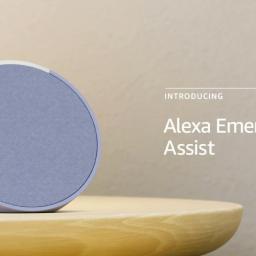
During its annual fall event on Wednesday, Amazon announced a new personal safety feature for Alexa devices. Building on the existing Alexa Guard, Emergency Assist sounds a bit like Life Alert for Echo devices. It allows people in trouble to call for assistance by saying, Alexa, call for help."Alexa Emergency Assist can connect you with what the company describes as a dedicated, professionally trained agent" who's available 24/7. When you sign up, it saves information like your home address, medications and allergies (along with the device you're using) to pass it to first responders. That way, you don't need to repeat it during the call.Amazon says the feature is coming soon" in the US, and that it'll support all Echo devices. It will cost $6 monthly or $59 annually when it launches.Follow all of the news live from Amazon's 2023 Devices event right here.This article originally appeared on Engadget at https://www.engadget.com/alexa-emergency-assist-can-call-first-responders-from-your-echo-speaker-155415273.html?src=rss
|
 |
by Cherlynn Low on (#6EXVG)
After devoting a chunk of its annual fall event on Wednesday to Alexa upgrades, Amazon announced two new accessibility features coming to its devices later this year. First is Eye Gaze on Alexa, which will let those with mobility or speech disabilities use their gaze to perform a set of preset actions on the Fire Max 11 tablet.This is the first time Amazon is working on gaze-based navigation of its devices, and it will use the camera on the Max 11 to keep track of where a user is looking. The preset actions include smart home controls, media playback and making calls. Eye Gaze will be available on the Max 11 later this year at no additional cost. The company said during its event that this is "still day one for this technology - we're very excited about its potential." Amazon did not otherwise release any details on how Eye Gaze actually works.Amazon is also adding a new Call Translation feature that will transcribe Alexa calls on Echo Show devices and display onscreen captions. It can convert them into over 10 languages including English, French, Spanish and Portuguese. It will launch later this year on Echo Show devices and the Alexa app for users in the US, Canada, Mexico, the UK, Germany, France, Italy and Spain. Call captioning is also being expanded to Europe.Follow all of the news live from Amazon's 2023 Devices event right here.This article originally appeared on Engadget at https://www.engadget.com/amazon-debuts-eye-gaze-accessibility-features-on-the-fire-max-11-tablet-154042714.html?src=rss
|
by James Trew on (#6EXQ8)
So there's a new GoPro in town. Maybe you saw a bunch of new features and wondered if the new camera is worth the upgrade from an older model? Maybe you want to know if it's a better fit than a rival camera like DJI's Action 4? Here we'll go through everything that's new with the Hero 12 and hopefully, by the end of it, you'll feel ready to make an informed decision. There are some useful new tools, some neat hardware tweaks and of course, an important aesthetic update this time around. All of which we'll get to below.Battery lifeOkay, deep breath for this one as there's a bit to unpack. Battery life has always been a bit of a pain point for action cameras. Their smaller form-factor, exposure to different and high performance needs (shooting 4K slow-mo, and so on) means they are constantly battling basic physics. GoPro's claim then, that the Hero 12 offers 2x runtime" will have seen even the most ragged of outdoor filmers crack a smile. But remember, runtime isn't the same as record" time.What we're seeing here is an extension of the amount of time the camera can run at high power drain modes before it reaches its thermal limit and has to stop. So the claim is really that you should get about twice the recording time at the most demanding settings. If you're shooting at good ol' 1080p/30, for example, battery performance is only extended by a few minutes.Photo by James Trew / EngadgetTo test this, I pitted the Hero 12 against the Hero 11 in two scenarios, each at the opposite ends of the intensity" spectrum. On the high end, we set the cameras to record at 4K/120 while walking with the camera on a standard grip. On the other end of the scale we recorded a basic 1080/30 video for as long as the camera could. Both were performed outside to allow for airflow, which is what the camera was optimized for.In the 4K tests, I was surprised to see there was no noticeable difference between the Hero 12 and the Hero 11 with the same settings. I repeated the test a couple of times and the 12 was only able to best the 11 by about five minutes. On one occasion, the Hero 11 actually outlasted the Hero 12. The average duration for one continuous video was 35 minutes. Other outlets and reviews have had more success here, so I'm currently speaking with GoPro to see what might be causing this disparity in results. The 1080p tests were also comparable, with both cameras lasting around an hour and a half which is expected, as GoPro doesn't claim large advances in battery life at these settings.Bluetooth audioI don't think anyone was expecting this one, but it's a pleasant surprise nonetheless. Using a microphone with a GoPro typically involves using the Media Mod, which is usually an $80 additional purchase. Even with that, going wireless requires having a compatible microphone. With the new Bluetooth capability, you can use the AirPods (or other Bluetooth headset) that you may already own.I wouldn't recommend using a microphone over Bluetooth if you can avoid it, as they're typically designed for calls rather than delivering a standup to camera. That said, the quality is good enough for impromptu vlogs and or live commentary as you take part in your activity of choice. Either way, it's a neat new feature that's really easy to set up. I was worried about latency - a common problem with Bluetooth audio generally - but any there might be is barely perceptible.This functionality also allows you to control your GoPro from afar using voice commands. I might wager that this is equally, if not more useful to a lot of people. GoPro's voice commands are fairly reliable, so it's nice to be able to ask the camera to take a photo from a distance so you don't need to set a timer. Likewise, you can end a video without having to record those final seconds of you walking back to the camera to press the button. All these little time saves add up!8:7 everywherePhoto by James Trew / EngadgetThe big news with the Hero 11 Black was a larger sensor that meant you could do cool things like punch out different aspect ratio videos in 4K from the same source material. That source video was also usable on its own, if square-ish 8:7 video was something you needed. With the Hero 12, 8:7 mode is now available everywhere, including TimeWarp, TimeLapse and Night Effects modes.An 8:7 TimeWarp is a fun addition, but the real gain here is the option to shoot in that mode, capture every pixel available to you, and then have the flexibility to do more with it later. For Night Effects, for example, you could output a vertical version for social media, and a 16:9 one for YouTube and both of them would be in full resolution. This is the only new direct video feature this time around, which will disappoint some potential upgraders, but for fans of those specific modes it's good news.Vertical capturePhoto by James Trew / EngadgetNow that 8:7, full-sensor recording is available across the board, GoPro is seeking to make some of its use cases even easier. One such example is vertical capture mode. In short, since the Hero 11 there's no technical reason why you need to rotate or mount the camera vertically as you can achieve full resolution 9:16 videos even with the camera positioned horizontally.Essentially, this feature provides a way to record a video for social media without having to either remount it or to punch it out in 9:16 via the app. Thus, vertical capture greatly smooths the process from shooting on the camera to sharing with your followers. There's not much more to say here other than it works as advertised and should save a fair amount of time for those who use that aspect ratio frequently.HDR video in ultra-high resolutionsDynamic range may sound like a technical setting for pro photographers, but it's important even for casual users. As a camera tries to capture a shot, it will assess the lighting and adjust its exposure to maintain the best balance (unless you're using all manual settings). When there are bright and dark areas in the same shot, the camera has to make a best guess. To improve on that, modern cameras have HDR modes specifically for times when there's a High Dynamic Range (HDR)." In short, the Hero 12 Black claims to be better than its predecessors in these situations.Technically, the Hero 11 is capable of outputting HDR video (the Hero 12 and Hero 11 share the same internal hardware), but you usually had to do some legwork in post to get there. The Hero 12 has HDR" as one of the shooting modes right in the menus making it a simple button push to get those more natural tones.Photo by James Trew / EngadgetIn side by side testing, there's a marked difference between the Hero 12 and last year's camera. In the same, sunny conditions during the day I found the sky was sometimes blown out on the Hero 11 when there were also a lot of shaded areas in shot as the camera tries to expose for both. The Hero 12 was able to handle the same lighting conditions without blowing out bright areas or under exposing the shade giving a more balanced image overall.(Speaking of HDR, the GoPro 12's implementation isn't true HDR in the sense that it captures using the BT.2020 HDR color space - i.e., if you plug it into your Samsung HDR TV you won't see it in HDR, but just regular TV mode. Rather, it takes two images of each frame in quick succession - like bracketing on a photo camera - one exposed for shadows and one for highlights, and combines them into a single image. The end result is more detailed skies, shadowy areas, etc.)Better selfiesBack in the olden days, there was a light hack" for getting the best selfie out of a GoPro: put the camera into Time lapse Photo mode and grab multiple shots just to be sure. In newer GoPros you have to grab a frame from a time lapse via the app as the camera automatically outputs a ready-to-share video. Interval Photo, then, revives some of that old functionality in a new, improved way. The basic gist is that you don't need to use a timer, instead you can capture multiple photos and pick the one you like best, such as the one below where I had all the time in the world to perfectly place my hand on top of the towers.Photo by James Trew / EngadgetTo prevent confusion, Interval Photo is a setting under the Photos menu and not the Time Lapse menu. From there you can set a wide range of intervals - from half a second up to two minutes - and use this with all photo types, including HDR and SuperPhoto (GoPro's auto" mode). This differs from a time lapse where the images are processed in a way that prevents sudden changes in exposure between photos for a smooth video. That's to say, images are optimized for the resulting video. With Interval Photo, they're standard photos for use as photos with no further processing.Night Effects come to photos (kinda)Another feature that builds on something that was introduced in the Hero 11 is the extension of the Night Effects (Star Trails, Vehicle Lights and Light Painting) to create a photo. These three effects use long exposures and witchcraft (maybe) to create videos with these dramatic light-based effects. With the Hero 12, you will now be presented with a photo alongside the video. There's no extra action required to get this, it'll just show up in your gallery automatically.What you won't see are any controls or any way to choose at which point of the video the image will be extracted from, the image appears to be based on the final frame of the video, which makes sense. That said, in our testing it generally produces good results (assuming your video was good in the first place!). Again, you've pretty much always had the option to extract frames from videos and with the Quik app that's easier than ever before, but having one ready for you, is another welcome convenience.LogSteve Dent contributed the following section.GP-Log is designed to give creators more control over images by increasing dynamic range, specifically by allowing more detail in shadows and highlights. That can be combined with 10-bit encoding which boosts the total number of colors to billions, meaning subtle gradients (mainly in skies) will show less banding.Photo by James Trew / EngadgetAs ever with log, it can be a challenge to get a nice image out of it. The LUTs supplied by GoPro do an OK job, but significant tweaking is still required by the editor to gain any major benefits. Plus, it's not a very aggressive log setting, so the boost in dynamic range is small, akin to DJI's D-Log M setting. It does give editors who know what they're doing more options, but if you're unfamiliar with log, HDR is a much easier way to improve dynamic range - with no adjustments required.New mounting optionPhoto by James Trew / EngadgetIf you've been using GoPros for any amount of time, you'll be familiar with the finger" mount system. It's... fine. It's certainly sturdy, which is what you want in an action camera, but it's also fiddly and those thumb screws can get real tight, so tight that sometimes it feels personal. Sometimes you wish you could just use the tripod or selfie pole you already have without having to dip into your bag of adapters. Well, now you can.Flip the GoPro Hero 12 Black over and lo and behold, you'll be presented with a 1/4 inch thread (along with the sound of angels harmonizing, possibly). I have a bunch of the aforementioned GoPro-to-tripod mount adapters, but I can never seem to find them when I need them. I also have a bunch of small tripods that will get a lot more usage now that they are directly compatible with the GoPro. Not to mention, if you use your GoPro as a webcam, it's not a lot easier to use with other streaming mounts and boom arms. I'm not sure what it says about the Hero 12 when this is my personal favorite new feature, but here we are!This article originally appeared on Engadget at https://www.engadget.com/gopro-hero-12-review-new-features-143039315.html?src=rss
 |
by Malak Saleh on (#6EXQ9)
The original Apple Watch Ultra's price has dipped on Amazon just shortly after the release of the second generation during Apple's September 12th "Wonderlust" event. You can now snag the older model Ultra for $732, down eight percent from its original price tag of $799.While the deal is only applicable to the medium-sized (for 145-190mm wrists) green alpine loop, it's worth considering. The corrosion-resistant titanium case and this specific model's rugged look may be ideal for an outdoor enthusiast who likes to get their hands dirty. It may even be a good time to start thinking ahead to gifts for the holidays.If you're an iPhone user, the Apple Watch Ultra offers some pretty compelling perks that make it an ideal companion for outdoorsy wearers. But Apple didn't just design the Ultra for hikers and swimmers - its advanced metrics in the workout app, which includes heart rate zone and running form" monitoring, make it a solid choice for anyone looking to track or improve their workout regimen.The new Apple Watch Ultra 2 will go on sale for $799 in just two days, however. And the newer, more expensive iteration will run with the help of the company's S9 chip, which will enable the new double tap" feature, among other improvements. So if you're keen on the new updates, this deal may not be right for you. But for those looking for a solid smartwatch at a somewhat reduced price (or a very generous gift for a loved one) the Apple Watch Ultra is a more than serviceable option.Follow @EngadgetDeals on Twitter and subscribe to the Engadget Deals newsletter for the latest tech deals and buying advice.This article originally appeared on Engadget at https://www.engadget.com/the-apple-watch-ultra-is-8-percent-off-right-now-141505238.html?src=rss
|
 |
by Billy Steele on (#6EXQA)
After Apple's iPhone event and just before Microsoft shows off new Surface devices, Amazon is set to reveal its latest arsenal of hardware. As it typically does every September, Amazon is hosting an event to unveil the goods, only this time it's doing so not in Seattle, but at its recently opened HQ2 in Arlington, Virginia.We'll be on the ground to cover all of the news live, bringing you the details on whatever Echo, Fire TV and Kindle devices the company has on the docket. Of course, there are likely to be new items from Amazon's brands like Blink, Eero and Ring too, along with some surprises. You'll want to keep it locked right here at 11AM ET as this event won't be livestreamed to the public. But rest assured, our batteries are charged and our keyboards are primed to report all of the announcements as soon as they happen.This article originally appeared on Engadget at https://www.engadget.com/amazon-hardware-event-2023-liveblog-live-updates-on-new-devices-and-services-140009216.html?src=rss
|
 |
by Mat Smith on (#6EXQB)
I've been experimenting with my work-from-home setup for a few months now, and I still haven't quite got it to where I want it. I've dabbled in standing desks, mid-century bureaus (not even kidding) and, gasp, chairs that actually support my back, but sometimes it's the small things that make the whole setup work, like Twelve South's first height-adjustable MacBook stand, the HiRise Pro.Twelve South has long made premium, stylish peripherals, cases and more for almost anything Apple. This follow-up stand is compatible with all MacBooks (and other laptops), adding a degree of adjustability to the screen height while remaining sturdy, It even includes a MagSafe charging platform - although you have to provide your own MagSafe puck.Photo by Mat Smith / EngadgetIt's a solid, premium stand and wouldn't look out of place in an office or work-from-home setups. The company has always made accessories that neatly dovetail with Apple's aesthetic, with subtle detailing, brushed metal finishes and minimal design fuss. I don't think anyone wants an ornate laptop stand anyway? The V-shaped stand part has a rubberized finish to grip the base of your laptop, while the MagSafe charging area has a glossy vegan leather surface.The HiRise Pro can raise your screen six inches from your desk, inching your laptop screen to your eye-line. This can be adjusted with a metal screw to lower levels if needed. Twelve South believes that the HiRise Pro's maximum height ensures any laptop webcam would then be at an ideal height. What I like - and what I've been looking for - is a simple way of improving the ergonomics of working on a laptop. I don't want a bigger monitor, always mounted at eye height - even if I should. And if you do already have second screens and monitors, this stand means you could line up your laptop screen with any external monitor, if you're especially aesthetically demanding.Photo by Mat Smith / EngadgetIt feels like the final thing needed to make a standing desk work for me. I'm still using this tripod desk at the moment, and the eye-line is almost there. Honestly, I'd benefit from the HiRise Pro adding an additional inch or two to the height, but Twelve South may have reached a stability limit.With this kind of laptop stand, you're not really able to use the built-in trackpad or keyboard, which is something to bear in mind. You'll need to invest in either wireless or wired replacements. On top of that, while it's not ridiculously priced, $100 is a lot for a stand that already has $40 alternatives. One of which is Twelve South's own, recently announced, Curve SE laptop stand.Before this, I swapped between a basic, but unwieldy IKEA shelf - you can see it in some of my reviews - and a foldable, portable laptop stand that didn't quite lift the device off a surface, but at least angled it upwards. It also packed in a load of ports and even an SD card reader. I'd be interested in Twelve South cramming more into future laptop stands - it does a little more with its Mac peripherals, so why not here? Maybe the company is waiting to launch the HiRise Max? I hope so.This article originally appeared on Engadget at https://www.engadget.com/twelve-souths-hirise-pro-is-a-slick-height-adjustable-laptop-stand-130027673.html?src=rss
|
by Cherlynn Low on (#6EXM2)
Have you seen the meme about people who dangle too many things on their fingers for no reason whatsoever? I'm not proud to admit it, but I'm one of those. No matter how big of a bag I'm carrying, I always find my hands full, making it difficult to interact with my phone or smartwatch on the go. And I'm not alone there. Which is why voice controlled assistants and hands-free gestures are so appealing.With the Apple Watch Series 9, the company is introducing two new methods of interaction: Double Tap and Raise to Speak (to Siri). It's also rolling out on-device Siri processing, which will let you ask the assistant for your health data and to log your daily stats. These are enabled by the new S9 system-in-package (SiP) that powers the device, meaning they likely won't be available to older models via watchOS 10.The Series 9 also has a new second-generation ultra wideband (UWB) chip like the one in the iPhone 15 series, which allows for an updated interface when pinging your paired phone. On the outside, the new Apple Watch looks just like its predecessor, but the new gesture alone may be intriguing enough to coax some of you into upgrading this year.Double TapFull disclosure: Due to a series of FedEx mishaps, I wasn't able to receive a separate sample of the Apple Watch with Double Tap enabled until just yesterday. That means I've only spent about a day testing out the new gesture in the real world. To be clear, the feature will not be available on the watches that ship come September 22, and will be activated over the air later in October. Apple sent reviewers supplemental units with Double Tap enabled for our coverage and testing purposes, in addition to the actual devices that will be going to consumers. Not to worry, though, the rest of this review is based on a Series 9 I've had since the Apple event last week. It's only the Double Tap sample that I received late. Still, I already have a better sense for when and how it might be useful.When both hands, or at least my watch hand, are occupied, Double Tap will obviously not be helpful. You'll need to at least have your thumb and index finger available to pinch. But when I'm cleaning my apartment, holding a side plank, raising a single dumbbell or reading a book, the gesture does make my life easier. In fact, I love it just for the pleasure of continuing to scroll Reddit on my phone in my right hand without having to put the device down to swipe something away on my left wrist.Photo by Cherlynn Low / EngadgetThe Series 9 is fairly good at recognizing when I've pinched twice quickly, but it took me a few attempts to figure out the right cadence. You can't tap too quickly or too subtly, or it won't register. I hate when companies tell us we're doing something wrong, but in this case where we're learning a new gesture altogether, I'm inclined to put in the work.Apple uses a combination of data from the accelerometer, gyroscope and optical heart rate monitor to detect movement and blood flow changes. This lets the watch understand the difference between, say, when you're touching your middle finger versus your pointer. I was able to trigger Double Tap by pretending to snap my thumb and forefinger, and also when striking the side of my digit rather than the pad.This is also a good time to clarify that Double Tap is quite different from Assistive Touch, which was brought to watchOS in 2021. The latter is an accessibility-minded feature that was already available for years in iOS, and allows those with different mobility needs to interact with the respective operating systems. You'll have to first go into the settings to enable it on the watch, and then you can use gestures like pinching and clenching to navigate. Clenching twice will activate Assistive Touch,which brings up an outline around items on the screen. Then, pinching will move through individual elements and clenching will act like tapping on them.Photo by Cherlynn Low / EngadgetAssistive Touch is more complete and nuanced than Double Tap, as it has to help users access all of watchOS. Meanwhile, the new feature is more of a convenience and there's only one action available. It also does very specific things. You'll first have to make sure the Series 9 is awake. From the home screen, double tapping pulls up the Smart Stack, and subsequent pinches scrolls through the widgets on that page. You can change the default setting so that follow-up double taps on the Smart Stack enters the top card instead.Everywhere else in watchOS, the Double Tap will trigger the primary button. Start or pause a timer, snooze your alarm, play your music or reply to messages, for example. Apple's programmed some of these applications thoughtfully, too. If you've used Double Tap to reply to a message, it will bring up the voice typing option so you can dictate your response. That's a nice touch, considering you're likely unable to use your other hand to tap out a message if you're already pinching to react to a notification.But Double Tap isn't available in every part of watchOS. When I was looking at the Phone app or my Move rings, for example, the gesture didn't do anything. A small indicator appeared to show that it did register; It just didn't map the action to anything on the page. I like the little indicator bubble, by the way, as it goes a long way in helping me learn the gesture.Photo by Cherlynn Low / EngadgetAll that said, it feels like Double Tap might not be as groundbreaking as it may have seemed from the keynote. But it still is a useful tool that will likely reduce my need to lift my wrist and swipe the screen.A better SiriAnother way Apple is reducing my reliance on the Series 9's display is through voice control. Specifically, Siri requests on the new watches (including the Ultra 2) will be processed on-device. There are quite a few benefits to this - speed of response being the least significant. I compared the Series 9 and Series 8 side by side and this year's watch was only marginally faster at responding to my Hey Siri" requests.Other advantages of on-device processing are more impactful. The ability to still ask Siri for help when offline or disconnected from my iPhone, for example, was a surprisingly simple upgrade. I left my paired iPhone 15 Pro at home when I went to the gym, and was relieved when I could still tell the assistant to record an outdoor walk when I made my way home (since my hands were full, as usual).Since your requests no longer leave your watch, Apple is also able to let you ask Siri for your health data. You can ask the assistant how long you slept, how many steps you've taken that day, or to log a period and more. Some of this is available now, while others will be available in a software update later this year.Photo by Cherlynn Low / EngadgetRight now, the responses aren't great. I asked Siri to tell me how many steps I'd taken or calories I'd burned, and instead of giving me a direct answer, it'd take me to the Move or Exercise ring pages. I asked for my heart rate, and was brought to the Heart Rate app for a reading, which is reasonable. But hopefully, with the software update, I'd get a straightforward answer of how many steps or calories.Since I can't test it just yet, I can't fully evaluate how impactful Siri Health Requests will be, but it's something I suspect will put Apple ahead of its smartwatch competitors. Being able to edit your stats with just your voice could make it much easier for people to input data, which will ultimately improve the insights you'd get from your watch. No other wearable OS offers this yet, either.Finally, with the Series 9, Apple is also adding Raise to Speak." In theory, this means you should be able to just bring the watch to your mouth and ask Siri for things. But in my experience, this barely worked half the time. I wish it were more consistent, because, and pardon my hyperbole here, when it did behave as expected, it felt almost magical. I'd lift my wrist and speak into the watch case, and the Siri icon would appear, along with the words I'd just uttered. No more long pressing the Digital Crown or saying Hey Siri."The good news is, even when Raise To Speak doesn't register, I can still go back to saying Hey Siri." It just got really annoying trying to test this feature, because I quickly grew tired from all the repetitive wrist lifting. Look, it's been arm week at the gym, okay?Photo by Cherlynn Low / EngadgetUWB precision finding, in use and battery lifeOne last hardware-related feature on the Series 9 is its second-generation UWB chip, which enables a new interface for locating your paired iPhone. Currently, all you can do is use your Apple Watch to ping your handset and make it ring. With the Series 9 paired to another device with the new UWB chip, not only can you also see exactly how many feet you are from your misplaced device, you can also see what direction it's in.I nearly panicked after clearing security at the San Francisco airport, when I thought I had lost the iPhone 15 Pro Max. Thankfully, I had a moment of clarity and used the Series 9 to buzz the phone. I was immensely relieved to hear the ringtone, but also amused when the watch told me I was only a foot and a half away from the handset.To see the new interface that tells you which direction your missing item is in, you'll have to be more than five feet away from it. I came home from the gym and used the Series 9 to see where the iPhone was, and the onscreen arcs and distance indicators easily guided me to my couch where I had left it. As I got within five feet, the phone buzzed and rang, which helped in locating it.I didn't have a HomePod to test this with, but the Series 9 will also know when you're within four meters of one, and automatically pull up the Now Playing screen so you can quickly control playback.Photo by Cherlynn Low / EngadgetIf your Series 8 (or older) is a little too dim in sunlight or too bright in your blacked-out bedroom, you might appreciate that the new model's screen can now get up to 2,000 nits and as low as 1 nit. That's double the brightness of the Series 8, which I never had trouble reading, so it makes sense that I found the latest model easy to see on a bright day as well.It's worth noting, though, that, in a dark room, the low-nit display might be hard for some to read. I was wearing both the Series 8 and 9, and the newer watch was noticeably dimmer, to the point where smaller text with low contrast was almost illegible. If this affects you, the good news is you can still adjust the general device brightness to avoid having the screen going as dim.There's not much else drastically different about the Series 9 that you won't get by updating to watchOS 10. That is, unless you like the new pink color option so much that you're willing to buy a whole new device just for it (which I would understand, since I love the pink of my review unit). Springing for the latest hardware will get you the S9 SiP, which is supposed to process machine learning tasks up to twice as fast as the last generation while delivering 25 percent more power efficiency.Photo by Cherlynn Low / EngadgetHonestly, I barely noticed a difference in performance, and battery life felt a little shorter, with the Series 9 needing a charge every evening rather than every night. I'd chalk that up to the fact that the review unit I received is the smaller 41mm size, while the Series 8 I've been using is the larger 44mm version, and understandably has a longer-lasting battery. Apple says you'll still get 18 hours of runtime with the Series 9, and though that's in line with previous generations, I wish it lasted longer. Samsung and Fitbit's smartwatches generally clock about two or more days, and it'd be nice to see Apple give us more.There are a lot of changes coming via watchOS 10, too, but since those will be available to people with older Apple Watches, I won't cover them here. I also won't delve into things we've already tested, like fitness and sleep tracking or fall detection and emergency SOS. They won't affect your decision on whether to get the new watch.One more new thing you can use regardless of the generation of watch you own: FineWoven bands. This is Apple's replacement for leather, which it declared it will stop selling in an effort to reduce its carbon footprint. FineWoven is a suede-like material made from recycled material, and is meant to feel premium. I don't mind it, and though I prefer the texture of leather, I'm more than happy to give up a nice tactile sensation in the interest of saving our environment.Photo by Cherlynn Low / EngadgetWrap-upThe fact that the Apple Watch Series 9 and Ultra 2 are the company's first carbon neutral products is a significant achievement that's worth calling out. We have to give Apple credit for making an effort to minimize its adverse impact on the earth, despite all the marketing bluster (and the fact that it ironically outlined its 2030 vision at a launch event for new devices it wants people to buy).If you're environmentally conscious, the company's efforts to be net carbon neutral may affect whether you buy the Apple Watch Series 9 over something from a competitor like Fitbit, for example. But if that's not a priority for you, then you're more likely to base your decision over features like Double Tap and Siri, as well as performance and battery life.The Series 9 is a capable, well-rounded smartwatch that remains the best in the category. Double Tap and on-device Siri alone may be reasons enough to trade in your older Apple Watch (yes, even the Series 8), especially if you hate having to swipe or tap a tiny screen on your wrist.What intrigues me more is the vision of the future that's starting to take shape. With gestures like Double Tap and a stronger focus on voice commands, as well as the introduction of the Vision Pro headset earlier this year, it's clear Apple has a direction in mind for the next few years. I'm curious to see where wearables fit in, and I have a strong suspicion the Series 9 is simply laying the groundwork for a more immersive, hands-free ecosystem to come.This article originally appeared on Engadget at https://www.engadget.com/apple-watch-series-9-review-freedom-from-touching-your-screen-130009764.html?src=rss
 |
by Mat Smith on (#6EXJ7)
This summer's Federal Trade Commission-Microsoft trial revealed all kinds of intriguing details about how the tech company's gaming arm saw its rivals and the future of gaming. But now, a court document leak has spilled the beans on new consoles, a new controller and even a list of new game projects (new Dishonored? Yes, please).MicrosoftThe most leftfield part, though, might be a letter from Xbox chief Phil Spencer talking about Nintendo. He said Nintendo was a prime asset for Microsoft's continued push in gaming and could be the company's best bet for consumer relevance. Spencer added Nintendo had a board of directors that had not pushed for increases in market growth in ages - indicating, of course, a massive difference in how Nintendo governs itself compared to Microsoft. Eventually, Xbox bought gaming giants, including Bethesda and Activision Blizzard, so fewer plumbers and more gunners.Microsoft has attempted to acquire the Japanese gaming giant for a while. When Bloomberg published an in-depth on the development of Xbox in 2021, it revealed that Microsoft execs had asked Nintendo if it was willing to be acquired - and were laughed out of the room.By the end of yesterday, Spencer commented on X, saying: so much has changed" since those documents. He added the company will share the real plans when we are ready."- Mat SmithThe biggest stories you might have missedThe Chan Zuckerberg Initiative is building a massive GPU cluster to cure, prevent or manage all diseases'We put the Dyson Zone's air filters to the test. Here's what we found.Microsoft AI researchers mistakenly leaked 38TB of company dataNetgear's new wallet-busting Orbi router has just about every feature imaginableHow to watch and follow Thursday's Microsoft Surface eventTalos Principle 2 and the quiet subversion of optimistic sci-fiCan Microsoft's Surface PCs get out of their rut?iPhone 15 Pro Max reviewApple makes the strongest case yet for its biggest, priciest phone.EngadgetIt's the year of the USB-C iPhone, and the iPhone 15 Pro Max adds a new action button and the most versatile camera system yet. Apple has kept the same price for the Pro ($999) and Pro Max ($1,199) while doubling the storage capacity on the base model of the latter. If you've been holding on to an iPhone that's at least two years old (or even just a year old), this could well be the year to upgrade. The changes coming to Apple's Pro handsets feel meatier than before, and a new titanium build makes these devices seem fresher too.Continue reading.Microsoft plans an all-digital Xbox Series X and haptic controllerThe console could land November 2024.Microsoft is planning a mid-generation refresh of the Xbox Series X with a new discless cylindrical design, according to those leaked documents. Microsoft previously said it has no plans for a mid-gen console refresh, but that doesn't appear to be true according to the document. In fact, the company may be working on three new consoles. The first, codenamed Ellewood, is a light refresh of the Xbox Series S (set to arrive around September 2024), while Brooklin, tentatively planned for November 2024, is a new discless version of the Xbox Series X.Another model, XDL, matches Brooklin's specs but will presumably offer Xbox Design Lab customization. Another slide details a two-tone Sebile controller with built-in accelerometers and haptics that would make it more like Sony's latest DualSense controller. There are apparently some sustainability tweaks, like a swappable battery, recycled materials and improved repairability. If you're looking even further into the future, the documents also detailed a cloud hybrid Xbox for 2028, which would combine console power with cloud strength.Continue reading.Neuralink opens enrollment for its first human-brain-computer interfacesThe company wants to test its implants on people with quadriplegia.Elon Musk's Neuralink company, purveyors of the experimental N1 brain-computer interface (BCI), announced on Tuesday it has finally opened enrollment for its first human study.The study aims to evaluate the safety of our implant (N1) and surgical robot (R1) and assess the initial functionality of our BCI for enabling people with paralysis to control external devices with their thoughts." As such, this study is looking primarily for those who have quadriplegia due to cervical spinal cord injury or amyotrophic lateral sclerosis (ALS)." The release adds: The initial goal of our BCI is to grant people the ability to control a computer cursor or keyboard using their thoughts alone."Continue reading.This article originally appeared on Engadget at https://www.engadget.com/the-morning-after-huge-xbox-leak-reveals-an-all-digital-series-x-and-a-lot-more-111449389.html?src=rss
|
by Karissa Bell on (#6EXJ8)
Since 2012, Yelp has caught nearly 5,000 businesses engaging in shady tactics, like paying customers for favorable ratings or hiring people to write phony reviews. Now, the company has a new tool to help people - and maybe the feds - track businesses that have tried to manipulate their standing on the review platform.Yelp is releasing a new index that tracks every U.S establishment it's ever caught engaging in suspicious" activity to influence its reviews. The company has made some of this information available in the past. Yelp places temporary alerts on businesses' pages when it discovers fake reviews, and regularly releases transparency reports detailing its moderation efforts. But the index is the first time the company has offered a single place where users can find a historical record of every business that's ever been subject to such a warning as well as a current list of businesses with active alerts on their pages .For Yelp, the index is both its latest move in a long-running war on fake reviews, as well as a nod to a changing regulatory environment in which fake reviews are attracting increasing scrutiny from regulators. The FTC recently proposed a formal ban on fake reviews with penalties of up to $50,000 for businesses caught buying, selling or manipulating online reviews.Yelp has said it supports such a rule. The company's head of user operations, Noorie Malik, points out the company has previously worked with the FTC to notify them when it discovers fake reviews and the sometimes complex operations behind them. We'd love to get to a place where this new index develops into a regular resource for others, whether it's FTC, consumers, regulators or other sites," Malik tells Engadget.But she's also quick to point out that the index is also meant to help Yelp users make educated decisions" about where to spend their money. While you may not think much about visiting a coffee shop with a history of paying people to leave positive Yelp reviews, your feelings may be very different if you're looking for a contractor to remodel your home, or for a daycare or moving company (all of which appear in the index).Of course, fake reviews isn't just a Yelp problem. Malik notes that phony reviews are often coordinated on other websites among organized groups of review rings. We also hope that it inspires other review platforms to take a firmer stance against reduced solicitation and incentivisation," she says.This article originally appeared on Engadget at https://www.engadget.com/yelp-has-a-wall-of-shame-for-businesses-caught-paying-for-fake-reviews-110011882.html?src=rss
 |
by Steve Dent on (#6EXG1)
Nikon has unveiled its latest full-frame camera, the 24.5-megapixel Zf with retro style and technology borrowed from the company's high-end Z8 and Z9 cameras. With a new sensor and processor, it promises powerful features like 14-fps max shooting speeds, advanced AI autofocus and 4K 60p video. At the same time, it's a highly manual camera with a lot of old-school touches and multiple colorways, all designed to touch that vintage-loving nerve.The body and handling emphasizes manual controls, with no less than five dials on top to control shooting mode, video/photo/B&W, aperture, shutter speed and exposure compensation. It also has a pair of shooting dials front and back and a D-pad style controller, but no joystick. The "grip" is just a small ridge. With all that, the Zf really does look like a an old school Nikon film camera - right down to the chrome-plated shutter release button.NikonThe Zf's magnesium-alloy body is smallish, but not very light at 710 grams (Sony's A7 IV is 659 grams). It does offer "high dust- and drip-resistance" though, Nikon says.The high-resolution 2.1-million-dot vari-angle touch display fully articulates for vlogging and selfies, while allowing touch function controls and focus point selection. For astro shooters, it has a "Starlight view mode" that boosts display brightness in dark scenes. Meanwhile, the OLED viewfinder has a decent 3.68-million dot resolution and 0.8 times magnification.It has two card slots, but with a serious caveat. One is a high-speed UHS-II card slot, but the other is a UHS-I microSD slot - the only model with that combo as far as I know. The battery is a weak point, offering only 380 shots on a charge, compared to 580 for the Sony A7 IV. Other features include a USB 3.2 Gen1 port with charging support, mic/headphone ports and a micro HDMI connector.DIXIE_DIXON2022 for NikonInside, it has a backside-illuminated (BSI) 24.5-megapixel sensor and Expeed 7 processor borrowed from the high-end Z models. That gives it autofocus powers akin to the Z8, including Nikon's 3-D tracking plus AI-powered subject detection that can find people, dogs, cats, birds, cars, motorcycles, bicycles, trains and planes. It'll even detect far-away faces that take up as little as 3 percent of the frame's longest side.As for image quality, the standard ISO range of 100 to 64,000 promises good low-light capability, and it has a pixel shifting mode that boosts resolution up to 96-megapixels for static scenes. In line with the retro styling, Nikon has a dedicated black & white mode (with its own dial setting), that enables multiple monochromatic settings ranging from flat to high-contrast "Deep Tone Monochrome."It can hit 11fps shooting speeds in RAW mode (14fps with JPEGs) in electronic shutter mode (Nikon doesn't list specs for mechanical shutter) and offers a reduced-quality 30fps JPEG-only mode with a pre-burst option to ensure you won't miss a shot. The five-axis IBS (or vibration reduction, as Nikon calls it) reduces shake by up to 8 stops with a supported lens. Stabilization can be linked to the focus point, rather than just the center of the image as with most systems.NikonOn the video side, the Zf can record full-frame 4K at 30p from a supersampled 6K image, or 4K60p with a DX (1.5 times) crop, along with 1080p/120p. Video can be captured with 10-bit H.265 recording, which will give users better color fidelity and more options in post. However, H.265 files require a powerful computer, meaning you might have to convert them to another format for editing.Based on the specs, the Nikon Zf looks like a solid camera that can compete against models like Panasonic's S5 II and Sony's A7 IV. However, it sets itself apart from those models based on its retro styling and manual controls, which should appeal to a certain segment of buyers. The Nikon Zf arrives in October 2023 at a competitive $2,000 price for the body only, or $2,240 with the retro-styled Nikkor Z40 f/2.0 SE lens. If you want one of the other colors (Indigo Blue, Sepia Brown, Bordeaux Red, Sunset Orange, Moss Green, StoneGray), you'll pay $2,100 for the body only.This article originally appeared on Engadget at https://www.engadget.com/nikons-zf-full-frame-camera-puts-speed-and-video-power-in-a-retro-body-092033908.html?src=rss
|
 |
by Mariella Moon on (#6EXEA)
Max has revealed that it's giving subscribers access to live sporting events for free - for a limited time anyway - confirming a previous Bloomberg report about the offering. The streaming service formerly known as HBO Max will launch the Bleacher Report (B/R) Sports Add-On tier on October 5. It will give audiences access to all the live sporting events airing on Warner Bros. Discovery's linear networks, including NBA, MLB, NCAA, NHL and US Soccer matches. The add-on is launching just in time for MLB's National League Division Series, the regular NHL season and NBA Opening Night.Subscribers in the US will be able to enjoy the add-on at no additional charge, whether they're paying for the ad-supported or the ad-free membership options, until February 29, 2024. After that, they'll have to start paying $10 a month for access. In its report, Bloomberg said that the company discussed using the March Madness college basketball tournament as a selling point for the new product. The tournament begins shortly after the promo period ends and could be compelling enough for fans to pay for the add-on for at least a couple of months, seeing as it ends in April.In addition to live game coverage, the sports add-on also gives viewers access to all of WBD's live pre- and post-game programming. They'll be able to watch video-on-demand content, as well, including Bleacher Report's highlights, sports documentaries and vodcasts featuring sports personalities and athletes.This article originally appeared on Engadget at https://www.engadget.com/max-will-offer-free-live-sports-streaming-until-march-2024-074445038.html?src=rss
|
 |
by Mariella Moon on (#6EXCW)
Unity's decision to start charging fees each time a title using its game engine is installed was understandably met with furor and talks of class action lawsuits. In response to the bomb Unity dropped, Terraria developer Re-Logic has stepped in to promote and support alternative open-source game engines that developers can use instead. In a post on X, the website formerly known as Twitter, Re-Logic called Unity's move "predatory" and "unequivocally condemn[ed]" the fee changes proposed, as well as the "underhanded way they were rolled out.""The flippant manner with which years of trust cultivated by Unity were cast aside for yet another way to squeeze publishers, studios and gamers is the saddest part," the developer continued. Re-Logic said that a simple public statement wasn't sufficient, so it's donating $100,000 each to the open-source game engines Godot and FNA. It will also continue supporting both projects by giving them $1,000 each every month going forward.
|
 |
by Jessica Conditt on (#6EX6E)
After a day of leaks comprising an all-digital Xbox Series X, an advanced controller, a "cloud-hybrid" console, fruitless Nintendo acquisition plans and some very mean words about Baldur's Gate 3,Xbox head Phil Spencer has spoken publicly - and semi-privately - about the situation for the first time.On X, Spencer said, "It is hard to see our team's work shared in this way because so much has changed and there's so much to be excited about right now, and in the future." He added that the company "will share the real plans when we are ready."
|
 |
by Andrew Tarantola on (#6EX6F)
Elon Musk's Neuralink company, purveyors of the experimental N1 brain-computer interface (BCI), announced on Tuesday that it has finally opened enrollment for its first in-human study, dubbed Precise Robotically Implanted Brain-Computer Interface (PRIME, not PRIBCI). The announcement comes nearly a year after the company's most recent "show and tell" event, four months beyond the timeframe Musk had declared the trials would start, and nearly a month after rival Synchron had already beaten them to market.Per the company's announcement, the PRIME study "aims to evaluate the safety of our implant (N1) and surgical robot (R1) and assess the initial functionality of our BCI for enabling people with paralysis to control external devices with their thoughts." As such, this study is looking primarily for "those who have quadriplegia due to cervical spinal cord injury or amyotrophic lateral sclerosis (ALS)," despite Musk's repeated and unfounded claims that the technology will be useful as vehicle for transhumanistic applications like learning Kung Fu from an SD card, uploading your consciousness to the web and controlling various household electronics with your mind.Actually, that last one is a real goal of both the company and the technology. BCIs operate as a bridge between the human mind and machines, converting the analog electrical signals of our brains into digital signals that machines understand. The N1 system from Nueralink leverages a high-fidelity Utah Array of hair-thin probes that, unlike Synchron's Stentrode, must be installed via robotic keyhole surgery (performed by Nerualink's sewing machine-like R1 robot surgeon). This array will be fitted onto the patient's motor cortex where it will record and wirelessly transmit electrical impulses produced by the region to an associated app which will interpret them into actionable commands for the computer. "The initial goal of our BCI is to grant people the ability to control a computer cursor or keyboard using their thoughts alone," the release reads.Neuralink has been working on the N1 system since 2017, one of the first companies in the industry to begin publicly developing a commercial BCI. However, Neuralink's efforts were waylaid last year after the company was credibly accused of causing the needless suffering and death of dozens of animal test subjects, which led to both a USDA investigation on animal cruelty charges and instigated the FDA to deny the company's request to fasttrack human trials. The PRIME study is being conducted under the auspices of the investigational device exemption (IDE), which the FDA awarded Neuralink this past May.This article originally appeared on Engadget at https://www.engadget.com/neuralink-opens-enrollment-for-its-first-human-bci-implants-215822024.html?src=rss
|
 |
by Will Shanklin on (#6EX3V)
The Chan Zuckerberg Initiative (CZI), the philanthropic organization created in 2015 by Priscilla Chan and her husband Mark Zuckerberg, announced a bold new generative AI initiative today. The group is funding and building a high-end GPU cluster that will use AI to create predictive models of healthy and diseased cells; it hopes they'll help researchers better understand the human body's cells and cellular reactions. The group believes the collection of computers will help it achieve its incredibly lofty goal of helping to cure, prevent, or manage all diseases by the end of this century."Researchers are gathering more data than ever before about the trillions of cells within our bodies, and it's too complex for our brains to grapple with," Jeff MacGregor, CZI vice president of communications, wrote in an emailed statement to Engadget. He lists an example of imaging one cell at nanometer resolution, which would use the same amount of data as 83,000 photos on a smartphone. Sifting through the finer details of a cache of cellular models like that is where generative AI could play a role.The system will use a cluster of over 1,000 GPUs to train AI large language models (LLMs) on human cells. LLMs have done an impressive job at helping us understand protein structure, and we think they will be equally great at helping us understand more complex structures like cells," MacGregor said. He expects the AI models to draw insights and conclusions beyond even the capabilities of a team of human experts. But also, it's about the speed at which they can do this. It would take that team of experts years to draw the types of insights rather than weeks that it will take for the models to do so."Chan lists other examples of how LLMs could tackle biomedicine's problems. AI models could predict how an immune cell responds to an infection, what happens at the cellular level when a child is born with a rare disease, or even how a patient's body will respond to a new medication," the co-founder and co-CEO said. We hope that this collaborative effort will generate new insights about the fundamental characteristics of our cells."The group describes the GPU clusters as one of the first to power openly available" models of human cells, suggesting the investment could yield dividends for under-funded researchers with bright ideas. Examples of data the models will train on include those integrated into the Chan Zuckerberg Cell by Gene tool (with its existing database of over 50 million cells), resources from CZ Science research institutes and publicly available datasets. CZI Head of Science Stephen Quake describes one of the project's goals as creating a virtual biology simulator."AI is creating new opportunities in biomedicine, and building a high-performance computing cluster dedicated to life science research will accelerate progress on important scientific questions about how our cells work," said Zuckerberg. Developing digital models capable of predicting all cell types and cell states from the genome will help researchers better understand our cells and how they behave in health and disease."This article originally appeared on Engadget at https://www.engadget.com/the-chan-zuckerberg-initiative-is-building-a-massive-gpu-cluster-to-cure-prevent-or-manage-all-diseases-205454041.html?src=rss
|
 |
by Malak Saleh on (#6EX3W)
As part of a $520 million settlement with the Federal Trade Commission, Epic Games will be forced to provide refunds to Fortnite players who were allegedly tricked into making unintended purchases on the platform. About $245 million has been specifically earmarked for these refunds. The regulator has started notifying more than 37 million people via email if they are for compensation.The entire process may take one month to complete and the FTC says customers who believe they were impacted will have until January 17, 2024, to submit a claim where you can simply apply for a refund directly on the FTC's website. The FTC notes that this is one of the largest refunds in a gaming-related case to happen to date.The FTC previously claimed that Epic Games used deceptive tactics to get Fortnite players to make unintended in-game purchases. As part of a complaint first announced by the FTC in December of last year, the agency says the video game-making company made it easy for underage players to rack up charges without parental consent" and also locked the accounts of consumers" that disputed unauthorized charges. Because Epic Games violated the Children's Online Privacy Protection Act or COPPA, it was ordered to pay $275 million in addition to the consumer refunds.This article originally appeared on Engadget at https://www.engadget.com/ftc-starts-claims-process-for-fortnite-players-tricked-into-making-unwanted-purchases-201534338.html?src=rss
|
 |
by Stephanie Barnes on (#6EX3X)
US Representative Deborah Ross (D-NC) has introduced an updated version of the Protect Musicians Act in an attempt to change the way independent artists bargain with major streaming platforms. Created in collaboration with The American Association of Independent Music (A2IM) and The Artists Rights Alliance (ARA), the updated bill aims to "level the playing field" for artists in the digital age and the world of AI-generated music."This legislation will help give small, independent music creators a level playing field, empowering them to stand together for fairer compensation and giving them a voice in important negotiations that will determine the future of the music industry," Ross said.As it stands, current laws leave many artists, whether signed to a major label or independently working, unprotected and at the mercy of major streaming platforms like Spotify, Apple Music and YouTube. And these companies don't always provide fair compensation to artists when their music is uploaded and streamed on the platforms. Independent artists are often forced to accept whenever rates are being offered without being able to collectively negotiate for better terms. Additionally, there is no real protection for artists against having their voice or music manipulated by AI without consent.If passed, the Protect Working Musicians Act would allow working artists and independent musicians to come together and negotiate with dominant streaming platforms and artificial intelligence developers. It would also grant working artists and independent musicians the ability to collectively refuse to license their music to online music distribution platforms that refuse to pay fair market value.It could be argued that many artists have always gotten a raw deal for decades when it comes to the sales and distribution of their music. Back in the day of album downloads and CD purchases, this money was usually split in many ways, leaving only a small amount for the artist. Unfortunately, unfair compensation being offered by streaming platforms is just a modern spin on a longstanding problem. And it's not just musicians that are being affected. For years, streaming giants like Netflix have been offering low wages to its writers, which has contributed to the strike of members of the Writers Guild of America.This article originally appeared on Engadget at https://www.engadget.com/revised-protect-musicians-act-could-empower-artists-against-streaming-platforms-200058922.html?src=rss
|
 |
by Lawrence Bonk on (#6EX06)
DIY repair gurus iFixit just issued a hearty rebuke at Apple, dinging the company's self-proclaimed commitment to the right-to-repair movement. Additionally, the organization has retroactively lowered the repairability score for the iPhone 14, after originally being quite impressed by the phone's easily-accessible hardware components.The iPhone 14's score shot down from a respectable 7 out of 10 to a do-not-recommend" 4 out of 10. In other words, iFixit says the phone's no longer a viable option for DIYers, even with Apple selling replacement parts via the company's Self Service Repair program. This is because self-repair is more than just parts. There's software involved and iFixit says Apple's code purposefully limits repair options for most tasks.The company derides Apple for creating a labyrinthine maze of obstacles" for both consumers and third-party repair technicians. It all boils down to software that requires and checks for parts bought directly from Apple. Otherwise, you'll lose functionality and receive endless warnings during use, as the system won't successfully pair aftermarket parts.The repair also must be validated by a proprietary chat system that requires personal information from the customer. Third-party technicians haven't relished the prospect of handing out their customers' private information just to replace a battery. Additionally, consumers and technicians alike typically rely on used or third-party parts, and Apple's system dissuades both options in favor of purchasing pricey branded components.A blog post on the matter by iFixit stated that it's heard from several repair pros who have excited the business entirely rather than deal with Apple's constant hurdles. The company also noted that community pushback began almost immediately after the iPhone 14 received its original repairability score.iFixit still lauds Apple for making an improvement over the status quo" by selling replacement parts, but says that the hoops a consumer or technician must jump through to replace a part makes the iPhone 14 literally not repairable." The site hasn't issued a repairability score for any of the just-announced iPhone 15 models, but they should start coming in the next couple of weeks.This article originally appeared on Engadget at https://www.engadget.com/ifixit-dings-apples-right-to-repair-commitment-and-drops-iphone-14s-repairability-score-184336316.html?src=rss
|
 |
by Will Shanklin on (#6EX07)
Logitech is updating its line of desktop microphones and lighting today with the Yeti GX microphone, Yeti Orb microphone and the G Litra Beam LX light. The products mark a break from the Blue brand, which Logitech acquired in 2018, as it drops the old naming and incorporates more gamer-focused RGB lighting into the series.The $150 Logitech G Yeti GX is the company's latest take on a premium, broadcast-style gaming microphone" somewhat reminiscent of the Yeti Blue X. The GX uses a supercardioid pickup pattern, which focuses on sound in front of the microphone while reducing ambient noises from the sides and behind. It includes RGB lighting, customizable with the company's LightSync, which synchronizes color and lighting across devices. It also has a scroll wheel for one-handed volume control; pressing it activates Smart Audio Lock, which the company says prevents clipping and reduces background noise.Logitech G Yeti GXLogitechThe Yeti GX is a USB-C to USB-A plug-and-play mic and is compatible with the Blue Compass boom arm and a (not yet available) updated Logitech Compass arm the company teased.Meanwhile, the $60 Logitech G Yeti Orb is a ball-shaped mic similar to the company's Snowball Ice model. The company pitches it as an entry-level microphone (designed for gamers new to streaming"); it's built with a custom condenser capsule and uses a cardioid pickup pattern. Like the more expensive Yeti GX, the Orb is compatible with the company's Blue Voice software, which can apply voice filters and let you tweak levels.LogitechFinally, the $150 Logitech G Litra Beam LX is a new desktop light similar to the company's Litra Beam. The new model still includes TrueSoft adjustable LED lighting (ranging from warm candlelight to cool blue") for streaming / video calls but also adds RGB lighting to the mix in sticking with the day's theme.All three models are available for pre-order today from Logitech's website and Amazon, which lists them as available as soon as September 21.This article originally appeared on Engadget at https://www.engadget.com/logitechs-latest-yeti-mics-are-all-in-on-rgb-183025435.html?src=rss
|
 |
by Malak Saleh on (#6EX08)
Google has prototyped an Augmented Reality Microscope," (ARM) in conjunction with the Department of Defense, which incorporates artificial intelligence enhancements to overlay visual indicators, like heatmaps or object boundaries, in real-time. The AI additions allegedly make it easier to classify samples and identify the presence of cancer cells or pathogens.The ARM was first teased publicly in 2018 and has not been used to diagnose patients yet. Currently, 13 prototypes of the ARM exist, with significant testing still needed before it can assist everyday clinicians. However, the intention is to create a system that can be "retrofitted into existing light microscopes found in hospitals and clinics," according to Google. ARM-equipped microscopes can then provide a variety of visual feedback, including text, arrows, contours, heat maps, or animations, each tailored to unique assessment goals.The Department of Defense's Defense Innovation Unit has reportedly negotiated agreements with Google that will enable ARM distribution through the military, according to CNBC, with the hope that it could be available to some government users sometime this fall. ARM is expected to cost between $90,000 and $100,000 - likely well beyond the means of local health providers. We've asked Google for more information on the progress of the program and potential timeline of availability and will update if we hear back.This is not the first time Google Health has dipped its toes in investing in AI-powered tools that not only improve the accuracy of diagnostics but also help fill gaps in medicine where there is limited availability of healthcare personnel. The tech giant has made it a point to partner with startups that invest in AI to improve healthcare" and is projected to have invested upwards of $200 billion on AI investments in the past decade, according to Reuters. This is especially noteworthy considering the World Health Organization predicts a shortfall of 15 million health care workers worldwide by 2030.This article originally appeared on Engadget at https://www.engadget.com/google-is-developing-an-ai-powered-microscope-to-help-doctors-spot-cancer-181507943.html?src=rss
|
 |
by Devindra Hardawar on (#6EX09)
I'm not sure when I found myself expecting disappointment from Microsoft's PC hardware. Maybe it was when the Surface Pro X arrived with a gorgeous design, but a woefully undercooked Windows-on-Arm experience. Or perhaps it was when the company gave up on the intriguing dual-screen Surface Neo, following the underwhleming launch of the Surface Duo (effectively killing the Courier concept twice). I do know that last year's Surface Pro 9 5G - an Arm-based PC that had no business wearing the "Pro" badge - was the last straw.Even though Microsoft managed to make the dream of a hybrid tablet PC come true, the company's Surface business has been in a rut for years. And, really, there's not much hope in sight.Perhaps that'll change once we see Microsoft's latest batch of devices during its New York City event on Thursday. But given that this week kicked off with Surface mastermind Panos Panay leaving the company, there's a good chance there won't be much to get excited about. The most recent batch of rumors, via DigitalTrends, suggest we'll see a (much-needed) Surface Laptop Studio 2, Surface Laptop Go 3 and Surface Go 4 unveiled this week. We'd also expect to see the requisite Surface Pro updates with Intel's most recent hardware, without much of a design refresh.Former Microsoft executive Panos Panay demonstrating the Surface Pro 3.STAN HONDA via Getty ImagesMicrosoft kicked off 2023 by admitting that Surface sales had tanked during the 2022 holiday quarter, which dovetailed with a massive decline in the broader PC market. Since then, the company has been noticeably quiet about its device plans. In contrast, Apple has been steadily refreshing its computers with its latest M-series chips, and it made a huge splash with the Vision Pro, a bid for spatial computing and mixed reality that's far ahead of what the HoloLens 2 offers.Part of Microsoft's problem is that the initial pitch for the Surface - a tablet that can be your laptop! - just seems tired now. In 2012, it was honestly exciting to see Microsoft kick off an entirely new PC form factor. The company managed to turn the Surface Pro tablets into devices we could recommend, and it spurred on PC makers to develop their own hybrids. But at the same time, ultraportable laptops got lighter and more powerful. Why bother juggling a flimsy keyboard and kickstand on your lap when you could be far more productive on an XPS 13?It didn't help that Windows never became a truly tablet-friendly operating system. The Surface was developed with Windows 8 in mind, but users hated the Start page and the shift away from the traditional desktop. Windows 10 was a hasty apology for all of Windows 8's mistakes. Since then, Microsoft has treated touchscreens as an afterthought, always secondary to the holy keyboard and mouse/trackpad.Devindra Hardawar/EngadgetWhile I enjoy the flexibility of using touchscreens for scrolling and doodling on Windows laptops today, I wouldn't be caught dead using the Surface Pro 9 without its keyboard. Windows tablets also don't make much sense when the iPad and cheaper Android tablets exist. Both Apple and Google are also pushing to make their platforms better for general computing and multitasking. That's effectively taking the opposite approach from Microsoft: Turning tablet platforms into PCs, rather than trying to shove Windows into slates.Industry observers agree that Microsoft may have to reconsider its PC strategy. "I think Surface needs to get back to its roots and consider what is the ultimate Windows experience for hardware and software on a PC," said Anshel Sag, Principal Analyst at Moore Insights and Strategies. "I think that definition has changed with the growth of AI."For Microsoft, going back to its roots might involve a stronger push into Windows on Arm compatibility. The company has made significant progress since the disastrous Surface with Windows RT, but using last year's Surface Pro 9 5G made it clear the experience could be better. Emulated apps like Chrome were noticeably slower than typical Windows PCs. "It doesn't really feel like Microsoft has taken this [Windows on Arm] challenge seriously until maybe a year or two ago," Sag said. "Now it has, but it's undoubtedly behind, and I think that's going to cost its OEM partners and growth potential."Devindra Hardawar/EngadgetIt's also hard for Microsoft to generate much excitement around its devices when it consistently stumbles with new releases. The Surface Laptop Studio was a genuinely cool attempt at crafting a more powerful Surface with a tilting screen, but it was underpowered due to its quad-core CPU. (It was also meant to replace the Surface Book, another concept that died because Microsoft became trapped by its design decisions.) The Surface Duo was a potentially more sturdy dual-screen concept than a true foldable phone, but software and performance issues held it back. (Its sequel wasn't much better.) Samsung, meanwhile, managed to transform its Galaxy Fold from a nearly unusable beta to something we actually like.Instead of expecting to be delighted by Microsoft's PC and mobile hardware, I've learned to expect compromise and heartbreak. To its credit, Microsoft has churned out some hardware that can appeal to mainstream shoppers. The Surface Laptop is still a fetching ultraportable, and the Laptop Go was a noble attempt at crafting an inexpensive-yet-premium laptop. But the whole point of the Surface was to change the face of computing. Microsoft can't manage that if it keeps getting in its own way.This article originally appeared on Engadget at https://www.engadget.com/can-microsofts-surface-pcs-get-out-of-their-rut-175518777.html?src=rss
|
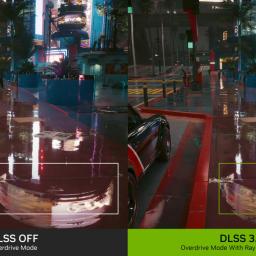 |
by Kris Holt on (#6EWWT)
Ahead of dropping the paid Phantom Liberty expansion next week, CD Projekt Red will release a major update for Cyberpunk 2077 on September 21. The patch will overhaul a lot of the game's systems, switch up the skill trees and make other sweeping changes. There should be a significant visual upgrade for many PC players as well. As of Thursday, Cyberpunk 2077 will be the first game to support DLSS 3.5, the latest version of NVIDIA's upscaling tech.DLSS 3.5 has a feature called Ray Reconstruction, which uses AI to upgrade the ray-traced elements of a game. According to NVIDIA, it "replaces hand-tuned denoisers, which resolve sampled rays in a scene, with an NVIDIA supercomputer-trained AI network that generates higher-quality pixels in between sampled rays."The company trained DLSS 3.5 on five times the volume of data it fed into DLSS 3. NVIDIA claims the latest version can pinpoint different ray-traced effects to both make more intelligent decisions about factoring in temporal and spatial data, and to "retain high frequency information for superior-quality upscaling."You don't necessarily need to have a 40-series GeForce RTX GPU to see the benefit. While only those graphics cards support DLSS 3, the latest version of the tech will be available on all RTX GPUs.In the case of Cyberpunk 2077, Ray Reconstruction will help to deliver "an even better, more immersive, more realistic experience," NVIDIA claims. That's due to upgraded quality and clarity of reflections, more accurate global illumination and more dynamically responsive lighting, the company says.You'll be able to try out DLSS 3.5 in more games this fall. Along with Cyberpunk 2077: Phantom Liberty, it will be soon available in the likes of Portal RTXand Alan Wake 2.This article originally appeared on Engadget at https://www.engadget.com/nvidias-dlss-35-brings-upgraded-ray-tracing-to-cyberpunk-2077-this-week-174447575.html?src=rss
|
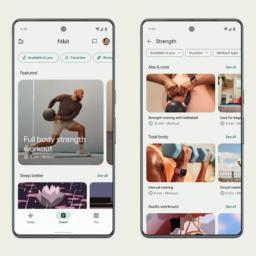 |
by Lawrence Bonk on (#6EWWV)
Fitbit's redesign is finally here. Google just announced that the comprehensive refresh starts rolling out today after existing as a beta build since August. The update simplifies the experience by splitting everything up into three tabs. There's the Today tab, the Coach tab and the You tab, with each offering unique metrics and access to activities.The Today tab boasts a fully customizable set of daily stats and metrics for easy perusal. Though called Today," it also provides access to health trends over the past month or year. The Coach tab is all about motivation, with curated lists of mindfulness sessions, workouts and more. The You tab is where you access achievement badges and related progress metrics. Google says that all of this information is kept private and won't be leveraged for ads data.The refresh doesn't change what's free and what's only available to paying subscribers, so your basic fitness flow will remain the same, but the app's visual language is markedly different, and there are some new features. Google encourages Fitbit users to use the new app to track physical activity with or without a dedicated device, as the update improves integration with smartphone sensors for more accurate step counts. The company also touts new privacy controls and increased customization options within the Today tab.The update begins a global launch today for both iOS and Android platforms. This is a major release, however, so it could take a few days before the redesigned app hits your inbox. The redesign couldn't arrive at a better time, as Fitbit sunsetted a number of features earlier this year, including open groups, adventures and challenges. While these features haven't exactly returned with this refresh, the Coach tab will feature daily challenges and scenarios similar to what was previously available, and the You tab provides access to achievement badges.This article originally appeared on Engadget at https://www.engadget.com/fitbits-radically-redesigned-app-is-ready-for-public-consumption-171433809.html?src=rss
|