 |
by Lawrence Bonk on (#6F57W)
Scientists at the University of Washington have developed flying robots that change shape in mid-air, all without batteries, as originally published in the research journal Science Robotics. These miniature Transformers snap into a folded position during flight to stabilize descent. They weigh just 400 milligrams and feature an on-board battery-free actuator complete with a solar power-harvesting circuit.Here's how they work. These robots actually mimic the flight of different leaf types in mid-air once they're dropped from a drone at an approximate height of 130 feet. The origami-inspired design allows them to transform quickly from an unfolded to a folded state, a process that takes just 25 milliseconds. This transformation allows for different descent trajectories, with the unfolded position floating around on the breeze and the folded one falling more directly. Small robots are nothing new, but this is the first solar-powered microflier that allows for control over the descent, thanks to an onboard pressure sensor to estimate altitude, an onboard timer and a simple Bluetooth receiver.As for the why of it all, the lil baby Starscreams can be equipped with a wide variety of sensors to make surveys as they soar around the sky, so in theory they could gauge temperature, humidity and air quality conditions, among other types of data. Produced at scale, this would be a highly-cost effective way to keep tabs on atmospheric conditions.The current design only allows them to transition in one direction, from the tumbling state to the falling state, but researchers can control multiple microfliers at the same time, making them disperse upon launch to cover a wider area. They're working on perfecting the reverse transition to allow the robots to transform back from the falling position to the folded position, which should better allow the microfliers to make precise landings even in turbulent wind.It's good to see new robots that don't resemble a Dr. Who death machine or a headless dog with a thirst for blood. Let's hear it for innovation! In the meantime, the University of Washington researchers will have plenty of funds to further develop this microflier concept, thanks to grants from the National Science Foundation, NASA and the Google fellowship program, among others.This article originally appeared on Engadget at https://www.engadget.com/these-flying-origami-inspired-robots-change-shape-in-mid-air-184653938.html?src=rss
|
 Engadget - Technology News & Expert Reviews
| Link | https://www.engadget.com/ |
| Feed | https://www.engadget.com/rss.xml |
| Updated | 2026-09-21 22:33 |
 |
by Will Shanklin on (#6F57X)
Honda has revealed more details about its all-electric Prologue SUV. The EV will have a listed range of 300 miles when the first deliveries arrive in early 2024. The automaker says the vehicle's MSRP is expected to start in the upper $40,000s" before subtracting any available incentives or tax credits.The Prologue's pricing puts its entry point well above rival SUVs like the Volkswagen ID.4, Hyundai Ioniq 5 and Mustang Mach-E - all of which start at around $40,000. Meanwhile, the range on Honda's EV is much shorter than the Ioniq 6's 361 miles and even lags slightly behind the Hummer EV (314 miles).The Prologue is built on the GM Ultium EV architecture, the same platform as GM electrics like the Chevy Blazer EV. Honda's new model has an 85-kWh battery pack that applies to both rear-drive and all-wheel-drive models. However, note that the 300-mile estimated range only applies to the 2WD variant, and we don't yet know how far to expect the AWD one to last. The automaker only lists engine performance stats for the AWD version, which generates an estimated 288 hp and 333 lb-ft of torque.HondaElsewhere, the Honda Prologue has a 121.8-inch wheelbase, five inches longer than the longer Honda Pilot's. The SUV seats five people and has 136.9 cubic feet of interior space. The vehicle supports wireless Apple CarPlay and Android Auto as standard, and it includes an 11-inch instrument display with an 11.3-inch HD infotainment screen.Honda will give buyers several charging packages to choose from at purchase. First, they can get an 11.5kW home charging station with a $100 charging credit and a $500 installation credit. Second, they can opt for a 7.6kW portable charging kit, a $300 public charging credit and a $250 installation credit. Alternatively, customers can go with $750 in public charging credits.This article originally appeared on Engadget at https://www.engadget.com/honda-first-all-electric-suv-has-300-mile-range-and-starts-in-the-upper-40000s-183146672.html?src=rss
|
 |
by Jessica Conditt on (#6F54S)
Looks like Cities: Skylines II is truly going to be colossal. The console release of Cities: Skylines II has been delayed to spring 2024, and the game's minimum and recommended PC specs are now slightly more demanding. The PC version of the game will still land on October 24, 2023, as originally planned.Anyone who pre-ordered the game on PlayStation 5 or Xbox Series X/S should automatically receive a refund through those platforms. Developer Colossal Order is shutting down pre-orders of the console version for now. Cities: Skylines II is still coming to PC Game Pass on October 24, and it'll hit Xbox Game Pass next spring, alongside the console release.The new minimum and recommended PC specs aren't wildly different than the original figures, but there are two notable changes. The recommended specs now call for an AMD Ryzen 7 5800X processor, rather than a Ryzen 5 5800X. The minimum specs start with an NVIDIA GeForce GTX 970 graphics card (or AMD equivalent), an upgrade from the original GTX 780.Colossal Order explained that the console delay and the PC update stem from the same root cause: This game is bigger and requires more optimization than they first thought. Here's how the studio explained the adjustment to the game's PC specs:"Cities: Skylines II is a next-generation title and therefore has certain hardware requirements. The recommended specs were set when the game was still in development. After having done extensive testing with different hardware we made the decision to update the minimum/recommended specs for a better player experience."It's been a rough year for PC games in general. The diversity baked into the PC market has always been a challenge for developers, but ninth-generation console hardware is now outstripping many common PC setups, leading to ambitious games with lots of bugs on PC. With today's Cities: Skylines II news, it seems like Colossal Order is attempting to insulate itself from this phenomenon.Developers have also had a tough time offering parity between the Xbox Series X - the most technically powerful console this generation - and the Series S, Microsoft's cheaper and less powerful option. Microsoft requires all games to launch with the same features on both consoles, and this has led to a handful of delays, dropped features, and at least one accidental PS5 console exclusive. Microsoft recently allowed Baldur's Gate 3 creator Larian Studios to bend these rules, but the requirement remains in place generally.Colossal Order has an FAQ about the changes to Cities: Skylines II right here.This article originally appeared on Engadget at https://www.engadget.com/cities-skylines-ii-will-hit-ps5-and-xbox-series-xs-in-spring-2024-173416073.html?src=rss
|
 |
by Lawrence Bonk on (#6F54T)
Beyerdynamic is no stranger to the gaming community, as the company's wired headsets are regularly seen at professional esports events and the like. However, it's never released a wireless gaming headset, until now. The company just revealed the Beyerdynamic MMX 200 and this headset's packed with modern features, all without frustrating wires to get in the way.The company says the MMX 200 offers the same competitive advantage" of its wired cousins, thanks to 40mm high-performance drivers that provide expanded detail across the entire frequency range. There's also an integrated digital signal processor (DSP) that promises to add more oomph to the sound, helping to create the ultimate gaming experience."Gaming is more than just listening, however, especially when you're playing with friends. You also have to trash talk. The MMX 200 features a detachable boom mic with an integrated 9mm condenser capsule that Beyerdynamic says will make listeners think your voice is coming from a podcast studio. That's quite a lofty promise, as the microphones that typically accompany gaming headsets are, in a word, trash.Being a wireless headset, connectivity options are extremely important. To that end, the MMX 200 integrates with a wide variety of audio codecs and features Bluetooth 5.3, along with a low-latency wireless adapter. There's even an interesting hybrid mode that allows the headphones to connect via an analog wired connection and Bluetooth at the same time.The advertised battery life is certainly impressive, allowing for 35 to 50 hours of use per charge. This metric doesn't even include idle periods, so the real-world battery life could creep even higher. You can also charge the headset during use, which is always a nice time-saver and a feature more companies should implement. As with most gaming headsets intended for prolonged use, there are some comfort-forward features here, like memory foam padding on the earpads and a light clamping force that shouldn't squeeze your head like a grape.All of the components have been designed for self-repair, with replacement parts available. Additionally, Beyerdynamic doesn't really trade in gimmicks, so there's no RGB lights or anything like that. The MMX 200 headphones are available today for $250 straight from the company or via Amazon.While this is Beyerdynamic's first wireless gaming headset, it's not the company's first foray into wireless audio. It released a pair of wireless earbuds last year, called Free Byrd.This article originally appeared on Engadget at https://www.engadget.com/beyerdynamic-releases-its-first-ever-wireless-gaming-headset-172641714.html?src=rss
|
 |
by Malak Saleh on (#6F54V)
Just when Microsoft's buyout of Activision seemed to finally be near complete, the Federal Trade Commission said it will revive its attempt to block the $69 billion deal in an adjudicative process. The FTC plans to restart its in-house trial against Microsoft's multibillion-dollar acquisition of the Call of Duty maker.This effort by the FTC is unlikely to be anything more than a nuisance for Microsoft. It already received EU approval over the summer when the European Commission endorsed the deal as long as the tech giant could ensure full compliance with commitments." And more recently, the UK's Competition and Markets Authority issued a preliminary approval of the merger. Activision Blizzard CEO Bobby Kotick called it a significant milestone for the merger" in a statement and said he remains optimistic that the deal will complete soon. The CMA's consultation on Microsoft's proposed changes is expected to be complete by October 6, just days ahead of the October 18 deadline for the CMA's review process.Normally, the FTC typically drops its challenges to deals when efforts are lost in federal court and despite the agency's effort, this move will not delay the deal from going through. The likely worst-case scenario for Microsoft would be divestiture. Being forced to sell Activision or parts of it after the fact would not be ideal, but at least short term there seems to be little chance of the FTC derailing things.The agency's failed attempt to block the acquisition over the summer in the US should have put an end to the bargaining when the FTC's injunction request to block the deal got rejected and the Ninth Circuit Court of Appeals denied the agency's last-ditch effort. Judge Jacqueline Scott Corley said in her ruling that the FTC did not prove the deal would harm consumers.Microsoft told Bloomberg that it's not overly concerned about the move preventing its purchase. Regardless of what impact it could have, the FTC's in-house hearing will only start after the Ninth Circuit issues an opinion on the appeal, according to the filing.
|
 |
by Will Shanklin on (#6F54W)
Sega announced on Thursday that it's canceling multiplayer shooter Hyenas. Citing lower profitability of the European region," the company said it would also shutter other unannounced titles under development.According to Sega, it will implement reduction of various fixed expenses" at Hyenas developer Creative Assembly. Unfortunately, that sounds like corporate jargon for layoffs" at the studio, also known for Total War and Alien: Isolation.Sega also braced investors for a loss in the current fiscal year. As a result of implementation of the structural reform described above in Consumer area, we expect to record losses of approximately 14.3 billion yen for the fiscal year ending March 31, 2024," Sega wrote. In a statement to Engadget, Creative Assembly confirmed the beginning of layoff discussions. Creative Assembly, part of Sega Europe, has announced the beginning of a redundancy consultation process, alongside ending development of Hyenas," the developer wrote. This decision affects areas of its UK operations, which may result in job losses."Creative Assembly / SegaCreative Assembly staff allegedly learned about the game's cancellation today at the same time Sega issued its statement, according to IGN. Yanking Hyenas so close to its scheduled launch was reportedly a shock to employees at the UK-based developer, although there was apparently internal concern at the studio about the game's prospects. IGN's sources say Creative Assembly employees face redundancy but also expect company-wide cuts at Sega.Announced in 2022, Hyenas was billed as a team-based extraction shooter for PlayStation, Xbox and PC, with players looting coveted pop-culture objects in wild zero-gravity environments. The over-the-top multiplayer title completed a closed beta earlier this month, dropped its final trailer in August and was still slated for a 2023 launch before today's news.Creative Assembly says it will try to reassign employees when possible. Our people-first approach remains foundational to how we operate; the priority is to work with those whose jobs are at-risk and re-allocate them to other available opportunities at CA wherever possible," a Creative Assembly representative wrote in an emailed statement to Engadget. We are absolutely committed to delivering more exciting game experiences long into the future, which will delight both current and potential players all over the world."This article originally appeared on Engadget at https://www.engadget.com/sega-cancels-multiplayer-shooter-hyenas-at-the-last-minute-162614456.html?src=rss
|
 |
by Cheyenne MacDonald on (#6F54X)
Reddit has announced a slew of changes to its user preference settings, the most notable being that users will no longer have a say in whether they see personalized ads based on their site activity. Reddit's Head of Privacy, Jutta Williams, shared a breakdown of the impending updates in a post to r/reddit on Wednesday night, writing that only users in select [unspecified] countries" will be exempt from the new ad policy. For the rest, advertisers will be able to target users based on what communities you join, leave, upvotes, downvotes, and other signals."Users were also sent a private message notifying them of the update, which is expected to take effect over the next few days. While users are losing control over activity-based ad personalization more broadly, they will be able to limit certain types of ads from appearing. Reddit is adding opt-out buttons for sensitive advertising categories" including Alcohol, Dating, Gambling, Pregnancy & Parenting, and Weight Loss. Jutta notes that these will be identified both by manual tagging and machine learning, so it may take a while for the filters to work effectively.In an attempt to get ahead of users' concerns about their data, the post insists that the vast majority of redditors will see no change to their ads," further stating that [for] users who previously opted out of personalization based on Reddit activity, this change will not result in seeing more ads or sharing on-platform activity with advertisers." Responding in a later comment, Jutta wrote that this update does not change the way we collect or share data."This data informs how we target ads on our platform," Jutta continued. We do not share your information or activity with third parties for advertising outside Reddit." Unsurprisingly, a lot of users are neither pleased nor convinced. Though Reddit hasn't named the exact countries that will continue to have opt-out abilities, the exemption is likely intended to keep the platform in compliance with the GDPR, the EU's data protection law that came into effect in 2018.In addition to changing the ad preferences, Reddit has also reorganized its location customization settings and made some tweaks to its privacy settings' descriptions for clarity. Users should see the changes in their settings over the coming weeks.This article originally appeared on Engadget at https://www.engadget.com/redditors-will-now-be-forced-to-see-personalized-ads-161510093.html?src=rss
|
 |
by Lawrence Bonk on (#6F50G)
Netflix held a virtual event called DROP 01 to celebrate its forthcoming slate of animated projects. The showcase was an absolute cornucopia of trailers and announcements for animation fans, particularly those who enjoy video game adaptations (all of us.) It started with a global livestream of Castlevania: Nocturne's first three episodes ahead of the official premiere later today.After that, the hits kept on coming. We knew there was a Devil May Cry anime being produced, adapting the popular game series, and now we have a trailer. There's no release date, other than coming soon", but the show's being produced by Capcom and animated by Studio Mir, the same folks behind The Legend of Korra, Kipo and the Age of Wonderbeasts, The Witcher: Nightmare of the Wolf and My Adventures With Superman. In other words, we should be in for a good time.Sonic Prime is coming back for season three and there's a trailer to prove it. The new episodes focus on the fallout of chapter two as the speedy hedgehog faces off against Nine Tails for the fate of the entire Green Hill Zone. Netflix makes games now and also showed off a trailer for the related mobile title Sonic Prime Dash.It's been nearly three years since the announcement of a Tomb Raider animated series, leaving fans wondering if the show would evaporate into vaporware heaven. Worry no longer. It's real and it's coming soon. Tomb Raider: The Legend of Lara Croft is a team effort between game developer Crystal Dynamics and media dynamos Legendary Television. It's being drawn by Powerhouse Animation, the studio behind Castlevania and Masters of the Universe. There's no release date on this one yet but it looks nifty.Captain Laserhawk: A Blood Dragon Remix isn't exactly a video game adaptation, but it's inspired by the world created in Far Cry 3: Blood Dragon. As such, Ubisoft is on board, as is Netflix's animation wunderkind Adi Shankar. This is a cyberpunk show, through and through, with the unusual addition of Ubisoft mascot Rayman. The series releases soon, on October 19.We don't have that long to wait before Scott Pilgrim Takes Off graces our screens, as it premieres on November 17. To hype up fans, Netflix dropped a sneak peek with an actual scene from the show. The eight-episode series brings back every single cast member from the movie, including Michael Cera, Brie Larson, Mary Elizabeth Winstead, Chris Evans and Aubrey Plaza.It wasn't all video game adaptations. Netflix also showed off trailers for the cinematic anime Blue Eye Samurai, a new season ofMasters of the Universe: Revolution and a series based on Astro Boy called PLUTO. Prepare to go cartoon crazy in the coming months.This article originally appeared on Engadget at https://www.engadget.com/netflix-animation-event-dropped-trailers-for-tomb-raider-devil-may-cry-and-sonic-160012736.html?src=rss
|
 |
by Jeff Dunn on (#6F50H)
The Xbox Series X is once again on sale for $450 at Dell. That's $50 off its usual going rate. We've seen this deal pop up before, but discounts on Microsoft's highest-end game console have generally been rare since it arrived in late 2020, so this is another good opportunity to save.Compared to the $300 Xbox Series S, Microsoft's other current-gen Xbox, the Series X packs a stronger GPU and 6GB more RAM, which lets it more consistently play demanding games at higher frame rates and resolutions. It also has a disc drive and twice as much storage by default at 1TB. You can still play every Xbox game on either console, but the gulf in power between the two devices is starting to become more evident; the hit RPG Baldur's Gate III, for instance, will come to the Series S without split-screen co-op - something that will be available on the Series X - after developer Larian Studios had issues achieving feature parity with the less powerful machine. Broadly speaking, the Series X is built to play games in 4K at 60fps (or higher), while the Series S is more for 1440p or 1080p displays.As for the games themselves, Microsoft has had some struggles producing first-party hits - we were lukewarm on its most recent blockbuster, the space RPG Starfield - but the Xbox library still has tons of titles we like, from blockbusters like Forza Horizon 5 and Halo Infiniteto smaller gems like Hi-Fi Rushand Pentiment. If you like to sample a variety of games, an Xbox Game Pass subscription is still a decent value as well, though a recent price hike has made it a little less of a must-have.The caveat to any Xbox deal right now is the trove of documents that accidentally leaked earlier this month as part of the FTC v. Microsoft court battle. That leak included details of an apparent Xbox Series X refresh that could arrive next year with a cylindrical design and 2TB of storage but no disc drive, which could make the current model more appealing for those who don't want to go all-digital. As that info stems from older internal documents, however, it's possible that those plans have changed over time.Follow @EngadgetDeals on Twitter and subscribe to the Engadget Deals newsletter for the latest tech deals and buying advice.This article originally appeared on Engadget at https://www.engadget.com/the-xbox-series-x-is-back-down-to-450-154534111.html?src=rss
|
 |
by Kris Holt on (#6F50J)
Apple has introduced all kinds of useful features to the iPhone in iOS 17. One, called Check In, can automatically let your friends and family know when you've arrived somewhere safely or if you've been delayed. The feature can also tell you when you're moving in the wrong direction.If you're delayed, you can add extra time to complete your check in. If you don't do so before the timer runs out, your device will send your friend or family information such as your location, battery percentage and cellular signal (you can decide which details to share.How to turn on Check InTo set up a Check In, find an existing conversation in the Messages app or start a new one with the person or people you want to keep tabs on your safe arrival. Tap the Plus button, then More > Check In > Edit.Here, you have two options. The first is called When I Arrive. Punch in your destination and specify how you're getting there. You can add extra time if you need to. If your iPhone isn't moving toward your destination for a certain period of time or it doesn't reach that location as expected, Check In will notify your trusted contact and inform them about your phone's journey. When you do reach your destination on time, Check In will let your friend or family member know you've arrived.The other Check In option is time-based. If you don't end the Check In before the time limit expires, your iPhone will notify your friend. This could be a useful option if you're on a first date or otherwise hanging out with a new pal.AppleWhichever Check In option you go with, tap the blue up arrow (as if you were sending any other type of message) to confirm the Check In and start the timer. If you lose service or your iPhone shuts off before a Check In is complete, the friend or family member you set it up with may receive a notification early or later than expected and access the details you decided to share with them.To add extra time to a Check In, go to the conversation with the person you shared it with. Find the Check In message, then tap Details > Add Time. You can then choose how much time to add.How to cancel a Check InIf you'd like to cancel a Check In for any reason, find the Check In message, then tap Details > Cancel Check In. You'll be asked to confirm the request.How to modify Check In dataSelecting the details you want to share with Check In recipients is a little different. To do so, go to the Messages section of your iPhone's Settings app, then find the Check In Data option. When you arrive at your destination, Check In can share your location, network signal and iPhone and Apple Watch battery level if you select the "When I Arrive" option. The "Full" option will share all of that data, along with the route your iPhone took and details about the last time you unlocked your phone or Apple Watch.This article originally appeared on Engadget at https://www.engadget.com/how-to-use-ios-17s-check-in-feature-in-imessage-to-let-friends-know-you-got-home-safe-153634490.html?src=rss
|
 |
by Amy Skorheim on (#6F50K)
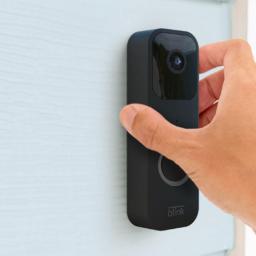
If you missed last week's one-day-only deal on Blink cameras, here's another opportunity to add video security to your home's exterior. Amazon is selling two third-generation wireless outdoor cameras plus a video doorbell and Sync Module for just $100, but you'll need to be a Prime member to get the discount. The sale could be related to the upcoming October Prime Day event, though there's no indication whether this savings will stick around until then. Bought separately at full price, the bundle would run you $240.These aren't the latest generation Outdoor cameras, which were announced last month - those have a wider field of view and better low-light sensitivity. But these third-gen cameras can still deliver 1080p daytime footage and infrared video at night. Both the cameras and the doorbell let you see, hear and talk to whomever stands before them and a live feed goes directly to your phone or compatible smart display via the Blink app. The included Synch Module 2 lets you store footage locally and supports USB downloads. If you want to store clips in the cloud, you'll need a Blink subscription, which goes for $10 a month. You get one free month with this bundle so you can try it out - just remember to cancel if you decide you don't want it after that.Blink Outdoor cameras are one of our picks for the best smart home devices you can buy. We like the ease of setup and the battery efficiency (up to two years on a set of AA cells). The bundle's a good pick if you already use Alexa as your smart home assistant. However, if you prefer the Google Assistant or Siri and HomeKit to run your smart home, you'll probably want to go with a different brand, as Blink devices aren't natively compatible with those ecosystems.The doorbell is wireless, but if you want it to ring inside your home when the button's pressed, you'll either need to connect it to your existing doorbell wires or, if you opt for a wireless setup, buy a Blink mini indoor camera. This bundle does include mounting hardware, so at least you won't need to make an extra purchase for that.Follow @EngadgetDeals on Twitter and subscribe to the Engadget Deals newsletter for the latest tech deals and buying advice.This article originally appeared on Engadget at https://www.engadget.com/prime-members-can-get-a-blink-video-doorbell-and-two-outdoor-cameras-for-100-151520100.html?src=rss
|
 |
by Malak Saleh on (#6F50M)
It's been nearly two years since the Fitbit announced the Charge 5. But the company has taken that time to deepen its ties with the Google services ecosystem. The Charge 6 is Fitbit's first fitness tracker specifically designed to take advantage of its new owner's services. Though, it's no surprise that Google is tightening its bond with Fitbit after dropping $2.1 billion on the company.The 6th generation Charge will start at $160, which is $20 less than the Charge 5's launch price (though, that's fallen to just $150 these days). The bigger news though, is that the navigation button is back. After an earful of complaints from buyers, Fitbit decided to bring back the physical side button that it removed on the Charge 5. This means you will no longer solely rely on tapping to navigate the watch's apps - a relief for those with touchscreen fatigue.Fitbit/GoogleThe Charge 6's face is made of aluminum, glass and resin and comes in black, champagne gold or silver. Each face can be paired with three new primary silicone bands that are water-resistant - an off-white porcelain, a black-like obsidian and a bright coral band. The loops are interchangeable with previously released Charge 5 accessories, giving buyers dozens of color combinations to choose from. Like the previous generation, the bands come in both small and large sizes, and connect to the tracker's 1.04-inch AMOLED touchscreen.The Charge 6's battery is supposed to last seven days without a charge, like its predecessor, and can be fully recharged in about two hours. In terms of memory capacity, the new wearable can save seven days worth of detailed motion data and can sample heart rate data at one-second intervals during exercise tracking.Fitbit/GoogleOne of the biggest improvements to the Charge 6, at least according to Fitbit, is that it should provide heart rate readings that are up to 60 percent more accurate than its predecessor through its optical heart rate monitor and electrical sensors during vigorous activities like HIIT, spinning and rowing. Fitbit claims that the Charge 6 is the most accurate heart rate tracker it has made to date. This means you will get more precise information about calories burned and Active Zone Minutes, a metric unique to Fitbit that uses heart rate data to provide clearer insights into how effective your workouts are.Another new key feature on the Charge 6 is the ability to pair the tracker with compatible exercise machines to see how your heart rate performs in real time during workouts. This will allow you to focus more on your movement and less on your wrist while you are on a treadmill, elliptical, rower or exercise bike. The tracker will pair with select workout machines that support Bluetooth Heart Rate Profile, like those from Peloton, Tonal and Nordic that the company has established partnerships with. While it is notable, this is a feature we've seen on devices from competitors.Fitbit/GoogleAdditionally, Fitbit says the Charge 6's tracking capabilities have expanded with 20 new exercise modes and it will continue to offer a 6-month premium Fitbit membership to new buyers. This will include smart recommendations for workouts based on your Daily Readiness Score which helps users figure out how hard to push it at the gym based on things like heart rate variability, sleep quality and stress levels.Furthermore, as part of its software updates, Fitbit's Charge 6 will now give you the option to stream and listen to music through YouTube Music Controls. Everyone knows good tunes can make all the difference during a workout. This is a considerable change from the Charge 5, which removed all music control functionality, even for Spotify Premium users. Now, you don't need to pull out your phone to pick a song mid-run and you can skip through 100 million tracks that are available through YouTube. However, you will need to pay for a YouTube Music Premium subscription.Fitbit/GoogleIn addition to tracking your pace and distance during runs and bike rides with GPS, the Charge 6 can now give you directions if you're trying out a new route thanks to Google Maps integration. This means you can see turn-by-turn directions right on your wrist. In the same vein of expanding Google integration, you can also tap to pay with Google Wallet on the Charge 6, when previously you could only use Fitbit pay. All of these updates come in tandem with the launch of Fitbit's redesigned app, which simplifies engagement to three categories on the Today tab, the Coach tab, and the You tab, each offering unique metrics and access to activities.The Fitbit Charge 6 will work with most phones running Android 9.0 or newer or iOS 15 or newer and it still requires a Google Account. You can still get notifications for calls, texts, and smartphone apps like Google Calendar, Gmail, and WhatsApp and also send quick replies from your wrist.This article originally appeared on Engadget at https://www.engadget.com/fitbits-160-charge-6-fitness-tracker-brings-back-the-physical-side-button-150028424.html?src=rss
|
 |
by Malak Saleh on (#6F50N)
Researchers at the University of California San Diego have figured out a way to turn everyday earbuds into high-tech gadgets that can record electrical activity inside the brain. The 3D screen-printed, flexible sensors are not only able to detect electrophysiological activity coming from the brain but they can also harvest sweat. Yes, sweat.More specifically, sweat lactate, which is an organic acid that the body produces during exercise and normal metabolic activity. Because the ear contains sweat glands and is anatomically adjacent to the brain, earbuds are an ideal tool to gather this kind of data.You may be wondering why scientists are interested in collecting biometric info about brain activity at the intersection of human sweat. Together, EEG and sweat lactate data can be used to diagnose different types of seizures. There are more than 30 different types of recorded seizures, which are categorized differently according to the areas of the brain that are impacted during an event.But even beyond diagnostics, these variables can be helpful if you want to get a better picture of personal performance during exercise. Additionally, these biometric data points can be used to monitor stress and focus levels.Erik Jepsen, UC San DiegoAnd while in-ear sensing of biometric data is not a new innovation, the sensor technology is unique in that it can measure both brain activity and lactate. However, what's more important is that the researchers believe, with more refinement and development, we will eventually see more wearables that use neuroimaging sensors like the one being made to collect health data on everyday devices. In a statement, UC San Diego bioengineering professor Gert Cauwenberghs said that, Being able to measure the dynamics of both brain cognitive activity and body metabolic state in one in-ear integrated device," can open up tremendous opportunities for everyday health monitoring.Throughout the development of the sensor technology, the researchers had to grapple with some obstacles. They needed to make the sensors as small and thin as possible so that they could collect tiny sweat samples. They also had to integrate components that can bend" to account for the irregular shape of the ear according to Ernesto De La Paz, a Ph.D. alumnus who co-authored the research.One primary technical challenge was being able to fit the sensors in the ear, specifically in the tragus of the ear, which is an anatomically unique space situated in front of the ear canal that can vary from one individual to another. This led the researchers to create a stamp-like stretchable sensor," which can be easily tacked onto an earbud's surface.Erik Jepsen, UC San DiegoBut in order to make sure that the sensors would actually have direct contact with the ear and accurately pick up readings, researchers opted for 3D printed, spring-loaded sensors that hold contact but can adjust as earbuds move." The biometric sensors also had to be covered with a hydrogel film that made sure they would amply collect sweat from a wearer.Despite their capabilities and rosy future as a potential diagnostic aid, the 3D printed sensors really need a considerable amount of sweat in order to be useful for data analysis. But the researchers said down the line the sensors will be more precise, so hard workouts may not be necessary for meaningful sweat analysis.This article originally appeared on Engadget at https://www.engadget.com/researchers-developed-3d-printed-sensors-that-can-record-brain-activity-on-earbuds-150000043.html?src=rss
|
by Devindra Hardawar on (#6F50P)
Maybe I've been too hard on widgets. Ever since they appeared in the macOS X dashboard, I've thought of them as a nuisance - tiny memory hogs that only exist to disappoint me with their limited functionality. Microsoft took a cue and brought them into Windows Vista, and now they're back in Windows 11. Widgets are harmless, I know. But every time they've showed me the weather, or reminded me of an upcoming appointment, I've wished for a world where they didn't disrupt the sanctity of my desktop experience.Now I wouldn't say macOS Sonoma made me a total widget convert. But, at the very least, it's made me more tolerant of them. The new widget experience is a minor, but helpful quality of life upgrade - something that basically describes macOS Sonoma as a whole. There aren't any major new features like last year's Ventura, which brought over Stage Manager from iPads. But Sonoma shows that Apple can still come up with new ways to make its desktop OS more pleasant.Photo by Devindra Hardawar/EngadgetYou must widgetWhile you can still access widgets in macOS Sonoma's notification center, something you could do for years, I never found that placement too compelling. My Mac isn't like my iPhone or iPad, where I'm always trying to keep up with the latest alerts. I'm usually focused on getting some work done. By bringing widgets out of the side bar and onto the desktop, Sonoma integrates them far more organically.Now, you don't have to go out of your way to get a quick weather update, or to see the battery levels of your Apple devices. Your widgets are just always sitting there, ready for a quick glance whenever you close a few windows or expose the desktop (something I do frequently with hot corners). Apple also revamped many of its existing widgets to take advantage of the additional screen space.Another new feature: You can bring over widgets from your iPhone (assuming it's signed into the same iCloud account as your Mac, and is also on the same Wi-Fi network). Those have been hit or miss, in my experience. They often take a while to load properly on your desktop, and if you interact with them, they either redirect to a website or tell you to open their iPhone app. When I enabled Spotify's iPhone widget on Sonoma, for example, it showed me the track I'm currently listening to, but that's it. As soon as I touched the widget, it said I had to open Spotify on my iPhone to continue.That wonkiness could be smoothed over if more developers start building macOS widgets. But Apple has been trying to make widgets a thing for years with little success. Maybe they'll have more success now that widgets aren't hidden away in a corner.macOS finally gets serious about gamingHistorically, Apple has never really been a gaming-focused company. But with Apple Arcade and the unstoppable success of the mobile App Store, not to mention its own growing CPU and GPU prowess, the company has finally started to lean into games over the last decade. Now with macOS Sonoma's Game Mode, Apple also has a way to focus its hardware to deliver the best performance possible.It's well-timed too, as we're also seeing recent titles like Lies of P and Resident Evil Village make their way to the App Store. Some Steam offerings, like Tunic, Disco Elysium and Inscryption, also include Mac support. Game Mode won't magically turn your Mac into a superpowered rig, but it'll help achieve better framerates and lower latency by prioritizing what you're playing.Based on an hour of playing Lies of P on an M2-equipped 13-inch MacBook Pro, Game Mode helped to deliver a smooth, console-like experience. The game appeared to be hitting near 60fps while playing with medium settings at a 1,920 by 1,200 resolution, though it occasionally slowed to a 30fps crawl in expansive outdoor environments. Latency with my 8BitDo Ultimate controller felt minimal over Bluetooth, and I was also surprised that the game performed just as well on battery power.Sonoma's Game Mode won't make me an all-Mac gamer anytime soon, but it's a nice feature to have, especially if you don't have access to consoles or PCs with beefy GPUs. It would also be nice to see cloud saves for native Mac games that can synchronize with other platforms. (Dead simple cloud saves are a major reason why I lean on Steam as my primary gaming storefront.)AppleThe best screensavers everI wasn't super excited to see macOS Sonoma's aerial screensavers at first, mostly because I've been getting my fill of that lovely drone and helicopter footage since it debuted on the Apple TV in 2015. But in my months with the Sonoma beta, I've learned to appreciate them. Occasionally when I'm lost in thought (and probably trying to finish a review), an aerial screensaver will flip on and deliver a calming view of Hong Kong's cityscape, or the fog over Sonoma Valley. It's like a free brain massage, something that lifts me out of the daily stress of work, kids and home maintenance.No matter how many times I see it, I still get a kick out of seeing aerial screensavers slowly pause to a stop and transform into my wallpaper. It's purely aesthetics, but it's the sort of thing few companies would spend much time on.This article originally appeared on Engadget at https://www.engadget.com/macos-sonoma-review-widgets-gaming-141540494.html?src=rss
by Jessica Conditt on (#6F4WN)
Joy-Cons are the Switch's weakest feature. The two itty-bitty controllers have caused a plethora of issues for players - and Nintendo itself - since the Switch first came out in 2017, tarnishing the sheen of an otherwise fantastic hybrid console. Stick drift was the main problem and it became such a widespread phenomenon that Nintendo faced a class-action lawsuit over it, and the company is still offering free repairs for all busted Joy-Cons, even outside of warranty terms.The left Joy-Con on my Switch went wonky about a year ago, but I also had a Switch Lite and a few Bluetooth controllers, so I never bothered to get it fixed. And now, I never have to. The Nitro Deck is a handheld frame for the Switch screen, complete with Hall Effect thumbsticks and incredibly clicky buttons. It's so, so much better than the standard Joy-Con setup.The Nitro Deck comes from CRKD, a new company founded at Embracer Group's Freemode incubator lab. The Nitro Deck is a simple idea executed well: Slide your Switch screen into the frame and it acts as a self-contained, beefed-up gamepad. It feels like the offspring of a Switch Lite and a Steam Deck, and it comes in black, gray and white as default colorways. Limited edition styles include mint, GameCube purple and an SNES-y gray. (The hottest versions come from a collaboration with Limited Run, but these transparent lovelies are sold out).CRKDThe Nitro Deck includes a stand for Bluetooth play, but it really shines as a handheld. The D-pad is responsive and face buttons are crisp. They have a satisfying weight and pop back up quickly after each press. The shoulder buttons are clicky, the triggers are buttery-smooth, and though I haven't actually found a use for the four back-panel buttons, I'm happy with their positioning and the way they feel.The analog sticks are the star, though, simply because they're such an upgrade from the standard Joy-Con experience. Hall effect joysticks mean there's no chance of drift and they offer a wide, accurately tracked range of motion. The Nitro Deck carry case kit includes two spare sticks with different textures, and it's incredibly simple to pop one out and replace it with a new one.As evidenced in my Steam Deck review, my hands are on the smaller side, and the Nitro Deck fits just fine in my palms. I have a touch of anxiety over the distance between the right thumbstick and the face buttons directly above it, but it hasn't actually affected my ability to play any games. Tiny Hands Gang, I think this one's OK.CRKDThe most jarring aspect of the Nitro Deck is its rumble function. The rumble on this thing isn't particularly powerful in terms of physical feedback, but it's certainly loud. This was especially noticeable while playing Mario Kart 8, which activates rumble with every drift, crash and off-track tire touch, sometimes for seconds at a time. The noise generated is obscene. It sounds like a ghost with a cold groan-screaming into your hands, and it doesn't offer any subtlety. That said, it's easy enough to turn off the rumble completely. That's what I did, and I didn't miss it.Hades is the game I've spent the most time with on Switch and Switch Lite, and playing it on Nitro Deck was a refreshing experience. The Nitro Deck supports a larger screen than the Switch Lite and its inputs are much better than the classic Switch, making the game look and feel like something new. I've been playing with a traditional Switch screen, but the Nitro Deck also supports the OLED model.While I've been putting off getting my weird Joy-Con fixed for free, this device might be the final push I need to actually drop some cash on an OLED Switch. With clearer visuals, a slightly bigger screen and updated controls via Nitro Deck, the complete package would feel like a brand-new, end-of-cycle refresh.CRKDThe Nitro Deck costs $60 on its lonesome, or $90 with the carry case. The case itself is worth the extra $30, in my opinion: It's sturdy and thick, and it comes with two swappable thumbsticks, a screen wipe and an eight-foot USB-C charging cable. Nitro Deck pre-orders placed before September 18 are currently shipping, and any units purchased from now on should be sent out this week or next (more detailed information can be found here).The Nitro Deck improves the Switch in ways I didn't know I wanted. Truthfully, I may never connect the Joy-Cons to my Switch again. This is simply my Switch's final form: bulbous, purple, loud and, more than anything, satisfying to play.This article originally appeared on Engadget at https://www.engadget.com/crkd-nitro-deck-review-the-switch-has-never-felt-this-good-130041763.html?src=rss
 |
by Steve Dent on (#6F4SE)
Apple has quietly launched a new iPhone Wallet feature in beta that lets UK users see their current account balance, along with recent deposits and payments, 9to5Mac has reported. It's powered by the UK's Open Banking API, and follows Apple's purchase of Credit Kudos, a company that uses Open Banking to give users a snapshot of their financial health and creditworthiness.The new feature, which also shows users their balances after purchasing something with Apple Pay, arrives as part of the iOS 17.1 developer beta. Users must first authorize it through the Wallet app, then authenticate using their bank's app or website. All banking data will be stored strictly on users' devices and not on Apple's servers. Supported banks in the beta launch include Barclays, HSBC, Lloyds, RBS, Monzo and Starling.The Wallet addition is a rare Apple feature that premieres in a territory outside the US. Apple doesn't even have its Apple Card available in the UK yet, so it's a relatively minor player in the region so far. At the same time, its purchase of Credit Kudos gives it major connections in Open Banking. The latter company's API taps into the UK's open banking platform to analyze bank account data, aiming to help banking providers make faster and better decisions for people seeking loans or other financial services.Open Banking - which forces the United Kingdom's nine major banks to to release their data in a secure, standardized form - is unique to the region and doesn't exist in the US (though the government is working on it). Europe introduced a similar system called PSD2 back in 2020. The two are similar, so Apple could feasibly bring the same features to Europe, where it effectively dominates smartphone-based payment systems with Apple Wallet.This article originally appeared on Engadget at https://www.engadget.com/apple-wallet-can-now-show-uk-users-their-bank-account-balances-113554313.html?src=rss
|
 |
by Mat Smith on (#6F4SF)
Meta's big product showcase for 2023 focused on its new headset, the Quest 3, which Mark Zuckerberg claims is the first mainstream mixed reality headset," hurting the feelings of the Quest 2, which preceded it.The Meta Quest 3 has full color passthrough on its external cameras, able to blend augmented reality elements into your surroundings. It's also the first consumer device that runs on Qualcomm's Snapdragon XR2 Gen 2 chip, and Meta claims it delivers double the performance of the Quest 2. Expect higher resolution and a larger depth of field, thanks to upgrades to the screen and lenses. Meta has also revamped the Quest controllers, ditching the weird tracking rings and letting new sensors handle tracking instead.Meta teased a handful of new games and experiences - mostly underwhelming - with an extra push towards fitness apps and upgrades. (You know Zuckerberg is hench now, right?) That said, Xbox Cloud gaming is coming to the Quest 3 in December, unlocking a bigger range of (admittedly non-VR) games with no need for a TV or monitor.The event also revealed next-gen Ray-Ban smart glasses, AI updates and more - read on for those.- Mat SmithThe biggest stories you might have missedMeta's chatbot platform starts with over 25 AI personalitiesHonbike's ebike of the future is perfect for citiesShure hid a preamp inside its latest SM7dB microphoneHow to use iOS 17's Live VoicemailMercedes take the wheel: Testing Drive Pilot L3 autonomy in trafficValve fails to get out of paying its EU geo-blocking fineGenerative AI image editing is coming to Instagram
|
 |
by Mariella Moon on (#6F4SG)
The first black hole humanity has ever imaged has also provided us with what researchers are calling "unequivocal evidence" that black holes spin. An international team of scientists headed by Chinese researcher Dr. Cui Yuzhu analyzed 22 years of observational data gathered by more than 20 telescopes around the world. What they found was that the black hole at the center of galaxy M87, which is 6.5 billion times more massive than our sun, exhibits an oscillating jet that swings up and down every 11 years. This phenomenon confirms that the black hole is indeed spinning.Yuzhu Cui et al. 2023, Intouchable Lab@Openverse and Zhejiang LabBlack holes gobble up huge amounts of gas and dust, which they attract with their massive gravitational pull. A small fraction of those particles that don't fall into the black hole get spewn out and travel close to the speed of light, showing up as narrow beams along the axis. These beams are called "jets." The telescopes' observations show that M87's jet oscillates by 10 degrees in a recurring 11-year cycle, just as predicted by Einstein's General Theory of Relativity.So, what causes the M87's jet to swing back and forth? The researchers' analysis indicates that the black hole's spin axis doesn't perfectly align with the rotational axis of its accretion disk. This disk-like structure is typically found surrounding a black hole, because it's made of materials that gradually spiral into the void to be consumed. That misalignment between the rotating mass and the matter that swirls around it causes "a significant impact on surrounding spacetime," which affects the movement of nearby objects in what the General Theory of Relativity calls "frame-dragging."This is a significant discovery that massively improves our understanding of the mysterious region of spacetime - aside from proving Einstein right, of course. Scientists have yet to find out the size of M87's accretion disk and how fast its black hole is spinning, though, and that entails further observation and analysis.This article originally appeared on Engadget at https://www.engadget.com/scientists-confirm-that-the-first-black-hole-ever-imaged-is-actually-spinning-105041168.html?src=rss
|
 |
by Steve Dent on (#6F4Q0)
X has cut over half its election integrity team including the head of the group, according to a report from The Information at least partially confirmed by Elon Musk in an X post. That's despite X recently promising to expand the team ahead of 2024 US elections, and in the face of criticism from the European Commission that X has a major disinformation problem.X reportedly cut all four Dublin, Ireland-based members of the team, including leader Aaron Rodericks. Yet only yesterday, CEO Linda Yaccarino said X was planning to expand its safety and election teams around the world, according to The Financial Times. And less than a month ago, the company was planning to hire a civic integrity and elections lead focused on combatting disinformation. "If you have a passion for protecting the integrity of elections and civic events, X is certainly at the center of the conversation," said Rodericks in a LinkedIn post.Rodericks was subsequently suspended for liking posts critical of X, Musk and Yaccarino. After The Information published its story and it was quoted by X News Daily, Musk responded: "Oh you mean the 'Election Integrity' Team that was undermining election integrity? Yeah, they're gone."Yesterday, the EU released its first report on social media platforms' handling of disinformation as part of the Digital Services Act (DSA), finding that X had much higher levels of mis- and disinformation than its peers. X said in a series of posts that it disputed the "framing" of the data and remained "committed to complying with the DSA" despite pulling out of a voluntary Code of Practice on disinformation. In a statement accompanying the report, European Vice President Vera Jourova said that "my message for Twitter/X is you have to comply. We will be watching what you do."However, since Elon Musk purchased X (nee Twitter) last October, the company has cut more than 80 percent of its staff, and the company already had challenges staying on top of disinformation prior to his tenure. Under the DSA, X must comply with the stricter laws or face fines up to 6 percent of its annual global revenue - though to date, Musk has faced very little pushback for all that's happened with X.This article originally appeared on Engadget at https://www.engadget.com/x-reportedly-cuts-half-of-its-election-integrity-team-091135783.html?src=rss
|
 |
by Mariella Moon on (#6F4JW)
The Vivaldi browser, which has been in beta testing for iOS devices over the past few months, is ready for a public release. Vivaldi for iPhones and iPads is now available for download from the App Store, bringing with it the features Android and desktop users have been enjoying for a while. One of the features that sets the browser apart from its peers on mobile is its desktop-style Tab Bar, which is enabled by default. It shows tabs lined up at the top of the interface, similar to how they're displayed on a computer.Since mobile devices have smaller screens, though, the browser does come with a Tab Switcher that will show users a snapshot of all the open tabs. The active tab will be highlighted in the switcher with a border around its thumbnail, and users can close or choose other tabs from there. Vivaldi also has a built-in Notes feature, which can automatically save text users highlight on websites if they long press on it and choose the "Copy to note" option. And if a user wants to save pages to read later without clogging the Tab Bar, they can save them to the browser's Reading List instead.Similar to other iterations of Vilvaldi, the browser for iOS has built in ad and tracker blocker. Users will have to enable the option under Privacy in Settings, where they can also customize it and manage blocking levels per website.This article originally appeared on Engadget at https://www.engadget.com/vivaldi-browser-arrives-on-iphones-and-ipads-070035712.html?src=rss
|
 |
by Mariella Moon on (#6F4JX)
It's been four years since Raspberry Pi 4 was released, and since then, the company has only rolled out minor upgrades, including doubling the RAM for the base $35 version. Now, the company has officially launched Raspberry Pi 5, which is the first full-size computer from the brand that uses silicon it built in-house. It offers double or even triple the CPU performance of Raspberry Pi 4, with better graphics capability, thanks to its 800MHz VideoCore VII GPU. The company describes the new model's processor as a 2.4GHz quad-core 64-bit Arm Cortex-A76 CPU, with cryptography extensions, 512KB per-core L2 caches and a 2MB shared L3 cache.The device has dual HDMI ports, with each one having a 4K display output at frame rates of up to 60 fps, as well as support for HDR. It also comes with "state of the art" camera support using a rearchitected Raspberry Pi Image Signal Processor. Raspberry Pi has more than doubled its aggregate USB bandwidth to enable faster transfer speeds, gave it the components needed to be able to better handle any combination of up to two cameras and displays, doubled its peak SD card performance and provided support for high-bandwidth peripherals.Raspberry Pi 5 is expected to be available for purchase before the end of October and to remain in production until January 2035. The 4GB variant will cost enthusiasts $60, while the 8GB one will set them back $80.This article originally appeared on Engadget at https://www.engadget.com/the-raspberry-pi-5-uses-the-companys-own-chip-designs-061316561.html?src=rss
|
 |
by Mariella Moon on (#6F4HC)
Jim Ryan, Sony Interactive Entertainment's (SIE) President and CEO, is stepping down in March 2024. In a post announcing his retirement, the executive said he's been finding it "increasingly difficult" to juggle his home life in the UK and his job that's located in the US. Ryan has been with SIE since 1994, before the first PlayStation was launched worldwide. He helped establish the company's presence in Europe and held several positions before he was eventually named as the CEO of SIE in 2019.SIE launched the PlayStation 5 under Ryan's leadership. While the company struggled to produce enough consoles in the height of the pandemic due to component shortages, it was eventually able to increase production and meet demands. In the first quarter of 2023, Sony shipped 3.3 million PS5 units, bringing the total number of consoles sold to 41.7 million. Sony CEO Kenichiro Yoshida praised Ryan for "overseeing the launch of PlayStation 5 in the midst of the global COVID pandemic," saying that the device is now "on track to become SIE's most successful console yet."On April 1, 2024, Hiroki Totoki will step in as interim CEO of SIE, taking on the responsibility on top of his roles as the president, COO and CFO of Sony Group Corporation. The company said that he will work with management to "help define the next chapter of PlayStation's future" and to find the next boss for Sony Interactive Entertainment.This article originally appeared on Engadget at https://www.engadget.com/sony-playstation-boss-jim-ryan-is-retiring-in-march-2024-051609995.html?src=rss
|
 |
by Malak Saleh on (#6F4AJ)
Epic Games has asked the US Supreme Court to review a ruling from 2021 that cleared Apple of violating antitrust laws, according to a Bloombergreport. The Fortnite maker previously claimed that Apple violated California's Unfair Competition law, stating that the App Store prohibits developers from directing users to other third-party payment systems. The US Ninth Circuit Court of Appeals upheld the 2021 court's decision back in April, finding that Apple's practices had a substantial anticompetitive effect that harms consumers," but didn't meet the bar for an antitrust case.Should Epic win its appeal, Apple could stand to lose a substantial source of revenue. The company takes a cut of all purchases made through its App Store, which can run as high as 30 percent. Epic Games has been the loudest voice protesting this cut, though other companies like Spotify and Tile are also part of the Coalition for App Fairness, which has been pressuring Apple to change its policies. Outside of the US, Epic and its peers have had more success in changing the status quo: Authorities in both South Korea and the Netherlands have ruled that Apple must allow third-party payments, though Apple is still taking a considerable cut as a transaction fee." Apple is also rumored to be preparing support for third-party app stores in response to the European Union's Digital Markets Act.Bloomberg says the Supreme Court could decide if it will take up the case before the end of the year. In the meantime, Fortnite is still not available on the App Store. It's been absent since August 2020, when Apple banned the game after Epic added alternative payment methods to bypass the App Store cut.Epic is also in a legal battle with Google for similar practices. Both Epic and the Match Group, which operates dating apps like Hinge and Tinder, are alleging that Google abuses its control of Android app distribution through the Play Store by establishing unfair fees and requirements for in-app purchases. That trial is supposed to kick off in the next few weeks.This article originally appeared on Engadget at https://www.engadget.com/epic-games-asks-supreme-court-to-reconsider-apple-antitrust-ruling-221622184.html?src=rss
|
 |
by Andrew Tarantola on (#6F4AK)
Ironically, when ChatGPT debuted last November and basically broke the internet for a few days, the AI itself wasn't informed. In fact, its entire knowledge base stopped abruptly in September, 2021 because that was the most recent data the system was initially trained on. Wednesday, OpenAI announced that ChatGPT will now be able to answer even the most modern of queries as the generative AI assistant can now look up information, in real-time.
|
 |
by Will Shanklin on (#6F4AM)
Valve launched Counter-Strike 2 today. The long-rumored game, officially announced in March, has replaced Counter-Strike: Global Offensive as a free upgrade. It uses Valve's in-house Source 2 engine, leading to sharper textures, more believable lighting and new geometry.Valve said it broke down maps into three categories. First, Touchstone" maps are classic scenes with solid foundations" left mostly untouched so players can check out fundamental gameplay changes from Counter-Strike: Global Offensive to Counter-Strike 2. Next, Upgrade" maps focus on Source 2 lighting for more realistic-looking reflections and materials. Finally, Overhaul" maps are fully rebuilt from the ground up, showcasing Source 2's full capabilities.Smoke grenades should also appear more realistic. Valve says it overhauled how they function, making them more dynamic. Now not only do all players see the same smoke regardless of position, but the smoke can interact with the environment in interesting ways," Valve said in a behind-the-scenes video. It reacts to lighting [and] grows to fill spaces naturally. The shape of the smoke cloud can be pushed and carved by bullets and grenades."Valve says Counter-Strike 2 also supports sub-tick updates. That means the server will process player actions in between primary (64Hz) tick updates. The company says this will let servers know the moment you fire a weapon or chuck a grenade, leading (at least in theory) to more responsive sessions.Counter-Strike 2 is a free upgrade to Counter-Strike: Global Offensive on Steam. Any cosmetics collected in CS:GO will automatically transfer to CS2.This article originally appeared on Engadget at https://www.engadget.com/counter-strike-2-is-now-available-as-a-free-upgrade-to-csgo-204755738.html?src=rss
|
 |
by Cheyenne MacDonald on (#6F47Z)
As of November 1, Disney+ will restrict its Canadian users from sharing their accounts with people outside their households unless they're willing to pay more. The company sent out an email to subscribers notifying them of the change, which Disney CEO Bob Iger foreshadowed in an earnings call back in August. With this move, the company is following closely in the footsteps of Netflix, which officially began its crackdown on password sharing in the US and other countries in May.In the updated Subscriber Agreement, Disney specifies that a household includes only the collection of devices associated with your primary personal residence" and used by the people who live there. It also suggests Disney+ will introduce new fee options for users who want to add outside members to their accounts, noting that the upcoming rule applies to everyone unless otherwise permitted by your Service Tier." The details on that haven't been released yet, but Netflix has set the precedent with its $8 per extra person, per month charges.Iger previously said the company was targeting 2024 to begin clamping down on account sharing, so the bans up north are coming ahead of schedule. He also stated that addressing the significant" level of account sharing could take more than the entire next calendar year to solve. It's as yet unclear how, if at all, Disney+ will try to enforce the ban on mobile devices, and when it will come to other regions.On November 1, Disney+ users in Canada and parts of Europe will also get access to the streaming service's less costly ad-supported tier, which has been available in the US since 2022. That's likely little consolation for anyone about to get kicked off their parents' Disney+ account.This article originally appeared on Engadget at https://www.engadget.com/disney-is-getting-strict-about-password-sharing-starting-in-canada-194038029.html?src=rss
|
 |
by Kris Holt on (#6F480)
Meta has just wrapped up its 2023 Connect keynote. As promised, the company had a lot more to share about its Meta Quest 3 headset. It also announced the latest pair of smart glasses it created in collaboration with Ray-Ban. In an astoundingly shocking turn of events, Meta CEO Mark Zuckerberg also had some AI updates to discuss.Meta Quest 3 release dateMeta first showed off the Quest 3 back in June to preempt Apple's announcement of the Vision Pro. However, we had to wait a few months to get all of the details about Meta's mixed reality headset (which we've already had some hands-on time with).The Meta Quest 3 has full color passthrough and it's able to blend augmented reality elements into your physical surroundings. It's the first consumer device that runs on Qualcomm's Snapdragon XR2 Gen 2 chip and Meta claims it delivers double the performance of the Quest 2. Expect higher resolution and a larger depth of field, but the refresh rate is staying the same at 90Hz.The latest model should be more comfortable for those who wear glasses (hi) and there's a dial for adjusting inter-pupillary distance. Meta has revamped the Quest controllers by adding haptic feedback and ditching the tracking rings - it says new sensors can handle tracking instead.Along with a bunch of native VR games and experiences that are on the way, the Quest 3 will gain support for Xbox Cloud Gaming in December. You can use the headset to get some work done, if you're so inclined. Microsoft 365 apps will be available on Quest by the end of the year, and you'll soon be able to access Windows on the headsets.Pre-orders for the Meta Quest 3 are open now. It starts at $500 for a version with 128GB of storage and you'll need to pony up $650 for a variant with double the storage. The 512GB model comes with a six-month trial of Meta Quest+ and, for a limited time, the company is bundling in Asgard's Wrath 2 with both versions. The headset will be available on October 10.Ray-Ban Meta smart glassesMeta had another hardware device to show off at Connect. It teamed up with Ray-Ban to whip up another set of smart glasses.The inventively titled Ray-Ban Meta smart glasses offer vastly improved specs compared with the Ray-Ban Stories. There's a 12MP wide-angle camera that can record 1080p video at 60fps. There's a 60-second time limit on video capture, but that works out quite nicely for Instagram Stories. The glasses have 32GB of storage as well.There are five mics that can capture spatial audio. The speakers are louder and leak less noise. Meanwhile, there's a second frame design option and the charging case looks just like a regular Ray-Ban protective pouch.Pre-orders for the Ray-Ban Meta smart glasses open today. They start at $299 and the device will ship on October 17.AI updatesThere's no escaping AI in 2023, so of course Meta had some updates on that front. The company is starting to offer a couple dozen AI chatbot personalities voiced by a who's who (literally, in some cases) of celebrities. Its new generative AI assistant, the on-brand Meta AI, will be available on platforms including WhatsApp, Messenger, Instagram and the new hardware.Meanwhile, generative AI image editing is on the way to Instagram. You'll be able to switch up the looks of images by, for instance, giving them the appearance of a watercolor painting. A generative AI-powered green screen feature similar to the one YouTube just unveiled is coming soon. In addition, AI-generated stickers are coming to Instagram, WhatsApp, Messenger and Facebook Stories.This article originally appeared on Engadget at https://www.engadget.com/everything-announced-at-meta-connect-quest-3-release-date-smart-glasses-and-meta-ai-192757855.html?src=rss
|
 |
by Will Shanklin on (#6F481)
Cuphead developer Studio MDHR is celebrating the indie game's sixth anniversary by giving Xbox and Windows players free behind-the-scenes content. The DLC includes high-res photos, concept art, a video player and the entire soundtrack. The developer describes the bonus content as a love letter" to fans on the game's initial platforms. It will be available on Friday, September 29.The Cuphead DLC will include over 100 behind-the-scenes photos, including never-before-seen concepts and unused art pieces" from one of gaming's most stylistic titles. Among the images is a peek at early concept art that Studio MDHR describes as akin to Microsoft Paint.With our process being so painstaking once we put pencil to paper, we often use paint tools during brainstorming sessions to communicate ideas very quickly to one another for the broad strokes of a boss attack or phase transition," said MDHR co-director Chad Moldenhauer. A few of these made their way into the photo gallery, and we think they're a fun break from tradition for the more handcrafted art we usually put out!"Studio MDHRThe bonus content also includes the entire 86-track Cuphead soundtrack for the first time. In addition, a never-before-heard MIDI demo track will play in the background as you browse the stylized DLC menus.Moldenhauer says the team wrestled with including music from The Delicious Last Course DLC as it was concerned about spoilers. After much discussion, though, we came down on the side of giving the Xbox community access to as much of Kris's great tunes as possible - especially as we feel most of the players enjoying a section like this will have experienced the full Cuphead game experience already!" said Moldenhauer. The song used over 110 musicians, more than on any tracks from the base game."We thought it would be fun to give this to our Xbox community as a gift on the game's anniversary, as our Cuphead journey really started with the release on Xbox," said Moldenhauer. In game development, plans like that don't always work out, but we were fortunate that all our testing and finalization for the update seemed to finish with enough time to launch on the game's sixth birthday!"This article originally appeared on Engadget at https://www.engadget.com/cuphead-is-adding-free-behind-the-scenes-bonus-content-191723749.html?src=rss
|
 |
by Karissa Bell on (#6F44M)
Meta is starting to make good on its promise to bring generative AI to all of its products. At the company's Connect event, it revealed new AI image editing and sticker-creation features for Instagram.A tool called "restyle" is a bit like a supercharged generative AI filter. It allows users to remix their existing photos into different looks. Think of typing a descriptor like watercolor' or a more detailed prompt like collage from magazines and newspapers, torn edges' to describe the new look and feel of the image you want to create," the company explained.The company also previewed a new tool called backdrop," a generative AI-powered green screen feature. Users can type prompts like put me in front of a sublime aurora borealis" will create a new version of the image with the relevant background applied. The company didn't say when restyle and backdrop would be available to Instagram users, but said the tools would be arriving soon."MetaIt added that posts created using both backdrop and restyle would come with labels indicating "the use of AI to reduce the chances of people mistaking them for human-generated content." Meta didn't share what the labels will look like, but info screens saying "image generated by Meta AI" have previously been spotted in Instagram.Meta also showed off new AI-generated stickers, which will be available on Instagram, as well as WhatsApp, Messenger and Facebook Stories. The feature allows users to quickly create custom stickers for their chats and Stories via text prompts. The stickers will be rolling out to select English-language users" of the company's apps over the next month," Meta said.The features come as Mark Zuckerberg has repeatedly promised that generative AI features will be coming to every Meta-owned app. The company also announced more than 25 generative AI chatbots, including several personalities based on real-life celebrities and creators.This article originally appeared on Engadget at https://www.engadget.com/generative-ai-image-editing-is-coming-to-instagram-183711111.html?src=rss
|
 |
by Andrew Tarantola on (#6F44N)
Mondays rumors turned out to be true, Meta announced at its Connect event on Wednesday that it will release a line of digital personalities built on the company's freshly announced Meta AI chatbot platform. What could possibly go wrong?Meta AI is a new genAI assistant that will span the company's various properties including WhatsApp, Messenger, Instagram (and arriving shortly on the Ray-Ban Meta smart glasses and Quest 3). User will be able to interact with it using natural language prompts. The AI is built on a custom model derived from Meta's LLaMA 2 LLM and will pull real-time information from the web using Microsoft Bing.What's more, the company is also rolling out 28 (!!!) chatbot "characters" meant to address specific niche interests, whether those are specific sports, media, or genre choices. These personalities will be voiced by a variety of modern influencers and celebrities:
|
 |
by Kris Holt on (#6F44P)
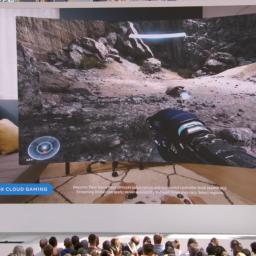
We learned at last year's Meta Connect that Quest headsets would gain official support for Xbox Cloud Gaming and now we have a clearer idea of when that will happen. During this year's event, Meta CEO Mark Zuckerberg announced that the game streaming service will be available on Meta Quest 3 sometime in December.Using your headset, you'll be able to stream games like Halo Infinite, Starfield andForza Horizon 5to a large, virtual 2D screen. You'll need an Game Pass Ultimate subscription to use Xbox Cloud Gaming, as well as a compatible controller. A disclaimer notes that the service will only be available on Quest in select regions. It's unclear if and when Xbox Cloud Gaming will be available on Quest 2 and Quest Pro.Enthusiasts have already found ways to access Xbox Cloud Gaming on Quest headsets, but official support will make it easy for anyone to dive right in. By the time the service becomes available on Quest, Microsoft may have closed its acquisition of Activision Blizzard, so you might kind of be able to play the likes of Call of Duty and Overwatch 2 in virtual reality in a few months.This article originally appeared on Engadget at https://www.engadget.com/meta-quest-3-will-gain-offical-xbox-cloud-gaming-support-in-december-181329521.html?src=rss
|
 |
by Sam Rutherford on (#6F44Q)
I haven't posted on Instagram in more than two years and I often find social media to be a bit of a chore. But after checking out its second-gen high-tech sunglasses announced today at Connect, officially called the Ray-Ban Meta smart glasses, it feels like Meta has transformed this line from a wacky concept for people who are terminally online into something regular folk might actually buy - even if they don't plan on sharing a ton of your content.The issue with the original Ray-Ban Stories was their somewhat clunky design and underwhelming specs. Photos topped out at five megapixels while videos were capped at a weird 1,184 x 1,184 resolution and just 30 fps. And to hold all your content, the glasses had just 4GB of onboard storage.However, with the new Ray-Ban Meta smart glasses, you get a noticeably improved kit. In addition to a new 12-MP wide-angle camera and 32GB of storage (eight times more than before), you can also record videos at 1080p/60fps, though clips are restricted to just 60 seconds. That said, for people who want to capture longer vids, you can now livestream footage directly from the glasses to Facebook or Instagram with the help of a nearby paired device. And to my surprise, photos and videos both looked surprisingly sharp. Granted image quality isn't quite as detailed or colorful as what you'd get if you used a phone, but it's good enough for social media. The one caveat is with livestreaming, Meta's redesigned View app automatically selects video quality based on the speed of your connection and a few other factors, so clips can sometimes look fuzzy.As for audio, the smart glasses now feature five built-in mics that can record spatial audio including one receiver hidden in the nose to improve voice quality during calls. But, perhaps my biggest surprise, is simply how good the new speakers are. Meta says that not only are they 50 percent louder than before, they also leak less noise so people around you won't be able to hear what you're listening to. Regardless, they sound great with just enough bass to balance out sharper highs, while still letting ambient noises waft in from the outside world. Despite advancements with pass-through audio in recent headphones and earbuds, this is still the closest thing you can get to having a soundtrack for your life. And working in tandem with the mics, the speakers support spatial audio too, so there's an extra level of immersion when playing back previously recorded material (though it's unclear if the glasses support spatial audio in streaming services like Tidal and Apple Music).Photo by Sam Rutherford/EngadgetYou can also use voice controls to start a livestream or even send content to contacts. At first, you'll need to explicitly designate who you're sending things to and what service to use (WhatsApp, FB Messenger, Instagram, et cetera), but after it learns your habits, Meta says the glasses can use AI to streamline and speed up sharing.I also appreciate their updated design, which despite the glasses' upgraded specs features thinner arms and a generally sleeker design while also sporting a larger touchpad that's super easy to use. To control music, you just tap once near your temple to play, tap again to pause, or double-tap to skip to the next track. Meanwhile, adjusting volume is as simple as swiping forward or back. And when you want to record something, you can press down once on the capture button to snap a pic or press and hold to take a video. And to help make its glasses easier to use, Meta says it has completely redesigned the Meta View app with a new UI and features that are more discoverable.The Headliner is the new frame style joining the line for Meta's second-gen smart glasses. Photo by Sam Rutherford/EngadgetAnother major change is the addition of a second frame called the Headliner, which is a nice alternative to the boxier look of the classic Wayfarers. On top of the existing shiny and matte black frames, there are three new semi-transparent color options: jeans, caramel, and a smokey Rebel Black. The whole effect is that Meta's latest sunglasses kind of just look like sunglasses. That might not seem important, but for people who want their tech to blend in, this goes a long way to prevent these shades from sticking out too much. And with the option to add polarized lenses or even prescription glass, there are way more options for customizing them than before.On the privacy side, there's also a new LED indicator on the left that's brighter than before while also adding some symmetry with the camera on the right. The light turns on every time you record a picture or video, so there's no hiding when you're capturing content. But the clever thing is that Meta says that if anyone tries to cover up the light, it will block the glasses from recording altogether.The last big upgrade is with the smart glasses' case, which has gotten a makeover so that it looks almost exactly like a classic Ray-Ban protective pouch. The small difference is that there's a handy LED indicator light in front that tells you when it's charging and a USB-C port down below for topping it up. In normal use, Meta says its smart glasses should last for around six hours of mixed use (or four if you're livestreaming), with the case holding around eight additional charges (for a total of 36 hours).After using the new Ray-Ban Meta smart glasses, my biggest takeaway is that they finally feel like a complete product. The original Ray-Ban Stories sort of felt like a concept device meant to steal the limelight from Snapchat's Spectacles than to address a specific desire. Photo quality was mediocre and even though audio was decent, it was a bit quiet.Photo by Sam Rutherford/EngadgetBut with the new model, you get way better image quality along with big mic and speaker upgrades, which makes them feel like better rivals for devices like Bose' Frames. Then you factor in the ability to livestream and now it feels like Meta has made a much more well-rounded product. And of course with Ray-Ban in charge of the updated styling, Meta's smart glasses look better than all of its rivals. So while I'm still not sure I need these in my life, Meta's second-gen sunnies could make a convincing argument to some.The Ray-Ban Meta smart glasses are available for pre-order today starting at $299, $329 with polarized lenses or $379 for transition lenses with official sales slated for October 17.This article originally appeared on Engadget at https://www.engadget.com/ray-ban-meta-hands-on-techy-sunglasses-you-might-actually-want-to-wear-180852514.html?src=rss
|
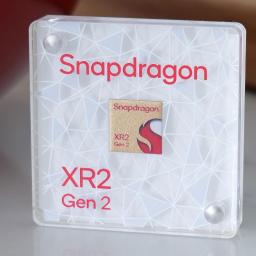 |
by Sam Rutherford on (#6F44R)
Developed in collaboration with Meta, on Wednesday Qualcomm announced two new Snapdragon chips designed to power the upcoming wave of next-gen headsets and smart glasses.The Snapdragon XR2 Gen 2 is the more powerful of the two boasting 2.5 times better GPU performance compared to the last generation and up to eight times faster AI speeds. It's optimized to support mixed reality devices with display resolutions of up to 3,000 x 3,000 per eye while also delivering more detailed textures and higher frame rates.For headsets that can switch between VR and AR, Qualcomm says the XR2 Gen 2 allows headsets to transition to full-color passthrough vision in less than 12ms. Other capabilities include support for devices with up to 10 cameras, improved wireless speeds (up to Wi-Fi 7) and 50 percent increased GPU power efficiency.The Meta Quest 3 will be the first retail device featuring Qualcomm's new Snapdragon XR2 Gen 2 chip. QualcommAlternatively, for more lightweight devices like smartglasses, Qualcomm's Snapdragon AR1 Gen 1 chip offers improved on-device AI processing, better noise and echo cancellation and dual ISPs for improved image quality. The new silicon can also support devices with up to 12-MP cameras (6-MP for video) and up to eight microphones with spatial sound for richer audio recording.Notably, due to its collaboration with Meta, Qualcomm's latest XR and AR processors will be available first on the new Quest 3 and Ray-Ban Meta smartglasses, both of which go on sale in October. Qualcomm says "additional devices from other manufacturers to follow next year," which suggests that Meta will enjoy some level of limited exclusivity regarding the use of these new chips.So while Meta may have a bit of a headstart compared to some of its rivals, it will be interesting to see what other OEMs can do with these chips when devices featuring them become more widely available in 2024.This article originally appeared on Engadget at https://www.engadget.com/qualcomm-announces-two-new-snapdragon-chips-for-next-gen-headsets-and-smart-glasses-180010526.html?src=rss
|
|
by Sam Rutherford on (#6F44S)
Last year Meta caught a bit of backlash when it released the Quest Pro. It was too expensive, it had a number of features people didn't really want, and there just weren't enough apps that fully utilized its hardware. But today at Connect, Meta is announcing the follow-up to the most popular VR headset on the market and I think the Quest 3 is exactly what people have been waiting for.Meta isn't straying too far from the Quest 2's basic template. The headset's facelift includes a new y-shaped headband that offers better support along with a fresh row of sensors in front. There are now two full-color cameras that provide sharper pass-through vision along with a depth sensor in the middle that can automatically map your room and detect nearby objects like tables and chairs. On the bottom, Meta also added a dial for adjusting IPD (inter-pupillary distance) and, for users who wear glasses, there's now a way to adjust the depth of the lenses to better accommodate the shape and size of your spectacles. You still get a USB-C port for charging, built-in speakers that support spatial audio and a headphone jack (in case you'd rather use wired headphones).On the inside, the headset is the first retail device powered by Qualcomm's Snapdragon XR2 Gen 2 chip, which Meta says provides double the performance compared to the Quest 2. You also get new pancake lenses similar to the ones used in last year's Quest Pro, along with displays that offer 30 percent more resolution (2,064 x 2,208 pixels per eye). All told, it's a pretty significant jump in horsepower, with its default 90Hz refresh rate being the only spec that's staying unchanged (though like the Quest 2, there is an experimental 120Hz setting). Even its field of view has grown by around 15 percent (110 degrees horizontal and 96 degrees vertical). Notably, what you don't get are eye and face tracking, which were some of the more forward-thinking features Meta included on the Quest Pro.Meta didn't forget about the Quest 3's controllers either. That's because while they're still the same basic shape and size, the tracking ring around the top is gone. The company says that the new sensors on the headset can track the controllers without needing the rings and, when the controllers move outside the camera's visible range, Meta is using AI and machine learning to better predict your hand movements. That said, the Quest 3's controllers still aren't quite as sophisticated as the Quest Pro due to their lack of built-in cameras, which means they aren't fully self-tracking. On the bright side, the controllers have what Meta is calling True Touch haptics, which do an even better job of conveying tactile feedback. And despite the increased performance and new features, battery life is expected to be about the same as the Quest 2 (between 1.5 and three hours depending on what apps you use).Now all these upgrades look great on a spec sheet, but after testing the headset out myself, they make an even better impression in person. Right away, everything just looks sharper, hand movements feel more precise and even audio sounds more immersive. You can also feel that increased performance, most noticeably when switching between VR and the pass-through cameras. Just a double-tap on the side and let me jump back into meat space with only the briefest of pauses anytime I wanted to take a drink or see what I just stepped on.But of course, without solid software, a new headset isn't all that exciting. Thankfully, the Quest 3 is backward compatible with all of the 500+ apps in the Oculus Store, with Meta claiming that there are another 100 new apps or titles with updated features on the way designed specifically for its latest headset, some of which I got to try out during my demo.Photo by Sam Rutherford/EngadgetI started with First Encounters, which is a tutorial that's kind of like an MR-version of Space Invaders that also introduces users to the Quest 3's features. Since the app takes place in mixed reality, before I could get to blastin' I had to map out the room which involved simply looking around at all the walls and objects before tracing a final boundary (in smaller rooms you might even be able to skip this step, but this was an open event space), all of which took less than 30 seconds. After that, fuzzy aliens started to appear so, naturally, I had to dispatch them. The interesting thing was that, because the headset had already mapped the room, I noticed that portals naturally formed on the walls while some critters managed to spawn behind shelves and tables, all of which added an extra dimension to the gameplay.After that I played Red Matter 2, which is an existing title that has been updated to take advantage of the Quest 3's improved performance. The difference was immediately apparent. Textures were more detailed, text was way more legible and simply moving around felt smoother. I was even able to flip a switch that simulated how the game looked on a Quest 2 and, honestly, I don't think I can go back to that. The Quest 3 is raising the bar for how things should look on a mainstream XR headset.Photo by Sam Rutherford/EngadgetThen I played some more games including a VR version of Samba de Amigo and Assassin's Creed Nexus, both of which felt really fluid. I can't remember the last time I held a real maraca, but moving virtual ones around with the headset was really intuitive. Anytime I missed a cue, I could tell I messed up, it wasn't the headset's fault. And in Assassin's Creed, I was surprised at how precise aiming a crossbow felt. I even caught myself closing one I just like would in the real world.I'm not sure this headset is doing much to entice people who aren't already interested in VR and AR. But, it feels like Meta has done a thorough job of improving almost every spec and feature. It's got everything you need without any unnecessary frills or add-ons. And sometime in the future, Meta says the Quest 3 will be able to stream console titles to the headset via Xbox Cloud Gaming starting in December, so if all the existing and upcoming apps can't hold your attention, you'll have even more games to play. And with a starting price of $500 for 128GB of storage (or $650 for 512GB), it's a lot more affordable than the Quest Pro too.The Quest 3 is available for pre-order today ahead of official sales starting on October 10.This article originally appeared on Engadget at https://www.engadget.com/meta-quest-3-hands-on-a-proper-successor-to-the-most-popular-vr-headset-173750489.html?src=rss
|
 |
by Lawrence Bonk on (#6F44T)
Sony continues its mission to release first-party titles on PC, as the critically-acclaimed PS5 sequel Horizon Forbidden West is coming to Steam and the Epic Games Store early next year. The port's being handled by Nixxes Software, a company Sony purchased back in 2021. Nixxes was behind the well-received PC ports of the Spider-Man games, so we should be in good hands here.This isn't a bare-bones port. It's the recently-announced Horizon Forbidden West Complete Edition, so expect plenty of bells and whistles. There's the game itself, of course, but the update also includes the Burning Shores DLC, a digital soundtrack, a digital artbook, a comic book and more in-game items than you can shake a spear at. You can check out some in-game screen shots on the official Steam page.Horizon Forbidden West Complete Edition comes to PS5 first, on October 6, and costs $70. There's no concrete release date for the PC version, other than early next year. It's also worth noting that this edition is not coming to the PS4, despite the original game being available on the now-ancient console.We praised Horizon Forbidden West when it launched last year, citing the surprisingly fun underwater traversal mechanics, new power ups and the massive scope of the world, calling it a triumph in many ways." PC players can already wishlist the port on Steam and Epic. It remains to be seen if the game will run on the Steam Deck, but we'll be sure to cross our fingers and give it a shot early next year. In any event, Marvel's Spider-Man runs pretty well.This article originally appeared on Engadget at https://www.engadget.com/horizon-forbidden-west-battles-its-way-to-pcs-in-2024-172658431.html?src=rss
|
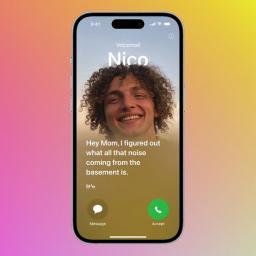 |
by Will Shanklin on (#6F41C)
Live Voicemail is an iOS 17 feature that lets you read a transcription of a caller's message in real time. If what they say sounds urgent, you can pick up the call and chat while they're still on the line; if not, read along with the message without playing it back (handy for especially long-winded pals). Here's how to activate and use Live Voicemail to save time on calls and messaging.First, you'll want to make sure the feature is turned on. Navigate to Settings > Phone > Live Voicemail, and toggle it on if it isn't already. (It's on by default).Once it's activated, the feature is pretty self-explanatory to use. If you receive a call you can't or don't want to pick up, hit the voicemail button on the incoming call screen to send it there. Or you can wait for it to forward automatically.What is Live Voicemail?When the caller begins leaving a message, you'll hear a brief chime and see the live transcription on your Lock Screen. (If your phone is locked, it will prompt you to tap a button to use Face ID and unlock it before you can see the message.) Or, if you're using your phone when the message comes in, you'll see a voicemail icon in the Dynamic Island or your phone's status bar on older models. Tap that to view the message as it's spoken.AppleIn our testing, the service is reliable at transcribing American and British accents. The words appear on your phone within a second or so of the caller speaking them.If you decide to take the call after all, you can pick it up while they're leaving a message. Press the accept" button while viewing the Live Voicemail transcription, and you'll immediately jump into the call - like in the old days when people had landline answering machines.You can go back and listen to Live Voicemail messages later. They're stored in the Voicemail tab at the bottom right of the Phone app. They'll exist alongside any standard voicemails sent through your carrier. Apple says all of the transcriptions happen on-device, so you don't need to worry about your private messages leaking.How to turn off Live VoicemailIf you ever decide the feature isn't for you, you can head back to Settings > Phone > Live Voicemail and toggle it back off.This article originally appeared on Engadget at https://www.engadget.com/how-to-use-ios-17s-live-voicemail-170426783.html?src=rss
|
 |
by Will Shanklin on (#6F41D)
The US Department of Justice sued eBay on Wednesday for its role in the sale of products that harm the environment. It accused the online retailer of selling or distributing hundreds of thousands of products that violated the Clean Air Act (CAA), the Federal Insecticide, Fungicide, and Rodenticide Act (FIFRA) and the Toxic Substances Control Act (TSCA). The complaint was filed in a federal court in Brooklyn, NY.The DOJ's complaint accuses eBay of selling, offering for sale or causing the sale of over 343,000 aftermarket defeat devices," which bypass vehicle emission controls. The devices, familiar to many from Volkswagen's Dieselgate" scandal, allow vehicles to cheat emissions tests, making them appear up to par on EPA standards when they aren't - all in the name of a little performance boost.Aftermarket defeat devices significantly increase pollution emissions - including carbon monoxide, nitrogen oxides, particulate matter and nonmethane hydrocarbons - that harm public health and impede efforts by the EPA, states, Tribes and local agencies to plan for and attain air quality standards," the DOJ wrote today.The complaint says eBay also unlawfully distributed or sold at least 23,000 pesticide products that were unregistered, misbranded or restricted-use. The DOJ says the EPA issued a stop sale" order in 2020 (amended in 2021), after which eBay continued to violate it. Examples include a high toxicity insecticide banned in the United States, restricted use pesticides that only certified applicators may apply and products fraudulently claiming to protect users against the SARS-CoV-2 virus," the DOJ wrote.The filing adds that eBay distributed over 5,600 products violating the TSCA Methylene Chloride Rule, a banned (potentially deadly) chemical used in paint and coating removers.In a statement, eBay said it blocks and removes more than 99.9% of listings for products cited by the DOJ. And eBay has partnered closely with law enforcement, including the DOJ, for over two decades on identifying emerging risks and assisting with prevention and enforcement," the online retailer wrote. The Government's actions are entirely unprecedented and eBay intends to vigorously defend itself."The DOJ asserted that EPA standards will be enforced. Our nation's environmental laws protect public health and the environment by prohibiting the unlawful sale of defeat devices; unregistered, misbranded and restricted use pesticides; and unsafe products containing toxic chemicals such as methylene chloride," said David M. Uhlmann from the EPA's Office of Enforcement and Compliance Assurance. The complaint filed today demonstrates that EPA will hold online retailers responsible for the unlawful sale of products on their websites that can harm consumers and the environment."This article originally appeared on Engadget at https://www.engadget.com/doj-sues-ebay-for-selling-environmentally-hazardous-products-165854768.html?src=rss
|
 |
by Kris Holt on (#6F41E)
It seems the lure of building the Warcraft universe is irresistible for some folks. Long-time Blizzard lore chief Chris Metzen has returned to the publisher on a full-time basis to help shape the future of the franchise.Before he retired from Blizzard in 2016, Metzen worked on every Warcraft game, helping to build the story and lore. He eventually became Blizzard's senior vice president of story and franchise development and was involved in all of the studio's projects (he voices Bastion in Overwatch 2, for instance).Metzen kept himself busy after leaving Blizzard. He opened a tabletop game company called Warchief in 2018. However, he returned to Blizzard in an advisory role last year and now he's fully back in the saddle as Warcraft's executive creative director. His main focus is on "supporting our World of Warcraftleadership in crafting the next generation of adventures," the Warcraft team wrote on X (formerly Twitter).
|
 |
by Katie Malone on (#6F41F)
The alleged Sony data breach just got messier. On Monday, relatively new hacking group Ransomed.vc made the lofty claim that it had successfully compromised "all" of the company's systems, as reported by Cybersecurity Connect. Now a second threat actor has leaked the data believed to be in Ransomed.vc's possession, claiming the former are "scammers" trying to "chase influence." How either group obtained this data, or the extent of the breach, remain unknown but Sony has confirmed to Engadget it's investigating the situation.Ransomed.vc said it wouldn't ransom Sony, and instead would be selling the data "due to Sony not wanting to pay." It posted a sampling of files as "proof" of their claims. Ransomed.vc gave a deadline of September 28. On Tuesday, a threat actor under the name "MajorNelson," claimed that Ransomed.vc lied about the breach, and leaked the data that Ransomed.vc claimed to have, according to malware repository vx-underground. Engadget could not independently verify the claims."We are currently investigating the situation," a Sony spokesperson told Engadget.Ransomed.vc emerged as attackers and a ransomware-as-a-service organization that lets others pay to launch attacks. The group threatens victims with data protection fines under laws like the GDPR if they do not pay the ransom. In other words, pay us a few hundred thousand dollar ransom, or we'll report you to pay up a million dollar fine. MajorNelson appears to be an independent threat actor motivated by a disdain for Ransomed.vc, calling the reports about their efforts lies."RansomedVCs are scammers who are just trying to scam you and chase influence," MajorNelson wrote. "Enjoy the leak." According to MajorNelson, the leak includes credentials for internal systems, incident response policies and more.In 2011, a threat actor exposed personally identifiable information from 77 million PlayStation network accounts. Sony took the network offline for 23 days as it mitigated the damage, and in 2019, it agreed to pay a 250K fine in the UK for its failure to adequately prepare for the attack.This article originally appeared on Engadget at https://www.engadget.com/sony-investigates-the-alleged-data-breach-that-has-led-to-hacker-infighting-161559960.html?src=rss
|
 |
by Lawrence Bonk on (#6F41G)
Threads is preparing a feature that allows users to delete a Threads account without also deleting their Instagram account, as reported by TechCrunch. This comes straight from Meta's chief privacy officer Michael Protti. He stated at last week's TechCrunch Disrupt event that the feature would be ready for primetime by December.What's the holdup? This is a more difficult process than it seems to the layperson. Threads was built on top of Instagram so the two are linked like two kids in a trenchcoat pretending to be a grown up. Protti said the difficulty to separate the two accounts led the company to develop alternative tools to minimize frustration, like the ability to deactivate accounts or to set them to private. Instagram head Adam Mosseri said back in July that the company was experimenting with methods to decouple the platforms and it looks like the devs finally figured it out.Last week, web developer Alessandro Paluzzi managed to peek behind Meta's code curtain and found early versions of the forthcoming update, noting that these beta builds block users from opening a new Threads handle with the same Instagram account for 120 days after they participate in the deletion process. Things tend to change as experimental software prepares for an official release, so we don't know if that 120 days thing is set in stone.Protti also confirmed that Meta is still working on integrating Threads with the sprawling fediverse. For the uninitiated, the fediverse is a collection of social networks that, while separate, can communicate with one another. Mastodon is the most well-known example of this type of network. He says the company's trying to iron out some bugs, citing an issue where a Threads post heads to another server and is then deleted by the original author, while remaining on the secondary server.Threads certainly has some engagement issues, but Meta's been pretty consistent about pumping out updates that address user concerns. The company recently added keyword search and a robust web app, among other upgrades. Mosseri recently chronicled upcoming Threads features on an Instagram Stories post, stating that the company's working on introducing improved account recommendations, an edit button for posts and more.This article originally appeared on Engadget at https://www.engadget.com/threads-will-allow-users-to-delete-accounts-separately-from-instagram-160038998.html?src=rss
|
 |
by Kris Holt on (#6F3Y5)
Former Microsoft executive Panos Panay will be taking over as the head of Amazon's Devices and Services (D&S) division, the company confirmed. He'll start his new role at the end of October, CEO Andy Jassy said."As a strong product builder and inventor who has deep experience in both hardware and integrated services, Panos will be a great addition to our D&S organization moving forward," Jassy wrote in a memo. "I remain quite excited about the invention happening and businesses that we're building in D&S, and look forward to working with Panos."It emerged last week that Panay was leaving Microsoft after a 19-year run, most recently as the chief product officer, where he oversaw Surface devices and Windows 11 development. Rumors quickly suggested that Panay would move to Amazon to lead the Alexa and Echo teams.Panay will be taking over from outgoing D&S head Dave Limp, and the pair will work together for a couple of months to make the transition a smooth one. Limp also has a new job. He is leaving Amazon to become the CEO of Jeff Bezos' space company Blue Origin.This article originally appeared on Engadget at https://www.engadget.com/ex-microsoft-exec-panos-panay-is-confirmed-as-the-new-head-of-amazons-devices-team-154233605.html?src=rss
|
 |
by Kris Holt on (#6F3TG)
Electronic Arts has pulled its FIFA games from digital storefronts such as Steam and console stores just as EA Sports FC 24arrives. As noted by X (formerly Twitter) user MauroNL, none of EA's FIFA titles are available for purchase on those storefronts anymore, including last year's title, FIFA 23.It's still possible to play some of the games through EA Play, the publisher's subscription service. You'll still be able to find physical copies of the delisted games on consoles if you really want them and, if you've already purchased a FIFA game on a digital storefront, you'll still be able to download it again.
|
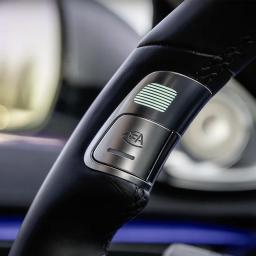 |
by Tim Stevens on (#6F3TH)
The day is finally here: There's a self-driving car available for purchase in the US. Or, at least, there will be within the next few months. Mercedes-Benz is bringing its Drive Pilot-equipped cars to California and Nevada, and, when they're deployed, you'll not only be able to take your hands off the wheel but also take your eyes off the road.Drive Pilot is the first proper SAE Level 3 autonomy system on the road, meaning when the car is driving itself you, the driver, aren't even liable for the car's behavior. That's an impressive feat, but it's one that comes with a lot of caveats. The biggest is that it only works at up to 40 mph, and even then only in clear weather conditions. You have to be on a highway that has been mapped by Here's HD maps, and you must have a car ahead of you.There are restrictions within the car, too. You can't take a nap, can't turn around and look at the people in the back seat (at least not for long), and, perhaps most frustrating, you still can't use your phone. That's a lot of can't, sadly, but Mercedes-Benz promises this is just the beginning, with higher speeds and more flexible use-cases to come with time. What's it like today? Check out our test drive to see.This article originally appeared on Engadget at https://www.engadget.com/mercedes-take-the-wheel-testing-drive-pilot-l3-autonomy-in-traffic-140038217.html?src=rss
|
 |
by Daniel Cooper on (#6F3TJ)
Editorial Note: Apologies for the delay in this review, earlier this year I was in a bike accident - not with this bike, I should add - that left me with a months-long concussion.I am a proud townie. I don't mind the odd nature walk, but I'm far happier striding for hours at a time through cities, coffee in hand. I loved walking from law school in the center of London back to my apartment, six miles away, through the hustle and bustle. That's possibly why I feel such a kinship with Honbike's Uni4. It's an elegant, efficient and beautifully-designed city e-bike of the future that is a joy to ride, just so long as you never think about taking it out of its comfort zone.HardwarePhoto by Daniel Cooper / EngadgetI won't lean too hard into the unique design" angle because plenty of bikes eschew the usual diamond frame template. It's undeniably eye-catching, with a crossbar running from the headset / head tube down to the rear wheel, which then appears to bleed into the chain stay. I quite like the commitment to making it look as if it's one continuous structural unit, even if it is divided by a wheel. The chunky crossbar gets much of its strength from the 432Wh worth of battery inside, which promises a top range of 100 km or 62 miles. The squared-off tube ends and built-in front light gives it a look and feel best described as VanMoof-y."The Uni4 costs $1,699 in the US and 1,799 here in the UK, less than the 2,000 you can pay for a half-decent e-bike. Honbike hasn't scrimped too obviously, with a Gates carbon belt drive with a quoted life of 10,000 km. There are Tektro Aries disc brakes on custom, six-spoke wheels that make it look like you're riding a sport bike. The front and rear fenders are included although the instructions do tell you to put the front fender on backwards. There's an integrated front light but only an aftermarket, battery-powered rear light bolted onto the seat. It's less than ideal, but the logic for why it's there is obvious: With no top tube, there's nowhere to install an integrated rear light that's high enough to be visible at night.Photo by Daniel Cooper / EngadgetIntegrated into the headset is a dot matrix display that's supremely bright and perfectly visible in bright sunshine. There's a small control unit on the left hand grip where you'll turn it on, run the lights and set your power level. On the right, a built-in throttle will activate walking assist mode and give you a tiny shot of power from a standing start.There are plenty of e-bikes costing around two grand that often feel a little phoned in, and no, I won't name names. But for every standout like the gorgeous Raleigh Trace, there are plenty that look like their manufacturer took an old road bike, added a rear wheel motor, bolted a battery onto the downtube, and called it a day. I don't think it's unreasonable to expect the industry to up its game - and the big brands are getting better - in the face of better-designed competition. The Uni4 is a better-looking bike than lots of those in its price bracket and, I'd say, looks like it costs a little bit more than you'll actually pay.The bike is hewn from 7,000-series aluminum and weighs about 20 kg or 44 pounds, which is a little heftier than it may look. It's a two-handed job to lug it about, and so you probably wouldn't want to carry this up several flights of stairs on a regular basis.In UsePhoto by Daniel Cooper / EngadgetI often wonder to what extent we should judge a bike upon the merits the company itself sets for it versus a more general-purpose view. The Uni4 is marketed as a city bike, engineered to eat up the long, flat stretches of asphalt between us and our destination. It's no surprise - because I already tipped my hand here - that it's ideally-suited to that environment, comfortably cruising along the road whenever and wherever I chose to go. In fact, judged on that merit alone, if you're only ever riding this on the road (or a dedicated cycle lane) you can just order one right now. When the electric assist is off, the Uni4's essentially the world's most overbuilt single speed, and it works in that configuration, too. If you're on flat, well-paved roads, then you should feel very comfortable that you'll get where you need to go quickly and easily.It's only when we take a more general-purpose view and test the Uni4 out of its comfort zone do you see its weaknesses. Like many townies, it starts to struggle the further from civilization you get, even if you're well within the boundaries of a city. Not far from where I live, there's a path through a small wood that you can use to cut the distance between two major roads. It's a well worn path, and on sunny days it's a (mostly) flat and dry stretch that'll save you 10 minutes or more. Sadly, even the gentlest of terrain will pose a problem because there's no suspension or shock absorption, shaking your bones to a fine powder. Afterward, I took the bike to some tree-lined residential avenues, the sort where the roads are only relaid once every three or four decades. The trees have had time and opportunity to burrow across the road and make the terrain less than smooth as a consequence. Your municipality may be fine with potholes and uneven roads, but take it as read that the Uni4 is not.Photo by Daniel Cooper / EngadgetYou've noticed, too, I've mentioned flat roads a few times, because you're not going to get too much help up hills. There are only three acceleration modes, and no fine-grain control beyond to help you get more power where you need it. Here in Norwich, there's a daily savage hill that, up one side, has an incline of between 11 and 14 degrees, while its opposite hits 22.4. It's so steep that it's the site of an annual endurance cycling competition, and seemed an ideal place to test the Uni 4's gyroscopic uphill assistance. Essentially, the bike is meant to know the gradient you are cycling up, and automatically adjust the power to suit your needs. Yeah.For the gentler side, it's doable, but you can expect far less help from the bike than you might expect. The company says it'll run between nine and 12 mph on a 18 degree incline, but only if the rider's maximum weight is 90kg. Sadly, I'm a few kilos over that figure, and so I really had to work for every little bit of help, leaving me fairly sweaty by the time I'd reached the summit. For the latter, however, you'll struggle to go more than halfway up before the bike simply refuses to continue. During my testing, a pair of dudes in a panel van were hooting with sadistic glee as I tried, and failed, to motivate the Uni4 to climb any further. This isn't a dealbreaker, since there aren't too many really nasty hills in the center of most towns and cities. But you might need to plan your route to avoid anything too extreme during your morning commute.While I'm piling on, the bike is designed to look like a single piece of metal that curls into itself. The lack of a second tube means there's less of an obvious mounting point around the frame when you need to lock it to a public rack. Instead, you're forced to wrap the chain around the wheel mount and then back again to try and create something that feels secure enough to leave. You can also electronically lock" the electric assist, but that won't stop the wheels from turning, leaving an enterprising thief with at least something usable. Given the cost of one of these things, the fact so little thought had been given about safely storing one is a bugbear.Photo by Daniel Cooper / EngadgetHonbike says the 432Wh battery will squeeze out around 62 miles, or 100km in range via that 250W motor. Naturally, that's in the best possible conditions with the lightest rider and the least amount of electric assist available. Here, in the real world, you can expect that figure to fall by a fair amount, and the company has tuned the motor to emphasize a smooth, gentle ride over world-beating power. You'll pretty much find that the bike will just keep you gently cantering around at 10 mph in all but the highest power setting. You can push things to the current legal limit of 15 mph if you want, but you'd rarely need that sort of power unless you're going hard in heavy traffic and need to work your legs. But I found that - as a heavier, more power-hungry rider - that my range would be closer to 30 miles on a single charge.And here's a nice thing: Honbike may have a perfectly fine app, it's also completely inessential. The built-in display will give you most of all the information you'd need to access, including your speed and a basic battery monitor. If you want, and you splash out for a smartphone mount, then the app can show you a local map, your speed, distance and trip duration. At the end of each trip, it'll also tell you how much carbon dioxide you've saved by cycling, if you really need the boost to your eco credentials.If I have one other concern, it's about how riders will be able to keep this bike running for a very long time. An end user can buy replacement tyres and inner tubes, brake pads, pedals, fenders and the front and rear lights, from the company's online store. While brake cables that are run through the frame are an annoyance, it's a common issue on high-end bikes, and most repair stores can handle it with little bother. But, for the other key parts, including the wheels, the motor and the battery, it appears that Honbike recommends you send it in to its service center. I don't necessarily blame the company for getting nervous about user-repairs to power units, since the risk is fairly significant.Wrap-UpPhoto by Daniel Cooper / EngadgetIt's worth saying that more of this piece has been focusing on the Honbike's flaws rather than its strengths. Which is a bit of an irony, really, since riding around on this thing has been pretty much a joy from start to finish. It's just that it's very much designed to be the apex predator in a single environment, and so you need to be aware of that before you buy. But if what you want and what you need is a bike that'll get you from one end of the city to another, in an elegant and painless manner, then there's plenty of reasons to buy one. Especially when you look at other bikes in this sub-two-grand bracket and realize that, as limited as it may be, it's also a real looker.This article originally appeared on Engadget at https://www.engadget.com/honbikes-e-bike-of-the-future-is-perfect-for-cities-133014272.html?src=rss
|
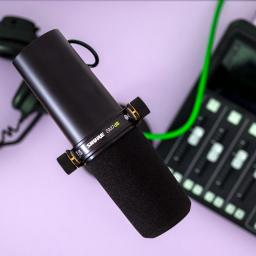 |
by James Trew on (#6F3TK)
Even if you've never heard of Shure's SM7B, you've almost certainly heard the SM7B. From live radio to podcasting and streaming, the sleek, black microphone can be found hanging in front of mouths, delivering its trademark broadcast sound. Today, Shure is unveiling the latest edition - the SM7dB - to celebrate the microphone's 50th anniversary. It also happens to solve one of the mic's biggest pain points (the clue is in its name). The $499 Shure SM7dB comes with a built-in preamp that adds either 18- or 28dB of much-needed gain.The SM7B famously needs a lot of amplification which can lead to quiet audio or an undesirable hiss" on inferior preamps. To solve this, people often purchase an in-line preamp such as a FetHead or a CloudLifter - which is an additional $100 or so on top of the $399 SM7B.The SM7dB eliminates the need for additional hardware and also promises a clean" boost in volume. What's more, it does this without adding any significant size or a change in form factor. To be clear, the new microphone is a shade longer than its un-amplified counterpart. And there's a minor cosmetic change from the sleek, stealthy matte black to a slightly shinier paintjob. There's also a glossy Shure" logo now on the microphone body which makes the whole thing look a bit less cool if you ask me but you might not be so sensitive to such things.The addition of a preamp brings with it some other practical changes. The classic SM7B has two switches on its rear: a high pass filter and a mid-frequency boost. The SM7dB still has those, but there are two more switches - one for bypassing the preamp and the other for toggling between the amount of gain (the aforementioned 18- and 28-dB boosts).Photo by James Trew / EngadgetWhen bypass" is activated, the SM7dB acts as a regular dynamic microphone and won't need phantom power. Once you activate that preamp though, you'll need to supply 48v to drive the preamp. The vast majority of audio interfaces with an XLR input will also supply phantom power, so there's no issue here but if you're used to working with dynamic microphones and the mild convenience of not having to think about phantom power, just know there's a slight workflow change here.One of the main benefits of a dynamic microphone is its noise rejection -- they're much more forgiving on background noise or the sound of passing traffic, for example. Thankfully, the built-in preamp here doesn't change that as the microphone still works as a dynamic should (unlike condensor microphones that need phantom power to work and are much more sensitive).With the full 28dB of gain applied, I initially thought there was some audible noise when recording silence, but it quickly became clear that with all that extra gain and my audio interface set to record at full volume it was simply just too loud and was picking up more ambient noise - it would have been far too loud if I had started speaking into it. Once the levels were adjusted accordingly, the noise floor disappeared.Perhaps unsurprisingly, without any preamp turned on, the new SM7dB sounds near identical to its legacy sibling. I tested both via a Rodecaster Duo which has ample gain to drive these microphones on its own. However, when I tested both of the SM7dB's preamp settings (while lowering the gain on the Rodecaster accordingly) the output remained just as clear and noise free with no obvious change in character - which is exactly what Shure was going for.ShureThe obvious downside is that, the SM7dB costs about $100 more than the regular SM7B. That's a decent amount more, especially if you don't really need the preamp but are maybe hoping to future-proof your setup, or just upgrade to the newest model. On the other hand, if you were going to buy an SM7B knowing you'd also need a separate preamp then the new model costs about the same as buying both separately.Given the sheer popularity of the SM7B, the new edition should be well received. Not least because of the obvious advantage of it being louder, but for a more practical, if slightly superficial reason, too. That being that the design of the SM7B puts the XLR port facing either directly up or down on most boom arms or mic stands (rather than perpendicular) which certain inline preamps can look a little, well, ridiculous sticking out of the top of bottom. With the SM7dB, then, you can possibly eliminate one more visual distraction from your streams. Whatever your motivation for considering the new microphone, it's available starting today.This article originally appeared on Engadget at https://www.engadget.com/shure-hid-a-preamp-inside-its-latest-sm7db-microphone-130009353.html?src=rss
|
 |
by Steve Dent on (#6F3R8)
Valve has failed to convince a court that it didn't infringe EU law by geo-blocking activation keys, according to a new ruling. The company argued that, based on copyright law, publishers had the right to charge different prices for games in different countries. However, the EU General Court confirmed that its geo-blocking actions "infringed EU competition law"and that copyright law didn't apply."Copyright is intended only to ensure for the right holders concerned protection of the right to exploit commercially the marketing or the making available of the protected subject matter, by the grant of licences in return for payment of remuneration," it wrote in a statement. "However, it does not guarantee them the opportunity to demand the highest possible remuneration or to engage in conduct such as to lead to artificial price differences between the partitioned national markets."The original charges centered around activation keys. The commission said Valve and five publishers (Bandai Namco, Capcom, Focus Home, Koch Media and ZeniMax) agreed to use geo-blocking so that activation keys sold in some countries - like Czech Republic, Estonia, Hungary and Latvia - would not work in other member states. That would prevent someone in, say, Germany buying a cheaper key in Latvia, where prices are lower. However, doing so violates the EU's Digital Single Market rules, which enforces an open market across the EU.The five developers were given a reduced fine of 7.8 million (over $9.4 million at the time) for cooperating, but Valve decided to fight and faced the full 1.6 million, or more than $1.9 million penalty. In a statement back in 2021, Valve said that the charges didn't pertain to PC games sold on Steam, but that it was accused of locking keys to particular territories at the request of publishers. It added that it turned off region locks for most cases (other than local laws) in 2015 because of the EU's concerns.The court rejected the appeal and backed the original EU Commission's decision that the companies' actions had unlawfully restricted cross-border sales" of games. As a result, Valve is still subject to the original 1.6 million fine - but it has two months and ten days to appeal. Engadget has reached out to Valve for comment.This article originally appeared on Engadget at https://www.engadget.com/valve-fails-to-get-out-of-paying-its-eu-geo-blocking-fine-122053595.html?src=rss
|
 |
by Mariella Moon on (#6F3R9)
Logitech has introduced a new $299 cockpit for racing simulators that wouldn't look too out of place at a backyard cookout. The accessories brand has teamed up with gaming seat maker Playseat to release the Playseat Challenge X. It's equipped with all the right parts to support your gaming wheel, but when it's not in use, it's like any other foldable chair that you can stow away.As The Verge notes, it does look almost identical to Playseat's non-Logitech-branded Challenge racing cockpit, which is $70 cheaper. This version, however, already comes with a tilting pedal bracket and a gearshift mount. While the chair doesn't include the actual accessories needed to play racing sims, it is compatible with the company's G wheels and the driving force shifters that support them. The Verge says it should work with other brand's wheels, shifters and pedals, as well, assuming they're compatible with the mounts on the chair.LogitechSpeaking of the chair itself, it uses a breathable material that can keep you cool in the heat. You can easily adjust it and find the most comfortable one among its six positions, and you can move the pedals further if you're tall and need the leg room. The maximum user height it can accommodate is around seven feet, while the maximum user weight it can support is 359 pounds. It could be a good option if you're looking for a simpler, relatively affordable chair for your racing games, and you can get it now from Amazon.This article originally appeared on Engadget at https://www.engadget.com/logitechs-new-racing-cockpit-is-a-299-foldable-chair-114510123.html?src=rss
|
 |
by Mat Smith on (#6F3RA)
Meta is gearing up for its annual event devoted to all things VR, AR and the metaverse. The company is once again showing off a new VR headset, the Meta Quest 3, as well as its next-generation smart glasses. We already know quite a bit about the Meta Quest 3, thanks to a preview from Zuckerberg earlier this year. The $499 headset has been considerably slimmed down and has redesigned controllers. It will also have better graphics, thanks to a new next-gen Qualcomm chipset, which will power new mixed-reality features similar to last year's high-end Quest Pro. This is the consumer version of VR/AR Meta hopes the wider public will embrace.MetaThe VR headset likely won't be the only Reality Labs gadget we'll hear more about at Meta Connect. As UploadVR noted last week, Meta CTO Andrew Bosworth hinted at a second-generation of Meta's Ray-Ban-branded smart glasses also in the works. The new frames should have better cameras and some new features, like livestreaming.Beyond hardware, we're expecting Zuckerberg to attempt more compelling pitches on the broader idea of the metaverse itself, AI chatbots and avatars and Meta's baby metaverse, Horizon Worlds, which could do with more things to do and, honestly, more people in it.- Mat SmithThe biggest stories you might have missedSAG-AFTRA video game actors vote in favor of strike action over wages and AIOlivia Rodrigo is teaming up with Sony for limited edition purple earbudsThe best October Amazon Prime Day early access deals for 2023YouTube's ad-free Premium Lite tier is going awayThe FCC plans to restore Obama-era net neutrality rulesIt could take several months, and legal challenges may lie ahead.The Federal Communications Commission plans to reinstate net neutrality protections nixed in 2018 during the Trump administration. After Anna Gomez was sworn in as the third Democratic member on the FCC's five-person panel, the agency is pushing forward with an attempt to bring back net neutrality regulations. Net neutrality rules are meant to ensure internet service providers may not block or give preference to any content.It will take quite some time to restore the previous rules. The FCC commissioners will vote on the Notice of Proposed Rulemaking at their next monthly meeting on October 19. If, as seems likely, the agency votes in favor, it will start new rulemaking and seek public comments on the proposal.Continue reading.LG also made a flexible-screen laptopThe $3,700 Gram Fold is Korea-only at the moment.LGSimilar to the ASUS Zenbook 17 Fold and the Lenovo ThinkPad X1 Fold, LG's Gram Fold is a touchscreen device that can be a massive tablet or a computer when fully unfolded. Users will get a 17-inch OLED screen with a QXGA+ (2,560 x 1,920 pixel) resolution when it's used purely as a display, and they can link it to its accompanying Bluetooth keyboard, which can rest on the lower half of the screen. It's 4.99 million won ($3,700) - not cheap, but still more affordable than HP's $5,000 Spectre Fold.Continue reading.Spotify's new Jam feature lets friends collab on party playlistsIt creates shared playlists as Turntable.fm does.Spotify is rolling out a new feature called Jam, which will give friends a way to curate a single playlist on the service and listen to it together in real time. Participants in a Jam session can contribute tracks to a shared queue, which they can access whether they're in the same room or around the world. The streaming giant is rolling out the feature to both free and Premium subscribers, but only the latter can start a session. Rival service Apple Music has teased a similar collaborative service coming to iOS 17, but it's expected to arrive later this year.Continue reading.This article originally appeared on Engadget at https://www.engadget.com/the-morning-after-what-to-expect-at-meta-connect-2023-111532786.html?src=rss
|
 |
by Steve Dent on (#6F3NZ)
Apple has released a firmware update for its Studio Display to improve its contentious 12MP ultrawide webcam, it said in the release 17 notes spotted by 9to5Mac. While the company (sort of) addressed image quality issues in previous updates, users still complained about the camera's relatively high tilt that can be distracting on video calls. Now, the latest update "adds support for zoom, recenter and manual framing" to the webcam, giving users more control over how they lookThe new controls now let you zoom and pan across the image to help position yourself in the frame the way you want, and you can go back to the default settings by hitting the "recenter" button. That should be a big help for those who use the webcam in manual mode, though it also works with Center Stage to automatically frame you in the image. The update also adds "minor stability improvements" to the Studio Display. Note that the Studio Display firmware update also requires the latest macOS Sonoma release that came out yesterday.Also via the macOS Sonoma release, Apple brought the same controls over to the Continuity Camera that lets you use your iPhone for video chats on Mac. That might be a better option for many Studio Display owners, as despite all the fixes, the webcam still ain't great.This article originally appeared on Engadget at https://www.engadget.com/apples-much-maligned-studio-display-webcam-gets-manual-framing-095650027.html?src=rss
|
 |
by Mariella Moon on (#6F3M5)
You can play the much-awaited sequel to the underground indie hit The Talos Principle in just a month's time. The Talos Principle 2 is coming out for PC (via Steam and Epic Games), the PlayStation 5 and Xbox Series X|S on November 2, and you can get the sci-fi puzzler with a 10 percent discount if you pre-order it before its launch date. If you haven't played the original game yet, you can also get it with its Road to Gehenna DLC from Steam at 90 percent off until October 3.In The Talos Principle 2, humankind is already extinct, and robots made in our image capable of thoughts and emotions have already taken our place in the world. The machines explore a mysterious megastructure in the story, and as the player, you'd have to solve complex laser riddles to move forward while engaging with in-game dialogue about consciousness, love and the future of our species.We described the game as "warm, welcoming and slow," when we previewed it a few days ago. Unlike most other sci-fi games and media, The Talos Principle 2 offers an optimistic story, perhaps more thought-provoking than heart-racing, which you may enjoy if you feel like you need a break from the challenges of the real world.While it's good to know that the game is coming out this year, its publisher, Devolver, also recently pushed back several other titles' release to 2024. Skate Story, a stylized skateboarding game set in its version of the underworld with a demon made of glass as the main character, is one of those games. The Plucky Squire, Stick it to the Stickman, Anger Foot and Pepper Grinder had also been delayed and are now scheduled to become available next year.This article originally appeared on Engadget at https://www.engadget.com/the-talos-principle-2-will-hit-consoles-and-pc-on-november-2-083528327.html?src=rss
|