 |
by Kris Holt on (#6EWWW)
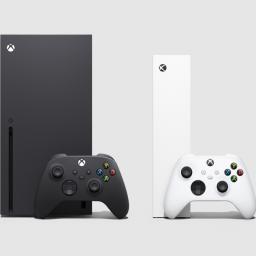
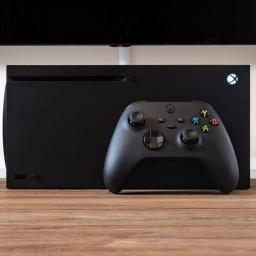
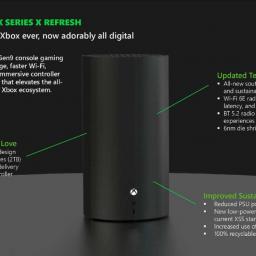
If you thought we were done learning juicy details about the internal workings of Xbox after this summer's Federal Trade Commission-Microsoft trial wrapped up, hoo boy, you can guess again. A jaw-dropping court document leak has revealed a ton of information about recent goings on within the Microsoft Gaming division, as well as critical details about its future plans. Perhaps the biggest nugget concerned a major Xbox Series X refresh that Microsoft has lined up for next year.All-digital Xbox Series X refreshMicrosoft via FTCOver the last few console generations, we've seen the likes of Sony and Microsoft release updated hardware midway through the cycle (the PS4 Pro and Xbox One X spring to mind). And while there are always rumors in the lead up to those new versions, we've never seen legitimate leaks of this magnitude before.Codenamed "Brooklin," a refreshed Series X will have double the internal storage at 2TB, lower power usage, Wi-Fi 6E connectivity and other tech updates, according to a leaked document. This model will have a cylindrical design, compared with the boxy original Series X.Critically, Microsoft is planning to ditch the console's disc drive. It's not yet clear as to whether there will be an external disc drive available (as is rumored to be the case for a PlayStation 5 refresh). It would mark a significant shift for Xbox to no longer offer a disc drive as standard and perhaps accelerate the death of physical game discs. What's more, Microsoft plans to sell the updated Series X for $499, the same price as the current console.Microsoft via FTCMicrosoft is planning to release an updated Xbox controller next year as well, per the unredacted filing. Codenamed "Sebile," the peripheral is slated to have "precision haptic feedback" (perhaps to better compete with Sony's DualSense), quieter inputs and, like some premium controllers, modular thumbsticks. There's said to be support for "seamless" pairing and switching between devices with the help of new mobile app features.Intriguingly, a "direct-to-cloud" feature is mentioned in a slide. That suggests Microsoft is focusing on reducing input latency for games streamed from the cloud, like Google tried with the Stadia Controller (RIP).Sebile is slated to arrive in May, according to the documents. Microsoft is then expected to announce the new Series X (and a Series S refresh) in June, likely at its annual summer showcase. The $299 Series S refresh is now expected to go on sale around August or September 2024, with the beefed-up Series X scheduled to land a couple months later. It seems Microsoft is planning a clearance sale on the current Series S too, as a slide mentions a $199 offer for Black Friday 2024.The next-gen Xbox could be a 'cloud-hybrid' consoleXboxIt seems we're not yet midway through the current console generation, but of course Microsoft is thinking about what's ahead. The next-gen Xbox, slated to arrive in 2028, is expected to support "cloud hybrid games."There's not much detail available on that, but it's clear the company has been moving in this direction for a while. Microsoft Flight Simulator, for instance, incorporates real-time weather data that it pulls from the cloud (that's not a pun, I swear). Xbox has been making a major push into cloud gaming over the last few years too.There's an implication that the next-generation Xbox will have an always-online requirement for certain games. It's entirely plausible that there will still be a sizable digital divide by 2028, which could prevent some folks in rural areas or other regions with poor internet access from properly being able to play games on Microsoft's next major console.Xbox head Phil Spencer really wants to buy NintendoLucy Nicholson / ReutersMicrosoft Gaming CEO Phil Spencer thinks it would be, like, super cool if the company bought Nintendo. Spencer suggested in an internal 2020 email discussing acquisition targets that he saw Nintendo as a white whale for the company, and one that he was personally invested in snapping up. He saw that as a potential "career moment," per the email.The document nods toward other possible acquisition targets, including another highly ambitious one in Valve. Spencer mentioned that his team was in active talks with Warner Bros. Interactive and Bethesda parent ZeniMax Media. Both of those were seemingly open to a deal and while the WB talks didn't work out in Microsoft's favor, the company did scoop up ZeniMax for $7.5 billion.It seems highly unlikely that Microsoft would ever actually buy Nintendo. Antitrust regulators would surely have a lot to say about that, particularly after Microsoft's ZeniMax purchase and its pending $68.7 billion deal for Activision Blizzard (which could close any day now). It's not hard to imagine that Japanese officials in particular would be none too happy about an American business buying one of the country's best-known brands. Still, it's nice to have dreams, eh, Phil?Upcoming gamesThe leak also shed some light on Xbox's plans for upcoming games. It seems that new Doom and Dishonored games are in the pipeline. The latter would see Arkane returning to a successful series after Redfall - its most recent attempt to branch out into fresh IP - faceplanted this year. Fallout 3 Remaster, Oblivion Remaster and a Ghostwire: Tokyo sequel were also mentioned in the leaked documents.It's worth noting, however, that this Bethesda roadmap ran from fiscal years 2020 through 2024. A lot has changed since then, including Microsoft buying the publisher. Games get canceled all the time, so it's unclear whether any of these unannounced projects will actually come to light. Still, it's hard to imagine that there isn't some kind of Doom title in development.Aaron Souppouris/EngadgetThis is all the tip of the iceberg when it comes to the leaked documents. There are details on everything from Game Pass revenue to Microsoft leaders' reactions to the PlayStation 5 announcement and Spencer revealing he bought his own PS5 (he had to plump for a bundle with Horizon Forbidden West included).The timing of this leak could not have been worse for Microsoft, as we're going into the critical holiday period. The company was banking on Starfield being a must-have game (it isn't, unfortunately) to help it shift consoles and Game Pass subscriptions in the last few months of the year. This news won't help convince people who were on the fence to buy an Xbox soon either. Knowing that a revamped Series X is on the way next year will surely put some people off of buying one now (raises hand). That could result in Microsoft losing more ground against Sony and Nintendo, which appears set to debut a brand new console in 2024.The FTC, which still has a lawsuit in the works in an attempt to block the Microsoft-Activision deal, has claimed it's not to blame for the leak. "Microsoft was responsible for the error in uploading these documents to the court," Douglas Farrar, director of the FTC's office of public affairs, told NBC News. However all of this information got out there, some heads are surely rolling at Microsoft HQ today.This article originally appeared on Engadget at https://www.engadget.com/everything-we-learned-from-the-biggest-leak-in-xbox-history-161027198.html?src=rss
|
 Engadget - Technology News & Expert Reviews
| Link | https://www.engadget.com/ |
| Feed | https://www.engadget.com/rss.xml |
| Updated | 2026-09-22 00:17 |
 |
by Jessica Conditt on (#6EWRR)
What are we willing to fight for? What do we deserve, morally speaking? What is our place, our relationship with the universe, with nature?"During a preview of The Talos Principle 2 in August, series writer Jonas Kyratzes posed 19 questions about the essence of humanity in just 90 seconds. Between explanations of new mechanics and puzzle systems, he rattled off deep musings about society and the natural world as easily as if he were reading his weekly grocery list. It felt like these questions were constantly on his mind, poised at the tip of his tongue.What does society owe me?" he asked. What do I owe society? What is our relationship with nature? What is our relationship with the universe? Is the universe kind? Is nature understanding or is it cruel and random? And if it is cruel and random, where do we fit in? What degree of control should we have?"CroteamHe wasn't craving answers. TheTalos Principle 2 is filled with provocations like these, and according to Kyratzes, they're designed to generate conversation and debate, even if it's all internal. The goal is to spawn deep thoughts about the future of humanity and the role technology can play in our evolution.They're statements that are intended to make you think," Kyratzes told Engadget a few weeks after the initial preview. Let's say the robots are human and they're capable of love. Like, that's our premise.... Hopefully that is also the sort of thing that will provoke some thought."This philosophical approach to the future is the heart of The Talos Principle, an award-winning sci-fi puzzle game that debuted in 2014, and its tender curiosity is baked into the sequel as well. The Talos Principle 2 is due out this year for PC, PlayStation 5 and Xbox Series X/S, and it directly follows the story of the original. It's set in a burgeoning society built by sentient robots, and its main gameplay mechanic involves solving complex laser riddles, interspersed with conversations about the nature of consciousness, love and survival.CroteamCo-writer Verena Kyratzes didn't work on the original game's story, but she and the other developers at Croteam used its calm, question-asking approach as a blueprint for the sequel.It didn't only ask you a question, but once you gave the answer to the question, it kind of very politely asked you to just think about whether you're really sure about that," she said. It's a game that constantly tries to make you think, to interrogate yourself and your beliefs, and I really hope that we managed to do that in the second one, too. The gentleness of it is something that's very important to me because I think if you're talking down to somebody, if you're just telling them, That was stupid,' then they will immediately close off."The Talos Principle 2 represents an old-school brand of sci-fi that invites people to play around with the ideas it poses; warm, welcoming and slow. Even the series' conclusions, when it offers any, are inherently optimistic, centering on humanity and the ability society has to thrive with nature in the future. It's a return to a Carl Sagan era of forward thought, positioning people as the solution, not just the instigator, in problems like climate change, overpopulation, rogue AI, pandemics and space travel. This alone is a refreshing perspective in a sea of mainstream sci-fi media that only envisions the future as a miserable, sterile void manufactured by society's stubbornness and greed.CroteamConsistently, science fiction presents itself as being original for taking a dystopian view, as if it was subverting a mainstream narrative of hopefulness," Jonas Kyratzes said. They'll be like, In our story technology is bad.' Oh really, you mean like every other story?"As a series, The Talos Principle is more thematically aligned with the aspirational sci-fi of the original Star Trek or The Next Generation than it is with the gloom of today's Picard. This optimistic, human-first approach makes The Talos Principle 2 subversive as a work of contemporary sci-fi.Here's how Jonas Kyratzes and Verena Kyratzes discussed the modern glut of pessimistic sci-fi among themselves:
|
 |
by Lawrence Bonk on (#6EWRS)
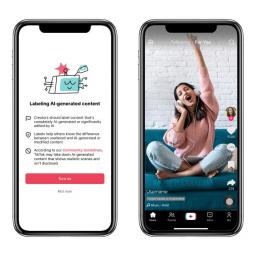
TikTok is rolling out a toolset that lets users label posts that have been created or enhanced by artificial intelligence. This move comes after the social media giant added a number of filters for video uploads that made heavy use of AI, and an image generator to help create unique backgrounds. The filters are being renamed to make it clearer which ones rely on generative AI to further assist with labeling. Moving forward, these filters will have AI" in the name somewhere.The new labels aren't exclusive to TikTok-approved filters. You can slap the label on any content that's been completely generated or significantly edited by AI, no matter where the content has been sourced from. Disney+ could have used these tools back when Secret Invasion premiered.TikTok's new labeling tools aren't exactly optional. A recent company policy clearly states that any AI-generated content that contains realistic images, audio or video" must be labeled as such to help viewers contextualize" the situation and prevent the potential spread of misleading content." However, you can use other disclosures, like stickers or captions, to get the point across without violating any community guidelines.When you place the onus on consumers to label their content, mistakes are gonna happen. To that end, TikTok's developing its own algorithm that will label AI-generated posts automatically, though it hasn't announced when these in-house tools will launch. All of the aforementioned tools were developed in tandem with the company's safety advisory councils, with assistance from industry and scholastic experts.Additionally, the platform has committed itself to abiding by the Partnership on AI's Responsible Practices for Synthetic Media, a list of recommendations for increased transparency involving artificial intelligence. TikTok will also partner with the nonprofit Digital Moment to host roundtables to discuss the advancement of AI with young community members."This article originally appeared on Engadget at https://www.engadget.com/tiktok-now-lets-creators-label-ai-generated-content-154536858.html?src=rss
|
 |
by Devindra Hardawar on (#6EWRT)
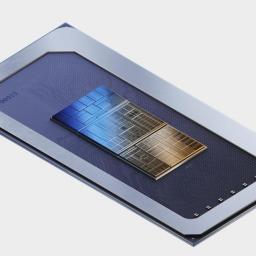
After years of rumors, Intel's "Meteor Lake" processors will finally be arriving in PCs on December 14th. Now dubbed "Core Ultra" as part of the company's new naming scheme, they'll be the first chips built on the "Intel 4" (7nm) architecture, as well as the first to include a built-in Neural Processing Unit (NPU) to accelerate AI performance. In almost every way, the Core Ultra chips demonstrate where Intel is headed next: Building efficient-yet-powerful chips that can keep up with modern AI demands.At this point, Intel appears to be squarely focused on laptops with Core Ultra chips. The company is rumored to be refreshing its Raptor Lake CPUs for desktops later this year. While it may be surprising to see a notebook chip taking the lead, the strategy makes a certain amount of sense. Meteor Lake's efficiency push is at odds with what desktop users actually want: As much freaking power as possible. So for now, at least, the company is better off splitting its 14th-gen CPU families.Core Ultra is practically a showcase of Intel's latest innovations. It's built on the company's FOVEROS 3D packaging; it features entirely new P and E-cores, with a focus on being as power efficient as possible; graphics will be up to twice as fast when it comes to performance per watt; and in addition to sporting an NPU, it can also leverage its GPU and CPU for other AI tasks. Funny enough, it won't support the company's recently announced Thunderbolt 5 standard, instead Core Ultra will feature Thunderbolt 4 and PCIe Gen5.We're still waiting for final details on Intel's final Core Ultra models, as well as the company's plans for 14th-gen desktop chips. But for now, at least, we've got plenty of reasons to be excited about next year's batch of laptops.This article originally appeared on Engadget at https://www.engadget.com/intels-core-ultra-meteor-lake-chips-arrive-on-december-14-153515292.html?src=rss
|
 |
by Jeff Dunn on (#6EWRV)
Amazon has rolled out a new Kindle Scribe sale for Prime members. Each configuration of the 10.2-inch ereader is up to 22 percent off, which brings the base version with 16GB of storage and Amazon's "Basic Pen" stylus down to $265. That's $75 off the device's usual price and only $10 more than the discount we saw during Amazon's Prime Day event last July. The 16GB variant with a "Premium Pen" stylus - which includes a dedicated eraser function and a customizable shortcut button - is down to $290, while the 32GB and 64GB models are $305 and $330, respectively. (The higher-capacity options come with the Premium Pen as standard.) You can get each with a three-month trial to Amazon's Kindle Unlimited service too; just be aware that the subscription will auto-renew by default.We gave the Kindle Scribe a review score of 85 last November, and we currently recommend it in our guide to the best e-ink tablets. The big hook is that it's the only Kindle with note-taking support. At its core, it works like any other Amazon ereader, but you can use the included stylus to jot things down in books and documents, create to-do lists, draw sketches and so on with minimal latency. The roomy, 300 ppi display and slim design are a delight, and you still get access to Amazon's giant ebook library.Amazon has steadily improved the note-taking aspect of the Scribe since launch, but there are still some shortcomings. You can't mark up every book directly on the page - most have you write in windowed sticky notes - handwriting-to-text support is limited, and there's no easy way to sync handwritten notes with services like Google Drive or OneNote. The device isn't waterproof either. Generally speaking, we like the reMarkable 2 as a more flexible e-ink tablet for writing, while the Kindle Paperwhite is a better value purely for reading. But if you want some level of pen support without giving up the usual Kindle experience, the Scribe is worth considering, and this discount makes it a little more approachable.Follow @EngadgetDeals on Twitter and subscribe to the Engadget Deals newsletter for the latest tech deals and buying advice.This article originally appeared on Engadget at https://www.engadget.com/amazons-kindle-scribe-is-up-to-22-percent-off-for-prime-members-151536128.html?src=rss
|
 |
by Lawrence Bonk on (#6EWRW)
Microsoft is holding a 'special event' at 10 AM ET on Thursday, September 21. Details are scant but the timing certainly indicates a fall hardware event, likely prioritizing a new line of Surface products. There isn't a livestream but you can watch the whole thing at 1 PM ET via Microsoft. There should also be a stream on the official Microsoft Surface YouTube channel after the fact. If you don't want to wait three hours for some hot Microsoft news, check our liveblog that will run alongside the actual morning event.The company held its annual hardware event in October last year, but typically sticks to late September for these kinds of things. Microsoft hasn't released any official confirmation as to what will be unveiled, but rumors indicate a refresh to the popular Surface Laptop Studio hybrid device, giving it a much-needed performance boost, and the follow-up to the Surface Laptop Go 2. The current model is fairly underpowered, with an aging 11th Gen Intel chipset, so this would be welcome news.Of course, there's likely to be a surprise or two, given this is Microsoft's big annual event. Will we get a refresh to the Surface Pro 9 or the Surface Laptop 5? Watch to find out. The desktop Surface Studio 2+ is getting long in the tooth and could use some hardware-based TLC. There have also been some rumors indicating that the company's prepping a follow-up to the Surface Duo dual-screen smartphone, though it's unlikely to get unveiled tomorrow.This is also the year 2023 on a planet called Earth, so expect some AI news. To that end, Surface product lead and Windows 11 guru Panos Panay just announced his exit from the company after nearly 20 years, who championed the use of AI in the operating system.Last year, we got the aforementioned Surface Studio 2+ all-in-one desktop computer, the Surface Laptop 5, the Surface Pro 9 and plenty of software announcements. There was also some AI stuffed into Microsoft Teams.This article originally appeared on Engadget at https://www.engadget.com/how-to-watch-and-follow-thursdays-microsoft-surface-event-150034227.html?src=rss
|
 |
by Sarah Fielding on (#6EWRX)
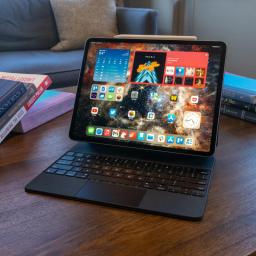
The 12.9-inch Apple iPad Pro's cost has finally dropped into the triple digits. The 128GB sixth-generation model is at an all-time low price of $999 (hey, $1 under $1,000 still counts) from $1,099 - a nine percent discount. The deal is only available in Space Gray, with the Silver model coming in at $1,049.Apple's sixth-gen iPad Pro 12.9-inch came on the scene in 2022, and - though it wasn't a major upgrade - it garnered an 87 in our review. The biggest change was a swap from the M1 to the M2 chip, which increased its GPU performance by 52 percent to a score of 32,834. The M2 chip also lets you record 4K resolution video in ProRes at 30 frames per second and introduces Hover, which lets you interact with some elements when your pencil is 12mm above the screen.The 12.9-inch model's features are identical to the iPad Pro 11-inch, except for the size (obviously) and it having a Liquid Retina XDR display versus a standard one. It's quite a bit cheaper for such a small difference, with a nine percent discount cutting its price from $799 to $729. According to Bloomberg's Mark Gurman, Apple's 2024 iPad Pro might come with an M3 chip and have an OLED display, among other upgrades.Follow @EngadgetDeals on Twitter and subscribe to the Engadget Deals newsletter for the latest tech deals and buying advice.This article originally appeared on Engadget at https://www.engadget.com/apples-129-inch-ipad-pro-drops-to-999-143633282.html?src=rss
|
 |
by Malak Saleh on (#6EWMX)
This spring Dyson launched the Zone, which pairs noise-canceling headphones with an air-purifying visor. It was swiftly met with backlash for its funky, bane-like aesthetic. Oh, and it's $949 price tag. What no one could have predicted is that, just a few months after Zone launched, a massive Canadian wildfire would billow enough smoke across the East Coast to turn New York City's skyline into a surreal orange nightmare. The orange scare" was a freakishly timely event that drew attention to the climate crisis. This, in tandem with the World Health Organization's (WHO), estimates that 9 in 10 people around the world are breathing in air that exceeds pollutant limits, should be enough to scare anyone - especially considering how quickly urbanization is growing, exacerbating those problems. Suddenly AQI entered everyone's vocabulary and probably more than a few people started giving the Dyson Zone another look.Dyson's reputation as a maker of household air purifiers gives the company solid ground to build on; it's just making the tech wearable. The company claims that the Zone's two-stage, sealed filtration system can remove 99 percent of ultrafine particles and city fumes." Dyson's engineering lead Vicky Gibson-Robinson told Engadget that the Zone uses an electrostatic filter to capture particulates as small as 0.1 microns. That, paired with an activated carbon filter that she claims can absorb fumes and gasses such as nitrogen dioxide (the main pollutant emitted by cars, trucks, and buses), is the bread and butter of the filter. Keep in mind, though, that the Zone will require electrostatic filter replacements, anywhere from every six to 12 months depending on the dirtiness of the city you are based in. The carbon filter, on the other hand, Dyson engineers said will not need to be replaced as often and should only be swapped out when it starts smelling."The Zone has three air flow rates based on your level of activity: rest (level one), light (level two), and moderate (level three). Gibson-Robinson says the best way to get the most out of the Zone is by setting it to auto mode to preserve battery life (a big point of contention which we will get to later). If you put it in auto mode, it will just ramp up and ramp down as it needs to," she said, meaning the Zone is smart enough to know when to increase the filtration rate depending on the wearer's movement and breathing rate. The more you strain and move, the more inhaling and exhaling, and the more filtration is needed.Gibson-Robinson says that all the claims made about the Dyson Zone, such as its ability to remove fine particles like PM2.5 that can enter your respiratory tract, were made via testing each part of the filtration system individually. Meaning, the electrostatic filter, the activated carbon filter, and the impeller fan were tested alone. Gibson-Robinson claims that since we were not planning to disassemble the device during our tests, we might find that the Zone's ability to filter pollutants would be even greater than claimed.Engadget VideoEngadget picked three locations to test how well the Zone performed, including a clean lab as a control, and a subway station in New York City, followed by a busy intersection. We reached out to experts at NYU's Grossman School of Medicine who work in partnership with the University's Langone's Center for the Investigation of Environmental Hazards to help us test the Dyson Zone's filtration system."The subway is a good substitute for a worst-case scenario," said Terry Gordon, NYU Professor at the Grossman School of Medicine, who helped Engadget run these tests. Gordon, who has researched the underground transit systems and its health effects on commuters, says that in a scenario where an air quality emergency is not taking place, the air quality inside a subway station is comparable. Meaning, how well the Zone does in the subway station would be a good indicator of how well it would perform during another acute air pollution crisis.Once we agreed on a mission, our aim was simple: test how well the Zone removed pollutants from the air surrounding a wearer's breathing zone, no pun intended. We primarily used two lab-grade devices: a portable particulate monitor and a particulate counter. The portable particulate monitor gave us real-time measurements of PM10 and PM2.5 particulates in the air, which are the two main types of pollutants scientists care about and differentiate based on size. Meanwhile, a particulate counter is used to measure the concentration of pollutants left in the air. In an ideal world, we would have liked to test the Zone's ability to filter out volatile organic compounds (VOCs), or toxic chemicals that come from home products and natural sources like benzene, formaldehyde or acetone, but these compounds were not easily detectable in the city streets or on the subway by our handheld VOC detector. This made sense since the subway tract is mostly run on electricity, not coal or gas.DysonFor each test, we collected data while the Dyson Zone's visor blew air in my face, instead of a dummy head. We did it this way for two reasons. For one, the lab-grade dummy head was not always detected by the Zone, so the filter would not run properly. Also, this allowed me to include real-world user experience in our assessment.So first, in the NYU lab, while the visor blew fresh air into my face, Gordon's Ph.D. students David Luglio and Antonio Saporito held clear tubes connected to both the portable particulate monitor and the particulate counter in the path of the airflow. This happened in the small cramped space between the plastic visor and my lips. By doing this, we were able to gauge how the numbers recorded on the devices changed when the filter was turned on and off. Because it was a clean lab, the air quality was already pretty good. When we turned on the filter to rate three, the volume of PMs measured by the monitor dropped to zero. No surprise there.Engadget VideoWe applied the same method on the 14th Street-1st Avenue subway platform in Manhattan's Lower East Side, which is often flooded with college students taking the L train into Brooklyn. Using the particulate monitor and the particulate counter, we recounted how the filter did before and after being turned on. The results clearly demonstrated the Zone's effectiveness. The ambient particle monitor went from giving a reading of 200 micrograms of particle matter per cubic meter of air before it dropped close to 50. This meant the air quality went from dangerous to normal with the Zone running a level three.Meanwhile, the particle counter went from measuring 20,000 particulates per cubic centimeter to under 1,000 at the level three. So instead of all those fine particles going up into my respiratory tract, they were wafted away through the filtration system.NYU doctoral student David Luglio, whose thesis work has primarily focused on the health effects of long-term exposure to subway air quality in large metropolitan areas in cities like New York and D.C., was shocked by how well the Zone filtered the subway air. "Air quality in the subways in general, wildfire or not, is probably one of the worst environments to be in in New York City because concentrations are typically at least 100 micrograms per cubic meter, and outside on a typical day it is only 10 or less."Engadget VideoIn our final test, we used the same method on the busy street corner right across from the subway station. Again, the Zone did its thing. Readings from the two live monitors spiked and dropped again-proving that the Zone actually worked."It's Dyson and Dyson knows particles and filtrations, that's what they're famous for," Gordon said. The Dyson Zone proved it can remove ambient particles from the surrounding air, he continued. Those particles "are the main contributor to the adverse health effects of air pollution-more so than ozone, NO2, SO2," and ultimately wearing a device like the Zone will protect your lungs and your heart from the adverse health effects of long-term air pollution.This is all great in theory. However, there almost always has to be a catch with experimental devices that explore new categories like the Zone does: the battery life. Unfortunately, while testing, the Zone would only last about an hour and a half. We had to keep a charger handy in case it decided to shut off. This, coupled with the fact that we weren't even using the audio feature while testing, told me that the device is still a long way from being practical for everyday use. Dyson is fully of this issue. "Although the audio system and the airflow system are two separate systems, they're sharing the battery," Gibson-Robinson said.You only have to look at what Dyson has done with the vacuum cleaners, Gibson-Robinson explained. To draw a comparison, Gibson-Robinson brought up her first handheld vacuum. "[It] had a runtime of something like nine minutes, 15 minutes, something like that and now my newest one, which I got the other week, actually blew my mind. It's like 60 minutes of runtime," she continued.It took the company a decade to make that leap. While Dyson's capacity to boost battery life in its handheld vacuums could be a good indicator that there are loads of gains to be made for the Zone, it's nearly impossible to justify the $949 asking price. That, coupled with the fact that the climate crisis is worsening day by day, some consumers (myself included) might not be willing to wait for Dyson.Still, Gibson-Robinson says the compromise on battery life "felt adequate" in order to offer a device that could double as a headphone and a filter. "We've obviously had to balance between because the batteries are housed in that headband... and we've had to balance comfort and weight with battery life and performance," she said. But ultimately, "It's engineered and designed to be worn primarily as a pair of headphones and then secondary, which pains me to say because I did all the filtration stuff, the secondary function is that it's a purifier," she added.Besides the disappointing battery life, I wasn't a fan of the plastic visor itself. Although Dyson claims it's super durable (Gibson-Robinson even dropped the visor from a balcony once out of curiosity), the detachable plastic felt like an awkward appendage at times. You can pull the visor down to sit below your chin while you're wearing the headphones if you don't want to run the filter all the time. You can also flick it back up and have your face covered in a second if you are ready to turn on the filtration mode. But something about it hanging beneath my chin when the filter was off felt kind of gross after a while.Engadget VideoIf you're a germaphobe like me, there's plenty of reason to worry about something being so close to your face all the time. For one, it bumps into your face when you put it on in a rush and do not adjust it properly. It also comes off pretty easily, making it easy to drop on, say, a gross subway station floor. On the plus side, although the material feels cheap and flimsy, it's at least easy to clean since it's removable and wipeable.Still, there's a heaviness to the device overall. I don't feel like I can just brandish the headphones around my neck, especially with the visor up. Not only is it uncomfortable after a few hours of wear, but it's sure to attract attention, which isn't ideal when I just want to feel invisible on my commute home.If I were really concerned with my respiratory health and wanted to limit my daily exposure to pollutants, I would choose something more practical and affordable. Is it nice to know the Zone does in fact work? Sure, but why would I drop $949 on this when I already have a pair of good noise-canceling headphones, and cheaper filtration alternatives exist. Besides the standard K-95 mask, a chemical respirator with filters used in construction and for painting, there are portable HEPA filters you can buy off of Amazon for under $50 bucks. They run for about 200 to 500 hours and have a filtration efficiency of 99.7%. It basically provides what the Zone offers in its level one filtration mode, but at a fraction of the cost and without any of the battery limitations.This article originally appeared on Engadget at https://www.engadget.com/we-put-the-dyson-zones-air-filters-to-the-test-heres-what-we-found-133014523.html?src=rss
|
 |
by Sarah Fielding on (#6EWMY)
Between its drone delivery attempts and its Just Walk Out tech removing the need for cashiers, Amazon is trying to make the buying experience as quick and minimally interactive with others as it can. Now, the tech company has announced that it's further expanding Just Walk Out's abilities to support softline merchandise like clothing - particularly fan gear. Amazon is making the jump with Radio Frequency Identification (RFID) - a decades-old technology that utilizes radio waves for tracking (typically inventory). While Amazon might be getting into the RFID game late, clothing designers have used the technology for everything from preventing counterfeiting to quicker self-checkout.Like in other Just Walk Out stores, customers grab their items and pay with a card or using their palm on an Amazon One device. Each piece of merchandise has a unique tag that's read as customers pass through the exit gate - then charging them accordingly.Amazon tested RFID for Just Walk Out at the Seattle Kraken's Climate Pledge Arena during the last few games of the 2022-2023 NHL season. The tech company decided to expand RFID to the Seattle Seahawk's Lumen Field for the 2023 to 2024 NFL season after being "validated by positive feedback from the Kraken fans and arena officials." This opening marks the stadium's ninth Just Walk Out store - the highest number of any venue. Amazon claims that the first Just Walk Out store at Lumen Field (opened last September) had an 85 percent higher transaction rate and 112 percent better total sales per game during the 2022 to 2023 season, compared to the traditional retailer that previously existed in that storefront.Amazon launched its first Just Walk Out store in 2018 and has since expanded to 75 Amazon-owned and 85 third-party stores in sports stadiums, airports, college campuses and more. Currently, Just Walk Out tech is only available in the United States, United Kingdom and Australia, but Amazon claims it has "new locations launching every month."This article originally appeared on Engadget at https://www.engadget.com/amazon-adds-rfid-support-to-just-walk-out-stores-for-softline-products-like-clothing-130047415.html?src=rss
|
by Cherlynn Low on (#6EWMZ)
Let's charge the iPhone 15 Pro Max before going to bed," I thought wearily after a long day at Apple Park. Even though the device, which I had just unboxed a few hours earlier, was still showing at least 80 percent left of juice, I wanted to make sure it didn't run out the next day. Time with a new review unit is precious, and I couldn't risk wasting any of it on a dead phone.I dragged myself over to the work desk in my hotel room, unplugged my iPhone 14 Pro and stuck the Lightning charger into the iPhone 15 Pro Max. It didn't work. In my sleep-deprived fog, I tried a few more times to jam the cable into the port. It wasn't until about five attempts later that it hit me: This is USB-C.A spark of joy broke through the haze clouding my brain, until I realized I had to unplug my laptop or set up a whole new USB-C charger. I looked at the clock, glanced at the iPhone 15 Pro Max's battery indicator, shrugged and went to sleep. It'll probably have enough power till I can plug it in in the morning.As it turns out, although my dream of a one-charger-fits-all world had finally come true (at least for the devices I use), the utopia I had envisioned wasn't quite perfect in reality. I wanted to just be able to carry a single charger for the half dozen (or so) gadgets I carry around when I travel, but that's probably never going to happen. If I'm going to have to bring multiple wires anyway, does it matter if one of them is Lightning?In the end, it does, but the convenience of being able to use any of the cables I have to charge any of the devices I own doesn't make as huge of a difference as I had expected. Not yet, anyway. Perhaps it will be a bigger improvement when people using older, Lightning-charging iPhones finally move on to USB-C and the whole world adopts this standard. For now, though, the change is small.What might matter more on the iPhone 15 Pro and Pro Max are the new action button, camera improvements, refined design and updated processor. Apple also managed to keep the same price for the Pro ($999) and Pro Max ($1,199) while doubling the storage capacity on the base model of the latter. If you've been holding onto an iPhone that's at least two years old (or even just a year old), this could well be the year to upgrade.Photo by Cherlynn Low / EngadgetDesignFor the first time, I've found myself seriously considering switching to a Pro Max. In the past, despite some performance benefits and superior features, Apple's largest handset has always felt too hefty. But thanks to its new titanium build, the iPhone 15 Pro Max is fractions of an inch smaller and almost 20 grams (or about half an ounce) lighter than its predecessor. I said this in my hands-on and I'll say it again: The iPhone 14 Pro Max felt like it would fracture my skull if it fell on my face, while the new model may only leave a bruise (or maybe a dent).That's probably in part thanks to the fact that the new iPhone's edges are slightly curved, which not only makes them feel less sharp, but gives the handset the illusion of being thinner, even though it's actually a hundredth of an inch thicker than last year.Speaking of teeny measurements, the iPhone 15 Pro and Pro Max's bezels are also ever so slightly smaller than before. That's largely why Apple was able to retain the same screen sizes while bringing the length and width of each device down.Photo by Cherlynn Low / EngadgetTogether with the smaller bezels, the overall design changes make the iPhone 15 Pro Max slightly easier to use with one hand. I also appreciate the brushed metal finish on my Natural Titanium review unit, though I wish Apple would give the Pro line some brighter colors already. This year, you can choose from the silver-ish shade I have, or white, black and blue. Yawn. I know a lot of people slap a case on their new phones the second they get them, but some of us like to live a little dangerously and want a pretty color like those on the regular iPhone 15s.Though the iPhone 15 Pro Max is smaller and lighter than the last generation, it's certainly still one of the heaviest in its category. The Pixel 7 Pro is a bit lighter at 212 grams (7.5 ounces) while the Samsung Galaxy S23 Ultra is the heaviest at 234 grams (8.25 ounces). Meanwhile, the smaller Pro model is actually lighter than the S23 Plus (195 grams) and the Pixel 7 (197 grams, 6.9 ounces).I haven't used the phones long enough, nor have I been brave enough to risk exposing these review units to my hazardous purse without a case, so I can't tell you how durable or scratch-resistant the titanium build is yet. Thankfully, I have also not dropped either device so far, but, as in previous years, they're both rated IP68 for dust and water resistance, which should provide the clumsiest of us some peace of mind.Photo by Cherlynn Low / EngadgetThere are, of course, two crucial external hardware changes this year: USB-C and the Action button. If you're not looking for them, these differences aren't obvious. The hole at the bottom is still a hole, while the button now juts out slightly more than before. And because the iPhone 15 Pros are slightly smaller than their predecessors, your old case will not fit.Action buttonI was surprised to learn that I'm actually in the minority of people who used the mute slider on older iPhones. It turns out that apparently most people set their devices to mute and leave it at that. I tend to leave my phone on my couch while doing chores, so every now and then I'd set it to ring so I wouldn't miss calls from delivery people.In any case, Apple switching the mute slider out for the Action button doesn't bother me. I still get access to a physical key to quickly mute my phone, but for people who don't use that function, there are plenty more options. You can set it to open the camera, turn on the flashlight, begin a voice recording, change Focus modes or start a shortcut. In each of those, you can fine-tune the settings to have the system, say, launch the camera in selfie or portrait mode.Once you've used the Action button to trigger your shortcut, you can keep pressing the button to control the primary action in each scenario. In the camera, that's the shutter. For voice recordings, that becomes the start or stop key.Photo by Cherlynn Low / EngadgetIn the days that I've been testing the iPhone 15 Pro Max, I've set it to launch the camera, since I've been focusing on testing the new hardware. It's frankly been a blessing and a curse. On one hand, it's so much faster to use the Action button to open the camera than having to long press or swipe on the on-screen shortcut. On the other hand, it wasn't always easier to reach for the Action button, and though it's easy enough to identify it by size, I found myself accidentally pressing the volume keys a few times.I get the sense that this is a gesture I'll get used to over time, especially since it did eventually come in handy when I was frantically photographing some wild deer and rabbits in Caumsett State Historic Park.It's also worth noting that, despite my concerns that the Action button might be too easy to accidentally trigger, I have yet to unintentionally launch the camera. I've tossed the iPhone 15 Pro Max in a satchel full of other phones, a backpack stuffed with jackets and snacks, as well as a tightly packed overnight duffel bag. Surprisingly, none of these tight squeezes caused the shortcut to trigger.Cameras - To zoom or not to zoomThis year, the Pro Max has a new telephoto lens that offers 5x optical zoom, thanks to a tetraprism design that reflects light four times within the iPhone's body and creates enough space for a 120mm focal length. Meanwhile, the smaller Pro still retains a 3x optical zoom at 77mm.Photo by Cherlynn Low / EngadgetIn reality, the iPhone 15 Pro Max delivered closeups that are slightly cleaner than what its predecessor was capable of. I used them both to take photos of an ad for the iPhone 15 Pro Max on the side of a building, and only after I zoomed all the way into the pictures on my laptop did I notice a slight difference. The newer phone rendered a window frame better, with a bit less noise than the iPhone 14 Pro Max.When I set both cameras to shoot at the older phone's maximum range of 15x, the newer phone had a noticeable advantage. Wording on the back of a faraway bus was so much clearer on the 15 Pro Max that I could actually guess what an ad said, while the 14 Pro Max's image was basically a blur.The iPhone 15 Pro Max's closest rival on the zoom photography front is Google's Pixel 7 Pro, which also offers 5x optical zoom. Samsung's Galaxy S23 Ultra has 3x and 10x options, with a total of 100x zoom when combined with digital processing. It's no surprise, then, that in general, the Galaxy handset tended to deliver the clearest images at 3x, 5x and beyond. Words were visible on distant objects, and blades of grass were clearer.Compared to the Pixel 7 Pro, the iPhone 15 Pro Max offered similar clarity and detail, as well as brighter images. But Google usually offers better contrast and shadows.In a very challenging situation when I was trying to shoot a gray heron that was bathing by Oyster Bay in Long Island, the iPhone was better at retaining the ripples on the water's surface, while the Pixel mostly overexposed the sea. At 10x zoom, the Galaxy S23 Ultra's pictures of the bird looked like I had captured images of the Predator, complete with extreme halo effect around the subject.The iPhone and Pixel both allow you to make use of these telephoto options while recording video, which came in handy when I tried to film a finicky baby deer from a distance. The Galaxy, on the other hand, is stuck at one zoom level. Ultimately, if you frequently use your phone to capture distant subjects, the iPhone 15 Pro Max will serve you well and has mostly caught up to the competition.What might matter more in your daily photography scenarios is the updated portrait mode pipeline, which Apple says now benefit from the Photonic Engine." I was really excited to see an improvement here, since I rely heavily on Portrait mode for most of my photos of food, animals and people. For the latter two (specifically cats, dogs and people), Apple will automatically capture depth information so you can edit background blur later, and you won't have to go into Portrait mode just to get bokeh. But sadly, the iPhone still lags behind the likes of its Pixel and Galaxy competitors.In my close-up portraits of sprinkles on a scoop of ice cream, the Pixel 7 Pro and Galaxy S23 Ultra managed to keep the individual grains as well as a spoon in focus while retaining the frosty texture of the mounds underneath. Meanwhile, the iPhone 15 Pro Max's picture was a mess, with large parts of the spoon and ice cream blurred out and random other bits in focus. This could have been a fluke, but I never got the same with the other phones.Apple's portrait effect fared better when I changed over to 1x zoom, although as with older iPhones I have to move back a significant distance before the bokeh effects will kick in. But when it did work, the iPhone's portrait mode produced a shallower, more pronounced depth of field than Google and Samsung's phones. The Pixel delivered a more natural and subtle result, though.The good news is that with Apple's new Focus and Depth Control tool, you can go into most pictures and edit the amount of background blur. Or you can change up the focal point altogether. This works with the front camera and live photos well, and generally delivers pleasant results. The iPhone is surprisingly accurate at recognizing the outlines of subjects, although not all my pictures with people in them were identified as portraits. I also couldn't use this tool to fix the wonky ice cream photos, since multiple parts of the sprinkles remained blurry no matter where I tried to set a new focus.Although Apple has worked on improving its Night mode, Google still has the upper hand in low light. My shots of trees and houses along a lake in the dark came out best on the Pixel, which retained the gradient in the sky and a bench in the foreground, without blowing out the lights from homes across the water. The iPhone 15 Pro Max and Galaxy S23 Ultra fared respectably, though Samsung's phone was the most susceptible to overexposure from the lights.It's worth pointing out that the iPhone's photos now use a default resolution of 24 megapixels, combining the light you get from 12MP shots and the detail from the 48MP sensor. File sizes are about half a megabyte larger than before, which will probably eat up your storage more quickly.One thing this processing allows Apple to do is offer three focal length options: 24 mm, 28mm and 35mm. Practically, this just means you can tap the 1" icon at the bottom of the viewfinder to jump between 1x, 1.2x and 1.5x options. Apple didn't just crop in from a 48MP image to create these views - it created individual processing pipelines to enable these at the default 24MP resolution. But for most mobile photographers, that won't mean much. All it translates to are some nifty zoom options, which were fun to use but I didn't find myself reaching for them much.For the most part, the iPhone 15 Pro Max delivered solid landscapes and portraits in daylight, and has shown slight improvement at night. Its video quality remains arguably the best in the industry, with cinematic mode videos still as aesthetically pleasing as before.Performance, in use and battery lifeIt's hard to evaluate the performance of any new phone in just a week. Out of the box, handsets rarely have any lag, and the iPhone 15 Pro Max is as speedy as you'd expect. Its A17 Pro chip kept things running smoothly as I tested multiple camera and video modes in rapid succession, while downloading games, pulling up pictures and hotspotting to another iPhone nearby. I did notice some hiccups when launching the camera with the Action button, but I suspect that has more to do with glitchy software than actual performance.Photo by Cherlynn Low / EngadgetOne of the biggest updates with the A17 Pro processor is the six-core graphics processor that enables hardware-accelerated ray-tracing for realistic lighting effects in games. This allows Apple to coax serious developers and studios like Capcom and Ubisoft to bring console-level versions of their titles to the iPhone. I was able to check out a preview of Resident Evil Village on the iPhone 15 Pro and it ran smoothly as expected. Creepy babies aside, some of the graphics and lighting effects were nice and I saw no dropped frames, although the edges of a character's hair looked a little jagged. Don't expect high-end console level quality here, but you'll get pretty good animations in general.I loved looking at my new contact poster on the Pro Max's 6.7-inch display, and thanks to ProMotion's 120Hz refresh rate, scrolling through the long lists of my Instagram Story viewers was satisfyingly smooth. When I was getting ready in a hotel room, the background music I played sounded surprisingly clear and loud through its speakers.I've already described the impact USB-C actually makes in the real world, so I won't go on about it again. What I didn't mention was that with the move to the new port, Apple was also able to add support for USB Power Delivery (USB PD), which allows the iPhone to charge up other devices. You can use a USB-C to Lightning cable to power up an AirPods case for example, or even another iPhone.That's a pretty handy feature, especially considering how much battery life the iPhone 15 Pro Max has. It usually lasted about two days on a charge, which is slightly longer than other handsets of this size. Of course, over time, I expect battery life to deteriorate and average out at about one and a half days, based on previous experience.When it's time to recharge your iPhone, you can expect similar charging speeds to older models in that you should get up to 50 percent in about 30 minutes. Fast charge is supported with compatible power units, capped at 27 watts, which is basically the same as before.Photo by Cherlynn Low / EngadgetWrap-upThis year's new iPhones actually feel like significant upgrades compared to the last two models. With the introduction of the Action button, USB-C and some camera improvements, the changes coming to Apple's Pro handsets feel meatier than before. Plus, the new titanium build makes the devices seem refreshed, while under-the-hood advances like the A17 Pro processor and a second-generation ultra wideband chip should make for smooth day-to-day use. Though the individual features seem small on their own, altogether this year's set of updates add up to more than the sum of their parts.Of course, there's also the non-pro models of the iPhone 15 to consider, and thanks to their new 48MP sensors and pretty colors, they're a compelling, lower-cost alternative. They also charge via USB-C and come with the same new portrait image effects, which might be good enough for most people. Our review of that device is coming soon, so stay tuned if you can't decide between the standard iPhone 15 or the Pro.Meanwhile, if you've always been a Pro user and already live in a USB-C world, the iPhone 15 Pro and Pro Max will almost certainly satisfy.This article originally appeared on Engadget at https://www.engadget.com/iphone-15-pro-max-review-apple-makes-a-strong-case-for-its-biggest-phone-130018980.html?src=rss
 |
by Lawrence Bonk on (#6EWHQ)
Netgear just announced a new flagship router, the Orbi 970, that's absolutely brimming with features. The router supports the newest Wi-Fi 7 wireless standard and ships in a quad-band format, so it also handles other formats like Wi-Fi 6, 5 and 2.4. It boasts speeds up to 27 Gbps and includes 12 high-performance antennas" for 360-degree coverage, with mesh satellite devices available for an even larger wireless footprint.The Orbi 970 was quite obviously designed with modern consumers in mind, so it should excel when streaming 4K or even 8K video, engaging with high-output VR and AR applications, UHD video conferencing, online gaming and everything else people get up to online these days. The system's also smart-home friendly with the capacity to connect up to 200 devices.The ultrawide bandwidth router is fully compatible with older wireless standards and it's a quad-band device, so everything should work at once without too much fiddling. The Orbi 970 automatically chooses the correct wireless platform for each device and speeds are increased via a dedicated backhaul feature that Netgear says doubles" the speed in which the router and any satellites communicate.The Wi-Fi 7 integration is the big news here, however, as this allows smartphones and laptops to whiz along at speeds up to 5Gbps. This isn't Netgear's first Wi-Fi 7 router, that honor goes to the highly capable Nighthawk RS700S, but the wireless standard has significantly increased in popularity throughout the past year.The port options here seem on point, as the router itself features a single 10 gig Internet port, one 10 gig Ethernet port and four 2.5 gig Ethernet ports. Additionally, each satellite boasts one 10 gig Ethernet port and two 2.5 gig Ethernet ports. The system also looks pretty nifty, with a cylindrical design and a slim profile.However, with great wireless power comes great financial responsibility. Like many high-end Netgear products, this thing's expensive. The base model that includes the router and a single satellite costs $1,700. A three-pack that includes two satellites, offering coverage of 10,000 square feet, costs $2,300 and each additional satellite sets you back $900. The Orbi 970 series is available in white via Netgear or third-party retailers, but the limited-edition black series is only available from the manufacturer. You do get a free year of the company's proprietary antivirus product, Netgear Armor, with a purchase.This article originally appeared on Engadget at https://www.engadget.com/netgears-new-wallet-busting-orbi-router-has-just-about-every-feature-imaginable-123035066.html?src=rss
|
 |
by Mariella Moon on (#6EWHR)
Bethesda's roadmap for the fiscal years starting in 2020 and ending in 2024 has made its way online as part of the unredacted documents leaked from the FTC v. Microsoft case. The list contains games we're already expecting from the developer, but it also includes previously unannounced titles. One of the them is a new entry for the Doom franchise entitled Doom Year Zero, which was scheduled to come out int the current fiscal year. Meanwhile, Bethesda had Dishonored 3 listed with the rest of the games planned for release in the fiscal year of 2024. It was also aiming to release a sequel to the paranormal adventure game Ghostwire: Tokyo in the same period.Seeing as Bethesda has yet to announce these titles, it's unclear if they will be launched according to the developer's original plans, or even if they're still coming out all. Other than the aforementioned games, the roadmap for FY 2024 also lists Fallout 3 Remaster and an unnamed licensed IP game. Oblivion Remaster was listed for FY 2022, but it has yet to be released.In a letter from the same cache of leaked documents wherein Microsoft Gaming chief Phil Spencer talked about how much he wanted to acquire Nintendo, he also mentioned that the tech giant was in talks to buy Bethesda parent company Zenimax. Bethesda officially became part of Xbox in 2021 after regulators approved the purchase - something that may or may not happen for Microsoft's Activision Blizzard acquisition. The tech giant announced last year that it intended to purchase Activision Blizzard for $69 billion, but regulators in the US and EU have opposed to deal - at least in its initial formulation - due to concerns it could limit competition within the industry.MicrosoftThis article originally appeared on Engadget at https://www.engadget.com/leaked-microsoft-documents-hint-at-new-doom-and-dishonored-games-122130396.html?src=rss
|
 |
by Mariella Moon on (#6EWHS)
Microsoft Gaming chief Phil Spencer wanted to acquire Nintendo so bad, he considered it a "career moment." One of the leaked documents from the FTC v. Microsoft case was an email Spencer sent to the company's Chief Marketing Officers Chris Capossela and Takeshi Numoto in 2020. The executive talked about how Nintendo was the prime asset for the tech giant in gaming, which is Microsoft's best bet for consumer relevance. He was confident that if there was an American company capable of acquiring Nintendo, it was Microsoft. However, Nintendo was apparently sitting on a "big pile of cash" that made it unlikely to go looking for buyers.Spencer added that Nintendo had a board of directors that had not pushed for increases in market growth in ages. He explained that it might change in the future, though, as one of Microsoft's board of directors - investment company ValueAct Capital - had been "heavily acquiring" Nintendo shares and had been "fully supportive" of an acquisition if the opportunity arose.Microsoft has a long history of trying to acquire the Japanese gaming giant. When Bloomberg published an in-depth oral account of how the Xbox came to be for its 20th anniversary in 2021, it was revealed that the company asked Nintendo if it was willing to be acquired - and got laughed out of the room. "They just laughed their asses off," Xbox co-creator Kevin Bachus said. "Like, imagine an hour of somebody just laughing at you. That was kind of how that meeting went." Microsoft also reportedly asked Nintendo to let it take care of hardware so it could focus on games, but it ultimately failed to convince the company to do a merger.In Spencer's letter, he said it was "taking a long time for Nintendo to see that their future exists off of their own hardware." And then he ended it with a smiley face that seemed to indicate that he was willing to play the long game, though it's unclear if he still has plans to make another attempt at a merger. Microsoft's legal battle against the Federal Trade Commission will decide the outcome of the company's $69 billion Activision Blizzard acquisition. The company announced the massive purchase in early 2022, but the FTC filed a lawsuit to block the merger, which the agency says can harm competition in the gaming market.This article originally appeared on Engadget at https://www.engadget.com/xbox-chief-phil-spencer-believed-a-nintendo-merger-would-have-been-his-career-moment-114525963.html?src=rss
|
 |
by Mat Smith on (#6EWHT)
Yes, Amazon's Prime Day already happened in July, but the company's members-only sales events are apparently not done. Amazon now plans to hold Prime Big Deal Days, another Prime Day of sorts, on October 10 and 11, something it did the same month last year.Prime Day is two days long, and that's the pattern Amazon is following here, even hinting at a few early deals on Amazon devices. You can save up to 65 percent on a three-pack of eero Pro Mesh Wi-Fi, select Fire TV devices, Kindles and more. Amazon also promises a $15 credit to Prime members who download its Photos app and upload their first photo, between now and October 7, just ahead of its Big Deal Days.If you want to know what devices to keep an eye on - check out our Prime Day primer right here.- Mat SmithThe biggest stories you might have missedHow social engineering takes advantage of your kindnessAnker charging gear and power banks are up to 50 percent off right nowiOS 17's release date is upon us, here's how to update your iPhonewatchOS 10 has arrived, bringing widgets back to the Apple WatchIntel seems pretty excited about glass substratesUnity apologizes and promises to change its controversial game install fee policyMicrosoft's Panos Panay leaves after nearly 20 yearsAnd he's reportedly heading to Amazon.Associated PressPanos Panay is leaving Microsoft. After heading the development of the initial Surface line of tablets and hybrid laptops, he became the company's chief product officer in 2018. His rise continued in 2021 when he moved to executive vice president after a successful Windows 11 launch. He's also been a mainstay of Microsoft's livestreams, press events and product launches alongside CEO Satya Nadella.There's been no reason given by either party, but Panay said he has decided to turn the page and write the next chapter" when he announced the move on X. However, Bloomberg subsequently reported he has been poached by Amazon. Panay will apparently replace Dave Limp, the Amazon executive previously in charge of Alexa and Echo, who announced his retirement last month. What makes this more unusual is that Microsoft has a livestream event this Thursday, which will almost certainly focus on the new Surface products.Continue reading.MS Paint just got two killer features for a '90s graphics editorMicrosoft is rolling out layers and transparent PNG support.Associated PressiOS updates? Pschh. Tell me more about MS Paint. The '90s and '00s distraction is finally getting support for layers. It's an exciting time to be alive.Continue reading.AirPods Pro Adaptive Audio previewAutomatically adjusting to your day.Alongside the arrival of iOS 17, a firmware update to Apple's AirPods Pro adds a few new features, most of which will automatically adjust to your environment or activity, so you don't have to touch the earbuds or reach for your phone. The headline addition is Adaptive Audio, a tool that automatically and dynamically" blends transparency mode and active noise cancellation (ANC) based on your surroundings. Adaptive Audio gradually starts tweaking the blend of ANC and transparency. So if you enter a loud coffee shop, AirPods Pro gently increases noise cancellation to combat the distractions. Engadget's Billy Steele tests out all the new features.Continue reading.The Google Nest Hub Max is losing some of its video call functionalityIt'll still support Meet, in a more limited capacity.Google is discontinuing support for Zoom and Google Meet meetings on its Nest Hub Max. Some users have received notifications that they can no longer join meetings from the device beginning September 28. The news follows Zoom's July announcement that Nest Hub Max support will end for the video calling service on September 30. Google said in a statement that support for joining meetings via meeting codes and links in Meet" is going away, but also noted, There is no change to making 1:1 and group video calls to friends, family and businesses with Google Meet."Continue reading.Sonos Move 2 reviewBetter sound and battery life come at a cost.When Sonos released its first portable speaker, the Move, four years ago, it was an anomaly. Portable and connectable through Bluetooth, this was a different Sonos product. In 2023, these tricks have proliferated across the Sonos lineup. The more affordable Roam speaker brought the Move's feature set to a much smaller device, while recent home speakers, like the Era 100 and 300, both support Bluetooth, as well. The Move 2 doesn't suggest a new direction for future Sonos products, but it does bring the company's latest tech and design cues to an existing product.Continue reading.This article originally appeared on Engadget at https://www.engadget.com/the-morning-after-amazons-plans-for-yet-another-sales-event-111551729.html?src=rss
|
 |
by Steve Dent on (#6EWHV)
A massive leak from the FTC v. Microsoft court battle showed Microsoft's roadmap for a mid-generation Xbox Series X console, but that wasn't the only news. The same document also revealed Microsoft's tentative plans for the next-generation Xbox - what it calls a "hybrid game platform." The system would combine local hardware and cloud computing to create an "immersive game & app platform" arriving around 2028, according to a leaked May 2022 presentation hidden inside another PDF."Our vision: Develop a next generation hybrid game platform capable of leveraging the combined power of the client and cloud to deliver deeper immersion and entirely new classes of game experiences," one of the slides reads. "Optimized for real time game play and creators, we will enable new levels of performance beyond the capabilities of the client hardware alone." In a slide, Microsoft projects the next gen arriving in 2028 with "cloud hybrid games" and an "immersive game & app platform."MicrosoftOn the hardware side, Microsoft foresees things like next-gen DirectX raytracing, dynamic global illumination, ML based super resolution, micropolygon rendering optimization and more. The system could allow for different types of devices, ranging from relatively powerful consoles to "Thin OS... $99 consumer or handheld devices" that rely on xCloud computing."Hybrid compute" would presumably differ from regular cloud gaming by using hardware and cloud computing to display in-game elements simultaneously. For instance, primary characters would run on your local GPU, while NPCs, background elements and more would be generated remotely.MicrosoftMicrosoft also sees heavy use of AI and machine learning (ML) in next-gen gaming. From a performance vantage, neural networks would power super resolution, frame rate interpretation and latency compensation, for instance. They would improve game experiences (AI agents, codex, matchmaking, player ranking) and player services (safety & toxicity, personalization & discovery, support services). It would also aid on the creator side via AI game testing, procedural content, physics, NLP dialogue and live ops (engagement & retention management, monetization, cloud resource optimization).One slide suggested Microsoft was seeking to forge deals with AMD for Navi 5 graphics and Zen 6 CPU cores, but another stated that the company needs to make an "Arm64 decision." In any case, it may have already begun its plans. Another slide titled "The journey has already started" shows a full roadmap: hardware design and hybrid game design starting in 2024, with dev kits available by 2027 and shipping by 2028.MicrosoftThe slide appears to be part of a conversation, and not a fixed roadmap by any means. Preceding the slideshow are documents showing a conversation between CEO Satya Nadella, Xbox's Phil Spencer, and others. Saying that the company is working on four types of computers (cloud everything, a hybrid Xbox, hybrid Windows, and hybrid HoloLens), Nadella notes that "we need to bring the company's systems talent together to align on a unified vision," adding that "we can't go from big idea to big idea. We need to bring the company's systems talent together to align on a unified vision."Other ideas revolve around a "mobile controller," whereby the "controller becomes the hero." That makes it seem that Microsoft was still working out its vision for next-gen Xbox at the time of the presentation - so it may have changed course completely since then.MicrosoftThis article originally appeared on Engadget at https://www.engadget.com/leaked-microsoft-documents-detail-cloud-hybrid-next-gen-xbox-for-2028-110309102.html?src=rss
|
 |
by Andrew Tarantola on (#6EWEM)
We've already seen OpenAI and Salesforce incorporate their standalone chatbots into larger, more comprehensive machine learning platforms that span the breadth and depth of their businesses. On Tuesday, Google announced that its Bard AI is receiving the same treatment and has been empowered to pull real-time data from other Google applications including Docs, Maps, Lens, Flights, Hotels and YouTube, as well as the users' own silo of stored personal data, to provide more relevant and actionable chatbot responses.I've had the great fortune of being a part of the team from the inception," Jack Krawczyk,bproduct lead for Bard, told Engadget. This Thursday marks six months since Bard entered into the world."GoogleBut despite of the technology's rapid spread, Krawczyk concedes that many users remain wary of it, either because they don't see an immediate use-case for it in their personal lives or some others are saying, I've also heard that it makes things up a lot.'" Bard's new capabilities are meant to help assuage those concerns and build public trust with the technology through increased transparency and more fully explained reasoning by the AI.We started off talking about Bard as a creative collaborator because that we saw in our initial testing, that's how people use it," he continued."Six months into the experiment, that hypothesis is truly validating."The new iteration of Bard, is the first time a language model will not only talk about how confident it is in its answer by finding content from across the web and linking to it," Krawczyk said. It's also the first time the language model is willing to admit that it made a mistake or got something wrong, and we think that's a critical step." Krawczyk notes that feedback provided by the experimental tool's users over the past half year has enabled the company to rapidly iterate increasingly robust, more intuitive and imaginative" language models.To that end, the chatbot can now parse and respond to more extensive and complicated prompts, such as It's my first semester in college and I want to get involved, but also would like to get strong grades. Help me formulate a point of view on why it's important to balance my involvement in school clubs and extracurriculars, while also focusing on my studies."In order to provide these more expansive responses, Google is following OpenAI and Salesforce's lead in enabling its AI to access the real-time capabilities of the company's other apps - including Maps, YouTube, Hotels and Flights, among others. What's more, users will be able to mix and match those API requests using natural language requests.That is, if you want to take your partner to Puerto Rico on February 14, 2024 and go sightseeing, you'll be able to ask Bard, can you show me flights to Puerto Rico and available hotels on Valentines Day next year?" and then follow up with, show me a map of interesting sites near our hotel" and Bard should be able to provide a list of potential flights, available hotel rooms and a list of stuff to do outside of said hotel room once you book it.We believe there's already a high bar for the transparency choice and control that you have with your data," Krawczyk said. It needs to be even higher as it relates to bringing in your private data."In an effort to improve the transparency of its AI's reasoning, Google is both explicitly linking to the sites that it is summarizing, and introducing a Double Check feature that will highlight potentially unfounded responses. When users click on Bard's G button, the AI will independently audit its latest response and search the web for supporting information. If Search turns up contradictory evidence, the statement is highlighted orange. Conversely, heavily referenced and supported statements will be highlighted green.GoogleUsers will also be able to opt-in to a feature, dubbed Bard Extensions, that will allow the AI access to their personal Google data (emails, photos, calendar entries, et cetera) so that it can provide specific answers about their daily lives. Instead of digging through email chains looking for a specific important date, for example, users will be able to ask Bard to scour their Gmail account for the information, as well as summarize the most important points of the overall discussion. Or, the user could work with the chatbot to draft a cover letter based specifically on the work experience listed in their resume.And to allay concerns over Google potentially having even more access to your personal data than it already does, the company has pledged that your content from Gmail, Docs and Drive is not seen by human reviewers, used by Bard to show you ads or used to train the Bard model." What's more, users will be able to opt in and out of the system at will and can allow or deny access to specific files. The service is initially only available to non-enterprise users in English, though the company is working to expand those offerings in the future.We think that this is a really critical step, but so much context is required in communication," Krawczyk said. We think really harnessing the healthy and open web is key because what we found in the first six months of Bard is, people will see a response and then follow up with trusted content to actually understand and go deeper. We're excited to provide that for people with this new experience."This article originally appeared on Engadget at https://www.engadget.com/googles-bard-ai-can-tap-the-companys-apps--and-your-personal-data--for-better-responses-100020506.html?src=rss
|
 |
by Mariella Moon on (#6EWEN)
A Microsoft AI research team that uploaded training data on GitHub in an effort to offer other researchers open-source code and AI models for image recognition inadvertently exposed 38TB of personal data. Wiz, a cybersecurity firm, discovered a link included in the files that contained backups of Microsoft employees' computers. Those backups contained passwords to Microsoft services, secret keys and over 30,000 internal Teams messages from hundreds of the tech giant's employees, Wiz says. Microsoft assures in its own report of the incident, however, that "no customer data was exposed, and no other internal services were put at risk."The link was deliberately included with the files so that interested researchers could download pretrained models - that part was no accident. Microsoft's researchers used an Azure feature called "SAS tokens," which allows users to create shareable links that give other people access to data in their Azure Storage account. Users can choose what information can be accessed through SAS links, whether it's a single file, a full container or their entire storage. In Microsoft's case, the researchers shared a link that had access to the full storage account.Wiz discovered and reported the security issue to Microsoft on June 22, and the company had revoked the SAS token by June 23. Microsoft also explained that it rescans all its public repositories, but its system had marked this particular link as a "false positive." The company has since fixed the issue, so that its system can detect SAS tokens that are too permissive than intended in the future. While the particular link Wiz detected has been fixed, improperly configured SAS tokens could potentially lead to data leaks and big privacy problems. Microsoft acknowledges that "SAS tokens need to be created and handled appropriately" and has also published a list of best practices when using them, which it presumably (and hopefully) practices itself.This article originally appeared on Engadget at https://www.engadget.com/microsoft-ai-researchers-mistakenly-leaked-38tb-of-company-data-094659079.html?src=rss
|
 |
by Steve Dent on (#6EWEP)
Microsoft is planning a mid-generation refresh of the Xbox Series X with a new disc-less cylindrical design, according to a document accidentally revealed from the FTC v. Microsoft court battle. It also leaked the existence of a new controller with a gyro (codenamed Sebile), a refreshed Xbox Series S, key specs for the new devices and a timeline. It's not clear how the documents came into public view, but they could be damaging for Xbox's gaming business, as it shows the company's strategy well over a year in advance.Microsoft previously stated it has no plans for a mid-gen console refresh, but that doesn't appear to be true according to the document. In fact, the company is working on three new consoles. The first, codenamed Ellewood, is a light refresh of the Xbox Series S (set to arrive in September 2024), while "Brooklin," tentatively planned for November 2024, is a new disc-less version of the Xbox Series X. Another model, called XDL, matches Brooklin's specs but will presumably offer Xbox Design Lab customization.MicrosoftMicrosoft's two-tone "Sebile" controller has a built-in accelerometer and haptics that "double as speakers," which would make it more like Sony's latest DualSense controller. It also features new modular thumbsticks, quieter buttons and thumbsticks and new app features, along with sustainability tweaks like a swappable battery, recycled materials and improved reparability. Once it's released, we'll likely see games with support for the gyro, letting you maneuver just by moving the controller around. The company will also have an XDL version of Sebile, codenamed Igraine.The star of this leak is the new updated Xbox Series X console, though. While Microsoft touts it as "adorable" (presumably due to the cylindrical design that's less severe than the current fridge-like Xbox Series X), many gamers may not find the lack of a disc cute at all.Along with the new design, the Series X will come with Wi-Fi 6E, Bluetooth 5.2, USB-C front port, an all-new southbridge "to modernize IO and sustainability efforts" and a 6-nanometer die shrink. That will result in a reduced (15 percent) power draw with a new low-power standby mode that's up to 80 percent less than current standby, along with increased use of recycled plastic (>30 percent) and 100 percent recycled packaging.MicrosoftIt'll have 2TB of storage, or double the current model, and come standard with the Sebile controller. Microsoft also notes that it'll have the "same great price" as the current Xbox Series X at $499 when it arrives (tentatively November 2024), but that's a somewhat disingenuous statement given the lack of a disc.The Xbox Series S will have similar improvements inside, along with double the storage (1TB rather than 512GB), though the design appears relatively unchanged. It's also set to carry the same current $299 price, with availability tentatively set for September 2024.A lot more information is laid out, including things that Microsoft would no doubt want private, like projected sales volumes, margins, funding and more. For instance, Microsoft notes that "Sebile full product vision not currently approved due to GM % (gross margin percentage), and appears to place that ball in the "Finance" court. It also outlines a "path to leadership in gaming" with a vision of cloud-first, PC-first and console-first Xbox Game Pass subscription numbers. The leak appears to be a massive screwup that will likely cause some severe fallout, so stay tuned.This article originally appeared on Engadget at https://www.engadget.com/huge-leak-reveals-microsoft-will-launch-an-all-digital-xbox-series-x-and-new-gyro-controller-090442796.html?src=rss
|
 |
by Kris Holt on (#6EWC0)
Opera has unveiled custom versions of its desktop and Android browser that fans of one of the world's most enduring games might appreciate. It has teamed up with Chess.com to integrate chess directly into the browser.A chess-themed version of the desktop browser includes a Chess.com icon in the sidebar. So, rather than having a dedicated tab for the website open, you can pin the panel and plot your next moves as you browse the web. You'll have swift access to puzzles, streamers and ongoing games.On Android, there's a whole new version of the browser available, Opera says. Opt in to the custom build, and you'll see a bunch of chess-related content on the home page, including articles and videos.Opera has integrated other services into its browser's sidebar over the years, including TikTok, WhatsApp and Instagram. The company also recently released its Opera One browser, which is infused with its generative AI and supports other GPT-based services.This article originally appeared on Engadget at https://www.engadget.com/operas-browser-is-now-available-with-chess-baked-in-080052789.html?src=rss
|
 |
by Mariella Moon on (#6EWA0)
In a couple of weeks' time, Jack Dorsey will be running Square's business again. Dorsey founded the fintech company in 2009 before expanding its services and renaming it Block by the end of 2021. Square itself, the financial platform for small-to-medium businesses, became one of the businesses under the new company. Block also owns Cash App, installment payment provider Afterpay, website creator Weebly and a controlling stake in music streaming service Tidal. In February this year, Alyssa Henry was named the CEO of Square after years of serving as its EVP and head of its seller unit. Now, according to a regulatory filing seen by CNN, Henry is stepping down and leaving the company on October 2.Dorsey will take on the additional role as "Square Head" in addition to helming Block, though it's unclear if he will fill the seat permanently or will serve as a temporary leader until the next CEO takes over. "As CEO of Square, Alyssa Henry helped transform the business into a software-led technology company, guided the team during the uncertainty of global pandemic lockdowns, and expanded our breadth of services for small businesses around the world," a Block spokesperson told CNN. "Square is what it is today in large part because of Alyssa's leadership and we wish her the best in her future endeavors."Prior to joining Square, Henry led Amazon Web Services' storage services division and oversaw software development, operations, as well as inbound and outbound product management for several teams. Her LinkedIn page still lists Square as her employer and doesn't say where she's headed next. Henry's reason for departure also remains unknown, and Block didn't say whether it was connected in any way to the outage Square experienced a few days ago. As Payments Dive notes, Square was out for almost a whole day, leaving merchants unable to process payments.This article originally appeared on Engadget at https://www.engadget.com/jack-dorsey-is-heading-square-again-after-its-current-ceo-steps-down-062649106.html?src=rss
|
 |
by Stephanie Barnes on (#6EVY9)
After 38 years, Microsoft is updating its Paint App with support for image transparency and layers. For most of us, MS Paint brings waves of nostalgia and memories of spending hours trying to be Picasso. Back then, you had a pencil, brushes, a handful of colors and not much else. Now, it seems Microsoft is beefing up its app to make it more useful for slightly more advanced image editing. In a blog post, Dave Grochocki, Principal Product Manager for Windows Inbox Apps, announced the new features and "exciting" new possibilities."When you combine layers, transparency, and other tools in Paint, you can create exciting new images and artwork! For example, when combined with the new background removal feature, you can quickly create interesting layered compositions," Grochocki said.To get started, you'll need to click on the new layer option in the toolbar and that will open a panel on the side of the canvas. From there, you can hide, duplicate, merge or delete layers - much like you can do in other, more robust photo editing software. As of right now, the update is only available to users who are signed up to receive Windows Insider software builds. The features are not currently available to all Windows users, but are likely to be rolled out soon.While it isn't the most groundbreaking thing, people who are still using MS Paint will find these features useful. And it's likely Microsoft will continue to update its Paint app, since the company has made it clear: MS Paint is here to stay.This article originally appeared on Engadget at https://www.engadget.com/ms-paint-just-got-two-killer-features-for-a-90s-graphics-editor-202341195.html?src=rss
|
 |
by Will Shanklin on (#6EVYA)
The newly upgraded particle accelerator at the DoE's Stanford Linear Accelerator Center (SLAC) has produced its first X-rays. The Linac Coherent Light Source (LCLS) upgrade, LCLS-II, can emit up to a million X-ray pulses per second (8,000 times more than the original) and an almost continuous beam 10,000 times brighter than its predecessor. Researchers believe it will enable unprecedented research into atomic-scale, ultrafast phenomena" and shed new light on quantum computing, communications, clean energy and medicine.One of the keys to the accelerator's powerful upgrade is its cooling abilities. The original LCLS, which went online in 2009, was capped at 120 pulses per second because of the natural limits of how many electrons could simultaneously travel through the accelerator's room-temperature copper pipes. But the updated version includes 37 cryogenic modules cooled to negative 456 degrees Fahrenheit (colder than outer space), allowing it to boost electrons to high energies with nearly zero energy loss." The new accelerator will work in parallel with the existing copper one.SLAC researchers say the new capabilities will allow them to examine details of quantum materials with unprecedented resolution while enabling new forms of quantum computing and reveal unpredictable and fleeting chemical events" to help advance clean energy tech. In addition, they say it could help scientists develop new pharmaceuticals by studying how biological molecules work on an unprecedented scale. Finally, they stated that its unmatched 8,000 flashes per second will open up entirely new fields of scientific investigation."SLACSLAC researchers began envisioning upgrades to the original LCLS in 2010. The project has since gone through $1.1 billion and has involved thousands of scientists, engineers, and technicians across DOE, as well as numerous institutional partners." It required numerous cutting-edge components," including a new electron source, two cryoplants to produce refrigerant and two new undulators to generate X-rays from the beam. Multiple institutions contributed to the endeavor, including five US national labs (Lawrence Berkeley National Laboratory and Argonne National Laboratory, among others) and Cornell University.Experiments in each of these areas are set to begin in the coming weeks and months, attracting thousands of researchers from across the nation and around the world," said LCLS Director Mike Dunne. DOE user facilities such as LCLS are provided at no cost to the users - we select on the basis of the most important and impactful science. LCLS-II is going to drive a revolution across many academic and industrial sectors. I look forward to the onslaught of new ideas - this is the essence of why national labs exist."This article originally appeared on Engadget at https://www.engadget.com/stanfords-upgraded-x-ray-laser-is-up-and-running-192326869.html?src=rss
|
 |
by Malak Saleh on (#6EVTQ)
Agility Robotics, the creator of the bipedal robot Digit, is opening a manufacturing plant in Salem, Oregon that will give the company the capacity to produce more than 10,000 humanoid robots a year. The 70,000 square foot factory coined RoboFab" is set to open later this year and will employ upwards of 500 workers in Salem.Agility Robotics says its facility will also employ its very own Digits, the iconic humanoid robot, in the new factory. The Digits will help move, load and unload warehouse goods.The company says some customers can expect delivery of the first Digits in 2024, with general market availability in 2025. In a statement, Damion Shelton, Agility Robotics' co-founder and CEO says that the ultimate goal of creating Digits is to Solve difficult problems in today's workforce like injuries, burnout, high turnover and unfillable labor gaps."The manufacturing of bipedal robots is something we have seen teased by competitors like Boston Dynamics' Atlas and Tesla's Optimus robot prototype. However, none have matured to the extent of being able to churn out thousands of robots like that being seen in this effort by Agility Robotics. Still, until these robots are actually in production, it's too soon to say if Agility Robotics' warehouse robots, which are designed to fill a gap in the logistics and distribution industry, will actually surpass its competitors in this newly burgeoning market.This article originally appeared on Engadget at https://www.engadget.com/agility-robotics-is-building-its-first-bipedal-robot-factory-in-oregon-184436386.html?src=rss
|
 |
by Will Shanklin on (#6EVTR)
It didn't take long to learn Panos Panay's new home. The industry veteran, instrumental in developing Windows 11 and the Microsoft Surface line of 2-in-1s and laptops, has reportedly been hired by Amazon, according toBloomberg. Microsoft's former chief product officer will lead Amazon's division responsible for Alexa and Echo smart devices.Panay will replace Dave Limp, the Amazon executive previously in charge of Alexa and Echo, who announced his retirement last month. Panay's move from one Seattle-based tech giant to another will have him overseeing a division hit by layoffs last year. Ironically, Amazon and Microsoft each have fall hardware events scheduled this week.Microsoft brought on Panay in 2004 as a group program manager. He oversaw the development of Surface devices during their formative years, where he became an event mainstay with his passionate and detailed product launch keynotes. He was promoted in 2018 to chief product officer before landing his last Microsoft position as executive vice president in 2021. Panay said he decided to turn the page and write the next chapter." Yusuf Mehdi will replace him as Microsoft's head of Windows and Surface teams.We reached out to Amazon for comment and confirmation, and we'll update this article when we hear something.This article originally appeared on Engadget at https://www.engadget.com/panos-panay-is-reportedly-heading-to-amazon-after-leaving-microsoft-175017471.html?src=rss
|
 |
by Kris Holt on (#6EVQ7)
It's a big day for Apple users as the company is rolling out major operating system updates for most of its devices (Mac users need to wait a bit longer). Just ahead of the Apple Watch Series 9 and Apple Watch Ultra 2 arriving later this week, the company has released watchOS 10. If you have an Apple Watch Series 4 or above, you can install it now.The biggest change is the introduction of widgets (which are a bit like Glances from Apple's original wearable) for every watch face, which include two new ones. You'll be able to use the Digital Crown to cycle through your widgets and see access features like timers, stopwatches and podcasts when those are active.The World Clock app should make it easier to understand the time of day in different parts of the world at a glimpse thanks to the addition of dynamic background colors. for various timezones. In the Activity app, you'll be able to rotate the crown to see more data via corner shortcuts. There's the option to connect to Bluetook bike sensors to help cyclists track more data too. The Compass, Mindfulness and Medications apps are all getting updates as well.Perhaps two of the biggest updates for most people are related to FaceTime. You can view a FaceTime video message on your Watch and join Group FaceTime audio calls.The Apple Watch Series 9 and Apple Watch Ultra 2 will get some exclusive features powered by the new S9 SiP, including Siri requests that are processed on-device rather than through Apple's servers. They also support a new Double Tap feature Apple designed to make it easier to carry out the main action in each app. Both devices will be available on September 22.This article originally appeared on Engadget at https://www.engadget.com/watchos-10-has-arrived-bringing-widgets-back-to-the-apple-watch-171753537.html?src=rss
|
 |
by Will Shanklin on (#6EVQ8)
iPadOS 17 is available now. The annual update lacks a single headline-grabbing feature, but the sum of its smaller changes enhances the experience of using Apple's tablet. Changes include Stage Manager refinements, along with Lock Screen additions and interactive widgets to match the iPhone's new features from a year ago.You can install iPadOS 17 on recent models. It supports the iPad Pro 12.9 (2nd-gen or later), iPad Pro 10.5, iPad Pro 11 (1st-gen or later), iPad Air (3rd gen or later), standard iPad (6th gen or later) and iPad mini (5th gen or later). If you don't know which device you have, you can navigate to Settings > General > About > Model Name to determine which one it is.Once you know your device is eligible, you can head to Settings > General > About > Software Update to manually initiate the download and installation. If you had auto-updates turned on, it would install eventually, but perhaps not until later in the week.iPadOS 17 catches up on a couple of iOS 16 features that didn't make it to the iPad last year, including a revamped and more customizable Lock Screen (including an easier and more robust wallpaper picker) and interactive widgets. In addition, the Health app makes its way to the bigger screen and you can more easily adjust Stage Manager to fit your needs. Finally, iOS 17's FaceTime and Messaging updates are included on the tablet software as well. You can read more about iPadOS 17's features in Engadget's full preview.This article originally appeared on Engadget at https://www.engadget.com/ipados-17-is-ready-to-download-171507612.html?src=rss
|
 |
by Will Shanklin on (#6EVQ9)
iOS 17 is here. Apple has made the annual update available to all users on eligible devices, meaning you can install it right now without bothering with beta programs. The 2023 iPhone software update includes significant updates to Messages, FaceTime, the keyboard and more.You can install iOS 17 on any iPhone from 2018 or later. Once you know your device is eligible, you can head to Settings > General > About > Software Update to manually initiate the download and installation.This year's iOS upgrade includes audio message transcriptions and a rethinking of the Messages app. (iMessage apps and other tools now live behind a plus button next to the text entry field.) FaceTime adds video voicemails, and you can even take calls on an Apple TV, using an iPhone or iPad as the camera. StandBy mode is a new feature that turns your handset into a smart display when it's charging and positioned horizontally. Meanwhile, NameDrop lets you quickly exchange contact info with new friends by tapping your devices together, and a new inline predictive text feature lets the keyboard predict and (optionally) finish your sentences for you.You can read more about the new features in Engadget's full iOS 17 preview. For more details on installing the update, you can read our tutorial.This article originally appeared on Engadget at https://www.engadget.com/ios-17-is-now-available-171458248.html?src=rss
|
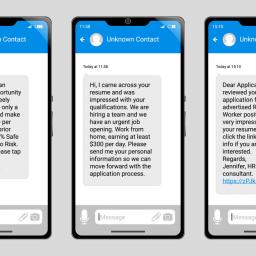 |
by Katie Malone on (#6EVQA)
Last week, MGM Resorts disclosed a massive systems issue that reportedly rendered slot machines, room keys and other critical devices inoperable. What elaborate methods were required to crack a nearly $34 billion casino and hotel empire? According to the hackers themselves (and seemingly confirmed by a source speaking with Bloomberg), all it took was a ten minute phone call.The alleged hackers behind the MGM issue, by all appearances, gained access through one of the most ubiquitous and low-tech vectors: a social engineering attack. Social engineering psychologically manipulates a target into doing what the attacker wants, or giving up information that they shouldn't - in this case, apparently, by pulling a fast one on an unsuspecting IT help desk worker. The consequences range from taking down global corporations to devastating the personal finances of unfortunate individual victims. But what makes social engineering attacks so effective, and why are they so hard to prevent?It seems counterintuitive to hand over sensitive information to a complete stranger, but attackers have developed ways to trick you into feeling comfortable doing just that. Those could include building trust over time, gathering information about you to seem like they know you or using a sense of urgency to get you to act quickly without thinking through what you're giving up. That's why common personality traits among cyber victims include being extroverted, agreeable and open to new experiences, according to Erik Huffman, a researcher who studies the psychology behind cybersecurity trends.Fear is an attack vector. Helpfulness is an attack vector," Huffman said. The more comfortable you are, the more hackable you become."Plus, digital environments have fewer social cues versus being face to face, so a potential victim is not as good at sensing potentially suspicious signs, Huffman said. We read messages in our own voice, projecting our own good will onto them, which normally doesn't happen in person. There's less information like social cues or body language to guide us or give us a gut feeling that something's off.A social engineering attack could be as simple as a faux-urgent phone call from a scammer to get your credit card information for low level theft. But there are increasingly complicated Rube Goldberg attacks" that layer multiple approaches to fool you, according to Sophos X-Ops principal researcher Andrew Brandt. In an example of such an attack, Brandt observed scammers first operating over the phone to get a target to click an email also sent by the scammer. Once clicked, the email would activate an attack chain that included malware and remote access software.More likely, you'll encounter it on a much simpler level. You might get a text from someone pretending to be your boss asking for gift cards or be tricked into clicking a malicious link that phishes your credentials. But one way or another you'll probably run into it eventually, as an estimated 98 percent of cyberattacks rely to some extent on social engineering tactics, according to research from Splunk.There are some other warning signs people can look out for. Having to download an unusually big file, a password protected zip file that can't be scanned for malware or a suspicious shortcut file are all signs of a potential attack, according to Brandt. But a lot of it's a gut feeling - and taking time to step back before proceeding to consider what could go wrong.It is a practice that takes repetition and rehearsal over and over again to reflexively distrust what people say to you who you don't know," Brandt said.Huffman said people can try to avoid falling victim by acknowledging the limitations of a digital environment, and asking questions like: Does it make sense for this person to reach out to me? Does this person behave in a trustworthy manner? Does this person have the authority or position of power to give these directions? Does this person truly understand the topic we're discussing?Social engineering attacks happen constantly, to huge corporations as well as everyday people. Knowing that our good-natured traits can be our greatest weakness when faced with this variety of bad actors, it can be tempting to stop being nice altogether for safety's sake. The key is balancing our social instincts with healthy skepticism. You can be helpful," said Huffman, "but be cautious."This article originally appeared on Engadget at https://www.engadget.com/how-social-engineering-takes-advantage-of-your-kindness-170043531.html?src=rss
|
 |
by Malak Saleh on (#6EVQB)
GE Health says it plans to develop an AI-assisted ultrasound imaging tool that is so easy to use, that even healthcare providers without specialized training will be able to operate it. The device's research and development will be funded by a $44 million grant from the Bill & Melinda Gates Foundation, which has historically invested in the roll-out of new technologies in resource-poor settings to address gaps in healthcare access.GE says the AI-powered imaging technology has been designed to be dispersed to low-and-middle income countries where the services of healthcare providers may be stretched thin. The ultrasound tool will be more effective at providing clear readings of lung and ultrasound scans across maternal and fetal care as well as pediatric lung health. These areas of medicine are particularly notable because maternal and child mortality is mostly preventable if medical intervention occurs early. Proper medical imaging is key to achieving timely diagnosis, guides treatment decisions and can improve treatment outcomes.GE's $3 billion ultrasound business, has recently focused on the development pipeline of AI software with the acquisition of med tech companies like Caption Health, which will help design this particular ultrasound device. The company appears committed to a strategy of increasing spending on AI-related projects both now and in the near future.This article originally appeared on Engadget at https://www.engadget.com/ge-is-working-on-ai-powered-ultrasounds-to-combat-pediatric-and-maternal-mortality-rates-034020572.html?src=rss
|
 |
by Andrew Tarantola on (#6EVQC)
Modern tech journalism would likely look far differently today, if not for the efforts of Dorothy Vaughan, Katherine Johnson and a host of other trailblazing female reporters who staffed the Science Service throughout the publication's history. These journalists were among the very first science communicators, making sense of the newfangled technological wonders of the 1920s through 1950s and bringing that understanding to their readers - often in spite of the personalities and institutions they were covering.In Writing for Their Lives: America's Pioneering Female Science Journalists, historian Marcel Chotkowski Lafollette highlights not just the important work that these women performed but examines how their diverse the excerpt below recounts the hectic days and weeks in the outlets newsroom following America's use of a terrifying new "atom" bomb.MIT PressExcerpted from Writing for Their Lives: America's Pioneering Female Science Journalists, by Marcel Chotkowski LaFollette. Published by The MIT Press. Copyright (C) 2023 MIT. All rights reserved.Team SpiritIn the weeks following the August 1945 dropping of atomic bombs on Hiroshima and Nagasaki, the Science Service staff frequently apologized for their tardy responses to any correspondence that had arrived that month. Just about the time that your letter arrived here, we were completely showered with debris from the atom bombs," Martha Morrow wrote somewhat facetiously. This note of appreciation would have gotten off sooner if we had not had atomic bombs and peace crashing down on us," Jane Stafford told another scientist. The journalists' internal memos, however, exuded a sense of accomplishment. They had risen to the challenge of covering extraordinary breaking news; they had collaborated, cooperated, and served their readers well.Because Watson Davis happened to be traveling in South America during the first week of August 1945, the five editorial writers remaining in Washington worked as a team, with each person applying a different interpretative frame to explaining the development and use of an atomic bomb. Morrow focused on the physics; Stafford looked at radiation and physiology; Marjorie Van de Water concentrated on the psychological and social implications; Helen Davis explored the chemistry of explosions; and Frank Thone focused on the biological impacts. Van de Water later recalled the electric atmosphere:
|
by Sarah Fielding on (#6EVQD)
Google is continuing its shift away from smart devices by discontinuing support for both Zoom and Google Meet on its Nest Hub Max, 9to5Google reported. Some users have started receiving notifications that they can no longer join meetings from the device beginning September 28. The news follows Zoom's July announcement that Nest Hub Max support will end for the video calling service on September 30 - guess Google really wanted the services gone by October.We were fans of the Google Nest Hub Max when it first came out in 2019, giving it an 86 in our review for features like its high-quality display and sound. It initially only offered Google Duo, but the subsequent emergence of the pandemic led to the rollout of Zoom and Meet, and the device soon became known (and bought) for video calling. Now, those programs are on their way out. Plus, Google stopped all game and third-party voice app support in June, and its Nest Cam still hasn't moved over to the Google Home app.Nest Hub Max owners aren't pleased with the changes: One Reddit user said, "What will it become? A giant paperweight." Another user mentioned seeking a refund since the video calling feature convinced them to buy the device.This article originally appeared on Engadget at https://www.engadget.com/the-google-nest-hub-max-will-no-longer-support-two-of-the-biggest-meeting-apps-154550964.html?src=rss
 |
by Lawrence Bonk on (#6EVQE)
Panos Panay is leaving Microsoft after 19 years with the company, as confirmed via an official tweet. He's been operating as the chief product officer with Microsoft, heading up Windows 11 development and the company's Surface line. Rajesh Jha, Microsoft's vice president of experience and devices, broke the news in an email to employees, as reported by The Verge.Panay was hired on by Microsoft back in 2004 as a group program manager, overseeing a number of premium products. After heading the development of the initial Surface line of tablets and hybrid laptops, he was named the company's chief product officer in 2018. His rise continued in 2021 when he was promoted to executive vice president after a successful Windows 11 launch, eventually becoming involved in a leadership team that directly advised CEO Satya Nadella.There's been no actual reason given by either party, but Panay says he has decided to turn the page and write the next chapter." The timing here is a bit suspicious, as Microsoft's conducting a livestream event on Thursday that will almost certainly be dedicated to new Surface products. We reached out to the company for clarification as to why Panay left his position and what that means moving forward. We'll update this post when we hear more.As for what's next, Microsoft has already said that Yusuf Mehdi, Microsoft's current corporate vice president of modern life, search and devices, will take Panay's place as the head of the Windows and Surface divisions. The company also still seems committed to two areas of the business that Panay consistently championed: integrating AI into Windows 11 and mixed-reality. Microsoft CEO Satya Nadella said in a statement released to TechCrunch that the company remains steadfast and convicted in our strategy." We'll have to see how this unfolds Thursday during Microsoft's Surface-centric event.This article originally appeared on Engadget at https://www.engadget.com/microsofts-panos-panay-leaves-company-after-nearly-20-years-153513258.html?src=rss
|
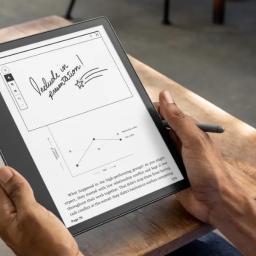 |
by Mariella Moon on (#6EVM3)
It's almost time for Amazon's annual fall hardware event, where the company typically announces a bunch of upcoming devices, including new entries for its ereader and smart speaker lines. On September 20, the company will stage Devices at its second headquarters in Arlington, Virginia. Amazon will not be streaming it to the public, but Engadget will be there to liveblog so you can follow along and read about its new products as soon as they're announced, starting at 11AM ET.Last year, one of the event's main reveals was the Kindle Scribe, a 10.2-inch ereader that comes with a pen that you can use to jot down notes on its 300 ppi display. It was launched with a retail price of $340 - and it still costs that much - but it's been on sale since. The company also announced a redesigned Echo Studio that features a new spatial audio processor, as well as a new Echo Dot with a larger driver, at the event. Plus, Amazon revealed a "no-contact" sleep tracker called the Halo Rise and a refresh of the Fire TV Cube.In the security department, the company announced two new cameras from Ring, along with the Spotlight Cam Pro and Spotlight Cam Plus. While those aren't quite out of the ordinary, Amazon is known to reveal more exciting devices at the event from time to time. In 2021, it introduced an Alexa-powered robot named Astro that can patrol your home, while it revealed a Ring drone that can fly around your house the year before that.This article originally appeared on Engadget at https://www.engadget.com/how-to-watch-and-follow-amazons-2023-devices-event-153059840.html?src=rss
|
 |
by Kris Holt on (#6EVM4)
Just like X (formerly Twitter), would-be competitor T2 Social has a new name, and it's one that might ring a bell. Starting today, the service is called Pebble. And no, it's not a revival of the e-ink smartwatch company of yore.Pebble said in an email to users that T2, which is run by former X/Twitter employees, was a placeholder name. It opted for Pebble after reviewing more than 60 options. The team plumped for that one because a tiny stone can cause ripples across a whole pond. Just like sharing your stories and insights can create waves in our community."It's certainly an interesting choice. Pebble (the smartwatch) blew up on Kickstarter, only to go out of business a few short years later. Fitbit snapped up its intellectual property and Google later bought that business. That certainly doesn't seem ominous for the prospects of Pebble (the social media platform).The latest entity to go by Pebble hasn't taken off in the same way as Bluesky (which recently passed a million users), Post (440,000 registered users as of June) or Threads (more than 100 million users in less than a week). Pebble has somewhere north of 15,000 registered users. In fairness, the service limited signups and opted for an invite system, which is also changing today as anyone with an X account can now join.In addition, Pebble has rolled out a new tab called Ideas. Here, you can see a list of AI-generated suggestions for your next post or reply. Pebble CEO Gabor Cselle suggested this will help foster a kinder, safer and more enjoyable environment for everyone, though some might suggest that could lead to a more boring experience all around. As Wired, which first reported on the GAI feature, put it, "the Ideas feature's sometimes peppy or stilted prose could easily leave one's social feed feeling artificial and dull."This article originally appeared on Engadget at https://www.engadget.com/would-be-x-competitor-t2-social-is-now-called-pebble-no-not-that-pebble-150021871.html?src=rss
|
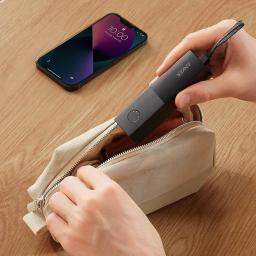 |
by Sarah Fielding on (#6EVM5)
We're entering the season of long scenic drives and holiday parties, which means lots of time using your devices away from home and needing a quick recharge wherever you are. Currently, this is doable for a much lower cost, with Amazon running a sale on Anker's power banks and fast-charging plug-ins. The deals include Anker's 511 Power Bank, available for 50 percent off, dropping from $40 to $20. It's one of our favorite portable chargers, thanks to its slim size and ability to juice up an Android smartphone to 75 percent in just over an hour. Plus, it has a built-in plug that can act as a wall adapter if you have a spare cable handy.Amazon's Anker deals also includes two new releases: The MagSafe 3-in-1 Charging Cube is 20 percent off, bringing its price down from $150 to $120. We're currently testing the 3-in-1 device, and, so far, it's a solid upgrade compared to previous Anker multi-use chargers. It has 15W max charging and works with the iPhone 13 to 15, the Apple Watch models Ultra and one through eight and the AirPods 2, 3 and Pro. Then there's the Anker 315 67W USB-C Charger, which has dropped from $34 to $24 - a 29 percent discount. It's a great high-speed option for juicing up everything from your MacBook Pro to your new iPhone 15.Items like the 12-in-1 Docking Station, touting a 42 percent discount and dropping from $120 to $69 are also part of the sale. If you don't plan on giving up your older iPhone anytime soon, there's the USB-C to Lightning Bio-Braided Cable, down from $22 to $12 - a 45 percent discount.Follow @EngadgetDeals on Twitter and subscribe to the Engadget Deals newsletter for the latest tech deals and buying advice.This article originally appeared on Engadget at https://www.engadget.com/anker-charging-gear-and-power-banks-are-up-to-50-percent-off-right-now-140338603.html?src=rss
|
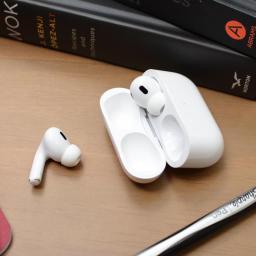 |
by Billy Steele on (#6EVG7)
When Apple previews the upcoming version of iOS at WWDC, we expect to see all of the new features that will improve the iPhone. However, it's not guaranteed that the company will take that opportunity to also update its popular wireless earbuds. But, alongside the arrival of iOS 17, a firmware update adds a few new features to the second-gen AirPods Pro, most of which will automatically adjust to your environment or activity so you don't have to touch the earbuds or reach for your phone.The headline addition is Adaptive Audio, a tool that automatically and dynamically" blends transparency mode and active noise cancellation (ANC) based on your surroundings. Apple says it will change the noise control settings continuously throughout the day, making the proper adjustments as you move to different settings. Thanks to the H2 chip in the AirPods Pro, the earbuds use a combination of computational audio and machine learning algorithms that can discern between consistent and transitory noise. The technology inside of the earbuds also accounts for whether you're stationary or in motion, and if you're listening to music or taking a call when making its automatic adjustments.The whole idea is for this to happen without you really noticing. When there's a change in your surroundings, Adaptive Audio gradually starts tweaking the blend of ANC and transparency. So if you enter a loud coffee shop or sit near a noisy A/C unit, AirPods Pro gently increases the level of noise cancellation to combat the clamor. The point is to smooth the transition, so the change in cancellation level doesn't become a distraction itself.Indeed, unless you're really listening for the fluctuations or you encounter loud noise, you won't notice them. It gradually increased ANC when I was washing dishes at the sink or grinding coffee to keep the audio where I could hear it clearly. But it also swung back to the transparency mode I previously had active when I ventured into a quieter spot. It works very well and it's not jarring at all thanks to the gentle, but still quick, transition.Photo by Billy Steele/EngadgetBefore, you could switch between transparency mode and ANC by pressing and holding the AirPods Pro stem. You could also reconfigure one of those to just turn noise control completely off. Apple will allow you to swap one of the options that are accessible on the earbuds with Adaptive Audio, but the company is keeping it to only two settings via the on-board controls. As you might expect, Adaptive Audio is accessible through the Control Center where the AirPods options have been re-organized. There's a noise control section that expands to give you access to transparency, Adaptive Audio, ANC and off just below the volume slider.The next new feature is Personalized Volume. This uses machine learning to understand environmental conditions and listening preferences over time to automatically fine-tune the media experience," according to Apple. It's another layer of hands-off adjustment that AirPods Pro will do when you move from one place to the next. However, the over time" part means I haven't used it long enough to really notice a difference. After only a few days of testing, I can't say I've encountered a time where the adjustment was obvious. Maybe the feature needs more time to learn my preferences or maybe Apple's claims that you'll barely notice the difference are true. Either way, I'm not comfortable weighing the merits just yet. Personalized Volume is enabled via the AirPods Pro settings menu, just above the option for Loud Sound Reduction.A handy new tool that I can see quickly becoming popular is Conversation Awareness. When you start talking, this feature automatically lowers the volume or pauses, focuses on voices in front of you and reduces background noise. It's similar to Sony's Speak-to-Chat, only that it completely pauses media when it detects your voice. Here, Apple reduces volume when you're listening to music and pauses things like podcasts and audiobooks. The main issue with Sony's version is it's easily triggered by light coughs or clearing your throat. After a few days of testing, Conversation Awareness is less susceptible to false positives, unless you're really hacking. And if you find you don't like it, you can disable it entirely in the AirPod Pro settings.I was skeptical at first, but I quickly got on board with Apple's decision to reduce volume rather than stop a song completely. It's certainly less jarring, and the feature returns to your previous volume about three seconds after it no longer senses your voice or the person you're speaking to. I'm sure there are some users who'd prefer a complete pause for all media, those who don't want to talk over something in the background. But this is meant for quick convos rather than extended chats, and for that reason I'm OK with Apple's implementation.The only issue currently with Conversation Awareness is volume reduces on podcasts first when you start talking and pauses a few seconds after. It's a bit clunky, and I think it would be smoother to just gently decrease the volume to zero. Thankfully, it works outside of Apple Podcasts with apps like Pocket Casts so you don't have to worry if you're not 100 percent in Apple's ecosystem.All of the features so far are exclusive to the second-generation AirPods Pro with the H2 chip. However, Apple is making improvements to other models too. For both versions of the AirPods Pro, third-gen AirPods and the AirPods Max, Apple improved automatic switching between the company's various devices. This means faster and more reliable changeover between listening to music on your Mac and taking a call on your iPhone, for example. This update also requires iPadOS 17 and/or macOS Sonoma, depending on your stable of devices, for you to notice the difference. I do not have an iPad or Mac running those yet, so I was unable to test Apple's claims here.Photo by Billy Steele/EngadgetApple also added a mute function to the most recent AirPods, both models of AirPods Pro and AirPods Max. Simply press the stem or the Digital Crown on AirPods Max to mute or unmute yourself during calls. It's straightforward, but it's also a welcome update. You'll see a banner and hear a chime every time you change the microphone state, so Apple will make it clear which setting you're on via two cues on your iPhone, iPad or Mac. Developers working on video- and voice-calling apps will be able to implement this functionality as well through CallKit on iOS. So in addition to being able to press to mute with Phone and FaceTime, you will be able to do so on other popular apps like Skype, Facebook Messenger, WhatsApp and WeChat. Apple says a Mute API will be available for macOS apps as well.Apple doesn't typically offer such a robust update to AirPods alongside the annual iOS refresh. However, the additions of Adaptive Audio, Personalized Volume and Conversation Awareness expand the toolset of the most recent AirPods Pro so that you spend even less time physically pressing buttons to interact with them. And you can decide whether or not you even want to use them at all. I'll bet you will though, especially at times when your hands are full or you might've stepped away from your phone.The new AirPods Pro features are now available in the iOS 17 public beta. If you're okay waiting, the official release of the AirPods Pro firmware update will be available later today.This article originally appeared on Engadget at https://www.engadget.com/airpods-pro-adaptive-audio-preview-automatically-adjusting-to-your-day-130051605.html?src=rss
|
 |
by Devindra Hardawar on (#6EVG8)
These days when we talk about what's next for chip design, we focus on things like cramming in more cores, increasing clock speeds, shrinking transistors and 3D stacking. We rarely think about the package substrate, which holds and connects those components. Today Intel, in the midst of its reinvention as a foundry company, has announced it's made a major breakthrough in substrate materials-and it's all about glass.The company says its new glass substrate, which is set to arrive in advanced chip designs later this decade, will be stronger and more efficient than existing organic materials. Glass will also allow the company to cram more chiplets and other components next to each other, something that could lead to flexing and instability with an existing silicon package using organic materials."Glass substrates can tolerate higher temperatures, offer 50% less pattern distortion, and have ultra-low flatness for improved depth of focus for lithography, and have the dimensional stability needed for extremely tight layer-to-layer interconnect overlay," Intel said in a press release. With these capabilities, the company claims glass substrates will also lead to a ten-fold increase in interconnect density, as well as allow for "ultra-large form-factor packages with very high assembly yields."IntelWe're slowly beginning to see what Intel's future chips could actually look like. Two years ago, the company announced its "gate-all-around" transistor design, RibbonFET, as well as PowerVia, which would let Intel move power delivery to the rear of a chip wafer. At the same time, Intel also announced it would be building chips for Qualcomm and Amazon's AWS service.Intel says we'll see chips using glass substrates in areas in high performance areas first, like AI, graphics and data centers. The glass breakthrough is another sign that Intel is ramping up its advanced packaging capabilities for its US foundries, as well. That's something TSMC is reportedly stumbling on with its Phoenix, Arizona plant, which will require shipping chip materials back to Taiwan for advanced packaging.This article originally appeared on Engadget at https://www.engadget.com/intel-seems-pretty-excited-about-glass-substrates-130016423.html?src=rss
|
by Nathan Ingraham on (#6EVG9)
When Sonos released its first portable speaker, the Move, four years ago, it was an anomaly. Previously, the company had looked down on Bluetooth as low-quality and unreliable, and all of the speakers it sold required a power outlet. The Move, on the other hand, used Bluetooth or Wi-Fi and had a 10-hour battery.In 2023, these tricks have proliferated across the Sonos lineup. The more affordable Roam speaker brought the Move's feature set to a much smaller device, while recent home speakers like the Era 100 and 300 both support Bluetooth, as well. As such, the recently-announced Move 2 doesn't suggest a new direction for future Sonos products - it simply brings the company's latest tech and design cues to an existing product.And, as usual, it's more expensive - at $449, it's the same price as the Era 300, which is capable of spatial audio playback. It's also more expensive than buying an Era 100 and a Roam. Given how Sonos has changed since the original Move, I've been trying to figure out what place - if any - the Move 2 has in the company's lineup.What hasn't changedAt first glance, the Move 2 looks nearly identical to its predecessor. It's a chunky and rather heavy speaker, weighing just over 6.5 pounds, and it's noticeably bigger than the Era 100. That said, it's identical in size and weight to the original Move, despite having redesigned internals. Given the speaker's size and weight, I still see its potential use cases the same as four years ago: you can lug it around the house with the built-in handle and get loud, quality sound anywhere, or bring it outside to power a party in the backyard. But it's clearly not a speaker you'll take with you anywhere, like the tiny Roam, which you can tuck in a bag and mostly forget about.As before, and like all other Sonos speakers, the Move 2 can stream audio over your Wi-Fi network from dozens of services through the Sonos app. If you have other speakers, you can stream the same music to all of them at once, or play different things on each. If you have two Move 2 speakers, you can set up a stereo pair. And for when there's no Wi-Fi, the Move 2 has Bluetooth.The Move 2 also has built-in microphones so you can command the speaker with either Alexa or Sonos' own voice assistant. These also let the speaker automatically tune audio output to optimize sound quality. This auto Trueplay feature first arrived on the Move four years ago and is now available on many of the company's products. In my experience, it definitely improves the speaker's output, so I always turn it on. It's particularly useful on a portable speaker that is constantly used in different spots.Finally, the Move 2 is built to withstand the elements; its IP56 rating means it is dust- and water-resistant. You can't actually drop it into a body of water (unlike the smaller Roam, which can survive a dip in the pool), but it's just fine getting hosed down. It can also withstand a wide temperature range - Sonos said the first Move worked between 14 degrees F and up to 131 degrees F (-10 to 55 Celsius) and confirmed that the Move 2 has the same weather resistance as the original. That's not something most people will need to worry about, but the Move 2 should survive a night outside in the winter if you forget to bring it in.Photo by Nathan Ingraham / EngadgetWhat's newWhile you'd be forgiven for mistaking the Move 2 for the original, there are some significant changes on the inside (and some subtle ones on the outside). The speaker's top touch controls have been redesigned to match the layout Sonos introduced earlier this year with the Era 100 and 300. Flanking the play / pause button are track forward and back buttons. Previously, you had to double-tap the play button to skip songs, and this is definitely easier. The volume controls are now a slider, but you can also tap the left or right side of the volume area for little adjustments. Finally, there's a button to mute the speaker's microphones. And for extra security, there's also a physical switch on the back of the speaker that cuts power to the mics entirely.There's also a USB-C port in the back that can be used for charging or, with the right dongle, as a line-in jack. I hooked the Move 2up to my turntable with no issues, same as I did with the Era 100 and 300. My slight annoyance at needing a dongle is more than tempered by having this option at all - a year ago, only the $550 Sonos Five speaker had line-in, and now it's available on most of the music-focused speakers Sonos sells.Nathan Ingraham / EngadgetOh yeah, and the Move 2 comes in olive green in addition to black and white!Ultimately, there are two big changes that define the Move 2: an improved battery and all new speaker components. Sonos says that the Move 2 should last for up to 24 hours" - and it seemed to blow past that in my testing. I had the speaker playing music over Wi-Fi for 22 hours and 50 minutes when I went to bed, and the speaker still had a whopping 46 percent of its battery left. When I checked in again 10 hours later, the battery was depleted, so it died sometime between those check-ins. But it's safe to say you should get the 24 hours Sonos promises and more. That's more than double the old Move, and more than sufficient for a speaker like this. I'm still testing the Move's battery and will try and be awake when it dies next time so I can get a better handle on just how long it lasts.Sonos again included a charging ring" that you can just place the Move 2 in to power it up. It's an elegant solution that requires no fiddling with cables. At first, I considered that it might be good to have two of them around the house, but honestly the battery lasts so long that I didn't find it necessary to set up two home base" spots. And you can charge it via USB-C, too. It's not as clean and aesthetically pleasing as using the charging ring, but useful in a pinch.The new speaker components seem to be inspired by the Era 100. Like that speaker, there are two angled tweeters to provide a semblance of stereo sound, as well as one midwoofer. The original Move, on the other hand, had a single downward-firing tweeter and a midwoofer. Thanks to the two tweeters, the Move 2 is technically a stereo speaker - but as with the Era 100, it's nothing like the stereo separation you get from a pair of speakers. The fact that there's no left-right balance control in the app for the Move 2 indicates that there's only so much true separation between the two channels here, a fact of life given how close together the two tweeters are.My go-to track for testing these stereo capabilities is Such Great Heights" by The Postal Service, and the ping-ponging electronic intro and hard-panned vocals that jump between the left and right channels still more or less sounded like they were coming from a single spot. There's a little space between them, but it doesn't sound all that different from playing the song through the mono Sonos One speaker.That quibble aside, the two tweeters in the Move 2 provide improved clarity over the original. It's a clear, well-balanced speaker that faithfully reproduces sound across all ranges of the spectrum. Bass is prominent but not overdone, and the high end is distinct and detailed, especially compared to the original Move, which could get muddier than I liked. The Move 2 replicated the intricate details in delicate albums like Daughter's Stereo Mind Game and End, the latest from Explosions in the Sky, and dance floor tracks like Dua Lipa's Don't Start Now" and Tove Lo's No One Dies From Love" had plenty of low end power.It's also a very loud speaker - inside the house, I never really needed to turn it above 50 percent, except when I simply wanted to hear what it could do. Going much above 70 percent gets downright startling. But as with the old Move, Sonos gave this speaker extra oomph for outdoor spaces where sound dissipates much easier.The main issue with the Move 2 is that you still sacrifice sound quality for portability. The Move 2 costs $449, the same price as the Era 300. That speaker has four tweeters and two woofers and can play back audio in Dolby Atmos. The whole spatial audio experience can be hit-or-miss depending on the quality of the mix, but even without that, there's no doubt in my mind that the Era 300 is a more capable speaker.Nathan Ingraham / EngadgetAnother way you could spend that $449 would be to get an Era 100 ($249) and Roam ($179). That gets you an indoor speaker that sounds just as good as the Move 2 plus a portable speaker that's much smaller and easier to take with you. To be clear, the Move 2 is far more powerful than the Roam, with better sound quality and the volume to fill a large outdoor space. The Roam, on the other hand, is for portable, personal use. It comes down to what you think you'll need more: portability or power.Despite my feelings that the Move 2 is somewhat of a niche device, a quick look at the market shows there are plenty of competing products with similar price points and features. Speakers like the JBL Boombox 3, Ultimate Ears Hyperboom and Bose Portable Smart Speaker all offer similar feature sets to the Move 2, and the Move 2's vastly improved battery life means it should fare better than the earlier device in these comparisons.Photo by Nathan Ingraham / EngadgetWrap upDue to its price and size, the Move 2 isn't the ideal portable speaker for everyone. But that's OK, because it does succeed as a speaker that you can rely on for high-quality and seriously loud audio. It's well-suited to being your main speaker inside the house as well as something you can take to the porch or backyard to power a party. And while it won't comfortably slip into a backpack, it should make a good road trip companion. I could definitely see tossing it in the car and bringing it on my summer vacation with me.The battery and speaker upgrades make it a worthy improvement over its predecessor, as well, though I am disappointed to see Sonos raise the price yet again on one of its products. But if you're looking for one speaker that can cover as many bases as possible, the Move 2 fits the bill - and it'll be that much more useful if you have other Sonos products to pair it with.This article originally appeared on Engadget at https://www.engadget.com/sonos-move-2-review-better-sound-and-battery-life-comes-at-a-cost-130015983.html?src=rss
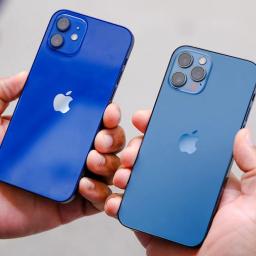 |
by Mat Smith on (#6EVDH)
Apple is prepping a software update for the three-year-old iPhone 12s after French regulators alleged the phone exceeds proper radiation levels. France stopped selling the smartphone after recommendations from the country's radiation watchdog (ANFR).The software update won't adjust radiation levels but will accommodate the protocol used by French regulators." (I am not sure how that works, either.) Apple believes the software patch will be enough to allow the iPhone 12s to sail through future radiation tests, saying it looks forward to the iPhone 12 continuing to be available in France."Belgium and Denmark don't have the same worries as France. Belgian minister for digitalization, Mathieu Michel, said local tests were reassuring" and recommended against a suspension on sales. Denmark's Safety Authority followed suit, suggesting it had no concerns regarding the iPhone 12's radiation levels.- Mat SmithThe biggest stories you might have missedThe first-ever party-based RPG is getting a serious faceliftApple isn't perfect on environmental issues, but it's depressingly ahead of its peersThe best gaming mouse in 2023Amazon's Echo Pop smart speaker drops to $23The Morning After: The iPhone 15 kills off Lightning. Plus, AI-generated CokeThe week's biggest news meets Engadget's lens.Our spin-off video series continues to let Mat do his thing, whether that's throwing his iPhone at the camera, complaining about '00s movies or writing about himself in third person. Our short-but-sweet edition this week covers iPhone 15, the return of movie rentals (kind of), and Sony's Aibo dogs getting a second chance. There's a new video every Saturday morning.Watch it here.Spider-Man 2 is following Sony's sequel playbookA two-hour demo showed off new tricks.SonyHow do you outdo a well-received open-world game with its sequel? Engadget's Nathan Ingraham played two hours of Marvel's Spider-Man 2 at a press event earlier this week, and it seems the answer is go bigger. That's the same tactic used by Sony's cadre of development teams for The Last of Us, Horizon Zero Dawn and God of War.Because the world of New York in this game is almost twice as big as the original, with the addition of Brooklyn and Queens, finding new ways for players to get around was a major focus for developer Insomniac. Enter the web wings, a tool for gliding around the city, catching wind tunnels and updrafts that sling you at high speed. It's not meant to replace the core web-slinging mechanic but augment it. And gliding seems to be the new having a horse in video game trends.Continue reading.Meta starts testing Horizon Worlds on mobile and the webA small number of mobile and web users can now access Meta's metaverse.Meta has announced Super Rumble, the first game out of its in-house studio Ouro Interactive, is now available to a small number of mobile users through the Meta Quest app on Android. It's also making its way to the app on iOS devices in the coming weeks. When Meta launched the first-person shooter, it said Super Rumble would be one of the first worlds available when its new app came out. It also said the game will feature cross-platform play on mobile, the web or a VR headset.Continue reading.Engadget Podcast: iPhone 15 and Apple Watch Series 9 hands-onWe also dive into our review of Samsung's Galaxy Watch 6.This week, Cherlynn gives us her on-the-ground thoughts from Apple's iPhone 15 launch event. It turns out the iPhone 15 Pro's titanium case is noticeably lighter. (Which we hope was the point.) Engadget's Malak Saleh also joins to discuss her review of the Samsung Galaxy Watch 6 and Dyson's ridiculous Zone air filter mask/headphones.Listen hereThis article originally appeared on Engadget at https://www.engadget.com/the-morning-after-apple-preps-software-update-to-address-iphone-12-radiation-concerns-111610283.html?src=rss
|
|
by Steve Dent on (#6EVDJ)
Amazon is having a second sale this fall exclusively for Prime members as it did last year, and though we knew it was happening in October, we didn't yet have an exact date. Now, Amazon has announced that the sale will happen on October 10 and 11, and even gave it a new name: Prime Big Deal Days.As ever, Prime Day gives members access to thousands of deals, so many folks wait for the sale to get the best possible deals on pricey products like laptops, phones, memory cards, cameras and more. Knowing that, Amazon uses the event as a way to boost sales and, more importantly, Prime subscriber numbers. At the same time, some select deals are available to non-Prime members as well.Amazon detailed a few early deals on Amazon devices and more. You can save up to 65 per cent on a three-pack of eero Pro Mesh Wi-Fi, select Fire TV devices, Kindles and more. Amazon is promising a $15 credit to Prime members who download its Photos app and upload their first photo, between now and October 7. You'll also find deals on Prime Video, a longer free trial of Amazon Music and more.Last year's October Prime Day saw a plethora of deals on devices ranging from Sony's WH-1000XM5 ANC headphones to the MacBook Air to the Samsung Galaxy Z Fold 4 to Roomba 694 robot vacuum. It's also a good way to grab some Christmas presents cheap and avoid the rush.Besides electronics, the sale is likely to cover clothes, shoes, household items, appliances. If you're looking for some savings, it's best to get ready by making lists and bookmarking a price tracker. For more on how to prepare for Amazon's Prime Big Deal Days, check out our post on the subject.This article originally appeared on Engadget at https://www.engadget.com/amazon-will-hold-its-prime-big-deal-days-sale-on-october-10-and-11-105533193.html?src=rss
|
 |
by Steve Dent on (#6EVA2)
Last week, Unity dropped a bomb on developers with a new runtime fee on its game engine that would be charged each time a title is installed - summed up by one developer as an "abysmally catastrophic decision." Now, the company appears to be backtracking, promising changes to the policy that will be revealed shortly."We have heard you. We apologize for the confusion and angst the runtime fee policy we announced on Tuesday caused," the company said in a post on X. "We are listening, talking to our team members, community, customers, and partners, and will be making changes to the policy. We will share an update in a couple of days. Thank you for your honest and critical feedback."
|
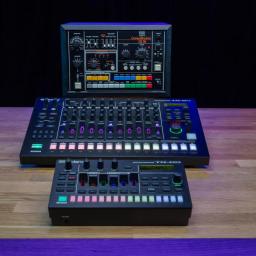 |
by Terrence O'Brien on (#6ETE5)
It's always good to see companies delivering updates and new features to devices long after they've launched. And Roland's TR-8S and TR-6S were already pretty capable to begin with. But with the latest firmware updates they're picking up two huge new additions, including one that that I'm personally quite excited about.TR-8S 3.0 and TR-6S 2.0 add an ACB model of the CR-78 CompuRhythm and a chromatic TR-808 mode for building basslines. The ability to play an 808 kick chromatically greatly expands the flexibility of the two drum machines. While you could tune drum hits and samples on the to create some melodic elements it wasn't exactly an easy or pleasant experience. This opens up the 8S and 6S well beyond strictly percussion, but does so in a way that seems natural. The 808 emulation was already part of their feature sets. And, especially in the world of hip hop, it's a staple for creating basslines, not just drum grooves.The CR-78 emulation is another huge addition. It was the world's first programable drum machine and my personal favorite of Roland's classic rhythm boxes. In fact, I called out the lack of a CR-78 model in my review of the TR-6S as its one glaring omission. (I'd like to believe I had something to do with the decision, but I know better.) All of the sounds from the hardware are represented, as are most of the original preset rhythms, plus a few new ones. But what's particular exciting is the ability to use the more modern programming features and sound design tools available on the TR-6S and TR-8S to tweak the CR-78 for more modern productions.In addition to the two new sound engines, the TR-Editor app on Mac and PC is getting an update with some usability tweaks and new compact UI for easier use on small displays. All these updates are available now for free directly from Roland.com.This article originally appeared on Engadget at https://www.engadget.com/roland-adds-cr-78-percussion-and-808-bass-to-the-tr-8s-and-tr-6s-drum-machines-195628859.html?src=rss
|
 |
by Mariella Moon on (#6ET75)
Bill Willingham, the creator of the comic book series Fables, says you now own his work, fully and for all time. Willingham has released his work, which served as the basis for Telltale Games' The Wolf Among Us, to public domain - mostly because he can't afford to sue DC Comics. In a lengthy post on his Substack page, the artist went pretty in depth in explaining his beef with the publisher. He said the people he negotiated with 20 years ago had already been replaced by people "of no measurable integrity, who now choose to interpret every facet of [their] contract in ways that only benefit DC Comics and its owner companies."Based on Willingham's account of what happened, DC would routinely overlook his input on things like artists for covers or formatting for new collections. That's pretty innocuous compared to his other allegations, though, including getting royalties late or DC under-reporting royalties so as not to pay him what he's owed. But the artist said that the company recently went beyond these "mere annoyances" and tried to forcibly take Fables' ownership from him.He mentioned Telltale Games in particular, when he talked about how DC execs allegedly admitted that they believe they could do anything with the property. That's including not protecting the integrity of its stories and characters from third parties - Telltale Games, in other words - that want to radically alter them. Further, he apparently gets no money from DC licensing his work to third parties.While Willingham knows that he's still bound by his contract with DC and cannot release anything Fables related without the company's consent, he argued in his post that you're not. "[Y]ou have the rights to make your Fables movies, and cartoons, and publish your Fables books, and manufacture your Fables toys, and do anything you want with your property, because it's your property," he said.DC, however, has disagreed with Willingham and his interpretation of their contract and copyright law. "The Fables comic books and graphic novels published by DC, and the storylines, characters, and elements therein, are owned by DC and protected under the copyright laws of the United States and throughout the world in accordance with applicable law and are not in the public domain," the company told CBRin a statement. "DC reserves all rights and will take such action as DC deems necessary or appropriate to protect its intellectual property rights."It's unclear if this development will have any effect on Telltale's The Wolf Among Us 2, which is scheduled for release in 2024. The game was supposed to be available this year, but the developer chose to push back its launch, because it needed time to switch from using Unreal Engine 4 to 5 and that involved changes to personnel and the development process.This article originally appeared on Engadget at https://www.engadget.com/creator-of-the-wolf-among-us-universe-releases-it-to-public-domain-130010929.html?src=rss
|
 |
by Malak Saleh on (#6ESS0)
Google will pay $93 million in a settlement it reached with California Attorney General Rob Bonta, resolving allegations that the company's location-privacy practices violated the state's consumer protection laws. The California Department of Justice claimed that Google was collecting, storing, and using their location data" for consumer advertising purposes without informed consent.The complaint alleges that Google continued to collect consumer data related to a user's location even when a user turned the location history" feature off. The company settled similar lawsuits in Arizona and Washington last year for illegally tracking consumers.In addition to paying $93 million, Google agreed to deter future misconduct." This settlement, which won't really hurt Google's deep pockets, is important because the tech giant generates the majority of its revenue from advertising and location-based advertising is a critical feature of its advertising platform."Consistent with improvements we've made in recent years, we have settled this matter, which was based on outdated product policies that we changed years ago," Google spokesperson Jose Castaneda told Engadget.Moving forward, the California AG is asking Google to provide additional transparency about location tracking by providing users with detailed information about location data it collects. The company must also provide disclaimers to users that their location information may be used for ad personalization.Update, September 16, 2023, 2:26 AM ET: This story has been updated to add Google's statement.This article originally appeared on Engadget at https://www.engadget.com/google-settles-california-lawsuit-over-its-location-privacy-practices-190859183.html?src=rss
|
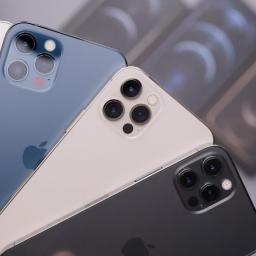 |
by Lawrence Bonk on (#6ESP5)
Apple is prepping a software update to address alleged radiation concerns regarding the three-year-old iPhone 12s after French regulators alleged that the phone exceeds proper radiation levels. France stopped selling the smartphones after recommendations from the country's radiation watchdog (ANFR), but Cupertino denies the allegations and seems to place the onus on the European nation's testing protocols, as reported by Reuters.To that end, Apple has reiterated that this isn't a safety concern and notes that the phone was certified by multiple international bodies as compliant with global radiation standards. The software update won't adjust radiation levels, as that would be a hardware issue, but it will accommodate the protocol used by French regulators." So it looks like Apple thinks the software patch will be enough to allow the iPhone 12s to sail through future radiation tests, saying it looks forward to the iPhone 12 continuing to be available in France."France did change its regulations back in 2020. It added consideration for extremities, like hands, when testing for radiation levels and the rate of radio-frequency energy absorbed by the body by using a particular piece of equipment. This is called the Specific Absorption Rate (SAR.) During the country's recently-instituted SAR tests, regulators found that the iPhone 12s exceeded normal levels of energy absorption when holding the phone, despite acing the test when considering the head and body.Belgium and Denmark have both come to Apple's aid here, with Belgian minister for digitalization, Mathieu Michel, saying that local tests were reassuring" and recommending against a suspension on sales. Denmark's Safety Authority followed suit, suggesting it had no concerns regarding iPhone 12s radiation levels. Industry experts have also weighed in, stating that the findings indicated no risk of burns or heatstroke emanating from the phone's radiation.France says Apple's software fix should be adequate and that they'll resume testing as soon as it arrives, which was spelled out in a French press release unearthed by TechCrunch. Apple regularly drops software updates for its iPhones, so it should show up in the near future. In the meantime, the company's focusing its energy away from the three-year-old iPhone 12 and onto the new hotness that is the iPhone 15.This article originally appeared on Engadget at https://www.engadget.com/apple-will-release-software-update-to-address-iphone-12-radiation-concerns-173345891.html?src=rss
|
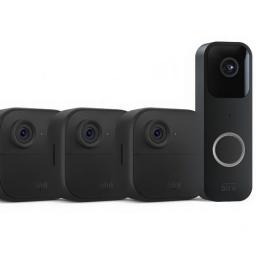 |
by Will Shanklin on (#6ESP6)
Amazon Prime members can save big on security cameras today. The retailer has a bundle including the Blink Video Doorbell and three Blink Outdoor 4 security cameras for 61 percent off. Usually $424.95, you can pick up the four-camera collection for $164.98.You can connect the Blink Video Doorbell to your existing in-home chime or use it wirelessly. The device records in 1080p during the day and infrared at night. It supports two-way audio so you can hear and talk with whoever shows up on your front step.Meanwhile, wireless Blink Outdoor cameras can alert you to motion or people in your yard, allowing you to check in from your phone or Alexa devices. The outdoor cameras have a 143-degree field of view and on-device computer vision to help with nighttime recording. The Outdoor 4 also supports two-way audio.Each camera in the bundle uses two AA batteries (included), which Amazon estimates will last up to two years. The collection also ships with four mounting kits and the Sync Module 2, a hub that connects the cameras to your Wi-Fi network. You can bring your own USB drive for local storage or subscribe to a Blink Subscription Plan ($3/month or $30/year) for cloud storage. You can choose between black or white options for the cameras, although there's no mixing and matching colors within the bundle: It's all one or the other.The deal only lasts through the end of today, wrapping up at midnight PST. Remember that you'll need a Prime membership to take advantage of the deal. If you don't have one already, you can subscribe for $15/month or $139 / year.Follow @EngadgetDeals on Twitter and subscribe to the Engadget Deals newsletter for the latest tech deals and buying advice.This article originally appeared on Engadget at https://www.engadget.com/amazon-prime-members-can-save-61-percent-on-a-blink-camera-bundle-170504326.html?src=rss
|
 |
by Jeff Dunn on (#6ESP7)
Apple may have dominated this week's tech news cycle, but our featured tech deal of the week comes courtesy of Valve: The company has discounted its Steam Deck handheld by up to 20 percent, matching the all-time low for what we consider the best portable gaming PC for most people. Elsewhere, the Samsung's Galaxy Z Flip 5 is $200 off with $50 gift card, severalAnkeraccessories are cheaper than usual and both Disney+ and Paramount+ are running special offers for new subscribers. Here are the best tech deals from this week that you can still get today.Valve Steam DeckTo celebrate Steam's 20th birthday, Valve has discounted its Steam Deck handheld by up to 20 percent. The entry-level model with 64GB of eMMC storage is down to $359, while the 256GB and 512GB versions with faster NVMe SSDs are on sale for $450 and $519, respectively. Each deal represents an all-time low. This is only the third discount we've seen for the Steam Deck since it arrived in February 2022, so this is a rare chance to save. Valve says this offer will last through September 21.We gave the Steam Deck a review score of 81 at launch, and we currently call it the best portable gaming PC for most people in our gaming handheld buying guide. It's chunky, and some newer AAA games are starting to push its technical limits, but it offers far more power on the go than a Nintendo Switch, and its SteamOS software makes it much simpler to pick up and play than competing Windows devices. If you'd like to connect it to a TV, Valve's official Steam Deck Docking Station is also 20 percent off at $71.Steam game dealsBeyond the Deck, a handful of sales have brought several games we like down to lows or near-lows on Steam and other platforms. From our list of the best couch co-op games, Halo: The Master Chief Collection is down to $10, the platformer It Takes Two is down to $14, while the puzzler Portal 2 is down to a dollar. From our best PC games guide, the stylish roguelike Hades is available for $12, the VR shooter Half-Life: Alyx is available for $20, the sci-fi action game Control is available for $10 and the oddly zen driving sim Euro Truck Simulator 2 is available for $5. Other standouts include the Resident Evil 4 remake for $40 and the classic FPS Titanfall 2 for $3. Elsewhere, the action-RPG Final Fantasy XVI is down to $50 at Amazon, a $20 drop for a PS5 exclusive that arrived in June.Anker accessory dealsA few notable chargers and USB-C hubs from Anker are also discounted this week. The Anker 621 Magnetic Battery, which snaps onto the back of a MagSafe-compatible iPhone wirelessly and delivers a 7.5W charge, is down to a low of $30. The Anker 321 MagGo Battery is a bit thicker and slower to recharge, but it has the same 5,000mAh capacity, and it's down to $21 with a 15 percent coupon. The 715 wall charger, a compact option with a 65W USB-C port, is available for $30 with a 40 percent coupon. That's about $20 below its usual price. If you need to add more ports to a computer, the 7-in-1 Anker 341 USB-C Hub is $11 off at $24. The 5-in-1 Anker 332 hub, meanwhile, is down to $16 with an on-page coupon. That's $9 below its typical street price, though the deal is only available to Prime members.Disney+ (3-month)New and returning subscribers can still grab three months of Disney+ for $6 total. That's a 75 percent discount. The catch is that this offer only applies to the service's "Basic" tier, so you'll have to deal with ads. Your subscription will also be set to auto-renew by default, so you'll have to remember to cancel if you don't want to pay beyond the discounted period. Still, if you've been meaning to check out Ahsoka, Andor or just old Simpsons episodes (again), this deal lets you do so on the cheap.Paramount+ (1-year)Along those lines, new users can take 50 percent off an annual Paramount+ subscription. The deal applies to both the ad-supported Essential plan, which is down to $30 with this deal, and the ad-free "Paramount+ with Showtime" plan, which is down to $60. As its name implies, the latter includes Showtime content, plus support for offline downloads and the ability to stream your local CBS station live. If you don't see the discount right away, use the code FALL at checkout. In general, Paramount+ isn't the most vital streaming platform, but its library is decent, with Champions League soccer, originals like Star Trek: Lower Decksand a bunch of shows from CBS, Comedy Central, Nickelodeon and other Paramount networks. Again, just remember that the service will auto-renew unless you cancel.Logitech G203 LightsyncThe black version of the Logitech G203 Lightsync is down to $21 at Amazon, which is about $9 off its typical street price. Just clip the $5 coupon to see the full discount at checkout. The G203 is the budget pick in our guide to the best gaming mice, as it offers a relatively sturdy design, accurate enough tracking, responsive main buttons and tasteful RGB lighting. It's on the smaller side, its scroll wheel feels a bit mushy and its rubbery cable isn't detachable - but at this price, it's hard to do better if you just want something competent for as little money as possible.Samsung Galaxy Z Flip 5Best Buy is bundling the Samsung Galaxy Z Flip 5 with a $50 gift card for $800. That's $200 off the foldable phone's list price. If stock runs dry, Amazon has the same discount without the gift card. The Galaxy Z Flip 5 only went on sale last month; we gave it a review score of 88, and we now call it the "best foldable for selfies" in our guide to the best smartphones. The big upgrade is a larger cover display, which makes the phone more useful for checking notifications, using apps and, yes, taking selfies when it's folded. You'll still have to be delicate with it, and its camera performance isn't on par with the best flagships, but the rest of the hardware is impressive. If you want a flip-style foldable, it's your best bet.Samsung Galaxy Tab S9In other Samsung deals, the 256GB version of the Galaxy Tab S9 is also down to $800 at various retailers. That's a price we've seen for most of the last month or so, but now you can get this model with a $100 Amazon credit for no extra cost. Just use the code PDHMT3LPAACC at checkout. At Best Buy, meanwhile, the tablet is available with a $100 digital gift card. This upgraded SKU also includes 12GB of RAM; for reference, the base model comes with 8GB of memory and half the storage.The Galaxy Tab S9 series is the top Android pick in our guide to the best tablets. Like the larger (and pricier) Tab S9+ and Tab S9 Ultra, the 11-inch Tab S9 offers a gorgeous AMOLED display, IP68 water resistance, S Pen stylus support and excellent performance thanks to its Snapdragon 8 Gen 2 chip. It's still expensive, and Android remains less optimized for larger screens than iPadOS. Nevertheless, this is a luxurious piece of hardware for those who want a high-end tablet but want to avoid Apple land.SteelSeries Apex Pro TKL WirelessThe SteelSeries Apex Pro TKL Wireless is on sale for $200, which is $50 off its usual going rate and only $10 more than its all-time low. This is a feature-rich, tenkeyless gaming keyboard we plan on recommending in a future buying guide. Its linear switches use magnetic Hall effect sensors, which let you adjust the actuation point of individual keys. That means you can make the keys faster and more responsive while gaming, then set them to be less sensitive while typing. A "rapid trigger" feature lets you re-actuate a switch mid-press, so you can repeat presses faster - handy for online shootouts where you're strafing back and forth. You can also bind two actions to one key based on how far it's pressed. For instance, you could lightly press Ctrl to crouch, then hold it down to go prone.SteelSeries isn't the only keyboard maker to implement features like these, and clearly, not everyone will need them. Plus, while the overall build quality of the Apex Pro TKL Wireless is good - with PBT keycaps, an aluminum top plate, a useful multifunction OLED display and multiple connection options - there are nicer typing experiences available for less. But some of these tricks can be genuinely useful if you spend lots of time in competitive-minded games, and this is one of the few wireless models to include them. The device also comes with a magnetic wrist rest.Garmin Forerunner 745The Garmin Forerunner 745 is available for $300, which is about $80 off its usual going rate. This is the "best for triathletes" pick in our guide to the best GPS running watches: It's a few years old, and its UI generally isn't as intuitive as Apple's watchOS, but it's easy to wear, it tracks distance accurately and it has a host of useful coaching and training features.Jabra Elite 3The lilac version of the Jabra Elite 3 is on sale for $49 at Amazon, which is a $20 or so drop from its typical street price in recent months. We highlight this pair in our guide to the best budget wireless earbuds, and we gave it a review score of 88 back in 2021. Its modestly bass-boosted sound still impresses for the money, while its compact design and snug fit make it a nice companion for workouts. The downside is that it's fairly basic in terms of features, as it lacks wireless charging, multi-device pairing, wear detection and active noise cancellation. If you don't like the lilac finish, the dark grey model is available for $60, but that's not as strong a deal.Amazon Echo PopThe teal and lavender versions of the Amazon Echo Pop are down to $23. That's $5 more than the discount we saw during Amazon's Prime Day event in July but still $17 off the semi-circular speaker's list price. This is the new entry-level model in Amazon's smart speaker lineup. It doesn't sound as full as the spherical Echo Dot, and it lacks that device's motion and temperature sensors, so it's not as useful for pausing music by hand or controlling smart thermostats. However, if you just want the cheapest route into Alexa possible - and you can't wait for Amazon's next big sale - it still gets you most of the way there at a lower price.Follow @EngadgetDeals on Twitter and subscribe to the Engadget Deals newsletter for the latest tech deals and buying advice.This article originally appeared on Engadget at https://www.engadget.com/the-steam-deck-returns-to-an-all-time-low-plus-the-rest-of-the-weeks-best-tech-deals-164403780.html?src=rss
|
 |
by Kris Holt on (#6ESJN)
Ascendant Studios, the developer of the first-person-shooter-but-with-magic title Immortals of Aveum, is laying off nearly half of its team only a few weeks after releasing the game. CEO Bret Robbins confirmed that the company would be letting go of around 45 percent of its workers. According to Polygon, which first reported the news, that's around 40 people."This was a painfully difficult, but necessary decision that was not made lightly; nevertheless, we have to make this adjustment now that Immortals of Aveum has shipped," Robbins wrote in a post on X (formerly Twitter). Ascendant will offer the laid-off workers severance packages and help with finding a job elsewhere. The remaining team members will continue to support the game for the time being.
|
 |
by Daniel Cooper on (#6ESJP)
During its iPhone 15 event this week, Apple released a sketch where CEO Tim Cook and VP Lisa Jackson bragged about the company's environmental goals with Mother Nature, played by Octavia Spencer. It was a flex to help bolster the marketing around the Apple Watch Series 9, some versions of which are sold as carbon neutral. It's the first product to carry the branding, but others will follow as Apple pushes toward its goal of becoming entirely carbon neutral by 2030. It was after the event, however, that I wondered how much of this was Apple smugly congratulating itself for work that it's meant to be doing.There are plenty of companies in the mobile space, and none are as adept at making regular decisions look pious as Apple. So, I figured I'd read all the companies' sustainability reports from the last year to see if that bluster was worth puncturing. But, much as we may want to sneer at Apple, it turns out no major manufacturer is close to matching its claims. In fact, I've had a fairly miserable few days learning how little, even now, some of the biggest names in the space are doing.Apple's goals are aggressive, and they are matched by some of its domestic rivals, although they have far smaller hardware businesses. Facebook owner Meta, at one extreme, which is primarily a services company, achieved net zero in its global operations in 2020, and wants to reach net zero across its entire value chain by 2030. Microsoft's goals are even bigger, as it pledges to become a carbon negative company by 2030. Google, meanwhile, is hoping to reach carbon-free energy in every place it operates by 2030 but it believes it'll only halve its emissions by that same deadline. And Amazon, which has been the highest-profile laggard in addressing sustainability, has pledged to reach net zero by 2040.Before we dig in, it's worth noting there's no guarantee of consistency between different companies' reports and the figures aren't always comprehensive. And we can't ignore the big financial disparity between Apple and its largest competitor in mobile, Samsung. Similarly, the financial gap between Samsung and the lower-end players in the market is stark, and caring about the environment costs money. But, even so, the limp pledges made by these companies aren't even as good as they appear to be. (Earlier this year, the New Climate Institute gave Samsung's climate pledges a failing grade for transparency and integrity, and called out the paucity of its ambition.)I won't bore you with every statistic - although I really could - but Apple is standing head and shoulders above pretty much everyone. Take e-waste, where Apple claimed to direct more than 40,000 tons of disused gadgets to recycling rather than landfill. It doesn't get into specifics of how much was recovered from that, but it's a fairly standout figure nevertheless. Samsung seems to have collected about a quarter of that figure, and by my wonky math, recovers around 80 percent from that to be reused.Meanwhile, Xiaomi, the third biggest mobile player in 2022, proudly reported that it had directed 4,500 tons of e-waste to recycling. That figure looks good compared to Oppo, the world number four, which managed to do the same for just 195 tons. Transsion, the parent company of TECNO and Infinix, has merely pledged to run recycling programs. It's worth remembering that the WEEE Forum predicted, across 2022, that up to 5.3 billion mobile devices would fall out of use, essentially becoming trash.I was surprised at Apple's willingness to even mention emissions from supplier factories since it contracts out its manufacturing. It would have been easy enough to launder its dirty emissions onto other companies' balance sheets and point to its corporate usage alone. Instead, it has received commitments from many suppliers pledging to use 100 percent renewable energy. Apple says its supply chain now has 13.7GW of renewable energy, with a further 6.3GW due in the near future. Samsung, meanwhile, says that it's looking to move to 100 percent renewable energy at all of its business sites by 2027, and that it already uses green power for 31 percent of its needs. Xiaomi doesn't appear to have made a commitment to making a firm transition to renewable energy, while Oppo believes that it's not yet hit its carbon emissions peak until next year.If there's one place that Apple still lags alongside the rest of the industry, at least for right now, it's in repair. Until we know how easy it is for an end-user to replace common components on the iPhone 15, at least, then Apple remains as bad as everyone else. Its self-service repair platform remains frustratingly complex, and it's still overcharging for basic repairs. (Or just refusing to repair devices as a precursor to getting buyers to replace their devices.) Samsung made a fairly big deal about repairability in its own report, pointing to the Galaxy S23 as an example. It's worth noting that the gurus at iFixit rated the S23 a 4/10 for repairability, given that while the battery is replaceable, it's also glued into place.NIC COURY via Getty ImagesFor its part, Apple is making some fairly bold claims about how the Watch Series 9 deserves its classification. It says the device comprises 30 percent recycled or renewable materials, including a case made out of 100 percent recycled aluminum. The watch was created in factories using 100 percent renewable energy and at least half of them are shipped by sea, rather than air. The company added it's not just paying for clean energy for its devices to be made, but has also invested in power generation equal to what users may consume while charging it, too.The company said that its baseline for the timepiece's manufacturing emissions was 36.7kg based on its own metrics. From there, it's managed to reduce the emissions cost from energy altogether, as well as reducing the materials and process emissions. The Series 9, as far as Apple is concerned, only emits 8.1kg into the atmosphere, which is then offset with carbon credits.In its materials, the company cites the Restore Fund, a project Apple founded, which invests in high-quality, nature-based carbon removal projects." Restore Fund is operated in partnership with Conservation International, Goldman Sachs and HSBC, but it isn't entirely philanthropic. Goldman's own website describes the fund as designed to be profit-bearing, offering a future potential financial return from harvesting activities and the sale of properties."It's worth being cynical about offset purchasing, especially since the industry isn't as clean as you may hope. Earlier this year, The Guardian published an investigation into Verra, the body which verifies carbon offset programs run by a wide variety of big corporations. It found many of the credits bought by companies to reduce their emissions did not translate to real-world action at all. The report suggested that of the 94.9 million carbon credits purchased, there were only real emissions reductions of 5.5 million MTCO2e (metric tonnes of CO2 equivalent). Verra disputed these findings.It's worth reiterating that Apple is in something of a privileged position here, given it has a staggering amount of cash on hand. It can use that power to make the sorts of headline grabbing investments in renewable energy its competitors may not have. But its wealth is also a target for progressive critics, including bodies like Population Matters, who point out the company's annual marketing budget alone could bring clean water to the UN's 46 least developed countries.But, from a general view, there's only one company in the mobile devices space that can stand head and shoulders above Apple in the green stakes: Fairphone. It's still a relatively niche player, but has made building an ethically and environmentally responsible device its guiding mission. The big question is how long it'll take for all of the biggest players to catch up to where this one small company is right now.This article originally appeared on Engadget at https://www.engadget.com/apple-isnt-perfect-on-environment-isues-but-its-depressingly-ahead-of-its-peers-160051378.html?src=rss
|
 |
by Lawrence Bonk on (#6ESJQ)
Wizardry took the gaming world by storm when it was released for the Apple II back in, gulp, 1981, and now it's coming back to enthrall new generations of RPG fans. Developer Digital Eclipse is remaking the turn-based title, which is now called Wizardry: Proving Grounds of the Mad Overlord.The remake is a modernized version of the 1981 RPG and its built right on top of the original Apple II code, so you can easily swap from the old-school interface to the brand-new graphics, similar to how the 'Halo 2: Anniversary' edition handled things, or the just-announced Tomb Raider remasters for the Nintendo Switch.Modern visuals are nice, but Wizardry is over 40 years old, so the gameplay's likely a bit dated. To that end, the developers promise a number of quality-of-life improvements, including a revamped party management system, new spellcasting options and navigation tools, among other minor upgrades.Wizardry is generally considered to be the first party-based RPG ever released for computers or consoles and inspired countless modern franchises, including Final Fantasy and Dragon Quest. It's not the first Dungeons & Dragons style RPG to grace computers, but it did invent many mechanics that are still active in JRPGs to this day. It was an instant hit when it launched for the Apple II and was ported over to numerous other systems including the Mac, C64 and even the NES and Game Boy Color.This is not Digital Eclipse's first remake rodeo. The team has helmed a number of retro compilations, including Atari 50 and Teenage Mutant Ninja Turtles: The Cowabunga Collection, among others.Wizardry: Proving Grounds of the Mad Overlord is available today as an early access build via Steam and GOG. The game costs $30, but the developers say that price will likely increase as we get closer to an official release.This article originally appeared on Engadget at https://www.engadget.com/the-first-ever-party-based-rpg-is-getting-a-serious-facelift-153737569.html?src=rss
|