Ministers insists bank’s green mission will be protected as they remove the clause that ensures it invests in renewable power and other green projectsThe bank set up by the government to to fund green infrastructure and cited frequently by David Cameron as evidence of the UK’s leadership on climate change will no longer be required by law to invest in green schemes, under moves put forward by ministers.
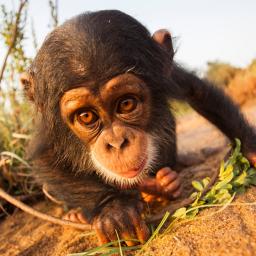
Entertaining videos of chimpanzees and other primates raise questions about welfare, may drive a cruel pet-trade and can endanger conservation effortsLast week, a video featuring chimpanzees watching iPad magic tricks was shared across the internet, including by this newspaper – perhaps you’ve seen it. Maybe it made you laugh? Maybe you thought the chimpanzees appearing in it were cute? For primatologists, however, it probably brought to mind issues of welfare in captive apes, particularly those used in entertainment, the difficulty of funding conservation projects in the wild, and the unfortunate growth of a cruel primate pet-trade which undermines conservation efforts. Unfortunately, many people who view viral videos featuring primates are simply not aware of these issues.As a comparative psychologist (a psychologist who studies the behaviour and cognition of non-human animals), I frequently work with chimpanzees in zoos and sanctuaries. Research has shown that communities of wild chimpanzees have their own unique sets of commonly used behaviours (like nut-cracking or termite-fishing) that we call chimpanzee culture. By studying captive chimpanzees, I hope to find out more about how these traditions emerge and spread through groups of chimpanzees – simply put, how and why do chimpanzees learn from other chimpanzees? Continue reading...
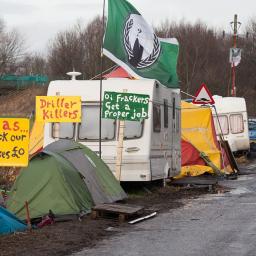
Campaigners at Barton Moss in Salford tell researchers they were groped and threatened by Greater Manchester officersPolice at the Barton Moss anti-fracking camp near Manchester used “sexualised violence†to target female protesters, it is alleged.Protesters told academics from York and Liverpool John Moores universities that officers groped and pressed their groins up against women as they cleared demonstrations against test drilling at the site. Continue reading...
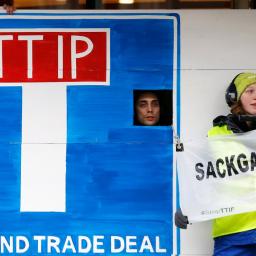
Trade chief told oil giant in secret talks that free trade deal could address its concerns over regulations restricting activities in developing countriesThe European Union’s trade commissioner told the multinational oil company ExxonMobil that a major free trade deal being negotiated with the US would help remove obstacles to fossil fuel development in Africa and South America, documents obtained by the Guardian reveal.At a meeting in Brussels in October 2013, Karel de Gucht told the firm that the Transatlantic Trade and Investment Partnership (TTIP) could address its concerns about regulations in developing countries that restrict the company’s activities. Continue reading...
Data on British buying habits in 2015 reveals a move away from products such as sausages and bacon in favour of fish and poultryConsumers of organic food are avoiding processed and red meats in favour of fish and poultry, according to data on UK buying habits for 2015.
The rise of the de-cluttering icon, Ikea’s “peak stuff†comments – we have an overconsumption problem but simply chucking things out won’t solve it
by Kaveh Madani and Ali Mirchi for Tehran Bureau on (#14W58)
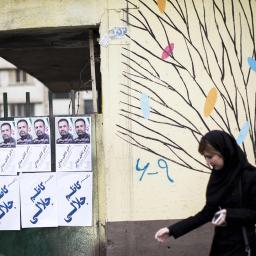
Candidates and voters are talking about the environment like never before, dispelling notions that no-one other than a few enlightened members of the upper classes care about the issueAlongside his campaign ads, a candidate in Buin Zahra, Qazvin province, has offered voters seeds of native floral species to encourage stewardship and conservation. In the south-western city of Ahwaz, the cutting of two trees to make room for election banners provoked a backlash from activists and residents that prompted the campaign office to condemn those who had slashed the trees.
Environment secretary says Brexit would be ‘leap into the dark’ and wrong choice for farmers at time of price volatility and global market uncertaintyIt would be “wrong to take a leap into the dark†and put food and farming exports worth £11bn at risk by leaving the European Union, environment secretary, Liz Truss, has said.Voting to stay in the EU referendum would allow the UK to push for reform in the food and farming sector, while giving British producers access to 500 million consumers, Truss said. Continue reading...
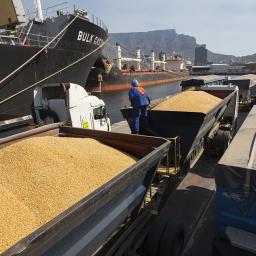
Country plans to ramp up maize imports from the US and Mexico amid the worst drought in a centurySouth Africa will relax some of its tough rules on genetically modified crops so it can ramp up maize imports from the United States and Mexico to avert a potential food crisis amid a severe drought, officials said.
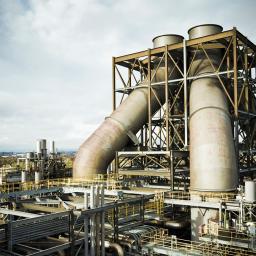
Report from UK Energy Research Centre warns of limitations of scope for gas expansion without carbon capture and storage technologyGas will have a severely limited role to play in the UK’s energy mix in the next two decades without the development of technology to capture and store carbon dioxide, a new report has found.The government has been proposing an expansion of gas use as a “bridging†technology that emits less carbon than coal, which ministers have said will be phased out as a power generation source by 2025. Continue reading...
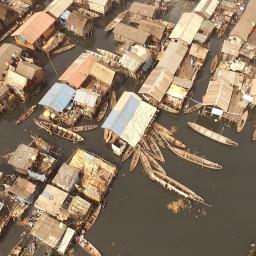
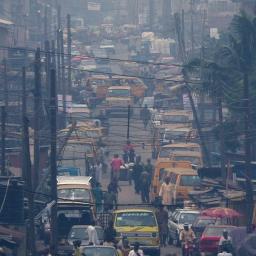
Makoko is the perfect nightmare for the Lagos government – a slum in full view, spread out beneath the most travelled bridge in west Africa’s megalopolis. Yet this city on stilts, whose residents live under the constant threat of eviction, has much to teach“One bucket, one life,†says Ojo, puffing on a marijuana rollup. We have stopped by the Floating School, a two-storey solar-powered wooden structure that floats on the Lagos lagoon on a bed of plastic barrels. I ask him to explain what he means. It’s the young fisherman’s way of summing up the dangerous exertion that is his part-time vocation: sand dredging off the coast of Makoko, the world’s biggest floating city.
Greenpeace France warns that tropical forests could be lost to a palm oil bonanza that has already razed millions of hectares of south-east AsiaAfrica’s tropical forests are threatened by a palm oil bonanza that has already razed millions of old-growth hectares in south-east Asia, Greenpeace France warned on Tuesday.
Allendale, Northumberland Sanicle was once an all-round herbal remedy, taken for wound healing, blood disorders, chest complaints and sore throatsHalf the wood at Allen Mills is a mixture of spruce, larch, sycamore and birch. Beneath lies a muddle of fallen branches and plants that jostle one another: bramble, dog’s mercury, ivy and ferns. The eastern end is a contrasting habitat. What grows here is mainly beech, giving the ground beneath a quite different feel. It is open and light and sparse of plants. Curling beech leaves lie crisply over years of rot. There are occasional clumps of woodrush, small clusters of celandines and sanicle, a plant that thrives in these less competitive conditions.In winter Sanicula europaea stands out against the burnt orange of the leaf litter and years of personal observation show it does not die back here. A woodland specialist, sanicle has glossy leaves with toothed edges and a tracery of pale raised veins. Despite the ground being dry under the beech trees, the plant finds enough moisture from water seeping down the steep bank towards the East Allen. When in flower, the sanicle here will only be 30cm high, though in the damp verges of the Lake District it reaches twice that, as do the examples I grow in my garden. Continue reading...
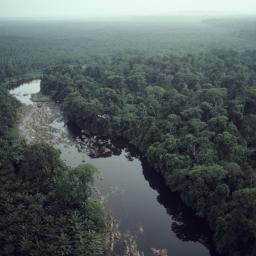
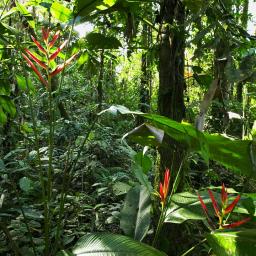
Jungle covered in black sludge after a landslide caused the country’s main oil pipeline to rupture, polluting rivers relied on by eight native communitiesRuptures in Peru’s main oil pipeline have spilled 3,000 barrels of crude into the Amazon region, polluting two rivers that native villages rely on for water.National environmental regulator OEFA said the oil from the broken pipeline has poured into the Chiriaco and Morona rivers in northwestern Peru. Continue reading...
Higher temperatures as a result of industrialisation blamed for the acceleration, as scientists warn of potential for 131cm rise by year 2100Sea levels are rising several times faster than they have in the past 2,800 years, with the process accelerating because of manmade global warming, according to new studies.An international team of scientists examined two dozen locations across the globe to chart rising and falling seas over centuries and millennia. Continue reading...
Brisbane company Redback Technologies, backed by researchers from the University of Queensland, says it has cracked the formula for the most cost-effective solar storage system on the Australian marketIf Tesla’s Powerwall is the “Lamborghini†of the solar storage industry, a small Brisbane company backed by University of Queensland researchers says it has hit on the formula to deliver the “Toyotaâ€.Related: Australia 'could become world leader in solar home battery storage' Continue reading...
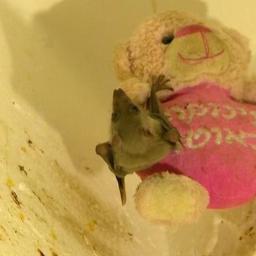
Noura Lifschitz uses her home in Tel Aviv to open Israel’s first shelter for fruit bats. The bats are seen cuddling with teddy bears and being fed by various volunteers who’ve helped Lifschitz set up her home as a sanctuary. Lifschitz says it’s her life mission to save bats and release them back to the wild Continue reading...
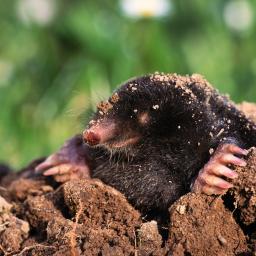
John Clare’s ‘little hermit’ may be a hero of children’s literature, but adults happily use the cruellest methods to wipe out them outRecently I treated the neighbourhood chaffinches to a bag of RSPB sunflower seeds so tasty that my toddlers try to hang from the feeder to scoff the food.I bought it at the local garden centre, and next in the queue were a nice couple who were asking for “something to kill molesâ€. Between me and them, this perfectly illustrates our bizarrely polarised attitudes towards wild animals. Continue reading...
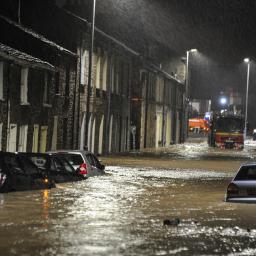
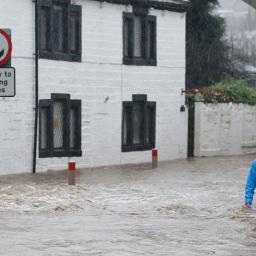
Lib Dem leader, whose Cumbrian constituency was badly hit by December’s floods, says government’s failure to apply for funds is ‘utter betrayal of victims’The government has been accused of being too busy arguing about Europe instead of helping communities hit by flooding in the UK, after it emerged that it has only five days left to apply for a pot of at least £125m in EU funds to tackle natural disasters.The Liberal Democrat leader, Tim Farron, whose constituency of Westmorland and Lonsdale was badly affected by December’s floods, said the government needed “to get its act together†before the 27 February deadline. Continue reading...
New paper finds that Americans who would otherwise die from lung cancer, heart attacks or respiratory diseases would be saved by reduction in air pollutionAmerica’s international climate obligations carry a significant public health benefit, with new research finding that about 295,000 premature deaths could be prevented in the country by 2030 if deep cuts to greenhouse gas emissions are achieved.At a summit in Paris in December, 196 nations, including the US, agreed to limit global warming to 1.5C above pre-industrial levels in order to prevent the worst effects of climate change. The agreement, the first to demand all countries slash emissions, will require major emissions reductions given that the world has already warmed by 1C during the past century. Continue reading...
James Hansen, Michael Mann and Kerry Emanuel among more than 100 researchers voicing concern over firm’s ‘complicity in climate denial’Leading researchers have called on the world’s largest association of Earth and space scientists to reject sponsorship from ExxonMobil, because of the oil company’s record of funding climate denial.In a letter made available to the Guardian, climate scientists James Hansen (formerly of Nasa), Michael Mann (Penn State), Kerry Emanuel (MIT) and more than 100 other researchers said they were deeply troubled by the “well-documented complicity of ExxonMobil in climate denial and misinformationâ€.
More than 250 professors at the former home of Barack Obama and Bernie Sanders sign petition, but university resists over traditionMore than 250 professors at the University of Chicago have called on the school to fight climate change by ridding itself of fossil fuel holdings – a gesture that would have exceptional resonance from the former home of Barack Obama and alma mater of current presidential contender Bernie Sanders.In a symbolic show of solidarity with student activists, professors urged the elite private university to purge its $7.6bn endowment of coal, oil and gas companies, citing the “universal and existential†threat posed by climate change. Continue reading...
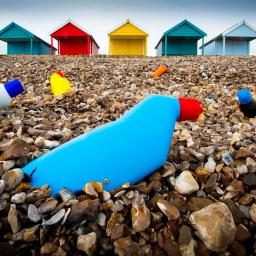
TV presenter Chris Packham has unveiled a series of images exploring the impact of litter on wildlife and the natural environment. The pictures were commissioned by the supermarket chain Lidl UK, which will be donating £500,000 from the proceeds of its single-use carrier bag charge to a new initiative with Keep Britain Tidy designed to inspire young people to reduce litter and waste and improve their local parks and green spaces Continue reading...
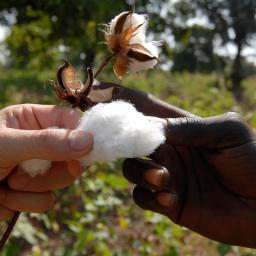
Growing cotton is a dirty business, but it’s not the only option in a more eco-conscious marketCotton seems spotless. It grows as a fluffy white plant and is processed into towels and flannels – clean stuff. Upsettingly, it has a lengthy ecological rap sheet that means it is the filthiest of all fibres. While it covers just 2.5% of the planet’s total agricultural area, the cotton crop uses 7% of all pesticides and 16% of all insecticides. There are entire chemical companies making neurotoxic formulas just to support this crop. And it takes nearly 4,000 litres of water to make a single pair of jeans.It’s almost enough to make us yearn for the entirely polyester wardrobes of the 1970s or even drive us to hemp – a fibre often touted as the solution, though in reality it is blended with cotton. Continue reading...
Report finds air pollution inside and outside the home is costing £20bn a year as well as causing tens of thousands of deathsAir pollution both inside and outside the home causes at least 40,000 deaths a year in the UK, according to new report, which estimates the cost of the damage at £20bn.The major health impact of outdoor air pollution is relatively well known but the report, from the Royal College of Physicians and the Royal College of Paediatrics and Child Health, also highlights the less understood impact of indoor pollution, as well as the growing evidence of harm to children’s health and intelligence. Continue reading...
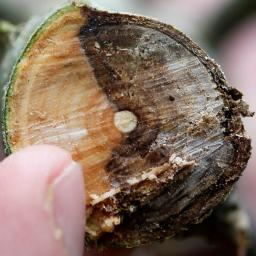
Trees could be protected from the devastating ash dieback disease with the help of a natural soil treatment, researchers have claimedA newly developed “enriched biocharâ€, which combines a purified form of charcoal with fungi, seaweed and worm casts could help ash trees resist the Chalara disease, according to research by tree and shrub care company Bartlett Tree Experts.
Despite the many sacrifices and lack of financial reward, it’s exhilarating to be part of a passionate team fighting for the future of our planetI am standing in front of a large freezer about to reveal the product of years of hard work and sleepless nights. The key clicks in the padlock and the lid pops open. A cold blast offers refreshing relief. In the iciness below, a bounty is revealed: piles upon piles of poo. Welcome to the glamorous life of a research scientist.I am a veterinarian currently undertaking my PhD, which essentially means I bring my skills in animal health to a role as a scientist. I lead a Peter Pan-like existence, a continuation of a childhood that was spent manoeuvring stuffed animals around the back yard to re-enact natural history documentaries. As my habitat expanded beyond the confines of our garden, so too did my appreciation of the fragility of the wider world. I quickly realised I was not prepared to continue as a passive observer. Continue reading...
by Chris Michael, Jess Gormley and Ken Macfarlane on (#14QRC)
Nigeria is Africa’s largest oil producer – and yet the power in Lagos still goes off every day. We hit the streets with the Battabox video team to ask Lagosians how electricity shortages affect them, whether Nigerians should expect better … and their best tricks for coping
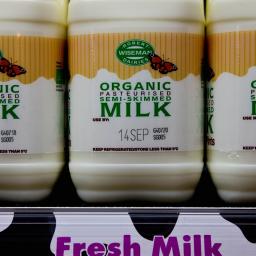
A new study has suggested that organic milk might contain higher levels of omega-3 fatty acids. But that doesn’t mean it’s necessarily better for youAfter publishing a study showing organic milk has higher levels of omega-3 fatty acids than ordinarily farmed products, Professor Chris Seal braced himself for the backlash. There is nothing like a study highlighting the benefits, or lack thereof, of organic food, to cause a spat. And Seal’s study in the British Journal of Nutrition last week (alongside another by him on meat that also shows higher levels of omega-3 fatty acids) certainly has its detractors.The fact that the study was funded by the Sheepdrove Trust, a British charity that supports organic farming, hasn’t helped. Seal says the money paid for analysis only, and that the charity didn’t have any input into the research. The study, a meta-analysis of 196 papers on milk (the other looked at 36 studies on meat), found that organic-grass-fed cows produced milk with 50% more omega-3 fatty acids than that from ordinary dairy cows. These fatty acids are linked to reductions in heart disease. But, while 50% sounds like a lot, full-fat milk is only 4% fat (semi skimmed is 2%) so this translates to an tiny amount more fatty acid in organic milk. Seal argues that if you added in organic cheese and butter, this would increase. But others point out you could get more nutritional benefit buying fruit and vegetables than hoovering up organic dairy produce. Continue reading...
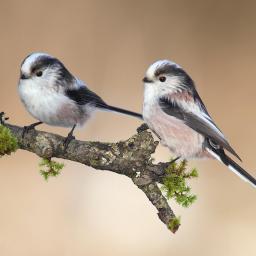
Haslington Trail, Cheshire An excitable flock gather in a leafless tree, flitting between the branches, chasing one another, tumbling and somersaulting. “They look like flying teaspoons,†I sayIt is early morning. Birds are singing. The air is chilly but the sun is bright. I pause to watch a wren darting between the stones of a wall. Then continue walking along Primrose Avenue, a hotchpotch of bungalows and houses, with parents taking children to school. I turn to stroll through a conservation area, a stretch of woodland, the Haslington Trail. Beyond the hawthorn hedge and brambles, there are misty-green fields dotted with mole hills and sheep. Dandelions bold as brass and celandines, glossy heart-shaped leaves, shiny bright-yellow flowers, embroider the well trodden path. There are buttercups, daisies too, small and bright as stars.There is a smell of damp earth and green shoots. Raindrops glitter in the grass like glass beads. Last night there had been another deluge. This morning the sky flares salmon-pink and honeycomb-gold with a patch of midnight blue over the white poplar tree. The poplar has pale bark, though the trunk, low down, is patterned with black diamond shapes. Continue reading...
Modelling has showed a spill from the company’s proposed oil wells could affect most of Australia’s southern coastlineA Senate inquiry will investigate BP’s plans to drill for oil in the Great Australian Bight and examine how a spill could be dealt with.The company’s application to drill four exploratory wells was knocked back last year by National Offshore Petroleum Safety and Environmental Management Authority, but details of why were not made public. BP quickly vowed to reapply. Continue reading...
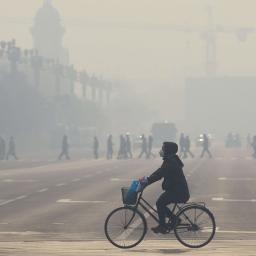
From March, China’s capital will bring in new sliding scale for air quality, after issuing its first ever ‘red alert’ for the city in DecemberBeijing is to raise the thresholds for issuing its highest air pollution warnings, the state news agency Xinhua reported on Sunday, two months after acrid smog triggered the city’s first ever “red alertâ€.Related: Beijing's 'airpocalypse': city shuts down amid three-day smog red alert Continue reading...
Scientists say it is highly likely greenhouse gas emissions are behind Australia’s run of three hottest springs on record - 2014, 2015 and 2013World leaders and street protesters were struggling in a heatwave with temperatures hovering around 40C at Brisbane’s G20 meeting.Longreach in central Queensland had 13 days straight when the maximum temperature hit 40C (104F) or higher – four days longer than the town’s previous record. Continue reading...
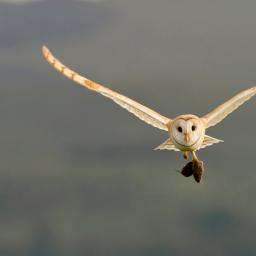
Originally published in the Manchester Guardian on 25 February 1916I am inclined to repeat a question asked by a Keswick correspondent: “Is there anything funny about the owls just now?†We can hardly imagine that they object to lighting orders, but certainly they appear to have taken a fancy for daylight hunting. The Keswick correspondent reports two different barn owls out in the morning and afternoon several times during the last two mouths, and also that a Sussex friend tells him that tawny owls “are out hunting all over the place by three in the afternoon.†On the same date that he wrote me, another correspondent reported that he saw a barn owl a few days ago in search of food near Nantwich a little before noon. Short-eared owls frequently hunt in the daytime, but barn and tawny owls are habitually crepuscular, and, at most seasons of the year, only fly in the daytime when accidentally disturbed. When, however, barn owls have hungry families demanding constant attention they will sometimes strive to provide for them in broad daylight: only under these circumstances have I seen barn owls seeking prey by day. Although owls are early breeders we can hardly imagine that so many birds and in such widely separated places have already got young, and the conclusion is that there is something funny about them. The war, so far as one can guess, has not made the capture of mice or slumbering sparrows more difficult. Continue reading...
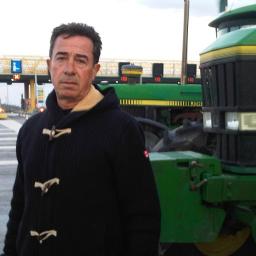
After a month of blockading roads in protest at reforms, farmers will sit down with the government this week in Athens for a make-or-break meetingSome lean on shepherds’ staffs, others stand against tractors and trucks as the last rays of a brilliant winter sun cast shadows across the Saronic Gulf.In the biting wind, Christos Fouzas strikes a defiant pose. Behind him lie the fertile plains of Corinth, before him the toll gates outside the ancient town that farmers have blockaded in protest over government reforms. For the past month, this ragtag army led by the 49-year-old grape grower have been kings of the road, stopping all traffic – bar the odd school and tourist bus – from accessing the highway to Athens. Continue reading...
It’s been a strange winter – or, perhaps I should say, a strange pseudo-spring. In the lanes around my Somerset home, snowdrops have been in full bloom since the middle of January, while a chorus of birds continues to sing in my garden.One Sunday morning we even had a visit from a smart male blackcap – a species that now spends the winter in the warmer setting of nearby Bristol, but usually shuns our chilly rural garden. This is our first wintering blackcap for almost a decade, and yet another sign that this winter is so much milder than usual. Continue reading...
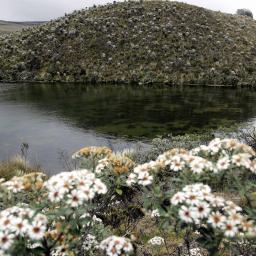
Major environmental victory after loophole permitting operations in rare ecosystems is declared “unconstitutionalâ€Colombia’s Constitutional Court has ruled against a controversial legal loophole permitting oil, gas and mining operations in the country’s paramos - high altitude eco-systems. Colombia’s paramos are the most extensive on earth and supply more than 70% of the country’s population with water, according to the Bogota-based Alexander von Humboldt Institute.The loophole is in a June 2015 law implementing Colombia’s “National Development Plan 2014-2018.†The law prohibits “agricultural activities†and the “exploration for or exploitation of non-renewable natural resourcesâ€, as well as the “construction of oil and gas refineriesâ€, in paramos, but then states that mining operations which have contracts and environmental licenses dating to before 9 February 2010, or oil and gas operations with contracts and licenses dating to before 16 June 2011, are exempted. Continue reading...
Cuts to climate modelling and measuring research contradict Australia’s pledge to strengthen commitments to climate science, the Climate Council saysCuts to the CSIRO’s climate modelling and measuring research will breach Australia’s obligations under the recent Paris agreement and will result in huge costs to the economy, a report by Australia’s Climate Council has found.
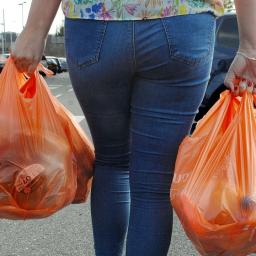
Supermarket gives 1p to charity, while Tesco hands over 3p a bagSainsbury’s is giving at least a third less to charity than any of its major rivals from 5p carrier bag charges intended to reduce plastic waste and raise cash for good causes.
A beautifully written study of Britain’s birds of prey takes too little account of the controversy they arouseIn the opening chapter of Raptor, the author describes a Neolithic chambered tomb found on South Ronaldsay, Orkney. Among the remains of 340 people were the bones of 35 birds, two thirds of which belonged to white-tailed eagles. Archaeologists have concluded that the human corpses had been exposed so that they could be stripped of their flesh. The most likely agents of that cleansing, before the spirit could be set free and the bones interred, were the eagles found in the tomb alongside them.The Isbister cairn on Orkney is 5,000 years old. At Catalhoyuk in Turkey there are images of vultures – the oldest recognisable bird paintings on a prepared surface – that are about 8,500 years old. At Shanidar, Iraq, the white-tailed eagle remains are 3,000 years older still. Humans have probably involved raptors in their rituals or funerary rites ever since they acquired language. Ethnic Tibetans still practise rituals with birds today: so-called “sky burials†in which the dead are consumed by vultures. Continue reading...
The rich history of eco-feminism goes back to the 1970s and is still going strongWanted: a new generation of feminist super heroes to stave off ecological catastrophe. Setsu Shigematsu, a California-based academic, has created the “Guardian Princesses†– seven female Disney-style cartoon characters, which she hopes will inspire enthusiasm for non-violent collective eco-action in the younger generation.There is a rich history of eco-feminism, starting from the coining of the term by French feminist Françoise d’Eaubonne in 1974 in her essay Feminism or Death. This launched a wave of women linking feminist viewpoints with earth-saving, which built on Rachel Carson’s work in Silent Spring. And in Rape of the Wild (1989), the authors take issue with “Man’s†violence against animals and earth. Continue reading...