 |
by Guardian Staff on (#12WXC)
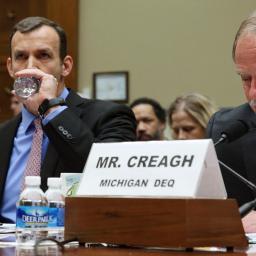
A congressional committee hearing into the crisis of contaminated water in Flint, Michigan, on Wednesday prompted Democrats from the state to brand the issue a ‘national embarrassment’. The director of the Michigan department of environment quality, Keith Creagh, told the hearing that ‘government at all levels should have done more’, while Democrat Brenda Lawrence stated that more should have been done to ensure a safe environment for residents Continue reading...
|
| Link | http://feeds.theguardian.com/ |
| Feed | http://feeds.theguardian.com/theguardian/environment/rss |
| Updated | 2026-08-19 13:01 |
by Anna Taylor on (#12WTM)
More than one in 20 people in the UK has type 2 diabetes, with consumption of sugary drinks proven to be a direct cause. Failing to tax them is irresponsibleWhile education remains a crucial factor in ensuring people maintain healthy diets, our latest research shows this alone is not enough: healthy eating is too difficult for typical British families. Too many factors – including an imbalance in the price of healthy and unhealthy food – push our behaviour in the wrong direction. Voluntary industry initiatives have not achieved enough and our food system needs a major overhaul to make healthy eating easier for everyone. The proposed, and often misunderstood, sugar tax has a role to play in this.First, what would be taxed? After all, sugar appears in many foods, including many that are good for us, like fruit. The calls for a sugar tax are actually very specific: it should be a tax on soft drinks with added sugar – the largest source of sugar in our children’s diets. Continue reading...
 |
by Dan Kitwood on (#12WAV)
These distinctive and noisy birds come in hundreds of varieties – you can find about 50 types in Costa Rica, each with tiny beating wings and bright plumage Continue reading...
|
by Phil Gates on (#12W7C)
Bishop Auckland, Co Durham It’s as if giant hands twisted the trunk, the tree acquiring the youthful exuberance of a swirling flamenco skirtThis market town, whose fortune waxed and waned with that of the coal industry, is soon to become an international centre for Spanish art. For 250 years Auckland Castle, formerly the palace of the bishops of Durham, has been home to paintings by the Spanish artist Francisco de Zurbarán.By 2018 Zurbarán’s works will be joined by those of compatriots DalÃ, El Greco and Velázquez, in an ambitious new gallery in the market square.
 |
by Graham Ruddick on (#12W7D)
VW paying price with sharp drop in sales in January after what was a record-breaking year for the new car marketVolkswagen sales fell sharply in the UK in January following a customer backlash over the diesel emissions scandal that has rocked the German car maker.Sales of new Volkswagen-branded cars fell by 14% year-on-year last month, reducing the company’s market share in the UK, which has previously been one of its most successful markets. Continue reading...
|
by Nick Hussey on (#12VQR)
The debate about helmet use is too often toxic, puts off new riders and obscures more important issues, argues the founder of VulpineLet me begin with a story.Last night I walked into a pub and spotted a guy with two empty pint glasses in front of him. He had a lovely fresh third pint poised at his trembling lips. Fantastic, just what I was looking for. Continue reading...
by Joshua Robertson on (#12VPN)
Briefings spark speculation company might abandon plans for mine altogether amid move into solar projects worth US$16bnAdani has frozen its investment in Australia’s largest proposed coalmine until world coal prices show a clear recovery, its executives have indicated in stock analyst briefings in India.The briefings even gave rise to speculation that Adani Enterprises, which has previously flagged spending $4.1bn on the Carmichael mine in north Queensland, might abandon its plans for the mine altogether amid a huge move by the company into solar energy. Continue reading...
by Suzanne Goldenberg on (#12VGC)
The biggest source of climate pollution dropped to 34% of US electricity generation and co-author of a new report says: ‘These are permanent changes’America’s use of coal for electricity dropped to its lowest point in the historical record in 2015, delivering a new blow to an industry already in painful decline.
 |
by Ucilia Wang on (#12VFS)
An MIT lab has produced a device the size of a stamp that harvests energy from bending movements. Commercialising it could be a breakthrough for wearablesInside a lab at the Massachusetts Institute of Technology (MIT), Sangtae Kim has been tinkering with a paper-thin device the size of a stamp. Kim is interested in harvesting energy from humans (though not the kind that turns people into batteries in the movie, The Matrix). He wants to harness motions, such as walking and running, to power sensors and wearable gadgets.
|
 |
by By our Local Government Correspondent on (#12VFV)
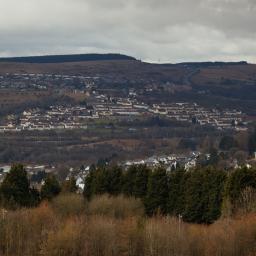
4 February 1957: Cherished by locals, the amenity in Glamorganshire is said to be a product of far-sighted planning and silvicultural experimentation
|
by Guardian Staff on (#12V49)
Luke Downes captured this footage of ‘Snapper Jr’ casually floating towards swimmers at Kewarra beach near Cairns. While filming, Downes offered the crocodile a friendly greeting, but Snapper Jr didn’t stick around for long. Never fear, a wildlife expert has claimed that there are worse things in the water to worry about in that part of the world, like box jellyfish, which are capable of killing a person in under five minutes Continue reading...
by Michael Safi and Michael Slezak on (#12V3D)
Redundancies part of strategy to increase collaboration with industry and boost commercialisation, agency chief saysUp to 350 positions at Australia’s Commonwealth Scientific and Industrial Research Organisation will be made redundant, with its climate research divisions to bear the brunt of the job losses.The chief executive of the national science agency, Larry Marshall, said the redundancies were in line with CSIRO’s 2020 strategy to increase collaboration with industry and boost commercialisation of science. Continue reading...
 |
by Melissa Davey on (#12V2V)
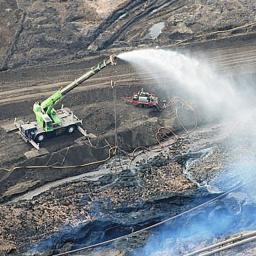
WorkSafe Victoria charges Hazelwood Power Corporation with Occupational Health and Safety Act breaches over fire which covered town of Morwell in ashThe company responsible for managing the Hazelwood mine in Victoria’s La Trobe Valley has been charged with 10 offences following a devastating mine fire which burned for 45 days and left surrounding suburbs choked by ash.The fire began on 9 February 2014 after embers from surrounding bushfires entered the mine. The nearby town of Morwell was among the worst affected, left blanketed in ash, and residents were exposed to toxic carbon monoxide. It was the largest and longest-running mine fire in the history of Victoria. Continue reading...
|
by Michael Slezak on (#12V06)
Energy company cites low oil prices for decision to cease exploration and wind down or sell its gas fields, with CSG opponents calling the move a well-earned victoryAGL is pulling out of coal seam gas in Australia, ceasing its exploration and winding down or selling its operational gas fields.
by Michael Slezak on (#12V07)
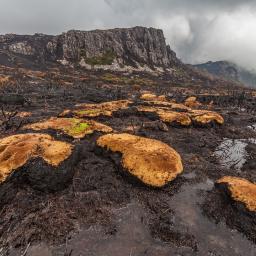
Experts say fires like those that continue to ravage Tasmanian forests, and look set to burn for days or weeks to come, could be the ‘new normal’A national inquiry into the fires devastating world heritage forests in Tasmania is urgently needed, say conservationists and academics. The call comes as experts say fires like those could be the new normal.The Australian Conservation Foundation has called for the public inquiry as dozens of fires continue to ravage the world heritage forests and look set to burn for days or weeks to come. Continue reading...
by Damian Carrington on (#12TYB)
Banks of batteries and other technologies could lower energy bills and help renewable power, says energy storage industry as it gears up for bumper year“It doesn’t always rain when you need water, so we have reservoirs - but we don’t have the same system for electricity,†says Jill Cainey, director of the UK’s Electricity Storage Network.But that may change in 2016, with industry figures predicting a breakthrough year for a technology not only seen as vital to the large-scale rollout of renewable energy, but also offering the prospect of lowering customers’ energy bills. Continue reading...
by Sam Levin in Las Vegas on (#12TPG)
Safari Club International draws hunters to Las Vegas for four-day convention billed as the ‘Ultimate Hunters’ Market’ – highlighted by auction of animal huntsThe world’s largest trophy hunting club was on the defensive at its giant annual auction in Las Vegas as animal rights advocates and conservation experts traveled from across the globe to condemn the industry that killed Cecil, one of Africa’s most famous lions.The Safari Club International on Wednesday kicked off its elaborate four-day convention and “Ultimate Hunters’ Market†inside the Mandalay Bay luxury hotel and casino – drawing 25,000 people to the members-only show. In ballrooms and convention halls with signs describing the event as the “THE BIGGEST THE BESTâ€, hunters mingled with outfitters, gun makers, booking agents, taxidermists and other industry representatives and enthusiasts. Continue reading...
by Sarah Shemkus on (#12TKQ)
The US dairy industry is outlining ways ranchers and producers can reduce their environmental impact. But do the new guidelines go far enough?Brian Medeiros generally keeps the operation at Medeiros & Son simple and traditional. The Central California farm’s 2,500 cows get milked three times a day and the resulting milk is shipped to area processors and turned into cheese and butter.
 |
by Associated Press in Tucson on (#12TGN)
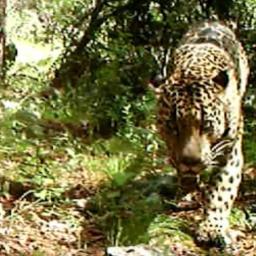
The big cat, known as ‘El Jefe’, has been living in 25 miles south of downtown Tucson – half a century after the last verified US jaguar was killed by a hunterThe only known wild jaguar in the United States is seen roaming around a creek and other parts of a mountain range just south of Tucson, Arizona in the first publicly released video of the big cat.Related: Eastern Cougar extinct, no longer needs protection, says US conservation agency Continue reading...
|
 |
by Guardian Staff on (#12TAV)
Footage of the only known jaguar living wild in the US is captured on remote sensor cameras. The video, filmed by Conservation CATalyst and the Center for Biological Diversity in the Santa Rita Mountains, Arizona, provides a glimpse into the secretive life of the big cat, who has recently been named ‘El Jefe’ by local students Continue reading...
|
by Editorial on (#12T8Q)
From museums to civil service jobs, the attitudes that could doom the powerhouse idea are on display. To signal real change, London must now get behind proper flood defences for the northNortherners like to think of themselves as down-to-earth sorts. Few go in for the invective of the Bradford balladeer, Justin Sullivan, who denounced a “land of gold and poison†200 miles to the south. But events are conspiring to encourage such judgments. After the Conservative win last year, a northern powercut first paused and then slowed to a crawl the electrification of transpennine rail. Severe Christmas flooding left drenched northern communities feeling that a distant government was slower to act than it might have been if the waters had been rising in Barnes. And this week comes news that the 400,000-object collection of the Royal Photography Society is to be pulled out of the National Media Museum in Bradford, and shunted down to the V&A in London.The sense of a regional divide is heightening even as a powerful chancellor ramps up his “northern powerhouse†talk, an irony underlined last week when the lead department in the powerhouse project announced it was closing its biggest office outside of London, with the loss of hundreds of Sheffield jobs. It is tempting to dismiss George Osborne’s whole scheme as empty rhetoric – tempting, but too hasty. For considerable real powers will soon pass into the hands of the new metro mayors. The chancellor has forged impressive cross-party alliances with experienced local politicians in Manchester and Sheffield who would not rush to sign deals that gave them responsibility for nothing but cuts. These local leaders grasp the progressive potential in taking charge of business, transport and skills, and they grasp, too, that it is no good decrying an overmighty capital while also expecting that same capital to fix every last regional problem. Continue reading...
by Nils Pratley on (#12T5W)
Sir Andrew Witty is hoping to hold off calls for the company to break up – strong 2015 sales won’t have done his case any harmGlaxoSmithKline’s chief executive, Sir Andrew Witty, won’t easily silence the calls for a breakup of the out-of-fashion pharmaceuticals, vaccines and toothpaste giant – but the company’s decent finish to 2015 should buy him some time to move at his own pace.Underlying earnings per share of 75.7p for 2015 didn’t cover the 80p dividend, but the reinvention of GSK was always going to be the work of several years. Witty was able to promise that new pharma products, meaning those launched over the past three years, will achieve £6bn of sales in 2018, two years ahead of the original target. Breo, the drug that will lead the defence of the respiratory territory when fading blockbuster Advair is hit by generic competition in the US, has overcome its slow start. So far, so good. Continue reading...
by Oliver Milman and Ryan Felton on (#12SYK)
‘We all let the people of Flint down,’ authorities tells Congress in hearing that also highlights flawed water testing practices that persist in other major US citiesThe Environmental Protection Agency warned of an unfolding toxic water crisis in Flint but was “met with resistance†by Michigan authorities, a fiery congressional hearing into the city’s public health disaster has heard.
 |
by Sara Brouillette on (#12SM9)
Bristol city council is shortsighted in its plans to ban this growing pursuit. It is a hands-on way of reconnecting with our food and should be encouragedIt’s February and the “hungry gap†is officially settling in. This is the period between the last harvest and the bounty of fresh spring produce. Yet if you take a bag or basket with you on a foraging walk, you will still find plenty of edible plants.So it’s disappointing to hear that Bristol city council has proposed 34 new bylaws, which include a ban on foraging. The proposed bylaws state: “No person shall without reasonable excuse remove from or displace within the ground any stone, soil or turf or the whole or any part of any plant, shrub or tree.†Continue reading...
|
 |
by Guardian Staff on (#12SF1)
Baby orangutans hitch a ride in a wheelbarrow at the International Animal Rescue’s orangutan centre in Ketapang, Indonesia. The footage, posted on the organisation’s Facebook page on Wednesday, shows the orangutan’s learning to climb and socialise at their ‘forest school’ Continue reading...
|
by Paula Kahumbu with Andrew Halliday on (#12SF3)
A ground-breaking series of programmes on Kenyan TV is set to transform public attitudes toward wildlife conservationAfrica’s unique wildlife heritage attracts millions of tourists to the continent and contributes enormously to the economy. It is a tragic irony that this wildlife remains unknown to the majority of Africans.
 |
by Guardian Staff on (#12SEC)
Timelapse footage showing the construction of the Wendelstein 7-X stellarator nuclear fusion device at the Max Planck Institute in Greifswald, north-east Germany. Scientists at the institute are conducting a nuclear fusion experiment on Wednesday which they hope will advance the quest for a clean and safe form of nuclear power
|
 |
by Arthur Neslen in Brussels on (#12RWD)
MEPs fail to veto proposal that will allow cars to emit twice the limit of NOx pollution following pressure from pro-car industry countriesMEPs have failed to veto loopholes in air pollution limits on new diesel cars, despite public anger in the wake of the Volkswagen emissions scandal.Nitrogen oxide (NOx) emissions will now be allowed at twice the EU’s 80mg per km limit from 2019 and 50% more from 2021, despite the exemptions being deemed unlawful in a separate vote by the parliament’s legal committee last night. Continue reading...
|
 |
by Dave Hill on (#12RZW)
Boris Johnson has ordered more of his New Routemaster buses, but none of his potential successors seem keen on his signature public transport vehicle
|
by Guardian Staff on (#12RRZ)
Outdoor learning isn’t just the preserve of rural schools. These simple ideas will help you incorporate outdoor learning in a concrete jungleWhether it’s hunting for minibeasts in the playing fields or reading a book under a tree, the positive impact of outdoor learning on young people’s achievement and development is widely acknowledged.But what do you do if your school isn’t blessed with acres of green space? From making the most of your playground to venturing further afield, we’ve gathered five tips to help urban schools feel the benefits of taking learning outside. Continue reading...
 |
by Fiona Harvey on (#12RQ5)
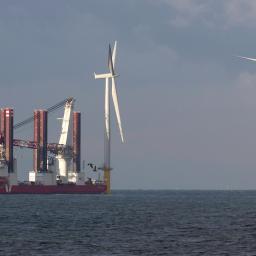
DONG Energy given go-ahead for 1.2-gigawatt project that will power more than a million UK homesThe UK wind energy industry received a boost on Wednesday with the announcement of the world’s biggest offshore windfarm, to be built off the north-east coast.Dong Energy said its multi-billion pound Hornsea project, which is expected when complete to power as many as 1m homes in the region, will occupy more than 400 square kilometres, situated about 120km off the Yorkshire coast.
|
by John Abraham on (#12RBZ)
Taking the Earth’s temperature is a challenge, but a critically important one if we are to better understand the nature of climate change
 |
by Dan Broun on (#12R94)
Photographs from the Eyewitness series Continue reading...
|
 |
by Joanna Blythman on (#12R3B)
EasyJet founder Stelios Haji-Iannou’s new easyFoodstore will most likely be lauded by the government. But no society on earth can ultimately afford food this cheapThere is something disconcerting about the sight of the easyJet founder, Sir Stelios Haji-Iannou, at the launch of his latest business venture this week, easyFoodstore: a discount food store in Park Royal in London, selling products for 25p each. The cheery entrepreneur stands grinning beneath an impossible-to-miss placard proclaiming the slogan: “No expensive brands. Just food honestly priced.†Behind him, stacked up on cheerless shelving such as you’d see in the most basic cash and carry, stand boxes of cola, salt and vinegar snacks, long-life milk and more of that ilk.Related: Stelios Haji-Ioannou opens easyFoodstore with 25p offer Continue reading...
|
 |
by Associated Press in Greifswald on (#12R1R)
Angela Merkel to attend test in which team will heat hydrogen until it becomes plasma in bid for clean nuclear powerScientists in Germany are poised to conduct a nuclear fusion experiment they hope will advance the quest for a clean and safe form of nuclear power.In a test expected to be attended by Angela Merkel, the chancellor, researchers will inject a tiny amount of hydrogen into a special device and heat it until it becomes a super-hot gas known as plasma – mimicking conditions inside the sun. Continue reading...
|
 |
by Johnny Langenheim on (#12R1D)
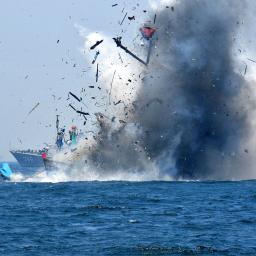
A new strategic partnership to improve marine law enforcement and combat illegal fishing in Indonesia builds on existing progress
|
 |
by Peter Walker on (#12QTR)
British start-up firm says its revolutionary design offers a more robust and effective helmet. But design niggles remainLet’s begin by forgetting the usual tedious arguments about bike helmet use – you can do it; close your eyes, count to 10, breathe – and instead focus on the more minor irritations concerning them.For someone like me, who wears a helmet the majority of the time when on two wheels, it’s mainly the care you have to take with a cycle helmet, not dropping it on the floor or, if you have it attached to a bag, bashing it against things. Continue reading...
|
 |
by John Vidal on (#12QPJ)
Leading group of environmentalists warns that leaving the European Union would mean a return to filthy beaches, foul air and weak conservation lawsBritain risks becoming the “dirty man of Europe†again with filthy beaches, foul air and weak conservation laws if it leaves the European Union, a group of leading environmentalists warned on Wednesday.
|
by Paul Evans on (#12QMS)
Wenlock Edge, Shropshire Imbolc day and its rituals speak of the white of milk, lambing, doves – all signalling winter’s endThe pigeon cocked a conspiratorial eye at the dog as we walked by. A wind ferocious enough to peel the bird from its perch and blow it away had little effect. The pigeon sat out the squall with saintly patience.These birds are descended from rock doves, beautifully swift fliers from sea cliffs, quarry faces and derelict buildings, perfectly at home on the thinnest of edges between sanctuary and howling void. But feral pigeons divide opinion. A year or so ago a white dove like Noah’s showed up after a storm and became a familiar sight, doing the wind-up funky walk and flying in a blur of clapping. Continue reading...
 |
by Hannah Gould on (#12QK2)
Demand for food is growing but arable land is being lost; millions are obese but millions still face hunger. Can you put exact figures to these problems?
|
by Annie Kane on (#12QH8)
Falling technology costs and rising electricity prices make going off the grid appealing but regulations and networks could hold others backLiving off-grid used to be something that people had to do to support modern life in remote communities but living without centralised power is becoming an increasingly mainstream concept.Last year Australia’s CSIRO and its Energy Networks Association stated that by 2050 a third of Australians could have left the electricity grid as technologies that support off-grid systems, such as solar panels and battery storage, become significantly more competitive. In fact, the chief economist at the CSIRO’s Energy Flagship, Paul Graham, estimates battery storage costs could fall by about 60% in the next 10 years, while solar panels could fall by around a third over the same period. Continue reading...
 |
by Agence-France Presse on (#12QF3)
Anyone aged over 20 with a relevant licence will be able to hire an electric moped, in a move aimed at cutting down on noise and pollutionElectric mopeds will be available for hire around Paris from this summer following an “encouraging†trial of the public scheme, the mayor’s office has announced.
|
 |
by Suzanne Goldenberg on (#12Q73)
Southern California Gas could be fined up to $25,000 for each of the three days it didn’t notify the state of the leak in the Porter Ranch communityThe utility company whose blown-out natural gas well forced the evacuation of thousands of people in the Los Angeles area faced criminal charges on Tuesday for failing to report the massive breach to the authorities.With the criminal complaint, Southern California Gas Company faces mounting legal challenges for its response to the underground blow-out of its natural gas storage well, which was discovered on 23 October. Continue reading...
|
 |
by Michael Slezak on (#12QBF)
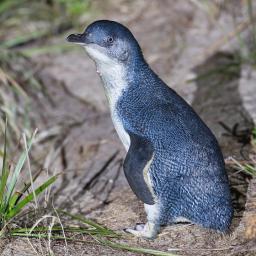
Australian little blue penguins, also known as fairy penguins, colonised an area in New Zealand, wiping out local penguins about 500 years ago, researcher sayThey might be the cutest invaders ever. It seems a population of little blue penguins in New Zealand are Australian invaders who colonised the region very recently, exploiting a gap in the ecosystem left when humans arrived and wiped out the local penguins.Little blue penguins, known as fairy penguins in Australia, are the smallest penguins in the world, growing to about 30cm tall and weighing a bit over 1kg. Continue reading...
|
 |
by Guardian Staff on (#12Q3Z)
Sunshine Coast snake catcher Richie Gilbert was called in to evict an unwanted guest from the men’s toilets at the Waterfront hotel in Maroochydore. While the reptile, curled up beneath the urinal, turned out to be a ‘completely harmless’ common tree snake, Gilbert says ‘it would still give you a bit of a fright if it came out and nipped you while you were doing your business’. The cool tiles of bathrooms provide the perfect place for snakes to escape the summer heat, and Gilbert recommends Queenslanders keep their doors closed Continue reading...
|
 |
by Arthur Neslen in Brussels on (#12Q32)
Decision to restart 40-year-old nuclear reactors places strain on relations between European neighbours, as Germans and Dutch voice concernsBelgium’s decision to restart two 40-year-old nuclear reactors is putting pressure on northern Europe’s political fault lines, with Germany announcing that it would send experts to inspect the plants.Concerns have been stoked by the discovery of thousands of defects in the reactors’ pressure vessels, a fire, and one unresolved sabotage incident at the plants, which also border Luxembourg and the Netherlands. Continue reading...
|
by Maria L La Ganga in San Francisco on (#12PQ3)
Statewide conservation rate was down as rain fell, snow accumulated and huge waves battered the coast – but ‘we are still in a state of emergency’Whoever thought that, in the middle of California’s historic drought, a little bit of rain could pose a problem?But that was the message Tuesday from the state water resources control board and some environmentalists. Continue reading...
 |
by Jessica Aldred on (#12PH9)
New report says there is a ‘diminishing window of opportunity’ to completely eradicate the Asian toad, which poses a threat to biodiversity, human health and the economyMadagascar must wipe out an invasive, toxic toad immediately to save the country’s unique wildlife from disaster, scientists have warned.A report published on Tuesday says that the Asian toad is spreading unchecked through the eastern part of the island, and poses a direct threat not only to the country’s biodiversity, but to human health and the economy.
|
 |
by George Monbiot on (#12PFB)
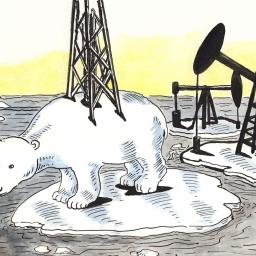
As these new crisis bailouts for fossil fuels show, it’s those who are least deserving who get the most government protectionThose of us who predicted, during the first years of this century, an imminent peak in global oil supplies could not have been more wrong. People like the energy consultant Daniel Yergin, with whom I disputed the topic, appear to have been right: growth, he said, would continue for many years, unless governments intervened.Related: New research points to risk peak oil presents to business Continue reading...
|
 |
by Terry Macalister Energy editor on (#12M4W)
£6bn wiped off stock market value of oil company as investors react to losses and increasing Deepwater Horizon liablitiesBP is to axe another 7,000 jobs after reporting an annual loss of $6.5bn (£4.5bn), the worst in its history.Shares in the oil company dived 8.6% to 335p by the end of trading on Tuesday, wiping almost £6bn off the stock market value of the business, and helped drag down the wider FTSE 100 index of leading shares in London. Continue reading...
|