 |
by Annie Kelly on (#12G2M)
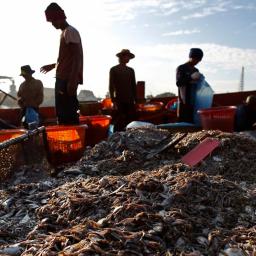
The company has won plaudits for its admission of forced labour in the Thai seafood industry but much of the supply chain remains hiddenIt’s hard to think of an issue that you would less like your company to be associated with than modern slavery. Yet last November Nestlé, the world’s largest foodmaker and one of the most recognisable household brands, went public with the news it had found forced labour in its supply chains in Thailand and that its customers were buying products tainted with the blood and sweat of poor, unpaid and abused migrant workers.By independently disclosing that Nestlé customers had unwittingly bought products contaminated by the very worst labour abuses, the company said it was moving into a new era of self-policing of its own supply chains. A year-long investigation by the company confirmed media reports that the seafood industry in Thailand is riddled with forced labour and human trafficking and that slave labour was involved in the production of its Fancy Feast catfood brand.
|
| Link | http://feeds.theguardian.com/ |
| Feed | http://feeds.theguardian.com/theguardian/environment/rss |
| Updated | 2026-08-19 13:01 |
by Tony Yoo on (#12G0F)
While the world’s economy gets ready for smart cities and industry 4.0, experts say bureaucracy and inertia are holding Australia backThe Swiss town of Davos might seem like an unlikely place for a revolution but that was the hot topic for those there to attend the World Economic Forum last month.“We stand on the brink of a technological revolution that will fundamentally alter the way we live, work and relate to one another,†wrote the economist, engineer and founder of the World Economic Forum, Klaus Schwab. “In its scale, scope, and complexity, the transformation will be unlike anything humankind has experienced before.†Continue reading...
 |
by Press Association on (#12FGV)
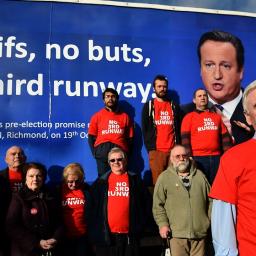
Treasury committee chair Andrew Tyrie says more information required over reasons for Davies report’s conclusionsA decision on airport expansion is being taken on the basis of “opaque†information, a senior MP has warned.Andrew Tyrie, chair of the influential Commons Treasury select committee, said parliament and the public had been left partly in the dark on the case for a new runway at Heathrow. Continue reading...
|
 |
by Thomas Coward on (#12FB6)
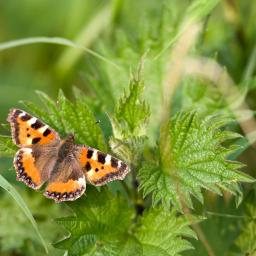
Originally published in the Manchester Guardian on 4 February 1916The sleepers awaken; indeed in many cases winter slumbers have been light and fitful. Up and down the lane, between and round the black-budded ashes and above the grassy borders, where pale green nettles form thick and treacherous beds for those who would pick the first flowers, the bats fly at dusk. Early this week it was not one bold straggler who had ventured out to test the weather, but whole colonies were on the wing; in less than a mile I counted ten different bats, and at least of two species. Evidently it was not a disappointing effort on their part, for the air was full of dancing winter gnats, though no doubt less full when the bats ended their crepuscular flight.A correspondent, writing from Old Colwyn, speaks of another early riser, a small tortoise-shell butterfly, which she saw sunning its beautiful wings. In autumn this fly sought out some sheltered and cosy retreat, and, folding those many-coloured wings so that the marbled under-surface alone was visible, slept the sleep of the just - dreamless or otherwise we cannot tell. Unlike too energetic wasps, however, its awakening will probably not be useless; it can fulfil its life-history. The same warm touch which stirred its stiffened limbs had pushed on those young nettles beneath the hedge: they are ready to receive the eggs which the fly has waited so long and patiently to give them. She may have emerged late in the autumn, and at once, after one rapturous nuptial flight, have sunk into winter oblivion, and, when the nettle bed is found and provided with its future colony of stiff-spined caterpillars, she may pass at once into the deeper sleep of death; but if the eggs are safely deposited, however short her life as a perfect insect, she will have played her part in the economy of nature. Continue reading...
|
 |
by Kate Ravilious on (#12F75)
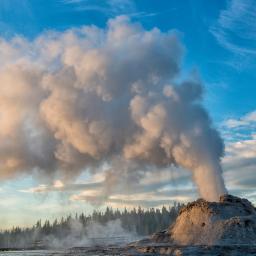
Every hour or so the “Old Faithful†geyser in Yellowstone National Park, Wyoming, shoots a column of boiling water up to 50m into the air. This incredible natural spectacle, along with multiple other geothermal features and the one to two thousand earthquakes that occur every year, are just some of the signs that this region is sitting atop a whopping great volcano. The last super-eruption was nearly 640,000 years ago, but gentle swelling of the ground indicates that the underlying magma chamber is refilling, and Yellowstone will erupt again one day.Related: Yellowstone national park: scientists discover huge magma chamber Continue reading...
|
 |
by Terry Macalister Energy editor on (#12EBQ)
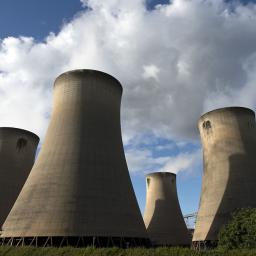
National Audit Office to investigate taxpayer value for money in George Osborne’s scrapping of CCS and question plans to secure UK energy supplyThe National Audit Office is to investigate George Osborne’s decision to scrap a £1bn prototype carbon capture scheme which cost the taxpayer at least £60m, a letter seen by the Guardian shows.
|
 |
by Reuters on (#12E30)
Search begins after Roger Gower died when his helicopter was shot down over the Maswa game reserve on FridayAuthorities in Tanzania have launched a search after poachers shot down a helicopter and its British pilot during an operation to track down elephant killers, officials have said.British pilot Roger Gower was tracking poachers on Friday in the Maswa game reserve when he died after his helicopter crashed after being hit by an AK-47 rifle fired from the ground, Tanzania’s tourism and natural resources minister, Jumanne Maghembe, said. Continue reading...
|
by Natasha Lamb and Dr Bob Litterman on (#12E09)
Exxon’s narrative of preferring, and even encouraging, inaction in the face of climate change is the oil giant’s well-established modus operandiOver the past year the price of oil has collapsed and taken ExxonMobil’s share price with it. As the oil giant prepares to release its latest set of results this week, the company continues to show little genuine interest in preparing for a less carbon-intensive future.Even as world leaders gathered in Paris for the recent climate summit, where hundreds of nations and corporations stepped forward to underscore their commitment to action, ExxonMobil followed an odd course that has been lost in all the fanfare surrounding the international gathering. Continue reading...
 |
by Business Leader on (#12DX9)
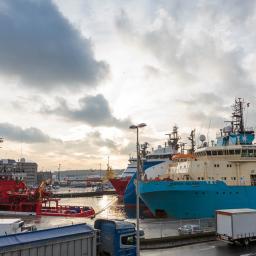
Aberdeen and the UK oil industry have been promised £500m in state help while support for renewables and carbon capture has been slashed. The future of the UK’s energy capital should be green, not blackThat the government should step in with £250m to help ailing Aberdeen, the centre of Britain’s oil and gas industry, seems right given the billions in tax revenues ministers have extracted from the North Sea over several decades. And though it might seem counterintuitive to come to the rescue of a city built on fossil fuels – given the threat of global warming – it also makes sense for Britain to keep producing its own oil and gas until it can find ways of doing without them.
|
 |
by Karl Mathiesen on (#12DKJ)
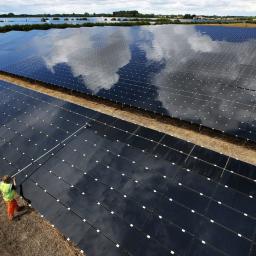
Solar sector needs better power storage, grid infrastructure and government support to meet bullish growth predictionsSixty years ago, the price of solar panels was astronomical. At a cost of $1,910 (£1,350) per watt in today’s money, the only practical use for them was in space on the US Vanguard 1 satellite, which launched in 1958.
|
 |
by Lucy Siegle on (#12DDQ)
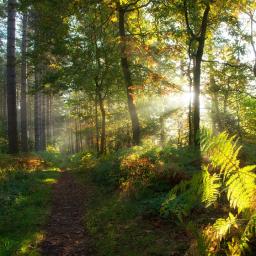
In the UK we need to double our planting rate over the next 50 years if we want our woodlands to surviveIt is hard to overestimate the value of trees. They are carbon sinks that keep us alive. They suck up pollution and soak up water. For more ways in which trees rock, the Trees and Design Action Group has a list in its report, No Trees No Future – an apocalyptic title that highlights their importance.Yet, although we may profess to love trees, the UK is one of the least-wooded countries in Europe. Woodland covers just 12% of the land. What’s good about trees is that you can always plant more, but we are not too hot at that, either. The planting of broadland species (as opposed to mineral-leaching fast-growing conifers) has halved over the last six years. Continue reading...
|
 |
by Rebecca Ratcliffe on (#12CWW)
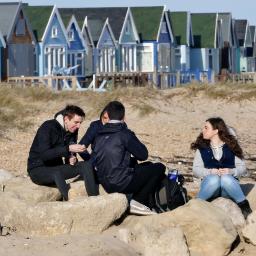
More than 600 varieties of plant are already flowering, according to a new survey, long before springFrom London’s Walthamstow marshes to Thirsk in North Yorkshire, the mayflower has been in unprecedented early bloom.A survey by the Botanical Society of Britain and Ireland (BSBI) found that just over 600 wildflower species have begun to bloom across Britain and Ireland, far more than the 20-30 that are usually expected at this time of year. Continue reading...
|
 |
by Robin McKie on (#12CWB)
Long-range forecast predicts generally upward temperature trend, possibly interrupted by La Niña event in 2017Global temperatures will continue to soar over the next 12 months as rising levels of greenhouse gas emissions and El Niño combine to bring more record-breaking warmth to the planet.According to the Met Office’s forecast for the next five years, 2016 is likely to be the warmest since records began. Then in 2017 there will be a dip as the effects of El Niño dissipate and there is some planet-wide cooling. Continue reading...
|
 |
by Jamie Doward on (#12CFG)
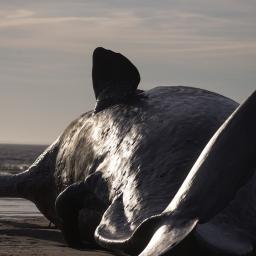
Ocean giants lying dead on North Sea coasts is a sad event, but it gives marine scientists a valuable chance to detect man-made dangersA body washes up on a beach in eastern England. Then another. And another. Soon, people living in two coastal communities have five deaths on their hands.Things take a further macabre twist when it emerges that more than a dozen bodies are littering the shores of Holland and Germany. What could possibly link the deaths? A CSI team, dispatched to hunt for clues, faces a race against time. Scavengers and saltwater will devour the carcasses and destroy potentially vital evidence. Continue reading...
|
 |
by Associated Press on (#12BV3)
Randy Bilyeu was last seen earlier this month seeking gold and artifacts hidden by Forrest Fenn, 85, who has been chartering helicopters to track him downAn antiquities dealer who inspired tens of thousands to search the Rocky mountains for $2m in hidden treasure now leads an increasingly desperate mission to find one of his fans.Forrest Fenn has been flying out in chartered helicopters or planes, searching remote stretches of the upper Rio Grande for any sign of Randy Bilyeu, missing in the wild for more than three frigid weeks. Fellow treasure hunters also are searching for Bilyeu, who was last seen on 5 January while trying to solve Fenn’s mystery. Continue reading...
|
 |
by Baynard Woods in Baltimore on (#12BDQ)
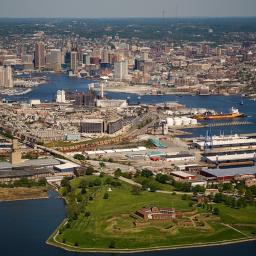
After seven homes certified as lead-free were found to be contaminated, doubts over inspections mean 384 families have been urged to have their children testedEnvironmental officials found this week that at least seven Maryland homes certified as lead-free were actually contaminated by lead paint or not inspected at all. The findings by the Maryland department of the environment and the Environmental Protection Agency have prompted a broader investigation into the unnamed private inspector, and notices to 384 families urging them to have their children tested for lead poisoning.Related: The EPA's lack of integrity has cost the lead-poisoned children of Flint dearly | Marsha Coleman-Adebayo and Kevin Berends Continue reading...
|
 |
by Suzanne Goldenberg on (#12BBW)
Mere acknowledgement that the environment is in peril without a plan to mitigate it is a huge oversightLet’s call it the non-denial denial. Some Republican presidential candidates are beginning to peer out from behind the wall of climate denial that has defined the party as long as Barack Obama has been in the White House. Finally, it seems, the most open expressions of climate denial – such as dismissing long-established scientific fact – may be seen as a bit retrograde, and possibly embarrassing, even by some who are looking for votes from an increasingly rightwing Republican party.In response to a rare question about climate change in Thursday night’s Republican debate, Marco Rubio offered up an answer that was rarer still in the 2016 campaign. He did not reduce climate change to a punchline or bash the science underlying climate change, as Ted Cruz and Donald Trump have been doing throughout the primary. Continue reading...
|
 |
by Guardian Staff on (#12B9P)
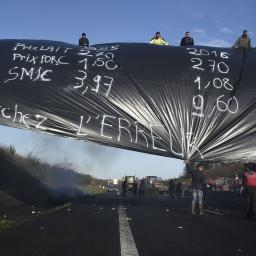
The Zika virus in Latin America, refugees struggle in the Balkan winter, Donald Trump support – the best photography in news, culture and sport from around the world this week Continue reading...
|
 |
by John Gilbey on (#12ASG)
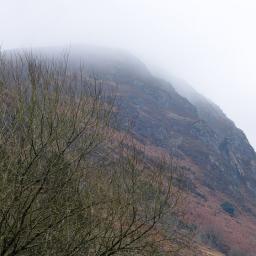
Cadair Idris, Dolgellau The only sound was the roar of falling water, as the Nant Cadair sluiced over the rocks. Deep moss and clumps of fern cling to the stone walls in the oak wood, wrapping the walker in a soft acoustic cocoonThe weather looked untrustworthy at best, and it was clear from the outset that our ascent of Cadair Idris was unlikely to be complete. From the avenue of trees that forms the approach to the Minffordd path, the summit itself is hidden by the steep sides of the glaciated valley, but cloud loomed ominously over the crags of Moelfryn.Deep in the valley, the air was still and bitterly cold. The only sound was the almost random roar of falling water, as the Nant Cadair – swollen by meltwater – sluiced over the rocks into the deep, clear pools that look so tempting in warmer weather. Deep moss and clumps of fern cling to the stone walls and boulders in the oak wood, moderating the sound and wrapping the walker in a soft acoustic cocoon. Continue reading...
|
 |
by Associated Press on (#12AEM)
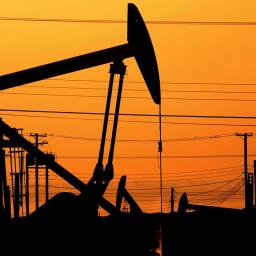
Separate deals require government to review whether techniques like fracking to stimulate offshore well production threaten water quality and marine lifeThe federal government has agreed to stop approving oil fracking off the California coast until it studies whether the practice is safe for the environment, according to legal settlements filed Friday.
|
 |
by Guardian readers on (#129ND)
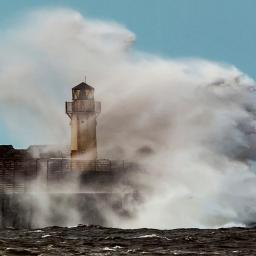
Strong winds have hit Scotland and Northern Ireland as bad weather continues to threaten the north of the country. Have you spotted any incidents? Let us know
|
 |
by Oliver Milman in New York on (#12987)
As rising sea levels threaten their state of Florida, fellow Republican candidate Marco Rubio also warns that action on climate would ‘destroy’ the economyFlorida’s leading candidates for the Republican presidential nomination, Marco Rubio and Jeb Bush, have both criticized federal action to combat climate change, with Rubio warning it would “destroy†the US economy and Bush predicting “someone in a garage somewhere†will solve the problem instead.
|
by Environment editor on (#1293W)
The week’s top environment news stories and green events. If you are not already receiving this roundup, sign up here to get the briefing delivered to your inbox Continue reading...
 |
by Letters on (#1291X)
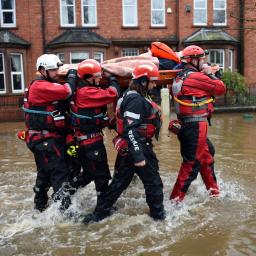
Your recent article (Build on flood plains despite the risks, say UK government advisors, 28 January) misrepresents the evidence I gave to the House of Commons environmental audit committee on 27 January. The evidence I gave, as presented in my committee’s report to parliament last summer, is that building in areas of flood risk is storing up costs and risks for the future, especially in the context of climate change. Despite the safeguards within the planning system, 4,600 new homes are being built every year in areas that are at higher risk of flooding than many of the UK towns and cities hit by the recent storms.My committee accepts that there will be circumstances in which local councils approve flood plain development. Where this occurs, the new buildings and urban landscapes should be designed to be flood resilient. Prospective purchasers should be made fully aware of the risks including the implications for flood insurance. Furthermore, the government should no longer ignore the long-term costs for society that will result from an ever-increasing number of properties on the flood plain.
|
by PD Smith on (#128WT)
In this excellent guide to the history of our planet, there is no escaping our role as the destroyer of a natural environment that insects have been looking after for millions of yearsThis succinct but vivid history of the planet is told from the perspective of insects, which have dominated the terrestrial environment for millions of years. It is a humbling perspective, one that puts us well and truly in our place – principally as the destroyers of a natural environment that insects have been helping to preserve long before our ancestors crawled out of the primal slime. Insects evolved 420m years ago. The first were scavengers, such as silverfish, which colonised shorelines. Flying insects evolved 75m years later, mastering the skies more than 150m years before any other creature. Prehistoric forests swarmed with insects. Shaw, who has spent 50 years studying wasps, notes with considerable schadenfreude that “stinging insects made the dinosaurs’ final years really miserableâ€. Today there may be as many as 50 million insect species, but they are being destroyed at a rate of one or two an hour, a “massive extinction event†caused by one species: Homo sapiens. Shaw writes with a contagious enthusiasm and is an excellent guide to the history of our buggy planet. Continue reading...
 |
by Arthur Neslen, Brussels on (#128RQ)
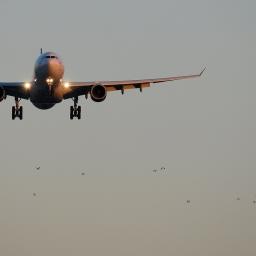
EU study predicts 43% rise in NOx emissions from planes within two decades, due to increased air trafficAir pollution from planes in Europe is to rise by nearly half in the next two decades, according to the EU’s first aviation environment report.Aircraft emissions of nitrogen oxides (NOx), which are linked to lung damage, doubled since 1990 and are forecast to rise 43% by 2035. Continue reading...
|
 |
by Dan Collyns on (#128HD)
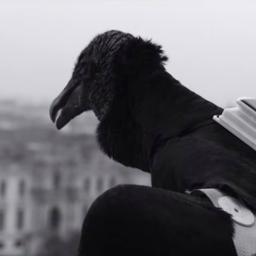
Kitted out with video cameras and satellite trackers, 10 vultures have been set loose over the capital of Peru to draw attention to the megacity’s overwhelming trash problem – though not necessarily to clean it upSome cities have pigeons. Lima has black vultures, or gallinazos. They circle in groups overhead and perch on the city’s most emblematic buildings – the decrepit, colonial-era churches and crumbling 18-century piles in the city’s downtown. In many ways, with their wrinkly heads and beady eyes, they remind Lima residents of the side of their city they would rather ignore: the neglect, poverty and filth.But these carrion-eaters’ natural affinity for dead and decaying things is being turned into a virtue. Environmental authorities are giving these much-maligned birds a PR makeover, kitting them out with GoPro video cameras and GPS trackers, and giving them a new mission in the fight against fly-tipping and illegal dumping. Continue reading...
|
 |
by Eric Hilaire on (#128DY)
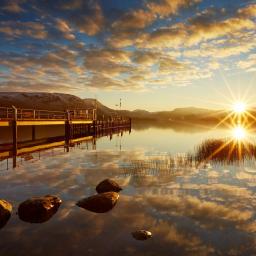
A sloth crossing the road, a hippo chasing cheetahs and a giant Malagasy chameleon are among this week’s pick of images from the natural world Continue reading...
|
 |
by Patrick Barkham on (#128A1)
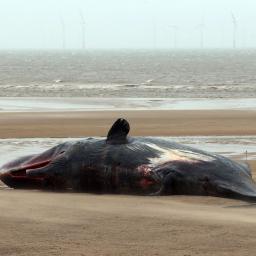
Stranding of three sperm whales drew crowds to the resort this week, but mourning locals were reluctant to talk of a boost to economyWhale mania washed over Skegness and then it washed away again, as sure as the tide. On a bright sunny Thursday after the largest sperm whale stranding since records began, Impulse Tattoo was buzzing with business. Whale tattoos? “Nah,†laughed the tattooist. “Haven’t done any of those.â€The Factory Rock Shop has purchased 30,000 sugar dummies hanging from lanyards reading “Angel†and “The Boss†for the summer season. Any whale-themed sweeties? “You don’t want to be buying stuff just for today, you want to think ahead,†said Hilary Fox. Continue reading...
|
 |
by Nicky Woolf on (#128A5)
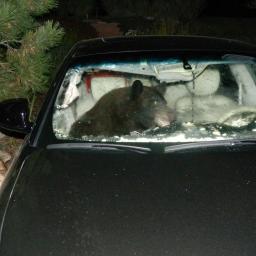
‘Food-conditioning’ and other adaptive behaviors have become common among bear populations – and could lead them into dangerous contact with humansWilliam Hefner was on his honeymoon with his new wife Sara, driving back to their rented condo in the mountains above Gatlinberg, Tennessee, when he first saw the bear. At first, he said, he thought it was a huge dog nosing around. They followed it in the car; Hefner started videoing.
|
 |
by John Vidal on (#12882)
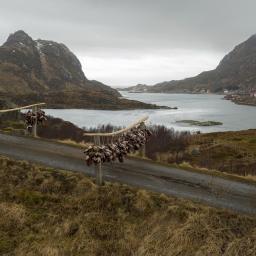
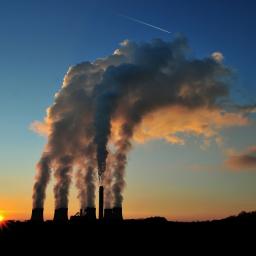
Norway has pushed for coal and oil to stay in the ground but industry head argues burning Norwegian gas will help lower Europe’s emissions as it is cleaner than coalNorway wants other countries to leave their coal and oil in the ground to meet new global climate change targets, but its industry is planning to increase production of its own fossil fuels.“We know that if we burn all the coal, oil and gas available, the Paris agreement cannot be fulfilled. Significant parts of the total fossil resources must remain, untouched,†said Karl Eirik Schjøtt-Pedersen, director of the Norwegian oil and gas association and a former minister of finance. Continue reading...
|
 |
by Rob Evans on (#127XX)
The new drama explores how undercover policemen were sent to spy on political groups and deceived women into forming intimate relationshipsA new play about undercover policemen and the pain they have inflicted on women is due to open next week.“Any Means Necessary†is based on the true story of the police’s long-running covert infiltration of political groups. Continue reading...
|
 |
by Guardian Staff on (#127WR)
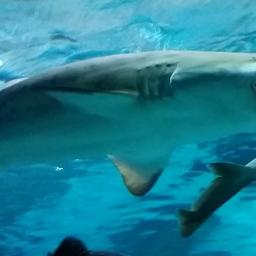
A shark surprises visitors to a South Korean aquarium on Thursday by eating another smaller shark. The footage shows a large sand tiger shark slowly swallowing a smaller banded hound shark over the course of a day, leaving only the tip of the tail visible on Friday Continue reading...
|
by Howard Lee on (#127X3)
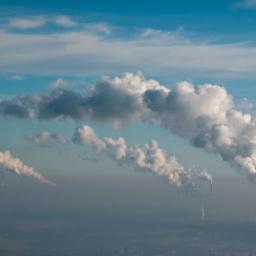
Two scientists take the long view on climate change.There’s a myopia in the climate discourse today.“Everyone is focused on what happens by 2100. But that’s only 2 generations from today. It’s like: If the world ends in 2100 we’re probably OK!†says Professor Richard Zeebe of the University of Hawai’i. “But It’s very clear that over a longer timescale there will be much bigger changes.†Continue reading...
 |
by Adam Vaughan on (#127X1)
Local authorities will get just £500,000 - down from £1m last year and £3m in 2011-12 - despite manifesto pledge to increase efforts to tackle dirty airThe government has halved the amount of money it gives English local authorities to fight air pollution, despite a manifesto pledge to do more to tackle the UK’s dirty air.Just £500,000 will be distributed to councils including Leeds, Manchester, and Southampton for 2015-2016 under the air quality grant programme, the environment department has confirmed. That is down from £1m the year before and £3m in 2011-2012. Continue reading...
|
 |
by Arthur Neslen on (#127P9)
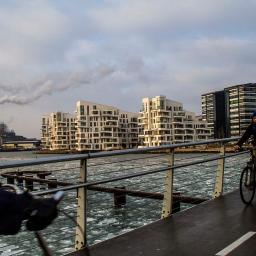
The mayor of Denmark’s capital launches a push to withdraw the city’s £700m investment fund out of coal, oil and gas holdingsCopenhagen’s mayor has announced plans to divest the city’s 6.9bn kroner (£700m) investment fund of all holdings in coal, oil and gas.If his proposal is approved at a finance committee meeting next Tuesday, as expected, the Danish capital will become the country’s first investment fund to sell its stocks and bonds in fossil fuels. Continue reading...
|
 |
by Jessica Aldred on (#127F3)
Members of the British public taking part in the Big Garden Birdwatch this weekend can expect to see lower numbers and fewer exotic species after the wettest, warmest December on recordPeople counting Britain’s garden birds as part of an annual RSPB survey can expect to see lower numbers and fewer exotic species as a result of the milder weather this winter, the charity says.Members of the British public are being urged to spend one hour counting the birds in their gardens and local parks this weekend as part of the 37th RSPB Big Garden Birdwatch (BGBW), which has become the world’s largest garden wildlife survey. Last year more than 8.5 million birds were counted by 585,000 people. Continue reading...
|
 |
by Frances Perraudin on (#127AS)
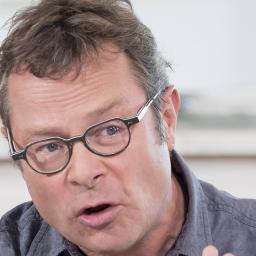
Kerry McCarthy takes her food waste (reduction) bill for its second reading in the House of CommonsCelebrity chef Hugh Fearnley-Whittingstall has urged MPs to support a Labour bill designed to reduce supermarket food waste.Labour’s shadow secretary of state for environment, food and rural affairs, Kerry McCarthy, will on Friday take her food waste (reduction) bill for its second reading in the House of Commons. Continue reading...
|
 |
by Suzanne Goldenberg in Abu Dhabi on (#127AB)
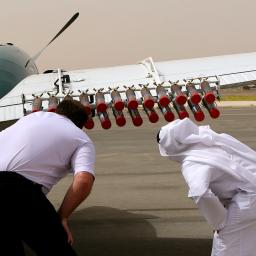
As climate change makes the desert nation hotter and drier and a growing economy uses more water, the United Arab Emirates is giving £5m to international researchers finding ways to wring more moisture out of the cloudsOn a winter morning in one of the world’s driest and most water-stressed countries, meteorologist Sufian Khaled Farrah watched on the Doppler radar screen as a cold, wet front scudded across the Arabian Gulf - and quickly called air traffic controllers.
|
 |
by Dave Hill on (#1276S)
Mayoral candidate Caroline Pidgeon would increase the capital’s congestion charge and explore introducing a new zone around Heathrow
|
by Rebecca Smithers on (#1276Y)
YouGov study for Sainsbury’s reveals high cost of Britain’s food waste, with the average family of four throwing away the equivalent of 11 meals – or nearly £60 – a month
 |
by Christine Smith on (#12752)
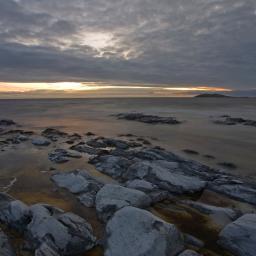
South Uist Very little about the beach is the same as usual today, for it has obviously taken a pounding over the past few weeksOn a dull morning with a brisk wind blowing there’s only one place to go for a walk and that’s the beach. At least here the light on the silvery-grey sea gives an impression of brightness, and the constant movement of the waves lends liveliness to the landscape.As is so often the case in the winter a great pile of kelp several feet thick has been deposited where the sand meets the beginning of the rocky headland. But very little about the beach is the same as usual today, for it has obviously taken a pounding over the past few weeks. Continue reading...
|
 |
by Arthur Neslen in Brussels on (#1272Q)
Average summer temperatures in Europe are about 1.3C hotter than two millennia ago due to manmade climate change, scientists sayEurope has almost certainly experienced warmer summers in the last three decades than at any other time since the Roman empire, according to a study published on Friday in the Environmental Research Letters journal.Since 1986, mean summer temperatures have been about 1.3C hotter than they were two millennia ago, while heatwaves have been longer, more frequent and more persistent, the study says. Continue reading...
|
by Guardian Staff on (#126TK)
After receiving a call from a distressed homeowner about a large lace monitor lizard that has been menacing her chickens, professional snake catcher Ross, from the Sunshine Coast Snake Catchers in south-east Queensland, tracks down the goanna. He struggles to avoid the very sharp claws of the creature that the late eco-warrior Steve Irwin referred to as a ‘land crocodile’, but luckily, a few scratches later, it is safely relocated
by Rebecca Dargie on (#126PC)
Cheaper than electric cars and easier to charge, the latest electric or pedal-assist bikes are a practical solution to commuting in the cityThey say there is nothing as zealous as a convert. As someone who last year joined the growing numbers of commuters who zoom into work by electric bike, I could not be more zealous.Related: Australia's biggest bike-lane sceptic 'wants to destroy cycling in Sydney' Continue reading...
 |
by Eleanor Ainge Roy in Oban on (#126P2)
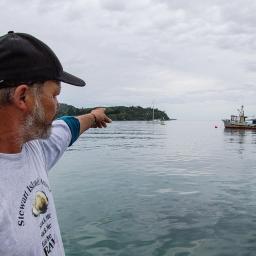
Residents of the far southern settlement of Oban, on Stewart Island, claim sharks are being attracted by tour operators who offer the ultimate in thrillseekingAt the South Seas hotel on Oban waterfront, the conversation, as it so often does, hovers over a subject that swims just a few kilometres from the town’s shores: the great white shark.“I love the sharks, they are magnificent creatures, but Jesus Christ we don’t know enough about them to be out there feeding them – it’s like fucking with a T-Rex with fins,†says Richard “Squizzy†Squires, a 62-year-old who runs La Loma fishing charters. Continue reading...
|
 |
by Guardian Staff on (#126P4)
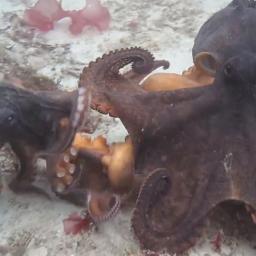
Researchers reviewing more than 50 hours of footage of octopuses in Jervis Bay, New South Wales, discover a hitherto unknown complex social life. Among the discoveries published in Current Biology is the use of colour to display aggression. In this underwater footage three octopuses can be seen interacting, fighting and changing colours. Changing colour had been primarily considered a means to hide from predators – but here octopuses assume a darker colour before fighting. After one fight the loser can be seen turning a paler colour and camoflaging himself as he retreats Continue reading...
|
by Michael Slezak on (#126NH)
Researchers find octopuses, which are known for being solitary, are not above a little spat with the neighbours and have a complex social life when they coexistThey’re more closely related to oysters than they are to mammals but it turns out octopuses are surprisingly similar to us when it comes to fighting with their neighbours.Octopuses, renowned for surprising intelligence, were usually pretty solitary beings, said Peter Godfrey-Smith from the University of Sydney. “You do tend to see them on their own. And if you put two octopuses in a tank together you often end up with one octopus,†he told Guardian Australia. Continue reading...
by AFP in Santiago on (#126AG)
Four albino peregrine eggs were seized from a convicted wildlife trafficker at an airport in Brazil. One survived to be returned to a nest on a Patagonian cliff faceRelated: 'Wildlife criminal' goes to jail for smuggling falcon eggsA rare falcon egg stolen from its nest in Chile to be trafficked to Dubai for tens of thousands of dollars survived and hatched a chick, but three others failed to make it. Continue reading...
 |
by Reuters in Dakar on (#1267G)
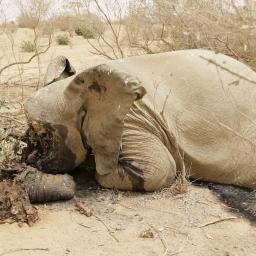
Conservationists urge government to tackle ivory trafficking as 16 elephants killed in this year, with over 80 killed in 2015Mali’s elephants, one of just two remaining desert herds in the world, will be gone in three years unless the government does more to protect them, a conservation group has warned.Poachers have taken advantage of the chaos from a growing Islamist insurgency and other unrest in the lawless north to step up ivory trafficking – a trade that the United Nations says funds militants. Continue reading...
|