 |
by Maev Kennedy on (#11PY6)
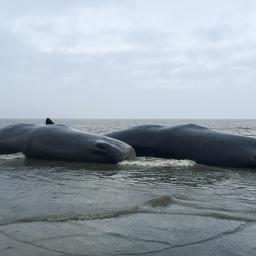
Scientists believe whales are from same pod as one that died on a Norfolk beach and are worried about surviving membersThree dead sperm whales have washed up on a beach near Skegness. Crowds flocked to see the creatures, believed to be from the same pod as one that died on Hunstanton beach in Norfolk, despite efforts to help it back into deeper water after it became stranded.Scientists are now concerned about any surviving members of the pod, thought to have comprised at least six whales. Continue reading...
|
| Link | http://feeds.theguardian.com/ |
| Feed | http://feeds.theguardian.com/theguardian/environment/rss |
| Updated | 2026-08-20 13:31 |
 |
by Shane Hickey on (#11PE4)
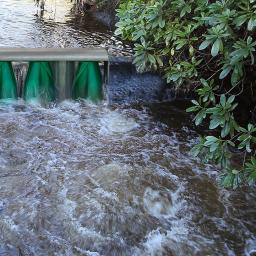
Lunagen has created a system for generating electricity from slow moving water in areas where space is at a premiumFor entrepreneur Lauren Dickerson, water mills are an ancient form of renewable energy that can be brought into the 21st century. Continue reading...
|
by Tim Adams on (#11NZ3)
Like his brother, physicist and meteorologist Piers Corbyn is a man of revolutionary zeal. His own battle, however, is against all this ‘climate-change nonsense’…When Jeremy Corbyn won the leadership of the Labour party in September he celebrated in a pub up the road from the Houses of Parliament with a thank you to supporters and a rousing rendition of the Red Flag. On the edge of the impromptu stage that day, beside Len McCluskey of Unite and John McDonnell the future shadow chancellor, was a singular figure singing with particular pride: Piers Corbyn, the new leader’s elder brother, who has, you could say, led a parallel career of stubborn principle to his younger sibling. I was in the euphoric crowd that day, and since then I’ve wondered a bit about the relationship between the brothers, what they have learned from each other. With some of this in mind I called Piers recently and asked if he might like to talk about some of that. He agreed, but typically on the basis that he would happily talk about any subject under the sun – apart from his relationship with Jeremy and the vexed question of how his leadership is going. He shares much of his brother’s mistrust of the press; recently, he suggests, the Independent published an account of an exchange that had taken place over a family Christmas dinner. That wasn’t on. What he will talk about, though, is the thing he has talked about for just about as long as he can remember: the weather.On this very British basis we met last week in a cafe over the road from his office on Borough High Street in south London. You don’t have to speak to Piers for very long to realise that at least a couple of Corbyn family traits are indelible: the first is that intransigent rasp of a voice with faint traces of west country burr; the second is the sense that life, like politics, is best played as a long game. Continue reading...
 |
by Daniel Boffey on (#11N3Q)
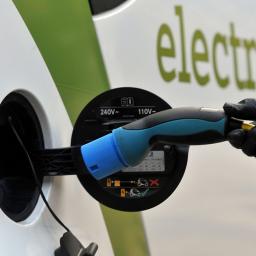
New fund aims to widen network of charging points across the countryBritain is to get its first “electric service stations†as part of a £40m government fund to encourage drivers to switch to plug-in cars.Four new stations are to be built, with at least one being located on the M1, ,which became the UK’s first inter-city motorway when it was opened in 1959. The state-of-the-art hubs will make it easier for electric vehicle drivers on motorways and in city centres to charge their car and will ease concerns over the range of the vehicles. Continue reading...
|
 |
by Robin McKie, science editor on (#11N3X)
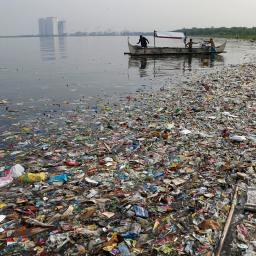
From supermarket bags to CDs, man-made waste has contaminated the entire globe, and become a marker of a new geological epochHumans have made enough plastic since the second world war to coat the Earth entirely in clingfilm, an international study has revealed. This ability to plaster the planet in plastic is alarming, say scientists – for it confirms that human activities are now having a pernicious impact on our world.The research, published in the journal Anthropocene, shows that no part of the planet is free of the scourge of plastic waste. Everywhere is polluted with the remains of water containers, supermarket bags, polystyrene lumps, compact discs, cigarette filter tips, nylons and other plastics. Some are in the form of microscopic grains, others in lumps. The impact is often highly damaging. Continue reading...
|
 |
by John Vidal on (#11N3V)
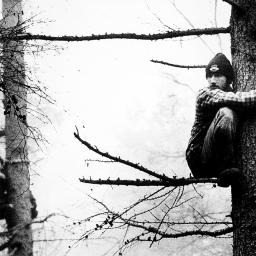
It was the anti-road demonstration that gave birth to a generation of eco-warriors. Those who were there in 1996 tell how the standoff changed the physical and political landscape
|
 |
by Guardian Staff on (#11N3S)
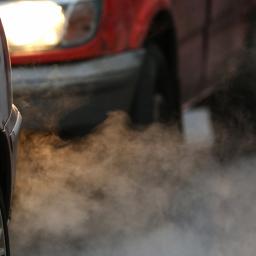
Breathing safe air is a fundamental human right all too often denied to peopleBreathing safe air is about as fundamental as a human right can be. It is a disgrace that on average 79 people die prematurely each day in Britain from particulate pollution and that NO limits for a whole year have been breached in just a few days in several London streets (“Shock figures to reveal deadly toll of global air pollutionâ€, News).The situation requires urgent action. Diesel fuel is the worst offender for both these pollutants, so we need to impose a tax on the sale of new diesel vehicles, high enough to ensure that very few people will choose to buy diesel cars in future. Continue reading...
|
 |
by Chris Johnston on (#11MAR)
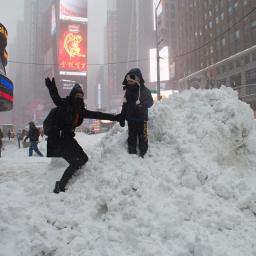
At least 45 flights between UK and US airports cancelled as 10 state governors declare emergenciesThe huge blizzard affecting much of the US east coast has also caused travel disruption in the UK, with at least 45 flights cancelled on Saturday.Related: Winter storm pummels US east coast as residents urged to stay home Continue reading...
|
 |
by Guardian Staff on (#11M7Y)
Video from the Smithsonian’s National Zoo (also known as the National Zoological Park) shows Tian Tian the giant panda enjoying the new layer of snow in his habitat. The Smithsonian’s National Zoo is home to four giant pandas and runs one of the world’s leading panda conservation programs
|
 |
by Associated Press on (#11M1N)
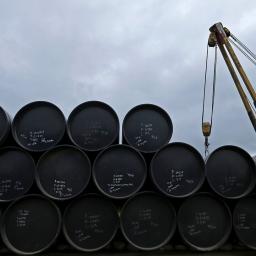
Kinder Morgan’s Trans Mountain project to expand system’s crude oil capacity is ‘all risk and no reward’ for tribes, who were not consulted, lawyer notesA proposed pipeline-expansion project in Canada will put the fishing rights and cultural heritage of US tribes at risk, a lawyer representing several Washington state tribes told Canadian energy regulators.Kinder Morgan’s Trans Mountain project would nearly triple pipeline capacity from 300,000 to 890,000 barrels of crude oil a day. It would carry oil from Alberta’s oil sands to the Vancouver area to be loaded on to barges and tankers for Asian and US markets. The project would dramatically increase the number of oil tankers that ply Washington state waters. Continue reading...
|
 |
by Jim Powell on (#11KMF)
Migrants struggle in the Balkan winter, the first flower grown in space, Rafael Nadal at the Australian Open – the best photography in news, culture and sport from around the world this week Continue reading...
|
 |
by Andrew Testa/Panos on (#11KMQ)
20 years ago construction began on a road that destroyed hundreds of acres of woodland near the town of Newbury in Berkshire. Photographer Andrew Testa visited the site many times documenting the protests for the Observer and the Guardian Continue reading...
|
 |
by Charles Foster on (#11K7H)
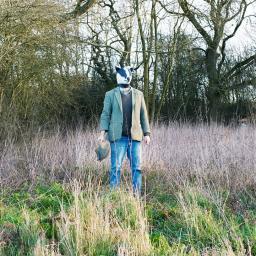
Charles Foster wanted to understand the lives of animals. So he headed to the woods with his son – eating worms, navigating by smell and sleeping in a sett
|
 |
by Simon Hattenstone on (#11K7F)
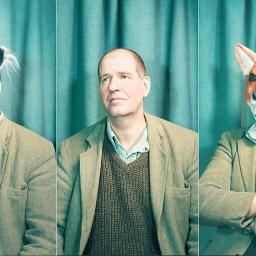
Naturalist Charles Foster wanted to reconnect with his inner beast – so he tried living as a badger, a deer and a fox
|
 |
by Ray Collier on (#11JZA)
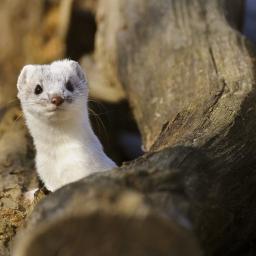
Achvaneran, Highlands The stoat seemed almost ethereal in its ermine winter coat, looking incongruously white with no snow for camouflageLooking at one of the bird feeding stations from the end of the house, I could see two male siskins attacking the peanuts with their usual enthusiasm. At least until a female great-spotted woodpecker decided the feeder was hers and the siskins moved to another. Then a small movement of white at the bottom of the door of the disused dog kennel attracted my attention. There was a tiny hole and whatever it was it seemed to be peering out at something. I reached for binoculars just in time to see a white stoat dart out of the hole and push something I could not identify into the kennel.The stoat seemed almost ethereal as it scamperedaround in its ermine winter coat, looking incongruously white with no snow for camouflage. Judging by its length it was a male, as they are larger than the females, and the characteristic black tip to the tail seemed longer than usual. Continue reading...
|
 |
by Scott Bixby in New York on (#11JEV)
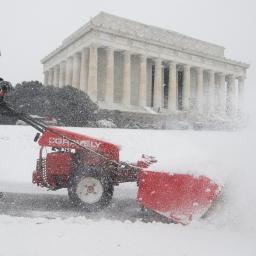
Washington DC is at the center of the blizzard’s aim, where forecasters have warned residents to brace for more than 30in snow and wind gusts up to 50mphMillions of people across a dozen states are bracing for a weekend of travel disruption, possible power outages and white-out conditions as a potentially “paralyzing winter storm†begins to bear down on the eastern US on Friday.
|
 |
by Associated Press on (#11J67)
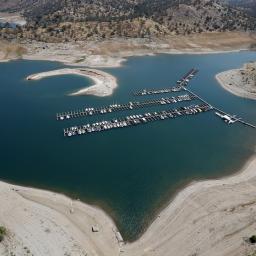
Releasing an initial water outlook for farmers, federal officials said heavy rains and strong Sierra Nevada snowpack could help, but reservoirs remain lowThe recent onslaught of El Niño storms only slightly increased the levels of California reservoirs that stand at half of historic depths for this time of year, federal officials said on Friday while releasing an initial water outlook for 2016.Heavy rainfall has soaked into a landscape that has been parched by four years of drought, and the snowpack in the Sierra Nevada has grown but hasn’t started to melt off and replenish the critically low reservoirs, US Bureau of Reclamation spokesman Shane Hunt said. Continue reading...
|
 |
by Oliver Milman in New York on (#11HPK)
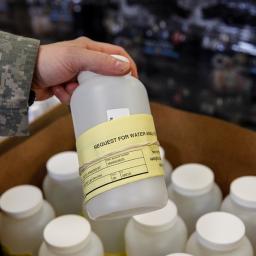
Exclusive: Documents seen by the Guardian reveal questionable practices that mean people’s drinking water is at risk in ‘every major city east of the Mississippi’Water authorities across the US are systematically distorting water tests to downplay the amount of lead in samples, risking a dangerous spread of the toxic water crisis that has gripped Flint, documents seen by the Guardian show.The controversial approach to water testing is so widespread that it occurs in “every major US city east of the Mississippi†according to an anonymous source with extensive knowledge of the lead and copper regulations. “By word of mouth, this has become the thing to do in the water industry. The logical conclusion is that millions of people’s drinking water is potentially unsafe,†he said. Continue reading...
|
 |
by Rebecca Smithers Consumer affairs correspondent on (#11HDX)
Hackney Brewery and food waste charity Feedback link up to launch quality pale ale that’s made from surplus loaves of breadIts makers joke that it is the best thing since sliced bread, as the first UK-produced beer made from discarded crusts and unsold loaves launches this weekend.Toast ale, made entirely from surplus bread that would otherwise by thrown away by bakeries, delicatessens and supermarkets is the brainchild of Tristram Stuart – who has linked up with Hackney Brewery to produce the new ale. Continue reading...
|
 |
by Francesca Perry on (#11HB3)
City links: Floodable parks in Denmark’s capital, the rise of woodland gentrification and the Amsterdam urban farm powered by urinals all feature in this week’s roundup of the best city storiesThis week’s collection of our favourite urban stories takes us from Copenhagen to Amsterdam via New York, Paris and a cabin in the woods. As ever we’d love to hear about your favourite stories too – share them in the comments below. Continue reading...
|
 |
by Dave Hill on (#11H5G)
A community cycling scheme in Ilford is encouraging ethnic minority Londoners to take to two wheelsIn his Foreword to his 2013 Vision for Cycling in London, Boris Johnson candidly acknowledged that “truly mass participation†in two-wheel travel around the capital cannot be achieved unless more Londoners from those groups under represented in the city’s small but growing cycling population decide it’s better to get around by bike. He declares (on page 5) his wish for more women and older people to take up cycling, along with “more cyclists of all social backgrounds†and “more black and minority ethnic Londoners.†How might this laudable objective be achieved?It’s plain to those who wish to see that installing segregated infrastructure is not the universal answer to this question. Though safety considerations are a major factor inhibiting a lot Londoners from travelling by bike, there are also significant, specific cultural factors at work. The mayor’s Foreword didn’t mention these, but Transport for London has made a contribution to addressing them in partnership with the environmental regeneration charity Groundwork. Grants of up to £10,000 have been awarded to 31 community organisations of different kinds to fund cycling projects seeking to embrace those groups of Londoners yet to be much seduced by the hoped-for “cycling revolutionâ€. Continue reading...
|
 |
by Eric Hilaire on (#11H05)
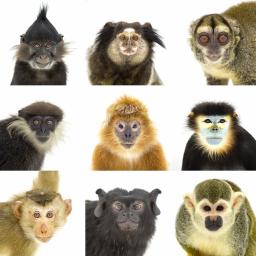
Mountain lion kittens, Japanese snow monkeys and a new species of frog are among this week’s pick of images from the natural world Continue reading...
|
 |
by Damian Carrington on (#11GQQ)
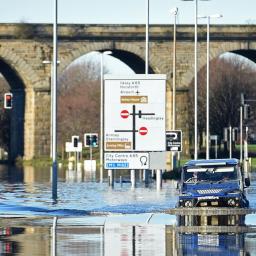
Planned defence that would have covered areas of the city submerged in December’s floods was delayed and massively reduced, analysis revealsThe city of Leeds, submerged by devastating floods in December, has failed to win any new funding for better flood defences after environment secretary Liz Truss met the city’s MPs.A Guardian analysis of planned flood defences in Leeds shows that a £180m scheme that was delayed and heavily downsized following government funding cuts in 2011 covered areas of the city submerged by recent flooding. Continue reading...
|
 |
by Guardian Staff on (#11GM6)
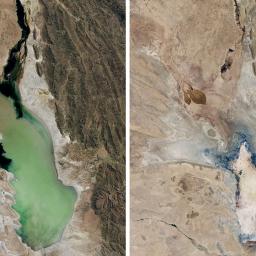
Overturned fishing boats and dried-out carcasses lie under the glaring sun on what used to be Bolivia’s Lake Poopó. The country’s second-largest lake was officially declared evaporated last month, which experts say is an effect of climate change. A fisherman says he has been left without income, and thousands of others have lost their livelihoods
|
 |
by Joanna Walters and Jessica Glenza in New York on (#11GA7)
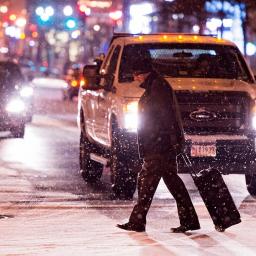
The storm is prompting severe warnings because of intense winds and an unusual amount of snowfallNational weather experts are warning of a potentially “crippling winter storm†bearing down on the eastern US from Friday through Sunday that began forming quickly late Wednesday, with deadly results.Washington, DC, is in the bull’s eye of the approaching tempest, but storm conditions ranging from hail and severe thunder to several feet of snow are forecast from Florida to New England. Continue reading...
|
 |
by Mona Chalabi on (#11G9J)
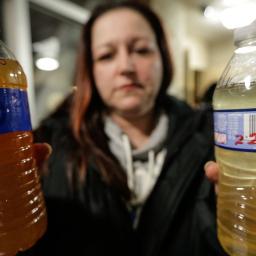
What does it mean that residents of Flint, Michigan, consumed water with dangerously high levels of lead for years before it was recognized as a problem?What does it mean that residents of Flint, Michigan, consumed water with dangerously high levels of lead for years before it was recognized as a problem? Here are some fast facts about just what’s in the Flint water and how it came to pass. Continue reading...
|
 |
by Rose Hackman on (#11GA9)
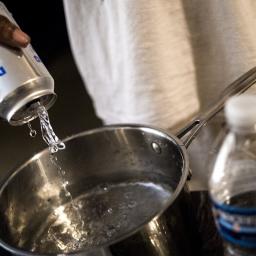
Researcher says safe approach would be to assume that at this point all children in the Michigan community have been exposed to lead-contaminated waterAt the beginning of 2015, Flint resident Lewenna Terry’s then-9-year-old son started having problems concentrating.
|
 |
by Press Association on (#11G2P)
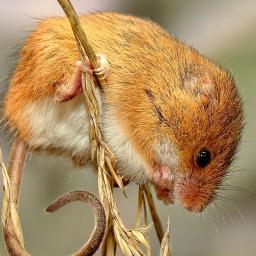
Animal immortalised in Beatrix Potter books makes a comeback, after being locally extinct for over 25 years, thanks to conservation efforts
|
 |
by Justin McCurry in Tokyo on (#11G1D)
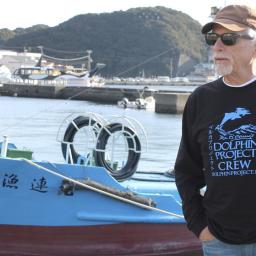
Ric O’Barry is accused of trying to enter the country using tourist visa to join campaign against slaughter of dolphins in TaijiA leading US animal rights activist is to be deported from Japan after being accused of trying to enter on a tourist visa to support a campaign against the slaughter of dolphins.
|
 |
by Winifred Bird for Environment 360, part of the Gua on (#11G1F)
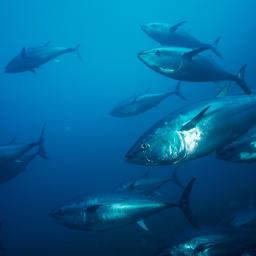
A group of small-scale fishermen are waging an increasingly public struggle against industrial fleets using sonar and huge nets to scoop up massive catches of spawning tuna, reports Environment 360One after another, the fishermen stream into a makeshift office at Katsumoto port, on the island of Iki in the Sea of Japan. Outside, their small white boats are docked as a storm rages; inside, they chain-smoke and banter with the ease of lifelong acquaintance. Their business, however, is serious: Pacific bluefin tuna are disappearing from the sea, and somehow they must stop the decline.
|
 |
by Lenore Taylor on (#11FXN)
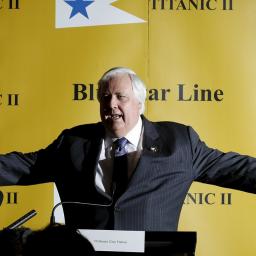
It seems quite reasonable to say Palmer – the allegedly mega-rich and megalomaniac anti-politician – has taken the entire political system for a rideIn December, the US Buzzfeed editor, Ben Smith, sent a memo to staff about the appropriate way to refer to Donald Trump in stories or on social media.
|
 |
by Calla Wahlquist on (#11FTJ)
Premier says project ‘critical’ for state as environment minister orders independent review of the Environmental Protection AuthorityThe West Australian government has formalised its plans to push ahead with the controversial Roe 8 freeway in southern Perth, announcing it would ask the Environmental Protection Authority to reassess the project and appeal the supreme court decision that found the original approval “invalidâ€.The chief justice Wayne Martin declared both the EPA’s assessment of the $500m project and the state government’s subsequent approval “invalid†in December, saying the EPA “took no account of its own published policies at the time it made its decisionâ€. Continue reading...
|
 |
by Arthur Neslen Brussels on (#11FK6)
Europe’s proposals for a landmark international fuel efficiency standard for aircraft would save considerably less carbon emissions than those put forward by the USEurope is calling for a considerably less ambitious carbon emissions standard for airplanes than the US in a new global push to reduce aviation’s contribution to climate change, the Guardian has learned.The standard would mark a turning point for efforts to regulate fast-growing emissions from airplanes, which are not covered by December’s much-hailed Paris climate agreement. Continue reading...
|
 |
by Fiona Harvey, Paris on (#11FFE)
Ratifying the agreement at a meeting in New York to enshrine it in international law is the next step, says France’s foreign minister Laurent FabiusWorld leaders should give international efforts to fight global warming a new push by ratifying the historic Paris climate deal in person, according to France’s foreign minister.Laurent Fabius, who steered December’s UN talks, wants heads of state to ratify the accord at a meeting in April in New York, so that it can be enshrined in international law. Nations accounting for more than 55% of global emissions must formally sign up before the Paris agreement can be made official. Continue reading...
|
 |
by Matt Shardlow on (#11FDT)
Lowick, Northamptonshire There is now a scatter of midland vineyards that stretches north, even into YorkshireThe county awakes to its first snow textured landscape of the winter. A scant covering, on unfrozen soil, but enough for the children to tumble out into snowballs, snowman building and careering down north facing slopes on a variety of contraptions; that is until they rub the snow away.Harper’s Brook is a significant tributary of the Nene, winding south-east from Corby, down a shallow valley, past Brigstock, Sudborough and Lowick, before jagging north and joining the Nene at Aldwincle. Between Sudborough and Lowick the valley floor is mostly still grazing land. One field contains a couple of dozen young Suffolk rams, thick set, black legs and head, and characteristically long and droopy black ears. They loaf about in little squads, watching us with mock disinterest. Continue reading...
|
 |
by Michael Slezak on (#11F6W)
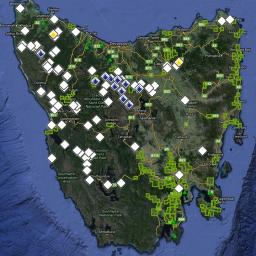
Conservationists express fears for ancient, slow-growing species of native pine in high-altitude areas where fire is not a natural part of the ecologyFires burning across Tasmania are producing the worst crisis the world heritage forests there have faced in decades, says a long-term conservationist from the area.Geoff Law, formerly a conservationist at the Wilderness Society, told Guardian Australia: “In my opinion – and I’ve been working on these issues since 1981 – it’s the gravest crisis the world heritage area has faced in that time.†Continue reading...
|
 |
by Associated Press on (#11F1W)
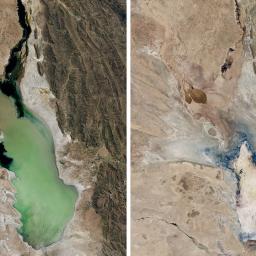
As Andean glaciers disappear, so do the sources of Lake Poopó’s water, say scientists who blame a warming environment, El Niño and miningOverturned fishing skiffs lie abandoned on the shores of what was Bolivia’s second-largest lake. Beetles dine on bird carcasses and gulls fight for scraps under a glaring sun in what marshes remain.Lake Poopó was officially declared evaporated in December. Hundreds, if not thousands, of people have lost their livelihoods and gone. Continue reading...
|
by Guardian Staff on (#11F08)
Arnie Mathiesen, the assistant director general of the fisheries and aquaculture department at the Food and Agriculture Organisation of the UN, discusses the challenges of sustainable management when the reliability of seafood is in doubt. An estimated 1 billion people depend on fish as their main source of animal protein and, to feed the 2 billion extra people projected to live on Earth by 2050, food production must rise by 60% Continue reading...
 |
by Associated Press on (#11EXX)
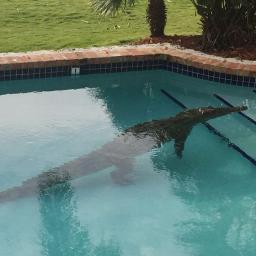
The 2.4 metre croc was floating in the shallow end of the pool before officers safely removed itA Florida Keys homeowner had an early morning surprise when he woke up to find an 8-foot crocodile taking a dip in his backyard pool.Monroe County sheriff’s office spokeswoman Becky Herrin says a resident in Islamorada, 83 miles (130km) south of Miami, called at about 7.30 am on Thursday to report the crocodile in his pool. Continue reading...
|
by Giles Parkinson on (#11EWQ)
In an ideal world everyone would be on the power network, but Australians have been saddled with what is undoubtedly the most expensive grid in the worldLast year, some friends moved into the new three-bedroom home they had built on semi-rural block of land in northern NSW. Despite being within three kilometres of a large town, and with the power network running along the local road, they chose not to connect to the grid.
 |
by Associated Press in Chicago on (#11EV1)
Susan Hedman, who presided over area that includes Michigan, is stepping down 1 February, the Environmental Protection Agency chief said ThursdayA regional director with the US Environmental Protection Agency is resigning in connection with the drinking water crisis in Flint, Michigan.
|
 |
by Press Association on (#11EPV)
The carnivorous plant regulates its feeding behaviour depending on how many times its trigger hairs are stimulatedVenus flytraps can count, according to scientists who tested the carnivorous plants and found they use their mathematical skill to conserve energy and avoid false alarms.Researchers in Germany learned that the Venus flytrap adjusts its feeding behaviour according to the number of times the sensitive trigger hairs on its special leaves that resemble spring traps are stimulated. Continue reading...
|
 |
by Ryan Felton in Detroit on (#11EJV)
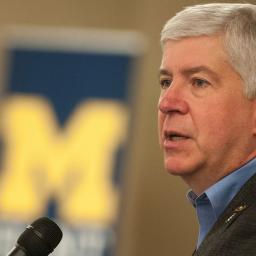
Only a fraction of the Michigan governor’s documents released represent communications about the contaminated water supply, and much is redactedMichigan governor Rick Snyder cited a commitment to transparency and accountability when he announced he would voluntarily release his emails related to the city of Flint, Michigan.“The Flint water crisis is an extraordinary circumstance and therefore I’m taking this unprecedented step of releasing my emails to ensure that the people of Michigan know the truth,†Snyder wrote. Continue reading...
|
 |
by Agence France-Presse in Helsinki on (#11DS9)
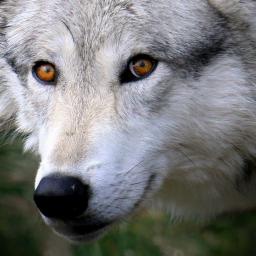
Authorised hunt of nearly 50 of the country’s 250 grey wolves, beginning this weekend, aims to curb illegal poachingFinnish hunters have been authorised to kill nearly 20% of the country’s wolf population in a controversial trial cull that begins this weekend, aimed at managing stocks.Authorities hope the sanctioned hunt of nearly 50 of the country’s estimated 250 grey wolves will curb illegal poaching, which some rural landowners have resorted to in recent years after seeing wolves on their property, sometimes killing their dogs and livestock. Continue reading...
|
 |
by Sarah Butler on (#11D2M)
Recent flooding shut brick ovens at United Biscuits plant in Carlisle used to toast fabled cracker with McVitie’s ginger nuts and custard creams also hitA shortage of some of Britain’s best-loved biscuits is looming after flooding hit production at a Carlisle factory.The flood damage has halted production of Carr’s water biscuits. A variety of other favourite names usually produced at the site have also been hit, including McVitie’s ginger nuts, Crawford’s custard creams and Crawford’s shortcake. Continue reading...
|
 |
by Oliver Milman in Kure Beach, North Carolina on (#11DQD)
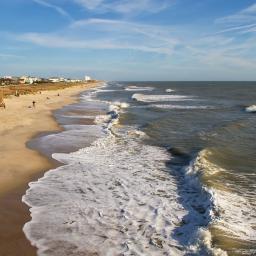
Irate residents in small coastal towns say Obama’s plan to open a new fossil fuel frontier would harm endangered marine life – as politicians warn of ‘tragedy’Kure Beach, North Carolina, doesn’t seem a likely place to call itself “ground zero†for a key plank of Barack Obama’s presidential legacy. The small coastal town’s concerns rarely stretch beyond its golden beaches and shucked oysters; but it has found itself at the forefront of a struggle to head off a huge expansion in US oil drilling.
|
 |
by Karl Mathiesen on (#11DK6)
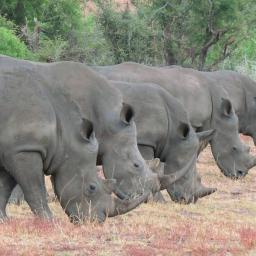
2015 may have seen a small dip in the number of rhino poached in South Africa, but the level of killing is still double natural reproduction ratesThe announcement that South African rhino poaching deaths fell slightly in 2015 adds a misleading gloss to another devastating year in which criminal gangs expanded their operations into new, even more delicate rhinoceros populations.South Africa’s environment minister Edna Molewa said on Thursday that 1,175 dead rhinos were discovered during the country’s annual census of poaching activities - 40 less than the 2014 record of 1,215. Continue reading...
|
 |
by Mary Creagh on (#11D7M)
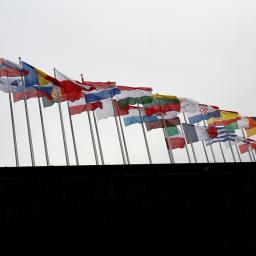
Strong progress made on everything from biodiversity to recycling will all be put at risk if the UK votes to leave the European UnionScientists recently declared that the evidence is compelling enough to say we are now living in the Anthropocene. Humanity’s impact on the Earth’s atmosphere, oceans and wildlife has, they argued, pushed the world into this new epoch.Britain is a world leader on the environment and has played a pivotal role in the European Union on this issue ever since 1986, when Margaret Thatcher signed the Single European Act, which established the EU’s competence in this area. If we are to play our part in ensuring a green future for the UK, we must remain in the EU.
|
 |
by Callum Roberts on (#11CWN)
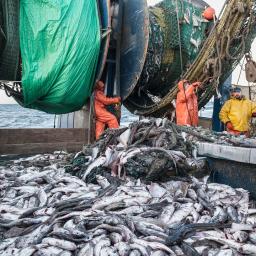
Jut when we need it most, the very future of seafood is in doubt. How did the official figures get it so wrong – and can anything be done before it’s too late?About 164,000 years ago, people living in a South African coastal cave discovered the joy of seafood. Discarded marine snail shells deeply buried in the muck of human habitation represent the first evidence of seafood dinners. From then on, the increasing presence and richness of archaeological remains, and historical evidence, testify to our deepening love affair with seafood.Related: Fish stocks: Good news is a drop in the ocean | Editorial Continue reading...
|
 |
by Terry Slavin on (#11CT3)
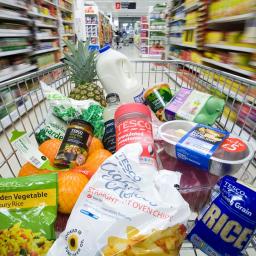
A coalition of 30 leaders from business, governments and NGOs wants to halve the amount of food wasted globally by 2030
|