 |
by Oliver Holmes in Bangkok on (#109DZ)
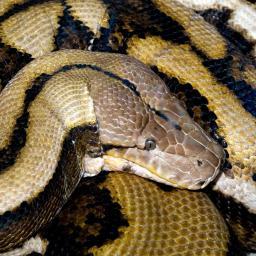
Sightseer’s nose stitched up after snake bites face during a show in the Thai holiday spot of PhuketA Thai company that runs snake shows has paid £2,200 (US$3,200) in damages to a Chinese tourist after she was attacked by one of their pythons when she tried to kiss it.A video clip posted online shows two men during a show calmly holding the python. A long-haired woman wearing a backpack leans over to kiss it. Continue reading...
|
| Link | http://feeds.theguardian.com/ |
| Feed | http://feeds.theguardian.com/theguardian/environment/rss |
| Updated | 2026-08-21 15:19 |
 |
by Mark Cocker on (#109CH)
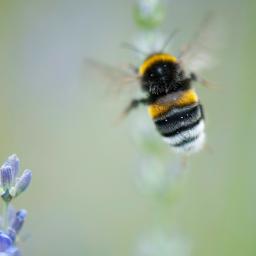
Claxton, Norfolk I was so shocked I looked round for someone to receive the tidings: a bumblebee at New Year!
|
by Agence France-Presse on (#109AV)
Matthias Müller said the company’s credibility needed to be fixed as he announced a $900m plan to build a new SUV at VW’s Tennessee factoryVolkswagen chief executive Matthias Müller has apologized for cheating diesel car emissions tests on his first official US visit since the scandal broke in September.
 |
by Arthur Nicholson on (#108PA)
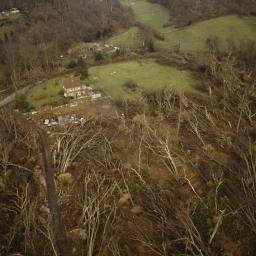
Originally published in the Manchester Guardian on 12 January 1916We have again during the past week had some heavy rainfalls, keeping the rivers of this district at flood level, but the water falls rapidly after the returning storms, leaving the meadowland each time covered with silt. There is no doubt, therefore, that this season has been a very fortunate one up to the present for those who have such land in their holding.The gale of the New Year time has, I find, done considerable mischief. A friend tells me he has had about four hundred trees blown down, including some large park timber that had no signs of decay, but no doubt the wind caught them from an unusual quarter, and they were uprooted. Last night the wind blew very hard, but at daylight the air was calm and birds were singing as they do on an April morning. Signs of spring are everywhere. The primroses are out in the gardens though I have not seen any in the woodlands. A poplar tree, potted two years ago, made a magnificent growth last season – an exceptional one for tree development, - and the young branches are already showing a number of small but perfect leaves. Continue reading...
|
 |
by Gary Fuller on (#108J8)
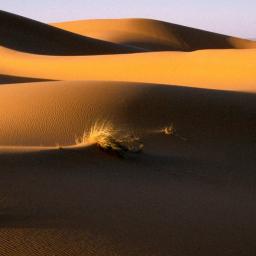
It seems astonishing that the Amazon rainforest is fertilised by Saharan dust blown across the Atlantic. The large sand grains in dust storms fall quickly to the ground, but smaller particles can travel thousands of kilometres. Saharan dust can cause air pollution in the eastern Mediterranean to reach 10 times European limits. Italy, Spain and Portugal are also frequently affected.The southerly winds that gave most of the UK its warmest December on record also bought Saharan dust. From London to South Wales, it caused air pollution to reach four on the 10-point UK pollution scale on the 17th and eight on the 27th . Smaller quantities were measured in Leicester and over most of England. Continue reading...
|
 |
by Ben Jacobs in Washington on (#107A7)
Ted Cruz, an avowed opponent of the influential biofuel lobby, is riding high in the polls as the global oil price falls. Big Corn is staring down the barrelFor decades, presidential candidates seeking to compete in the Iowa caucuses have dutifully pledged their support for the production and sale of ethanol.Related: Republican 2016 contenders invade Iowa to talk up ethanol and court rich donors Continue reading...
|
 |
by Press Association on (#107TP)
Mild weather of December expected to give way to wintry blast this week, with highs of 5C (41F) in south and freezing in northBritain is bracing itself for an icy blast over the coming week when temperatures are expected to drop below freezing and bring snow and widespread frosts.The chill weather will be a sharp change from the mild weather last month, the wettest on record and the warmest ever December, when temperatures averaged 7.9C (46.2F). Continue reading...
|
by Jason Wilson on (#107H4)
Hunting for the underground fungus delicacy with dogs ensures ripe truffles and minimum environmental impact – and it’s a great way to bond with a canineJason Swindle has already learned the best and hardest lesson that his dog can teach. “It’s about trust. River does the craziest things when we’re out here – she charges up cliffs or hillsides – and I have really just had to learn to trust her.â€This trust is perhaps even sweeter than the prize she helps him find beneath the forest floor: truffles. Continue reading...
 |
by Joanna Walters in New York on (#107EB)
Seismologists’ warnings about hydraulic fracturing and wastewater disposal divide residents, politicians and companies in Colorado and Oklahoma, while temblors increase around the regionOklahomans don’t blink when they hear warnings about tornadoes, drought or ice-storms. Earthquakes, however, catch their attention.Related: Series of small earthquakes hit near Oklahoma crude oil storage hub Continue reading...
|
 |
by Benjamin Preston on (#107AV)
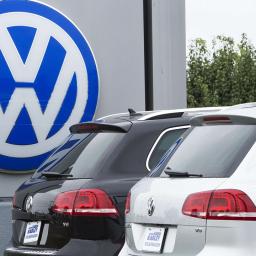
Volkwagen will showcase its new vehicles at the US’s largest car show on Monday in the face of the ongoing fallout from DieselgateOn Sunday night, as Detroit fills with auto journalists and car executives, Volkswagen will hold a media party at Fishbone’s, the Cajun-themed restaurant in the city’s Greektown neighbourhood. It’ll be the opening salvo in a PR offensive the German company will be hoping can finally turn the tide after arguably the worst year in its history.Three months after the revelation that Volkswagen Group was using an illegal software fix called a “defeat device†to circumvent US environmental regulations on about 600,000 of its diesel-powered passenger cars, the company will showcase its new vehicles at the US’s largest car show on Monday.
|
 |
by Matthew Adams on (#1071C)
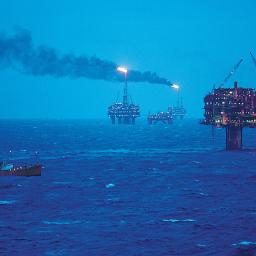
Tom Blass proves a compelling guide as he travels through the myth and history of northern Europe’s marginal watersAt the end of this long, rich, illuminating and enjoyable study of the North Sea, Tom Blass describes his subject as an entity that “words can only failâ€. “What I know,†he continues, “is that it is everything we say it is and none of those things, that it exists inside us and yet transcends us – possesses no boundaries other than those we inflict on it, neither moral values, nor narrative structures. They are all with us and not the sea.â€This might strike some as a curious admission. But it is Blass’s knowledge that his study is doomed to be partial, combined with his concern that he risks dispelling the wonder and the variety of his subject by containing it within language, which lends this book much of its power. He is often uncertain about how to think and write about the subjects he encounters – and that lends his judgments weight. Continue reading...
|
 |
by Nicola Davis on (#1071A)
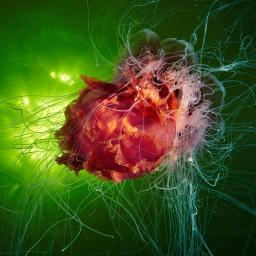
Diver and photographer Alexander Semenov braves Russia’s freezing White Sea to explore the wonders beneathIt looks like a bloody organ wrenched from a human body. In fact, this is a lion’s mane jellyfish. Shot last summer in Russia’s White Sea by diver and photographer Alexander Semenov, it is one of a host of underwater creatures few would want to meet. But Semenov is different. “I think I’m [a] lucky guy,†he says, reflecting on his opportunity to both see these remarkable creatures for himself, and reveal their splendour to others.The son of two biologists, Semenov is head of a team of scientific divers at the White Sea Biological Station. He sees himself akin to “a 19th-century naturalist†in his approach to investigating and probing the planet’s myriad lifeforms. Continue reading...
|
by Australian Associated Press on (#106W2)
A Parks Victoria report warns than herbides and other chemicals from a wash-down station near a popular swimming spot created a toxic cocktailA toxic cocktail of chemicals and herbicides has been washed into Melbourne’s Yarra River, killing trees and creating a public health risk, according to a Parks Victoria report.An internal incident and hazard summary report on Parks Victoria operations between January and October 2015 has revealed toxic chemicals were flowing into the Yarra from a wash-down facility in the Warrandyte state park, located next to popular swimming spot Pound Bend. Continue reading...
 |
by Helen Davidson on (#106RE)
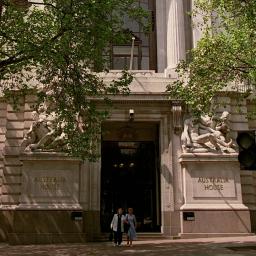
Serving up ancient holy water from well underneath diplomatic mission in centre of London is unlikely but tests reportedly show it is safe to drinkLondon’s Australia House usually dishes out travel documents and advice but could also in theory provide entirely drinkable water from an ancient well underneath, according to laboratory tests.Related: Sealed chambers at ancient Aztec site in Mexico City could hold rulers' tombs Continue reading...
|
 |
by Lucy Siegle on (#106QT)
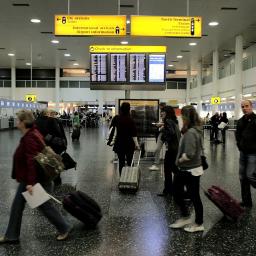
Improvements in the travel industry are helping us all to be greener globetrottersCamping aside, vacationing used to be viewed as eco hooliganism by the green movement. But as the standards of eco tourism grow and our own sustainable infrastructure stagnates, it will soon be easier to be green abroad than at home. A holiday could be a chance to claw back credit from Mother Earth. To paraphrase the International Union for Conservation of Nature, eco tourism promotes conservation, has a low visitor impact and benefits people in the host country.Parts of the travel industry are improving. If the eco-friendly extent of a resort is just a “save water by not washing your towel†notice, you can do better. Bookdifferent.com gives you the carbon footprint for a night’s stay. Also look out for an EarthCheck rating (formerly known as the Green Globe) which measures a hotel’s greenhouse gas emissions, energy efficiency and eco-system conservation. Continue reading...
|
 |
by Marc Gunther on (#104ZM)
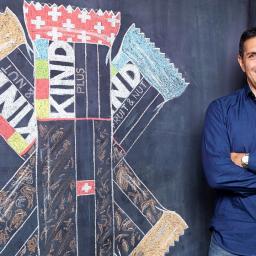
Daniel Lubetzky, who was a social activist before starting Kind, says his government petition to use the word “healthy†is about righting a wrongNine months ago, the US Food and Drug administration accused Kind, the snack-bar maker, of breaking the law by describing its bars containing fatty nuts as “healthyâ€. Fighting back, Kind charged that the FDA’s rules are wrongheaded and outdated.At the center of this battle with government regulators is Daniel Lubetzky, founder and CEO of Kind, who tries to live up to his company’s name even when he’s talking about a foe. Continue reading...
|
 |
by Jim Powell on (#104V3)
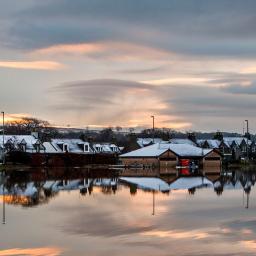
Europe’s refugee crisis, the executions in Saudi Arabia, winter swimming in Russia – the best photography in news, culture and sport from around the world this week Continue reading...
|
 |
by Henry Zeffman on (#104TP)
Committee on Climate Change questions ministers’ claims of increased investment and urges more spending on defencesGovernment claims that it increased spending on flood defences ahead of the wettest December on record are “essentially meaninglessâ€, an independent adviser on climate change has said.Daniel Johns, the head of adaptation at the Committee on Climate Change, urged the government to commit to spending more on defences after weeks of heavy rain caused flooding across the UK. Continue reading...
|
 |
by Alan Yuhas in New York on (#104RA)
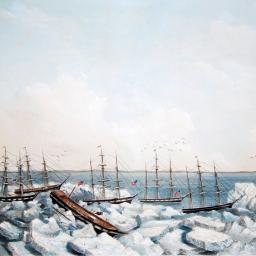
In 1871, ice trapped a fleet and sent 33 ships to the bottom of the Chukchi Sea but this week’s discoveries suggest climate change could uncover more as ice continues to meltArchaeologists have discovered the wrecks of two American whalers off the Arctic coast of Alaska, almost 145 years after ice trapped a whaling fleet and sent 33 ships to the bottom.
|
 |
by Associated Press on (#104FQ)
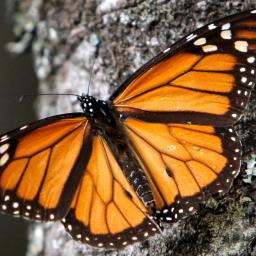
Decline of Monarch population wintering in Mexico now marks a statistical long-term trend, experts sayThis story was published in January, 2014
|
 |
by Ed Douglas on (#1040Z)
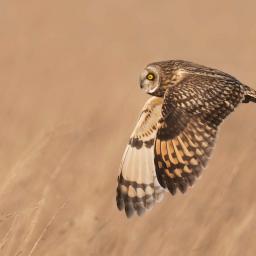
Leash Fen, Derbyshire I’ve often seen birders parked up on the road watching the short-eared owls that nest hereAfter days of rain, the fields either side of Spitewinter Lane were soaked, the heavy clay soil of those more recently ploughed liquid and greasy. Raindrops bounced off the asphalt. Thick cloud skimmed the top of Big Moor. I shrank inside my jacket, thrust hands deeper into pockets, and splashed along.This is a good place to contemplate the limits of development. The fields here, a thousand feet above sea level, are the last of what is known in the Pennines as intake land (taken in from the moor for cultivation). Just beyond their boundary of crumbling drystone walls and modern wire fences is Leash Fen, one of the biggest mires on the Peak District’s eastern edges, a bulging saddle of peat heaped on the gritstone beneath it. Continue reading...
|
 |
by Halima Kazem in Mavericks, California on (#103MG)
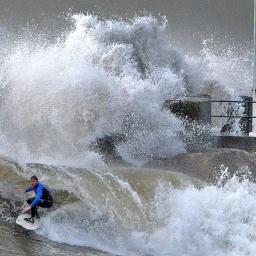
Mavericks, along the San Mateo County coast, is known to form some of the biggest and most dangerous waves in the worldDozens of big-wave surfers rode 50ft swells at Mavericks, a famous surf spot in northern California, as El Niño-driven storms pounded the California coast.Mavericks, along the San Mateo County coast, is known to form some of the biggest and most dangerous waves in the world, and is home to the Titans of Mavericks big wave competition. Continue reading...
|
 |
by Guardian Staff on (#103FN)
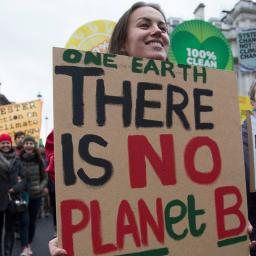
Environmental concerns will come a distant second to profit when governments can be sued for passing lawsSurprisingly, your article on the Transatlantic Trade and Investment Partnership (TTIP) fails to mention the environment (“A deal for freer trade or corporate greed? Here’s the truth about TTIPâ€, Business).The independent UK Committee on Climate Change supports fracking in the UK, but its chair, Lord Deben, has also stated that his committee would not hesitate to ban fracking if the UK was unable to meet its climate change commitments. Continue reading...
|
 |
by Kate Galbraith in San Francisco and Sarah Gilman i on (#103A2)
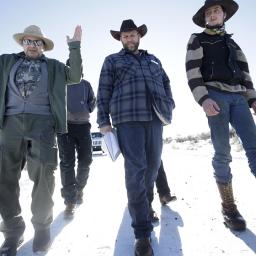
Rare species would be endangered if Ammon Bundy and his cattle-ranching militia are permitted unfettered access to federal land, experts warnAllowing cattle to graze across swathes of federal land in Oregon, as an armed band of militia is demanding, could have devastating consequences for the area’s delicate ecosystem, experts have warned.Rare species such as the greater sage grouse that does a mating dance on federal land adjacent to the Malheur national wildlife refuge, occupied by the militia, have already been harmed by widespread cattle grazing on high-desert plains across the west. Continue reading...
|
by Associated Press on (#102QQ)
Residents hoping for some respite over weekend are alerted to ‘residual impacts’ after heavy rain leads to record river levels and severe floodingResidents in parts of north-east Scotland have been advised to prepare for “residual impacts†from the recent floods after heavy rain caused record river levels and severe flooding.Dozens of homes were evacuated in Inverurie, Port Elphinstone and Ellon in Aberdeenshire as the swollen river Don sent flood waters racing down the streets on Thursday night and Friday morning. Continue reading...
 |
by Francesca Perry on (#102FP)
City links: An unusual Berlin property map, Rotterdam’s floating forest and the fate of Delhi’s metro all feature in this week’s roundup of the best urban storiesThis week’s stories range from a map tool that lets Berlin renters see if their landlord is illegally overcharging them to plans for Singapore’s new non-High Line and the role of sound in architecture. We’d love to read about your favourites too: share them in the comments below. Continue reading...
|
 |
by Oliver Milman in St Louis on (#102E3)
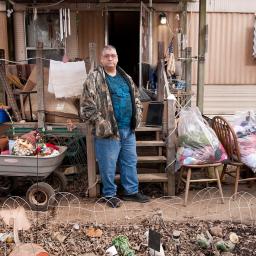
Deadly floods like the ones currently plaguing towns across the midwest, once labeled rare or freak weather events, are recurring with worrying regularityAbout 100 miles downstream of Hannibal, the boyhood home of Mark Twain, the small Missouri town of West Alton has spent the past week without almost its entire population as it has been completely swamped by water.
|
 |
by Guardian Staff on (#1027X)
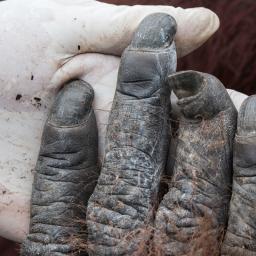
A hippo play fighting, galloping horses and two leopard cats are among this week’s pick of images from the natural world Continue reading...
|
by Rory Carroll in West Hills, California on (#1027Z)
The environmental activist, portrayed by Julia Roberts in the 2000 film, lives just 20 miles from the leaky gas storage well: ‘I call it the BP oil spill on land’Erin Brockovich sat in an empty hall, awaiting hundreds of people who would soon stream in from a cold California night seeking answers and reassurance, and gave a sigh of familiarity.“I’ve been doing this for 20-plus years and I’ve learned that it won’t get better – it’ll get worse, and they’ll need to know that Superman is not coming to rescue them.†Continue reading...
by John Vidal on (#10280)
Scientists warn that plans to build dams across Tonlé Sap, south-east Asia’s greatest lake, could be an ecological timebomb threatening the food security of millionsIn a few months’ time, monsoon rains will more than quadruple the size of Cambodia’s Tonlé Sap, south-east Asia’s greatest lake and one of the wonders of the aquatic world. The huge flood will reverse the seaward flow of the river that feeds into the lake, submerge forests, make a perfect wetland for spawning fish and will replenish soils for a rich rice harvest.Tonlé Sap is the most intensely-fished inland body of water in the world and as the annual flood subsides, many millions of fish will flow from it and back into the massive Mekong river where they will become the staple food of thousands of villages. Continue reading...
 |
by Damian Carrington on (#101PE)
US presidential candidate joins the Bahrain royal family and Rupert Murdoch’s 21st Century Fox America whose aircraft have all fallen foul of the EU’s emissions trading schemeA parliamentary petition backed by 500,000 people has so far failed to bar Donald Trump from the UK, but the controversial US presidential candidate and climate change sceptic now faces a new deterrent: a fine for the carbon pollution from one of his enormous private jets.
|
by Marc Gunther on (#ZYCE)
B Corp, a certification for business that undertakes environmental and other sustainability efforts, is starting to attract larger, public companies. But some roadblocks still remainThe B Corporation movement, which certifies companies that benefit society as well as their owners, is gaining momentum. Last month, Laureate Education, a global education company with $4.5bn in annual revenues, became the largest certified B Corp, joining Ben & Jerry’s, Patagonia, Seventh Generation and Warby Parker, among many others.
 |
by James Murray for BusinessGreen, part of the Guardi on (#ZYCC)
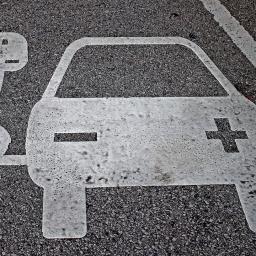
Motoring body data shows demand for electric vehicles rose by 48% last year, and plug-in hybrid vehicles by 133%, reports BusinessGreenDemand for electric and plug-in hybrid vehicles is soaring, according to new figures released today by the UK’s Society of Motor Manufacturers and Traders (SMMT).The data shows the number of new cars eligible for the government Plug-in Car Grant scheme rose from 14,532 in to 28,188 last year, an increase of 94 per cent. Continue reading...
|
 |
by Oliver Milman on (#ZY9N)
US photographer Joel Sartore is spending a decade taking portraits of the 12,000 species in captivity worldwide – with an emphasis on those facing extinction• See a gallery of Sartore’s portraits hereAs the world goes through what scientists have called its “sixth great extinctionâ€, with animal species vanishing at a rate unheralded since the dinosaurs were wiped out 66 million years ago, the sense of helplessness can be acute among those who revere nature.Joel Sartore spent several years taking evocative photographs of endangered species for National Geographic before realising he needed to change tack if he was to drum up public concern about Earth’s diminishing wildlife. Continue reading...
|
by Jeremy Biggs on (#ZY9Q)
We must check the facts before jumping to conclusions about the efficacy of so-called natural flood defence schemes. They are an attractive idea but powerless in the face of extreme weatherThe town of Pickering is a notorious flood spot in the north-east of England, on the edge of the North York moors. So when the town escaped flooding this Christmas while York – just 40 miles away – was underwater, it seemed an open and shut case. Surely, it was the recently opened “working with nature†flood defence scheme above Pickering that saved the town? For the many advocates of the benefits of working with nature it seemed a great vindication.
 |
by Joel Satore/National Geographic Photo Ark on (#ZXXZ)
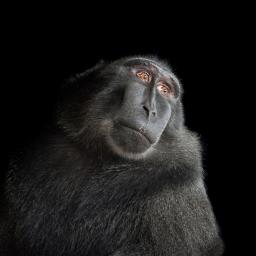
A selection of photographer Joel Sartore’s images of monkeys, taken from his ambitious, decade-long Photo Ark project.• Read our feature on Sartore’s project here Continue reading...
|
 |
by Arthur Neslen in Brussels on (#ZXVQ)
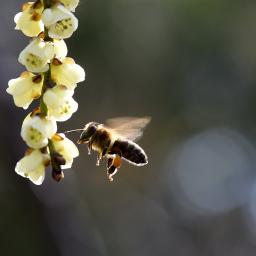
Risk evaluation could pave the way for a rolling back of the hard won EU-wide ban on three neonicotinoid pesticidesThe European Food Safety Authority (Efsa) has begun a review that could pave the way for rolling back a pioneering EU-wide ban on three neonicotinoid pesticides, that are thought to have ravaged European bee populations.In a letter to the European commission last month, which the Guardian has seen, the EU scientists said that they would finish their risk evaluation by the end of January 2017. Continue reading...
|
 |
by Emma Howard on (#ZXH0)
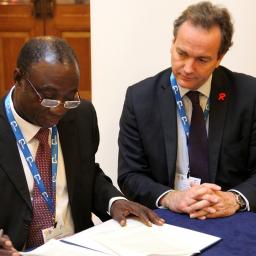
New UK international development minister Nick Hurd wants to boost off-grid solar power in the only region where those without access to modern energy is set to rise
|
by Rachel Salvidge for Endsreport, part of the Guardi on (#ZXG3)
The Environment Agency is unable to regulate discharge from the outfalls until the information is made available, reports EndsreportDetails of nearly 2,000 sewage outfalls are being withheld by water companies, according to anglers’ legal organisation Fish Legal.A freedom of information (FOI) request by Fish Legal revealed that the frequency and contents of 1,968 sewage outfalls remain unknown to the Environment Agency (EA). As a result the discharges cannot be properly regulated. Continue reading...
by George Monbiot on (#ZXDW)
By doing everything the farming lobby asks, the UK environment secretary is using public money to make the flooding of the built environment even more likelyThose of you with memories longer than a week will be aware that Britain experienced a degree of hydrological inconvenience in December. You know: 16,000 homes inundated, £5bn of damage, that kind of thing. I vaguely recall that it made the news once or twice.You may also remember that, for the first time in Britain, there was a wide-ranging discussion on the causes of the floods. Connections that have been familiar to geographers, hydrologists and fluvial geomorphologists for two centuries finally broke through the media dam and into public debate. We began, at last, to discuss the second component of freshwater flooding.
 |
by Graham Readfearn on (#ZWW1)
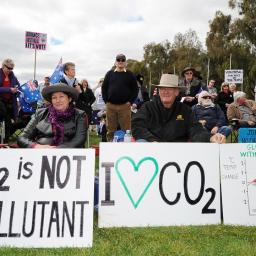
Conservative thinktanks in the US engaging in climate change have increased their attacks on science in recent years, a study of 16,000 documents finds.Is organised climate science denial finished?After global heat records were continually broken over the last decade, and as sea levels rose and scientists reported the accelerated melting of polar ice sheets, you might be forgiven for thinking the debate over climate change had shifted. Continue reading...
|
 |
by Phil Gates on (#ZWV6)
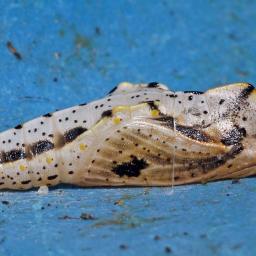
Crook, County Durham Unnoticed the larva continued its magical metamorphosis into a butterfly, as enigmatic as a mummyAfter the passing of the winter solstice the urge to sow seeds in the greenhouse is like an itch that just has to be scratched, even though the lengthening of the days is still barely perceptible.A chill wind rattles the panes of glass but in here, with winter sun filtering through the roof, it’s snug. A field mouse seems have come to the same conclusion; on the bench it has left a heap of snake’s head fritillary bulbs, dug from a flowerpot and gnawed. Continue reading...
|
 |
by Elle Hunt on (#ZWTB)
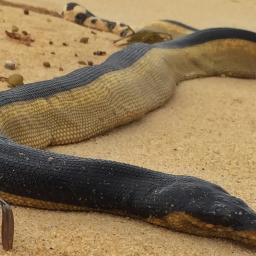
Wild weather brings the yellow-bellied sea snakes, which are normally entirely aquatic and highly venomous, on to New South Wales beachesA spate of tropical sea snakes washing up along the New South Wales south coast after recent wild weather seems to be part of a global trend – and weather pattern.Carolyn Larcombe, from Burra near Canberra, spotted a small yellow-bellied sea snake on the sand while walking along Congo Beach, 10km south of Moruya. Continue reading...
|
 |
by Tom Levitt on (#ZWRC)
Smaller businesses do not have the resources to map out dangers of food fraud in their supply chain, warns the expert who led the horsemeat inquiryThe horsemeat scandal of early 2013 sent shockwaves across the food industry. After weeks of bad headlines, the UK government finally responded by agreeing to an independent inquiry to look into how horsemeat got into ready meals and frozen beefburgers.Related: What's really on your plate: hidden world of food fraud revealed - in pictures Continue reading...
|
 |
by Tom Levitt on (#ZWRA)
Three years on from the horsemeat scandal, food safety expert Professor Chris Elliott explains how common food products are still at risk of adulteration
|
 |
by Suzanne Goldenberg US environment correspondent on (#ZW73)
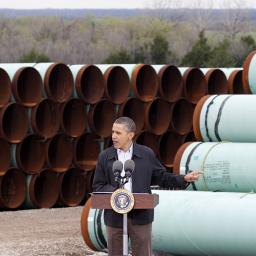
TransCanada launches two challenges as it argues president violated Nafta, saying it is seeking to recover $15bn spent in push for pipeline’s approvalThe company behind the rejected Keystone XL pipeline fired off two legal challenges on Wednesday, accusing Barack Obama of overstepping his authority and violating the North American Free Trade Agreement (Nafta).
|
 |
by Australian Associated Press on (#ZVGK)
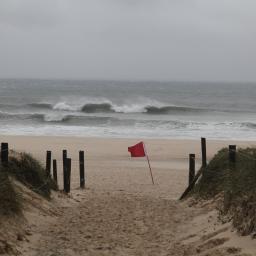
And emergency services plan to rescue campers trapped by flooding on NSW south coast and some residents isolated north-west of SydneyThe search for a yachtsman missing off the New South Wales coast has become a recovery operation.Experienced sailor Mal Lennon, 62, was believed to be at the helm of the 36ft Amante when he was struck by a huge wave near Broughton Island and swept off the boat about 11.30am on Wednesday afternoon. Continue reading...
|
by Suzanne Goldenberg on (#ZW0S)
Jerry Brown calls on officials to ensure gas company plugs leak as campaigners say storage facility is releasing equivalent of 7m cars’ emissions dailyCalifornia governor Jerry Brown declared an emergency on Wednesday in a Los Angeles neighborhood where a blown-out natural gas well has been spewing record amounts of global warming pollution.Ten weeks after the 23 October breach was detected, Brown ordered state agencies to make sure Southern California Gas Company, which owns the stricken natural gas storage facility, plugs the leak.
 |
by Guardian Staff on (#ZW01)
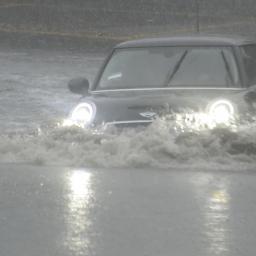
Aerial footage of Los Angeles streets flooded with water on Wednesday, after an El Nino-fueled storm moved into southern California. Brad Walsh, an LA resident, films a trash bin being swept along by the floodwater as he drives behind it in his car. The National Weather Service has issued further flash flood warnings for some areas in the state’s south
|
 |
by Damian Carrington and Adam Vaughan on (#ZTZ1)
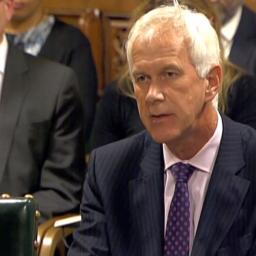
Sir Philip Dilley tells MPs he wishes he had cut short Christmas break to help deal with flooding in northern EnglandThe chairman of the Environment Agency, Sir Philip Dilley, has said he wished he had returned earlier from a Christmas holiday in Barbados to help deal with the flooding in northern England, which hit more than 16,000 homes after record rainfall in recent weeks.“In hindsight it would have been much better if I had come back as early as I could, which was one or two days earlier,†Dilley told MPs on the environment, food and rural affairs select committee on Wednesday. “One of my biggest regrets is that it has detracted from what really matters, which are the people who have been affected.†Continue reading...
|