 |
by John Vidal on (#11CQN)
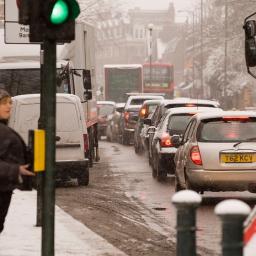
Premature deaths attributed to particulate pollution rose in 2013 after falling in previous years, government figures showThe number of premature deaths attributed to particulate pollution has risen, government figures show.
|
| Link | http://feeds.theguardian.com/ |
| Feed | http://feeds.theguardian.com/theguardian/environment/rss |
| Updated | 2026-08-20 13:31 |
 |
by Peter Walker in Odense on (#11CJK)
Denmark’s third-largest city has transformed its prospects by making itself a desirable place to live and invest. At the heart of this change is an extraordinary commitment to getting the whole city cyclingThe huge, wooden scale model of Odense, inside a temporary information centre opposite the town hall, looks initially like a replica of the Danish city. But give them a few minutes and a local would begin to spot some differences, especially to the main traffic route bisecting the urban centre.Thomas B Thriges Street was built in the 1960s as a solution to growing car congestion: a fast-moving, four-lane road laid like a curved ribbon across the middle of the city. Continue reading...
|
 |
by Adam Vaughan on (#11CHD)
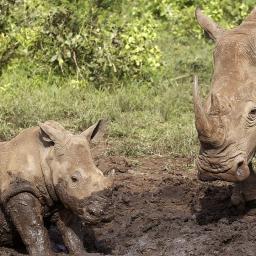
Slight dip in the number of rhino’s illegally killed for their horns breaks relentless rise in deaths since 2007The number of rhino being killed by poachers in South Africa dipped slightly in 2015, in the first sign that the country may be turning the corner in the fight against the lucrative illegal trade.The number killed each year for their horn increased every year from 13 in 2007 to a record 1,215 in 2014, driven by demand in Asia that has made it worth more than gold. Continue reading...
|
 |
by Megan Darby for Climate Home, part of the Guardian on (#11CDM)
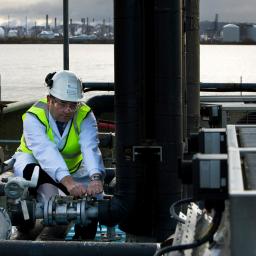
Pulling the plug on carbon capture and storage competition throws emissions targets into question, industry experts warn. Climate Home reportsThe UK government’s decision to scrap support for carbon capture and storage jeopardises its entire climate policy.What is more, it thwarts Brussels’ strategy to develop the clean technology in Europe. Continue reading...
|
 |
by Associated Press on (#11CBA)
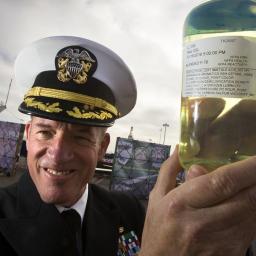
Carrier strike group of four ships is the first to begin operating regularly with a blend of petroleum and biofuels made from beef fatThe US navy on Wednesday launched its first carrier strike group powered partly by biofuel a mix made from beef fat, calling it a milestone toward easing the military’s reliance on foreign oil.The maritime branch touted the warships as the centrepiece of its “Great Green Fleet†part of a navy-wide initiative that aims to draw 50% of its power from alternative energy in four years. Continue reading...
|
by Michael Slezak on (#11BWQ)
Federal government decides not to pursue action against owners of Carmichael mine over its failure to declare that Jeyakumar Janakaraj was in charge of a copper mine that leaked toxic water into a riverThe federal government has decided not to take action against Adani for its failure to declare its Australian chief executive ran a mining company in Zambia which had pleaded guilty to serious environmental harm.Related: Boss of Adani's Australian arm linked to mining pollution in Zambia Continue reading...
 |
by Ryan Felton in Detroit and Nicky Woolf in San Fran on (#11BN8)
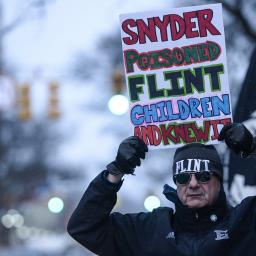
According to newly released emails concerns over the water were dismissed by officials who blamed mayor for exploiting public panicMichigan governor Rick Snyder was informed of water quality issues in the city of Flint’s supply as early as February 2015, according to emails released to the public on Wednesday, but his administration struck a dismissive tone, saying the problems would eventually “fade in the rearviewâ€.Related: How Michigan's Flint River is poisoning the city's residents Continue reading...
|
 |
by Michael Slezak on (#11BFW)
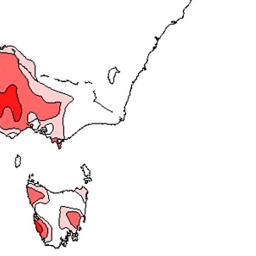
Record dry weather in the usually wet farming regions of south-west Victoria forces farmers to queue for water and leads to push for future-proofingRecord dry weather in the usually wet farming regions of south-west Victoria has forced farmers to queue for water from a community bore, and led to calls for infrastructure that will future-proof the region in relation to climate change.Related: 2015 smashes record for hottest year, final figures confirm Continue reading...
|
 |
by Associated Press on (#11BBF)
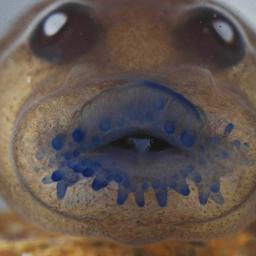
The frog genus Frankixalus has been found in four northeast Indian states but could now be under threat due to human developmentFor more than a century, two mysterious tree frog specimens collected by a British naturalist in 1870 and housed at the Natural History Museum in London were assumed to be part of a vanished species, never again found in the wild. Until now.Related: A Costa Rican red-eyed tree frog - in pictures Continue reading...
|
by Australian Associated Press on (#11B88)
Officer finds a venomous baby brown snake inside a Tupperware container when searching a prisoner’s cell at Fulham correctional centre in VictoriaPrison officers searching for weapons and contraband got a nasty surprise in a Victorian cell.Related: Heavily pregnant deadly snake found under fridge by Australian woman Continue reading...
by Guardian Staff on (#11B79)
Crowds cheer as ailing marine animal successfully netted in Merimbula Lake from where it will be airlifted to its Queensland homeA stray dugong on the NSW south coast has been successfully netted after the massive inter-agency effort to rescue it overcame a series of setbacks, and will be flown to Queensland by RAAF Hercules.Watching crowds cheered as the 2.75m male dugong was captured by a team of more than 20 people on Thursday morning, said Shona Lorigan of the Organisation for the Rescue and Research of Cetaceans in Australia (Orrca). Continue reading...
by Brigid Delaney on (#11B67)
The inventor of green steel is working on a way to recycle smart phones, support developing countries and inspire young women – all at the same timeProfessor Veena Sahajwalla is passionate about rubbish.Throughout her career, the director of the Centre for Sustainable Materials Research and Technology (SMaRT) at the University of New South Wales has been looking for ways to transform waste into something useful. Continue reading...
 |
by Anita Chabria in Sacramento on (#11AZY)
Activist Tom Steyer’s comments followed reports that California attorney general is looking into what the world’s biggest oil company knew about climate changeBillionaire environmental activist Tom Steyer spoke out on Wednesday in support of an unconfirmed investigation by California into allegations that ExxonMobil spent decades lying to investors and the public about its knowledge of climate change.“We don’t have the facts yet, but I think that there is enough that has been revealed that it’s totally appropriate that (California) be conducting this investigation,†Steyer told the Guardian. “Anybody who puts out intentionally misleading information I think should be answering to us.†Continue reading...
|
 |
by Scott Bixby on (#11AX3)
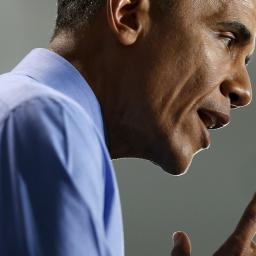
President says he would be devastated if his children’s health was jeopardized, in reference to contamination that has put health of tens of thousands at riskBarack Obama’s speech in Detroit on Wednesday was intended to be a triumphant celebration of the renaissance of an automobile industry once on the brink of collapse. But the president’s successful bailout of American carmakers and the subsequent revival of Michigan’s most important industry was eclipsed by a nearby civic emergency: a water crisis in Flint that has threatened the health of tens of thousands of people.
|
by Tanya Ha on (#11AQF)
Productivity goes ‘through the roof’ when companies invest in building design that improves their workers’ physical and mental healthThe architects behind Medibank Place in Melbourne’s Docklands had numerous design aspirations but there was one key point. Australia’s largest health insurers wanted their new head office to be one of the world’s healthiest buildings.“Medibank CEO George Savvides said to me, ‘I want a living, breathing, healthy building,’†says Rob Backhouse, managing director of Hassell Architects and one of the principal designers of Medibank Place. “In essence, our brief was to take Medibank’s core purpose and mission of promoting good health and express that physically in a building.†Continue reading...
by Joshua Robertson on (#11AK8)
Risk of Queensland taxpayers being left with cleanup bill prompts Palaszczuk government to ‘consider legal options’ should company go underClive Palmer’s Townsville nickel refinery looms as a test case for Queensland’s environmental cleanup regime, with the Palaszczuk government forced to take legal advice on how to secure funds for a multimillion-dollar site rehabilitation should the company go under.The prospect of Queensland Nickel going into liquidation would trigger what is understood to be the first major cleanup of a site without a company having paid any bond for rehabilitation up front. Continue reading...
by Valerie Flynn on (#119JG)
From Taiwan to the Atacama desert, and eco-homes to recycling software, we highlight some of the finalists at 2016’s circular economy awards
 |
by Nate Berg in Los Angeles on (#119HX)
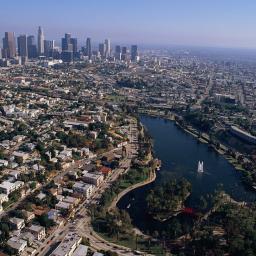
Resilient People: Marissa Aho recently became Los Angeles’ chief resilience officer. In a city prone to earthquakes, reliant on imported water and suffering a housing shortage, how could the city survive and recover after a catastrophe?On the list of existential threats to Los Angeles, earthquakes rank highest. With dozens of fault lines running beneath and around the metropolitan area, the ever-looming threat of the Big One is a not-so-quiet concern in the back of most people’s heads. The last major earthquake to hit the region was the 6.7-magnitude Northridge earthquake in 1994, which killed 57 people and caused billions of dollars worth of damage. Many predict that an even stronger earthquake is increasingly likely to strike by mid-century.But LA isn’t just idly waiting for the catastrophe. For the past year, Mayor Eric Garcetti has been working with the US Geological Survey’s southern California earthquake expert Dr Lucy Jones to develop an quake resiliency strategy for the city. In October, the city enacted the showpiece of that effort, a set of aggressive seismic regulations that will require retrofits on more than 15,000 buildings across the city. Continue reading...
|
 |
by Damian Carrington on (#119FN)
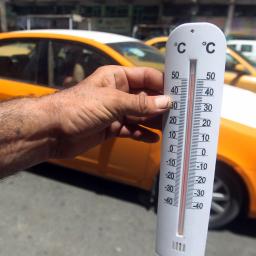
Experts warn that global warming is tipping climate into ‘uncharted territory’, as Met Office, Nasa and Noaa data all confirm record global temperatures for second year running2015 smashed the record for the hottest year since reporting began in 1850, according to the first full-year figures from the world’s three principal temperature estimates.Data released on Wednesday by the UK Met Office shows the average global temperature in 2015 was 0.75C higher than the long-term average between 1961 and 1990, much higher than the 0.57C in 2014, which itself was a record. The Met Office also expects 2016 to set a new record, meaning the global temperature records will have been broken for three years running. Continue reading...
|
 |
by Joanna Ruck on (#119FS)
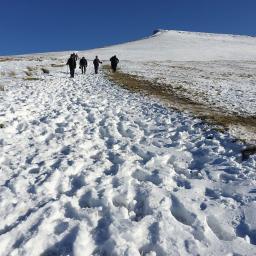
A cold snap has gripped Britain with temperatures plunging to a winter low of -12C. Warmer weather is expected from Thursday
|
 |
by Press Association on (#119BS)
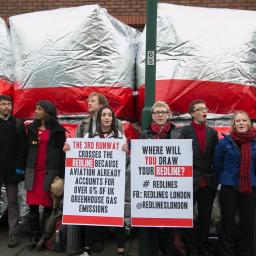
Judge deems evidence from shadow chancellor irrelevant in trial of 13 climate change protesters accused of blocking Heathrow runway in July last yearShadow chancellor John McDonnell has been barred from giving evidence in the trial of 13 climate change protesters accused of blockading a Heathrow runway.The group of Plane Stupid supporters are accused of cutting a hole in a fence and chaining themselves to railings on the north runway in July 2015. Continue reading...
|
by Hannah Gould on (#1198R)
A new report released at Davos highlights some startling facts about the huge environmental and resource impacts of a fast growing plastics industryThe world of plastics is in drastic need of reform. This is the conclusion of a new report released at Davos by the World Economics Forum, the Ellen MacArthur Foundation and consultancy firm McKinsey. Here are five of its most startling facts: Continue reading...
 |
by Dave Nash on (#1198S)
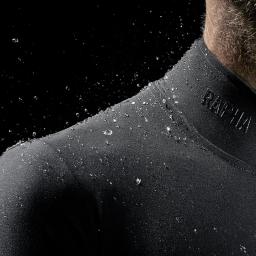
Yes, £480 for its latest cycling jersey and shorts is steep, but I’m still puzzled why the high-end brand, and those who wear it, are the focus of such ireWhen it comes to cycle clothing, one brand polarises cyclists like no other: Rapha. The very word will leave some purring at the thought of their next visit to its Soho store, while others will twitch involuntarily at the very mention of the name.Forums see these two entrenched camps trading blows, which often fall below the waistline. Rapha occupies a position in the high-end sector of the market and there’s no denying that its clothing is expensive, but premium fabrics and construction deliver performance and longevity. I rate their kit highly, but it is not infallible. Continue reading...
|
 |
by Guardian Staff on (#1194E)
The aerial shooting of five coyotes on the now infamous Hammond ranch in Oregon cost taxpayers more than $11,000. Critics of Wildlife Services say that’s just the tip of the icebergAfter anti-government protesters took over Oregon’s Malheur National Wildlife Refuge earlier this month to support two ranchers convicted of arson, it emerged that the convicts, Steven and Dwight Hammonds, had received thousands of dollars in financial support from the federal government. The public aid included the killing of five coyotes by a US Department of Agriculture (USDA) agent on Steven Hammonds’s ranch, to the tune of more than $11,000, according to documents obtained by Reveal News.Five coyotes might not sound like much, but the revelation shed new light on Wildlife Services, a federal agency long mired in controversy for what critics charge is excessive and indiscriminate killing of millions of animals and birds on public land at the behest of ranchers and farmers. Continue reading...
|
 |
by Oliver Balch on (#118TH)
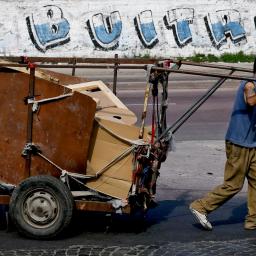
The cartoneros of Buenos Aires are finally cashing in on the city’s newfound love of recycling. But the Argentinian capital still has a long way to goCecilia works a five-block strip along Calle Paraguay in Palermo, a hip district in downtown Buenos Aires. Opening a flap door at the bottom of a lime-green bin the size of an industrial fridge, her gloved hands reach in to fish out the contents inside. Plastic bottles, discarded cardboard, newspapers, a discarded cheque book and a set of bookends: all the items disappear into a large, heavy plastic sack that she ties up and leaves by the roadside.“After we’ve finished, a truck from the cooperative comes and picks up the sacks and takes them back to the plant for sorting,†says the 34-year-old, who has been in the job for three years after a long stint of unemployment. Continue reading...
|
 |
by Anna Leach on (#118SF)
Providing energy which is green, secure and affordable is a challenge for governments around the world.The World Energy Council’s recent Energy Trilemma Index ranks countries on their ability to administer energy that is sustainable, reliable, affordable and accessible to its citizens. This interactive shows how ten countries are managing in those three areas (see definitions underneath the map). Continue reading...
|
 |
by Suzanne Goldenberg, Abu Dhabi on (#118R0)
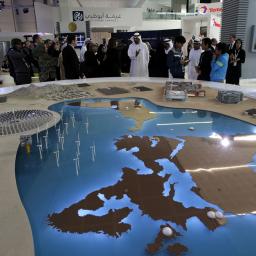
With oil at below $30 a barrel, countries such as Saudi Arabia, Russia, Iran and Kuwait are looking to curb fossil fuel use at home to maximise export profitsThe oil price slump below $30 barrel is spurring some of the world’s biggest oil exporters to curb domestic consumption of fossil fuels and invest in wind and solar power, according to government officials meeting in Abu Dhabi.A month after the historic climate agreement in Paris, Saudi Arabia, Russia, Iran, Kuwait, the United Arab Emirates and other oil exporters are in the midst of overhauling domestic energy policies and seeking alternatives to oil and gas for electricity. Continue reading...
|
 |
by Agence France-Presse on (#118K8)
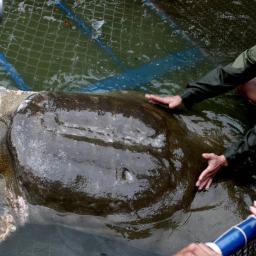
Demise of reptile venerated as symbol of independence struggle considered bad omen for forthcoming Communist congressA sacred giant turtle venerated as a symbol of Vietnam’s independence struggle has died, state media have said, prompting an outpouring of grief and fears the death bodes ill for a forthcoming communist leadership handover.The reptile, a critically endangered swinhoe softshell turtle, occupies a key mythological role in the country – in the past, the turtle surfaced only rarely, with its sightings deemed auspicious. Continue reading...
|
by John Abraham on (#118P4)
Contrarian witnesses made many of the same arguments in a court case for the world’s largest private-sector coal company as they did in Ted Cruz’s senate hearing
 |
by Kofi Annan on (#118KA)
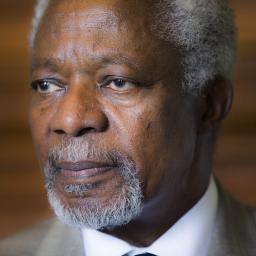
How can ordinary citizens help bring about the change we need and encourage our leaders to actually lead on issues from drugs to climate change?What does the illegal drugs trade have in common with the death toll from the Ebola epidemic? Or our collective failure so far to address climate change (the climate agreement in Paris marks the beginning, not the end, of the road) or the security council’s inability to stop the violence in Syria and Iraq? In each case – as with so many other crises in our world – they have at their heart a lack of political will and a failure of leadership. Narrow, short-term self-interests have overshadowed the understanding of how, in a truly global world, interdependent are our destinies.
|
 |
by Associated Press on (#118HY)
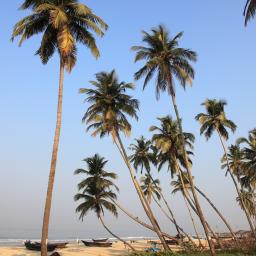
Goan authorities remove the coconut from their official list of trees to make it easier for them to be cut down by farmers
|
 |
by Guardian Staff on (#118DY)
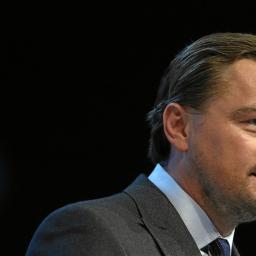
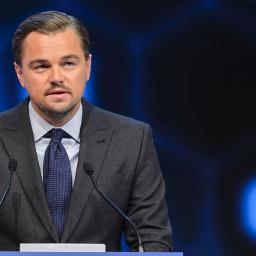
Leonardo DiCaprio condemns fossil fuel industries at the World Economic Forum’s 2016 Crystal Awards. DiCaprio says the world cannot afford to allow the corporate greed of the fossil fuel industries determine the future of the planet and humanity
|
 |
by Graeme Wearden on (#118B1)
Solution to climate change is to keep fossil fuels in the ground, Hollywood star tells World Economic Forum in DavosLeonardo DiCaprio has launched a ferocious attack on the greed of the world’s energy industry at the World Economic Forum in Davos.DiCaprio used an awards ceremony to demand more action on climate change, decrying those who deny it is a problem. And he insisted fossil fuels must be kept in the ground – backing a campaign launched by the Guardian last year. Continue reading...
|
 |
by Calla Wahlquist on (#1189R)
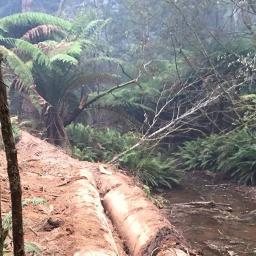
Healthcare workers John Henshaw and Jessica Hoyt among group of protesters who walked on to Forestry Tasmania coup at Lapoinya in state’s north-westTwo healthcare workers protesting against the clearfelling of native forest in Tasmania have become the first people charged under the state’s controversial anti-protest laws.John Henshaw, 66, and Jessica Hoyt, 35, were in a group of nine protesters who walked on to a Forestry Tasmania coup at Lapoinya, 37km from Burnie in north-west Tasmania, on Monday. Continue reading...
|
 |
by Tom Lewis and Kaveh Madani for Tehran Bureau on (#1187J)
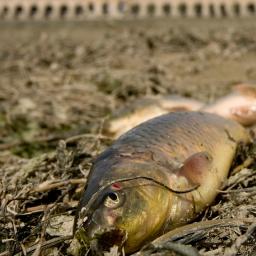
The lifting of sanctions will support positive change quickly if government funds are freed to tackle environmental challenges and if international investment is encouraged in green technology
|
 |
by George Monbiot on (#11847)
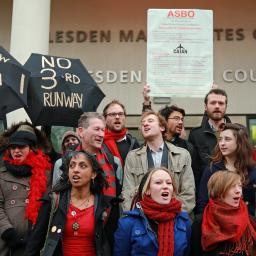
The trial of 13 climate protesters is not really about aviation, it highlights a glaring democratic deficitThey have been reviled as vandals, hooligans and lunatics. But to me, these people are heroes. The 13 women and men on trial this week for cutting through the perimeter fence around Heathrow airport and chaining themselves together on a runway were excoriated by police, passengers and politicians. (One of the defendants in the case is a member of the cooperative society that rents my house.) If convicted, they all face a possible prison sentence. But there are two trials here: the legal proceedings in a local magistrates court, and a test of something much bigger.Aviation enjoys some astonishing exemptions from the civilising rules that constrain other sectors. Other industries must limit the noise they make; but aircraft, thanks to an obscure clause in the 1949 Civil Aviation Act, are exempt. Other industries pay duty on the fuel they use; but even when air passenger duty is subtracted, aviation’s various tax holidays amount to a subsidy of some £7bn a year, forgone by the Treasury. Some industries must limit the air pollution they produce; but while in principle airports are subject to pollution laws, in practice they have been allowed to breach them routinely for years. (In this case the legal immunity also seems to extend to motor traffic.) Continue reading...
|
by Michael Slezak on (#1181D)
The health of the marine animal, first seen in Merimbula in NSW, is deteriorating after failed attempts to rescue it and airlift it back to QueenslandA dugong struggling in waters hundreds of kilometres south of its Queensland home has escaped capture, with the RAAF’s Hercules aircraft on standby to airlift it to safety.It was first seen in Merimbula in southern New South Wales on 18 November and its health had been closely monitored since. Continue reading...
by Australian Associated Press on (#1181E)
Mining company to produce 10m tonnes below original target in 2016 financial year after suspension of operations at Samarco joint venture mine in BrazilShares in BHP Billiton have suffered more losses after the company was forced to write down nearly US$1bn (A$1.4bn) and cut its target for iron ore production amid falling prices.The Anglo-Australian mining company said on Wednesday that its first-half results will include write-downs worth US$911m relating to redundancies and closures, as well as a revaluation of its copper business. Continue reading...
by Virginia Spiers on (#117YE)
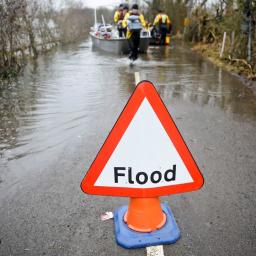
Sydenham Damerel, Devon Along the Tamar were mines yielding tin, copper, lead and arsenicOn a rare sunny morning, river mist wafts up the north side of Hingston Down. Above that shadowy hillside the old chimney of Greenhill arsenic works and the mine stack on Kit Hill are silhouettes against the blue sky, and sunlight catches in smoke from the road-stone quarry near Chilsworthy.Here, on the Devon side of the Tamar, opposite Latchley, lanes and bounded tracks thread past stubble, turnip crops for sheep, hilltop copses, strips of steep woodland, undulating pastures with belts of maize and kale that shelter pheasants, and isolated farmsteads with converted barns. Continue reading...
 |
by Tom Levitt on (#117WA)
Geopolitical uncertainty, over-regulation and cyber attacks among biggest threats to business, survey of CEOs findsThe high profile UN summit on climate change in Paris appears to have had little impact on the decision making and worries of global business leaders.
|
 |
by William E. Ketchum III in Lansing, Michigan, Ryan on (#117ME)
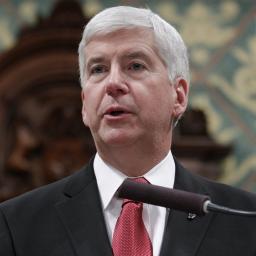
During his state of the state address, Rick Snyder announced a $28m request to aid residents whose water last year was found to contain high levels of lead Michigan governor Rick Snyder said during his state of the state address on Tuesday that he would release his emails related to the city of Flint’s water crisis and request for a $28m appropriation from the legislature to help aid the town’s residents.“We will not stop working for the people of Flint until every person has clean water, every single day, no matter what,†the governor said on Tuesday. The town’s water supply was found to have been poisoned with extremely high levels of lead last year. As part of his appropriation request, Snyder said the additional funding would provide bottled water, faucet filters, and lead-testing kits for households in the city of 100,000. Continue reading...
|
by Australian Associated Press on (#117JR)
‘Cute and accessible’ mammal spends a day on Anglesea beach, becoming the first of its species to be spotted in the Australian state since 1999A lone crabeater seal, which normally lives on pack ice in Antarctica, has spent a day on Anglesea beach in Victoria, the first of its type seen in the state since 1999.Related: Antarctica: Fragile Eden Continue reading...
 |
by Adam Vaughan on (#1179H)
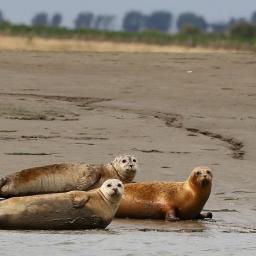
Plan to extract sand and gravel to further develop Dover port will endanger marine life, say conservationistsA stretch of sandbars and shoals off the Kent coast home to seals, famous for shipwrecks and proposed as a marine conservation zone is at risk from dredging, conservationists warn.Dover Harbour Board is considering dredging for sand and gravel from Goodwin Sands, which lies around six miles out from Deal, to expand cargo facilities and build a marina at Dover port. Continue reading...
|
by Jonny Weeks on (#1178V)
A South Australian farmer has transformed his land into a gigantic geometric patchwork in a bid to fight soil erosion. Brian Fischer created the patterns at Ashmore White Suffolk Stud, north of Adelaide, following recent bushfires. In the absence of any vegetation, he says the furrows prevent gusting winds from causing further damage. “The fires cooked everything,†he told 3AW radio, “but whichever way the wind blows it’s always at 90 degrees [to the furrows] so it can’t get startedâ€. The idea dates back to 1944 – if not earlier – when more than one million hectares of land were destroyed by a raging bushfire in Victoria. Fischer says the pattern took several days to plough but is saving him 15cm of topsoil Continue reading...
by Alison Moodie on (#11723)
Governments and public agencies are increasingly partnering with the private sector in the fight against climate changeHome to more than half of the planet’s 7 billion people and a large portion of its 1.2bn cars, cities face a huge challenge as the world strives to meet the Paris climate goal of limiting global warming to 1.5C above pre-industrial levels. Cutting emissions in cities is critical: they make up only 2% of the world’s total land area, but produce up to 70% of its climate emissions from human activity, according to a 2011 United Nations report.As they work to reduce emissions, governments and public agencies – which often lack the resources to tackle the weighty global warming problem alone – are increasingly looking to the private sector for help, says Robert Puentes, a senior fellow at the Brookings Institution’s Metropolitan Policy Program thinktank. Continue reading...
 |
by Lauren Gambino in New York on (#116GG)
Barack Obama declared a state of emergency in the Michigan city, where lead-poisoning has left residents without safe drinking water for nearly two yearsThe mayor of Flint, the Michigan city whose residents are drinking from water bottles after their drinking water was rendered toxic, endorsed Hillary Clinton on Tuesday, praising her campaign’s work in spotlighting the crisis there.“If this was a test, she has really come to the forefront and passed it because we in Flint need some help and we need it now,†Karen Weaver said on a conference call organized by the Clinton campaign. Continue reading...
|
by Amber Jamieson in New York on (#116NS)
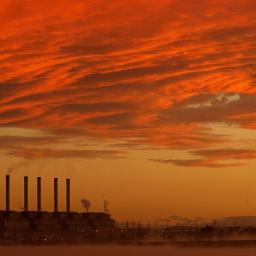
Funds from Housing and Urban Development contest will be used to flood-proof lower Manhattan, which was severely impacted by Hurricane Sandy in 2012New York City is getting a $176m funding injection from the federal government to help shield lower Manhattan from hurricanes and floods.“First, we get $176m to protect the shoreline and prevent devastation, God forbid another Sandy rolls in,†said Senator Chuck Schumer, who represents Manhattan. Continue reading...
 |
by Michael Slezak on (#116KX)
Tom Swann, a researcher at the Australia Institute, says anyone exposed to the fossil fuel energy sector has lost money in the past three yearsInvestment in fossil fuels is dragging down the returns of Australians’ superannuation, with funds that limit or exclude fossil fuels performing above average in 2015.Balanced investment funds are estimated to have returned about 5.7% on average in the 2015 calendar year, according to preliminary analysis by Chant West, a superannuation research firm. But Future Super, which avoids any investment in fossil fuels, returned 7.04% in its balanced investment option, new figures reveal. Continue reading...
|
 |
by Richard Luscombe in Miami on (#116JT)
Florida politicians are debating a proposed law that would remove right of cities and counties to ban fracking and instead give power to a single state agencyEnvironmentalists are warning of a potential ecological disaster for the Florida Everglades if state lawmakers approve a measure that would open the door to fracking in the sensitive wetlands.On Tuesday, politicians in Tallahassee were debating a proposed new law that would remove the right of local municipalities to pass ordinances or resolutions banning fracking and instead place all regulation and oversight of drilling for oil into the hands of a single state agency. Continue reading...
|
by Madeleine Somerville on (#1165Z)
The blue bin may be preferable to the trash can, but recycling still has a waste footprint – and it requires someone on the other side of the equation to use what you toss. A better goal is simply to have less stuffI talk a lot about reduction. Reducing the number of toys you have, the quantity of cleaning supplies you buy, even the amount of meat you eat. My constant focus on reduction over recycling, upcycling or disposing of waste responsibly is a deliberate one. Put simply, recycling isn’t enough.Recycling is good, and I’m not here to contradict that. When the options are to either toss a plastic bottle into the recycling bin or into the trash can, you’ll see me shaking my pom-poms for the blue bin. But I’m afraid the black-and-white thinking ends there. Recycling is a complicated business, and not always a pleasant one to boot. Continue reading...