 |
by Laura Paddison on (#Z4Y0)
Fiddling the figures on sustainability claims and fudging responsibility – a roundup of some of the biggest scandals and what they mean for sustainabilityOverstated profits, secretive lobbying, the dirty side of industries laid bare – 2015 saw yet another clutch of corporate scandals. Sustainability and corporate responsibility may have become watchwords for global companies, but this doesn’t seem to have stemmed the bad behaviour of some businesses.Here we round up some of the most significant corporate scandals of the year. Continue reading...
|
| Link | http://feeds.theguardian.com/ |
| Feed | http://feeds.theguardian.com/theguardian/environment/rss |
| Updated | 2026-08-20 15:15 |
by Damien Gayle on (#Z4W2)
Sir Philip Dilley is under fire for holidaying in Caribbean while thousands of Britons are dealing with floodsFresh from his holiday in Barbados, the chairman of the Environment Agency had little time to gather his things this morning before heading to meet flood victims in England’s sodden north.Sir Philip Dilley spent less than an hour with an aide collecting a few personal items from his flat in an Edwardian mansion block in Marylebone, London, amid fury that he had been sunning himself while thousands of Britons fought floods. Continue reading...
by Simon Donner on (#Z4TR)
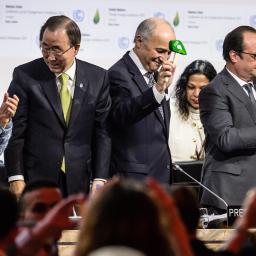
By agreeing on the aspirational target, we’re officially recognizing the scientific evidence that harm will come with more warming.The agreement signed at the United Nations climate summit in Paris has been hailed as historic, ground-breaking, and unprecedented.At the same time, the targets are so ambitious that many climate analysts are rolling their eyes. The agreement aims to limit warming to “well below†2°C above pre-industrial levels, and recognizes that avoiding 1.5°C of warming “would significantly reduce the risks and impacts of climate change.†Continue reading...
 |
by Guardian Staff on (#Z4QD)
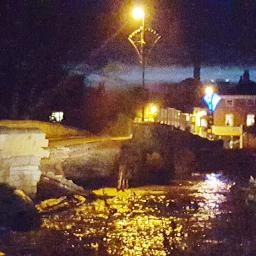
A large section of a bridge over the river Wharfe in Tadcaster collapses into the waterway on Tuesday evening. Onlookers back away as a wave rushes towards the bank, followed by a strong smell of gas from newly exposed pipes. Following the partial collapse, the Environment Agency issued a severe flood warning and urged those in the area to evacutae their homes immediately Continue reading...
|
 |
by Guardian Staff on (#Z4KK)
Four dogs are airlifted out of the flooded Daly region in the Northern Territory of Australia. They are a few of around 60 animals being rescued from the area following the devastating floods in the region. The dogs will be taken to a temporary kennel at Five Mile, which is ten minutes away by helicopter, where they will receive professional care Continue reading...
|
by Associated Press on (#Z42P)
Company says coastal commission has no jurisdiction over captive animals because they are not part of the coastal or marine environmentSeaWorld has filed a lawsuit challenging a California commission’s ruling that bans the company from breeding captive killer whales at its San Diego theme park.The suit filed in San Diego county superior court says the California Coastal Commission was outside its authority when it made the ruling in October. Continue reading...
by Australian Associated Press on (#Z4H2)
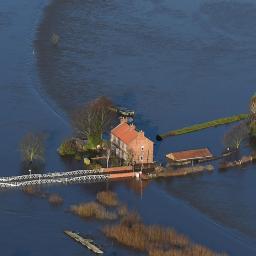
More than 30 sharks are spotted in the shallows at Jervis Bay on the south coast, and another 11 near WollongongMore than 60 sharks have been spotted near popular swimming spots on the New South Wales coast in the past two days.Swimmers were kept out of the water at Jervis Bay when more than 30 sharks, believed to be bronze whalers, were seen in the shallows. Continue reading...
 |
by Rose George on (#Z4ED)
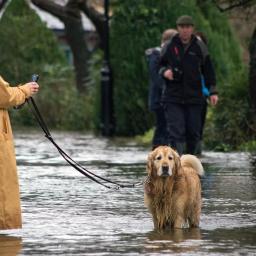
In Britain we’ve become so divorced from nature that its power now shocks us. Our assumptions about safety can be punctured by a few days of rain
|
 |
by Tim Radford on (#Z4DK)
Warmer temperatures, as seen in the UK, means more rainfall in wet regions, compounding probability of floods and extreme weather.December is set to be Britain’s mildest since records began in 1910, according to the Met Office. And not just a bit warmer – the December average for England has been 9.5C, which is more than 5C above the long-term average, and 2C higher than the previous record, in 1934. Wales and Northern Ireland are also likely to set new records while Scotland may fall just short.For some parts of the UK – Cumbria, Lancashire and Wales – it will have been the rainiest December on record, but people who live there do not need to be told that. The two sets of statistics are connected, if only because the capacity of the air to hold moisture rises with each degree of temperature. Continue reading...
|
 |
by Guardian Staff on (#Z4DX)
Winning images from national and international wildlife photography competitions of the year Continue reading...
|
 |
by Virginia Spiers on (#Z49F)
St Dominick, Cornwall The Tamar is choppy, brown, but a brief spell of sunlight makes a dazzling mirror on the waterWhite hydrangeas and the camellia named Cornish snow, bloom side by side brightening the midwinter gloom, while the fragrance of daphne pervades the damp mild air. Late apples, like the yellow Longkeeper, red Tommy Knight, and Reinette de Brucbrucks, cling to leafless branches while shoals of fallen fruit are picked over by blackbirds and pheasants. As yet there is no competition from visiting redwings.Burrowing moles heave up sprouting snowdrop bulbs and, on steep slopes of former commercial plots, rows of daffodil leaves poke through the rough grass. Continue reading...
|
 |
by Guardian staff and agencies on (#Z2H5)
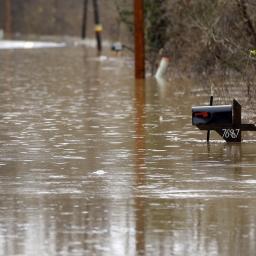
Water levels are expected to exceed those of the catastrophic 1993 floods as the National Guard is called in, roads are closed and sewage leaks into waterwaysMissouri has been engulfed by “historic and dangerous†flooding with water levels expected to crest at record levels in the coming days following a severe storm that has wreaked devastation throughout the southern and midwest United States.Related: Missouri engulfed by flash floods after three days of rainfall Continue reading...
|
 |
by Elle Hunt on (#Z41Y)
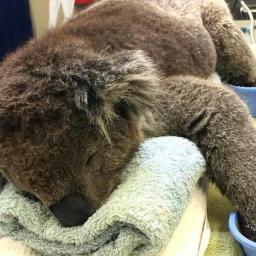
Three-year-old Jeremy suffered second-degree burns in the Adelaide Hills bushfires, was hit by a car and attacked by a dog – but he lives to fight another dayYou’d struggle to think of a more pathetic figure – a koala on an operating table, eyes closed and face-down in a scratchy towel, four paws immersed in containers of sodium chloride.Jeremy the koala became a figurehead for the victims of the Adelaide Hills bushfires in early January after a photo of him receiving treatment for dehydration and second-degree burns went viral. Continue reading...
|
 |
by Caroline Davies, Rajeev Syal and Ben Quinn on (#Z3AS)
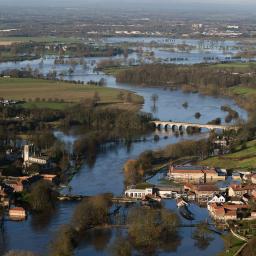
Environment Agency warns of potential for more floods, particularly in Cumbria, with multiple severe weather warnings in placeNorthern England is bracing itself for the impact of Storm Frank as torrential rain and gale force winds threaten further misery for the flood-ravaged area.As the clearup from the Boxing Day floods continued on Tuesday in communities across Yorkshire, Lancashire and Cumbria, the Environment Agency (EA) said there was the potential for further significant flooding, particularly in Cumbria, already badly affected by storms. Continue reading...
|
 |
by Australian Associated Press on (#Z3NA)
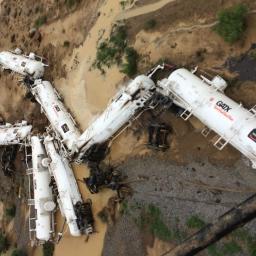
Emergency crews are working on a new access point and hope it will allow experts to further examine the wreckage of the train which derailed on SundayA derailed freight train that spilled tens of thousands of litres of sulphuric acid in north-west Queensland is set to undergo further tests amid fears the toxic cargo will contaminate nearby water.All of the train’s 26 wagons overturned at the Quarrells site, 20km east of Julia Creek, on Sunday. Continue reading...
|
by Mark Tran Damien Gayle and Ben Quinn on (#Z1VM)
 |
by Ben Jennings on (#Z38C)
Continue reading...
|
 |
by Guardian Staff on (#Z37D)
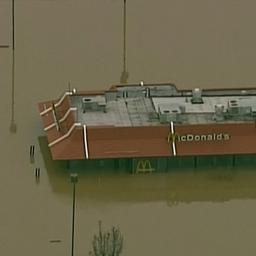
Aerial footage on Tuesday shows major flooding along rivers in Missouri, submerging the town of Union. Governor Jay Nixon did not give details about the latest confirmed fatalities in the state, but said nearly all of those who died in Missouri were in vehicles that drove on to flooded roadways. Previously, 10 deaths from flooding had been reported. Continue reading...
|
by Rick Fedrizzi on (#Z31V)
Next year, builders and businesses will realize that buildings that are good for worker are also good for the bottom line
 |
by Letters on (#Z30D)
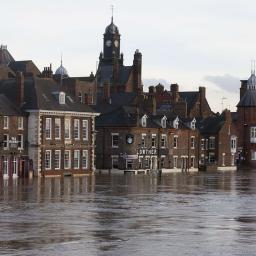
If people such as floods minister Rory Stewart, David Cameron and other politicians are to serve a useful function to the public on issues such as flooding we need them to finally learn and apply a new vocabulary. They must replace useless words like “unprecedented†and “extraordinary†with the words “predictedâ€, “adaptationâ€, “mitigationâ€, and “climate changeâ€. They must replace platitudes such as “once-in-100-years eventâ€, designed to give an excuse for doing nothing, with a new vocabulary that accepts changed circumstances and responsibilities.They must acknowledge the predicted changes in rainfall patterns that the Met Office and others have been warning about for well over a decade. Continue reading...
|
 |
by Letters on (#Z30Q)
The floods in the north of England are a tragedy. More so, as your editorial (28 December) suggests, because of the government’s lacklustre approach to flood management, which is proving increasingly inadequate in the face of climate change. It is indeed time for a Delta plan as radical as the Dutch response to the 1953 North Sea storm surge (Opinion, 28 December). But a growing number of hydrologists and ecologists now argue that this doesn’t necessarily mean big engineering to hurry flood waters away downstream. Rather we should allow nature a freer hand to slow flood waters upstream of urban areas. In the north of England this might mean devoting less of our upland landscape to grouse shooting and sheep farming, and more to replanted native woodlands and reintroduced keystone species, such as beavers.Burning heather moorlands for grouse shooting, which has increased markedly in the catchments of the Ouse and its tributaries over the past two decades, degrades the landscape’s ability to absorb rainwater. In contrast, wooded uplands, with watercourses slowed by beaver dams (once common in Yorkshire) absorb storm waters and release them slowly. The choice we face now is between shoring up an ever more industrialised and degraded landscape or working to restore a wilder, healthier landscape more resilient to foods and other climatic extremes.
|
 |
by Letters on (#Z31W)
I agree with John Gummer that the government should use the Housing Act to prevent further developments in at-risk areas. Even as we watch unprecedented flooding taking place in northern counties, planning authorities here in the south are contemplating building on floodplains and their environs. Whatever the pressures for new housing land in the overcrowded south, the move is short-sighted and should be resisted.
|
 |
by Letters on (#Z31Z)
For those who have already been flooded this winter, their future losses will be compounded by a lack of affordable height information. Ahead of privatisation, the Ordnance Survey has long sought to put profits ahead of public service by selling detailed information to insurance companies, while providing the public with wholly inadequate 5m contouring. Many continental maps show 2.5m intermediate contours in flatter areas. Belgium has a 1:10,000 series contoured to 1.25m intervals in some areas only costing €6.50 a sheet, while the Brandenburg state survey in Germany has printed even cheaper 10k maps with 0.25m intermediate contours in exceptional places, and spot heights and weirs to within one 10th of a metre. Compare this with the eye-watering prices for buying extrapolated digital elevation data to produce more detailed contouring from the Ordnance Survey, so that most researchers use Lidar topographic imaging data, if they can.
|
 |
by Letters on (#Z322)
Congratulations on a notably hard-hitting editorial (28 December). I can only fault it on one point – your contention that Leeds and Manchester carry more weight in Westminster than do Somerset or Cumbria. Not with the Conservatives, they don’t. If they did, the government would be acting on George Monbiot’s advice and re-afforesting the uplands, to mitigate flooding in urban areas downstream.
|
by Editorial on (#Z324)
Rightwing press attempts to pit the aid budget against the need to defend Britain against floods are posing a false choice, since both are essential prioritiesThis being the season of quizzes and party games, here is a topical teaser. The weekend flooding in the north of England triggered what this week? A reasonable answer might be (a) misery for thousands of flooded residents, or perhaps (b) an upsurge of community spirit as people rallied round, or even (c) calls for stronger flood defences to be given higher priority. In one part of Britain, however, the answer has been “none of the aboveâ€. In some rightwing national newspaper offices, the flooding has triggered simply another opportunity to have a pop at Britain’s overseas aid budget. While Britons suffer, this argument runs, scarce taxpayers’ money is being squandered on undeserving foreigners.If you are miserably mopping up the mess in what was once your living room or your business, and a journalist stops and asks if you think £12bn would be better spent on flood defences to stop this happening again or on overseas aid to some of the world’s most corrupt countries, the chances are that you will choose the former not the latter. For why would a flood-ravaged community not put its own needs first? But the truth is that you would be being offered a bogus choice. Continue reading...
 |
by George Monbiot on (#Z2X9)
The government pays grouse moor owners to drain their glorified outdoor chicken runs. Meanwhile it’s the proles downstream who get a soakingThese floods were not just predictable; they were predicted. There were clear and specific warnings that the management of land upstream of the towns now featuring in the news would lead to disaster. On 9 December one of my readers told me this. “I live in the middle of Foss drainage board land above York, where flooding would not harm a single property but water is sent down as fast as possible to York.†A few days later another reader wrote to me, warning that “upstream flood banks now protect crops, not the city of Yorkâ€. On 26 December the Foss exploded into York.Related: Storm Frank: Environment Agency chief returns from Caribbean as storm looms - live coverage Continue reading...
|
 |
by Helen Pidd North of England editor on (#Z2R7)
Residents are glad to receive help as they clean up after flooding but see little point in protecting ruined homes against more heavy rainFour days after the worst floods anyone in Rochdale can remember, the town was gearing up for the next torrent after forecasters predicted yet more heavy rain. Everyone was playing their part. A group of Syrian refugees from Manchester had even pitched up ready to help, and were put to work shovelling sand into sandbags, in the car park of the Conservative club in Littleborough.“We saw the pictures on TV and wanted to help,†said Yasser al-Jassem, 35, a teacher who came to Britain in the back of a lorry from Calais in May. “The people of Greater Manchester have been very good to us and so we wanted to offer our help to them.†Continue reading...
|
 |
by Guardian Staff on (#Z2T9)
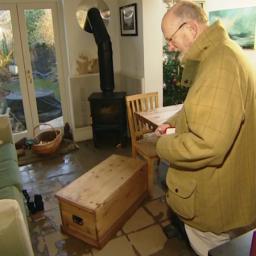
As people in York assess the damage to their flood-hit homes, they express anger and frustration about government decisions and the lack of adequate warning after years of false alarms. With a layer of silt covering the entire ground floor of his house, Rodger Pierce accuses politicians of hiding behind the emergency services to deflect from the decision they made to cut fundingStorm Frank: Environment Agency chief returns from Caribbean as storm looms - live coverage
|
by Caroline Davies on (#Z2K3)
Night-time patrols of Hebden Bridge and Mytholmroyd by motorcycle club members in 4x4s, vans and on foot have blessing of policeMotorcycle clubs have stepped in to deter looters from targeting flood-hit homes and businesses in the Calderdale Valleys region.Night-time patrols of Hebden Bridge and Mytholmroyd are being carried out by bikers who have come from Bradford and beyond to help, with the blessing of police.
by David Batty on (#Z2HH)
Sir Bradley Wiggins has been talking bikes with Jeremy Corbyn but the Labour leader is just one of many prominent pedalling parliamentariansFrom Norman Tebbit’s infamous advice to the unemployed to get on their bikes to the Plebgate row, cycling has a long history of being embroiled in British political controversy and intrigue.So it is not surprising that Jeremy Corbyn, perhaps Labour most divisive leader in recent history, has been accused of riding a Chairman Mao bicycle – a rumour he brushed off when discussing his love of cycling in an interview with the Tour de France winner and Olympic Gold medallist Sir Bradley Wiggins, who was guest-editing BBC Radio 4’s Today programme. Continue reading...
 |
by Finn Harries on (#Z2GH)
My generation has a responsibility to find practical solutions to the environmental problems we have inherited and ensure politicians honour their promisesI was 15, sitting on a London tube headed for the Houses of Parliament with my mum, when she leant forward and warned me that she might be about to get arrested. It was 2009 and we were on our way to a climate change protest she had helped to organise.
|
by Tim Farron on (#Z2HJ)
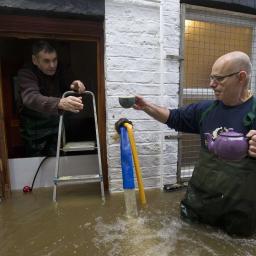
Press releases about Cobra meetings mean nothing to northern communities who have been desperate for investment since the last time they were floodedThe recent floods have not only brought the effects of climate change to the fore – they have also ruined Christmas for many families. But the generosity of so many has shown that community spirit is alive and well throughout the north. I have seen at first hand people open their homes to strangers with nowhere else to go, and seen people who have lost much digging deep to help those who have lost everything.The prime minister’s “big society†is a woolly concept – a halfhearted attempt by David Cameron to contradict his political hero’s assertion that “there is no such thing as societyâ€. But the tangible sense of community in the north of England as the floods have hit has struck many observers. In Cumbria (where I have lived for many years and am an MP), Lancashire (where I was born) and Yorkshire, there is something almost overwhelming about the level of mutual reliance, the selfless support for others, the resilience and cooperation and the strong community spirit. Continue reading...
 |
by Damien Gayle on (#Z2FG)
North of England, Northern Ireland and parts of Scotland told to prepare for floods, with Yorkshire expected to bear bruntPeople in the north of England, south and central Scotland, and Northern Ireland are being advised to brace themselves for further downpours and the possibility of increased flooding overnight, as Storm Frank hits.
|
 |
by Guardian Staff on (#Z2CN)
On the heels of the Paris climate deal, the president is likely to focus on the environment in his final year in office – and Congress can do little to stop himBarack Obama will defend the Paris climate change agreement and forge ahead on his environmental agenda until his final days in the White House, according to analysts. And there is very little Obama’s opponents in Congress can do to stop him – unless they win the elections and install a Republican in the White House in 2017.Republicans’ initial attempts to derail the Paris agreement fell flat, with Congress failing to deliver on threats to cut off climate aid to developing countries or block the deal. Continue reading...
|
by Hannah Gould on (#Z2BQ)
From Davos and predictions of a chocolate crisis to the MRSA superbug in supermarket pork and the VW emissions scandal
by Ben Quinn on (#Z2A1)
Sir Philip Dilley, who spent Christmas in Barbados, criticised for failing to visit flood-hit areas to explain what his agency is doingThe head of the Environment Agency is returning from holiday in the Caribbean amid criticism about his absence from the UK as the body deals with some of the country’s worst flooding in decades.
 |
by Guardian Staff on (#Z28A)
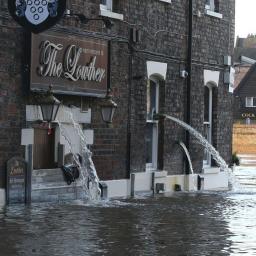
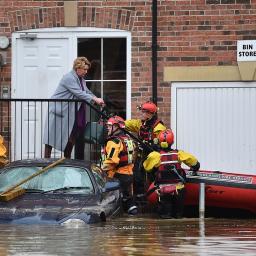
‘Tables and chairs were floating around everywhere’ says Sue Hardy as she describes how her restaurant in York was affected by the flooding. Water levels are receding and the Environment Agency says the pumps are now working at the Foss barrier. However forecasters say more heavy rain is expected. Photograph: AFP/Justin Tallis
|
 |
by Owen Jones on (#Z28V)
From a failure to invest in flood defences or renewable energy to cuts to social care, austerity has left Britain dangerously exposed“Money is no object in this relief effort,†came the passionate anti-austerity cry. “Whatever money is needed for it will be spent. We will take whatever steps are necessary.†David Cameron made this statement during the flood crisis of February 2014, and his defenders will point out that the prime minister was referring to flood relief, not defence. But here is “false economy†at its starkest: cutting back on services ostensibly to save money, then having to spend far more on the consequences. As official documents now show, the government’s own advisory board recently pointed out that a lack of funds would leave northern communities at risk of floods. One £180m floods defence project was scrapped in Leeds, for example. And now? Well, according to KPMG estimates, the long-term cost of the disaster to everyone could be somewhere between £5bn and £5.8bn.Related: Labour calls for long-term cross-party flood protection plan Continue reading...
|
by Frances Buckingham on (#Z26V)
Environmental and social campaigners are getting creative by using illustration, craft and dance to put sustained pressure on business and governments
 |
by Guardian readers on (#Z26W)
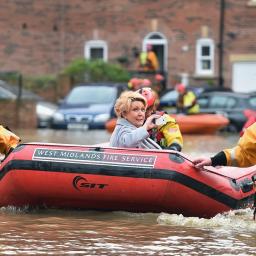
Parts of northern England were swamped by flooding, and Storm Frank threatens the UK with more bad weather. Have you been affected? Share your experiences with us
|
 |
by Damien Gayle on (#Z25R)
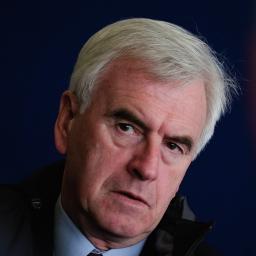
Shadow chancellor John McDonnell says issue should be taken ‘out of party politics’ to ensure experts’ recommendations are implementedJohn McDonnell has challenged the government to agree to a bipartisan long-term plan on flood protection, as Conservatives struggled to respond to accusations that they slashed the budget for defences in the last parliament.The shadow chancellor said trying to save money by cutting back on flood protection was a false economy, suggesting that flooding this winter could have been averted if just half the estimated bill for the cleanup had been spent spent on defences. Continue reading...
|
by Susanna Rustin on (#Z24P)
It’s not exactly a festive read, but this analysis of the politics behind climate change deserves to be widely shared
 |
by Ben Quinn on (#Z14X)
Sir Philip Dilley, reportedly staying at his luxury home in Barbados, under pressure to defend handling of crisisThe head of the Environment Agency is under pressure to defend his handling of Britain’s worst flooding crisis for years amid reports that he has left the country to spend time at his luxury Caribbean home.The Environment Agency refused on Tuesday to comment on Philip Dilley’s whereabouts, other than to say he was “at home with his family over Christmasâ€. Continue reading...
|
 |
by Rajeev Syal on (#Z0YA)
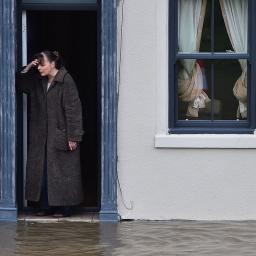
• Chair of body expected to plan for flooding in Yorkshire said key projects would be scrapped because of funding gap
|
 |
by Peter Walker and Damian Carrington on (#Z1PF)
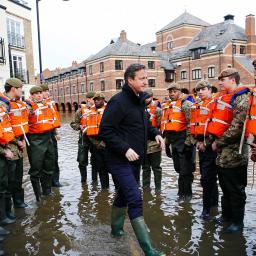
Experts once based defences on how to withstand once-a-century deluges. As floods becomes more common, there are new possibilities to considerThe government formally identified flooding as the greatest climate change related threat to the UK in 2012, a warning amply illustrated by the current floods devastating the north of England.The 2012 report said up to 3.6 million people could be at risk from flooding by the middle of the century. So what can be done about it? Every time a community is flooded the understandable response from local people tends to be the same: more should have been done. Higher barriers, bigger walls. Continue reading...
|
 |
by Guardian staff and agencies on (#Z1KT)
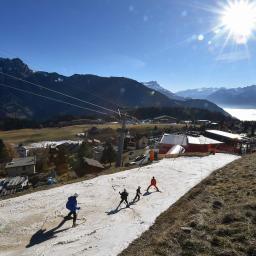
The country that founded winter tourism has seen the mildest end to the year since records began 150 years ago with ski resort owners set to sufferSwitzerland has experienced its warmest December since the country that founded winter tourism began keeping records 150 years ago.Clear skies and dry ground have seen the Alpine nation end the year 3.4C above the long-term historical average for December, a climatologist for the federal office of meteorology and climatology (MeteoSwiss) said on Monday. Continue reading...
|
 |
by Mark Cocker on (#Z1HH)
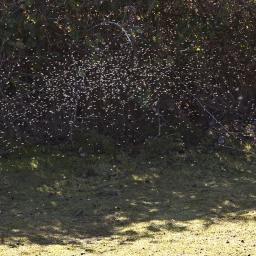
Claxton, Norfolk: The wandering smoke of tiny insects billows in a corner, where the holly breaks the last dim daylightAnyone who ever put in a hard stint of gardening knows the moment. The tasks are at a natural end. Tools are all stowed. There is even a satisfying link between your heavy limbs and the sense of rough order pulled out of the hedge and lawn and gathered up in the fresh-edged woodstack. The loss of light, the swelling damp and the quietness of the air after all the brisk morning – even the day and season seem to join in this aura of things completed.You pause to enjoy all of it. And in a corner, where the holly breaks the last dim daylight there is a wandering smoke billow of tiny insects. There are no more than a score but you wonder have these flies emerged just, or have you acquired the peace of mind to see them only now? And rather like the garden’s pleasing order, are they a gift only of hard work? Continue reading...
|
by Calla Wahlquist on (#Z14Z)
Huge crowds flock to Mount Lofty botanic gardens, outside Adelaide, to experience powerful odour produced by rare flowering of the Titan arumNever has the smell of a rotting corpse been met with so much joy.Gardeners at Mount Lofty botanic garden, about 18km from Adelaide, jubilantly announced on Monday the long-awaited flowering of the extremely rare Titan arum, more commonly known as the corpse flower for its distinctive and distinctly unpleasant odour. Continue reading...
by Katie Allen on (#Z115)
Value of sales for a sector that spans charity shops, vegetarian food and energy efficient lightbulbs, rose to £38bn in 2014Stronger sales of solar panels, electric cars and free-range poultry helped to grow the UK’s overall “ethical market†by 8% in 2014, a new report claims.However, the report’s authors warned that recent government changes such as cuts to subsidies for householders installing rooftop solar panels would make it tougher to repeat this growth in spending on low carbon home energy and cars. Continue reading...
 |
by Steven Morris on (#Z113)
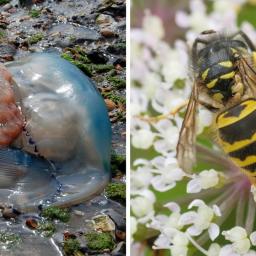
National Trust survey shows how sunny winter and wet and windy summer affected British flora and faunaIt was a good year for picnickers, but a bad one for sea swimmers: in the National Trust’s annual survey of how the weather and climate has affected Britain’s flora and fauna, jellyfish were judged to have flourished while wasps suffered a sharp decline.A sunny winter was followed by a late spring, which meant summer migrant birds were late, as were the leaves on the hedges. A pretty wet and windy summer followed, but September and October came good, leading to prolonged flowering for many summer plants and a longer season for insects. Continue reading...
|