 |
by Arthur Neslen on (#R8MZ)
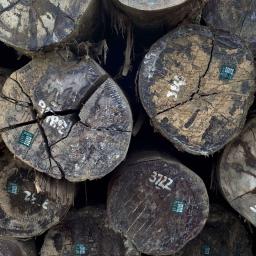
Auditors say EU scheme to tackle $100bn global trade in illegal timber is poorly designed, badly managed and largely ineffectiveA European bid to clamp down on the $100bn-a-year global trade in illegal timber has been poorly designed, badly managed and largely ineffective, according to a damning report by the EU’s court of auditors.Illegal logging is thought to be responsible for around one-fifth of man-made greenhouse gas emissions – more than from all the world’s ships, planes, trains and cars combined. It is also an existential threat to forest-dependent indigenous people, and to biodiversity. Continue reading...
|
| Link | http://feeds.theguardian.com/ |
| Feed | http://feeds.theguardian.com/theguardian/environment/rss |
| Updated | 2026-08-20 15:15 |
 |
by Interview by Karin Andreasson on (#R8FK)
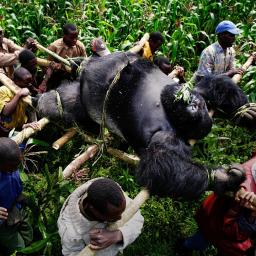
‘Seven gorillas had been shot. I took three frames then had to leave because the army were looking for me’Virunga national park is probably the most dangerous place to practise conservation in the world. In 2007, it was a war zone: 17 paramilitary groups, as well as rebel troops and the Congolese army were all operating in the park, situated in the Democratic Republic of the Congo. All the while, rangers were trying to protect the wildlife, including the world’s most endangered primate, the mountain gorilla. I had gone there with a journalist for Newsweek to document what we thought would be clashes between rangers and paramilitaries. But instead, after three days, we got word a gorilla had been killed.We hiked into the bush with some rangers and, a few hours later, came across the first bodies. Three females had been shot. It started to rain really heavily so we headed back to our camp because it wasn’t a safe area at night. The following morning, we found Senkwekwe the silverback and yet another female. In total, seven had been killed. One of the females was pregnant and another’s baby was assumed to have run off. It must have died as well.
|
 |
by Andrew Simms on (#R8BR)
Denmark joins more than a hundred places around the world making business-friendly zero carbon commitments as they transition away from fossil fuels
|
|
by Laura Laker on (#R8BE)
With the right investment in infrastructure and improved liability laws, cycling in the UK could be this successful and our streets could be reclaimed as places for people of all ages to enjoyWho builds a bicycle road on a 32km-long sea dyke? One akin to a really, really long Severn Bridge, made of earthworks, tumbleweed and gulls, with a six-lane highway? The Dutch, that’s who, and I’m grateful for it.With no end in sight, only a straight line of smooth tarmac stretching seemingly to infinity, and bordered on both sides by sea, this bike road on the Afsluitdijk is impressive, if only for its sheer length and optimism. After two roadies and a man on a small, rattly moped overtake me at the start, there are no other cyclists using it but me, laden with panniers and tent, while motorway traffic buzzes past, at the foot of a wide, grassy bank. Continue reading...
|
by Calla Wahlquist on (#R88Y)
The city’s growing population means a growing demand for water, but as more and more water is drawn out of Perth’s acquifers, the land is slowly subsidingGrowing demand for water in Perth has caused the city to sink at up to 6mm a year and could be responsible for an apparent acceleration in the rate of sea level rise, according to new research released by Curtin University.The study, published in the Journal of Geophysical Research in October, found that the rate of subsidence in Perth increased between 2000 and 2005, at the same time as the Water Corporation of WA increased the amount of water it was drawing from the city’s two main aquifers to meet the demands of a growing population. Continue reading...
by Fiona Harvey on (#R884)
Climate Change Committee say that onshore windfarms and large solar projects will soon be cost competitive with gas, given expected cost of carbonOnshore wind and large solar farms are likely to be competitive on cost with gas-fired power generation by the end of this decade, according to the government’s climate change advisers, but only if gas pays its fair share through a carbon price.In order to meet these expectations, investors must gear up in the next few years to put new money into all low-carbon sectors, and government must give them the policy signals they need in order to do so, said Matthew Bell, chief executive of the Committee on Climate Change. Continue reading...
 |
by Jonny Weeks on (#R7TZ)
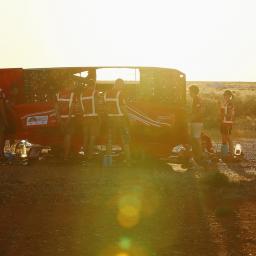
Teams of energy-efficiency enthusiasts are racing homespun solar-powered vehicles over 3,000km from Darwin to Adelaide. Each car is allowed a maximum of 6 sq m of solar panels as well as a nominal 5kW hours of stored energy; all other energy must come either from the sun or from the kinetic energy of the vehicle. The challenge, first run in 1987, goes from 18-25 October Continue reading...
|
 |
by Associated Press in Charleston, West Virginia on (#R7F1)
Don Blankenship’s lawyers have found ways to repeatedly suggest to jurors that regulators targeted his company for political reasons under Obama’s watchAn outspoken critic of president Barack Obama charged with conspiring to violate mine safety rules before a deadly explosion is under orders not to tell jurors he’s being persecuted by Democrats.The federal judge also warned former Massey Energy CEO Don Blankenship that safety rules are not on trial. Continue reading...
|
 |
by Associated Press in Boston on (#R7BJ)
|
 |
by Rachel Barron on (#R75Z)
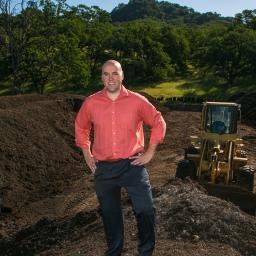
It can be tough for a business to get certified in social and environmental performance – just ask organic winemaker Fetzer VineyardsIn 1968, Barney Fetzer decided to start what he believed was a revolution in the fertile lands of California’s Mendocino County. He was going to challenge the status quo and seek out winemaking practices that were better for the planet.Although Fetzer is no longer alive – he died in 1981 – his vision spurred the creation of one of the most sustainable large wine companies in California. Continue reading...
|
 |
by Sarah Butler on (#R7BM)
Retailer brings end to ‘living laboratory’ programme in Ayrshire, set up in 2009 to investigate sustainable meat productionThe supermarket chain Morrisons is pulling out of a sustainable farming project in which it has invested £2m over the last five years.The struggling retailer took over the running of a 1,000-acre estate belonging to Dumfries House in Ayrshire in 2009 after the stately home was saved for the nation by a charitable consortium led by Prince Charles. The prince took out a £20m personal loan in 2007 to prevent its sale and its unique collection of furniture being broken up. Continue reading...
|
by Nils Pratley on (#R6YP)
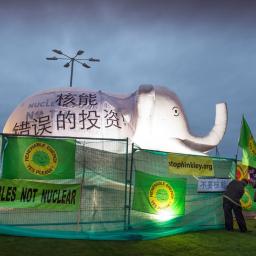
Chinese-funded nuclear power station will cost customers dear and could be delayed by years – but what do David Cameron and George Osborne care?In a rational world, the concerns of the UK intelligence agencies would kill the idea of Chinese state involvement in our nuclear power stations. Here, we will stick to a financial appraisal of Hinkley Point. The answer is the same: the project makes no sense.After 30 years of stop-start policymaking in Westminster, energy generation involves necessary compromises between three competing goals – cleanliness, cost and reliability. Hinkley will achieve one of those ambitions – nuclear is clean in the sense that it produces little carbon – but it fails the other two tests by absurdly wide margins. Continue reading...
 |
by Letters on (#R6X1)
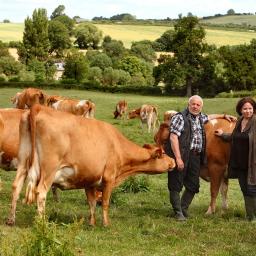
Recent “what about the farmworkers?†correspondence in relation to The Archers (Letters, 6, 10 and 13 October) strikes a chord.Back in the 1970s as an officer of the agricultural workers’ union, the NUAAW, I raised just this point with the late Anthony Parkin, agricultural adviser to The Archers, following complaints from union branches that the everyday story of country folk was dominated by antique dealers and farmers/landowners, while the hired workers were generally portrayed as idiots. Continue reading...
|
 |
by Francesca Perry on (#R6WF)
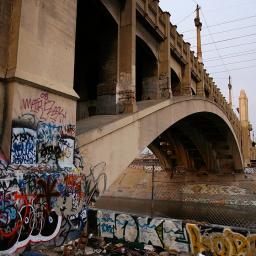
Does your city have a forgotten or underappreciated river? Do you wish it could be better used? Share your photos and stories with GuardianWitnessMany cities have well-loved rivers, from Paris’ picturesque Seine to the newly revitalised Chicago River. But for every celebrated city river there are others which are unloved or underused.Much of LA’s river runs along an abandoned concrete channel surrounded by electricity pylons and decorated with graffiti – which has in itself become an iconic scene of the city – though the water flow is often so limited it barely feels like a river at all. But now, an 11-mile stretch is planned to be restored, spearheaded by the “kayaking mayor†Eric Garcetti and with the help of superstar architect Frank Gehry. Continue reading...
|
 |
by Julia Langdon on (#R6RE)
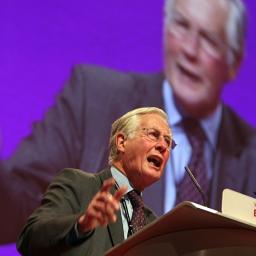
Long-serving Labour MP and former environment minister committed to green issues and defeating povertyIn the course of his 45-year career in the House of Commons, Michael Meacher, who has died aged 75, established a name for himself as an earnest and committed leftwing MP who wore his much-polished social conscience very visibly on his sleeve. He sat on Labour’s frontbench in government and opposition for a total of 29 years, but his misfortune was that he was never greatly favoured or particularly trusted by the six party leaders under whom he served. His good fortune, however, and the reason for his lengthy political survival in office was that he did not allow this evident antipathy to matter to him and even accepted demotion and an occasional public humiliation as a necessary price to pay.He was one of only two MPs elected in May (the other is the Father of the House, Gerald Kaufman) to have served in the 1974-79 Labour governments under Harold Wilson and James Callaghan. He had arrived in the Commons as the MP for Oldham West (now Oldham West and Royton) in 1970 with his political aims and ambitions, nurtured at New College, Oxford, and in a brief academic career, in an advanced state of preparation. He knew exactly what he wanted to do as an MP and he won grudging respect from his parliamentary colleagues for a dogged and unfailing application to his agenda. Continue reading...
|
by Emine Saner on (#R6JM)
Sales of the non-dairy milk alternative are on the rise. But the super-healthy nuts – mostly grown in drought-hit California – need millions of litres of water to be produced. Think twice before you pour it on your cerealSnoop around the contents of an “eat clean†aficionado’s grocery basket and chances are, among the organic cauliflower and mountain of avocados, you will come across a carton of almond milk. A few years ago, those avoiding cow’s milk because of lactose intolerance or for ethical reasons were drinking soya, but health scares have seen a rising demand for alternative plant “milksâ€, including rice, hemp and – most popular – almond. This week, Waitrose said almond milk had overtaken soya as its customers’ preferred dairy alternative.Almonds are one of the healthiest foods you can eat. The nuts (or seeds, if you are a botanical pedant) are packed full of vitamins, minerals and beneficial plant chemicals, as well as protein, healthy fats and fibre, and eating almonds is associated with a lowered risk of heart disease and Alzheimer’s, among other conditions. Continue reading...
 |
by Sean Farrell and Terry Macalister on (#R5X1)
Xi Jinping hails £18bn nuclear project as ‘flagship project of cooperation’ in new era for China and Britain in joint press conference with David CameronWork on the first new nuclear power plant in the UK for 20 years is set to begin within weeks after the French energy company EDF and China’s main nuclear operator agreed a deal on building the £18bn project.The agreement was hailed by David Cameron and the Chinese president, Xi Jinping, at a joint press conference in London, with Xi describing the Hinkley Point C plant in Somerset as the “flagship project of cooperation†in a new era for China and Britain. Continue reading...
|
 |
by Chang May Choon for The Straits Times, part of the on (#R6AC)
An economist, whose brother is a former prime minister of South Korea, is the IPCC’s new chief, reports the Straits TimesAlthough one of the world’s top carbon emitters, South Korea has also become a leader in pursuing climate-resilient economic development. Its transformation was witnessed - and partially pioneered - by Dr Hoesung Lee, an economist specialising in climate change.The 69-year-old now has the world’s climate blueprint on his plate, having been elected as the fourth and latest chairman of the Intergovernmental Panel on Climate Change (IPCC), a United Nations body that assesses climate research and issues. Continue reading...
|
by Guardian Staff on (#R6B8)
The British prime minister David Cameron celebrates UK-Chinese trading and says he wants to see even more trade flowing between the two countries, as he confirms a deal with China General Nuclear Power Corporation to build a nuclear power plant at Hinkley Point, Somerset. Hinkley Point will become Britain’s first new nuclear power station in a generation. Cameron says exports to China have quadrupled since 2005 to almost £20 billion, making the UK the second biggest investor into China
 |
by Jane Perrone on (#R69C)
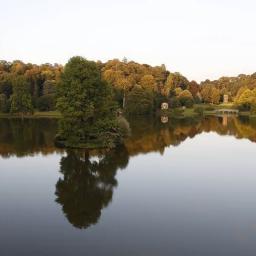
Watch time-lapse footage of the changing of the seasons at the National Trust’s Stourhead landscape garden in WiltshireIf you need confirmation that autumn is here, watch this video of the changing colours of the landscape at the National Trust’s Stourhead garden in Wiltshire.A time-lapse camera installed on the roof of the newly-restored Pantheon by Bristol-based Lobster Vision has been running since September 9. It records a new image every 15 minutes. Continue reading...
|
 |
by Steven Morris on (#R69E)
Some in Somerset are keen to see the creation of employment to halt the departure of its able and ambitious young people; others have concernsFishing boat skipper Steve Yeandle was in no doubt. “Bring it on. We all want the lights to work when we press the switch. We need secure energy. Yes, I’d prefer it if it was our government putting the money in, but you can’t have everything. Nuclear seems to be the viable way to go, and if it is Chinese money making it happen then so be it.â€Yeandle was working on his boat – Scooby Doo Too – in the harbour at Watchet, a modest town on the Somerset coast a few miles west of Hinkley Point. For more than 30 years, he has escorted anglers on to the Bristol Channel in search of cod, skate and whiting. They tend to quiz him briefly about the squat towers of the Hinkley A and B nuclear power station as they chug away from the harbour – and then get on with their fishing. Continue reading...
|
 |
by Fiona Harvey on (#R69G)
World energy watchdog says commitments would result in rapid slowdown in growth of carbon from energy sector if followed throughPledges on greenhouse gas emissions made by governments ahead of landmark climate talks this December will result in a rapid and dramatic slowdown in the growth of carbon from the energy sector - but will not reverse that growth within the next 15 years, the world’s energy watchdog said on Wednesday.
|
by Autumn Spanne on (#R66C)
An increase in US wood pellet exports intended to reduce reliance on fossil fuels may be threatening ecologically important forests across the country, according to a new report from the Natural Resources Defense CouncilEuropean Union (EU) rules intended to reduce power plant reliance on fossil fuels are threatening significant areas of ecologically important hardwood forests across the southeastern US, and will do little to mitigate carbon emissions, according to a new report.The report, produced by the Natural Resources Defense Council (NRDC) in collaboration with the Conservation Biology Institute, detailed a 150% increase in wood pellet exports (pdf) from the US during the past three years. Most are bound for Europe, where power companies are replacing coal and other fossil fuels with wood-based biofuels in order to benefit from EU incentives on renewable energy sources. Continue reading...
 |
by Guardian Staff on (#R62J)
See autumn’s arrival at Stourhead in Wiltshire, courtesy of the National Trust. A time-lapse camera installed on the roof of the newly-restored Pantheon by Bristol-based Lobster Vision has been running since 9 September. It records a new image every 15 minutes, brought together here in a stunning timelapse video
|
 |
by Prachi Bhuchar for India Today, part of the Climat on (#R60P)
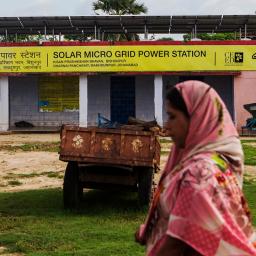
Renewable energy is changing the country’s dynamic, turning lives around and allowing people to be part of the green growth story. This is the basis of its climate commitments ahead of crucial talks in Paris, reports India TodayEvery summer, as India’s biggest cities resort to ‘load shedding’ to keep pace with the demand for power, its residents cuss and sweat, waiting for the comforting whirr of the fan and the hum of the air conditioner that allows them to stay insulated from the reality that millions of others live with - a life without electricity.As our society transforms and our cities get more and more attractive to migrants seeking ‘the good life’, our urbanisation experiment gets impetus. Everyone wants to be on the grid and some, like those in Dharnai village in Bihar, get to do so by harnessing the flood of sunshine that defines their lives for most of the year. Dharnai became India’s first solar-powered village in July last year, literally lighting up the lives of people here who only knew life in the dark. Continue reading...
|
by Terry Macalister and Sean Farrell on (#R5X3)
Does the price per MW hour, which will increase in line with CPI, agreed by the government with the energy companies represent good value for British households?The announcement that China is backing the first British nuclear power station in a generation, at Hinkley Point in Somerset, will stoke the debate over the plant’s cost. Despite the involvement of two state-owned companies – France’s EdF and China’s CGN – British energy users will have to make a substantial contribution too.
 |
by Simon Roach for ENDS Europe, part of the Guardian on (#R5NZ)
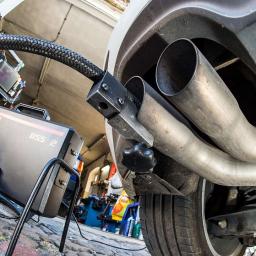
VW scandal could lead to change in labelling law that currently covers fuel consumption and CO2 emissions but not air pollutants, reports ENDS EuropeThe European commission is considering the inclusion of pollutants such as nitrogen oxides (NOx) in car labelling rules as a result of the Volkswagen emissions scandal.The commission is currently reviewing the 1999 car labelling law, which covers fuel consumption and CO2 emissions but not air pollutants. Continue reading...
|
 |
by Polly Toynbee on (#R5FE)
The decision to allow China to build nuclear power stations in the UK is sheer folly, especially at a time when Cameron is shutting the door on renewable energyThe grand kowtow continues its humiliating progress today, but beggars can’t be choosers. The Queen and all her family – good grief, even the Duke of York – are rolled out as the golden words flow. Britain always risks being a figure of fun as it grasps at the coat-tails of the great powers: enough leaks from our American cousins have revealed how often our “special relationship†dream has been mocked in Washington. What snickers echo in Beijing’s labyrinths of power?Related: Britain 'sucking up' to China is a national humiliation, says PM's former adviser Continue reading...
|
 |
by Guardian Staff on (#R5FG)
Lack of control over ivory sales is hindering progress made by China and the US to combat elephant poaching, say NGO WildAid, after an investigation exposes traders using legal trade as a cover Continue reading...
|
 |
by Madeleine Cuff for Business Green, part of the Gua on (#R5FJ)
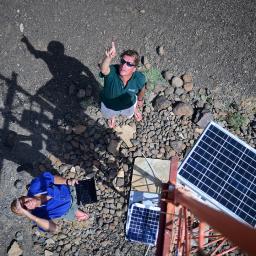
Internet giant to acquire 12.5% stake in Lake Turkana windfarm in Kenya, reports Business GreenGoogle announced plans yesterday to take a 12.5% stake in Africa’s largest windfarm, Lake Turkana, once the project becomes operational in 2017.The firm will purchase its stake in the windfarm from Danish turbine manufacturer Vestas Wind Systems, becoming the project’s third largest investor. However, the company did not disclose the value of the deal. Continue reading...
|
 |
by Ariel Zirulnick on (#R5DR)
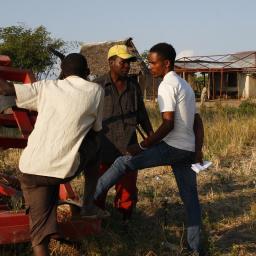
A stalled scheme to make Tanzania east Africa’s premier sugar producer has polarised opinion about using large-scale agriculture to achieve food securityPer Carstedt, executive chairman of the Swedish company Agro EcoEnergy, has a vision for a shrubby tract of land on the north Tanzanian coast. Under his firm’s plan, farmers who once depended on subsistence work will earn wages on a sugarcane plantation or from selling sugarcane they grow to a planned processing facility.The factory will process sugar for export as well as for ethanol. The fields will be crisscrossed with irrigation canals and treated with a mix of organic and synthetic fertiliser. Within a few years, Tanzania will be the biggest sugar producer in the East African Community, transforming its agriculture sector. Continue reading...
|
 |
by Aisha Gani on (#R5B1)
Chinese president expected to make statement on planned Hinkley Point C nuclear plant as string of Anglo-Sino deals are set to be announcedOn a day of business and diplomatic handshaking the Chinese president has visited Imperial College London with the George Osborne, the chancellor, and Prince Andrew. Continue reading...
|
by Dana Nuccitelli on (#R5B2)
The GWPF argues that carbon pollution is terrific, but climate scientists and policymakers aren’t buying it
 |
by Press Association on (#R541)
Dyson has launched legal action saying rivals’ vacuum cleaners use up to twice as much energy in real life than tests show, due to behaviour ‘akin to Volkswagen scandal’Dyson has launched legal action against rivals Bosch and Siemens alleging that they are misleading consumers in behaviour akin to the Volkswagen scandal.The British company, most famous for its bagless vacuum cleaner, claims that independent testing has shown that machines made by Bosch and Siemens could draw more than 1,600W of power when used in the home despite having a rating of 750W. Continue reading...
|
 |
by Elisabeth Braw on (#R51S)
Worm assisted composting saves organic waste from incineration and helps create valuable planting soil
|
 |
by Adam Vaughan on (#R4ZH)
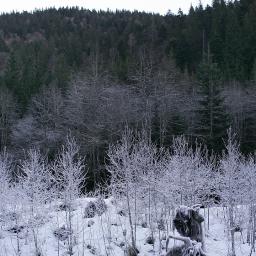
Two-year investigation links Holzindustrie Schweighofer to destruction of Europe’s last remaining virgin forests in RomaniaA major Austrian timber company that supplies DIY stores across Europe has been accused of destroying Europe’s last remaining virgin forests in Romania by sourcing illegally logged timber.
|
 |
by Athlyn Cathcart-Keays on (#R56K)
Resilient People: Wecyclers began life as a student project – but Bilikiss Adebiyi-Abiola has since built it into a social enterprise that tackles the Nigerian capital’s waste crisis and empowers low-income communities to turn trash into cashAs the most populous city in Africa, life in Lagos can present a number of urban challenges. Since 2004, Nigeria has seen a 5% increase in the number of people living below $1 per day, despite recently overtaking South Africa as the continent’s largest economy.Of Lagos’s 18 million residents, 60% live in slum neighbourhoods that operate as informal, thriving cities of their own. But Bilikiss Adebiyi-Abiola, a born-and-raised Lagosian, has a plan to reconnect citizens to the megacity by linking them to out-of-reach municipal services, while also building a network through which community resilience can flourish.
|
 |
by Andrew Todd on (#R4XF)
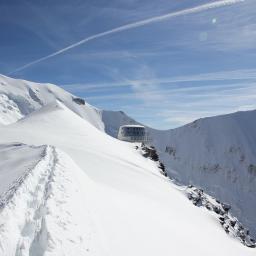
Attitudes to Alpine wilderness have changed in the 150 years since the Matterhorn was first climbed: these cutting-edge new buildings treat the mountains gently, while still looking greatThis year is the 150th anniversary of the conquest of the Alps’ last major peaks, including the Grandes Jorasses and the Matterhorn – the culmination of a five-year flurry of Alpine first ascents. While these feats are being celebrated throughout the winter in a number of fascinating exhibitions, particularly in the Chamonix valley, it perhaps sounds odd now to talk of “conquests†in relation to nature. We have – sadly – effectively conquered her, and are awaiting the blowback of climate change: mountains are crumbling at alarming rates, glaciers are receding, whole valleys are being cut off by landslides. But a new, gentle approach to the high mountains is in evidence in a range of recent buildings that give both expert climbers and the general public the chance to understand these changes without leaving a heavy footprint. Some are remote, cutting-edge, autonomous, space-age pods accessed only by risky ascents in technical gear; others you can go and see in your flip-flops. Continue reading...
|
by Guardian Staff on (#R4MZ)
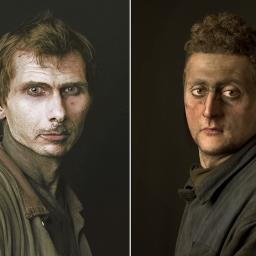
Pierre Gonnord spent five years shooting Spain’s last generation of coal miners the moment they finished their shifts – an important record of a disappearing community. Mining began here centuries ago, and the pits will close in 2018
 |
by Liese Spencer on (#R4N0)
Photographer Pierre Gonnord on how he captured the last gasps of a dying industryFor the last five years, Pierre Gonnord has been photographing Spain’s last coal miners. At seven pits in Asturias and Castilla y León, he captured an industrial tribe on the brink of extinction. “They told me, ‘Mining is the worst of the worst, we don’t want our children to do this,’†he says. “But we don’t want it to end either because then we will disappear.â€Related: Coal faces: portraits of the last miners in Spain – in pictures Continue reading...
|
 |
by Fergus Ryan in Beijing on (#R4J6)
Investigation found 1,280 hectares of natural forest illegally razed, endangering homes of more than 30% of world’s pandasIllegal loggers are ransacking sanctuaries in southwest China that are home to more than 30% of the world’s pandas, according to a Greenpeace investigation.The two-year study found that more than 1,800 football pitches of natural forest in a Unesco world natural heritage site had been illegally razed. Continue reading...
|
by Peter Walker on (#R4WM)
Biggest ever survey on subject says people would like government to spend almost seven times more on bike infrastructure than it does now.There is significant public demand for increased government spending to make cycling safer and more accessible, according to the biggest UK-wide survey on the subject, with three-quarters of people saying they supported such a move.The study for Sustrans of 11,000 people in seven cities found 75% wanted more money to be spent on cycling measures. On average, people supported an annual spend per person of about £26 on cycling, against the current £4 figure for England, and £12 in Scotland.
 |
by Virginia Spiers on (#R4E7)
Callington, Cornwall At the Honey Fair talk is of autumnal warmth, of bees making up for lost time on ivy and balsam flowersCallington Honey Fair draws many visitors to the town. By 10am there are rows of cars in the recreation field, overlooked by the relic mine stack on top of Kit Hill and in sight of sunlit tors on the edge of Bodmin Moor.The local Lions Club has run this annual event since its revival in 1978. Streets are closed to traffic and spaces let to stall-holders including sellers of fresh produce, mead, snacks, jewellery, dog beds and Christmas cards, as well as to a fortune teller and various local groups. Continue reading...
|
 |
by Guardian Staff on (#R453)
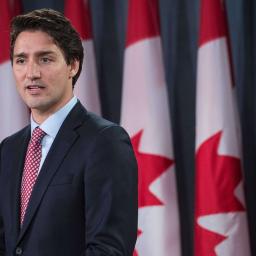
The prime minister-designate, Justin Trudeau, says he spoke with the US president, Barack Obama, on Tuesday and confirmed his election commitment to withdraw Canadian fighter jets from the coalition campaign against Isis. Trudeau also says he will be making a break from the environmental policies of his predecessor, Stephen HarperPhotograph: Nicholas Kamm/AFP/Getty
|
 |
by Patrick Barkham on (#R31W)
Endless energy from the sun looked like a long-term solution for running our homes. But now the state has pulled the plug on the subsidies that made panels affordable for many. What happens now?Sit back, relax, and read this story with an untroubled conscience: it has been created on a laptop and mobile phone powered entirely by the rays of the sun. This feat would surely astound the most idealistic Greek philosopher or Victorian entrepreneur. It would confirm their wildest hopes for humanity’s progress. Perhaps they would be even more amazed that it was possible via a coalition of Chinese companies, British roofers and local councils. Oh, and government support, which is set to be abruptly withdrawn.The power comes from 16 black Ja solar panels that were fitted to the roof of my home in August. Together, these panels, each the size of a coffee tabletop, have a capacity of 4kW, enough to meet the energy needs of an average family home. Today, a gloomy autumnal moment, they have generated 4.403kWh. It hardly sounds impressive – it’s enough power for a couple of loads of washing – but collectively it represents a revolution. Solar hasn’t changed my life, but it has shifted my perceptions. A little monitor on my desk tells me how much electricity I am generating. I’m acutely aware of the scarcity of energy, the rarity of unbroken sunshine and changing path of the sun. In August, rays hit my panels at 8.30am and an image of a green finger materialised on my monitor, urging me to switch on appliances. Now it doesn’t appear until 10.30am and so we delay putting on the washing machine. We have toddlers around the house all day, so solar suits us: we time the dishwasher for daylight hours and the TV tends to be on more during the day than at night. If I’m working from home, I charge laptops and phones around midday, too. Solar’s drawback is that most power is generated in daylight hours, when people tend to be at work, and there’s currently no affordable battery technology to store the energy you generate. But that energy is not wasted: it goes into the national grid, and solar owners are paid for what they produce. Continue reading...
|
 |
by Patrick Barkham on (#R2NX)
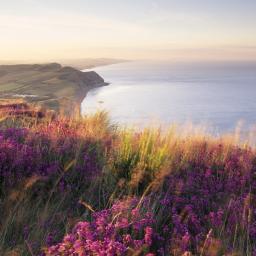
Built-up areas around the UK coast have increased by more than 40%, but conservationists have saved the ‘most pristine’ areas, Patrick Barkham reports Continue reading...
|
 |
by Natalie Haynes on (#R2MH)
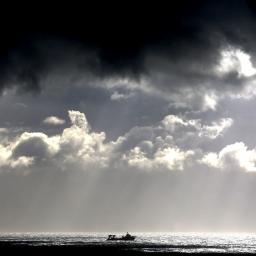
We’ve managed perfectly well for centuries calling it ‘that bloody rain’. But now weather forecasters want to start personifying the weatherThe naming of storms is a difficult matter, as TS Eliot might have said, if he hadn’t been so distracted by cats. Only last year scientists discovered that Americans failed to take storms seriously when the weather system was given a female name. The most lethal female-named hurricanes have notched up almost twice the death tolls of their male-named counterparts because, one presumes, too many Americans have assumed that lady-storms are just making a fuss about nothing and can safely be ignored until they go off in a huff.Related: ID of the storm: Met Office invites public to name severe weather systems Continue reading...
|
 |
by Damian Carrington on (#R2JV)
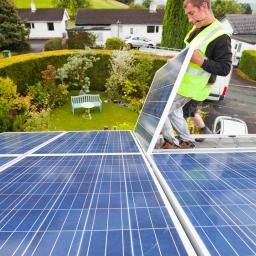
Andrea Leadsom tells a committee of MPs that she remains open to the findings of a consultation into proposed cuts to renewable energy subsidiesEnergy minister Andrea Leadsom has told MPs she remains “open-minded†about plans to slash subsidies for solar power in order to protect consumer bills, but told MPs on Tuesday that “very expensive†nuclear power stations were nonetheless “affordable for customersâ€.
|
 |
by Justin McCurry in Tokyo on (#R2EQ)
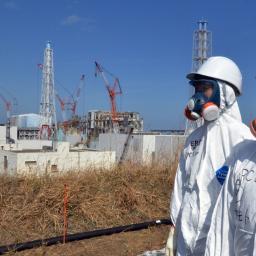
Diagnosis of man who worked on reactor buildings damaged in 2011 tsunami could hamper efforts to encourage people to return to the areaA 41-year old man has become the first worker at the Fukushima Daiichi nuclear power plant to be diagnosed with cancer that officials recognise as being linked to his work there after the March 2011 disaster.
|