|
by Guardian Staff on (#R62J)
See autumn’s arrival at Stourhead in Wiltshire, courtesy of the National Trust. A time-lapse camera installed on the roof of the newly-restored Pantheon by Bristol-based Lobster Vision has been running since 9 September. It records a new image every 15 minutes, brought together here in a stunning timelapse video
|
| Link | http://feeds.theguardian.com/ |
| Feed | http://feeds.theguardian.com/theguardian/environment/rss |
| Updated | 2026-04-29 08:31 |
|
by Prachi Bhuchar for India Today, part of the Climat on (#R60P)
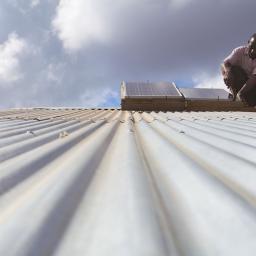
Renewable energy is changing the country’s dynamic, turning lives around and allowing people to be part of the green growth story. This is the basis of its climate commitments ahead of crucial talks in Paris, reports India TodayEvery summer, as India’s biggest cities resort to ‘load shedding’ to keep pace with the demand for power, its residents cuss and sweat, waiting for the comforting whirr of the fan and the hum of the air conditioner that allows them to stay insulated from the reality that millions of others live with - a life without electricity.As our society transforms and our cities get more and more attractive to migrants seeking ‘the good life’, our urbanisation experiment gets impetus. Everyone wants to be on the grid and some, like those in Dharnai village in Bihar, get to do so by harnessing the flood of sunshine that defines their lives for most of the year. Dharnai became India’s first solar-powered village in July last year, literally lighting up the lives of people here who only knew life in the dark. Continue reading...
|
by Terry Macalister and Sean Farrell on (#R5X3)
Does the price per MW hour, which will increase in line with CPI, agreed by the government with the energy companies represent good value for British households?The announcement that China is backing the first British nuclear power station in a generation, at Hinkley Point in Somerset, will stoke the debate over the plant’s cost. Despite the involvement of two state-owned companies – France’s EdF and China’s CGN – British energy users will have to make a substantial contribution too.
|
by Simon Roach for ENDS Europe, part of the Guardian on (#R5NZ)
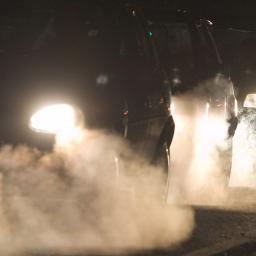
VW scandal could lead to change in labelling law that currently covers fuel consumption and CO2 emissions but not air pollutants, reports ENDS EuropeThe European commission is considering the inclusion of pollutants such as nitrogen oxides (NOx) in car labelling rules as a result of the Volkswagen emissions scandal.The commission is currently reviewing the 1999 car labelling law, which covers fuel consumption and CO2 emissions but not air pollutants. Continue reading...
|
|
by Polly Toynbee on (#R5FE)
The decision to allow China to build nuclear power stations in the UK is sheer folly, especially at a time when Cameron is shutting the door on renewable energyThe grand kowtow continues its humiliating progress today, but beggars can’t be choosers. The Queen and all her family – good grief, even the Duke of York – are rolled out as the golden words flow. Britain always risks being a figure of fun as it grasps at the coat-tails of the great powers: enough leaks from our American cousins have revealed how often our “special relationship†dream has been mocked in Washington. What snickers echo in Beijing’s labyrinths of power?Related: Britain 'sucking up' to China is a national humiliation, says PM's former adviser Continue reading...
|
|
by Guardian Staff on (#R5FG)
Lack of control over ivory sales is hindering progress made by China and the US to combat elephant poaching, say NGO WildAid, after an investigation exposes traders using legal trade as a cover Continue reading...
|
|
by Madeleine Cuff for Business Green, part of the Gua on (#R5FJ)
Internet giant to acquire 12.5% stake in Lake Turkana windfarm in Kenya, reports Business GreenGoogle announced plans yesterday to take a 12.5% stake in Africa’s largest windfarm, Lake Turkana, once the project becomes operational in 2017.The firm will purchase its stake in the windfarm from Danish turbine manufacturer Vestas Wind Systems, becoming the project’s third largest investor. However, the company did not disclose the value of the deal. Continue reading...
|
|
by Ariel Zirulnick on (#R5DR)
A stalled scheme to make Tanzania east Africa’s premier sugar producer has polarised opinion about using large-scale agriculture to achieve food securityPer Carstedt, executive chairman of the Swedish company Agro EcoEnergy, has a vision for a shrubby tract of land on the north Tanzanian coast. Under his firm’s plan, farmers who once depended on subsistence work will earn wages on a sugarcane plantation or from selling sugarcane they grow to a planned processing facility.The factory will process sugar for export as well as for ethanol. The fields will be crisscrossed with irrigation canals and treated with a mix of organic and synthetic fertiliser. Within a few years, Tanzania will be the biggest sugar producer in the East African Community, transforming its agriculture sector. Continue reading...
|
|
by Aisha Gani on (#R5B1)
Chinese president expected to make statement on planned Hinkley Point C nuclear plant as string of Anglo-Sino deals are set to be announcedOn a day of business and diplomatic handshaking the Chinese president has visited Imperial College London with the George Osborne, the chancellor, and Prince Andrew. Continue reading...
|
by Dana Nuccitelli on (#R5B2)
The GWPF argues that carbon pollution is terrific, but climate scientists and policymakers aren’t buying it
|
by Press Association on (#R541)
Dyson has launched legal action saying rivals’ vacuum cleaners use up to twice as much energy in real life than tests show, due to behaviour ‘akin to Volkswagen scandal’Dyson has launched legal action against rivals Bosch and Siemens alleging that they are misleading consumers in behaviour akin to the Volkswagen scandal.The British company, most famous for its bagless vacuum cleaner, claims that independent testing has shown that machines made by Bosch and Siemens could draw more than 1,600W of power when used in the home despite having a rating of 750W. Continue reading...
|
|
by Elisabeth Braw on (#R51S)
Worm assisted composting saves organic waste from incineration and helps create valuable planting soil
|
|
by Adam Vaughan on (#R4ZH)
Two-year investigation links Holzindustrie Schweighofer to destruction of Europe’s last remaining virgin forests in RomaniaA major Austrian timber company that supplies DIY stores across Europe has been accused of destroying Europe’s last remaining virgin forests in Romania by sourcing illegally logged timber.
|
|
by Athlyn Cathcart-Keays on (#R56K)
Resilient People: Wecyclers began life as a student project – but Bilikiss Adebiyi-Abiola has since built it into a social enterprise that tackles the Nigerian capital’s waste crisis and empowers low-income communities to turn trash into cashAs the most populous city in Africa, life in Lagos can present a number of urban challenges. Since 2004, Nigeria has seen a 5% increase in the number of people living below $1 per day, despite recently overtaking South Africa as the continent’s largest economy.Of Lagos’s 18 million residents, 60% live in slum neighbourhoods that operate as informal, thriving cities of their own. But Bilikiss Adebiyi-Abiola, a born-and-raised Lagosian, has a plan to reconnect citizens to the megacity by linking them to out-of-reach municipal services, while also building a network through which community resilience can flourish.
|
|
by Andrew Todd on (#R4XF)
Attitudes to Alpine wilderness have changed in the 150 years since the Matterhorn was first climbed: these cutting-edge new buildings treat the mountains gently, while still looking greatThis year is the 150th anniversary of the conquest of the Alps’ last major peaks, including the Grandes Jorasses and the Matterhorn – the culmination of a five-year flurry of Alpine first ascents. While these feats are being celebrated throughout the winter in a number of fascinating exhibitions, particularly in the Chamonix valley, it perhaps sounds odd now to talk of “conquests†in relation to nature. We have – sadly – effectively conquered her, and are awaiting the blowback of climate change: mountains are crumbling at alarming rates, glaciers are receding, whole valleys are being cut off by landslides. But a new, gentle approach to the high mountains is in evidence in a range of recent buildings that give both expert climbers and the general public the chance to understand these changes without leaving a heavy footprint. Some are remote, cutting-edge, autonomous, space-age pods accessed only by risky ascents in technical gear; others you can go and see in your flip-flops. Continue reading...
|
by Guardian Staff on (#R4MZ)
Pierre Gonnord spent five years shooting Spain’s last generation of coal miners the moment they finished their shifts – an important record of a disappearing community. Mining began here centuries ago, and the pits will close in 2018
|
by Liese Spencer on (#R4N0)
Photographer Pierre Gonnord on how he captured the last gasps of a dying industryFor the last five years, Pierre Gonnord has been photographing Spain’s last coal miners. At seven pits in Asturias and Castilla y León, he captured an industrial tribe on the brink of extinction. “They told me, ‘Mining is the worst of the worst, we don’t want our children to do this,’†he says. “But we don’t want it to end either because then we will disappear.â€Related: Coal faces: portraits of the last miners in Spain – in pictures Continue reading...
|
|
by Fergus Ryan in Beijing on (#R4J6)
Investigation found 1,280 hectares of natural forest illegally razed, endangering homes of more than 30% of world’s pandasIllegal loggers are ransacking sanctuaries in southwest China that are home to more than 30% of the world’s pandas, according to a Greenpeace investigation.The two-year study found that more than 1,800 football pitches of natural forest in a Unesco world natural heritage site had been illegally razed. Continue reading...
|
by Peter Walker on (#R4WM)
Biggest ever survey on subject says people would like government to spend almost seven times more on bike infrastructure than it does now.There is significant public demand for increased government spending to make cycling safer and more accessible, according to the biggest UK-wide survey on the subject, with three-quarters of people saying they supported such a move.The study for Sustrans of 11,000 people in seven cities found 75% wanted more money to be spent on cycling measures. On average, people supported an annual spend per person of about £26 on cycling, against the current £4 figure for England, and £12 in Scotland.
|
by Virginia Spiers on (#R4E7)
Callington, Cornwall At the Honey Fair talk is of autumnal warmth, of bees making up for lost time on ivy and balsam flowersCallington Honey Fair draws many visitors to the town. By 10am there are rows of cars in the recreation field, overlooked by the relic mine stack on top of Kit Hill and in sight of sunlit tors on the edge of Bodmin Moor.The local Lions Club has run this annual event since its revival in 1978. Streets are closed to traffic and spaces let to stall-holders including sellers of fresh produce, mead, snacks, jewellery, dog beds and Christmas cards, as well as to a fortune teller and various local groups. Continue reading...
|
|
by Guardian Staff on (#R453)
The prime minister-designate, Justin Trudeau, says he spoke with the US president, Barack Obama, on Tuesday and confirmed his election commitment to withdraw Canadian fighter jets from the coalition campaign against Isis. Trudeau also says he will be making a break from the environmental policies of his predecessor, Stephen HarperPhotograph: Nicholas Kamm/AFP/Getty
|
|
by Patrick Barkham on (#R31W)
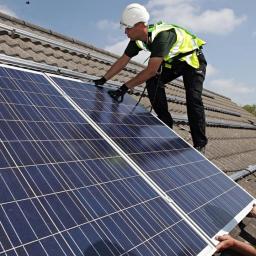
Endless energy from the sun looked like a long-term solution for running our homes. But now the state has pulled the plug on the subsidies that made panels affordable for many. What happens now?Sit back, relax, and read this story with an untroubled conscience: it has been created on a laptop and mobile phone powered entirely by the rays of the sun. This feat would surely astound the most idealistic Greek philosopher or Victorian entrepreneur. It would confirm their wildest hopes for humanity’s progress. Perhaps they would be even more amazed that it was possible via a coalition of Chinese companies, British roofers and local councils. Oh, and government support, which is set to be abruptly withdrawn.The power comes from 16 black Ja solar panels that were fitted to the roof of my home in August. Together, these panels, each the size of a coffee tabletop, have a capacity of 4kW, enough to meet the energy needs of an average family home. Today, a gloomy autumnal moment, they have generated 4.403kWh. It hardly sounds impressive – it’s enough power for a couple of loads of washing – but collectively it represents a revolution. Solar hasn’t changed my life, but it has shifted my perceptions. A little monitor on my desk tells me how much electricity I am generating. I’m acutely aware of the scarcity of energy, the rarity of unbroken sunshine and changing path of the sun. In August, rays hit my panels at 8.30am and an image of a green finger materialised on my monitor, urging me to switch on appliances. Now it doesn’t appear until 10.30am and so we delay putting on the washing machine. We have toddlers around the house all day, so solar suits us: we time the dishwasher for daylight hours and the TV tends to be on more during the day than at night. If I’m working from home, I charge laptops and phones around midday, too. Solar’s drawback is that most power is generated in daylight hours, when people tend to be at work, and there’s currently no affordable battery technology to store the energy you generate. But that energy is not wasted: it goes into the national grid, and solar owners are paid for what they produce. Continue reading...
|
|
by Patrick Barkham on (#R2NX)
Built-up areas around the UK coast have increased by more than 40%, but conservationists have saved the ‘most pristine’ areas, Patrick Barkham reports Continue reading...
|
|
by Natalie Haynes on (#R2MH)
We’ve managed perfectly well for centuries calling it ‘that bloody rain’. But now weather forecasters want to start personifying the weatherThe naming of storms is a difficult matter, as TS Eliot might have said, if he hadn’t been so distracted by cats. Only last year scientists discovered that Americans failed to take storms seriously when the weather system was given a female name. The most lethal female-named hurricanes have notched up almost twice the death tolls of their male-named counterparts because, one presumes, too many Americans have assumed that lady-storms are just making a fuss about nothing and can safely be ignored until they go off in a huff.Related: ID of the storm: Met Office invites public to name severe weather systems Continue reading...
|
|
by Damian Carrington on (#R2JV)
Andrea Leadsom tells a committee of MPs that she remains open to the findings of a consultation into proposed cuts to renewable energy subsidiesEnergy minister Andrea Leadsom has told MPs she remains “open-minded†about plans to slash subsidies for solar power in order to protect consumer bills, but told MPs on Tuesday that “very expensive†nuclear power stations were nonetheless “affordable for customersâ€.
|
|
by Justin McCurry in Tokyo on (#R2EQ)
Diagnosis of man who worked on reactor buildings damaged in 2011 tsunami could hamper efforts to encourage people to return to the areaA 41-year old man has become the first worker at the Fukushima Daiichi nuclear power plant to be diagnosed with cancer that officials recognise as being linked to his work there after the March 2011 disaster.
|
|
by Arthur Neslen on (#R2A8)
Member states report a 23% drop since 1990, but the pace is slowing and several countries have missed renewable and energy efficiency targetsGreenhouse gas emissions in Europe have plunged to the lowest level ever recorded after the EU’s member states reported an estimated 23% drop in emissions between 1990 and 2014.The bloc has now overshot its target for 2020 of cutting emissions by one-fifth – at the same time that its economy grew by 46%, according to the EU’s climate chief, Miguel Arias Canete . Continue reading...
|
by Deborah Doane on (#R276)
If we want to avoid an endless cycle of protest and corporate resistance, then campaigners need to aim for long-term collaboration with their foes
|
by Julia Loehr on (#R258)
Polls shows 65% of respondents think the scandal has been exaggerated, and 63% expect it to be forgotten in a yearTwo-thirds of Germans say they still trust Volkswagen despite the emissions rigging scandal that has engulfed the carmaker, according to a survey.Sixty-five percent of respondents in a poll conducted earlier this month thought the scandal had been exaggerated and that VW still built excellent cars, according to the management consultancy Prophet, which carried out the research. Continue reading...
|
|
by Madeleine Somerville on (#R2NZ)
Our addiction to consuming things is a vicious cycle, and buying a bigger house to store it all isn’t the answer. Here’s how to get started on downsizingThe personal storage industry rakes in $22bn each year, and it’s only getting bigger. Why?I’ll give you a hint: it’s not because vast nations of hoarders have finally decided to get their acts together and clean out the hall closet. Continue reading...
|
|
by Judith Mackrell on (#R1Z6)
Greenwich Park, London
|
by Marc Gunther on (#R1W9)
Johnson & Johnson, Intel and Hershey’s are among 81 big firms pledging to curb emissions. But are they prepared to shift the national debate on climate change?Another day, another set of climate promises from big business.At the White House on Monday, the chief executives of five companies – Johnson & Johnson, Intel, Hershey’s, PG&E and Berkshire Hathaway Energy – expressed support for government action to curb climate change, joining dozens of big firms that pledged to curb their own greenhouse gas emissions. Continue reading...
|
by Suzanne Goldenberg on (#R1VY)
Those hoping the new PM will be a climate champion willing to fix the damage done by his predecessor Stephen Harper could be in for a reality checkWell before his stunning victory in Canada’s elections, Justin Trudeau, the Liberal party leader, telephoned David Suzuki, the country’s best-known science broadcaster, environmentalist – and a national treasure – to ask for his endorsement.
|
by Guardian Staff on (#R1GZ)
The Ecomodernist manifesto resembles Aldous Huxley’s Brave New WorldRecently the Guardian has featured a back and forth about Ecomodernism. Ecomodernism holds that not only are humans driving the future of our world, but through technology can decouple our future from natural ecosystems. In this process the world would turn into urban enclaves surrounded by mechanically farmed agricultural lands and islands reserved for nature. It is a vision of naive young urban professionals.
|
by Damian Carrington on (#R1G8)
Details unveiled of deal signed between state-owned companies from China and France to build world’s most expensive plant on UK soilChina will take a one-third stake in a French-led project to build a new £24bn nuclear power station in the UK at Hinkley Point in Somerset, expected to be the most expensive ever built.The deal was signed between state-owned companies from China and France just hours before the Chinese president, Xi Jinping , arrived in London for a state visit, and is due to be announced on Wednesday. Continue reading...
|
|
by Godfrey Baluku Kime in Kasese on (#R1F9)
The mayor of Kasese’s ambitious plan for his region’s renewables programme aims to improve living standards and public healthMy desire to set a 100% renewable by 2020 goal was strongly motivated by the alarming climate-induced degradation of the snowcapped Rwenzori mountains, from which the communities here derive their livelihood, water supply and identity. The people of the Rwenzori get their name from the snow. Without the snow, our name will be no more. Also, I want to boost energy access in the region to improve living standards, increase public health and bolster the local economy.
|
|
by Associated Press on (#R1EC)
Tibetan Buddhist spiritual leader says humans causeed global warming so must now take action to protect fragile environments including Himalayan glaciersThe Dalai Lama on Tuesday urged strong global action to limit global warming and to protect fragile environments, including the Himalayan glaciers and Tibetan plateau.Calling climate change a “problem which human beings created,†the 80-year-old Tibetan Buddhist spiritual leader said all of humanity was now responsible for taking action. But instead, he said, “we are relying on praying to God or to Buddha. Sometimes I feel this is very illogical.†Continue reading...
|
|
by Adam Vaughan on (#R1EJ)
Figures show there were nearly 900,000 incidents of illegally dumped rubbish on roadsides, alleyways and footpathsThe flytipping of rubbish on England’s roadsides, alleyways and footpaths rose for the second year running, official figures published on Tuesday show.There were nearly 900,000 incidents recorded across the country, up from 852,000 the year before, when incidents jumped 20% for the first time in several years. Continue reading...
|
|
by John Vidal on (#R1B2)
Robots to pick, drones to survey crops and satellites to drive tractors - experts predict a fully automated farm in five years. But is this what farmers want?The big, blue 18-tonne New Holland T8.435 tractor is not the heaviest or the tallest in the world but its £3,000 tyres and tank-style tracks stand two metres high, it bristles with antenna and at, about £250,000, it must be one of the most expensive.
|
|
by Bhavya Reddy on (#R1A1)
Vegetarianism, reusable tote bags and Prius cars are not ‘manly’ enough for some. The answer is not imprinting veggie burgers with grill marks
|
by Jeremy Hance on (#R198)
Scientists have been warning for decades that human actions are pushing life on our shared planet toward mass extinction. Such extinction events have occurred five times in the past, but a bold new paper finds that this time would be fundamentally different. Fortunately, there’s still time to stop itPeriodically, in the vast spans of time that have proceeded us, our planet’s living beings have been purged by planetary catastrophes so extreme they make your typical Ice Age look like the geological equivalent of a stroll in the park. Scientists count just five mass extinctions in an unimaginably long expanse of 450 million years, but they warn we may well be entering a sixth.According to a bold new paper in The Anthropocene Review, this time would be different from past mass extinctions in four crucial ways – and all of these stem from the impact of a single species that arrived on the scene just 200,000 years ago: Homo sapiens. Continue reading...

|
by Interviews by Ben Beaumont-Thomas on (#R140)
David Attenborough: ‘Polar bears actually like to eat humans. We had to learn how to shoot rifles’David Attenborough, presenterEven though I was 84, being at the poles wasn’t too hard. It’s not as if I ever had to walk far or pull a sledge. If you wear the right clothes, you can tolerate low temperatures – though if something goes wrong and you lose a glove, you might equally lose a hand. Continue reading...

|
|
by Aditya Chakrabortty on (#R0YX)
What do we get for flogging our nuclear to China and France? £17bn of risk and not much benefitSteel yourself, for an unlikely source is about to spout a highly unfashionable idea. This week, George Osborne will come out for renationalisation.You won’t hear the N-word from his lips, of course. Nor shall the chancellor go full Corbyn and seize some of the FTSE’s crown jewels. Instead, you can expect something far more in keeping with the spirit of 21st-century Britain. The government will indeed put some of our most vital infrastructure under state control – but the states in question will be France and China. Continue reading...

|
|
by Emma Featherstone on (#R0ZE)
Volunteering in the local community, setting energy saving targets and offering wellbeing initiatives are a few ways you can make a difference
|
|
by Bijan Roghanchi for Tehran Bureau on (#R0YZ)
Made up of long subterranean tubes with holes drilled on top at regular intervals, the ancient system of qanat allowed life to flourish on the Iranian plateau. On a road trip through the country, photographer Bijan Roghanchi visited a small village near Bam where one was still in use Continue reading...
|
by Adam Vaughan on (#R0V8)
New report shows scores of local schemes will be cancelled if cuts go ahead, painting a gloomy picture for the future of community energy in the UKPlans by local groups to install £127m worth of solar panels and other renewable power at village halls, community centres and sports clubs will be shelved if government cuts to subsidies go ahead.Scores of community energy groups, of the sort that have raised cash to fit solar panels at a brewery in Sussex and a windfarm in Morecambe Bay, told a survey that they faced being badly hit by a proposed 87% cut in incentives for solar power.
|
by Press Association on (#R0V9)
First year of Scotland’s 5p bag charge sees huge reduction in use and £6.7m raised for good causes in bid to cut waste and litterThe number of plastic carrier bags handed out in stores was slashed by at least 650 million in the first year of Scotland’s 5p charge.
|
|
by Mark Cocker on (#R0SN)
Claxton, Norfolk As we observed one another I wondered what its compound eyes made of its admirerAs I sat in the garden I could hear what seemed like the rustle of some mysterious animal right behind me. That puzzle continued for a while until the penny dropped: the noise was not in the hedge but on top of my head. So I painstakingly lowered my cap until, sure enough, there was a common darter dragonfly blithely sunning itself still in my cradled hands.I could appreciate how the faint rubbing of those plasticised wings was the source of the intermittent message. And as we observed one another I wondered what its compound eyes, inheritance from the Carboniferous, made of its admirer. Continue reading...
|
|
by Associated Press in Honolulu on (#R0PJ)
Bite by an eel would be the first recorded in waters of the surfing haven, say authoritiesA surfer may have been bitten by an eel, rather than a shark, in an encounter off Hawaii’s popular Waikiki Beach, according to officials.The surfer was hurt on Saturday within hours of a shark attack on a man off Oahu’s Lanikai Beach. Both men were taken to hospital. Continue reading...
|