|
by Thomas Coward on (#Q5WM)
Originally published in the Manchester Guardian on 15 October 1915How do fish get up a mountain?A correspondent who has been fishing on the Eden asks a curious question; and I doubt if my answer will please him or other sportsmen. On the banks of the river and the land near rabbits were so plentiful as to be a veritable plague to the farmers. Whilst fishing he came across a young rabbit with its feet fast in a toothed trap; he released it, and it bounded away apparently joyfully. He asks: “Under all circumstances could that action of mine be called humane?†To relieve any creature’s pain is humane, but it does not follow that the action and method of relief were wise. The destruction of rabbits is necessary, and no cheap and quick “humane†method has yet been discovered; when I find a trapped rabbit I do not release it, but kill it as quickly as possible, and a rabbit is easily killed.What strikes me as curious is that a man who fishes for sport should ask such a question. I have fished and I have trapped, and shall probably do so again, though I do not now use toothed traps, which are certainly cruel; a skilled fisherman gives his victims very little real pain, but accidents do happen - gorged hooks, or hooks in the eye or other tender spots, - so that an accusation of inhumanity may be justly made against him. If the fisherman releases a trapped rabbit – a destructive animal which someone is striving to keep down in days when all economically destructive creatures must be kept in check, - why does he not release the hooked fish that he has caught for his own enjoyment and not to supply people with food? The question of the professional fisherman is quite another matter. Continue reading...
|
| Link | http://feeds.theguardian.com/ |
| Feed | http://feeds.theguardian.com/theguardian/environment/rss |
| Updated | 2026-06-20 10:30 |
|
by Associated Press in Cushing, Oklahoma on (#Q5TE)
|
|
by Press Association on (#Q5J1)
The fields, bought by the chemicals group from a Russian billionaire, provide 8% of the UK’s gasChemicals group Ineos has bought 12 North Sea gas fields in a $750m (£490m) deal that comes as the British oil and gas industry fights a severe downturn.Ineos, which owns the Grangemouth refinery in Scotland, has bought the fields from a company set up by Russian billionaire Mikhail Fridman. The British government forced Fridman’s L1 Energy business to sell the assets when it ruled it was not in the UK’s interests to have them at risk of international sanctions against Russian companies and individuals. Continue reading...
|
|
by Guardian.co.uk on (#Q58Q)
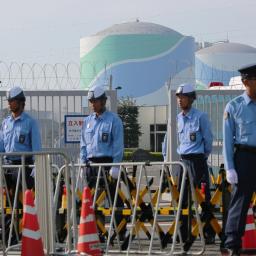
Supermarket aisles strewn with packets. A school blackboard covered with notes for an unfinished lesson. Cars tangled with weeds in an unending traffic jam.These are eerie pictures from inside the 20km exclusion zone around Fukushima nuclear plant, which went into meltdown after a tsunami and earthquake struck Japan in March 2011. Photographer Arkadiusz Podniesinski donned protective gear to visit the “terrifying†ghost towns of Futaba, Namie and Tomioka last month and this is what he found. Continue reading...
|
|
by Reuters in Los Angeles on (#Q3RX)
Move comes amid concern that overuse of drugs is contributing to rising numbers of life-threatening human infections from ‘superbugs’California has brought in the strictest government standards in the US for the use of antibiotics in livestock production.
|
|
by Observer editorial on (#Q3M1)
Government cuts to solar-power subsidies are shortsighted and irresponsibleThe Conservative party has spent much time mocking Labour for being out of touch on business issues, particularly Jeremy Corbyn’s support for rail and possibly energy nationalisation.But George Osborne seems much more at home tickling the tummies of huge, state-owned companies in China and France, especially with regard to nuclear power, than tending his domestic, private-sector firms. While the chancellor was out wooing on a recent trip to Beijing, he seemed blissfully unaware that subsidy cuts to the UK’s growing army of small and medium-size “green†companies have been causing havoc. Continue reading...
|
|
by Erik van Sebille on (#Q3M3)
Millions depend on the ‘rainforests of the seas’ and we abuse them at our perilWe need our oceans, and our oceans need corals. But it’s not going well for them. Last week, the National Oceanographic and Atmospheric Administration in the US announced that extremely hot oceans have triggered a global bleaching event spanning the tropical Pacific, Indian and Atlantic oceans. Corals around the world are under a lot of stress. And we should care.Corals are about much more than brightly coloured backdrops of tropical snorkelling holidays or the stage of films about cute little fish that need to be found (that’ll be Nemo, for those without children). Corals are vital to ocean ecosystems. Even though they cover only 0.1% of the ocean seabed, they are home to 25% of the species in the ocean. Coral reefs are often referred to as the rainforests of our seas and play as vital a role in this ecosystem. Continue reading...
|
|
by Robin McKie Science editor on (#Q3ET)
Carbon pledges from 147 nations to Paris climate summit ‘are not enough to stop temperature rise’, experts conclude
|
|
by Associated Press in Oklahoma City on (#Q2S7)
Magnitude-4.4 temblor Saturday was among nearly 700 earthquakes of magnitude 3 or greater in state this year, compared to 20 throughout 2009A moderate, magnitude-4.4 earthquake has shaken northern Oklahoma.It was one of the stronger temblors the earthquake-prone state has had this year. Continue reading...
|
|
by Press Association on (#Q2JQ)
Shadow chancellor tells rally to oppose third runway at UK’s largest airport that aviation industry has ‘consistently lied to us’People are dying from air “poisoned†by the aviation industry, which has “consistently lied†about expanding Heathrow airport, the shadow chancellor has said.John McDonnell addressed hundreds of people gathered in London’s Parliament Square for a rally to oppose a third runway at the UK’s largest airport. Continue reading...
|
|
by Jim Powell on (#Q2BP)
The intensifying violence in Jerusalem and the West Bank, Europe’s refugee crisis, fashion week in Paris, England crashing out of the Rugby World Cup – the best photography in news, culture and sport from around the world this week Continue reading...
|
|
by Tom Dart in Big Bend, Texas on (#Q28T)
Wooden stakes marking the natural gas line’s path to Mexico symbolize a disruption of idyllic beauty the region is cherished for, as wary locals prepare to fight against environmental damage and new economic realitiesThorny mesquite branches scratched the sides of James Spriggs’ battered old Chevrolet truck as he drove the rutted pathway from his house towards other, less natural, spiky objects.On his 4,400-acre ranch there are deer, quail, jackrabbits, roadrunners, dragonflies and even the occasional eagle or mountain lion. And there are wooden stakes indicating the route of a natural gas pipeline that will slice through his property against his wishes. Continue reading...
|
by Tess Riley on (#Q22K)
Young people are instrumental in bringing about environmental change – we spoke to some of the student campaigners tackling the issue
|
by Lucas Amin on (#Q224)
Groningen has been one of Europe’s richest gas fields for 30 years, and thousands of people say their homes have been damaged by the tremors that drilling sets off. Now a class action may finally bring them compensation – and force a rethink of European energy securityFive years ago, Annemarie Heite and her husband, Albert, bought their dream home; a traditional 19th-century farmhouse in Groningen province in the northern Netherlands. The couple planned to raise their two young daughters in this charming corner of the Dutch countryside. “Then, the living was still easy, and affordable,†Annemarie says, her tone bittersweet and nostalgic. Today, their house is scheduled for demolition.Hundreds of earthquakes have wrecked the foundations of the Heites’ home and made it unsafe to live in. Annemarie’s biggest fear is the safety of her daughters. She points to a room. “This is where my children sleep,†she says, “and everyday I’m just picking up pieces of bricks and stuff from the ceiling.†Continue reading...
|
|
by Esha Chhabra on (#Q1VT)
Sports giant Puma has pulled the plugs on R&D for its InCycle range but other companies say they are having more success with sustainable fashionAfter launching with a blaze of celebration, sports brand Puma’s new eco-friendly range of gear was meant to be the moment ethical fashion went mainstream. A shoe, jacket and backpack made of biodegradable and recyclable materials, put on sale in 2013, were part of the company’s effort to minimise the environmental impact of its manufacturing process.But two years on and the InCycle line as it was called has failed. In a statement released by Puma in November 2014, the company had warned that its retailers had not ordered the product and so it was only on sale in Puma stores, “where we had poor demand as wellâ€.
|
by Dan Collyns in Lima on (#Q1PT)
Jim Yong Kim, president of the World Bank Group, said it could boost funding by a third in response to client demandThe World Bank has pledged to boost by up to $29bn the financial assistance pledged to poorer nations to cope with climate change, bringing closer the possibility of reaching a target of $100bn a year by 2020.
|
by Miles Brignall on (#Q1RK)
Hugely popular elsewhere in Europe, briquettes are beginning to take off in the UK – and they’re good for your fireplace or stove, your pocket and the environmentThey burn hotter and cleaner, are cheaper to buy, and much easier to store and handle – so why do so few people with open fires and wood-burning stoves use recycled wood briquettes to heat their home?Big in Europe, but still largely untried by many fire users in the UK – particularly in the south – those selling them claim that once you have tried briquettes, you’ll never go back to hauling piles of logs off your drive. Continue reading...
|
|
by Ed Douglas on (#Q1M6)
Edale, Derbyshire I could only stand and marvel: at the badger, but also at the dedication of those working on her behalfDespite the whispering, our excitement was palpable. “There’s a white one,†one of the volunteers from the Derbyshire Wildlife Trust said. Not white, as it turned out, although in the half-light of a misty pre-dawn it seemed that way.Standing closer, the badger appeared more gingery brown, the head’s usual contrast of humbug stripes almost absent. The eyes were a marmalade colour, pretty and rather gentle. This wasn’t an albino but an erythristic badger, lacking black pigment in its fur through a genetic mutation. Their distribution in Britain is patchy; there are more in north Shropshire, for example, but very few in Derbyshire; this was the first badger experts in the county had heard about. Continue reading...
|
|
by Guardian Staff on (#Q0FE)
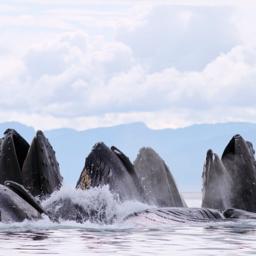
Norwegian camera operator Harald Albrigtsen captures the moment when humpback whales swim beneath the northern lights. Also known as the aurora borealis, the phenomenon is caused by electrically charged particles from the sun colliding with the Earth’s atmosphere Continue reading...
|
|
by Kathryn Werntz and Megan Rowling for El Pais, part on (#Q02A)
The salt industry could provide local people with a climate resilient alternative income to agriculture – but much needs to be improved, reports El PaisIn Senegal’s central Kaffrine region, stretches of the national highway cut through vast salt ponds. Yet the salt industry - which could help local people earn more and cope with worsening climate pressures - is little developed, experts say.“At the artisanal level, you have men harvesting with no gloves, no boots,†said Cheikh Tidiane Sall of Innovations Environnement Développement (IED) Afrique, a group working on sustainable development. “Inadequate storage bags are used and the salt contaminates the soil.â€
|
|
by Arthur Neslen on (#PZXF)
Prospects for fracking boom in Poland look remote as companies including state-owned gas firm ditch shale gas concessions in face of challenging geologyPoland’s shale gas industry appears to be collapsing, just four years after the US government predicted that its reserves were abundant enough to fuel the country for the next three centuries.Concessions for exploratory shale drilling have nearly halved in the last year from 58 to just 32, according to a new Polish government manifest published to little fanfare on the environment ministry’s website this week. Continue reading...
|
|
by Damian Carrington on (#PZVG)
John McDonnell adds support to letter sent to Crown Prosecution Service, while all five mayoral candidates plan third runway protest outside ParliamentThe shadow chancellor John McDonnell, lawyers and environmentalists campaigning to prevent a new runway at Heathrow have written to the Crown Prosecution Service (CPS), asking them to drop charges of aggravated trespass against 13 activists for a protest at the airport.The actions of the protesters, which prevented a number of planes taking off, were “reasonable, justifiable and honourableâ€, according to the letter. “We should be congratulating them for defending the planet, not prosecuting them,†it says. Continue reading...
|
by Environment editor on (#PZTJ)
The week’s top environment news stories and green events. If you are not already receiving this roundup, sign up here to get the briefing delivered to your inbox Continue reading...
|
by Catherine A Novelli on (#PZTK)
The ocean is being depleted of critical fish stocks, choked with discarded plastic and made increasingly acidic, and it’s our fault – but we can find the solutionFrom the sea’s shore, it can be hard to believe that something as vast and deep as the ocean can be harmed by a human being. But individuals are parts of communities, and our global community has exploded to over 7 billion people. The multiplier effect of growing populations, increasing demand for food and 200 years of carbon-intensive industrial production have put a tremendous burden on the ocean.The ocean is being depleted of critical fish stocks, choked with discarded plastic and made increasingly acidic from increased carbon emissions absorbed from the air. If things continue as they are, experts estimate that by 2025 there will be a ton of plastic in the ocean for every three tons of fish. Continue reading...
|
|
by Travis Irvine on (#PZN4)
In Los Angeles, even sketch comedy groups are trying to save water. While the members of Dehydrated Comedy have some pretty extreme ideas, here are a few more practical ways you can save water, too. Continue reading...
|
|
by Sarah Butler on (#PZK2)
Not just a food bank … An M&S-filled food bank. Upmarket grocer plans to use social app to supply local charities with its surplus food and help cut wasteMarks & Spencer is to distribute thousands of tonnes of surplus food under a scheme that will use a social networking app to link all 500 of its UK stores to local charities, including food banks.The retailer, which has committed to cutting food waste from stores by a fifth by 2020, has been testing different ways of running the scheme at 45 outlets and opted to work in partnership with the Neighbourly app. Continue reading...
|
by Peter Kimpton on (#PZK4)
This year’s Tour of Britain was packed with top cyclists such as Bradley Wiggins, but Peter Kimpton found an alternative way of joining the race – from the passenger seat of a support carThe whir and hum of hundreds of wheels through each town brought a wind-tunnel tornado of excitement. The cheering crowds were deafening, the speed on the road brutal. I’ve taken part in various sponsored amateur rides and extreme sportives, but for a change of pace, I had the chance to get inside a world-class professional race - this summer’s Tour of Britain, and it’s a ride I’ll never forget. Continue reading...
|
by Eric Hilaire on (#PZGR)
Chernobyl’s wolves, ‘walking fish’ and autumnal woodlands are among this week’s pick of images from the natural world Continue reading...
|
|
by André Spicer on (#PZFE)
Scandals such as the BP oil spill, horsemeat and the recent revelations about VW raise serious questions about how to ensure companies don’t repeat wrongdoing
|
|
by Richard Luscombe in Columbia, South Carolina on (#PZ57)
State insurance director says calculations are still being made but ‘it is bleak’ as residents learn their insurance might not cover devastation to their homesSouth Carolina’s state insurance director has warned of “horrendous losses†as he prepares to release the first official estimate of damage from this week’s deadly flooding that claimed at least 17 lives. And many residents are learning that their insurance may not even cover damage to their homes.Ray Farmer said he expected the preliminary assessment, set to be released as early as Friday afternoon, to be more than $1bn. Continue reading...
|
|
by Emma Howard on (#PZ5J)
Ryedale district council calls for five-year fracking ban in reponse to a consultation on Third Energy’s application to drill for gas in the areaCouncillors in North Yorkshire are facing fresh pressure to reject a fracking bid after a district council called for a five-year moratorium on Thursday.Ryedale district council (RDC) does not have the power to rule on the planning application made by gas firm Third Energy, which wants to frack a well near the village of Kirby Misperton to test if it is commercially viable. Continue reading...
|
by John Abraham on (#PYZJ)
Rising temperatures are melting the Sierra Nevada snowpack
|
by Dan Collyns, Lima on (#PYXE)
V20 group of 20 countries most at risk from the effects of climate change call on wealthy nations to meet $100bn pledge to help them tackle global warmingFinance ministers from the 20 countries most vulnerable to climate change have formed a group to call for greater access to climate finance for adaptation and mitigation in the face of the most devastating effects of global warming.
|
|
by Piers Telemacque on (#PYTT)
How does an individual student in the UK make a meaningful contribution to tackling environmental degradation?Today, I’m proud to be launching Students Organising for Sustainability at the Eden Project. It’s a network of over fifty student organisations across 13 countries and 5 continents, all working to create the sustainable world we need to see.Here in the UK, I represent 7 million students, working through 600 student unions. But we’re still only one country. Continue reading...
|
|
by China Daily/Reuters on (#PYS1)
Photographs from the Eyewitness series Continue reading...
|
|
by AP on (#PYRG)
US state to phase out use of tiny plastic beads found in soap, toothpaste and body washes by 2020, in bid to protect fish and other marine lifeCalifornia governor Jerry Brown signed legislation Thursday requiring California to phase out the use of microscopic exfoliating beads in personal care products sold in the state starting in 2020 to protect fish and wildlife.The tiny plastic beads found in soap, toothpaste and body washes are so small that they are showing up in the bodies of fish and other wildlife after passing through water filtration systems without disintegrating. Continue reading...
|
|
by Murithi Mutiga in Loiyangalani and David Smith in on (#PYNE)
Lake Turkana’s fierce winds have plagued villagers for generations, now they have inspired plans for Kenya’s most ambitious infrastructure project in 50 years - a 310MW windfarm, that they said was an impossible dreamWith its spectacular jade waters ringed by ochre red volcanic hills, Lake Turkana, a desert lake in Kenya’s rugged northerly corner provided a wonderful spot for Dutchman Willem Dolleman’s annual fishing expeditions in his adopted homeland.But Dolleman’s trips were always ruined by the difficulty of finding somewhere to stay in a vastly underdeveloped area where tour lodges are located hundreds of miles apart. Continue reading...
|
by Helen Davidson in Darwin on (#PYMF)
The bushfire which started on 1 October destroyed more than 200 square kilometres of bushland in the world heritage national parkThe federal environment minister, Greg Hunt, has ordered an investigation into a week-long bushfire in Kakadu national park sparked after a mining company lost control of a controlled burn.Related: Controlled burn by mine operator in Kakadu sparks out-of-control bushfire Continue reading...
|
by Ed Cumming on (#PYKW)
The teenage activist and musician who made headlines about climate change when he addressed the UN in June talks about what inspires himXiuhtezcatl Roske-Martinez’s long hair marked him out from the middle-aged bureaucrats in the room. So did his age. After all, few 15-year-olds get to address the UN in New York, let alone speak with eloquence and passion on climate change. The speech, delivered in June, went round the world. It was viewed hundreds of thousands of times on YouTube, and secured him press coverage in everything from Rolling Stone to the Guardian.For Xiuhtezcatl (pronounced, roughly, shooTEZcat), however, addressing the UN was business as usual, or close to it. For most of his young life he has been working in climate activism, mainly with his group, Earth Guardians, which uses music and speech to engage young people around the world, and has more than 400 regional groups globally. Continue reading...
|
by Fred Pearce on (#PYNR)
An international system could save lives but a recent UN climate event in New York passed without anyone putting up funding or accepting responsibilityDrought is arguably the biggest single threat from climate change. Its impacts are global. Some say drought triggered the crisis in Syria that sent tens of thousands of refugees heading for Europe this summer. Relief failures and poor drought forecasting caused innumerable deaths in the Horn of Africa during 2011 and 2012. Yet calls to head off future disasters by establishing a UN body to provide a global drought early warning system, first made almost a decade ago, remain unfulfilled.A drought can be defined in various ways. A meteorological drought, for example, is when the rains fail. A hydrological drought is when the lack of rainfall goes on long enough to empty rivers and lower water tables. Agricultural drought begins when the lack of water starts killing crops and livestock. And after that, people may start dying too.
|
by Damian Carrington on (#PYB6)
Mercedes-Benz, Honda, Mazda and Mitsubishi’s cars are shown to emit significantly more NOx pollution on the road than in regulatory testsMercedes-Benz, Honda, Mazda and Mitsubishi have joined the growing list of manufacturers whose diesel cars are known to emit significantly more pollution on the road than in regulatory tests, according to data obtained by the Guardian.In more realistic on-road tests, some Honda models emitted six times the regulatory limit of NOx pollution while some unnamed 4x4 models had 20 times the NOx limit coming out of their exhaust pipes.
|
|
by Oliver Milman on (#PY7E)
The Lancefield fire, the worst of more than 200 fires in Victoria over the past week, spread from a controlled burn-off that breached containment linesVictoria has to learn painful bushfire lessons every year but the unusual nature of the latest fires that have broken out in the state is providing authorities with much to think about before summer even arrives.More than 200 fires have charred parts of Victoria over the past week, but it’s the circumstances of one of the most destructive fires that has prompted the state government to look for fresh answers in how to prevent future outbreaks. Continue reading...
|
|
by Associated Press on (#PY7F)
California Coastal Commission approves a $100 million expansion of tanks SeaWorld uses to hold killer whales in San Diego, but attaches ban on breedingThe California Coastal Commission on Thursday approved a $100 million expansion of the tanks SeaWorld uses to hold killer whales in San Diego — but it banned breeding of the captive orcas that would live in them.Animal rights activists praised the decision as a death blow to the use of killer whales at the California ocean park. Continue reading...
|
|
by Claire Stares on (#PY6Q)
Petworth, West Sussex Dominant bucks had established rutting stands in close proximity to one another, each stationed beneath one of the park’s ancient treesAs we strode across the Mansion Lawn towards the lake, bathed in the golden marmalade light of the setting sun, it felt as though we had stepped into Turner’s painting, Sunset, Fighting Bucks. Surprisingly, the view differs little from the idealised landscape depicted by the artist in the early 19th century. Some 800 fallow deer still roam freely in the park, and we could see that the bucks and does had begun to congregate, having spent most of the year in single-sex herds.During the red deer rut, dominant stags manage large harems and vigorously defend them from rival males. But it was immediately obvious that the fallow deer had a different mating strategy, displaying lekking behaviour. Continue reading...
|
by Lenore Taylor Political editor on (#PY4Y)
Clean energy industry hopeful Malcolm Turnbull’s appointee will ‘blow away some of the conspiracy theories’ and return debate to ‘sensible’The Turnbull government has appointed an academic and company director with strong ties to climate and renewables research as its new “wind commissionerâ€, in a move the clean energy industry says should help return the wind energy debate to “sensibleâ€.Andrew Dyer serves on the boards of Climateworks Australia and the Monash University sustainability unit. The government says his primary role will be to “refer complaints about windfarms to relevant state authorities†– which are already responsible for dealing with them.
by Lenore Taylor Political editor on (#PXV7)
Under Abbott, Coalition considered offering Adani concessional financing for 388km line, but Josh Frydenberg says company must ‘stand on its own two feet’The Turnbull government has said a 388km railway essential to the future of the controversial $16bn Carmichael coalmine in central Queensland is “not a priority project†for federal concessional loans from the $5bn Northern Australia Infrastructure fund.
by Graham Readfearn on (#PXA2)
New report from The Australia Institute sheds light on the high level of access and lack of accountability afforded to the fossil fuel lobby in QueenslandOn 11 February 2013, David Edwards, then the most senior civil servant in Queensland’s Department of State Development, Infrastructure and Planning, used $500 of taxpayer money to buy a “framed and personally signed tennis racquet†for a rich Indian industrialist.
|
by Oliver Milman on (#PX5V)
Wilderness Society report shows spill would likely affect fishing and tourism, and threaten whales, seabirds, sea lions and sea turtles, along the southern coastAn oil spill from BP’s planned drilling in the Great Australian Bight could affect most of Australia’s southern coastline, shutting down fisheries and threatening wildlife including whales, seabirds and sea lions, new modelling has shown.Related: BP would need to bring equipment from Texas to contain South Australia oil spill Continue reading...
|
|
by Ryan Felton in Flint, Michigan on (#PX2X)
State officials announced a plan after several local studies and months of complaints from residents after Flint stopped using the Detroit systemAfter months of resisting complaints from residents in the city of Flint, Michigan, over the discolored and odorous water that was flowing into their homes, city and state officials announced a plan Thursday to change their water source.Michigan governor Rick Snyder said the revelation that a spate of children are experiencing elevated blood-lead levels had become a “public safety issueâ€, weeks after independent experts first asserted that Flint’s temporary water source had produced a spike in lead across the city of 100,000. Continue reading...
|
|
by Terry Macalister on (#PX1M)
Ten times as many of the jobs lost at Redcar are at risk under the government’s plans to cut solar power subsidies by 87% – and it may be schools that suffer most
|