 |
by Robin McKie Science editor on (#JVQ2)
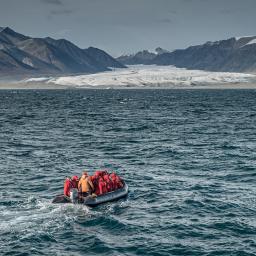
An Arctic voyage through the awe-inspiring Northwest Passage shows that, with oil drilling in the far north on the way, rapid action is needed to protect the regionThe Northwest Passage is not an obvious choice for a holiday cruise. It is, after all, one of the most notorious ocean routes. Many hundreds of sailors died in opening up the seaway, which links the Atlantic and Pacific oceans via the Canadian Arctic, before it was conquered just over a century ago.But the Arctic today is changing. Global warming is altering it at a rate that is unmatched anywhere else on Earth, and a journey once considered grotesquely dangerous has become a voyage now feasible for the inquiring traveller. Today you can sail through the Northwest Passage, as I did last week, on a ship that offers hot-tubs, bars and restaurants, albeit with armed protection against polar bears and kit for keeping out the cold. Continue reading...
|
| Link | http://feeds.theguardian.com/ |
| Feed | http://feeds.theguardian.com/theguardian/environment/rss |
| Updated | 2026-08-21 17:03 |
 |
by Observer editorial on (#JVNW)
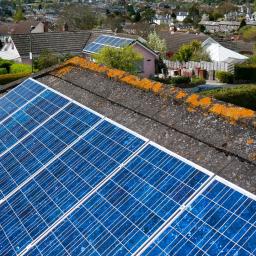
Government cuts to funding for solar panel installation are short-sightedIn terms of timing, last week’s government decision to slash subsidies that help families and small businesses install solar panels could not have been worse. This year promises to be the hottest on record. At the same time, international negotiations on the establishment of climate change controls are scheduled to reach their peak in Paris in a few months.The world is looking to developed nations to set an example on how to cut the carbon emissions that are triggering global temperature rises and the British government could once have played an authoritative role in these talks. Unfortunately, David Cameron’s administration has decided, over the last few months, to abandon nearly all its commitments to protecting the environment and to its pledges to create new green technologies that could wean us off our urge to burn fossil fuels. Continue reading...
|
 |
by Robin McKie on (#JVNY)
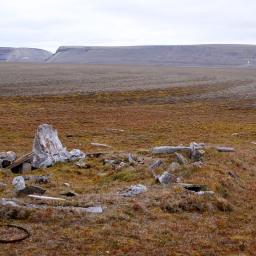
The best shots from Robin McKie’s journey through the north-west passage. Read the full account here
|
 |
by Guardian Staff on (#JTMV)
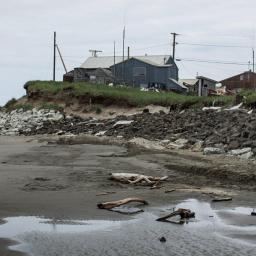
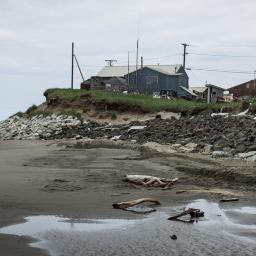
US president Barack Obama defends the decision to allow the oil company Shell to drill in the Arctic Ocean. Speaking during his weekly televised address on Saturday, Obama says the US economy needs oil and gas until it can make the transition to renewable energy and should count on domestic fossil fuels rather than importing them. His message comes on the eve of a three-day climate change awareness tour of Alaska Continue reading...
|
 |
by Suzanne Goldenberg US environment correspondent on (#JTEB)
President accused of undermining own agenda with decision to allow hunt for oil in Arctic, as he prepares for three-day tour to showcase effects of climate changeBarack Obama has been forced to defend his decision to allow the hunt for oil in the last great wilderness of the Arctic, on the eve of an historic visit to Alaska intended to spur the fight against climate change.Related: Extreme Arctic sea ice melt forces thousands of walruses ashore in Alaska Continue reading...
|
 |
by Britt Collins on (#JSTK)
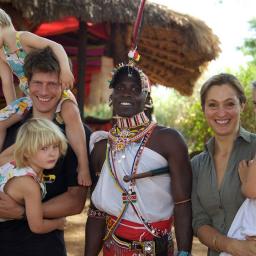
Conservationist Saba Douglas-Hamilton grew up close to crocodiles. Her family now help to look after elephants in Kenya and star in a new BBC series, This Wild LifeMost British parents worry about their children crossing the road safely. Saba Douglas-Hamilton worries about snakes and scorpions.The 45-year-old wildlife filmmaker lives with her husband, Frank Pope, 42, and their daughters Selkie, six, and four-year-old twins, Luna and Mayian, in Kenya’s Samburu national reserve. It has no paved roads, is sparsely populated by nomadic herders, the long grasses teem with snakes, and crocodiles wait in the shallow river. For the family, this wild patch of Africa is paradise. The upcoming 10-part BBC series This Wild Life follows their daily dramas as they raise their young children while running an eco-lodge and conservation charity.Saba is no stranger to this kind of life. Her own childhood, living in the wild, war-torn corners of Africa, was a crash course in survival. She and her younger sister, Dudu, spent days in the back of a Jeep tracking elephants with their Scottish father, zoologist Iain Douglas-Hamilton, and Italian mother, Oria. They washed in crocodile-infested rivers while their dad kept watch, and slept under the stars with nothing but a mosquito net. They had family holidays in Lamu on the Kenyan coast, where they fished for Nile perch and rode horses bareback. Continue reading...
|
 |
by Julie Armstrong on (#JSS7)
Bosley Cloud, Cheshire As folklore has it, witches used juices squeezed from the flowers to turn themselves into hares; the Victorians believed fairies slept in the bellsToday the sky is washed-out blue silk with pearl-grey ribbons trailing. The scent of dying leaves mingles with honeysuckle as the sun rises; buttery light spreads over patchwork fields, illuminating snapshot moments: a circle of cows, a squabble of hens, donkeys and even alpacas the colour of mushroom caps and conkers.I am walking the lower slopes of Bosley Cloud – the name is derived from the Old English clud, meaning a rock; it lies on the Cheshire-Staffordshire border near Congleton, a few miles from the Peak District national park. Notices nailed to trees tell of sheepdog trials. At the farm there are logs, small hay bales and free-range eggs for sale. The plaintive song of a robin comes from the allotment, I hear it among the neat rows of beans, peas and shaggy-headed dahlias, but can’t see it. Above, there is the twittering babble of swallows gathering on telegraph wires. Hedgerows glisten with silvery spiders’ webs, scarlet rosehips and clots of blackberries. Somewhere in the distance a gun goes off and a flock of wood pigeons take flight. Continue reading...
|
 |
by Francesca Perry on (#JRB1)
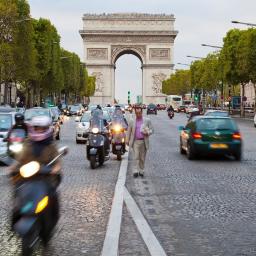
City links: Car-free Paris, skyscrapers in a Mumbai slum, floating food forests in New York and Nairobi’s smart bus system feature in this week’s best city storiesThe best city stories from around the web this week see Paris gearing up to get rid of cars (for one day only), vacant homes spreading across Tokyo’s satellite cities, a floating food forest in New York and a skycraper made of shipping containers in Mumbai’s Dharavi slum.We’d love to hear your responses to these stories, and any others you’ve read recently, both on Guardian Cities and elsewhere. Just share your thoughts in the comments below. Continue reading...
|
 |
by Amanda Saunders for Sydney Morning Herald, part of on (#JR7N)
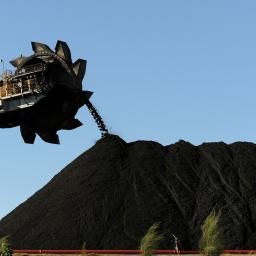
Newcastle is the seventh council in Australia to announce it will shun fossil fuels, reports the Sydney Morning HeraldNewcastle city council in Australia has voted to exit holdings in the big four banks if they continue to fund fossil fuel projects. About 80% of the Australian city of Newcastle council’s $270m investment portfolio is held in the big four banks, mostly through term deposits. Those investments are spread evenly across the big four.
|
 |
by Sarah Vankersschaever for De Standaard, part of th on (#JR4F)
Damp basements, cracked walls and wallpapers dotted with mould patches – life in the town built on marshland is getting sticky, reports De StandaardWith street names such as Gijzelaarsweg (Hostage Way), Politiek Gevangenenlaan (Political Prisoners’ Avenue) and Helden Plein (Heroes’ Square), the Ghent suburb of Malem is a place of highs and lows. Especially a place of lows. Malem is one of the lowest-lying areas of the province: a marshy area west of Ghent, picturesque, but inexorably embraced by the Leie (or Lys) river.
|
 |
by Leah Messinger on (#JR2A)
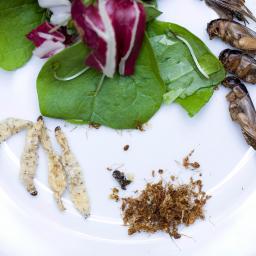
Bugs are a greener alternative source of protein, but US consumers are still grossed out by eating crickets. Will companies be able to make insect farming viable?Chapul, Exo and Jungle – three protein bars making their way to supermarket shelves – have one thing in common: crickets. All three include cricket flour, which is touted by their manufacturers as an environmentally friendly alternative to milk or soy protein. Continue reading...
|
by Letters on (#JR2X)
CP Foods condemns, in the strongest possible terms, all aspects of human trafficking and slavery, and we take this opportunity to reassert our strong commitment to human rights and a sustainable supply chain.In light of a recent lawsuit filed in California (Costco and CP Foods face lawsuit over alleged slavery in prawn supply chain, 19 August ), CP Foods would like to provide further detail on the actions we have been taking to ensure traceability and humane and sustainable practices throughout our shrimp (prawn) supply chain. Continue reading...
 |
by Emma Howard on (#JR2Y)
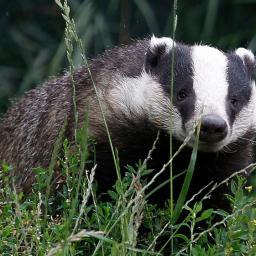
Third region in England gets a go-ahead despite protests and controversial results of pilot culls in Gloucestershire and SomersetThe government will extend the badger cull to Dorset as part of a drive to limit tuberculosis in cattle, it was announced on Friday. The announcement follows controversial pilots in Gloucestershire and Somerset running over the past two years, with Natural England issuing licences to companies that permit six weeks of continuous culling in the three areas until January.
|
 |
by Athit Perawongmetha/Reuters on (#JR0M)
Thai vets conduct health checks on 14 orangutans before their repatriation to Indonesia. Most of the animals have been confiscated from the entertainment business in Phuket; others were recovered from smugglers. The orangutans are being examined to ensure they are free of diseases and are expected to return to Indonesia in September Continue reading...
|
 |
by Jessica Elgot on (#JQWM)
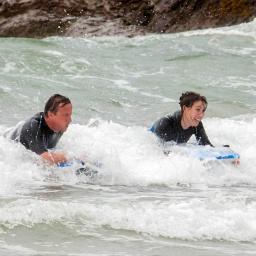
South West Water confirms sewage was pumped into sea off Polzeath beach in Cornwall, where PM and his wife have holidayed every year since 2010David Cameron, chillaxing with his wife Samantha in Cornwall, presumably thought he was safe from a shower of excrement – at least until PMQs begins again in September. But the unlucky PM chose the wrong moment to bodyboard with his wife Samantha, as the surf was riven with diluted sewage.South West Water confirmed to the Times that sewage was pumped into the sea on Sunday morning and on Wednesday afternoon off Polzeath beach, where the Camerons have holidayed every year since 2010. The couple were photographed bodyboarding for about an hour on Monday and Tuesday. Continue reading...
|
 |
by Anita Chabria in Sacramento on (#JQJ0)
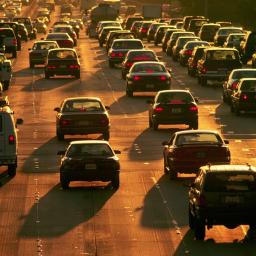
California Democrats’ push to curb emissions and promote clean energy would alter how the state does business and change the way residents liveWith only a few days left in the current session of the California legislature, an aggressive political and public relations fight between the oil industry and top lawmakers over climate change legislation is moving into a final round.At stake is the passage of far-reaching environmental bills that would fundamentally alter the way the state does business and deals with planet-warming pollution – but would likely also change the way everyday Californians travel, live and consume. Continue reading...
|
 |
by Guardian Staff on (#JQDV)
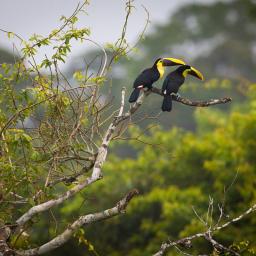
Black-capped kingfishers, yellow-vented bulbuls and toucans of Panama feature in this week’s pick of images from the natural world Continue reading...
|
 |
by Travis Irvine on (#JQ9W)
At a 10-year commemoration for hurricane Katrina, we catch up with leaders from the business, NGO and political worlds to ask what they think of environmental organisations taking money from big oil to help rebuild Louisiana. And if that fails to grab you, we ask Harry Shearer to weigh in, too Continue reading...
|
 |
by Guardian Staff on (#JQ9K)
Environmentalist and Guardian writer George Monbiot butchers and cooks a squirrel on the BBC’s Newsnight on Thursday. Monbiot, who lives in Powys, Wales, prompted fierce debate on social media after he revealed he had cooked and eaten a squirrel after finding it dead but still warm at the roadside. He decided to demonstrate the process in the Newsnight studio with presenter James O’Brien, to promote discussion about eating roadkill and the ethics of meat productionWatch the full video on Newsnight
|
by Mark Harris on (#JPN2)
In Las Cruces, New Mexico, a pilot project is using heat-loving algae to clean wastewater and generate energy
 |
by Matt Shardlow on (#JPFR)
Fermyn Woods, Northamptonshire I have it all to myself, and in two hours of exploring long open rides and twisting enclosed trails I see no other humanThe moniker Fermyn Woods applies to a scatter of woods. I am in the biggest chunk, covering three square kilometres of land, but a clear kilometre away from the renowned Fermyn Wood, the bit that draws crowds to its playground and purple emperor butterflies.In today’s wood, the names tell of a mottled history – Harry’s Park Wood, Meadow Leys, Old Dry Bushes. Clearly this was not always hazel coppice, and ash and oak high forest, with patches of conifer plantation: in the past, livestock roamed meadows and park woodland. Continue reading...
|
by Graham Readfearn on (#JPB7)
Coal lobbyists think Australians should be shocked that climate campaigners have strategies and are coordinatedBefore I reveal some chilling truths about environmental campaigners, you’d best grab your nearest cuddly toy and take refuge behind the sofa.
 |
by Ben Oquist on (#JP2S)
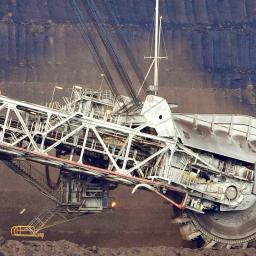
If Tony Abbott wants to focus on jobs, he has to abandon his obsession with coal – a capital intensive industry that creates fewer jobs than the horse industryThe prime minister has repeatedly said that the next election should be about jobs. He has attempted to kick-start a new “economy versus environment†strategy in relation to a coal mining. According to the ABS a huge 0.3% of Australians are currently employed in coal mining. If the coal industry trebled in size tomorrow it still wouldn’t be enough to create jobs for the extra 101,900 people who have become unemployed since Tony Abbott became prime minister.Anyone who has ever seen an open cut coal mine will understand why they don’t create a lot of jobs. Work that was once done by men with picks and shovels is now done by explosives and enormous machines. Economists call such industries “capital intensive†which is another way of saying “doesn’t create many jobsâ€. Continue reading...
|
 |
by Guardian Staff on (#JNY2)
Harry Styles of One Direction tells fans at a concert in San Diego last month not to go to SeaWorld if they like dolphins. The city is home to one of company’s biggest parks. On Thursday, bankers at Credit Suisse warned Styles had sparked a surge in negative sentiment towards the controversial aquatic theme park, which is already suffering a collapse in profits Continue reading...
|
by Helen Davidson in Darwin on (#JNNJ)
Freedom of information requests unearth inconsistent messaging from miner and Northern Territory government on the extent of heavy metal contaminationGlencore has yet to finish erecting signs warning of contaminated river life near a Northern Territory mine more than a year after the miner and the state government became aware of elevated levels of heavy metals.Government documents have revealed inconsistencies in the information given to the public about potential lead contamination of fish near the company’s McArthur river mine, despite the NT government and mining giant being aware of recommendations for warnings since July 2014. Continue reading...
 |
by Suzanne Goldenberg US environment correspondent on (#JNKM)
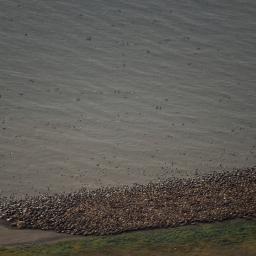
Survival of walruses threatened as they wash ashore on a remote barrier island just before Obama is due to visit region to draw attention to climate changeThe extreme loss of Arctic sea ice due to climate change is forcing thousands of walruses to crowd ashore on a remote barrier island off Alaska, and threatening their survival.Barack Obama will be the first US president to visit the Alaskan Arctic on 31 August on a three-day tour to draw attention to the drastic consequences of climate change for the Arctic, such as warming winters and the rapid retreat of sea ice.
|
 |
by Rupert Neate in New York on (#JNH3)
Credit Suisse warned whale theme park of ‘brand impairment issues’ caused by One Direction singer and employees caught infiltrating animal rights groups Continue reading...
|
by GrrlScientist on (#JN36)
Tropical songbirds produce fewer, high-quality nestlings per breeding effort than do songbirds that breed in temperate zones, according to a study published today. This study reports that tropical songbirds’ nestlings grow longer wings, and faster, which means they spend less time in the nest where they are vulnerable to predatorsIt has been a long-standing ornithological mystery as to why tropical songbirds have smaller clutches of eggs and raise fewer chicks per breeding effort than do temperate songbirds. But today, a study published in the journal Science argues that life history strategies lie at the heart of this conundrum. In this study, evolutionary ecologist Thomas Martin, an Assistant Unit Leader and Senior Scientist at the Montana Cooperative Wildlife Research Unit at the University of Montana, compares nestling growth rates between closely-related species of tropical and temperate songbirds. He documents that nestlings of tropical songbirds grow longer wings, and grow them faster, than do nestlings of temperate songbirds. Further, they achieve longer wings without increasing their time in the nest, which reduces their risk of predation. Further, because tropical songbirds have more resources available to invest into their offspring, they produce fewer chicks per breeding effort and invest more resources into each individual, thereby giving their offspring a higher survival rate after they fledge (leave the nest). In contrast, temperate songbirds have fewer resources available to nurture their chicks and their offspring suffer a higher mortality rate after they leave the nest, so temperate songbirds compensate by producing a greater number of lower-quality offspring. Continue reading...
 |
by David Hall on (#JMZX)
As a lecturer in tourism at Manchester Metropolitan University, my father, Peter Hall, showed students at the university’s Hollings campus and on field studies in areas as diverse as the Peak District, Snowdonia and Budapest the benefits and limits of sustainable tourism. Peter, who has died aged 78, also enjoyed a long association with the Open University as a lecturer in the arts.He began his academic career in the general studies department at what was then Hollings College, teaching industrial and interpersonal communications skills. He had been recruited from Granada Television, where he worked as a researcher, scriptwriter and editor on both factual programmes and dramas such as Coronation Street. Continue reading...
|
by Terry Macalister on (#JMWD)
Renewable energy sector condemns proposal to cut feed-in-tariff for small-scale solar installations by almost 90% from 1 JanuaryThe government wants to slash by 87% subsidies for householders who install solar panels on their rooftops, in a move that renewable energy experts warn could kill off a promising industry.The potential reductions in the level of feed-in tariff (FIT), contained in a long-awaited consultation document released by the Department of Energy & Climate Change (Decc), and are far larger than expected. Continue reading...
 |
by John Jordan on (#JMMW)
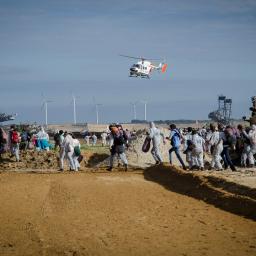
Earlier this month, 1,500 protesters forced the temporary closure of a vast lignite mine in Germany. It was terrifiyng, exhilarating – and direct action at its bestThis month, I broke the law. I wasn’t alone; I was with 1,500 others, many of whom had never broken any law for their beliefs before. Together we managed to shut down Europe’s biggest source of CO2 emissions: RWE’s lignite mines in the Rhineland in Germany.In total, around 800 of us were arrested, and hundreds of us refused to cooperate with the authorities by withholding our names and IDs. This hampered the bureaucracy so badly that we were released without charge. It was the world’s largest act of disobedience against the mining of fossil fuels – and it might be the spark that ignites a rising, cross-border movement of disobedience for climate justice. Continue reading...
|
 |
by Arthur Neslen in Brusels on (#JMKG)
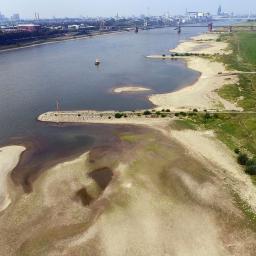
Severe droughts that stretched across a central European band this summer are consistent with climate models for a warming continent, experts sayA swathe of central Europe has suffered the most severe drought since 2003 in what EU climate experts see as a harbinger of climate changes to come.
|
 |
by Martine Valo on (#JMHH)
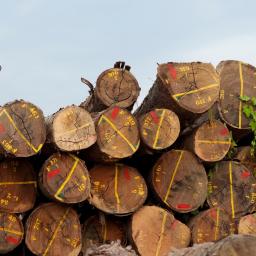
The west African nation is working to balance competing demands of retaining biodiversity and mitigating climate change with the immediate needs of its peopleAnne-Marie Ndong Obiang has a machete attached to her belt, which she assures us is “for cutting off poachers’ fingersâ€. In her spotless forest-green camouflage uniform she does not appear to be joking. Working for Gabon’s National Parks Agency (ANPN) she has firsthand experience of the harsh conditions in the big reserves in the north of the country, some almost impenetrable. Gold prospectors, often from neighbouring Cameroon, have been known to leave craters 40 metres deep in the middle of the woods.Obiang is head of the Raponda Walker Arboretum close to the capital Libreville, which is on the Atlantic coast. Her priority here is to combat uncontrolled urban sprawl. “My fellow eco-wardens and myself can’t look the other way for a moment without someone starting to build beside the track,†she says. True enough quite substantial houses are springing up, with no planning permission, jeopardising the exceptional forest ecosystem that is bordered by a few sandy creeks – miraculously spared so far. To the south, the city is spreading unchecked. “We have about 40 endemic plant species here and we’re still identifying new ones, despite the airport being only 15 minutes away,†she says. Her favourite natural landmark is an Aleppo pine, 57 metres tall, which she likes showing to visiting schoolchildren. Continue reading...
|
 |
by Maseeh Rahman in Delhi on (#JMFH)
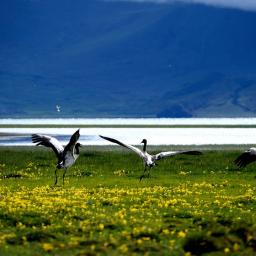
Hydropower project in eastern Himalayas will destroy migration site of ‘vulnerable’ black-necked cranes, conservationists claimA hydroelectric project in India’s eastern Himalayas will soon destroy one of the winter habitats of the magnificent Tibetan crane, a vulnerable bird regarded by local Buddhists as the reincarnation of a the sixth Dalai Lama, scientists and environmentalists have warned.The Tibetan, or black-necked, crane, a species unique to Asia, has already disappeared from Vietnam, and can now be sighted only in parts of China, India and Bhutan, besides its main breeding grounds on the Tibetan plateau. It is listed as vulnerable on the International Union for Conservation of Nature’s Red List. Continue reading...
|
 |
by John Vidal on (#JMEF)
Rising population and dwindling water supplies will affect millions of people and exacerbate conflict in the regionWater supplies across the Middle East will deteriorate over 25 years, threatening economic growth and national security and forcing more people to move to already overcrowded cities, a new analysis suggests.As the region, which is home to over 350 million people, begins to recover from a series of deadly heatwaves which have seen temperatures rise to record levels for weeks at a time, the World Resources Institute (WRI) claims water shortages were a key factor in the 2011 Syria civil war. Continue reading...
|
 |
by Oliver Milman in Melbourne on (#JM71)
|
by Michael Patrick Welch on (#JM58)
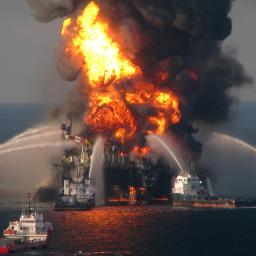
After a rough decade, the fishing industry around New Orleans is struggling to recover from the lingering damage from Katrina and the BP oil spillLike Louisiana’s largest city, New Orleans, the state’s verdant, marshy coastline is wild and diverse: a fat, largemouth bass might snatch the same topwater lure in the same fishing spot where you just landed a 30lb bull redfish. Just beyond the beady iridescent eyes of a freshwater gator emerges the fin of a benevolent porpoise. The coastal fishery’s singular bounty has traditionally provided for many.It’s tempting to ask how Louisiana fishing culture is faring 10 years after Katrina. But given the abuse doled out to the state’s fisherman since that famous storm – including three more hurricanes and the effects of the 2010 BP oil spill – it’s a wonder Louisiana’s commercial fishing industry hasn’t gone extinct even sooner than most local fishermen now predict. Continue reading...
 |
by Martin LukacsTim Groves on (#JM2A)
News of Tory-appointed official follows on Environment Minister granting Shell up to 21 days to stop underwater oil spillsThe agency tasked with giving approval for Shell’s deep-water drilling off Canada’s east coast includes a Tory-appointed official who worked for Shell for decades, it has emerged.
|
 |
by Emma Howard on (#JKSK)
Labour MPs say they will ditch Boris Johnson’s policy and pull out City Hall’s £4.8bn pension fund from oil, coal and gas companiesBoris Johnson has come under increased pressure to move the capital’s finances of out fossil fuels, as Labour party’s Sadiq Khan and David Lammy both committed to do so if they are elected as London mayor next May.“We’ve got hundreds of millions of pounds invested in all sorts of things. I’m going to lead by example and say we’re not going to invest anymore in fossil fuels,†Khan said in an interview with Guardian columnist Owen Jones on Monday. Continue reading...
|
 |
by Adam Corner on (#JKSN)
Environmental campaigns targeting fun things like holidays and Christmas lights are doomed to fail. For now, enjoyment should be exempt from the carbon auditI remember the worst idea for a climate change campaign I’ve ever heard.It was November 2008, and a well-meaning friend – having just discovered how much household energy bills can rise at Christmas with all the extra lighting in use – suggested that the wastefulness of the festive season could be a great “hook†for getting people thinking about energy consumption. Continue reading...
|
by Oliver Balch on (#JK6X)
Building a wind farm or solar energy project is nothing professionals in fossil fuels can’t manage, but there are too few programmes to help them retrainAdriaan Kamp used to be a die-hard oilman. After 17 years at Anglo-Dutch oil company Shell, the 54-year-old Dutchman now runs a consultancy based in Oslo advising national governments on transitioning to cleaner energy.“In 2007 to 2008, we were looking at future energy scenarios in the Shell Group [and] there was a question on my desk about how do we play with renewables,†he says. “And from there, the journey started.†Continue reading...
by Suzanne Bearne , Charlotte Seager and Nicola Slaws on (#JK31)
From beekeeping to working as a River Cottage chef, here are some of the best schemes for apprentices that want to make a difference in their career Continue reading...
by Guardian Staff on (#JJYT)
Sully, a pregnant grey-headed flying fox, savours some fresh grapes hours after being found unresponsive on the ground in a Sydney park. She was nursed back to health by a bat rescuer for six weeks before being released, still pregnant. Sully’s carer says bats should not be feared but can carry viruses, so should be handled only by people who are vaccinatedWatch the full recovery story here Continue reading...
by George Monbiot on (#JJZB)
If grey squirrels killed every year in the UK were sold for meat, it would be no bad thing. Factory farming is more harmful to the environment
by Rebecca Solnit on (#JJYW)
As Barack Obama opens up the Arctic Ocean to oil drilling, how can this pristine wilderness withstand the human hunger for fossil fuels?At midnight on 29 June, the sun was directly north and well above the hills. It had not gone down since I arrived in the Arctic, three days earlier, and would not set for weeks. It rolled around the sky like a marble in a bowl, sometimes behind clouds or mountains or the smoke of the three or four hundred wildfires somewhere south of us, but never below the horizon. The midnight sun made the green hilltops glow gold, and lit our walk through the wildflowers and the clouds of mosquitoes to the mountaintop.Down below, I could see our tents, our camp kitchen, tiny from the heights, and our two rafts, all along the sandy beach and flowery grass bench alongside the shallow Kongakut River. A few days earlier, a couple of bush planes had dropped off our group of nine for a week’s journey 65 miles down the river that threads its way from the Brooks Range of mountains to the northern coast of Alaska. Continue reading...
by Derek Niemann on (#JJXA)
Ouse Fen, Cambridgeshire It was as if someone had burst a thousand pillows along the bankThere are specks in the sky over every field and garden, silver-spoked seeds of thistledown, the snowflakes of summer. Up there in the blue, some float past to wherever, some bunch up unloved in the corner of a spider’s web, and one has slipped indoors and rests weightless on my windowsill.The other day, I went to a mass-production fluff factory, the thistle-lined dykes of Ouse Fen outside St Ives. Continue reading...
by Joshua Robertson on (#JJWH)
Thirty-five-year-old Hervey Bay man smuggled the reptile in his work boot after purchasing it from Darwin, where it is legal to buy crocodilesA man who bought a pet crocodile under the Northern Territory’s liberal wildlife-purchasing regime fell foul of the law only when trying to smuggle the reptile in his work boot on a plane into Queensland.The juvenile crocodile, which the man purchased from a Darwin crocodile park, was gravely ill by the time it was uncovered by authorities at Brisbane airport in a cardboard canister, hidden in a work boot inside a suitcase that was stored in the plane’s baggage hold. Continue reading...
by Press Association on (#JJBT)
Anglers join conservationists in high court case, saying Cameron government is failing in legal duty to safeguard rivers and coasts from agricultural run-offConservationists and angling organisations have joined together in a legal challenge, accusing the government of failing to protect some of England’s “most precious rivers†from agricultural pollution.WWF UK, the Angling Trust and Fish Legal say they have been granted permission by the high court to pursue their challenge to protect rivers, lakes and coastal areas from further damage. They are seeking a judicial review, arguing that the Department for Environment, Food and Rural Affairs and the Environment Agency are failing in their legal duty to take the necessary action to tackle the problem. Continue reading...
by Oliver Milman on (#JJBV)
A Q&A with the bestselling author before her visits to Melbourne and SydneyNaomi Klein, the Canadian author, film-maker and social activist, will arrive in Australia this month for a series of events. The author of No Logo and the Shock Doctrine – a self-confessed fan of avocado on toast – will be discussing climate change and capitalism, the key topics in her new bestselling book This Changes Everything. She spoke to Guardian Australia’s Oliver Milman.
by Suzanne Goldenberg on (#JJ2H)
Environmental groups band together to call on agency to improve laws for disposal of wastewater, often dumped in places that could leak toxic chemicalsEnvironmental groups have threatened to sue the Obama administration for failing to prevent swarms of earthquakes that came in the wake of America’s fracking boom.