 |
by Adam Vaughan on (#K65S)
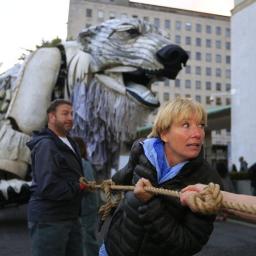
Actor campaigns against the ‘selfishness and greed’ of Shell’s bid for Arctic oil as part of a week-long demonstration in LondonA bus-sized polar bear and Emma Thompson have joined a week-long protest against Arctic drilling at Shell’s headquarters in London.The British actor visited the Arctic last year and said that she had got out of bed at 4am on Wednesday to take part in the protest because of the risk of climate change to her grandchildren and the threat posed to the polar region’s fragile environment by drilling. Continue reading...
|
| Link | http://feeds.theguardian.com/ |
| Feed | http://feeds.theguardian.com/theguardian/environment/rss |
| Updated | 2026-08-21 17:03 |
by Oliver Milman on (#K5NW)
Foundation for National Parks and Wildlife wants to install motion-sensing cameras, a thermal camera and flashing-light fox deterrentsConservationists want to install motion-sensing cameras and fox-deterring lights at the last mainland penguin colony in New South Wales, after a fox killed 27 of the endangered birds in just 11 days.In June, a fox discovered the colony of little penguins in the Sydney suburb of Manly, resulting in carnage. There were just 60 breeding pairs in the colony before the attacks. Continue reading...
by Lenore Taylor Political editor on (#K5J8)
Abbott government signs off on the detail of Australia’s climate policy but experts say the baselines have been set too high to require any cutsThe Abbott government has signed off on detailed rules for its Direct Action climate policy, which experts say will allow big industry to actually increase greenhouse emissions.The so-called “safeguards mechanism†is supposed to ensure that increased emissions from heavy industry and electricity generators do not undo the reductions bought through the government’s $2.5bn scheme. Continue reading...
 |
by Guardian Staff on (#K5HA)
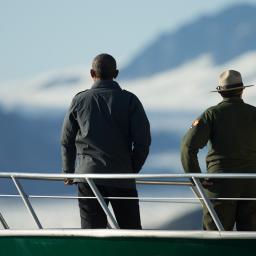
US President Barack Obama has visited the shrinking Exit glacier to highlight human-induced climate change while on a visit to Alaska. Obama says the glacier has shrunk rapidly over the past few decades, leading to sea level rises as well being a strong visual marker of a warming climate. On Monday he also visited an Anchorage coffee shop where he bought all of the cinnamon rolls on sale Continue reading...
|
 |
by Emma Howard on (#K5DD)
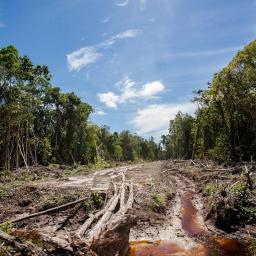
Palm oil plantations are devouring forests rapidly worldwide, with west Africa becoming the new hot spot for tree lossTrees covering an area twice the size of Portugal were lost worldwide in 2014, according to an analysis which shows west Africa is becoming a new hotspot for tree cover loss.Demand for palm oil, used in everything from margarine to shampoo, is blamed for four west African states featuring in a list of 10 countries where the rate of tree loss has accelerated fastest since the millennium. Continue reading...
|
 |
by Oliver Milman on (#K5D2)
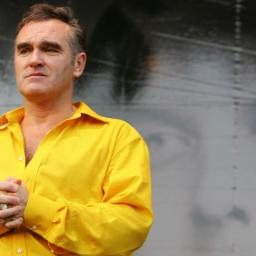
The British singer says the plan, which the government says will save endangered native animals, ‘is taking idiocy just too far’British singer Morrissey is a seasoned animal rights advocate and, heaven knows, he’s now miserable about Australia’s plan to slaughter 2 million cats.
|
by Joshua Robertson on (#K5AZ)
Parliamentary committee recommended making Cairns a ‘priority port’ but Queensland government says it is committed to keeping reef off ‘in danger’ listThe Queensland government has ruled out major development of a port in Cairns that would jeopardise Australia’s pledge to Unesco to limit industrial impacts on the Great Barrier Reef.A parliamentary committee on Tuesday recommended the government consider making Cairns a “priority portâ€, which would pave the way for capital dredging to enable shipping channels. Continue reading...
 |
by Sabrina Siddiqui in Washington on (#K40N)
|
 |
by Suzanne Goldenberg on (#K41A)
Billionaire philanthropist puts focus on protecting small farmers saying they are likely to suffer the most from climate changeBill Gates called for more funds to help the world’s poorest farmers deal with climate change on Tuesday, in an appeal that could help pry open the coffers of industrialised countries.The call from the tech billionaire and world’s biggest philanthropist to focus on the poor could spur more finance from industrialised countries to small-scale farmers during negotiations for a global deal to fight climate change in Paris at the end of the year. Continue reading...
|
by Karl Mathiesen on (#K3S5)
BBC presenter and naturalist targets RSPB and Wildlife Trusts for keeping quiet on fox hunting, badger cull and the plight of hen harriersChris Packham has slammed the “shameful†silence of some of Britain’s major conservation charities on fox hunting, the badger cull and the plight of hen harriers.
by Guardian Staff on (#K3MW)
Wrestling komodo dragons and thirsty squirrels are among the creatures captured on camera by photographers for this year’s competition. The exhibition opens on 16 October at the Natural History Museum in London Continue reading...
by Leighann Lord on (#K3JW)
For politicians, it’s convenient to have an incorporeal bogey man for a scapegoat. And the bonus is that global warming doesn’t voteKatrina was the big bad storm for which we were totally unprepared. It’s like adulthood. You know it’s coming. You think you’re ready but you’re not. You’ve completely underestimated its force and power. Of course we can blame our buddy Brownie and company for how the emergency response was mishandled, but what actually caused the storm, again? It’s uber fashionable to blame global warming in some circles and god in another – but what do scientists have to say?Savvy politicians blame natural disasters like Katrina on global warming, but then deny global warming exists when it becomes too expensive to do anything about it or when they need campaign donations. It’s convenient to have an incorporeal bogey man to blame. And bonus: global warming doesn’t vote.
 |
by James Randerson on (#K3BZ)
US president’s call for action on climate change is at odds with letting Shell drill for oil in the Arctic, says Bill McKibbenBarrack Obama has fatally undermined the message of his visit to the Arctic to highlight the dangers of climate change because his administration allowed Shell to drill there, a leading US environmentalist has said.Bill McKibben, winner of the Right Livelihood prize in 2014, sometimes referred to as an alternative Nobel, and founder of 350.org, said that Obama’s actions were a “bad contradictionâ€. Continue reading...
|
by Tom Levitt on (#K33W)
US food company Cargill wants to use expertise from the farmed salmon sector to help it produce more efficient and sustainable fish and chickenIt is difficult to know which is moving faster: the debate around the ethics of farmed fish, or the growth in how much of it we are eating. By 2030, aquaculture is predicted to account for 60% of fish destined for our plates and it’s already more than half.
by Guardian readers and Tom Stevens on (#K32K)
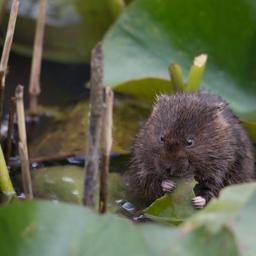
We asked you to share your August pictures of the wildlife around the world. Here’s a selection of our favourites
 |
by Tom Stevens on (#K32M)
The start of September sees the northern hemisphere reluctantly saying goodbye to summer while the southern hemisphere looks ahead to the spring. We’d like to see your photos of the September wildlife near you
|
 |
by Julia Schilly for Der Standard, part of the Climat on (#K30F)
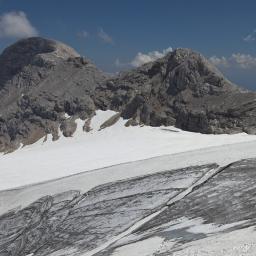
The thawing of Dachstein Massif show how climate change is precipitating the melting of glaciers, reports Der StandardThe view is breathtaking. Sheer cliff faces extend beneath the gondola as it glides from the Styrian town of Ramsau to the southern part of the Dachstein Massif, home to three glaciers.Upon arrival, visitors to the mountain are greeted by a green model dinosaur. The figure is meant to amuse children, but it has taken on a symbolic role too: glaciers belong to a dying breed. All three of the Dachstein’s glaciers – the Gosau, the Hallstätter and the Schladminger – have shrunk this year.
|
 |
by David Hill on (#K2XM)
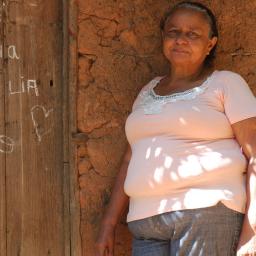
Plans for agro-industry expansion puts the livelihoods of thousands of women harvesting rare palm fruit at riskWhat, you might ask, is a “babassu breakerâ€? That’s my translation of “quebradeira de coco babaçuâ€, a term used by an estimated several hundred thousand women in Brazil who gather and break open the fruit - no easy task - from a species of palm called babassu.Many quebradeiras’ aim is to use the entire fruit: the seed kernels for oil or milk, the mesocarp - the middle layer - for flour, and the husk for charcoal. The income generated from babassu-derived products is crucial to thousands of families’ survival, while other parts of the palm find their way into roofs, fences and compost.
|
 |
by Reuters on (#K2ME)
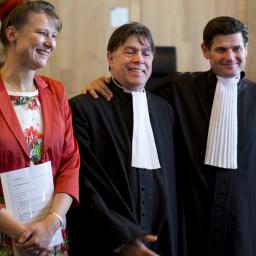
Environment minister says Netherlands will contest court ruling ordering it to cut emissions steeper, but government will begin complying in the meantimeThe Dutch government will appeal against a district court ruling ordering it to cut emissions of greenhouse gases faster than currently planned, in a politically sensitive case that is being closely watched by policy-makers abroad.
|
 |
by Reuters on (#K2GD)
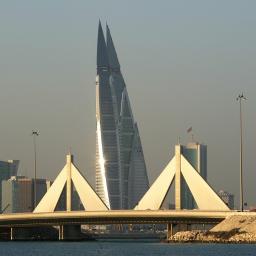
Shallow and warm waters of the Persian Gulf, where cyclones have never been recorded, might generate future storms that threaten cities such as DubaiClimate change is bringing small risks that tropical cyclones will form in the Persian Gulf for the first time, in a threat to cities such as Dubai or Doha which are unprepared for big storm surges, a US study said on Monday.
|
 |
by Patrick Barkham on (#K2JC)
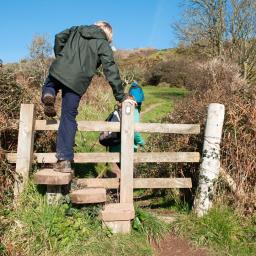
Many landowners regard footpaths as an unfortunate relic from pre-enclosure days, when peasants swarmed unimpeded across the countrysideWhen the Ramblers Association recently launched its Big Pathwatch, urging walkers to upload pictures of overgrown footpaths, I considered it a bit silly. Poor hard-pressed councils tasked with footpath maintenance – can’t walkers stamp down a few stray nettles? After a stinging wade along the bridleways of Buckinghamshire, however, I’m all for app tale-telling.It wasn’t just fast-growing nettles and brambles but teasels, thistles, young oaks and hogweed as high as a horse. And this 35 miles from London, in the Tory shires, where keen trampers take to the lanes in battalions and steel swing gates have been installed in memory of members of the local U3A group. Continue reading...
|
by Guardian Staff on (#K24H)
Climate change is threatening the nomadic lifestyle in Mongolia, with 90% of the landscape degrading into desert. Photographer Daesung Lee shows the nomads trapped between their fertile present and their arid future Continue reading...
 |
by Guardian Staff on (#K221)
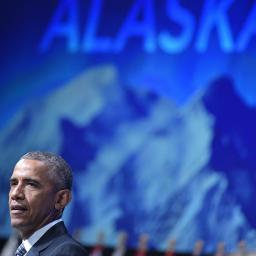
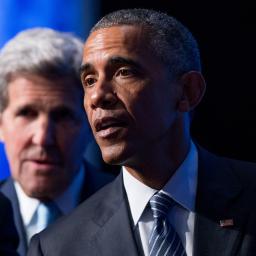
The US president has urged world leaders to agree to cut carbon emissions at a UN summit in Paris later this year. Speaking in Alaska, Barack Obama said the US recognises its role in creating climate change and will ‘embrace’ attempts to solve it. ‘The fact is that climate is changing faster than our efforts to address it. That, ladies and gentlemen must, change,’ Obama said Continue reading...
|
 |
by Oliver Milman on (#K216)
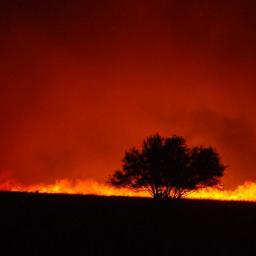
Official forecast for 2015-16 bushfire season identifies most of Victoria and NSW as under heightened risk as El Niño dries areas outVast areas of eastern, southern and western Australia are set to experience worse than normal bushfire conditions this summer, with the developing El Niño expected to significantly exacerbate fire-prone weather.An official forecast of the 2015-16 bushfire season, compiled by the Bushfire and Natural Hazards CRC, has identified almost all of Victoria and New South Wales, including Sydney and Melbourne, as having “above normal†bushfire conditions. Continue reading...
|
 |
by Mark Cocker on (#K1ZM)
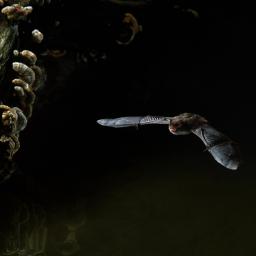
Claxton, Norfolk The bat, micro-second by micro-second, sculpted the entire space of that room through bouncing ultra-sonic calls off all the objects presentIt is perhaps the strangest wildlife alarm ever to be heard in our house. It began when our daughter at 3am, outside our bedroom door and shrouded in her duvet (to stop it getting tangled in her hair, she later revealed), announced that there was a bat in her room.Sure enough, there was the improbable and rather forlorn vision of a medium-sized species, perhaps a brown long-eared or a Daubenton’s bat, circling the lamp-lit rectangle of space just above her bed. Its flight path was necessarily short and repetitive. In fact, it reminded me of one of those black ragged props, popular in low-budget vampire movies from the 1950s, that used to circle on wires before the victim’s blood was to be spilt. Continue reading...
|
 |
by Dan Roberts in Washington on (#K1Z1)
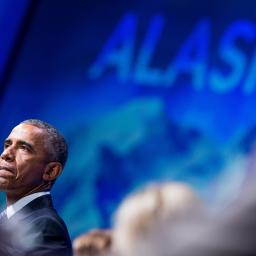
President says massive areas of ice disappearing every year are not some far-off problem but ‘a leading indicator of what the entire planet faces’Shrinking Alaskan glaciers served as a vivid backdrop for Barack Obama’s latest push for action on climate change in Anchorage on Monday night as he warned that the equivalent of 75 blocks of ice the size of the national mall in Washington were melting from the state every year.
|
 |
by Guardian Staff on (#K1JH)
Writer Tom Switzer has attacked climate change activists as ‘watermelons’ who conceal their socialist agendas under their ‘green skin’. Appearing on the ABC’s Q&A program, Canadian author Naomi Klein said rightwingers needs to be more ‘scientifically honest’. Klein also said the world view of denialists would collapse if the science of human-induced climate change is true Continue reading...
|
 |
by Oliver Milman on (#K17T)
Treatment of those held is ‘tantamount to torture … I find that more shocking than they fact they were going to check papers on the streets of Melbourne’Australians should take to the streets to protest over the treatment of refugees in Nauru that is “tantamount to torture†rather than just focus on the activities of the border force in Melbourne, Canadian author Naomi Klein has said.Related: All children should be removed from Nauru detention, Senate inquiry finds Continue reading...
|
 |
by Paul Brown on (#K10M)
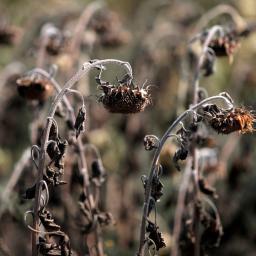
An antidote to the recent rain is the August edition of Drought News from the European Commission. This details the continuous high temperatures that parts of Europe have been experiencing, along with up to 60% less rainfall.France, Belgium, Germany, Luxembourg, Hungary, the Czech Republic, northern Italy and northern Spain experienced exceptional conditions. Temperatures topped 30C for 30 days in these countries and 40 days in Spain. This combined with lack of rain had a serious effect on vegetation and river flows. Continue reading...
|
 |
by Suzanne Goldenberg, US environment correspondent on (#K0DJ)
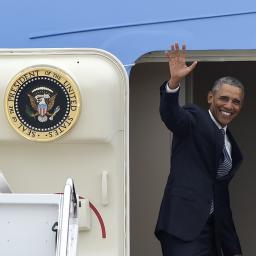
The president will trek across melting glaciers and visit threatened coastal communities but critics decry decision to allow Shell to drill for oil in ArcticBarack Obama will use a trek across Alaska’s melting glaciers and permafrost to showcase the fight against climate change during a three-day visit to the state starting on Monday. Continue reading...
|
by Alison Moodie on (#K0DM)
• Report found the USDA paid more than $500m in 2013 to meat and dairy companies for school lunch products, including processed meats
 |
by Othniel Art Oomittuk Jr on (#JZZJ)
Ahead of his trip to the Arctic, President Obama said ‘alarm bells are ringing’ about climate change. Here in Alaska, sirens have been sounding for decadesHow can we say no to drilling in the Arctic when we use oil every day? We use it for heating our houses, fueling our four-wheelers and cooking our meals. But saying no to oil does not mean we have to go back to old times.When I grew up in Point Hope, 50 years ago, we used dog sleds for transportation, seal oil for warmth, whale bones and sod for shelter. All these energy sources came from our land and our ocean through the animals to us.
|
 |
by Patrick Barkham on (#JZSY)
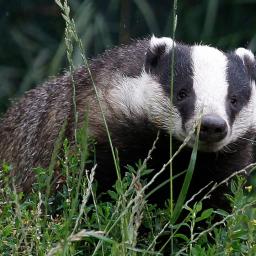
The latest cull is not honest, scientific or even effective at containing bovine TB. It is simply a political move to appease countryside votersJoin me, dear urban dwelling, bunny-hugging Guardian reader, in setting aside your ethical and environmental concerns about killing our biggest surviving carnivorous wild animal, and follow this, the most rational case that can be made in favour of England’s badger cull.Small dairy farmers are struggling. Bovine TB is a genuine problem in West Country hotspots and although farmers receive compensation for slaughtered cattle, it doesn’t cover their costs. Cattle and badgers transmit the disease to each other, with the latter being just one “wildlife reservoir†of a poorly understood disease that is spread by everything from pigs to deer. An eight-year scientific study estimated that a rigorous badger cull could reduce the rate of increase in cattle TB by 12-16% over nine years. Continue reading...
|
 |
by RC Spencer on (#JZ6A)
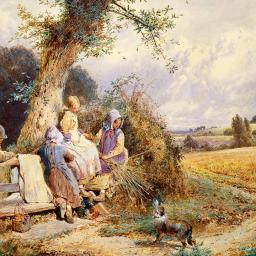
Originally published in the Manchester Guardian on 4 September 1915The luxuriance of early autumn is seen in the open wood not less than in the orchard. Leaves of the horse chestnut and the sycamore litter the ground, but the beech and the oak are beautifully green. There is a great show of acorns this year; they will be very useful for the cottagers and young porkers. Most of the gleanings, or leasings, as some country folk call them, will probably be used for mixing with the strong bitter fruit of the oak. Of old they used, after gathering the corn, a long and slow process, to take aprons full across to a watermill worked by a stream - where the fishing is as good as ever; but the mill has gone, steam and steel have captured all: the millstone stands upright against a worn beam of the wall, and the water-rat comes up to stroke his whiskers on its edges. Bread from leased corn always had a fuller, sweeter flavour than you get now from the finely dressed flour. Only “pollard†for the June calf and “sharps†for the trough were taken out of the ground corn, then, worked up with barm, baked and kept on a dairy shelf, it cut as ripe and sweet as a russet apple. Now we rub or beat the grain out for the fowls, and they enjoy it finely until the more masterful ducks come up and simply hustle them about the yard. Geese and ducks have no respect for the proper amenities of farmyard life. Continue reading...
|
 |
by Joshua Robertson on (#JZ5E)
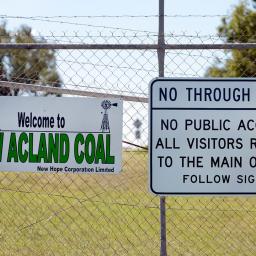
As Lock the Gate prepares to challenge approval to expand the Darling Downs project, campaigners say they are doing the government’s dirty workThe Queensland government is relying on “meanie greenies†to take the heat for standing up to a controversial coalmine expansion, according to a veteran activist.Lock the Gate will help fund a state land court challenge to the New Acland coal project, which has received draft environmental approval from the Palaszczuk Labor government despite its previously expressed reservations about a project run by a major Liberal party donor. Continue reading...
|
 |
by Nick Miroff for the Washington Post on (#JZ30)
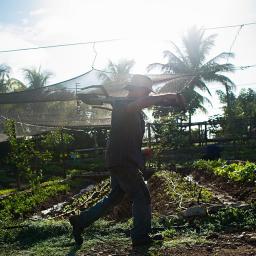
Fernando Funes Monzote’s theories of ‘agroecology’ bear fruit as he aims to inspire others to make the most of their landLike all homestead stories, Fernando Funes Monzote’s starts with an epic battle against harsh elements and long odds. Funes, a university-trained agronomist, settled on a badly eroded, brushy hillside outside Havana four years ago and began digging a well into the rocky soil. The other farmers nearby thought he was crazy, or worse – a dilettante with a fancy PhD whose talk of “agroecology†would soon crash into the realities of Cuban farming.Funes had no drill, so he and a helper had to break through layers of rock with picks and hand tools. Seven months later and 15 metres down, they struck a gushing spring of cool, clear water. “To me, it was a metaphor for agroecology,†said Funes, 44, referring to the environmentally minded farm management techniques he studied here and in the Netherlands. “A lot of hard work by hand, and persistence, but a result that is worth the effort.†Continue reading...
|
by Jeremy Hance on (#JZ06)
For the first time, Hawaiian monk seals are on public display outside of the Aloha State. Conservationists hope the new ambassadors at the Minnesota Zoo will help bring more attention (and funds) to the endangered, declining species
by Gabrielle Chan on (#JYTR)
NSW government sources acknowledge Upper Mooki Landcare group has strong case and Chinese state-owned company could have to restart approval processThe $1.2bn Shenhua coalmine faces a significant setback after local landholders launched a legal challenge to the New South Wales government approval process over whether it properly considered the impact of the mine on the local koala population.The Upper Mooki Landcare group has challenged the approval given to the Shenhua Watermark mine project, specifically whether the open-cut mine on the Liverpool Plains would place a viable population of koalas at risk of extinction.
 |
by Tony Greenbank on (#JYJB)
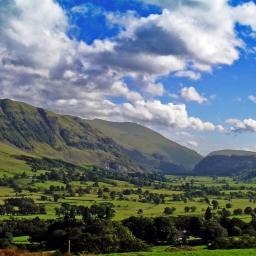
Helvellyn, Lake District This fresh running drinking water is always available, whether there has been rain or drought; it is an elixir from Mother Nature’s cooler, with or without ice (in winter)Of all the places in Lakeland where you can be guaranteed to find fresh running drinking water, Brownrigg Well is the highest. It graces Helvellyn (950m) 100m or so below the summit and has long assuaged the thirsts of shepherds and fell runners. Knowing its location means there is less need to carry bottled water uphill. Although called a “wellâ€, this is not a place to retrieve water in a bucket, but a spring that flows from the hillside. Always available, whether there has been rain, as in recent weeks, or drought, it is an elixir from Mother Nature’s cooler, with or without ice (in winter). I can testify to this after tasting a bottle of the stuff brought down by friends.The late Ernie Brownrigg, who was the shepherd for Manchester Waterworks, once took me to task for suggesting the well was named after him. “Don’t listen to the ‘lees’ that folk tell you,†he said, twanging his galuses (braces) while playing dominoes in the King’s Head Inn at Thirlspot by the A591. “Don’t claim I was that Brownrigg. I don’t ken who it was.†Continue reading...
|
 |
by Janaki Lenin on (#JYFS)
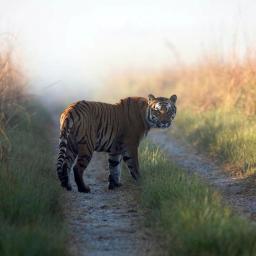
Authorities seek to widen a road that would cut wildlife corridors and put the future sustainability of three tiger reserves at risk
|
by Bill McKibben on (#JY9P)
It may once have been a coal town, but Newcastle’s fossil fuel divestment could come to be seen as the turning point towards a low-carbon futureThe news last week that the Newcastle city council had voted to divest from fossil fuel stocks was one of those signposts that historians will some day cite to mark the greatest economic transition in human history.A young councillor, Declan Clausen, was able to grasp the truth that eludes the Australian federal government, and indeed so many world leaders: coal – and oil and gas – are not the future, and they’re barely the present. We’re suddenly, and decisively, in a one-way transition to a renewable future, and the only question – perhaps the most important question humans have ever faced – is whether we can make that transition fast enough to save the planet. Continue reading...
 |
by Gary Fuller on (#JXST)
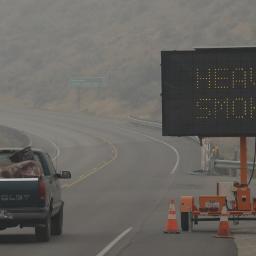
Vancouver is normally one of the world’s cleanest cities but this July its air resembled that in Beijing due to smoke and ash from forest fires over 200 kilometres away. Further fires along the western side of the US and Canada have caused numerous health warnings especially at night when smoke settled on valley communities. During August hot weather across southern Europe also led to forest fires in Spain, Portugal and Greece.Related: Pollutionwatch: The world's dirtiest cities Continue reading...
|
by Letters on (#JXJ2)
On 29 June the Department of Energy and Climate Change told me, on behalf of Amber Rudd, that “as you may know the government’s position remains that we are committed to seeing solar PV, including wide-scale deployment across community homes and rooftopsâ€. On 7 July 2015 I held a party at the Oxford Ecohouse, with its 1995 first solar roof in Britain, to celebrate one million solar homes built in Britain in 20 years. DECC is now proposing to cut the feed-in tariff rates for solar PV installations by as much as 87% (Plans for 87% solar subsidy cut ‘could kill the industry’, 28 August). Big Energy and DECC have realised that if everyone generates their own electricity and heats their water with solar systems, there will be no markets for nuclear electricity and fracked gas. No wonder they are determined to kill off the solar industry. Solar power is citizen power, so – if you do not want a toxic nuclear future or degraded fracked landscapes and lives – keep building those solar roofs, because each single one is a footstep to a cleaner, safer, freer energy future.
 |
by Associated Press on (#JXAN)
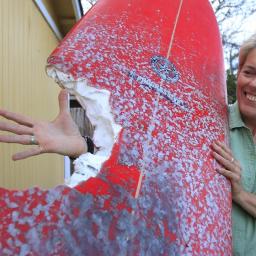
Officials close Morro Strand state beach for 72 hours after great white shark swims under Elinor Dempsey and bites 35cm hole in surfboardA surfer has escaped injury after a great white shark bit her board, off California’s central coast.Elinor Dempsey, 54, said she was surfing at Morro Strand state beach, just north of Morro Bay, at about 10am when a shark swam under her board and bit it, leaving a35cm-wide bite mark. Dempsey pushed her board towards the shark as she jumped off. Continue reading...
|
 |
by Jennifer Duggan in Shanghai on (#JWQ8)
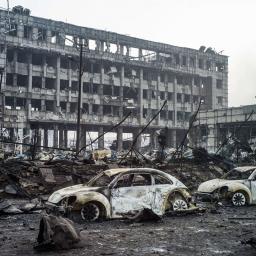
Industry minister, Miao Wei, says local government and companies involved would have to subsidise plans made to help improve pollution levelsLocal governments in China have submitted plans to relocate or upgrade almost 1,000 chemical plants in the wake of the massive explosions in Tianjin earlier this month that killed 147 people.The blast at a warehouse storing toxic chemicals was China’s worst industrial accident in recent years. There has been criticism it was located too close to densely populated residential areas. Continue reading...
|
 |
by Paula Kahumbu with Andrew Halliday on (#JWNH)
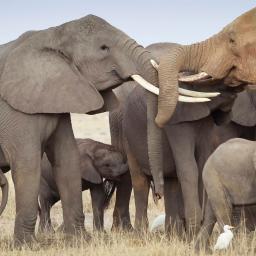
A sensational and shocking film provides the first direct evidence linking ivory trafficking to terrorismWarlords of Ivory shows the results of a year-long investigation by National Geographic reporter Bryan Christy. It documents atrocities committed against people and wildlife, on an almost unimaginable scale, by an ivory trafficking network coordinated by two of Africa’s most notorious war criminals.
|
 |
by Nicola Davis on (#JW79)
A Europe-wide project asks iPhone users to help monitor levels of pollution in major citiesTurn off Tinder and exit Instagram – scientists want you to turn your iPhones to research. Launching on Tuesday, the iSpex-EU project aims to recruit people from major cities across Europe, including Manchester and London, to take part in an initiative to monitor levels of air pollution.Run during the International Year of Light, a worldwide celebration of light and light-based technologies this year, the project aims to raise awareness of air pollution and contribute to scientific research by encouraging people to use their mobile phones to record levels of airborne particles and droplets known as atmospheric aerosols. Continue reading...
|
 |
by Emma John on (#JW4D)
People love Bromptons: not just suited commuters but maître d’s and cinema ushers. What’s the big deal?Brompton M3L
|
by Ed Cumming on (#JW4C)
The campaigning zoologist brought up his daughter in the bush. She rebelled, but shared his love of wild animals. Now Saba is a documentary maker and they are working together Continue reading...
 |
by Lucy Siegle on (#JW4F)
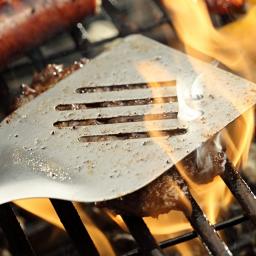
Be wary of where your charcoal comes from – it may be produced under ‘dismal standards’ and with dwindling resourcesGas barbecues are cleaner than charcoal. But for those determined to stick with old-school pit mastery, the central message is: check your fuel.This edict is inspired by a recent report from forestry NGO Fern.org. It’s not the cheeriest summer reading title: “Playing with Fire: Human Misery, Environmental Destruction and Summer BBQsâ€. But it’s eye-opening. Small-scale charcoal production has the potential to be a lifeline in rural economies all over the world. Sadly that’s not happening. Continue reading...
|