 |
by Misee Harris on (#FY2N)
After an arduous med-school journey, we find ourselves in a profession that I, for one, often struggle to find rewardingIt’s good to be a dentist, or so it would seem: US News ranks it the best job to have in America. It’s also horrible to be a dentist, if you look at Business Insider’s ranking of the top 10 professions with the highest suicide rates. We’re in second place!Related: US dentist accused of killing Cecil the lion 'upset' as hunter becomes hunted Continue reading...
|
| Link | http://feeds.theguardian.com/ |
| Feed | http://feeds.theguardian.com/theguardian/environment/rss |
| Updated | 2026-05-13 16:00 |
 |
by Associated Press in Wilmington, North Carolina on (#FY0P)
|
 |
by Paula Kahumbu with Andrew Halliday on (#FXMX)
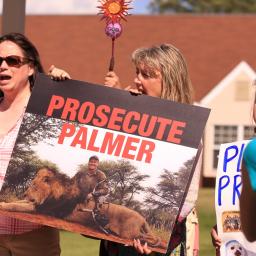
Hunting for pleasure is a barbaric, uncivilized practice that is well past its sell-by dateLike people across the world, I am extremely angry and deeply saddened about the killing of the great lion named Cecil in Zimbabwe.Cecil was a spectacularly beautiful lion. He was lured out of the protection of Zimbabwe’s Hwange National Park so that he could be shot by the American trophy hunter Walter J. Palmer. Continue reading...
|
by Associated Press in Rio de Janeiro on (#FXJZ)
 |
by Rory Carroll in Los Angeles and Mahita Gajanan in on (#FXD6)
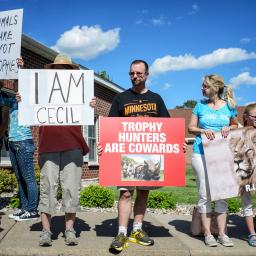
After the Minnesota dentist killed a protected lion, the global outcry has quickly spread – but some hunters argue the practice ‘brings us back to our roots’For many it would be a horrifying sight, but when Dan Tichenor draws his bow and aims an arrow at an animal in the wild he feels an affinity with humanity’s ancestors and the age-old contest between hunter and hunted.Humans evolved to be predators and there is no shame in perpetuating that instinct, he said. “It’s not just about observing the natural environment but being part of it. It brings us back to our roots as homo sapiens. This is how we survived through all our history.†Continue reading...
|
 |
by Rajeev Syal on (#FXAX)
Long wait will further delay government energy plans following councillors’ rejection of Cuadrilla scheme to frack at two sites in FyldeMinisters have been told they may have to wait at least 16 months before learning whether fracking will be allowed in Lancashire, in a severe blow to the government’s energy plans.Civil servants are concerned that the appeal process against a decision to reject applications at two sites in the county will not conclude until November 2016 at the earliest. Continue reading...
|
 |
by Adam Vaughan on (#FX96)
Large solar power farm development largely stopped following April cuts, new figures show, and smaller farms will be hit nextThe amount of solar power being installed in the UK has largely flatlined since the closure by the government of a subsidy scheme in April, even before a new round of subsidy cuts has taken effect.Official figures released on Thursday show that large-scale solar farm developers rushed to connect to the grid in March to get in before the government excluded farms larger than 5MW, enough to power 2,500 homes, from its renewable obligation (RO) scheme. Continue reading...
|
 |
by Julia Lurie for Mother Jones, part of the Guardian on (#FX5K)
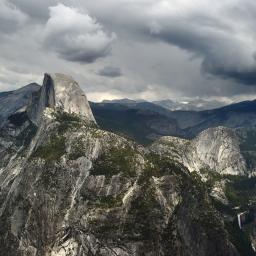
Air pollution in many national parks, from Yosemite to Joshua Tree and Kings Canyon, means a hike in the ‘fresh air’ is not as healthy as it seems, reports Mother JonesIt’s late summer, and Americans are flocking to the country’s national parks for some recreation and fresh air.But a study released this week by the National Parks Conservation Association (NPCA) found that air in some of the country’s most popular parks is not so fresh – and it’s potentially hazardous. The report rated the country’s 48 parks in three categories: levels of ozone (a pollutant that can irritate or damage lungs), haziness, and the impacts of climate change on the park. Here are the 12 worst contenders (full list available here): Continue reading...
|
 |
by Suzanne Goldenberg on (#FX44)
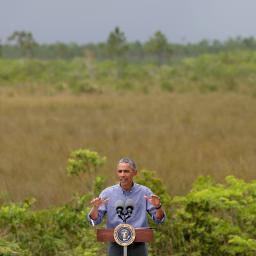
President will use all powers available to push through Clean Power Plan to cut carbon emissions from power stations, says White HouseBarack Obama will use all of his powers – including his veto – to defend his plan to fight climate change, the White House said, on the eve of new rules cutting carbon pollution from power plants.Obama is expected to unveil the new rules as early as Monday, according to those familiar with the Environmental Protection Agency (EPA) plan. Continue reading...
|
 |
by Terry Macalister Energy editor on (#FX46)
Chief executive Ben van Beurden says group will press ahead with $30bn asset sales and $3bn spending cuts as second quarter profits fall 35%Shell sees no quick end to the slump in oil prices and plans to accelerate its own cutbacks with 6,500 more job losses, a reduction in annual spending by a further $3bn (£1.9bn) and more than $30bn of asset sales by 2018.But the Anglo-Dutch group has vowed to press on with its expensive and controversial exploration programme in Arctic Alaska, saying it was a “long-term play†that could not be influenced by current energy prices. Continue reading...
|
 |
by Patrick Wintour Political editor in Kuala Lumpur on (#FX48)
Prime minister discusses ‘issue of tiger bones, and rhino horn’ on visit to Vietnam, as Tory minister Grant Shapps writes to Zimbabwean governmentDavid Cameron has promised to step up government efforts to protect wildlife from poachers following the outcry over the killing of Cecil the lion.He said he wanted to do more to help countries such as Vietnam stop the illegal trade in rhino horn after talks with the Vietnamese prime minister, Nguyen Tan Dung. Continue reading...
|
by Evan Mills on (#FWVW)
LED and solar technology is liberating remote communities from dependence on unhealthy fuel, explains US department of energy scientist Evan MillsA sixth of humanity spends upwards of $40bn (£26bn) per year on lighting (20% of the total energy spend for lighting), yet enjoys only 0.1% as much illumination as does the electrified world. Looked at another way, the unelectrified poor spend 100- to 1,000-times as much per unit of light as do people on the grid. A myriad of fuels are used for this purpose, including kerosene, diesel, propane, candles, grass and wood, flashlights with disposable batteries, and even discarded tire rubber. The corresponding greenhouse-gas emissions equate to those of 30m American cars.Fuel-based lighting is an example of how the hyper-inefficient use of energy plays a role in trapping people in poverty with a negative environmental impact affecting everyone. The spectre of fuel-based lighting extends far beyond its energy use, hampering health and safety, impeding better livelihoods and saddling governments with crippling energy subsidies. Continue reading...
 |
by Damian Carrington on (#FWTH)
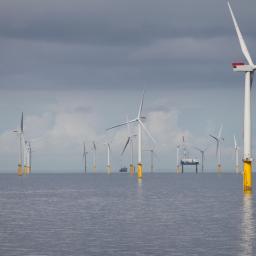
Germany drives bumper year for European offshore wind in 2015, installing three times more capacity than current leader, the UKEurope’s offshore wind power industry has set a record for its biggest ever year just six months into 2015.The biggest factor was a huge jump in turbines in German waters connecting to the grid, with Germany installing three times more electricity-generating capacity than the continent’s current leader, the UK. Continue reading...
|
 |
by Guardian Staff on (#FWS6)
Artist Mark Balma discusses why he is painting a huge mural of Cecil the lion outside Walter Palmer's dental practice in Minnesota. Palmer received widespread condemnation for hunting and killing the lion in Zimbabwe. Hundreds of protesters gathered outside Palmer's office on Wednesday demanding the dentist be extradited to face charges in Zimbabwe. Palmer has said he believed the hunt was legal and didn't know about the lion's status
|
 |
by Joshua Robertson on (#FWRH)
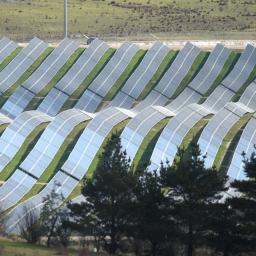
Planning minister, Jackie Trad, considers using ‘call-in’ power that would give her final approval which could not be challengedThe Queensland government is considering stepping in to head off a legal challenge to one of Australia’s largest planned solar farms in the state’s northern sugar belt.The Spanish renewable energy developer FRV has approval from the local council and a deal with a cane farmer to build a 130-megawatt facility on his property in Clare, where the company says there is some of the most powerful sunlight in the country.
|
 |
by Ben Child on (#FWN9)
Anger erupts on Twitter after users assume actor posted hunter Walter Palmer’s home address rather than widely-publicised location of his dentistry businessMia Farrow is facing a storm of protest after posting the business address of the American dentist who shot Zimbabwe safari icon Cecil the Lion online.Some called for the Rosemary’s Baby star, who later removed her tweet, to be banned from the social network. Continue reading...
|
 |
by Guardian music on (#FWJK)
Pro-hunting rocker insists it was right to shoot the beloved big cat, and that killing animals is ‘legal and essential’Ted Nugent enjoys killing things. He enjoys killing things so much that when he’s not touring or recording, he offers hunting safaris in the US, Canada and Africa. He enjoys killing things so much that he sells specially branded Ted Nugent hunting arrows on his website. “Ted Nugent does not compromise,†his site boasts.He certainly hasn’t compromised in the case of Cecil the Lion, and the worldwide revulsion at Minnesota dentist Walter Palmer, who paid $50,000 to track and kill the Zimbabwean lion, after luring him out of a national park. Continue reading...
|
 |
by Francesca Perry in Kiruna on (#FWGJ)
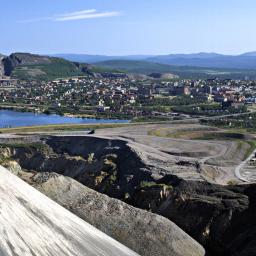
To avoid falling into the mine it grew up around, Sweden’s northernmost city is knocking down 3,000 homes, schools and a hospital, and starting a redesigned centre a safe distance away. How do citizens feel about the transformation?A remote arctic settlement, with a centre dominated by a car park, Kiruna feels like the sort of city that might be forgotten about. The place is eerily, unnervingly quiet; the streets so empty I half expect a tumbleweed to pass by as a punchline. At one point, the gentle silence is broken by a procession of Harley-Davidsons roaring through the town. They don’t seem to stop.This is Sweden’s northernmost city, situated 90 miles into the Arctic Circle and a 75-mile drive away from the nearest town, Gällivare. Home to about 23,000 people and 11,000 snowmobiles, Kiruna has gained an unlikely fame over the past year, as the world hears of its plans. This remote and rather unprepossessing place is to become the city that gets moved: two miles to the east, to be precise. Continue reading...
|
 |
by Amanda Meade on (#FWAV)
The Conversation media outlet checked the figures Jones quoted on Q&A and found claim for cost of wind power was grossly overstatedThe ABC has had to correct two statements made by Alan Jones on Q&A last week, including one that put the cost of wind power 10 times higher than it actually is.
|
 |
by Simon Jenkins on (#FWA8)
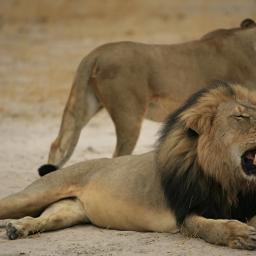
Big game hunts outrage the west, but South Africa shows that sustainable ranching is more effective than bansA dentist from Wisconsin goes hunting in Zimbabwe and bags its most famous lion, Cecil. In response, Cecil’s friends have gone hunting in Minnesota in the hope of bagging its most infamous dentist, Walter Palmer. Welcome to the world of charismatic mega-species, their predators and protectors. One thing only is for sure, the predators are winning.Last month the Dallas Safari Club announced that one of its number had killed a black rhino in Namibia, one of four allotted for culling each year. The permit to do so had been auctioned for $350,000, which goes to the Namibian wildlife conservation service. Palmer paid $50,000 to kill Cecil, but who knows where that went. Continue reading...
|
by Aggie Rothon on (#FW8X)
Sloley, Norfolk: Hundreds of red ants have pressed shoulder to shoulder in their desire to feed upon the intoxicating mannaA row of stately trees guards the meadow’s fence line beneath a sultry summer sky. One tree is a small-leaved lime, a diminutive name for a colossal plant. The ground beneath its wide boughs is bathed with the soporific perfume of linden blossom, and the pale stars of its flowers are laden with nectar-devouring insects.Next to the lime is a shaggy yew, bluish green, decorated with the scaly brown seeds of the female flower. Continue reading...
 |
by Caty Enders in New York on (#FV6W)
The Democratic frontrunner’s solar proposal has major holes if she hopes to halt global warming. What would a real climate-change candidate look like?
|
 |
by Letters on (#FV3M)
The most effective proxy that the western coalition has against Isis is the Kurdish YPG militia operating in northern Syria (Report, 28 July). Given that the territory the YPG controls is now under threat from Turkey, its fighters will engage this new enemy and turn away from fighting Isis. Isis will be free to consolidate its gains in Syria and to continue its regime of terror. How did the US and its allies allow this situation to come to pass?
|
 |
by Suzanne Goldenberg on (#FV34)
|
 |
by Matthew Weaver in London and Mahita Gajanan in New on (#FS84)
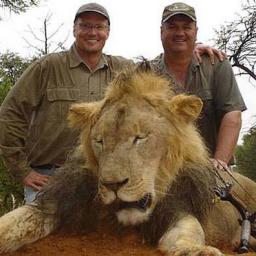
US uproar over death of protected animal forces Walter Palmer’s practice to close, as two others attend Zimbabwean court to face poaching chargesThere are mounting calls for the prosecution of an American dentist who shot dead one of Africa’s most famous lions, as two other men involved in the hunt appeared in court in Zimbabwe to face poaching charges.Walter Palmer, who runs a dental practice in Minnesota and hunts big game in his spare time, is accused of illegally killing Cecil, a protected lion, in Zimbabwe on a $50,000 (£32,000) hunt. Continue reading...
|
 |
by Ryan Kincaid on (#FV2E)
From the King of Spain to America’s most famous hockey mom, proud displays of animal trophies haven’t always been met with congratulations onlineIn the jungle, the mighty jungle, poor Cecil the lion no longer sleeps tonight. After news broke that the beloved big cat was killed by a dentist from Minnesota, the hunter, Walter Palmer, quickly became “the most hated man in America who never advertised Jell-O pudding on televisionâ€, according to Jimmy Kimmel.Palmer is reportedly receiving death threats and a deluge of horrible Yelp reviews, and it probably goes without saying that his patients are likely hunting themselves – for a new dentist. But Palmer is by no means the first big game trophy hunter to get skewered online for their exploits.
|
 |
by John Vidal on (#FTJE)
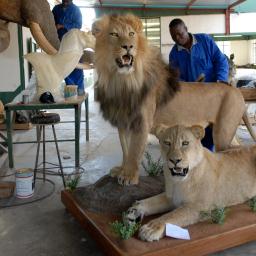
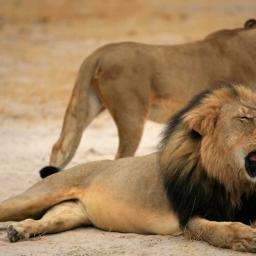
Lion hunting quotas in Zimbabwe, where Cecil was killed, are unsustainable but across Africa hunting helps prevent habitat loss that is a main driver in the animals’ decline, say conservationistsLion numbers are in steep decline across Africa, but trophy hunting is only partly responsible for the long-term losses, say conservationists.According to UK-based charity Lion Aid, trophy hunters in Zimbabwe killed around 800 lions in the 10 years to 2009, out of a population in the country of up to 1,680. Continue reading...
|
 |
by Philip Hoare on (#FTE0)
Give an animal a cute name and its fate is sealed. The act reduces magnificent beasts to toys of humankind - and the next step is often extinction
|
 |
by Alex Kirby for Climate News Network, part of the G on (#FT8P)
Fossil fuel divestment campaigners still have work to do, meeting held by Sainsbury Family Charitable Trusts is told. Climate News Network reportsThere’s sobering news for campaigners trying to persuade investors to withdraw their funds from the fossil fuel industry: UK experts say their efforts are unlikely to achieve enough quickly enough.One expert, using the term often applied to the global energy industry, told a meeting in London: “The incumbency is winning the cold war.†Continue reading...
|
 |
by Guardian Staff on (#FT7P)
US talk-show host Jimmy Kimmel gives an emotional response to the death of Cecil the lion, a cherished creature at Zimbabwe's Hwange national park. The host of Jimmy Kimmel Live! says he was saddened to hear the lion was killed by an American hunter earlier this month. Kimmel becomes visibly upset while speaking about the incident, and later prompts viewers to donate to a wildlife research unit
|
 |
by David Hill on (#FT77)
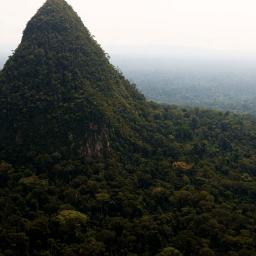
Over one million hectares, flora, fauna and people at risk from government failure to actThe Sierra del Divisor region in the Peruvian Amazon was identified as a biodiversity conservation priority back in the early 1990s. More than 20 years later and Peruvians are still waiting - some more desperately than others given all the narco-traffickers, illegal loggers and gold-miners in or near the region.What’s so special about the Sierra del Divisor? It’s the “only mountainous region†anywhere in the lowland rainforest, according to Peruvian NGO Instituto del Bien Comun (IBC), while The Field Museum, in the US, describes it as “a mountain range†rising up “dramatically from the lowlands of central Amazonian Peru†and boasting “rare and diverse geological formations that occur nowhere else in Amazonia.†Its most iconic topographical feature is “El Conoâ€, an extraordinary peak visible from the Andes on a clear day. Continue reading...
|
 |
by Matthew Weaver on (#FT6Z)
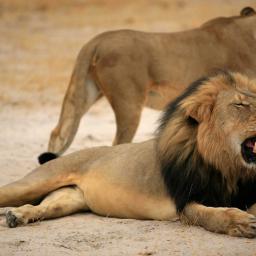
Killing of Cecil the lion by US dentist has caused international outrage, and now conservationists say there is little they can do to save his 12 cubsLion cubs fathered by Cecil, the celebrated lion shot dead in Zimbabwe, may already have been killed by a rival male lion and even if they were still alive there was nothing conservationists could do to protect them, a conservation charity has warned.The killing of the 13-year-old lion on 1 July by Minnesota dentist Walter Palmer, who is thought to have paid $50,000 [£32,000] to take part in the hunt, has sparked world-wide condemnation. Continue reading...
|
 |
by Sarah Shemkus on (#FSXQ)
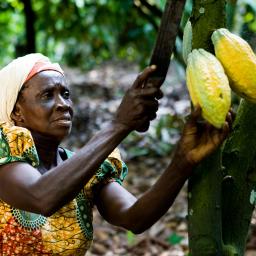
Companies including Nespresso and Timberland are working with local communities in developing countries to build sustainable supply chainsEvery chocolate company needs to buy cocoa beans. For Seattle-based Theo Chocolate, sourcing this essential ingredient is not about finding the right vendors – it’s about creating them. This unorthodox approach yields a better quality of chocolate for Theo, and a better quality of life for the cocoa farmers with whom the business works, according to founder and CEO Joe Whinney.“Unless you’re really willing to change the game [and] the way it’s done, you’re going to end up with the same cycle,†he said. He’s referring to a cycle in which, despite the efforts of global chocolate companies, many of the world’s cocoa farmers remain poor. Continue reading...
|
|
by Rose George on (#FSRA)
Trophy hunters like Walter J Palmer shouldn’t receive death threats – but there is no excuse for their argument that hunting serves conservationWe love a good fight, don’t we? Enter Walter J Palmer, a tanned dentist from Minnesota, with a bow and arrow. Along comes Cecil the lion, the alpha male of his pride, minding his own business being the best-known and most beloved lion in Zimbabwe if not in Africa, as well as the subject of an Oxford University study. Then Cecil is shot with a bow and arrow, taking 40 hours to die, all because Palmer thought killing a magnificent animal was sporty.I’d rather not attempt to comprehend the inexplicable act that is the murder of animals for fun Continue reading...
|
 |
by Adam Vaughan on (#FSQZ)
Greenpeace climbers plan to spend days hanging from the bridge in Portland, Oregon in an attempt to hinder Shell’s Arctic oil drilling plansA group of environmental activists have rappelled off a bridge in Portland, Oregon, in a bid to block a key vessel in Shell’s Arctic drilling fleet leaving the city’s port.Related: The new cold war: drilling for oil and gas in the Arctic Continue reading...
|
 |
by Lewis Smith on (#FSKQ)
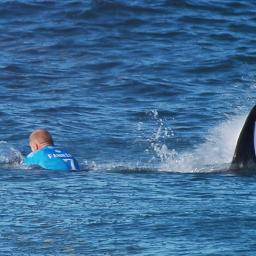
Virgin founder calls for sharks to be protected, not killed in retribution, following top surfer’s amazing escape from an attack in South AfricaSir Richard Branson has called for sharks to be protected rather than hunted down and killed in the wake of an attack on one of the world’s leading surfers.The billionaire entrepreneur called for restraint following Mick Fanning’s encounter with a shark on the coast of South Africa, in which he fought it off by punching the predator on the back. Continue reading...
|
by John Abraham on (#FSM8)
Late but persistent bout of sunny weather and high temperatures threatens this year’s Arctic iceFollowing the post of my colleague, Dana Nuccitelli on misreporting of ice trends, this article is a timely guest post by Neven Acropolis who runs the Arctic Sea Ice blog.“After the record smashing 2012 melting season had ended, Arctic sea ice watchers awaited the following melting season with a mix of anticipation and apprehension. Anticipation, because the annual ebb and flow of Arctic sea ice is one of the most spectacular natural events on the planet, accentuated by the dramatic loss of the past 30 years. Apprehension, because further losses would bring the Arctic yet one step closer to virtually ice-free conditions, an iconic image entailing many unpredictable consequences. Continue reading...
 |
by Guardian Staff on (#FSE7)
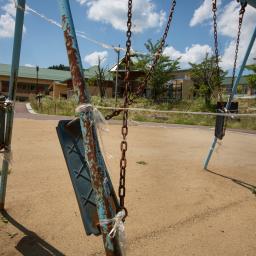
Radioactive contamination in the forests and land of Iitate district in Fukushima prefecture is so widespread and at such high levels following the 2011 disaster that it will be impossible for people to safely return, say Greenpeace Japan Continue reading...
|
 |
by Press Association on (#FSCR)
Himalayan country’s first nationwide survey finds 103 tigers, but WWF warns big cat was facing a crisis elsewhere south-east AsiaBhutan is home to more than 100 tigers, a rise of more than a third on the previous population estimate, a survey has revealed.
|
 |
by Damian Carrington on (#FS60)
Pesticide manufacturers, Bayer and Syngenta were involved in a meeting over whether to lift a ban on neonicotinoids in the UK, previously suppressed minutes revealThe manufacturers of controversial pesticides took part in a key meeting on whether a Europe-wide ban on their chemicals should be lifted in the UK, according to newly published documents. The record of the meeting of the UK government’s expert committee on pesticides (ECP) had previously been suppressed.
|
 |
by Ricken Patel on (#FS02)
This year’s march in November will send the most powerful message yet to world leaders the day before they meet for crucial climate talks in ParisCreating a world powered on clean energy to save ourselves from climate catastrophe is a central challenge of our time, and requires a revolutionary transition in our economies. We can’t wait for our leaders to solve this problem; unless they feel serious public pressure, they’ll never go far enough or fast enough. Revolutions start with people, not politicians.To survive the 21st century, we must discover the sense of common purpose that has driven revolutionary change through history, building a mass movement to stretch what our politicians believe is possible. We must lead, not follow, and bring leaders with us. Continue reading...
|
 |
by Richard Ewbank on (#FRW8)
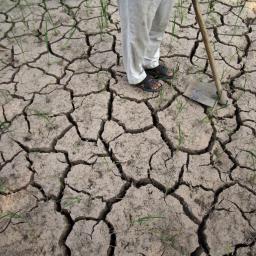
Rush to increase production has caused catastrophic environmental degradation. We need to make agriculture climate-resilient and more efficientThe World Bank’s view that we need to grow 50% more food by 2050 to feed 9 billion people, while finding ways to reduce carbon emissions from agriculture at the same time, ignores one very simple fact – we already grow enough food for 10 billion people.But a combination of storage losses after harvest, overconsumption and waste mean that some 800 million people in developing countries are malnourished. Continue reading...
|
 |
by Virginia Spiers on (#FRQ8)
Metherell, Tamar Valley Heritage orchard of local varieties has come to fruitionA plate of cherries, entered in the fruit class at the village show, prompts reminiscence of old trees that, in the last century, still produced the sweet black cherries peculiar to the Tamar valley.Those remnants of former orchards have since rotted or been felled for firewood but the heritage orchard of local varieties, established by James Evans and Mary Martin, has come to fruition. Continue reading...
|
 |
by Guardian Staff on (#FRM4)
Marine conservation group Sea Shepherd has released an anti-whaling video starring actor David Field. He plays a man who is shot in the back by a harpoon before being dragged to his death. Since the 1982 moratorium on commercial whaling, more than 25,000 whales have been killed, says Sea Shepherd Continue reading...
|
 |
by Oliver Milman on (#FRJY)
Report says Australia must embrace renewables and coal exacts an ‘enormous toll’ on health, drives climate change and is ineffective in delivering electricity to world’s poorTony Abbott is mistaken in claiming coal is “good for humanityâ€, with the fossil fuel causing numerous health problems and ineffective in delivering electricity to the world’s poor compared with renewables, a new Oxfam report has found.
|
 |
by Helen Davidson on (#FRD6)
Frack Free NT Alliance says oil and gas company sponsorship undermines the integrity of the festival and investment from the renewables sector should be sought insteadArtists and environmental activists have called on the Darwin festival to reject sponsorship from the energy company Santos because of its work to frack land in the Northern Territory for shale gas.In an open letter to the organisers of next month’s festival, a coalition of activists, artists, musicians, and film-makers have urged organisers to break their sponsorship agreement with Santos, and look for investment from the renewables sector instead. Continue reading...
|
 |
by Mahita Gajanan in New York on (#FR2S)
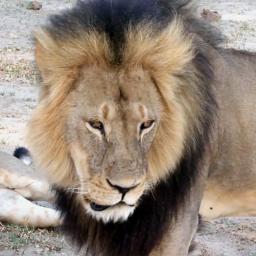
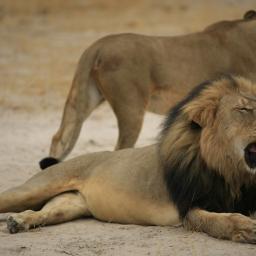
With African lion not listed on federal endangered list, imports are currently legal – but the death of Cecil, Zimbabwe’s celebrity lion, has driven calls for changeConservationists are calling on the US government to ban the the import of lions killed in trophy hunting, following the death of Cecil, Zimbabwe’s most famous lion, who was allegedly killed by an American dentist this month.
|
 |
by Jessica Glenza in New York, Ashifa Kassam in Madri on (#FQAK)
As Zimbabwe police say he faces poaching charges, Minnesota dentist Walter Palmer faces furious criticism on social mediaWho shot Cecil? First it was thought that a mystery Spaniard had the blood of one of Africa’s most famous lions on his hands. Then came a fresh twist. The Cecil slayer, Zimbabwean conservations said on Tuesday, was in fact a dentist from Minnesota.American Walter Palmer was said to be “quite upset†as the hunter became hunted. Zimbabwean police warned that he faced poaching charges, while there was a furious backlash on social media, with Facebook users variously calling for him to be publicly shamed, have his teeth pulled out without anaesthetic or be hunted and killed. Continue reading...
|
 |
by Letters on (#FQMH)
Geoff Moore (Letters, 28 July) seems very poorly informed as to how the payments for rooftop solar arrays are calculated. If nothing is generated and therefore there is no export to the grid, the payment would be nil.We have a solar array and in four years have generated over 13,500 kilowatt-hours. In summer we could generate up to 350 kilowatt-hours a month, in winter maybe a tenth of that, and payments reflect this. Continue reading...
|
 |
by Catherine Shoard on (#FQ9K)
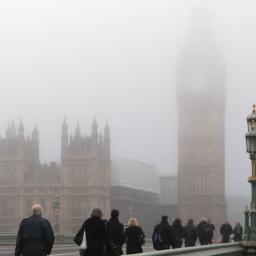
The apparently unquenchable American appetite for English pollution started with a Baltimore raincoat company in 1923. Now Tom Cruise is joining inIn 1923 a 16-year-old called Israel Myers set up a raincoat company in Baltimore. He called it Londontown. The firm jogged along profitably enough, supplying the US navy and becoming popular in Philadelphia on account of its special patented liners.In 1954, they had a rethink. Myers changed the name to London Fog. Suddenly, the anoraks flew off the hangers at Saks. “Every once in a while,†wrote the New York Times at the time, “a name comes along for a product that is exactly right. It describes the product exactly and does a selling job that even the legendary 10,000 words cannot do. Such a one is London Fog.†Continue reading...
|