 |
by Reuters in Cape Canaveral, Florida on (#3HQN)
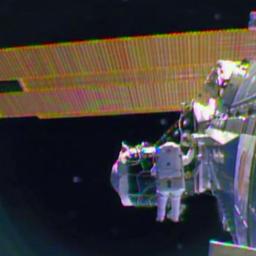
Station commander Barry Wilmore and flight engineer Terry Virts set out on six-and-a-half-hour spacewalk, the first of three outings over the next eight daysA pair of US astronauts floated outside the International Space Station on Saturday to begin rigging parking spots for two commercial space taxis.Station commander Barry “Butch†Wilmore, 52, and flight engineer Terry Virts, 47, left the station’s Quest airlock shortly before 8am ET to begin a planned six-and-a-half-hour spacewalk, the first of three outings over the next eight days. Continue reading...
|
| Link | http://feeds.theguardian.com/ |
| Feed | http://feeds.theguardian.com/theguardian/science/rss |
| Updated | 2026-10-02 09:00 |
 |
by Jon Butterworth on (#3HKP)
Quarks and gluons make weird slopes and shapes inside the proton. Understanding them precisely was important for the first results from Cern’s Large Hadron Collider, and continues to be so as we approach the restart over the next few weeks
|
 |
by Jessica Glenza in New York on (#3HF6)
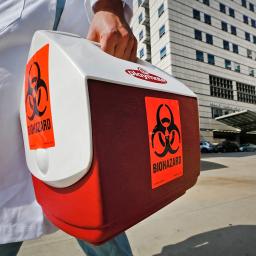
Expert cautions that antibiotic-resistant bacteria needs to come under control but says ordinary Americans do not need to worryA “superbug†outbreak made national headlines this week, as up to 179 patients at the UCLA Ronald Reagan medical center in Los Angeles were potentially exposed to “nightmare†bacteria through a pair of specialized gastrointestinal tools. The germs may have been a contributing factor in the deaths of two people, doctors said.Related: Superbug at LA hospital linked to two deaths and 179 potential infections Continue reading...
|
by Deborah Orr on (#3HQQ)
Whether or not they actually get there, the dreamers and entrepreneurs of Mars One represent a collaborative, hopeful, outward-looking ethos that seems well worth celebrating Continue reading...
 |
 |
by GrrlScientist on (#3FTP)
This week, I share my thoughts about four books that span a number of non-fiction genres; science and nature, atheism, philosophy and politics Continue reading...
|
 |
by Dean Burnett on (#3FHF)
A Ukip candidate recently asked the important question ‘what happens when renewable energy runs out?’ This is something science hasn’t considered, so what other curveballs could UKIP end up throwing at the scientific community? Continue reading...
|
 |
by Chibundu Onuzo on (#3G1A)
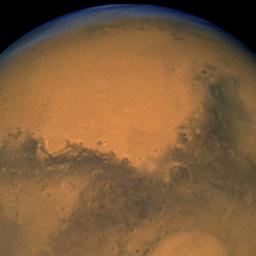
Much scientific discovery is for the betterment, amusement and curiosity of a lucky few in this world. Those without water, meanwhile, are temporarily forgottenI read the news of the proposed one-way trip to Mars for up to 40 lucky Earthlings with curious fascination. First, I browsed through the 100 candidates who had made the shortlist. Of course there was a Nigerian, a certain Ighodalo whose upbeat personableness came across well in his application video. No matter how bizarre the enterprise, I am always glad to see Nigeria represented. Next, I discovered that to fund the mission, both the journey out and the first years on the red planet will be turned into a reality show: perhaps Big Brother Mars, The Only Way is Martian, The Real Housewives of the Athabasca Valles. I could go on for a whole episode of Star Trek.What struck me as I surfed through the profiles of shortlisted candidates and watched applicants’ interviews, was that the mission is surrounded by a certain rhetoric of progress. Going to Mars will move humanity forward and open up new frontiers; it will be a veritable leap for mankind. I watched a woman look forward to the day her statue will be planted on Mars’s red soil in honour of her services to mankind. I watched a father willing to leave his wife and children behind for a chance to make this jump for humanity. I watched a young man speak of his application as a “sacrifice†for the rest of us. Through the glories of modern science, mankind is once again forging ahead. Continue reading...
|
 |
by Hadley Freeman on (#3BVV)
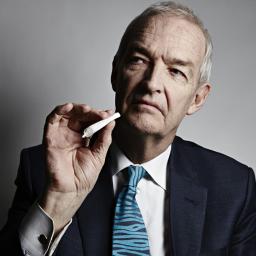
Don’t have an MRI scan while stoned out of your skull: that seems to be the one lesson we can safely draw from Channel 4’s Cannabis on Trial Continue reading...
|
 |
by Nicola Davis on (#3EZT)
Norman Doidge talks about the implications of neuroplasticity and his new book 'The Brain's Way of Healing', and from San Jose in California Ian Sample gives a roundup of key issues discussed at the annual meeting of the American Association for the Advancement of Science Continue reading...
|
 |
by Reuters in London on (#3ETT)
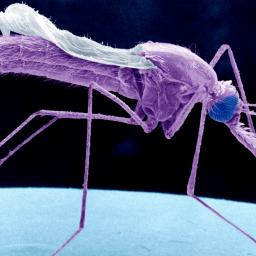
Oxford scientists warn parasite impervious to the key drug artemsinin has been found in testing near Indian border and could emerge in AfricaMalaria with total resistance to the antimalarial drug artemisinin has taken hold in Burma and spread close to the border with India, threatening to render crucial medicines useless, scientists have warned.
|
by Hannah Devlin, science correspondent on (#3E4T)
Moving immediately into the shade does not stop sun damage as UV rays can continue damaging skin cells hours after exposureDamage to skin cells continues for hours after spending time in the sun, according to research that uncovers a new link between sun exposure and cancer.
 |
by Guardian Staff on (#3DYT)
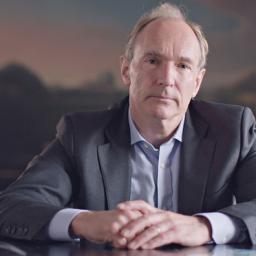
Sir Tim Berners-Lee, inventor of the world wide web, discusses his early career at CERN and how the web evolved from its initial concept.
|
 |
by Margaret McCartney on (#3DVM)
High-quality studies, rather than drugs companies, are finally driving menopause treatment – but there’s a lot of ground to make up
|
 |
by Hannah Earnshaw on (#3DFF)
Hannah Earnshaw explains why she wants to be part of the mission to colonise the red planetI have always been in awe of the night sky, trying to comprehend the vastness of space and the countless wonders it contains. But I have always felt a certain dissatisfaction with only being able to see it at a distance.One day I imagine that humanity will be able to visit other planets in the solar system, and venture even further to other stars, but this has always seemed very far away. That’s the reason why I applied for the Mars One mission, aimed at starting a human colony on Mars – it seemed like a real opportunity to get closer to the rest of the night sky, to give me a chance to be a part of taking humanity into the stars.Related: Mars One shortlist: five Britons among 100 would-be astronauts Continue reading...
|
 |
by Christopher Patil on (#3DFH)
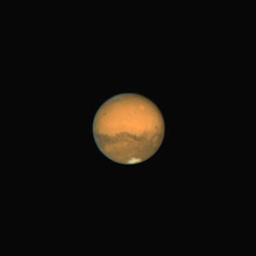
This mission is a rekindling of our spirit of adventure. Let it be an inspiration for the scientists of the future
|
 |
by Claire Armitstead on (#3DA0)
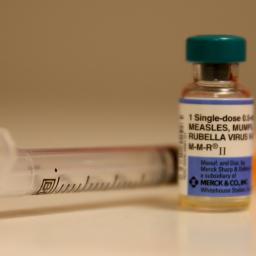
Facebook founder turns health champion and picks On Immunity by Eula Biss, as American public health officials tackle major measles outbreakMark Zuckerberg has tapped into an area of growing social anxiety with his fourth book club choice, announced on Wednesday.The Facebook founder showed his talent for surfing the zeitgeist by selecting On Immunity: An Inoculation, by essayist Eula Biss, which investigates the fears around vaccination in the context of her own terrors as a new mother.
|
by Curt Rice on (#3D7C)
What’s really happened is that fewer men – not more women– are studying for PhDs, new US research reveals Continue reading...
 |
by Vanessa Heggie on (#3CYS)
A recent article in Nature suggests that biologists ‘now think’ the idea of two sexes is inaccurate; in fact, says Vanessa Heggie, for decades biologists have been at the forefront of campaigns against this simplistic understanding of sex Continue reading...
|
by Dean Burnett on (#3CWY)
Many people encounter passive aggressive-behaviour on a regular basis. Many people even use it, perhaps unknowingly. How can something seemingly self-contradicting become so common? And why is it so jarring, even when compared to straightforward ‘normal’ aggression? Continue reading...
 |
by Jenny Rohn on (#3CWF)
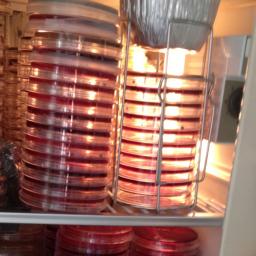
Global antibiotic resistance is imperilling our existence. We need clever ways to find new bug-beating drugs Continue reading...
|
by Hannah Devlin, science correspondent on (#3BS9)
Scientists have shown the urge to eat after smoking is caused by cannabinoids hijacking brain cells that normally suppress appetiteBesides making a bongo drum sound inexplicably magical and enhancing a person’s ability to talk nonsense for extended periods of time, generations of cannabis smokers will recognise the “munchies†as one of the drug’s most reliable side-effects.Now scientists have shown that the insatiable urge to eat after smoking is caused by cannabinoids hijacking brain cells that normally suppress appetite. The study suggests that cannabis causes the brain to produce a different set of chemicals that transform the feeling of fullness into a hunger that is never quite satisfied.Related: Smoking skunk cannabis triples risk of serious psychotic episode, says research Continue reading...
 |
by Philip Hoare on (#3BSA)
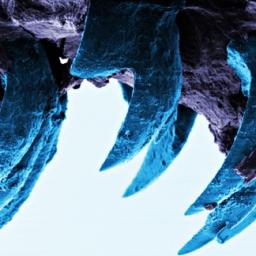
Engineers have discovered that these molluscs’ teeth are made of the strongest biological material in the world. But instead of trying to exploit them, we should leave the limpets to cling to their rocky homes Continue reading...
|
 |
by John Rasko and Carl Power on (#3B8W)
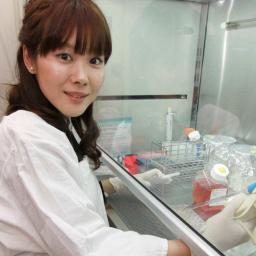
The spectacular fall of the Japanese scientist who claimed to have triggered stem cell abilities in regular body cells is not uncommon in the scientific community. The culprit: carelessness and hubris in the drive to make a historic discoveryThe year 2014 was one of extremes for Haruko Obokata. A year of high highs and even lower lows. Barely 30 years old, she was head of her own laboratory at the Riken Center for Developmental Biology (CDB) in Kobe, Japan, and was taking the male-dominated world of stem cell research by storm. She was hailed as a bright new star in the scientific firmament and a national hero. But her glory was short-lived and her fall from grace spectacular, completed in several humiliating stages.
|
 |
by Charlotte Connelly on (#3B32)
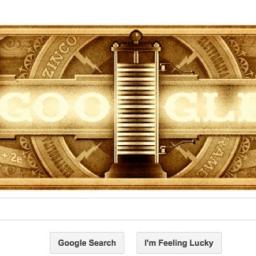
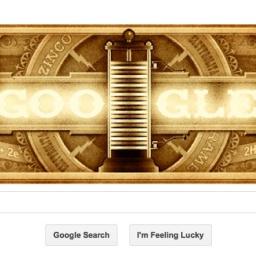
Today’s Google doodle might lead you to think that Alessandro Volta invented the light bulb. Charlotte Connelly sets the record straight Continue reading...
|
 |
by David Nutt on (#3B03)
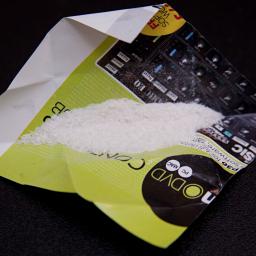
Ketamine is a vital medicine, and restricting it has harmed patients without cutting recreational use. Britain should stand up to the UN’s failed ‘war on drugs’ Continue reading...
|
 |
by Press Association on (#3AYS)
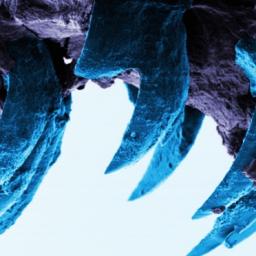
Scientists say structure of teeth could be reproduced in high-performance engineering to make Formula One cars, boats and planes
|
 |
by Samuel Gibbs on (#3AYQ)
Sales of cheap, credit card-sized units top 5m says company, eclipsing the Sinclair ZX Spectrum in the 1980sOver 5m Raspberry Pis have been sold since its inception in 2012, making it the best selling British computer ever, according to the Raspberry Pi Foundation.
|
 |
by Emma Brockes on (#3AYV)
He may be adored for his portrayal of Hawkeye the wisecracking doctor in MASH, but Alan Alda has a second passion: science. Which is why he has written a play, Radiance, about the hounding of Marie CurieAlan Alda works from an office in midtown Manhattan, around the corner from Grand Central station and in the shadow of the Chrysler Building. “It’s funny,†he says, looking up at the skyscraper while waiting for a cab. “I come here every day and I never saw it from this angle before.â€The veteran actor, now 79, is used to approaching things from unusual angles – it is what he has been doing, forcefully, for most of his career: taking the lessons learned from one area of expertise and applying them to another. So it is that, having just finished appearing nightly on Broadway, opposite Candice Bergen in Love Letters, Alda now has a production up and running at a much smaller venue: the Tabard in west London. Continue reading...
|
 |
by Guardian Staff on (#3A6J)
Italian scientist, who invented an early form of the battery in 1799, would be 270 years old today
|
 |
by Hannah Devlin, science correspondent on (#3AGQ)
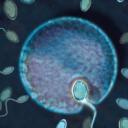
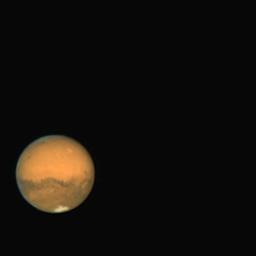
A new study by scientists at the University of Cambridge claims teenage sperm is genetically weak, but is the claim credible?Teenage boys already have plenty to worry about: spots, girls and the size of their “thingâ€, as Adrian Mole might have put it. Does the problem of having genetically weak adolescent sperm really need to be added to this list?Scientists at the University of Cambridge have suggested this is the case after carrying out a study involving more than 24,000 parents and their children. The analysis focused on tiny genetic differences between parents and offspring, which are assumed to be caused by copying errors in the egg or sperm cells. Continue reading...
|
 |
 |
by Jonathan Jones on (#38Z1)
Our fixation on the faces of the rich, powerful and royal is pathetic. History from below – such as the harrowing Lindow Man – simply gets forgotten Continue reading...
|
 |
by Oliver Balch on (#38T8)
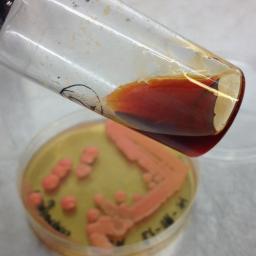
A little-known yeast historically used in South Africa’s wine industry could revolutionise the food and cosmetics industries, and help halt deforestation Continue reading...
|
 |
by Josh Halliday on (#38NF)
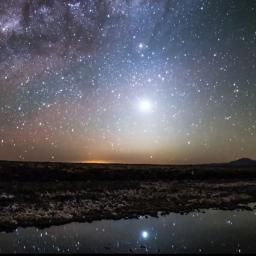
Organisers of a proposed human settlement on Mars have unveiled the final 100 would-be colonisers. Here are the top 10 candidates Continue reading...
|
by Ian Sample, science editor on (#37JC)
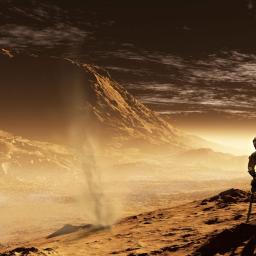
More than 200,000 people applied to join the proposed one-way Mars One project, aiming to set up a permanent human colony
 |
by Michael Safi on (#38B9)
Sare Teah, comedian Josh Richards and geoscientist Electra Navarone among Australians competing for a one-way trip to establish the red planet’s first colony Continue reading...
|
by Ian Sample science editor, in San Jose on (#37XS)
Gift of hearing birdsong and trickling water is being lost to a process of ‘learned deafness’, says US scientist, as people screen out background noiseThe tranquil chorus of the natural world is in danger of being lost to today’s generation as people screen out the noises that surround them, a senior US researcher warns.Rising levels of background noise in some areas threaten to make people oblivious to the uplifting sounds of birdsong, trickling water, and trees rustling in the wind, which can often be heard even in urban centres, said Kurt Fristrup, a senior scientist at the US National Park Service.Related: 'A great silence is spreading over the natural world' Continue reading...
 |
by Agencies on (#37W7)
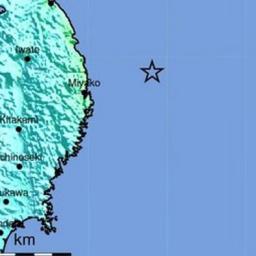
Tsunami warning issued by Japan Meteorological Agency as residents of Iwate prefecture are cleared from homes, though no damage or injuries reported Continue reading...
|
 |
by Henry Nicholls on (#3768)
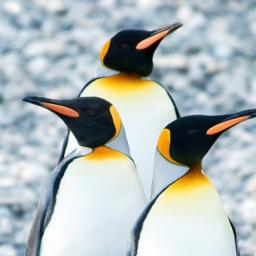
Penguins have bad taste, at least compared to other birds. Based on their genes, it’s unlikely they can sense sweet, umami or bitterA penguin’s sense of taste appears to be limited to just sour and salt. Genetic research suggests that of the five vertebrate senses (sweet, umami, bitter, sour and salt), penguins only have taste receptors for sour and salt.If you were to make a microscopic inspection of a penguin’s tongue, you’d find something fishy. “The lack of taste buds strongly suggests a reduction in taste function,†write the authors of a paper just out in Current Biology. This supposition is supported by their observation that Adelie and Emperor penguins (and by extension all other penguins) only have taste receptors responsive to sour and salt. Continue reading...
|
 |
by Hannah Devlin science correspondent on (#3752)
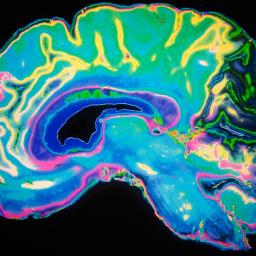
Scientists at the University of Cambridge have identified a crucial molecule that could put the brakes on the damage to the brainThe onset of Alzheimer’s disease could be delayed by a molecule that occurs naturally in humans, research suggests.The study in mice showed that the “housekeeping†molecule put the brakes on a runaway process in the brain that leads to the most common form of dementia. Continue reading...
|
 |
by John Bradshaw on (#3754)
From the myth of the ‘guilty look’ to the exciting discovery of dogs evolving an inbuilt affection for humans, canine psychology is finding out more all the time Continue reading...
|
 |
by Hannah Devlin, science correspondent on (#379Z)
Study of patients at south London hospitals finds those who smoked skunk every day had five times the normal risk of psychosis
|
by Suzi Gage on (#366C)
Research that looks at different potencies of cannabis could advance our understanding of the relationship between the drug and psychosis Continue reading...
 |
by Ian Sample science editor, in San Jose on (#35Z4)
Online reviews of bad dining experiences show same linguistic traits as trauma victims, says US professor
|
 |
by Ian Sample, science editor, in San Jose on (#35QX)
Images of beheaded queen were destroyed after her death in 1536, leaving only one contemporary likenessShe won the heart of King Henry VIII, divided the church and lost her head. But nearly 500 years after Anne Boleyn met her death, only one uncontested portrait of her remains.
|
|
by Alan Pickup on (#35K0)
The sparkling constellation of Orion marches westwards from the SE each evening to cross the meridian at 20:00. At the same time, Capella in Auriga the Charioteer passes within 10° of our zenith, closer than any other of the brightest 30 stars in the sky. Our chart of Auriga stretches as far north as Delta at a declination (the celestial equivalent of latitude) of 54° N so that it passes directly overhead as seen from N England. Continue reading...
|
 |
by Zoe Williams on (#35BE)
If we called it ‘metabolic syndrome’, we’d be lining up to demand a cure. But that wouldn’t fit the Conservative mindset Continue reading...
|
by James Rubin and Simon Wessely on (#359E)
The Breaking Bad spin-off features a character who is afraid of mobile phone signals. As two scientists explain, it’s a psychological ailment – but you wouldn’t know that from browsing media reportsBetter Call Saul, the long-awaited spin-off of Breaking Bad, has already thrown up some interesting questions: why is Saul chopping up cookie dough in a shopping mall? Will Mike Ehrmantraut ever let him out of the car park at the first time of asking? But perhaps most intriguing is the one raised by Saul’s brother Chuck: what is electromagnetic hypersensitivity (EHS)? Chuck (played by Spinal Tap’s Michael McKean) is a recluse on extended leave from his legal firm who lives without electricity and wraps himself in a shiny “space blanket†to ward off the effects of exposure to Saul’s mobile phone.It’s an unusual condition, but Chuck is not alone. In the UK, around 4% of people report that they experience unpleasant symptoms due to exposure to electromagnetic fields given out by mobile phones, Wi-Fi routers, TVs and so on. In severe cases, it can ruin people’s lives, making them unable to work in computer-filled offices, enter shops with fluorescent lights or visit friends or family whose homes are filled with electronics. In the most extreme – and rare– cases, affected people withdraw from modern society almost entirely, living in isolated caravans or remote communities in “EMF-free zonesâ€. Continue reading...
 |
by Stuart Clark on (#34WY)
Two years ago, the Earth caught a glimpse of disaster in the form of a 12,000-tonne meteorite that exploded above the Russian city of ChelyabinskIt happened at 9:20am local time. A fireball appeared from out of the crystal clear blue sky over the southern Ural region in Russia. Rapidly increasing in brightness, it blazed brighter than the Sun.The lightshow turned dangerous when the fireball abruptly exploded, injuring more than 1200 people. Some were burnt by the heat but most were cut as the shock wave from the explosion violently smashed windows. The city sustained 1 billion roubles (£10m) worth of damage. Continue reading...
|