 |
by Guardian Staff on (#4D58)
A look at the ancient Assyrian city of Nimrud before it was looted and bulldozed by Islamic State (Isis) fighters. Footage shot in 2001 shows archaeologists working at the site, which is among Iraq's most celebrated. Nimrud, south of Mosul, was built around 1250 BC. Four centuries later it became the capital of the neo-Assyrian empire – at the time the most powerful state on Earth, extending to modern-day Egypt, Turkey and Iran Continue reading...
|
| Link | http://feeds.theguardian.com/ |
| Feed | http://feeds.theguardian.com/theguardian/science/rss |
| Updated | 2026-06-29 20:15 |
by Alom Shaha on (#4D3D)
Debates over practical work in school science have been hijacked by a scientific elite who seem uninterested in the evidence and expertise of practitioners Continue reading...
 |
by Hannah Devlin on (#4CKP)
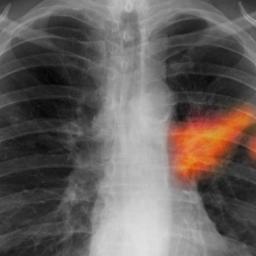
Trial will involve 56 patients with metastatic lung cancer who will undergo treatment using genetically modified bone marrow stem cellsBritish patients will be the first in the world to receive a pioneering cell therapy that scientists hope will transform the treatment of lung cancer.The treatment uses stem cells taken from bone marrow that have been genetically modified to find and destroy cancer cells. Continue reading...
|
by Noah Moxham on (#4CKR)
The first issue of the world’s first scientific journal was published on 6 March 1665. Its anniversary gives historians and scientists an opportunity to reflect on the past, present and future of scientific publishing Continue reading...
by Guardian Staff on (#4CZ3)
Daniel Kariko, assistant professor of fine art photography at East Carolina University, used a scanning electron microscope and a stereo microscope to produce this stunning image of a boll weevil’s head. It joins 19 other works – including extreme closeups of cats’ tongues and pollen grains – in this year’s Wellcome Image Awards
 |
by Melissa Davey on (#4CCG)
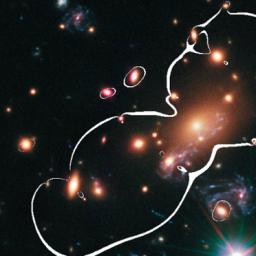
Australian researchers were part of team able to capture images because of gravitational lensing, which magnified a supernova 9.3bn light years awayAustralian researchers were among a team that captured images of the same star exploding four times, thanks to its location behind a massive cluster of galaxies.The gravitational pull of the galaxies meant light and time were bent around them, creating a cosmic magnifying glass in a process known as gravitational lensing, which was first predicted by Albert Einstein’s theory of relativity. This magnified the supernova, which at 9.3bn light years away would have been too distant for the Hubble space telescope to detect were it not for this lensing effect. Continue reading...
|
 |
by Ian Sample, science editor on (#4BXK)
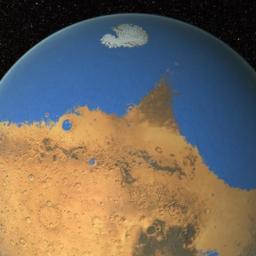
A huge primitive ocean covered one-fifth of the red planet’s surface, making it warm, wet and ideal for alien life to gain a foothold, scientists sayA massive ancient ocean once covered nearly half of the northern hemisphere of Mars making the planet a more promising place for alien life to have gained a foothold, Nasa scientists say.The huge body of water spread over a fifth of the planet’s surface, as great a portion as the Atlantic covers the Earth, and was a mile deep in places. In total, the ocean held 20 million cubic kilometres of water, or more than is found in the Arctic Ocean, the researchers found.
|
 |
by Rose George on (#4BKC)
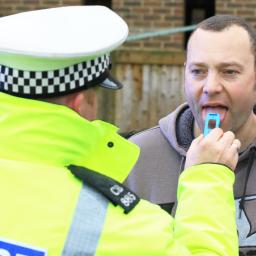
Jonny Evans and Papiss Cissé face a six-week ban for alleged gobbing. But that’s just a cultural aversion – unlike our disgust for excrement Continue reading...
|
 |
by Ben Alderson-Day and David Smailes on (#4B81)
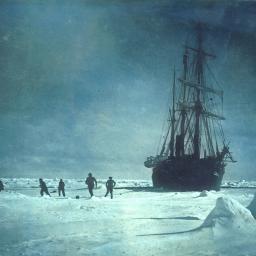
What links polar explorer Ernest Shackleton, sleep paralysis, and hearing voices?On 20 May 1916, Ernest Shackleton, Frank Worsley, and Tom Crean reached Stromness, a whaling station on the north coast of South Georgia. They had been walking for 36 hours, in life-threatening conditions, in an attempt to reach help for the rest of their party: three of their crew were stuck on the south side of the island, with the remainder stranded on Elephant Island. To reach the whaling station, the three men had to cross the island’s mountainous interior with just a rope and an axe, in a journey that few had attempted before or since. By reaching Stromness they managed to save all the men left from the ill-fated Imperial Transantarctic Expedition.They did not talk about it at the time, but weeks later all three men reported an uncanny experience during their trek: a feeling that “often there were four, not three†men on their journey. The “fourth†that accompanied them had the silent presence of a real person, someone walking with them by their side, as far as the whaling station but no further. Shackleton was apparently deeply affected by the experience, but would say little about it in subsequent years, considering it something “which can never be spoken ofâ€. Continue reading...
|
by Sean O'Hagan on (#4B83)
When Texas photographer Robert Shults gained unprecedented access to a Petawatt laser – which can create temperatures 1,000 times hotter than the centre of the sun – he drew on his favourite sci-fi films to show the facility in actionIt is hard to evoke the wondrous power of the Petawatt laser, an example of which is found in a laboratory three storeys underground at the University of Texas.If focused for an instant (one 10th of a trillionth of a second) on a spot one 10th the width of a human hair, it produces the brightest light in the universe – brighter than that created by black-hole-driven explosions. When targeted into a gas, the 1000tn-watt laser can create temperatures 1,000 times hotter than the centre of the sun. Continue reading...
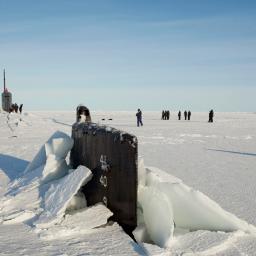 |
by Andrea Thompson for Climate Central, part of the G on (#4ATS)
Study combining disparate data for first time finds sea ice thickness down 65% since 1975 because of global warming, reports Climate Central Continue reading...
|
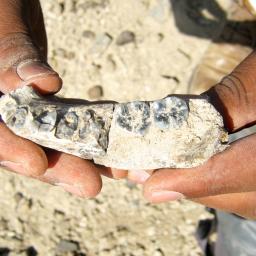 |
by Ian Sample science editor on (#49HP)
Around 400,000 years older than previous discovery of homo lineage, 2.8m-year-old jaw and five teeth was found on rocky slope in Afar regionA lower jaw bone and five teeth discovered on a hillside in Ethiopia are the oldest remains ever found that belong to the genus Homo, the lineage that ultimately led to modern humans.Fossil hunters spotted the jaw poking out of a rocky slope in the dry and dusty Afar region of the country about 250 miles from Addis Ababa.
|
by Luke Georghiou and Sarah Jackson on (#4AN8)
A new report suggests more sharing of research equipment may be a better way of getting more bang out of the science funding buck than clawing back ‘efficiency savings’ out of grant funding.
by Catriona Jackson on (#4AHZ)
By linking higher education reforms to research funding, Christopher Pyne risks the closure of some of Australia’s most successful research centres Continue reading...
by Hannah Devlin, science correspondent on (#4A67)
Researchers warn that patients are missing out on potential benefits due to prohibitive regulations on research into recreational drugs
 |
by Editorial on (#4AVD)
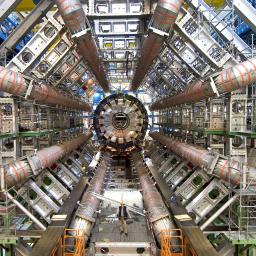
Cern’s pathbreaking accelerator remains a breathtaking piece of engineering and science, as well as an example of European cooperation at its bestLater this month an engineer will throw a switch and one of Europe’s most successful cooperations will be back in business. The Large Hadron Collider has already identified a mysterious entity from the first trillionth of a second of creation called Higgs Boson and won two physicists a Nobel prize – and that was at half power. The big machine at Cern in Geneva has now been overhauled, enhanced and retuned. It will cautiously accelerate to full energy in the summer.In engineering terms alone, the partnership of thousands of scientists and engineers has been breathtaking. To function, the accelerator’s superconductors must be kept at just a degree or so lower than intergalactic space: that makes the instrument the coldest place in the universe. The piping around which the beams of protons whizz must be maintained at a vacuum as tenuous as interplanetary space. The matter accelerated in the collider is designed to reach 99.9999991% the speed of light in a vacuum. Continue reading...
|
 |
 |
by Haroon Siddique on (#49GP)
University of Derby finds smartphone users in study spent average 3.6 hours a day on devices, often causing severe distraction from relationships and ‘real life’Smartphones are psychologically addictive, encourage narcissistic tendencies and should come with a health warning, researchers have said. A study by the University of Derby and published in the International Journal of Cyber Behaviour, Psychology and Learning found that 13% of participants in the study were addicted, with the average user spending 3.6 hours per day on their device.Related: Stop worrying about your 'addiction' to the internet. We're all cyborgs – always have been | Jess Zimmerman Continue reading...
|
 |
by Michael Marshall on (#49EA)
A Mirror Online report on a breast cancer patient who refused medical treatment for so-called natural alternatives ignores the health risks Continue reading...
|
by Michael Safi on (#48DN)
Up to 1,700 jobs at 27 facilities at risk from 30 June, with $150m in vital funding tied to the Coalition’s higher-education changes Continue reading...
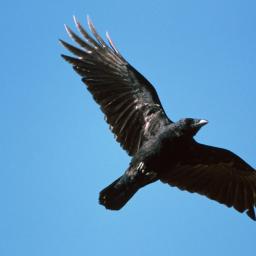 |
by GrrlScientist on (#48P3)
Black bird watchers are rare birds themselves, and there are special rules that the black birder must observe to remain safe when out in the field chasing rare birds. Continue reading...
|
by Tristram Wyatt on (#48K6)
Popular belief has it that human ‘sex pheromones’ exist and are well-established by the scientific community. But all is not as it seems, as Tristram Wyatt explains Continue reading...
 |
by Dean Burnett on (#48FV)
If you ever read the comments on any article, you’ll invariably find someone bemoaning how it shouldn’t exist as there are ‘more important’ matters and issues. But how do you determine how important a piece is in comparison to others? And what’s the bare minimum importance required to justify its existence? Continue reading...
|
 |
by Daniel Freeman and Jason Freeman on (#48EZ)
Paranoid fears are common and have a variety of causes but new research shows specific issue cognitive behaviour therapy can bring significant benefits
|
 |
by Agence France-Presse on (#45ZH)
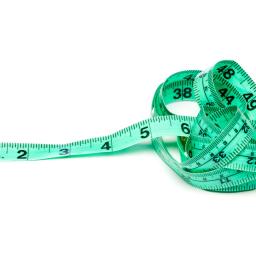
International study of 15,000 penises is being used to reassure men concerned they are not within the ‘normal range’The enduring question now has a scientific answer: 13.12 centimetres (5.16 inches) in length when erect, and 11.66cm (4.6 inches) around, according to an analysis of more than 15,000 penises around the world.
|
 |
by Press Association on (#486E)
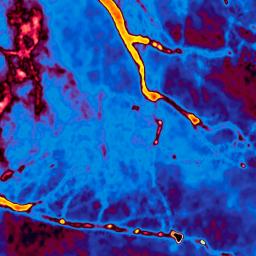
Findings published in The Lancet show chance of heart attack drops by 48% when people most at risk take cholesterol-lowering medicationsPatients with the highest genetic risk of suffering a heart attack benefit the most from cholesterol-lowering statin drugs, a study has found.
|
 |
by Ian Sample, science editor on (#4804)
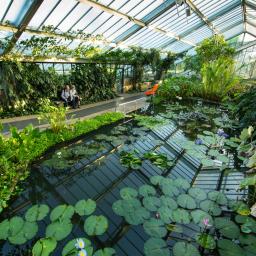
Government criticised over short-term, stop-start funding, which has meant that Kew’s managers cannot plan for its long-term future
|
 |
by Associated Press on (#47YD)
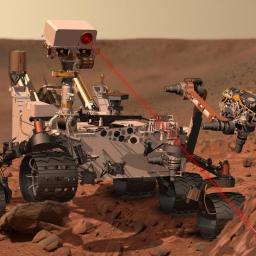
Nasa engineers investigate problem that has stopped the rover’s robotic arm, with testing expected to take days
|
 |
by Ian Sample science editor on (#47XP)
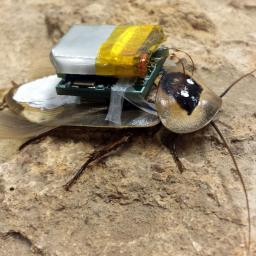
Texas engineers attach miniature computer wired into nervous system of live cockroaches for remote control and aim to gather video information in places such as broken sewers
|
by Suzi Gage on (#47QC)
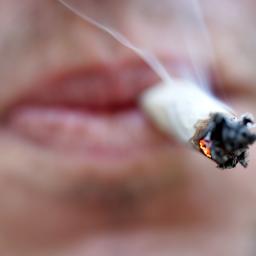
Join us for live action, discussion and debate during Channel 4’s TV experiment into the effects of cannabis, including hashish and skunk injested in a controlled environment
 |
by Michelle Taylor on (#47VY)
There’s a lot of debate about whether cannabis could lead to harder stuff. Michelle Taylor discusses the evidence Continue reading...
|
 |
by Amir Englund on (#47R6)
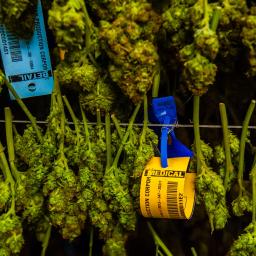
Recent studies have used “hash†and “skunk†to describe varying strengths of cannabis. Amir Englund explains the complexities of cannabis strain variation Continue reading...
|
 |
by Amy Coats on (#46QM)
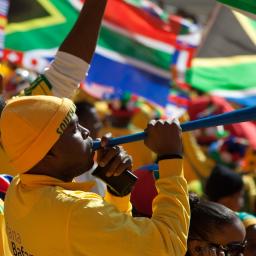
Over a billion people worldwide are now at risk of hearing loss due to recreational noise. On International Ear Care Day, the World Health Organization warns that it’s up to individuals – and big industry – to create a badly needed change Continue reading...
|
by Stuart Clark on (#46PW)
Pioneering UK-led gravity probe is designed to open a unique window on the universe but the technology can only be tested in space. Fingers crossed for LISA-Pathfinder“This is the first of a new breed of spacecraft,†says Cesar Garcia, Esa Project manager for the LISA-Pathfinder mission, “It is exquisite.â€He is speaking to me in the giant cleanroom at Airbus Defence and Space in Stevenage. On Friday 27 February, LISA-Pathfinder was painstakingly lifted onto its propulsion module, and secured in place. Over the weekend, the whole assembly was packaged in a high-tech shipping crate and is now on its way to IABG (Industrieanlagen Betriebsgesellschaft), near Munich, Germany, for final work. Continue reading...
by Martin Robbins on (#46B8)
Martin Robbins: Attacking a dictionary for removing archaic words is like punching your thermometer when it’s too cold. Continue reading...
 |
by Robin Bisson on (#466G)
Recent claims about the safety of certain supermarket foods highlights the lack of awareness that the media has when it comes to food science. Robin Bisson takes a look Continue reading...
|
 |
by Girl on the Net on (#464F)
Google recently reversed their decision that ‘adult’ material should be removed from the Blogger network. Regardless of the outcome, this shows how corporations have an alarming authority to change and control what’s online
|
 |
by Hannah Devlin science correspondent on (#45ZF)
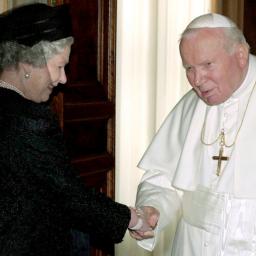
New study reveals participants unconsciously sniff their right hand after shaking it with others as part of process to pick up chemical signals about others
|
 |
by Guardian Staff on (#45TW)
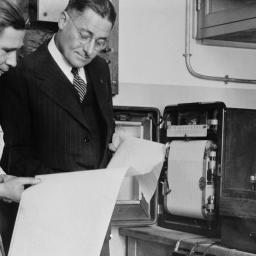
A discovery by the Pasteur Institute offers hope for sufferers of gangrene27 January 1926: New vaccines for tetanus and diptheria Continue reading...
|
 |
by Hannah Devlin, science correspondent on (#4540)
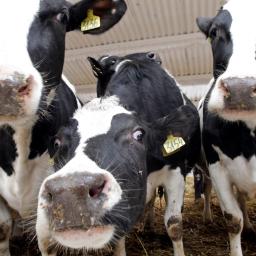
Breakthrough as scientists in China produce genetically modified animals that are more difficult to infect with tuberculosisScientists have created the first tuberculosis-resistant cattle using genetic engineering techniques. The advance could pave the way for genetically modified farm animals that would be automatically protected against disease, reducing the need for culls of infected herds and the blanket use of antibiotic drugs.The study is the first to show that when cattle are genetically modified to carry a protective mouse gene, they become more difficult to infect and are largely shielded from the damaging symptoms of the disease. Continue reading...
|
 |
by Ian Sample, science editor on (#453S)
US study claims regime’s unsustainable agricultural policies meant drought led to collapse of farming in north-eastern region and triggered mass migration to cities and added to feelings of discontent
|
 |
by Guardian Staff on (#44WM)
Continue reading...
|
 |
by Martin Robbins on (#43TJ)
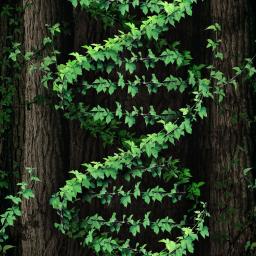
A hundred and eighty years ago, Darwin visited the city of Santiago, Chile. Generations later, one of its residents has worked for months to recreate his voyage in Lego; and soon you might be able to build it too. Continue reading...
|
 |
by GrrlScientist on (#43PF)
Today’s “Museum Monday†video shows how museums are central to the process of shedding new light upon the relationships within the avian Tree of Life. Continue reading...
|
 |
by Matilda Temperley on (#416F)
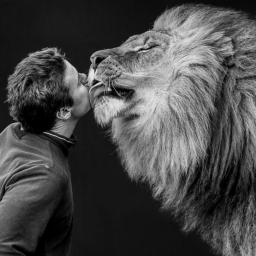
Lion trainer Thomas Chipperfield is never happier than when he’s in the training ring with his big cats. And as long as he’s the alpha male, Thomas feels safe in their company. Matilda Temperley photographs him at work Continue reading...
|
 |
by Alan Travis home affairs editor on (#43BF)
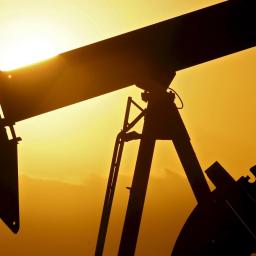
Forces says delay is temporary until they satisfy themselves that legal and procedural issues involved can withstand legal scrutiny Continue reading...
|
 |
|
by Alan Pickup on (#42SX)
If we have neglected to prepare for the solar eclipse on the morning of 20 March, there should still be time. It is probably too late, though, to find accommodation on the Faroe Islands or Svalbard which have the only land on the path of totality, from which the Moon obscures the Sun completely. Britain, and particularly Scotland, is well placed to enjoy a deep partial eclipse with 87% of the Sun’s diameter being hidden from London, 94% from Edinburgh and up to 98% for the outer Hebrides. Continue reading...
|
 |
by Jon Butterworth on (#42M7)
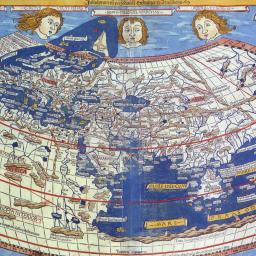
Whether they exist or not, we can at least think of four different kinds of multiverse. Or maybe five.
|
 |
by Ian Sample, science editor on (#4259)
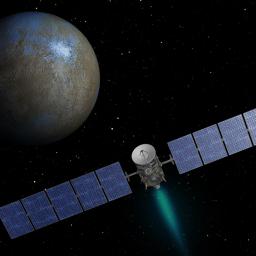
First rendezvous with the largest object in the asteroid belt separating Mars from Jupiter will reveal what Ceres is made ofNasa scientists are making final preparations for a spacecraft to begin the first orbits around a dwarf planet in the planetary rubble on the far side of Mars.Almost eight years after blasting off from Cape Canaveral in Florida, and travelling 3bn miles (4.8bn km), the $450m (£290m) Dawn probe is due to arrive at Ceres, the largest object in the main asteroid belt that separates Mars from Jupiter, on Friday 6 March.Related: Nasa probe spots mysterious shiny patches on dwarf planet Ceres Continue reading...
|