 |
by Joel Achenbach for the Washington Post on (#3Y44)
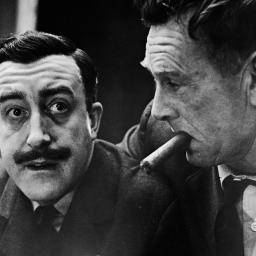
From Dr Strangelove and water fluoridisation to climate change, scientific method and facts are not always enough to win over the sceptics Continue reading...
|
| Link | http://feeds.theguardian.com/ |
| Feed | http://feeds.theguardian.com/theguardian/science/rss |
| Updated | 2026-05-10 17:45 |
by Ian Sample on (#3XP9)
What does the mathematical model of accuracy of research papers say and is CIA studying climate control as a potential weapon? Ian Sample reports from the AAAS meeting in San Jose Continue reading...
 |
by Uki Goñi in Buenos Aires on (#3X4Q)
|
 |
 |
by Ian Sample, science editor on (#3WV7)
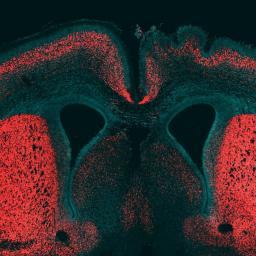
Key DNA strand propels neuron growth in brain’s region central to reasoning, language and sensory perceptionA strand of DNA that lies at the heart of what makes humans unique in the animal kingdom has been identified by researchers in Germany.
|
 |
by Adam Vaughan on (#3WT8)
Manmade warming in past decade has likely been offset by cooling from natural cycles in the Pacific and Atlantic - but effect will reverse in coming decadesManmade global warming over the past decade has probably been partly offset by the cooling effect of natural variability in the Earth’s climate system, a team of climate researchers have concluded.
|
 |
by Ian Sample , science editor on (#3WT6)
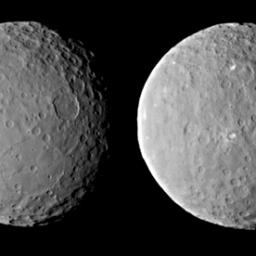
Images from Dawn spacecraft reveal a pair of bright spots which scientists believe may be primordial ice reflecting sunlightA Nasa probe that is speeding towards the largest object in the asteroid belt has spotted two mysterious shiny patches on the otherwise dark and cratered body.The latest images from Nasa’s Dawn spacecraft reveal a pair of bright spots on Ceres, a 590-mile-wide dwarf planet, with the brightest of the two reflecting at least 40% of the sunlight that falls on it. Continue reading...
|
by Pete Etchells on (#3W47)
Tory MP David Tredinnick seems to believe that astrology could inform and improve UK healthcare. This view is misguided and potentially dangerous Continue reading...
by Hannah Devlin, science correspondent on (#3VXF)
One-fifth kicked the habit before giving birth when receiving financial incentives in a Cambridge university study, more than twice the rate using traditional servicesPregnant women are more likely to stop smoking if they are given shopping vouchers as a financial incentive, according to scientists.The study found that one-fifth of women in the scheme had stopped smoking by the time they gave birth, more than twice the rate achieved using traditional support services.People have this attitude of ‘why should the feckless poor who smoke their head off during pregnancy be rewarded?' Continue reading...
 |
by Michael Brady on (#3VVC)
If the NHS and policymakers are bold, it could spell the end for HIV in the UK Continue reading...
|
 |
by Keith Stuart on (#3VMP)
Google’s artificial intelligence studio Deep Mind has created a computer program that can play Pong. Here is why that feat is more impressive than it soundsSo a computer program has learned how to play classic Atari games. Big deal. I mean, they’re just big blocks of pixels pushing smaller blocks of pixels around a screen, right?Yet somehow, the UK artificial intelligence specialist Deep Mind, bought last year by Google for £240m, is extremely excited about the fact that it has developed an AI agent capable of learning how to play Space Invaders. I learned how to play Space Invaders in a cafe in Blackpool when I was six. But Google hasn’t acquired me. What’s going on?Related: Google develops computer program capable of learning tasks independently Continue reading...
|
 |
by Arthur Neslen in Brussels on (#3VCB)
Science and technology committee damns EU rules on authorisations for genentically-modified crops as politicised and unscientificThe UK should be handed the regulatory power to green light genetically-modified crops because the EU’s GM rules are politicised and unscientific, an influential committee of MPs have said.A new report from the committee is damning of regulatory delays caused by the EU’s consideration of GM under a ‘precautionary principle’ which obliges caution where scientific evidence is insufficient, inconclusive or uncertain. Continue reading...
|
 |
by Tim Radford on (#3VCD)
A book that beautifully explores the astonishing variety and complexity of life iterated across the species in an attempt to answer the biggest question of all: why is life the way it is?This is a book that addresses fabulous and life-enhancing themes. It is written beautifully enough to take your breath away, even as its author writes about trying not to hyperventilate. A book through which ideas, energy and food for thought cycle across every page; a book that attempts to address the biggest questions of all: why is life the way it is, why are big things so different from small things, why are there so many creatures and if that’s the wrong question, why are there so few?But first, a spoiler. The questions are enormous but the answers are ultimately inconclusive. Few arguments are clinched, or cases closed. That is no fault of the book. Some questions are hard to answer because life’s like that. Continue reading...
|
 |
by Oliver Milman on (#3VC9)
Development hailed as a potential breakthrough in aircraft manufacture after university-CSIRO joint project prints two gas turbine engines Continue reading...
|
by Oliver Milman on (#3V58)
New research suggests loss of giant wombats and other species about 50,000 years ago could have been caused by changing climate, rather than hunting as previously thought Continue reading...
 |
by Reuters on (#3V4C)
Treatment to become available from second quarter of 2015, offering hope in fight against resistant bacteria Continue reading...
|
 |
by Press Association on (#3V0E)
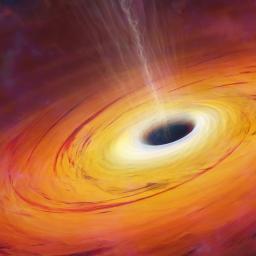
Scientists name new ‘object’ SDSS J0100+2802 and say it is 12.8bn light years from Earth and was formed just 900m years after the Big Bang Continue reading...
|
 |
by Ian Sample, science editor on (#3V08)
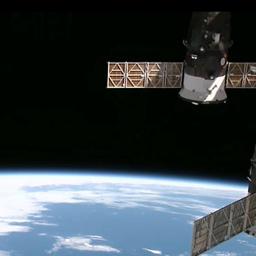
Moscow assures it will continue funding the International Space Station until 2024 but will then disconnect its modules to build a national base Continue reading...
|
 |
by Paul Simons on (#3TQX)
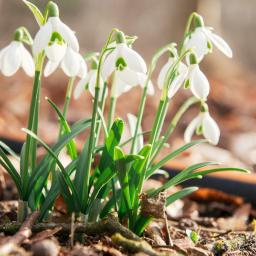
The cold weather hasn’t helped bring on spring flowers, but lesser celandines are coming into bloom, especially in southern England. These relatives of buttercups have glossy yellow flowers and heart-shaped leaves, and the flowers also have the uncanny knack of swivelling round to track the sun like little solar energy dishes, trapping the sun’s warmth to entice early insects into the flower; but when skies turn overcast and rain threatens the petals close shut.Snowdrops are now at their best and most widespread in many damp places, especially in wet woods and on the banks of streams, their drooping white bell flowers nodding and swaying in the wind and smelling sweet of vanilla or honey. They are able to survive the cold of winter and flower so early because they grow from bulbs, and most colonies of snowdrops in Britain reproduce by their bulbs dividing, rather than being pollinated by insects. Continue reading...
|
 |
by Guardian Staff on (#3TPK)
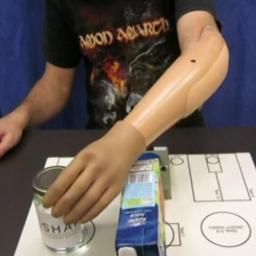
Three Austrian men have become the first in the world to be fitted with bionic hands that are able to be controlled by the mind. The men suffered severe injuries in vehicle and climbing accidents which damaged vital nerves and lead to hand amputations. Videos released by the Lancet medical journal show the men, equipped with their new prosthetics, carrying out everyday activities such as pouring liquid, lifting objects and undoing buttons Continue reading...
|
 |
by Ian Sample, science editor on (#3TG6)
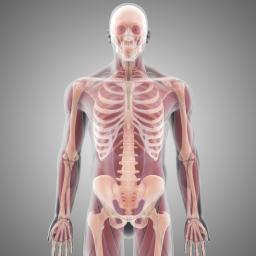
Doctor plans to graft a living person’s head on to a donor body using procedures he believes will soon be readyA surgeon says full-body transplants could become a reality in just two years.Sergio Canavero, a doctor in Turin, Italy, has drawn up plans to graft a living person’s head on to a donor body and claims the procedures needed to carry out the operation are not far off. Continue reading...
|
 |
by Sarah Boseley, health editor on (#3TDG)
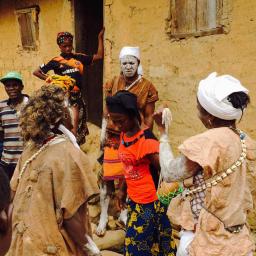
Virus still present in Guinea, Sierra Leone and Liberia after more than a year, causing concern among health experts
|
 |
by James WilsdonDavid Walker on (#3TBX)
Following the publication of a new report on The Business of People, James Wilsdon and David Walker set out the case that the social sciences will be making through the election and spending review. Continue reading...
|
 |
by Julie Bindel on (#3TAX)
Because animals are people too – and sometimes we learn something important from them Continue reading...
|
 |
by Guardian Staff on (#3T4W)
A solar eclipse could plunge parts of Europe into darkness next month, as power supplies dwindle in the obscured light. The eclipse on 20 March is expected to be the biggest since 1999. The lack of light is unlikely to affect Britain, which relies very little on solar energy, but could cause significant power shortages across Europe Continue reading...
|
 |
by Steven Belmain on (#3TE1)
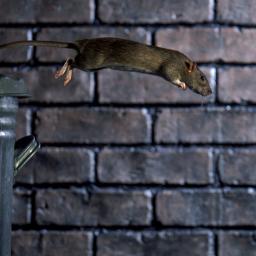
People and rats are mutually dependent as a result of disease cycles and medical advances made possible by animal testing, among many other things Continue reading...
|
 |
by Hannah Fry on (#3SRV)
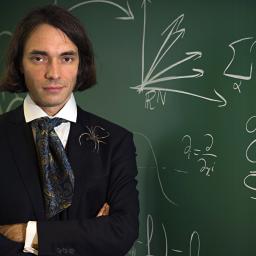
The compelling and uncompromising diary of a prizewinning French enthusiast and eccentricTo really appreciate mathematics, you have to see it evolve, to work through the twists and turns yourself; it’s almost never enough for someone to just tell you about it. These wise words from my secondary school maths teacher have stuck with me ever since. Cédric Villani knows this, too. To put it in his words: “Appreciating a theorem in mathematics is like watching an episode of Columbo: the line of reasoning by which the detective solves the mystery is more important than the identity of the murderer.†Villani should know. He is widely regarded as one of the most talented mathematicians of his generation. His work has won him almost every prize going: the Fermat prize (a big deal) the Poincaré prize (a very big deal) and even the Fields medal (off-the-chart big deal). For those who aren’t familiar, the Fields medal is often referred to as the Nobel prize of mathematics but, as it is only awarded once every four years, and even then only to mathematicians under 40, it is much, much harder to win. Villani’s medal was awarded in 2010 for his work in mathematical physics describing the behaviour of particles in gases and plasmas.The Birth of a Theorem is written as a diary, taking us through the early evolution of the idea in Lyon in 2008, through six months of frustration trying to wrestle the beast of a theorem to the ground at Princeton (his words, not mine) and culminating in the news that he has won the most coveted prize. Continue reading...
|
 |
by David Shariatmadari on (#3SP4)
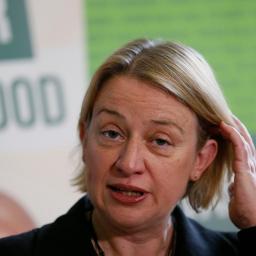
Natalie Bennett has ascribed her car-crash interview on LBC to a ‘mind blank’. So what’s going on when the brain refuses to cooperate?It makes for “excruciating†listening – not my words, but those of Green leader Natalie Bennett, who was forced to admit she’d given a disastrous radio interview on the very morning of her party’s campaign launch.
|
 |
by Hannah Devlin, science correspondent on (#3SJE)
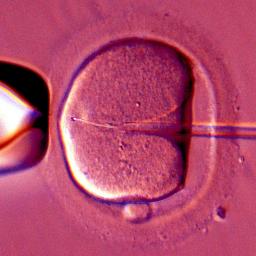
Clinics in UK will be able to apply for licenses from this autumn after MPs approved new rules earlier this monthBritain has become the first country in the world to permit the use of “three-person IVF†to prevent incurable genetic diseases.The House of Lords voted by 280 votes to 48 on Tuesday evening to approve changes to the law allowing fertility clinics to carry out mitochondrial donation. Babies conceived through this IVF technique would have biological material from three different people – a mother, father and a female donor. Continue reading...
|
 |
by Sarah Boseley on (#3SMN)
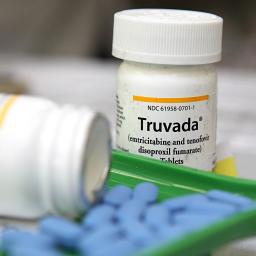
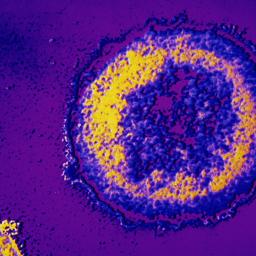
Study looking at transmission among men who have sex with men recruited 545 participants at high risk of contracting HIVA daily pill can effectively protect gay men against infection with HIV, a UK trial has shown, which experts say now offers hope of reversing the virus’s spread.Taking the drug, called Truvada, could become a daily routine for men who have sex with men in the same way that the contraceptive pill is for women, some believe. NHS England will now study the results to determine whether it is cost effective to provide it for men at risk of infection. Continue reading...
|
 |
by Guardian Staff on (#3RAF)
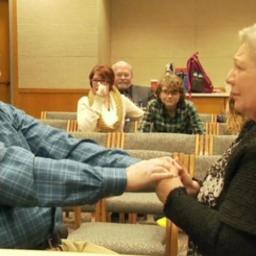
A blind man from Minnesota is able to see his wife for the first time in 10 years, after receiving a bionic eye. Allen Zderad, 68, was diagnosed with a degenerative eye disease around 20 years ago, which eventually left him blind. Minnesota's Mayo Clinic gave Zderad a prototype eye device, known as Second Sight, allowing him to see shapes and human forms Continue reading...
|
by Ian Sample, science editor on (#3R93)
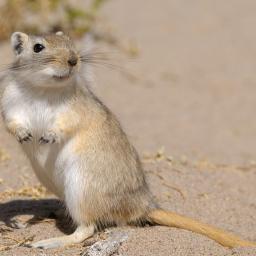
Researchers claim Black Death was imported from Asia over 400 years of the pandemic via native rodents such as great gerbils and marmots which harboured the plague bacteriaThe gruesome waves of bubonic plague that began with the Black Death in medieval Europe and ended with the Great Plague of London may have been driven more by great gerbils than black rats, researchers claim.
 |
by Maev Kennedy on (#3QPN)
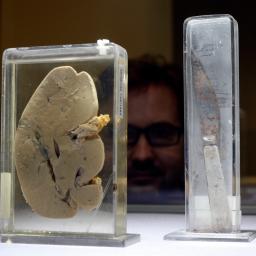
Glass jars of blow flies, dissecting table and doll’s house-size models on show in Forensics, at newly expanded museumStanding beside the liver of a Victorian girl and the six-inch knife with which her brother fatally stabbed her four times, Ken Arnold, head of exhibitions at the Wellcome Collection, says cheerfully: “No, I don’t think we’re going to have any fainters this time.â€The more full-on exhibitions at Wellcome, including footage of open-heart surgery and vividly realistic wax models of appalling diseases, have acquired a reputation for causing sensitive visitors to be carried out feet first. Forensics, an exhibition that follows the course of murder and violent assault from crime scene to courtroom, may yet continue that trend. Continue reading...
|
 |
by Amy Coats on (#3QM6)
New research from UCL brings us closer to finding out what’s behind one of our biggest killers Continue reading...
|
 |
by Guardian Staff on (#3QBS)
For years, black rats have been blamed for spreading bubonic plague, but now scientists in Norway believe it was giant gerbilsName: Variable.Age: Immaterial. Just keep replacing them until your child is old enough to contemplate pet-death with equanimity. Continue reading...
|
by Janaki Lenin on (#3Q67)
Engineers are creating giant pyramids of ice in the drought-hit Indian Himalayas to see if the melt water they release can help solve water shortages during the region’s dry seasonVillagers of the high desert of Ladakh in India’s Jammu and Kashmir state used to harvest bountiful crops of barley, wheat, fruits, and vegetables in summer.But for years the streams have run dry in spring, just when farmers needed water to sow seeds. They had water when it wasn’t needed during the rest of the year, such as in winter, when Ladakhis let water gush from taps to prevent pipes from freezing and bursting. Continue reading...
 |
by GrrlScientist on (#3PTQ)
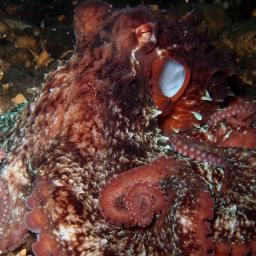
Octopus versus crab. On land. Who will win? This may be the first time this remarkable octopus behaviour has been captured on video Continue reading...
|
by Alex Bellos on (#3PSJ)
Young maths whizz from Iran uses simple equations to paint stunning images that bizarrely look like marine objects, and makes a fractal Africa Continue reading...
 |
by Press Association on (#3P8S)
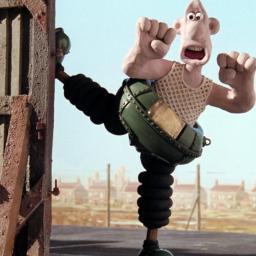
‘Intelligent clothing’ will employ artificial muscles to assist people with reduced mobility, and could even replace stairlifts and wheelchairsA real-life version of The Wrong Trousers immortalised by Wallace and Gromit is being developed by a British team of robotic experts.The close-fitting “smart trousers†will employ artificial muscles to assist the mobility of frail elderly and disabled individuals. Continue reading...
|
 |
by Press Association on (#3P3V)
Scientists launch annual ‘health check’ of world’s plantsScientists at Kew Gardens are launching an annual “health check†of the world’s plants to examine issues including wildlife loss, disease and invasive species.Results of the first “state of the world’s plants†assessment will be published in December, forming part of the new science strategy for the Royal Botanical Gardens (RBG) at Kew. Continue reading...
|
by Press Association on (#3NK8)
Scientists launch annual ‘health check’ of world’s plantsScientists at Kew Gardens are launching an annual “health check†of the world’s plants to examine issues including wildlife loss, disease and invasive species.Results of the first “state of the world’s plants†assessment will be published in December, forming part of the new science strategy for the Royal Botanical Gardens (RBG) at Kew. Continue reading...
 |
by Guardian Staff on (#3NF2)
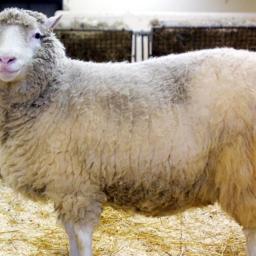
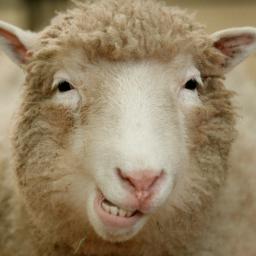
The Roslin Institute in Edinburgh, where Dolly spent her whole life, is to be presented with a sign to commemorate its contribution to advances in the science of cloningName: Dolly the sheep.Age: For ever six-and-a-half. Continue reading...
|
 |
by Alice Bell on (#3NF4)
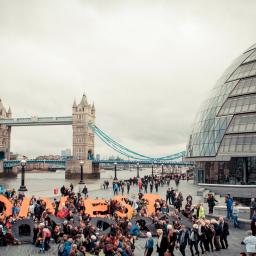
Alice Bell: Willie Soon has been criticised for taking money from the energy industry, but he’s more normal than much of science would like to admit.
|
 |
by Hannah Devlin, science correspondent on (#3ND5)
Gerard ’t Hooft, Dutch Nobel laureate and ambassador for project, says he does not believe mission can begin in 2024 as plannedThe budget and timeline for plans by a Dutch organisation to colonise Mars are highly unrealistic, one of the project’s most eminent supporters has suggested.Gerard ’t Hooft, a Dutch Nobel laureate and ambassador for Mars One, said he did not believe the mission could take off by 2024 as planned.Related: Mars One mission: a one-way trip to the red planet in 2024 Continue reading...
|
 |
by GrrlScientist on (#3NA4)
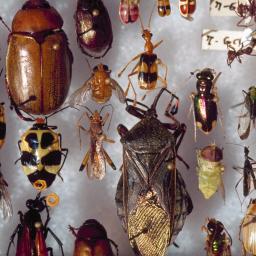
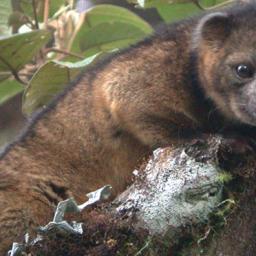
Instead of travelling to remote locations in faraway countries, scientists sometimes discover a new species by looking a little more closely at an old specimen in a museum drawer. Continue reading...
|
 |
by Jamie Russell/Island Visions/BNPS on (#3N05)
Photographs from the Eyewitness series Continue reading...
|
 |
by Val Curran on (#3MZE)
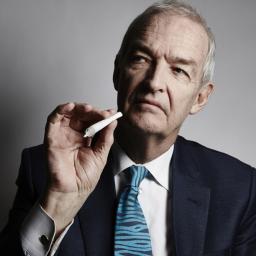
The scientist whose research led to Channel 4’s The Cannabis Trial explains the point of the experiment“Skunk stole Snow’s soulâ€, “Just say no, Snow†– these were just some of the headlines this week in response to Jon Snow’s blogpost and video recounting his experience of smoking ‘skunk’-type cannabis as part of a scientific study at University College London (UCL) which will be shown in a live TV programme – Drugs Live: Cannabis on Trial – on Channel 4 on March 3.We wanted to answer some of the questions raised by people about the trial as well as providing some of the wider context about this study, plus its aims and rationale.
|
by Linda Bauld on (#3MEY)
A recent article claimed there’s no evidence that vaping is less harmful than smoking. Tobacco expert Linda Bauld argues otherwiseIn his recent ‘Comment is free’ piece Nash Riggins claims that vaping is just as dangerous as smoking, and expresses robust support for NHS Boards in Scotland who intend to ban the use of electronic cigarettes when their grounds go tobacco free in April.
by Benjamin Lee on (#3M0H)
Oscar-nominated director Morten Tyldum says none were necessary as Alan Turing’s life and relationships were ‘all about secrecy’
by Press Association on (#3KQ5)
Campaigners to bring petition to Downing Street, demanding all men convicted under gross indecency law for their homosexuality are pardonedThe family of the codebreaker Alan Turing will visit Downing Street on Monday to demand the government pardons 49,000 other men persecuted like him for their homosexuality.Turing, whose work cracking the German military codes was vital to the British war effort against Nazi Germany, was convicted in 1952 of gross indecency with a 19-year-old man, was chemically castrated, and two years later died from cyanide poisoning in an apparent suicide.Related: Oscars 2015 - live! Red carpet, arrivals, ceremony... and winnersRelated: The Imitation Game director defends film's lack of gay sex scenes Continue reading...