 |
by Photography and videos: Toby Smith. Words: Andrew on (#4WMB)
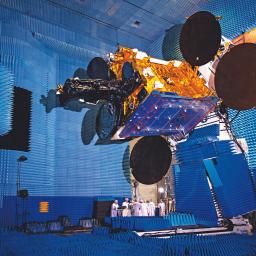
Forget missions to Mars, satellite technology is the real space race, with the number in orbit set to double in the next decade. So what goes on behind the scenes?
|
| Link | http://feeds.theguardian.com/ |
| Feed | http://feeds.theguardian.com/theguardian/science/rss |
| Updated | 2026-10-01 05:30 |
by Alex Bellos on (#4WGA)
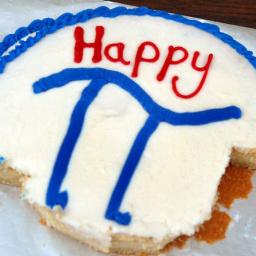
Akira Haraguchi, 69, is a legend among memory masters, having memorised more of pi’s digits than anyone else. Here he talks about why he does it and how he will be celebrating pi’s big dayPi Day 2015: A sweet treat for mathematics fans
 |
by Alex Bellos on (#4WDK)
Ratio of a circle’s circumference to its diameter has sparked memory contests and even a language – this year’s celebration of π is a once-in-100-year occasionHe ate all the pi : Japanese man memorises π to 111,700 digitsA date falls on this Saturday that only comes once every 100 years – and geeks around the world are very excited.It’s Pi Day, the celebration date of the number that is the ratio of a circle’s circumference to its diameter. The celebration is held annually on 14 March, because 3/14 spells out the first three digits of π, or pi, which is 3.14. Continue reading...
|
 |
by Hervé Morin on (#4WAF)
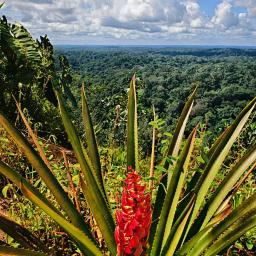
Naturalists decamp to remote Amazonian region to try to classify some of the many thousands of unidentified Guianan species Continue reading...
|
by Guardian Staff on (#4W1C)
The Large Hadron Collider (LHC) is now new and improved and ready to conduct science research again, say the scientists of the European Centre for Nuclear Research (Cern) on Thursday in Geneva. the LHC was shut down for upgrades in 2013, after the discovery of the long-sought Higgs Boson in 2012. Scientists say the mystery dark matter will be a prime research target for the coming years Continue reading...
 |
by GrrlScientist on (#4VZG)
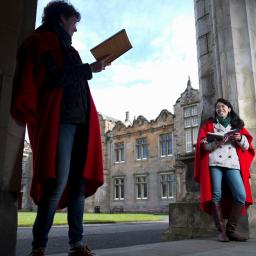
This week’s books include three scholarly works: one examines the language of science and how it changed from Latin to English; another probes the rise of online universities; and a third discusses the use of Victorian fairy-tales to communicate science to public. Continue reading...
|
 |
by Nicola Davis on (#4VYM)
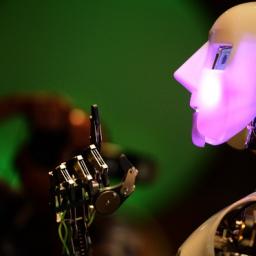
What will happen to human skill and sensibility as robots take on more tasks and aspects of human existence? What are the challenges facing inhabitants of remote Pacific Ocean islands, and why does 1610 mark a new human epoch? Continue reading...
|
 |
by Guardian Staff on (#4VP3)
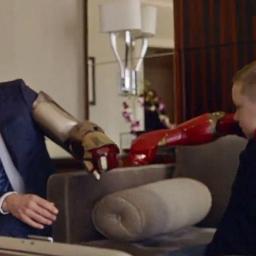
The Iron Man star Robert Downey Jr gives a seven-year-old boy a bionic arm. In a video posted on his Facebook page, the actor can be seen dressed as Tony Stark, Iron Man's alter ego. In partnership with Limbitless Solutions, Downey Jr presents a 3D-printed bionic arm to young Alex, who was born with a partially developed arm Continue reading...
|
 |
by Reuters on (#4VK6)
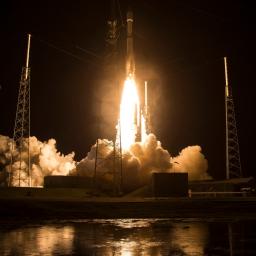
First space mission dedicated to study of magnetic reconnection – thought to be the catalyst for some of the most powerful explosions in solar system
|
 |
by Jenny RohnStephen CurryAndrew Steele on (#4VG4)
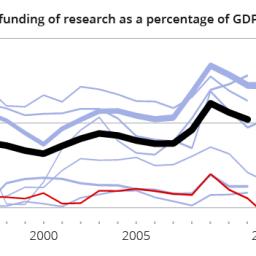
Tell Them Science is Vital: with funding in decline and an election looming, we must make sure our democratic representatives understand how crucial science is for our economy, health and happiness Continue reading...
|
by Daniel Hurst Political correspondent on (#4V8W)
As Senate prepares to debate university fee deregulation, education minister faces mounting criticism over threat to slash $150m in funding if bill not passed Continue reading...
 |
by Melissa Davey and agencies on (#4VFY)
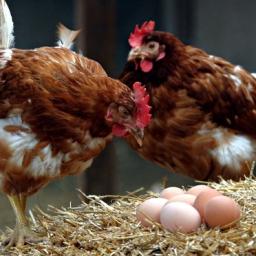
Queensland has recorded 1,895 cases of salmonella so far this year, and authorities say misconceptions about dirty eggs are part of the problem Continue reading...
|
 |
by Hannah Devlin, science correspondent on (#4VBW)
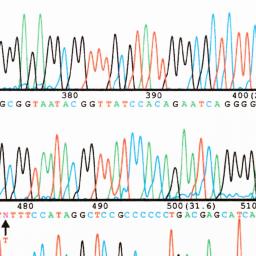
Study to sequence genes of 100,000 people from Pakistani and Bangladeshi communities to identify genes resilient to heart disease, diabetes and cancerScientists are planning to sequence the genes of 100,000 south Asian people in London, in an ambitious project to track down rare beneficial genes that protect against conditions from heart disease to cancer.The Pakistani and Bangladeshi communities in London have among the highest rates of poor health in Britain, with twice the average number of deaths from heart disease and five times the rate of type 2 diabetes. But within this population, scientists predict, there will be people who are unexpectedly healthy, whose genes could be conferring extreme resilience to disease. Continue reading...
|
 |
by Kareem Shaheen in Beirut on (#4T3P)
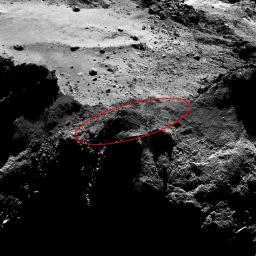
Attack on Dur-Sharrukin, the latest by group on country’s heritage, comes as Brussels calls for creation of safe havens for Iraqi minorities Continue reading...
 |
by Associated Press in Cape Canaveral, Florida on (#4TKZ)
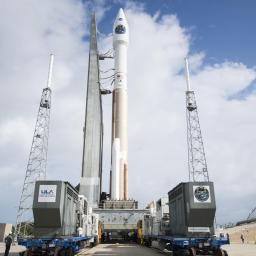
The two-year mission’s findings should help scientists better understand so-called space weather as liftoff is set for Thursday night Continue reading...
|
 |
by Agence France-Presse in Rome on (#4TJD)
Forensic team says it used handkerchief splashed with Gabriele D’Annunzio’s sperm to recreate eccentric, 19th-century, rightwing leader’s genetic blueprint Continue reading...
|
 |
by Ian Sample, science editor on (#4TGV)
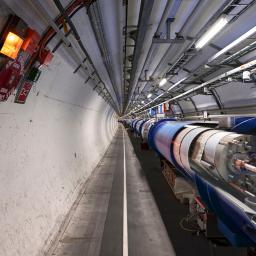
LHC will run at double its previous energy, smashing protons to open up the subatomic world and look for more varieties of Higgs boson
|
by Pete Etchells and Chris Chambers on (#4TG9)
An autism researcher and an Oxford professor have exposed what appears to be a substantial case of academic malpractice, highlighting the vital role of peer review and the dangers faced by whistle-blowers Continue reading...
 |
by Dean Burnett on (#4TCG)
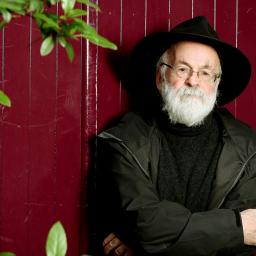
The death of Terry Pratchett from early onset Alzheimer’s is a bitter blow for many. But his life and legacy will always be cause for celebration
|
 |
by Rowena Mason Political correspondent on (#4TB3)
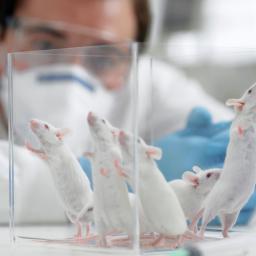
Animal rights groups accuse government of betrayal after minister announces ban on animal testing of cleaning products but not ingredientsThe government has been accused of introducing a useless ban on using animals to test cleaning products after it emerged that the new prohibition will not apply to testing ingredients.The coalition promised to end animal testing on household products in its programme for government in 2010. On Thursday Lynne Featherstone, a Home Office minister, announced that the ban would come into force in October but said it would not apply to the ingredients that go into the products, which include detergents, polishes and cleaning products, laundry products, household cleaners, air fresheners and toilet cleaners. Continue reading...
|
by Reuters on (#4S2W)
Rodents found to have improved memories after ultrasound treatment, without any apparent damage to brain tissue Continue reading...
 |
by GrrlScientist on (#4SVX)
Plants capture sunlight and turn it into starch. Scientists are now adapting the photosynthetic process to improve the way we harness solar energy Continue reading...
|
 |
by Guardian Staff on (#4SQD)
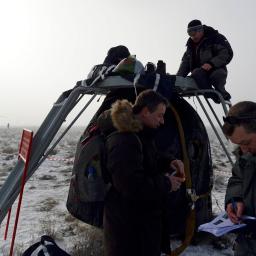
The Soyuz TMA-14M capsule landed safely in Kazakhstan just after sunrise, returning home the two Russian and one US crew member who have spent 167 days in orbit Continue reading...
|
 |
by Dean Burnett on (#4SR6)
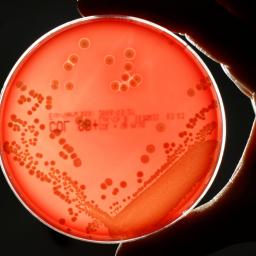
Following on from Nigel Farage’s claims that anti-discrimination laws are no longer needed in the UK, concerns about antibiotic resistance and investment in healthcare have been dismissed as irrelevant and wasteful by numerous deadly diseases Continue reading...
|
 |
by Edzard Ernst on (#4SR8)
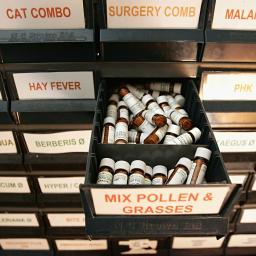
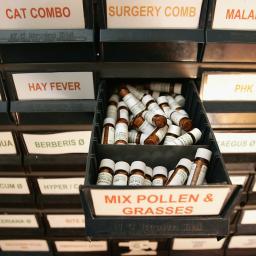
Pharmacists who sell homeopathic remedies as anything other than placebos are putting their customers’ health at risk
|
 |
by Mark Lynas on (#4S7N)
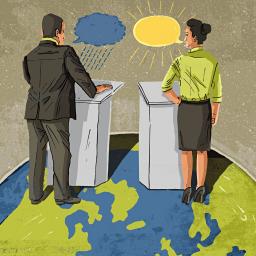
Alarmists and deniers need to climb out of their parallel trenches, engage with the developing world and work together to end the crisis Continue reading...
|
 |
by Lewis Smith on (#4S4Y)
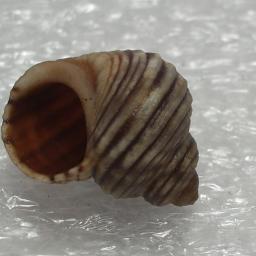
Rough periwinkles found commonly around UK coast described as new species or sub-species over 100 timesA seaside snail found in rock pools on almost every stretch of coast around the UK has been named as the most misidentified creature in the world.Rough periwinkles are commonly seen on shorelines around the North Atlantic but come with so many colour and shape variations that they have confused scientists for centuries. Continue reading...
|
 |
by Guardian Staff on (#4R8M)
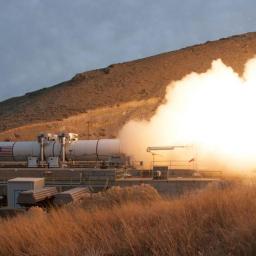
Nasa test-fires a beefed-up space shuttle Solid Rocket Motor in Utah on Wednesday. The 177-foot motor is 25% more powerful than the four-segment engines used to help lift the space shuttle. The two-minute test fire is considered a key milestone toward the debut flight of Nasa's deep-space launcher in 2018 Continue reading...
|
 |
by Bob O'HaraGrrlScientist on (#4R7Y)
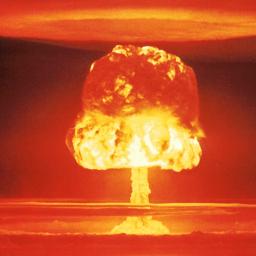
A new paper investigates when humans started screwing up the environment, and uses this as the symbol for the beginning of a new geologic age: the Anthropocene, or the Age of Humans. Continue reading...
|
by Ian Sample, science editor on (#4R3C)
Hydrothermal activity detected by spacecraft finds that ocean deep below frozen surface of Enceladus is warm and could therefore increase chance of life
 |
by Press Association on (#4R2G)
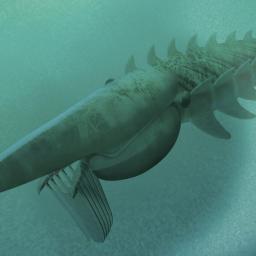
The newly discovered prehistoric species, named Aegirocassis benmoulae, was an early ancestor of the modern spider and the oldest giant filter-feeder on recordA filter-feeding “lobster†as big as a human took the place of whales 480 million years ago, a new fossil discovery has shown.The two-metre prehistoric creature, whose remains were unearthed in Morocco, belonged to the family of anomalocaridids, the early ancestors of modern crustaceans, insects and spiders. Continue reading...
|
 |
by Hannah Devlin science correspondent on (#4R0Q)
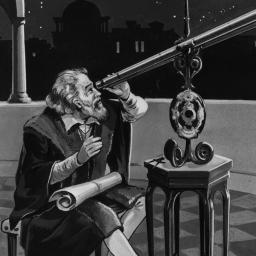
A new study finds the year to be a key point for the Anthropocene – marking the irreversible transfer of crops and species between the old and new worldsKing James was on the throne, Shakespeare’s Cymbeline was playing in the theatre and Galileo discovered four moons of Jupiter. In future, though, 1610 could be chiefly remembered as the geological time-point at which humans came to dominate Earth.Scientists have argued that it is time to draw a line under the current geological epoch and usher in the start of a new one, defined by mankind’s impact on the planet. Continue reading...
|
 |
by Ian Sample, science editor on (#4QVH)
The latest findings in Australia add to a series of other studies proving that its preparations have no proven benefits to patients
|
 |
by Reuters in Cape Canaveral, Florida on (#4QVK)
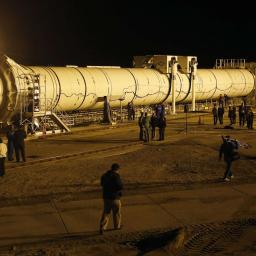
Bright flames shoot out rocket for two minutes, marking the first full-duration burn of the enhanced solid-fuel shuttle booster rocketA beefed-up space shuttle solid rocket motor passed a two-minute test firing in Utah on Wednesday, a key milestone toward the debut flight of Nasa’s deep-space launcher in 2018, the US space agency said.Anchored horizontally to a test stand in the desert in Promontory, Utah, the five-segment motor, built by Orbital ATK, ignited at 9.30am local time. Continue reading...
|
 |
by Guardian Staff on (#4QS3)
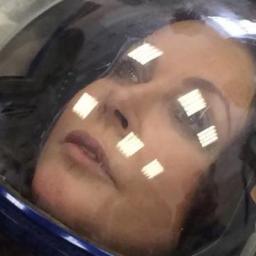
Sarah Brightman, the recording star turned astronaut, speaks about her upcoming journey into space. The British soprano will blast off in September and plans to sing from orbit. 'I cannot explain in full why this is something that has been very strong within me,' she says. Brightman has been working with her former husband, Andrew Lloyd Webber, on a suitable tune which she says is both 'beautiful and simple' Continue reading...
|
 |
by Jeb Lund on (#4Q9G)
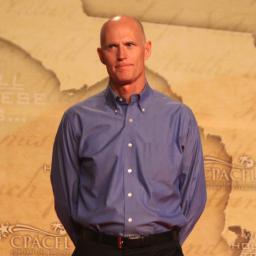
Florida governor Rick Scott’s language prohibition for state employees is forefront of climate denialism as public policy Continue reading...
|
 |
by GrrlScientist on (#4Q7Z)
It’s inevitable: as science progresses, controversy happens. But sometimes, the public sees controversy where none exists. How to remedy that? Continue reading...
|
 |
by Nick Crumpton on (#4Q81)
Quoting poetry in a science paper does not add to its research, but as the Wellcome Trust book prize reveals, our dry format benefits from well-written ways to gain wider readership
|
by Oliver Burkeman on (#4Q6Y)
Rules, queues and paperwork help make daily interactions predictable, anonymous and superficially egalitarian in ways from which most of us benefit Continue reading...
 |
by Hannah Devlin, science correspondent on (#4NG0)
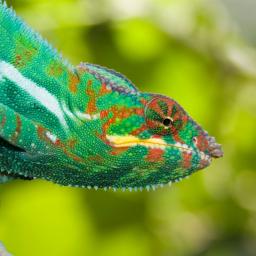
Altering the space between tiny crystals allows lizards to reflect a specific wavelength of light and camouflage themselves, study finds
|
by Jessica Bland on (#4PV8)
New sounds from South Africa and Nigeria’s urban science fiction could change the future of technology and the city Continue reading...
by Adam P Goucher on (#4PPW)
The high pressure world of international maths tournaments is brought to life in the much-anticipated British movie X+Y, which opens this weekend. Here a former contestant reveals the maths, the alcohol and the sexual intrigue of these events and tells us whether the film gets it right Continue reading...
 |
by Matt Wall, Rebecca Pope, Tom Freeman and Claire Mo on (#4PNM)
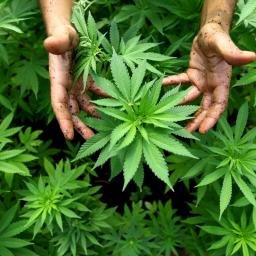
What’s it like to turn your science into 90 minutes of TV? The researchers involved in Channel 4’s Drugs Live share their experienceRelated: Drugs Live: Cannabis on Trial - live blogScientists are increasingly encouraged to share their findings with wider audiences through public engagement activities like science fairs, festivals, comedy, and radio and TV broadcasting. Activities like this can be very worthwhile, both for the public and the scientists, but they do present some challenges. Continue reading...
|
by Daniel Hurst Political correspondent on (#4PFD)
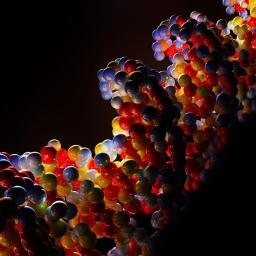
Treasurer indicates a possible compromise over the linking of the research funding to passage of the government’s university deregulation packageThe treasurer Joe Hockey has hinted the government might be prepared to shift ground on its insistence that a crucial $150m research funding extension hinges on the passage of contentious legislation to deregulate university fees.
 |
by Press Association on (#4P73)
Three men and their families will be eligible for personalised treatment designed to target their genetic defectsThree men from two families are the first patients to be diagnosed with rare diseases after volunteering to have their complete genetic codes mapped as part of the groundbreaking 100,000 Genomes Project.
|
 |
by Associated Press in Hilo, Hawaii on (#4NWF)
|
 |
by Edward Hockings and Lewis Coyne on (#4NEG)
As the Department of Health starts to draw a map of thousands of genomes, will it keep its promise to anonymise our data? Edward Hockings and Lewis Coyne investigate Continue reading...
|
 |
by Henry Nicholls on (#4NDK)
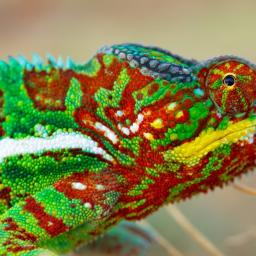
Colour changes in chameleons are due to structural changes inside skin cells and not chemistry
|
 |
by GrrlScientist on (#4N1X)
Citizen science is getting a lot of attention these days, which might make you think it is a new social phenomenon. But in fact, nothing is further from the truth: citizen science has been around much longer than any of us. Continue reading...
|