 |
by Letters on (#7W0R)
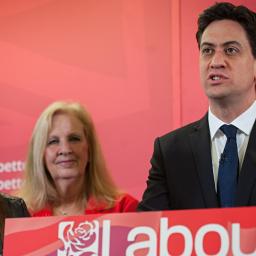
Owen Jones seems to be unaware of the history of the party he urges everyone to vote for (The difference between Miliband and Cameron is a woman called Sue, 22 April). In the late 19th century there were two main political parties in the UK: the Tories who, as now, nakedly reflected the interests of the ruling class, and the Liberal party, whose establishment reformism received substantial support from recently enfranchised working-class (male) voters. The newly born Labour party – then called the Labour Representation Committee – won just two MPs in the 1900 election.Of course, the Owen Joneses of the day would have argued that voting for the nascent Labour party, however unhappy one was with the Liberals, would split the anti-Tory vote. “An independent Labour organisation will not catch a single Tory vote. Such votes as it does carry away will be Liberal votes … it may hamstring and even cut the throat of the Liberal partyâ€, argued Lord Rosebery, then the Liberal prime minister, in 1894.New Labour, in accommodating the worst excesses of neoliberalism, may be the author of its own electoral misfortune Continue reading...
|
| Link | http://feeds.theguardian.com/ |
| Feed | http://feeds.theguardian.com/theguardian/business/economics/rss |
| Updated | 2026-09-20 13:31 |
 |
by Larry Elliott on (#7VDW)
For a nation of renters, pledges by Ed Miliband on private-sector rents and David Cameron on right to buy are merely attacking the symptoms, not the causes
|
 |
by Guardian Staff on (#7V6H)
The new chief executive tried to be bullish about the grocer’s larger stores as he revealed a £6.4bn loss last weekThe idea that big supermarkets are heading for extinction may be a myth, according to Tesco boss Dave Lewis. The former marketing man revealed last week that his largest stores, seen by many as the dinosaurs of retail, had shown the fastest recovery of all the chain’s formats in the past three months. It was a valiant effort to project a positive message as he unveiled a towering £6.4bn loss for the UK’s biggest retailer.Lewis suggested the much-touted trend towards convenience shopping could just as well mean shoppers head for one big store that provides every need, rather than nipping to several places that are handy and local. Continue reading...
|
 |
by Heather Stewart on (#7V6K)
The SNP’s anti-austerity rhetoric is a pose, and the Greens are playing fantasy economics. Only voting Labour can protect the UK from savage and unfair cutsThis is an appeal to the idealists, the dreamers, the hankerers after a new, sunny kind of British politics, where the spending axe is buried and a thousand flowers bloom. Please don’t be beguiled into throwing away your vote.Watching the seven-strong leaders’ debate, which already seems an age ago, anyone on the left found it heart-warming to see the economic argument being turned upside down. Instead of starting from the grim necessity of deficit reduction, the Greens’ Natalie Bennett, Plaid Cymru’s Leanne Wood and the SNP’s Nicola Sturgeon rejected austerity, and instead prioritised human decency and fairness.It’s hard to see how the Conservatives' hoped-for cuts could be achieved without a fundamental reshaping of the state Continue reading...
|
 |
by Observer editorial on (#7TPA)
Too much debate about cuts and not enough clear outlines of how to run the country for everyone’s benefitFrom the hushed atmosphere of the Institute for Fiscal Studies’ basement lair in Bloomsbury, central London, the broad outlines of next month’s general election appeared crystal clear, laid out in red, blue and yellow lines on a kaleidoscope of charts. Britain’s public sector deficit, running at about 10% of national income when the coalition came to power five years ago, has been halved. All the major parties want to reduce it further, but the Conservatives plan to do so more rapidly – they would make much deeper, “unspecified†cuts to public spending.Yet the IFS, so often the voice of common sense during this drawn-out election campaign, castigated all the major parties for leaving voters “in the dark†about what kind of future they could expect over the next five years. Continue reading...
|
 |
by Phillip Inman on (#7T4S)
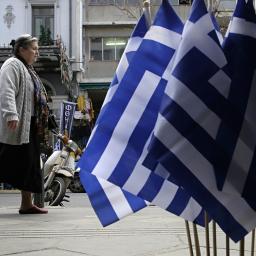
The standoff between a leftwing government and the financial powers of the EU is near to breaking point. What if the worst happens?This time it’s real: Greece has wriggled out of looming national bankruptcy on numerous occasions over the past five years, but now it has just a few weeks left before it must sign a new debt deal with its eurozone partners and the IMF – or find itself heading for an exit door that leads back to the drachma.Related: Greeks’ view of the debt crisis: ‘What lies ahead is great, great hardship’ Continue reading...
|
 |
by Nils Pratley on (#7T4V)
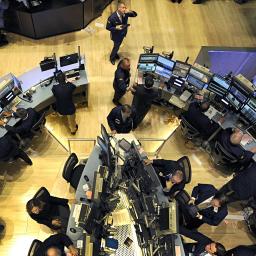
Navinder Singh Sarao faces extradition to the US over claims he helped cause the 2010 Wall Street ‘flash crash’. But was he really responsible?What’s the big deal? As the name indicates, the “flash crash†in the US stock market on 6 May 2010 didn’t last long. The loss of $1 trillion of stock market value was temporary. Calm – and normal share prices – returned within half an hour. The vast majority of investors – millions of people with long-term savings or pension money invested in US companies – didn’t lose a dollar. Most weren’t even stressed by the stock market’s rollercoaster ride. They were busy getting on with their lives.Unfortunately, the flash crash cannot be dismissed so lightly. The reason it still matters and the reason why the alleged role of Navinder Singh Sarao – dubbed the Hound of Hounslow in a nod to the 2013 film The Wolf of Wall Street – is so intriguing – is that it may have been a near miss. Continue reading...
|
 |
by Helena Smith on (#7T4Q)
Three months on from Alexis Tsipras’s victory, hope is ebbing away and support for his party is haemorrhagingAnother week. Another crisis. Another make-or-break meeting that may, or may not, throw Greece into the unchartered waters of default, eurozone exit, destitution and despair.Related: What happens if Greece can’t pay its debts? Continue reading...
|
 |
by Graeme Wearden on (#7Q5T)
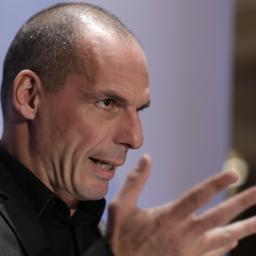
Greek finance minister reportedly told he is “a time-waster, a gambler and an amateur†at a highly critical meeting in Riga
|
by Graeme Wearden on (#7R1S)
Jeroen Dijsselbloem said it was very hard to consider a new programme for Greece to cover its funding needs beyond June, given the lack of recent progressMounting tensions between Greece and other euro members have flared up at an acrimonious meeting in Riga, with finance ministers blasting the country’s leftwing leaders for failing to make more progress towards a bailout deal.Ministers lambasted Greek finance minister Yanis Varoufakis for not reaching an agreement with creditors two months after the eurozone extended Greece’s loan programme until the end of June.Related: Greek debts: what does it owe? When will the money run out?Related: Yanis Varoufakis: a new deal for Greece Continue reading...
 |
by Patrick Collinson on (#7QX0)
IFS sounds warning over flagship Tory policy, saying sale of best council stock also risks widening gulf between rich and poor
|
 |
by Katie Allen on (#7Q9J)
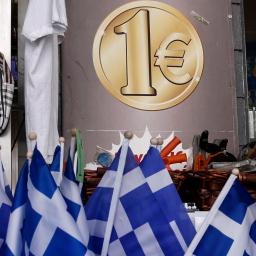
Greece owes money to the International Monetary Fund, the European Central Bank and the European Union following its two bailouts in 2010 and 2012
|
 |
by Tom Clark on (#7Q6P)
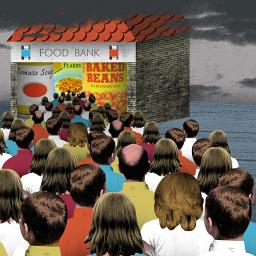
For years the right has made the political running. But the argument is winnableFood banks are everywhere, and all the volunteers – like the many reports that have asked why food banks have proliferated – are agreed on the cause. It is cuts, delays and sanctions to benefits that have made Britain a hungrier nation than it was at the beginning of the Cameron term of government.After 2010 a historic assault on the ideal of social security gradually emerged. But now, with the Conservatives threatening another largely unspecified £12bn in welfare cuts if they win the general election – the equivalent of 24 bedroom taxes, by the way – it’s time to stop interpreting the war on welfare. It is time instead to ask how to fight back.Related: Food banks: benefit sanctions leave clients hungry for monthsThe right’s great advance against social security has come through waging a culture war Continue reading...
|
 |
by Phillip Inman Economics correspondent on (#7PDQ)
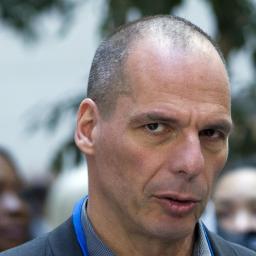
Ministers privately believe deal is possible, but point at which Syriza must either capitulate to Brussels or leave euro growing closerThere is still time for Greece to stitch together a deal with Brussels before it runs out of money, according to eurozone finance ministers speaking privately at last week’s International Monetary Fund spring conference. And the betting must be that crisis-plagued Athens will eventually find a way to retain its membership of the eurozone with a messy compromise.But the odds are getting slimmer with every passing week. On Friday, finance minister Yanis Varoufakis meets his counterparts in the Latvian capital Riga in what many analysts believe is the penultimate gathering to work out a deal before Athens’s coffers run dry. Continue reading...
|
 |
by Heather Stewart on (#7N72)
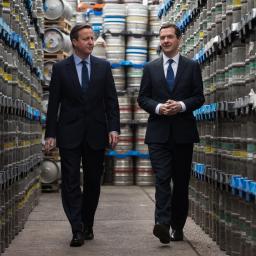
Thinktank challenges Conservatives to explain where cuts would come from and insists SNP is not anti-austerity
|
by John Crace on (#7P39)
Institute for Fiscal Studies reluctantly takes manifesto pledges seriously as it delivers verdict on spending plans of big four partiesPick a number. Any number. Now double it. Or divide it by three. Anything really. Imaginary numbers in party manifestos mean something very different to those taught in universities. Proper imaginary numbers are potentially useful; imaginary imaginary numbers are just politics.Both Labour and the Conservatives have called out the Institute of Fiscal Studies (IFS) for political bias at various times over the years, so it is safe to assume the economics thinktank is about as independent as these kinds of organisations get. It certainly isn’t afraid of the tasks that many others would perversely consider simultaneously both in the public good and entirely futile, which is why its top economists have spent the past week trying to work out whether the spending pledges of the four main parties stack up in any meaningful way. Continue reading...
by Andrew Sparrow, Nadia Khomami and Mark Smith on (#7N1E)
 |
by Charles Grant on (#7NXW)
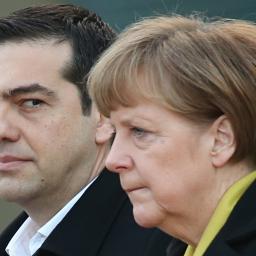
Many EU member states and the US still fear the consequences of Greece leaving Europe. They need to get their voices heard in BerlinIn Berlin, views on Greece’s possible exit from the eurozone are shifting. “We have never been closer to a Grexit, and we are close,†said a senior official. The last time a Greek departure looked likely, in 2012, Angela Merkel worried that it would provoke panic in financial markets and pulled back from the brink. This time, Germany’s leaders think a Grexit would not destabilise the eurozone.Merkel’s officials say that she would be willing to compromise with Greece – if prime minister Alexis Tsipras, whose Syriza party was elected in January, came up with a serious reform programme. Germany wants his socialist government to commit to fighting corruption, improving tax collection, strengthening fiscal discipline, modernising labour markets and attacking vested interests. But three months after being elected, Tsipras seems unwilling or unable to do any of these things.German officials are remarkably sanguine about the impact of a Grexit on the rest of the eurozoneRelated: Greek eurozone exit edges closer as markets brace for Athens default Continue reading...
|
 |
by Larry Elliott on (#7NND)
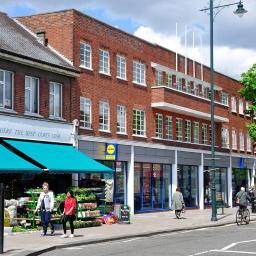
Consumers might be more cautious about spending windfall gains if the boost to their real incomes caused by the fall in inflation was thought to be temporary
|
 |
by Larry Elliott Economics editor on (#7NKD)
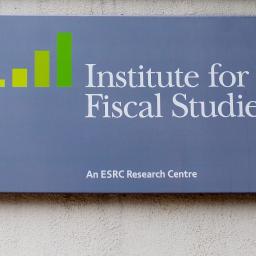
Institute for Fiscal Studies clearly thinks the Conservatives are winging it but Labour have failed to cash in politically
|
 |
by Phillip Inman economics correspondent on (#7N74)
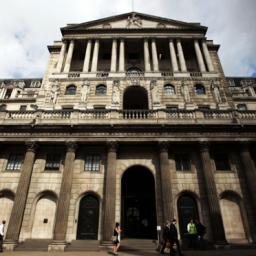
Pre-election lift for chancellor as borrowing in 2014-15 falls to £87.3bn from £98.4bn last year
|
 |
by Julia Kollewe on (#7N34)
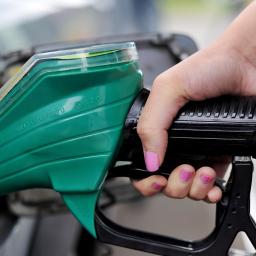
March data adds to concerns that economic growth slowed at the start of the yearUK retail sales showed a surprise fall last month, driven by a slump in petrol sales, adding to concerns that economic growth slowed at the start of the year.The first-quarter GDP numbers will be released on Tuesday, just over a week before the general election. Continue reading...
|
by Nicholas Watt and Patrick Wintour on (#7N2B)
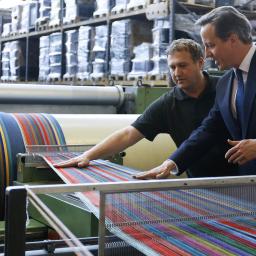
Ed Miliband counters chancellor’s charge with claim that Tory spending cuts are going to be deeper in the next three years than the last fiveA post-election deal between Labour and the SNP would represent a “dangerous cocktail†that would lead to higher interest rates and a rise in unemployment, George Osborne has warned.
 |
by Mark Smith on (#7MW5)
IFS assessment of parties’ economic policies will be pored over, but is unlikely to settle decisively the most contested issue in the campaignToday is St George’s Day, the annual celebration of England’s patron saint. Festivities are typically more muted than the national days allotted to the other home nations, but perhaps election fever could change this; there’s been enough Little Englandism around in the campaign coverage so far.
|
by Oliver Milman on (#7M5J)
Vast economic worth of world’s oceans includes fishing, tourism and shipping but is declining due to pollution, climate change and overfishingThe monetary value of the world’s oceans has been estimated at US$24tn in a new report that warns that overfishing, pollution and climate change are putting an unprecedented strain upon marine ecosystems.The report, commissioned by WWF, states the asset value of oceans is $24tn and values the annual “goods and services†it provides, such as food, at $2.5tn.Half of the world’s corals and nearly a third of its seagrasses have disappeared Continue reading...
 |
by Jill Treanor on (#7KPG)
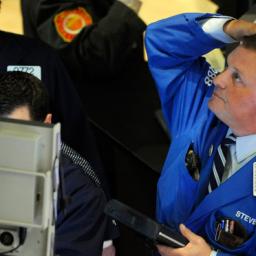
In just 20 minutes the New York Stock Exchange had witnessed it’s biggest stock plunge in decades, all traced to one gargantuan sell orderIt was 6 May 2010. In the UK it was general election day, in the US,Wall Street was gripped by mounting anxiety about the Greek debt crisis. The euro was falling against the dollar and the yen, but despite the turbulent start to the trading day, no one had expected the near 1,000-point dive in share prices.In a matter of minutes the Dow Jones index lost almost 9% of its value – in a sequences of events that quickly became known as “flash crash†. Hundreds of billions of dollars were wiped off the share prices of household name companies like Proctor & Gamble and General Electric. But the carnage , which took place at a speed never before witnessed, did not last long. The market rapidly regained its composure and eventually closed 3% lower.Related: 'Flash crash' case: UK trader to fight extradition to US Continue reading...
|
 |
by Dean Baker on (#7KA0)
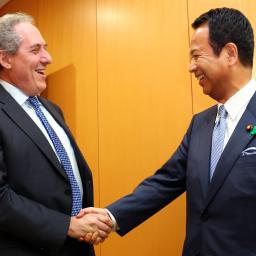
The sums at stake over currency issues are an order of magnitude larger than any potential gains from the rest of the Trans-Pacific PartnershipThe Obama administration is doing its full court press, pulling out all the stops to get Congress to approve the fast-track authority that is almost certainly necessary to get the Trans-Pacific Partnership (TPP) through Congress. One of the biggest remaining stumbling blocks is that the deal will almost certainly not include provisions on currency. This means that parties to the agreement will still be able to depress the value of their currency against the dollar in order to gain a competitive advantage. This is a really big deal, which everyone thinking about the merits of the TPP should understand.
|
by Robert Skidelsky on (#7K7Q)
Economic recovery may come about despite fiscal austerity, but never because of it, contrary to what UK chancellor George Osborne claimsIn 2011, the Nobel laureate economist Paul Krugman characterised conservative discourse on budget deficits in terms of “bond vigilantes†and the “confidence fairy.†Unless governments cut their deficits, the bond vigilantes will put the screws to them by forcing up interest rates. But if they do cut, the “confidence fairy†will reward them by stimulating private spending more than the cuts depress it.
 |
by Larry Elliott Economics editor on (#7JY3)
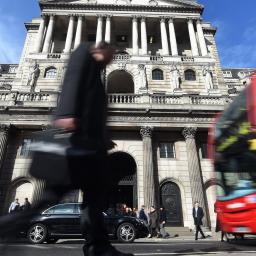
With inflation at 0% and polling day looming, the monetary policy committee’s last meeting was suitably enigmaticThe Bank of England went into self-imposed purdah when the election was called in late March, so the release of the minutes of the April meeting of the monetary policy committee provides the first hint of current thinking inside Threadneedle Street for some weeks.The message from the minutes is modestly hawkish. Sure, the vote to leave borrowing costs at 0.5% was unanimous. True, there is no immediate prospect of interest rates being raised after polling day and for some months thereafter.Related: Bank of England decision to keep 0.5% interest rate was unanimous Continue reading...
|
 |
by Heather Stewart on (#7JX5)
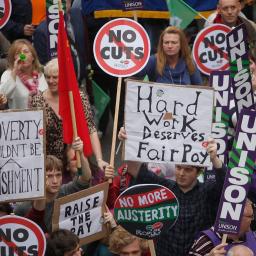
All members of monetary policy committee rejected rate rise after previously split votes while analysts say likely coalition negotiations will delay changesBank of England policymakers voted unanimously to leave borrowing costs on hold this month, but two members of the monetary policy committee saw the decision as “finely balancedâ€, shortening the odds on a rate rise in the coming months.Minutes published on Wednesday showed that two anti-inflation hawks – likely to be Martin Weale and Ian McCafferty, who voted for higher rates through late 2014 – were again contemplating a rise, despite suggestions that wages would not grow as fast this year as previously expected. Continue reading...
|
 |
by Frances Perraudin on (#7HVS)
Lib Dems are accused of electoral desperation after announcing plans to increase salaries by at least inflation after five years of pay restraintsThe Liberal Democrats would end public sector pay cuts if they were returned to government, guaranteeing that salaries rise by at least inflation, Nick Clegg has announced.Public sector workers deserve to see the “light at the end of the tunnel†after five years of pay restraints, the deputy prime minister said, adding that they should feel the benefits of the economic recovery.
|
 |
by Anne Perkins on (#7JV2)
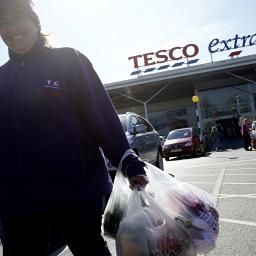
Unfortunately Tesco’s £6.38bn loss doesn’t mark the coming of a new world of independent, value-based shopping. It is still a £50bn business with the confidence of the CityTesco has made a loss of £6.38bn. That’s not much less than Nicaragua’s annual GDP. It’s more dosh than most sub-Saharan African countries can dream of. It is “the official end of the Tesco era,†according to the retail analyst, John Ibbotson. “With this huge loss, the decadent retail dynasty of Tesco has come to an end.â€Decadent. That’s a big word, meaning a state of moral or cultural decline. To some of us, Tesco has always felt decadent, a rapacious giant that ruined high streets, hollowed out town centres and fuelled an economy built on extreme downward pressure on costs at one end in order to sell deceptively cheaply at the other.Related: Tesco reports record £6.4bn lossRelated: Tesco's troubles - it’s easy to keep a quiet store clean Continue reading...
|
 |
by Andray Abrahamian on (#7JDY)
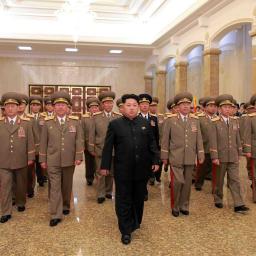
Pyongyang has been denied entry to China’s new investment bank because of a refusal to share economic data. But with the World Bank unlikely to step in the regime may have to reconsider, says Andray AbrahamianChina has rejected a North Korean attempt to join its new Asian Infrastructure Investment Bank (AIIB), according to a recent report, a decision which could have a significant effect on Pyongyang.
|
 |
by Associated Press in Washington on (#7HSZ)
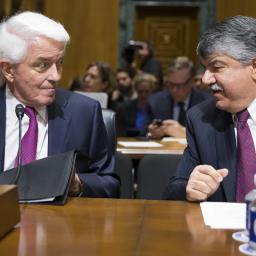
President has blunt words for fellow Democrats, especially Senator Elizabeth Warren, over claims that trade initiatives would hurt US jobsBarack Obama hit back at fellow Democrats who oppose his trade initiatives on Tuesday, saying they have their facts wrong on the eve of a key Senate vote.The president’s blunt words came as liberals, labor unions and others stepped up efforts to block his trade proposals, including the Trans-Pacific Partnership, which they say hurt US jobs.Related: Senate leaders inch closer to trade deal despite uproar from top Democrats Continue reading...
|
by Libby Brooks Scotland reporter on (#7HC9)
Scottish Labour accuses Nicola Sturgeon of planning spending cuts ‘to make the Tories blush’ after thinktank updates projections on flagship policyThe Scottish National party’s flagship financial policy of full fiscal autonomy could lead to a shortfall of nearly £9bn in Scotland’s finances by 2020, according to the latest projections from the Institute of Fiscal Studies – a gap that would only be closed if growth were to double that predicted for the UK as a whole.The IFS published its report on Tuesday after the SNP leader, Nicola Sturgeon, dismissed as irrelevant the institute’s previous projection of a £7.6bn shortfall for 2015-16 under the policy, which would require Scotland to fully fund spending through its own tax revenues and borrowing.Related: Nicola Sturgeon challenged on spending plans as SNP backs Labour on taxRelated: Tories strike election gold with warnings on Sturgeon and Miliband Continue reading...
by Larry Elliott and Helena Smith on (#7HBH)
Jeroen Dijsselbloem, the Dutch finance minister and leader of the Eurogroup says he still expects an agreement to be reached in the coming weeksThe head of the Eurogroup of finance ministers has said Greece is running out of money as hopes of a deal to end the country’s worsening debt crisis by the end of this week have again been dashed.Sources in Brussels said there was no prospect of concluding negotiations between the Syriza-led coalition in Athens and its creditors by the time the 18 finance ministers meet in Riga at the end of this week. Continue reading...
 |
by Owen Jones on (#7H8N)
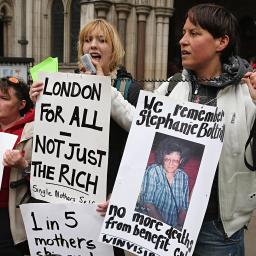
If you want to look in the eyes of those people pummelled by callous Tory policies, vote Labour – and be prepared to fightIt’s a moment many of us who oppose this government have had: something that powerfully crystallises just what is at stake. For me, it was on 17 July 2014. Sue Jones tweeted me: her disabled daughter had died; thus she had a spare room; thus she had to pay the bedroom tax. “It’s been an epic nightmare,†she wrote. “Shameful and cruel.â€It had been “like dealing with robotsâ€, she later told me. “No room for discussion. Their answer was, pay or move.†I felt fury – cold, seething fury – but I also had a moment of panic. A cruel, remorseless society was being built where predominantly poor people with a disability or a close family member who was disabled were being forced to cough up money they didn’t have or downsize to smaller properties that didn’t exist; where instead of building desperately needed council housing, we balanced the nation’s books on the backs of grieving, impoverished parents.Related: Labour commits to abolishing bedroom taxCampaigners can put pressure on the Labour leadership, and they can extract concessions that could transform lives Continue reading...
|
by Graeme Wearden on (#7G33)
All the latest economic and financial news, including developments around Greece’s debt talks
 |
by Maya Oppenheim on (#7GZZ)
There’s no avoiding the facts: austerity has been gendered. In fact, 74% of the money cut by the coalition via changes to the benefits and tax system has come from women’s pocketsAs the coalition’s first term draws to a close, it seems a reasonable moment to ask: has the government’s programme of austerity disproportionately attacked women?It’s difficult to argue otherwise when in the past five years, studies have repeatedly shown that women have borne the burden of cuts to welfare. Last month the Fawcett Society reported that a staggering 74% of the money saved from benefit and tax changes since 2010 has come directly from women’s pockets. To put it another way: £22bn of the £26bn saved from welfare reform has been taken from women. Make no mistake – auesterity has been gendered. Continue reading...
|
by Holly Young on (#7GN9)
How do you make trade more effective and equitable for all? Our panel shared their suggestionsProtect vulnerable producers from trade shocks: The problems we see in highly protected markets like bananas, sugar and rum – where historically some developed countries granted preferences to some developing countries while excluding others – are apparent now these markets are opening up. Adjustment, including in labour markets, to trade opening and trade shocks can be significant. It is important that affected countries have in place mechanisms to assist those adversely affected by trade shocks. These mechanisms should be targeted towards those households that are most vulnerable. Ian Gillson, senior trade economist, World Bank Group, Washington DC, USAStrengthen the voices of smallholders: There are some good examples of international NGOs working with small coffee growers and helping to organise them in cooperatives to make their voice stronger and improve their negotiating power. The starting point is how to make them more competitive, increase the quality of their products and get them better organised in distribution and marketing. Laura Frigenti, vice president - global development, InterAction, Washington DC, US Continue reading...
by Ron Martin on (#7GJ4)
A ‘northern powerhouse’ plan is a welcome step but it will need to be repeated in other parts of the UK, and to be far bolder, to redress a historical imbalance dating back to the 19th centuryIt would seem that the UK is finally pulling clear from the longest recession on historical record, the duration of which significantly exceeded even that of the Great Depression of the early 1930s. Maintaining a healthy rate of economic growth over the coming years will be a major task for the future government of whatever political hue, particularly given the prospect of continued fiscal austerity and the uncertainty surrounding the state of the European economy, and the global economy more generally.
 |
by Artemy Troitsky for The Calvert Journal, part of t on (#7FSJ)
As the Soviet Union dissipated its counter culture movement was replaced by a decade of free-market hedonism. The Calvert Journal talk us through the 1990s
|
by Katie Allen on (#7F37)
John Longworth warns in open letter that he had urged campaigners to put the UK’s long-term success and growth first, only to be ignoredThe head of one of Britain’s biggest business groups has accused politicians of chasing positive headlines ahead of the election rather than putting forward plans to shore up long-term economic growth.In an open letter to the leaders of the main parties, John Longworth, director general of the British Chambers of Commerce , voiced his frustration over what he saw as broken promises to the business community. Continue reading...
 |
by Graeme Wearden on (#7DB0)
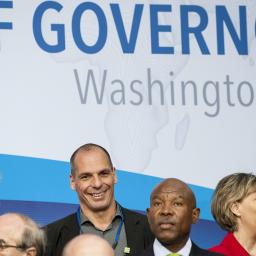
All the latest economic and financial news, including the latest developments around Greece’s bailout talks
|
 |
by Aditya Chakrabortty on (#7EMW)
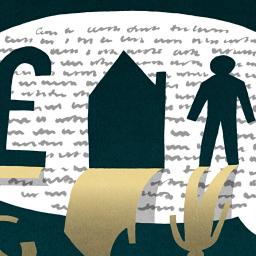
Forget the deficit: the real challenges we face – growth, housing and who exactly the government represents – won’t be mentioned on the campaign trailElections have but one iron law: listen for what the politicos are not saying. Follow it, and you hear a roaring silence at the centre of this campaign. For all that Dave and Ed have jousted with interviewers and made pledges on platforms, there are three big questions that neither would-be prime minister will talk about. Yet the questions are existential, and the answers to them will matter not merely for the next parliament, but far beyond.The three questions can be summed up as: How are we meant to live? Where are we meant to live? And who is meant to live here?Related: Labour's manifesto: back-to-basics branding that gets straight to the pointThere are now more vegans in Britain than members of the Conservative party Continue reading...
|
 |
by Larry Elliott on (#7EJ3)
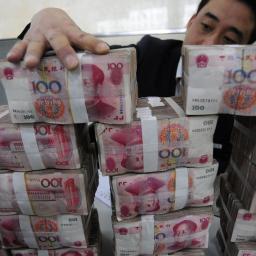
Beijing acts to tackle slowdown in world’s largest economy with biggest easing of policy by People’s Bank of China since 2008The biggest easing of policy by the People’s Bank of China since the depths of the global financial crisis in late 2008 provided a boost to stock markets in Europe and North America on Monday.Share prices rose as investors responded positively to signs that Beijing was acting to tackle the slowdown in the world’s biggest economy in recent months. Continue reading...
|
 |
by Katie Allen on (#7EAM)
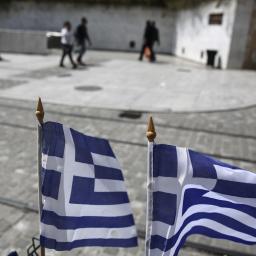
Prime minister Alexis Tsipras’s administration is forcing central government entities to transfer cash to the central bank to help keep the country afloatThe Greek government has issued a decree forcing public sector bodies to transfer idle cash reserves to the central bank in a sign of how severe the country’s cash crunch has become.The order came as the country’s finance minister, Yanis Varoufakis, issued a stark warning to eurozone neighbours that they were playing with fire as Athens edges closer to a debt default.Related: Fears grow of Greek euro exit after IMF meetingRelated: Greek eurozone exit edges closer as markets brace for Athens default Continue reading...
|
 |
by Narrated by Aleks Krotoski and produced by Frances on (#7E19)
Larry Elliot, the Guardian's economics editor sets out to do something no economist has yet managed; to figure out the maths of keeping it in the ground. What would happen to the global economy and would we face a global recession? Continue reading...
|
by Larry Elliott economics editor on (#7DTN)
The Scottish National party makes some heroic assumptions about the economy’s potential to grow its way back to financial good healthThe SNP manifesto offers everything Labour is offering, plus a bit more, but without the nasty bits. The minimum wage goes up, the NHS budget is increased by £9.5bn a year in real terms, 100,000 homes are built across the UK, public spending goes up by an inflation-adjusted 0.5% a year.This is what those on the left of the Labour party wish Ed Miliband was offering. What’s more, the package offered up by Nicola Sturgeon comes without the spending cuts Labour says are needed to balance the books.Related: SNP manifesto 2015 – key points Continue reading...
 |
by Press Association on (#7DCF)
EY ITEM Club report says recovery in troubled eurozone and ultra-low inflation should provide ‘tailwinds’ for UK growthUltra-low inflation and an upturn for the eurozone will help the UK enjoy solid growth of 2.8% this year despite pre-election jitters, claims an EY ITEM Club report.Chief economic adviser Peter Spencer said the economy was taking the impending vote “in its strideâ€, with positive “tailwinds†likely to outweigh political uncertainty.Related: Tory long-term economic plan? Not even the propaganda is working Continue reading...
|