 |
by Jessica Labhart on (#V5YG)
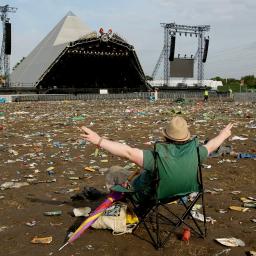
From animated games to publicly identifying offenders, local authorities are getting creative in the fight to get rid of rubbishKeeping streets clean matters. According to the Local Government Association, councils spend almost £1 bn a year on tackling litter and fly-tipping, at a time when they face difficult choices due to budget cuts. Incidents of fly-tipping have increased by 20% in 2014 – last year there were 852,000 cases – while funding for street cleaning has fallen for the past four years. According to Clean Up Britain, 48% of people still admit to dropping rubbish on the streets (pdf), with chewing gum and cigarette stubs the main offenders.But councils are fighting back. From whodunnit campaigns, and CCTV monitoring, to litter raffles and animated games, councils across the UK are using unorthodox methods to make people think differently about the state of our streets and what can be done to keep them clean. Continue reading...
|
| Link | http://feeds.theguardian.com/ |
| Feed | http://feeds.theguardian.com/theguardian/environment/rss |
| Updated | 2026-08-20 15:15 |
 |
by Oliver Balch on (#V5Y0)
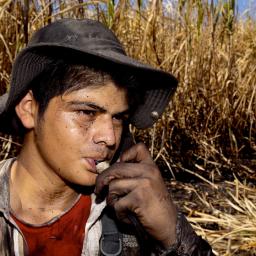
The deaths of farm workers in Central America are being linked to extreme temperatures. Researchers warn that far worse is to come
|
 |
by Guardian Staff on (#V5X8)
The ‘shocking’ scale of illegal trade in star tortoises in southern India has been revealed in a study published in the journal Nature Conservation. A large-scale network, fuelled by growing international demand for exotic pets, is causing extreme suffering to the animals and threatening the survival of the species, researchers warn. In one site alone, at least 55,000 tortoises were poached from the wild in one year Continue reading...
|
by Dave Hill on (#V5SV)
City of London planners have produced bold proposals for improving the “dysfunctional, dangerous and dirty†heart of the historic financial district
 |
by Press Association on (#V5SY)
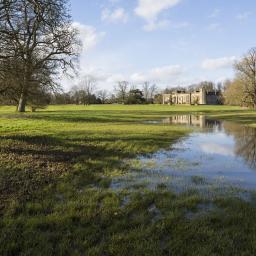
Rising temperatures and more extreme weather posing new challenges for National Trust properties’ gardens, rare books and tapestriesRare book collections, stately home gardens and 18th century tapestries are among the heritage being affected by a changing climate, the National Trust has warned.More erratic weather, changes to rainfall and rising temperatures are already having an impact on National Trust properties and land, the organisation said, forcing it to find new ways of managing the heritage in its care in the face of climate change. Continue reading...
|
 |
by Christine Smith on (#V5R4)
South Uist I am awed to see a small flock of whooper swans heading for landfallCresting the rise at the end of the machair track I catch my breath at the first sight of the scene before me. Where usually there are miles of beach there is almost nothing but sea.As far as the eye can see there is line after broken line of wild, tumbling rollers, the wind streaming a fine mist of spray from their foam topped crests … and at the top of this highest of tides the wind driven waves are surging onwards almost to the foot of the low dunes. Continue reading...
|
by Daniel Hurst Political correspondent on (#V4TV)
Focus of inquiry will be ‘unnecessarily burdensome, complex or redundant’ regulations in the agricultural sector, including environmental regulationsLive animal export rules and environmental measures will be reviewed as part of a Productivity Commission inquiry into regulations affecting Australian farm businesses.The Turnbull government has set the commission a nine-month deadline for the inquiry into “unnecessarily burdensome, complex or redundant†regulations in the agricultural sector. Continue reading...
 |
by Letters on (#V4FX)
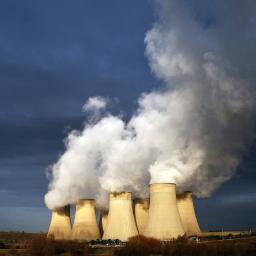
The energy secretary’s much-hyped speech (UK to retreat from climate change goals, says minister, 18 November) was a spectacular display of governmental cognitive dissonance – saying one thing while acting in an entirely contradictory manner. Amber Rudd offered warm words about “a new energy infrastructure, fit for the 21st centuryâ€, yet her department ploughs ahead with firing up outdated high-carbon gas power stations set to burn climate changing fossil fuels for decades to come. Shutting coal power stations is a good move – and campaigners should be applauded for their long-running focus on this important goal – but doing so while promising a wave of new gas power stations simply doesn’t go close to ensuring we meet the energy challenges we face.Rudd spoke of competitiveness being at the heart of our energy system, yet her government has committed to subsidising outrageously expensive nuclear power stations while slashing support for solar and wind, which are popular, cheaper and faster to deploy. In these crucial weeks ahead of the Paris climate talks the government is compounding the failure of its shortsighted energy strategy. Never has a greater chance for rethinking the way we power our communities been presented to us – yet Rudd and her colleagues look set to squander this unique opportunity by hiding behind hot air and spin while failing to take the urgent action needed to tackle climate change.
|
 |
by George Monbiot on (#V3YE)
While all eyes are on human numbers, it’s the rise in farm animals that is laying the planet wasteThis column is about the population crisis. About the breeding that’s laying waste to the world’s living systems. But it’s probably not the population crisis you’re thinking of. This is about another one, that we seem to find almost impossible to discuss.You’ll hear a lot about population in the next three weeks, as the Paris climate summit approaches. Across the airwaves and on the comment threads it will invariably be described as “the elephant in the roomâ€. When people are not using their own words, it means that they are not thinking their own thoughts. Ten thousand voices each ask why no one is talking about it. The growth in human numbers, they say, is our foremost environmental threat. Continue reading...
|
 |
by Oliver Milman in New York on (#V3X5)
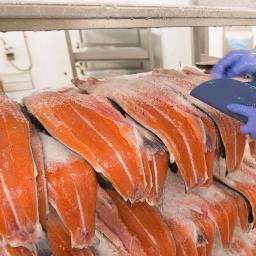
This marks the first engineered animal product to be approved for sale although GM food such as soy and corn are already availableThe production and consumption of genetically engineered salmon has been approved by the Food and Drug Administration, marking the first time that a genetically modified animal product has been cleared for sale in the US.
|
by Emma Howard on (#V3NP)
Alliance of health professionals BMA, eight Royal Colleges, the BMJ and The Lancet warn UK is bucking positive trend of global action on climate changeThe UK is reversing its policies on climate change “without offering credible alternativesâ€, according to an alliance of Britain’s doctors, nurses and other health professionals.Writing in the British Medical Journal (BMJ), they say that natural disasters, food and water insecurity, the spread of infectious diseases and forced migration “are already affecting human health and provide a glimpse of the near futureâ€. Continue reading...
 |
by Emma Howard on (#V3KD)
People around the world should protest ‘on behalf of those who can’t’, say organisers of climate march forbidden in light of Paris terror attacksA march expected to attract 200,000 people onto the streets of Paris ahead of crunch UN climate change talks was forbidden by the French government on Wednesday in light of last Friday’s terror attacks.But organisers have said it is now even more important for people around the world to come out onto the streets for “the biggest global climate march in history†to protest “on behalf of those who can’tâ€. Continue reading...
|
 |
by Andrew Pulver on (#V3A0)
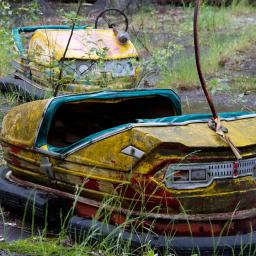
Luxembourg will tell the story of primitive society in a permanent nuclear winter – and will be the second time Miroslav Slaboshpitsky has shot at the locationMiroslav Slaboshpitsky, the Ukrainian director of the award-winning drama The Tribe, is to shoot his follow-up feature inside the Chernobyl exclusion zone, around the site of the world’s worst nuclear power plant disaster.Related: The Tribe review – one of the most disturbing films of the year Continue reading...
|
 |
by Adam Vaughan on (#V31T)
Officials told to stop issuing import permits for lion heads, paws and skins, while country considers stricter controls on other speciesFrance has banned the import of lion heads, paws and skins as hunters’ trophies, nearly four months after the killing of Zimbabwe’s most famous lion by an American trophy hunter sparked international outrage.In a letter to the actor and animals rights activist Brigitte Bardot, France’s environment minister, Ségolène Royal, said that she had instructed officials to stop issuing permits for lion trophies and was considering stricter controls on trophies from other species. Continue reading...
|
by Helen Pidd on (#V2Z9)
Cycling legend Eddy Merckx will be reunited with nine of his winning jerseys at the Rouleur Classic in London tonight. Here are some of the most stylishTwenty-five years ago Californian Brett Horton started his collection of cycling ephemera. This weekend perhaps his most valuable pieces – nine jerseys worn by the five-time Tour de France winner and multiple world champion, Belgium’s Eddy Merckx – will be on show at the Rouleur Classic expo in London. Merckx will be reunited with the jerseys on Thursday night when he attends the show. Their total value is now estimated at $304,000 (£198,426). Continue reading...
 |
by Adnan Z. Amin on (#V2VY)
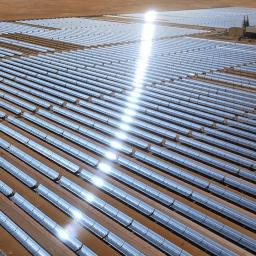
Oil-rich countries are choosing renewables as a means to create jobs, boost GDP and improve livelihoods - as well as reduce emissionsAccelerating signs of climate change and rising global temperatures are perhaps more pressing here in the Middle East, where the International Renewable Energy Agency (Irena) is headquartered, than anywhere else on the planet.Record-breaking temperatures made global headlines this year and a recent scientific study predicts the region will face heatwaves “beyond the limit of human survival†if climate change remains unchecked. Continue reading...
|
 |
by Suzanne Goldenberg on (#V2V0)
White House regards moves to oppose the US deal and block $3bn in climate aid for developing countries as empty threatsRepublicans moved for the second time in 24 hours on Wednesday to try to weaken Barack Obama’s position at the Paris climate negotiations, opposing a deal at the summit and threatening to block $3bn in aid pledged to developing countries.
|
 |
by Heriberto Araujo on (#V2SS)
Iron ore residue from the collapse of a mining dam, part-owned by BHP Billiton, has been passing down the Rio Doce in south-east Brazil. Pollutants have killed aquatic life and left residents of the towns of Resplendor and Baixo Guandu without clean water Continue reading...
|
by Press Association on (#V2PV)
Conservationists and angling organisations argue Defra and Environment Agency are failing in legal duty to protect rivers and wetlands from agricultural pollutionConservationists and angling organisations have joined together to challenge “a government failure†to protect some of England’s “most precious rivers and wetlands†from agricultural pollution.
 |
by Katharine Murphy on (#V2G1)
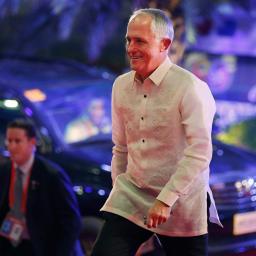
There’s been joyful exuberance and solemn statesmanship, and squeezed in among meetings with world leaders, some carefully calibrated policy resetsWe’ve ridden a clear cycle with the prime minister since leaving Australia a week ago.Related: Malcolm Turnbull's reality check finds him adrift in Europe's sea of uncertainty | Katharine Murphy Continue reading...
|
 |
by Reuters on (#V251)
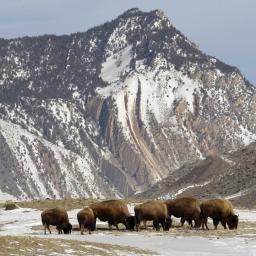
National park authorities want to kill one in five animals to bring population down to target sizeYellowstone National Park is proposing to reduce its celebrated bison herd by 1,000 animals this winter by rounding up those wandering into adjacent Montana and delivering them to Native American tribes for slaughter, officials said on Wednesday.
|
by Phil Gates on (#V24H)
Hawthorn Dene, Durham Clocks askew as a wild rose with ripe hips still bears petals and the elder’s blossom appears as birds strip its berriesThere is something unsettling, finding a wild rose in bloom in November on a bare stemmed bush bearing ripe rose hips. We found this echo of summer in the lee of a hedge near the old limestone quarry, among the burnt umber and bistre shades of withered docks and grasses, and the crimson and blue-black fruits of hawthorn and sloe.Generations of amateur botanists have taken part in annual winter wild flower hunts run by the Wild Flower Society, finding tenacious late bloomers like hogweed and yarrow in the darkest months. Such floral sightings used to excite just a little curiosity but lately awareness of the potential effects of climate change has brought speculation about the long-term biological implications of out-of-season flowering. Continue reading...
 |
by Melissa Davey on (#V239)
Anote Tong says freeze on new coalmines before global climate summit in December ‘easiest, most reasonable’ way to help reduce emissionsThe president of the Pacific Island nation of Kiribati, Anote Tong, has urged the Australian government to support a moratorium on new coalmines before the global climate summit in Paris in December.Tong, who was in Melbourne for a public meeting hosted by the Australia Institute on Thursday, said it was the “easiest, most reasonable†measure world leaders could commit to to reduce emissions. Continue reading...
|
by Graham Readfearn on (#V1XY)
Ambassador for the environment Peter Woolcott says terrorist attacks in Paris ‘will only strengthen’ France’s desire for a strong climate deal
 |
by Ben Quinn on (#V0TK)
French government says demonstrations in closed spaces can go ahead but not those in public placesMajor marches which had been planned to coincide with the COP21 international climate talks in Paris will not be authorised for security reasons, the French government has said.Environmental activists – who had expected attract hundreds of thousands people on 29 November and 12 December – said that they accepted Wednesday’s decision with regret, but were now considering “new and imaginative†ways of making their voices heard. Continue reading...
|
by Melissa Davey on (#V1G7)
As a plan to make brown coal briquettes for export to China fails to attract private cash, the state will assess whether past projects gave value for moneyThe Victorian government has announced an independent review of coal development projects after a demonstration plant in the Latrobe Valley which was set to receive federal and state funding failed to attract private investment.The project to make brown coal briquettes for export to China was withdrawn less than 12 months after Shanghai Electric Australia Power and Energy Development Pty Ltd was awarded state and federal government funding. Continue reading...
 |
by Arthur Neslen on (#V1FX)
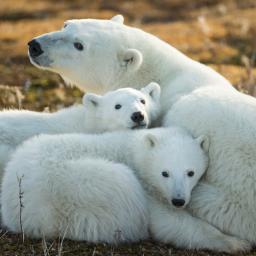
‘High probability’ of a 30% decline in polar bear numbers by 2050 due to retreating sea ice, IUCN study findsGlobal warming is now the single most important threat to the survival of the polar bear with retreating sea ice set to decimate populations, according to a new study by the International Union for the Conservation of Nature (IUCN).It found a “high probability†that the planet’s 26,000 polar bears will suffer a 30% decline in population by 2050 due to the loss of their habitat, which is disappearing at a faster rate than predicted by climate models. Continue reading...
|
 |
by Oliver Balch on (#V1G8)
A more sustainable supply chain is needed, but will only emerge when the breakdown in trust between suppliers and buyers is resolvedMajestic Wine this week announced the removal of its chief buyer after its pre-tax profits dropped by almost half. Supply chain relations at the ailing retailer have been tense ever since it asked suppliers to stump up cash towards its new warehouse.Regrettably, such practices are all too common. Global brewer Carlsberg is also facing animosity from suppliers after following the likes of Diageo, Halfords and Mars and extending its payment terms to 93 days. Continue reading...
|
 |
by Oliver Milman on (#V16D)
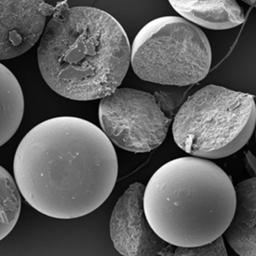
House committee unanimously approves proposed legislation to phase out such personal care products, whose exfoliants can end up in rivers and lakesUS lawmakers are to decide whether to ban personal care products containing microbeads – minuscule pieces of plastic considered harmful to the environment – after proposed legislation was approved by a bipartisan committee.Microbeads, typically under 5mm in size, are used as abrasive exfoliants in products such as toothpastes and facial cleaners. They often evade water filtration systems and flow into rivers, lakes and streams, where they can be mistaken for food by fish. Pollutants can bind to the plastic, causing toxic material to infect fish and, potentially, the humans that consume them. Continue reading...
|
 |
by Kipper Williams on (#V0Y0)
Gas-fired power given a big boost at the expense of coal … and renewables Continue reading...
|
by Editorial on (#V0S2)
It is hard for France’s capital to look beyond the terror attack, but the decisions taken at the UN climate change conference may in the end matter moreWhile Europe is on high alert against another murderous terrorist attack, it will be hard for Paris to look beyond the next 24 hours. But soon delegates start arriving in the French capital for preliminary meetings ahead of COP21, the United Nations climate change summit which will be launched on 30 November with all the grandeur attendant on a gathering of global leaders. There is a certain symmetry to the two events that goes beyond the nightmare task facing France’s overstretched security forces. As the UK foreign secretary Philip Hammond pointed out in an important speech in the US only days before the Paris attacks last Friday: “Unchecked climate change … could have catastrophic consequences – a rise in global temperatures … leading in turn to rising sea levels and huge movements of people fuelling conflict and instability.â€There are reasons to be optimistic about a useful outcome from these negotiations, not least the determination of President Barack Obama’s team to deliver a deal with some kind of legal force. But any deal will mark the start rather than the end of the process. Continue reading...
 |
by Letters on (#V0RJ)
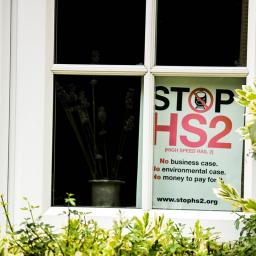
Patrick Barkham’s article about the HS2 route through the countryside (The long read, 17 November) was excellent – a compelling overview of its effect on rural communities. But, though any article about the omnishambles that is HS2 is welcome, it was incomplete. Perhaps Patrick could also now wander around Camden to see and record the devastation that HS2 will bring to urban residents: 24/7 working with all the associated noise and pollution that goes with such work through a conservation area; fragile houses – part of John Nash’s scheme for Regent’s Park – being drilled under for the purpose of installation of concrete staves; roads closed for years; tower blocks destroyed; Drummond Street (known for its Asian restaurants) destroyed; London Zoo car park taken over by HS2’s HGVs, which threatens the endangered hedgehog community.Small local businesses will be jeopardised due to noise and lack of access, and there will be no compensation in any form for those living within the M25. An article on HS2’s effects on Camden would surely be an equally depressing but irresistible read.
|
 |
by Letters on (#V0S3)
I note the reference to my practice, Forbes-Laird Arboricultural Consultancy, in an article on your Opinion pages (Notebook: The animals of Smithy Wood, 18 November).Any decision to grant planning permission affecting ancient woodland is taken after careful scrutiny of the proposals, with matters of need, benefits and harm – and whether this latter can be mitigated against or compensated for – all being considered. Continue reading...
|
 |
by Nils Pratley on (#V0KQ)
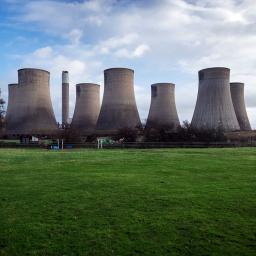
The energy secretary’s announcement of a ‘new energy model’ leaves just as many questions as there were beforeAmber Rudd’s “new model†for the UK’s energy market looks very like the old model. It is a mix of the legally necessary, the uncertain and the expensive.At least it was served with an amusing garnish – the idea that government will one day be able to step back and let market forces supply the nation’s energy needs. Pull the other one. In the age of nuclear, renewables and internationally binding targets for reducing carbon dioxide emissions, energy infrastructure only gets built when the government agrees subsidies and sets economic incentives. Energy secretaries will be in the “reset†game for years. Continue reading...
|
 |
by Rob Davies on (#V0KS)
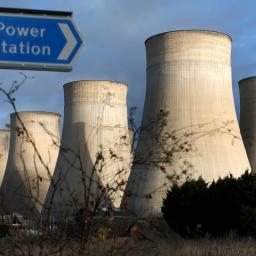
Rival energy suppliers have joined forces in attacking Amber Rudd’s announcement that gas is future of British powerCoal and renewable power firms have formed an unlikely alliance to criticise government plans to put gas and nuclear at the centre of UK energy supply.The energy secretary, Amber Rudd, has claimed she will resetUK policy and has promised to shut down polluting coal-fired power stations by 2025.
|
 |
by Agence France-Presse in Vienna on (#V0EQ)
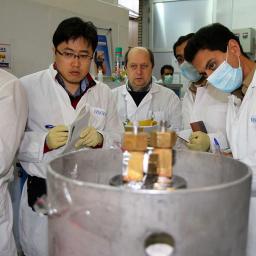
IAEA says country has broken up 4,500 centrifuges under landmark deal but has some way to go until all commitments are metIran has begun dismantling parts of its nuclear programme, as agreed in a landmark deal with major powers, the UN atomic watchdog has said.Iran has started removing centrifuges and related infrastructureat the Natanz and Fordo enrichment facilities, the International Atomic Energy Agency quarterly report said on Wednesday. Continue reading...
|
 |
by Press Association on (#V05M)
Canada has opened its market to imports of British beef alongside 19 EU member statesCanada has formally reopened its market for imports of British beef for the first time since 1996 as part of a deal that includes 19 EU member states.The environment secretary, Elizabeth Truss, said she welcomed the move as recognition of the world-class reputation of British beef and the UK’s welfare standards. Continue reading...
|
 |
by Craig Bennett on (#V03K)
Renewable energy ‘must stand on its own two feet’ yet subsidies for nuclear and fossil fuels continue unabated, and energy efficiency policies are axed with no thought as to what might replace themIt’s difficult to decide which characteristic best describes the government’s approach to climate and energy policy since 8 May; hypocrisy or incompetence.If that seems harsh on a day when the energy secretary has announced a phase-out of coal, the most polluting of fossil fuels, then let me explain. Continue reading...
|
 |
by AP in Havana on (#V01K)
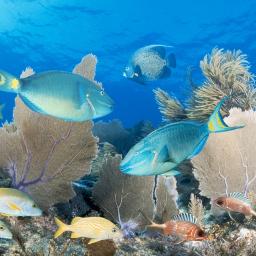
National sanctuaries in Florida and Texas will partner with Guanahacabibes national park and the Banco de San Antonio to preserve fragile ecosystemsThe United States and Cuba are set to reach their first accord on environmental protection since announcing plans to re-establish diplomatic relations, linking up marine sanctuaries in both countries to cooperate on preservation and research.US National Oceanic Atmospheric Administration chief Kathryn Sullivan is in Havana to sign the agreement on Wednesday and continue talks on a host of environmental issues common to the two countries, separated by just 90 miles (140km) of water. Continue reading...
|
 |
by Emma Howard on (#TZZV)
Hot rocks beneath the visitor attraction in Cornwall could generate enough clean energy to power the site and 4,000 homes, in one of the UK’s only geothermal plantsA tropical fish farm, medical facility and computer servers could be powered by “hot rocks†underneath the Eden project if plans to create one of the UK’s only geothermal plants get underway.The visitor attraction is bidding for part of a £12m EU fund awarded to Cornwall, after it said the government had turned down requests to match fund the £37m project. The three-four megawatt (MW) plant’s backers at Eden said it would take three years to build but generate enough clean heat and electricity to power the site, as well as 4,000 homes via the national grid. Continue reading...
|
 |
by Damian Carrington on (#TZWF)
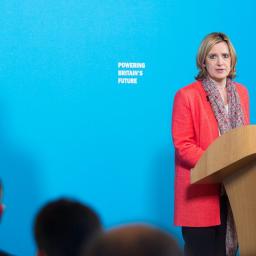
While the Paris climate summit is set to launch the world towards renewable energy, UK energy secretary Amber Rudd is backing nuclear power and gasThe UK’s new energy policy, sketched out on Wednesday by Amber Rudd, will keep the lights on. That’s the good news. But it makes meeting the UK’s carbon emissions targets harder and will cost energy bill payers more.This is the result of the many contradictions it contains. Energy bills must be “as low as possibleâ€, Rudd says, but the government is turning its back on the cheapest clean options: energy efficiency, onshore wind and solar power. Coal must be phased out but only to be replaced by gas, another fossil fuel which itself must be largely phased out within 15 years. All energy technologies must compete in a market - unless it is nuclear power. Continue reading...
|
by Lenore Taylor Political editor on (#TZE6)
EXCLUSIVE: Academics suggest scheme that would slow sector’s emissions without expensive government subsidies or need for carbon pricePower generators would be forced to pay for the closure of a competitor’s dirty brown-coal fired plant under a radical plan that could help Australia slow the continued increase in electricity sector greenhouse emissions without a carbon price or expensive government subsidies.The idea – from Australian National University academics Frank Jotzo and Salim Mazouz – offers the government hope of meeting the long-term emission reduction targets it will promise in Paris and provides the energy sector with a solution to the problem of oversupply that has forced the mothballing or under-use of less polluting types of generation. Continue reading...
 |
by Emma Howard on (#TZBE)
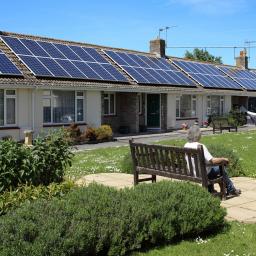
Proposed cuts will halt solar panel schemes on up to 45,000 UK social homes, that could save households £200 a year on energy bills, say renewable energy firmsPlans to put solar panels on up to 45,000 social houses in the UK will be shelved if government subsidy cuts go ahead in January as promised, renewable energy companies have told the Guardian. Continue reading...
|
 |
by Lars Eriksen in Gothenburg on (#TZ8B)
It’s a simple idea. The Swedish city’s Stadsleveransen system pools deliveries for 500 shops and businesses – drastically reducing shopping centre traffic and freeing up once-congested streets for pedestrians and cyclists“I call it the rolling deckchair,†says Johan Erlandsson as his six-wheeled cargo bike, the Velove Armadillo, glides down the cobbled pedestrian streets of central Gothenburg. Stretching 14ft long but only 34 inches wide, the sleek machine is crafted from red-coated aluminium with a pedal-assisted electric drive and a trailer that is low enough for other cyclists to look over.
|
by Associated Press on (#TZ78)
Opposition from Japan overcome in compromise agreement hailed as ‘major step forward’ by US officials, although not all export financing for coal will be eliminatedA compromise struck by the United States, Japan and several other major nations will restrict export financing to build coal power plants overseas, but not eliminate it completely.The agreement reached Tuesday is an important step forward that sends a strong political message ahead of upcoming international climate change negotiations in Paris, an American official and environmentalists said. Japan and the United States were long at odds on this issue. Continue reading...
by Marc Gunther on (#TZ79)
While the retail giant has met some of its sustainability goals, it has failed to set science-based targets for climate emissions or speed up progress on renewablesIt’s been 10 years since Lee Scott, the then-CEO of Walmart, publicly set the giant retailer on a path towards sustainability. In an influential speech, “Twenty-First Century Leadershipâ€, Scott pledged that the company someday would be supplied entirely by renewable energy, that it would eliminate waste and that it would sell products that sustain people and the environment.Related: Amazon, Best Buy and the free rider problem Continue reading...
 |
by AFP on (#TZ5T)
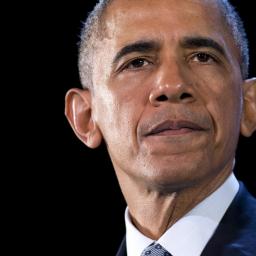
But US president warns there is still ‘a lot of work to do’ at UN climate summit which he said will send signal to businesses to go ‘all-in on renewable powerUS president Barack Obama said on Wednesday he was optimistic an elusive deal to contain global warming could be forged at an upcoming crunch summit in Paris, and insisted an ambitious deal would boost a flagging world economy.In a speech to an Asia-Pacific business conference in the Philippines, Obama said there was still a “lot of work to do†to ensure success at the United Nations summit. Continue reading...
|
 |
by Rowena Mason Political correspondent on (#TXTA)
Amber Rudd vows to close coal-fired stations by 2025 but says balance has swung too far in favour of green policiesThe UK will close all coal-fired power plants by 2025, the first major country to do so, but will fill the capacity gap largely with new gas and nuclear plants rather than cleaner alternatives.The announcement came in a speech by the energy secretary, Amber Rudd, which she described as a “reset†of Britain’s energy policy on Wednesday. Continue reading...
|
 |
by Karl Mathiesen on (#TZ5V)
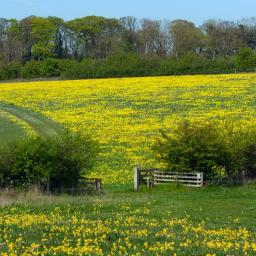
The organic-or-not debate ignores a crucial further option. Setting aside tracts of land for wildlife habitat can benefit bees, butterflies and plants without harming crop yieldsNon-organic farmers can do much more to foster wild plants, butterflies and bugs without giving up on pesticides, according to new research, but organic farms still bring the largest benefits for wildlife.In the UK, 80 non-organic farms have signed up to the conservation grade (CG) scheme. This requires them to turn 10% of their land over to habitat specifically targeted at supporting their local ecology. In return, farmers brand their products with a “Fair to Nature†accreditation and can charge a premium for them. Continue reading...
|
by Dana Nuccitelli on (#TZ4C)
Thanks to human-caused global warming and an assist from El Niño, 2015 will easily be the hottest year in millennia