 |
by Kate Lyons, Nabeelah Shabbir, Michael Bauchmüller on (#T0BJ)
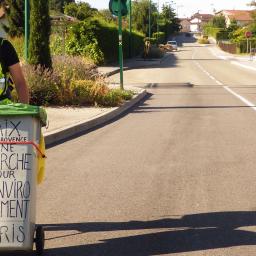
From picking up rubbish to cleaning the sea, people across the continent are making a huge a differenceClimate change has vanished from the headlines since the financial crisis elevated other economic concerns to the top of the agenda. But across Europe there is no shortage of activists trying to make a difference before this month’s UN climate summit. Continue reading...
|
| Link | http://feeds.theguardian.com/ |
| Feed | http://feeds.theguardian.com/theguardian/environment/rss |
| Updated | 2026-08-20 15:15 |
 |
by Tomasz Ulanowski in Warsaw, Manuel Planelles in Ma on (#T0BM)
Deserts in Spain, snowless ski resorts in Italy, deforestation in Germany – and seas that keep on rising
|
by Adam Vaughan on (#T0A4)
Supermarket’s test of customer support for cosmetically imperfect vegetables fails to convince chef, whose new BBC series highlights food waste in BritainSupermarket Morrisons’ efforts to encourage customers to buy wonkier-shaped vegetables have been branded “pathetic†by the chef Hugh Fearnley-Whittingstall.The BBC show Hugh’s War on Waste last week saw the broadcaster giving away oversized and curvy parsnips outside a Morrisons branch in Wimbledon, to highlight the food waste he says is caused by supermarkets’ excessively exacting cosmetic standards. Continue reading...
 |
by Simon Ingram on (#T06H)
King’s Cliffe, Northamptonshire There’s not much left of the airfield now. Roofless buildings with narrow eyes, clearings. It’s farmland, mostly. What remains hides behind summer leaves yet to atrophy to winter bones
|
by First Dog on the Moon on (#T05S)
Does it eat something very specific and live in a place that we’ve chopped down? Then you may have an endangered creature
 |
by Tom Phillips in Beijing on (#T047)
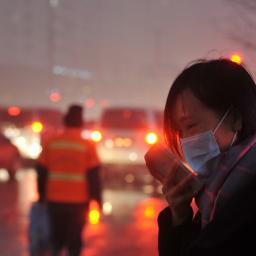
In some areas level of harmful particles in the air were 56 times the levels considered safe by the World Health OrganisationResidents of north-eastern China donned gas masks and locked themselves indoors on Sunday after their homes were enveloped by some of the worst levels of smog on record.
|
by Joshua Robertson in Brisbane on (#T00C)
Australian Conservation Foundation takes battle against Queensland mine to federal court, arguing Greg Hunt failed to consider the impact of climate pollution on the Great Barrier ReefThe Australian Conservation Foundation has launched what it described as a historic bid to have the federal government’s approval of Adani’s Carmichael coalmine declared illegal – but the action has prompted one Coalition senator to renew calls for a crackdown on so-called “green lawfareâ€.The ACF on Monday lodged the challenge in the federal court in Brisbane, arguing the environment minister, Greg Hunt, failed to consider the impact of climate pollution from Australia’s largest proposed mine on the Great Barrier Reef. Continue reading...
 |
by Martin Farrer and agencies on (#SZWY)
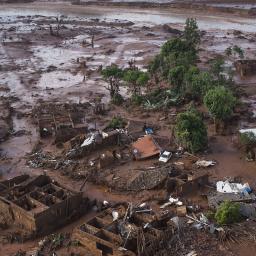
Shares in the mining multinational continued to fall amid calls for more regulation in the wake of the collapse of two dams at its co-owned iron ore mineThe boss of BHP Billiton will arrive in Brazil on Monday to see at first-hand the devastation wrought by the collapse of a dam at an iron ore mine co-owned by the company that has left at least two dead and dozens missing.Three days after the rupturing of two dams unleashed a massive flood of mud on nearby villages, authorities were still struggling to determine the cause of the disaster or even recover the bodies of as many as 28 people lost in the torrent. Continue reading...
|
 |
by Dulce Ramos in Mexico City on (#SZS2)
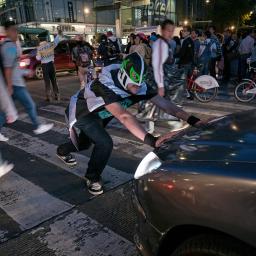
Clogged with traffic, crippled by poor infrastructure – the capital is notoriously hard to navigate on foot. Enter Peatónito, the activist fighting for safer streetsThe traffic light turns red at the corner of Avenida Juárez and Eje Central, the busiest pedestrian crossing in Mexico City, used by around 9,000 people every hour. Tonight, a driver stops his grey Peugeot exactly on the crossing where the masses are trying to pass. His car is now a steel barrier for those trying to reach the Palacio de Bellas Artes. A masked man dressed in black makes his way through the river of people, walking purposefully towards the Peugeot. His black and white striped cape, reminiscent of a zebra crossing, flaps behind him. He goes to the car, flings his cape over his shoulder, and pushes the Peugeot backwards to make space.“My name is Peatónito, and I fight for the rights of pedestrians,†he says, introducing himself. The driver smiles and reverses willingly and eventually the pair shake hands. With the pedestrian crossing again flowing as it should, Peatónito heads back to the pavement where he will wait until he is needed again. The traffic light turns green. Continue reading...
|
 |
by Mark Anderson on (#SZAB)
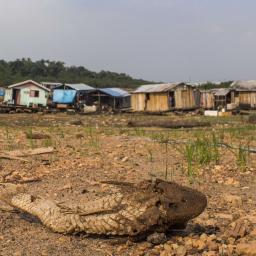
Efforts to curb climate change must be twinned with programmes to cut poverty, warns a study of the threat posed by global warming to food securityThe world must pair efforts to stabilise climate change with programmes to eliminate poverty if vulnerable people are to be kept from falling back into hardship as rising temperatures wreak havoc on food security and livelihoods, a report has said.As many as 100 million people could slide into extreme poverty because of rising temperatures, which are caused by greenhouse gas emissions, the World Bank report said. The bank’s most recent estimate puts the number of people living in extreme poverty this year at 702 million, or 9.6% of the world’s population.
|
 |
by Maev Kennedy on (#SZJS)
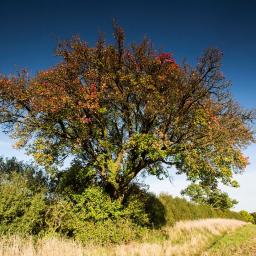
250-year-old Cubbington pear named tree of the year after public vote but is set to be felled to make way for transport schemeThere is good news and bad news for the 250-year-old Cubbington pear tree, one of the oldest and largest wild pears in Britain. The good news is that it has scooped the Woodland Trust tree of the year title after attracting more than 10,000 votes from members of the public. The bad news is that its hilltop site in Warwickshire is in the proposed path of the HS2 train line.HS2 planners say that because the tree has a hollow trunk it would be impossible to move elsewhere, but promise that it will be propagated from cuttings. Continue reading...
|
 |
by RC Spencer on (#SZJ3)
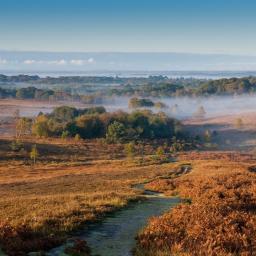
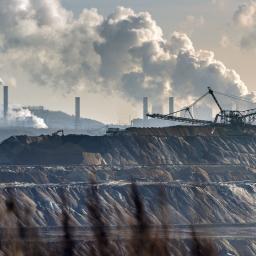
Originally published in the Manchester Guardian on 7 November 1915Surrey
|
 |
by Juliette Jowit on (#SZ2G)
Speaking before Paris summit, expert says Europe must take urgent steps such as ending fossil fuel subsidies and encouraging electric carsEurope has to step up its effort to combat climate change and wake up to the urgency of the situation, the climate change expert Lord Stern has said before crunch UN talks in Paris later this month.Europeans need to end subsidies for fossil fuels, multiply energy efficiency efforts, improve mass public transport systems and accelerate the roll-out of electric cars in order to live up to their commitments, Stern told the Guardian in an interview. Continue reading...
|
by Lettie Kennedy on (#SYKS)
Patrick Barkham’s guide to Britain’s Neptune Coast teems with characters, history and literary allusionIt is often said that Britain is a maritime nation but, writes Patrick Barkham in his new biography of the British shore, we might be more accurately described as “a coastal nation, happiest when looking seawardâ€.Examining our enduring love of the seaside, Coastlines addresses themes of childhood, passion, war, industrialism, art and faith, and the ways in which each has coloured perceptions of the shore. Alongside lurid tales of Cornish wreckers and chronicles of the first saints of Lindisfarne sit skilful pen-portraits: an account of the painter Rex Whistler creating his grandiose symbolic panorama at Plas Newydd in Anglesey during the 1930s is brilliantly evocative, while one of the book’s most moving passages tells the story of Keith Lane, whose wife’s suicide at Beachy Head prompted him to become an unofficial counsellor to others he encountered on the Sussex cliffs. Barkham is adept at capturing the genius loci of a landscape, too: Dunstanburgh Castle in Northumberland, built by the Earl of Lancaster in the 14th century, is “a dark Avalon of colossal ambitionâ€, while the dreadful “pagodas†at the abandoned MOD facility on Orford Ness are memorably described as “psychotic cathedrals of Mutually Assured Destructionâ€. Continue reading...
 |
by Airah Cadiogan on (#SY2D)
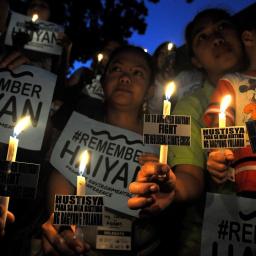
The second anniversary of typhoon Haiyan is a timely reminder that the world’s most vulnerable communities should be at the heart of the Paris climate talksIn the small fishing town of Salcedo in the Philippines’ Eastern Samar province, fishermen and women have been struggling to feed themselves since Haiyan first made landfall 20km away on 8 November 2013.Already among the poorest people in the country, their livelihoods were shattered when eight-metre high waves wrecked the coral reef near their area. Continue reading...
|
by Marcus Barnes on (#SY33)
Ex-train-tagger Marcus Barnes found himself arrested for ‘encouraging’ crime when he produced a graffiti magazine. Here he tells the story of the three-year nightmare that ensued and examines our contradictory attitudes to the art formOn Monday 12 December 2011 a three-year ordeal, which my barrister later described as an “Orwellian nightmareâ€, began. I woke up to a text message from my sister: “Marcus your [sic] gonna go mad. The police are here and they’re taking all your magazines and stuff from your room.â€The British Transport Police had been on my trail for a year or so and I was well aware that my past crimes as a graffiti artist might catch up with me – associates of mine had been apprehended, as part of Operation Jurassic, an investigation into the activities of their crews GSD (Goat Squad) and YRP (Yard Raving Posse), who were prolific on trains here in the UK and overseas. My name had come up during their interviews because I’d travelled abroad with some of them to indulge in “graffiti tourism†in countries where attitudes to graffiti are more lax and permissive. What I didn’t realise was that I was to become the first person in the UK to be charged with “encouraging the commission of criminal damage†contrary to section 46 of the Serious Crime Act 2007 as part of Operation Pandora, an offshoot of Operation Jurassic focused entirely on me, Marcus Anthony Barnes, and my magazine, Keep the Faith. Continue reading...
 |
by Elizabeth Day on (#SY00)
A magical encounter in the sea off Hawaii changed Susan Casey’s life and set her on a quest to discover more about one of the most loved marine mammalsSusan Casey hadn’t given that much thought to dolphins when she went for a swim off the north shore of the Hawaiian island of Maui one afternoon in July 2010. In fact, she was more worried about sharks. The weather was bad – low clouds and a stormy sea – and there had been a recent spate of shark attacks in the area. It was dusk and no one else was in the water.But Casey was drawn to the shoreline. She was flying back to her life as a magazine editor in New York city the following day and this was the last chance she would have to kick out against the waves. Continue reading...
|
 |
by Lucy Siegle on (#SXSV)
Avoid the usual toxic brew by choosing from the increasing range of natural productsA friend of mine swears by Dr Bronner’s organic soap. She uses it to wash her hair and body, and also to clean the shower afterwards.I used to think she was being puritanical; then I found out the average woman uses 12 toiletries per morning, containing 168 ingredients. Now I admire her brave anti-materialism. The fewer ingredients, the less the chance of creating a toxic brew with a negative impact on the planet. Continue reading...
|
 |
by Elizabeth Day in Los Angeles on (#SXCF)
As residents cut water use, even the rich rage at the mysterious ‘Wet Prince of Bel Air’, who used 11.8m gallons in one yearDean Gamburd has been a Bel Air resident all his life. Normally, he has nothing but good things to say about his neighbourhood, one of the most affluent in Los Angeles, where the streets are lined with opulent houses and well-tended flowerbeds. Jennifer Aniston, Nicolas Cage and Kim Kardashian have homes here. It’s a nice place to live.But today Gamburd, a former firearms consultant in his 60s, is angry. Very angry. “It’s criminal,†he says, sitting at a table outside Starbucks. “There’s no other word to use.†Continue reading...
|
 |
by Observer editorial on (#SXCS)
Since the election, the government has performed a series of dizzying U-turns on its green policiesPresident Obama reputedly remarked of the forthcoming UN climate change summit: “I’m dragging the rest of the world behind me to Paris.†Later this month, 149 nations will congregate to agree national targets for reducing carbon emissions. But Britain, once regarded as a global leader, has relegated itself to the ranks of those reluctantly being pulled along in Obama’s wake.Since the election, the government has performed a series of dizzying U-turns on its green policies. It has announced cuts to subsidies for onshore wind and solar energy; scrapped the zero carbon homes standard; ended the green deal for home insulation; and reversed its promise to exclude national parks from fracking. Continue reading...
|
 |
by Reuters in Mariana on (#SX8V)
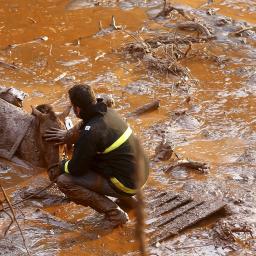
Nineteen people missing as mining executives suggest that an earth tremor could have triggered the disastrous collapse of two damsRescue teams have struggled to reach villages devastated by a massive mudflow after two dams burst at a major iron ore mine in south-east Brazil.The twin bursts, which mining executives think could have been triggered by an earth tremor, wrought havoc more than 50 miles downstream and prompted officials to warn that many people are likely to have died. Continue reading...
|
 |
by Guardian staff and agencies on (#SX76)
Adam Bandt and Richard Di Natale say a carbon tax delivers as much to the budget as increasing or broadening the GST, while costing households lessRelated: Raising GST to 15% 'will cost poorest families 7% of disposable income'The Australian Greens say a carbon tax would raise as much revenue as increasing the GST rate or broadening its base, while also reducing pollution. Continue reading...
|
 |
by John Vidal on (#SX1G)
Twenty years after ‘judicial murder’, Nigeria’s Ogoni people highlight international storm over oil spillage pollutionLeaders of Nigeria’s Ogoni people have threatened to disrupt the country’s oil industry if the government does not release a British artwork commemorating the 20th anniversary of the execution of the writer Ken Saro-Wiwa.
|
 |
by Daniel Boffey on (#SWHG)
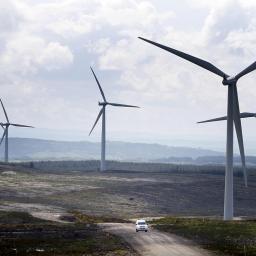
John Gummer, PM’s climate change adviser, fears impact of subsidy cuts to solar and wind powerDavid Cameron’s chief climate change adviser has warned that the government is “clearly failing†in key policy areas and needs to regain the confidence of investors in green technology, in the runup to next month’s crucial global summit in Paris.Lord Deben, chairman of the UK’s independent committee on climate change, told the Observer of his concerns, particularly regarding the continued waste of energy from draughty homes and the failure to exploit the potential of renewable heat technology. Continue reading...
|
 |
by David Agren in Calgary on (#SW9M)
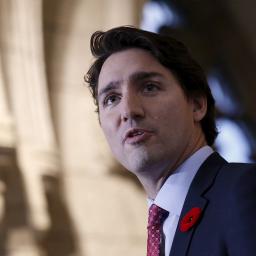
Prime minister looks forward but some have accused the US of ‘hypocrisy’, as shale oil production sent US production soaring by four million barrels per dayThe Obama administration’s decision to kill the Keystone XL pipeline met with disappointment and derision – though little surprise – in Calgary, the boomtown-turned-bust capital of Canada’s oil industry. It also induced some provincial angst as Alberta attempts to open new markets for a product that floats rough 50% of its economy.
|
 |
by Karl Mathiesen in New York on (#SW8N)
Obama said approving project would undercut global leadership as climate change is a diplomatic imperative that overrides traditionally domestic interestsThe symbolism was everything. Standing before a portrait of Teddy Roosevelt, the conservationist president who 104 years ago busted the Standard Oil monopoly, Barack Obama made his own tilt at an environmental legacy.
|
by Design by James McLeman on (#SVRH)
In a circular economy, everything is designed so that nothing is sent to landfill. Use this interactive to learn what this means for the design of different car parts
 |
by Dave Hill on (#SVJW)
Boris Johnson’s east London suburban cycling scheme is meeting strong opposition, though estate agents seem very keen on itIt was a lively scene outside Walthamstow Town Hall: hundreds of people, young and old, female and male of many faiths and ethnicities united in advance of a full council meeting against what they see as the heedless imposition of one of Boris Johnson’s “mini-Holland†cycling infrastructure schemes. “Let’s have justice not a dictatorship,†read one placard. “We are not the silent minority, we are the vocal majority,†a banner cried.This is not how things were meant to be. When the Labour-run borough secured “full mini-Holland status†and £30m from Conservative-run City Hall in March 2014, Johnson declared himself “incredibly impressed†by the “thirst†of all the leading borough funding bidders “to transform themselves into better places for people.†Clearly, a lot of people who live in Waltham Forest aren’t seeing the changes in their streets in quite that way. Continue reading...
|
 |
by Miles Brignall on (#SVJ7)
Some households are eligible for grants and free insulation – or even new boilersThousands of householders – particularly those on low incomes – are missing out on free energy efficiency measures, including new boilers, because they may not be aware that help is available. Since 2013, energy firms have been ordered by the government to reduce energy consumption and support people at greater risk of fuel poverty through what is known as the energy company obligation (ECO) scheme.So far around 1.5m energy-saving measures have been installed in households across Britain, at a rate of around 25,000 a month. However, with winter weather just around the corner, householders who live in older properties that may not have such measures in place are being encouraged to see if they are entitled to a free or low-cost upgrade. Continue reading...
|
 |
by Jim Perrin on (#SVE4)
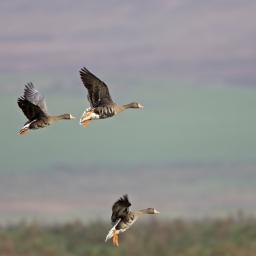
Poppit Sands, Pembrokeshire Greenland whitefronts come from the cold north to overwinter here, and run the gauntlet of “sportsmenâ€, their blued barrels loaded with deadly ejaculateAlong the dune-path, sloes and haws hung from thorn thickets, late flowers grew in profusion: bladder campion, herb robert, guelder rose, colonies of evening primrose, michaelmas daisies, clotted blooms of faded meadowsweet, rustling dry spikes of ladies’ tresses. By stepping stones marking the change of spring-fed stream to saltwater rhyne, a kingfisher burst from the reeds, whirred low above the water, its flash of orange and azure in brilliant contrast to mud banks between which a little egret, infinitely graceful of form, stalked on yellow feet and stabbed down with dark dagger beak. Skeins of geese calling plangently wheeled high overhead before gliding down to net-pools upriver of perilous Cardigan Bar: Canada geese and Greenland whitefronts come from the cold north to overwinter here, and run the gauntlet of “sportsmenâ€, their blued barrels loaded with deadly ejaculate, against whom the Welsh government affords this declining and lovely waterfowl scant protection.Related: Country diary: Talsarnau, Gwynedd: Alarm call from the plover, as the wildfowling season approaches Continue reading...
|
 |
by Rachel Dixon on (#SVAG)
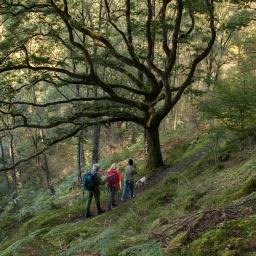
You don’t have to go to Brazil to trek through a rainforest – Snowdonia has its very own wet woodland just waiting to be exploredDoes the phrase “save the rainforest†conjure up visions of: a) Brazil, b) Borneo, or c) north Wales? You may not know it but Britain is home to 70,000 hectares (173,000 acres) of rainforest, in areas including western Scotland, Cumbria, south-west England and, yes, north Wales. And these temperate forests are just as precious – and under just as much threat – as their tropical counterparts.
|
 |
by Reuters in Mariana on (#SV59)
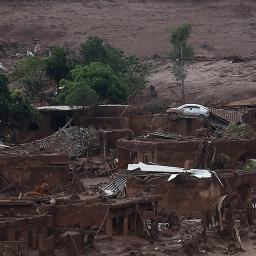
Rescuers continue search for survivors after flooding from two collapsed dams used by mines owned by BHP Billiton and Vale swept through six villagesRescue teams searched through mud and debris on Friday for dozens of people missing after a pair of dams collapsed at a Brazilian mine owned by two of the world’s biggest iron ore producers.
|
by Lenore Taylor Political editor on (#STNP)
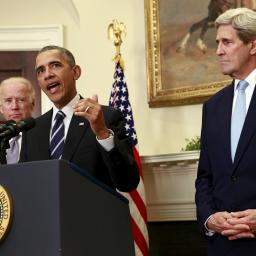
Exclusive: mirroring the Turnbull government’s tax debate with all options ‘on the table’, six different climate policies are canvassed at closed-door summitLeaders from business, welfare, the conservation movement, the electricity sector and the union movement have moved to try to fill Australia’s climate policy vacuum by starting a new slogan-free debate to help political parties find workable greenhouse policies.
 |
by Bill McKibben on (#STHZ)
We’ve shown that people aren’t going to just give up and go away when the government ignores climate change, if we can show them how to have an effectIn the first two weeks of the Keystone fight, we couldn’t get any press to pay attention to our work to defeat the environmental disaster we knew it would be if it were approved – none at all. Because back then in the summer of 2011 everyone knew that we couldn’t win. No one ever beats big oil.Now I’m sitting here fielding dozens and dozens of phone calls and emails from reporters, because we did: Barack Obama announced on Friday that he had denied TransCanada’s proposal to build the Keystone XL pipeline. Continue reading...
|
 |
by Rupert Neate in San Diego on (#STJ1)
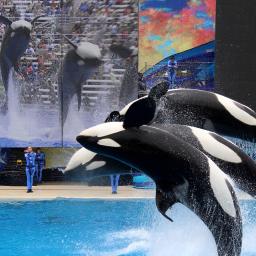
Documentary has made opposition to orca practices ‘the mainstream view’, says expert as company grapples with $10m blow to profitsSina Schmocker asks for a minute to think before responding. “I have really enjoyed seeing the whales and the other animals,†she said. “But I am really shocked by how little space they have.
|
by Kristine Wong on (#STEP)
Two Pittsburgh artists are encouraging cities around the world to install public art structures designed to generate power while educating viewers about renewable energyWhat happens when renewable energy meets public art? The Land Art Generator Initiative, or Lagi, founded by Pittsburgh-based artists Elizabeth Monoian and Robert Ferry, is trying to find the answer with several proposed public art structures designed to generate power while inspiring and educating their viewers.
 |
by Reuters on (#STEH)
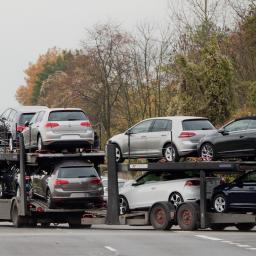
Chief executive Matthias Müller asks ministers to charge carmaker for taxes incurred after admitting understatement affecting 800,000 vehiclesVolkswagen has said it will foot the bill for extra taxes incurred by drivers after it admitted understating the carbon dioxide emissions of about 800,000 cars in Europe.In a letter to European Union finance ministers on Friday, seen by Reuters, Matthias Müller, the VW chief executive, asked member states to charge the carmaker rather than motorists for any additional taxes relating to fuel usage or CO2 emissions. Continue reading...
|
 |
by Suzanne Goldenberg and Dan Roberts on (#SSS7)
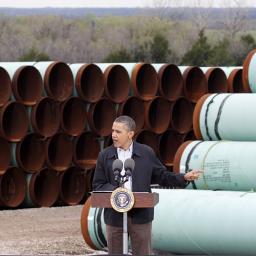
President ends years of political drama and hands environmentalists a big victory with decision to turn down proposal to build 1,700-mile pipeline through USBarack Obama ended seven years of high-wire political drama to reject the Keystone XL pipeline on Friday, saying the decision reflected America’s determination to be a global leader in the fight against climate change.The move, less than four weeks before more than 190 countries gather in Paris to try to reach a global deal to reduce carbon pollution, reinforces Obama’s commitment to making climate change the domestic and international legacy of his second term in the White House – even in the face of Republican hostility. Continue reading...
|
 |
by Guardian Staff on (#ST8Y)
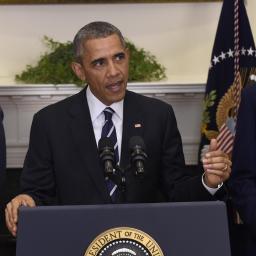
Barack Obama announces at the White House on Friday that he is rejecting the Keystone XL pipeline because he does not believe it serves the national interest. Keystone XL, which has divided petroleum interests and environmentalists, was designed to pump crude oil from the Alberta tar sands for 1,700 miles to the Gulf coast Continue reading...
|
 |
by Karl Mathiesen on (#ST58)
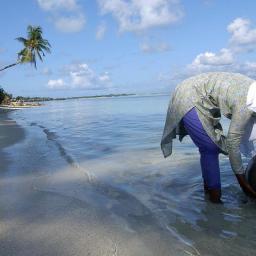
Green Climate Fund announces eight projects to be funded in Asia, Africa and Latin America ahead of Paris summitThe head of the UN’s climate fund has hailed a “paradigm shift†as poor countries began receiving money to help them tackle global warming, weeks before climate talks take place in Paris.The Green Climate Fund (GCF) is intended to be the major conduit for funding to flow from wealthy economies built on fossil fuels to those that will suffer most from climate change they did not cause. Continue reading...
|
 |
by Ray Georgeson on (#ST2E)
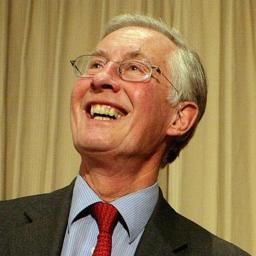
I recall vividly the first meeting of the parliamentary environment group after Labour’s election win in 1997. Michael Meacher arrived, breathless and late, into a packed and hot committee room in parliament. He proceeded to give a sharp and detailed analysis of environmental challenges, without notes, for 40 minutes, leaving the roomful of NGOs and industry lobbyists captivated by his zeal and determination. His speech set the tone for his term as environment minister.Short of being in the cabinet, which Tony Blair had denied him, he was determined to make the most of the job he had been given. He did just that, and can be credited with a vital role in Kyoto negotiations, as well as the delivery of a waste strategy that created thousands of jobs in the recycling industries as well as a fourfold increase in recycling rates over a decade. Best of all, he delivered into law the right to roam. That was a strong green legacy that deserves to be fully acknowledged. Continue reading...
|
 |
by Sarah Butler on (#ST0Y)
Production plummets to 100-year low as supermarket price war forces farmers to switch to more lucrative cropsThe British cucumber is facing extinction, the latest victim of a supermarket price war that has knocked retail prices down from up to 90p to less than 30p in some stores.According to the Cucumber Growers Association, production has plummeted to less than 100 hectares for the first time in nearly 100 years as farmers switch to more lucrative crops. Continue reading...
|
 |
by Laura Barton on (#SSV8)
The artist joined writer-environmentalist Andri Snær Magnason at a press conference in ReykjavÃk to promote an online petition against plans for a high-voltage power lineTwo of Iceland’s best-loved artists are trying to draw the world’s attention to the plight of the country’s landscape.
|
 |
by Hannah Ellis-Petersen on (#SSVA)
Photographer Francesca Moore’s show in London features images of wall surrounding site and families affected by disasterIt was just past midnight on 3 December 1984 when a pesticide plant at the heart of Bhopal, India, exploded. It was the worst industrial disaster in history, killing at least 3,000 people in the days following the incident and about 15,000 subsequently, and exposing tens of thousands to poisonous gas.
|
 |
by Associated Press in Detroit on (#SST8)
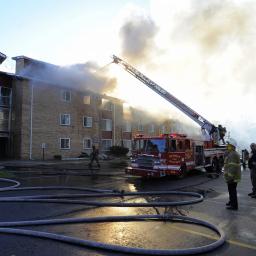
Sherry Young apologizes for fire that tore through 48-unit apartment complex after she doused herself with rubbing alcohol that was ignited by a stoveA Detroit woman has apologized for a massive fire that she and authorities said was accidentally started by her efforts to eradicate bedbugs from her apartment.Tuesday’s fire tore through Ramblewood Apartments, destroying the 48-unit complex. Sherry Young was injured along with four others, including three firefighters, the Detroit Free Press reported. Continue reading...
|
by Fiona Harvey , environment correspondent on (#SSK3)
Sussex village gives up plans for community-run project that would have enabled it to run largely on clean energyA project to generate renewable energy in the village at the centre of the UK’s first fracking protests has become the latest casualty of the shake-up of the government’s green policies.
 |
by Kate Lamb on (#SSH6)
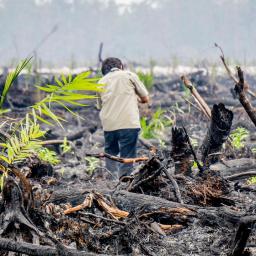
Saplings growing on slash and burn land in central Kalimantan in an area public maps suggest has no palm oil concession, say GreenpeaceFreshly burned land in Indonesia has already been illegally planted with oil palm, new evidence suggests, following the loss of two million hectares of forest and peatland since July to fires.Planted in charred earth, the oil palm saplings were identified near the Nyaru Menteng Orangutan Sanctuary in central Kalimantan, by Greenpeace Indonesia. Continue reading...
|
by Bruce Watson on (#SSDN)
One Bryant Park has become ground zero in the battle over Leed, with some critics claiming the tower highlights the green certification’s shortcomingsThe skyscraper at One Bryant Park in Manhattan looks like a vision of the future – or at least, what the movies tell us the future will look like. A towering 945 feet of glass, concrete and steel, arranged in crystalline planes, it evokes utopian visions of space-aged cities, hyper-efficient and cutting-edge.But the building is cutting-edge beyond the surface too, reflecting the latest trends in sustainable construction: its urinals are waterless, its concrete is partially composed of blast furnace slag and its water system recycles rainwater. Completed in 2009, the billion-dollar building was the first skyscraper to be awarded a coveted platinum rating for Leadership in Energy and Environmental Design, or Leed. Continue reading...
 |
by Eric Hilaire on (#SS8N)
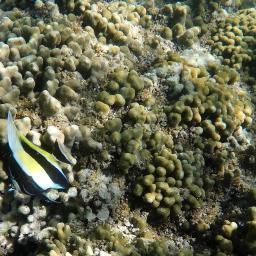
The last US Sumatran rhino, a mushroom fairy ring and an amazing Jesus lizard are among this week’s pick of images from the natural world Continue reading...
|
 |
by Associated Press on (#SS78)
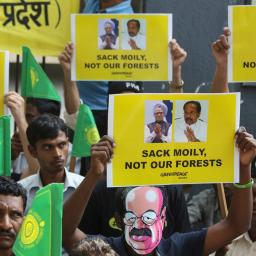
Environmental group says home ministry ordered cancellation of its registration to operate, following earlier crackdown on foreign fundingGreenpeace says its registration to operate in India has been cancelled under orders from the country’s home ministry.The environmental group said in a statement that it would challenge Friday’s decision in court. Continue reading...
|