 |
by by David Smith on (#PWXF)
Yang Feng Glan, kingpin between east African poaching syndicates and Chinese buyers, accused in Tanzania of smuggling ivory worth £1.62mA Chinese woman dubbed the “ivory queen†for her alleged leadership of one of Africa’s biggest ivory smuggling rings has been captured and charged.Yang Feng Glan is accused of smuggling 706 elephant tusks worth £1.62m from Tanzania to the far east. The Elephant Action League, a US-based campaign group, described her as “the most important ivory trafficker ever arrested in the countryâ€. Continue reading...
|
| Link | http://feeds.theguardian.com/ |
| Feed | http://feeds.theguardian.com/theguardian/environment/rss |
| Updated | 2026-08-20 17:01 |
by Jana Kasperkevic and Dominic Rushe in New York on (#PVXE)
Michael Horn, president and CEO of Volkswagen Group of America is appearing before the House energy and commerce committee to discuss the company’s emissions-rigging scandal5.56pm BSTWe will be ending our live blog here.Here is a quick summary of today’s hearing:5.34pm BSTHere are Grundler’s prepared remarks.As we reported yesterday:The EPA is also being taken to task to determine why the agency failed to detect the use of such software earlier.“VW manufactured and installed software in the electronic control module of these vehicles that sensed when the vehicle was being tested for compliance with EPA emissions standards,†Christopher Grundler, director of the EPA’s office of transportation and air quality, will testify on Thursday according to his prepared remarks. “Put simply, these cars contain software that turns off or significantly reduces the effectiveness of emissions controls when driving normally, and turns them on when the car is undergoing an emissions test.†Continue reading...
 |
by Rob Evans on (#PW0V)
The key players include the parents of Stephen Lawrence, grieving families, women deceived by undercover police, trade unions and a whistleblowerAt least 140 individuals will have a key role in the public inquiry into the undercover infiltration of political groups, and the total may rise.The list of individuals gives an indication of the scope of the inquiry which is headed by a senior judge, Lord Justice Pitchford. Continue reading...
|
 |
by Johnny Langenheim on (#PVX9)
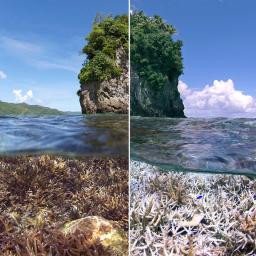
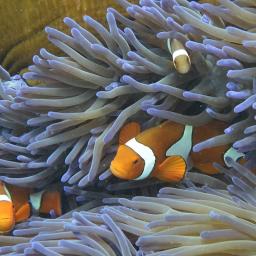
The third mass coral bleaching event in recorded history is underway, signalling a biodiversity disaster on an unprecedented scale
|
 |
by Owen Bowcott Legal affairs correspondent on (#PTJX)
Republican presidential contender and golf course owner says planned turbines would be ‘monstrous’ blight on Aberdeenshire coastlineDonald Trump, the US presidential contender who has electrified the republican right, has taken his campaign against windfarms to the UK’s supreme court.Despite losing at every stage in the Scottish courts, the billionaire property developer is funding a fresh challenge to prevent offshore turbines being built within sight of his Menie golf resort in Aberdeenshire. Continue reading...
|
 |
by Miles Brignall on (#PVPH)
With Mark Group and Climate Energy going into administration this week, what does this mean for households in the process of solar installations?Two solar panel-installing businesses have gone bust this week - where does this leave anyone who has had a system installed?
|
by Andrew Simms on (#PVD6)
VW is paying the price of revelations that ‘clean diesel’ is as much a lie as ‘clean coal’ - in a low-carbon economy 100s of energy intensive industries will have to reinvent themselves or become similarly exposedImagine you invested heavily in glam rock silver spandex clothing just as punk music happened. You’d suddenly be left with a lot of shiny stuff you couldn’t shift. It would be a ‘stranded asset’ – the victim of an unanticipated devaluation due to shifting fashion (though you might argue it was always a liability).Increasingly, mainstream acceptance that money poured into fossil fuels risks becoming trapped in similarly stranded assets, raises the intriguing possibility that the logic might leak out and touch other parts of the economy which are heavily dependent on the same fossil fuels. Continue reading...
 |
by Arthur Neslen Brussels on (#PV5T)
Thousands expected to take part in ‘red line’ blockades of Paris climate summit, after two weeks of colourful protests that have been dubbed ‘the Climate Games’Thousands of climate change campaigners have promised to blockade a major UN climate summit in Paris with what they say will be non-violent direct action on a scale Europe has not seen before.Grassroots groups from 350.org to Attac France are throwing their weight behind the “Climate Games†event for the landmark climate conference in December. The protests will involve 10 blockades, themed around “red lines†which they fear negotiators for the nearly 200 countries inside the summit may cross. Continue reading...
|
 |
by Emma Howard on (#PTY6)
We asked people at the forefront of the climate movement for simple steps ordinary people can take to make a difference1) Go to Paris this December Continue reading...
|
by Associated Press on (#PT57)
The company has withdrawn its application for emissions certification for its 2016 diesel models, leaving thousands of vehicles stranded at portsVolkswagen dealers across the United States face not having any new diesel-powered cars to sell as the scandal engulfing Europe’s largest car maker deepens.VW on Wednesday withdrew applications to the Environmental Protection Agency for emissions certifications for the 2016 versions of its diesel-driven Jettas, Golfs, Passats and Beetles. Continue reading...
 |
by Karl Mathiesen on (#PTA8)
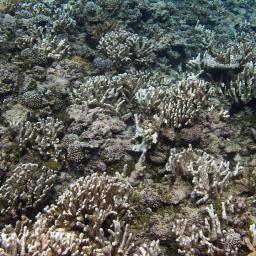
A third global bleaching of coral reefs is underway following a massive and persistent underwater heatwaveScientists have confirmed the third-ever global bleaching of coral reefs is under way and warned it could see the biggest coral die-off in history.Since 2014, a massive underwater heatwave, driven by climate change, has caused corals to lose their brilliance and die in every ocean. By the end of this year 38% of the world’s reefs will have been affected. About 5% will have died forever. Continue reading...
|
 |
by Yasmine Phillips on (#PTK7)
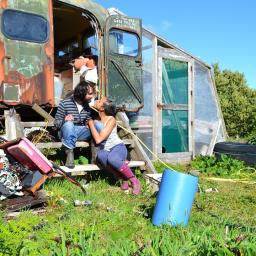
Yasmine Phillips had a steady job and a cosy flat – but something was missing. Could she find happiness on a small farm with no electricity or running water?Last year, my boyfriend Laurence and I gave up our jobs to go in search of an alternative way to live. I’m from London but had been living in Stockholm for four years, teaching textiles. I had a permanent job, my place was comfortable and warm, and I lived by the sea. But something about my life was unfulfilling. I felt that working full-time took up too much of my mental energy, and I was eager to discover if I could feel happier with less structure and more freedom.I started to read more on the internet and it seemed that perhaps it wasn’t inevitable that I would have to work 9-5. We saved up for two years and talked about cycling to Ireland where Laurence is from, although we didn’t know what we’d do once we got there. I remember saying constantly: “But where will we live!?†Continue reading...
|
 |
by Gilles Sabrié/Eric Hilaire on (#PTJZ)
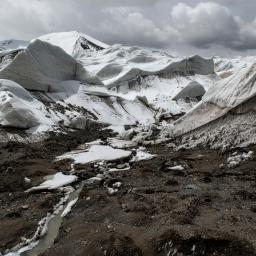
Geologist, explorer and environmental activist Yang Yong leads an expedition to the source of the Yangtze, to monitor the scale of the damage caused by climate change on the Tibetan plateau and the degradation at the headwaters of Asia’s longest river. The journey, over treacherous terrain at high altitude, and in a region of ongoing political and ethnic tensions, has only been made by a handful of foreigners to date. But this year, Yang invited a handful of disciples, journalists and athletes to commemorate the 30th anniversary of his first downstream navigation of the river in a dinghy Continue reading...
|
by Lenore Taylor Political editor on (#PTFW)
Experts cast doubt on ability of Turnbull government’s climate change policy to achieve the greenhouse gas emission reductions it is counting onThe Turnbull government has promised a full review of the so-called “safeguards†mechanism in its climate policy within a year of it starting, amid doubts that it can achieve the greenhouse emission reductions the Coalition is banking on.
 |
by James Thornton on (#PTFX)
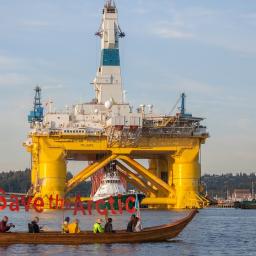
Environmental lawyers have vowed to pursue legal action against directors who fail to protect their investors from climate risksWith Shell announcing its withdrawal from the Arctic, the effects of climate change on business performance are everywhere – and it’s time corporate leaders consider the implications for their organisation, or face the consequences.
|
 |
by Derek Niemann on (#PTDP)
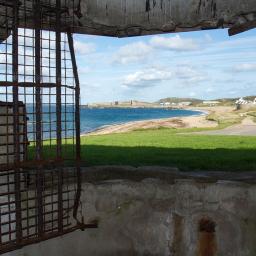
Alderney, Channel Islands: From the wartime fortifications, sentries could look down over a cavalry of white horses and sinuous, sinister currentsAs birdwatching hides go, the sea-facing wartime bunkers at the north-west end of Alderney are rotting, indestructible curiosities. They are concrete barnacles bolted on to a solid Victorian fort of granite blocks, which was originally built to guard against a French invasion. A hundred years later, the German army of occupation used slave labour to construct the super-fortified extension they called Stützpunkt Türkenburg – Strongpoint Turk’s Castle.Steadily and incrementally, the elements have attacked these armoured cells in the 70 years since abandonment. In each dank chamber, salt-laden sea spray has bleached wooden shuttering and shrunk the timbers into pieces of fixed driftwood riddled with woodworm. Iron lintels, brackets and other attachments are rust-brown, corroding into flaky layers as if they were puff pastry. But the ugly, metre-thick walls have proved durable and, like a Norman castle, might last for another thousand years. Continue reading...
|
by Calla Wahlquist on (#PT75)
Fisheries department will try to determine what type of shark attacked Eli Zawadzki while he was surfing near Mandurah on Wednesday afternoonThe West Australian department of fisheries is examining a tooth pulled from the foot of an 18-year-old man who was bitten by a shark while surfing near Mandurah, 70km south of Perth, to identify the species responsible for the bite.Eli Zawadzki, an apprentice electrician from Mandurah, was bitten on the lower leg and foot while surfing off Pyramids Beach at 5pm on Wednesday. Continue reading...
by Oliver Milman on (#PT4C)
Bureau of Meteorology says prospect of drier-than-normal October is about 70% in southern Australia which comes after third-driest September on recordEl Niño conditions are set to intensify across much of Australia, with extremely dry conditions expected to heighten the risk of drought and bushfires, the Bureau of Meteorology has said.
by Shalailah Medhora and agencies on (#PT4D)
Claims stack up after VW admits more than 90,000 cars in Australia are fitted with devices designed to disguise the amount of emissions producedAustralian car owners are threatening to sue Volkswagen after learning that their cars are embroiled in the worldwide emission-rigging scandal.More than a fortnight after the scandal emerged, Volkswagen has admitted that more than 90,000 local cars are fitted out with software that cheats pollution tests. Continue reading...
by Jana Kasperkevic in New York on (#PSC7)
by Press Association on (#PSTG)
Earth Index is published in the financial sections of newspapers around the world to put nature on the stock exchange, with price for bees, fish and moreCoral reefs are worth £6tn a year in services they provide for people - almost four times as much as the UK economy - an assessment of the value of natural assets has found.The ‘Earth Index’ drawn up for BBC Earth also found bees contributed £106bn to the world economy in pollinating crops, and that vultures were worth £1.6bn for clearing up animal carcasses and preventing human health hazards. Continue reading...
by Terry Macalister on (#PSS9)
The Mark Group blames recent government policy announcements for scuppering its turnaround planAlmost 1,000 jobs were lost on Wednesday night as one of the UK’s leading solar- panel installers went into administration, blaming government changes in energy policy for its downfall. The Mark Group said it had been to bring in insolvency specialists because it was unviable due to ongoing losses at the Leicester-based business. So far the administrator, Deloitte, has made 939 redundancies, but a further 200 jobs are at risk unless a buyer can be found.“The turnaround plan, which was already under way, focuses on solar PV, but the government’s recent policy announcements mean this is no longer viable,†said a statement from the company. Continue reading...
 |
by Australian Associated Press on (#PSQY)
Craik previously ran the National Farmers Federation, the Great Barrier Reef Marine Park Authority and the Murray-Darling Basin Commission
|
 |
by Associated Press in California on (#PS8R)
Jerry Brown signs ambitious climate change measure – also intended to increase renewable electricity use to 50% – after political loss against oil interestsCalifornia’s governor on Wednesday signed an ambitious bill to combat climate change by increasing the state’s renewable electricity use to 50% and doubling energy efficiency in existing buildings by 2030.Governor Jerry Brown approved the measure after losing a political battle against oil interests as he also tried to cut petroleum use by half in the most populous US state. Continue reading...
|
 |
by Letters on (#PS4W)
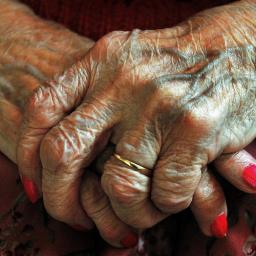
The use of monies from the charge for plastic carrier bags to fund dementia research is most welcome (Report, 6 October). However, I hope that the research will include not only Alzheimer’s but the second most common form of dementia, dementia with Lewy bodies. This most devastating dementia, which also links to the symptoms of Parkinson’s disease, is rarely referred to and mostly unknown to the public despite there being 130,000 sufferers in Britain. As a first step to raise awareness, maybe Alzheimer’s Society should change its name to Dementia Society UK.
|
 |
by Fiona Harvey, Geneva on (#PRVK)
OECD report showing extent of existing pledges towards $100bn target to help poorer countries tackle climate change, gives further hope for success in ParisRich countries and businesses have provided close to two-thirds of the financial assistance pledged to poorer nations as part of the global climate change negotiations, ahead of the Paris conference this December.
|
 |
by Arthur Neslen on (#PRMT)
Krakow says it will introduce a ban on burning coal in households, offices and restaurants, despite protection of the industry becoming an election issueThe Mayor of Krakow has told the Guardian he will introduce a ban on coal use in households, offices, government buildings and restaurants after an amended Environmental Protection Act was signed by the country’s president, Andrzej Duda.Poland’s second largest city is as famed for the filthy smog that cakes its buildings and streets, as for its beautiful historic buildings. The European Environmental Agency has ranked it the third most polluted city in Europe and its particulate matter (PM) pollution can reach six times the safe levels. Continue reading...
|
 |
by Leah Messinger on (#PREX)
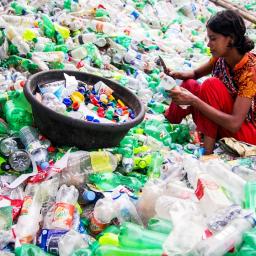
The company acts as a broker for recycling companies that receive discarded plastic bottles from individuals in underprivileged communities, encouraging recycling and creating jobsA recent list of 100 of the world’s most compassionate business leaders was topped by the usual suspects: Paul Polman, Richard Branson, Muhammad Yunus and Elon Musk. And then there’s David Katz.Katz is an entrepreneur based in Vancouver, British Columbia, who for years ran a company he co-founded called Nero Global Tracking, which provides GPS tracking for mobile fleets of vehicles. Continue reading...
|
 |
by Terry Macalister on (#PRBH)
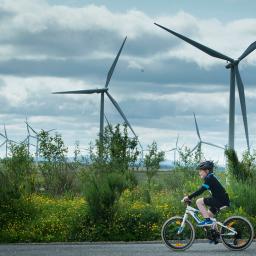
Falling costs mean new windfarms are now £20 cheaper per megawatt hour than coal or gas-fired plants, according to new analysisNew onshore windfarms are now the cheapest way for a power company to produce electricity in Britain, according to Bloomberg New Energy Finance (BNEF).Costs have dropped to $85 (£55) per megawatt hour (MWh) compared with the current costs of about $115 for constructing coal or gas-fired plants, its analysis found. Continue reading...
|
by Jan Miller-Klein on (#PR74)
The one-acre wildlife garden at the Natural History Museum is an irreplaceable resource for children, argues Jan Miller-KleinThere is a bit of a fuss about the Natural History Museum (NHM) in London’s plans to scrap its wildlife garden.You may not even have known there was a one-acre wildlife garden there, in the heart of one of the biggest cities in the world; but this year it is 20 years old. I am not alone in feeling this way about the proposed changes. A petition protesting the changes has nearly 4,000 signatures.
 |
by Damian Carrington on (#PR6X)
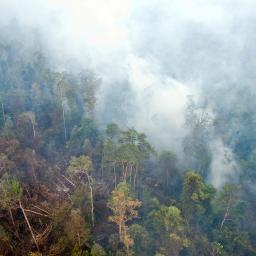
Greenpeace warns fires raging across forest and peatlands will match the worst year ever and exceed the total annual carbon output of the UKFires raging across the forests and peatlands of Indonesia are on track to pump out more carbon emissions than the UK’s entire annual output, Greenpeace has warned.
|
 |
by Guardian Staff on (#PR45)
Readers answer other readers’ questions on subjects ranging from trivial flights of fancy to profound scientific conceptsI’ve just read about a hunter who escaped the clutches of a grizzly bear by shoving his arm down its throat. Any more unlikely ways of surviving an attack by a wild animal?Geoff Young, Birmingham Continue reading...
|
 |
by Richard Luscombe in Columbia, South Carolina on (#PQZP)
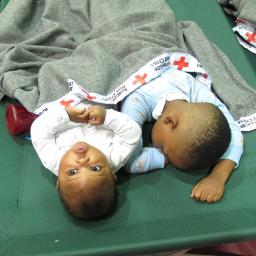
After the rains, several breached dams sent a new wave of locals to seek cover in one of 33 shelters. The sun is now out but residents face a long road to recoveryShakira Fair clutches her little doll Brianna tightly as she peers nervously into the high school gymnasium that will be her home for at least the next few nights.The doll, in a bright pink toy cot, and Shakira’s favourite woolly Olaf hat from the movie Frozen, were the only possessions the nine-year-old had time to collect when a sheriff’s deputy came knocking on the door of her mother’s apartment on Tuesday morning to tell them to get out immediately. Continue reading...
|
 |
by Ngozi Okonjo-Iweala and Lars Thunell on (#PQY7)
An African Union agency designed to respond quickly and effectively to natural disasters is transferring the burden of climate risk from governments to marketsWhen world leaders gather for critical climate negotiations in Paris later this year, they must not overlook the major injustice that means Africa – responsible for only a tiny proportion of global greenhouse gas emissions (pdf) – will suffer disproportionately from rising temperatures.The most vulnerable populations with the least capacity to cope will shoulder the burden. Continue reading...
|
 |
by Julien Bouissou for Le Monde, part of the Climate on (#PQTH)
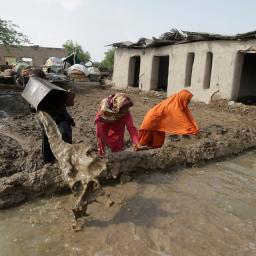
A minor revolution in climate justice has just taken place in one of the countries most affected by global warming, reports Le MondeThe high court of justice in Lahore has ordered the creation of a “climate council†to force the Pakistani state to uphold its environmental commitments.A farmer went to the court with the charge that his “fundamental rights†had been breached by the lack of action on the part of Pakistan’s climate change minister. Pakistan has been hit by three consecutive years of deadly floods. Continue reading...
|
by Emma Bryce on (#PQTW)
The SP1 gene ‘de-stresses’ plants, making them resilient to harsh conditions and furthering the possibility of future crops resistant to droughtBy 2050, we’ll have to meet the gargantuan challenge of growing 50% more food, to feed a burgeoning global population. Enter climate-resilient agriculture, possibly the best chance we have of actually attaining this goal: as countries grapple with the effects of climate change—drought, higher salinity—increasingly we’ll have to depend on crops that can also flourish despite its inconsistencies.Research on agricultural resilience abounds, but the latest offering looks to plant genetics for a solution, bringing us a little closer to the goal of hardy crops. Plant cell biologists at the University of Oxford have discovered a gene that can be harnessed to give plants in a laboratory setting more resilience, making them thrive instead of whither when unfavourable conditions strike. Continue reading...
 |
by Graham Ruddick on (#PQJD)
Leigh Day, which represents 1,200 VW drivers considering legal action, criticises carmaker’s ‘lamentable’ handling of diesel emissions scandal
|
by Eleanor Ross on (#PQGK)
With thousands dying a year from poor air quality, is a mask as good a safety precaution as a helmet?Many British urban bike commuters opt to wear a helmet. Some also go for a hi-vis jacket. But considerably fewer use an anti-pollution mask, despite evidence that smog might be the biggest single danger you face on two wheels.According to a study carried out by Kings College London (KCL), around 9,500 people die in London alone every year due to long-term exposure to air pollution, with most deaths due to nitrogen dioxide (NO2) and fine particulates known as PM2.5s.
 |
by Guardian Staff on (#PQFZ)
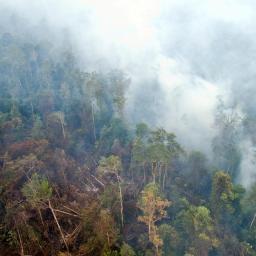
Shocking drone footage captured by Greenpeace field researchers shows extensive peat and forest fires burning in Indonesia. Greenpeace’s footage was shot around the edge of the Gunung Palung national park, a major reservoir of biodiversity in Indonesia. It shows fires burning in the deep peat surrounding the national park and in nearby palm oil concessions – the result of decades of illegal logging and deforestation for oil palm and pulp plantations Continue reading...
|
 |
by Abby Young-Powell on (#PQBY)
How can we live better with less? That’s what the Whole Earth exhibition, a partnership between the Hard Rain project and the National Union of Students (NUS), is asking those studying around the world. The aim is to encourage young people to think about the future of the planet. Here are some of the best images
|
 |
by Fiona Harvey on (#PQ8C)
Rachel Kyte says governments at the 2009 summit agreed funding for developing countries by ‘picking a $100bn figure out of the air’The Paris conference on climate change should not set a target for future financial assistance to developing countries, according to the World Bank’s top official on climate change.
|
by Staff and wires on (#PQ4Z)
The company says owners of affected models do not need to take any action until a technical solution is made available by its head office in GermanyVolkswagen Australia has confirmed more than 77,000 diesel cars sold in Australia are fitted with emissions-rigging software.The company says owners of the affected models do not need to take any action until a technical solution is made available by its head office in Germany. Continue reading...
 |
by Joanna Blythman on (#PQ28)
Every day, millions of internet users ask Google life’s most difficult questions, big and small. Our writers answer some of the commonest queriesLoud voices dismiss organic food as nothing more than a trendy 21st-century lifestyle choice for the neurotic rich, but this is a phony argument. There’s nothing new or modish about organics – until the 1950s, all the food we ate was organically produced. It’s organic food that should be considered “normalâ€, not the upstart, factory-farmed, agrochemical stuff that’s only been on our shelves for a few decades. And the reasons for eating organic food, and supporting organic farmers and growers, are becoming more compelling, not less.Related: Organic food: it's not just for yuppies anymore | Tracie McMillan Continue reading...
|
 |
by Emma Howard on (#PPT4)
Campaigners say a charitable scheme to install solar panels in schools in England and Wales will be ‘unsustainable’ if cuts to the feed-in tariff go aheadA charitable project that has installed more than 1,000 solar panels on schools in England and Wales will close next summer if government proposals to cut support for renewable energy go ahead.Campaigners said on Wednesday that the “solar schools†project run by environmental charity 10:10 would become unsustainable under government proposals to dramatically cut the feed-in tariff for householders and communities who install solar panels on rooftops. Continue reading...
|
 |
by Paul Evans on (#PPR7)
Wenlock Edge, Shropshire: Once thought of as a threat to the UK’s native oaks, these horny growths have joined the rich community that inhabits the treesOn one of the finest autumn days for years, sharply lit under a Wedgwood sky, the oak bears strange fruit. Little green and brown apples covered in horny, foliate protuberances grow where acorns should be. They formed last month when a tiny gall wasp, Andricus quercuscalicis, inoculated embryonic acorn buds with her eggs. The oak responded in an entirely specific way to this wasp by producing growths known as knopper galls, from a German name for a type of helmet.They weren’t seen in Britain until the 1960s, but there was a spike in the knopper population in 1979 and people were worried that the iconic British oaks were in danger of not producing viable acorns. Although the wasps have spread as far north as Scotland, this has not been the case, and knopper galls have joined the rich community of life that inhabits the oaks. The galls are communities themselves, too, containing microhabitants such as inquilines (cynipid wasps lay eggs in the gall and their larvae feed on the oak tissue) and parasitoids (chalcid and ichneumon wasps inject their eggs into the gall wasp larvae to feed on them). Continue reading...
|
 |
by Oliver Milman on (#PP9T)
Australia opposed the plan for a group to assist migration, and it has been left off the draft agreement for UN climate talks in ParisAustralia’s opposition to the creation of a body to help people escaping the ravages of climate change appears to have paid off, with the idea dropped from the draft agreement for the crucial UN climate talks in Paris.A previous draft of the deal to be thrashed out by nations included a “climate change displacement coordination facility†that would provide “organised migration and planned relocationâ€, as well as compensation, to people fleeing rising sea levels, extreme weather and ruined agriculture. Continue reading...
|
 |
by Reuters on (#PP3K)
Matthias Mueller tells German newspaper recall of vehicles will begin in JanuaryVolkswagen’s chief executive Matthias Mueller said in an interview with a German newspaper that the company would launch a recall for cars affected by its diesel emissions rigging in January and complete the fix by the end of next year.“If all goes according to plan, we can start the recall in January,†Mueller told the Frankfurter Allgemeine Zeitung. “All the cars should be fixed by the end of 2016.†Continue reading...
|
 |
by Emma Howard on (#PP0P)
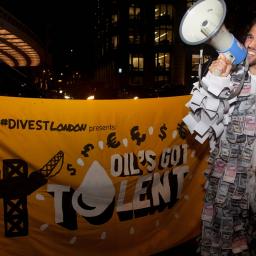
Company’s CEO given top industry award as Greenpeace says it has spent £20m funding researchers and thinktanks that promote misinformationA major oil and gas conference in central London was blockaded by a protest against a top industry award given to the head of ExxonMobil, the oil company that is reported to have funded climate change denial.Protesters blocked the entrance on Tuesday evening by glueing themselves to the doors at the Oil and Money conference at the Dorchester on Park Lane, which brings together the most senior executives in the industry. Signs on their backs read “Climate change is nothing to celebrate†and “You can ignore the science but you can’t ignore usâ€. Continue reading...
|
by Calla Wahlquist on (#PNYD)
For a week each spring about 140 people record every animal they spot to help researchers understand the health of a population threatened by cats and foxesIn backyards across the suburban fringe of Perth, people have been excitedly checking for cone-shaped divots in preparation for the annual spring quenda count, which is in its third year.Quendas are a subspecies of the southern brown bandicoot, a small, ground-dwelling marsupial that has been hunted to critically low numbers by cats and foxes in south-eastern Australia. Continue reading...
 |
by Guardian Staff on (#PNXN)
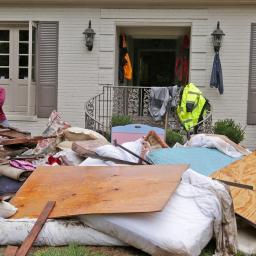
The sun is back out in South Carolina, but the problems are far from over. Dams have given way and roads have buckled under the weight of historic floods that have devastated parts of the state. The death toll from the severe flooding has now risen to 14 with hundreds of people still living in shelters after losing their homes Continue reading...
|