 |
by Rebecca Smithers on (#167Y5)
When the charge for carrier bags was introduced I understood the proceeds would go to good causes. But they didn’t know which oneAfter the introduction of the 5p charge for plastic carrier bags in October in England, I asked my local Sainsbury’s in Hertford how it would allocate the money raised. Staff told me that 4p out of every 5p was going to charity, but they did not know any more details and were unable to say which charity.Eventually, the manager suggested that 4p would be going to Mudlarks, a local community gardening venture and the store’s “charity of the yearâ€. But when I asked Mudlarks it said it was a surprise to them, as it had been told it wouldn’t be receiving any of the 5p. I feel aggrieved. If Sainsbury’s is not giving any of the 5p to charity, it shouldn’t pretend that it is. FM, Hertford Continue reading...
|
| Link | http://feeds.theguardian.com/ |
| Feed | http://feeds.theguardian.com/theguardian/environment/rss |
| Updated | 2026-08-18 09:30 |
 |
by Carey Davies on (#167S7)
Buckden Pike, Yorkshire Dales Dry stone walls over the snow-covered moor look like ropes lashed taut over cargoIf the Pennines are meant to be bleak and terrible, then Buckden Gill is very un-Pennine in its atmosphere, a tiered series of waterfalls tumbling through an exquisitely intimate gorge.The water runs over smooth slabs of bone-white limestone into green pools which today hold the sun with a crystalline clarity and look misleadingly inviting; the whole thing feels like it might have been pinched from the Pyrenees. Continue reading...
|
 |
by Terry Macalister Energy editor on (#1677T)
Role in supporting UK renewable sector must be cemented by legislation, says environment committee chair Mary CreaghThe head of a parliamentary committee is to demand ministers introduce tougher safeguards to ensure the Green Investment Bank continues with its low-carbon mandate following a controversial privatisation.Mary Creagh MP, who chairs the environmental audit committee (EAC), also expressed concern that the bank could in future put more effort into overseas projects than in supporting the domestic sector for which it was set up. Continue reading...
|
 |
by Fiona Harvey on (#16778)
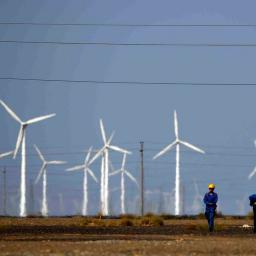
Report co-authored by renowned climate change economist claims Chinese emissions have peaked years earlier than its leaders pledgedCarbon emissions may have peaked already in China, years earlier than its leaders pledged, according to a study co-authored by the world-renowned economist Lord Stern.The country’s emissions have fallen, partly as a result of its globally relevant economic slowdown, and partly owing to government policies to pursue a low-carbon path and reduce the rampant air pollution in its major cities. Continue reading...
|
 |
by Gary Fuller on (#166ZC)
The 1952 London smog taught us that air pollution caused people to die in the days and weeks that followed a short period of very high pollution. If we could only prevent smog episodes then it was thought that the air would be safe. A study in the 1990s changed this view. Thousands of people living in six US cities were tracked over 14 years. Having allowed for smoking and other factors, people lived shorter lives in the most polluted cities, showing, for the first time, that the particle pollution that we experience every day affects our health.In a new study scientists at Imperial College London have now looked at people over four decades. 368,000 people (1% of English population) were selected from the 1971 census. The researchers then looked at the next three censuses to check if the 1971 people were still alive. Survival was associated with their local pollution in the decade that they died, but it was also linked to the air pollution that they breathed up to three decades earlier. The effects of air pollution in 1971, 1981 and 1991 could still be detected in the death rates of people in 2001. Continue reading...
|
 |
by Letters on (#166J7)
To meet the climate change targets agreed at Paris, billions of pounds of green investment will be needed to upgrade the UK’s energy and transport infrastructure. The Green Investment Bank has so far done a sterling job of attracting capital to low-carbon infrastructure projects in the UK that might otherwise have struggled to find funding. The privatisation of the GIB (Report, 3 March) could move its focus away from novel and riskier low-carbon projects in favour of easier, more commercial projects.I am not opposed to privatisation if it can be shown that it is the right policy tool to get the job done. But the decision to sell the GIB seems to have been rushed through just to get it off the government’s balance sheet. The Commons environmental audit committee found that the decision was taken without due transparency, consultation or proper consideration of alternatives. Ministers have simply not yet proved to parliament that the bank will achieve its aims better in the private sector. The government has relied heavily on assurances from potential shareholders and executives that stand to benefit from the sale. If the sale goes ahead, the government should ensure that the GIB remains accountable to parliament by reporting annually on the pay of its top team. Continue reading...
|
 |
by Rajeev Syal on (#166J9)
Ex-Labour leader assembles group of MPs and NGOs to demand UK legislation on net zero emissions agreed at Paris climate talksEd Miliband has assembled a group of cross-party MPs and campaigners to demand parliament enacts a law to to make the carbon emissions target agreed at the Paris climate talks legally binding.The former Labour leader – alongside Liberal Democrat leader, Tim Farron, Green MP Caroline Lucas and two Conservative MPs – has called for legislation that would significantly extend the present UK target of cutting emissions by 80% by 2050. Continue reading...
|
 |
by Letters on (#166JA)
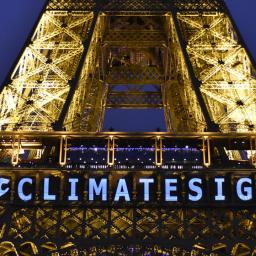
We believe that the Paris agreement represents a historic opportunity for the world to tackle dangerous climate change. But that opportunity will only be realised if we follow up the good intentions of Paris with delivery in every country of the world. Paris was significant because it set out the ambition to keep global warming well below 2C, and ideally to 1.5C of warming, and it accepted that the world must get to net zero emissions in the second half of the century, in accordance with our scientific understanding. In doing so, the agreement built on the commitments by businesses and cities of the world to net zero emissions. A move driven not just by science but by the ambition for a world with cleaner air, better homes, and an improved quality of life.The UK government deserves significant credit for having helped deliver the Paris agreement. Now we urge it to follow up its high ambition internationally, with high ambition here at home. Specifically, it can build on the momentum from Paris by supporting the idea of enshrining net zero emissions in UK domestic law, with the date to be advised by the independent committee on climate change. Continue reading...
|
by Adam Vaughan on (#1665Y)
Centres, which rely on thousands of volunteers and described as ‘eyes and ears’ of natural world, told contract ending earlyConservationists have criticised the decision to withdraw funding from a network of tens of thousands of local wildlife volunteers who collect data on the health of a variety of species and act as the “eyes and ears†of the government’s nature watchdog.Local environmental record centres (Lercs), which collect and collate records of everything from great crested newts to bats and are used to inform planning decisions on legally protected species, have been told that a four-year deal to collect data is to end just one year in. Continue reading...
 |
by Shane Hickey on (#165Y4)
John Hingley has developed a ‘micro-grid’ in a metal box that can be used for disaster relief, mining, and even festivals
|
 |
by Haroon Siddique on (#165WG)
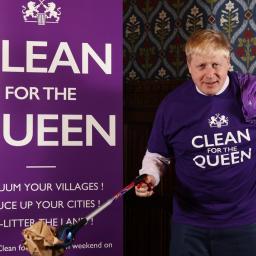
Posters and T-shirts promoting the tidy-up feature the word ‘spic’, which some people have pointed out is a racial slurThe Clean for the Queen campaign, intended to encourage people to tidy up for Elizabeth II’s 90th birthday, has been accused of dropping a racist clanger.Posters and T-shirts to promote the drive (pdf), which is taking place this weekend, included the words “spic and span ma’amâ€, prompting people to suggest that by missing out a “k†on “spicâ€, the organisers had inadvertently used a racial slur. Continue reading...
|
 |
by Jessica Glenza and Oliver Milman in New York on (#165RW)
Guardian analysis reveals millions of customers were asked to used testing method condemned by the EPA which may flush out detectable lead contentWater utilities in some of the largest cities in the US that collectively serve some 12 million people have used tests that downplay the amount of lead contamination found in drinking water for more than a decade, a Guardian analysis of testing protocols reveals.
|
 |
by RC Spencer on (#165GZ)
Originally published in the Manchester Guardian on 11 March 1916The sun went down a huge ball almost blood-red in colour, and so vast that half the heaven in the west seemed to be covered. As it sank, all that remained of this ruddy twilight spread away more to the north, then extended along the whole of that part of the horizon in more shades of purple and half-translucent grey than one is able to describe. From end to end the sky was as if it was being warmed over a thousand dying fires. But the old farm hand, coming in, said, shaking his head, “’Tis full of frost in the air,†and an hour later, when the new moon rose white with light, the soil began to harden quicker than strong cement when it is mixed and laid down.All through the night it froze; the spade was as useless for the garden until noon as the plough and harrow would be on the stretch of stubble that still has to be turned over. A little colony of rooks perched for a long while round their nests talking, condoling with each other probably on the lack of breakfast and shaking their feathers much as one shrugs and stamps and swings his arms to circulate warmth. Birds’ feathers - or those of the bigger birds - seem to settle back into a more compact or beautiful shape after these intermittent shakings and disarrangements; if you see a company of starlings together when they have, as it were, calmed themselves again, and a gleam of sunshine should happen to strike across them, your eye is at once held by the wonderful richness of the many tints that change in appearance as if by some continuous process, more rapid than any mechanism, exercised by the bird. Continue reading...
|
 |
by Lucy Siegle on (#16530)
Copper and lithium are running out – and yes, this will affect you. But there are things we can all do…It’s hard to imagine running out of loo roll, never mind the rare minerals that power our economy and appliances. But depletion looms as we speed through the Earth’s resources and climate change alters the rules.We’re reaching, or have surpassed, the peak availability of copper, lithium (essential for the electric vehicle revolution), phosphate, anchovies, artisanal coffee and even chocolate. Cause yourself peak anxiety and read Richard Heinburg’s Peak Everything: Waking Up to the Century of Declines. Continue reading...
|
 |
by Jamie Doward on (#1649Y)
Footballers’ performance is affected by particles in the air, says German studyDown the years, professional footballers have blamed a lacklustre performance on many things. Famous explanations have included the ball being too bouncy (Newcastle United); the pitch being too small (Tottenham Hotspur); and the team being forced to play in the wrong colour kit (Manchester United).Now a group of health economists has discovered another reason that should send alarm bells ringing far beyond the world of sport. Andreas Lichter, Nico Pestel and Eric Sommer, researchers at the IZA economic institute in Bonn, Germany, will present a study at this month’s Royal Economic Society’s annual conference in Brighton which shows that air pollution is significantly affecting the performance of professional footballers. Their findings are based on analysing the form of players in Germany’s Bundesliga between 1999 and 2011. Continue reading...
|
 |
by Twilight Greenaway on (#163K3)
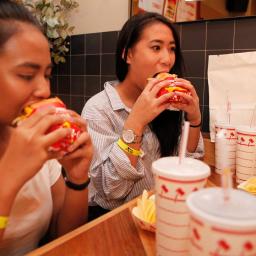
The burger chain is joining a small group of fast food restaurants committing to using antibiotic-free meatIn-N-Out Burger has long set itself apart with its refusal to use frozen meat, microwaves and heating lamps, and a focus on higher-quality, freshly made food. But it hasn’t stood out in addressing a big public health concern about the tie between drugs used routinely to raise livestock and the increasing number of antibiotic-resistant infections in humans.
|
 |
by Ed Cumming on (#1639Y)
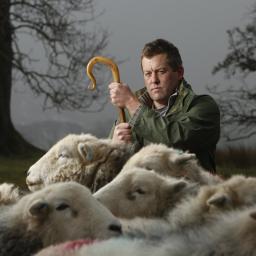
The shepherd, 41, on the history and poetry of the Lake District, ‘obnoxious, posh people’ at Oxford and TolstoyWithout a sheepdog, you’re no shepherd. You’re just a bloke running around waving your hands. Sheep are faster than you, cleverer, and they’re on their own terrain. To manage 500 sheep you’d need 200 shepherds. But with 20 dogs you can get away with five or six people.I grew up as a typical farm lad. I wanted to do what my granddad and dad did. I knew the wider world was there, I just wasn’t terribly impressed by it. It seemed to me you could be like David Bowie or George Michael, or you could be a modest hard-working person, living a good life. Continue reading...
|
 |
by Guardian Staff on (#16372)
Video footage released by the National Oceanic and Atmospheric Administration, shows a small light-coloured octopus 2.5 miles deep in the Pacific Ocean floor near the Hawaiian Islands. The discovery was made on February 27, with scientists saying that they might have discovered a new species
|
 |
by Associated Press on (#162JP)
Small, ghostly-white octopus was found in the deep sea off Hawaii and has been likened to the beloved cartoon characterScientists say they have discovered what might be a new species of octopus while searching the Pacific Ocean floor near the Hawaiian Islands.On 27 February, a team found a small light-coloured octopus at a depth of about 2.5 miles. Continue reading...
|
 |
by Jim Perrin on (#162CH)
Harlech The light was fading, but those small round wings, and the sound they made, could only belong to a batIn the woods at the end of a sunlit afternoon, clouds of gnats swirled in slant shafts of light filtering through bare oak branches. The temperature held unseasonably mild even as the sun poured itself like melting wax behind the western peninsula.I was aware of the presence before I saw it. It fluttered erratically into view on rounded wings, quartered several times the space the gnats inhabited, and flickered away in a mayhem of fractured movement and felt sound. A bat. Probably a lesser horseshoe bat, from its small size and those rounded wings, though identification of bat species in flight is notoriously difficult – especially in the dim light of winter gloaming. Continue reading...
|
by Editorial on (#161VV)
The number of times families sit down to share the traditional midday meal is in steep decline. But there are reasons why it has been at the heart of domestic culture for centuriesMothering Sunday marks the halfway point through the Lent fast and is also a traditional time for the family to sit down to a roast. But it is a tradition increasingly honoured in the breach. Each year, the trade journal The Grocer records a further slowdown in the number of times people gather round the dining table to tuck into a joint; another waymark is passed in the seemingly inexorable decline of old-style family meals, left behind by the fashionable appeal of quicker, more sustainable and, for some, more ethical alternatives – choices that do not involve rearing animals on environmentally costly grains and then killing them. This Sunday’s roast at the pub chain Wetherspoon will be the last it offers. After that, it’s off the menu. Roast dinner, good riddance? Be careful what you wish for.It is true that there are plenty of reasons not to mourn the Sunday roast. A roast with all the trimmings can be, in the wrong hands, a bit of meat of uncertain consistency, viscous gravy and overcooked vegetables. British tastes have become more outward-looking and much more eclectic. We take foods from the Middle East and fuse them with the produce of northern Europe. Continue reading...
 |
by Robyn Beck/AFP/Getty Images on (#161V8)
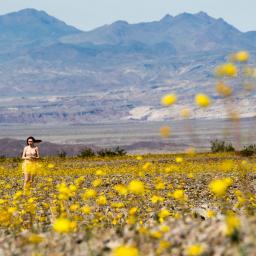
Death valley, the hottest and driest place in North America, is famous for its spectacular spring wildflower displays: only under perfect conditions does this desert fill with life. Heavy rain last autumn has led to the rare super blooms of 1998 and 2005 being repeated in this Spring Continue reading...
|
by Alison Moodie on (#161ER)
Moving money out of fossil fuels and into environmentally-friendly tech could have made members of the state’s pension fund an extra $4,500 eachNew York State’s pension fund would have an additional $5.3bn to give to its retired employees if it had divested from fossil fuel companies and put that money into clean energy, according to a new report.
 |
by Arthur Neslen in Brussels on (#1618J)
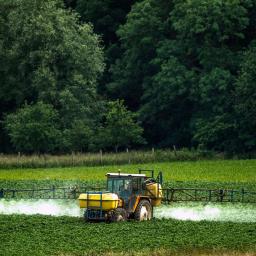
Vote to approve relicensing of ingredient in herbicides including Roundup had been due on Monday, but it might be postponedA rebellion by several EU countries could scupper plans by the European commission to approve the relicensing of a weedkiller linked to cancer by the World Health Organisation (WHO).The vote to relicense glyphosate, a key ingredient in herbicides such as Monsanto’s multibillion-dollar brand Roundup, had been scheduled at a two-day meeting of experts from the EU’s 28 member states, which begins on Monday. Continue reading...
|
 |
by Henry Nicholls on (#1612W)
How many Sumatran orangutans are there? More than we thought but fewer than there were.For a creature that lives in remote, dense forest, getting a handle on the population size is exceedingly difficult, even when the animal is as large as an orangutan.According to the last big survey of Sumatran orangutans (Pongo abelii), published in 2004, there were just 6600 members of this species left on the Indonesian island of Sumatra. But a new, more expansive survey more than doubles this figure to 14,613. This might sound like good news for the Sumatran orangutan, but it isn’t. It’s just that the 2004 count was way off the mark. Continue reading...
|
 |
by Michael Slezak on (#1611Z)
Researchers find Sumatran orangutans living at higher altitudes but critically endangered status unlikely to changeThere are twice as many Sumatran orangutans alive than previously thought but the critically endangered great ape is far from out of the woods, say researchers who conducted the landmark survey.Loss of forest habitat is the biggest threat facing Sumatran orangutans, followed by the illegal pet trade and poaching. Fires lit to illegally clear land for conversion to palm oil plantations continue to burn throughout Indonesia, destroying some of the orangutans’ remaining habitat. Continue reading...
|
 |
by Damian Carrington on (#160V6)
Killings of environmental protesters, often indigenous people fighting to protect land, on the rise with 2015 likely to have been deadliest year on recordBerta Cáceres, the Honduran activist who was murdered on Thursday, is one of at least 1,000 environmental and land protesters who have been murdered since 2002 and the deadly trend is rising. The NGO Global Witness say 2015 is likely to have been the deadliest year on record.
|
by Environment editor on (#160MR)
The week’s top environment news stories and green events. If you are not already receiving this roundup, sign up here to get the briefing delivered to your inbox Continue reading...
 |
by Associated Press on (#160ET)
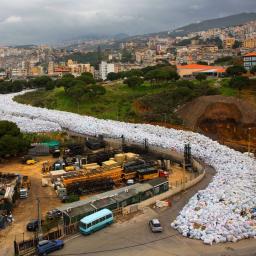
Doctors say a spike in respiratory diseases is a result of eight months of uncollected waste piled up on country’s streetsLebanon’s rubbish collection crisis, which caused thousands to protest on the streets last summer, is now in its eighth month with no resolution in sight. Though it has prompted political debates and occasional heated discussions, Lebanese medical professionals are increasingly alarmed by its effect on health.At the emergency room at the Sacré-Coeur hospital outside Beirut, doctors say they are seeing a spike in severe respiratory diseases and believe it is tied to the ongoing trash disaster. Continue reading...
|
 |
by Jonathan Watts Latin America correspondent on (#160EZ)
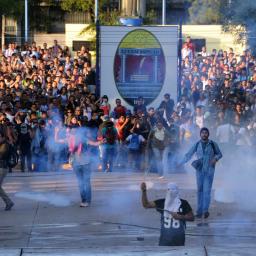
Students clashed with riot police Thursday night amid anger over failure to protect a high-profile campaigner who had repeatedly received threats on her lifeThe murder of environmental and indigenous rights activist Berta Cáceres has sparked violent clashes in Honduras despite promises by President Juan Orlando Hernández to swiftly find and punish the killers.Rock-throwing students clashed with riot police firing tear gas in the University of Honduras on Thursday night amid anger over the authorities’ failure to protect a high-profile campaigner who had repeatedly received threats on her life. Continue reading...
|
 |
by Hannah Booth on (#160FV)
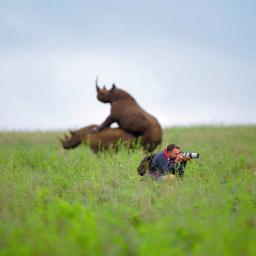
It was amazing to see the comments roll in, from friends and strangers, saying, ‘I can’t believe you missed that, Greg’Even people in my own office asked, “Did you really miss that?†On my Facebook page, I posted a few photos I took of the rhinos before this shot was taken, but the reality is that after you’ve taken 1,000 pictures of black rhinos mating – because they go at it for quite a long time – it gets a bit boring.I’m a senior producer for the World Wide Fund for Nature, and I was in Kenya when this was taken, back in November. A film crew was documenting our work and I was there to help produce and do the photography. We decided to travel from the Maasai Mara to Nairobi national park to document a day in the life of Harrison Njoroge Kamande, the Kenya Wildlife Service rhino patrol leader, and his team. We wanted to capture their movements and see how they document the rhinos’ activity. Continue reading...
|
 |
by Megan Darby for Climate Home, part of the Guardian on (#160CN)
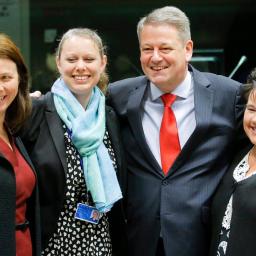
Environment ministers criticise ‘very weak’ European commission response to Paris climate pact – but other states defend existing target, reports Climate HomeGermany, Austria, Portugal and Luxembourg are leading calls for the EU to increase its 2030 climate targets in light of December’s Paris agreement.At a webcast meeting of environment ministers on Friday, they criticised the European commission for advising no change was needed. Continue reading...
|
 |
by Guardian Staff on (#16086)
An estimated 1.5 million moths cause problems for players and TV cameramen during a football match between Juazeirense and Santa Cruz in the Copa do Nordeste on Wednesday. The camera and technical staff were worst hit due to their proximity to the stadium floodlights Continue reading...
|
 |
by Reuters on (#1607G)
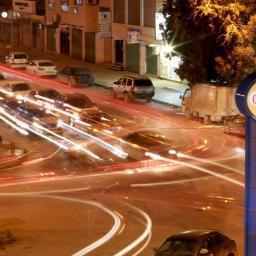
A dramatic drop in oil prices offers mixed results for motorists across the globe – from hefty savings at US pumps to a rare price hike in Venezuela. These images taken by Reuters photographers over the last few weeks show how, despite all countries having access to the same oil prices on international markets, retail fuel prices vary wildly, largely because of taxes and subsidies Continue reading...
|
 |
by Eric Hilaire on (#1602P)
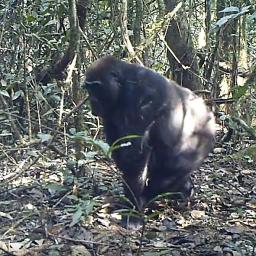
Camera-shy gorillas, the world’s biggest owl and grey-shanked doucs are among this week’s pick of images from the natural world Continue reading...
|
 |
by Terry Macalister Energy editor on (#15ZQY)
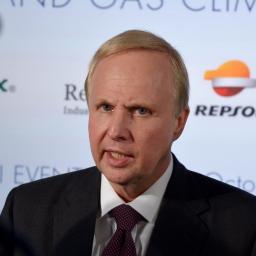
High Pay Centre says £14m earned by Bob Dudley last year during crisis at oil firm is out of contact with realityBob Dudley, the chief executive of BP, earned nearly $20m last year – at a time when the company ran up the biggest losses in its financial history and axed thousands of jobs.The $19.6m (£14m) remuneration bonanza was condemned by the High Pay Centre as another example of a company losing “contact with reality†when it came to handing out fortunes to top executives. Continue reading...
|
by Gwilym Mumford, Kate Hutchinson, Luke Holland & on (#15ZQ8)
Every Friday we apply critical attention to things that don’t normally get it. This is an important function that might just hold civilisation together. Or, more likely, not. Drop your suggestions for reviews in the comments or tweet them to @guideguardian Continue reading...
by Press Association on (#15ZNJ)
A ‘smart power revolution’ will help Britain meet its 2050 carbon targets, secure future supply and save consumers money, government report findsBritain could save £8bn a year and slash its carbon footprint by using electricity better, a new report says.The National Infrastructure Commission said a “smart power revolution†which improves the storage of power could transform the energy landscape. Its report, Smart Power, looks into ways the UK can better balance supply and demand in the energy market. Continue reading...
 |
by Press Association on (#15ZCH)
Solar thermal schemes, that use the sun to heat water, will lose support from next year - the latest in a series of energy policy U-turns that advsiors say could increase energy billsSolar panels which use the sun to heat water will no longer receive subsidies under plans unveiled by the government.The industry has reacted furiously to the move to do away with support for new solar thermal schemes from next year under the renewable heat incentive (RHI), which aims to boost the use of clean technology to provide heating and hot water. Continue reading...
|
by Andrew Simms on (#15Z75)
From railway rollouts to post-war ‘homes for heroes’, history shows us that societies are capable of great and rapid transition in response to a known challenge with clear targetsEnergy UK, the trade association representing the big six energy suppliers, has in welcome - if belated - fashion come out in favour of a large-scale shift to low-carbon, renewable energy. Continue reading...
 |
by Jonathan Watts Latin America correspondent on (#15WJA)
Cáceres, who was awarded the Goldman Environmental Prize for her opposition to one of Central America’s biggest hydropower projects, was shot at homeBerta Cáceres, the Honduran indigenous and environmental rights campaigner, has been murdered, barely a week after she was threatened for opposing a hydroelectric project.
|
by Karl Mathiesen on (#15YV9)
January and February have both broken temperature records. Karl Mathiesen examines how much is down to El Niño versus manmade climate changeYet another global heat record has been beaten. It appears January 2016 - the most abnormally hot month in history, according to Nasa - will be comprehensively trounced once official figures come in for February.Initial satellite measurements, compiled by Eric Holthaus at Slate, put February’s anomaly from the pre-industrial average between 1.15C and 1.4C. The UN Paris climate agreement struck in December seeks to limit warming to 1.5C if possible. Continue reading...
 |
by John Gilbey on (#15YS4)
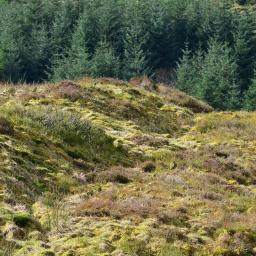
Llangurig, Powys, Wales Cae Gaer in the Cambrians endures as a pale pattern in the landscape, a footnote of historyHigh in the Cambrian mountains of mid Wales, perched on a slope above the chaotically youthful river Afon Tarenig, the bleak aspect of the Roman fort at Cae Gaer speaks of military expediency and urgent purpose.In the sunshine of early spring it looks almost serene. But to a newly arrived legionary, in the depths of winter, immersed in an alien landscape still home to wolves and bears, it must have felt like the edge of the world. Continue reading...
|
 |
by Kate Lamb in Jakarta on (#15Y40)
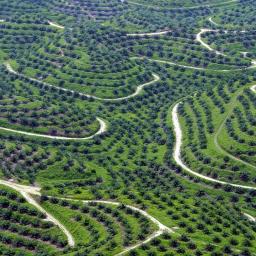
Greenpeace claims brands such as PepsiCo and Mars cannot guarantee palm oil used in products comes from environmentally sound sourcesSome of the world’s largest consumer companies are clueless as to whether palm oil they buy from Indonesia is linked to rainforest destruction, new analysis from Greenpeace shows.The environmental group surveyed 14 companies including multinationals such as PepsiCo, Mars and Unilever, and found that none could confidently claim that no Indonesian rainforest was destroyed in the making of their products.
|
by Annie Kane on (#15Y41)
Concrete has a crushing environmental impact but Australian-led innovations have the potential to dramatically reduce emissions from its productionThey look like any other footpath snaking across Queensland’s James Cook University (JCU) campus. Yet the two concrete paths leading up to the university’s new Science Place building and the Douglas campus buildings may hold the key to one of the construction industry’s most pressing environmental questions.In December last year, JCU PhD student Shi Yin won the manufacturing, construction and innovation category award at the 2015 Australian Innovation Challenge for his research into using recycled plastic for reinforced concrete applications. Continue reading...
 |
by Oliver Milman in New York on (#15XZJ)
|
by Oliver Milman on (#15XWS)
US federal government says recovery of national park population to more than 700 is a ‘historic success’ but conservationists say move is prematureThe federal government is proposing to strip endangered species protections from Yellowstone’s famed grizzly bears, with officials claiming a “historic success†in the recovery of the bear population.Related: Rangers catch grizzly bear suspected in Yellowstone hiker death Continue reading...
 |
by Australian Associated Press on (#15XWB)
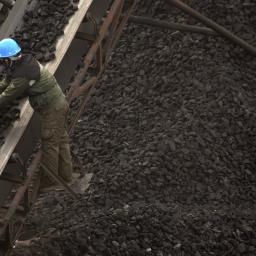
The CFMEU says it is very concerned about a Queensland backlog of 150,000 screening x-rays that have not been properly processedAs many as 1,000 coalminers may have black lung disease, the mining union says.The potentially fatal disease is caused by the inhalation of coal dust over a long period, and can emerge up to 15 years after exposure. Continue reading...
|
 |
by Oliver Milman on (#15XJP)
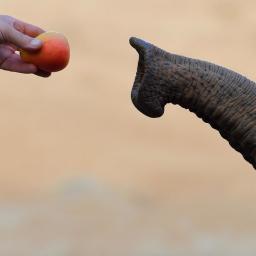
Administration has put resources into finding and prosecuting poachers and agreed with China to place mutual restrictions on the import of ivoryBarack Obama has said that urgent action is needed to save elephants from becoming extinct in the wild, adding that failure to do so would be an “unpardonable loss for humanity and the natural worldâ€.
|
 |
by Letters on (#15XD2)
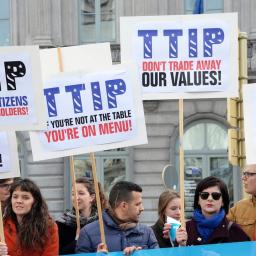
Phillip Inman reports that MPs have “won†access to TTIP documents, but can only view and not record them (MPs to see TTIP papers under strict rules, 19 February). What can the justification for this secrecy be when at the same time the government (and the EU) insist that TTIP is a good deal for all of us? Usually, when an individual or organisation has something that will benefit you, they are eager to tell you about it. With the honourable exception of Caroline Lucas, and I would hope some others, it seems incredible that our MPs either are, or are pretending to be, insouciant to the irony that they are being grudgingly granted limited access only to the details of a treaty that will demote the interests of democratically elected governments below those of multinational corporations.
|