 |
by Lucy Siegle on (#YW4F)
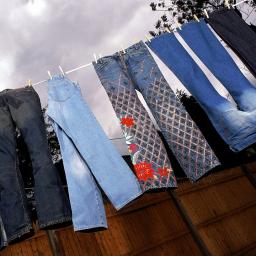
Go for organic cotton over classic blue denim if you want to keep your jeans cleanGlobally, denim production adds up to 4bn metres per year, 60% of it made in Asia (mostly in China). Jeans are usually made from non-organic, non-sustainable cotton, which means pesticides, a gargantuan amount of water, trade injustice and exploitation. Fugitive Denim: a Moving Story of People and Pants in the Borderless World of Global Trade by Rachel Synder is an insightful read.Bleaching, sandblasting (supposedly banned in 2004, when it was linked to lung disease in workers) and stonewashing all give jeans a higher ethical impact. The distressing process involves repeatedly washing with pumice stones and lots of water. I have also seen effects obtained by putting jeans under sun lamps (imagine the energy burden). Continue reading...
|
| Link | http://feeds.theguardian.com/ |
| Feed | http://feeds.theguardian.com/theguardian/environment/rss |
| Updated | 2026-08-20 15:15 |
by Melissa Davey on (#YVYQ)
Guardian Australia looks back at some advertising efforts of 2015 that met with stinging criticism online, including Woolworths’ ill-fated Anzac Day campaign“Never profiteer off other people’s suffering.â€Dr Brent Coker, an internet marketing expert from the University of Melbourne, says that is the fundamental rule any marketing or advertising agency should stick to when promoting a brand. Continue reading...
 |
by Australian Associated Press on (#YVXB)
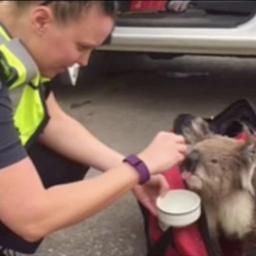
Firefighters and police have saved a koala they found unconscious near Lorne in Victoria and say she is now doing very wellA koala has been saved by firefighters battling a bushfire along the Victorian coast.When Country Fire Authority members fighting to put out the fire near Lorne found the koala lying unconscious by the side of the road, they brought the animal back to their station. Continue reading...
|
 |
by Reuters in Asuncion and Buenos Aires on (#YVS3)
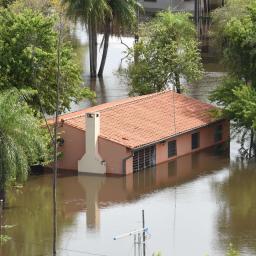
Worst El Niño in more than 15 years causes several deaths and drives thousands from their homes in border areas of four South American countriesMore than 100,000 people evacuated their homes in the bordering areas of Paraguay, Uruguay, Brazil and Argentina due to severe flooding in the wake of heavy summer rains brought on by El Niño, authorities said.
|
 |
by Paul Farrell on (#YVF8)
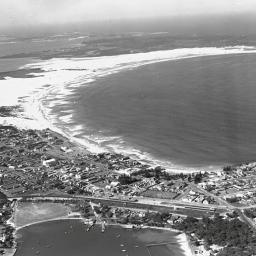
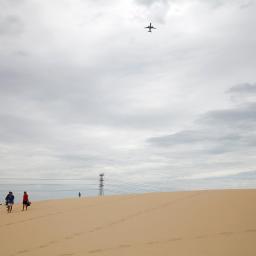
The once vast sand dunes in Sydney’s south have been farmed, mined, filmed and eroded by wind and rain. Now they face encroaching housing developmentsThe gigantic Cronulla sand dunes were a wilderness when the First Fleet arrived in the land that would be Australia. More than 200 years later, they are far smaller.Related: Cronulla sand dunes: the 15,000-year-old landscape that greed destroyed – in pictures Continue reading...
|
 |
by Jonny Weeks on (#YVEH)
The gigantic sand dunes in Cronulla, Sydney – close to the so-called birthplace of modern Australia – date back to mesolithic times. But over the past century they have been steadily encroached upon by human activity. The remaining dunes now lie sandwiched between a luxurious housing estate on one side and industrial buildings on the other. Our photographer Jonny Weeks has documented the current state of the dunes and the much-changed environment around them Continue reading...
|
 |
by Robin McKie on (#YVB3)
Completion of new paths puts target date of 2020 within sight, raising hopes of boost to tourismMore than 95 miles of new coastal path will open in a few weeks as the government strives to meet its pledge to complete the England Coast Path on schedule. The new sections will almost double the length of coastal path that has already been created as part of the project.The paths will cover parts of the coast of Somerset and will help to link the South West Coast Path, which ends at Minehead, with the town of Aust, near Chepstow, where the Wales Coast Path begins. In addition, new sections of path are to be opened in Kent in a few weeks. Continue reading...
|
 |
by Robin McKie on (#YV8E)
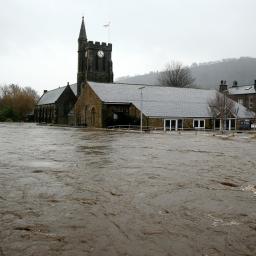
Troops come to the aid of emergency services to evacuate stranded familiesIt was the day the floodwaters inexorably advanced across the Pennines, leaving much of the north of England sodden and beleaguered. From Greater Manchester in the north-west to parts of North Yorkshire some 50 miles to the east, Boxing Day 2015 will be remembered as the day the rains came.In Todmorden, in West Yorkshire’s Calder Valley, Rebecca Marshall was last night facing the grim prospect of having to abandon her home as the floodwaters slowly rose around her house. The incessant rains had left the little town cut off after all the roads in and out were flooded. Continue reading...
|
by Damien Gayle and Joel Gunter on (#YT40)
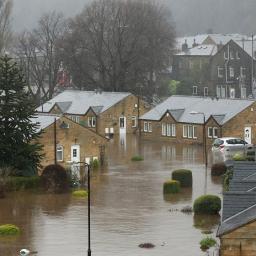
Homes abandoned and 10,000 Lancashire homes left without power as five new severe flood warnings issued5.12pm GMTHere’s a round-up of today’s key developments.
 |
by Guardian Staff on (#YTVB)
Parts of Britain are under water again as torrential rain from Storm Eva causes mass flooding in the north west of England on Boxing Day. The Met Office has issued severe weather warnings for rain, snow, wind, fog and ice
|
 |
by Gabrielle Lurie on (#YTDB)
East Porterville, California, is a predominantly Latino, low-income town that relies solely on private wells. As these dry up because of the drought, many families are forced to rely on deliveries, water from neighbours, or abandon their homes. Photographer Gabrielle Lurie has been documenting their plight Continue reading...
|
by Guardian Staff on (#YTAM)
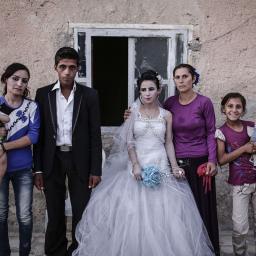
Footage taken by Twitter user Joseph E Nolan shows the effect of heavy rain on the river Ribble on Saturday, as severe flood warnings are issued across Lancashire and Yorkshire. Almost 150 flood warnings have been issued as up to 120mm of rain is set to fall in the north of England
 |
by Jim Powell on (#YT6W)
Europe’s refugee crisis, the Paris attacks, pollution in China, the continuing violence in Israel and Syria – the world’s leading photojournalists describe how they captured 20 defining images in 2015 Continue reading...
|
 |
by Jessica Elgot, Damien Gayle and agencies on (#YQYN)
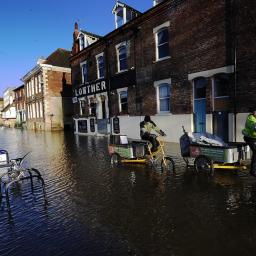
Almost 150 flood warnings issued as up to 120mm of rain set to fall in north of England – worsening situation in areas already saturated by winter stormsHouseholders in some parts of the north of England have been warned to take their Christmas presents and other valuables upstairs as the Environment Agency issued 149 flood warnings – seven of them severe – and 123 alerts. The Scottish Environment Protection Agency issued five flood alerts and eight flood warnings.The warnings south of the border, which mainly cover the north-west and north-east of England and Wales, come as forecasters said up to 120mm (4.7in) of rain could fall in some areas already saturated by winter storms.
|
 |
by Caspar van Vark on (#YT15)
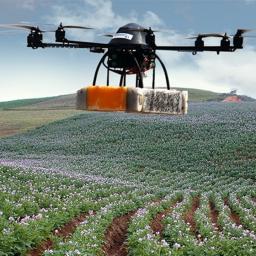
From Sri Lanka to Uganda, UAVs with near-infrared sensors are monitoring plants for pests and disease, with implications for agricultural policy worldwideThe traditional image of a farmer standing in a field, squinting anxiously at the sky for signs of rain, may be about to get a 21st-century makeover as researchers explore the use of drones on farms from Sri Lanka to Uganda.The ability of unmanned aerial vehicles (UAVs or drones) to hover low over fields of maize, sweet potato and rice with sensoring devices promises benefits for individual farmers and their communities. Continue reading...
|
 |
by Guardian staff on (#YSW4)
A report quietly released on Christmas Eve shows Australia’s emissions rose by about 1% in 2014-15, compared with the previous yearAustralia’s greenhouse gas emissions increased in 2014-15, a report released with obscure timing by the Australian government has shown.Related: What does the Paris climate agreement mean for Australia? | Lenore Taylor Continue reading...
|
 |
by Clive James on (#YSRS)
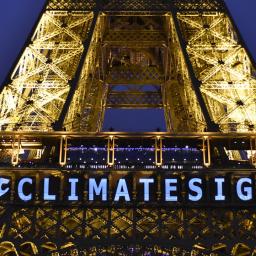
The writer reflects on the recent climate change conferenceThere’s an old French saying, “Send a donkey to Paris and it won’t come back any smarter.†It sounds good, but I’m betting it’s wrong, and that the big Paris conference has saved the world from heat death. Too late to save it for me, perhaps, but I’d like to believe that my granddaughter now faces no greater threat to her future than passing out from excitement when opening Christmas presents.As Christmas loomed, I was worn out from giving and taking hints about presents. The book I most wanted was The Silent Deep, concerning the Royal Navy submarine service. It was hard to hint about. You can’t say, “Speaking of submarines, yesterday I saw one in the river. I wish I knew more about submarines.†So I hinted more subtly, dragging the talk around to submarines even when the subject was climate change. When the ocean rose, I suggested, there would be more room for submarines. The hint worked. Continue reading...
|
 |
by Ray Collier on (#YSQG)
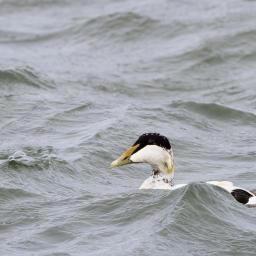
Burghead, Highlands Normally herring gulls hover over the eiders’ feeding area, waiting for any fragments of food the ducks might leave. The wind had put paid to all that. Despite the weather two of the drake eiders were displaying to the drab-looking femalesLast week the seas off our vantage point under a low cliff were the roughest we have ever seen from this peninsula. The strong wind was from the west, where, in the far distance, we could see the snow-capped tops of the hills. Much of the sea to our left was so dominated by the white foam that no water could be seen.With the tide ebbing, the rock pools on one side were exposed and here various waders were seeking not only food but shelter. Perhaps the weather had affected their behaviour – oystercatchers, purple sandpipers, redshank and turnstone were all mixed up in their search for food. Usually, along this stretch of coastline, these four waders keep together in small, loose groups whether feeding or roosting. The beaks of the different species vary in length, so that when they are probing for food they tend to find different food at varying levels. Continue reading...
|
by Joshua Robertson on (#YSDB)
Far from seeing the solar battery global giant as a threat, AllGrid Energy says its future will be brighter now Tesla is in the Australian marketAllGrid Energy, an Indigenous-owned company has emerged as a hopeful minnow beside corporate giants poised to drive the expansion of Australia’s fledgling home solar battery industry.The Brisbane-based upstart looks forward to the looming entry of the global industry’s marquee player, Tesla, as a shot in the arm to the Australian market. Continue reading...
by Caroline Davies on (#YS0E)
Right-to-roam law means pre-1949 rights of way that are not on official maps must be recorded in next 10 years or will no longer be protectedThousands of footpaths, alleys and bridleways across the UK face being lost forever within a decade under a clause in right-to-roam legislation, campaigners have warned.
 |
by Simon Allison in Johannesburg on (#YR2E)
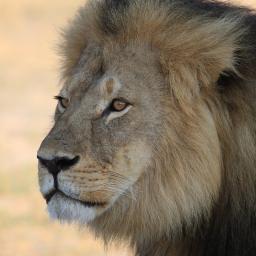
Zimbabwean activist Johnny Rodrigues says he now has an unprecedented platform to promote conservationFor 35 years, Johnny Rodrigues has been trying to get people to pay attention to conservation issues in Zimbabwe’s Hwange national park, with limited success. Then, in July, a dentist from Minneapolis killed Cecil the lion, the park’s most famous resident, and Rodrigues found himself at the centre of an international media storm.Related: Killer of Cecil the lion was dentist from Minnesota, claim Zimbabwe officials Continue reading...
|
 |
by Eva-Lotta Jansson on (#YQZK)
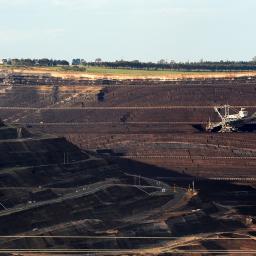
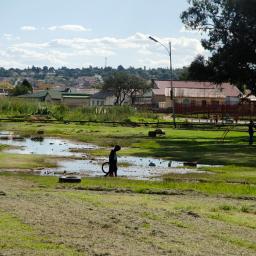
In a new book photographer Eva-Lotta Jansson documents the mining industry’s environmental destruction Continue reading...
|
 |
by Letters on (#YP88)
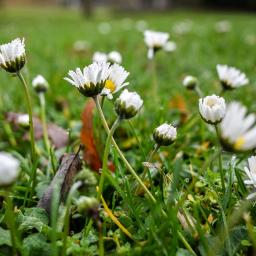
The mild weather is definitely having its effect (Ice rinks melt as Christmas goes crackers, 24 December). We have plants flowering in the gardens that really shouldn’t be at this time of year, such as Phacelia, and we even have a few roses still in bloom. We shouldn’t see any seedlings growing outside, but currently we’ve got wildflower seedlings growing among our tulip bulbs, which is virtually unheard of for December. Our Euphorbia seems to think it’s March already, with yellow heads showing, and we keep cutting back plants only to find they just keep growing back. Another real consequence of the warmer weather is that the bugs and pests won’t be killed off, which may mean we will have many more to deal with than usual in the spring time. The warm December has also meant lots of rain, so waterlogging may be a problem for some gardens out there. We combat this with lots of compost; my advice to other gardeners would be to do the same and ensure heavy objects are moved away from lawns so that soil isn’t compacted. If the mild weather continues and we have early fruit tree blossoms followed by a hard frost, the fruit harvest could be seriously damaged.
|
 |
by Associated Press in Delhi on (#YNM6)
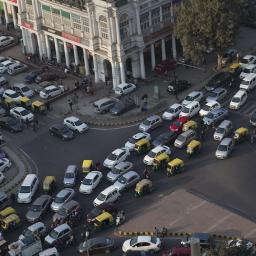
Grand plan to clean up air in Indian capital by banning cars on alternate days watered down and may be scrappedDelhi’s grand plan to deal with record levels of pollution and clean its air appears to be stalling before it has even been put into action.Arvind Kejriwal, the top elected official of the Indian capital, said last month that private cars would be allowed on the city’s roads only on alternate days from 1-15 January, with days allocated on the basis of whether licence plates ended in an even or odd number. Continue reading...
|
 |
by Sandra Laville in Kingston on (#YNHD)
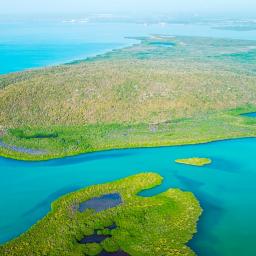
Road connecting north and south Jamaica will be lined with luxury hotels and is China’s largest investment in the Caribbean – but not for much longerStretching some 67 km (41.6 miles) north to south across Jamaica, the $600m four-lane highway skirts around a mountain and will eventually be lined with luxury hotels, restaurants and bars.Nicknamed the “Beijing highway†– after the Jamaican sprinter Usain Bolt reportedly turned down a chance for the road to carry his name – the state-of-the-art tolled carriageway is the most striking sign that the Chinese treasure ship has arrived in the Caribbean. Continue reading...
|
 |
by Associated Press on (#YNBH)
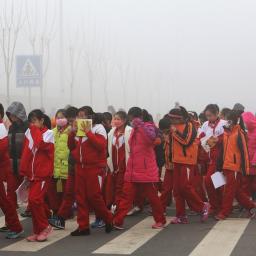
Authorities respond to forecasts of heavy smog by issuing first red alerts for pollution in 10 cities, following two warnings in Beijing this monthMore Chinese cities are issuing their first red alerts for pollution in response to forecasts of heavy smog, after the capital, Beijing, issued two this month following criticism for not releasing them earlier.Shandong province in eastern China issued alerts in four cities after warning that the density of particulate matter in the air would exceed high levels for more than 24 hours. The Shandong environmental protection bureau said the alerts started Thursday morning and that kindergarten, primary and middle schools should close and construction of buildings and roads, and demolition work, should stop. Continue reading...
|
 |
by Lucy Mangan on (#YN4T)
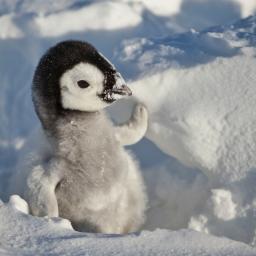
They look funny when they walk, beautiful when they swim. And they have adorable babies – so it was time to ignore the fact this was a ‘dramatised’ documentary, and open the BaileysAre penguins the gift that keep on giving or what? Aesthetically perfect for television – sharply delineated black on white, a flash of enlivening colour at the beak, all set against spectacularly snowy wastelands. They waddle comically when they walk, then make you gasp in awe at their sleek, streamlined beauty in the water. And they have ADORABLE babies – which is where, last night, we came in.Snow Chick: A Penguin’s Tale (BBC1) followed the fortunes of a young emperor penguin from soup to nuts – or at least from egg to first, slippery steps into adulthood. It was a “dramatised storyâ€, which is the BBC’s way of saying that it’s just possible a few other chicks were cut in when our hero was too busy snorting dried fish in his trailer or tooling round the red light districts in a snowmobile with his buddies to turn up for shooting. But also that it’s Christmas, and none of us should get too worked up about it. I embrace this philosophy fully. That is why, when it looked like the egg – so carefully nurtured in Daddy Penguin’s pouch while Mummy is off filling her belly with fish for the post-ovum months – wasn’t going to hatch, I nearly spilled my Baileys, shouting: “It’s Christmas! Don’t give me Dead Egg! It’s Christmas!†And shortly after that, when the downy chick was weakening by the hour and it looked like Mummy and her fish belly weren’t going to get back in time, “Don’t give me Dead Fluffball! It’s Christmas! It’s Christmas, you BBC bastards! †Continue reading...
|
by Jessica Aldred on (#YN3F)
Many people are aware of the endangered hedgehog, red squirrel or tortoiseshell butterfly, but little attention is given to the less photogenic species that are just as important to the British ecosystem. ‘Unsung heroes’ such as the bog hoverfly and tadpole shrimp also reflect the diversity and quality of habitats found in England’s national parks and the ongoing conservation work to protect them Continue reading...
 |
by Catherine Bearder MEP on (#YMZW)
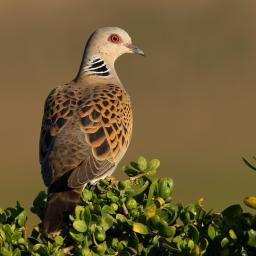
Without action to protect this treasured bird, it will disappear from the UK altogether within the next decade, writes Catherine BearderThe turtle dove has long been a symbol of Christmas and the loving bonds that bring us together at this time of year. But now the 12 Days of Christmas risks becoming 11, as the iconic species comes increasingly under threat.The bird’s distinctive, purring call was once a common feature of the British countryside. Now it has become increasingly rare as the birds are confined to ever-shrinking patches of East Anglia and the south-east. The latest figures show that we have lost a shocking nine in 10 turtle doves in the UK since 1970. Continue reading...
|
 |
by Reuters on (#YMYG)
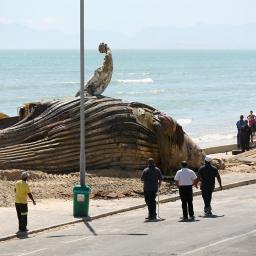
Strand Beach near Cape Town has been shut as experts fear the corpse of the 14 metre whale may attract sharksA South African beach popular with Christmas holidaymakers has been closed until the carcass of a beached whale is removed amid concerns its blood may attract sharks, the City of Cape Town said.Local media described it as a humpback whale measuring over 14 metres (46 feet) in length and said two sharks had been spotted in the area. Continue reading...
|
by Derek Niemann on (#YMYP)
Sandy Bedfordshire I would nurse with affection these pitiful rabbits so horribly afflicted with myxomatosisA wild rabbit, caught by a ferret and from Somerset, was put on my plate at the weekend smothered in apple sauce. I have had to kill a few rabbits myself; pitiful creatures so horribly afflicted with myxomatosis that I could easily pick them up to end their suffering.I know what it is to catch one of these near-blind, puffy eyed animals and hold its warm body, feel its weight and the fur rippling under my cupped hands. I would nurse the animal with affection, half forgetting that this wild creature had never before been touched by a human. Continue reading...
by Shalailah Medhora on (#YMXC)
Directive to CEFC to focus on innovative and emerging technologies will enhance support for windfarms and small-scale solar projectsThe Clean Energy Finance Corporation (CEFC) has been directed to focus on innovative and emerging technologies, reversing a mandate by the former prime minister Tony Abbott that would have specifically blocked funding for windfarms and small-scale solar projects.The mandate came into effect on Thursday, with a new clause outlining the shift in focus. Continue reading...
by Australian Associated Press on (#YMH4)
The irreversible condition, caused by long term exposure to coal dust, has been found in nine people and more cases are expected to be diagnosed
by Annie Kane on (#YM78)
New ideas, such as solar panels that float on water supply reservoirs, could see Australia become a major renewable energy exporterIn the last fiscal year, Australia earned $172bn from international sales of its natural resources. But earnings are decreasing. The office of the chief economist estimates that energy commodities earnings declined by 6% to $67bn last year because of a decline in revenue from coal exports, and that exports of refined petroleum products have declined by an average of 11% a year over the last decade.There are hopes however, that Australia could bolster its position by developing its exports of renewable energy – especially those generated through solar technology. The opportunity is there. China – one of Australia’s major coal buyers – has committed to increase its share of non–fossil fuels as part of its primary energy consumption to around 20% by 2030. Continue reading...
 |
by David Marr on (#YKY6)
Nothing defined the year in Australia as strongly as the response to terrorism, and climate change made its presence felt. Yet when it came to refugees or progressive reform, it remained as indifferent as ever
|
 |
by Letters on (#YKKS)
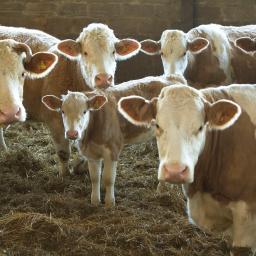
George Monbiot’s demonisation of meat eating (Your festive meal could be worse than a long-haul flight, 23 December) is oversimplified and misleading. Factory farming is wasteful and horrific but other forms of livestock-rearing such as pastured grazing provide a highly nutritious source of food using land that is often unsuitable for horticulture. Pound for pound, pastured meat proteins are more diverse than those of cereals and are similar in terms of water use and carbon emissions. Livestock has an essential role in farming practices like permaculture, which may offer the only viable alternative for sustainable food production, utilising stubble and fertilising fields left to fallow. Pastured animals can improve soil health and repair damage done to it by incessant tilling, provided they are stocked at an appropriate level. Fatty meat provides almost three times the calories per kilogramme as cereals and contains almost every nutrient essential to the human body. Three billion people eat meat-free diets, and 4 billion suffer malnutrition. This does not make a case for going vegetarian.Without doubt, the rich world needs to eat less meat, but the developing world also deserves to have a share of it. Steppe and other grassland converted to cereals supported huge populations of wild, methane-emitting herbivores, and is essentially neutral at sustainable levels (ie not artificially supported with feed). Similarly, termites emit twice the methane as livestock, but there is no great push for termite eradication. It is the intensity of meat production supported by oil energy that is the problem. Hence, the carbon costs of factory farming systems ultimately derive from the fossil fuels used to grow feed and artificially support the lives of these poor animals, and it must be stopped, if only for the sheer cruelty of the animals’ treatment.
|
 |
by Letters on (#YKHY)
John Cornish (Letters, 22 December), comments on the Pass notes for Shippea Hill and rightly draws attention to the excellent Drainage Museum in nearby Prickwillow. But the Pass notes bemoaned the lack of nightlife in the area. Look no further than the Hiams Club in Prickwillow, which has a full programme of dance sessions open to the public, including rock’n’roll nights featuring live bands with national reputations.
|
by Jonah Sachs on (#YKGV)
For years, consumers have propelled the push for sustainability. But if the market turns its attention elsewhere, will companies stay the course?2016 will be a year of distraction, fear and disruption. Around the world, a host of economic and political threats – including the refugee crisis, terrorism and teetering markets in Europe and China – will crowd headlines. In the US, the presidential election season will push fights over domestic security, guns, race and immigration to the forefront.In the midst of this noisy climate, long term environmental destruction will get pushed to the back burner of global consciousness. For consumers, corporate responsibility will simply not continue to drive buying decisions at the same level that it has in previous years. When people feel threatened and insecure, they generally turn to shorter term thinking and deprioritize pro-social behavior. Continue reading...
 |
by Guardian readers on (#YK9H)
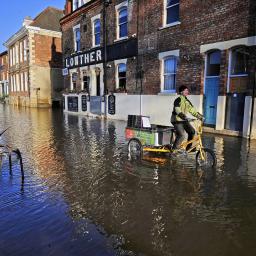
Parts of Cumbria prepared for their third flood clean-up this month, ahead of the news that more heavy rain will fall across the county over the festive period
|
 |
by Mark Tran on (#YJVZ)
Colchester Winter Wonderland and Ice Rink closes as south-east and other areas experience warmest December for 55 yearsThe mildest start to December for years has seen larger sprouts than usual, early daffodils and now melting ice rinks.Colchester Winter Wonderland and Ice Rink, which opened 25 days ago but has been unable to function on six of those days, has been forced to close down. Staff have begun dismantling the site, which included fairground attractions and festive stalls. Continue reading...
|
 |
by William Davison in Mekele on (#YJMP)
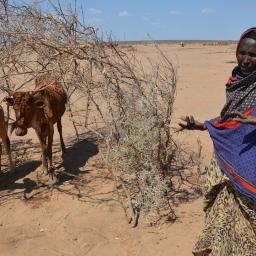
Visiting Ethiopia, UK minister Nick Hurd says although government response has been impressive, relentless drought is ‘pushing millions to the brink’The UK will provide an extra £30m in aid for Ethiopia, where a prolonged drought means that more than 18 million people will need urgent relief in the next year, according to the Department for International Development (DfID).Half of the cash is earmarked for the UN’S World Food Programme to supply emergency food supplies to around 1.9 million people, while £14m will go to a pooled fund that can be accessed by UN agencies and NGOs providing emergency water and healthcare. Continue reading...
|
 |
by Jeff Barbee in Bavianskloof, South Africa on (#YJDF)
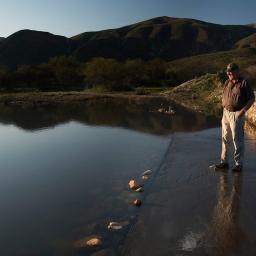
The country’s biggest agricultural insurer is working to actively reduce drought risk with a vanguard project to restore living landscapesFarmer Pieter Kruger stands smiling on a large weir built on a river in the Baviaanskloof area that provides water to South Africa’s fifth largest city. Tall and lean, he looks out over a gathering pool, delighted at the first time it has filled up enough to have the water roll over his shoes.“The actual restoration work happens here on this farm, but the benefits also flow to the users downstream, so in the long run everyone is going to benefit from this.â€
|
 |
by Karl Mathiesen on (#YJAD)
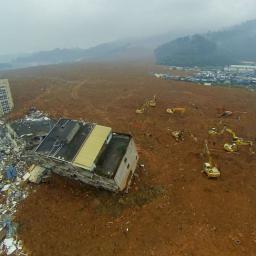
This is the first time experts know of a slide of construction waste, but it fits a pattern of catastrophes that have become endemic to developing countriesThe deadly landslide that buried part of the southern Chinese city of Shenzhen beneath a tide of red mud on Monday may be a devastating new consequence of China’s urban explosion, an expert has warned.
|
 |
by Jessica Elgot on (#YJ9D)
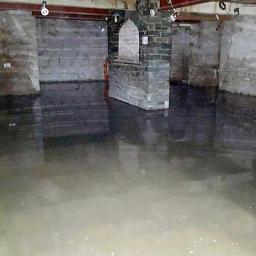
Third flooding clean-up this month in Cumbria before arrival of yet more bad weather in run-up to Christmas
|
 |
by Guardian Staff on (#YJ7K)
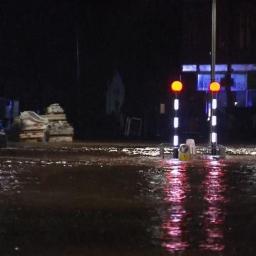
Business owners in the Cumbrian town of Appleby say they didn’t expect another flood on Tuesday just days after they finished cleaning up from Storm Desmond. Hundreds of homes were evacuated and vehicles were submerged. Elsewhere in Appleby, a pop-up shop had to be moved from the bowling green to avoid it floating down the river. Photograph: Paul Kingston/North News & Pictures
|
 |
by Tom Phillips in Beijing on (#YHVG)
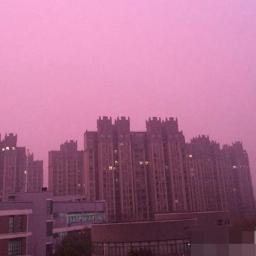
Images showing Nanjing city shrouded in a violet fug – said to be caused by a pollution spike at sunset – follow two red alerts for Beijing over toxic airPhotographs appearing to show one of China’s most famous cities shrouded in a spectacular violet mist went viral on Wednesday, as millions of citizens choked on the country’s latest bout of toxic smog.
|
 |
by Paul Evans on (#YHRT)
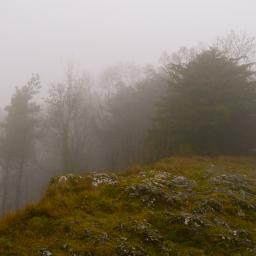
Wenlock Edge, Shropshire The mist settles like a mood, yet these long nights and murky days are wonderfulA yew tree looms in the fog, a brooding presence hovering in space above the cliff, not of this world. One of a cluster of wild yews, old and stunted from growing out of limestone and an obstinacy that refuses to recognise time as we measure it, this tree floats free of meanings we impose. Also free and unbidden, the fog settles like a mood over the Edge. It is myopic, melancholic, a dark humour yet strangely comforting.Recent storms have shredded the last leaves from the ash trees; saplings rise like bones and the old ones bear dangles of ash keys as if a flood tide had washed them there. Even the last golden oaks in the dale have been snuffed out by gales and their skeletons form an inner architecture of the fog down there. Continue reading...
|
by Hannah Gould on (#YHPW)
Think you’re up to date with all things circular economy this year? Put your knowledge to the test and let us know how you score
by Adam Brereton on (#YHD5)
Roy Morgan poll finds 76.9% of 1,002 people – including Coalition voters – want the federal government to ‘send a ship to oppose the whaling’Australians overwhelmingly support calls for the federal government to send a customs ship to monitor Japanese whaling in the Southern Ocean, a poll commissioned by the anti-whaling activist group Sea Shepherd indicates.
 |
by George Monbiot on (#YGKR)
We miscalculate environmental risk: eating certain meats is about the worst thing you can do to the planetThe figures were so astounding that I refused to believe them. I found them buried in a footnote, and assumed at first that they must have been a misprint. So I checked the source, wrote to the person who first published them, and followed the citations. To my amazement, they appear to stand up.A kilogramme of beef protein reared on a British hill farm can generate the equivalent of 643kg of carbon dioxide. A kilogramme of lamb protein produced in the same place can generate 749kg. One kilo of protein from either source, in other words, causes more greenhouse gas emissions than a passenger flying from London to New York. Continue reading...
|