 |
by Callum Roberts on (#MZBQ)
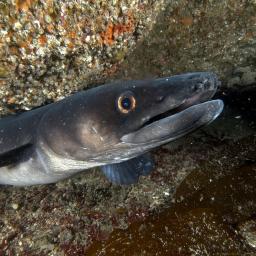
A definitive study released last week found that the amount of wildlife in our oceans has fallen by half in 45 years. Academic and marine expert Callum Roberts says there is still time to reverse this decline by closing areas to fishingSardines were once extraordinarily abundant in the south-west of England, leading one 19th-century guidebook to say: “Pursued by predaceous hordes of dogfish, hake and cod, and greedy flocks of seabirds, they advance towards the land in such amazing numbers as actually to impede the passage of vessels and to discolour the sea as far as the eye can reach … Of a sudden they will vanish from view and then again approach the coast in such compact order and overwhelming force that numbers will be pushed ashore by the moving hosts in the rear. In 1836 a shoal extended in a compact body from Fowey to the Land’s End, a distance of at least 100 miles if we take into consideration the windings of the shore.†(Handbook for Travellers in Devon and Cornwall, John Murray and Thomas Clifton Paris, 1851).Today people travel thousands of miles to dive and film such scenes, not realising they were once commonplace on our own coasts. Last week the World Wide Fund for Nature and the Zoological Society of London issued their most comprehensive look at the state of life in the sea. The report makes uncomfortable reading. Taking in more than 1,000 species worldwide and 5,000 populations of fish, turtles, marine mammals and a host of others, it draws the bleak conclusion that there is only half the amount of wildlife in the sea today as in 1970. Continue reading...
|
| Link | http://feeds.theguardian.com/ |
| Feed | http://feeds.theguardian.com/theguardian/environment/rss |
| Updated | 2026-08-20 17:01 |
 |
by Guardian readers and Tom Stevens on (#MY6C)
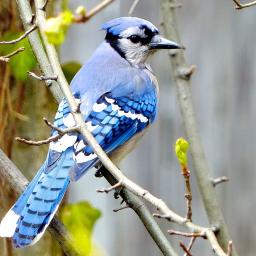
We asked you for your birdwatching photographs from around the world. Here is a selection of our favourites
|
 |
by Elisabeth Braw on (#MXZ9)
A seven metre tall tower designed by Daan Roosegaarde filters dirty air, releasing bubbles of smog free air. Does it detract from tackling causes of air pollution?The Dutch city of Rotterdam has opened the world’s first smog-free tower.
|
 |
by Haq Nawaz Khan and Tim Craig for the Washington Po on (#MXWR)
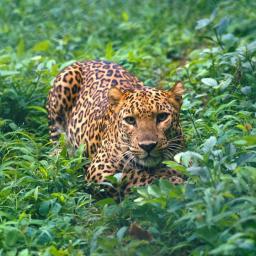
‘Man-eating leopards’ have been reported around Abbottabad – Osama bin Laden’s last redoubt – as wildlife officials struggle to reassure publicOsama bin Laden hid out here for months, if not years. But in the hills surrounding Abbottabad in north-western Pakistan, residents say they face a far scarier menace than terrorists.With descriptive stories that bring to mind mythological tales of man against beast, Abbottabad residents claim to be locked in a terrifying battle against Pakistan’s endangered population of leopards. The big cats – referred to as common leopards to distinguish them from their smaller cousins, snow leopards – lurk in the Himalayan foothills. Continue reading...
|
 |
by Graham Long on (#MXF9)
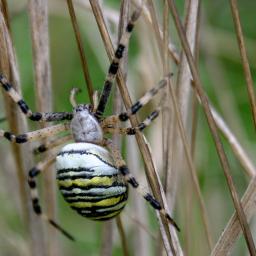
Frogham, New Forest This spider was both beautiful and docile, but not to be taken for grantedAs spiders go, this one certainly has wow factor. It’s mid-afternoon at the annual Frogham Fair. The lilt of Irish folk music drifts across as crowds line the arena to watch dogs and their handlers show off their skills – and children and grown-ups are recruited to become volunteer equipment as part of the entertainment. But our focus is on a creature many of those entranced by the show would turn away from in horror.We were introduced to it on the hand of 11-year-old Elian Day, a young naturalist who has been more interested in what is in the hedges of the adjacent field than in the veteran cars proudly displayed in it. Continue reading...
|
 |
by Mahita Gajanan on (#MW25)
The seasoned marathon swimmer hopes to raise awareness on water pollution through his 24,000-mile journey in March 2016: ‘It’s not such a big deal’Martin Strel has a goal: swim more than 24,000 miles around the world to raise awareness of aquatic pollution.
|
 |
by Wahyudi Soeriaatmadja for the Straits Times, part on (#MVXE)
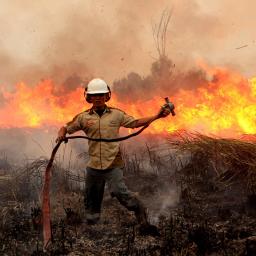
A senior executive of plantation company Bumi Mekar Hijau is one of those held for suspected environmental crimes, as part of a wider drive to combat the pollution haze crisis, reports The Straits TimesIndonesian police arrested seven corporate executives on Wednesday in connection with illegal forest fires across Sumatra and Kalimantan, as part of a wide-ranging effort to stop the haze crisis.Suspects included a senior executive from Bumi Mekar Hijau, a unit of Singapore-based Asia Pulp and Paper (APP), which is also Indonesia’s largest pulp and paper producer. Continue reading...
|
 |
by Adam Vaughan and Isaac Atwal on (#MVW5)
Environment ministers agree bloc’s joint position after overcoming objections from PolandEurope will not settle for anything less than a robust, ambitious and binding agreement on climate change at UN talks in Paris later this year, the EU’s climate chief has said.“Today’s a very good day. The EU is equipped with a very solid position for Paris,†said Miguel Cañete after environment ministers agreed the bloc’s joint position on the climate summit, overcoming objections from coal-reliant Poland. Continue reading...
|
 |
by Paula Kahumbu with Andrew Halliday on (#MVWM)
As conservation efforts fail, scientists and economists are coming up with increasingly loony and dangerous schemes to save the rhinoLast month it was confirmed that the Sumatran rhino (Dicerorhinus sumatrensis) is extinct in Malaysia. The future looks bleak for this species. The few dozen remaining individuals are confined to remote forests in Sumatra (Indonesia), in refuges that are under siege on an island devastated by rampant deforestation.
|
 |
by Terry Slavin on (#MVTA)
Cities worldwide are harnessing the power of gravity to generate electricity from public drinking water pipes
|
 |
by George Monbiot, Mark Lynas, and Chris Goodall on (#MVQZ)
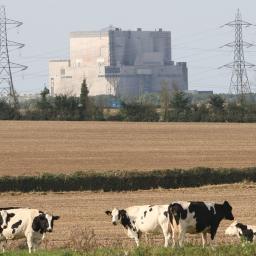
Overpriced, overcomplicated and overdue, the Hinkley project needs to be killed off and the money invested into other low-carbon technologies• Read more: Nuclear supporting environmentalists in call to scrap Hinkley C plansAs committed environmentalists, our conversion to the cause of nuclear power was painful and disorienting. All of us carried a cost in changing our position, antagonising friends and alienating colleagues. But we believe that shutting down – or failing to replace – our primary source of low carbon energy during a climate emergency is a refined form of madness.Because atomic energy provides a steady baseload of electricity, it has great potential to balance the output from renewables, aiding the total decarbonisation of the power supply. The dangers associated with nuclear power have been wildly exaggerated, all too often with the help of junk science. Climate breakdown presents a far greater hazard to human life. The same goes for the air pollution caused by burning coal. Continue reading...
|
 |
by Francesca Perry on (#MVPC)
City links: Greening Silicon Valley, Guatemala City’s mystery zone and spray paint cycle safety in Berlin feature in this week’s best city storiesThis week’s best city stories from around the web explore Silicon Valley’s newest sustainability project, an app which automatically sprays potholes you cycle over, the “missing†Guatemala City neighbourhood and Indianapolis’ growing pains with a new electric car share scheme.We’d love to hear your responses to these stories, and any others you’ve read recently, both on Guardian Cities and elsewhere. Just share your thoughts in the comments below. Continue reading...
|
 |
by Terry Macalister on (#MVJ6)
Three leading experts urge government to end nuclear project saying delays will create panicked scramble back to fossil fuelsThree leading environmentalists who broke ranks to give their support to a new generation of nuclear plants have now urged the government to scrap plans for Hinkley Point C.The call comes as George Osborne and Amber Rudd, the secretary of state for energy and climate change, head off to China, where they will discuss Beijing’s proposed investment in the new nuclear plant in Somerset. Continue reading...
|
 |
by Eric Hilaire on (#MVCZ)
A rare spectacled bear, fighting lions and endangered gibbons are among this week’s pick of images from the natural world Continue reading...
|
 |
by Karl Mathiesen on (#MV1Q)
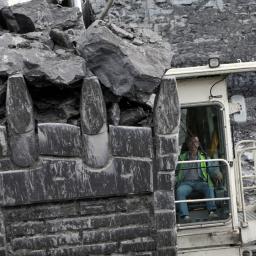
Despite government rhetoric that coal must go, experts say without policy changes this most carbon intensive fossil fuel is set to stay beyond 2030The government is wrong to assume its existing policies will be enough to phase out coal power in the UK, analysts have told the Guardian.Minister for energy and climate change Andrea Leadsom said this week that her department expected unabated (meaning without carbon capture) coal would make up just 1% of the country’s electricity generation by 2025. Continue reading...
|
 |
by Travis Irvine on (#MV1S)
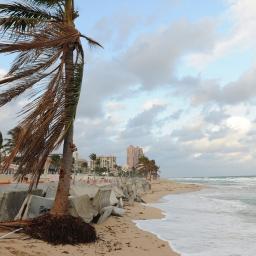
As hurricanes become more frequent, keeping track each storm’s name is becoming a challenge. Test your knowledge of the ones you should already know
|
by Adam Vaughan on (#MTT4)
International Court of Justice ruling would settle the scientific dispute and pave the way for future legal cases on climate change, says high-profile lawyerFalse claims from climate sceptics that humans are not responsible for global warming and that sea level is not rising should be scotched by an international court ruling, a leading lawyer has said.Scientific bodies such as the UN’s climate science panel have concluded that climate change is underway and caused by humans, Prof Philippe Sands QC told an audience at the UK’s Supreme Court. But a ruling by a body such as the International Court of Justice (ICJ) would carry much more weight with public opinion and help pave the way for future legal cases on climate change, he said. Continue reading...
by Joshua Robertson on (#MTT5)
BHP Billiton’s Mike Henry says environmental activists could be the industry’s biggest problem, but climate change deniers do it no favours eitherThe head of coal within BHP Billiton says anti-coal activists are winning over public opinion, making it arguably the industry’s biggest problem.Related: Edelman ends work with coal producers and climate change deniers Continue reading...
 |
by Fiona Harvey in Paris on (#MTQX)
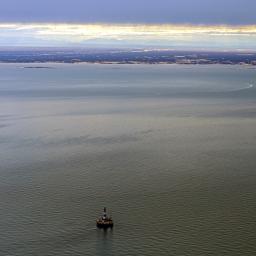
International energy watchdog’s new head, Fatih Birol, warns of costs and technological challenges but stops short of recommending an outright banDrilling for oil in the Arctic is not yet commercially viable and may not be for a long time to come, the chief of the world’s energy watchdog has warned, casting doubt on the controversial practice even as it is being enthusiastically adopted by governments and businesses.Shell is undertaking exploratory Arctic drilling off the Alaskan coast after the Obama administration granted it a green light in August. Environmental groups have urged a ban, saying it risks one of Earth’s last pristine landscapes and is contributing to climate change, which this week was blamed for Arctic sea ice shrinking to its fourth lowest ever level. Continue reading...
|
 |
by Ben Jacobs in Rochester, New Hampshire on (#MTP4)
It was just another Thursday night for Donald Trump, from the victory lap at the start to the media storm at the endAs Donald Trump entered the Rochester Community Center in Rochester, New Hampshire for a rally in front of 3,000 people, he was greeted by a full high school marching band playing the Europe song The Final Countdown. He left in the midst of media furor over whether he condoned anti-Muslim bigotry. In between, he took a shot at the Pope and attacked a fellow Republican candidate, all on national television. In short, it was just another Thursday night for Donald Trump.
|
by Giles Parkinson on (#MT8P)
With plenty of sunshine for solar panels and unprepared network operators, fast-tracking Powerwall into Australia’s energy market is a savvy moveThe arrival of the Powerwall Tesla battery storage unit in Australia will herald the biggest challenge to Australia’s electricity industry for decades.Tesla announced on Thursday that it is fast-tracking the roll-out of its battery storage product. Australia will be its first market for the 7kWh household units. The first deliveries had not been expected until well into 2017. Continue reading...
 |
by Guardian Staff on (#MT5V)
The demand for leopard skin coats, especially in the United States and Western Europe is endangering the animalNairobi, September 17
|
 |
by Christine Smith on (#MT6A)
Berneray, Outer Hebrides It’s impossible to form one overall impression of the day, only a succession of fleeting imagesThe wind is warm but wild, speeding the low-lying piles of fluffy white cloud across the sky while leaving those higher above relatively unmoving. Patches of blue appear in the newly formed cloud gaps only to disappear almost immediately, causing the landscape one minute to be bathed in sunshine, the next clothed in shadow.It’s impossible to form one overall impression of the day, only a succession of fleeting images the intensity of whose colours constantly alters in response to the changing light. And any attempt to record them except in the human memory proves futile. Continue reading...
|
by Guardian Staff on (#MT4S)
Melbourne Zoo keeper Damian Goodall explains a conservation project for four species of endangered frogs, also known as ‘fighting-extinction species’. The brightly coloured southern corroboree frog, native to Mount Kosciuszko, is a particular focus for mass breeding in captivity in the hope that it can be fully recovered from the threat of extinction Continue reading...
 |
by Mark Butler on (#MSX7)
Many Australians hoped the new PM would drag the Coalition back to the sensible centre on climate change – but he has swallowed Abbott’s Direct Action hook, line and sinkerOver recent days and bit by bit, Australians have been coming to understand the price that Malcolm Turnbull was willing to pay to achieve his long-held personal ambition of becoming prime minister. Australians are beginning to understand the extent to which he was willing to discard so many long-held beliefs to satisfy that ambition.
|
by Henry Barnes on (#MSDH)
Avi Lewis’s fine-looking film purports to break from environmental documentary convention. Instead, it delivers another characterless prophecy that’s unlikely to inspireAvi Lewis’s film about climate change, based on Naomi Klein’s book of the same name, opens with a confession from the author: “I’ve always kind of hated films about climate changeâ€. She lists their faults: they’re boring, they’re presumptive, they always, always include shots of polar bears.Related: Where to Invade Next review – Michael Moore gets happy with a sugar-binge idea-stealing session Continue reading...
by Graham Readfearn on (#MSAJ)
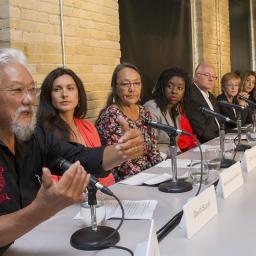
Malcolm Turnbull once endorsed common sense positions on climate change. Then he became prime ministerDuring the first few days of being prime minister, Malcolm Turnbull seems to be doing his best to argue about climate change with a former version of himself.I know I might have already given the game away here, but who do you think said this only five years ago? Continue reading...
 |
by Martin Lukacs on (#MS6E)
A powerful movement in Canada, animated by a compelling and positive vision for the climate and economy, can force the hand of whichever government comes to powerEvery political class considers themselves inclusive, diverse, open-minded. But present ideas that stray outside the boundaries of sanctioned debate, imposed by power and a patrolling press, and watch how quickly they stoop to bullying.Consider the response to the Leap Manifesto, a declaration released this week by an unprecedented coalition of Canadian authors, artists, national leaders and activists in the midst of a federal election. It lays out a vision – bolder than anything on offer from political parties – to transition the country off fossil fuels while simultaneously improving the lives of most Canadians. Climate change is presented not just as an existential crisis but an opportunity – indeed, imperative – to make the political and economic system more just and fair. Continue reading...
|
by Letters on (#MRY2)
The government’s proposal to leave tackling air pollution to local authorities alone is another sign that the Tories are intent on trashing the green agenda (Government passing the buck on air pollution, say campaigners, theguardian.com, 13 September). Air pollution is not only a local issue, it is a national health crisis causing 50,000 early deaths each year. Many of the most harmful pollutants have no respect for national or local borders. They are blown around our country and continent, with low-lying and coastal areas particularly at risk. We need a comprehensive approach to tackling this deadly problem which combines local measures with concerted efforts at the national and European level.Crucially, local authorities must have access to adequate funding from both the UK government and EU for measures to improve air quality such as low-emission zones, improved cycling infrastructure and cleaner buses and taxis. At a time when local councils are seeing their funding cut to the bone, additional support is needed to make the transition to cleaner towns and cities which will save billions of pounds in health costs in the long-term. The UK government must also ensure EU limits to curb pollution are tightened and properly enforced. The longer we wait to tackle this invisible killer, the more lives will be tragically cut short.
 |
by ZSL Animal Photography Prize on (#MRV1)
A contemplative picture of a shaggy-haired grizzly bear, silhouetted against a mountain-lined horizon has been chosen as the Adult Judges’ Choice in the ZSL animal photography prize 2015. Attracting more than 450 entries from around the world, the winners are selected by a panel of expert judges including ZSL honorary conservation fellow and television presenter Kate Humble, and renowned ornithologist Bill Oddie Continue reading...
|
 |
by Associated Press in St Louis on (#MRSQ)
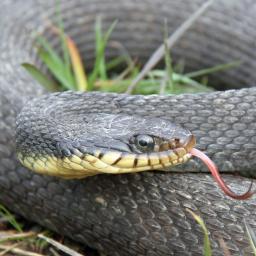
For the second time in two years, a female yellow-bellied water snake in Missouri reproduced on her own, a rare occurence called parthenogenesisFor the second time in two years, a captive snake in south-east Missouri has given birth without any interaction with a member of the opposite sex.Officials at the Missouri department of conservation’s Cape Girardeau Conservation Nature Center say a female yellow-bellied water snake reproduced on her own in 2014 and again this summer. The snake has been living in captivity, without a male companion, for nearly eight years. An intern who cares for the snake found the freshly laid membranes in July. Continue reading...
|
 |
by Adam Vaughan on (#MRR0)
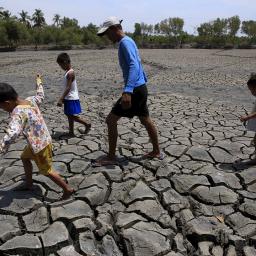
The world has experienced record-breaking warmth every month so far this year, and Noaa scientists say global warming and El Niño are the causeThe world has experienced record-breaking warmth every month so far in 2015, making this year virtually guaranteed to be the hottest on record, according to a US science agency.The National Oceanic and Atmospheric Administration (Noaa) said that 2015 was 97% likely to be the hottest year so far, eclipsing 2014, the current warmest year. Continue reading...
|
 |
by Kevin Butt on (#MRJK)
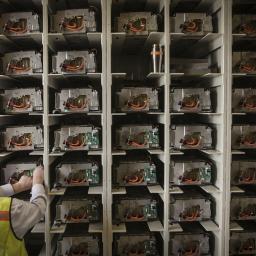
Solar power at Yellowstone’s Lamar Buffalo Ranch field campus is stored in used hybrid batteries recovered from Toyota dealers. Here’s how it happened
|
 |
by Fiona Beckett on (#MRDF)
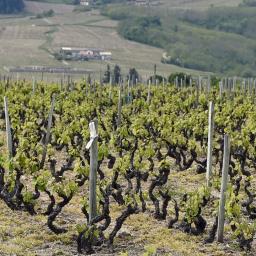
Too many wines labelled organic taste no different from conventional wines, but some are well worth seeking outMight I be doing anything about organic wine for Organic September, a reader asked the other day. Hmmm, well, possibly, but to be honest, I’m not totally convinced. Too many wines labelled organic taste no different from conventional wines, which shouldn’t really come as a surprise, because the certification relates only to what goes on in the vineyard. It doesn’t stop winemakers using identikit commercial yeasts or adding significant amounts of sulphur, tartaric acid, enzymes, tannin or any of the other bags of tricks available to them. No wonder many producers don’t feel it’s an advantage to register as organic.Still, I do realise there’s a demand for organic wines (I don’t want to pour unnecessary chemicals down my throat, either), so where do you go to find them, especially when even specialists such as Vintage Roots don’t always have the interesting wines you might expect? I really want to like Wild Thing Sauvignon Blanc (£7.85; 12% abv), from La Mancha, for example, not least because a donation from the sale price goes to the Born Free Foundation to aid conservation, but it’s just a bit, well, dull. The subtle, soave-ish Lugana Catulliano 2014 (12% abv) at £11.50 is much more appealing; or, for those keen to avoid added sulphur, try Jean Claude Mas’s Cuvée Secrète (£9.75; 14% abv), a lush, full-bodied blend of merlot and cabernet franc from the Languedoc. Continue reading...
|
by Harry Davies on (#MRDH)
Environmentalists slam appointment of ex-Schlumberger consultant as energy and environment adviser just months before global climate summit in ParisEnvironmentalists have criticised a decision to appoint a former consultant to major oil and gas companies as David Cameron’s key adviser on energy and environment policy.
 |
by Abby Young-Powell on (#MR8F)
How can we keep the issue of global freshwater shortage on policymakers agendas? Our expert panel had these suggestionsThere is a need for a grassroots movement to strenghten the case for water in the climate debate. This grassroots movement for water exists, but could be stronger. In many countries local NGOs, water committees and youth associations have worked on raising awareness. In France, local water parliaments work together to tackle water and climate change issues. These initiatives could be further shown in other countries. Heloise Chicou, deputy director and climate program officer, French Water Partnership, Paris. Continue reading...
|
 |
by Michael Billington on (#MQW9)
Bush, London
|
by Terry Macalister on (#MQS0)
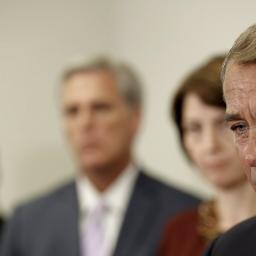
London mayor’s warning of the threat of proposed Tory cuts to jobs and future investment is welcomed by green politicians and industry leadersBoris Johnson has said he is “very concerned†about the government’s proposals to cut subsidies to the fast-growing solar industry.
 |
by Suzanne Goldenberg US environment correspondent on (#MQM5)
At least 10 House Republicans sign on to resolution in mini-rebellion seemingly designed to put pressure on presidential candidates and party leadersNearly a dozen Republican members of Congress will break ranks with leaders of their party on Thursday, and call for action against climate change.The mini-rebellion a week before the pope visits Congress appears timed to ratchet up the pressure on Republican presidential candidates and congressional leaders to soften a party line of casting doubt – or simply denying – the existence of climate change. Continue reading...
|
by Peter Kimpton on (#MQJF)
Peter Kimpton explores cyclists’ goals and experiences on the extremes of Haute Route in the Pyrenees
 |
by Suzanne Goldenberg en Santa Fe on (#MQD1)
Mucho antes de que el Papa Francisco instara a los fieles a trabajar por la justicia medioambiental, el agua y las sequÃas ya eran aspectos que preocupaban en el oeste de Estados Unidos, por lo que los creyentes podrÃan intensificar sus acciones más que nunca
|
by John Abraham on (#MQBX)
A new study finds a rise in concurrent droughts and heatwaves
 |
by Robert Kitchin for Stuff.co.nz, part of the Climat on (#MQ9Z)
James Shaw releases a plan for significantly reducing New Zealand’s greenhouse gas emissions at a public lecture in Wellington, reports StuffThe Greens of New Zealand have outlined a plan to fight global warming - but softened their stance on making farmers pay a controversial carbon tax.Related: New Zealand first to levy carbon tax Continue reading...
|
 |
by Nicky Woolf in New York on (#MPJT)
Rubio says economy must come first as candidates address issue on CNN, as Christie rejects ‘wild leftwing idea’ that we can fix the climate aloneIn an exchange that would have been all but unthinkable even four years ago, moderator Jake Tapper posed a question to Florida senator Marco Rubio and New Jersey Governor Chris Christie that quoted Reagan secretary of state George Schultz: “Why not take out our insurance policy and approach climate change the Reagan way?â€But despite the token question well into the third hour of CNN’s GOP debate, no candidate was willing to endorse any possible solution. Continue reading...
|
 |
by Oliver Milman on (#MPHP)
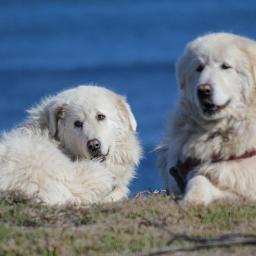
Crowdfunding drive launched to buy and train two maremma dogs to scare off foxes which constantly attack penguins on island off WarrnamboolTwo new guard dogs are being urgently sought to help protect one of the last colonies of little penguins on Australia’s coastline.A coalition of conservationists, academics and Warrnambool city council are crowdfunding to raise money to buy and train two maremma dogs to guard a group of penguins that are under constant threat from foxes. Continue reading...
|
by Joshua Robertson on (#MPG6)
WWF reports landholders ‘panic clearing’ under the new Labor government in anticipation of protections being restoredA surge in deforestation across Queensland has continued under the new Labor government, suggesting landholders are “panic clearing†before protections can be restored, according to conservation groups.A report by WWF has identified 94 locations that make up a “map of shame†for tree clearing in the state, which has more than tripled to 278,000 hectares in the five years to 2013-14. Continue reading...
 |
by Matt Fidler and Troy Griggs on (#MP75)
As China races to extend its military reach, it is turning pristine habitats into permanent islands. Satellite images of the South China Sea show rapid destruction of some of the most biodiverse coral reefs in the world. The reclamation of land in the contested Spratly archipelago to build runways, military outposts and even small towns is endangering ecosystems that are key to maintaining world fish stocks and biodiversitySouth China Sea Images reveal impact on coral of Beijing’s military bases Continue reading...
|
 |
by Justin McCurry in Tokyo and Emma Howard on (#MNPD)
Green campaigners say recent removal of 500-year-old virgin forest is an ecological disaster and dismiss officials’ ‘patronising’ offer to restore habitatCampaigners in South Korea have accused organisers of the 2018 winter Olympics of destroying a “sacred†forest to make room for a ski slope, and dismissed official assurances that the site will be restored to its original state after the Games.
|
 |
by Ellen Brait in New York on (#MNJN)
Waterton Canyon park closes to the public with blog noting that visitors get ‘sometimes within 10 feet of wild bears’ while taking pictures with the animalsA recreation and hiking area in Denver has been closed to the public after one too many hikers tried to take the perfect selfie with a bear.
|
by Editorial on (#MN9S)
The political support for a deal is broader and deeper than ever before. But the real crunch comes in October, when the IMF and the World Bank Group meet to assess progress towards the $100bn of climate aidThe chances of a deal at the Paris climate change summit that starts on 30 November look better than anyone might have thought possible even a year ago. But if success seems more likely than failure, failure – as President François Hollande warned last week – is still possible. The negotiations on the text that have been going on in Bonn were supposed to be nearly complete, but progress has been slow and possibly insufficient. Only this morning the UN’s climate chief, Christiana Figueres, warned that the targets for carbon emission reduction that 62 nations which account for 70% of emissions have so far submitted for agreement in Paris are not good enough to keep global warming below 2C.All the same, the mere fact of nationally rather than globally agreed targets marks an important innovation. In total, targets covering 85% of emissions are expected. That would be enough to prevent global warming reaching catastrophic levels. It is the start of a process, and that is one of the things that makes the framework for a deal very different from the failed attempts at Copenhagen six years ago. Then, the developed world was being asked to bear the costs both of moving to a low-carbon economy and of mitigating the impacts of climate change; the US still lacked a climate change policy; and the fastest-growing polluters, China and India, did not take part. Continue reading...