 |
by Damian Carrington on (#MBYQ)
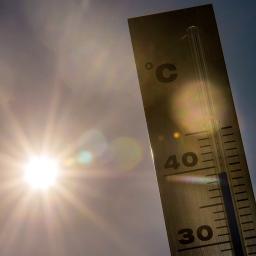
Next two years likely to be hottest recorded as the world’s climate reaches major turning point – but UK summers may be cooler, report predictsThe world’s climate has reached a major turning point and is set to deliver record-breaking global temperatures in 2015 and 2016, according to a new report from the UK Met Office.Natural climate cycles in the Pacific and Atlantic oceans are reversing and will amplify the strong manmade-driven global warming, the report concludes. This will change weather patterns around the world including more heatwaves, but it is possible that the UK will actually have cooler summers. Continue reading...
|
| Link | http://feeds.theguardian.com/ |
| Feed | http://feeds.theguardian.com/theguardian/environment/rss |
| Updated | 2026-08-20 17:01 |
 |
by Aggie Rothon on (#MBWP)
Frankfort, Norfolk It was a knobbly red fist of moss-like filaments, grown to completely envelope the unripe husk of a rosehipWhen sauntering this path a few days earlier, my eye had snagged on a scrap of bright crimson amid the green hues of the hedgerow. Closer inspection of a tangle of dog rose briars had proven the brazen flash of colour to be a bedeguar gall. The size of a large conker, it was a knobbly red fist of moss-like filaments, grown to completely envelope the unripe husk of a rosehip.I returned home to books and found that this strange sticky mass had been caused by a tiny wasp, Diplolepis rosae, which lays its eggs in the leaf buds of wild roses. Weeks later the simple feeding of any resulting wasp larvae causes a tumour-like gall to form. Photos of the rarely seen diplolepis showed a tiny amber-legged wasp that reproduces asexually, never needing and seldom producing a male. Continue reading...
|
by Oliver Milman on (#MBPS)
WWF-Australia and Australia Institute challenge justification for Coalition moves to speed up approvals for mines and ports by devolving powers to the statesThe Coalition’s bid to speed up environmental approvals for developments such as mines and ports will not save businesses as much money as claimed and will weaken protection for vulnerable species and ecosystems, according to a new report.
 |
by Terry Macalister Energy editor on (#MBDE)
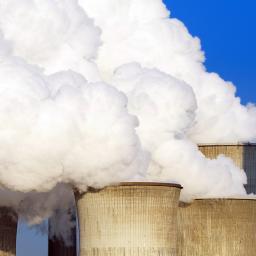
Group wants to see incentive tax breaks introduced, as opposed to current system of penalising companiesEEF, one of Britain’s leading employers’ groups, has urged the government to scrap the carbon price floor and other green taxes, following on from a series of ministerial moves to slash subsidies on wind and solar schemes.The demand for more cuts comes as a high profile green crowdfunding scheme, the Trillion Fund, said it would no longer be loaning money to renewable energy projects because the government had “rocked investor confidenceâ€. Continue reading...
|
 |
by Thomas Coward on (#MB8W)
Originally published in the Manchester Guardian on 17 September 1915A curious thing happened here yesterday. I am writing in a densely wooded Welsh valley, facing the cloud-veiled heights of Cader. The post brought, enclosed in a small matchbox, a pipistrelle; it was sent from Somerset, and left there on the 13th. In spite of its long journey in so small a box it was slumbering when it reached me, but later it awoke. About 1 30 in the afternoon I placed it on the rough-cast of the wall, and in a few moments it took wing, at once circling round and over the neighbouring trees, and apparently feeding, for flies were abundant. At that time, though many martins were fly-catching, there were, of course, no bats about, but to my surprise in little more than ten minutes it was joined by another bat of its own species. They flew about for some time, though not close together. A bat takes some time to rouse from its diurnal sleep; how then did the stranger manage to communicate with a sleeping pipistrelle, safe in its resting-place? It is hard to say, but if by voice, it is evident that the Somerset dialect of the chiropteran voice is understood by the Celtic bats. Continue reading...
|
 |
by Gary Fuller on (#MB5M)
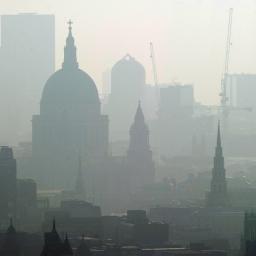
September marks the end of the UK’s summer and also the end of our risk period for summertime smog. From now on, shorter days and weaker sun mean that ground level ozone won’t pass six on the 10-point UK pollution index.This year summertime smog in the UK was confined to three main periods; during the early July heatwave over most of England and parts of Wales, in early August across the southern half of England spreading westwards, and then across Scotland and England later in the month. Continue reading...
|
 |
by Associated Press in Honolulu, Hawaii on (#MB2Z)
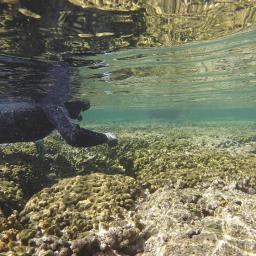
Corals are recovering from last year’s bleaching but warmer-than-normal ocean temperatures this year will likely lead to a more deadly year for coral reefWarmer-than-normal ocean temperatures around Hawaii this year will likely lead to the worst coral bleaching the islands have ever seen, scientists said.Many corals are only just recovering from last year’s bleaching, which occurs when warm waters prompt coral to expel the algae they rely on for food, said Ruth Gates, the director of the Hawaii Institute of Marine Biology. The phenomenon is called bleaching because coral lose their color when they push out algae. Continue reading...
|
 |
by Katie Tokus on (#MASV)
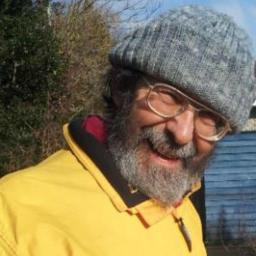
John Comben, who has died suddenly aged 64, was a leading member of Incredible Edible Totnes, a project that plants herbs and vegetables in flowerbeds and disused spaces so that produce can be freely harvested by the public.He and those involved in the project, backed by the charity Transition Town Totnes, worked regularly on beds and an arboretum in the south Devon town. His career as a gardener and horticulturalist gave him a huge knowledge of plants and growing that he shared with project volunteers, and he supplied plants and seedlings. Continue reading...
|
 |
by John Vidal Environment editor on (#MAM0)
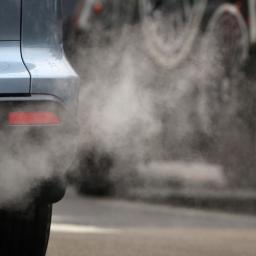
Critics say plan to make councils responsible for policing pollution in urban areas offers no extra money or new powersA government plan to meet European air quality limits by letting councils ban diesel vehicles and charge drivers more for parking polluting cars and vans is disappointing and could result in further court cases and tens of thousands of unnecessary deaths, critics say.The plan, drawn up by the Department for the Environment and Rural Affairs (Defra) in response to a supreme court ruling, proposes individual emission limits for four different vehicle types. Continue reading...
|
 |
by Adam Vaughan on Easter Island on (#MACT)
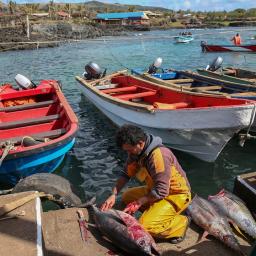
Local people say way of life is under threat from industrial vessels, and see plan as chance to protect environment and repair relations with mainlandIn the pre-dawn gloom in a small harbour on Easter Island, three fishermen fill their boats. Instead of piling nets, they load rocks which they will use to drop a line tens of metres below the swelling waves. The lines will be hauled up hand over hand with their catch, huge yellowfin tuna.The technique would be recognisable to the fishermen’s ancestors who have worked these waters for hundreds of years. But this way of life on one of the world’s remotest inhabited islands is under threat, say local people and conservationists, from illegal fishing by industrial vessels that dwarf these tiny boats. Continue reading...
|
 |
by Lucy Siegle on (#M9EH)
How to bring up a child with small carbon footprintsBritain’s latest parenting guru is science writer and mother-of-two Zion Lights with her Ultimate Guide to Green Parenting. This enters a world that has often been seen as hippy or for the too-posh-for-Pampers set (or a combination of both). But that’s unfair. It’s 25 years since Juliet Solomon codified earth mother and father techniques in Green Parenting, and the big aim remains bringing up children with small ecological footprints.This is a tough ask. In industrialised economies, one child will be responsible, over their lifetime, for consumption and pollution equating to that of 30 to 50 children in the developing world. Continue reading...
|
 |
by Gabrielle Chan on (#M9A6)
Asked if he would step down over a Coalition loss, PM says ‘well we’re not going to lose’, despite a new poll showing a 10% swing away from the LiberalsTony Abbott has predicted the Coalition will win the Canning byelection, dismissing suggestions that his leadership is in trouble.Related: Canning byelection: Abbott asked about leadership and Dutton's 'lame joke' Continue reading...
|
 |
by David Hellier on (#M83X)
The founder of chemicals giant Ineos says shale offers Britain cheaper energy and insists it could reinvigorate his native north country‘One thing I’m sure about,†says Jim Ratcliffe, billionaire founder of chemicals giant Ineos. “You can’t have an energy policy that means you can only have a bath when the wind blows.â€The Manchester-born industrialist points to figures, based on National Grid statistics, breaking down the composition of the UK’s energy supply. It shows nearly half of Britain’s electricity on the day in question being generated from gas, with around 20% from coal and 20% from nuclear. Despite subsidies and major investment in wind farms, only around 1.4% of the day’s electricity is generated from that source. Continue reading...
|
 |
by Becky Barnicoat on (#M7WJ)
The best nature photography offers a peek into another world – but first you have to pin down your camera-shy subject“I want to see you crawling. Get down lower. Crawl!†I am crawling – my elbows hooking uselessly into the large, loose pebbles of Brighton beach, dragging my body another inch forward, while my hands and wrists wobble beneath the weight of a hefty Canon 5D MK III camera. It might look impressive if I wasn’t so embarrassed. Through the unsteady lens, my target bounces about: a flock of seagulls, squatting 10 metres away.Along the shore people duck and dodge the gulls, which swoop with menacing confidence towards chips, children and ice-cream. Yet, I’m having the opposite problem – every time I get within striking distance of a bird, it soars off into the distance. Continue reading...
|
 |
by Calla Wahlquist on (#M7NT)
Tony Abbott, on his third visit to the electorate, says Peter Dutton’s joke about rising sea levels and Liberal leadership speculation are ‘not about me’The prime minister, Tony Abbott, has dodged questions about his leadership and criticism of an insensitive joke made by government frontbencher, saying both issues were “not about meâ€.Related: Tony Abbott defends Peter Dutton after joke about rising Pacific Island sea levels Continue reading...
|
 |
by Christie Wilcox for the Washington Post on (#M7DF)
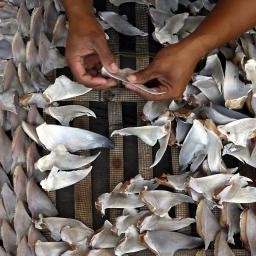
Shark fishing remains profitable as narrow focus on Chinese finning trade obscures wider global trendThe internet erupted with praise last month when United Parcel Service tweeted that it would stop shipping shark fins. But the decision – after a petition to the delivery giant garnered 178,000 signatures – addressed just one of many concerns about the ecologically vital but often threatened marine species.“There is a persistent belief among many well-intentioned folks that the only threat that sharks have ever faced, or are currently facing, is shark finning,†said David Shiffman, a well-known shark scientist at the University of Miami. He argues that the focus on fins distracts attention from more important conservation actions. Continue reading...
|
 |
by Ed Douglas on (#M6Z7)
Blacka Moor, Derbyshire You wake to a clear sky and the air filtering through the open bedroom window is sharp and freshLate summer is flat in north Derbyshire; the light is harsh and the moors a drab monochrome. The air is heavy; lay your hand on a slab of gritstone and it comes away moist. The woods are deep in shade, the herbaceous plants gone to seed, tall stalks of foxgloves nodding towards the ground. Then, blessed morning, you wake to a clear sky and the air filtering through the open bedroom window is sharp and fresh, and from the north, promising the “penalty of Adamâ€, the season’s change.Today was that day, and I celebrated by visiting one of the richer corners of moorland hereabouts. Swallows were gathering in bright sunshine on telephone wires at the base of the hill, sending their clicks down the line, and a late brood of great tits was mobbing through the birch as I climbed. Where the trees gave way to heather, the berries of the rowans had, in the space of hours it seemed, turned blood orange, an auspicious tree come to fruition; you can make a tart, smoky jelly from rowan berries, mixed with apples, that is good with venison, or, for vegetarians, a crumbly, soft cheese like Wensleydale. Continue reading...
|
by Lenore Taylor Political editor on (#M6FZ)
With coal at $60 a tonne and upfront costs of $1.3bn, Shenhua may as well buy a secondhand mine in the Hunter Valley, says minister in a swipe at huge projectsRelated: Newcastle grasps what Tony Abbott cannot – coal's time has passed | Bill McKibbenBarnaby Joyce says the business case for big new coalmines “no longer stacks up†given the low price and slowing global demand for the fuel. Continue reading...
by Guardian Staff on (#M66J)
Fashion designer and political activist Vivienne Westwood drove a tank to David Cameron’s home to demonstrate against the government’s pro-fracking policy Continue reading...
 |
by Karl Mathiesen on (#M5BD)
Tony de Brum, Marshall Islands foreign minister, joins others in expressing offence at comments by Peter Dutton, caught on microphone in CanberraPacific leaders have hit out at the insensitivity of an Australian minister’s apparent joke at the expense of low-lying nations struggling against rising sea levels.
|
 |
by Zoe Williams on (#M57B)
The Countryside Alliance says he is an extremist and wants the BBC to fire him. But the conservationist insists he is on farmers’ side, and unafraid to go on opposing foxhunting and badger cullingRelated: Countryside Alliance urges BBC to sack Chris Packham in conservation rowEven though it started over a hen harrier – and there will be those of us, shamingly, who don’t know what one of those looks like – there was something quintessential about the row that broke out this week between Chris Packham, hero of Springwatch, and the Countryside Alliance, champions of blood sports. Packham wrote a column in the BBC’s Wildlife magazine in which he criticised wildlife charities for being too meek. Frankly, it could have been said by anybody, of whatever political stamp, about any charity; they’re all way too meek about everything. But he was making a specific point, which he elaborated to me, on his garden bench near Southampton, looking out on to a view so perfect that I had the sense of imminent disaster. “The way the wildlife NGOs evolved is that they were instigated by people who had split interests. They were interested in country pursuits – shooting, hunting, fishing, farming – and also natural history. And they were brilliant natural historians with a genuine desire to protect that legacy. We should no longer be sleeping with these people, but we should be in constructive dialogue with them. We need to move on.†Continue reading...
|
by Julia Lurie, for Mother Jones, part of the Guardia on (#M54W)
Bucket showers, no flushing toilets and daily trips to collect bottled water are the reality for many people in East Porterville, after years of dought, reports Mother JonesGlance at a lawn in East Porterville, California, and you’ll instantly know something about the people who live in the house adjacent to it.If a lawn is green, the home has running water. If it’s brown, or if the yard contains plastic tanks or crates of bottled water, then the well has gone dry. Continue reading...
 |
by Spectator Kalaki on (#M4XB)
Each day we endure eight-hour power cuts. Zambia’s rivers should produce plenty of hydroelectric energy, but a botched privatisation has left the nation without cash for new power stationsZambia is in the middle of a massive power crisis that began in June and has been getting steadily worse. In Lusaka, where I live, the situation is becoming desperate due to eight-hour blackouts every day. Moreover, the electricity goes off just at the time it is most needed – when families come home from work. The entire family is left without electricity for lighting and for cooking the evening meal. So instead it means cooking on the mbaula (a simple charcoal fire) and eating by candlelight.Related: Zambian villagers take mining giant Vedanta to court in UK over toxic leaks Continue reading...
|
 |
by Haroon Siddique on (#M4VF)
Designer drives military vehicle through Witney to Chadlington, Oxfordshire, to carry out fake ‘chemical attack’Used to sticking two fingers up at the establishment, Vivienne Westwood has driven a tank to David Cameron’s constituency home in a protest against fracking.Related: Vivienne Westwood takes the fracking debate to Cameron – in pictures Continue reading...
|
 |
by Eric Hilaire on (#M4TR)
A Cambodian fishing cat, baby mountain gorilla and the Big Mac penguin colony feature in this week’s pick of images from the natural world Continue reading...
|
 |
by Terry Macalister on (#M4NF)
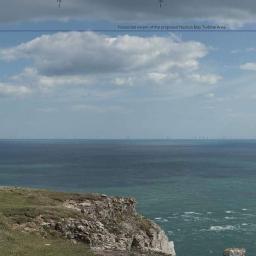
Government refuses planning permission for £3.5bn windfarm due to visual impact, in further blow to UK green energy industryThe government has turned down an application to build a £3.5bn windfarm off the south coast of England in another major blow to the green energy industry under the Conservatives.The decision on the Navitus Bay project off Dorset was unveiled by Lord Bourne, the energy minister, even as 13 leading financial investors urged the chancellor to adopt a more positive stance on renewables. Continue reading...
|
 |
by Karl Mathiesen on (#M4K1)
Labour shadow energy minister, Bryony Worthington has said that environmentalists should not take a blanket position against shale gasThis week, Labour shadow energy minister and environmentalist Bryony Worthington dismayed green groups by backing fracking as a way to reduce carbon emissions.Following a speech on the Energy Bill in the House of Lords on Wednesday, Baroness Worthington told the Today Programme: “There are legitimate concerns, absolutely correct, that we need to do this safely, but we shouldn’t take an in-principle objection to the technology and nor should we do that for any other of the low carbon technologies. Because [climate change] is the big challenge we face.†She said that the “common enemy†is very cheap coal which entails much higher carbon emissions. Continue reading...
|
 |
by Guardian Staff on (#M4G5)
Fashion designer Vivienne Westwood drives a white tank through David Cameron’s Witney constituency in Oxfordshire to his home in Chadlington in a protest against fracking. The 74-year-old is demonstrating against new fracking licenses being pushed through parts of northern England
|
 |
by Travis Irvine on (#M4EB)
Some scientists are predicting a huge sea level rise even if we limit climate change. If that happens, will elevated cities such as Denver end up being the capitals of the world? The Hunger Games predicted that could be the case, and so does this fake promotional video. The changes could become reality if we don’t take action now. Continue reading...
|
by Dana Nuccitelli on (#M48M)
Republican presidential candidates Santorum, Kasich, and Cruz reject the expert consensus and data on human-caused global warmingRepublican presidential candidate Rick Santorum recently said we should “leave science to the scientists.†That’s good advice; especially since Republican Party leaders’ response when asked about climate change is inevitably “I’m not a scientist.†When it comes to questions of science, listening to scientific experts is always a good idea.
 |
by Margaux Lesaffre on (#M3Z0)
Although numbers are up, plans for oil exploitation could seriously affect themMountain gorillas could be in for a boost this month: a census is set to reveal how many are left in the Virunga massif – an area that spans Uganda, Rwanda and the Democratic Republic of the Congo.Only 380 mountain gorillas appeared to be left in the Virunga Massif according to a survey from 2003, but conservation efforts are taking effect – their population was estimated at 480 after a census in 2010. A second population of around 400 mountain gorillas live in Uganda’s Bwindi Impenetrable national park. Continue reading...
|
 |
by Kim Yoo-sung for NK News, part of the North Korea on (#M3RM)
In an ongoing series, NK News poses a reader’s question to a defector. This week, enduring military service on an empty stomachIn North Korea, men serve in the military for 10 years and women for seven. The special unit working as Kim Jong-un’s personal bodyguards serve for 13.Military service is compulsory in the DPRK and most people enlist after high school. Those who are accepted into universities do their military service after they graduate. Continue reading...
|
 |
by Giulio Boccaletti on (#M3RS)
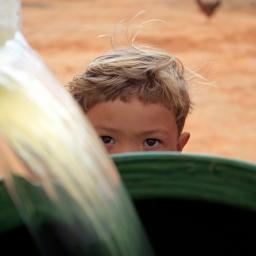
From Mumbai to São Paolo, safe water supplies are precarious. Research suggests that conservation could be a cost-effective solutionThey are two of the biggest cities in the world and both are set to grow significantly over the next decade, yet Mumbai and São Paulo are still unable to supply the clean and safe water residents need.
|
by Peter Walker on (#M3N0)
It aims to bring a network of instantly-available bicycles to cities around the world – if enough people want to rent out their spare bikes for cash.When you’re launching a new business, having big aspirations is usually the done thing. For the distinctively-named AirDonkey the ambitions are bigger than most: to be something of a combination of Uber and Airbnb, but for bicycles.If that wasn’t enough, the Copenhagen-based startup, which is soon to launch a Kickstarter appeal for about €100,000 of funds, hopes to be as much of what co-founder Erdem Ovacik calls “a movement†for more liveable, bike-filled cities as a commercial company.
by Claire Stares on (#M3JA)
Heath Pond, Petersfield, Hampshire They flew rapidly round each other in a duel slewing left and right in ever tightening circlesA dragonfly skimmed towards us, the whir of its wings like the sound of a fingernail being run back and forth across the teeth of a plastic comb. It seemed to be displaying accompanying behaviour – flying just ahead of a woman pushing a pram so as to prey on the tiny insects disturbed by the trundling wheels.Peeling off to the left the dragonfly arced back and alighted on the edge of the sandy path near the pond. It was a male broad-bodied chaser (Libellula depressa), its fat, flattened abdomen powder blue with yellow-spotted flanks. Continue reading...
 |
by Shalailah Medhora on (#M3FE)
Immigration minister shares awkward open mic moment with PM after Pacific islands fail to convince Australia to aim for a global warming target of 1.5 degreesThe immigration minister, Peter Dutton, has shared an awkward open mic moment with the prime minister, Tony Abbott, where he appears to joke about rising sea levels in the Pacific.Abbott and Dutton were discussing the recent Pacific Islands Forum in Papua New Guinea before a community roundtable at parliament house in Canberra on the resettlement of Syrian refugees. Television cameras had been invited to cover the opening statements of the roundtable. Continue reading...
|
by Oliver Milman on (#M3AZ)
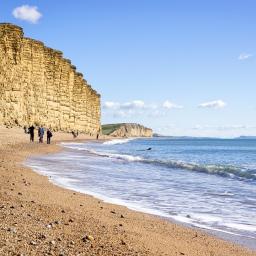
The enormous uptake of greenhouse gases is roughly equivalent to the European Union’s annual carbon outputThe Southern Ocean has started to absorb more greenhouse gases after a period when the vast ocean’s uptake had slumped by about a half, a study has found.
 |
by Terry Macalister Energy editor on (#M303)
Energy minister Lord Bourne expected to bow to lobbying by local Tory MPs and veto plan for 121 turbines 10 miles off Dorset coastThe government is expected to turn down an application for a £3.5bn windfarm off the south coast of England in what would be another major setback to green energy under the Conservatives.The decision on the Navitus Bay project off Bournemouth will be announced by Lord Bourne, the energy minister, on Friday just as 13 leading investors have written to the chancellor urging a more supportive attitude towards renewables. Continue reading...
|
 |
by Sarah Boseley Health editor on (#M305)
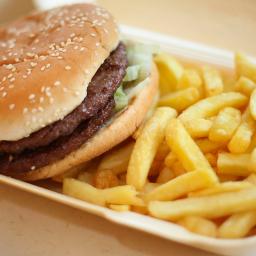
High blood pressure linked to bad diet contributed to most deaths, while smoking and air pollution were also high-ranking risk factors, study finds
|
 |
by Joanna Walters in New York on (#M2WZ)
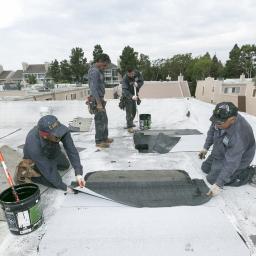
Climate officials warn winter’s weather pattern likely to be one of the strongest as effects are likely to be felt from December to MarchClimate officials are warning that this winter’s El Niño weather pattern is likely to be one of the strongest on record, bringing huge storms and a cold, wet winter for many – but nowhere near enough rainfall to reverse the disastrous long-term drought in the western US.Any heavy rainfall will be welcome news for thirsty California, parched for the last four years by a historic dry period. Continue reading...
|
 |
by Guardian Staff on (#M27J)
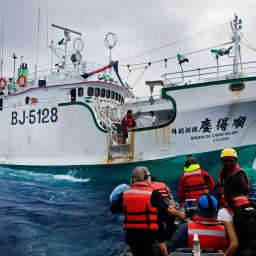
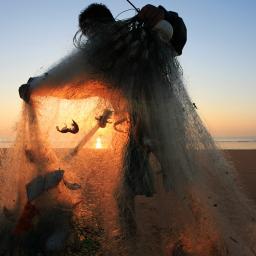
Greenpeace says it has uncovered a large illegal tuna fishing operation in the waters of Papua New Guinea after apprehending a Taiwanese ship with 75kg of shark fins. Irregularities in the ships log book raised activists’ suspicions and they later found that the Shuen De Ching No.888 had no fishing licence for the area Continue reading...
|
 |
by Hannah Gould on (#M1YE)
A new global initiative is bringing together NGOs, industry and government to tackle lost and abandoned fishing gear
|
by Emma Howard on (#M1FE)
Stricter regulation and drop in global demand made investments too risky, says university’s chief investment officerThe University of California has sold off $200m (£130m) of coal and oil sand investments from its $98bn investment fund less than a year after initially refusing to do so.In September of last year, the university’s board of regents chief investment officer Jagdeep Singh Bachner refused to sell off the holdings, arguing that a more “holistic approach†than divestment was needed. Continue reading...
 |
by Zakir Hossain Chowdhury/Barcroft Media on (#M1DR)
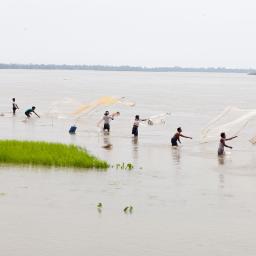
People living on small islands in the country’s Kurigram district have been left homeless after floods hit for the second time in a month. At least 21 people have died in floods and landslides triggered by heavy rains in 2015. With downpours swelling rivers and flooding roads, many villagers are starving due to lack of food, relief goods and drinking water Continue reading...
|
 |
by Emma Howard on (#M1DA)
Petition calls on US president Barack Obama and UN chief Ban Ki-Moon to help create a world run 100% on renewable energyA petition launched by Desmond Tutu urging global leaders to create a world run 100% on renewables within 35 years has been backed by more than 300,000 people globally.It describes climate change as “one of the greatest moral challenges of our timeâ€. Continue reading...
|
 |
by Anita Chabria in Sacramento on (#M18C)
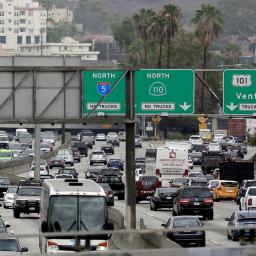
With only two days left in the legislative session, oil industry successfully rallies for amendment to ambitious environmental bill SB350An ambitious environmental bill in California that attempted to legislate up to a 50% reduction in gasoline use by 2030 had been derailed by the oil industry in the final week of the legislative session.Senate president pro Tempore Kevin de Leon announced on Wednesday that he would amend the bill, SB350, to drop the petroleum provisions. It will be changed in the Assembly Natural Resources committee as soon as Thursday to deal only with increasing the state’s renewable electricity supply and boosting energy efficiency in buildings through retrofits and upgrades. Continue reading...
|
by George Monbiot on (#M13H)
The British countryside is becoming a playground for millionaires. We need more broadcasters that dare to take on wildlife killers like the Countryside AllianceChris Packham should wear the Countryside Alliance’s attempt to have him silenced with pride. It’s another indication that, in the eerie wasteland of the BBC’s rural coverage, his is one of the very few voices prepared to tell us what is really going on.
 |
by Stephanie Kirchgaessner in Rome on (#M13J)
Rome conference speech describes inaction as discrimination that devalues lives of future generations
|
 |
by Philip Hoare on (#M13M)
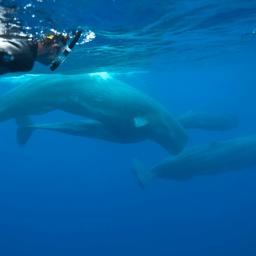
I’d always been scared of these great creatures but while filming in the Azores, I jumped into the ocean amid a pod of whales – and met another sentient beingI was born and brought up by the sea – indeed, my heavily pregnant mother nearly went into labour on a visit to a submarine in Portsmouth, and I was almost born underwater. Yet I never learned to swim. I was simply too scared of the water, and what it might contain. I trace my terror to a memory of something I never saw: the bath in my mother’s childhood home, along the side of which my grandfather – whom I never knew – had painted a great spouting whale, a veritable Moby-Dick. The image of that unseen whale haunted me, to the extent that I didn’t even like taking a bath. Throughout childhood and into my teenage years, this fear dominated my feelings towards the sea. It was only when I was in my mid-20s, unemployed in London, that I decided to challenge myself. In a tiled Victorian pool in Hackney, an elderly lady in a rubber hat took pity on me. This Esther Williams of the East End showed me how the water could bear my body up, gloriously. I was hooked.Cut to the Azores, the mid-Atlantic, 20 years later. The water off these black basalt shores drops to half a mile deep within a few hundred feet; further out, it falls to three miles. I’d gone there with a film crew, to make a BBC Arena documentary about the true story behind Moby-Dick. Soon after leaving the harbour, a pod of common dolphin began to ride our bow. The water was so clear there seemed to be nothing between them and me. And they appeared to be leading us somewhere. Suddenly, our young Azorean captain, Joao, stopped the boat. Ahead were what looked like logs. Continue reading...
|
 |
by James Meikle on (#M0XM)
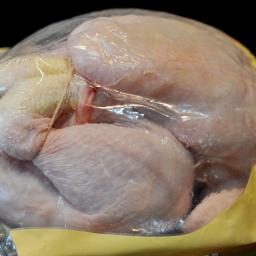
Food Standards Agency says its focus is on reducing levels of the bug rather than focusing on farming methodsChecks on levels of the potentially lethal bug campylobacter in fresh chicken do not show whether birds reared using organic methods were more contaminated that those produced by mass-market systems.Though experts said the organic birds appeared to be more contaminated, the low sample size meant they could not come to a firm conclusion. Continue reading...
|