 |
by Alan Yuhas in Washington on (#5MQT)
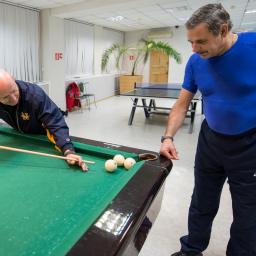
Scott Kelly and Mikhail Kornienko will spend a year together on the International Space Station and conduct research into the feasibility of a manned Mars missionTheir respective countries may be going through one of the worst periods of hostility since the end of the cold war, but this week an American astronaut and a Russian cosmonaut will fly up to the International Space Station to spend a year on board together.Despite the enmities of the cold war and the frigid relations of their governments today, scientists and astronauts from Nasa and its Russian equivalent, Roscosmos, have a fruitful and friendly history of recent cooperation. As the US government has cut space program funding, for instance, Nasa has turned to its Russian counterpart to assist with mission logistics such as sharing a launch pad. Continue reading...
|
| Link | http://feeds.theguardian.com/ |
| Feed | http://feeds.theguardian.com/theguardian/science/rss |
| Updated | 2026-10-01 05:30 |
 |
by Shalailah Medhora on (#5MHE)
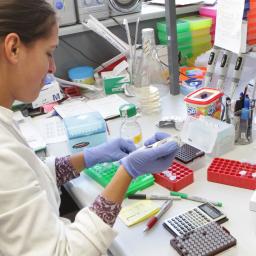
Study commissioned by the chief scientist, Ian Chubb, also found that advanced physical sciences and maths employ 760,000 people Continue reading...
|
by Guardian Staff on (#5MH4)
Scientists at Cern are suggesting they could soon detect miniature black holes, proving the existence of parallel universes and disproving the big bang theory of the creation of the universe. Or something Continue reading...
 |
by Suzanne Goldenberg in New York on (#5MDT)
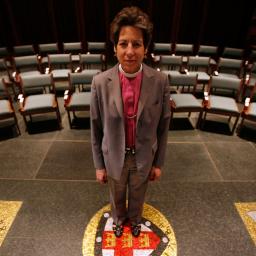
Climate change is a moral challenge threatening the rights of the world’s poorest people and those who deny it are not using God’s gift of knowledge, says presiding bishop Katharine Jefferts SchoriThe highest ranking woman in the Anglican communion has said climate denial is a “blind†and immoral position which rejects God’s gift of knowledge.It’s hard work when you have a climate denier who will not see the reality of scientific truth.Related: World Council of Churches rules out fossil fuel investments Continue reading...
|
 |
by John Baruch on (#5M8D)
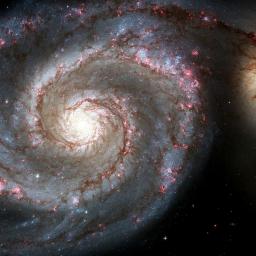
For the next month the telescope will be free for Guardian readers to remotely observe the moon, nebulae, constellations and other objects in the night skyThe Bradford Robotic Telescope sits more than a mile above sea level on the rim of an old volcano on Tenerife in the Canary Islands. The telescope, part of the Teide Observatory, captures stunning images of the night sky from one of the best sites for astronomy in the world.
|
by Oliver Burkeman on (#5M84)
If it’s paternalistic for people in authority to make choices for me, is it also paternalistic for them to insist that I do the choosing for my own good? Continue reading...
by Michael Safi on (#5K8T)
Two huge meteorite scars spanning 400km have been linked to one huge asteroid, creating an impact zone dwarfing that of Mexico’s Yucatan peninsula Continue reading...
 |
by Ian Sample, science editor on (#5K0J)
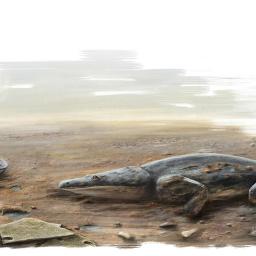
Carnivorous amphibian Metoposaurus algarvensis grew to the size of a small car and dates back to the Late Triassic PeriodFossil hunters have found the remains of a giant carnivorous amphibian that patrolled ancient lakes and rivers at the dawn of the age of the dinosaurs.The salamander-like predator grew to the size of a small car and feasted on the fish that thrived in the waterways of the Late Triassic Period, more than 200m years ago.
|
 |
by Katherine Krueger on (#5J6M)
|
 |
by Gwyn Topham on (#5J6Y)
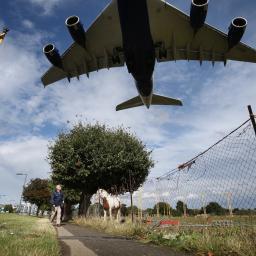
Arup SoundLab aims to win over opponents of third runway by simulating future noise levels. Gwyn Topham tests the noiseHeathrow airport has a new hi-tech weapon in its battle to win over public support for its long-desired third runway.A small sound laboratory has been set up in central London offering a simulated taste of what a future expanded airport would sound like. Continue reading...
|
 |
by Ami Sedghi on (#5HYR)
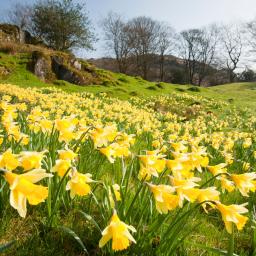
Shortening of spring each year is due to the way Earth’s axis wobbles as it moves – but most of us won’t notice the difference in our lifetimeEvery year spring is getting shorter by about 30 seconds, according to researchers.This is mainly to do with how the Earth’s axis wobbles – very slowly – as it moves, or as LiveScience explains, “like a wobbling top, in a type of motion called precessionâ€. Continue reading...
|
 |
by Hannah Devlin Science correspondent on (#5HVV)
Geologist suggests extracting precious metals from human waste would keep harmful substances out of the ground – and recover valuable objectsFortunes could be saved from going down the drain by extracting gold and precious metals from human excrement, scientists suggest.Sewage sludge contains traces of gold, silver and platinum at levels that would be seen as commercially viable by traditional prospectors. “The gold we found was at the level of a minimal mineral deposit,†said Kathleen Smith, of the US Geological Survey. Continue reading...
|
 |
by GrrlScientist on (#5HM5)
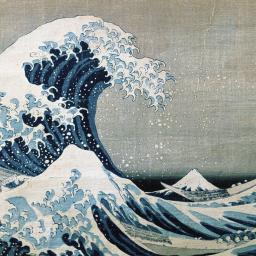
Behind-the-scenes looks at the science that goes into art conservation so we all can (potentially) experience the original work for ourselves rather than looking at a digitised scan, a poster-sized print or an encyclopaedia thumbnail Continue reading...
|
 |
by Mark Green and Hannah Devlin on (#5HHA)
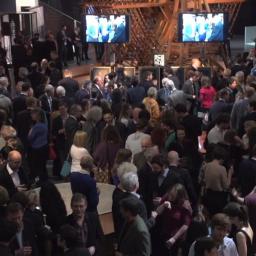
As part of the the celebrations for British Science Week, some of Britain's finest scientific minds gathered for an evening at the Science Museum. From 'Carl Sagan or Brian Cox?' to 'what is the single greatest threat to science?' we took the opportunity to ask them a selection of the most pressing questions facing scientists today Continue reading...
|
 |
by Caroline Davies on (#5GCH)
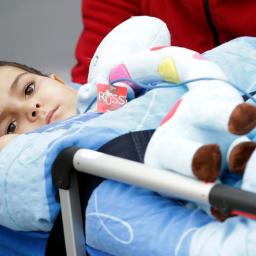
Brett and Naghmeh King, who were jailed after taking their five-year-old son abroad for treatment, say he has made ‘miracle’ recoveryThe parents of five-year-old Ashya King, who were briefly jailed after taking him from a British hospital and fleeing abroad to seek treatment, have said he is now cancer-free.Brett and Naghmeh King, who prompted an international police hunt in August when they took Ashya from a Southampton hospital against doctors’ wishes, said their son has made a “miracle†recovery from brain cancer.
|
 |
by GrrlScientist on (#5GDS)
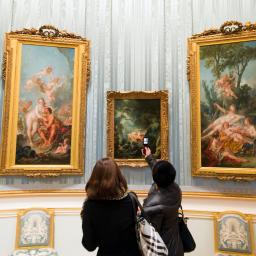
Today is the first day of Twitter’s international Museum Week, which celebrates our many museums, galleries and cultural institutions that make valuable contributions to science, the arts, history and culture around the world Continue reading...
|
by Oliver Milman on (#5F7S)
Australian coral reef experts say if the mining and port expansion projects go ahead, there will be permanent damage to the reef Continue reading...
 |
by Simon Bowers on (#5EY7)
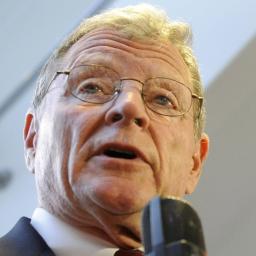
Senator Jim Inhofe, who opposes climate change regulation, has received $10,000 from PAC funded by donations from US staff at oil group Continue reading...
|
 |
by David Hauser and Richard Wassersug on (#5EFM)
We use so much militaristic language to describe cancer. It might be doing more harm than good
|
 |
by GrrlScientist on (#5CY2)
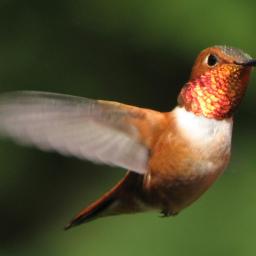
For “Caturdayâ€, I share a lovely video created by one of my birding pals that captures a mother hummingbird as she raises her son from hatching to fledging Continue reading...
|
 |
by Sarah Boseley on (#5BN8)
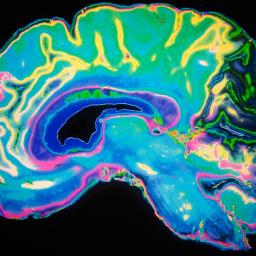
Experts cautiously welcome results of trial of antibody known as aducanumab, which appears to show benefit in patients given it in very earliest stage of disease
|
 |
by Guardian Staff on (#5BC7)
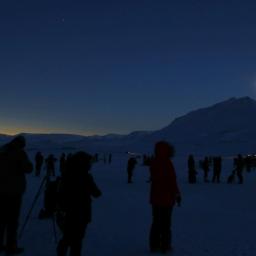
Every now and then an eclipse comes around, and this time the northern Atlantic Faroe Islands and Arctic archipelago Svalbard were the only places where a total eclipse could be seen. Svalbard residents had clear skies for a perfect view as the moon passed over the sun, but in the Faroe Islands, cloudy weather marred the experience Continue reading...
|
 |
by Guardian Staff on (#5B7W)
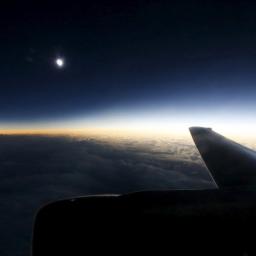
A specially chartered plane left the northern Russian city of Murmansk on Friday and flew to the Arctic so its passengers could get an unobstructed view of the solar eclipse. The plane flew to an area where a total eclipse could be seen, while other parts of the world were only able to witness a partial eclipse Continue reading...
|
 |
by Maev Kennedy, Steven Morris and Helen Pidd on (#5AES)
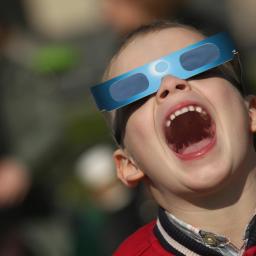
Astronomers and scientists joined tourists, commuters and schoolchildren to witness what was billed as the most impressive solar eclipse since 1999The sun also eclipses, to misquote Ernest Hemingway. After hours of near-despairing reports insisting the clouds were too thick, sky-gazers at Newquay in Cornwall – positioned to be among the first in the UK to glimpse a phenomenon that has thrilled and terrified human beings for millennia – excitedly reported a hazy nibble out of a misty pale orange ball was visible just before 8.30am – narrowly beaten by a much sharper image from Madrid.
|
 |
by Guardian Staff on (#5B4P)
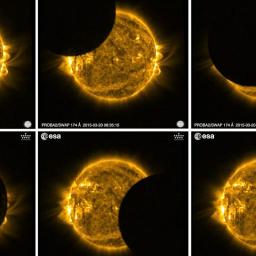
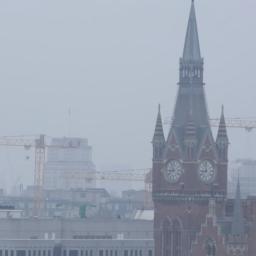
A European Space Agency mini-satellite captures the moment the moon passes in front of the sun in Friday's solar eclipse. The ESA's sun-watching Proba-2 monitors turbulence on the sun's surface using ultraviolet wavelengths. As well as being seen from space, the partial eclipse was visible across Europe, Russia and parts of the Middle East, Asia and north Africa Continue reading...
|
 |
by Irene Baqué, Ian Anderson and Mary Carson on (#5B07)
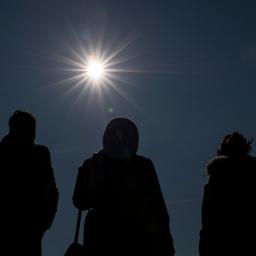
A breathtaking solar eclipse was witnessed by millions of people across Europe this morning. But on the roof of the Guardian HQ in north London, the view was ... underwhelming. A typically cloudy haze had obscured the sun completely before the moon had a chance to eclipse it. Skywatchers had been advised not to look directly at the sun, but on the roof of the Guardian, there was no danger of burnt retinas Continue reading...
|
 |
by Zoe Williams on (#5B09)
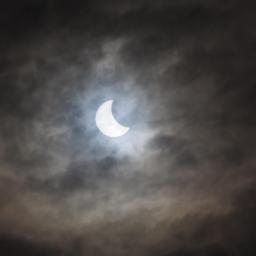
While the sun’s disappearing act might have been disappointing, the crowd watching it was fascinating Continue reading...
|
 |
by Guardian Staff on (#5AY0)
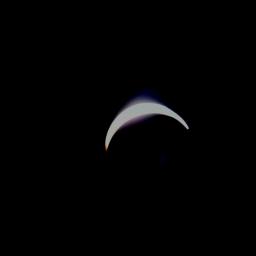
The solar eclipse is captured in timelapse video footage from across Europe on Friday. Despite grey skies in many parts of the UK and northern Europe, areas such as Bristol and Plymouth were cloudless enough for sky-gazers to catch a glimpse of the rare phenomenon. The Faroe Islands and Svalbard were briefly plunged into darkness as the only regions to experience a full eclipse Continue reading...
|
 |
by Guardian readers and Tom Stevens on (#5AVQ)
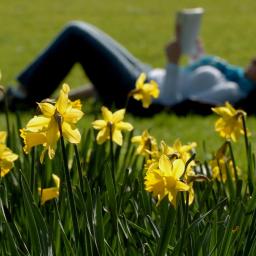
The solar eclipse might have only been partial in Britain this morning, but a lot of you still managed to capture it beautifully around the UK. Here are some of our favourites Continue reading...
|
 |
by GrrlScientist on (#5AP7)
This week, I share my thoughts about a travel-adventure story about a quest to see one of the world’s last surviving “unicorns†(the saola); a paperback about the natural history of Ebola and a second by the same author about the origins of HIV/AIDS, and a book that examines the strange behaviour of numbers Continue reading...
|
 |
by Steven Morris on (#5AHF)
Cornwall exhibition including coins, combs and even a teddy bear brooch challenges popular image of Vikings as homicidal raiders Continue reading...
|
 |
by Matthew Weaver on (#5A26)
|
 |
by Nathaniel Herzberg on (#5ADP)
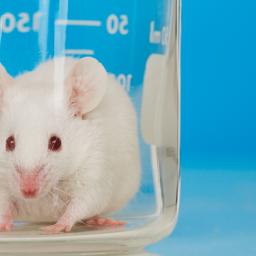
Recent research has revealed that clinical trials involving the rodents do not automatically produce effective treatments for humans Continue reading...
|
 |
by James Walsh and Guardian readers on (#5ABN)
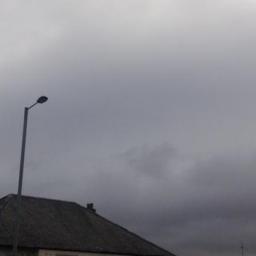
We asked for your disappointing eclipse pictures. You did not disappoint. From Mull to Southampton, here is a selection of the most middling
|
 |
by Guardian Staff on (#5AAW)
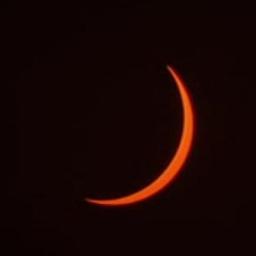
Friday’s eclipse is the best in the UK since 1999, with first contact being recorded in Madrid and Newquay
|
 |
by Alex Hern on (#5A1E)
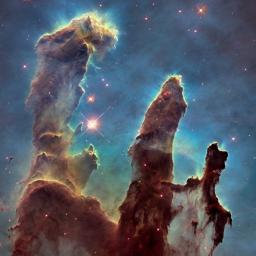
Elon Musk’s spaceflight firm has licensed a tranche of more than 100 photos for reuse, after calls for it to adopt public domain licensing Continue reading...
|
 |
by Hannah Devlin on (#59YT)
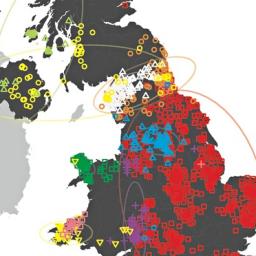
The first fine-scale genetic map of any country in the world is published Continue reading...
|
 |
by Reuters on (#59PH)
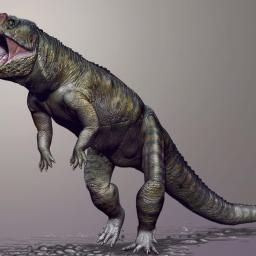
US scientists say they have discovered fossils of the ‘Carolina butcher’, a pre-dinosaur beast with sharp teethScientists have unearthed fossils in the United States of a big land-dwelling crocodile that lived about 231 million years ago, walked on its hind legs and was a top land predator right before the first dinosaurs appeared.
|
 |
by Katherine Krueger in New York on (#59FJ)
Americans will not see the rare solar event at all, but stargazers across Europe and the UK will be able to catch a view Continue reading...
|
 |
by Hannah Devlin Science correspondent on (#593Z)
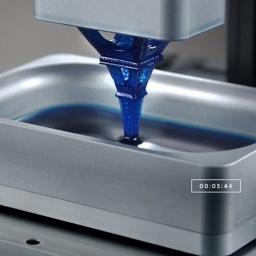
New technique works 100 times faster than conventional 3D printing and makes objects within minutes by simply lifting them out of a pool of resinScientists have created a Terminator 2-inspired 3D printer that lifts objects fully formed from a pool of goo in a matter of minutes.The technique, which could transform 3D printing, works up to 100 times faster than current methods and produces objects that are considerably stronger.
|
 |
by Guardian Staff on (#592D)
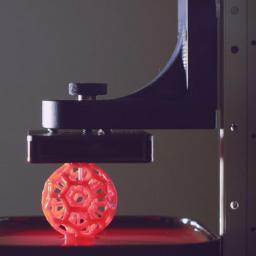
A new method of 3D printing demonstrates how detailed solids can be 'grown' out of a liquid bath. Researchers have come up with a 3D printing method that dwarfs conventional 3D print speeds, making it possible to convert 3D designs into parts in minutes instead of hours. The technology could be used to print soft elastic materials, ceramics, and biological materials like tissues Continue reading...
|
 |
by Karl Mathiesen on (#591F)
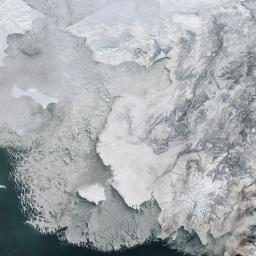
Record low ice coverage this winter is caused by climate change and abnormally mild weather, scientists say Continue reading...
|
by Rosie Scammell on (#591H)
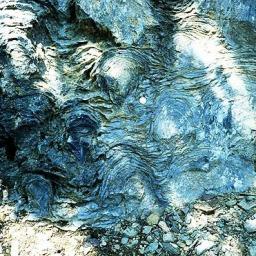
World’s archaeological heritage needs protection by UN ‘blue helmets of culture’ force akin to peacekeepers, says culture minister Dario Franceschini Continue reading...
 |
by GrrlScientist on (#58TJ)
In this fascinating video, Professor Ros Rickaby from Oxford chats with Professor Simon Conway-Morris at Cambridge about how Earth’s changing chemistry has affected evolution, and how this can sometimes lead to evolutionary convergence Continue reading...
|
 |
by Nadia Khomami on (#58GC)
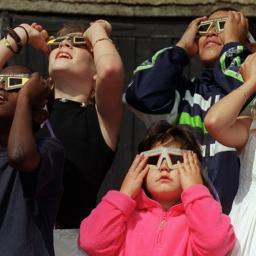
From science and superstitions to where you can see it and how to stay safe, here is everything you need to enjoy the sun’s upcoming vanishing actParts of the world will witness a solar eclipse on Friday – a rare phenomenon in which the sun is completely obscured by the moon. Here’s everything you need to know about the background of the solar eclipse, where to view it and how.
|
by Alison Flood on (#58SJ)
Facebook founder’s latest online book club choice is Thomas Kuhn’s classic The Structure of Scientific Revolutions, on the ebb and flow of progress Continue reading...
 |
by Fiona Harvey on (#58KG)
Syrian scientists who risked their lives preserving the region’s ancient farming heritage with nearly 150,000 seed samples are presented Gregor Mendel award in Berlin Continue reading...
|
 |
by Terry Macalister on (#58EA)
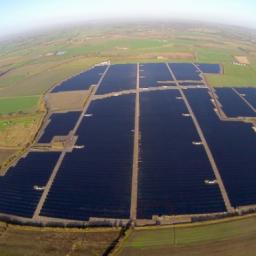
Event expected to trigger huge downturn in power demand as people go outside to watch, as well as sudden removal of solar power from electricity supply Continue reading...
|
 |
by Richard P Grant on (#586X)
Improvements in treatment have led to better survival rates following a heart attack. But is the quality of that longer life measuring up? Continue reading...
|
 |
by Julian Baggini on (#57RY)
Some scientists claim that new discoveries have proved free will is an illusion. Nonsense, says Julian BagginiWhenever you read stories about identical twins separated at birth, they tend to follow the template set by the most remarkable of them all: the “two Jimsâ€. James Springer and James Lewis were separated as one-month-olds, adopted by different families and reunited at age 39. When University of Minnesota psychologist Thomas Bouchard met them in 1979, he found, as a Washington Post article put it, both had “married and divorced a woman named Linda and remarried a Betty. They shared interests in mechanical drawing and carpentry; their favourite school subject had been maths, their least favourite, spelling. They smoked and drank the same amount and got headaches at the same time of day.†The similarities were uncanny. A great deal of who they would turn out to be appears to have been written in their genes.Other studies at the world-leading Minnesota Center for Twin and Family Research suggest that many of our traits are more than 50% inherited, including obedience to authority, vulnerability to stress, and risk-seeking. Researchers have even suggested that when it comes to issues such as religion and politics, our choices are much more determined by our genes than we think.To predict whether someone believes in God, it’s more useful to know they live in Texas than what their genes areVarious options are pencilled in by our genes, and our life experiences determine which get inkedA fan of Shostakovich does not, usually at least, wish she could just decide to prefer Andrew Lloyd WebberOur current knowledge of neurobiology makes it clear that there is no such thing as absolute freedom Continue reading...
|