 |
by Oliver Burkeman on (#1G0KQ)
Thanks to the internet, proverbs are enjoying a second day in the sun‘We each have two lives,†a wise person once said, “and the second begins when we realise we have only one.†I can’t tell you which wise person, sadly; the internet attributes it in roughly equal measure to Confucius and Tom Hiddleston. (It’s not a very Confucian sentiment, so I’m going with Hiddleston.) But it hardly matters. It’s an aphorism, and like all the best ones, it feels as if it always existed, and only needed someone to discover it. Or rediscover it: judging by various new books and essays, this oldest of philosophical forms is making a comeback. Our era of dwindling attention spans and 140-character content-burps is generally held to be one of escalating stupidity. But it’s also ideally suited to aphorisms. So maybe we’ll end up imbibing some wisdom accidentally, too.There are two species of aphorism, James Lough explains in Short Flights, a recent modern collection. The more irritating is the “instructional†kind: pompous nuggets on how to behave, of the sort dispensed by Benjamin Franklin. (“Early to bed and early to rise.†OK, we get it, Ben. You’re perfect.) Not all instructional aphorisms are terrible: “Be kind, for everyone you meet is fighting a hard battle†is useful advice. But juicier by far are “aphorisms of insightâ€, which don’t tell us what to do, but radically shift our view of how things are. As Lough writes: “An insight aphorism is anarchic, a bomb exploding in an empty house, blasting out the windows, blowing the doors off their hinges.†Continue reading...
|
| Link | http://feeds.theguardian.com/ |
| Feed | http://feeds.theguardian.com/theguardian/science/rss |
| Updated | 2026-10-01 00:15 |
 |
by Decca Aitkenhead on (#1G0ES)
Before it happened to me, I never truly understood how awful chemo could be: no description can do it justice. But there are ways to ease its horrors that feature in none of the official advice, and I want everyone to know about themIf you were born after 1960, the odds that you will get cancer in your lifetime are now one in two. It is an extraordinary statistic. Even if you turn out to be one of the lucky ones, half of the people around your kitchen table this morning will at some point sit in a doctor’s surgery and be given the news that they have cancer. If the numbers continue in the same relentless direction, before long, it will be most of them.Not all will have chemotherapy. The fortunate ones can be cured in other ways, while the truly unfortunate will have cancers chemo cannot treat. I met one of those unluckiest of souls only the other day. It hadn’t occurred to me until then to feel very grateful for having been eligible for what was, without a doubt, the most unpleasant medical ordeal of my life. Continue reading...
|
 |
by Tim Radford on (#1FYTV)
Measurements taken by Hubble space telescope conflict with studies of radiation left over from Big Bang – fuelling theories of ‘dark energy’ and mystery particlesThe universe is expanding faster than anyone had previously measured or calculated from theory. This is a discovery that could test part of Albert Einstein’s theory of relativity, a pillar of cosmology that has withstood challenges for a century.Nasa and the European Space Agency jointly announced the universe is expanding 5% to 9% faster than predicted, a finding they reached after using the Hubble space telescope to measure the distance to stars in 19 galaxies beyond theMilky Way. Continue reading...
|
 |
by Ryan Schuessler on (#1FZXD)
The petroglyphs – thought to be 1,000 to 1,500 years old – are the first known of in the British Overseas Territory: ‘They really add to Montserrat’s unique history’Hikers out for a stroll on the Caribbean island of Montserrat have discovered ancient stone carvings that archaeologists believe could offer valuable insight into the island’s pre-colonial history.The petroglyphs – which appear to depict geometric designs as well as beings of some kind – were carved into the side of a mossy boulder in the densely forested hills in the island’s north.
|
 |
by Rhiannon Lucy Cosslett on (#1FZTN)
The negativity in our 24-hour media-obsessed culture can get on top of you. It would be great to have a better balance with tales about the brighter side of lifeThe joyous news that seven-year-old Yamato Tanooka has been found alive and very much unabducted, unmurdered, and uneaten by wild bears, will have brought smiles to many a face this morning. The child, who disappeared after he was made to get out of his parents’ car on a mountain road for misbehaving, has been found bunking down in a military hut after spending six nights out alone. “I’m overcome with emotion,†said his father in a public statement, “Really, thank you very much.â€Tanooka’s story serves as a reminder of how, despite living in a 24-hour news-obsessed culture, we rarely get to see things turn out well Instead, news outlets emphasise the horrific, the lurid and the depraved in an attempt to maximise audiences and therefore profits. The result is a skewed view of the world as dark, depressing place in which positive things rarely happen. To look at any tabloid news website, for example, is to be faced with reports of rape, murder, poverty, famine, violence, terrorism and war. Anything positive and heartwarming inevitably goes uncovered or gets lost in the sea of negativity, and the rise of the internet and, more specifically social media, as a purveyor of news is only making the distortion worse. Continue reading...
|
 |
by Guardian Staff on (#1FZTS)
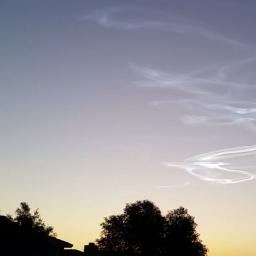
Nasa films a fireball so bright that it blinds all-sky meteor cameras as far away as western New Mexico. The meteor – 5ft wide and weighing a few tonnes – entered Earth’s atmosphere over Arizona early Thursday morning at a speed of 40,200m [64,700km] per hour, lighting up the pre-dawn sky for a few seconds
|
 |
by Nicola Davis and Iain Chambers on (#1FZFC)
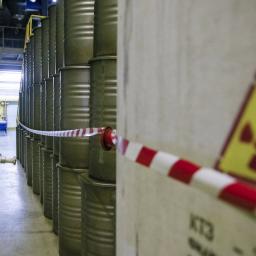
Why do we fear radiation? Is it because so much about it is still unknown, or that it’s often invisible to us? Timothy Jorgensen of Georgetown University explainsTimothy Jorgensen, associate professor of radiation medicine at Georgetown University, Washington DC and author of Strange Glow, joins Nicola Davis to discuss the story of radiation, exploring the varied ways it exists, and dispelling some of the myths surrounding it. Continue reading...
|
by Press Association on (#1FYJZ)
Clinical director and consultant obstetrician were not shown or consulted about study, which reversed decades of wisdom on excess weight
 |
by Alan Yuhas on (#1FXPB)
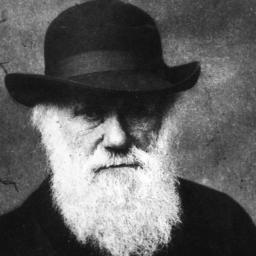
The 1875 letter, part of correspondence between British scientist and Ferdinand Vandeveer Hayden, was stolen by an employee in mid-1970s, FBI saidMore than three decades after a letter by Charles Darwin was stolen, the FBI’s art crime team has recovered and returned it to the Smithsonian.The letter, part of the Darwin’s correspondence with an American geologist, Ferdinand Vandeveer Hayden, was written in May 1875 to thank his fellow naturalist for field studies of what became Yellowstone national park. Continue reading...
|
 |
by Tim Radford on (#1FXHS)
Study raises possibility that two populations of grey wolves, separated by thousands of miles and years, may have resulted in modern domestic dogsHumankind’s long friendship with the dog may have begun at least twice. Grey wolves in western Eurasia may have started hanging around Stone Age hunter-gatherer clans even before humans and dogs clinched the relationship perhaps 14,000 years ago in east Asia.New research based on DNA samples from prehistoric hounds, as well as genetic studies of modern dogs and wolves, suggests that two populations of grey wolves – separated by thousands of miles and thousands of years – may have begun the connection that turned Canis lupus into Canis lupus familiaris. Continue reading...
|
 |
by Tim Radford and Nicola Davis on (#1FXHQ)
Twenty years after scientists learned to ‘read’ the human genome, scientists are hoping to write their own synthetic version of the DNA recipe for lifeTwo decades ago we learned to “read†the human genome – the entire three-billion-letter DNA recipe for life coiled in the human chromosomes. Now scientists want to start writing it.A $100 million global consortium has been proposed, to devise ways to assemble human DNA in the laboratory so as to better understand how it works, and look for new ways of treating disease and saving lives. Continue reading...
|
 |
by Nicola Davis on (#1FXHN)
The nature of the gas giant’s atmosphere has long been something of a puzzle, but radio wave data has allowed scientists to peek beneath planet’s cloudsHuge plumes of ammonia have been found beneath the clouds of Jupiter, providing new insights into the planet’s dynamic atmosphere, scientists say.Nearly 780 million kilometres from the sun and the largest planet in the solar system, the gas giant Jupiter has long fascinated astronomers. But the nature of its atmosphere has been something of a puzzle. Continue reading...
|
 |
by Fiona Harvey on (#1FXFJ)
Tiny particles of plastic litter in oceans causing deaths, stunted growth and altering behaviour of some fish that feed on them, research showsFish are being killed, and prevented from reaching maturity, by the litter of plastic particles finding their way into the world’s oceans, new research has proved.Some young fish have been found to prefer tiny particles of plastic to their natural food sources, effectively starving them before they can reproduce. Continue reading...
|
 |
by Reuters in Belgrade on (#1FXD6)
Orthodox church renews controversial call for inventor’s remains to be moved to St Sava’s CathedralA long-running dispute in Belgrade over what should be done with the remains of Nikola Tesla, one of the world’s greatest inventors, has flared up again after the Serbian Orthodox church reiterated its demand for his ashes to be moved to a cathedral.The ashes of the man who developed, among other things, the alternating current electricity supply system widely in use today have been preserved in a gold-coloured sphere in the Nikola Tesla museum in the Serbian capital since 1957.
|
 |
by Press Association on (#1FXA3)
‘London terminals’ and ‘any permitted’ among confusing terms highlighted in regulator’s report which finds jargon is rifeJargon is widely used by train operators’ ticket machines at Britain’s railway stations, the industry’s regulator has said as it published a study that found more needs to be done to eradicate confusing terminology when passengers are buying tickets.Phrases highlighted for concern by the Office of Rail and Road (ORR) included “London terminalsâ€, “any permitted†and abbreviated text such as “Anytime R†meaning “Anytime Returnâ€. Continue reading...
|
 |
by Frank T McAndrew on (#1FWWT)
Trapped in a holding pen of teenagers brimming with hormones, we experience emotions so strong they monopolize our recollectionsFor better or worse, many of us never forget high school: the unrequited romantic crushes, chronic embarrassment, desperate struggles for popularity, sexual awakening, parental pressure and, above all else, competition – social, athletic, academic.There’s even an entire genre of entertainment that revolves around high school. Beverly Hills 90210, Mean Girls, Heathers, The Breakfast Club and Fast Times at Ridgemont High all revisit the conflict and angst of these years. Continue reading...
|
 |
by Alan Yuhas on (#1FSXF)
Researchers who analysed metal composition of dagger within wrapping of mummified teenage king say it ‘strongly suggests an extraterrestrial origin’A dagger entombed with King Tutankhamun was made with iron from a meteorite, a new analysis on the metal composition shows.In 1925, archaeologist Howard Carter found two daggers, one iron and one with a blade of gold, within the wrapping of the teenage king, who was mummified more than 3,300 years ago. The iron blade, which had a gold handle, rock crystal pommel and lily and jackal-decorated sheath, has puzzled researchers in the decades since Carter’s discovery: ironwork was rare in ancient Egypt, and the dagger’s metal had not rusted. Continue reading...
|
 |
by Emma Carroll on (#1FWAC)
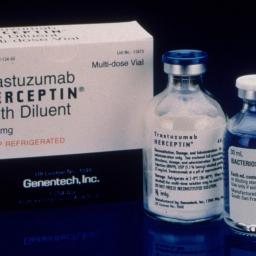
A stroke of luck at a bleak time meant I got to take the ground-breaking Herceptin. It allowed me to live, and follow my dream of becoming an authorThough I loved being an English teacher, my dream from childhood was to be a writer. Aged 34, I was head of English in a secondary school, newly married, and about to start a family. Just three weeks after the wedding I found something strange in my right breast. It was more of a mass than a lump.On the 11 November 2004 at 1.35pm, I was told I had cancer. The words I remember were “no cureâ€, “mastectomyâ€, and “breast cancer and pregnancy don’t mix†– all said in the same sentence. Continue reading...
|
 |
by Matthew Jenkin on (#1FW2J)
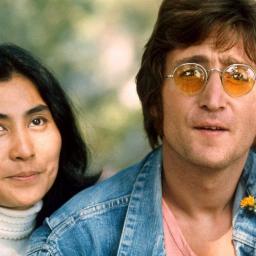
From shooting music videos for John Lennon to filming life-sized documentaries in space, Toni Myers talks about her eclectic career in film“It was the rock and roll 60s, we were all kids. It sounds like name dropping, but it really wasn’t like that.†Toni Myers casually dismisses working with Yoko Ono and John Lennon. Like many pivotal moments in the documentary filmmaker’s early days, she claims her meeting with the musical icons was more serendipity than calculated career move.Myers was living and working in London with her British husband at the time, making documentaries out of their Soho offices in Greek Street. Despite a shoestring budget, the pair were experimenting with shooting films to song. Word got out that the couple were producing the world’s first rock videos and it wasn’t long before some of the era’s musical legends began knocking on their door. Continue reading...
|
 |
by Suzi Gage on (#1FVX3)
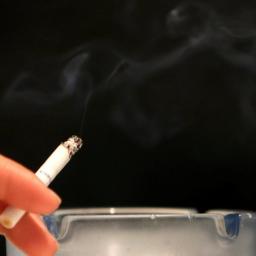
In this series, I’ll be investigating different drugs, busting some myths and explaining potential harms and benefits. This week it’s the turn of tobaccoTobacco, the dried leaf that’s smoked in cigarettes, cigars and pipes, and taken in various other forms such as snus and chewing tobacco, has been used as a recreational drug for hundreds, if not thousands of years. Cigarettes as a method for smoking became popular during World War one, when they were included as part of soldiers’ ration packs. People who smoke report that it relives stress, and can make them feel calmer and more relaxed. But is this really the case? Two in three smokers will have started smoking before the age of 18, and smoking is illegal in this age group, in the UK and many other countries around the world. The percentage of current smokers who want to quit is similarly high (around 2 in 3 current smokers report wanting to quit). Continue reading...
|
 |
by Agence France-Presse on (#1FV28)
Promising method simulates a viral infection to mobilise the body’s immune system against tumoursGerman researchers on Wednesday presented a “Trojan horse†method of attacking cancer, sneaking virus impersonators into the human body which prompt an immune response that attacks tumours.Tested in only three people so far, the treatment claims to be the latest advance in immunotherapy, which aims to rouse the body’s own immune system against disease. Continue reading...
|
 |
by Tim Radford on (#1FTCZ)
Moths’ role as pollinators is disrupted in brightly lit urban areas, finds researchStreet lights don’t just lure moths, they may be helping to impoverish suburban gardens by causing them to fly too high to pollinate flowers, researchers at Newcastle University report.It could be at the cost of honeysuckle, ivy, the roadside wildflower white campion, and even buddleia, say the authors of a new study in the journal Global Change Biology. Continue reading...
|
 |
by Associated Press on (#1FTAJ)
Elizabeth Holmes’s former valuation was based on her stake in blood-testing startup Theranos, which has seen its value collapseRelated: Forbes investigates after 'contributor' asks PR for £300 to write online profileUS business magazine Forbes, which monitors the world’s wealthiest individuals and publishes a rich list, has revised the net worth of the woman it named as America’s richest self-made woman last year from $4.5bn (£3.1bn) to zero. Continue reading...
|
 |
by Guardian Staff on (#1FSQD)
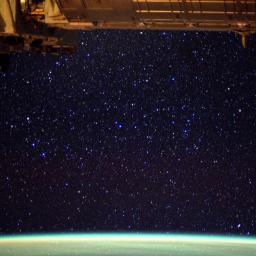
Facebook’s CEO, Mark Zuckerberg, speaks to astronauts onboard the International Space Station on Wednesday night via Facebook Live. Zuckerberg quizzes the ISS crew, including British astronaut Tim Peake, on what they do for fun and how to become a successful cosmonaut
|
 |
by Tim Radford on (#1FS9N)
The strange patterns seen on Pluto’s icy surface are evidence of convection in the kilometres-thick layers of frozen nitrogen, two papers published today suggestThe polygons of the dwarf planet Pluto have posed a puzzle for scientists. Perplexing patterns on the surface of a sea of frozen nitrogen are evidence of convection driven by temperature differences. Continue reading...
|
 |
by Agence France-Presse in Berlin on (#1FS97)
Cultural heritage expert claims off-duty regime soldiers have been carrying out illegal excavations at Unesco siteSyrian regime troops are looting the ancient city of Palmyra like the Islamic State jihadis who controlled it until March, according to a leading archaeologist.Related: Looted in Syria – and sold in London: the British antiques shops dealing in artefacts smuggled by Isis Continue reading...
|
 |
by Nicola Davis on (#1FS3P)
Acceptance of same-sex sexual activity has nearly quadrupled since 1990, while adults reporting at least one same-sex partner has also increasedUS public acceptance of sexual activity between two adults of the same sex has nearly quadrupled since 1990.According to a national survey of more than 30,000 Americans, those who view sexual activity between two adults of the same sex as being “not wrong at all†increased from 13% in 1990 to 49% in 2014. The shift was even greater for adults under the age of 30, with the proportion rising from 15% to 63% during the same time period. Continue reading...
|
 |
by Emine Saner on (#1FS1Z)
The news that Marks & Spencer is canning piped tunes will hit the right note with some shoppers, but experts say the silence may come at a priceIn its increasingly desperate bid to revive its fortunes, Marks & Spencer has introduced some radical ideas in recent times – there was the pre-chopped avocado, then the celebrity designers. Now, it’s getting rid of the music in its stores. In a few weeks’ time, the tills will no longer be alive with the sound of muzak – good news if you view piped tunes as noise pollution of the worst kind, but the silence may give some of M&S’s sadder stores a graveyard air. It was, says a spokesperson, “the result of extensive research and feedback from our customers and colleaguesâ€.But silence may not prove golden. Professor Adrian North, head of the school of psychology at Curtin University in Perth, Australia, and an expert on the psychology of music, says he disagrees with the move. “The research shows that music can have a double-digit impact on sales,†he says, “so turning off that source of revenue is a poor decision.†Continue reading...
|
 |
by Mark Carnall on (#1FRMG)
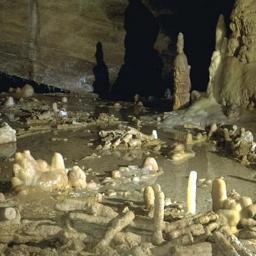
When it comes to the fossil record, what is a species? And how is a ring of stalagmites made by Neanderthals challenging our identity as a species of Homo?We’re inundated through the media with biology news about invasive species, endemic species, native species, endangered species, reintroduced species, new species and extinct species.Identifying and describing species is difficult for living organisms let alone from fossil remains. If you watch a wildlife documentary or visit a natural history museum, you may get the impression that our knowledge of life on Earth is fairly comprehensive, but for the majority of described species we know little detail about their anatomy, biology and behaviour. Continue reading...
|
 |
by Dean Burnett on (#1FRB1)
Why do people have such disproportionately aggressive responses to attempts at rebooting their childhood entertainments, like the new Ghostbusters movie?Maybe you haven’t heard. Maybe you’ve been combing the Mariana Trench for a dropped contact lens, or been employed to brush the dust off the Mars Rover, so have been out of the loop for a while. For everyone else, it’s common knowledge that they’ve made a Ghostbusters reboot, that it has LADIES in it, and large chunks of the internet are seriously unhappy about it.There are a few explanations for this, from a general disgruntlement with excessive Hollywood reboots to the whole Ghostbusters aspect being a feeble cover for what is basically an enraged anti-feminism backlash, something which is a depressing inevitability when women attempt to do anything, in any context, ever. But some people just seem outraged that they dare to “tamper†with their beloved childhood favourite, in this case Ghostbusters. Continue reading...
|
 |
by Maev Kennedy on (#1FQVV)
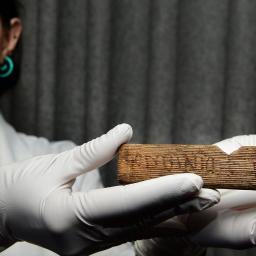
Early writings found under office block being cleared for new Bloomberg HQ give glimpse of Roman LondonTertius the Brewer, Junius the Cooper and Julius Classicus – the up-and-coming military commander who would turn traitor against Rome a decade later – have sprung back to life from the first decade of Roman London, their names – along with the first reference to London itself – miraculously preserved on writing tablets in a sodden hole in the heart of the City.The wooden tablets, preserving the faint marks of the words written on bees wax with a metal stylus almost 2,000 years ago, are the oldest handwritten documents ever found in the UK. Continue reading...
|
 |
by Jon Butterworth on (#1FQ75)
Renowned astrophysicist Mario Livio explores and analyzes major errors committed by such luminaries as Charles Darwin, Linus Pauling, Fred Hoyle and Albert EinsteinNo one should be in any doubt that scientists can blunder, just like anyone else.
|
 |
by Melissa Davey on (#1FPQN)
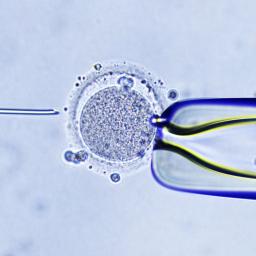
Testes of dead man legally removed and stored, but partner of deceased will need to apply through Australian court for permission to access and use spermThe parents of a man who died unexpectedly are likely to object to any application by his partner to use his sperm for IVF because the pair had only been dating for about seven months, a lawyer involved in the case says.Last month an Australian court ordered that the testes of the dead man, Tony Deane, be removed and stored in case his partner, Leith Patteson, decided to use the sperm for IVF treatment to have a baby. Continue reading...
|
 |
by Sarah Boseley Health editor on (#1FP57)
Research shows some early tumours can produce molecule made from cholesterol which can mimic oestrogenScientists have raised the possibility of using statins – drugs used for reducing cholesterol – to stop some breast cancer tumours returning.The most common form of breast cancer uses oestrogen to grow. Drugs such as tamoxifen and aromatase inhibitors cut off the supply of oestrogen, reducing the chances that the cancer will return after surgery. But about 12,000 of the 40,000 diagnosed oestrogen-receptor positive (ER-positive) cancers still recur every year. Continue reading...
|
 |
by Tim Radford on (#1FNM2)
Most accurate measurement so far has estimated the collective mass of the Milky Way’s stars, black holes, dust, dark matter - and unidentified flying objectsOur galaxy has a collective mass 700 billion times that of the sun, according to the most accurate measurement yet by scientists.The estimate covers the mass of all the stars, black holes, gas clouds, dust, dark matter and other unidentified flying objects in the Milky Way. The previous rough ballpark figure was around a trillion solar masses - the standard measure for big astronomical objects. Continue reading...
|
 |
by Editorial on (#1FN8A)
The Zika virus can have grave consequences, but in the Rio winter there will be bigger challenges to addressThe Olympic and Paralympic Games in Rio de Janeiro, which begin on 5 August, will be the climax to the kind of summer of sport that is the stuff of fan fantasy. But past experience suggests that, however much they please the enthusiasts, hosting the Olympics is a costly way of disrupting a national economy. They rarely turn a profit, and billions of pounds that might have been spent more productively are absorbed into grand building schemes that often struggle to find a future purpose. Yet for governments, they remain a coveted status symbol, a global affirmation of a country’s place in the monied half of the globe. Back in 2009, when Rio’s bid won, Brazil was unquestionably prospering. President Lula led a rapidly changing country whose economy was buoyed by high oil prices. Seven years later, on the eve of the games, the economy is in crisis, his successor Dilma Rousseff faces an impeachment trial and the country, and in particular the local Rio economy, is floundering, mired in the Petrobras corruption scandal. These are serious challenges. But none of them appears as immediately threatening as the spread of the Zika virus.Earlier this month in an open letter to the World Health Organisation, 150 health experts called for the Olympics either to be postponed or moved to another venue. They warned of the risk of athletes and visitors spreading the mosquito-borne virus to poorer countries with inadequate health systems. The spectre of a kind of plague unleashed on Africa and parts of Asia, in areas of the world least equipped to cope, made sacrificing a country’s reputation, an $11bn investment, and quite likely the ambitions of a generation of athletes seem like a case at least worth considering. That is wrong. Continue reading...
|
 |
by Letter on (#1FN96)
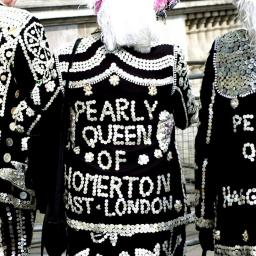
Rhyming slang is designed to be impenetrable by the uninitiate. A person with ‘a lot of bottle’ might not be brave at all (but might be Kim Kardashian)Your crossword compiler “Brendan†(Cryptic No 26,898, 31 May) predicates a clue on the idea that “bottle†is cockney slang for courage: “Bottle, or something Dutchman can get from one (7)â€. In fact, just as “loaf†(loaf of bread) means head, as in “use your loafâ€, so “bottle†refers to something that rhymes only when you complete the phrase. The phrase in this case is “bottle and glass†and it rhymes with, er, arse. Cockneys wishing to avoid the Chaucerian vulgarity call an arse an “Arisâ€. This is not a misspelling of arse, like the American “assâ€, but rhyming slang. Aris is short for Aristotle; Aristotle = bottle; bottle and glass = arse.So “to lose your bottle†means to lose your arse or, vernacularly, to shit yourself. Someone who loses her bottle displays cowardice. Continue reading...
|
 |
by Nadia Khomami on (#1FN22)
PrEP, which can reduce risk of HIV infection by up to 86%, falls outside health service remit, says NHS EnglandThe UK’s leading HIV and sexual health charities have attacked as “shameful†a decision by NHS England not fund a treatment method that can drastically reduce transmission risks.If followed regularly, the pre-exposure prophylaxis (PrEP) prevention method, usually with a prescribed daily pill, can reduce the risk of HIV infection by up to 86%, according to a recent study. Continue reading...
|
 |
by Tim Radford on (#1FMMQ)
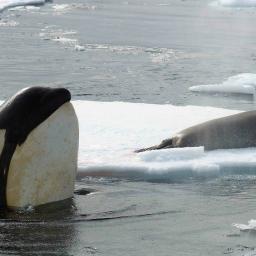
Orcas exist in every ocean, adapting to different conditions and diets. Genome sequencing has allowed insights into their evolution - and similarity to humansGeneticists have deciphered the brief history of the killer whale: the predator that exists in every ocean but has evolved over the generations to hunt in disciplined packs, and specialise in a range of diets.The lesson is that genetic mutations that may have favoured survival in changing circumstances were then enhanced by natural selection – and by social learning within killer whale family groups. Continue reading...
|
 |
by Sarah Marsh on (#1FMK4)
As an annual survey finds MDMA is making a comeback, we want to hear from those who work with addiction about reducing the damage of drug misuseEcstasy is making a comeback, according to a report from the European monitoring centre for drugs and drug addiction (EMCDDA).After its peak during the 1990s house, rave and techno scenes, it’s returning to popularity with both established drug users and a new generation due to “creative and aggressive marketing†(including the use of logos such as Superman and UPS) and the fact it now has higher purity. Continue reading...
|
 |
by Nicola Davis on (#1FMHB)
Hydrogen in lunar samples reveals water could have been delivered by asteroids crashing into the moon’s vast magma ocean billions of years agoWater inside the moon mostly came from asteroids that smashed into the lunar body more than four billion years ago, with comets adding less than previously thought, scientists say.Composed of material ejected when a large, Mars-sized body ploughed into Earth around 4.5 billion years ago, the moon was long thought to be bone-dry. But research has shown that traces of water exist both on the surface and inside.
|
 |
by Mo Costandi on (#1FKGF)
Mechanosensory hairs covering bumblebees’ bodies detect the small electrical fields emitted by flowersBumblebees use the fine hairs covering their bodies to detect electrical fields produced by the flowers they feed on and pollinate, according to a new study by researchers at the University of Bristol. The findings, just published in Proceedings of the National Academy of Sciences, may help to solve the mystery of how insects and other terrestrial creatures detect and respond to electric fields.It’s well known that bumblebees use their sense of smell, as well as visual cues such as the colour, shape, and patterning of flowers, to find nectar, and in 2013, biologist Daniel Robert and his colleagues reported the surprising finding that they can also detect floral electric fields. Continue reading...
|
by Guardian Staff on (#1FK7D)
Professor Stephen Hawking says staying in the European Union is vital for Britain’s economy and security. He also makes the case for why a remain vote is important for science in his interview on ITV’s Good Morning Britain, and touches on the US elections. Photograph: John Stillwell/PATrump’s popularity inexplicable and Brexit spells disaster, says Stephen HawkingEU referendum – live updates from the campaignsBrexit for non-Brits – video explainer Continue reading...
 |
by Associated Press on (#1FK5K)
A legal manoeuvre, known as ‘arresting’ the shipwrecks, could secure ownership with Rhode Island if the wreck is indeed found at the bottom of Newport HarbourIf the ship legendary explorer Captain James Cook used to sail around the world and claim Australia for the British is found at the bottom of Newport Harbour, Rhode Island will own it outright because of a legal manoeuvre it took nearly two decades ago based on an obscure, centuries-old maritime practice.In 1999, Rhode Island went to federal court in Providence to do what’s known as “arresting†the shipwrecks in the harbour – having the government take possession of them so a federal court could consider the state’s ownership claim. Continue reading...
|
 |
by Jenny Gristock on (#1FK05)
Women outnumber men in a raft of science courses – but when they start their careers, they find many insurmountable barriersWhy are so few women publishing scientific papers? It is a question that has been posed by New Scientist magazine, as it reports that in medicine, female authorship of scientific papers has started to go backwards. Since 2009, the proportion of women as lead authors has gone down.Findings such as these usually provoke a cry of “We need more women in science!†and organisations wheel out a spokesperson to explain that girls should be encouraged to study science at university. The Welsh government, for example, celebrated International Women’s Day this way. Continue reading...
|
 |
by Tim Radford on (#1FJ1M)
Scientist repeats backing for remain in EU campaign and says US presidential candidate is ‘demagogue who appeals to lowest common denominator’
|
 |
by Tim Radford on (#1FJKP)
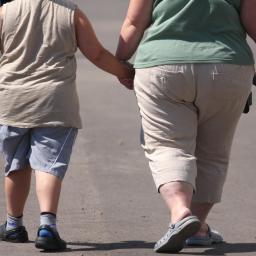
Report predicts number of overweight under-fives worldwide will reach 70 million by 2025
|
by Chitra Ramaswamy on (#1FH7M)
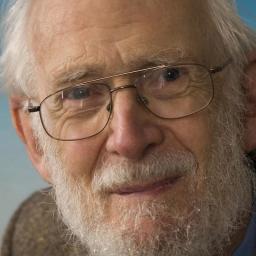
Britons are increasingly speaking like southern Englanders, according to an app produced by Cambridge University. Here’s a guide to some bostin’ words and phrases at risk of extinctionNever mind whether you take it with jam or cream, does your “scone†rhyme with “gone†or “stone� Chances are, it’s the former. Basically the “stone†pronunciation of scone is almost gone. Still with me?According to the first set of results from an app mapping changes in English dialects launched in January by the University of Cambridge, regional accents are dying out. The English Dialects app, downloaded 70,000 times already, has generated data from 30,000 users across 4,000 locations. And the results reveal Britons from the West Country to the north-east are increasingly speaking like southerners. In essence, the app draws a modern picture of a land of identikit scones and ‘arms’ lopped of their resounding ‘r’s in which a pesky piece of wood caught beneath the skin is no longer known as a spool, spile, speel, spell, spelk, shiver, spill, sliver, or splint, depending on where you are from, but simply a boring old splinter. It’s enough to get you blarting. Or crying, as it’s now more commonly known. Continue reading...
 |
by John Lydon on (#1FGZM)
Zoologist and expert in the field of biomechanics who gained fame for his work on dinosaursWith his magnificent beard, stature and wise manner, Robert McNeill Alexander, known to his friends and family as Neill, who has died aged 81, was precisely the sort of person the Victorians would have expected to find as a professor of zoology: impressive, charismatic and admired for his work on dinosaurs. An enthusiastic science communicator and adviser to numerous television programmes, including the BBC’s Walking with Beasts (2001), he was also a prolific author, writing close to 30 books and more than 250 scientific papers. His early work played a crucial role in establishing the field of biomechanics, introducing concepts and methods of analysis that became widely used.His early work in the 1960s and 70s was unlike anything that had gone before. His books Functional Design in Fishes (1967), Bones: The Unity of Form and Function (1994) and Principles of Animal Locomotion (2003) became classics, but it was his work on dinosaurs that caught the imagination and made him famous, with the landmark 1976 Nature paper, Estimates of Speeds of Dinosaurs. Continue reading...
|
 |
by Guardian Staff on (#1FG3P)
Sydney biologist Jürgen Otto has discovered seven new peacock spider species. All within the Maratus genus, these tiny spiders can be found in particularly in Western Australia. Otto believes there are 48 confirmed species of peacock spider, which he says “behave more like cats and dogsâ€. Otto has a Facebook page with more than 61,000 followers and a YouTube channel, both dedicated to the colourful arachnidsPeacock spiders: scientist finds seven new species of ‘fairly cute’ creaturesMore photos Continue reading...
|