by Elsa Panciroli on (#1GG4G)
Platypus fossils and DNA suggest all mammals started out as venomous egg-layersI like the duck-billed platypus
| Link | http://feeds.theguardian.com/ |
| Feed | http://feeds.theguardian.com/theguardian/science/rss |
| Updated | 2026-10-01 00:15 |
 |
by Vanessa Heggie on (#1GCFW)
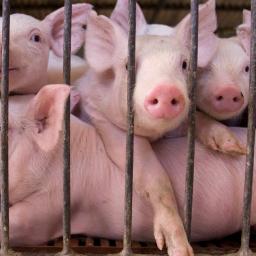
Researchers in California have created human-pig chimeric embryos as part of a project to grow human organs for transplantation; while it may make many people uncomfortable, we have been trying to use pigs for parts for nearly 200 years.Being held prisoner by the Bedouin might not seem like a great place to do research, but for Irish surgeon Dr Bigger it was an experience full of opportunities. In 1835 he managed to transplant a cornea into a blind pet gazelle from a wounded wild deer; the transplantation seemed to be a success, and it inspired him to seek out similar operations, to see if they could promise a cure for blindness in humans. He tried transplantation experiments on many rabbits, and came across one instance where a wolf’s cornea had been successfully implanted into a pet pointer dog (which promptly ran away and lived wild in the woods for three months). Writing up these experiments and observations in 1838, Bigger suggested that a pig’s cornea would be the best possible match for a human being.
|
 |
by Denis Campbell Health policy editor on (#1GBEF)
Patients will potentially be able to avoid medications that do not help them and the test could start a ‘new era’ for personalised treatment of depressionScientists have developed a blood test that could identify which people with depression will respond to treatment so that patients can avoid spending months taking antidepressants that do not help them.The experts involved believe the breakthrough could lead to depressed patients receiving personalised treatments that are more likely to relieve their symptoms. Continue reading...
|
 |
by Sarah Boseley in Chicago on (#1GBED)
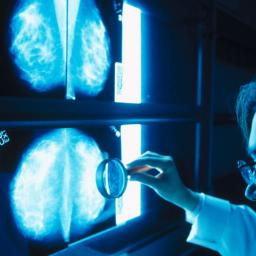
Palbociclib may slow progress of disease by 10 months but Breast Cancer Now fears Nice will deem it not cost-effectiveA breast cancer charity is calling for women in the UK to be given access to a drug that could slow the progress of advanced breast cancer by an extra 10 months compared with current treatment but is not yet licensed in Europe despite being used widely in the US.Pfizer, the company that makes palbociclib, which is sold under the brand name Ibrance, only applied for a European licence last August, even though it was licensed for sale in the US in February 2015 and has been prescribed for 27,000 women. Continue reading...
|
 |
by Maev Kennedy on (#1GBEH)
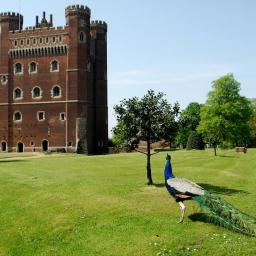
Historic England hopes to breathe life into structures such as a Leicestershire gibbet post and a ducking stool in CanterburyHistoric England, the body responsible for listing historic structures, is for the first time inviting the public to fill some of the gaps about the more curious and obscure buildings and structures on its register.So although poor Hannah Twynnoy’s tombstone, near Malmesbury Abbey in Wiltshire, makes it brutally clear what happened in 1703 – “She had not room to make defence; for Tyger fierce Took Life away†– nothing is known of what happened to the tiger that killed her, the travelling menagerie from which it came, the animal’s owner or who paid for what would have been a relatively expensive memorial to a poorly paid working woman. Continue reading...
|
 |
by Sarah Boseley Health editor on (#1GBB0)
Researchers found that people whose diets were rich in olive oil and nuts lost more weight than those on low-fat regimeThe Mediterranean diet, with a high fat content from olive oil and nuts, does not cause people to gain weight, a major study has found.Fear of fat is misplaced and guidelines that restrict it in our diets are wrong, say the Spanish researchers who have followed more than 7,000 people, some eating 30g of nuts or 50ml of extra virgin olive oil a day while others were put on a standard low-fat diet. Their research, they say, should put healthy fats – from vegetables and fish – back on the menu, changing attitudes and the way we eat. Continue reading...
|
 |
by Johnjoe McFadden on (#1GAVD)
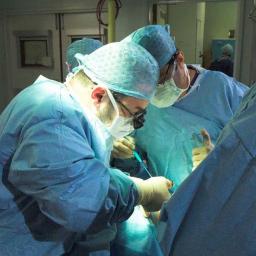
The scare stories are misleading – these stem-cell discoveries could help us replace failing organs, and transform the lives of millions of peopleOne of the most revered monuments of ancient Egypt is the sphinx, a half-human, half-lion chimera that famously exudes a spirit of calm contemplation of human folly. Are scientists’ recent attempts to create real live human chimeras as organ donors part of that folly?In fact chimeric animal-humans are walking, talking or squeaking today. Many people carry heart valve replacements that come from pigs. Pig pancreatic cells have been transplanted into humans in an effort to treat diabetes. Many strains of laboratory mice have been bred that carry human genes and even human cells. Indeed, a strain of mice made with human brain cells appears to be marginally smarter than its non-humanised relative. Continue reading...
|
 |
by Alan Yuhas on (#1GAQ6)
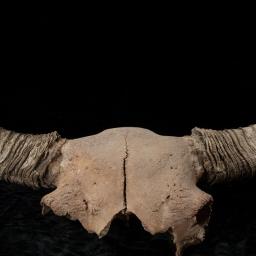
Study asserts North America was likely colonized via the Pacific coast, not the Rocky Moutains as previously thought – but when and how remains unknownThe bones of giant steppe bison and clues left by their ice age hunters have led scientists to conclude that people likely colonized North America south from Alaska along the Pacific coast, and not through the Rocky Mountains, according to a new study.Related: Sinkhole discovery suggests humans were in Florida 14,500 years ago Continue reading...
|
 |
by Nicola Davis on (#1GAQ8)
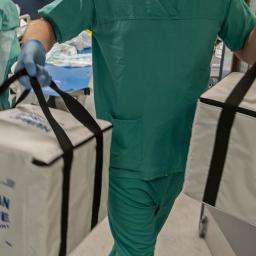
Warning of difficulties comes after injection of human stem cells into pig embryos and fears that animals’ brains could be alteredScientists attempting to grow human organs inside pigs will have to overcome significant hurdles before transplants can take place, geneticists have warned.In a Panorama documentary showing on BBC1 on Monday night, researchers at the University of California, Davis, reveal how they have injected human stem cells into pig embryos to explore the possibility of growing a human pancreas inside a pig. The research could help to solve the current shortage of organs for transplant – a situation that, according to the NHS, leads to around three deaths a day in the UK. Continue reading...
|
 |
by Nicola Davis on (#1GAJE)
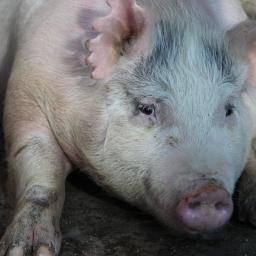
Scientists have successfully created part-pig, part-human embryos. How have they done this, and could viable human organs really be grown this way?Scientists at the University of California, Davis, are hoping to find a way of growing human organs inside pigs, which can then be transplanted into humans. The technique involves altering the genetic makeup of the pigs so that they do not develop a pancreas and then injecting human cells that will go on to make replacement organs inside the animals. Continue reading...
|
 |
by Alex Bellos on (#1GA2Y)
In which everything slides into place.Earlier today I set you the following sliding-block puzzle: Can you get T to the bottom right-hand corner in five moves. A move takes any single piece to another position by sliding it between the others. Continue reading...
|
 |
by Mo Costandi on (#1G9W7)
A toxin isolated from the Togo starburst tarantula provides new insights into pain mechanisms and could lead to new treatments for irritable bowel syndromeWith their large, hairy bodies and long legs, tarantulas are an arachnophobe’s worst nightmare. For pain researchers, however, these outsized spiders are a dream come true: Their venom contains a cocktail of toxins, each of which activates pain-sensing nerve fibres in different ways, and researchers in the United States have now identified one such toxin that will help them to better understand pain, and could also lead to treatments for the chronic pain associated with irritable bowel syndrome.Physical pain signals are transmitted from the body to the brain by specialised sensory neurons called nociceptors. These pain-sensing neurons have cell bodies located just outside the spinal cord, and possess a single conductive fibre that splits in two, with one branch extending out towards the skin surface, and the shorter one entering the back of the cord. Continue reading...
|
 |
by Nathan Tauger on (#1G9J7)
A US senator has ridiculed a selection of ‘wasteful’ studies. But this latest attack on research spending won’t make scientists engage with the tax-paying publicOn May 10, Senator Jeff Flake arrived in the US Senate Press Gallery with cups of gummy worms and crumbled chocolate biscuit.The worms are reference to a study criticised in his new report, Twenty Questions: Government Studies That Will Leave You Scratching Your Head. Flake’s report picks apart twenty US government-funded studies, claiming to reveal a culture of waste among scientists and three federal funding agencies: the National Science Foundation (NSF), National Institutes of Health (NIH), and Defense Advanced Research Projects Agency (DARPA). Continue reading...
|
 |
by Daniel Davis on (#1G9A4)
The Hay festival’s annual celebration of writers and writing is being infused with more and more science. And that’s just great, writes Daniel DavisI’m sitting behind Pink Floyd guitarist David Gilmour, with Booker Prize-winning author Marlon James to his right, all of us watching actors Benedict Cumberbatch, Toby Jones and Maxine Peake reading letters from Shaun Usher’s hit book Letters of Note. Just moments earlier I was standing in front of Salmon Rushdie as we queued for coffee.This is the kind of thing that only happens at the Hay Festival – a frenzied collection of more than 600 events taking place in a cluster of marquees near the picture-perfect town of Hay-on-Wye in Wales. Continue reading...
|
 |
by Andre Spicer on (#1G95F)
Thinking is hard work and asking tough questions can make you unpopular. So it’s no wonder that even clever people don’t always use their brains
|
 |
by Chris Chambers, Natalia Lawrence, Andrew Kythreoti on (#1G8W7)
Our citizen-led study of politicians, published today, has one main conclusion: we need to make research evidence faster to access, easier to decipher, and harder to ignoreIt’s a problem that comes up time and again. The day breaks with news that a prominent government policy or promise has failed. It might concern the NHS, the environment, or immigration. The next day, amidst all the bluster and posturing, someone will quietly point out that the policy never had a chance of working because it hadn’t properly considered the underlying evidence. The information might have been too hard to understand, conveniently ignored, or even gone missing.As academics who make a living out of generating and interpreting evidence, the ceaseless merry-go-round of failed policies and cherry-picked statistics can be frustrating to observe. But we also recognise that, as knowledge professionals, we are part of the problem. Scientists and academics have long kept the dirty world of politics at arm’s length. Of the tens of thousands of scientists and professional researchers in the UK, very few ever talk to policy-makers and fewer still become politicians. With researchers having such a small voice, is it surprising that obvious mistakes are made? Continue reading...
|
 |
by Alex Bellos on (#1G8FY)
A sliding block puzzle to corner youHello guzzlers,The sliding block puzzle was one of the earliest puzzle crazes. It is still popular as a toy for kids and as a cheesy branded giveaway. Continue reading...
|
 |
by Robin McKie on (#1G8DP)
Despite flaws, this lively and accessible history of the gene and its implications for the future is bursting with complex ideasIn 2010, researchers launched a study, the Strong African American Families project, in one of the bleakest, most impoverished areas of rural Georgia, a place overrun by alcoholism, violence, mental illness and drug use. “Abandoned clapboard houses with broken windows dot the landscape,†Siddhartha Mukherjee tells us. “Crime abounds. Vacant parking lots are strewn with hypodermic needles. Half the adults lack a high school education and nearly half the families have single mothers.†You get the picture.The scientists wanted to know how an individual’s genetic makeup might help or hinder their chances of surviving this grim background, and so began testing local families to determine which variant of a gene known as 5-HTTLRP they possessed. One, known as the short variant, had previously been linked to individuals prone to depression, alcoholism and anxiety. The other, the long variant, was associated with relative “normalityâ€. Continue reading...
|
 |
by Ann Robinson on (#1G8DM)
Whether it’s dealing with a life-threatening diagnosis or the loss of a loved one, we are remarkably resilient as a species. We don’t fully understand the science, but we know the support of others is crucialAmie Du Buisson-Spargo is a drama student set to follow in the footsteps of Grace Kelly and Robert Redford when she starts at the New York acting school they attended. She faced stiff competition – and never let on that she lives with a rare, incurable condition, gastroparesis, that means she can’t eat solid food and must be fed via a tube into her intestine for 10 to 15 hours a day. “I try to do it at night, so that it doesn’t interfere with my day-to-day life,†she says. “It’s difficult, though, since it means I’m connected to a machine on the mains supply and I can’t really move; it’s difficult to get a good night’s sleep. But it’s just one of those things you have to adjust to.â€So, how does a young person such as Du Buisson-Spargo keep going? How does the mum having chemotherapy for a life-threatening cancer get up, make the packed lunches and take the kids to school? How do parents who have lost a child go to work and do the laundry? When others face these daunting challenges, we look on and admire their fortitude. In fact, most of us would do the same if we had to – we are a remarkably resilient species. But the science that underpins resilience is only partly understood. Continue reading...
|
 |
by Tim Radford on (#1G84W)
A-list music stars are inadvertently contributing to childhood obesity, according to research by New York UniversityCelebrity endorsements for food and drink products from A-list stars including Britney Spears, Justin Timberlake, will.i.am, Christina Aguilera and Mariah Carey, overwhelmingly plug brands that are nutrient poor and high in sugar, according to researchers investigating the impact of advertising. They say that the use of celebrities to market products to young people is contributing to childhood obesity.Related: Caravaggio and the art of dieting Continue reading...
|
 |
by Sarah Boseley in Chicago on (#1G7P2)
Scientists to test hypothesis that a weight loss programme for breast cancer patients after medical treatment lowers risk of disease returningA large trial is being launched this summer to establish whether diet and exercise regimes should be prescribed by doctors for women who have had breast cancer in the same way that they prescribe drugs, to prevent the disease returning and potentially save lives.Women who are overweight or obese have a higher risk of breast cancer. But accumulating evidence suggests that becoming fitter and losing some pounds after a diagnosis could cut the chances of a recurrence and even lower the risk of death. Continue reading...
|
 |
by Kate Ravilious on (#1G7AP)
As ice caps and glaciers melt, could reduced pressure on Earth’s crust lead to increased volcanic activity?Our planet is always on the move, but sometimes it is more restless than usual. As the last ice age came to an end, around 10,000 years ago, there was a surge in volcanic activity as ice caps melted, decreasing pressure on the Earth’s crust.Since then our planet has reached a steady state, with around 50 volcanoes erupting each year and around 150 earthquakes greater than magnitude six. But geo-hazards expert Bill McGuire is concerned that human-induced climate change may bring a resurgence in activity in the coming centuries. “In areas of major ice loss, such as Alaska, Iceland, the Andes and Himalayas we may see a rise in earthquakes, volcanism and landslides†says McGuire, who describes this scenario in Waking the Giant. “It only takes the pressure of a handshake to trigger a quake or volcanic blast in a primed system.†Continue reading...
|
 |
by Letters on (#1G740)
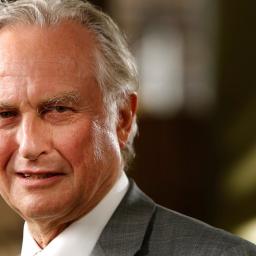
Does science have a cure for ultracrepidarianism? Richard Dawkins (What’s in a number, Review, 4 June) quotes one of his favourite writers: “Complete knowledge is just within our grasp.†In fact we don’t even have the knowledge to handle many of the problems science has made.About a month after atomic bombs were dropped on Hiroshima and Nagasaki in 1945, the distinguished physicist David Bohm, then a young man, dreamed that science had been ruined. This was wrong, but such despair at the destructive power now released is understandable. Many people, including scientists, have shared, and share that despair. Continue reading...
|
 |
by Ben East on (#1G619)
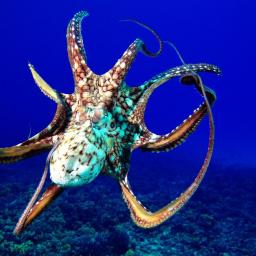
Sy Montgomery’s account of octopuses will do much to rehabilitate the much maligned and mythologised creatureShooting Jules Verne’s 20,000 Leagues Under the Sea in 1916 – the first motion picture filmed underwater, no less – J Ernest Williamson trembled: “No words can adequately describe the sickening horror one feels when from some dark mysterious lair, the great lidless eyes of the octopus stare at one… One’s very soul seems to shrink.†And the image of giant octopuses enveloping ships, pulling sailors to watery graves and generally being the writhing, eight-armed stuff of shivery nightmares has pervaded our culture. In The Soul of an Octopus, the American author and naturalist Sy Montgomery seeks to de-monsterise the intriguing creatures. And it’s testament to some fine writing that by the end, stroking an octopus’s head or getting a “love bite†from one of its 1,600 suckers seems downright desirable.Where Montgomery really convinces the squeamish is not in show-and-tell encounters with various octopuses but in her quest to try and know this misunderstood “alienâ€. She discovers they’re highly intelligent, capable of tenderness, playfulness, happiness and friendship. All of which are recognisably human characteristics, of course, and Montgomery is well aware of the dangers of anthropomorphising. But she’s firmly in the camp that believes animal science should allow for thoughts, feelings and personality. As the person who designs the complex puzzles for the octopuses to solve tells her: “Octopuses have their own intelligence that we can’t match.†Continue reading...
|
 |
by Steve Connor on (#1G5W0)
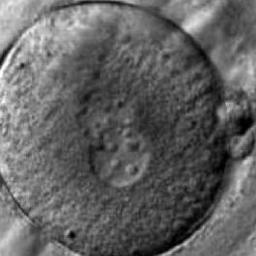
Researchers will soon have the means to study embryos beyond the 14-day legal limit. Does the potential for advances in medicine outweight ethical concerns?It is not birth, marriage or death, but gastrulation that is truly the most important time in your life.â€When the eminent embryologist Lewis Wolpert wrote these words 30 years ago in From Egg to Embryo: Determinative Events in Early Development, human gastrulation – the most momentous of all embryonic transformations – was something of an unknown quantity. Indeed, it is still referred to as the “black box†of human development, occurring about 16 or 17 days after fertilisation and more than a week after the free-floating embryo has anchored itself to the lining of the womb. Continue reading...
|
 |
by Ben Ambridge on (#1G5FM)
Trusting your own instincts seems to have some bearing on whether you feel a sense of purpose in lifeDoes your life have meaning? To find out, rate the items below on a scale of 1 (strongly disagree) to 5 (strongly agree), then add up your score.
|
 |
by Susan Rosser on (#1G4Y8)
To understand our genetic code more fully, we need to build one to see the role of the genes and how they can changeScience can move at a startling pace. In 2003, biologists from the Human Genome Project announced that they had learned how to read an entire human genome. A few days ago, they revealed that they now want to press ahead to try to write one. In other words, researchers have reached the stage where they want to build the genetic instructions that form the blueprint for living cells. The idea, outlined in Science last week, is exciting, audacious and also controversial.So why put forward such a plan? Why court controversy with such a seemingly outlandish proposal? In fact, the idea goes back to the results of the original Human Genome Project that are now providing greater understanding of the causes of cancer, heart disease and schizophrenia while also shedding light on human evolution. Continue reading...
|
 |
by Robin McKie Science editor on (#1G4WM)
The largest planet in the solar system may finally give up its secrets thanks to a new probeA few days from now, a US spacecraft carrying a 200kg titanium vault crammed with delicate electronic equipment and fitted with a vast array of solar panels will sweep over the poles of Jupiter before entering into orbit around the giant planet. The craft, named Juno, has travelled almost three billion kilometres since it was launched in 2011. For the next two years, the huge spaceship will skim over Jupiter’s thick atmosphere while trying to avoid the planet’s huge belts of deadly radiation in a bid to uncover the secrets of this mysterious, remote world.The $1.1bn (£757,837m) mission is designed to peer deep into the thick layers of gases that make up the planet’s atmosphere and return data that could be crucial to understanding the birth not just of Jupiter but of all the planets in our solar system, including Earth. Continue reading...
|
 |
by Dalya Alberge on (#1G4N9)
The words of the 8th-century Saint Bede are among those that have been found by detecting iron, copper and zinc – constituents of medieval inkMedieval manuscripts that have been hidden from view for centuries could reveal their secrets for the first time, thanks to new technology.Dutch scientists and other academics are using an x-ray technique to read fragments of manuscripts that have been reused as bookbindings and which cannot be deciphered with the naked eye. After the middle ages manuscripts were recycled, with pages pasted inside bindings to strengthen them. Those fragments may be the unique remains of certain works. Continue reading...
|
 |
by Mo Costandi on (#1G35K)
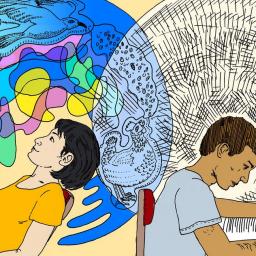
We know some people can’t conjure up mental images. But we’re only beginning to understand the impact this “aphantasia†might have on their educationNever underestimate the power of visualisation. It may sound like a self-help mantra, but a growing body of evidence shows that mental imagery can accelerate learning and improve performance of all sorts of skills. For athletes and musicians, “going through the motions,†or mentally rehearsing the movements in the mind, is just as effective as physical training, and motor imagery can also help stroke patients regain function of their paralysed limbs.
|
 |
by Guardian Staff on (#1G2T1)
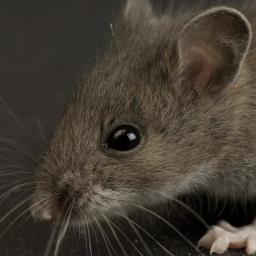
4 June 1959: No signal received amid US attempts to bring mice back aliveVandenberg Air Base (California), June 3.
|
 |
by Amanda Holpuch in New York on (#1G1P0)
Two researchers challenged ‘characterization of medical care as more dangerous’ than guns or cars and provided numbers that were 10% of original findingsTwo researchers have challenged a recent British Medical Journal analysis that said medical error is the third leading cause of death in the US.In a searing response to the analysis, also published in the BMJ, researchers wrote that the results came from a flawed, informal methodology and misconstrued how many people died annually from medical error. Continue reading...
|
 |
by Sarah Boseley in Chicago on (#1G1MP)
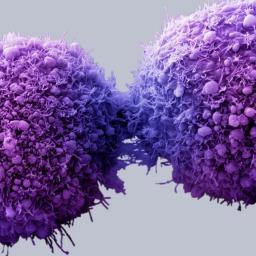
New era of targeted treatment that will extend survival rates detailed at American Society of Clinical Oncology meetingA new era of cancer treatment is beginning in which patients get drugs matched specifically to their tumour, according to scientists at the world’s biggest cancer conference in Chicago.Precision or personalised medicine, as it is called, “is about targeting treatment so that it’s more powerful, while reducing the toxicity, so there are fewer side-effectsâ€, said Prof Roy Herbst, chief of medical oncology at Yale Cancer Center. “At the moment it’s more like using a cannonball to kill an ant – and creating a whole lot of damage at the same time.†Continue reading...
|
 |
by Sarah Boseley Health editor on (#1G1E8)
Liverpool University-led study found mix of two off-patent drugs upped five-year survival rate from 16% to 29% of patientsNearly a third of patients with pancreatic cancer can survive for five years on a combination of two drugs which are off-patent and have been used separately for years, an important charity-funded trial has shown.
|
 |
by Guardian readers and Sarah Marsh on (#1G0NK)
After annual survey finds MDMA is making a comeback, we ask drug counsellors about other substances – and what can be done
|