 |
by Ian Sample Science editor on (#1DGDE)
Study into the ecosystem of microbes on scalps suggests that nurturing a type of bacteria, called Propionibacterium, could help prevent dandruffThe next time dandruff dots your shoulders, you might want to reach for yogurt, not shampoo. The latest study into scaly scalps has found that nurturing particular bacteria on the skin could keep the white flakes at bay.Researchers in Shanghai took on the dandruff problem with an unprecedented investigation into flaky scalps and the ecosystem of microbes that set up home on the human head, feeding on the lavish menu of dead skin and oily secretions called sebum.
|
| Link | http://feeds.theguardian.com/ |
| Feed | http://feeds.theguardian.com/theguardian/science/rss |
| Updated | 2026-10-01 00:15 |
 |
by University of Nottingham students on (#1DK9G)
Postgraduate students from the University of Nottingham’s MSc in Biological Photography and Imaging are staging 7 Magpies, an exhibition of their most striking images, from 13 May Continue reading...
|
 |
by Ian Sample, Iain Chambers and Dr Dave Hone on (#1DK8F)
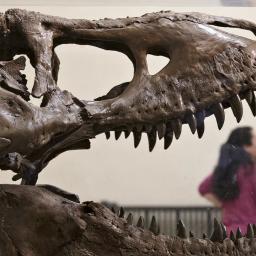
As we continue to discover new species of this huge dinosaur, is our understanding of it changing?Why does the tyrannosaurus continue to fascinate us?Joining Ian Sample in the studio this week is David Hone, a palaeontologist at Queen Mary University of London, and the author of The Tyrannosaur Chronicles. Continue reading...
|
 |
by Stuart Clark on (#1DHXY)
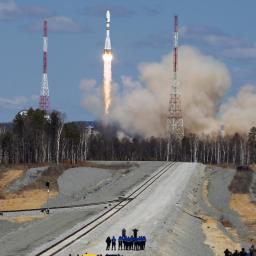
Russia has launched the first rocket from its new spaceport. Although not yet finished, the Vostochny cosmodrome has cost £2bn and taken five years to build so far. When completed in the 2020s, it will launch cosmonauts and Russia’s new Angara rocket, which could eventually take people to the moon.The spaceport became operational on 28 April when a Soyuz-2.1 rocket lifted off carrying three satellites into orbit. Vladimir Putin attended the launch and had words of both congratulation and warning. Continue reading...
|
 |
by Julian Borger on (#1DH8X)
Scientists accuse government of failing to release data disproving claims that burial site contains Nefertiti’s remainsThe world of archaeology was electrified last year by the news that Tutankhamun’s tomb could contain hidden chambers possibly containing the remains and riches of Queen Nefertiti. It was a story that seemed to have everything: false walls, buried treasure, at least one mummy – and new hope for Egypt’s ailing tourist industry.Related: Tutankhamun's secret? Experts hope new chambers could contain tomb of Nefertiti Continue reading...
|
 |
by Graeme Reid on (#1DGVQ)
Academics are queuing up to make the case for staying in the EU. But almost all the larger R&D-intensive companies have kept their heads down. Why?Science is a vital part of the UK’s relationship with the rest of Europe. Some eighteen per cent of EU funding returned to the UK is for research. The UK is a net contributor to the EU across the board, but a net beneficiary in science. Businesses are responsible for around two-thirds of research and development (R&D) investment in the UK, with firms headquartered overseas making up half of that figure – by far the highest proportion among G7 countries.Against that background, I expected business to have plenty to say during the recent inquiry into ‘EU membership and UK science’ by the House of Lords Committee on Science and Technology, for which I was the specialist advisor. Amidst lively exchanges between pro-leave and pro-remain campaign groups, the House of Lords conducted a calm analysis of the evidence on the scientific dimensions of the EU debate. Around eighty written submissions and thirty expert witnesses set out arguments and analysis. Continue reading...
|
 |
by Aarathi Prasad on (#1DGJX)
Any woman should be able to make good decisions about her body – and if Daljinder Kaur is strong enough to fulfil her parenting dream perhaps we should lay offThe birth of Armaan Singh Gill, a 2kg boy, to Daljinder Kaur was announced by Indian and international media this week. Though she has no birth certificate, Kaur, estimated to be 72, is thought to be the world’s oldest mother. Armaan was her first child. He was the result of her third round of IVF, using donor eggs and possibly donor sperm as well.Related: Indian woman in her 70s gives birth to healthy baby boy Continue reading...
|
 |
by Graham Readfearn on (#1DFT5)
Despite more than 90% of experts agreeing on the science, listeners hear incorrect and ridiculous claims from James Delingpole - all ‘in the interest of balance’Aside from the facial hair and the petrol-guzzling international airline, one thing Virgin founder Sir Richard Branson is known for is his passion for fighting climate change.“We need every person on Earth to acknowledge that climate change is real, and encourage each other and our leaders to address the challenge,†wrote billionaire Branson last year. Continue reading...
|
 |
by Frank Miedema on (#1DFE5)
One of Science in Transition’s founders describes how his experience as a young HIV/AIDS researcher convinced him that science needs to changeHIV/AIDS research in the early 1980s was a new and exciting field of science. I had started working as a biomedical researcher in Amsterdam, a city with a large and visible gay community. The new disease was a threat to public health and was highly contagious. It was transmitted by sexual contact and in the developed world affected young healthy gay men and recipients of blood and blood products. It took some time to realise that a truly immense and devastating epidemic was going on in sub-Saharan Africa affecting men, women and children.This disease attracted bright scientific minds all over the world, working feverishly to understand the origin and biology of the virus. We wanted to know how the virus moved through the population, entered and killed immune cells and how to counteract it. AIDS patients were dying in the hospitals and we were working as fast as we could towards better therapies for HIV-positive patients. Continue reading...
|
 |
by Girl on the Net on (#1DF9P)
Some argue that the claim that ‘women love bad boys’ is scientifically proven. However, this isn’t the case“Women always go for the bad boys.†“Nice guys finish last.†“Treat ‘em mean, keep ‘em keen.â€There are so many variations on the idea that women brush off advances from lovely men and instead deliberately chase guys who are tall, dark and horrible. If it’s true, why is the crime rate not significantly higher, as straight guys compete with each other to look “badder†than their friends? In fact what do we mean by “bad†anyway? Are we talking bank robbers, or just your mate Clive who once dumped a girl via text? Continue reading...
|
 |
by Interview by Kirstie Brewer on (#1DFT7)
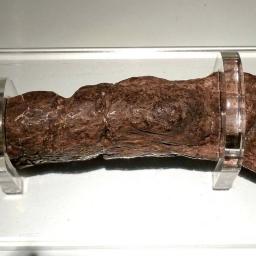
Archaeologist Dr Andrew ‘Bone’ Jones recalls how he discovered the fabled Lloyds Bank turd – a 7-inch Viking coproliteOn reflection, the canteen was probably not the best place to loudly conduct an interview about poo and parasitic worms. The conversation was not intended to spill into the lunch hour, but Dr Andrew ‘Bone’ Jones, an enthusiastic paleoscatologist for over 30 years, had plenty to say. Continue reading...
|
 |
by Guardian Staff on (#1DE4Y)
New images from US space program Nasa show the path of the planet Mercury as it passed between the Earth and the sun on May 9. The event, which only happens 13 times every century, was recorded by Nasa’s Solar Dynamics Observatory, which aims to help scientists understand the effect of the sun on Earth and the wider solar system Continue reading...
|
 |
by Ian Sample Science editor on (#1DDCN)
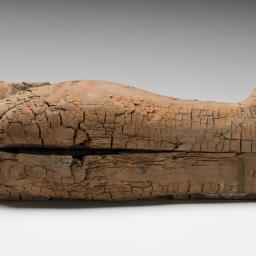
Scanning reveals coffin from 600BC, originally though by curators to contain preserved organs, holds a foetus of no more than 18 weeks gestationA miniature coffin from ancient Egypt that was thought to contain an individual’s preserved organs has been found to hold the youngest known mummified human foetus to be embalmed and buried by the civilisation.The 44cm-long coffin fell into the hands of the Fitzwilliam Museum in Cambridge in 1907, after it was excavated from Giza in Egypt the same year. And while the cedar wood coffin from 600BC had deteriorated, the small, black bundle inside remained intact. Continue reading...
|
 |
by Ian Sample Science editor on (#1DD76)
Discovery of genetic variants which shape number of years spent at school and university, and could pave the way for more personalised teachingA haul of genes that influence how long people spend in education has been uncovered by one of the largest studies conducted in the field.The international effort by more than 250 scientists found 74 genetic variants that shape the number of years people spend at school and university, with most of the variants involved in brain development, particularly in the womb.
|
 |
by Mo Costandi on (#1DD4Y)
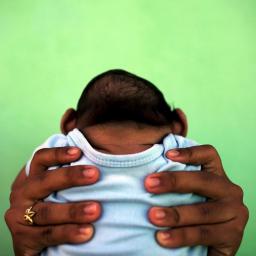
New research provides the first direct evidence that Zika virus causes severe birth defects, and explains exactly how it does so“I lifted up my T-shirt to check on what I thought had just been a small heat rash,†writes BuzzFeed correspondent Ali Watkins. “It had shown up along the right of my back, extending out from a handful of mosquito bites I had picked up… it had seemed relatively tame [but] now, it was inching across the front of my stomach and down my legs... Meanwhile, my right eye was inflamed and bright red, almost akin to a busted blood vessel.â€Watkins is describing the symptoms of a Zika virus infection that she contracted on a recent trip to Mexico. For many people, infection with this mosquito-borne virus causes an illness with symptoms just like those experienced by Watkins: fever, skin rash, joint pain and conjunctivitis. For others, these symptoms are so mild that they go completely unnoticed. Continue reading...
|
 |
by Alex Needham on (#1DCK8)
As new film Troublemakers explores the extremes of land art, from lightning fields to satanic jetties, Alex Needham braves rattlesnakes to visit a desert observatory that lets you travel 26,000 years in timeRelated: Troublemakers: The Story of Land Art review – sculptors who shaped the American wildernessSomewhere in the deserts of New Mexico, a nail is embedded into a type of flat-topped mountain known as a mesa. The positioning of this nail, shielded from the elements by a tin can, took days of trial and error, with astronomical measurements provided by the US Naval Observatory and the help of a surveyor. Finally, the correct spot was located: exactly in alignment with the axis of the Earth from the south pole to the north. Continue reading...
|
 |
by Jessica Aldred on (#1DBGG)
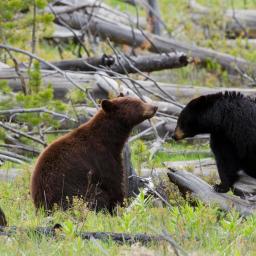
Study of different colours in black bears, barn owls, black sparrowhawks and crows finds online images can substitute for costly fieldworkStudying photographs of animals posted online by the general public has proven to be as valuable as traditional fieldwork in research on the locations of species that have evolved with different colours.Colour polymorphism - the occurrence of two or more colour types in the population of a species - has long fascinated biologists. These different colour types often vary geographically, providing a useful way of studying how different colour morphs evolve. Continue reading...
|
 |
by Michael Slezak on (#1DBGH)
Staff given two weeks to explain why their jobs should be saved, followed by a two-month process in which management tries to find them another roleClimate scientists at the CSIRO who are earmarked for redundancy will learn their fate this week.Staff in the organisation’s oceans and atmosphere business unit began being told of their “potential†redundancies on Tuesday, and the process was expected to continue until Thursday. Last week a similar process occurred for scientists in the land and water business unit.
|
|
by Michael Slezak on (#1DAFR)
Staff given two weeks to explain why their jobs should be saved, followed by a two-month process in which management tries to find them another roleClimate scientists at the CSIRO who are earmarked for redundancy will learn their fate this week.Staff in the organisation’s oceans and atmosphere business unit began being told of their “potential†redundancies on Tuesday, and the process was expected to continue until Thursday. Last week a similar process occurred for scientists in the land and water business unit.
|
 |
by Michael Slezak on (#1DA0T)
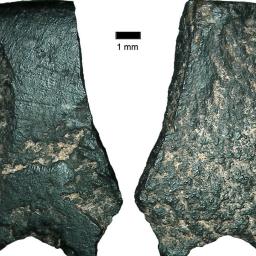
Small fragment found in cave believed to date from a tool created up to 49,000 years agoIt is about the size of a thumbnail and might look like any old piece of rock, but scientists say it is a fragment of the oldest axe ever discovered, created up to 49,000 years ago.Found in Australia, it further undermines ideas that Europe was the birthplace of technology, revealing people developed complex tools not long after they set foot in Australia.
|
 |
by Alan Yuhas on (#1D9X1)
More than doubling the number of confirmed planets orbiting alien stars, astronomers said that the discovery is a step toward finding Earth-like planets
|
 |
by Ian Sample Science editor on (#1D9P8)
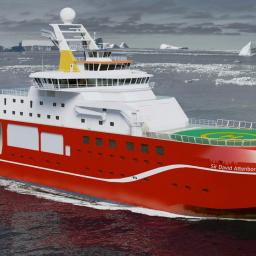
Commons committee question Natural Environment Research Council head over ship-naming competition as part of inquiry into science communicationNo sooner had MPs taken their seats than it began. “Will the minister ask you to walk the plank?†asked Nicola Blackwood, chair of the Commons science and technology committee. Her question was directed at Duncan Wingham, head of the Natural Environment Research Council (NERC), who had been summoned to Westminster to answer questions on the Boaty McBoatface episode.The committee had long planned an inquiry into science communication, and NERC’s Name Our Ship competition - won with massive public support by Boaty McBoatface, only for the name to be vetoed by Science minister Jo Johnson in favour of the RRS Sir David Attenborough - was a natural place to start. Was it a PR triumph or a PR disaster? The MPs wanted to know.
|
 |
by Archie Bland on (#1DBGJ)
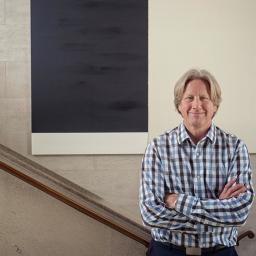
Social psychologist Dacher Keltner, author of The Power Paradox, says the key to success is changing. The Machiavellian rule of the Lannisters is less effective than ground-up collaborationIf you drive a Prius, Dacher Keltner believes, there is an above-average chance that you are not an especially pleasant person. He explains how he came to this conclusion as congenially as he can. It is not a hunch.One day, near the Greater Good Science Center that he runs in Berkeley, California, Keltner was riding his bicycle, minding his own business, when a black Mercedes almost hit him. Afterwards, he thought about that moment – the indomitable motorcar paying no heed to the fragile two-wheeler – as a miniature of the power dynamics in daily life, a subject that has occupied his attention for years. “It’s morality and it’s deadly – and there are laws,†he says. “It’s society in play. And I was like: That’s what we’re studying, right there.†Continue reading...
|
|
by Archie Bland on (#1D965)
Social psychologist Dacher Keltner, author of The Power Paradox, says the key to success is changing. The Machiavellian rule of the Lannisters is less effective than ground-up collaborationIf you drive a Prius, Dacher Keltner believes, there is an above-average chance that you are not an especially pleasant person. He explains how he came to this conclusion as congenially as he can. It is not a hunch.One day, near the Greater Good Science Center that he runs in Berkeley, California, Keltner was riding his bicycle, minding his own business, when a black Mercedes almost hit him. Afterwards, he thought about that moment – the indomitable motorcar paying no heed to the fragile two-wheeler – as a miniature of the power dynamics in daily life, a subject that has occupied his attention for years. “It’s morality and it’s deadly – and there are laws,†he says. “It’s society in play. And I was like: That’s what we’re studying, right there.†Continue reading...
|
 |
by Ian Sample Science editor on (#1D967)
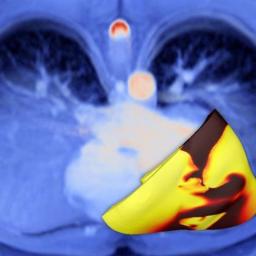
Personalised 3D heart models more effective than standard tests at identifying cardiac patients at risk of developing lethal arrhythmias, new study showsPersonalised virtual hearts have been created for cardiac patients to help doctors spot those who are most at risk of developing fatal arrhythmias.Related: Heart attacks kill thousands each year because of poor NHS aftercare, study says Continue reading...
|
 |
by Andrea Thompson for Climate Central, part of the G on (#1DBGK)
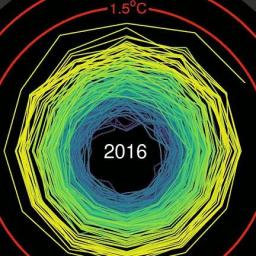
Climate Central: A new graphic shows Earth’s temperatures spiralling toward the 2C global warming limitThe steady rise of Earth’s temperature as greenhouse gases accumulate in the atmosphere and trap more and more heat is sending the planet spiraling closer to the point where warming’s catastrophic consequences may be all but assured.
|
by Andrea Thompson for Climate Central, part of the G on (#1D8YF)
Climate Central: A new graphic shows Earth’s temperatures spiralling toward the 2C global warming limitThe steady rise of Earth’s temperature as greenhouse gases accumulate in the atmosphere and trap more and more heat is sending the planet spiraling closer to the point where warming’s catastrophic consequences may be all but assured.
 |
by Dean Burnett on (#1D8SN)
Often new technology or development is condemned as being “damaging to childrenâ€. Why not apply that approach to the disastrous government SATs?You may have noticed that it’s very common, particularly in the more right-wing leaning media, to suggest that something is bad because it’s potentially harmful to children, particularly their brains. Video games, smartphones and tablets, Facebook, the internet as a whole, screens in general, fizzy drinks, vaccines, and who knows what else. All of these have been condemned by many on the grounds that they have the potential to harm children’s brains.Susan Greenfield, for example, has made some alarming (and, some would say, evidence-light) claims about the dangers posed by new technology on the delicate, fragile minds of children Continue reading...
|
 |
by Damien Gayle on (#1D8H4)
University of Copenhagen study finds no evidence that so-called friendly bacteria change the composition of faecal bacteriaFans of probiotic drinks and foods may be wasting their money, according to a review of current research into the supplements that suggests they may be of no benefit to healthy adults.A Danish team looked at the results of seven trials of the products – often sold as milk-based drinks, biscuits, sachets, or capsules – and found no evidence they changed the composition of faecal bacteria in healthy adults. Continue reading...
|
 |
by Sarah Schoppe-Sullivan on (#1D8F8)
As my research shows, the quest for perfection can actually make providing sensitive, warm and consistent care more difficultEven armed with a PhD in developmental psychology, I remember the frightening first moments after bringing my newborn daughter home from the hospital. I wasn’t sure what to do – and not at all confident that I was capable of being the parent she needed me to be. Every little decision about feeding and caring for this helpless human seemed momentous and fraught with anxiety. What if I don’t make it a full year of breastfeeding? Should I turn off the TV whenever she is in the room to avoid passive screen exposure? Is it OK for her to enter full-time day care at five months?Popular press accounts of parenting and child development research were not particularly helpful, either. Even though as a scientist I knew better, the way the research was translated for the public lacked nuance and easily penetrated my vulnerable state of mind. I fretted that my daughter’s formula consumption would result in lower IQ. I worried that if I was too tired to read to her one evening before bed, she would never learn to read. And, since she’s started elementary school, I have slipped numerous times and called her “smart†instead of more appropriately praising her effort, as so many articles advise. Continue reading...
|
 |
by Richard Holliman on (#1D8F6)
As a parliamentary inquiry into science and the public begins, I’d argue there’s been a revolution in the way researchers think about science and engagement“What have the Romans ever done for us?†John Cleese’s famous question from Monty Python’s Life of Brian has been in my thoughts over the past couple of weeks. Back came the answer, “The aqueduct.†“Oh, yeah, yeah. They did give us that.†“And there’s sanitation...†You get the picture.I’ve been recalling lines from Monty Python thanks to the House of Commons select committee on science and technology, which today begins a round of public hearings for its latest inquiry into science communication. In essence, the committee is asking: “What has science communication ever done for us?†Continue reading...
|
 |
by SA Mathieson on (#1D8D1)
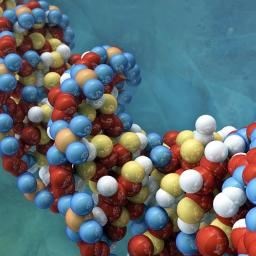
Advances in genetic testing are enabling healthcare professionals to personalise treatments for diseases and conditions including cancer, diabetes and HIVBreakthroughs in genomic medicine are helping researchers to devise a new generation of personalised treatments for a range of diseases and conditions, including cancer, diabetes and HIV.The cost of sequencing a human genome has fallen from $95m (£66m) in 2001 to just $1,345 (£870), according to the US National Human Genome Research Institute. This is enabling professionals to tailor treatments based on the results of genetic tests.
|
 |
by Thomas Barber on (#1D814)
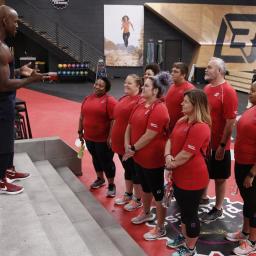
Overweight people can easily pile the pounds back on after a diet, betrayed by a metabolism that’s both under-evolved and damaged by weight lossObesity is one of the biggest threats to the health of our species. Over the past 40 years there has been a remarkable change to human bodies globally. According to the World Health Organisation, most adults living in the US and Europe are either overweight or obese.Yet worryingly for those of us seeking to tackle this problem, a recent study in the New York Times of contestants who lost weight on the TV show The Biggest Loser showed that the formerly obese have lower resting metabolic rates than others of a similar weight – making it all the easier for them to pile back on the weight. They could eat the same as someone else of the same weight, but pile on the pounds regardless. Continue reading...
|
 |
by Press Association on (#1D7YA)
England’s newest national park named as ‘international dark sky reserve’ for providing natural darkness within reach of nearly 17 million people
|
 |
by Susanna Rustin on (#1D7YC)
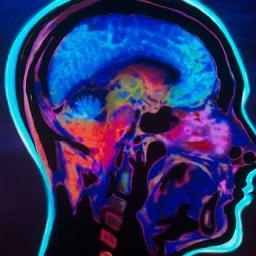
Researchers are going to examine the theory from American psychology that has taken UK schools by storm. Can it improve Sats results?Can watching short films featuring actors impersonating Charles Darwin and Albert Einstein improve your brainpower? Researchers working in 100 British primary schools will try to find out from September, thanks to a £290,000 grant from the Education Endowment Foundation to test whether instructing children aged 10 and 11 in “growth mindsetâ€, an idea from American psychology, can improve results.“Growth mindset†is the name given by psychologist Carol Dweck to the idea that intelligence can develop, and that effort leads to success. Her influential research, which has been lapped up by thousands of teachers in the UK, divides people according to what Dweck calls implicit theories of intelligence. If we think talent or braininess is innate and something we cannot change, we have a “fixed mindset†(blamed by Dweck for the Enron scandal, among other ills). If we believe our performance at school and in life can be changed by our attitude, and particularly by how we cope with setbacks, we have a “growth mindsetâ€. The British study, called Changing Mindsets, will test its effectiveness using videos and quizzes developed by education company Positive Edge in year 6 classrooms, while psychologists will train teachers for one day. Continue reading...
|
 |
by Michael McCarthy on (#1D7TK)
Human existence is utterly dependent on wild plant species we’ve shamefully neglected. Now Kew has become a global voice for plantsThere seem to have been no national ceremonies to mark the end of botany. A discipline that had flourished in our universities for centuries – the first Oxford professor of botany, Robert Morison, was awarded his chair in 1669 – slipped away quietly into oblivion in 2013, with the graduation of the last students on the last undergraduate botany course, at Bristol. You can’t do a botany degree in Britain any more. A once familiar element of life has simply disappeared, quite unremarked upon. Like the disappearance of hitchhiking, you might say.Related: One in five of world's plant species at risk of extinction Continue reading...
|
 |
by Damian Carrington on (#1D7BS)
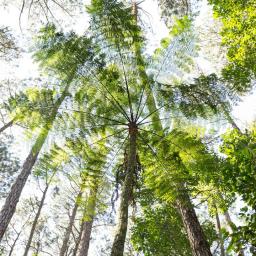
Global report highlights threat to food security and medicine supplies but also reveals 2,000 new species are discovered each yearOne in five of the world’s plant species is threatened with extinction, according to the first global assessment of flora, putting supplies of food and medicines at risk.But the report also found that 2,000 new species of plant are discovered every year, raising hopes of new sources of food that are resilient to disease and climate change. New finds in 2015 included a giant insect-eating plant first spotted on Facebook and a 100-tonne tree hidden in an African forest. Continue reading...
|
 |
by Denis Campbell Health policy editor on (#1D7BQ)
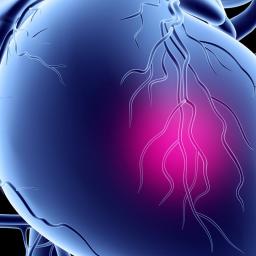
Researchers say there were 33,000 avoidable deaths in 10 years because patients did not receive proven treatmentsThousands of people a year are dying unnecessarily after a heart attack because NHS follow-up care is so poor, a study says.
|
 |
by Guardian Staff on (#1D7B9)
A giant insect-eating plant and a 100-tonne tree were among the 149 species of plants and fungi described for the first time by scientists at the Royal Botanic Gardens Kew last year. More than 2,000 species new to science were discovered worldwide the same year, but a new report warns that one in five of the world’s plant species is threatened with extinction Continue reading...
|
 |
by Ian Sample Science editor on (#1D5HG)
Mercury, the smallest and fastest planet in the solar system, has reached the end of its journey across the face of the sun - we won’t see it again until 20197.56pm BSTMercury has now crossed the entire face of the sun and brought to a close the 2016 transit of the smallest planet in the solar system. The images astronomers have taken today have been truly breathtaking. I hope you enjoyed them as much as we did here on the (somewhat geeky) science desk.As Dr Marek Kukula, public astronomer at the Royal Observatory in Greenwich, put it, the transit is a special event: “It’s a chance to feel you are really part of the solar system in motion.†Thanks to all who watched with us. And see you again in 2019!7.30pm BSTA silhouette of a plane and its contrails as seen from Frankfurt on Monday as Mercury passes in front of the sun. The innermost planet of the solar system is the tiny dark dot near the bottom and half way across the face of the sun. Continue reading...
|
 |
by Ed Cooke on (#1D6W3)
A new study shows that it’s possible to deliberately forget things. It turns out that’s a surprisingly useful life skillA mental adventure familiar to most students is that of cramming one’s mind with knowledge in the run up to an exam. Once the exam is done, we gleefully evacuate our brain of all this hard-won learning that’s no longer needed. Within days, we can barely remember the subject matter, let alone the details. At such moments, it’s as if we’ve forgotten on purpose.It might then come as a surprise to learn that until recently, there was little scientific evidence that people could have any deliberate influence on their rates of forgetting. But in the last few years, a small family of experimental techniques have showed that, under the right conditions, we can in fact deliberately forget things. The effects are subtle, but nonetheless suggestive: being able to forget at will would, after all, be a killer life skill. Continue reading...
|
 |
by Letters on (#1D6W5)
Mary Dejevsky is right to point out that public and professional attention is given to cancer at the expense of other serious medical conditions (Let’s give all illnesses the cancer treatment, 4 May). I have inclusion body myositis, a rare condition in which the muscles waste away. Like Parkinson’s disease it affects older people, though there are other forms of myositis that are found in younger people. There is currently no treatment, and cuts to social services and the health service mean access to support such as physiotherapy, occupational therapy and speech therapy is spread very thin. Awareness of myositis among professionals is also very low, so patients have to become noisy advocates working through charities, in this case the Muscular Dystrophy Association, or individually. The cost to the health service through emergency hospital admissions, bed-blocking and severe disability is high, and access to specialist services is minimal. I get my main support from a closed Facebook group where fellow patients provide valuable advice on a regular basis. I quite agree with Mary Dejevsky that raising the profile of neurological conditions should be a much higher priority, not least because I have been told that the incidence of diagnosed cases is rising, perhaps because some people are being “cured†of higher-profile conditions such as cancer. It can be tiring having to tell every professional you meet the name of your illness and then explain what it is.
|
 |
by Maev Kennedy and Ian Sample on (#1D6P7)
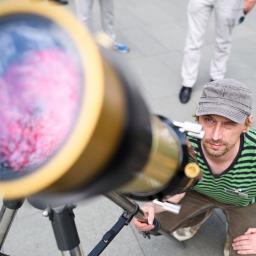
As the solar system’s smallest planet passes the face of the sun, thousands from across the world gather to gaze at the skiesFor once the weather forecasters were wrong about bad news.The entire staff of the Royal Observatory at Greenwich, all the passionate amateur astronomers of the Flamsteed Society, and many anxious members of the public, spent the weekend obsessively refreshing the Met Office weather forecast app – but the threat never changed, the skies over London would have 100% cloud cover, and the best chance of observing the transit of Mercury before 2049 would be lost. Continue reading...
|
 |
by Natasha Rees-Bloor on (#1D6H0)
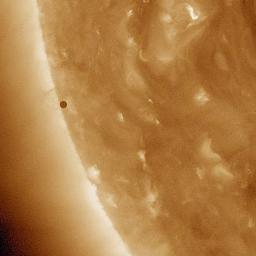
The smallest planet in our solar system wanders between the sun and the Earth for the first time since 2006. Mercury, which can be seen as a black dot drifting across the face of the sun, was last visible from Britain 13 years ago
|
 |
by James Walsh and Guardian readers on (#1D6H2)
Mercury’s journey across the face of the sun, as captured by our GuardianWitness contributors
|
 |
by Guardian Staff on (#1D6H4)
The smallest planet in the solar system, Mercury, passes in front of the sun on Monday. The celestial event was watched by star-gazers around the world. This occurs only 13 or 14 times a century and is the best chance to watch the event in the United Kingdom until 2049
|
 |
by Frank Close on (#1D6H6)
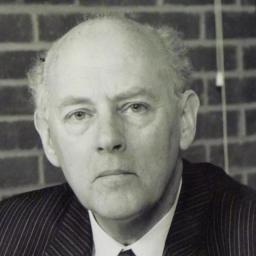
Physicist and expert on the electromagnetic properties of nuclear isotopesIn 1943, the physicist Sir Denys Wilkinson, who has died aged 93, gained his first degree, and was immediately drawn into second world war service, initially on radar. From there he went on to nuclear physics, as a member of the British nuclear reactor team relocated from Cambridge to Canada until 1946 to facilitate collaboration with the US in developing nuclear weapons.Though this was the first step in a career that saw Wilkinson become a professor at Oxford University (1957-76) and vice-chancellor of Sussex (1976-89), it almost took a quite different direction. In Canada, Wilkinson’s job was to monitor neutrons in the reactor. This proved nearly fatal, as he got radiation sickness, his white blood count fell, and he was given six months to live. Having recovered, and back in Cambridge, for a time afterwards it looked as if he probably would not be able to go back to nuclear physics. He became interested in a mystery of bird migration, and applied to the problem analysis techniques that he had learned from nuclear physics to solving it. Continue reading...
|
 |
by Jon Butterworth on (#1D6H8)
Weasels be damned, we’re running again! And first thing on the list is to find out whether ‘those bumps’ are new subatomic particles, or just statistical noise
|
 |
by Jean Hannah Edelstein on (#1D6FN)
Finding someone to connect with can be draining – much like dating – and Dr David Kelley wants to help. Jean Hannah Edelstein investigates“You should try therapy!†is a suggestion that I realized, after maybe too long, most people don’t take as a compliment. I think therapy is great: what thoughtful, smart person wouldn’t benefit from taking some time for careful examination of their feelings and how they interact with the world? No thoughtful, smart person, in my opinion. Deciding to go to therapy isn’t an admission of fault: it’s an admission of the desire to be happier, less anxious and more at ease.But even if you are the kind of thoughtful, smart person who can overcome the stigma against seeing a professional to talk about your problems, there’s another major hurdle to surmount: it can be very difficult to find the right therapist. Much as with dating, for therapy to succeed, you need to find someone with whom you want to spend a lot of time talking about yourself (unlike dating, however, you should definitely not have sex with your therapist). As with dating, looking online (Psychology Today has the most popular database) and going through a trial and error process can be emotionally draining, especially if you’re feeling sad or anxious already and lack the energy to interview a lot of different therapists before you hit the right one. Continue reading...
|
 |
by Alex Bellos on (#1D6CG)
The results from this morning’s maths challenge. Stand by to compare your marks!Earlier today I set you ten questions from the UK Mathematics Trust’s Junior Maths Challenge, which was sat by 300,000 11-13 year olds the week before last.Here are the questions, answers and explanations. I have also included the percentage of children who got it right and the percentage of Guardian readers who did. In one question children did better than Guardian readers (although this was the one with the image that stretched) and in two others the scores were equal. Well done all round, anyway. Continue reading...
|