 |
by Stuart Clark on (#1FFHS)
The red planet draws to within 75 million kilometres of Earth this evening. Previous close approaches have led to searches for life: tonight is no exceptionMars reaches its closest approach to Earth for 11 years this evening at 21:35 GMT. The red planet will be just 75 million kilometres away.Mars has been steadily approaching, tripling its apparent diameter as seen through telescopes since January. But don’t be deceived by any internet messages claiming that it will appear larger than the full moon. The moon is just 384 thousand kilometres away; Mars will never come that close. Continue reading...
|
| Link | http://feeds.theguardian.com/ |
| Feed | http://feeds.theguardian.com/theguardian/science/rss |
| Updated | 2026-10-01 00:15 |
 |
by Sarah Boseley Health editor on (#1FDQ6)
Pension fund for academics funded by Cancer Research UK invested £211m in British American Tobacco last yearScientists funded by Cancer Research UK who spend their lives hunting for cures for the disease are among thousands of academics whose pensions are invested in the tobacco industry, the Guardian can reveal.The latest annual report for the university staff’s pension fund shows it had £211m invested in British American Tobacco in the year to 31 March 2015 – its fifth biggest listed equities holding. Continue reading...
|
 |
by Elle Hunt on (#1FFB4)
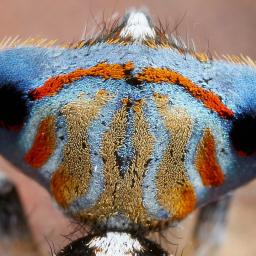
Sydney biologist has a Facebook page dedicated to the colourful arachnids, which he says behave more like cats and dogsPeacock spiders - in pictures
|
 |
by Alan Pickup on (#1FEFK)
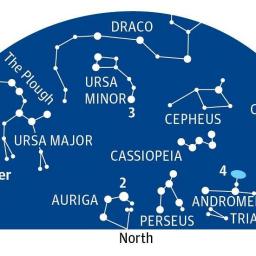
What to look out for in the night sky over the month aheadFollowing the opposition of Mars on 22 May, it is Saturn’s turn to stand directly opposite the Sun in the sky on 3 June. This places it high in the midnight sky for observers in the southern hemisphere, but inconveniently low down in the S as viewed from Britain.This is a pity, for Saturn’s stunning rings are wide open with their N face tipped 26° to our view and spanning 42 arcsec around the planet’s 18 arcsec disc. Continue reading...
|
 |
by Dawn Marshall on (#1FDXM)
My uncle John Norton, who has died aged 85, was an aeronautical engineer whose achievements added greatly to the quality and safety of modern aircraft.John was born in Bristol, son of May (nee Rich) and John, an engineer, and after leaving St Brendan’s grammar school began working for the British Aircraft Corporation in Bristol, where he became part of the company’s mission to produce ever lighter, stronger components. John’s early experiments involved the use of explosives to “blow†sheets of titanium into preformed moulds. Over time his thinking developed – and success finally came with the use of electrically heated moulds, into which the hot, malleable titanium was formed using high-pressure benign gas. Continue reading...
|
 |
by Tom Plimmer on (#1FDP1)
My friend and brother-in-law, Alan Bell, who has died aged 67 after a motorcycle accident on holiday in Laos, was a world expert on DVD security and copyright protection who was granted more than 20 US patents.Alan was a key member of the team at the RCA technology firm in the US that developed the first optical disk and invented the recording medium that coated the disk’s surface, a breakthrough central to the subsequent developments of the CD and the DVD. Continue reading...
|
 |
by Kit Buchan on (#1FD22)
Eye-catching design didn’t begin with Apple, as a new, digitally-aided photography series illustrates“Dials and buttons, knobs and switches; they’re very charming,†says James Ball, the digital art director behind a new photography series called Guide to Computing, which celebrates early computers. Ball, who works under the pseudonym Docubyte, began the project after developing a fascination and affection for such retro devices.“It’s rare now to find any machine that you can touch and interact with,†he says. “Computers now are all touch screens, slick and super-slim.†Ball feels that computers that pre-date the Apple era aren’t widely considered to be design pieces, and his nostalgia for this earlier, more “naive†aesthetic led him to seek out and photograph a range of machines that date from the latter half of the 20th century, representing them as if they were new and desirable products. Continue reading...
|
 |
by Adam Rutherford on (#1FD15)
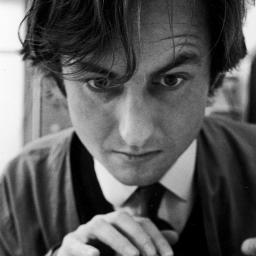
In 1976 Richard Dawkins’s study of evolutionary theory became the first popular science bestseller. How do its ideas stand up today?It’s 40 years since Richard Dawkins suggested, in the opening words of The Selfish Gene, that, were an alien to visit Earth, the question it would pose to judge our intellectual maturity was: “Have they discovered evolution yet?†We had, of course, by the grace of Charles Darwin and a century of evolutionary biologists who had been trying to figure out how natural selection actually worked. In 1976, The Selfish Gene became the first real blockbuster popular science book, a poetic mark in the sand to the public and scientists alike: this idea had to enter our thinking, our research and our culture.Previous attempts to explain evolution had been academic and rooted in maths. Dawkins walked us through it in prose Continue reading...
|
 |
by Carole Cadwalladr on (#1FCXN)
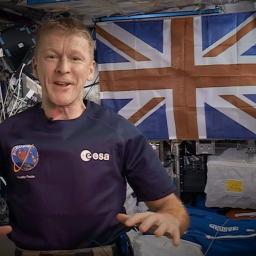
The British astronaut’s multimedia ability, and the efforts of volunteers back on Earth, are bringing the excitement of his mission into the classroomIt’s a drizzly summer morning down here on planet Earth. Soft is-it-or-isn’t-it rain is falling from the sky. The hedgerows are bursting with nettles and cowslips. And the earth is damp and smells of… I take a deep noseful and think about this. It smells of earth. If you were a long, long way away in a cold and alien place, this spot here, Ottery St Mary, near the folded east Devon hills, is the kind of landscape that might come to you in a hallucinatory dream.It’s the essence of the English countryside on a cool early summer morning. And somewhere, high above, in a tin capsule circling planet Earth, is Major Tim. The urge to quote David Bowie lyrics is almost irresistible – is irresistible – because at the King’s School in Ottery St Mary, there’s a massive antenna in the playground, a temporary space station in the school hall and a small crowd of children and parents waiting patiently. Ground control is literally about to call Major Tim: Tim Peake – our man in space. The first Briton in space for a long time and the first of the modern social-media age, a role that has led to other firsts, including being the first astronaut to appear at the Brit awards and “run†the London marathon and, for one morning only, the first to speak to the students at the King’s School, live, from the International Space Station. Continue reading...
|
 |
by Interview by Carole Cadwalladr on (#1FCXK)
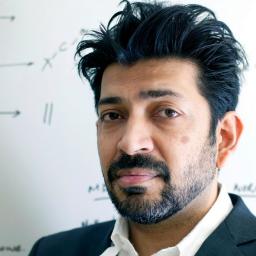
The Pulitzer-winning cancer specialist is back with a study of genes that is also a memoir of his family and its history of mental illnessThe Gene is subtitled An Intimate History, and a very personal story runs through it. Can you explain what that is
|
 |
by Jon Butterworth on (#1FCRK)
Exploring contrived extremes isn’t pointless, but it’s best done as a thought experiment
|
 |
by James Kingsland on (#1FCJ8)
Being by themselves in an empty room can feel so unbearable to some people that they willingly self-harmTo be left alone with our thoughts can be torture. Insomniacs who suffer agonies as they lie awake night after night soon learn that it is far better to get up and do something – anything – rather than thrash about with only their restless mind for company. Negative emotions such as guilt, self-doubt and anxiety run amok at night. Daylight, with its promise of mundane tasks and social interaction, usually sends these monsters of our imagination scurrying back to their caves, but they can re-emerge whenever there are no external distractions to occupy the mind.Some people will go to extraordinary lengths to prevent this from happening, as a series of experiments carried out in 2014 by psychologists at Harvard and the University of Virginia demonstrated. College students were instructed to sit by themselves for up to 15 minutes in a sparsely furnished, unadorned room and “entertain themselves with their thoughtsâ€. They were allowed to think about whatever they liked, the only rules being they should remain in their seats and stay awake. Unsurprisingly, a majority reported afterwards that they found it difficult to concentrate and their minds had wandered, with around half saying they didn’t enjoy the experience. Continue reading...
|
 |
by Guardian Staff on (#1FCHP)
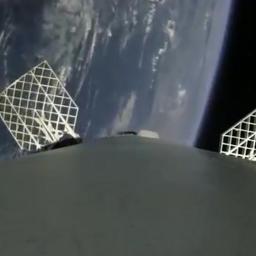
Remarkable footage shows the rocket returning to Earth from space and successfully landing on a drone ship in the Atlantic Ocean. It is the third time in a row the Falcon 9 rocket has delivered its payload into the upper atmosphere and returned safely Continue reading...
|
 |
by Nadia Khomami on (#1FB56)
Results of research supported by public and public-private funds set to be made freely available to allAll publicly funded scientific papers published in Europe could be made free to access by 2020, under a “life-changing†reform ordered by the European Union’s science chief, Carlos Moedas.The Competitiveness Council, a gathering of ministers of science, innovation, trade and industry, agreed on the target following a two-day meeting in Brussels last week. Continue reading...
|
 |
by Associated Press at Cape Canaveral, Florida on (#1FB1E)
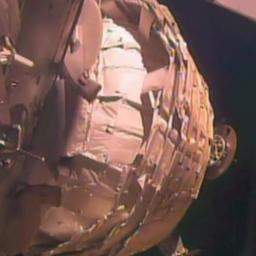
Astronaut slowly pumps air into the compartment, 22 seconds’ worth, then eight seconds – in second attempt on experimental balloon-like podNasa slowly inflated a new experimental room at the International Space Station on Saturday, with better luck than on the first try two days earlier.Related: Nasa hits problems with world’s first inflatable room for astronauts Continue reading...
|
 |
by Olga Oksman on (#1FAXB)
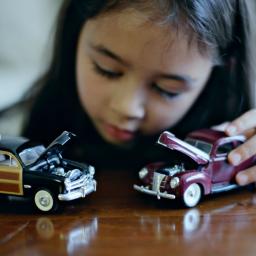
Research has found that dividing children’s toys based on gender can have lasting developmental implicationsMany parents are tired of the pink and blue divide in the toy aisles. Just last month, the White House held a conference on gender stereotypes in toys and media, with many toy manufacturers and experts attending. After feedback, Target announced in 2015 that it would get rid of signs labeling toys for boys or for girls. A UK campaign called Let Toys Be Toys seeks to get retailers to stop categorizing toys and books for one gender only.Developmental psychologists and sociologists are happy to finally see pushback from parents. Researchers have worried about the impact of having toys that were so segregated by gender for some time, says Lisa Dinella, associate professor at Monmouth University and Principal Investigator of the Gender Development Laboratory. Continue reading...
|
 |
by Rose Hackman on (#1FAPR)
Similar cultural roots don’t guarantee better bond, yet competence in learning about differences and being mindful of verbal and non-verbal cues are criticalThe voice on the other end of the line, doing what they call “intakeâ€, had one last question. “Do you have a preference in terms of the gender of your therapist?â€I paused, a little thrown by the question. I was just mechanically following friends’ advice to seek help and take advantage of free therapy sessions provided by our graduate school; the idea of having a choice had not crossed my mind. Continue reading...
|
 |
by Agence France-Presse on (#1F9JA)
Dutch government sanctions ‘limited research’ to help infertile couples and to tackle hereditary or congenital diseasesThe Dutch government has announced it wants to allow growing human embryos “under strict and limited conditions†for scientific research, thereby giving hope to parents struggling to conceive.
|
 |
by Nicola Davis on (#1F8DK)
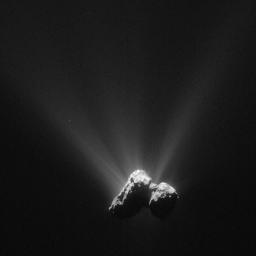
Discovery of amino acid glycine in gas and dust cloud adds weight to the idea that comets crashing to Earth could have brought chemicals crucial to lifeScientists on the Rosetta mission have found building blocks for life in the cloud of gas and dust around the icy body known as comet 67P. The discovery backs up the idea that similar “dirty snowballs†could have been involved in kickstarting life on Earth.The theory that extraterrestrial objects crashing into our planet could have brought chemicals crucial to the emergence of life has long been mooted, with an array of amino acids - the building blocks of proteins - already discovered on meteorites. But the new research adds weight to the notion that comets could also have played a role. Continue reading...
|
 |
by Associated Press in Madrid on (#1F86Y)
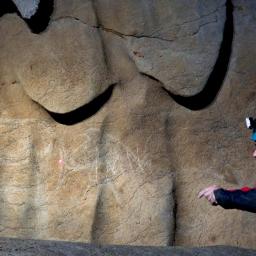
Paleolithic-era drawings found in Axturra cave are in ‘Champions League’ of cave art sites, team leader saysSpanish archaeologists say they have discovered an exceptional set of Paleolithic-era cave drawings that could rank among the best in a country that already boasts some of the world’s most important cave art.Related: Neanderthals built mysterious cave structures 175,000 years ago Continue reading...
|
 |
by PD Smith on (#1F828)
An amusing and delightfully frank primer on our intestines crammed with amazing biological facts and anecdotes from the scatological limits of researchGerman medic Giulia Enders is on a mission to explain “why the gut is so fascinatingâ€. This amusing and delightfully frank primer on our intestines, translated by David Shaw, is crammed with amazing biological facts (“the surface area of our digestive system is about a hundred times greater than the area of our skinâ€) and anecdotes from the scatological fringes of research: to discover the best position in which to poo, Japanese scientists fed volunteers luminescent substances then x-rayed them as they did their business. (Squatting, not sitting on the loo, is the easiest on the intestinal tract.) From the causes of food allergies, the “gut gymnastics†of digestion and the links between the gut and the subconscious (“an unhappy gut can be the cause of an unhappy mindâ€), to its astonishing population of micro-organisms, the microbiome, which can weigh up to 2kg, Enders shows that far from being ashamed of it we should celebrate our gut. She observes that the movements involved in burping or breaking wind “are as delicate and complex as those of a ballerinaâ€. Her enthusiasm is contagious and will change your view of your intestines: “The more you know about the gut, the more beautiful it appears.â€â€¢ To order Gut for £7.99 (RRP £9.99) go to bookshop.theguardian.com or call 0330 333 6846. Free UK p&p over £10, online orders only. Phone orders min p&p of £1.99. Continue reading...
|
 |
by Oliver Burkeman on (#1F7KS)
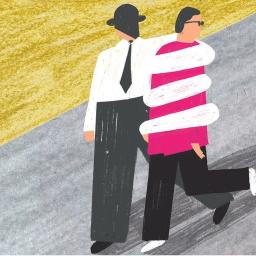
I knew lopsided friendships existed; I’ve got several, and I’m sure you have, too. But I’m not supposed to be the desperate oneI’m having a bit of an existential crisis. According to new research, if I’m anything like the average person, around half the people I consider my friends don’t consider me theirs in return: that’s how chronically bad we are at judging the reciprocity of friendship. Of course, I already knew lopsided friendships existed; I’ve got several, and I’m sure you have, too. But in every case I can think of, it’s me who’s not especially invested, and the other person who doesn’t realise it. I’m not supposed to be the desperate one. Yet if studies such as this are correct, the phenomenon is so widespread that it’s highly unlikely I’m an exception. As with the famous finding that almost everyone thinks they’re in the top 50% of safe drivers, we can’t all be the ones with an accurate sense of who really likes us.And if we’re stumbling through life with such a distorted understanding of our social circles, where does that leave all the other received wisdom about friendship’s importance? It has been found that friends keep us physically healthy, alive for longer, less vulnerable to depression and more financially successful – but how much of that, especially when the research is based on self-reports, comes from actually having friends, versus believing that you do? Continue reading...
|
 |
by Alison Flood on (#1F7EE)
University of Leicester students gauge the feasibility of Gillyweed, which allows the eater to grow gills, and Skele-Gro, which grows and repairs broken bonesHot on the heels of the news that Mary Norton’s tiny Borrowers would not have been viable in the real world, two new scientific papers have analysed the spells JK Rowling invented for Harry Potter and concluded that they would need magic to work.In the papers Gillyweed – Drowning with Gills? and Revealing the Magic of Skele-Gro, both published in the Journal for Interdisciplinary Science Topics, students at the University of Leicester analyse two spells used by Rowling’s young wizard: Gillyweed, which enables its eater to grow gills and thus breathe underwater, and Skele-Gro, which repairs broken bones. Continue reading...
|
 |
by Nic Fleming in Wageningen on (#1F761)
Scientists create sex identification tests that can identify male chicks before they hatchThe current practice of gassing billions of male chicks within a day of hatching because they cannot lay eggs could be stopped thanks to a new embryo gender test.Globally some 3.2 billion cockerels are killed within hours of breaking free of their eggs each year. Continue reading...
|
 |
by Kathryn Harkup on (#1F6W5)
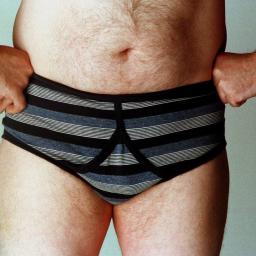
Contact poisons, which kill through the skin, have a long history stretching from Greek mythology through to a recent, rather novel, modern attemptThere is a poisoning cliché of a wife trying to dispose of a husband with a drop of weed killer in the soup, but a woman in China has given the herbicide poisoning plot a new twist.The straightforward addition of the weed killer to food was perhaps a little too passé for Mrs Zhang, from Hangzhou in Zhejiang province. She allegedly decided to soak her husband’s underpants in paraquat herbicide spay. Once the poison had dried onto the cloth, she apparently presented the pants to her husband for him to wear on their daughter’s wedding day. You may not be surprised to learn that the couple had recently had a row. Continue reading...
|
 |
by Ian Sample and Iain Chambers on (#1F6GW)
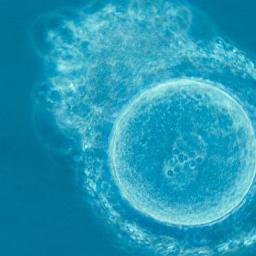
Should the current 14 day limit for growing human embryos in the lab be extended in light of recent breakthroughs?
|
 |
by Paul Clammer on (#1F6E5)
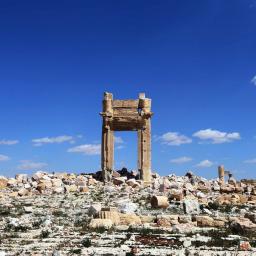
Imagine Palmyra rebuilt as if Isis had never arrived, or Kathmandu restored to its pre-quake glory. As the V&A’s special pavilion at the Venice Biennale shows, we now have the technology to create perfect copies of cities – but should we?The 2,000-year-old city of Palmyra was once Syria’s most popular tourist attraction. Walking through the Roman Great Colonnade to the Temple of Bel, with the sun setting and the stones turning gold and pink in the desert light, you felt a deep connection across the centuries to the city’s heyday.When Isis fighters stormed Palmyra and destroyed some of the most precious parts of this ancient city, the world was aghast. Continue reading...
|
 |
by Associated Press on (#1F5JC)
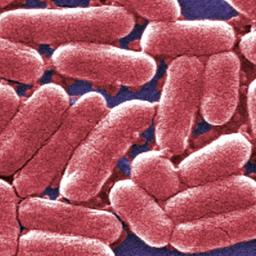
‘It is the end of the road for antibiotics unless we act urgently,’ says Centers for Disease Control and Prevention after superbug infects Pennsylvania womanFor the first time, a US patient has been infected with bacteria resistant to an antibiotic used as a last resort, scientists said Thursday.
|
 |
by Mike McCahill on (#1F52Z)
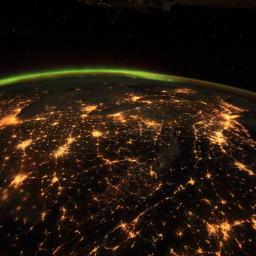
Imax galaxy quest reveals life in orbit and a breathtaking perspective on our planet’s landmasses, with a little over-earnest narration by Jennifer LawrenceWith such Imax credits as writer of Mission to Mir and director of Hubble 3D to her name, Toni Myers is doing as much as any film-maker to map the galaxy’s outer reaches. Her latest large-format eye-opener achieves a breathtaking new perspective on Earthly life by floating cameras among astronauts aboard the International Space Station (ISS). Tim Peake’s Twitter feed: mere dilettantism in comparison. Continue reading...
|
 |
by Stuart Clark on (#1F4Y0)
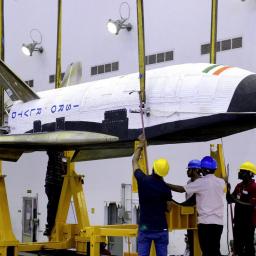
Model shuttle could pave way for full-size reusable vehicle and cheap, regular access to spaceIndia has successfully tested a hypersonic “spaceplane†model that could one day be scaled up into a space shuttle.The launch took place at 07:00 IST on 23 May from the Satish Dhawan space centre, Sriharikota, in the coastal state of Andhra Pradesh. It was the first flight in the Reusable Launch Vehicle – Technology Demonstration (RLV-TD) programme being conducted by the Indian Space Research Organisation (Isro). Continue reading...
|
 |
by Helena Smith in Athens on (#1F4N9)
Greek archaeologist ‘almost certain’ he has discovered the long-sought tomb of world’s greatest philosopherGreek archaeologists believe they have discovered the lost tomb of Aristotle, the greatest philosopher in history.Kostas Sismanidis said he was almost sure that a 2,400 year-old domed vault he unearthed in ancient Stagira was the burial place of the man credited with formalising logic. Continue reading...
|
 |
by Meghan Nesmith on (#1F4GR)
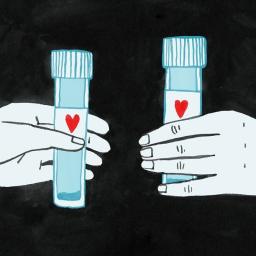
A simple spit test gives new meaning to ‘having chemistry’, as husband and wife analyze genetic material to find out whether couples are scientifically compatible“I wanna know what love is,†the song goes, and I think: yeah, me too. In 2015, 15% of Americans used an online dating service; if you are a butcher or baker or candlestick maker, there’s an app for you. Our modern dating industry is built on the idea that you are too much of a dummy to find love yourself, and it is now worth $2.4bn.The latest startup in this space is Instant Chemistry, a company built on the premise that your DNA could help you figure out who to love. Last month, I met co-founders Sara Seabrooke and her husband Ron Gonzalez at a nondescript laboratory in Toronto, surrounded by vials of spit.
|
 |
by Michael Jennings on (#1F4B6)
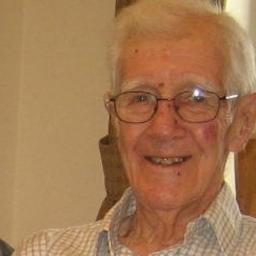
My father, Alan Jennings, who has died aged 93, was a pioneer in the field of radiotherapy for cancer treatment and radiation science.He was born to Leila (nee Shepherd) and Sylvanus Jennings in Geneva, where his father, a Quaker, was the European correspondent of the News Chronicle. Alan went to school in Geneva until his teens when he went as a boarder to the Friends’ school in Saffron Walden, Essex. Continue reading...
|
 |
by Associated Press on (#1F3VN)
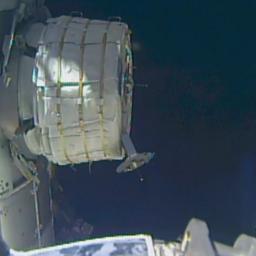
Problems emerged while releasing air into experimental room at the International Space Station on Thursday, putting everything on holdNasa hit a snag while releasing air into an experimental inflatable room at the International Space Station on Thursday and put everything on hold for at least a day.Mission Control ordered astronaut Jeffrey Williams to call it quits after the operation had dragged on for more than two hours, with the compartment expanding just a few inches. The inflation process could resume as early as Friday, depending on what engineers learn. Continue reading...
|
 |
by Ian Sample Science editor on (#1F3G1)
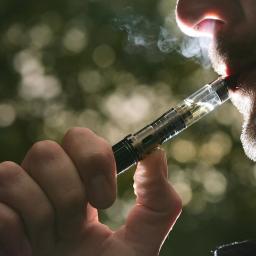
Vaping medicinal cannabis would be healthier than smoking the drug with tobacco, researchers claim, and allow regular microdoses not possible with pillsElectronic cigarettes can be a safe and effective way to deliver cannabis for medicinal purposes, according to researchers in Switzerland.
|
 |
by Polly Morland on (#1F35T)
Changing who we are is hard to imagine, and even harder to actually do. But the good news is, it’s not impossibleThanks to the findings of the US psychologist Angela Duckworth, what gives you grit – and whether you can change to develop it – is very much on the agenda.We once intoned “Every day in every way, I’m getting better and betterâ€, or we machinated about winning friends and influencing people. But we barely paused for breath before turning to the cultivation of (seven) habits of highly effective people and, not long after, the winning ways of Outliers. And on it rolls – our hunger for remedies for mediocrity is as insatiable as ever. Continue reading...
|
 |
by Henry Nicholls on (#1F2VV)
A collection of zoological wonders from May 2016, featuring brave new rhinos, brand new pandas, earthworm engineers and more
|
 |
by Amanda Holpuch in New York on (#1F2TC)
First-of-its-kind analysis was inspired by older Americans at hearing clinics who complained about no longer being able to understand their favorite TV showsAcademics are studying whether British accents become unintelligible to Americans as they age.The first-of-its-kind analysis was inspired by older Americans complaining at hearing clinics about no longer being able to understand their favorite television shows, such as Keeping Up Appearances and PBS’s Masterpiece Theatre, which presents British series. Continue reading...
|
 |
by Press Association on (#1F14N)
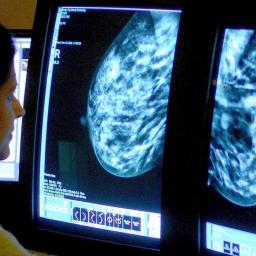
Countries with universal health coverage have fewer casualties, according to Lancet study of cancer deathsHundreds of thousands of cancer deaths around the world may have occurred as a result of the recession of 2008, experts have said.
|
 |
by Paul Simons on (#1F0S1)
A late spring has brought meadow plants alive in May, but Britain’s natural grassland is continuing to disappearA late spring led to a big burst of wild flowers this month, but of all the native wild flowers how many green-winged orchid, oxlip, dyer’s greenweed and meadow clary have been seen?These are all meadow plants and they are becoming rare. The green-winged orchid is, despite its name, mostly pink or purple but with delicate green veins. Dyer’s greenweed is a shrubby plant, a great food plant for moths and like its names suggests was once used as a very good dye, especially for wool. Meadow clary has striking deep blue flowers, and the name “clary†came from “clear-eye†because the plant seeds were used as a paste to soothe and cleanse sore eyes. Continue reading...
|
 |
by Ian Sample Science editor on (#1F00E)
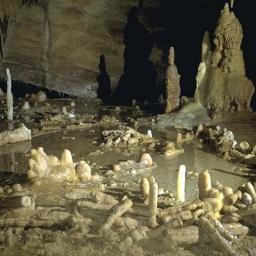
Constructions discovered deep in a French cave rank among the earliest human building projects ever discovered, but their purpose remains unclearMysterious structures found deep inside a French cave are the work of Neanderthal builders who lived in the region more than 100,000 years before modern humans set foot in Europe.The extraordinary constructions are made from nearly 400 stalagmites that have been yanked from the ground and stacked on top of one another to produce rudimentary walls on the damp cave floor.
|
 |
by Henry Nicholls on (#1F00G)
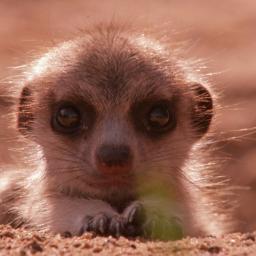
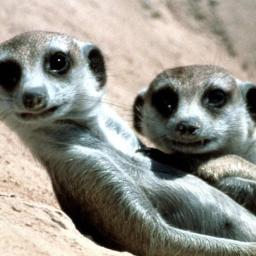
Faced with a rapidly fattening rival, meerkats respond by eating more in an urgent effort not to slip down the social hierarchy, a new study shows“Unfairness bothers children greatly.†This quotation comes from Karen Joy Fowler’s 2014 novel We Are All Completely Beside Ourselves and it comes to mind on an almost daily basis as I struggle to manage the tensions between my two pre-teen boys.It is also a sentiment that appears to apply to meerkats, according to a nifty little study out today. Continue reading...
|
 |
by Steven Poole on (#1EZ7Y)
We experience some kind of inner speech for at least a quarter of our waking lives. This helps some, while others set out to reduce the chatter. And how does it relate to God?When you talk to yourself, who exactly is doing the talking, and who the listening? Walt Whitman wrote: “Do I contradict myself? / Very well then I contradict myself. / (I am large, I contain multitudes.)†But who are these multitudes? And who let them all in? Thus does language tempt us to posit a concert hall of homunculi within the head.Charles Fernyhough’s fascinating and elegantly humane book is aware of the problem, but doesn’t attempt to solve it (doing so would probably require a true theory of consciousness). Instead he starts with the existence of what is technically termed “inner speechâ€, and sketches a theory of how it occurs. He inquires into its phenomenology (the feel of the subjective experience of talking to oneself), and he offers an intriguing developmental account of how we come to do it at all, and why it is so useful. Continue reading...
|
 |
by Susannah Lydon on (#1EZ68)
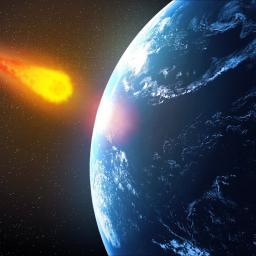
We tend to focus on the extinction of the dinosaurs, but the plant fossil record holds different parts of the story of life - and death - at the end of the CretaceousThe extinction event at the end of the Cretaceous Period, 66 million years ago, is the most well-known of the “Big Five†mass extinctions in the fossil record, even if it wasn’t the biggest. That accolade goes to the Great Dying at the end of the Permian Period, about 250 million years ago, when up to 96% of species became extinct. But since the dinosaurs weren’t around for that mass extinction, it hasn’t entered the popular consciousness in quite the same way.Like most things to do with mass extinctions, even the naming of the Cretaceous event is not without controversy. Many researchers still refer to it as the K-T extinction, where K refers, confusingly, to the Cretaceous (Kreide in German) and T stands for Tertiary (the old name for the subsequent geological period, which has since been split in two). More correctly it is now referred to as the Cretaceous-Palaeogene, or K-Pg, mass extinction. Continue reading...
|
 |
by Chris McGreal in Fort Lauderdale on (#1EYMT)
Critics say Florida’s efforts to contain an epidemic unleashed within its borders have only had limited effect in curbing one crisis while making another worseFor James Fata, the transition from prescription painkillers to heroin was seamless.The 24-year-old came to Florida to shake an addiction to opioid pills, but trying to go through rehab in a region known as the prescription capital of America proved too much. When a government crackdown curtailed his supply of pills, Fata turned to readily available heroin to fill the void. Continue reading...
|
 |
by Alastair Campbell on (#1EXY0)
The ‘Special One’ arrives at Old Trafford with a big ego but a damaged reputation. What happens next will come down to his ability to learn and adaptNow that he has the Manchester United job he long-coveted, what does the resurrection of José Mourinho, and the demise of Louis van Gaal, say not just about football management but about leadership more generally?The first thing is that if you are looking for lasting friendship and loyalty, you might be better off even in politics than in top-flight football management. There has been a real lack of class about the way Van Gaal’s departure has been handled, his one moment of triumph in winning the FA Cup last Saturday totally wrecked by the breaking news that he would soon be on his way. Continue reading...
|
 |
by Phil Daoust on (#1EY2A)
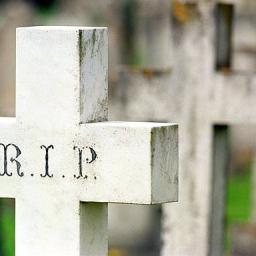
Every day millions of internet users ask Google life’s most difficult questions, big and small. Our writers answer some of the commonest queriesAre you going to die? You shouldn’t have to ask, but yes, of course you are. Of the 107 billion or so humans who have walked the Earth, 100 billion have already gone to meet their maker. Not one has survived longer than 122 years and 164 days. And if what you really want to know is “Am I about to die?†because you’ve accidentally drunk weedkiller or your chest hurts and you’re short of breath, stop Googling, you numpty. Call an ambulance.In the UK, the Office for National Statistics puts life expectancy at 79.1 years for a baby boy, and 82.8 years for a baby girl. What’s likely to kill you? Illness, rather than accident or violence. If you’re male, the number one cause of death is heart disease, followed by lung cancer and dementia or Alzheimer’s; if you’re female, dementia or Alzheimer’s, followed by heart disease and cerebrovascular diseases. Continue reading...
|
 |
by Press Association on (#1EY16)
NHS Improvement says prescriptions by GPs for all types of antibiotic down by more than 2.6m compared with last year
|
 |
by Steven Shapin on (#1EY17)
From Nazi eugenics to biotech and the desire to make better versions of ourselves … this vivid survey is controversial, but gives the latest on the nature-nurture debateSiddhartha Mukherjee calls his history of genetics “intimate†for two reasons. First, he repeats the cinematic cross-cutting of the personal and the scientific that structured his magnificent history of cancer, The Emperor of All Maladies (2011). The earlier book includes stories about his own patients (Mukherjee was then an oncologist at Massachusetts general hospital, now he is a staff physician at Columbia University Medical Center in New York). Modern cancer medicine is science, but its therapies are delivered at the bedside to patients, sometimes for many years. Cancer is increasingly a modern way of life, not just a way of death, and being a “cancer victim†and a “cancer survivor†both contribute to sufferers’ sense of who they are.But not even cancer defines personal identity as powerfully as your genes are now thought to do. In the new book, some of the cross-cut intimacies emerge from Mukherjee’s own Bengali family – a father with a genetically based brain pathology; a mother whose identical twin displayed both the expected similarities with her sister and some surprising differences; and, especially, the sudden appearance of schizophrenia in apparently healthy cousins and uncles, erupting from genetic legacies lying latent within. Shared genetic inheritances were understood to define the family members’ past, their present and their fears about personal futures. Early on in his relationship with his wife-to-be, Mukherjee was compelled to tell her about madness in the family: “It was only fair to a future partner that I should come with a letter of warning.†Continue reading...
|
 |
by Press Association on (#1EWZS)
Exposure to vehicular and industrial emissions heightens risk during pregnancy, researchers sayExposure to air pollution may increase the risk of stillbirth, new research suggests.Stillbirths, classed as such if a baby is born dead after 24 weeks of pregnancy, occur in one in every 200 births. Around 11 babies are stillborn every day in the UK, with aproximately 3,600 cases a year. Continue reading...
|